Develops technical proficiency and creative movement skills across various styles. Examines choreographic principles alongside the historical and cultural origins of diverse global dance forms.
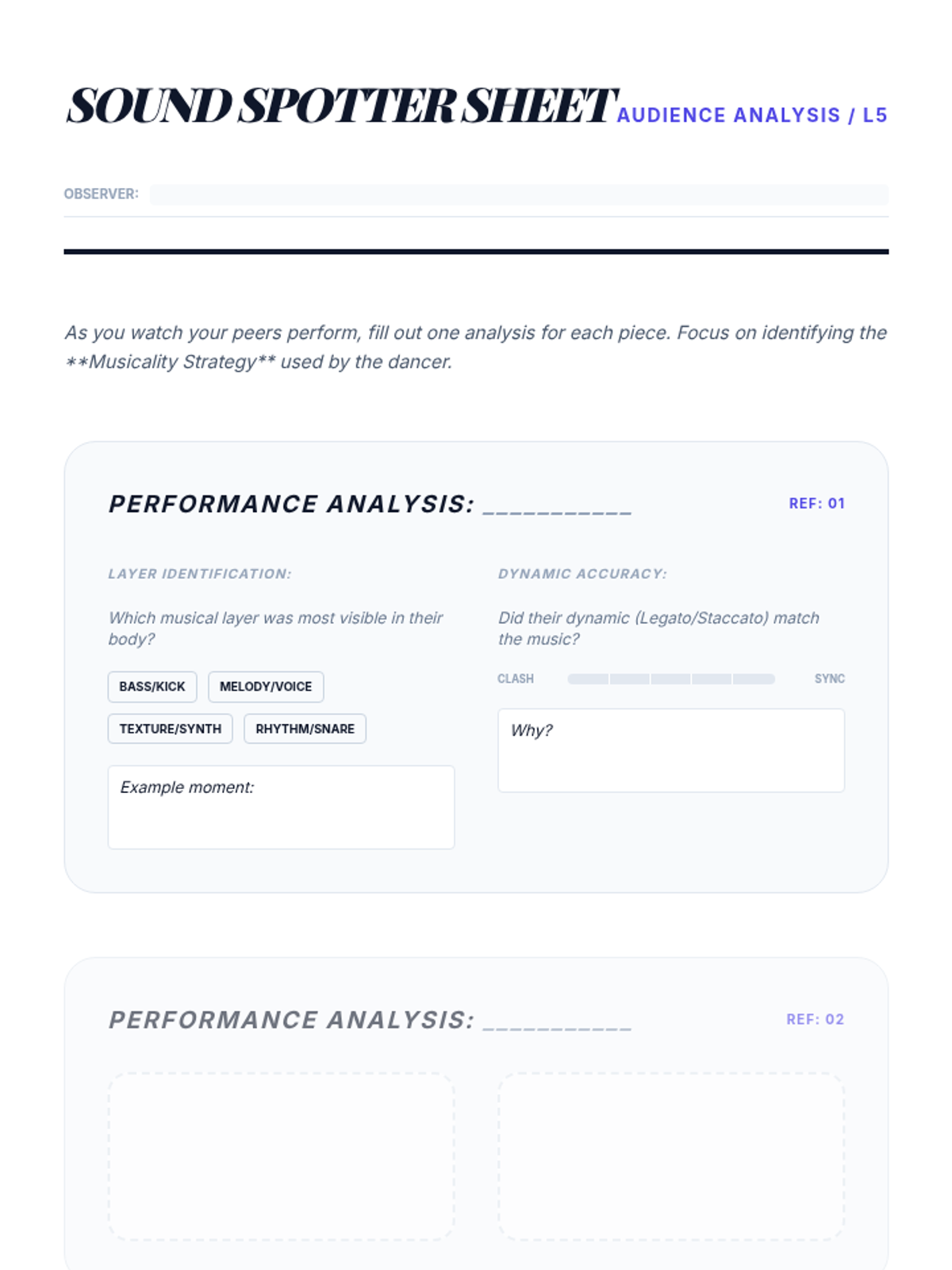
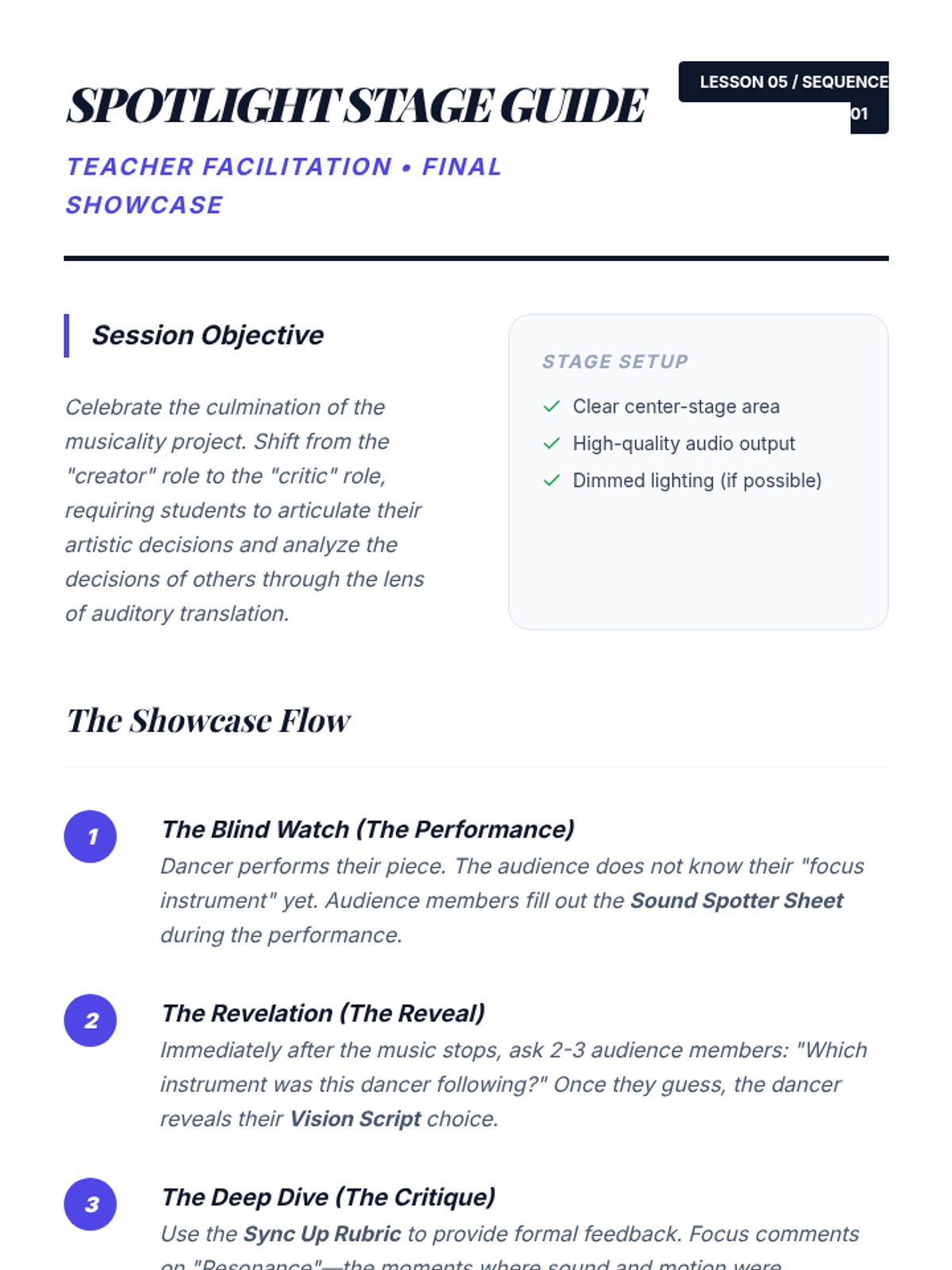
Students present their choreography and participate in a musicality critique, identifying the layers interpreted by their peers. The sequence concludes with a discussion on artistic expression through sound.
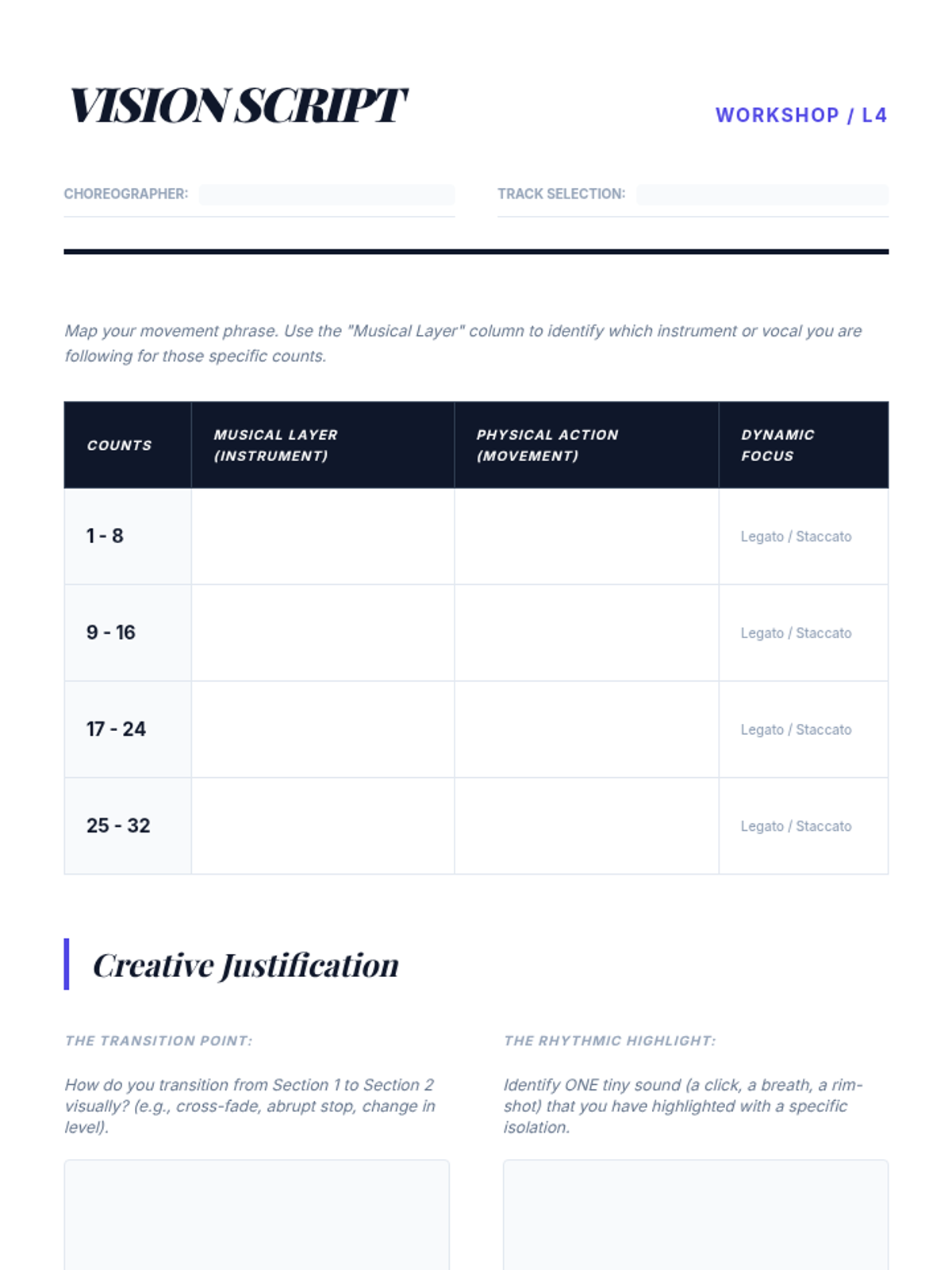
Using their musical maps, students choreograph a short piece that explicitly highlights chosen musical elements. Peer feedback focuses on the clarity of the movement-to-sound relationship.
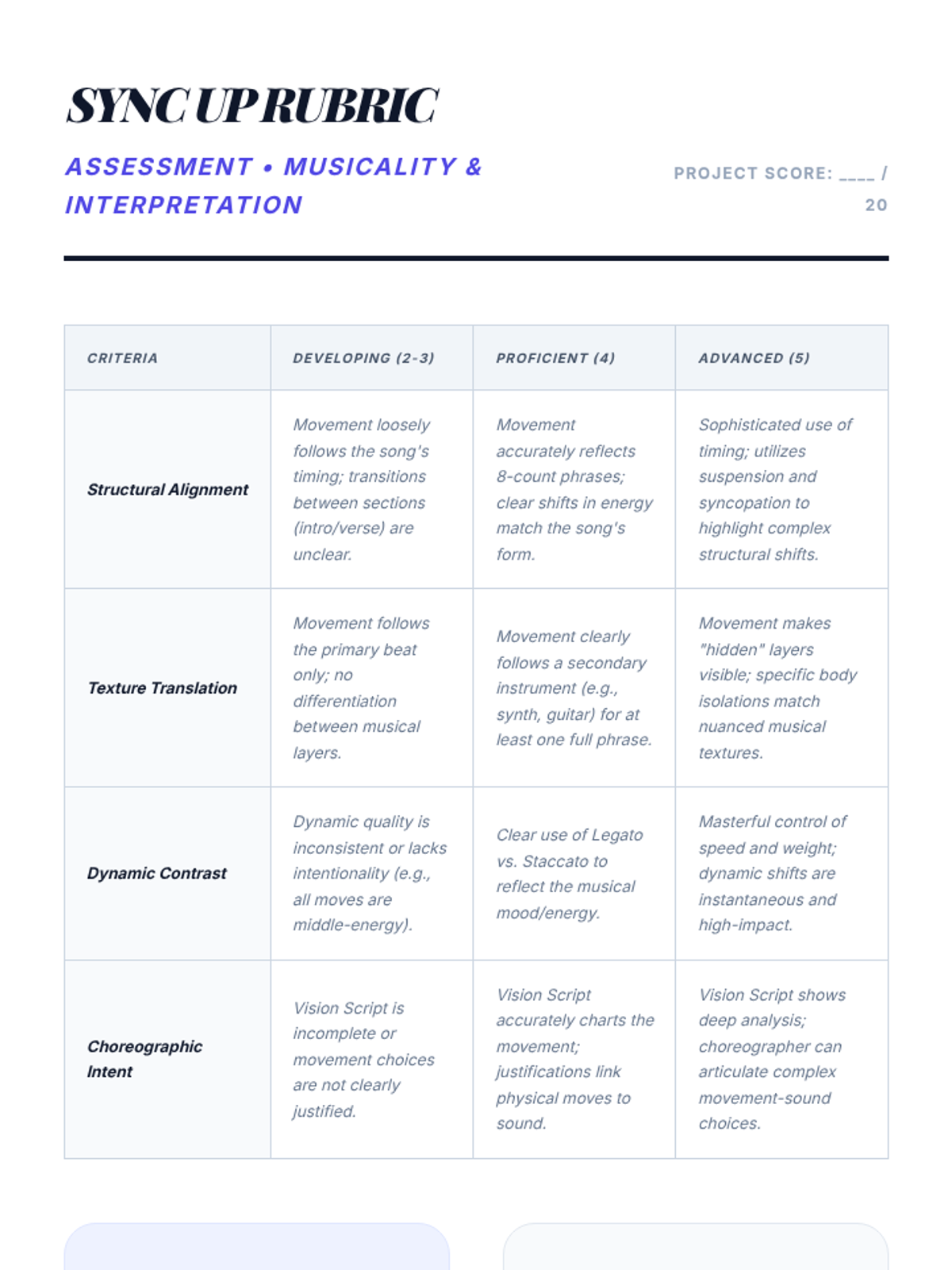
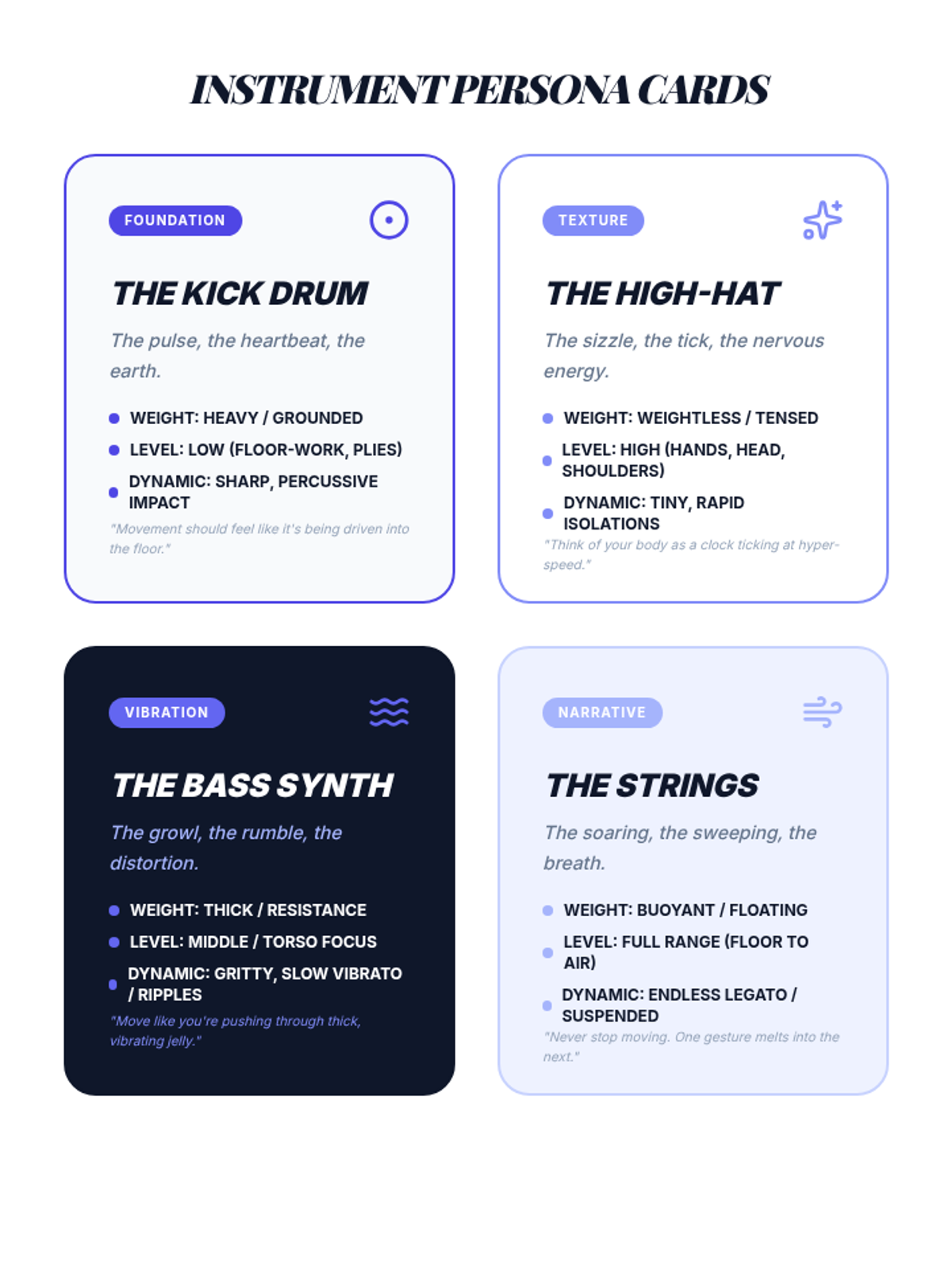
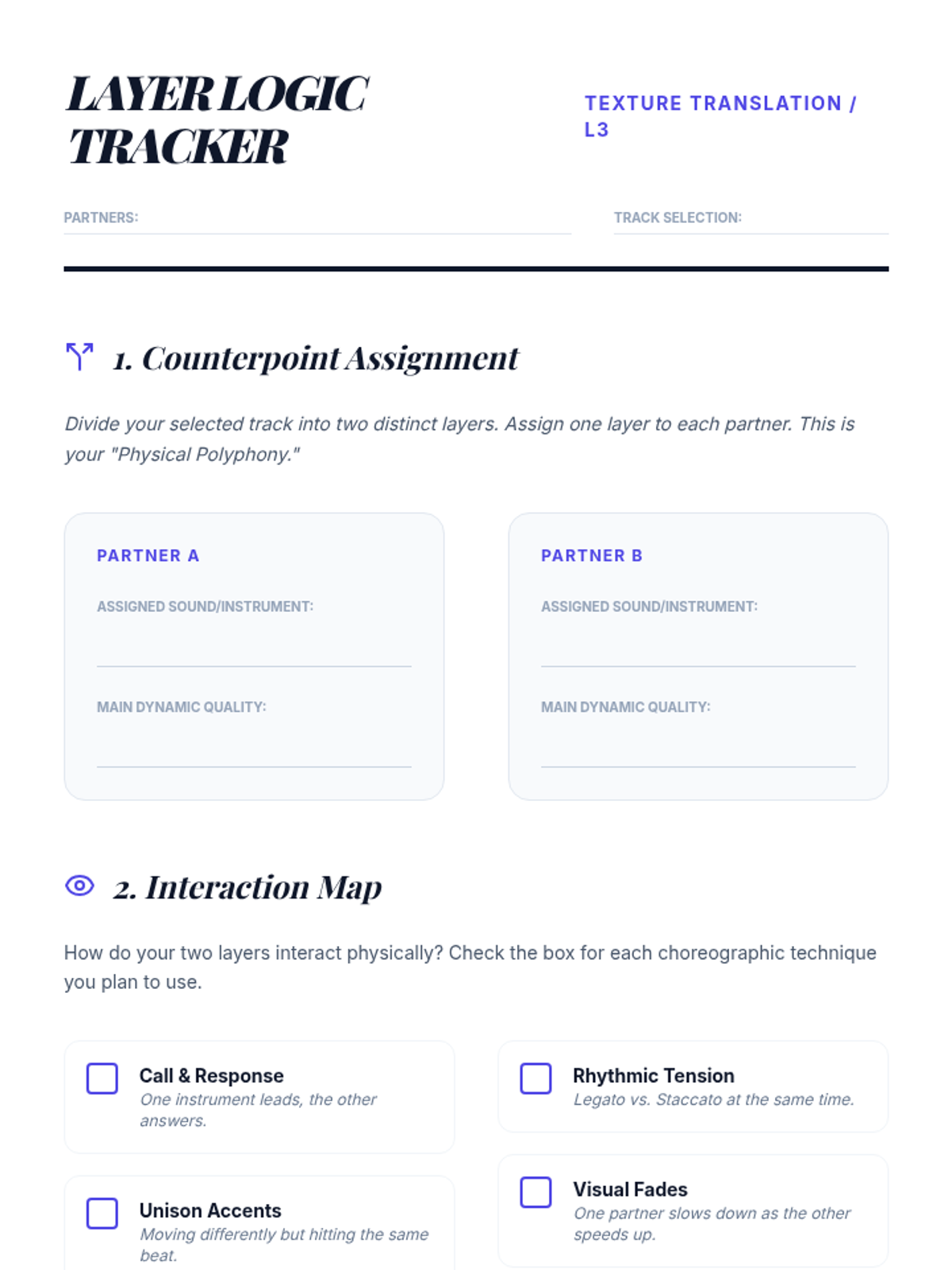
Students translate specific musical layers (percussion vs. melody) into physical movement, exploring counterpoint and rhythmic layering in pairs. This lesson emphasizes the visualization of auditory texture.
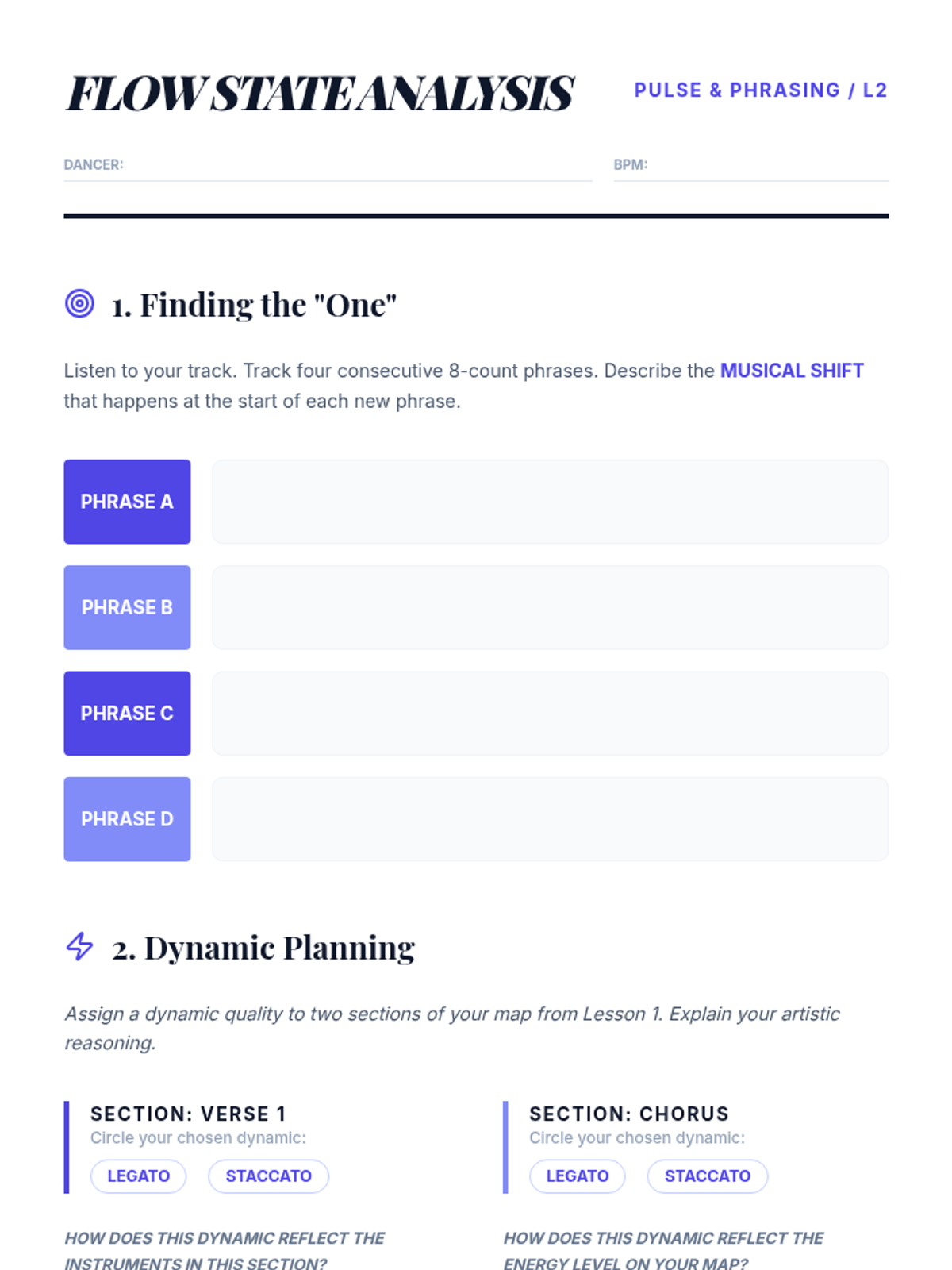
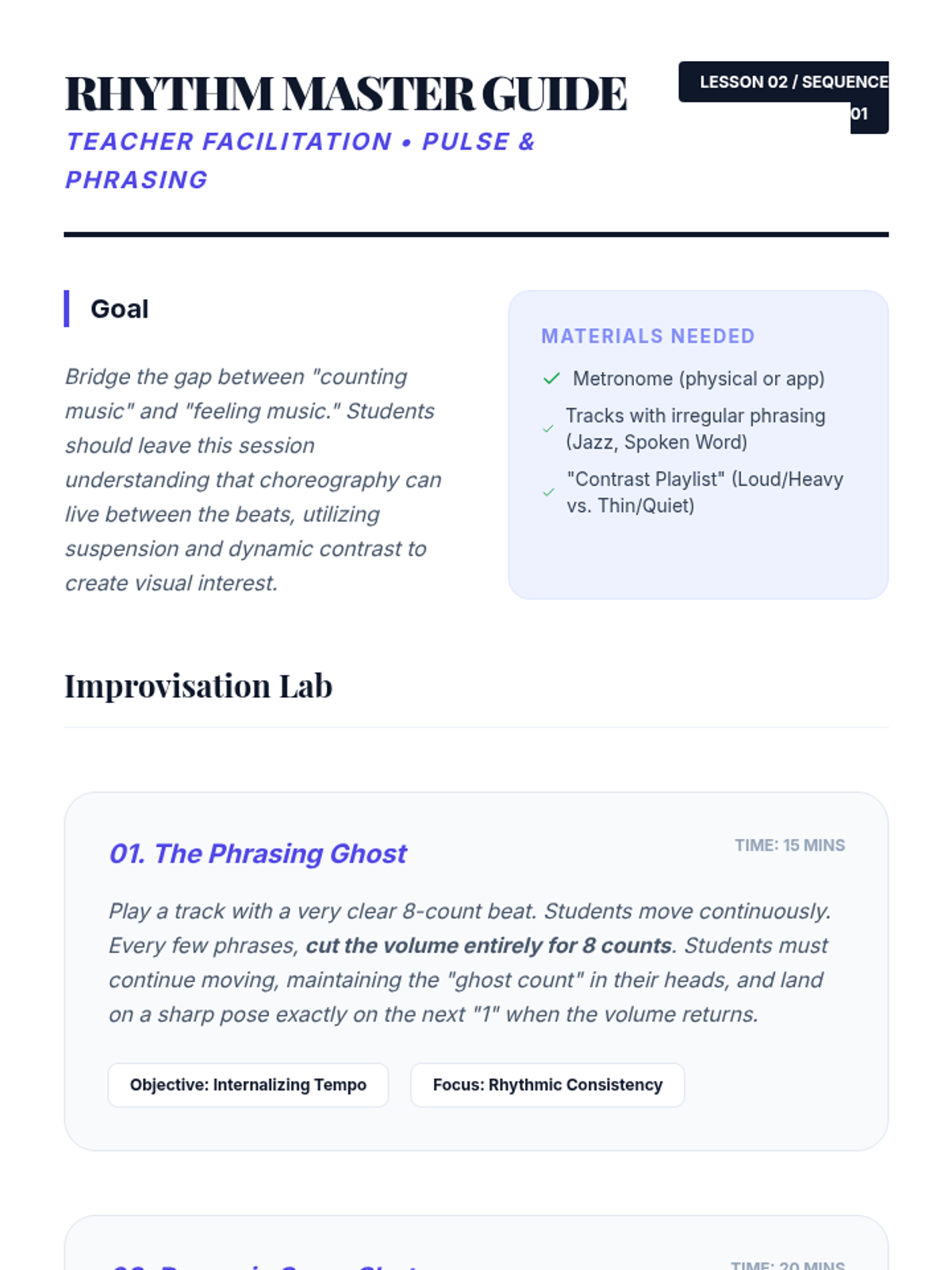
Focusing on 8-count phrases and dynamic qualities like legato and staccato, students explore moving 'through' the music rather than just on the beat. Exercises emphasize immediate physical response to shifts in musical style.
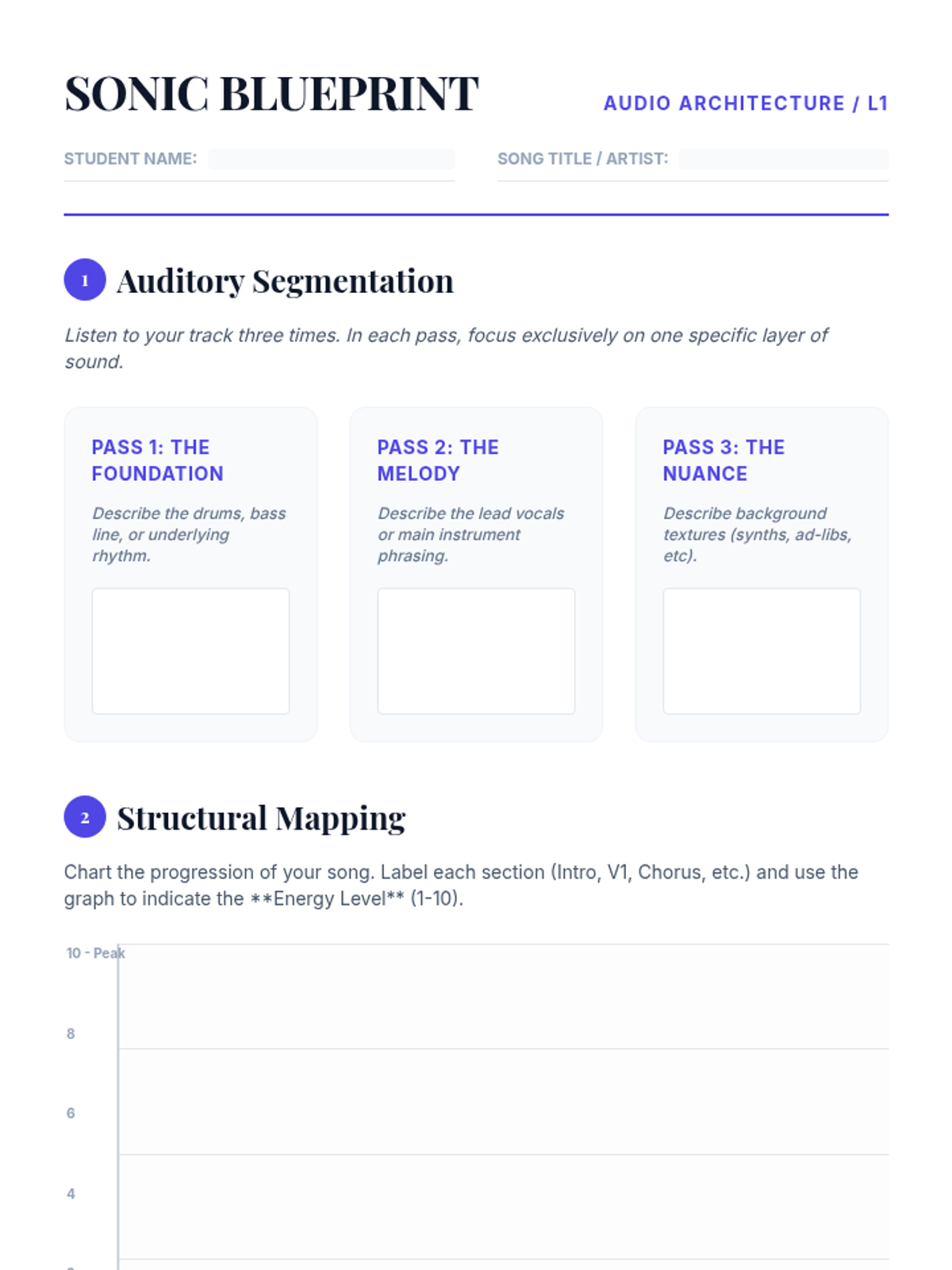
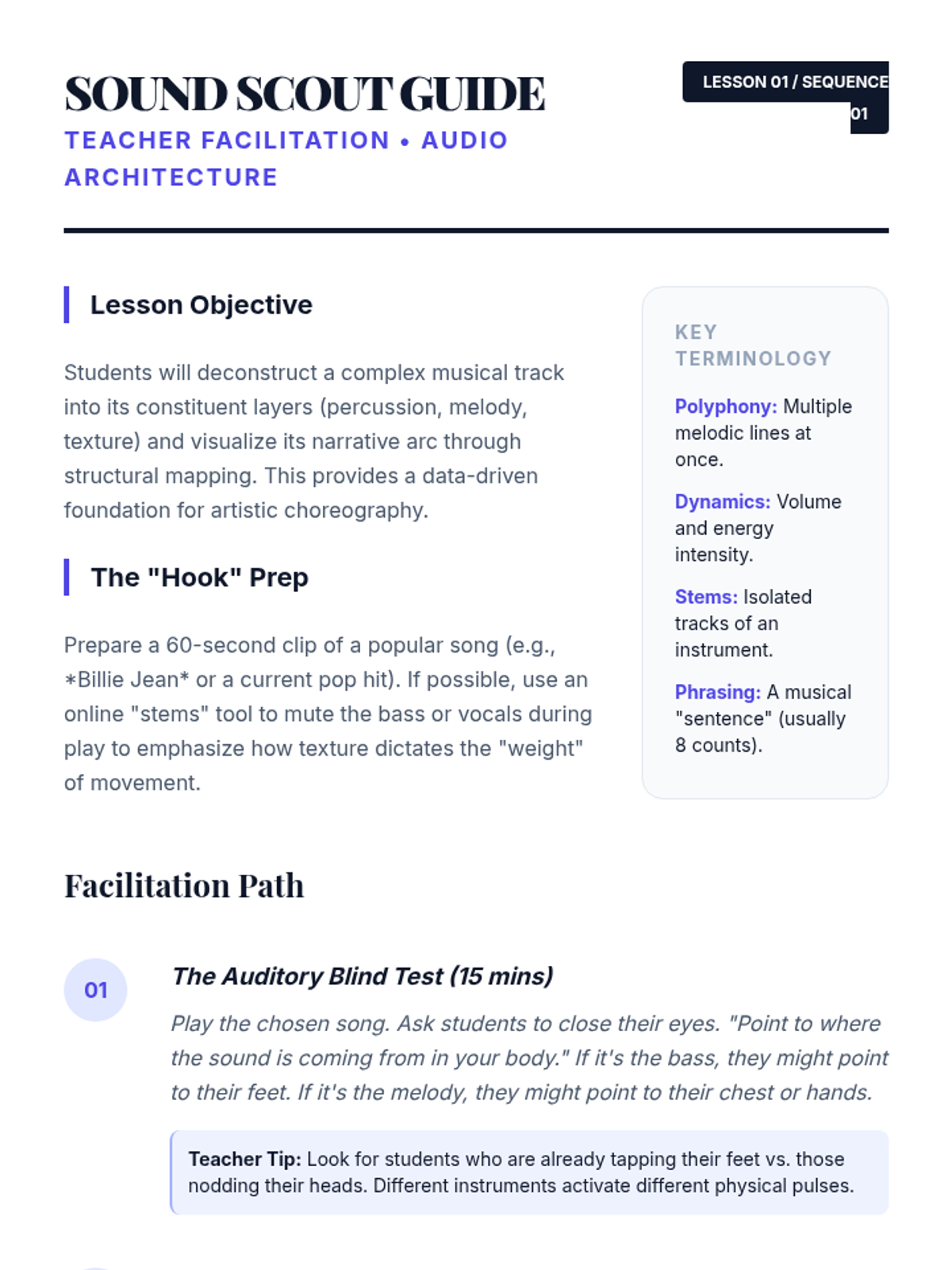
Students learn to isolate musical layers and create a visual 'map' of a song's structure, identifying the intro, verses, choruses, and dominant instruments. This mapping serves as the foundation for choreographic planning.
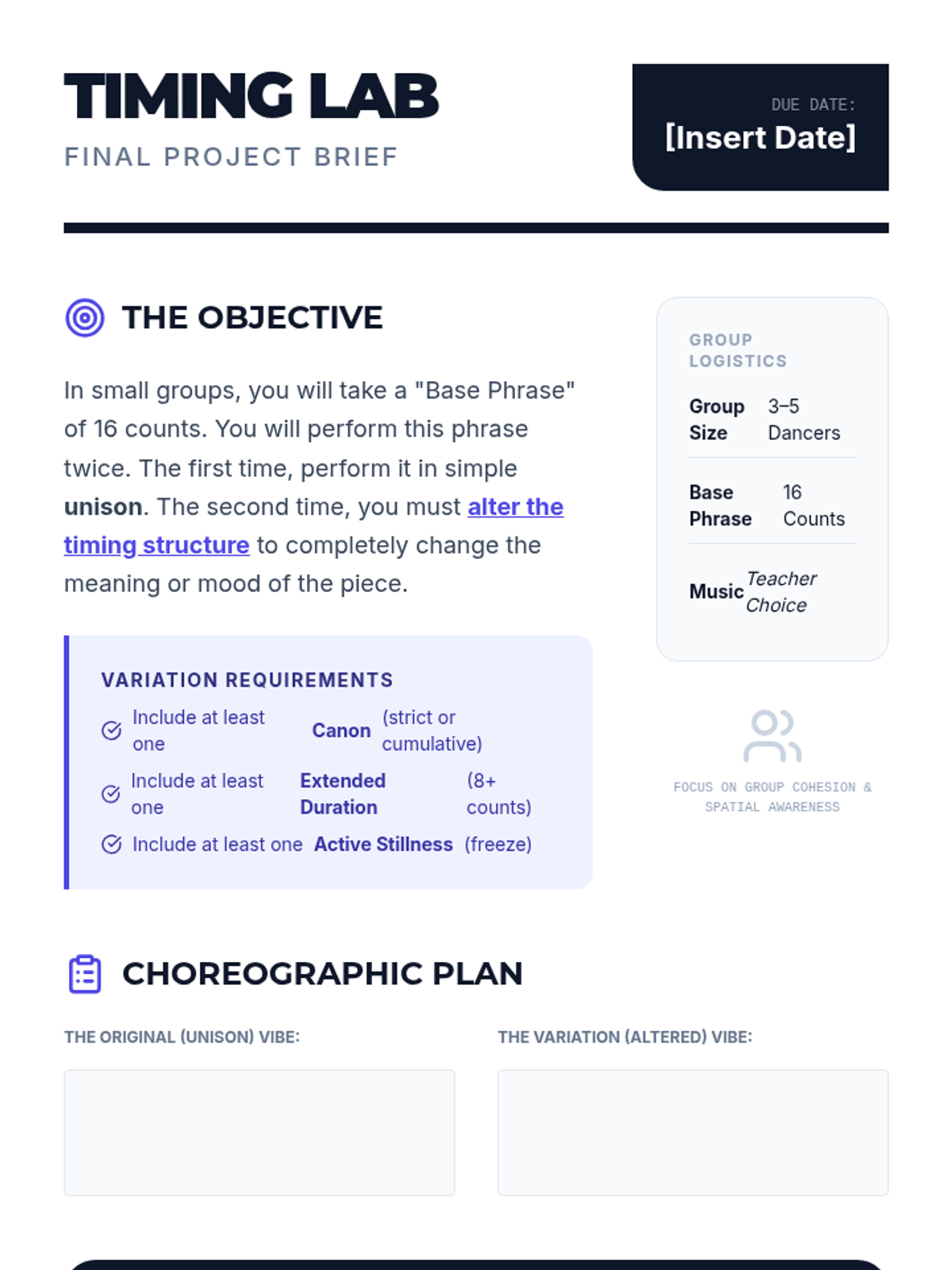
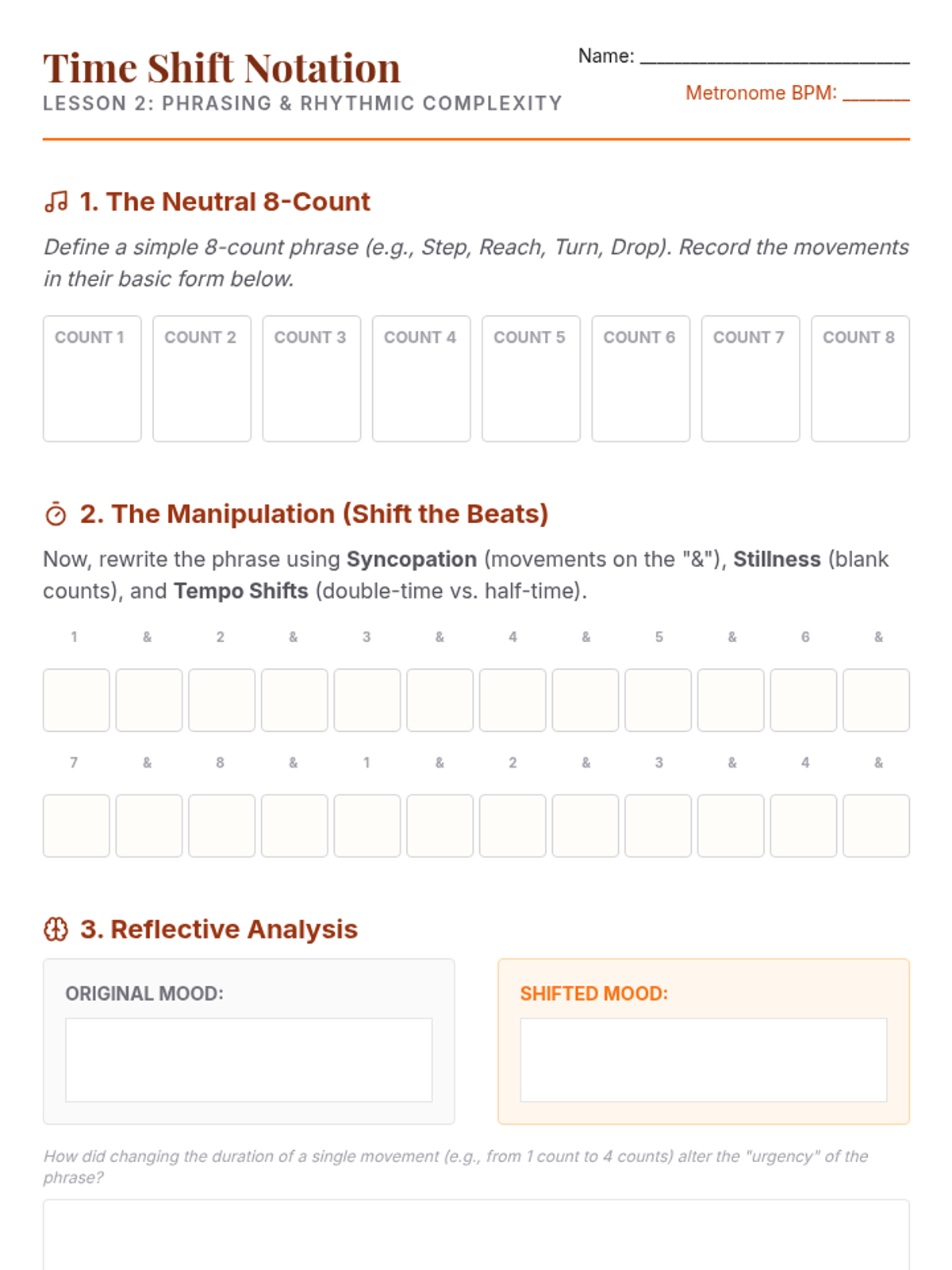
In small groups, students take a known short phrase and alter its timing structure to alter its meaning. They present the variations and discuss how time manipulation changed the audience's interpretation.
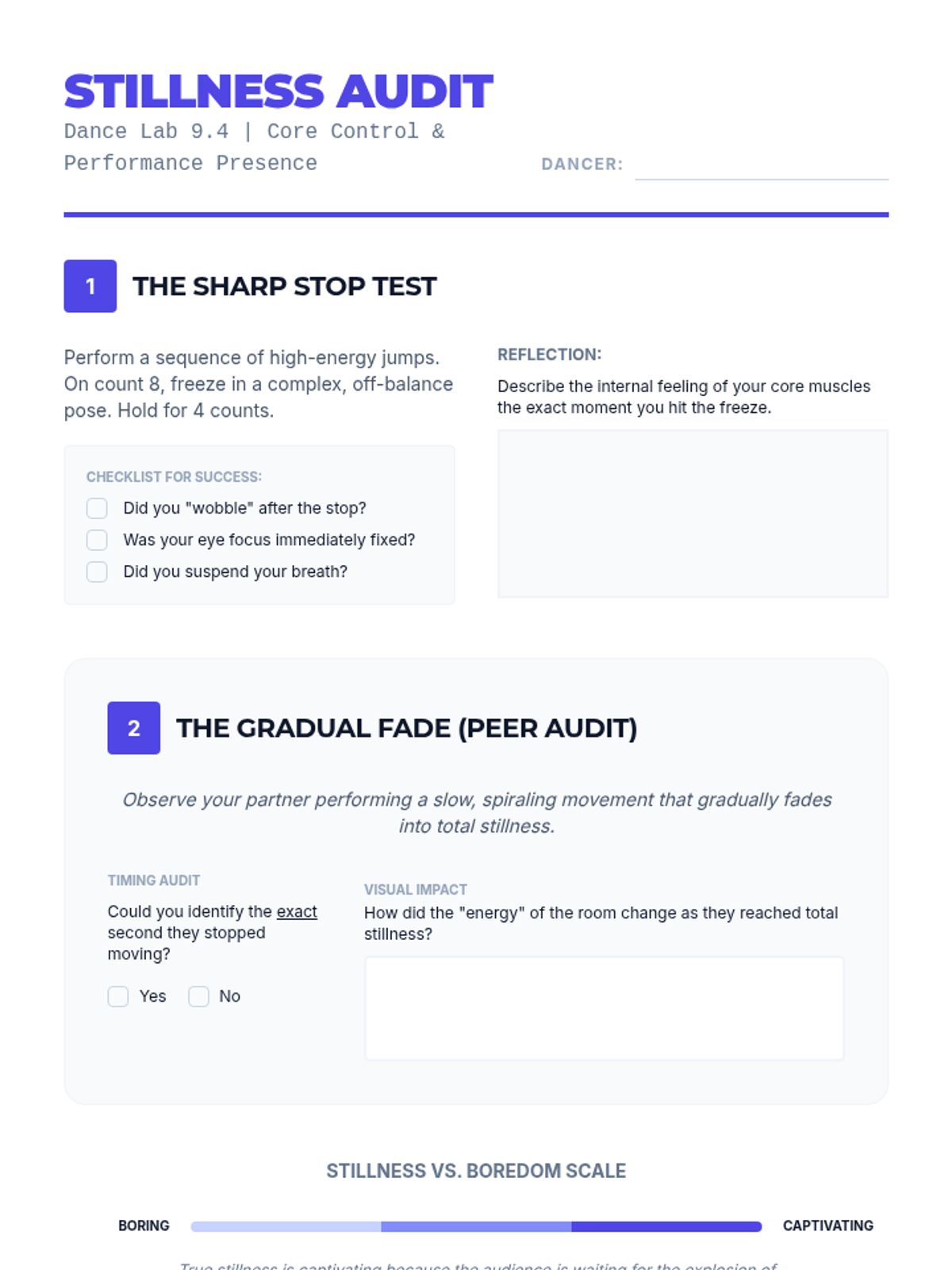
Students investigate the power of the 'stop' or 'freeze' in a rhythmic sequence. They practice freezing on unexpected counts to build core control and dramatic tension.
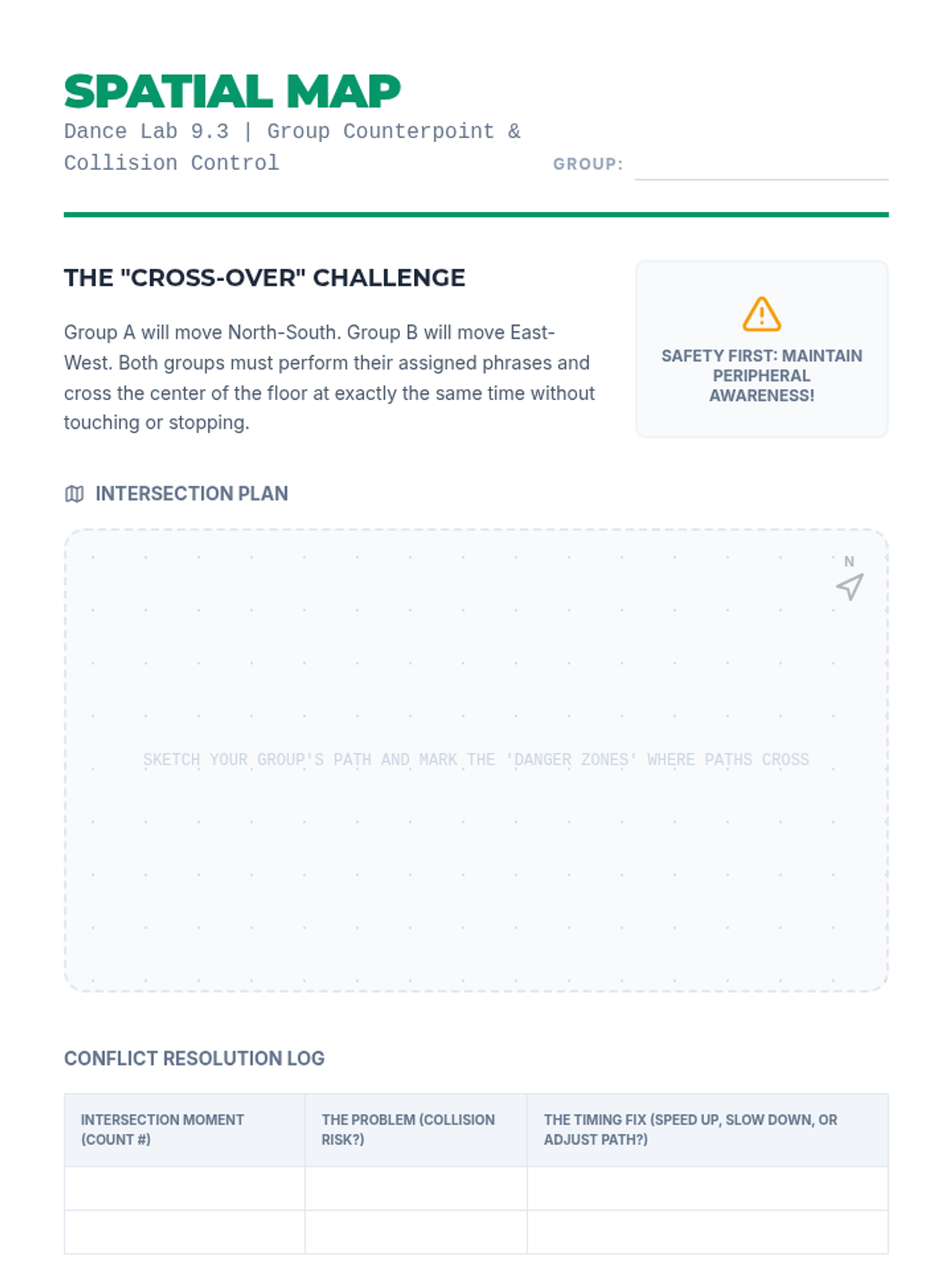
The class splits into two groups performing different movement phrases that intersect at specific moments. Students focus on the spatial timing required to avoid collisions and create interesting visual patterns.
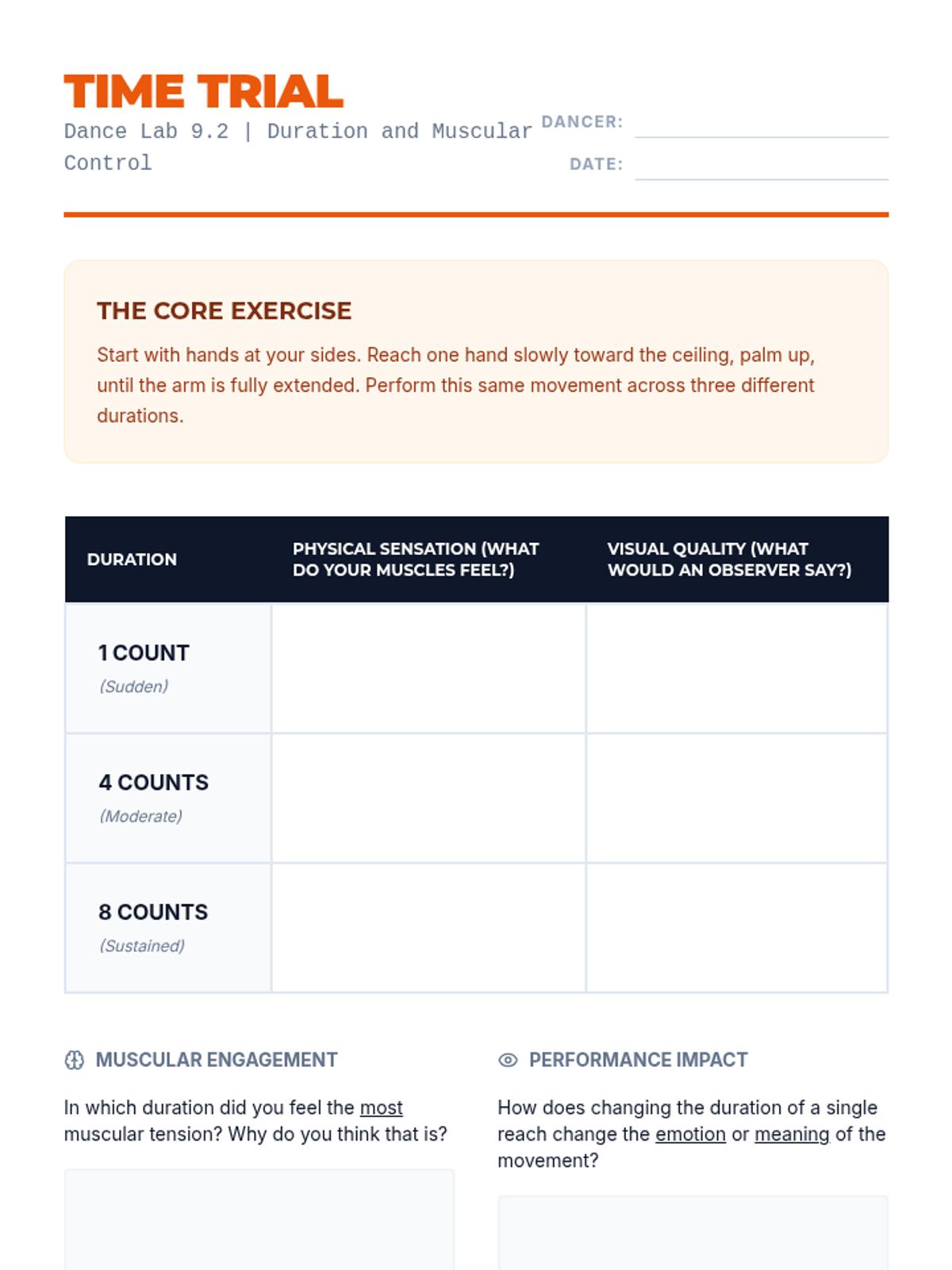
Students take a single movement and perform it over 1 count, 4 counts, and 8 counts. They analyze how the muscular tension and quality of movement change based on the duration allowed.
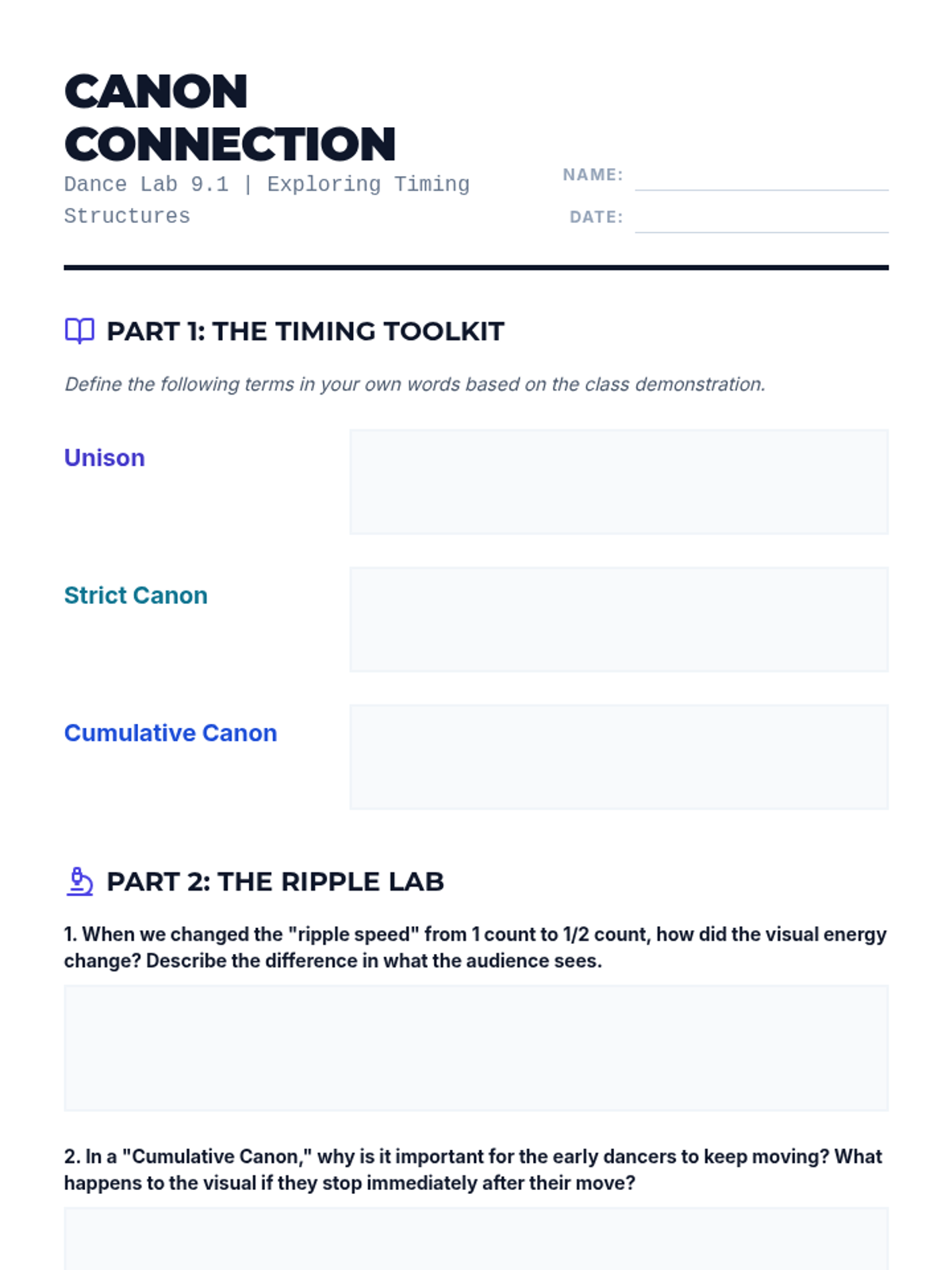
Students learn the difference between unison, strict canon, and cumulative canon through simple arm movements and formations. They experiment with how 'ripples' of movement travel through a line of dancers at different speeds.
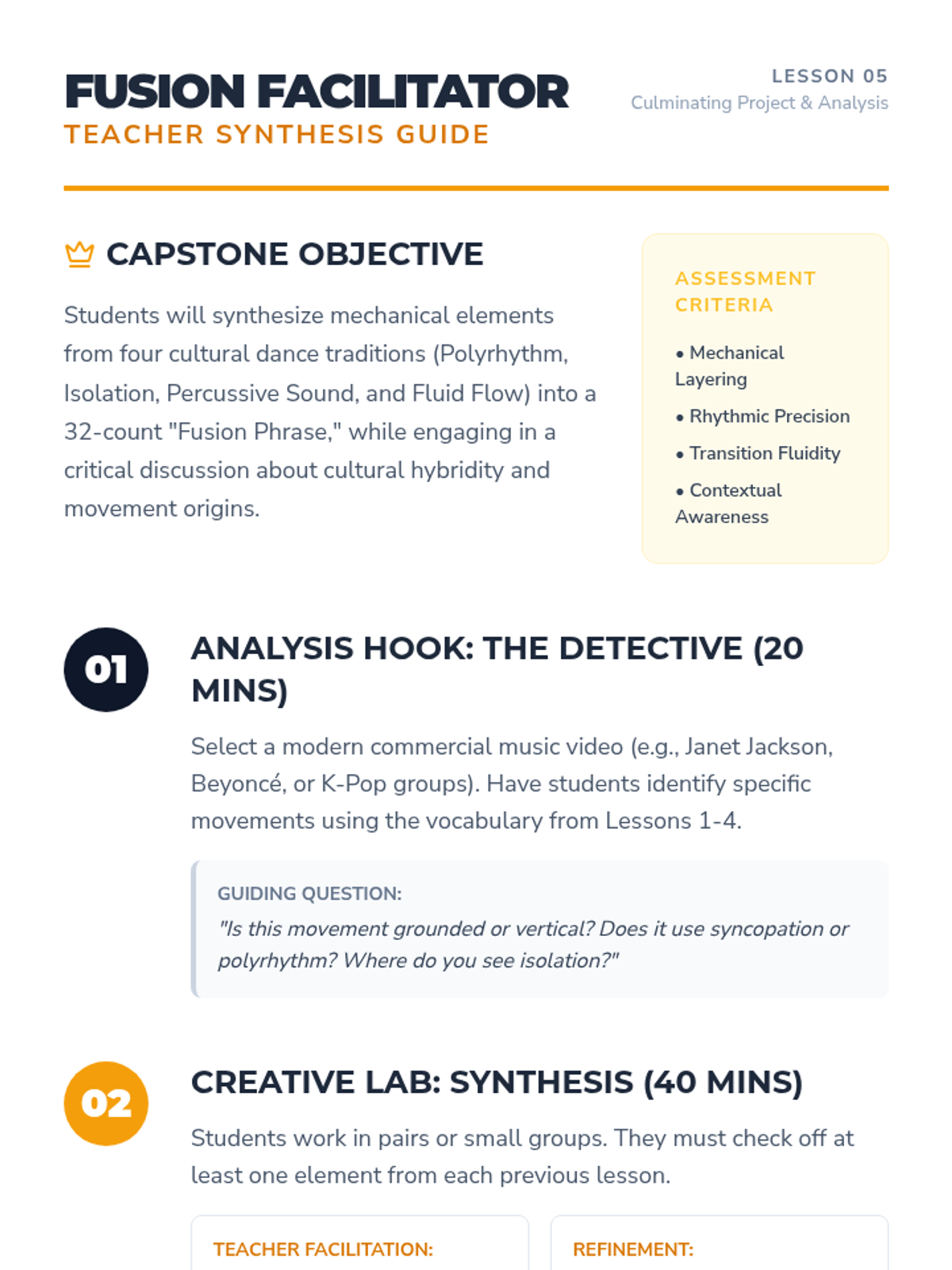
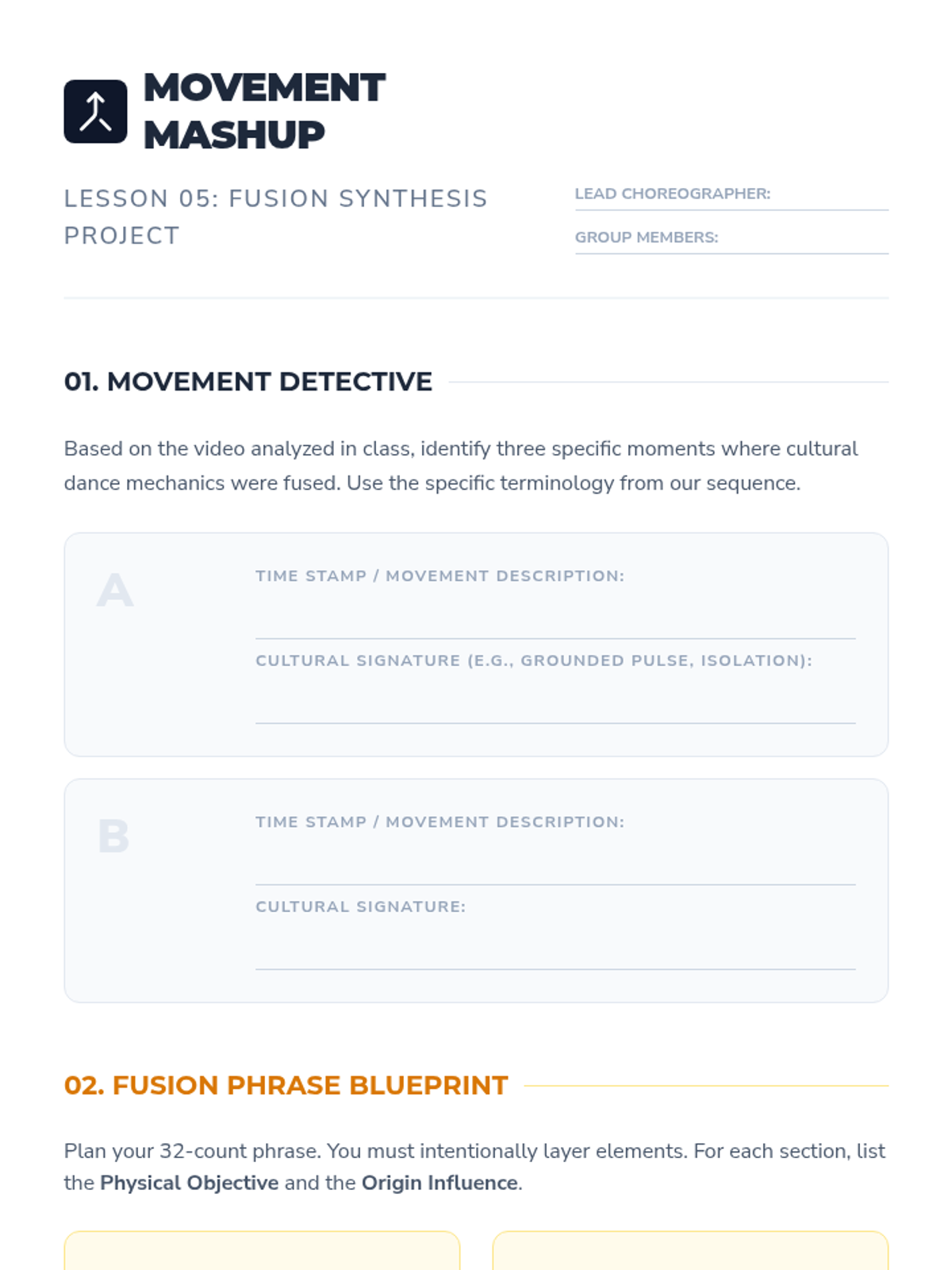
A culminating project where students synthesize grounded, isolated, and fluid movements into a unique 'fusion' phrase while analyzing the cultural implications of modern dance hybrids.
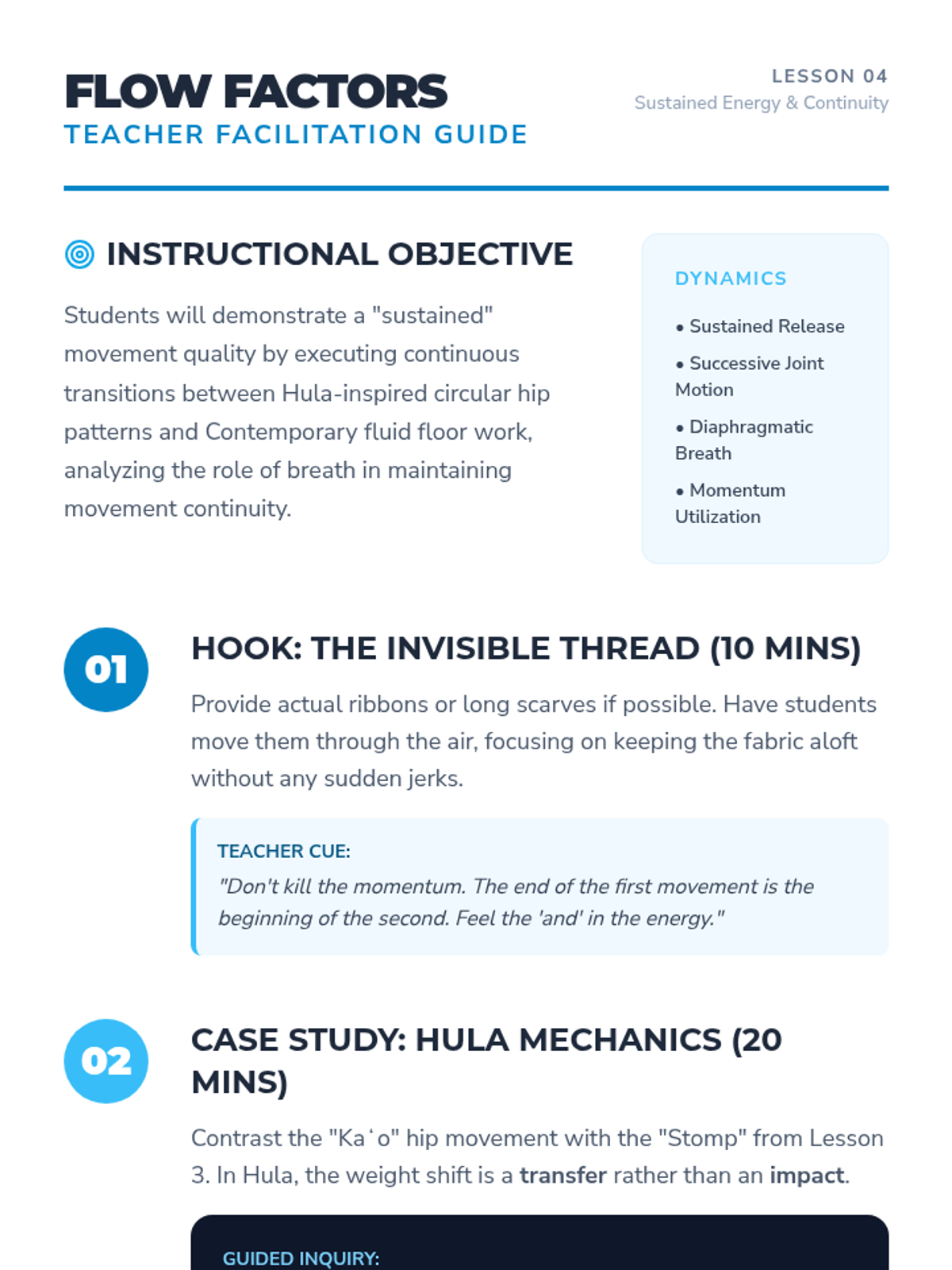
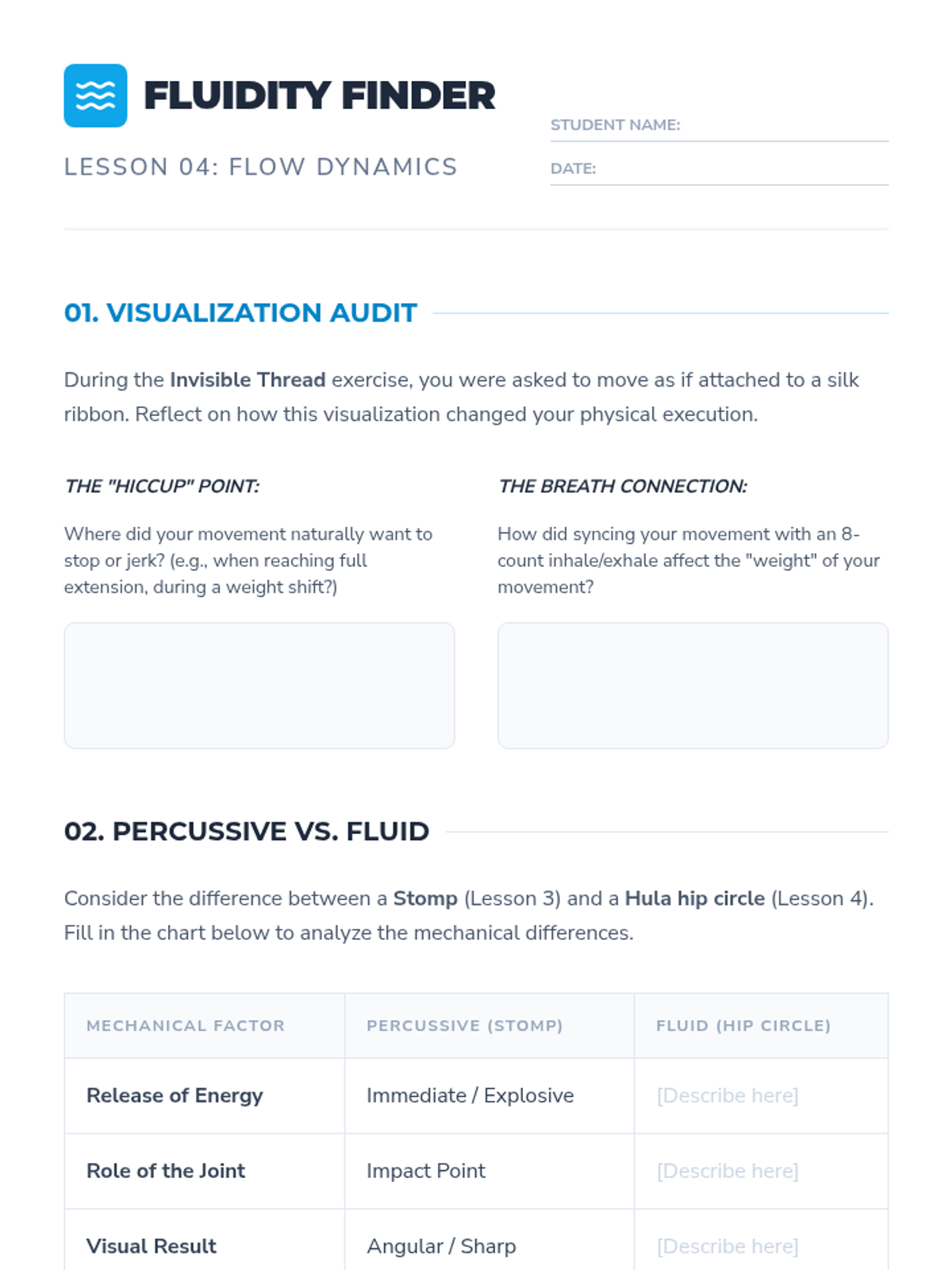
Contrasting percussive styles, students explore continuous flow and sustained energy in Hula and Contemporary dance forms.
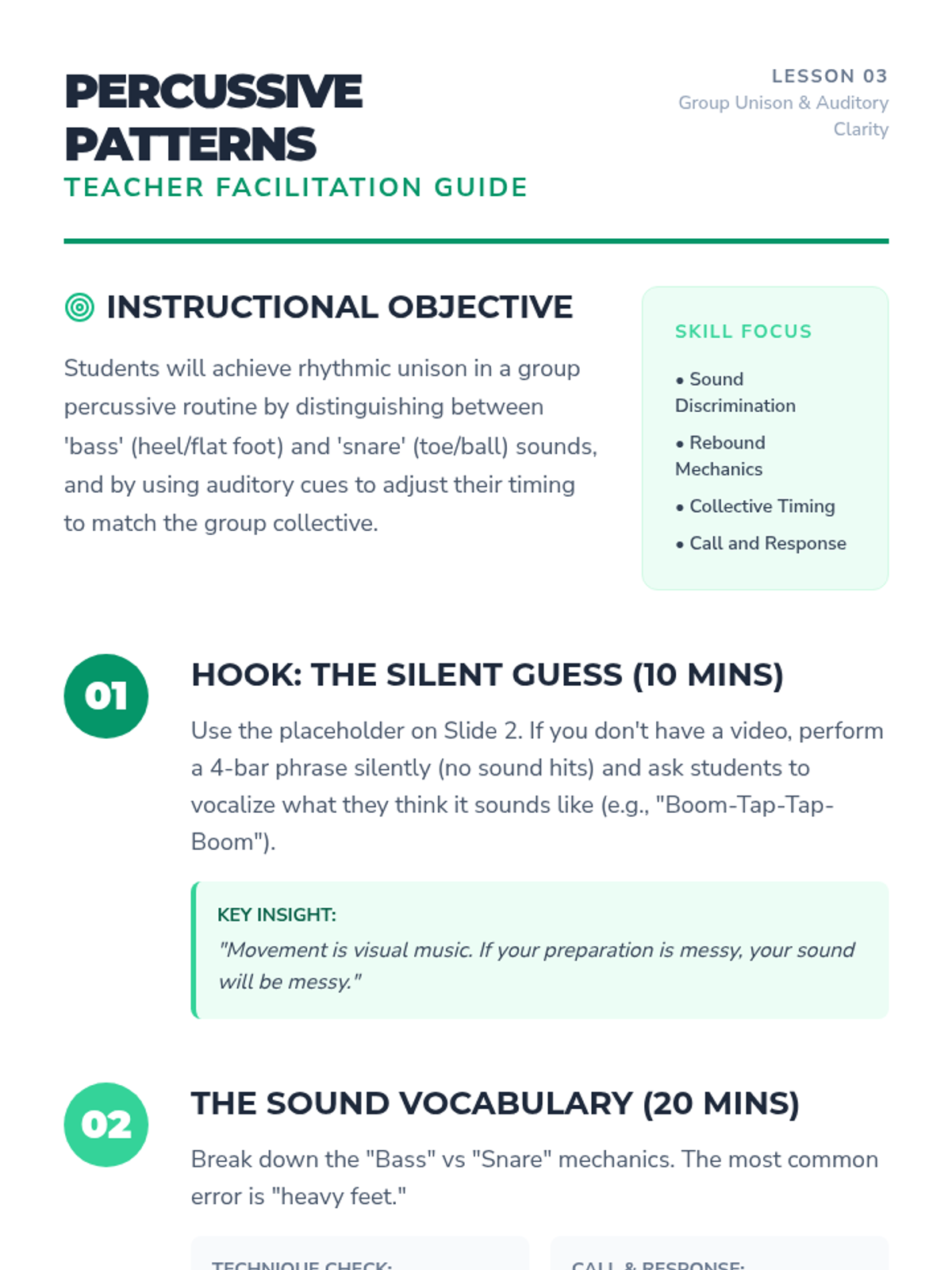
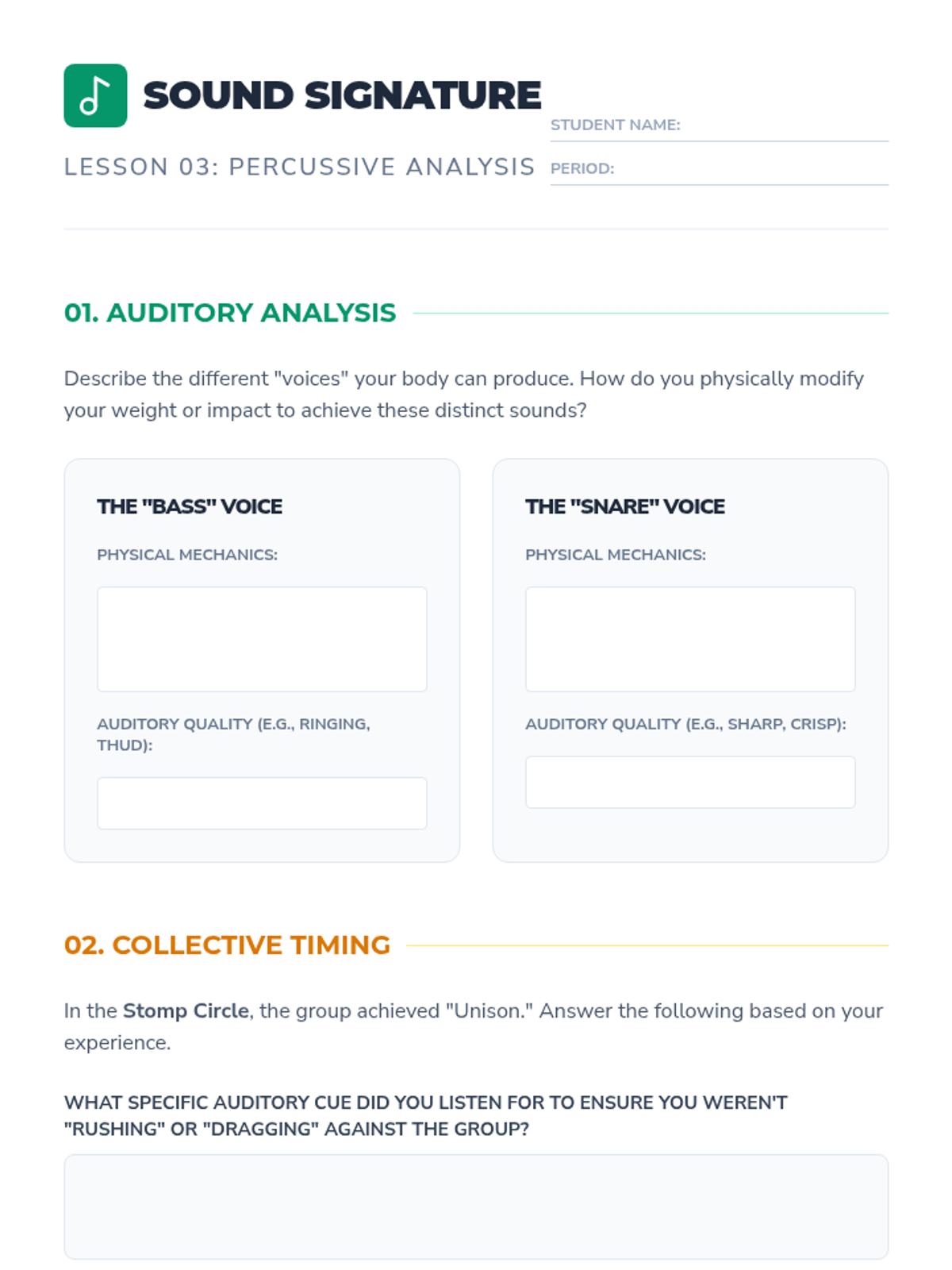
An investigation into Step, Tap, and Flamenco where the body acts as a percussion instrument, emphasizing clarity of sound and group unison.
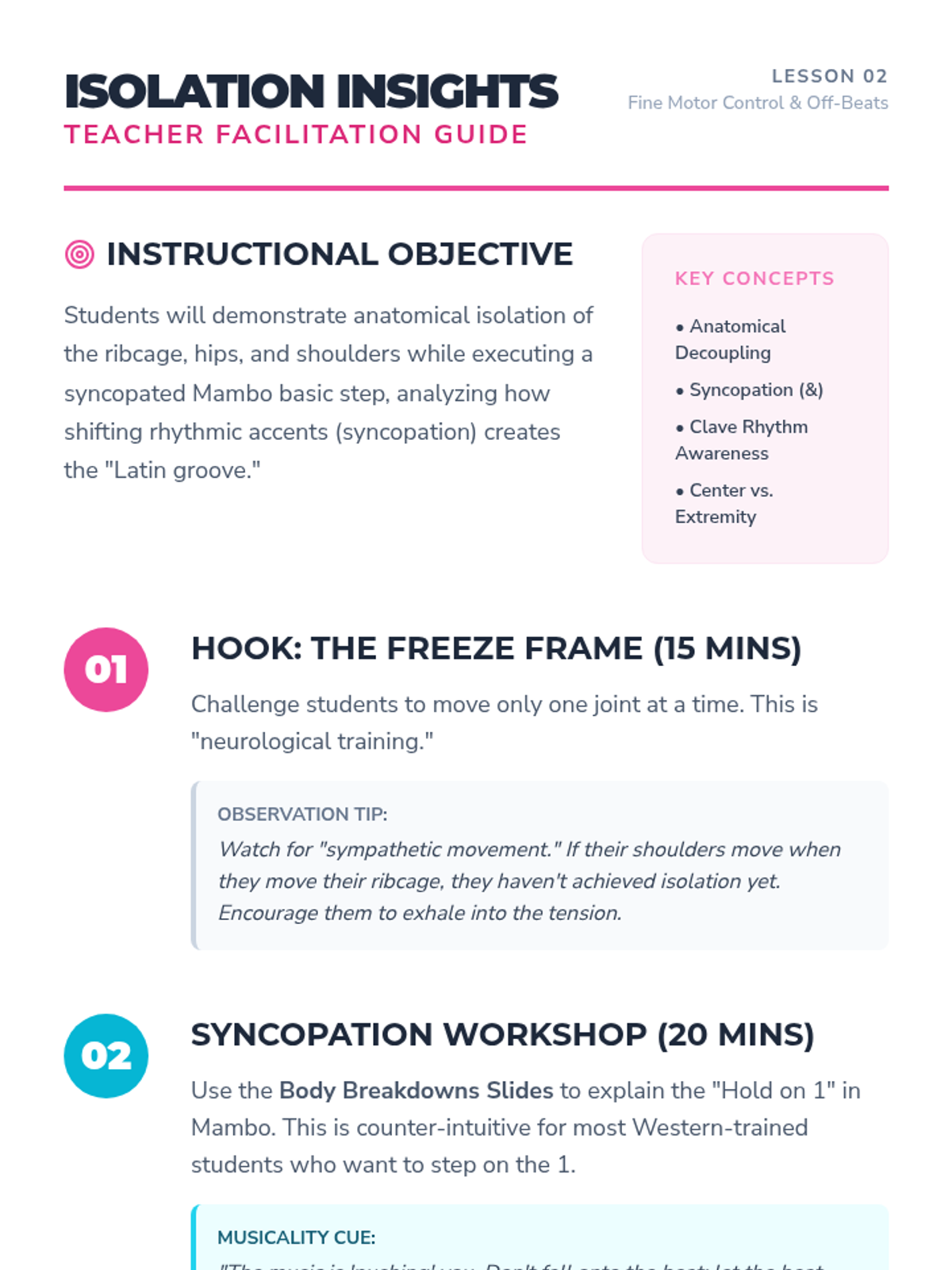
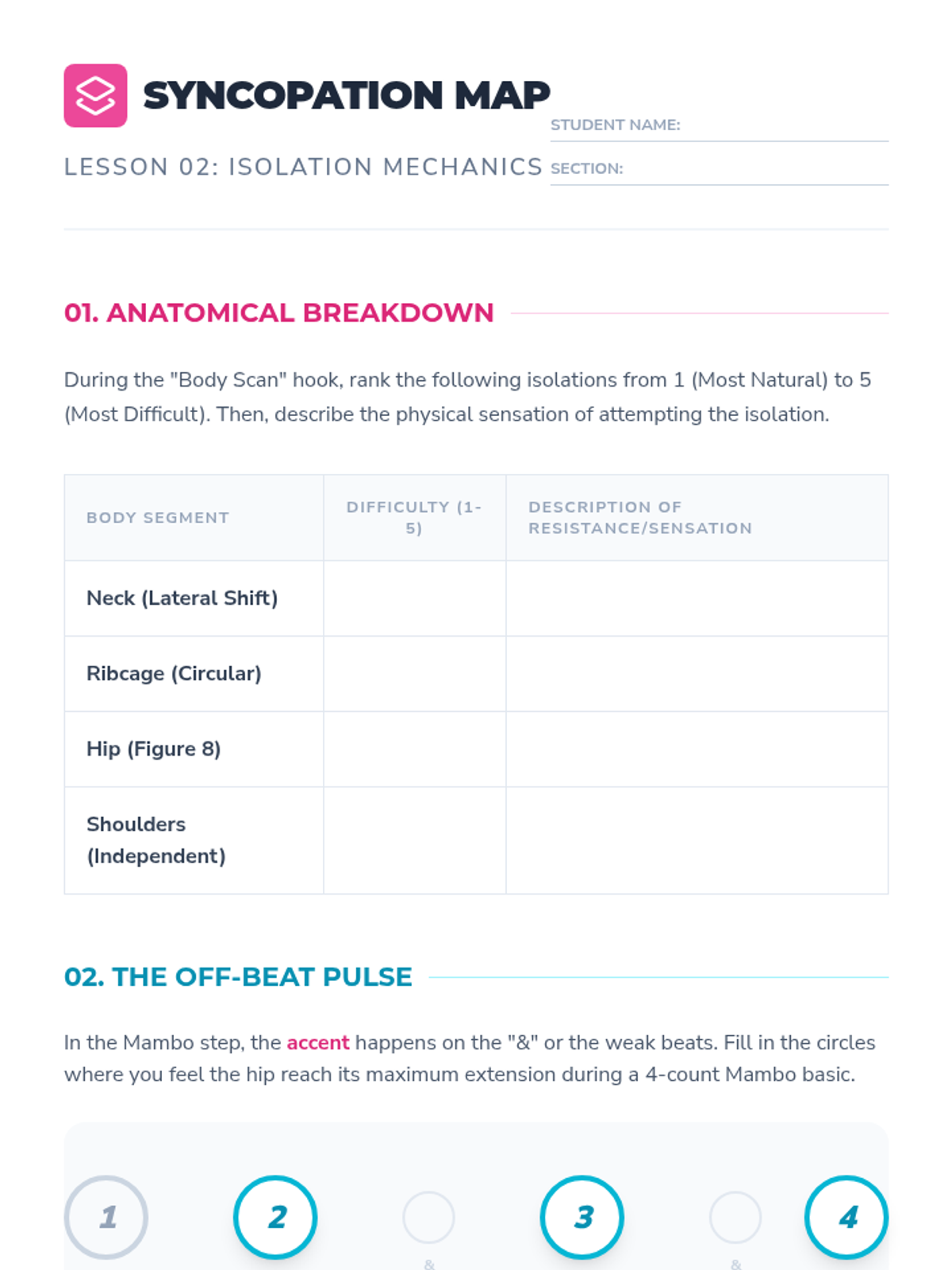
Focusing on Jazz and Latin dance, students practice body isolations and syncopated footwork to develop fine motor control and rhythmic independence.
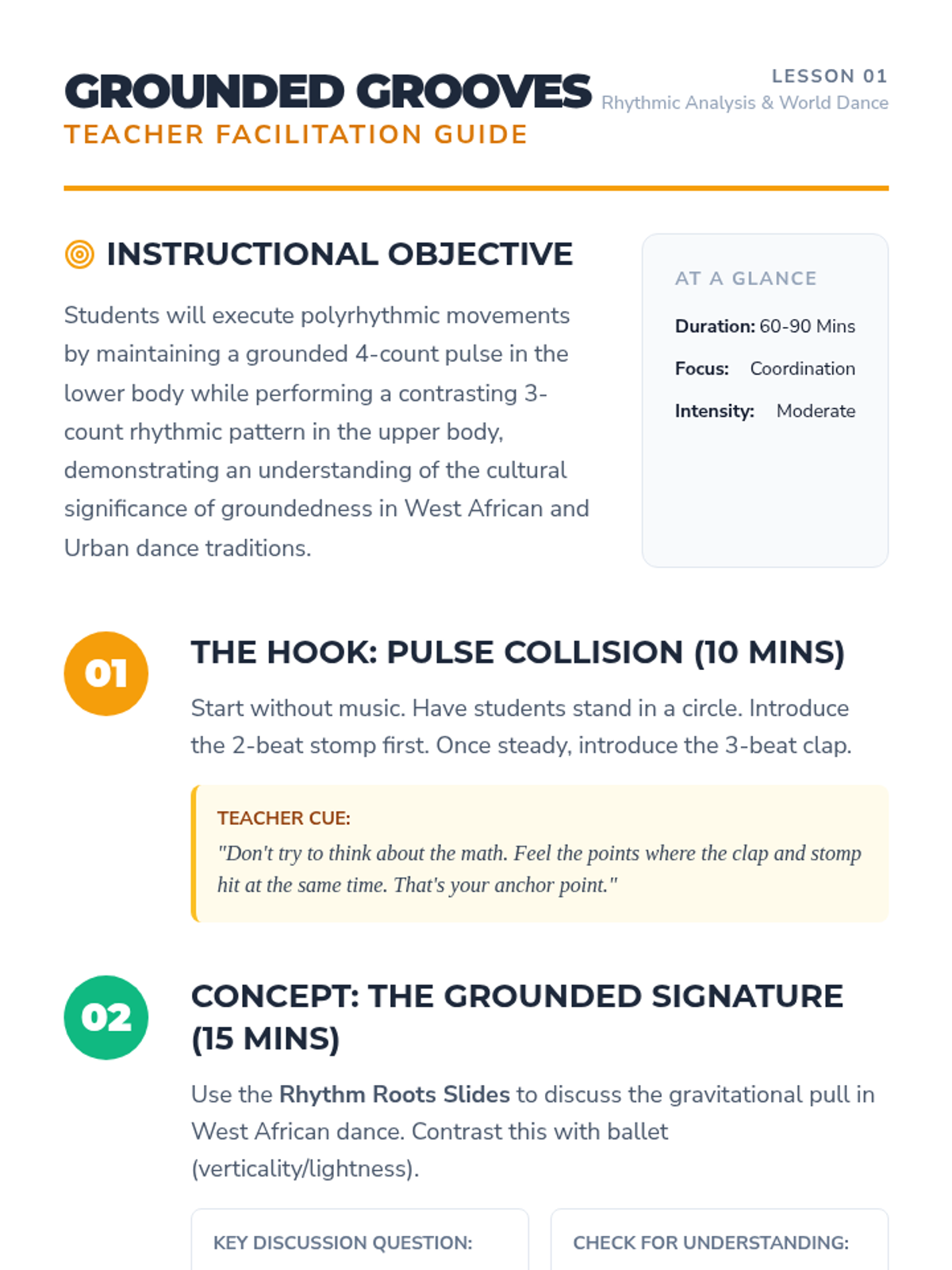
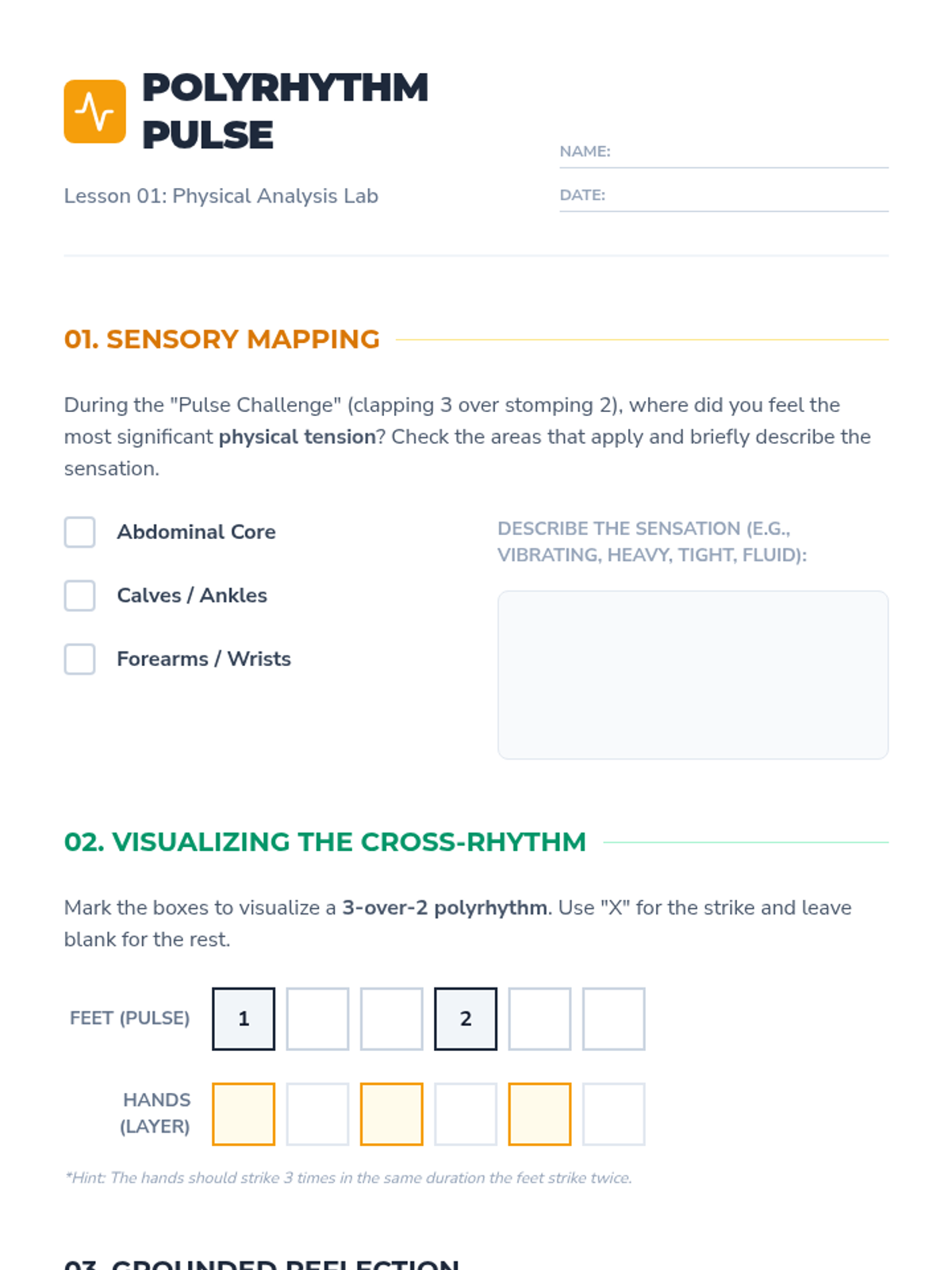
Students explore the relationship between earth-bound movement and polyrhythm, focusing on West African and Urban traditions through physical coordination and core stability.
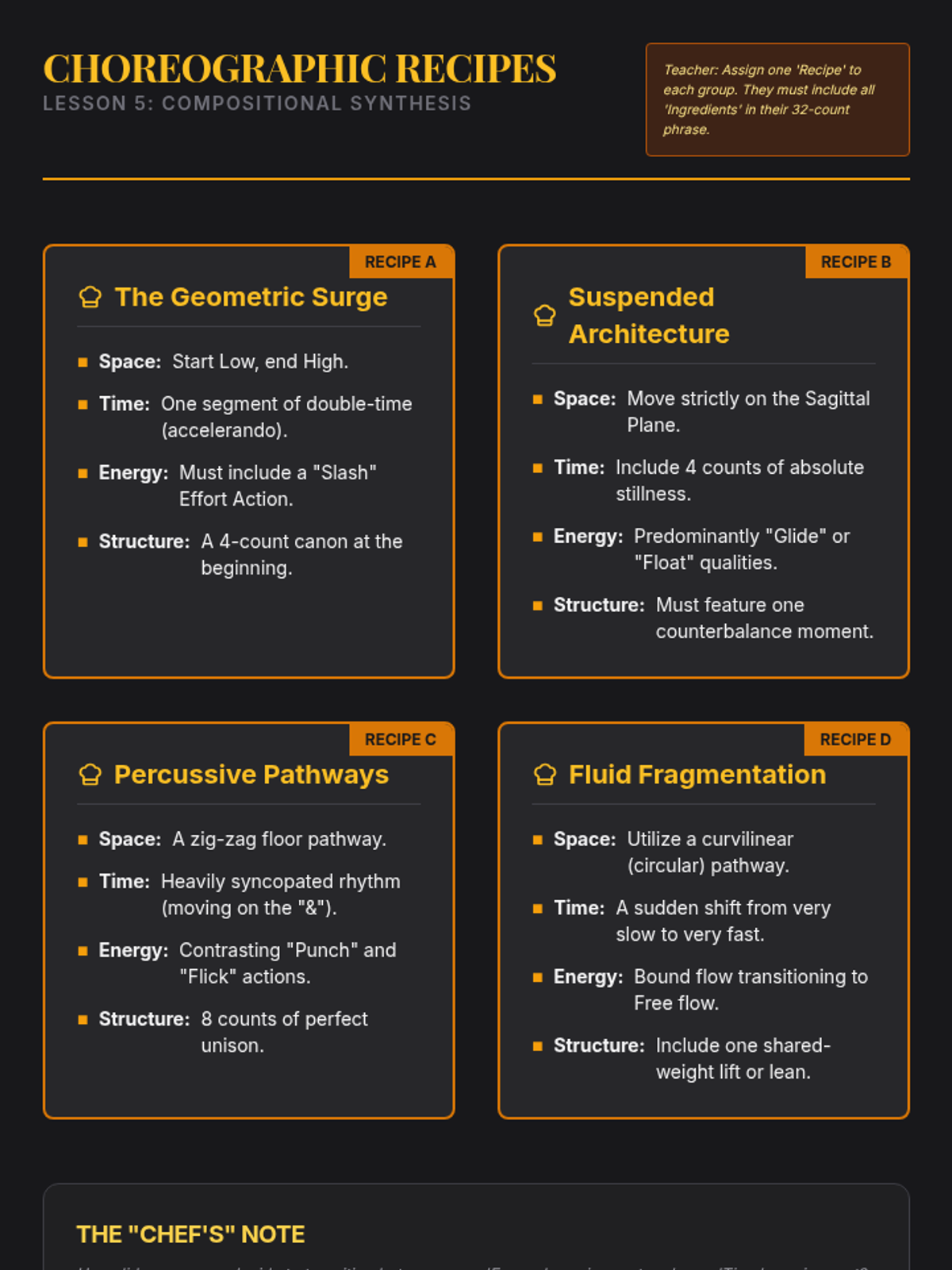
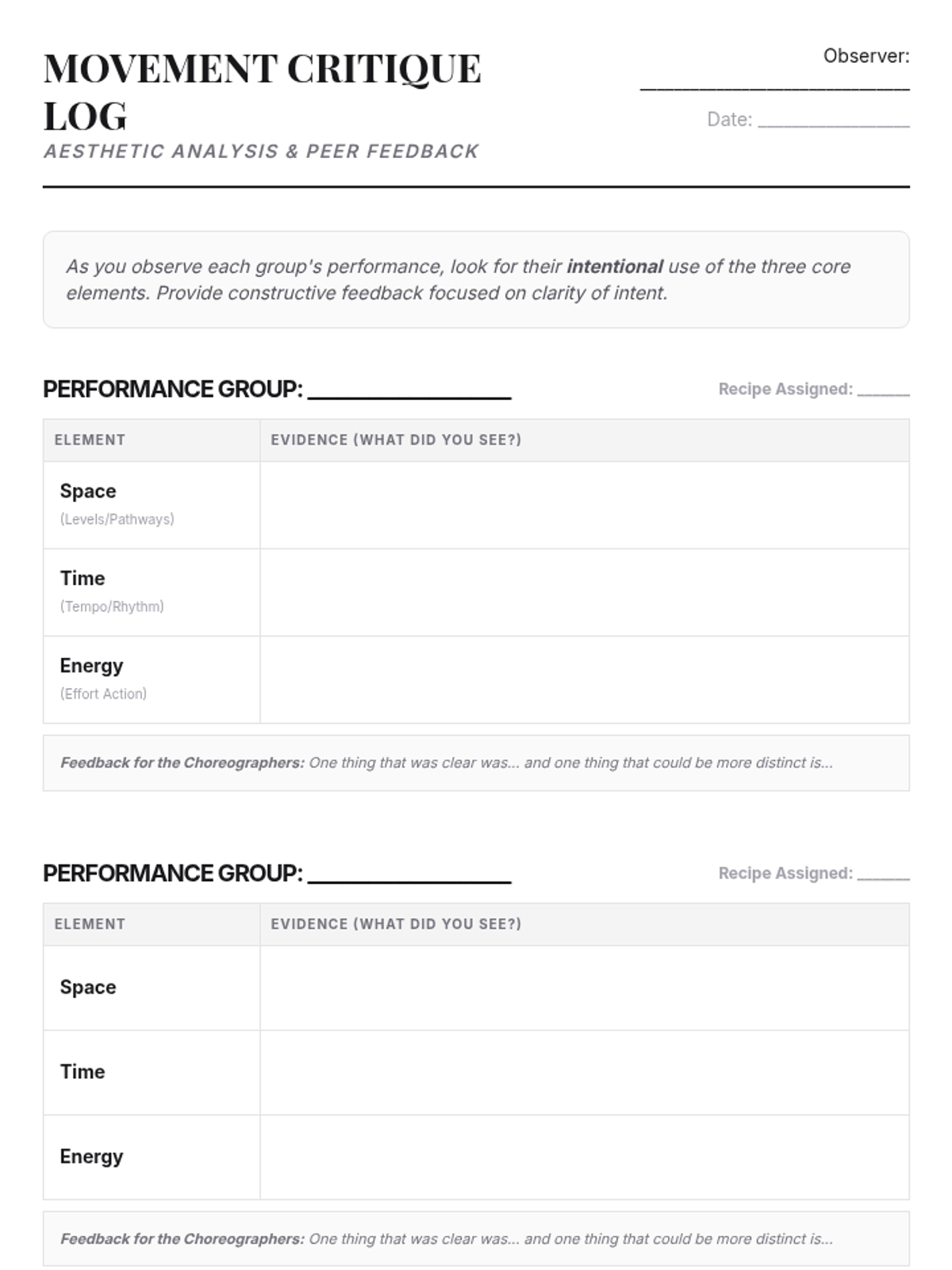
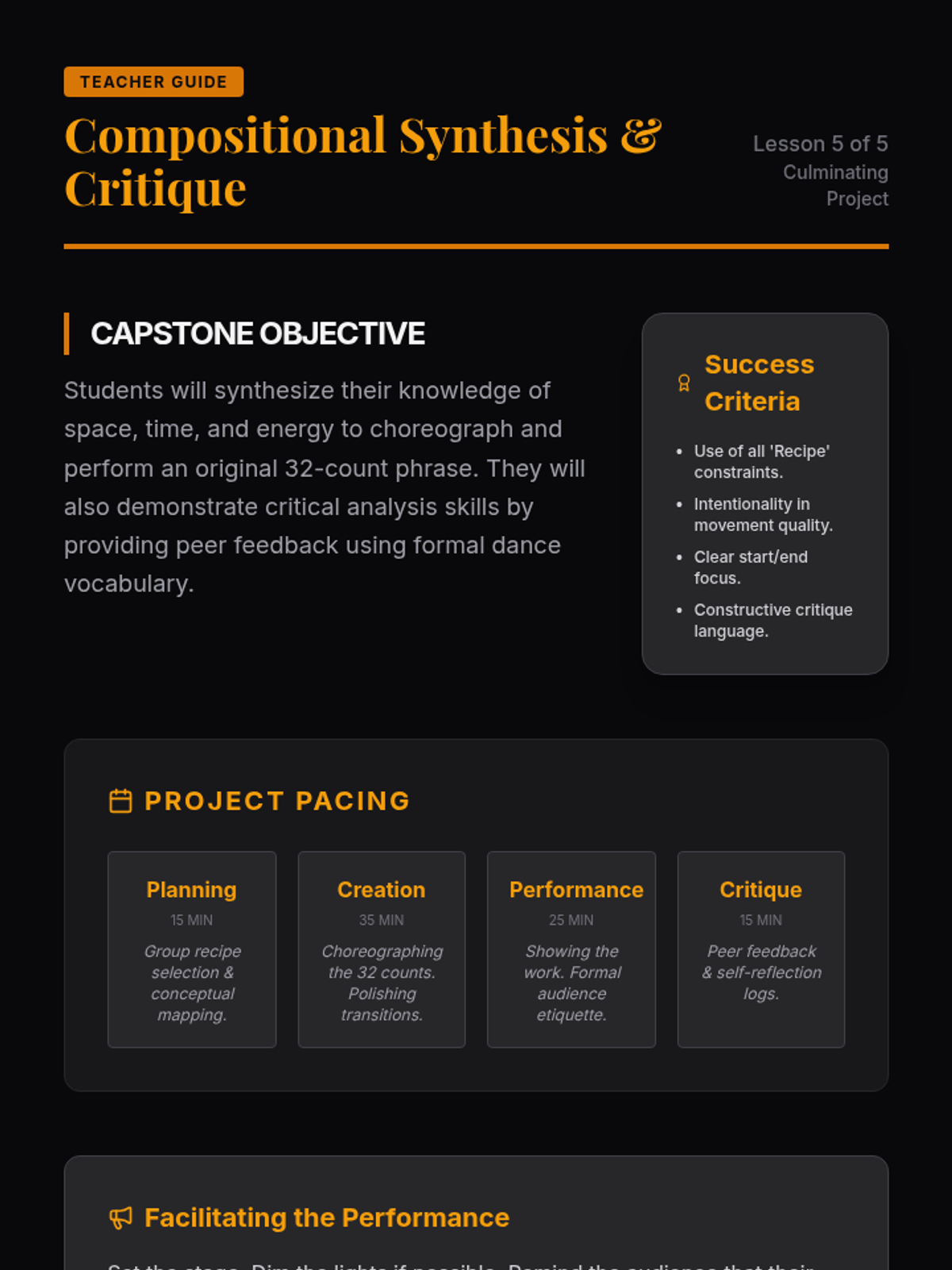
A culminating project where students synthesize space, time, and energy to create and critique original 32-count choreographic phrases.
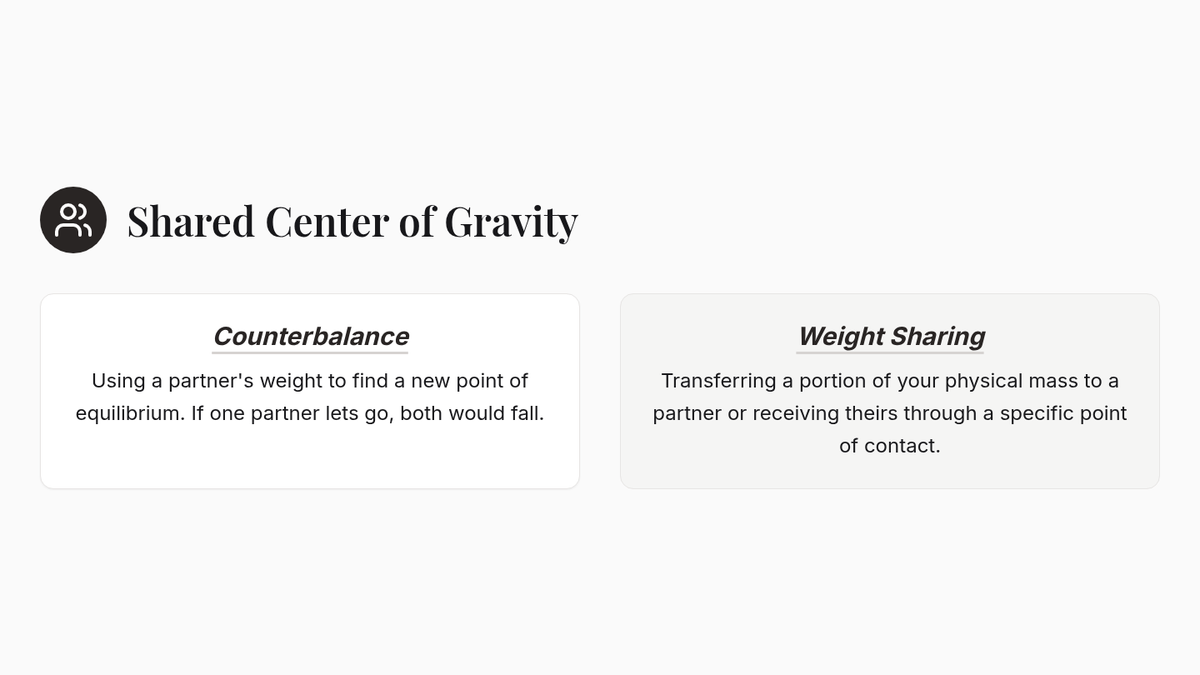
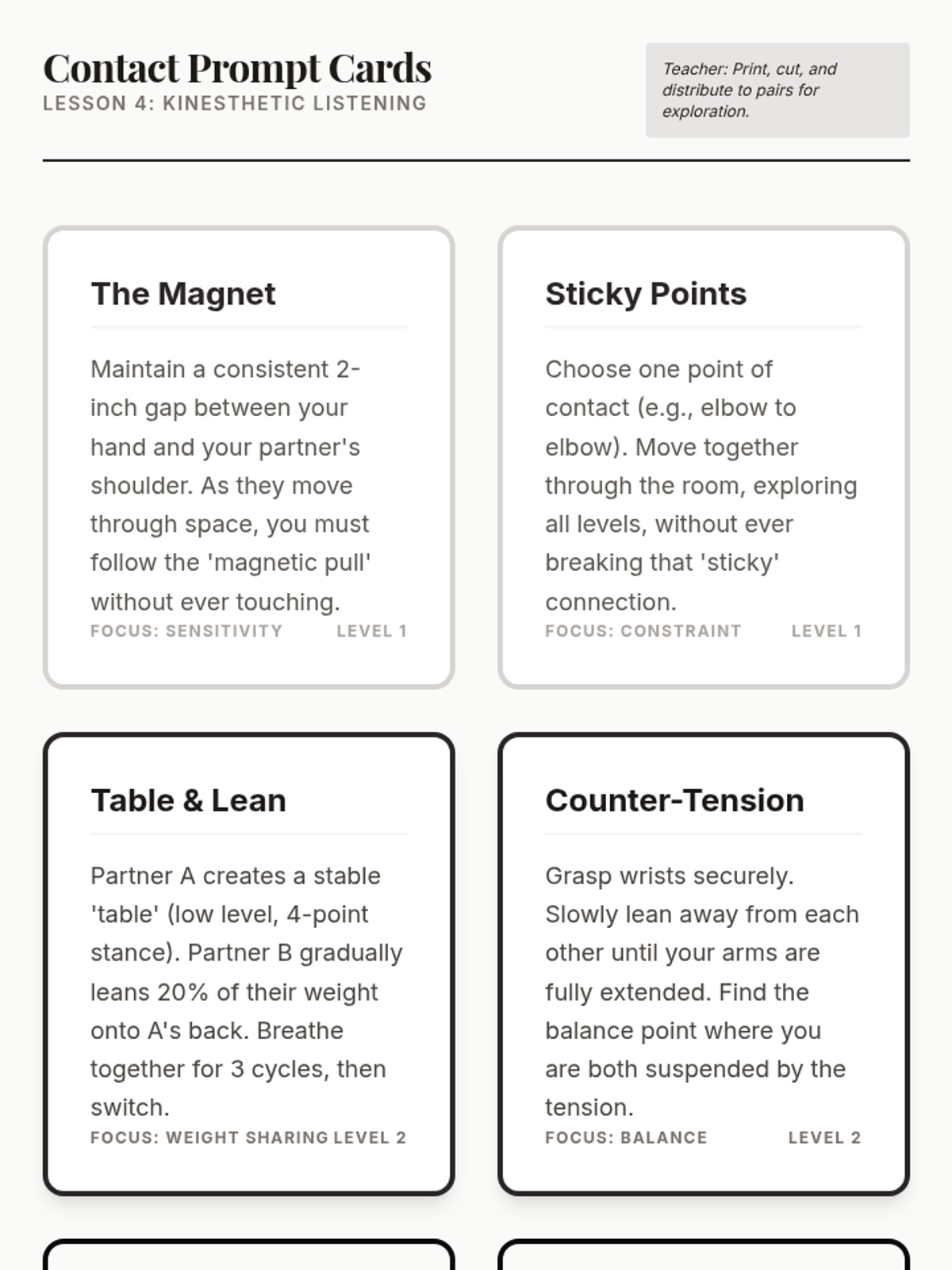
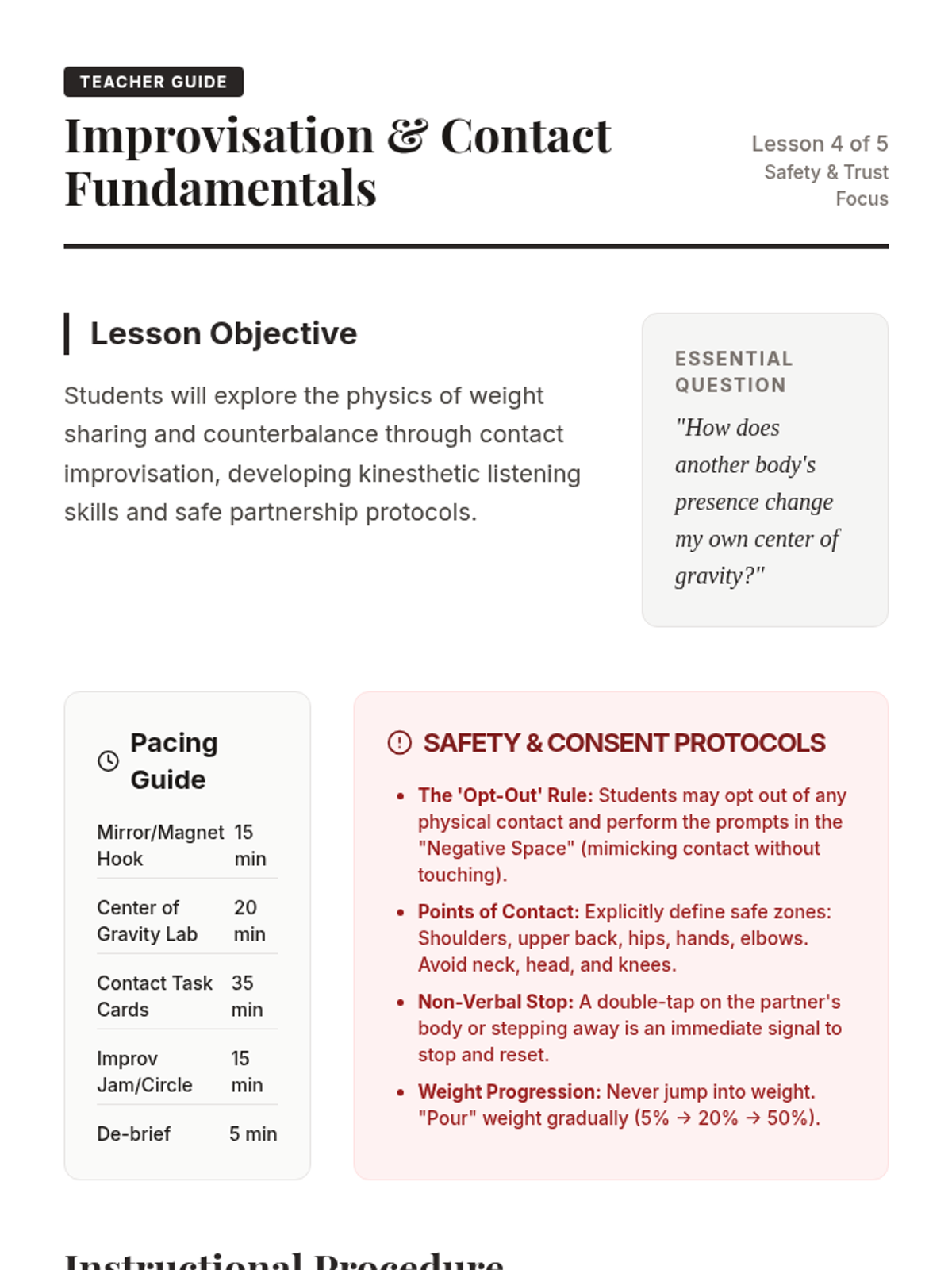
Introduces weight sharing, counterbalance, and kinesthetic listening through contact improvisation and partnership exercises.
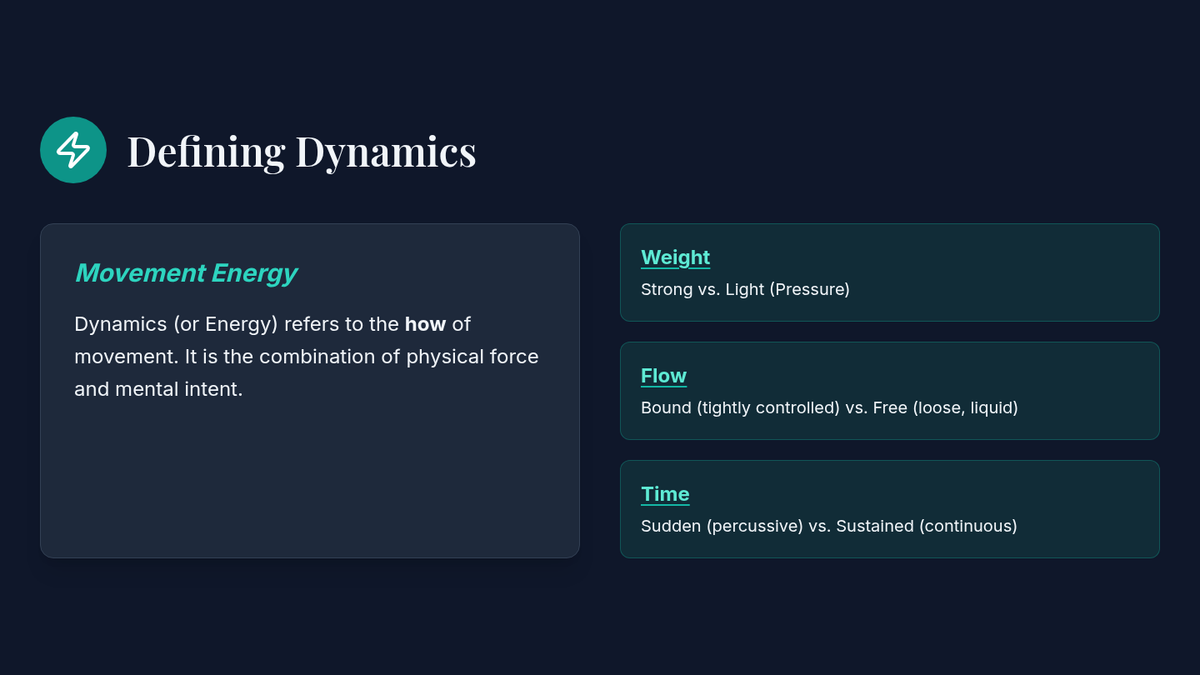
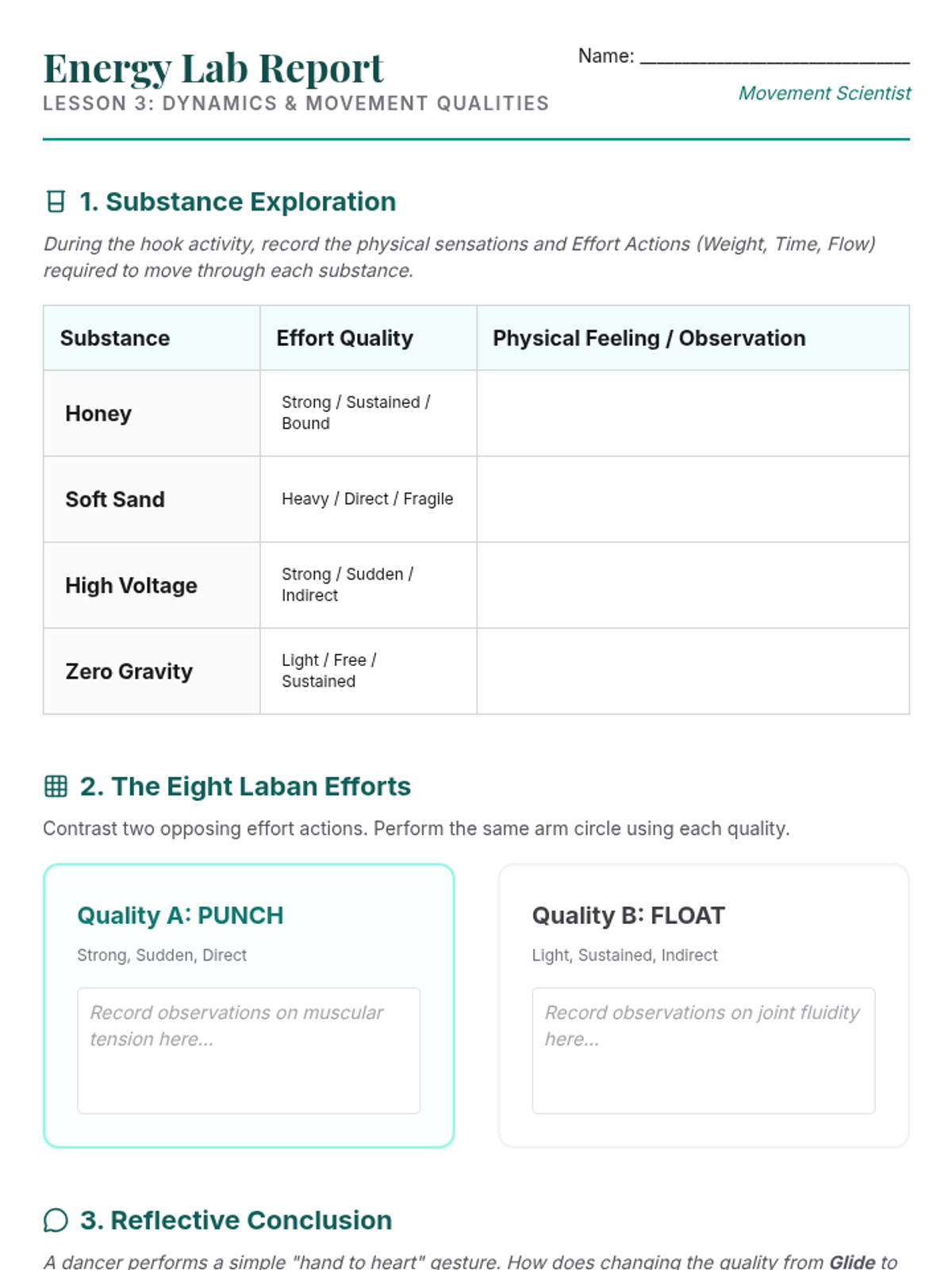
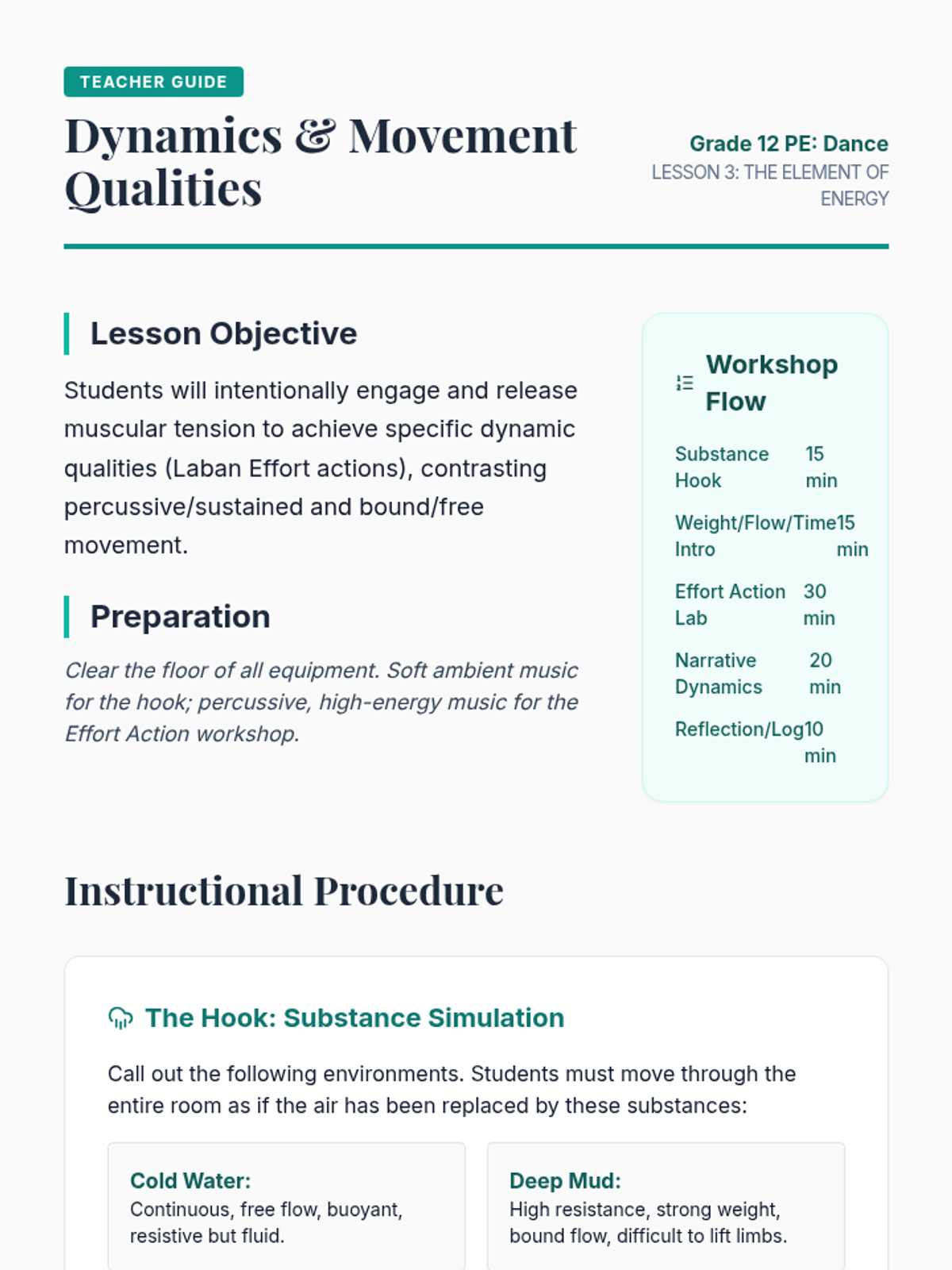
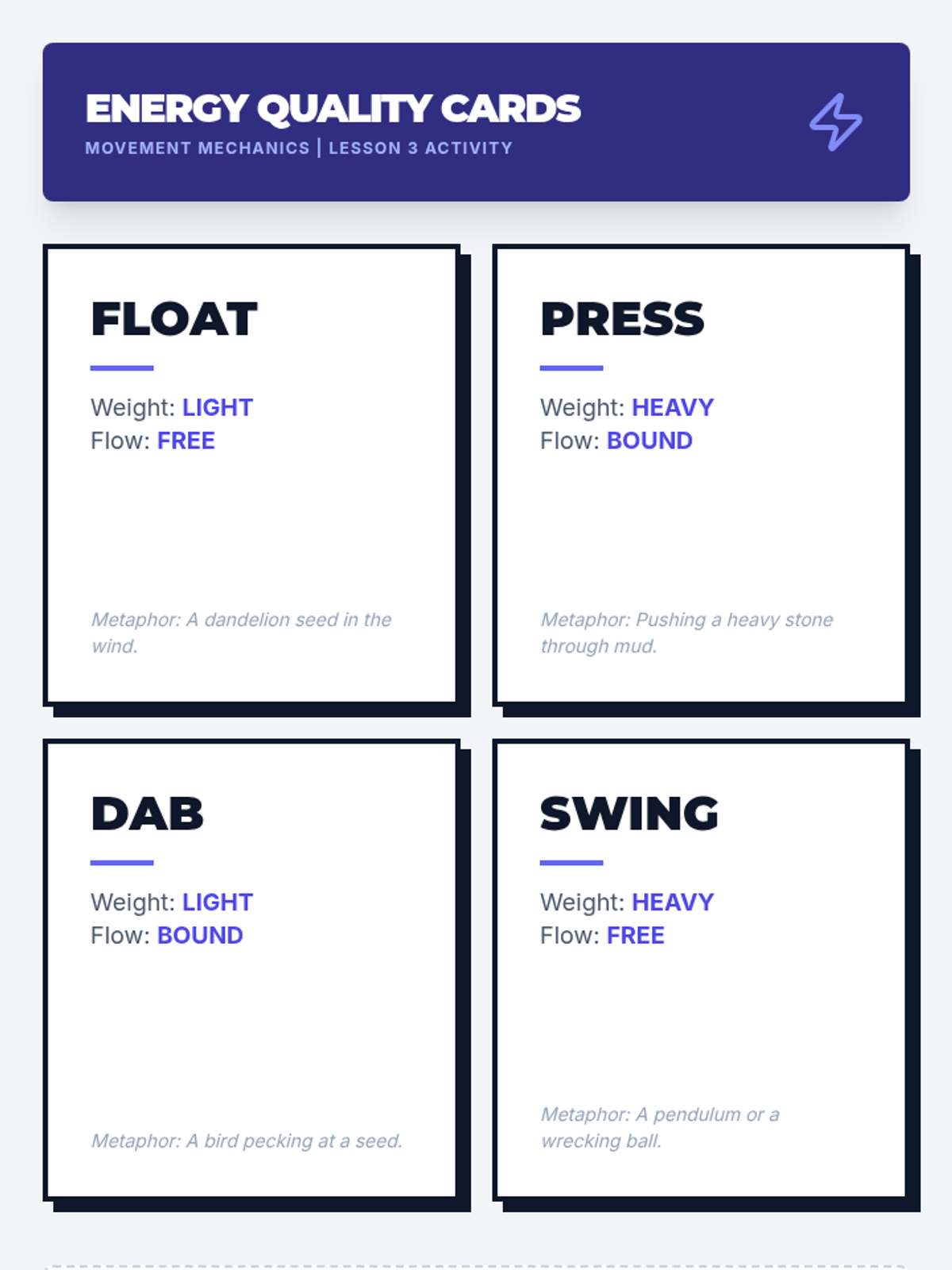
Investigates movement energy and Laban Effort actions, exploring how weight, flow, and tension alter movement quality.
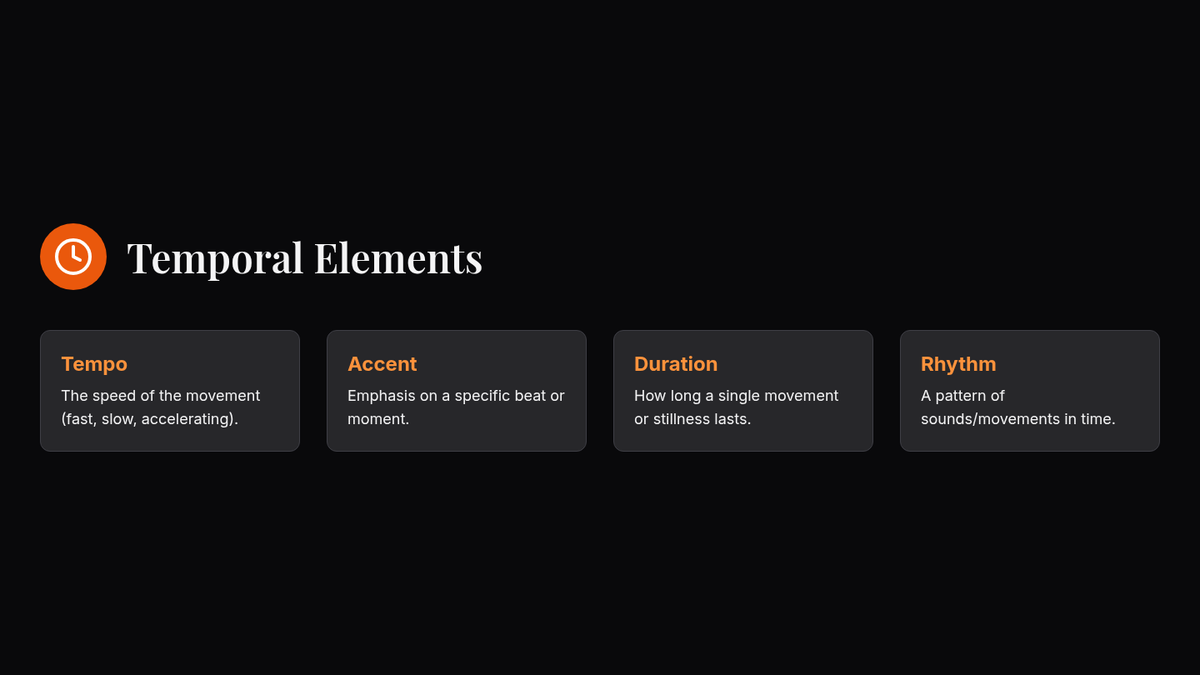
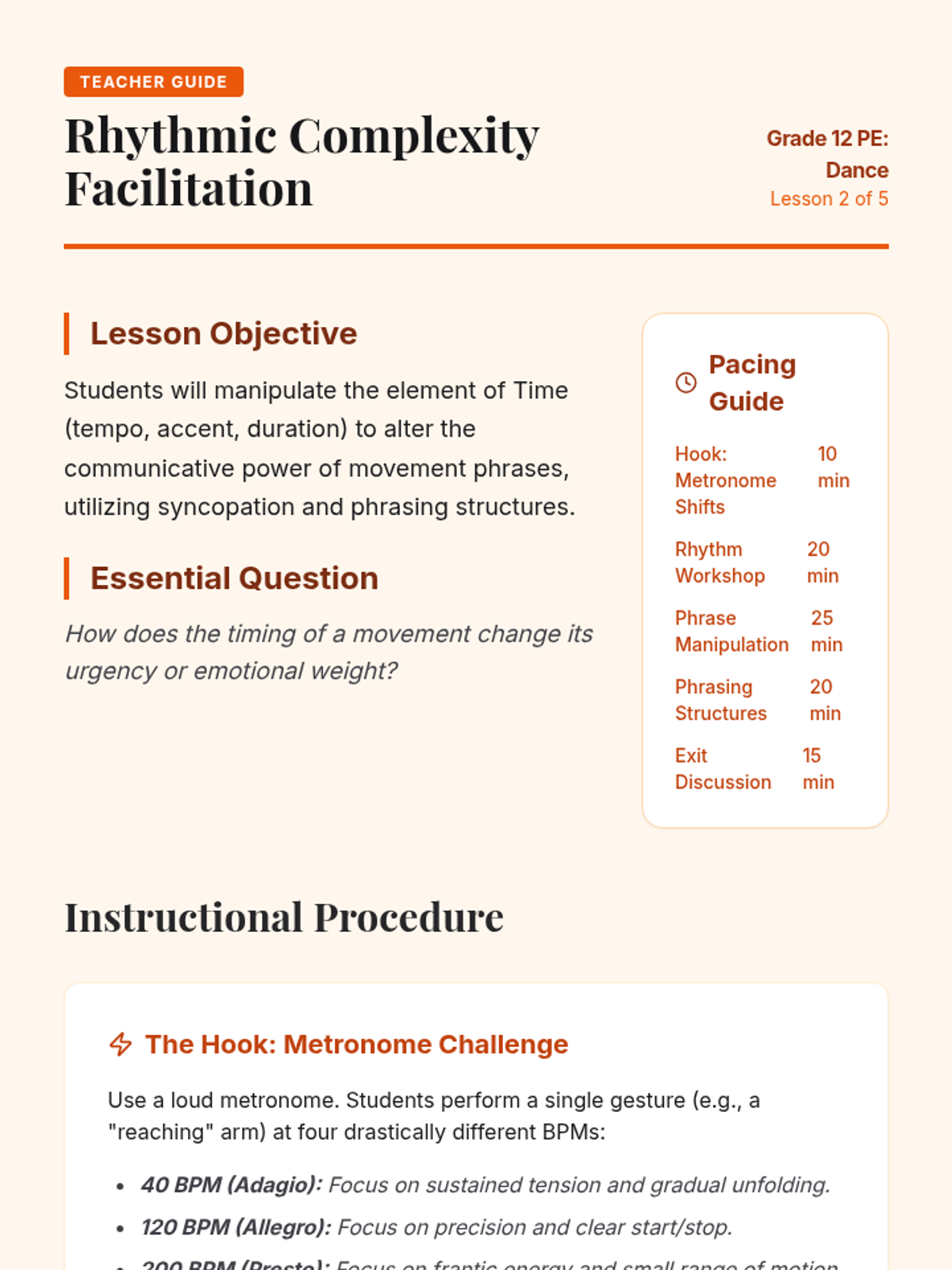
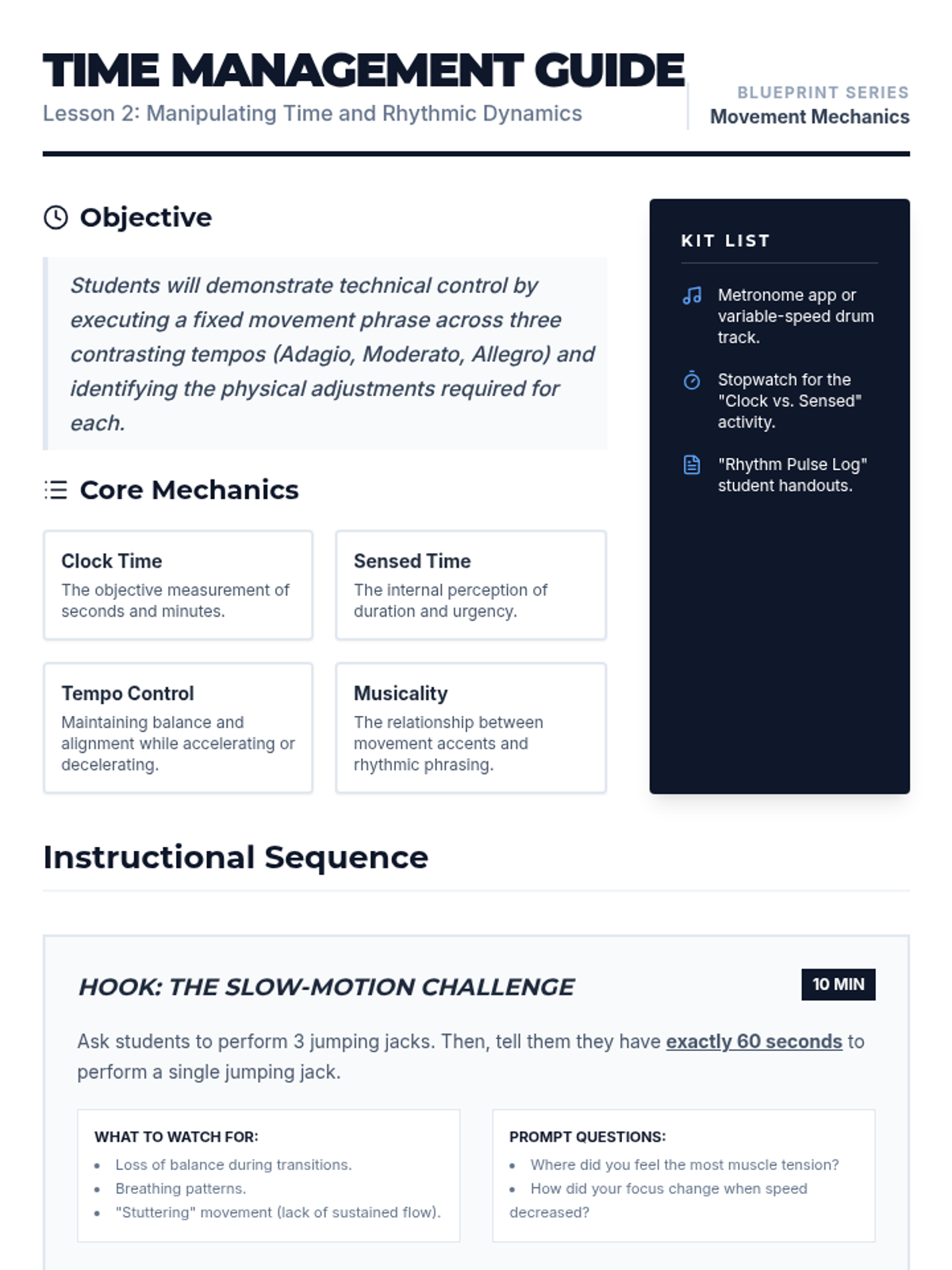
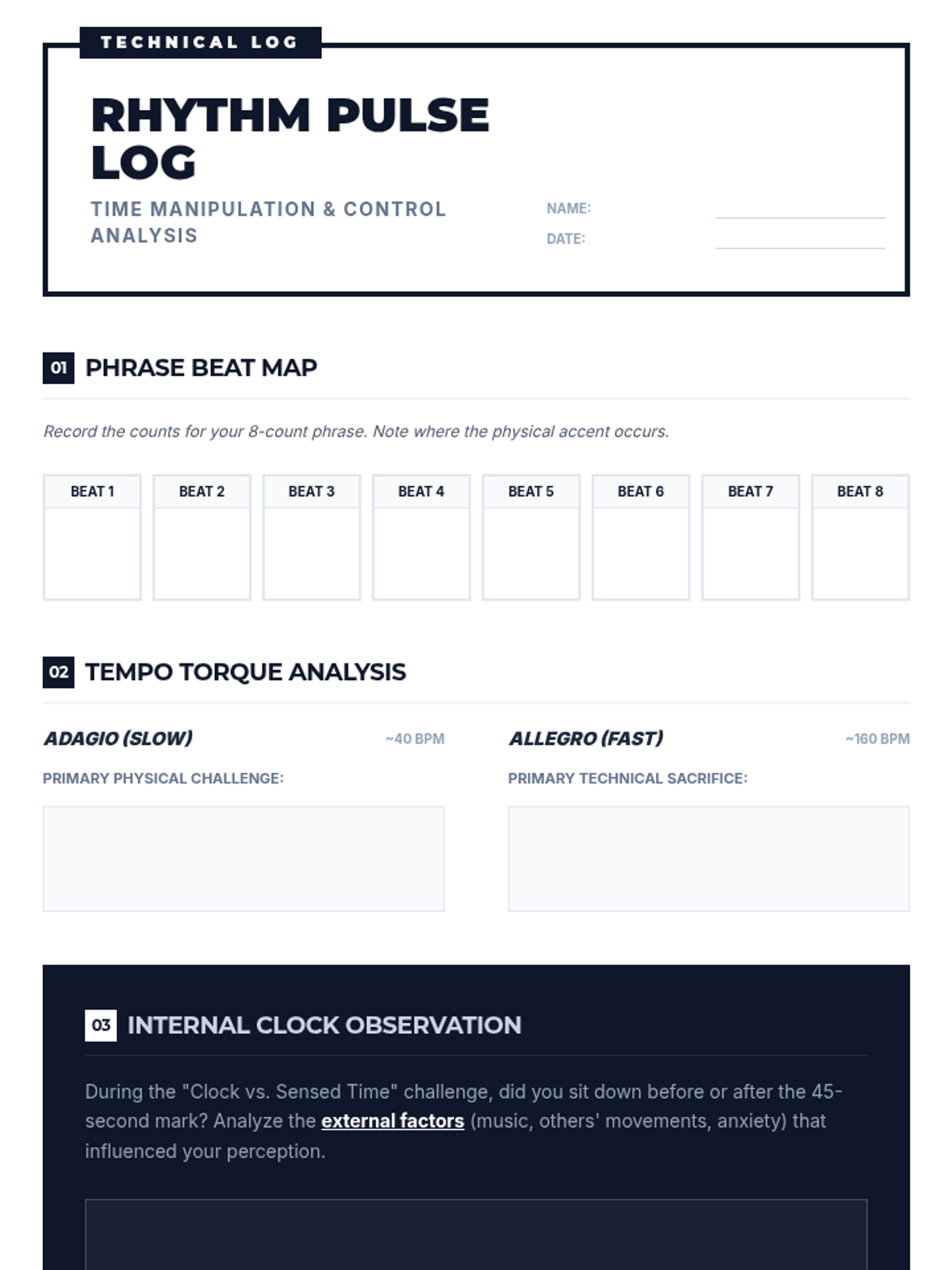
Focuses on the element of time, challenging students to manipulate tempo, accent, duration, and rhythm within movement phrases.
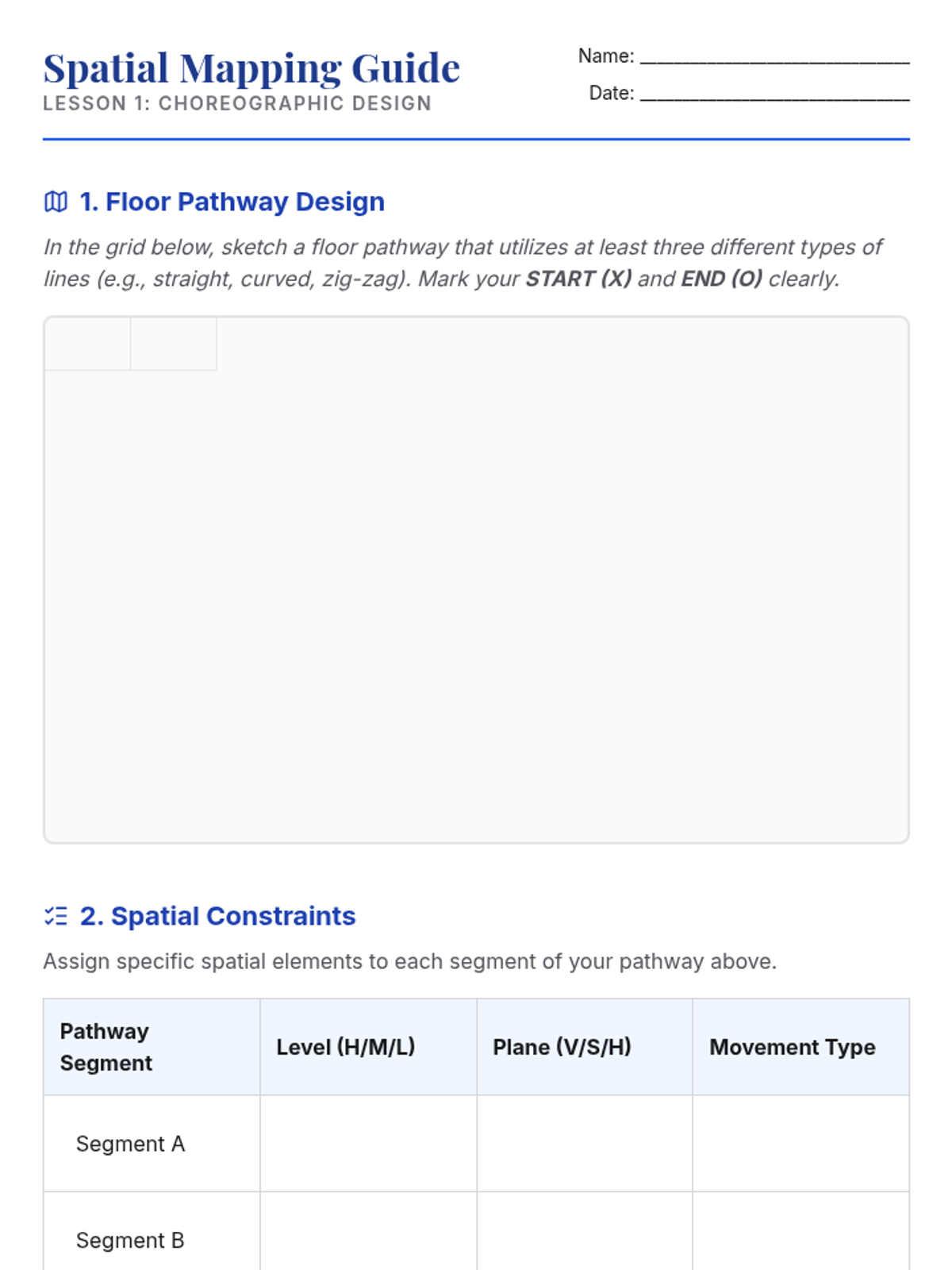
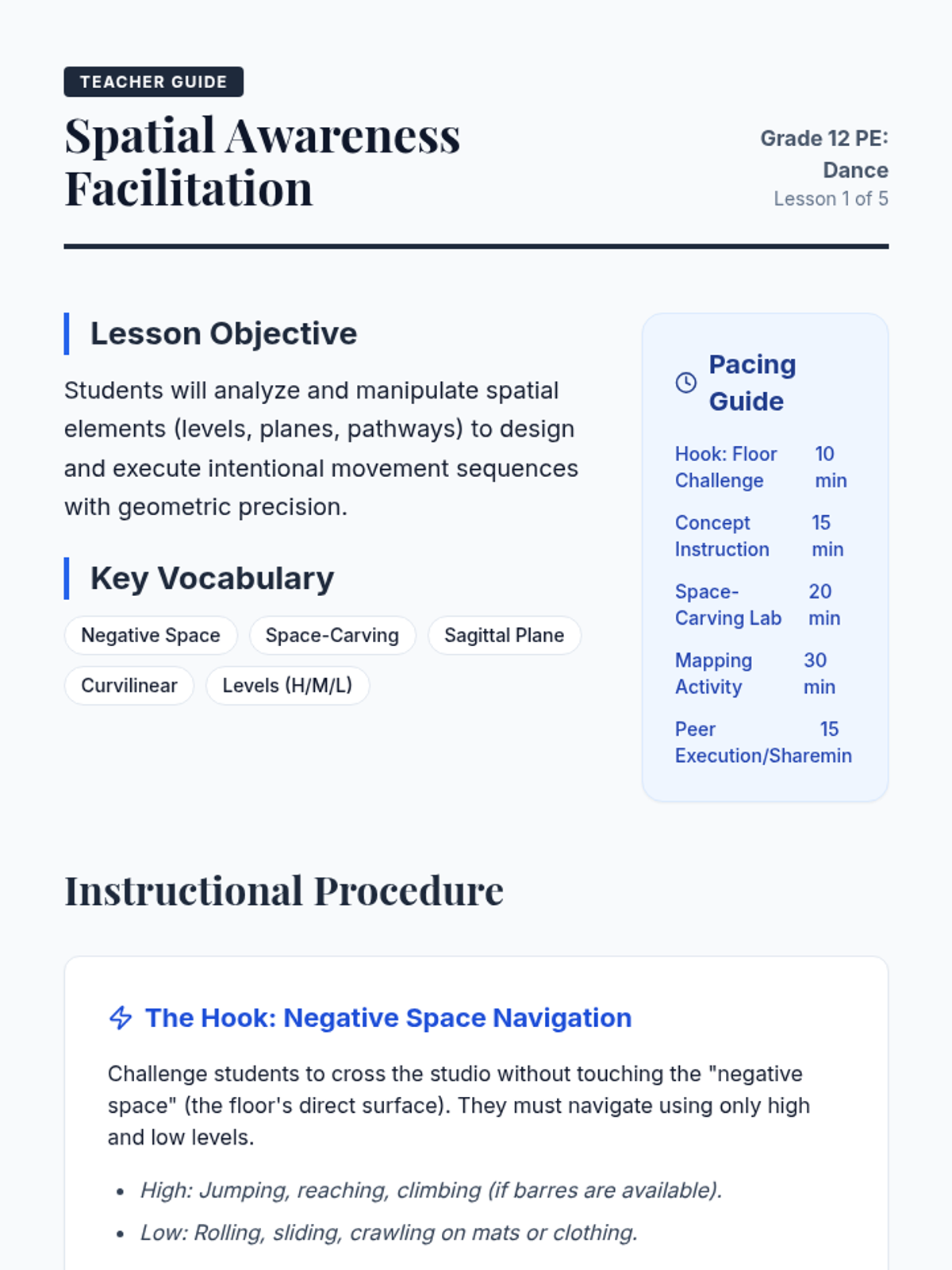
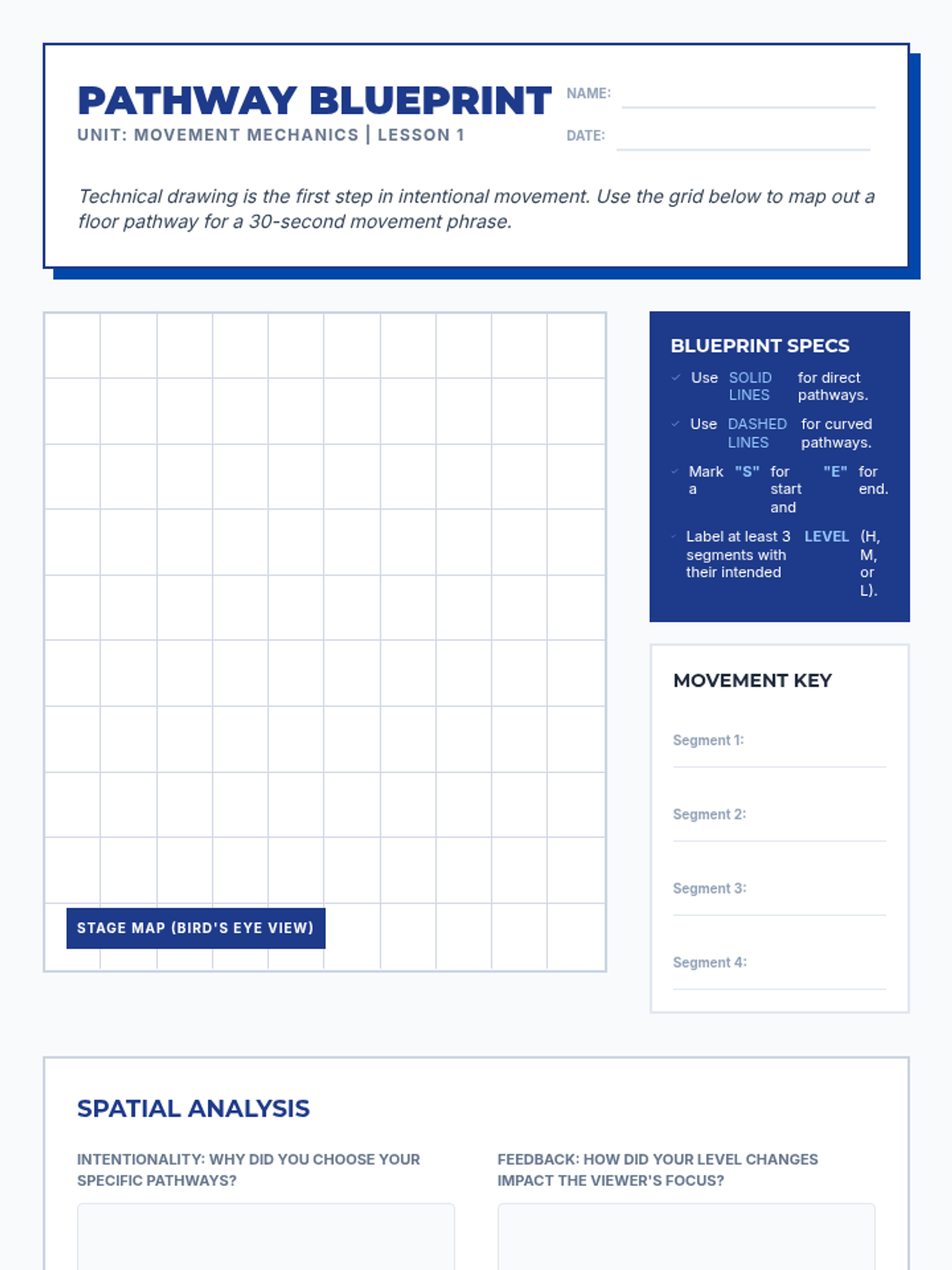
Students explore the concept of space by analyzing levels, planes, and floor pathways through 'space-carving' and precise mapping exercises.
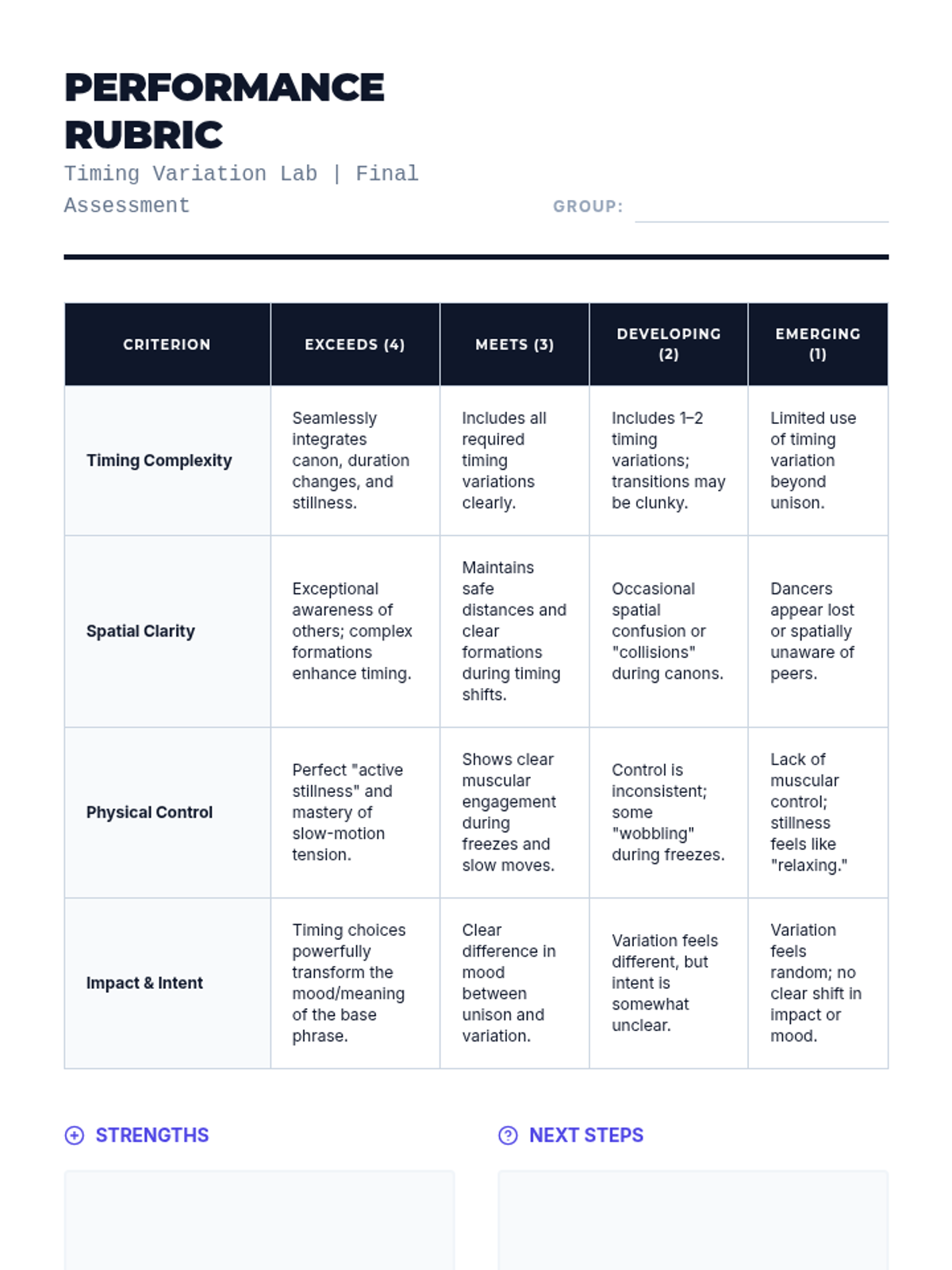
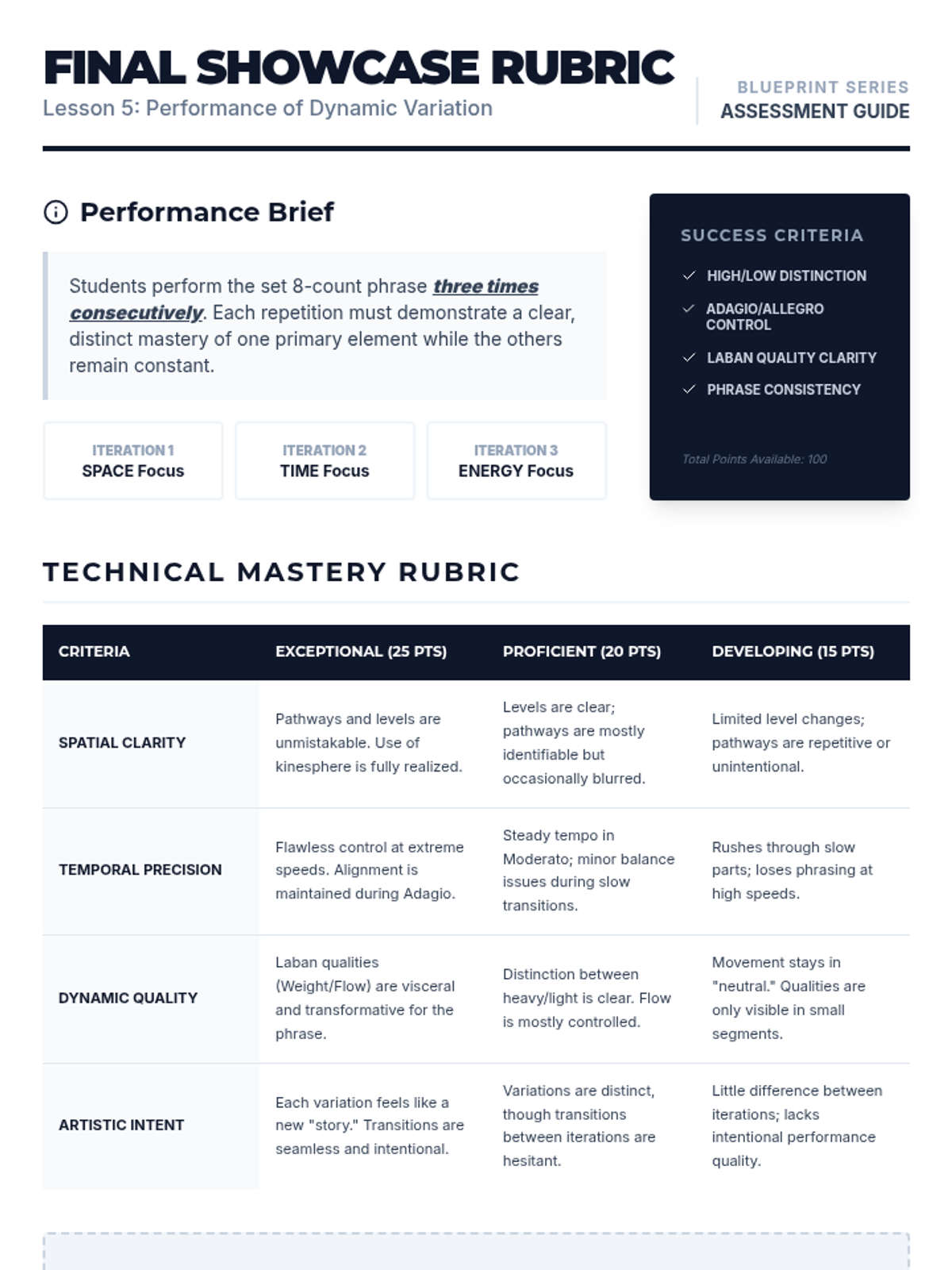
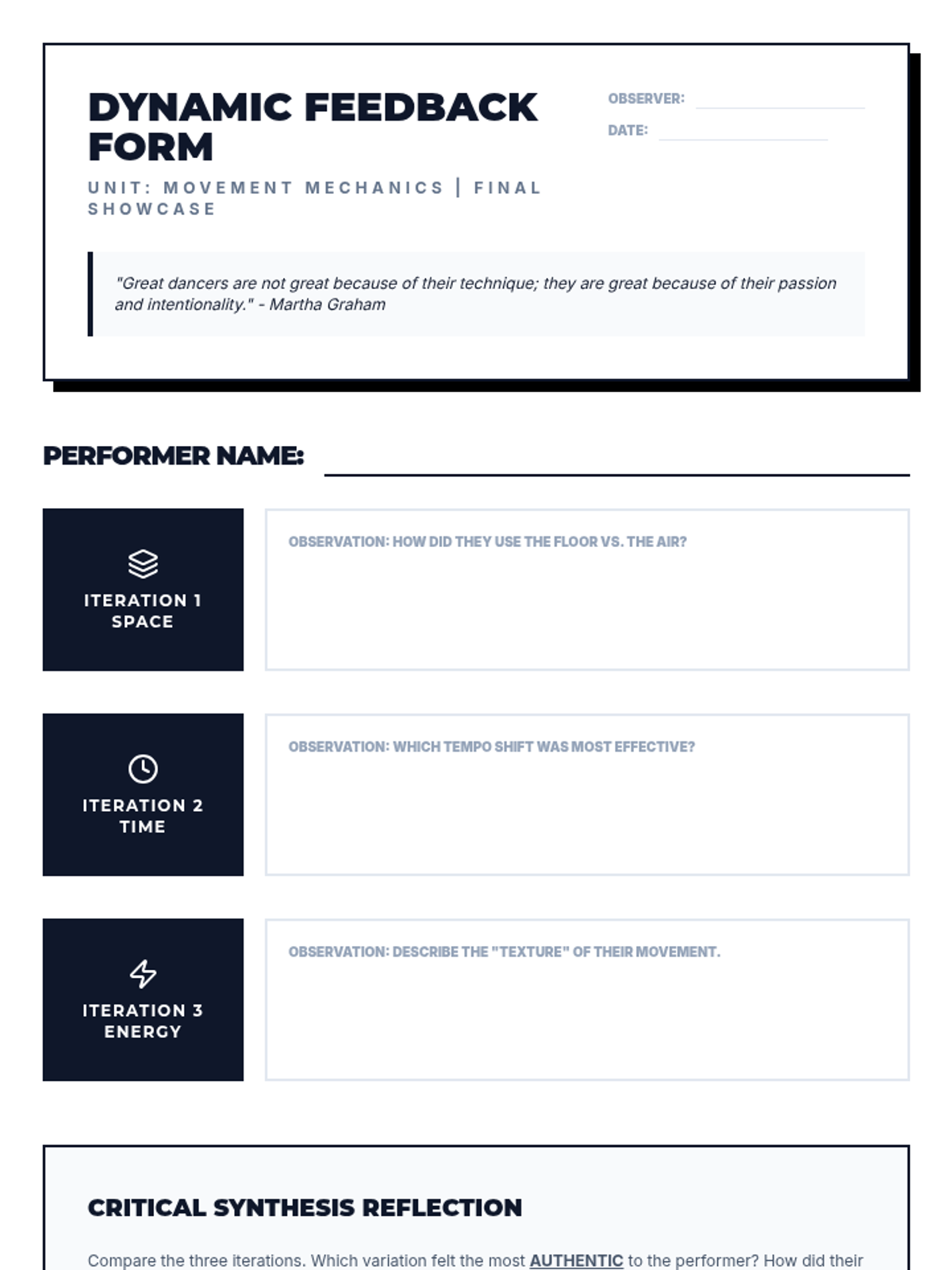
The final assessment where students perform a set phrase three times with distinct variations, followed by peer critique and self-reflection on artistic intent.
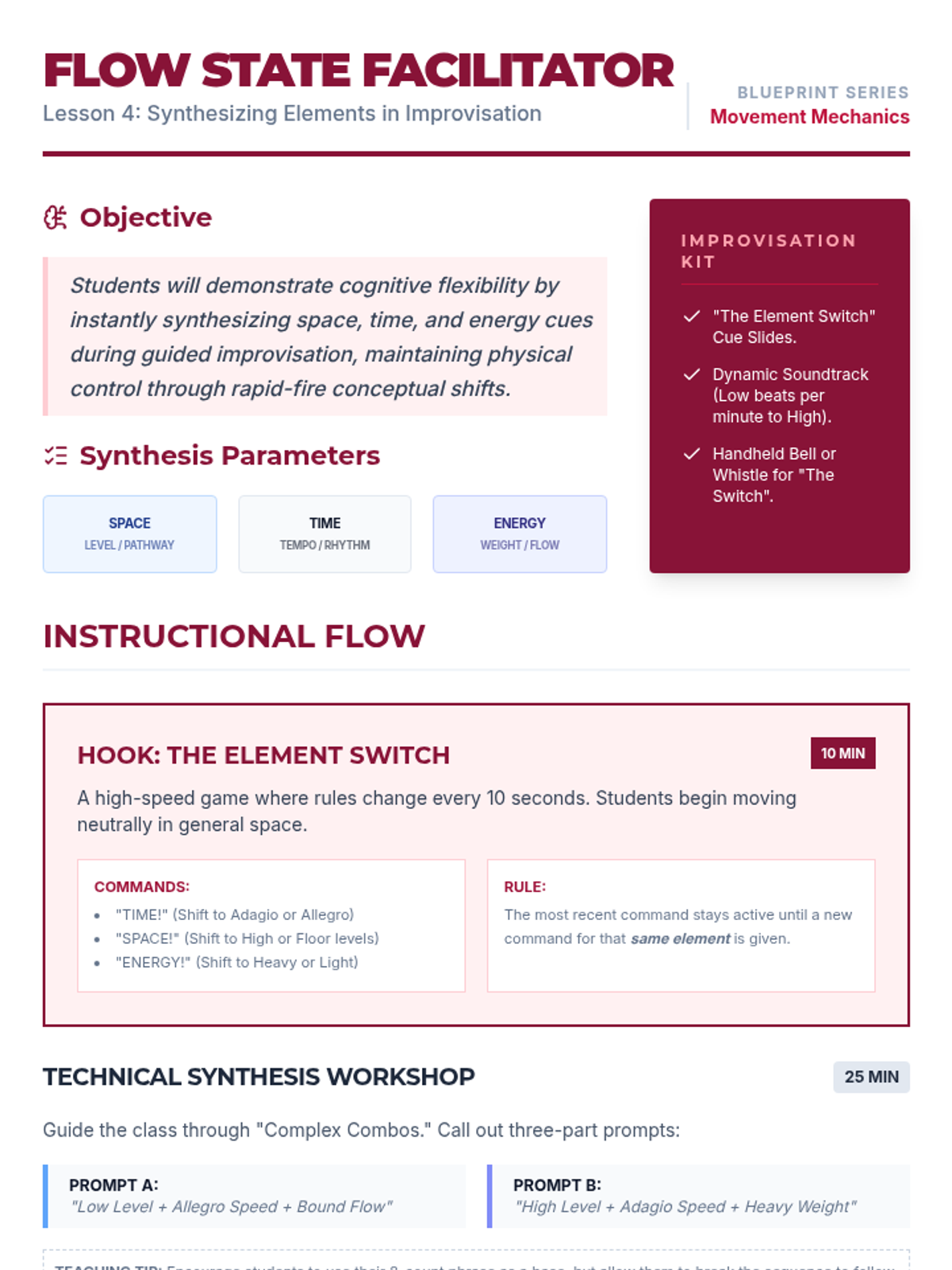
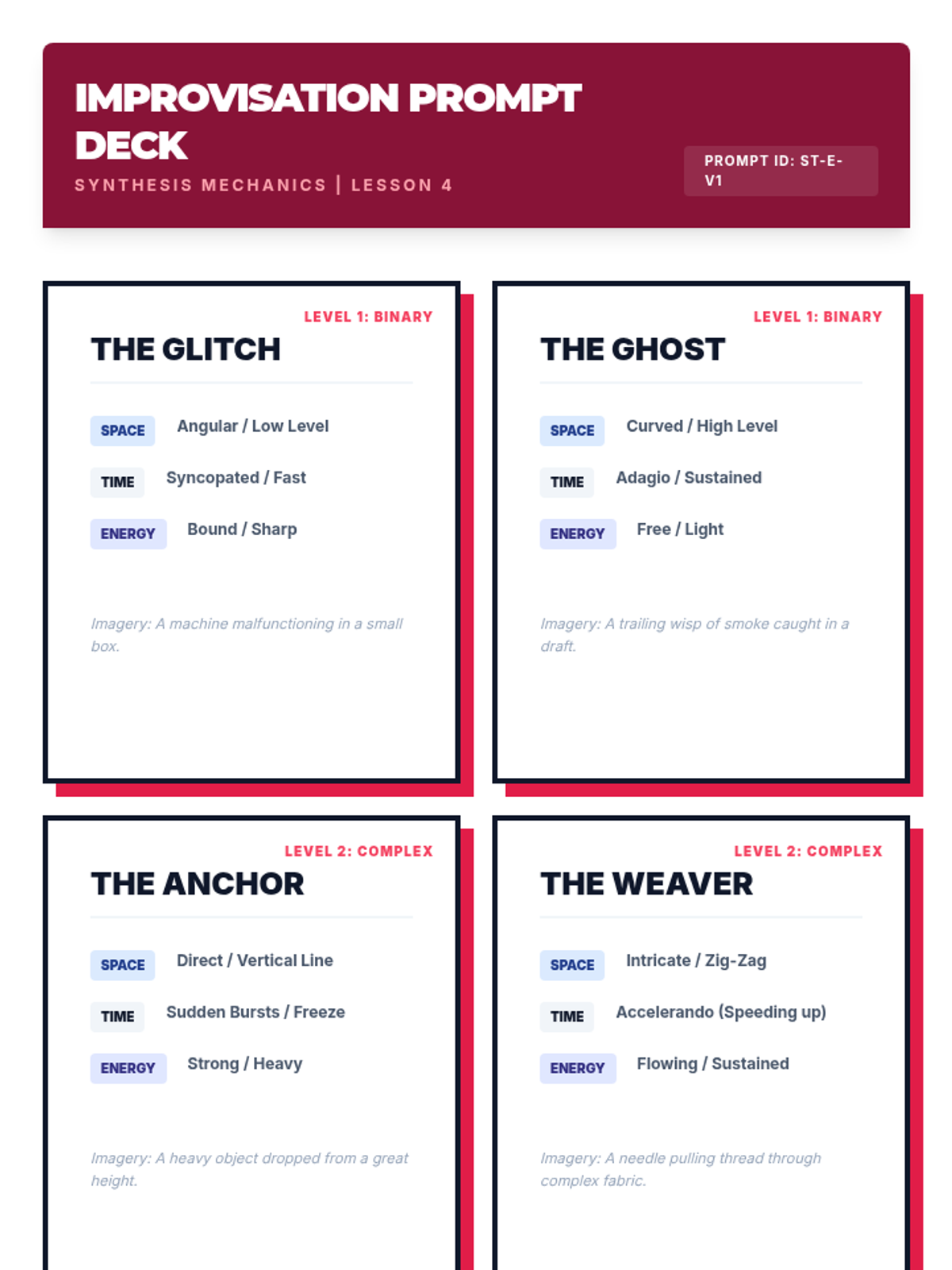
A synthesis of all previous elements through guided improvisation, where students respond to rapid-fire cues to shift their spatial, temporal, and energetic qualities.
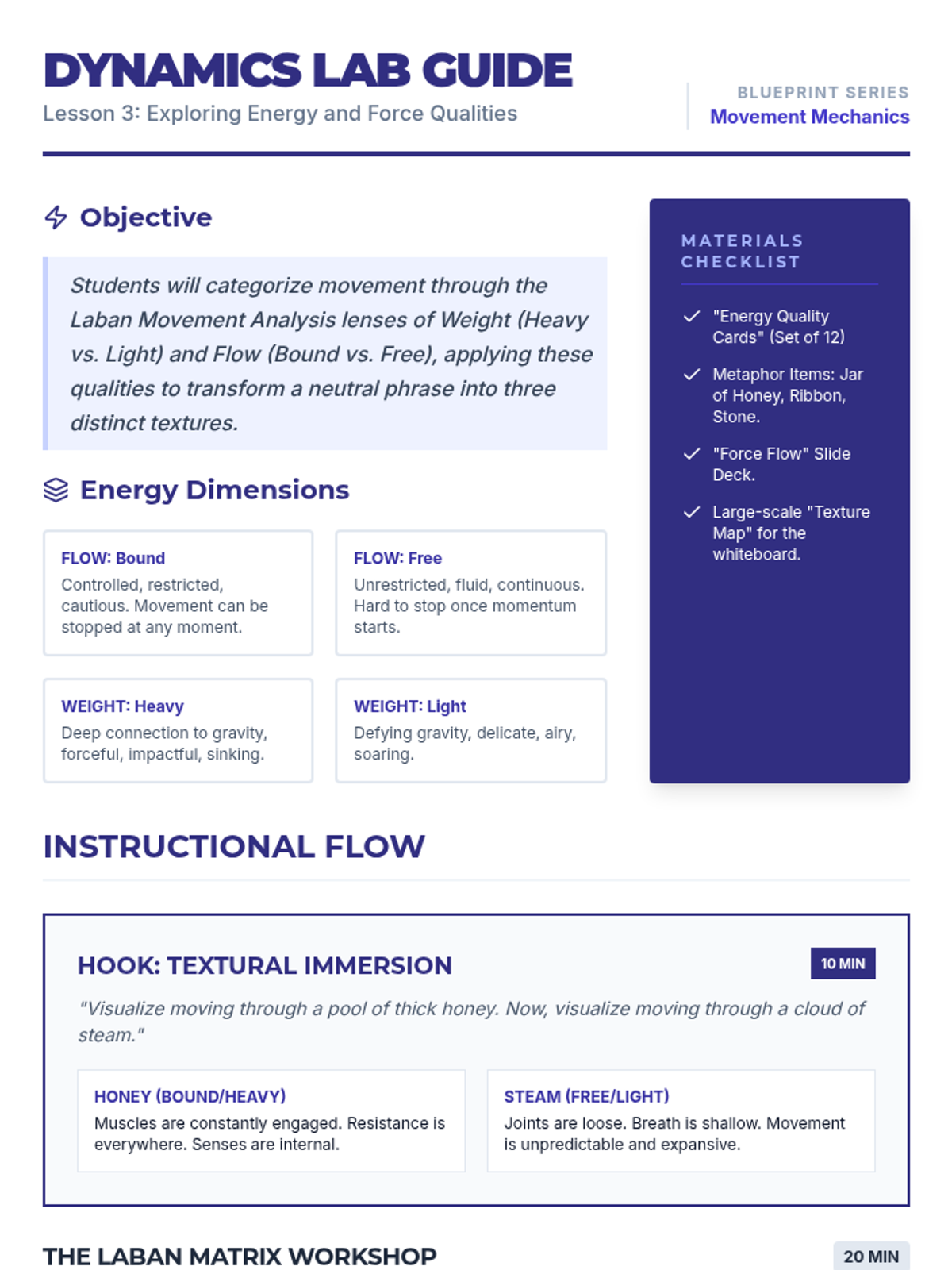
Students investigate the qualities of movement through Laban concepts of flow and weight, experimenting with how different energy inputs change the tone of a dance.
This lesson focuses on manipulating tempo and rhythm, challenging students to execute movement phrases at varying speeds while maintaining technical precision.
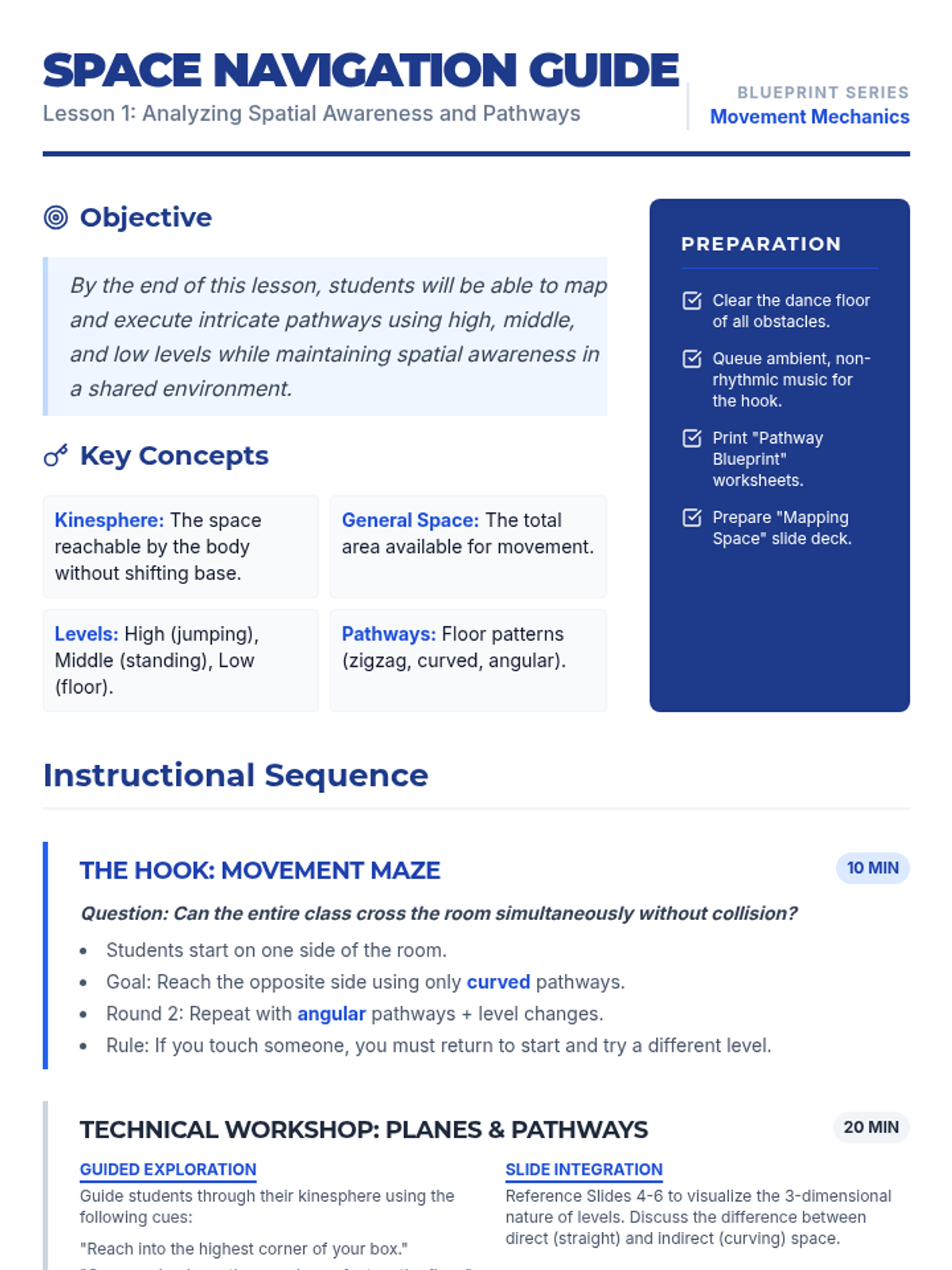
Students explore spatial levels, pathways, and the distinction between personal and general space through a series of technical workshops and a simulation hook.
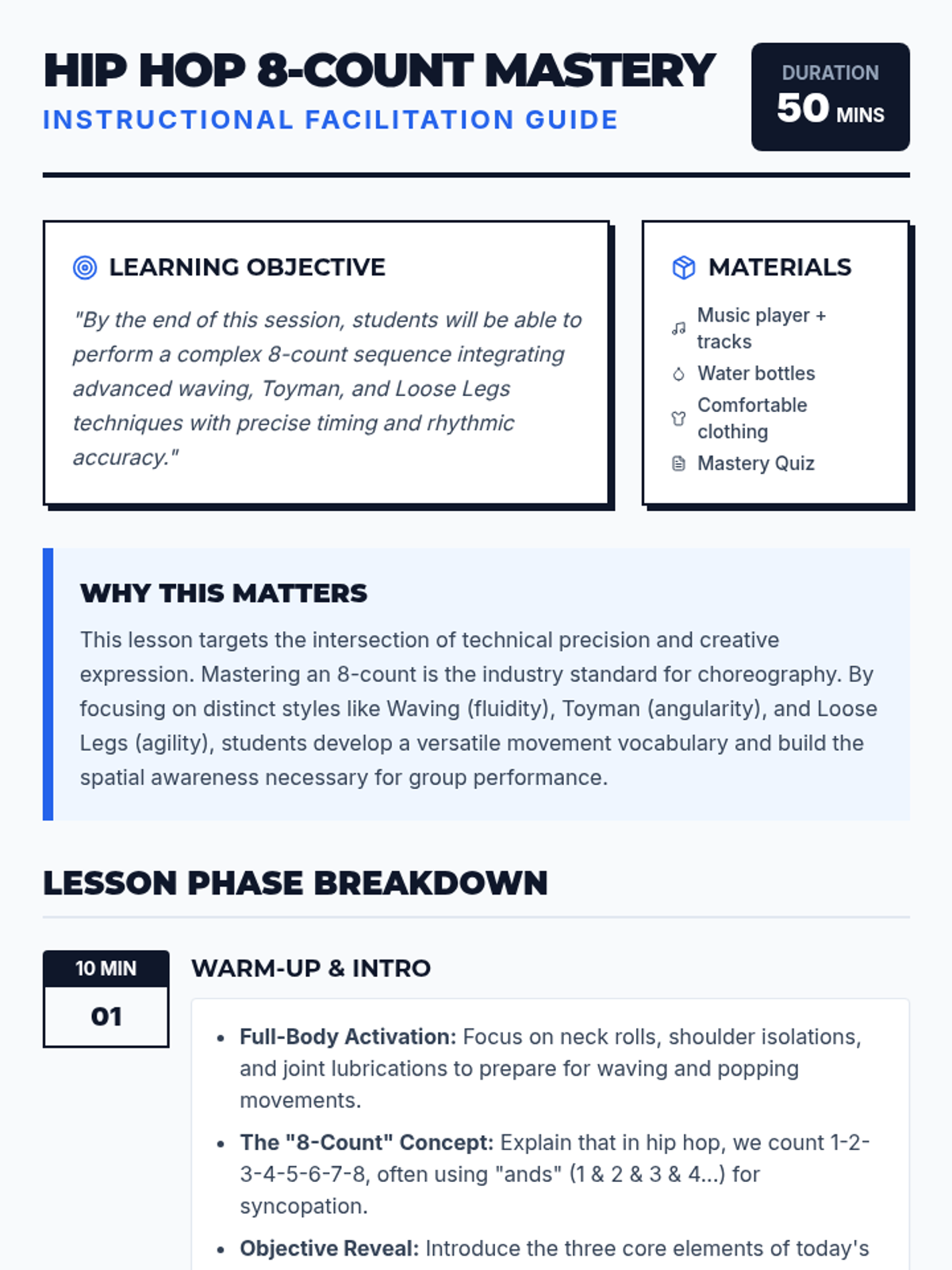
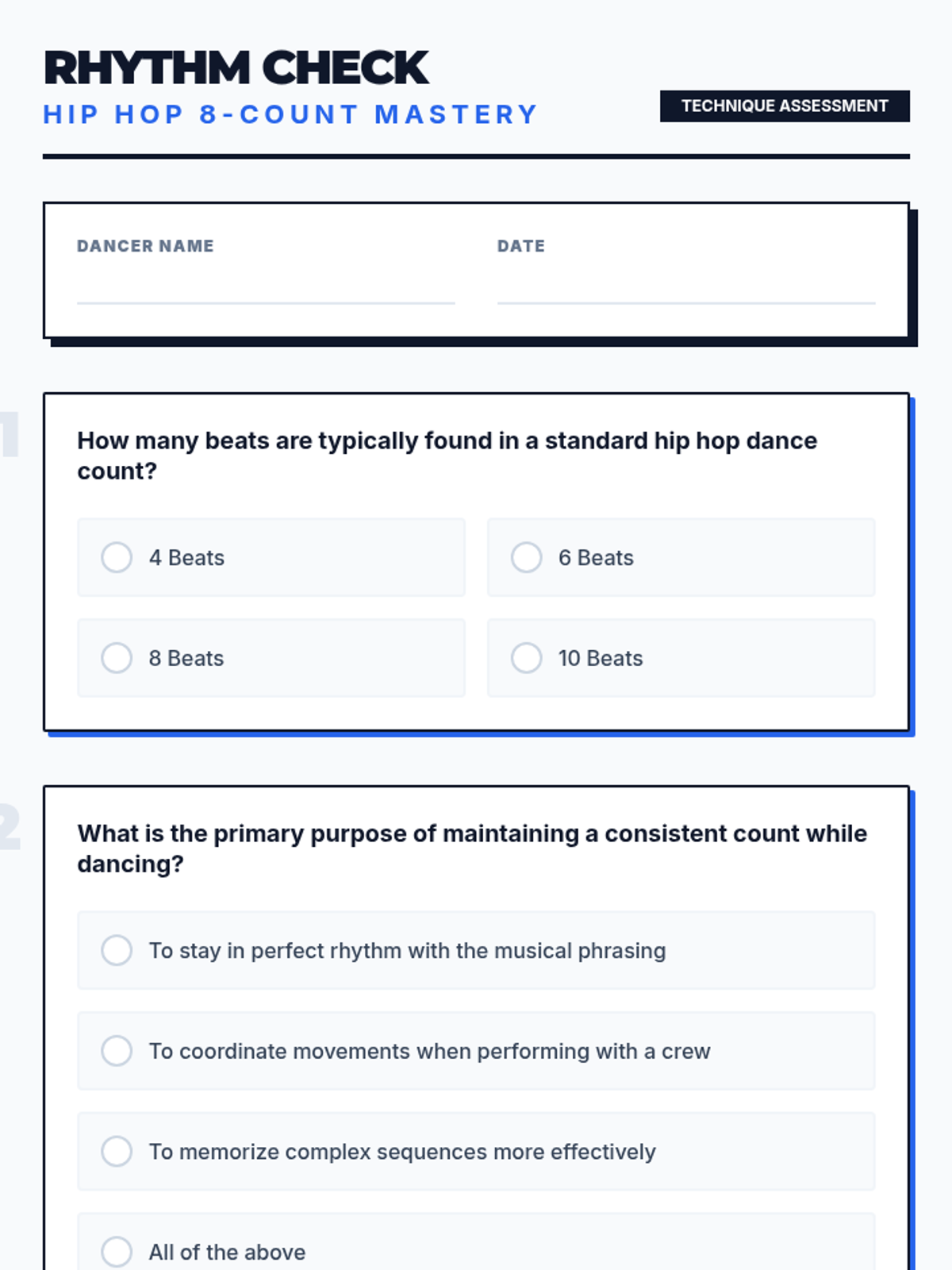
A high-energy lesson focused on mastering an 8-count hip hop sequence featuring advanced waving, Toyman, and Loose Legs techniques.
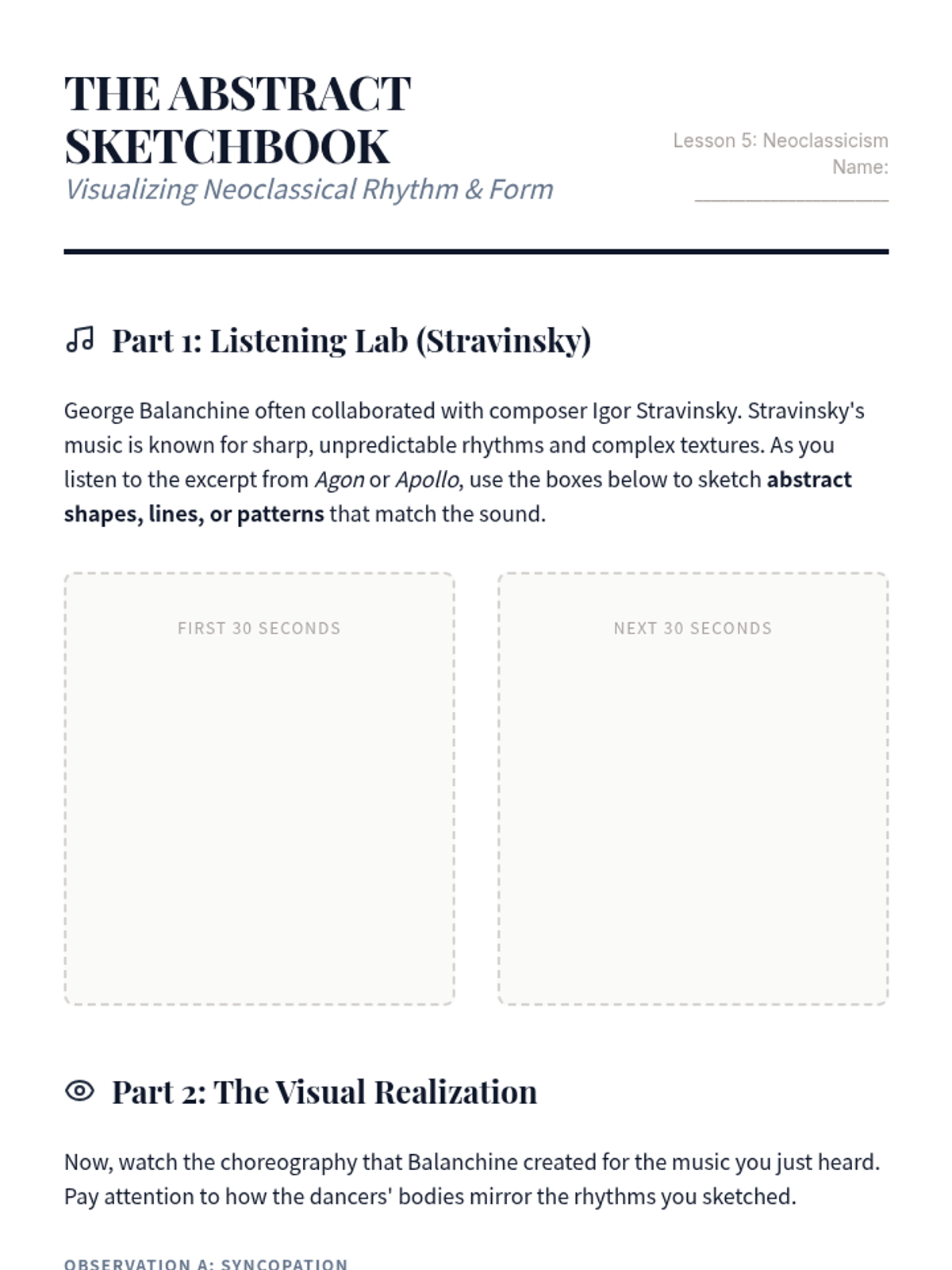
Analyze the 20th-century shift toward abstraction led by George Balanchine, focusing on the relationship between pure movement and music.
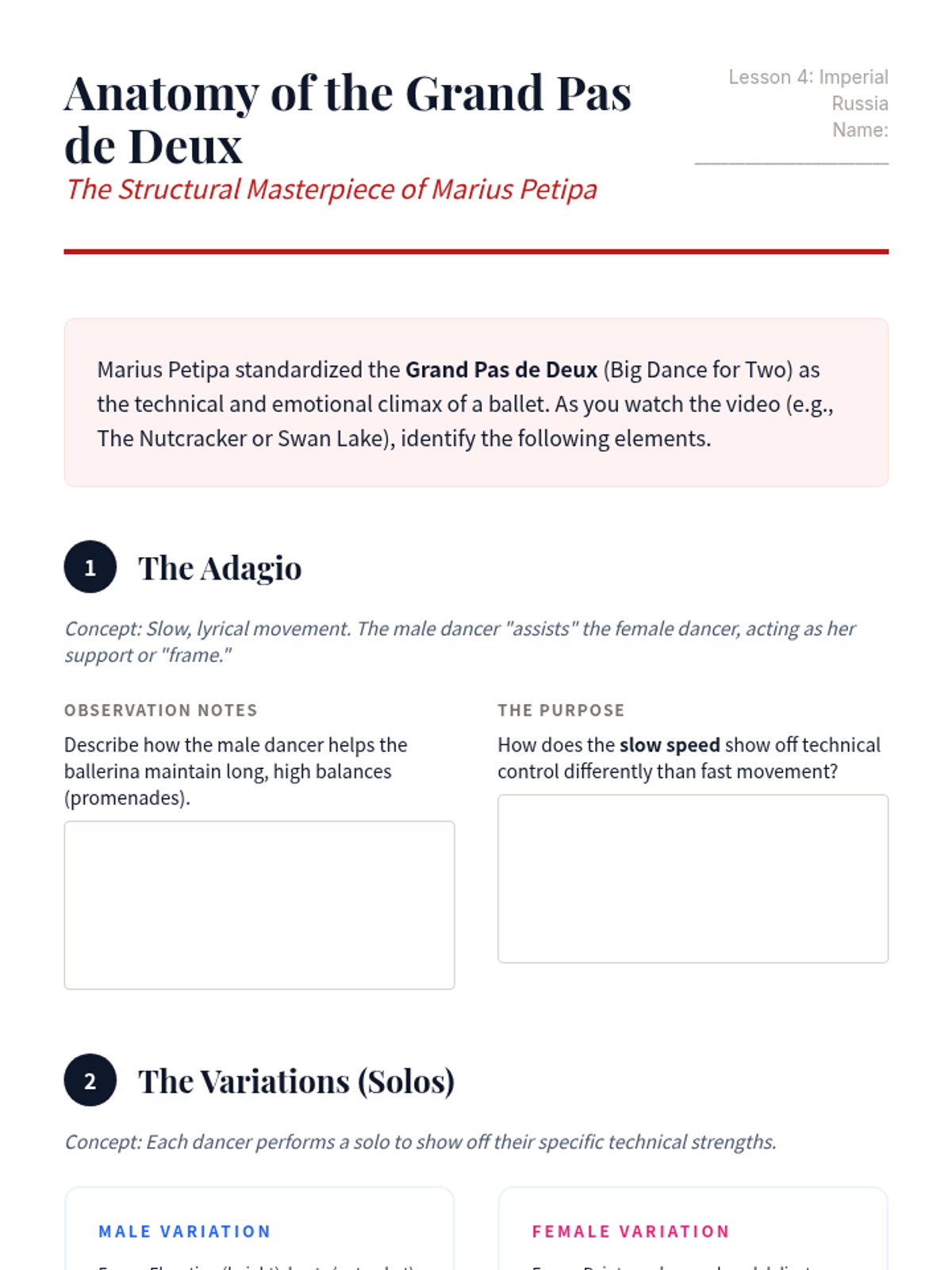
Examine the Imperial Russian era under Marius Petipa, focusing on the structured Grand Pas de Deux and the rise of technical virtuosity.
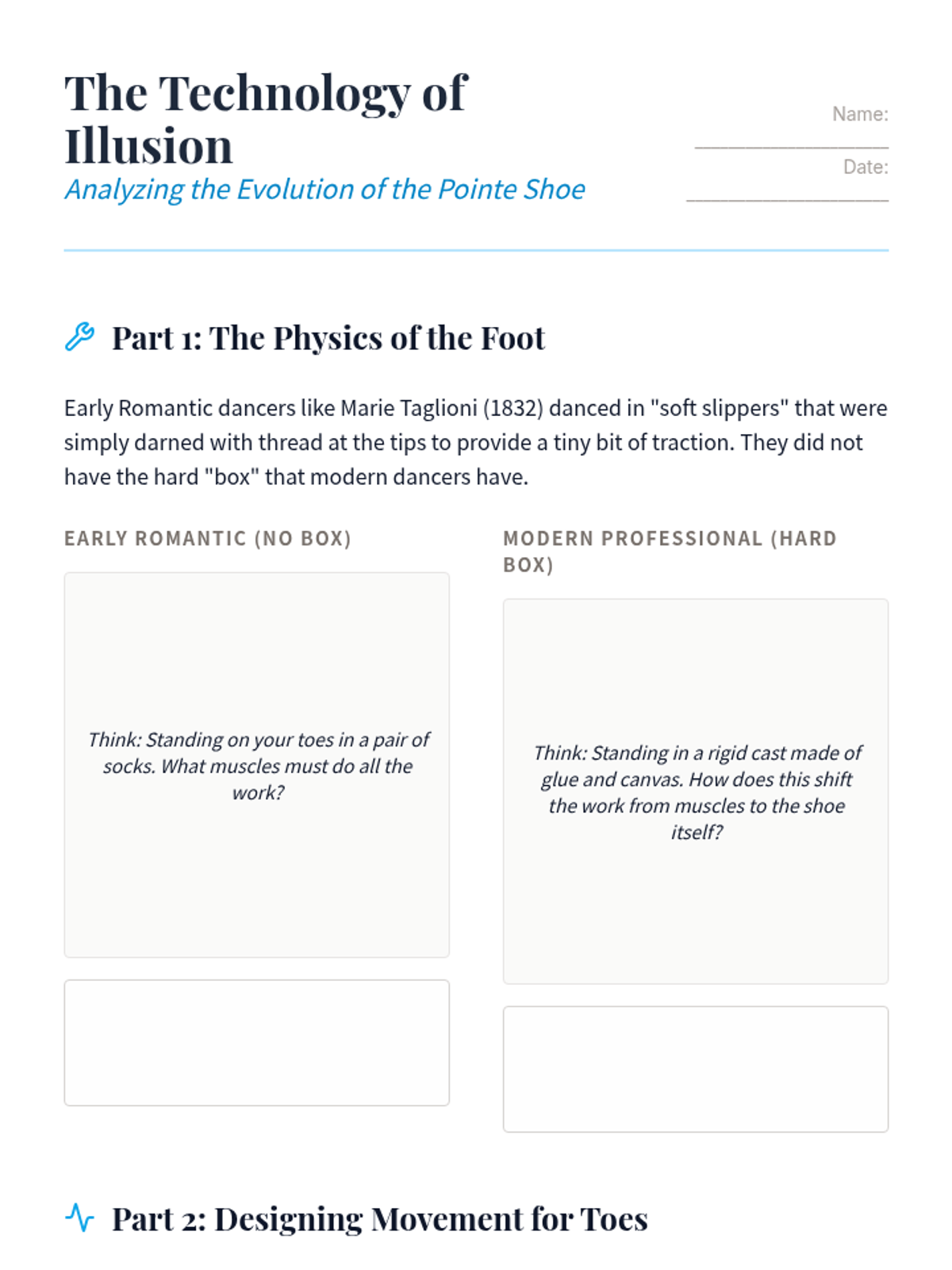
Investigate the shift toward the supernatural and the technological innovation of the pointe shoe during the Romantic era.
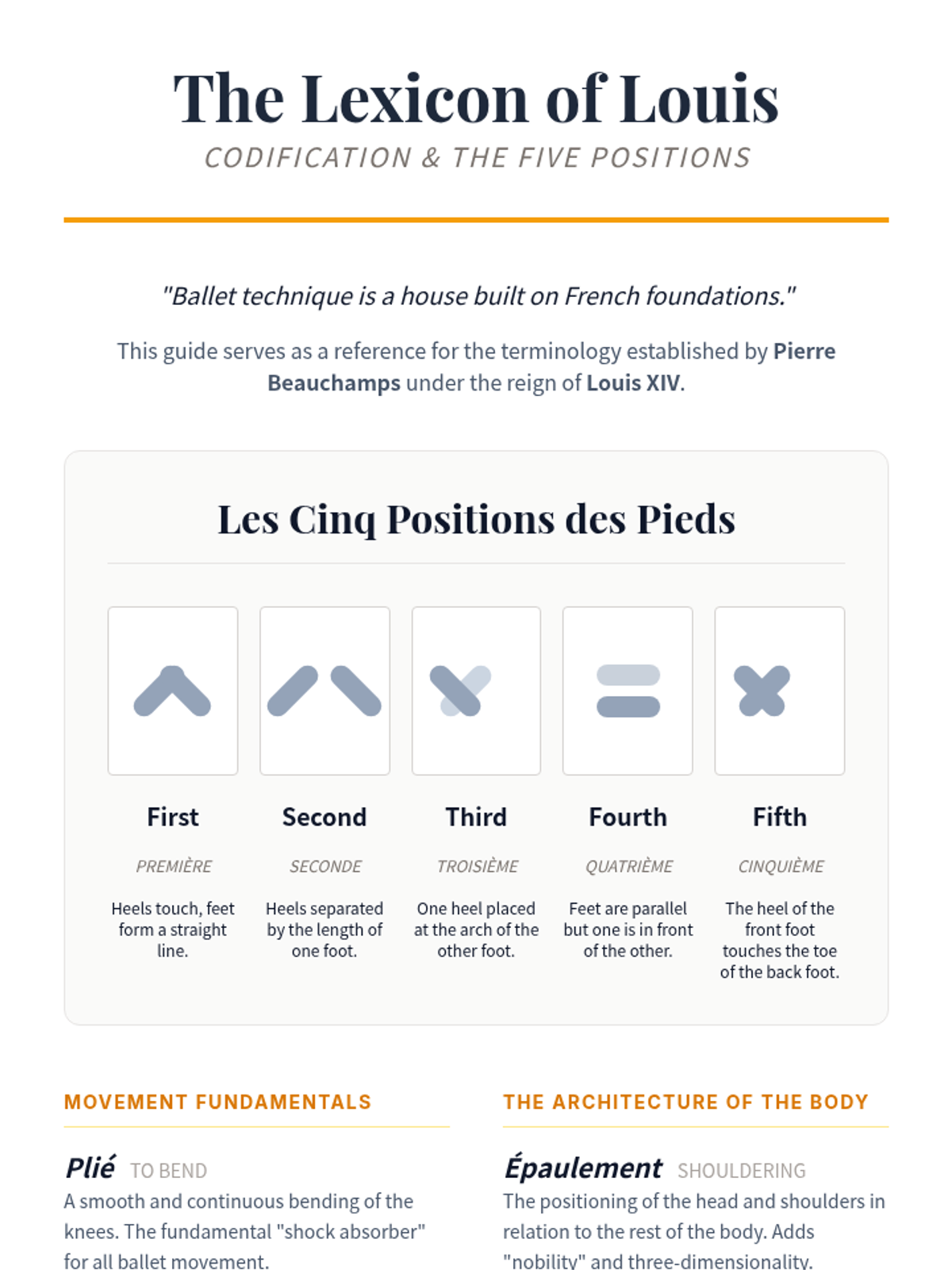
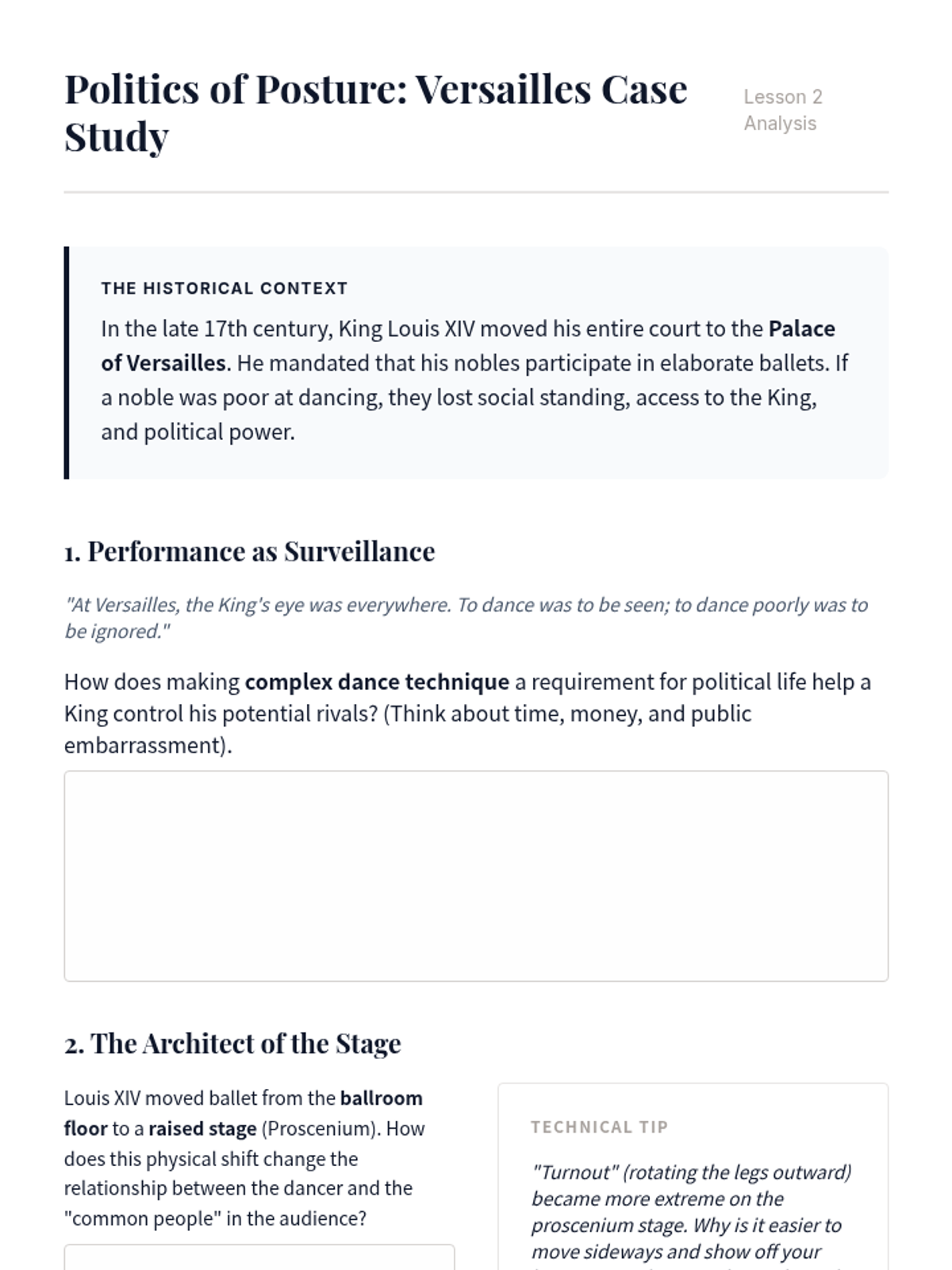
Analyze Louis XIV's role in establishing the Royal Academy of Dance and how the codification of the five positions served as a tool for political control.
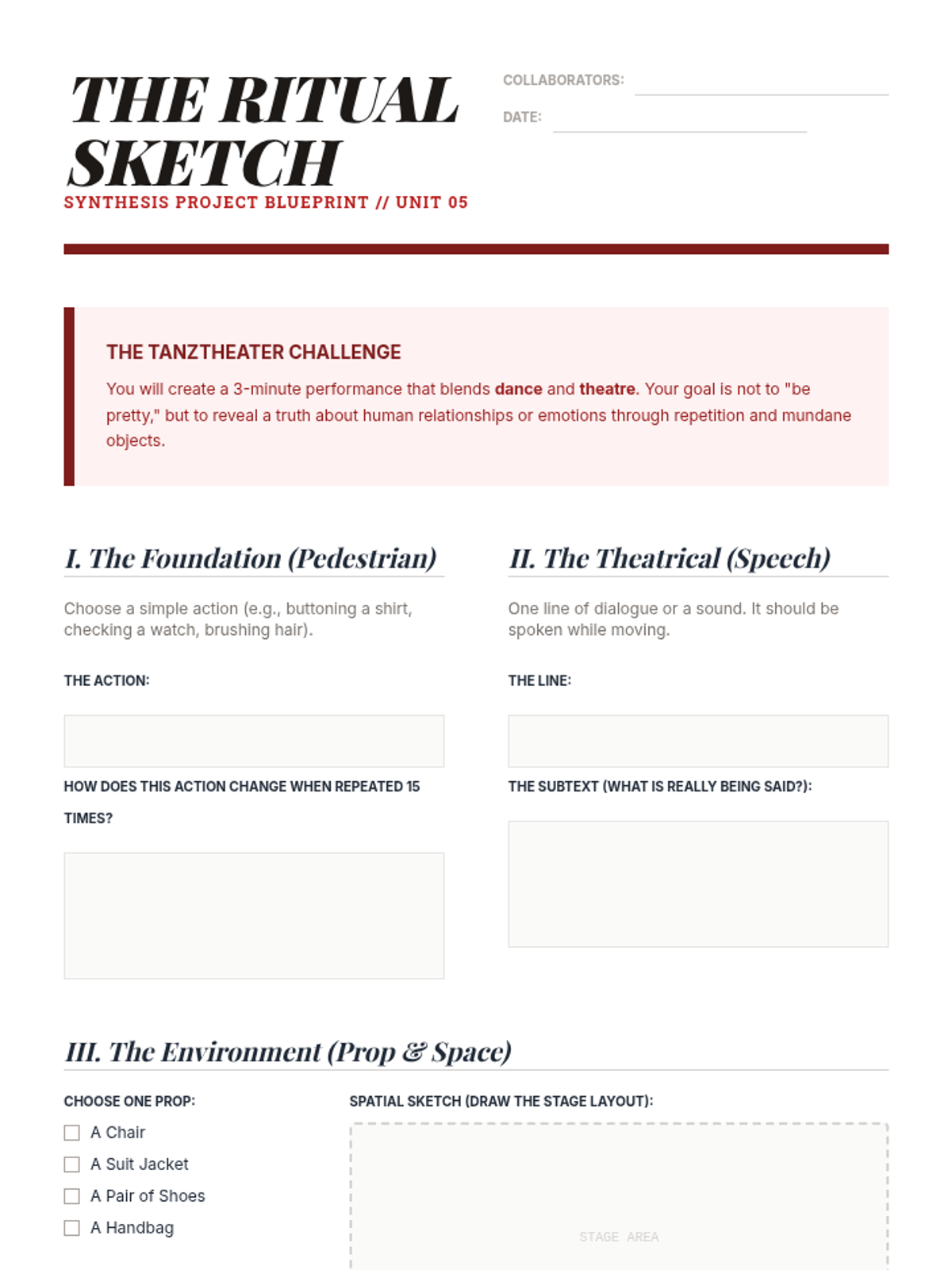
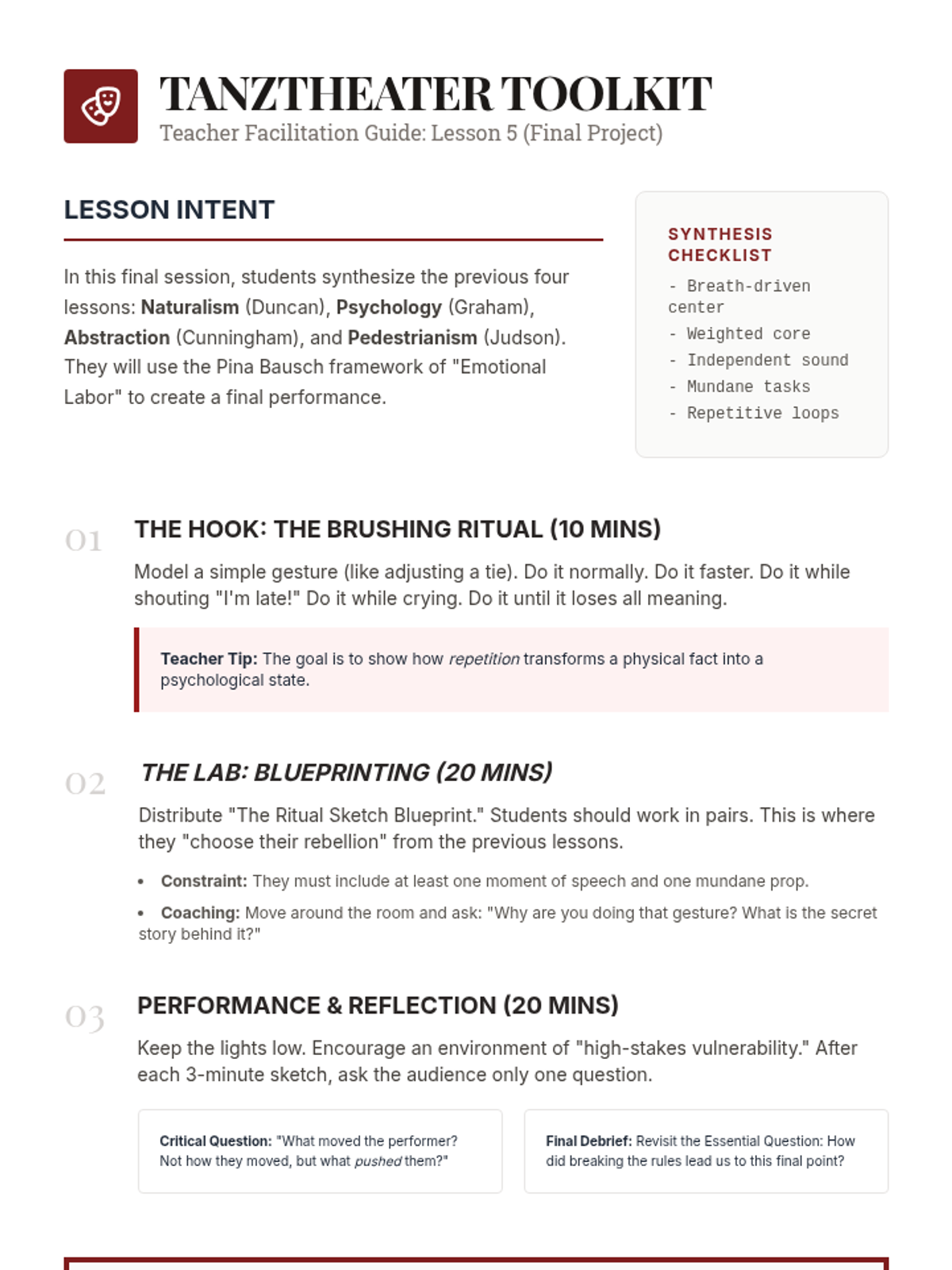
Students study Pina Bausch and the German Tanztheater movement, exploring how repetitive gestures and speech are combined with dance to address human relationships. They create a short 'dance-theater' sketch.
Connecting the 1970s Bronx breaking scene back to ancestral ring traditions, exploring the 'cypher' as a space for community and competition.
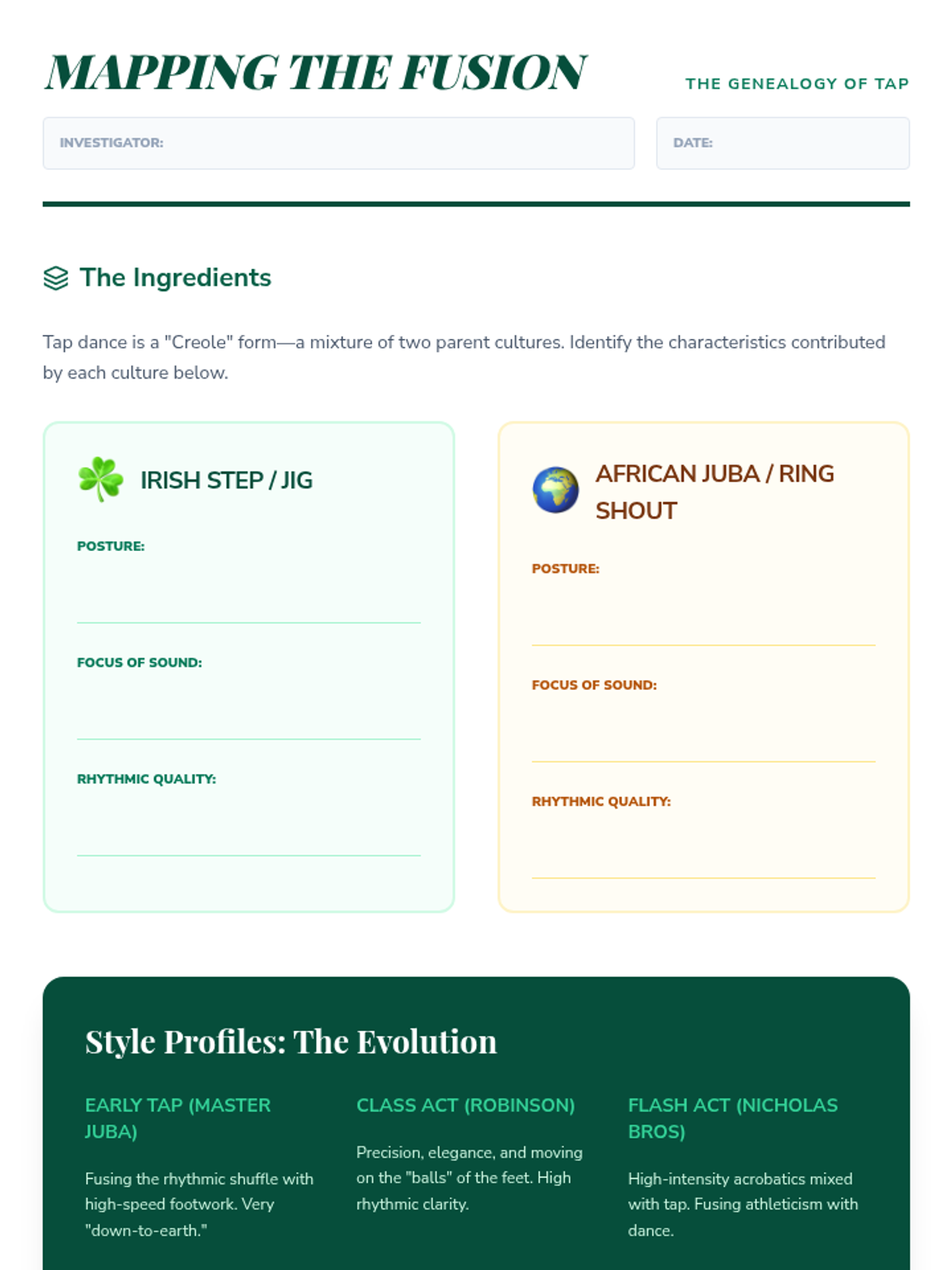
Tracing the cross-cultural fusion of Irish and African dance traditions that birthed Tap, highlighting key innovators and stylistic shifts.
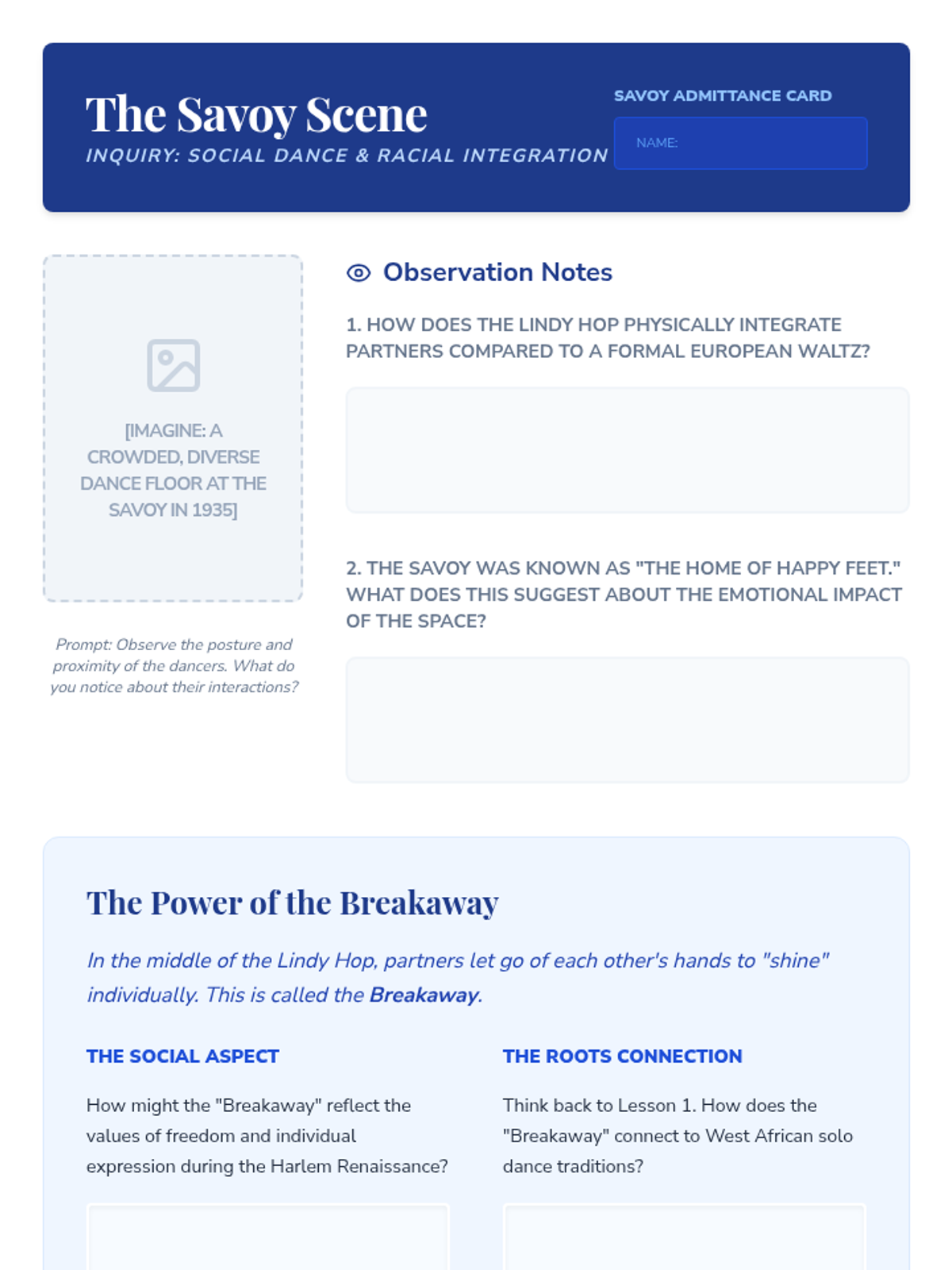
A look at the social and cultural explosion of the Harlem Renaissance, focusing on the Lindy Hop and the democratizing power of the Savoy Ballroom.
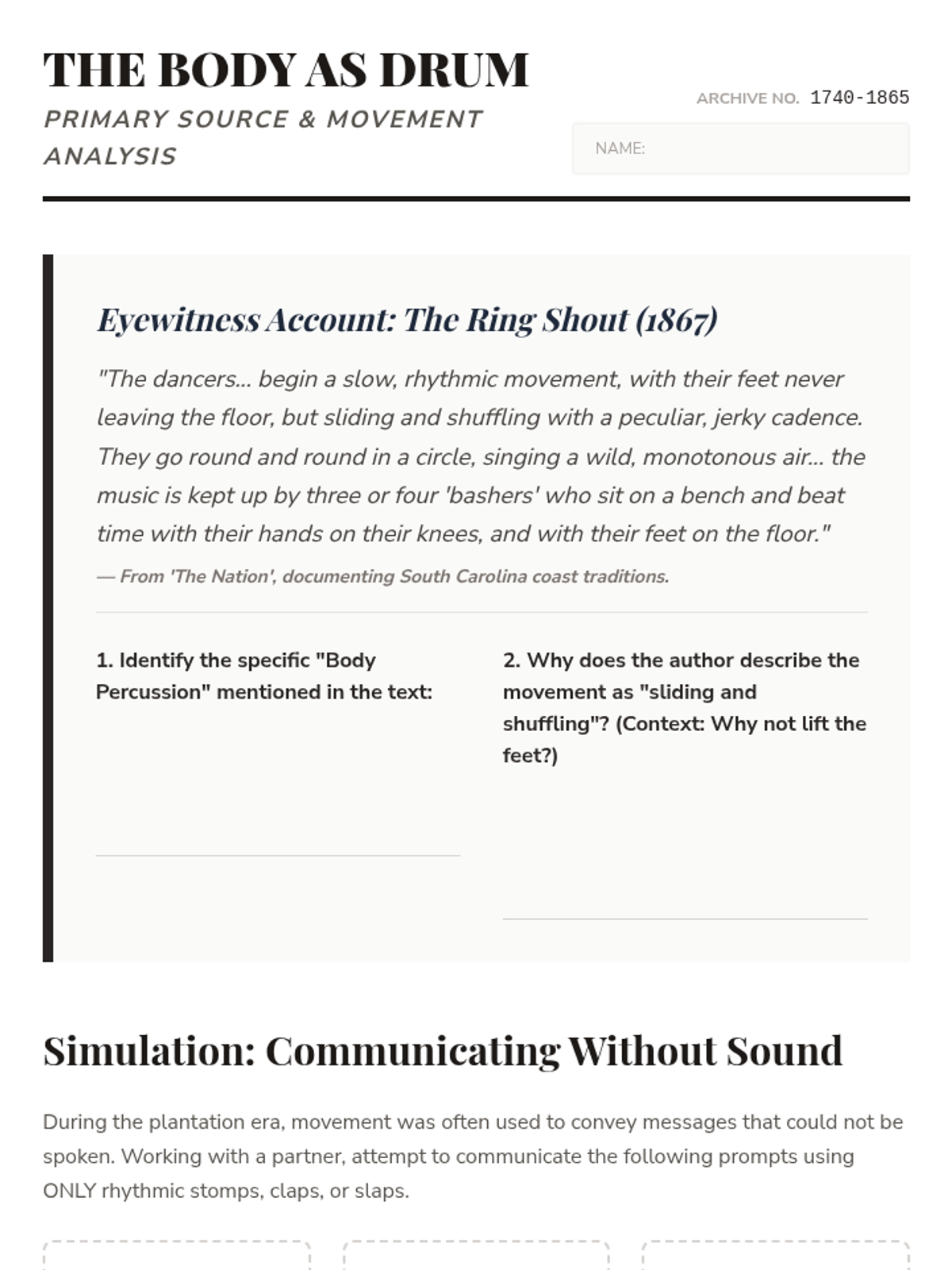
An examination of how enslaved people maintained cultural identity through the Ring Shout and Juba, using the body as a percussive instrument when drums were banned.
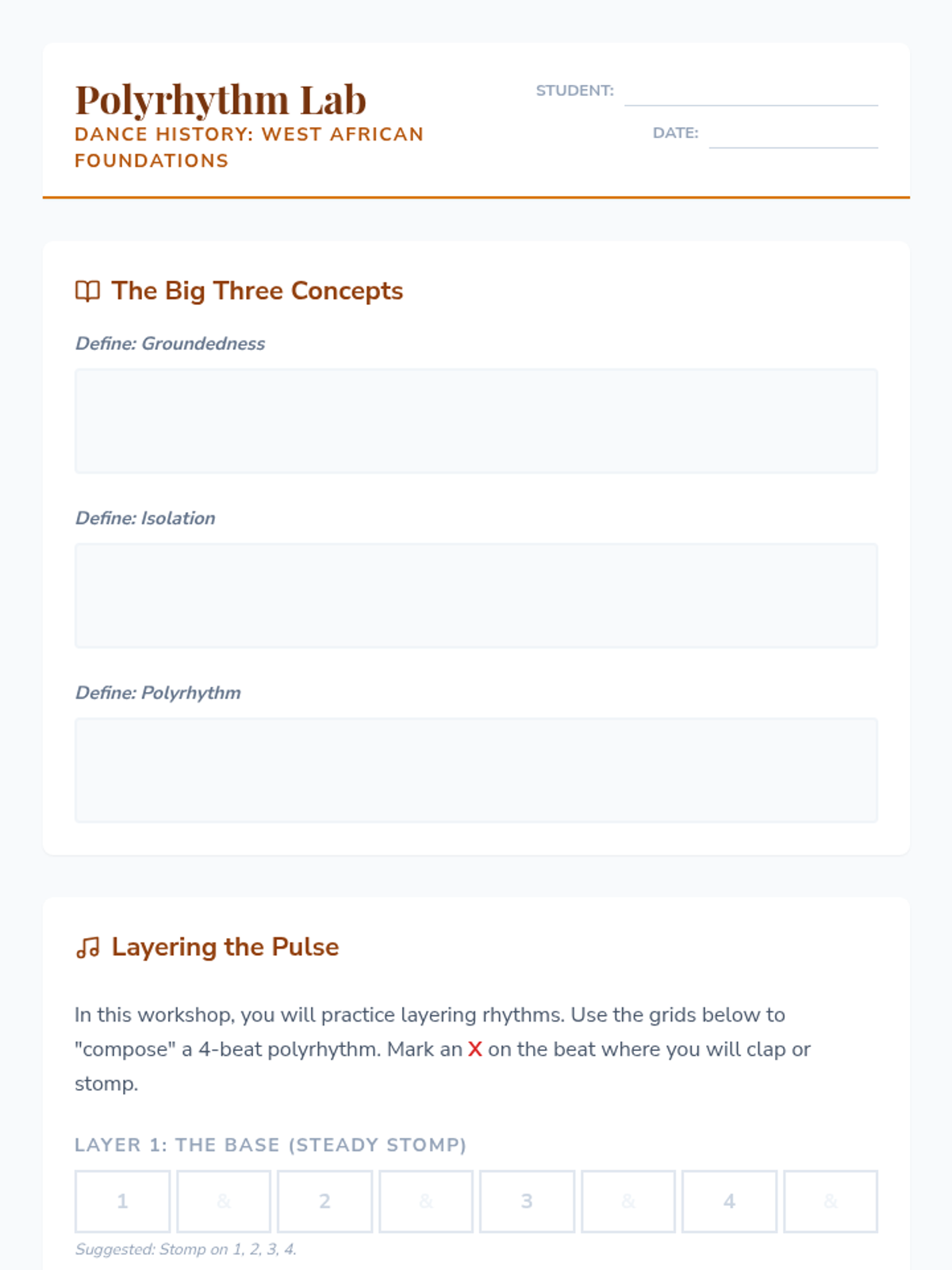
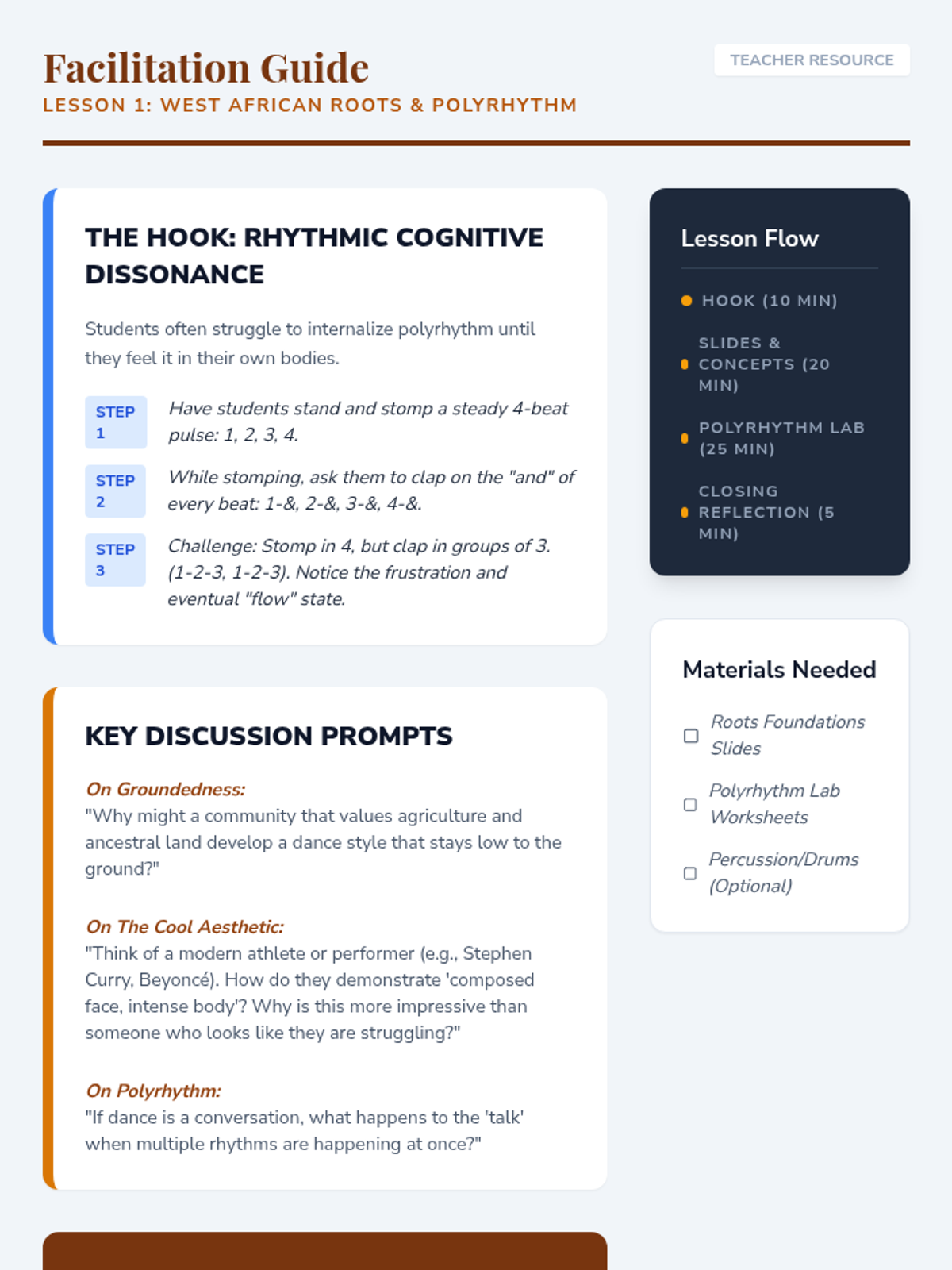
Introduction to West African dance fundamentals, focusing on groundedness, isolation, and the complex layers of polyrhythm.
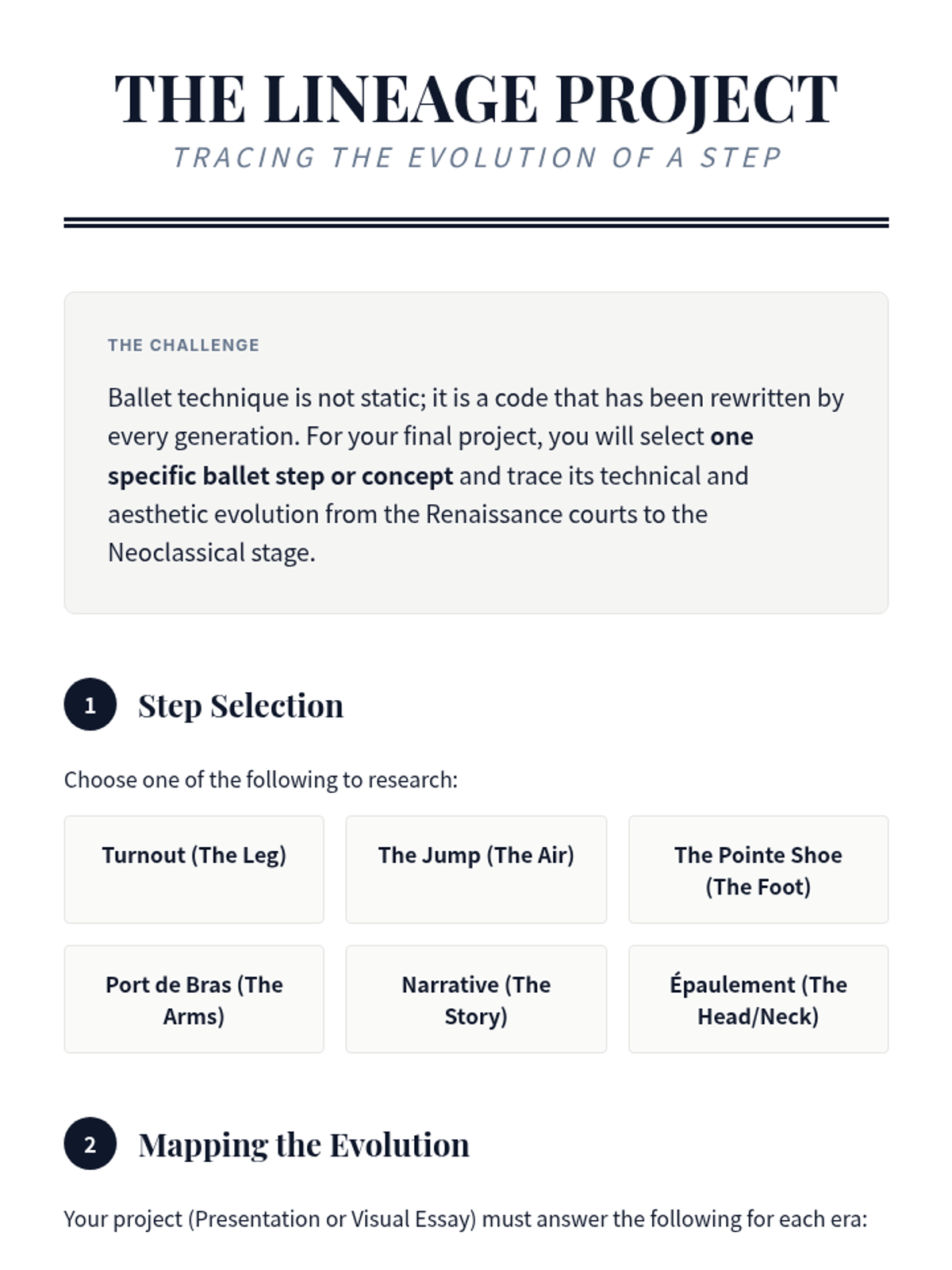
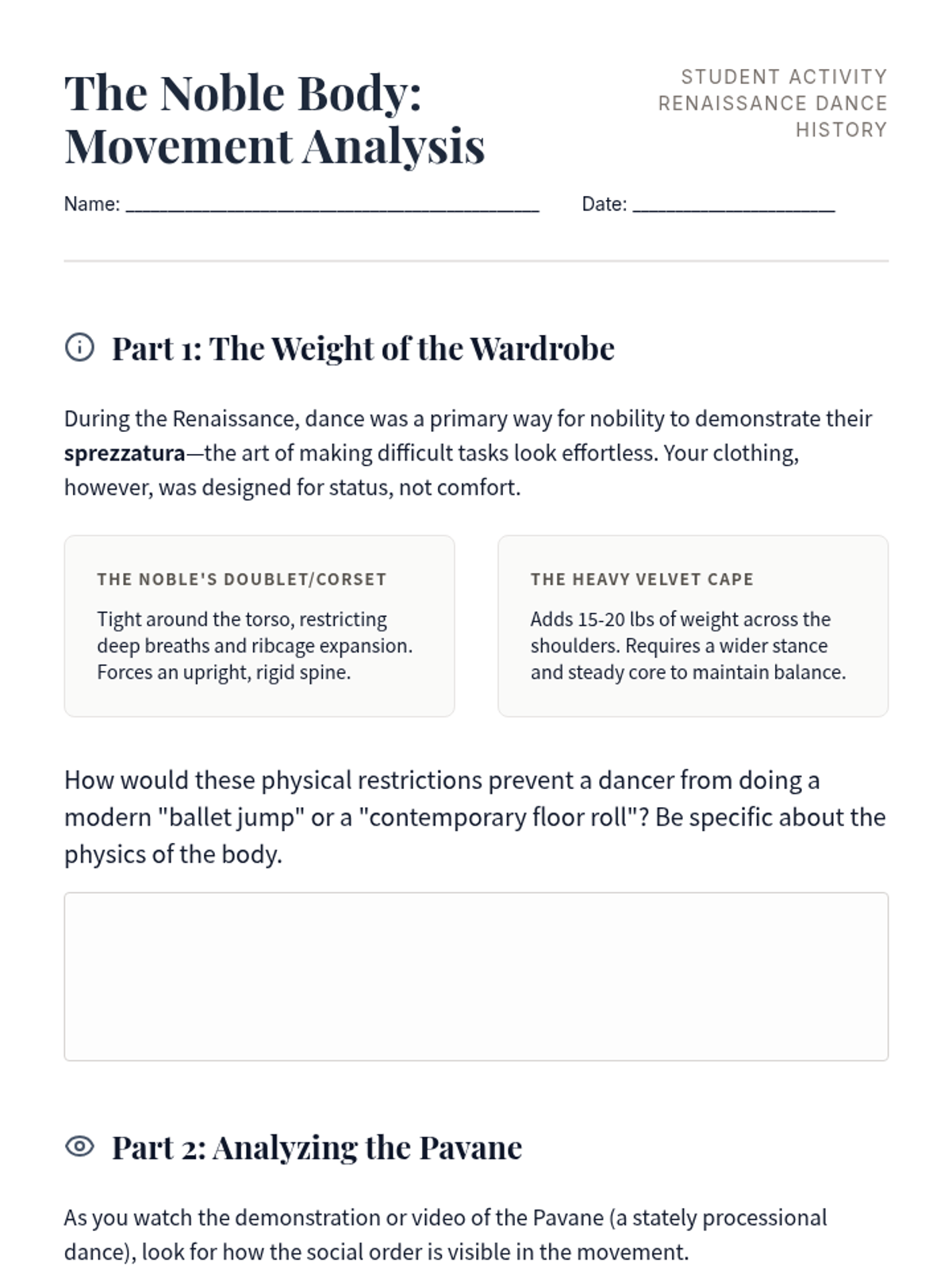
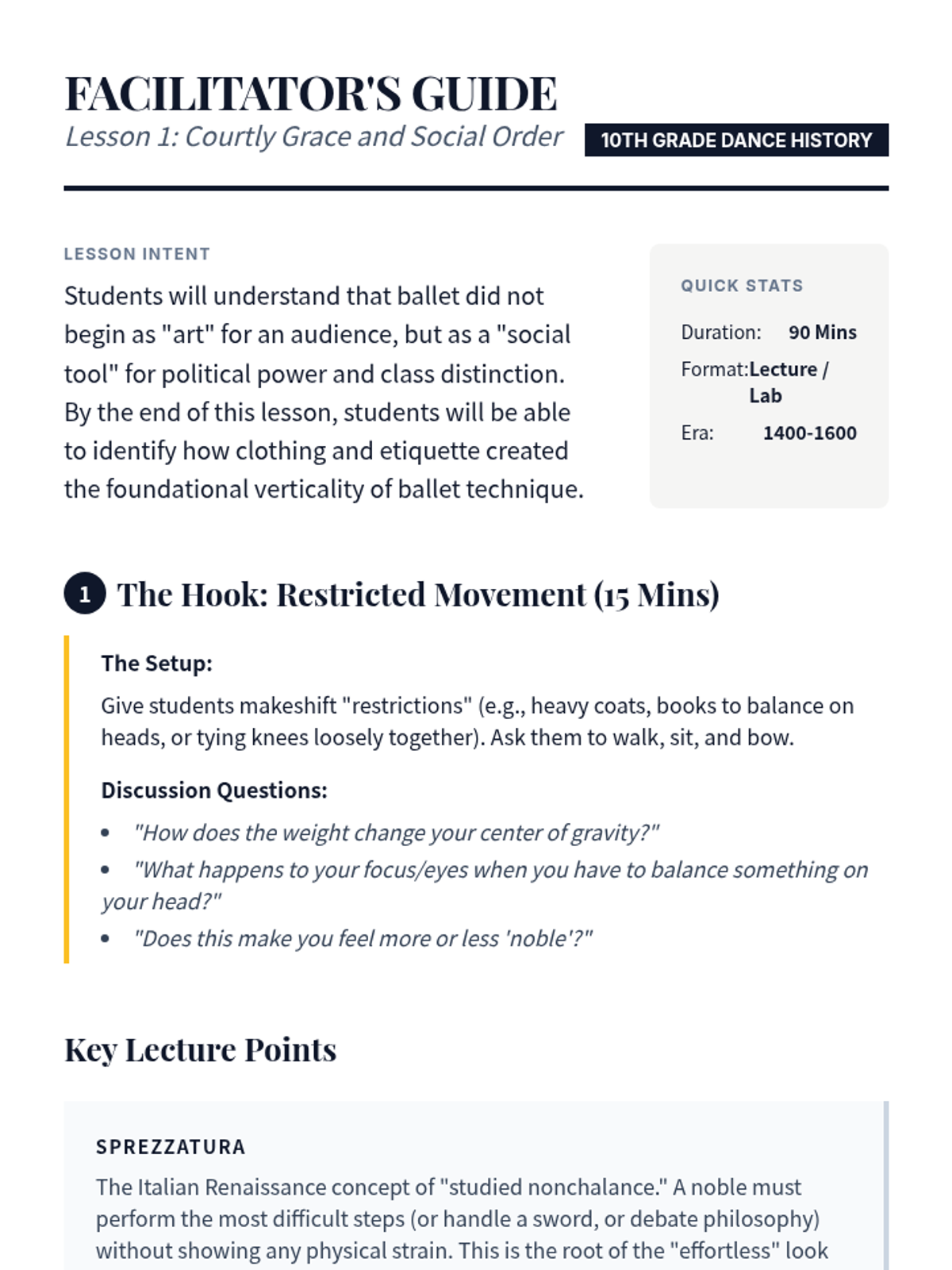
Explore the origins of ballet in Italian and French courts, focusing on how restrictive social etiquette and heavy clothing influenced early movement standards.
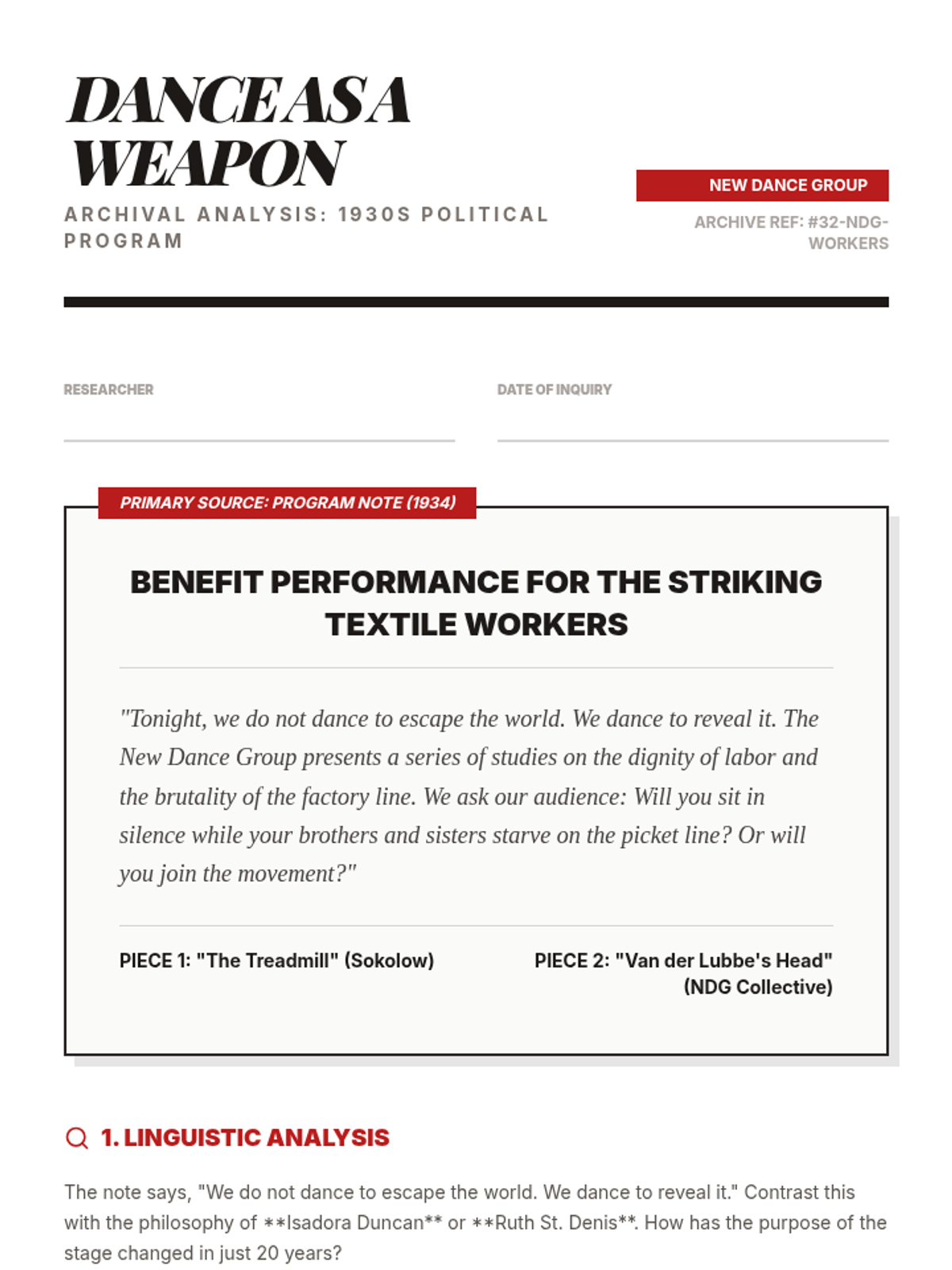
Exploration of the New Dance Group and the shift toward dance as a tool for social activism, labor unions, and anti-fascist resistance during the Great Depression.
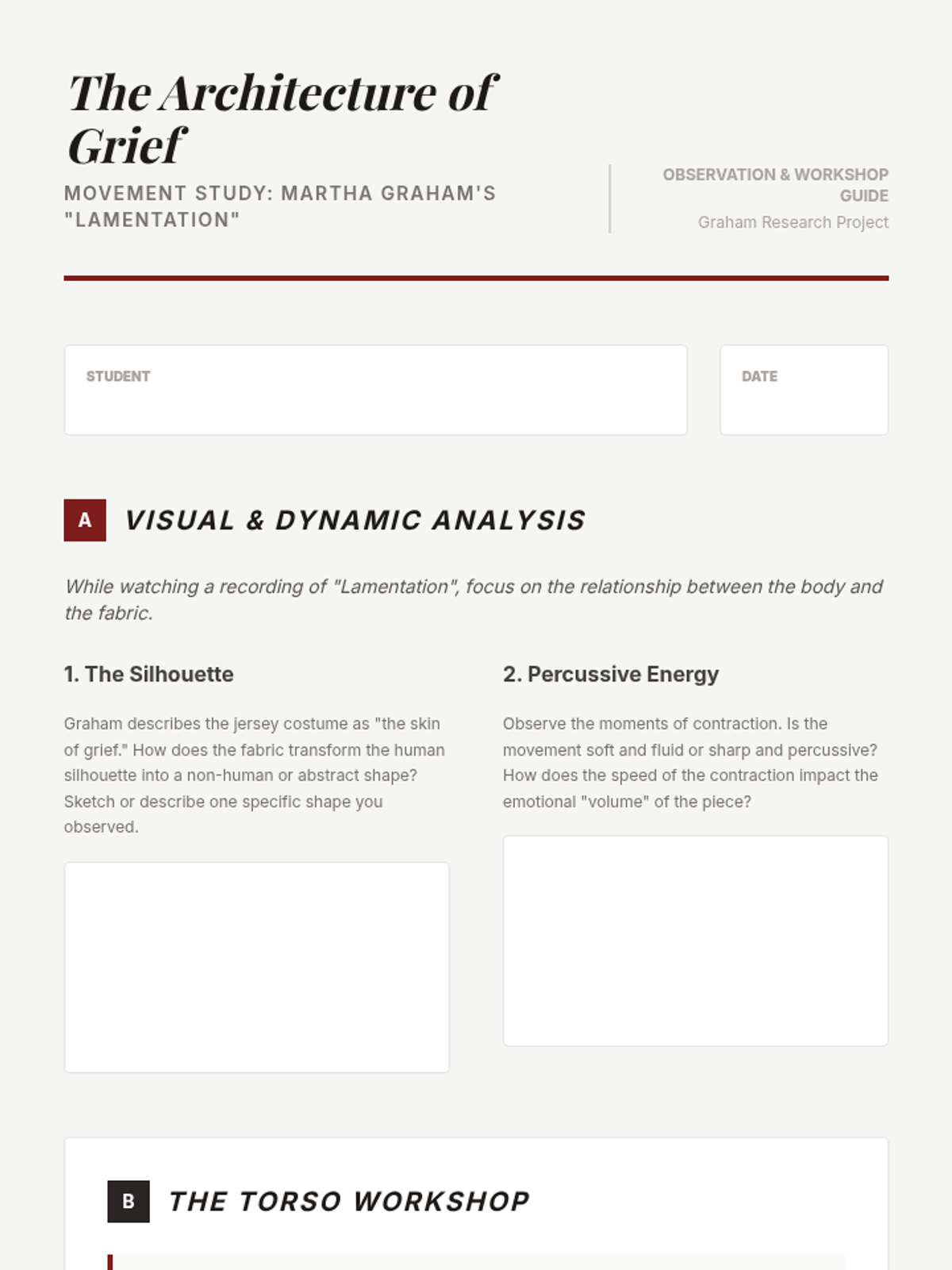
Analysis of Martha Graham's development of contraction and release, her focus on the psychological interior, and the abstraction of emotion in 'Lamentation'.
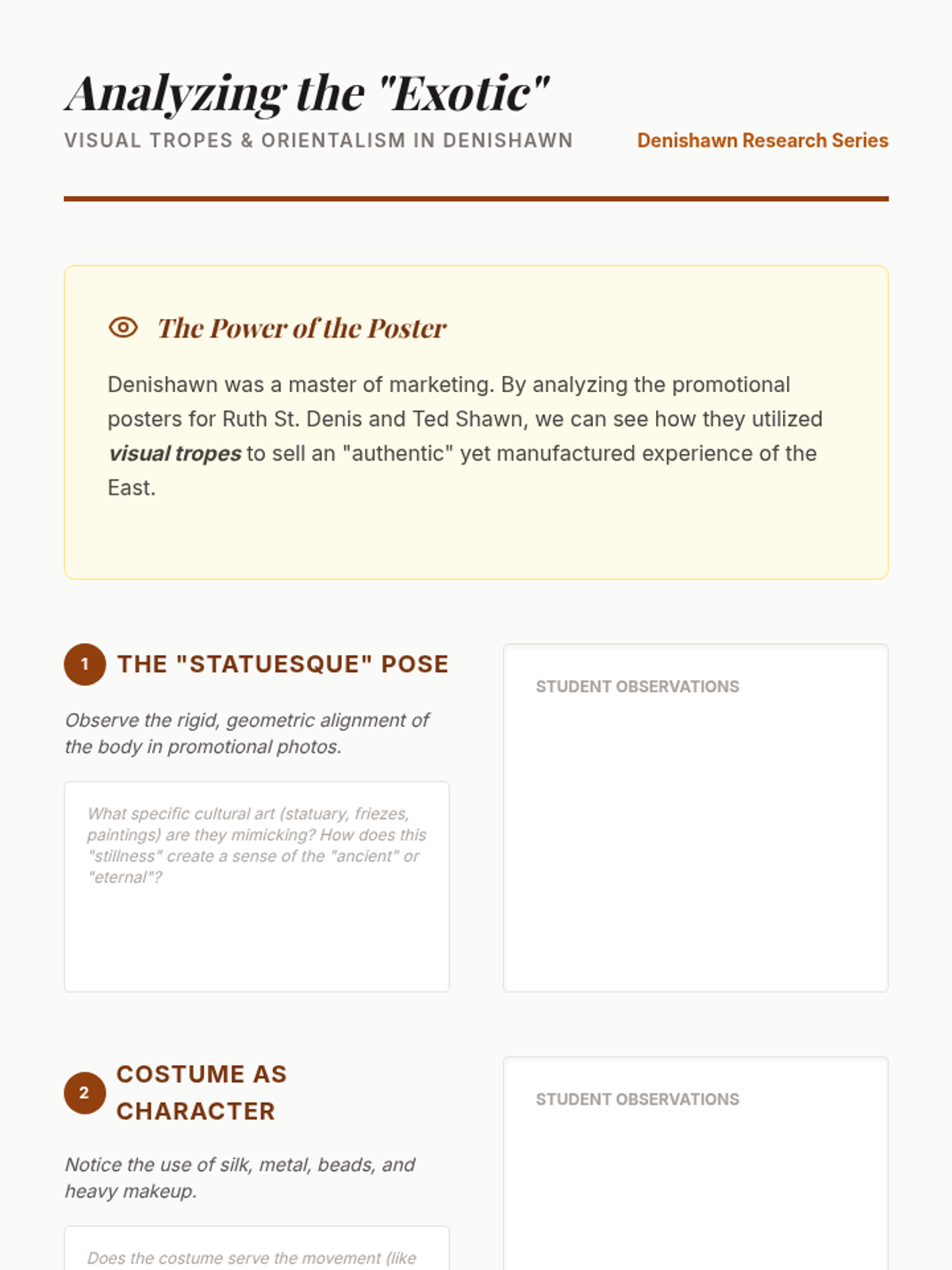
A critical investigation into the Denishawn School and the use of Orientalism and cultural appropriation in the early American modern dance scene.
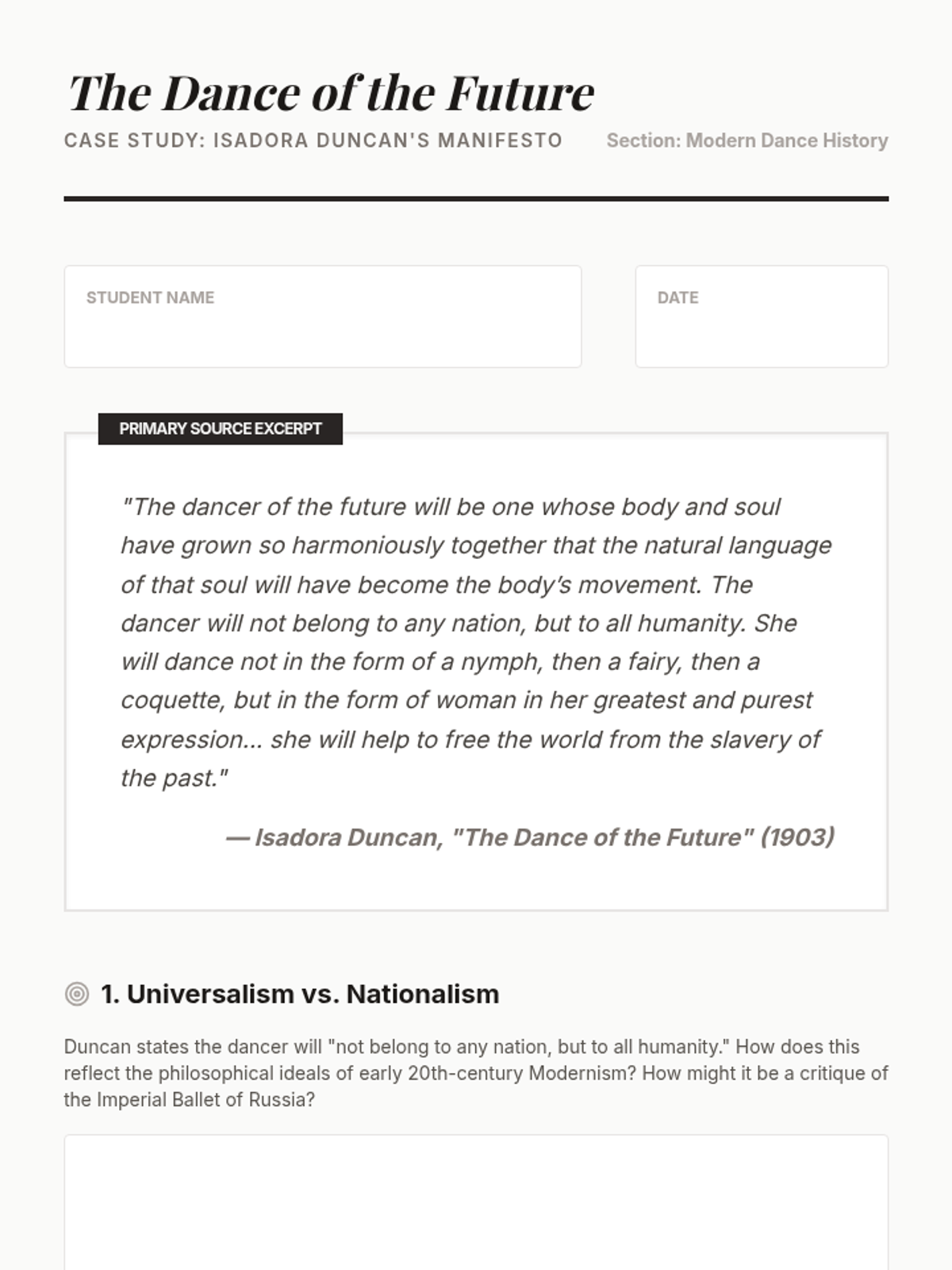
Examination of Isadora Duncan's revolutionary approach to dance, her rejection of balletic artifice, and her construction of the 'natural' body inspired by Greek antiquity.