Specialized vocabulary across disciplines, research methodologies, and effective note-taking systems. Equips learners with information literacy skills and strategies for navigating standardized exams.
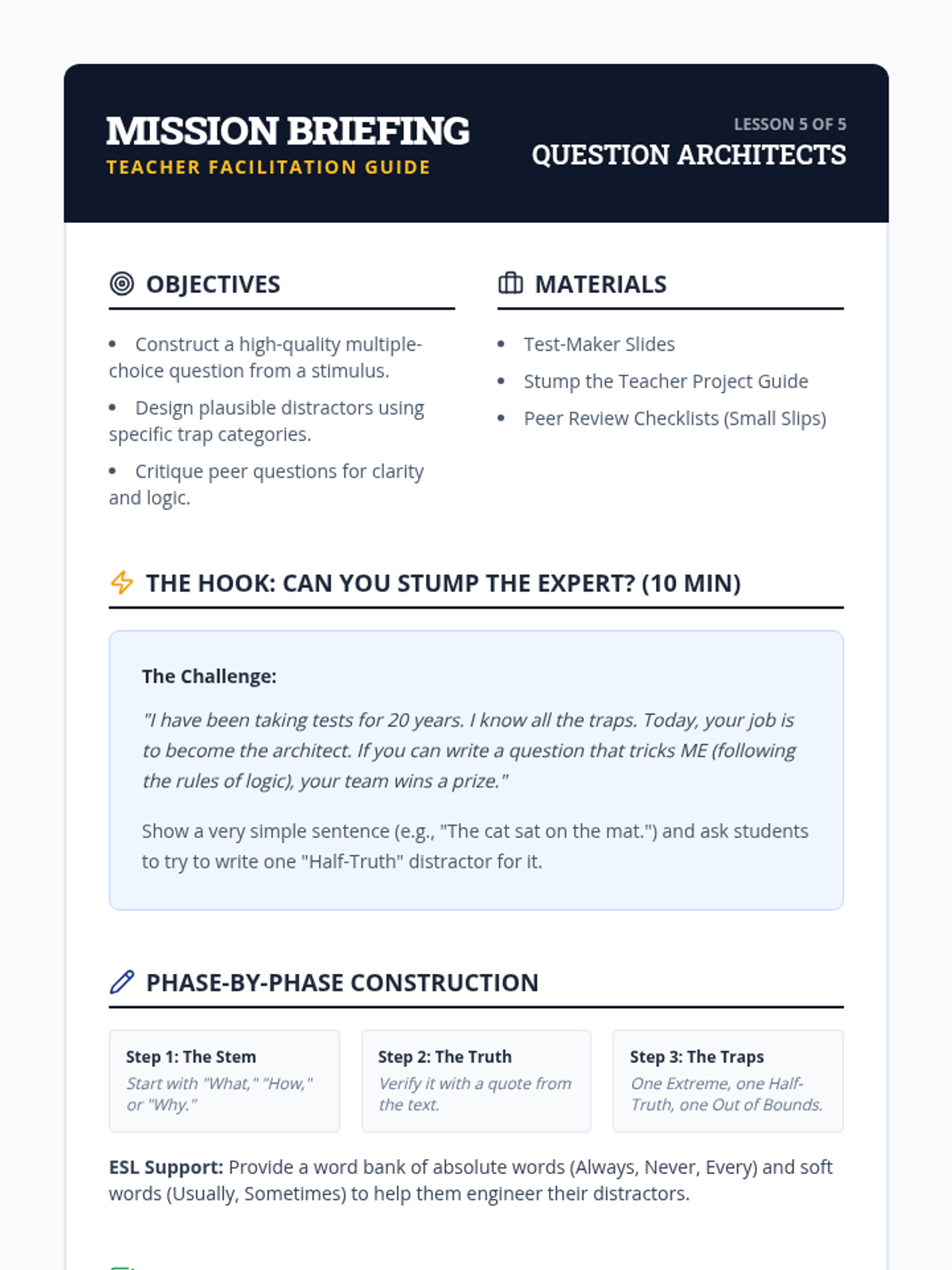
Facilitation guide for Lesson 5, including the "Stump the Expert" hook, phase-by-phase question construction steps, and a peer review protocol.
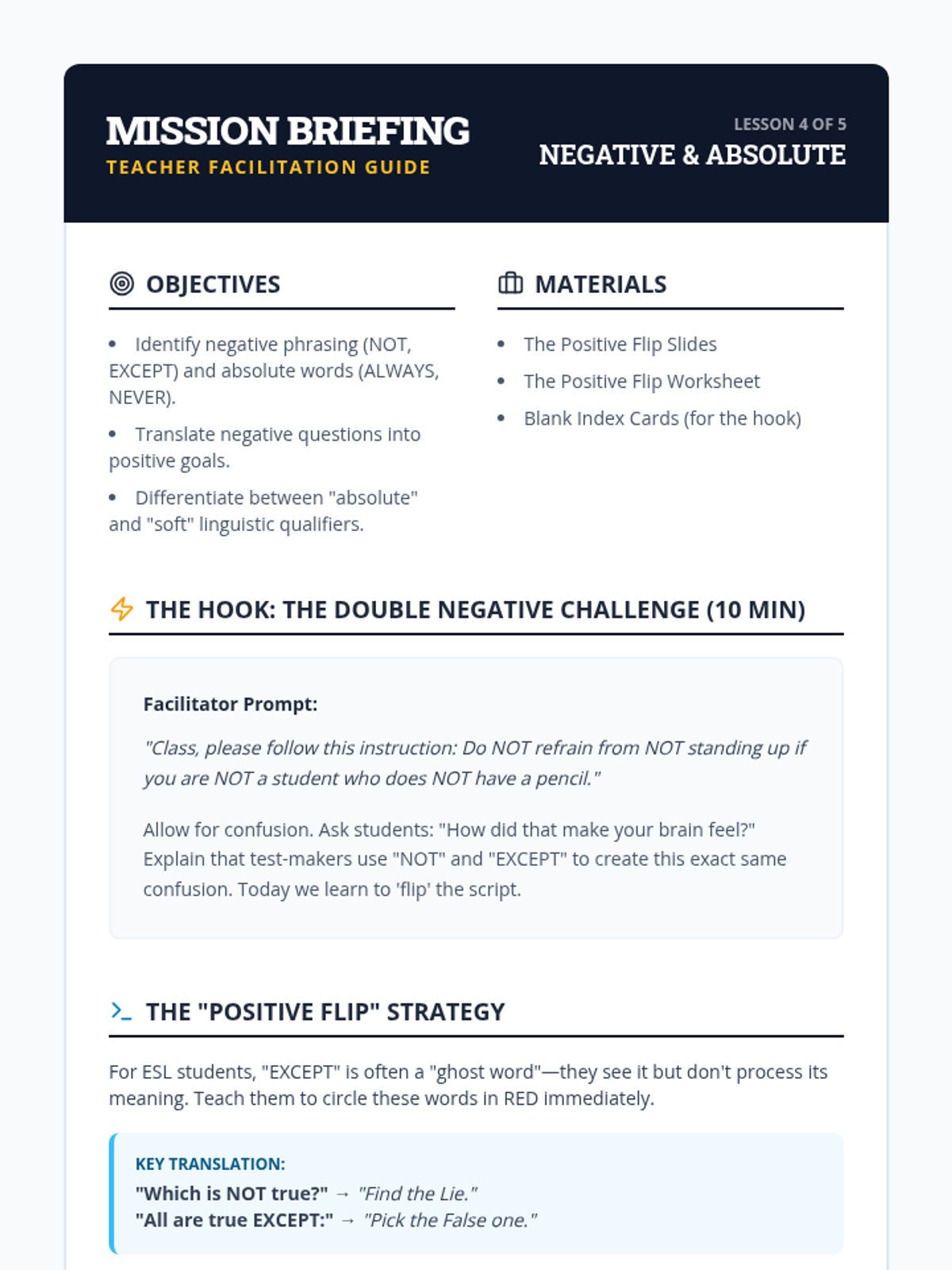
Facilitation guide for Lesson 4, including the "Double Negative Instructions" hook, translation strategies for "NOT" and "EXCEPT," and an answer key for the Positive Flip worksheet.
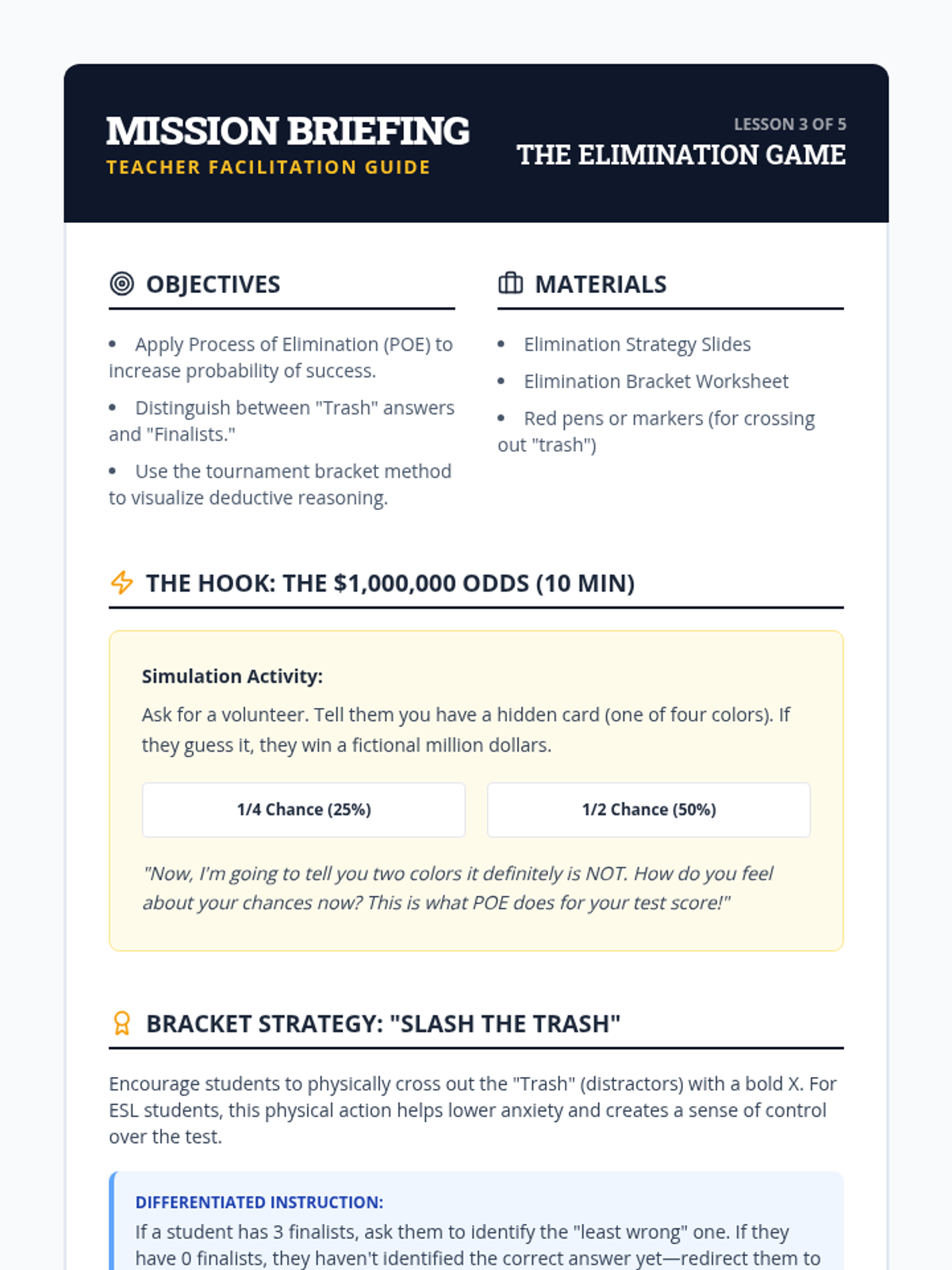
Facilitation guide for Lesson 3, including the odds simulation hook, the "Slash the Trash" technique, and an answer key for the Elimination Bracket worksheet.
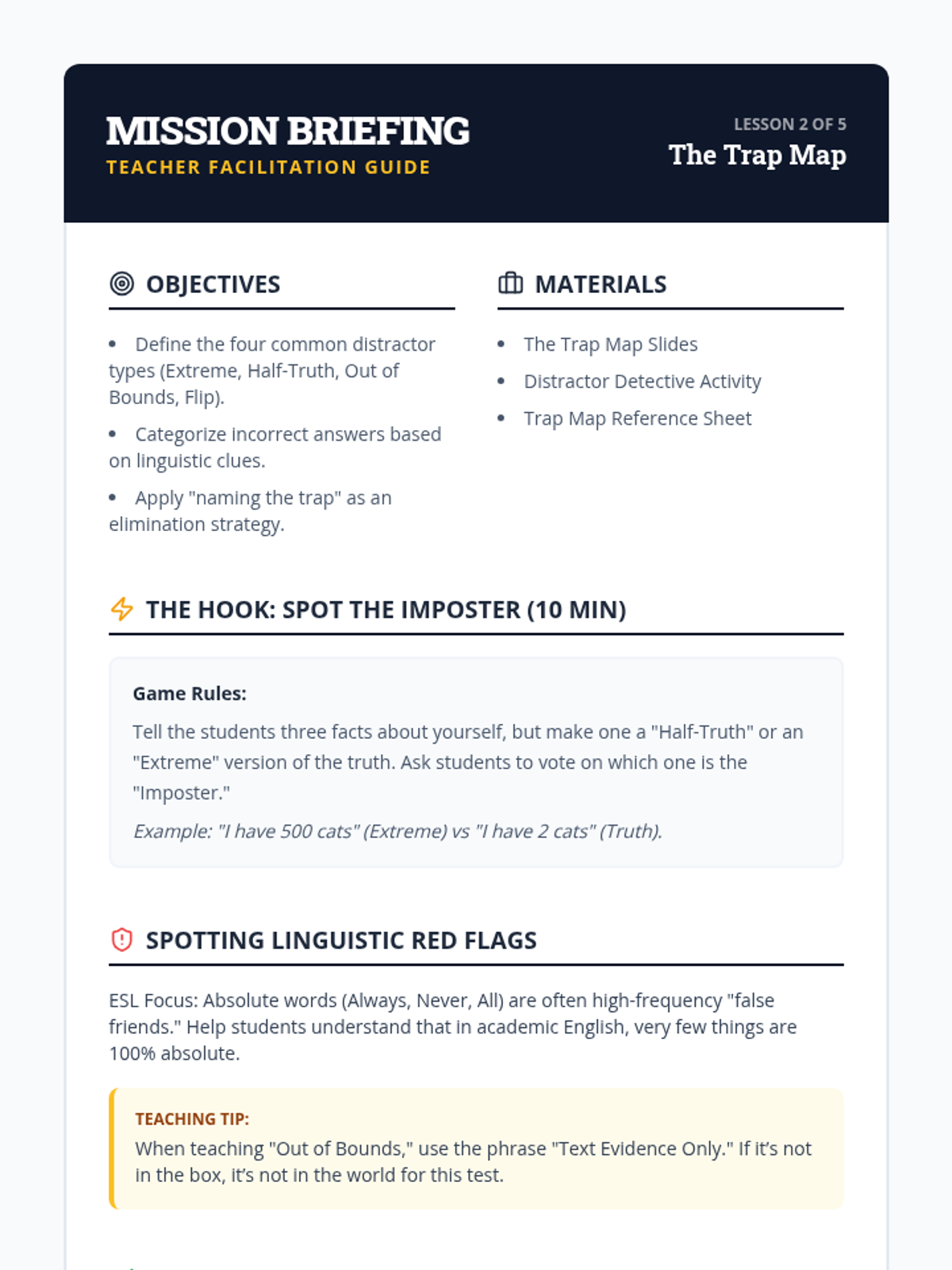
Facilitation guide for Lesson 2, including the 'Spot the Imposter' hook, linguistic red flags for ESL learners, and an answer key for the Distractor Detective activity.
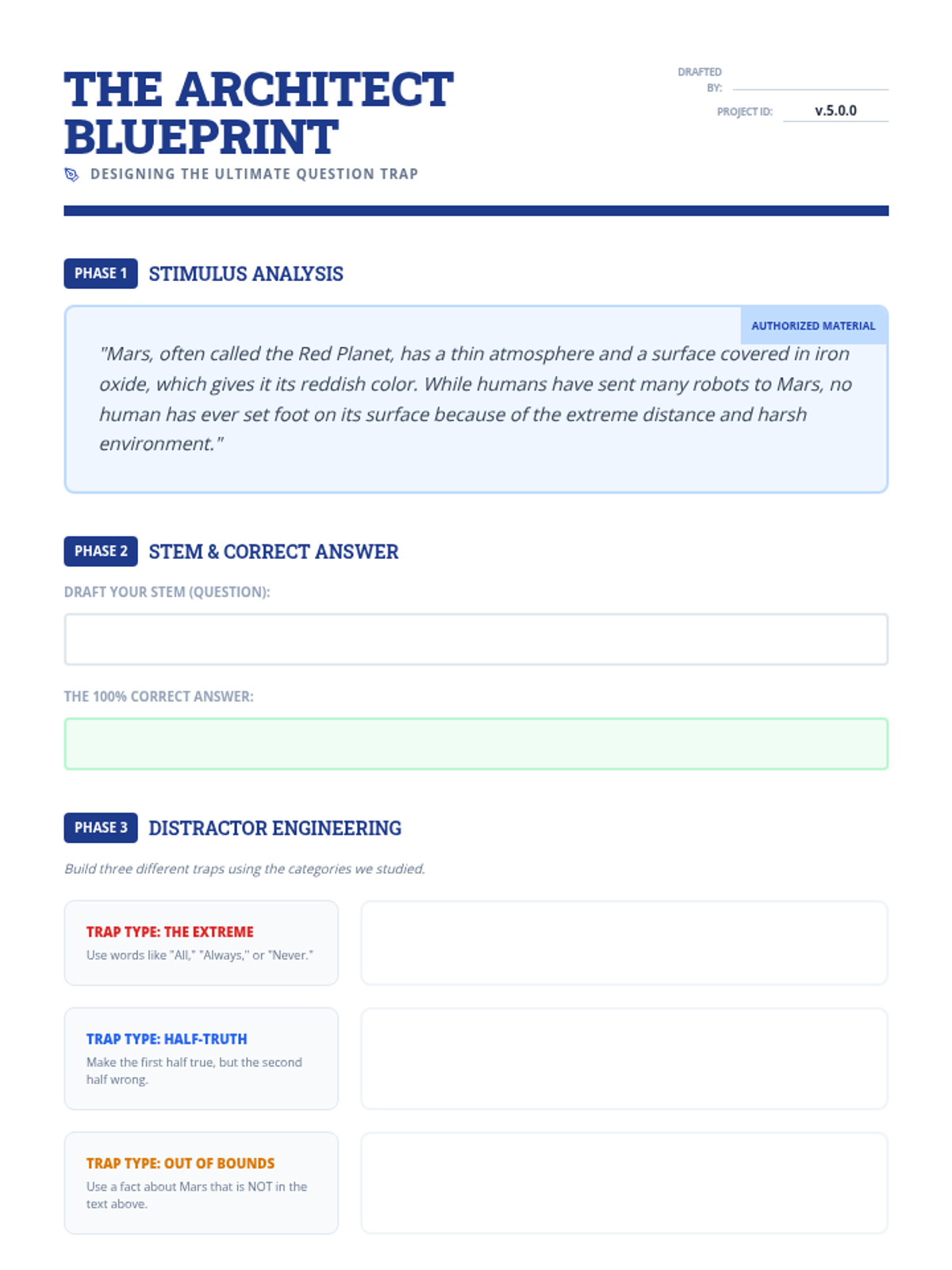
Worksheet for Lesson 5 where students switch roles and become the test-makers. They write their own multiple-choice questions based on a shared text, intentionally creating plausible distractors.
Introductory slide deck for Lesson 5, exploring the mindset of a test-maker and the steps needed to construct a plausible multiple-choice question.
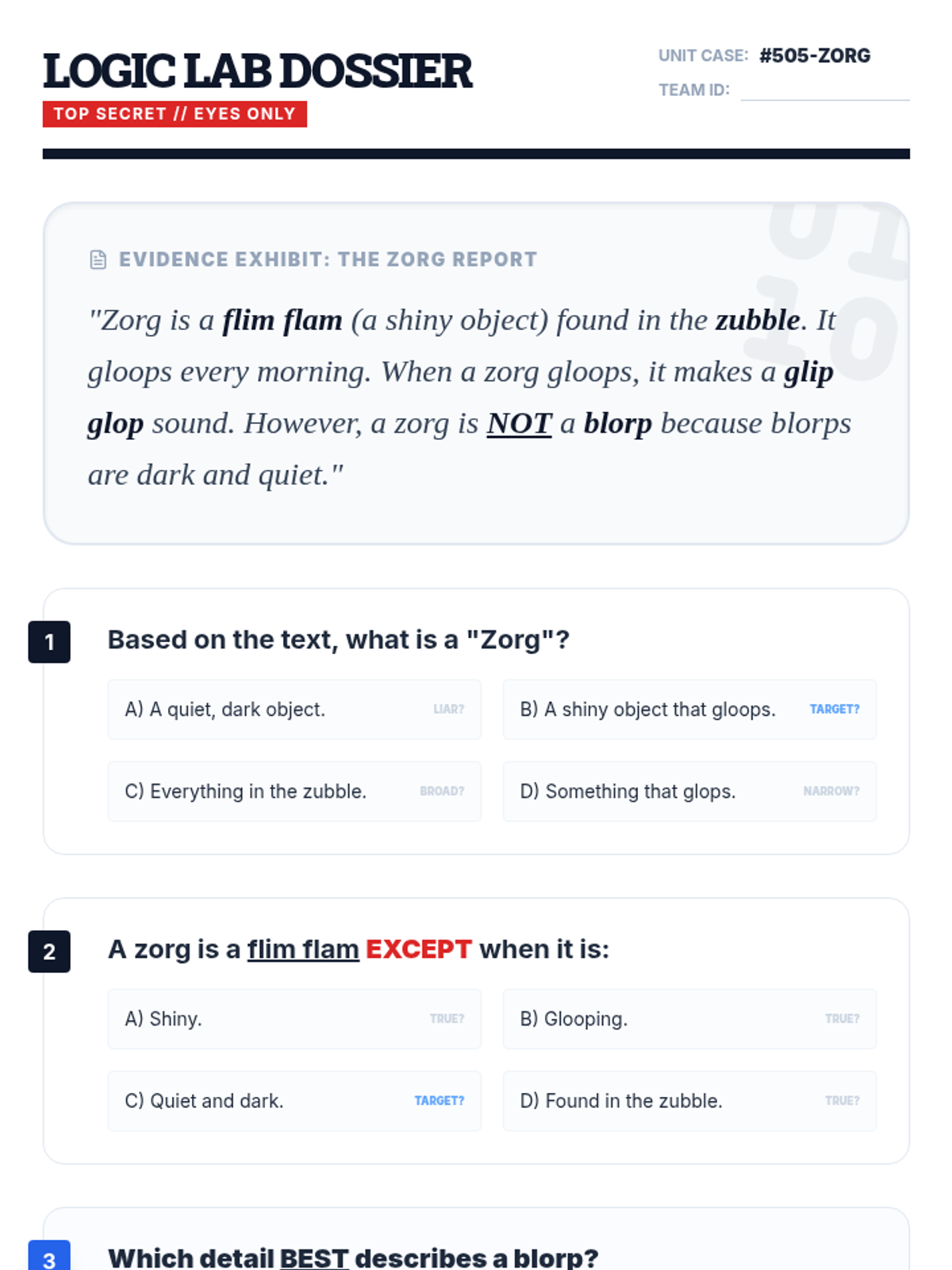
Student "Zorg Language" dossier for Lesson 5, featuring a nonsense language test that requires students to apply all deconstruction and elimination strategies to solve.
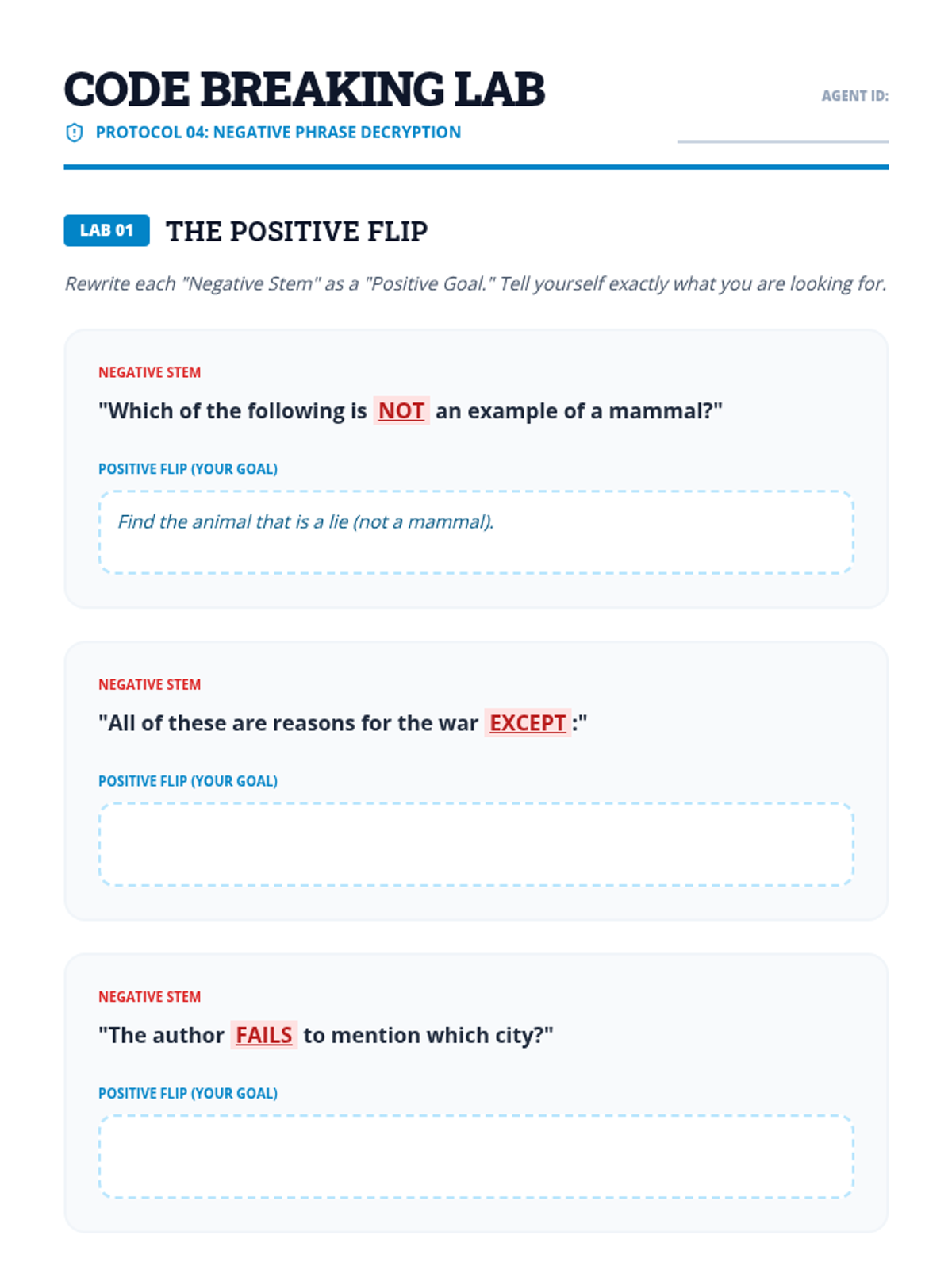
Worksheet for Lesson 4 where students specifically target questions using words like 'NOT,' 'EXCEPT,' 'ALWAYS,' or 'NEVER.' They rewrite these questions in positive terms to clarify meaning. Revised with a light theme for better printability.
Introductory slide deck for Lesson 4, using a code-breaking theme to teach students how to handle negative phrasing (NOT, EXCEPT) and absolute words (ALWAYS, NEVER) in test questions.
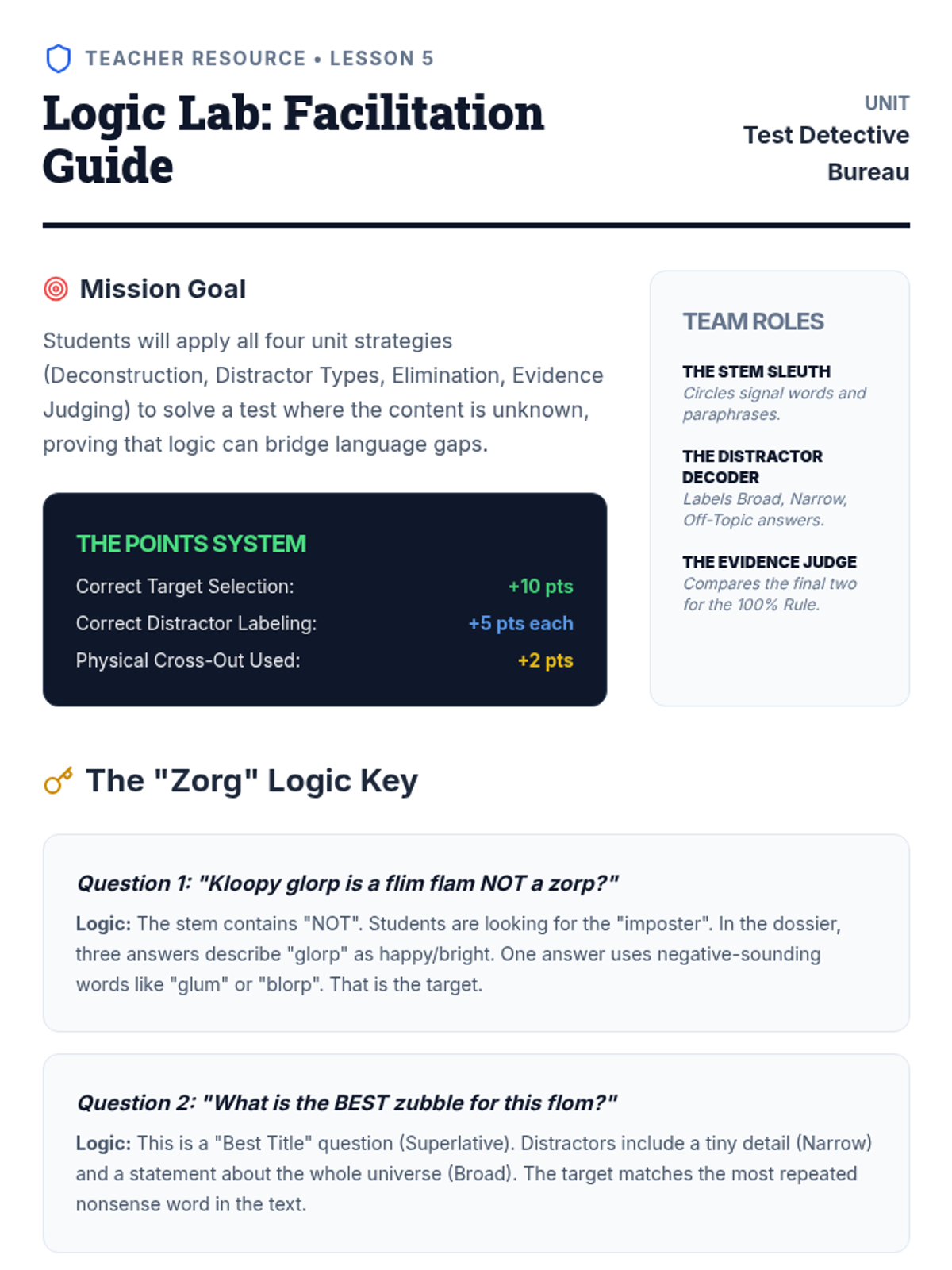
Facilitation guide for Lesson 5, outlining the "Logic Lab" simulation points system, team roles, and the answer key for the "Zorg Language" nonsense test.
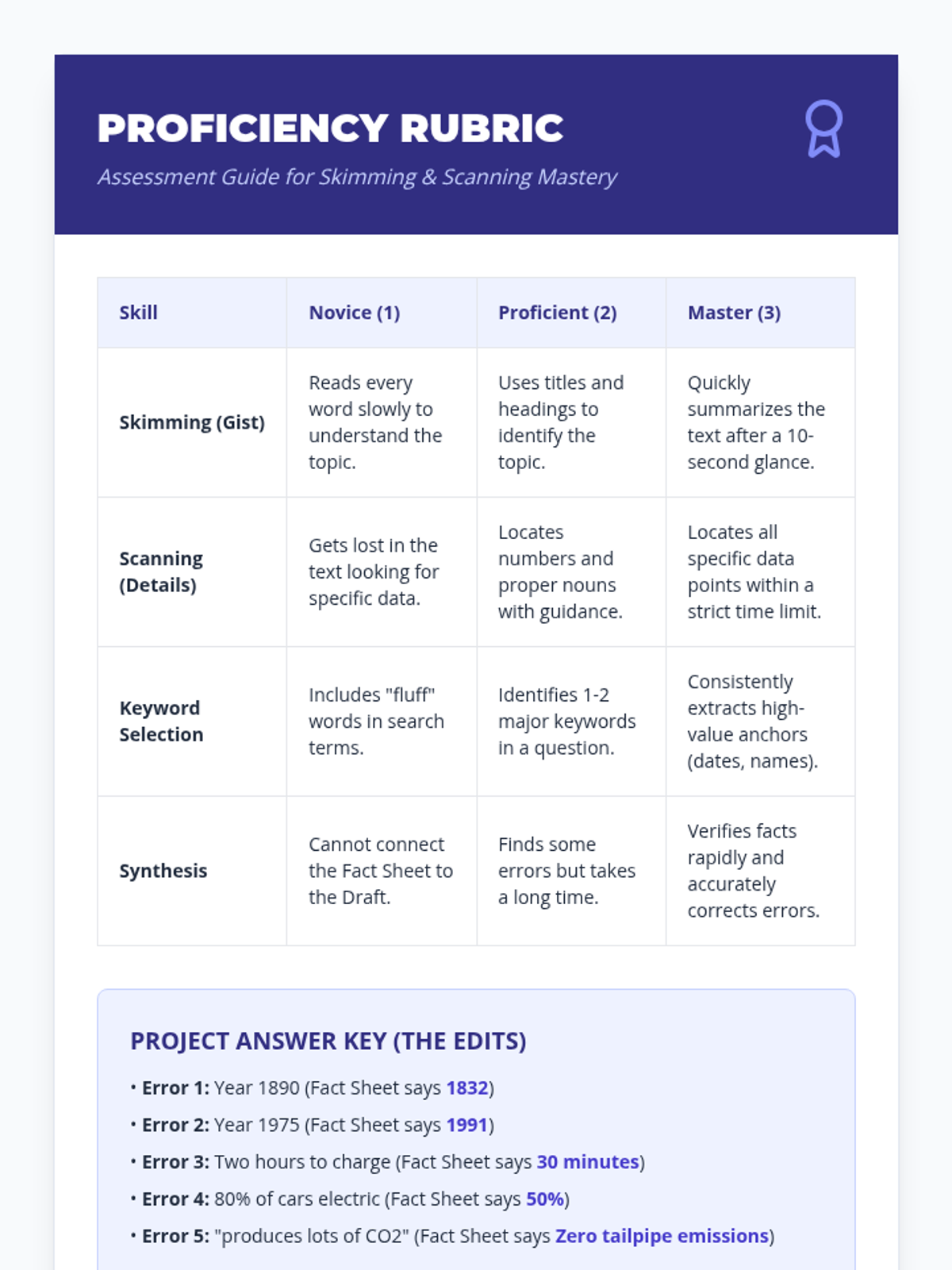
A proficiency rubric and teacher assessment guide for Lesson 5, including an answer key for the "Speed Editor" project and differentiation strategies for varying ESL levels.
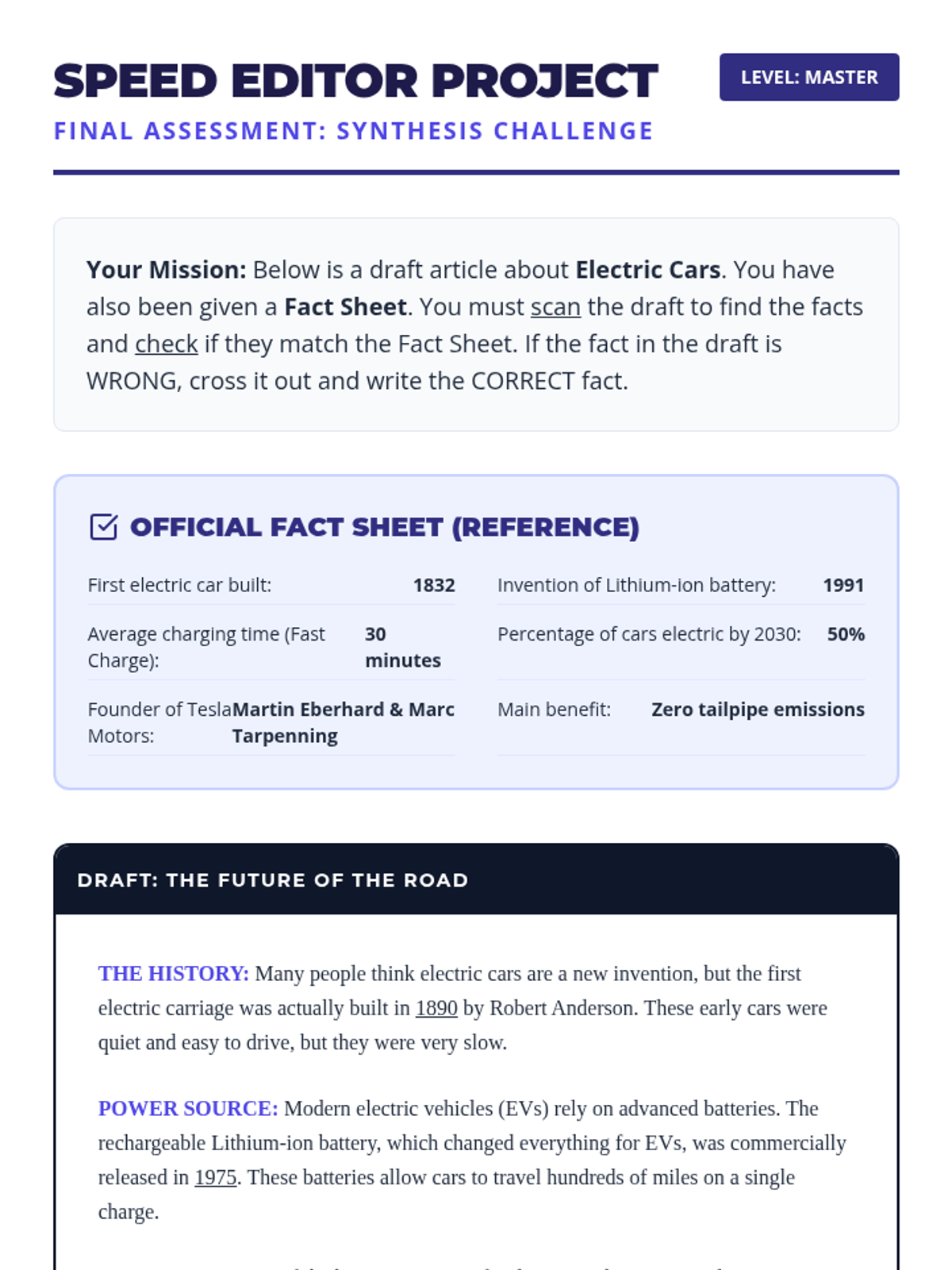
The final project for the sequence where students act as "Speed Editors," using a Fact Sheet to verify and correct an article about electric cars, requiring high-level synthesis of skimming and scanning.
Slide deck for Lesson 5, presenting the "Logic Lab" mission briefing and strategies for solving a "nonsense language" test using logical patterns.
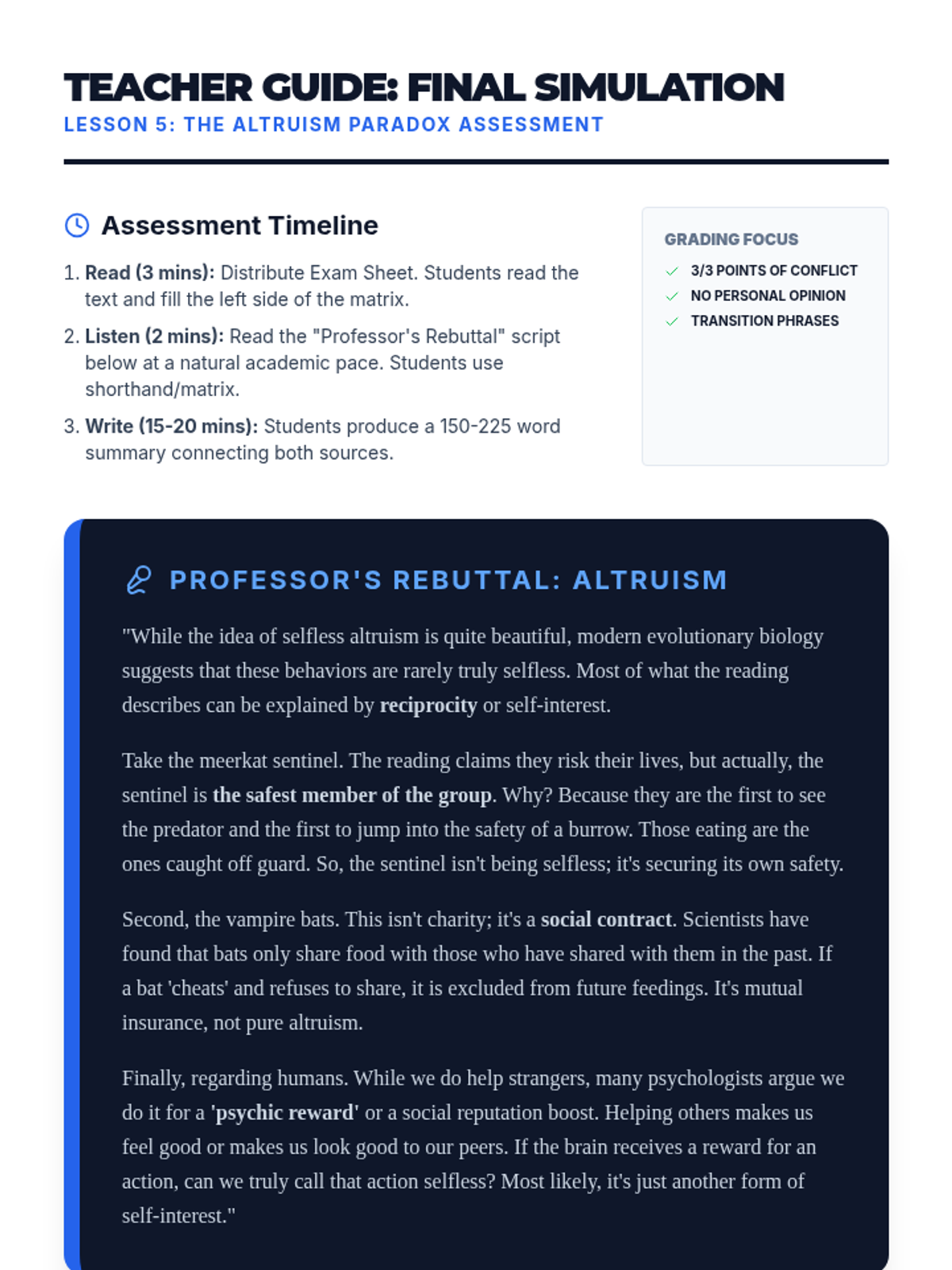
A guide for teachers with the final assessment script on 'The Altruism Paradox' and a sample high-scoring response for grading reference.
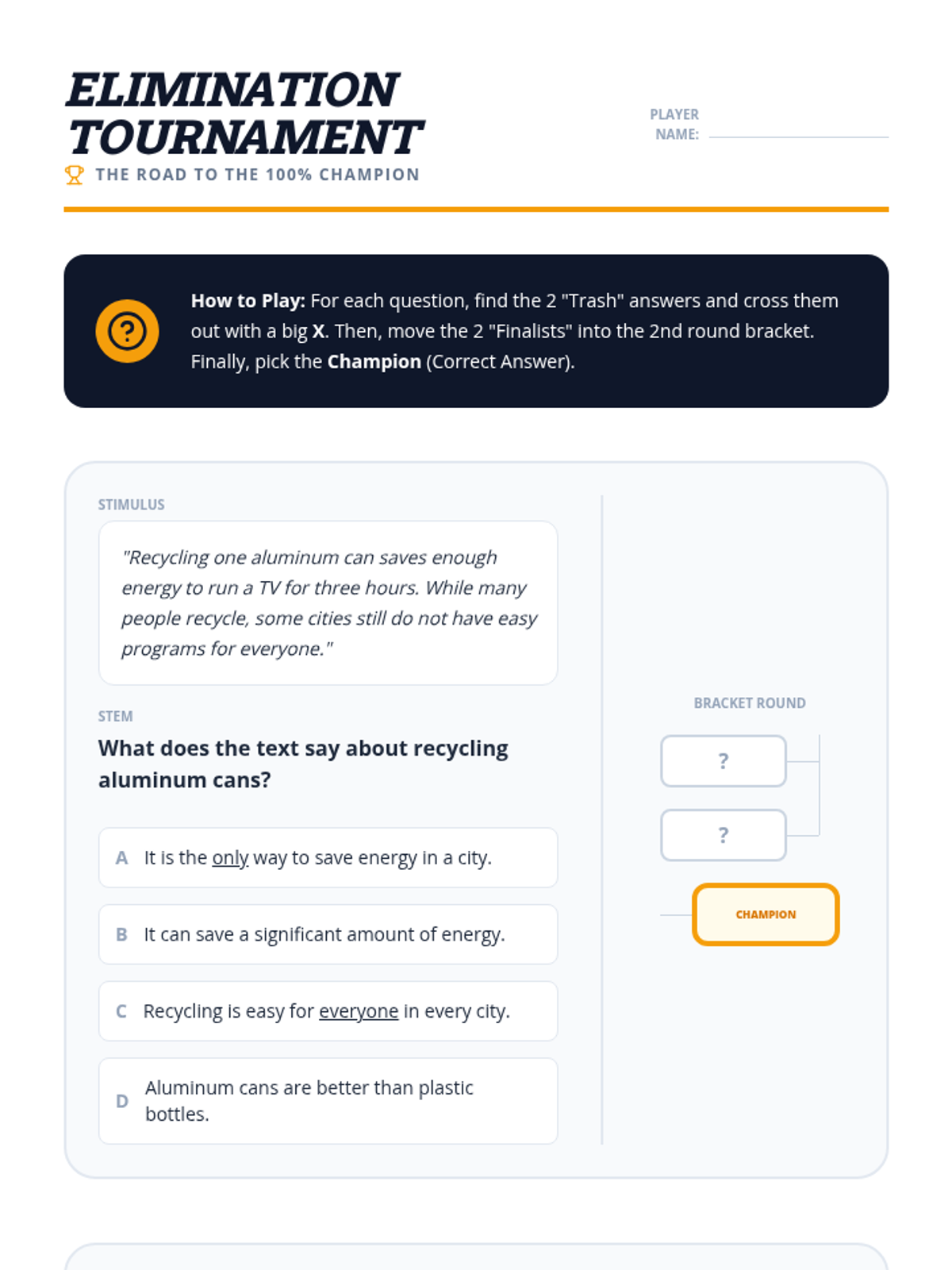
Worksheet for Lesson 3 where students use a "tournament bracket" visual to narrow down multiple-choice options by crossing out "trash" answers and selecting a champion.
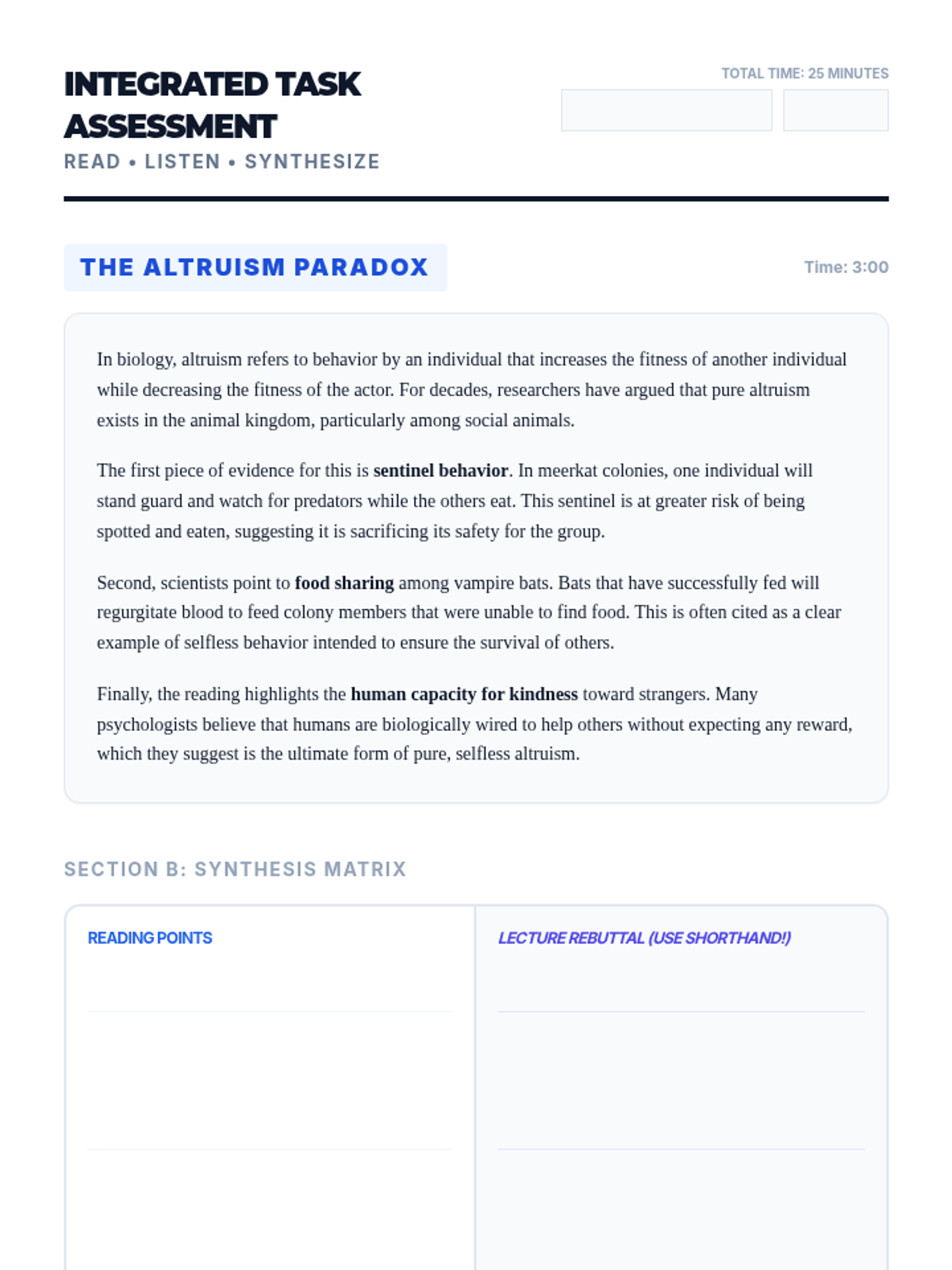
The final assessment sheet for the integrated task simulation, featuring a reading passage on altruism and structured areas for note-taking and writing.
Instructional slides for Lesson 5, focusing on synthesizing skimming and scanning strategies for the final "Speed Editor" project and promoting metacognitive reflection on the reading process.
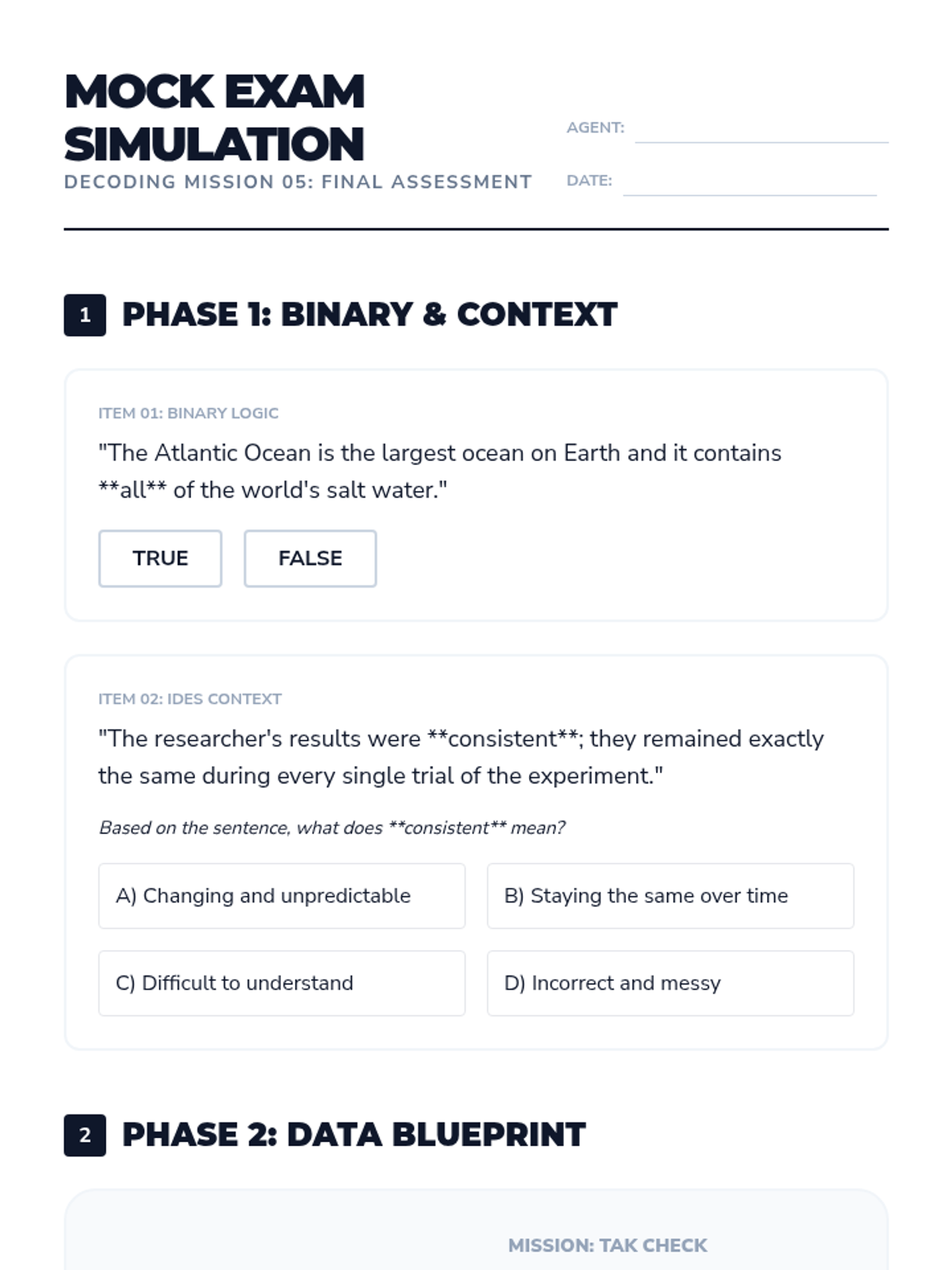
A cumulative mock exam and reflection form where students apply all learned strategies (Binary Rule, IDES, TAK, ACE) and perform a post-test analysis.
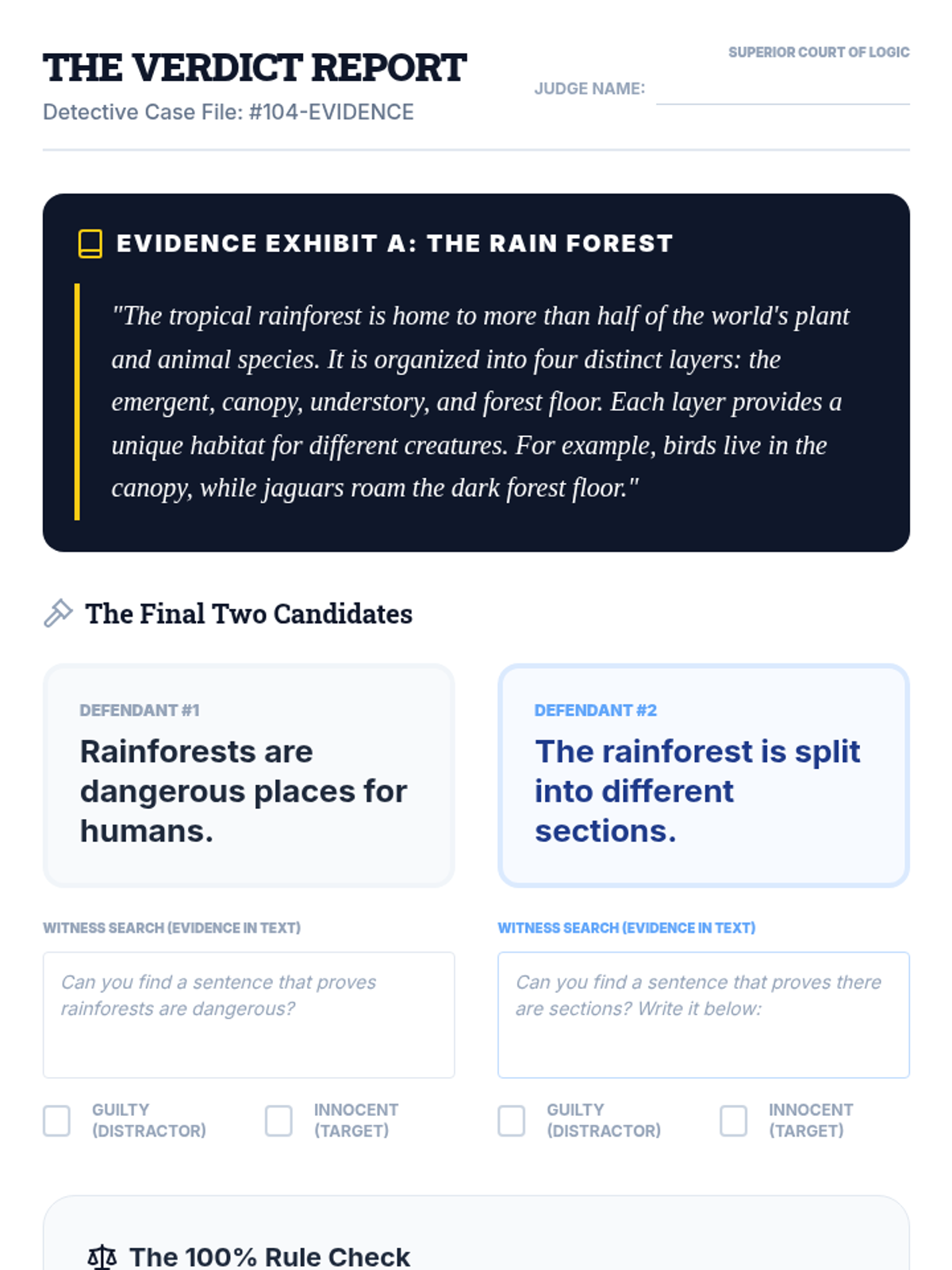
Student worksheet for Lesson 4 where students compare two plausible-looking answers, hunt for textual evidence (the "Witness"), and apply the "100% Rule" to identify the correct answer.
A slide deck introducing the final integrated task simulation, explaining the grading criteria, task structure, and the 'no-opinion' rule.
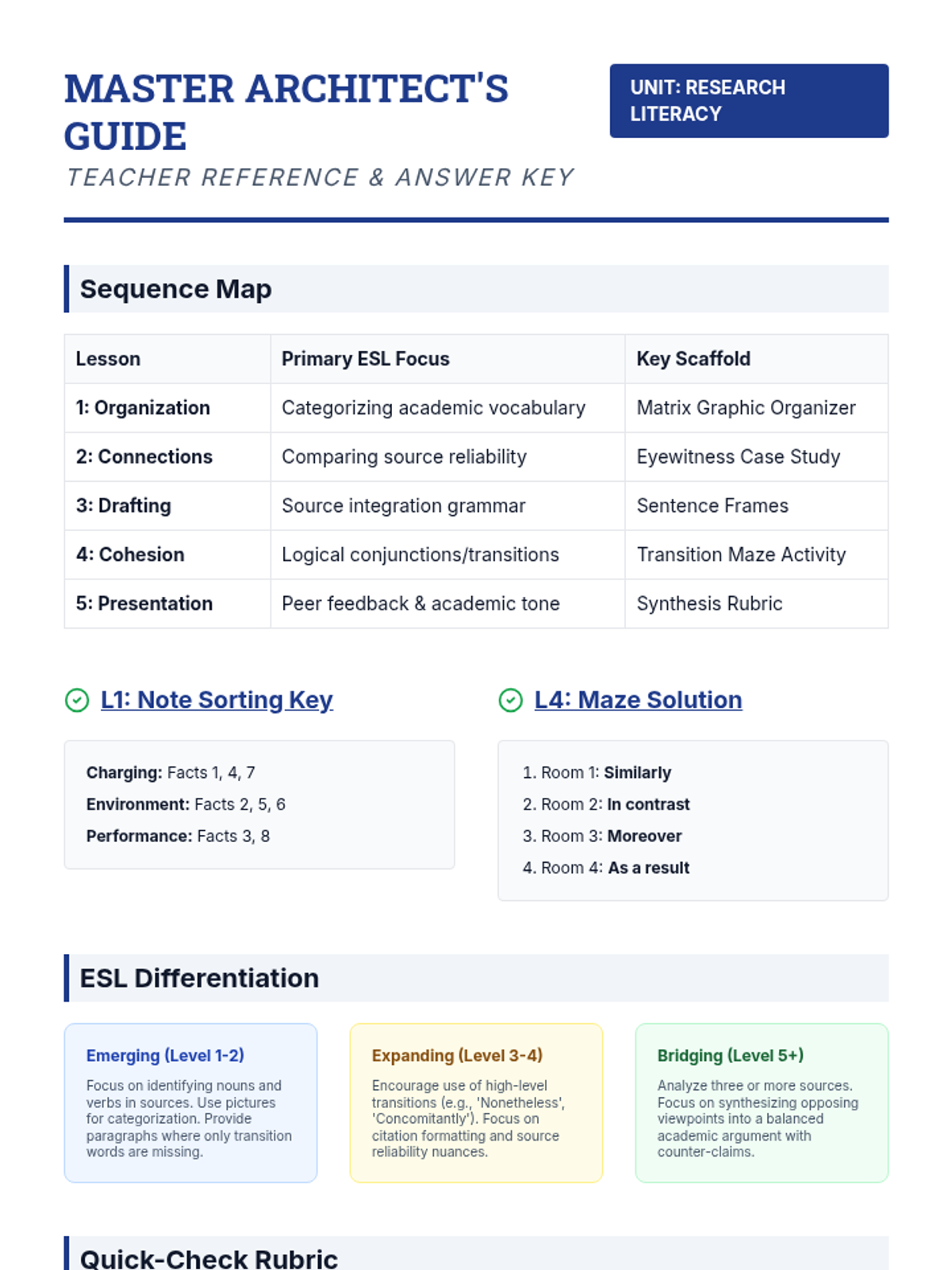
A comprehensive teacher-facing guide for the synthesis sequence. Includes the sequence map, answer keys for the Note Sorting and Transition Maze activities, differentiation strategies for various ESL levels, and a quick-check grading rubric.
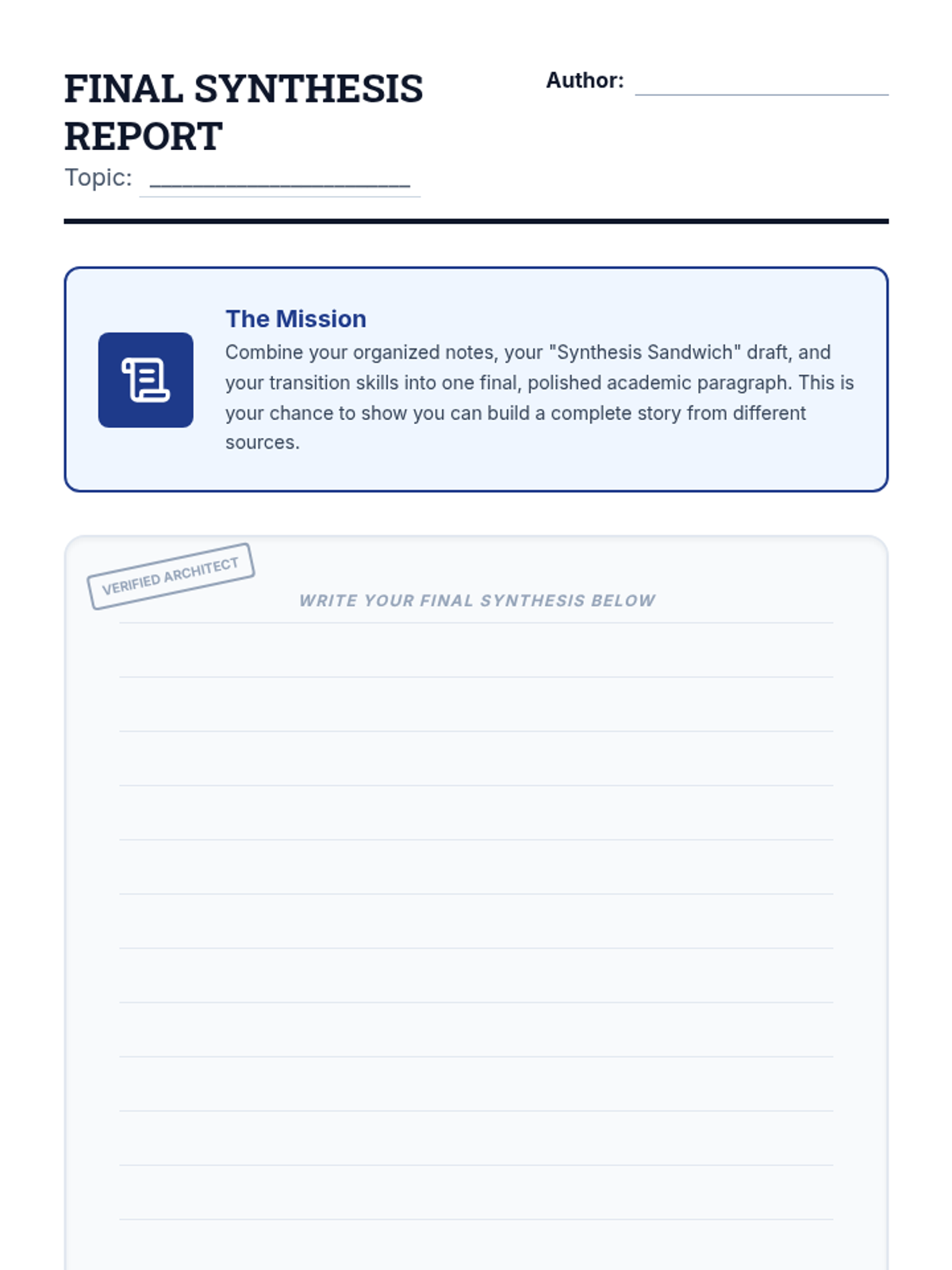
The final synthesis report template for students to write their completed academic paragraph. Includes a section for peer feedback from the Gallery Walk activity.
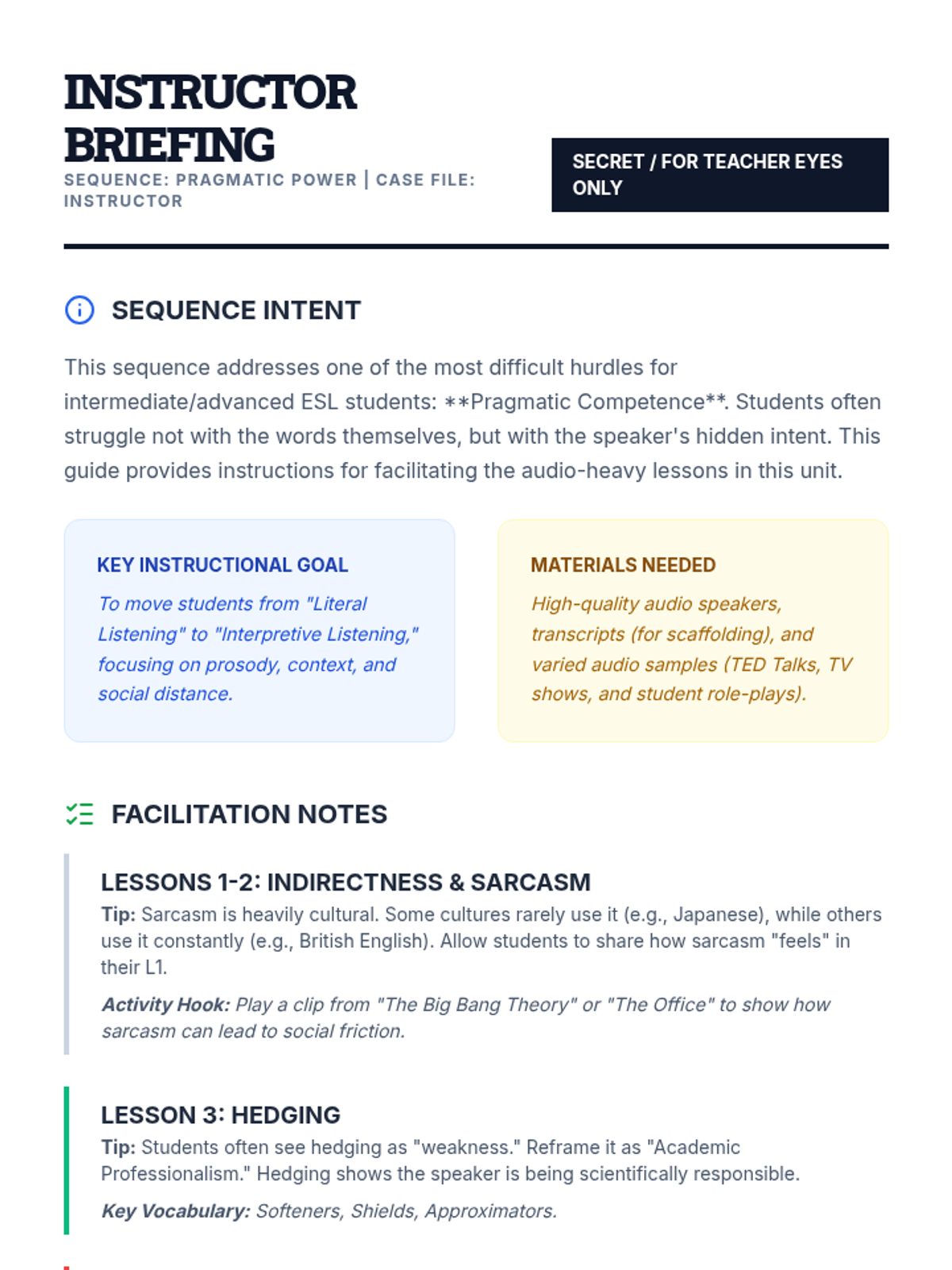
Instructor briefing and facilitation guide for the Pragmatic Power sequence, providing teaching tips, activity hooks, and assessment strategies for ESL instructors.
Final project slide deck for Lesson 5. Outlines the synthesis project goals, explains the peer-review Gallery Walk process, and provides a final polishing checklist for students' academic work.
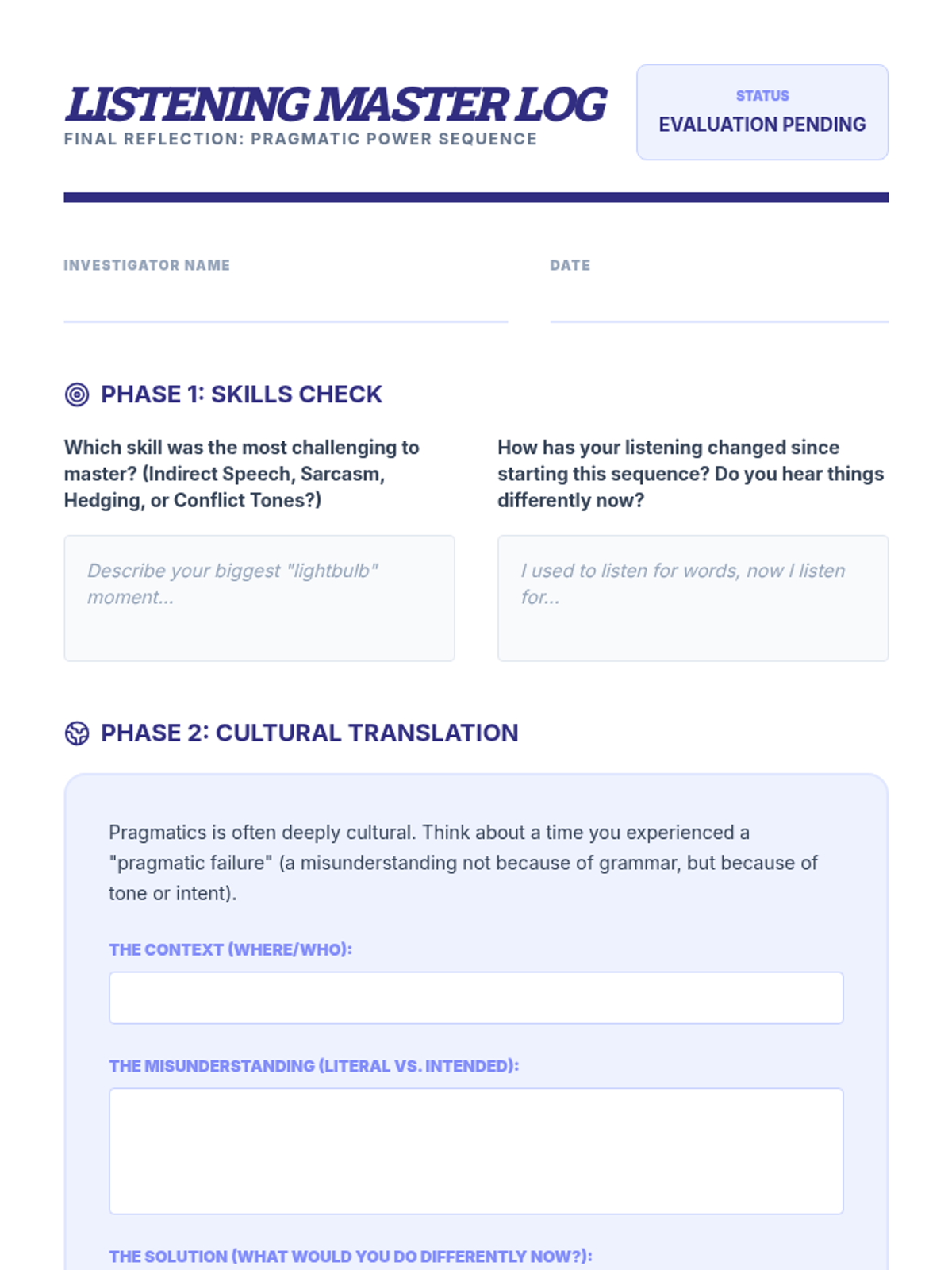
Final reflection worksheet and exit ticket for the sequence, allowing students to synthesize their learning about pragmatics and reflect on their own cultural communication experiences.
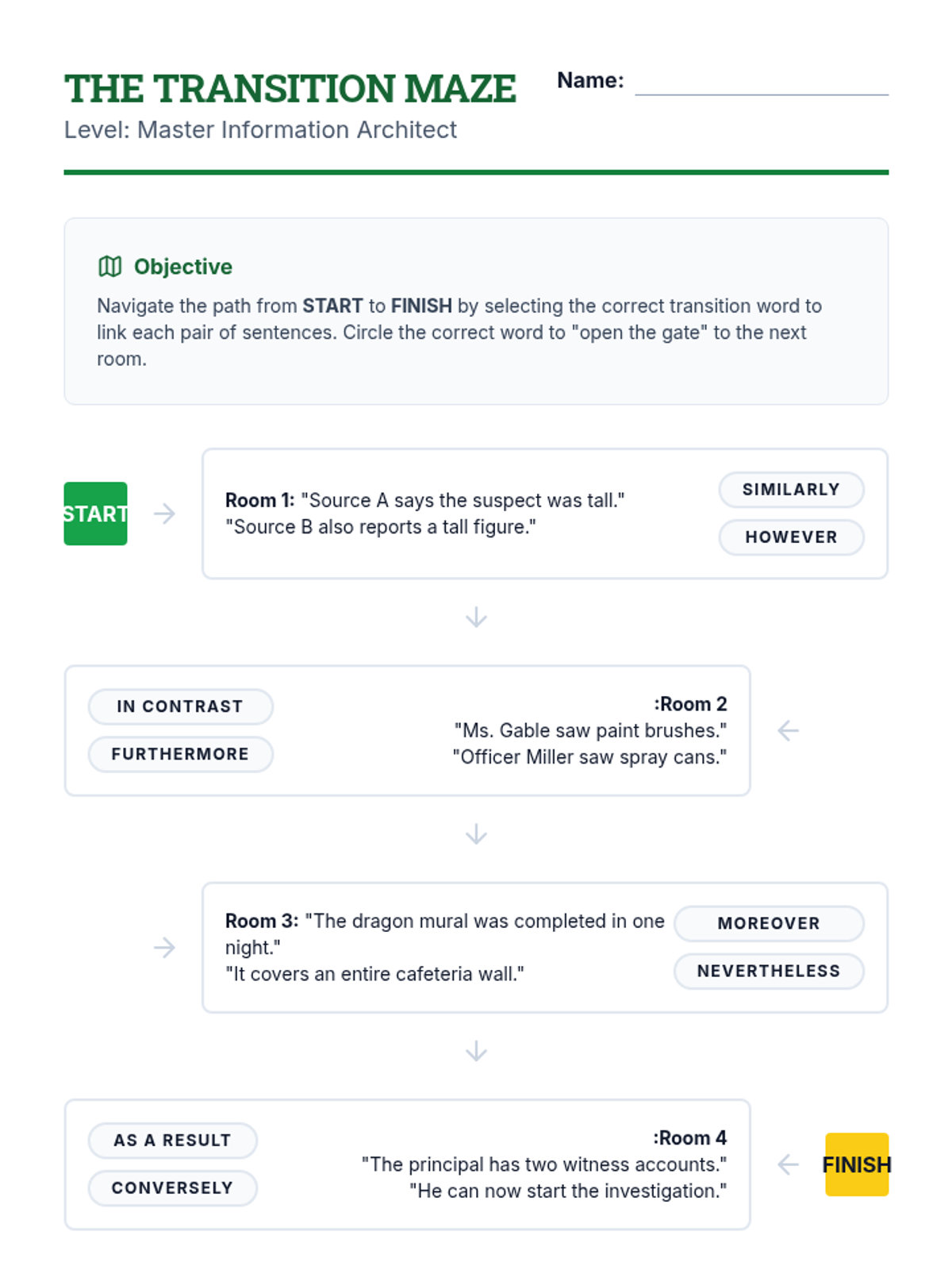
A game-based worksheet for Lesson 4 where students navigate a 'maze' by choosing the correct transition words to link sentences. Includes a section for practicing complex sentence structure with semicolons and commas.
Visual presentation for Lesson 5 exploring how cultural backgrounds influence pragmatic markers like silence, interruption, and backchanneling in global English.
Slide deck for Lesson 4 on transitions and cohesion. Compares 'choppy' vs. 'smooth' writing, categorizes transition words (Addition, Contrast, Evidence), and explains the grammatical rules for using them.
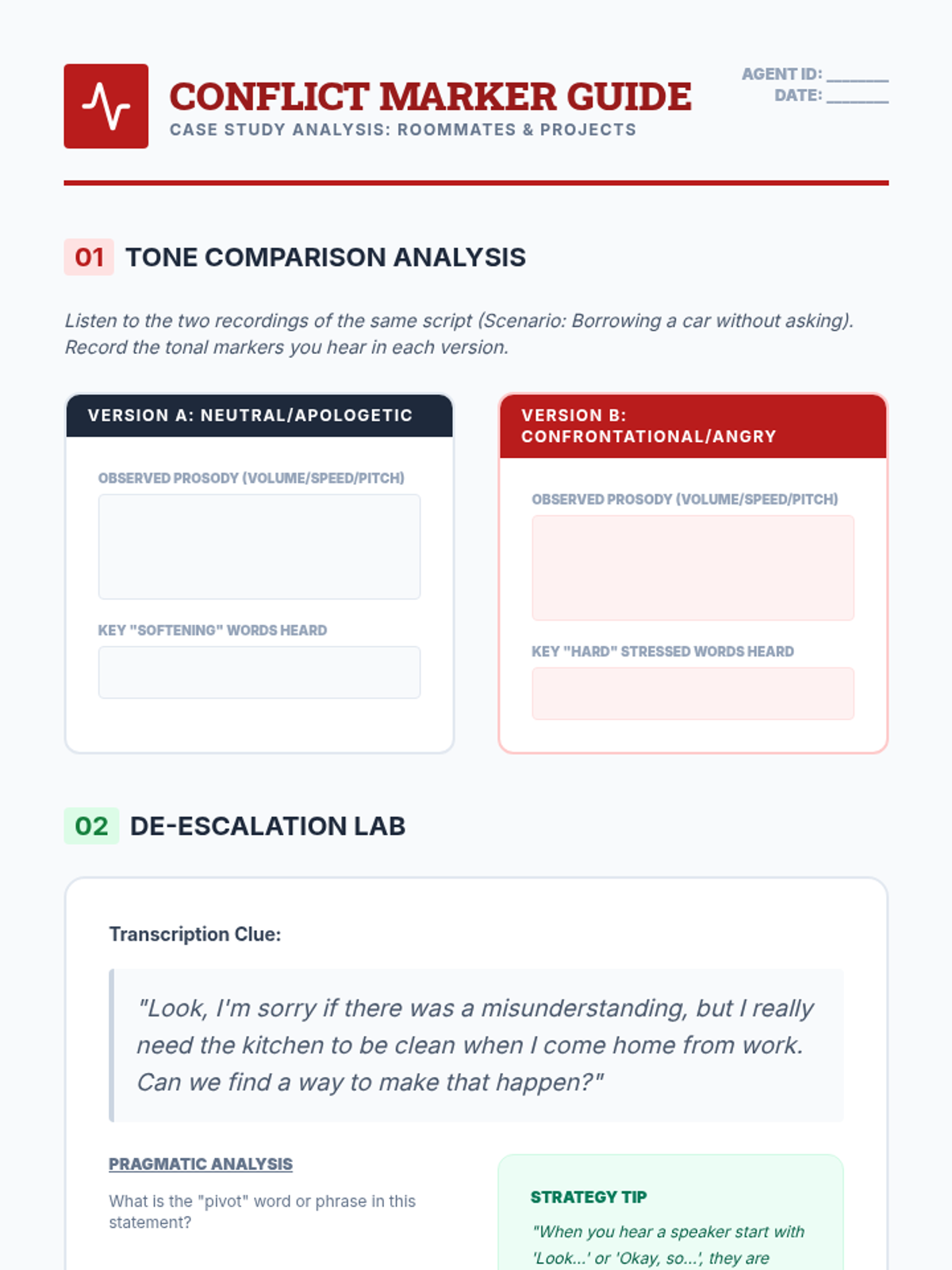
Student worksheet for Lesson 4 where students compare different tonal renditions of a script to identify markers of conflict and practice identifying de-escalation strategies.
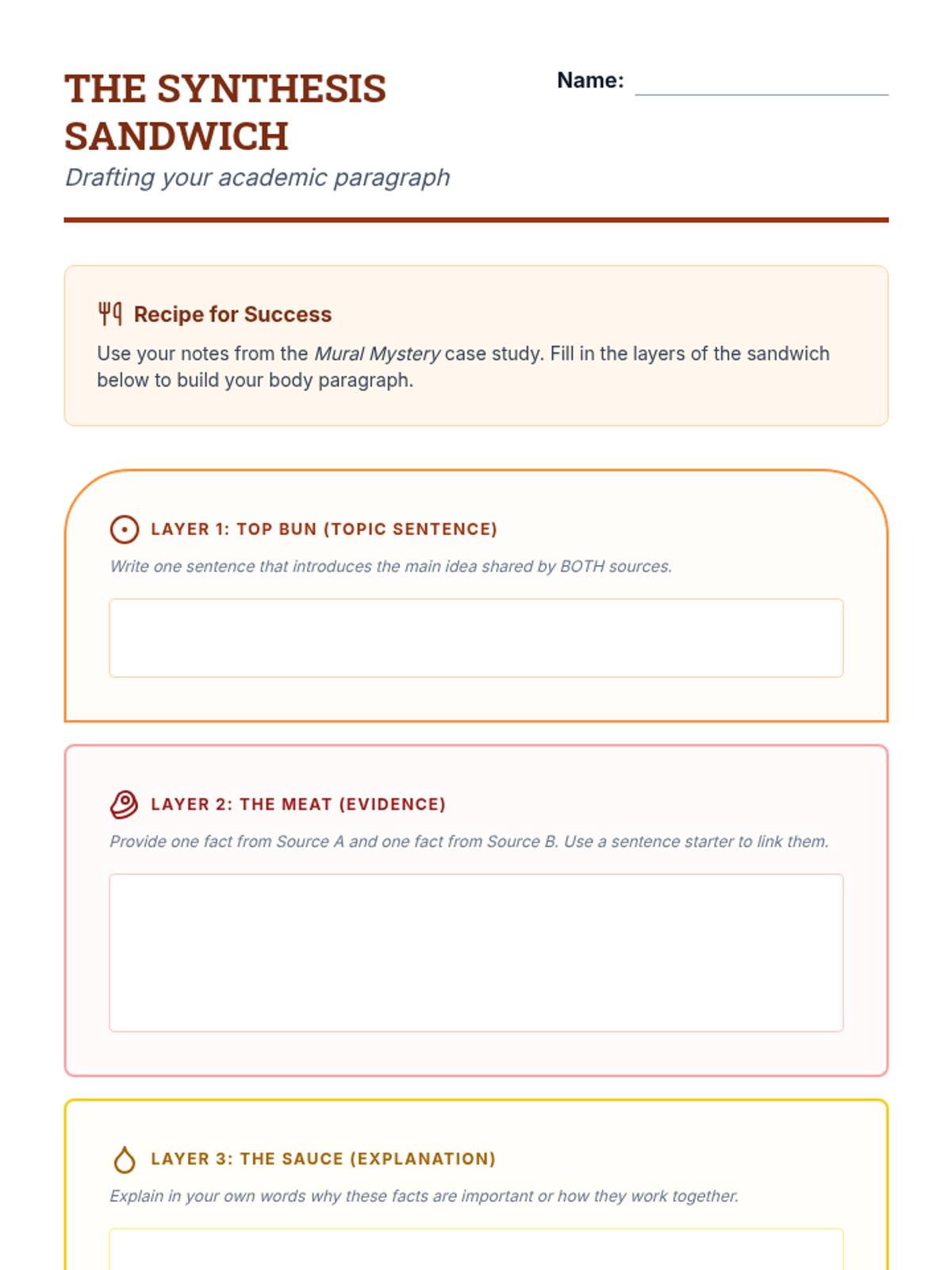
A graphic organizer for drafting a synthesis paragraph. Using a 'sandwich' metaphor, it guides students through writing a topic sentence, integrating evidence from multiple sources, and providing an explanation/conclusion. Includes a sentence starter toolbox.
Visual presentation for Lesson 4 exploring the tonal and prosodic markers of conflict (escalation) and negotiation (de-escalation) in social and academic scenarios.
Slide deck for Lesson 3 on drafting synthesis paragraphs. Uses the 'Synthesis Sandwich' analogy to teach paragraph structure (Topic-Evidence-Explanation) and provides sentence frames for integrating multiple sources.
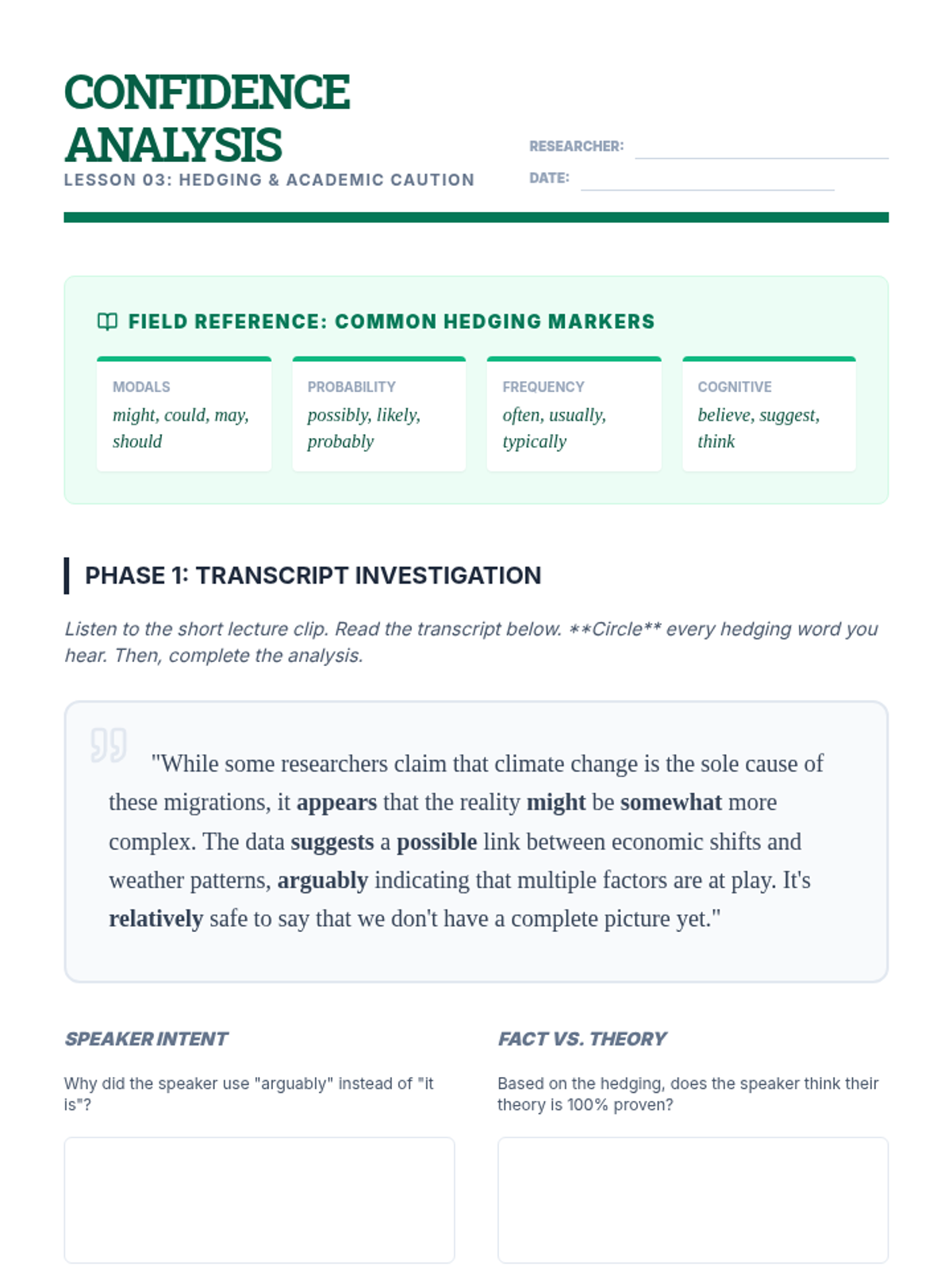
Worksheet for Lesson 3 where students identify hedging language in a transcript and evaluate the confidence level of different speakers based on their linguistic choices.
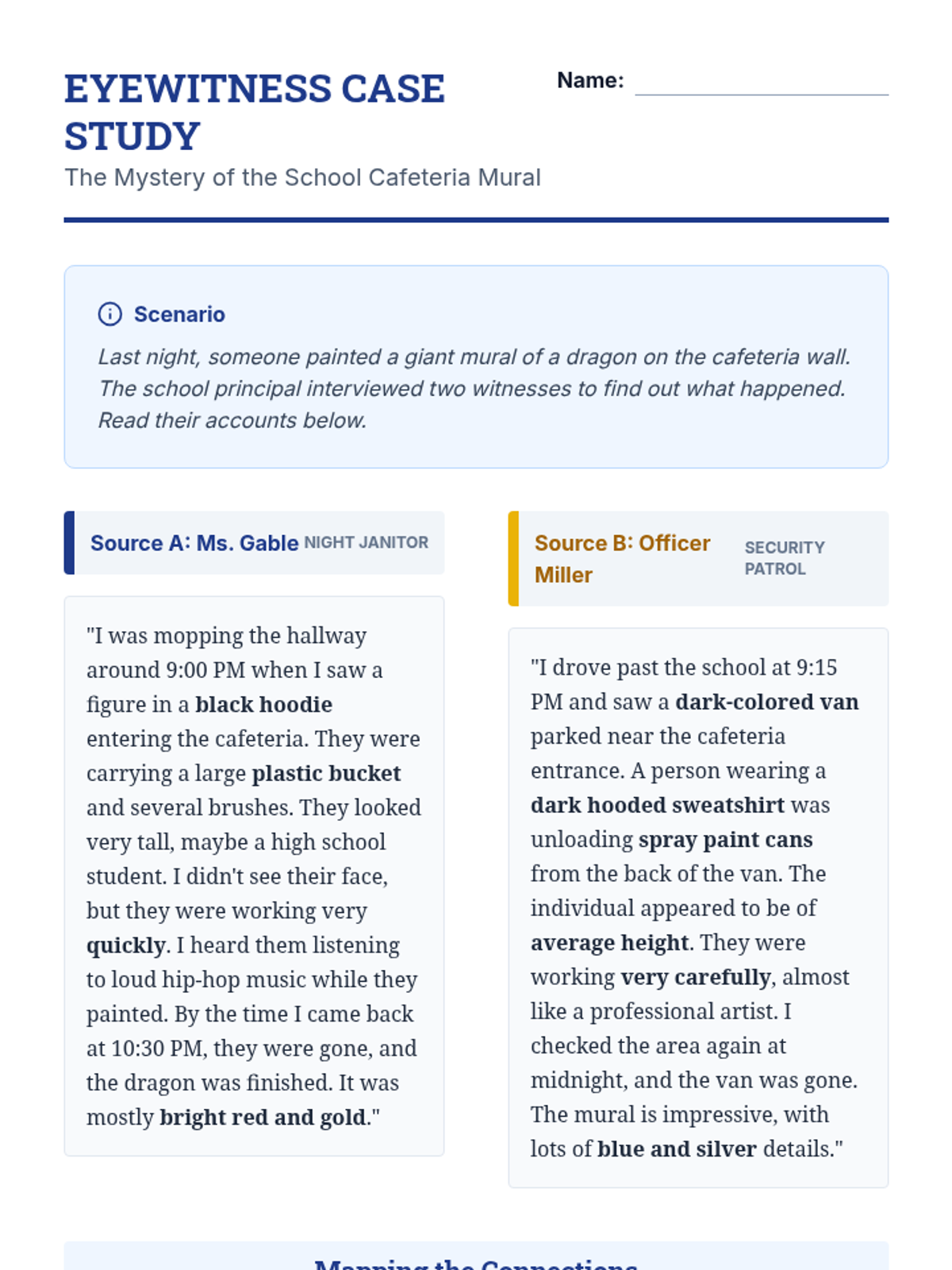
A reading passage and analysis worksheet for Lesson 2. Features two conflicting eyewitness accounts of a school mural event, and provides a Venn diagram and critical thinking questions to help students practice identifying connections and contradictions.
Presentation for Lesson 3 focusing on hedging language in academic and formal English, teaching students to identify linguistic softeners that signal uncertainty or caution.
Slide deck for Lesson 2 on identifying connections across sources. Introduces the 'Source Conversation' concept, the use of Venn diagrams for synthesis, and basic academic sentence starters for comparing ideas.
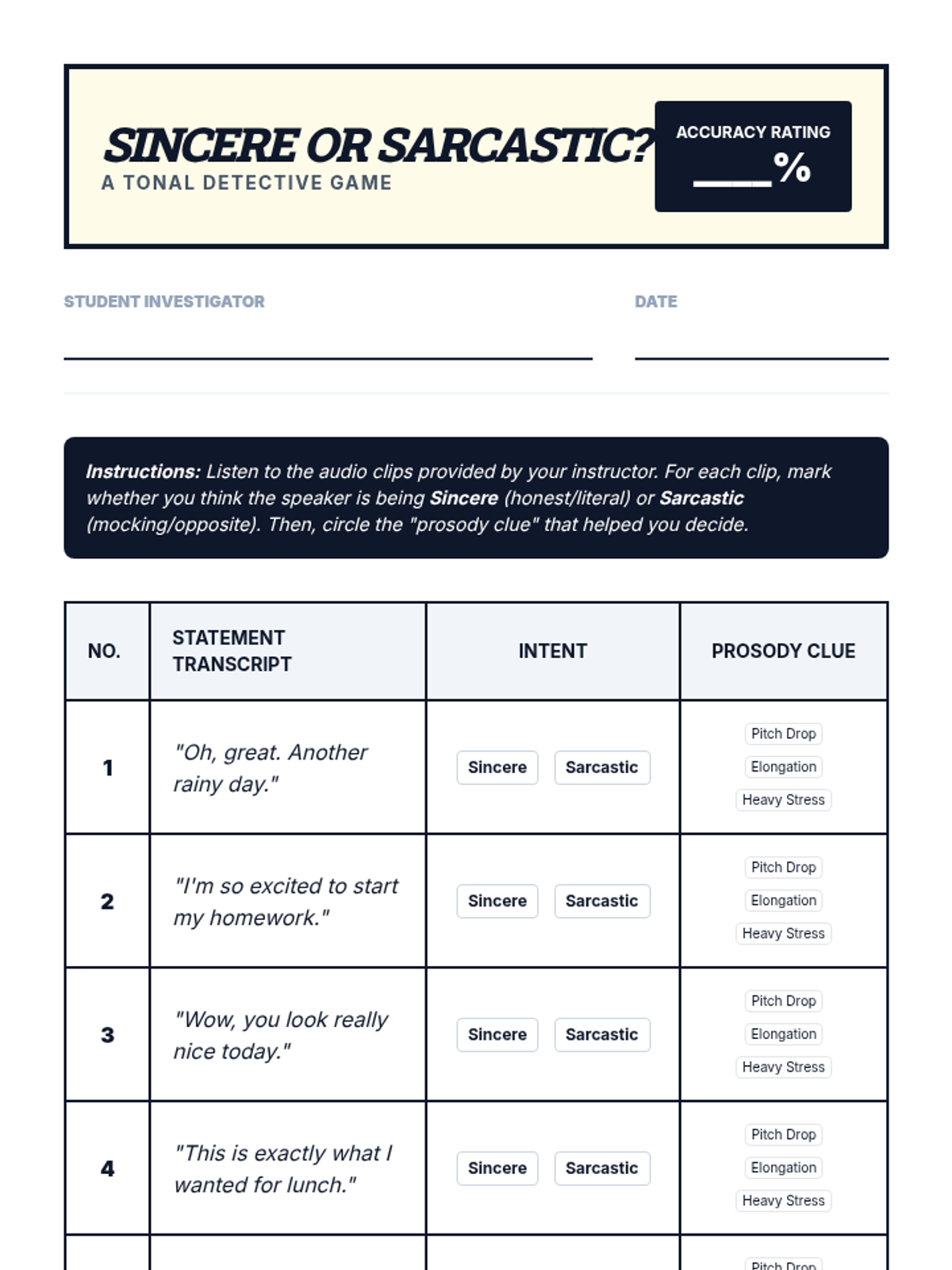
Game-based worksheet for Lesson 2 where students record their interpretations of audio clips to distinguish between sincere and sarcastic intent based on tonal prosody.
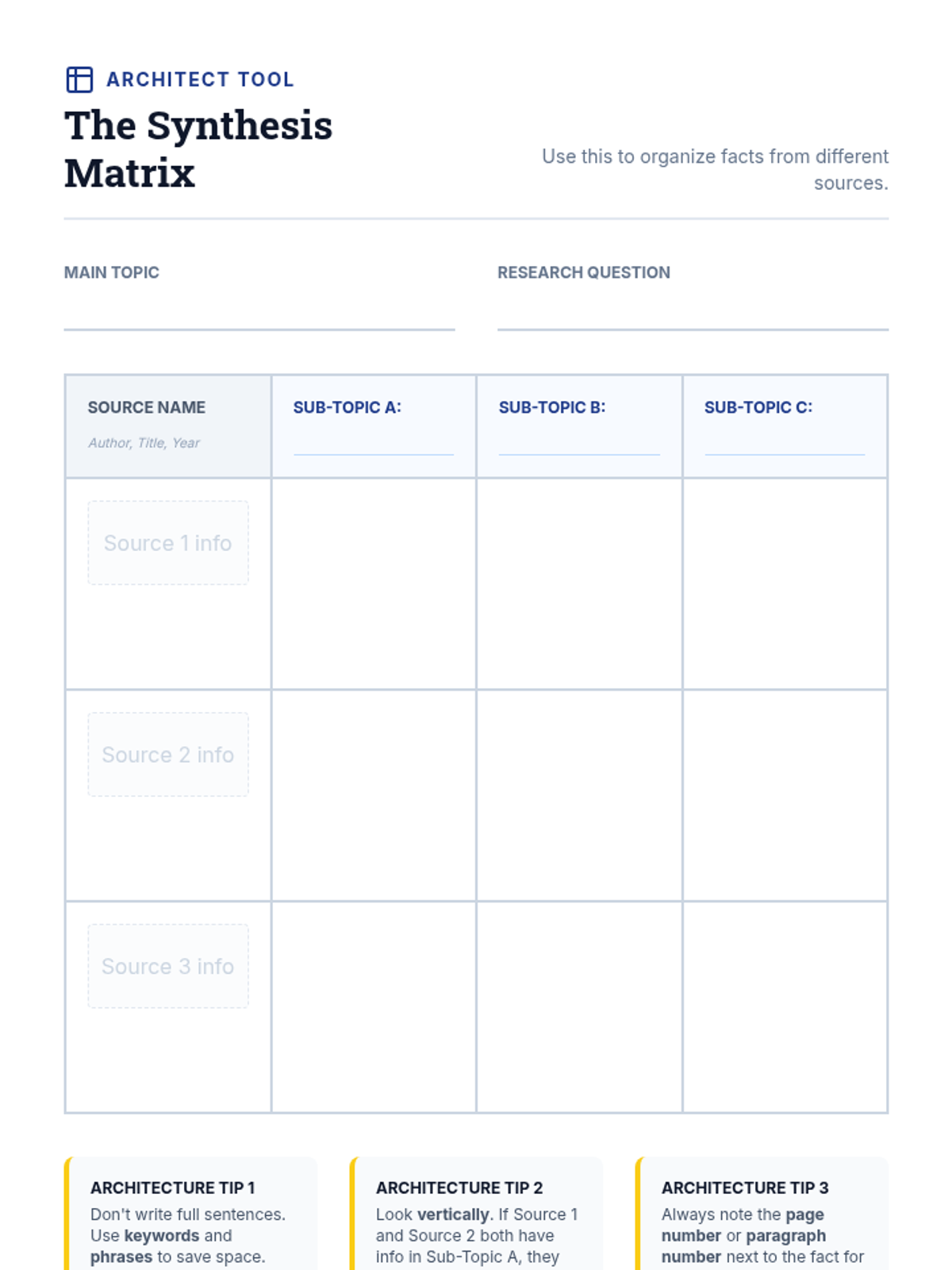
A blank Note Matrix template for students to use when organizing research facts from multiple sources. Designed as an 'architect tool' with spaces for source information and sub-topic columns.
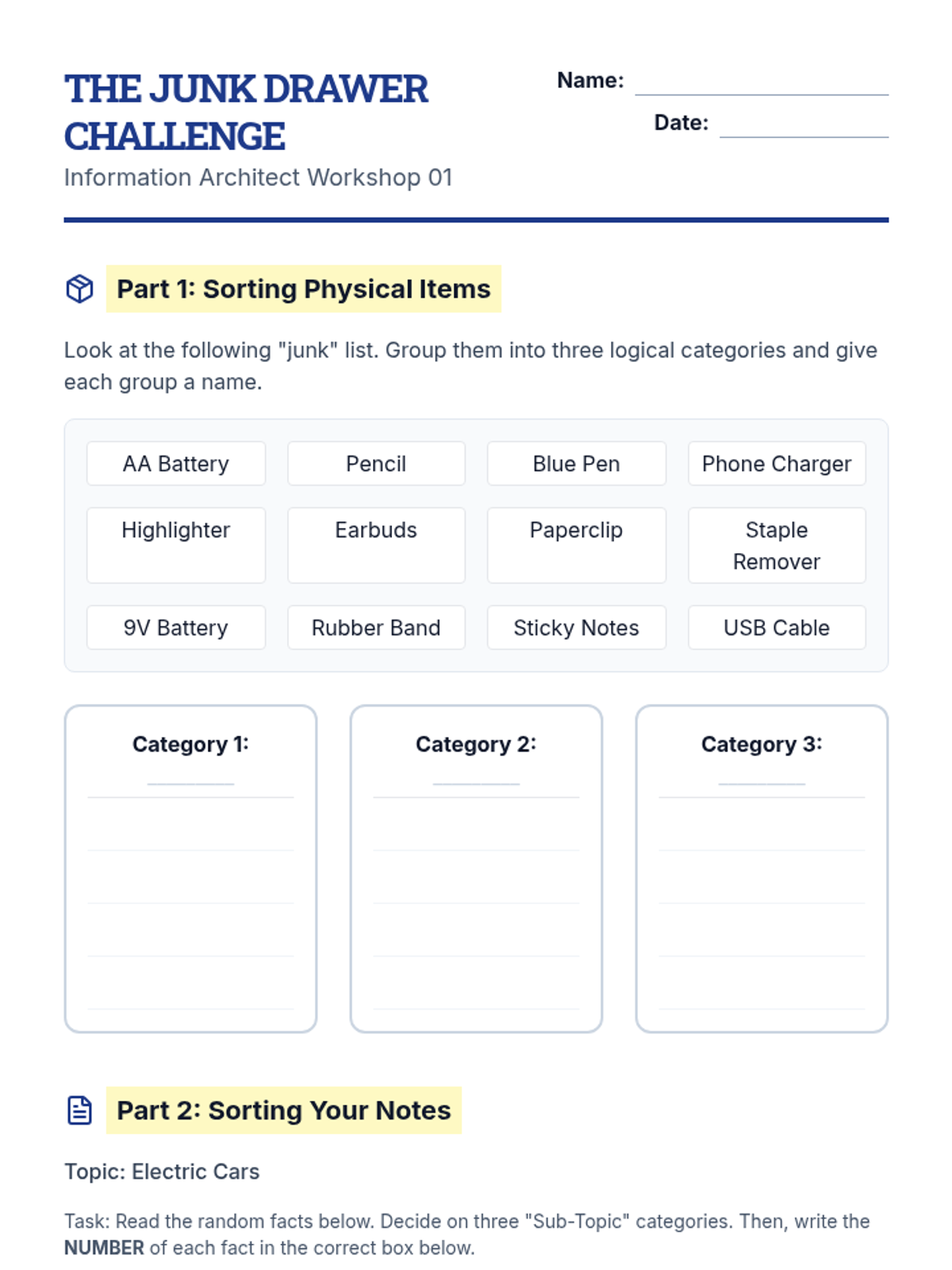
Student worksheet for Lesson 1 focusing on categorization. Part 1 involves sorting physical household items, and Part 2 transitions to sorting research facts about Electric Cars into sub-topics.
Visual presentation for Lesson 2 focusing on the vocal markers of sarcasm (pitch, elongation, stress) and the social contexts where irony is appropriate.
Introductory slide deck for Lesson 1, introducing the concept of categorization in research and the 'Data Dump' problem. Uses a 'Junk Drawer' analogy and defines key academic vocabulary.
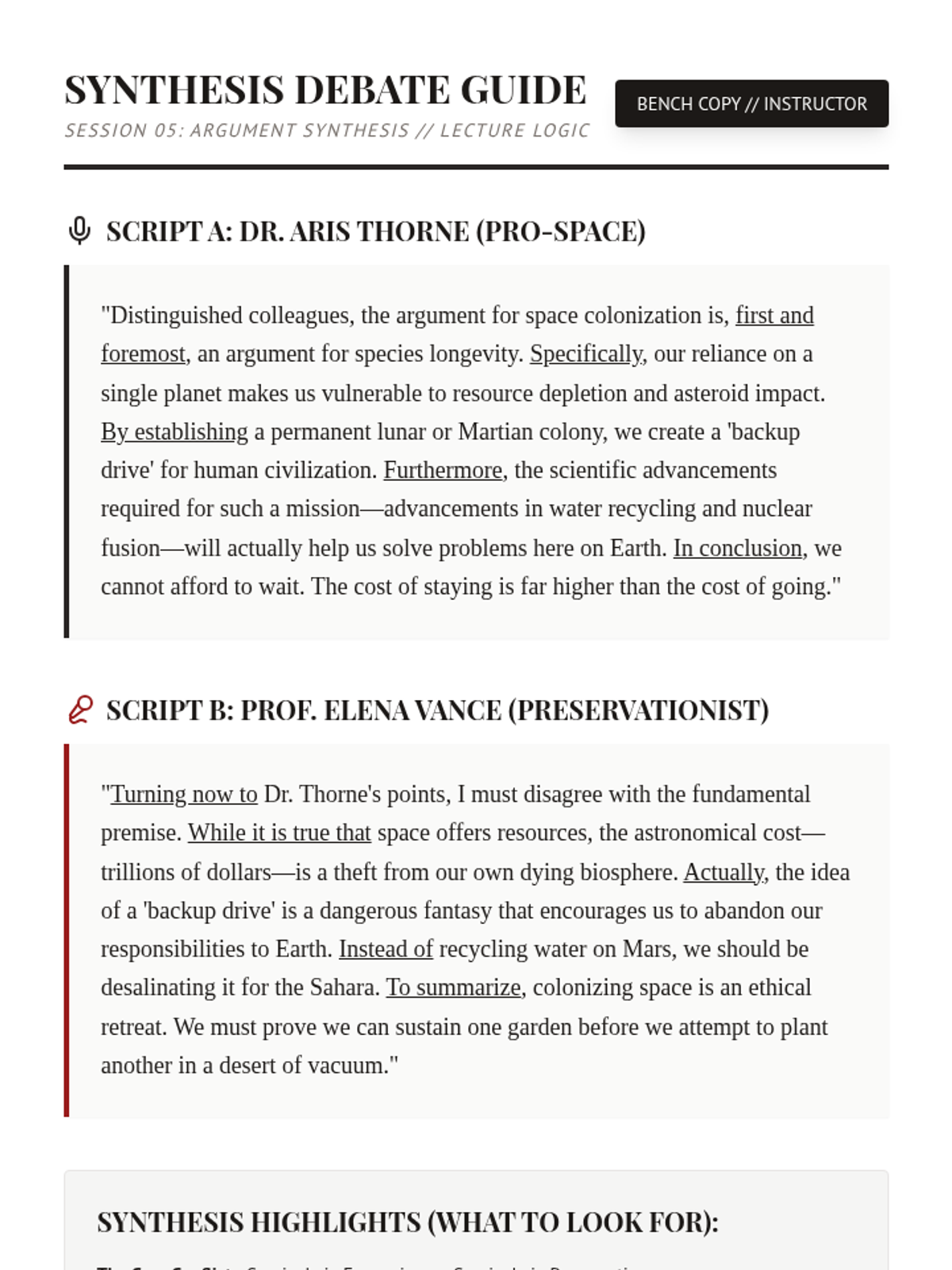
A teacher resource providing the instructional scripts for the final synthesis debate. Includes specific rebuttals to listen for and facilitation tips for the lesson wrap-up.
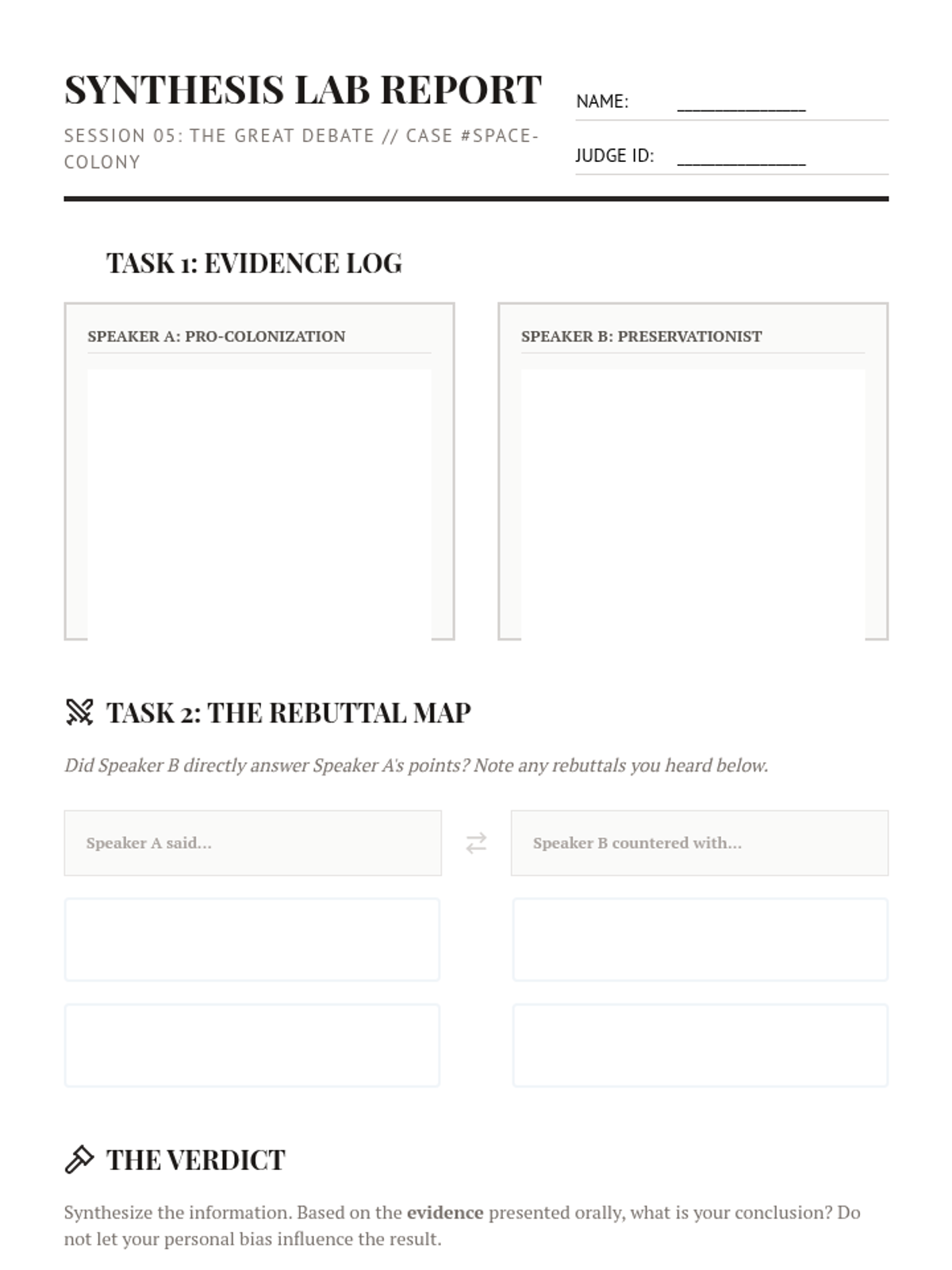
A student worksheet for identifying arguments and rebuttals between two speakers. Includes a graphic organizer for cross-referencing claims and a section for a synthesized conclusion.
A slide deck introducing identifying claims and rebuttals in academic listening. Includes examples of contrasting arguments and instructions for the synthesis activity.
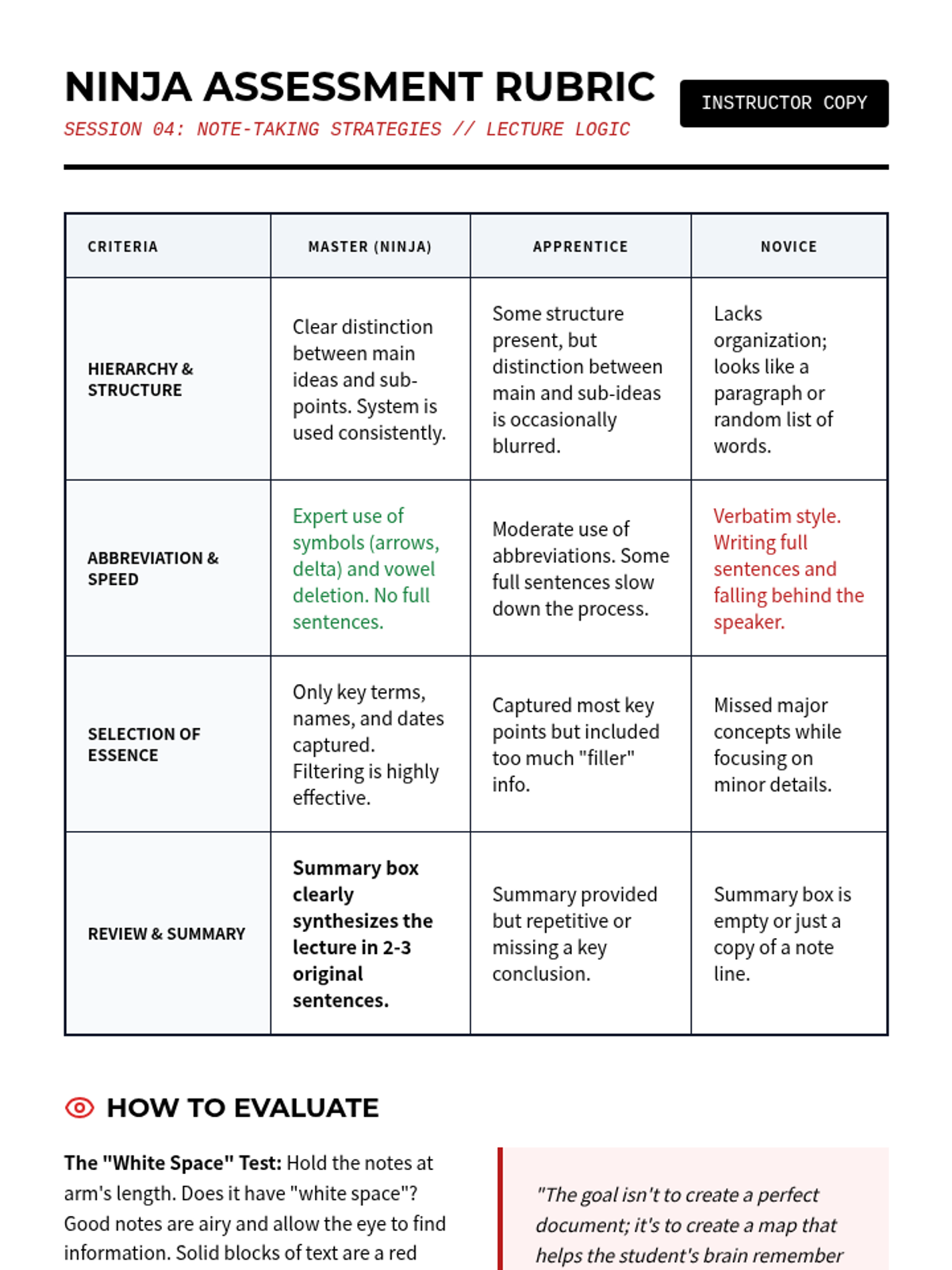
A teacher resource providing an assessment rubric and evaluation tips for student note-taking. Focuses on hierarchy, abbreviation use, and the synthesis of core concepts.
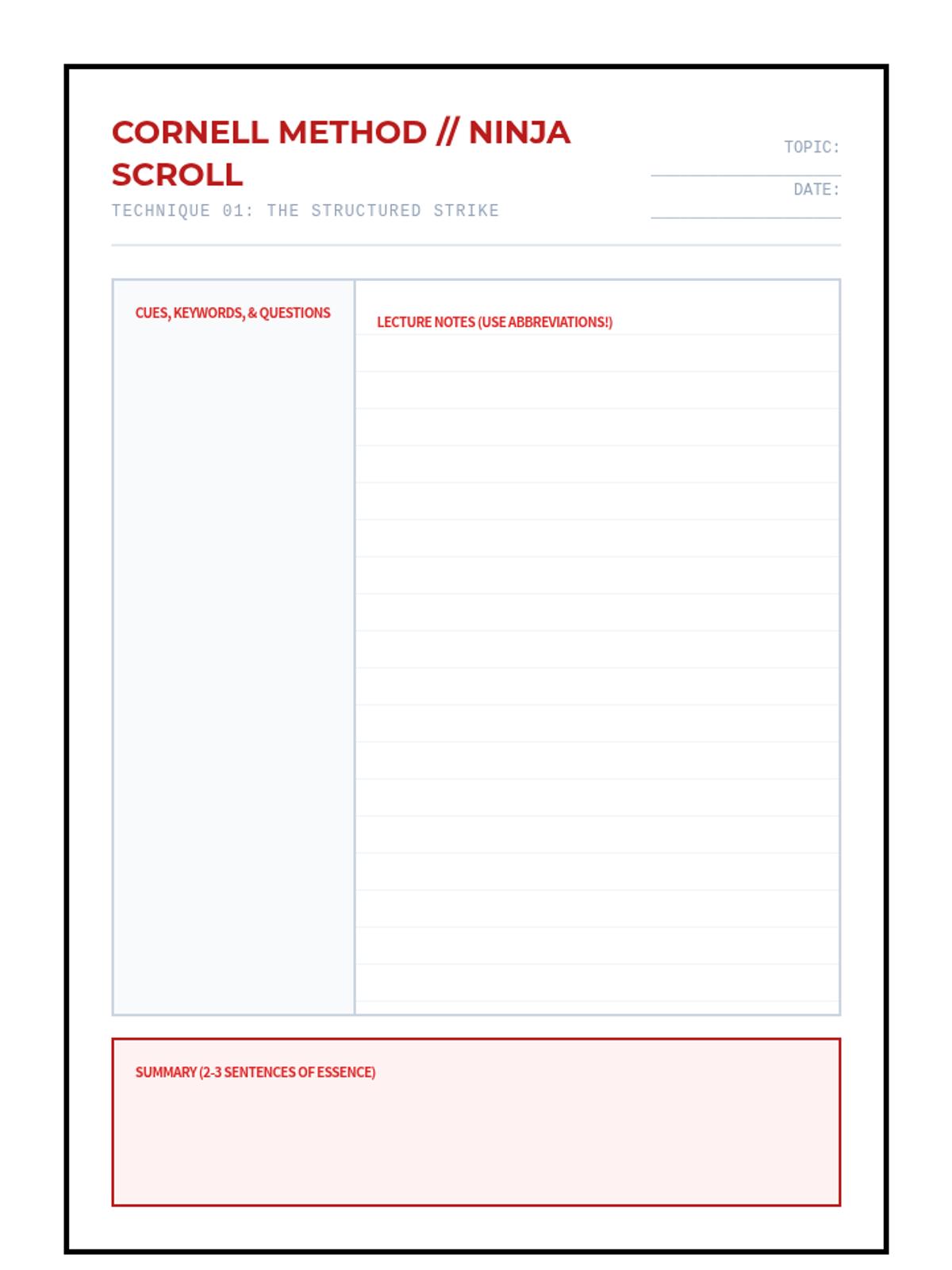
A set of note-taking templates for students to practice the Cornell and Mind Mapping methods during academic lectures. Designed with specific sections for cues, notes, and summaries.
A slide deck introducing strategic note-taking systems (Cornell, Outlining, Mapping) and abbreviation techniques. Focused on speed and efficiency in academic listening.
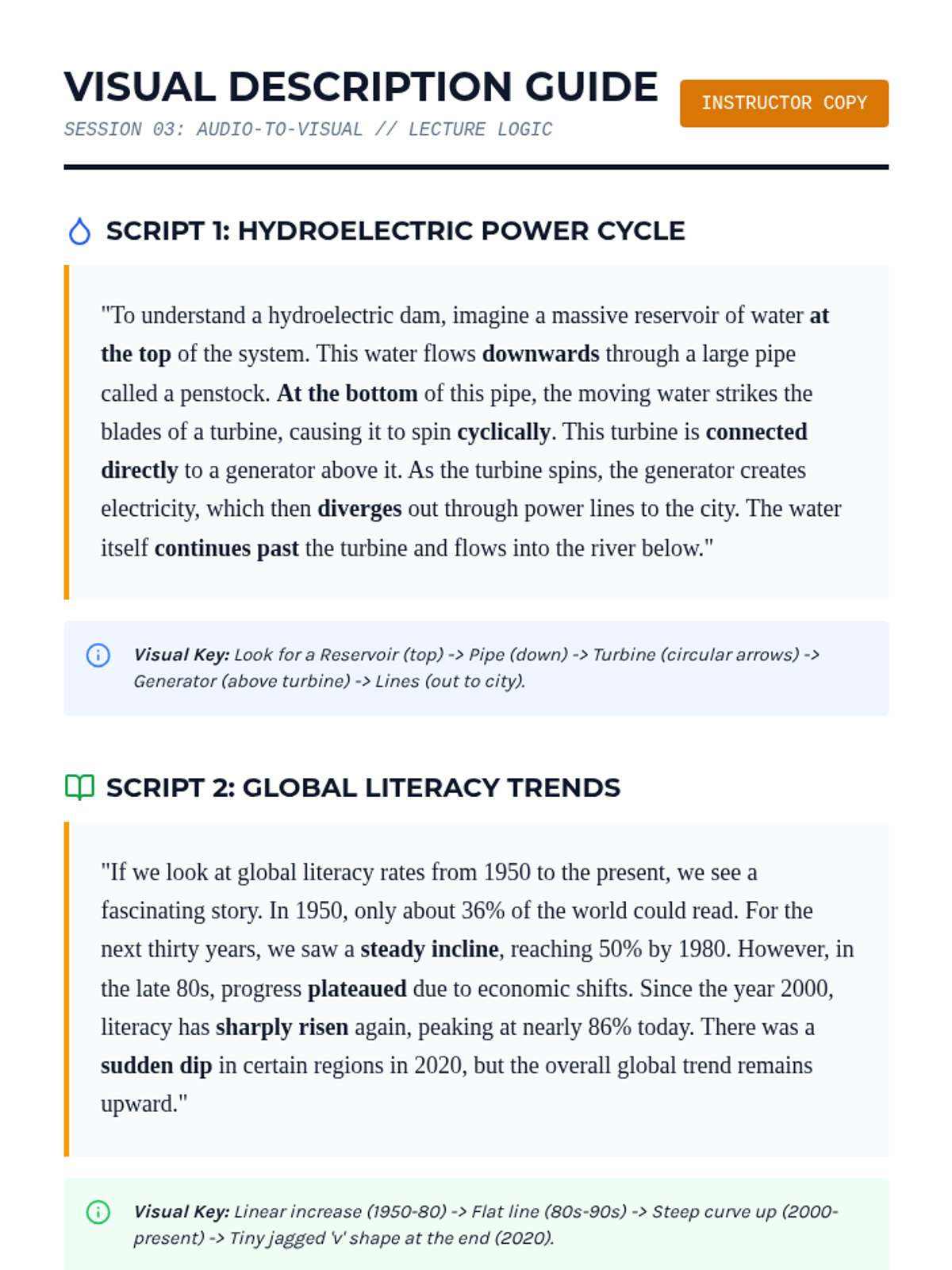
A teacher resource providing the instructional scripts for the audio-to-visual tasks. Includes visual keys and facilitation tips for pacing and the final reveal.
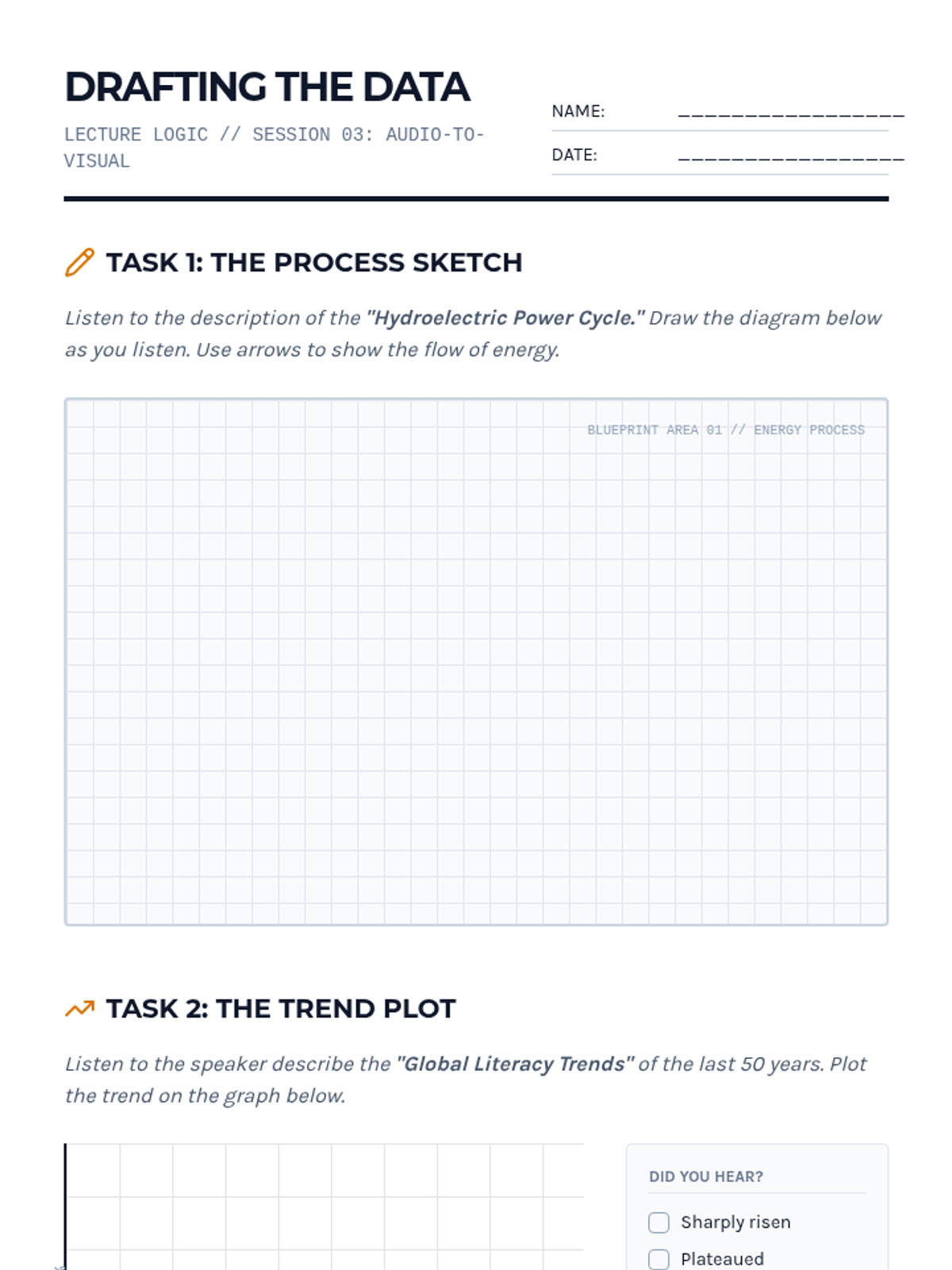
A student worksheet for sketching processes and plotting data trends based on auditory descriptions. Includes a drafting grid for process mapping and a blank graph for trend analysis.