Fundamental techniques for drawing, painting, sculpture, and photography alongside modern digital design principles. Analyzes historical artistic movements while building skills in printmaking and graphic media.
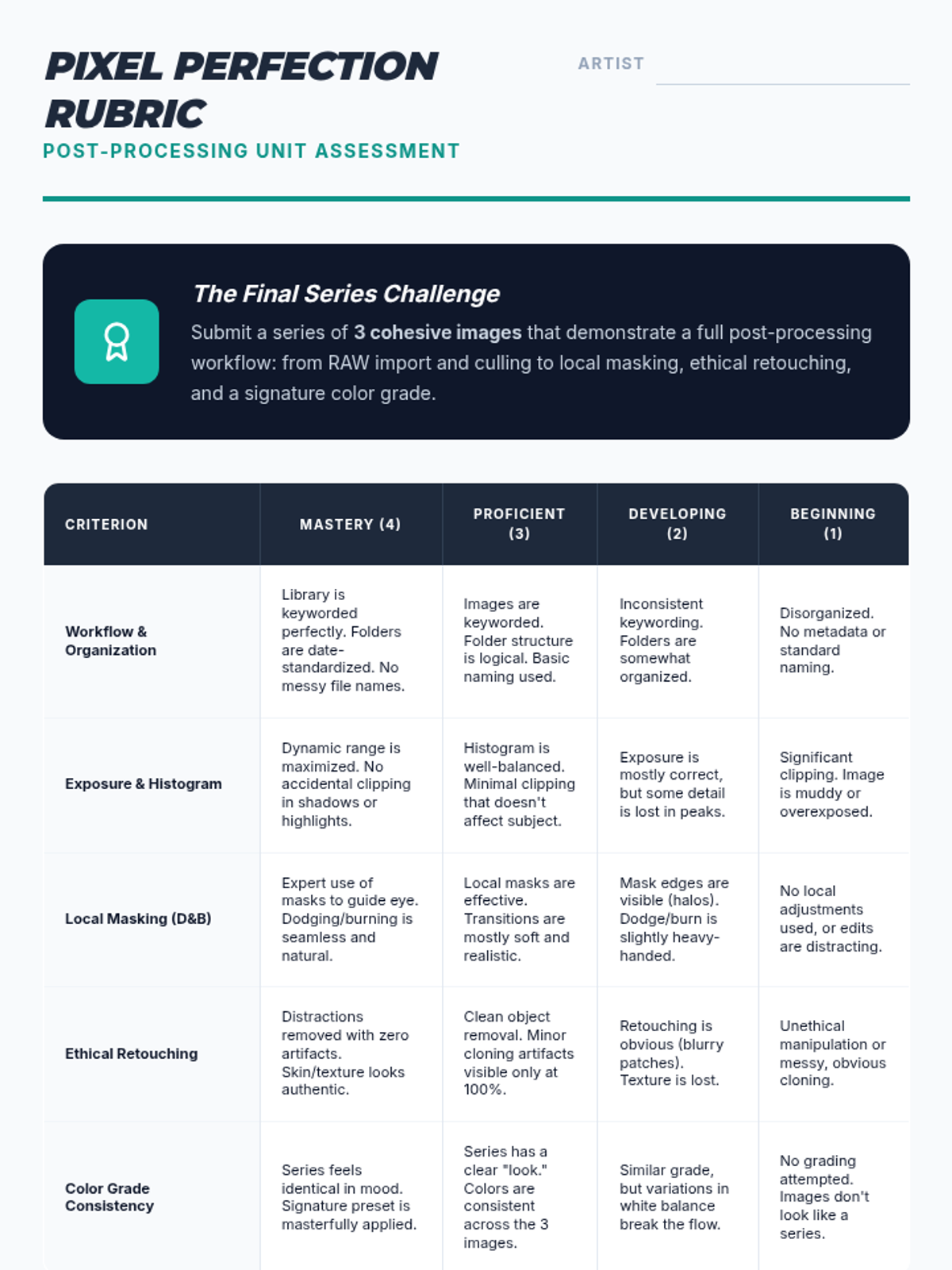
A comprehensive assessment rubric for evaluating the final photography series. Criteria include workflow organization, histogram balance, masking precision, retouching ethics, and color grading consistency.
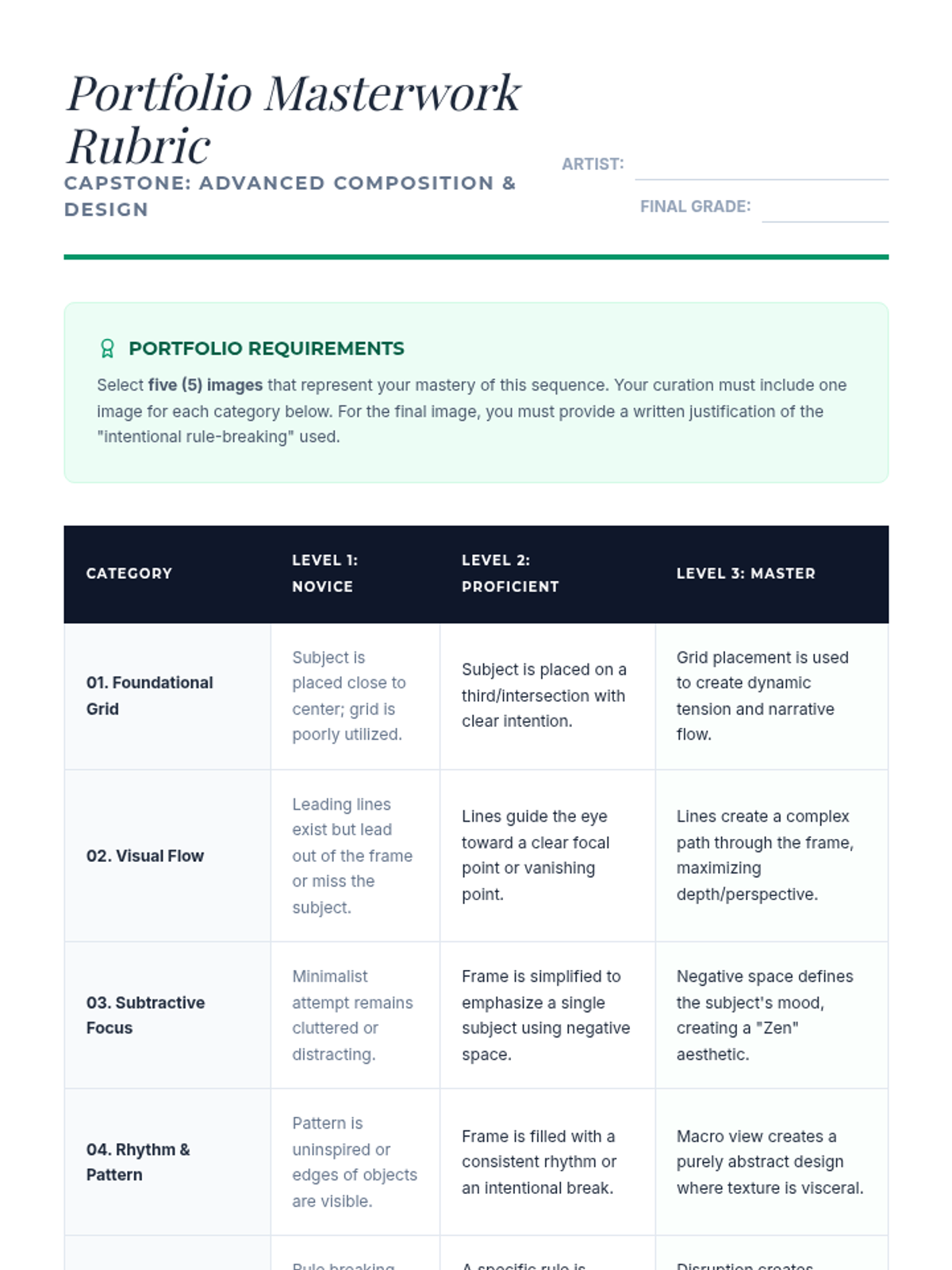
A comprehensive portfolio rubric and reflection guide for the final "Intentional Anarchy" project.
Introductory slides for color grading and stylization. Covers the difference between correction and grading, color psychology, and split toning techniques.
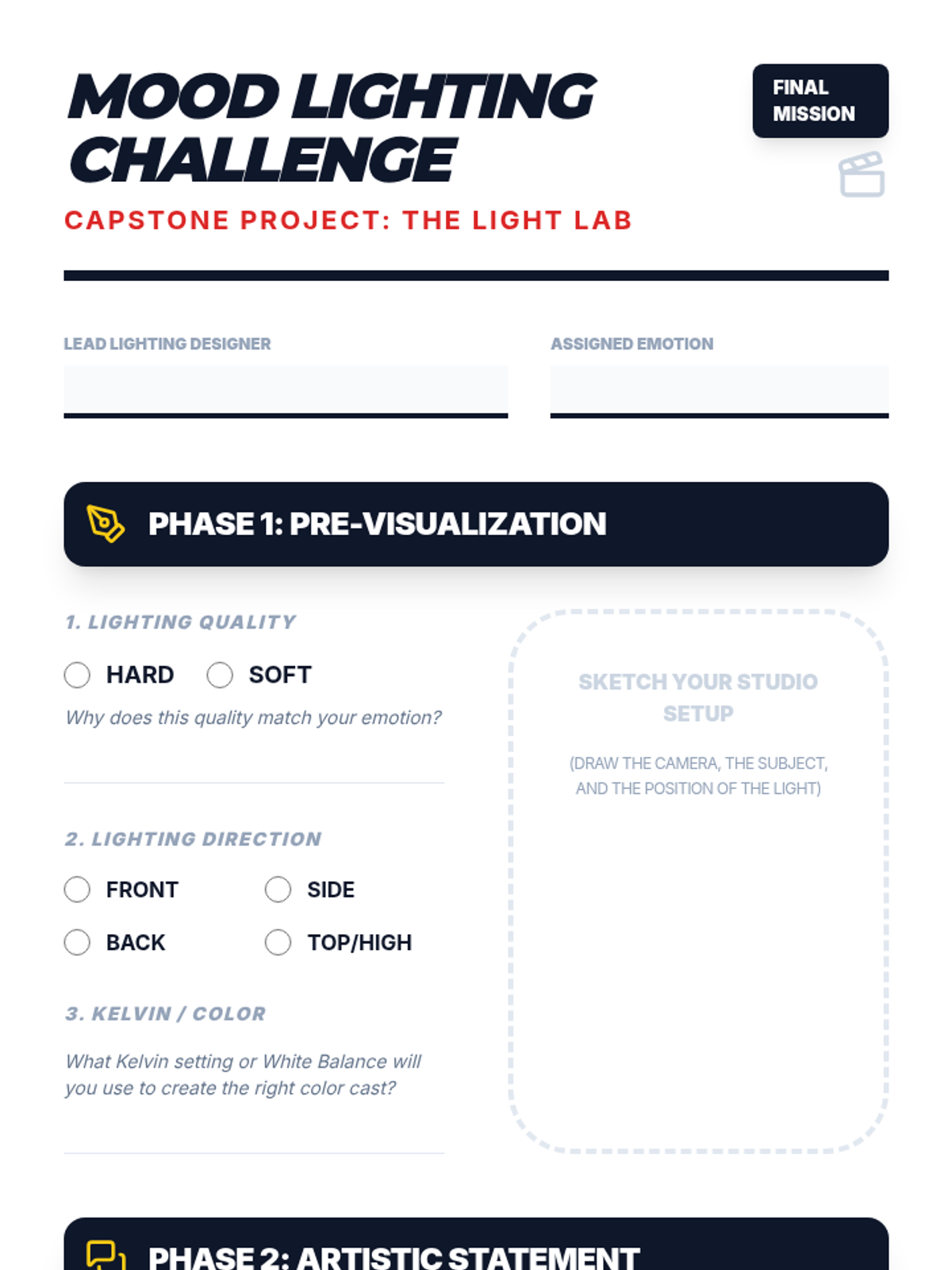
Final project planning and reflection guide for the mood-lighting challenge, helping students pre-visualize their setups and reflect on their artistic choices.
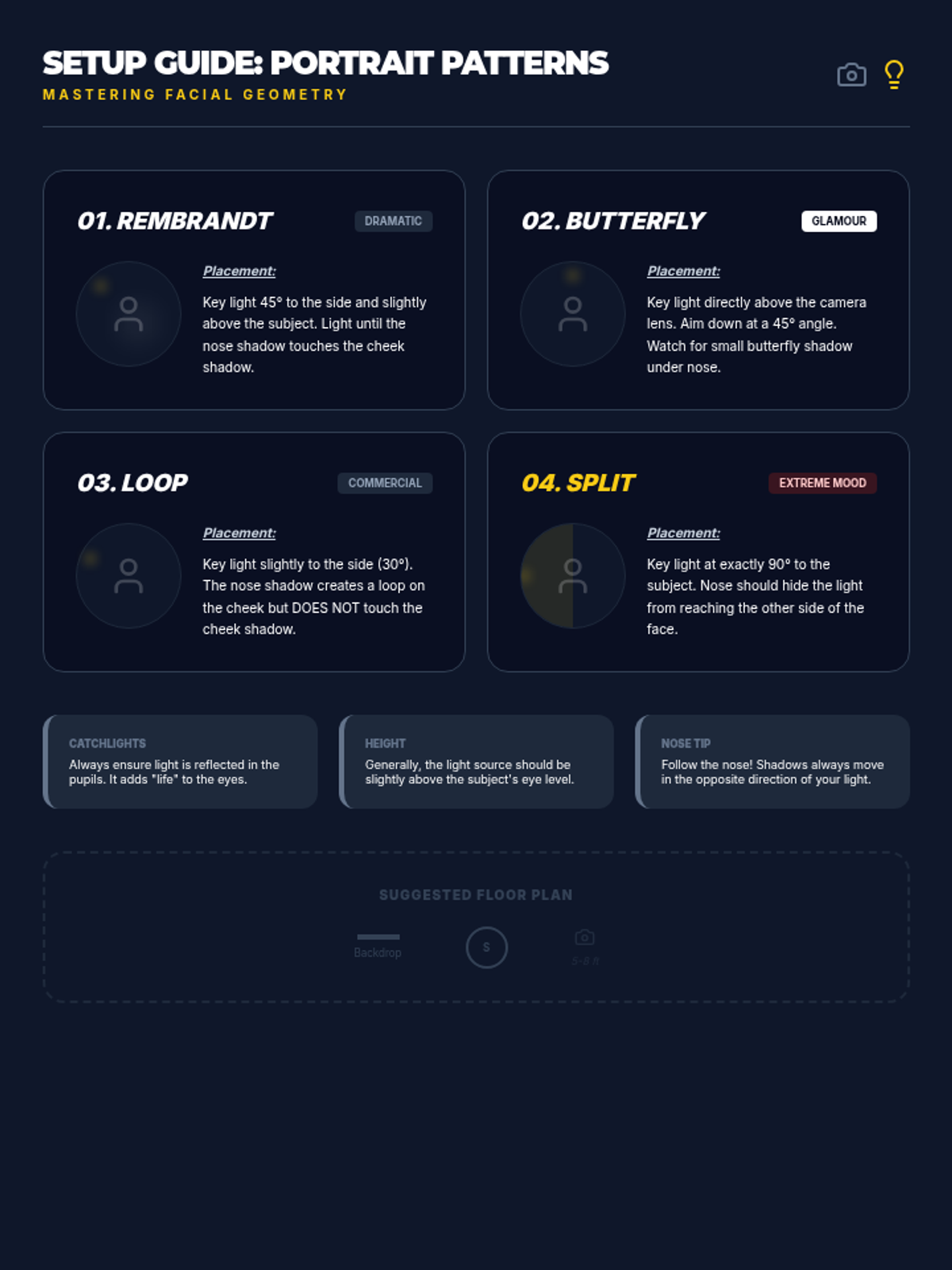
Visual reference guide for students to use during studio shoots, providing placement instructions for the four classic portrait patterns.
Instructional slides for Lesson 5, covering Dutch angles, center punching, and the final portfolio curation.
Visual slide deck defining high-key and low-key lighting, explaining their emotional impacts and introducing the final mood-lighting project.
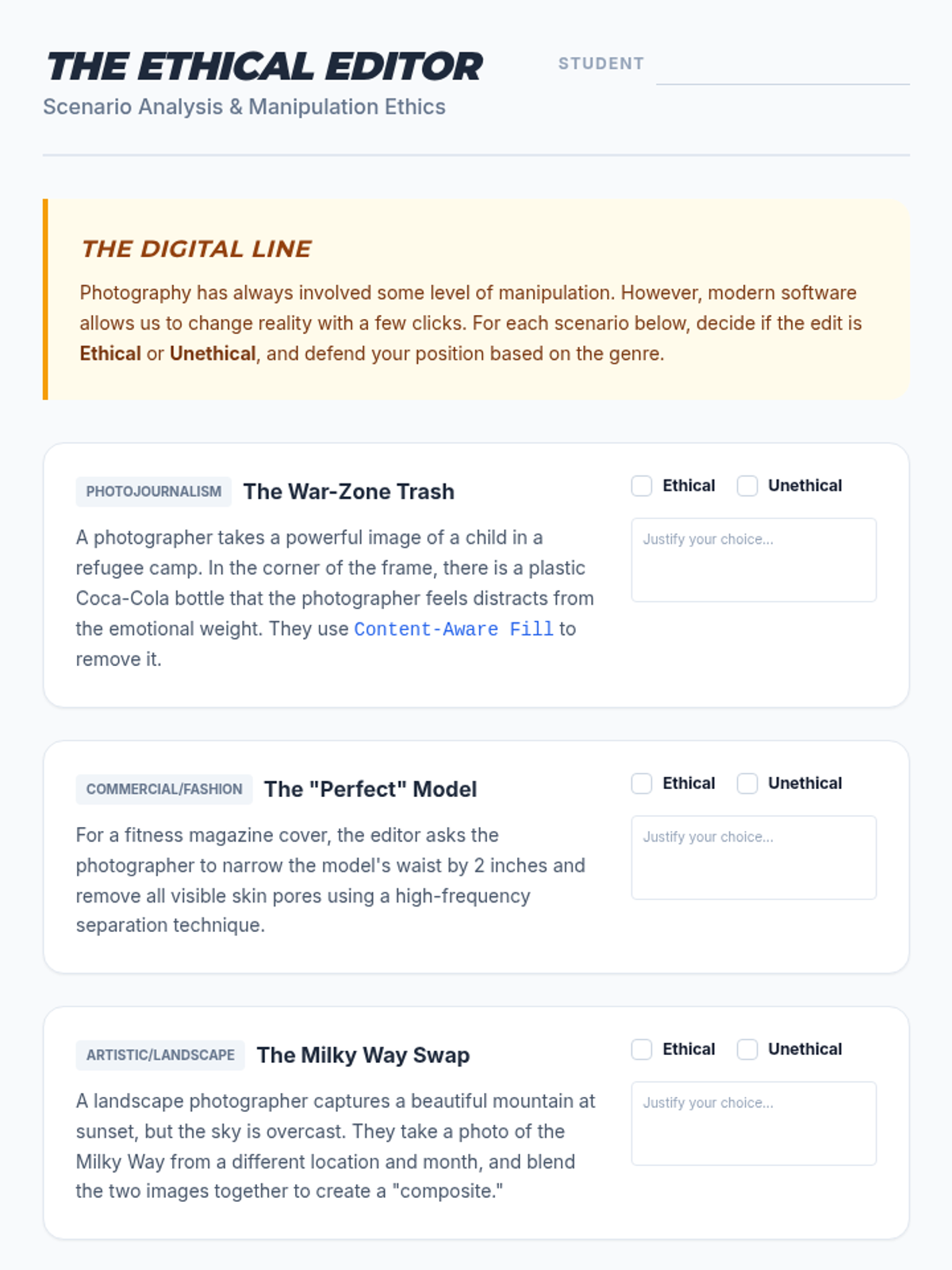
A worksheet where students analyze ethical scenarios in photo editing, deciding whether specific manipulations are appropriate for different photography genres.
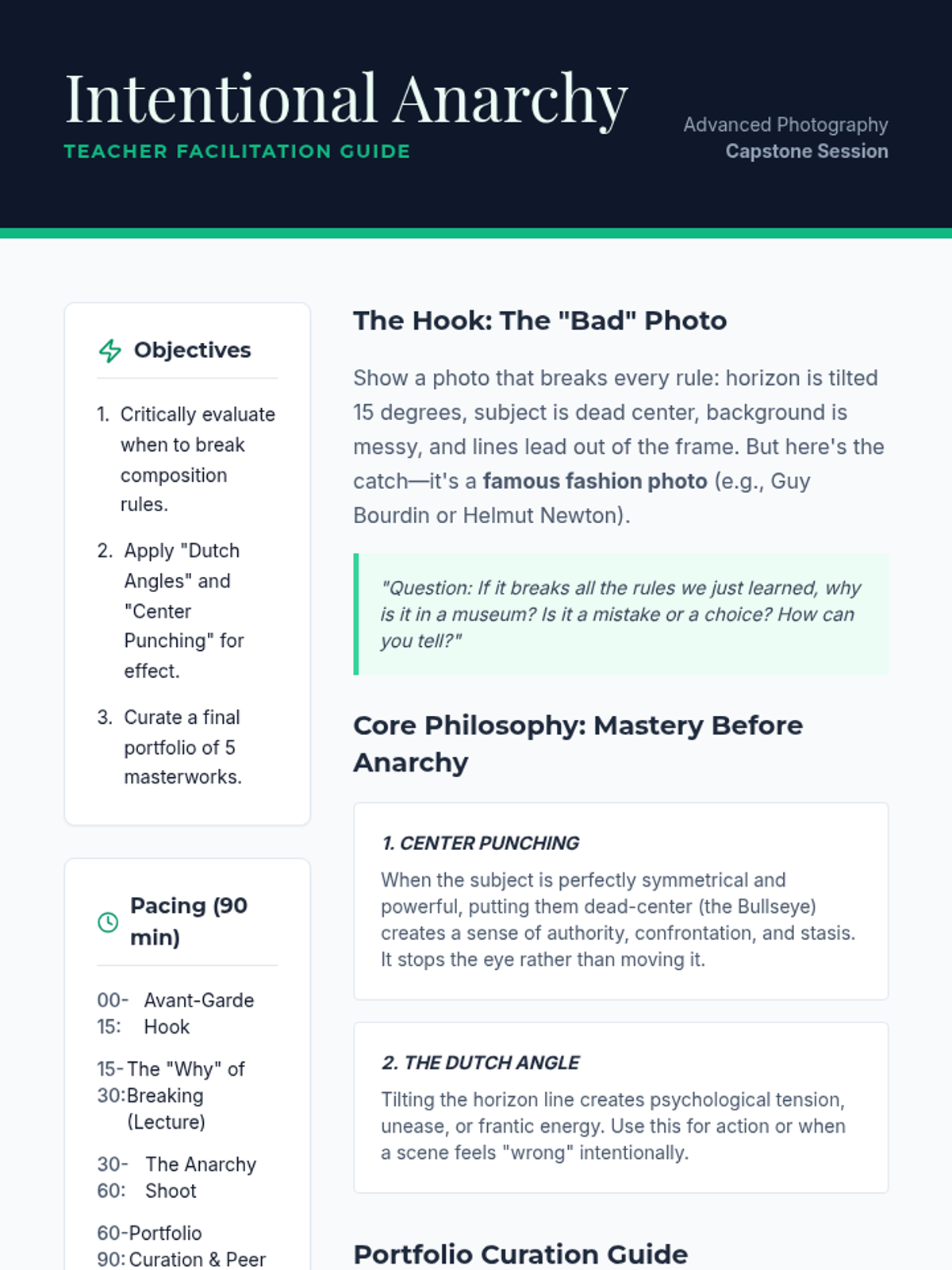
A teacher facilitation guide for Lesson 5, focusing on intentional disruption of compositional rules and portfolio curation.
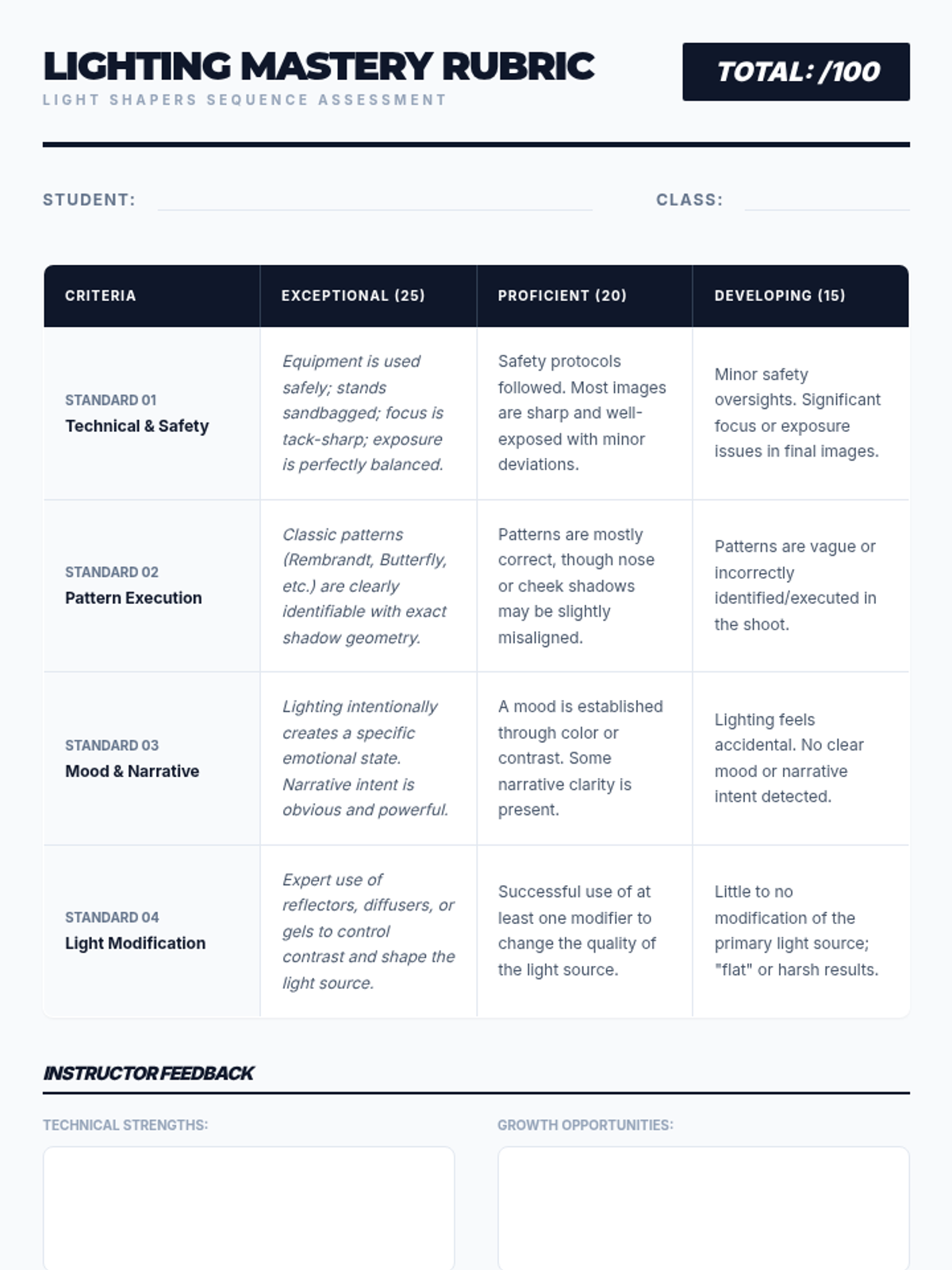
Final assessment rubric for the lighting sequence, evaluating students on technical execution, pattern mastery, and creative mood creation.
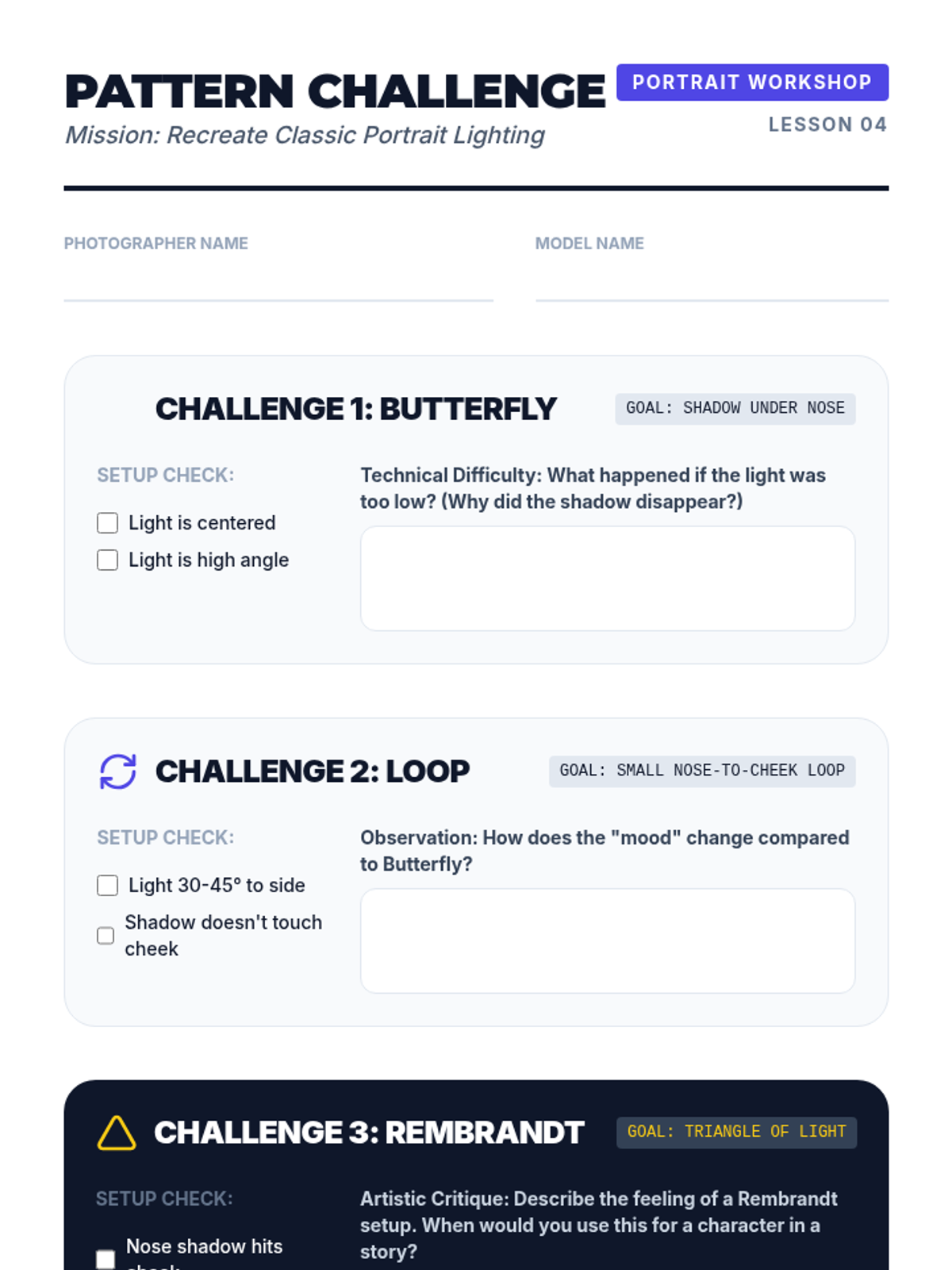
Hands-on activity sheet for students to practice and record classic portrait lighting patterns (Butterfly, Loop, and Rembrandt) in a workshop setting.
Introductory slides for retouching and ethical editing. Covers technical tools (Healing, Clone Stamp) and the debate surrounding photo manipulation in media.
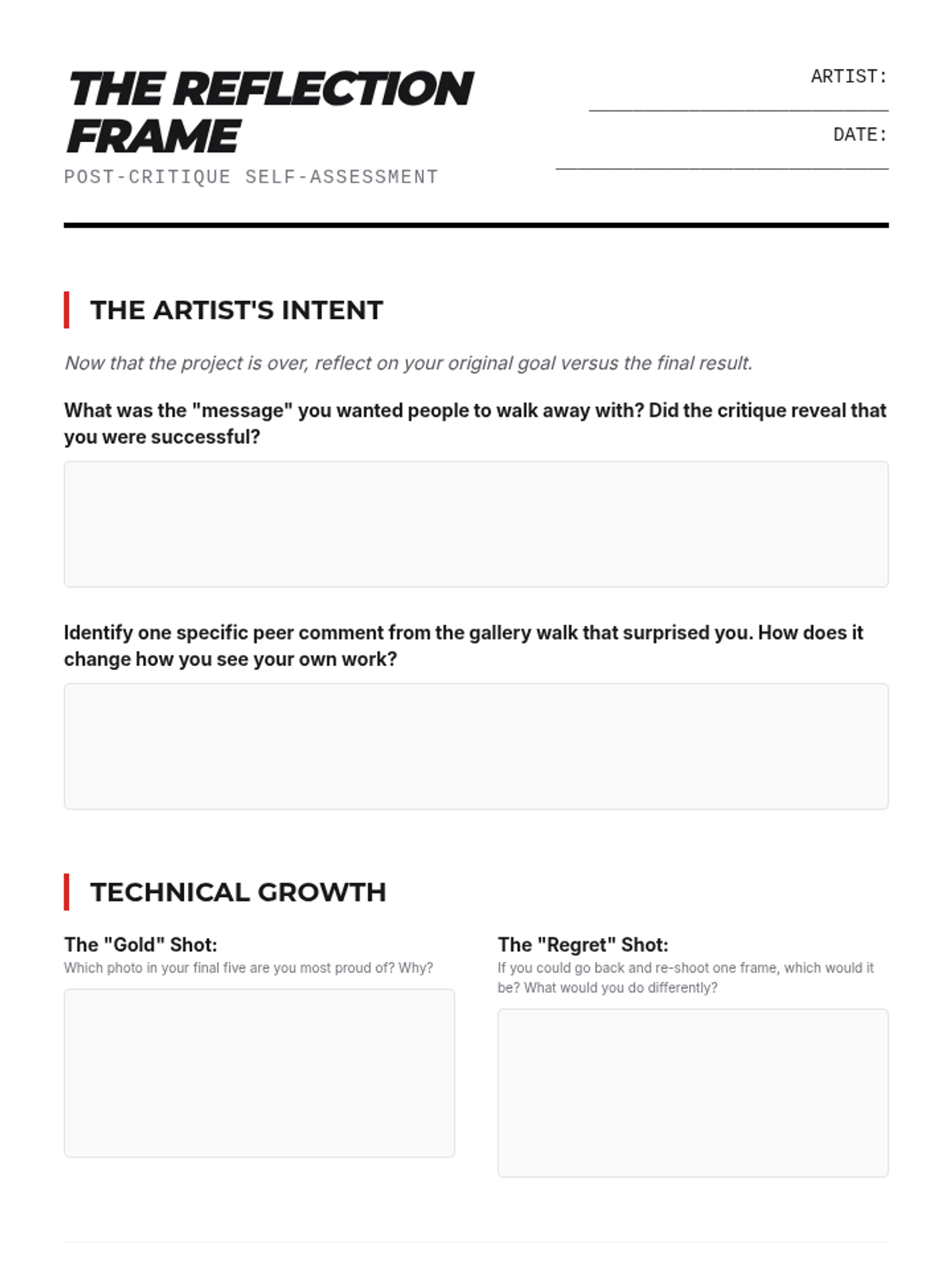
A post-critique reflection sheet for students to assess their artistic growth, evaluate the success of their narrative intent, and process peer feedback.
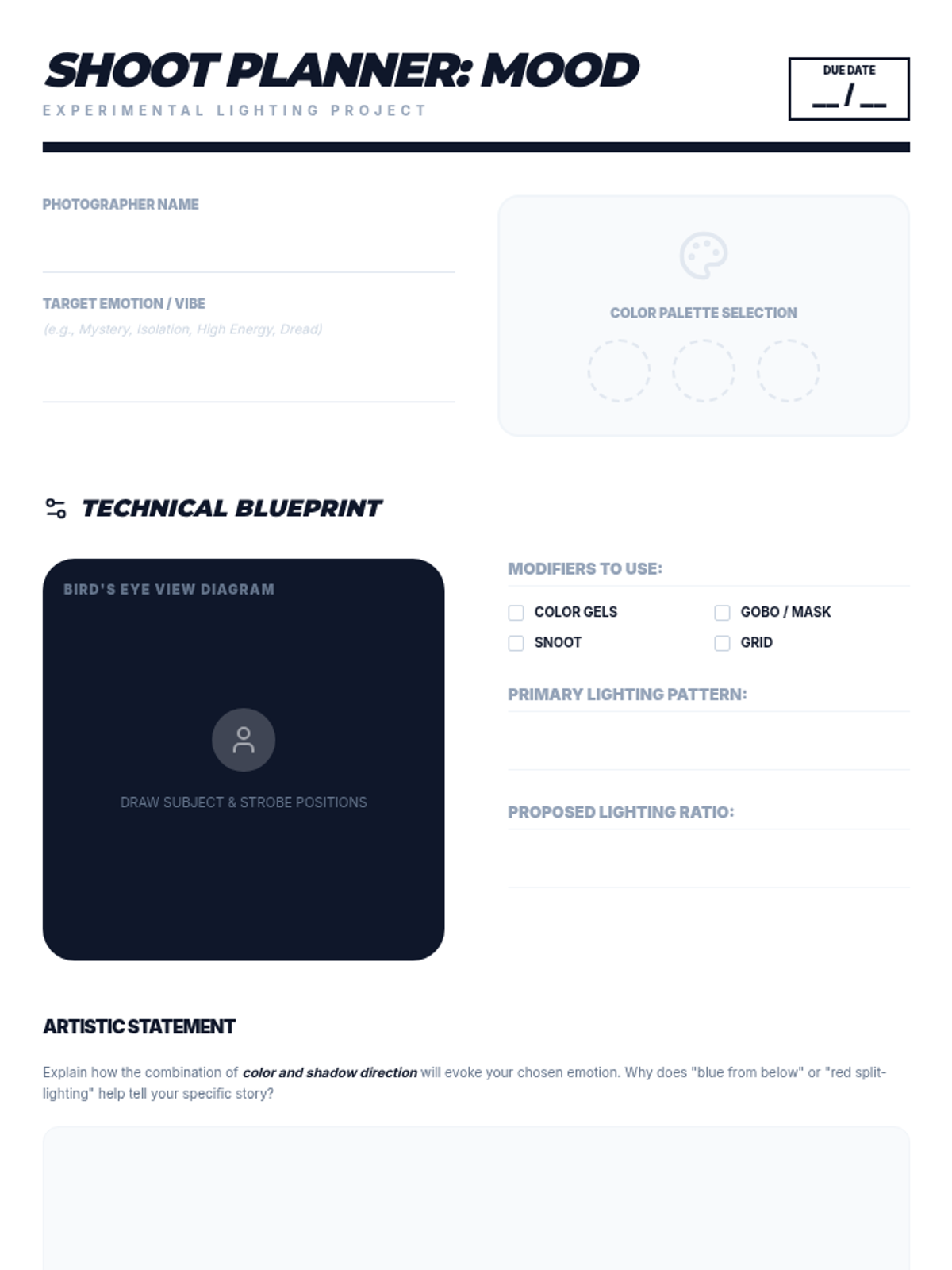
Project planning sheet for the final lighting shoot, guiding students through emotional goal setting and technical gear selection.
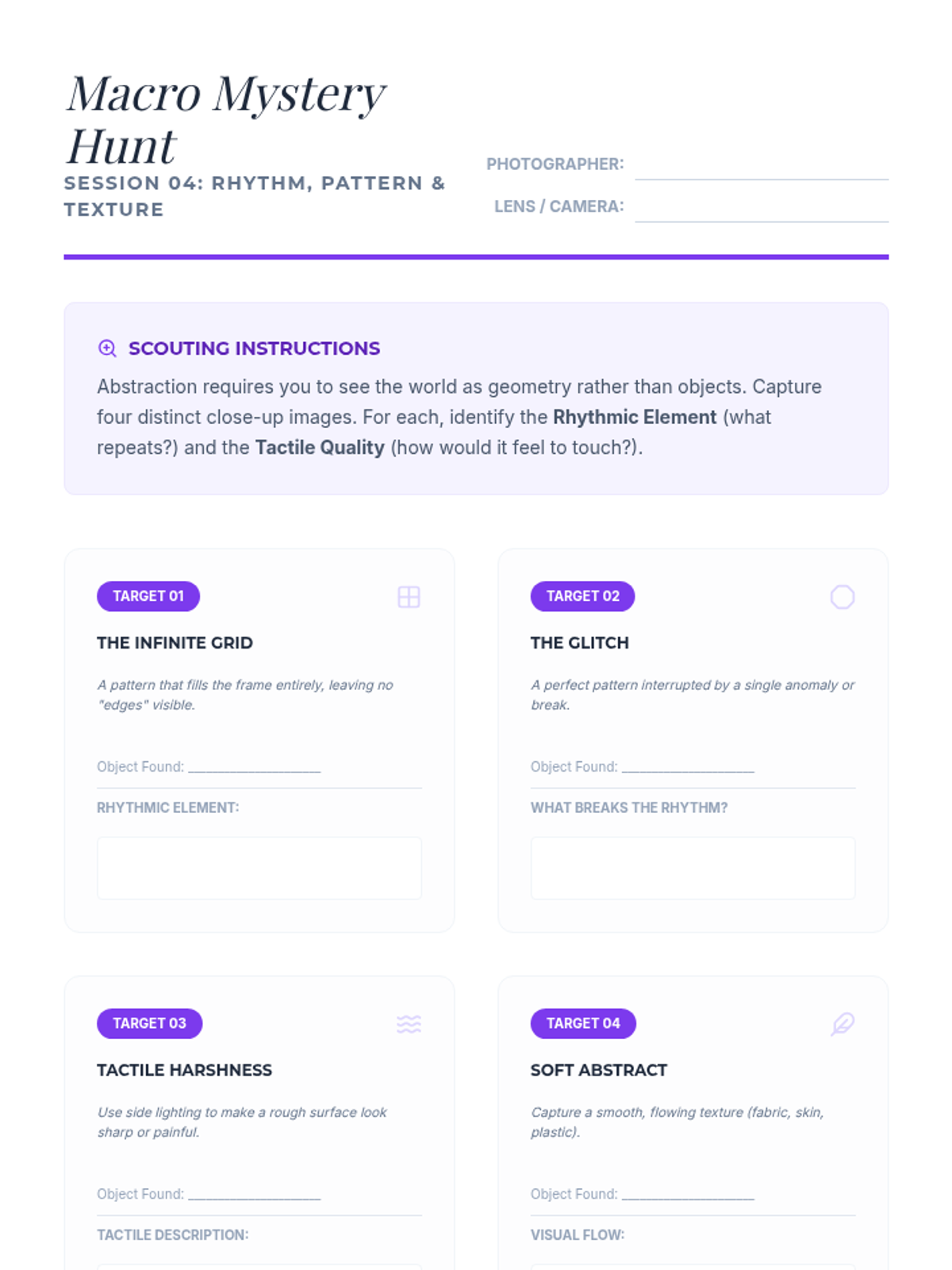
A student activity guide for Lesson 4, guiding them through macro photography of patterns and textures.
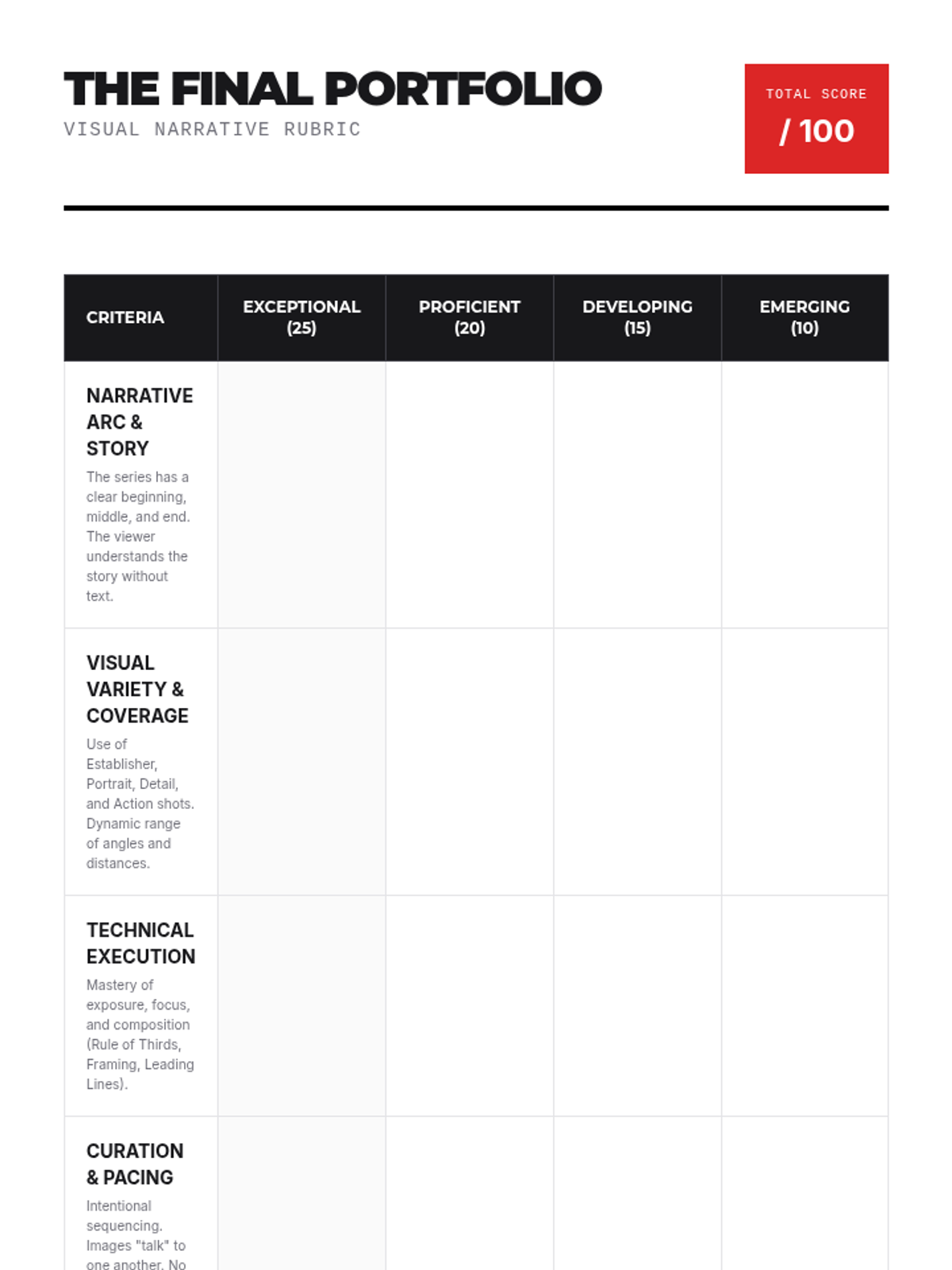
A grading rubric for the final photo essay project, evaluating narrative arc, visual variety, technical execution, and curation skills.
Visual slide deck defining classic studio lighting patterns (Butterfly, Loop, Rembrandt) for portrait photography.
Visual presentation on experimental techniques using color gels and modifiers to convey specific emotional states through light.
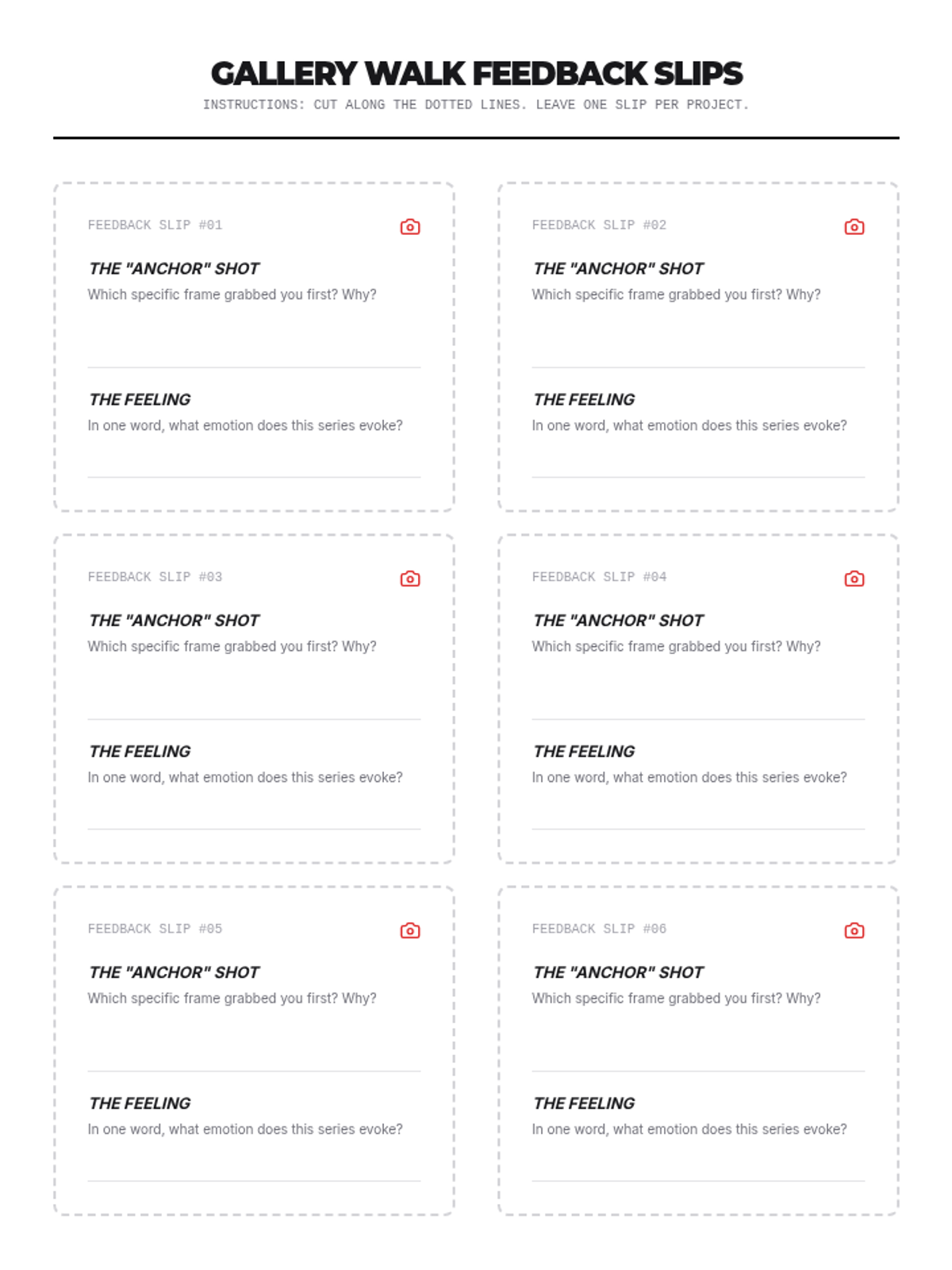
A set of printable feedback slips for the gallery walk activity. Each slip provides specific prompts for students to leave silent, written feedback on their peers' photography.
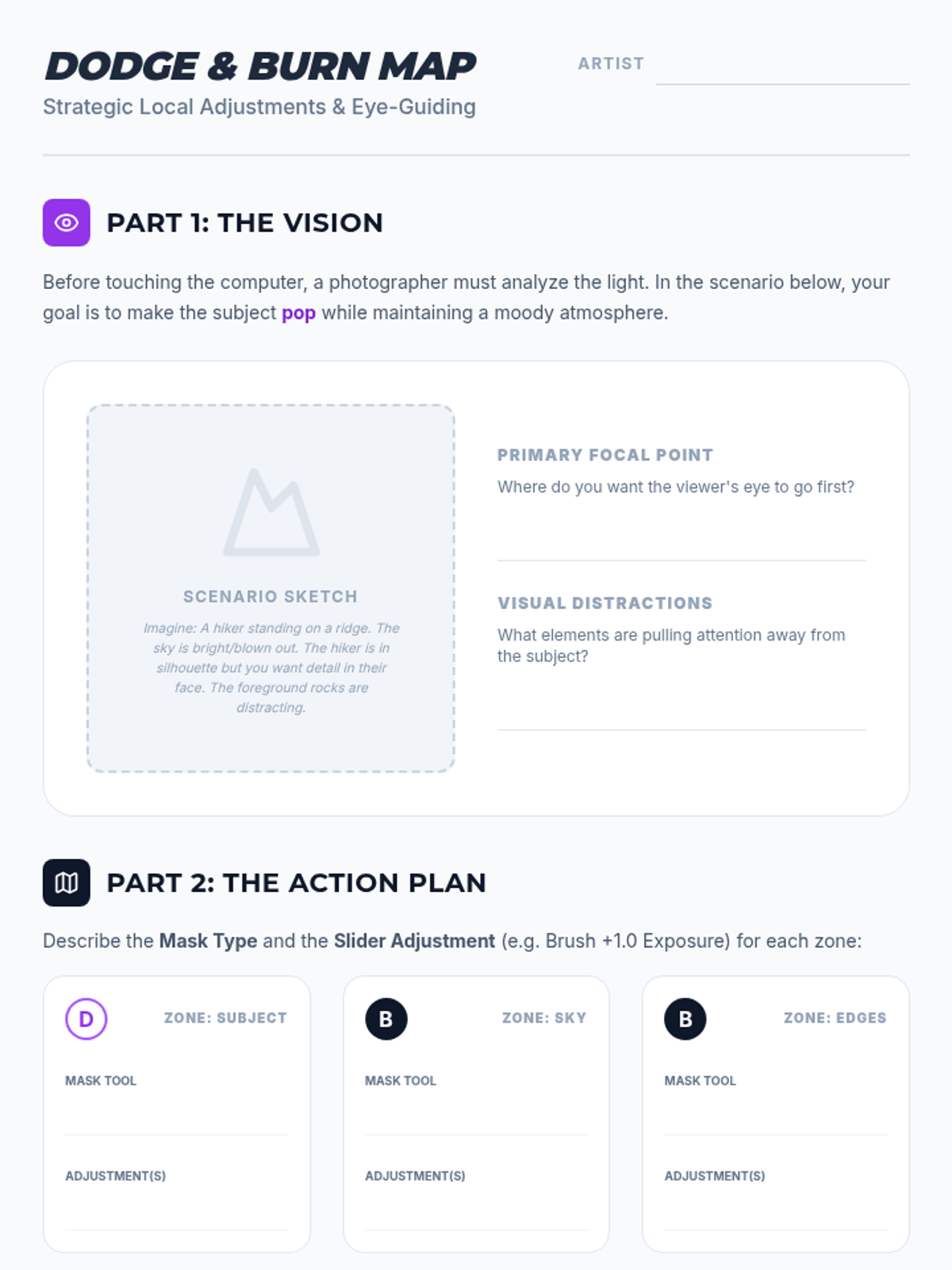
A worksheet where students plan localized adjustments for a sample scenario, choosing mask tools and describing specific edits to guide the viewer's eye.
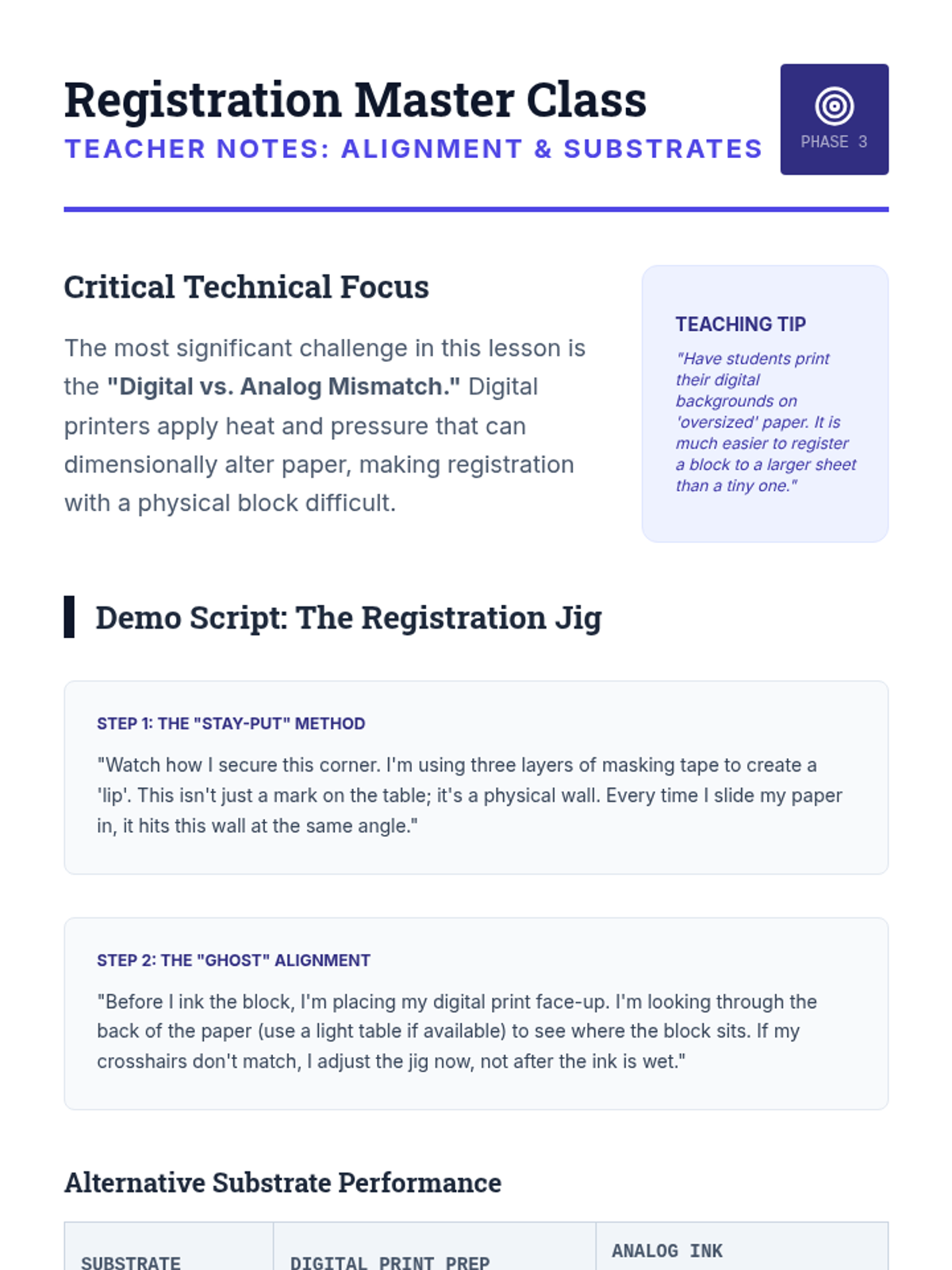
A teacher resource for setting up registration jigs and managing alternative substrate printing during the hybrid layering phase.
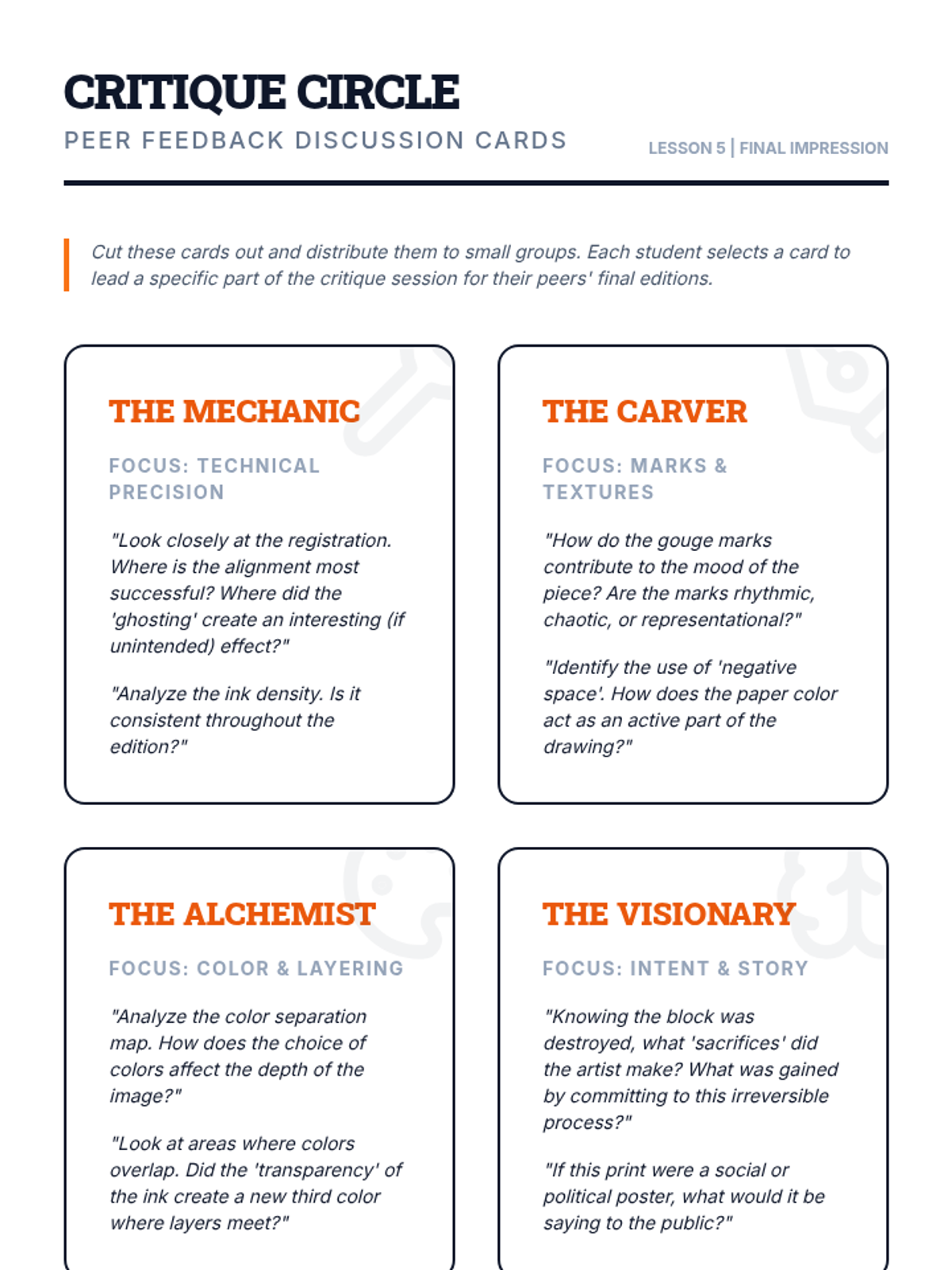
Discussion prompt cards for peer critique sessions, focusing on technical execution, mark-making, color theory, and conceptual growth in relief printing.
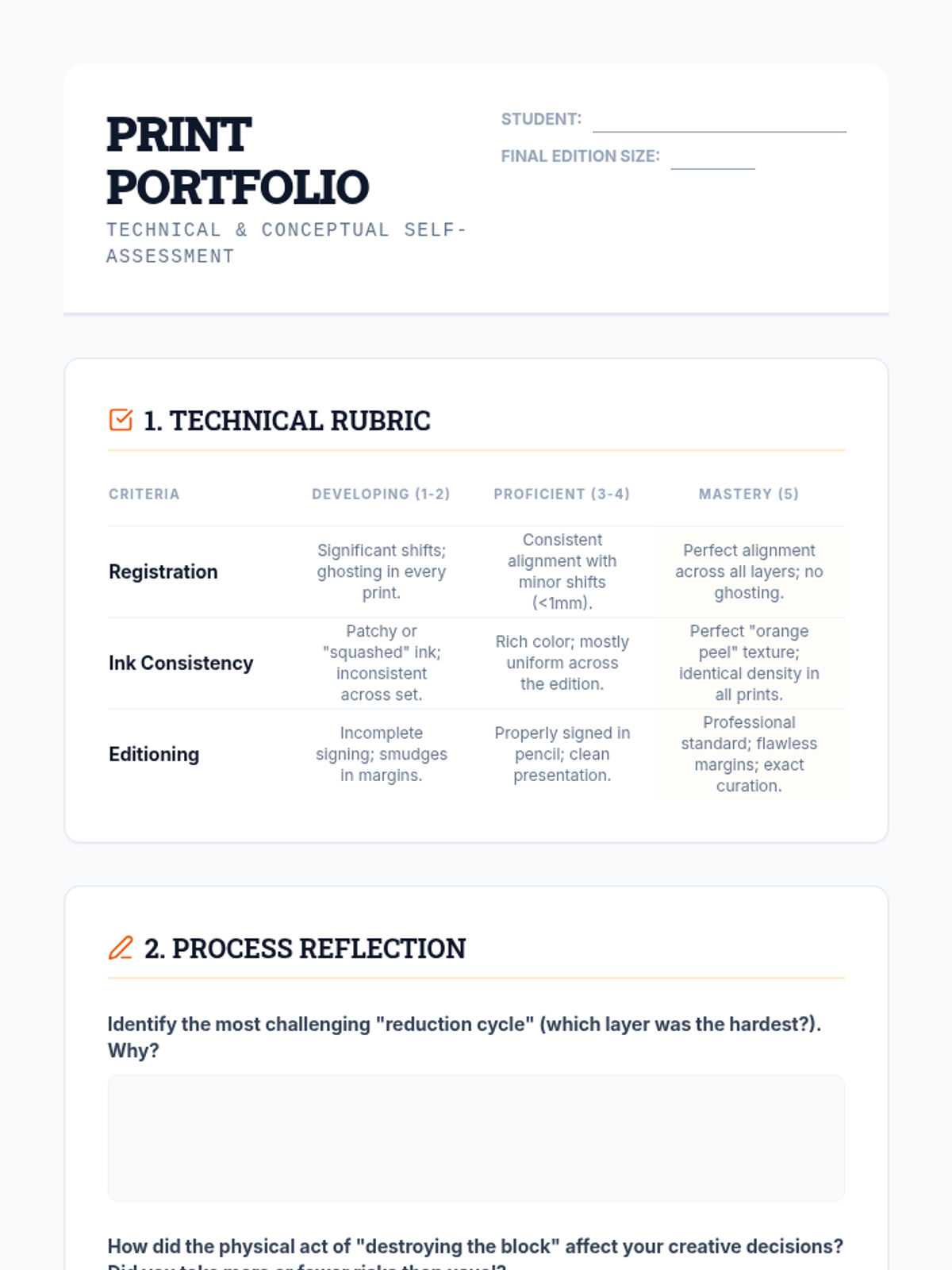
A professional self-assessment rubric and reflection sheet for students to evaluate their technical execution and conceptual growth during the reduction printing process.
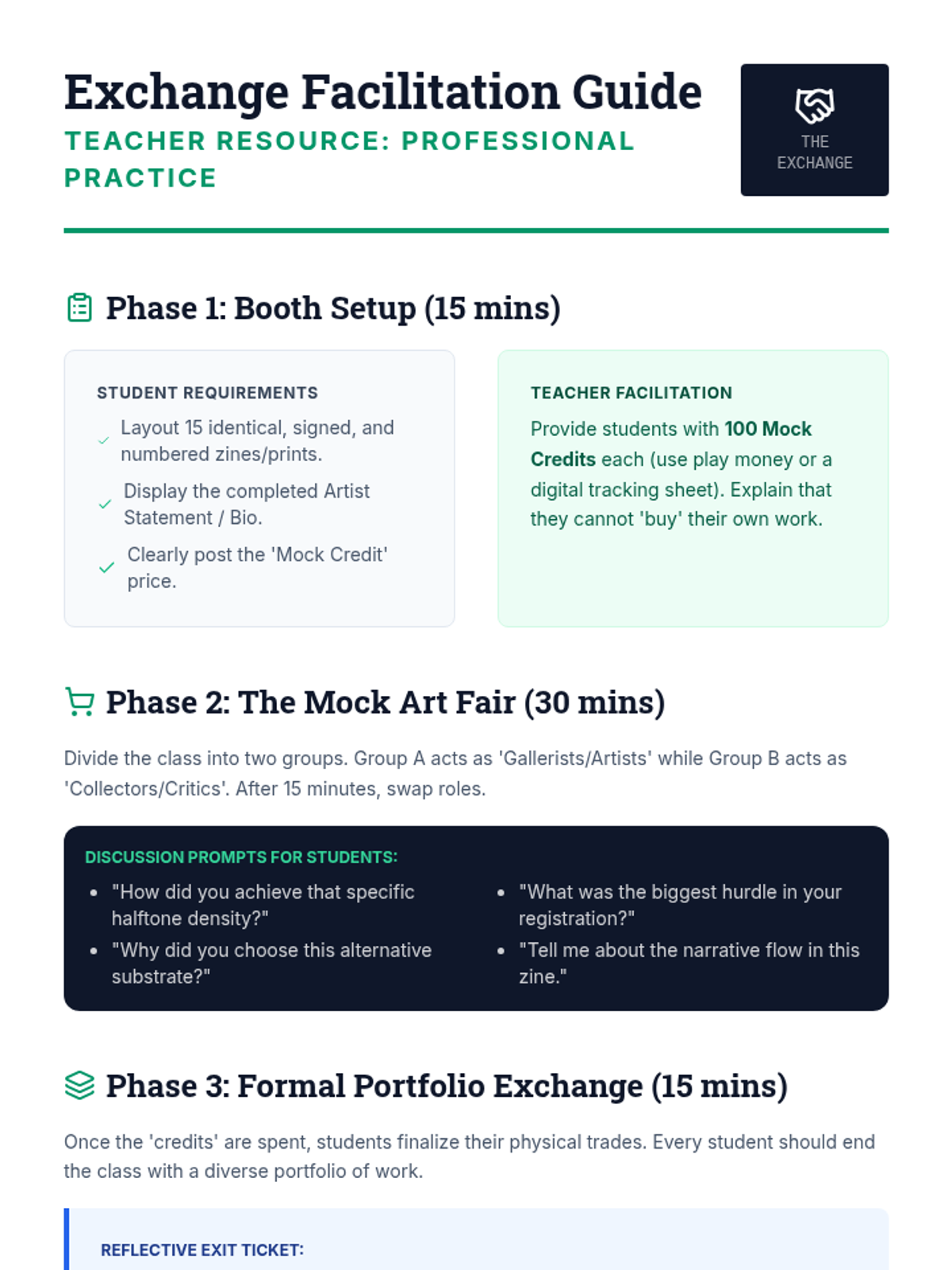
A teacher guide for facilitating the final print exchange, managing the mock art fair, and evaluating the hybrid printmaking portfolios.
Final slides covering the reduction cycle culmination, edition curation standards, and professional signing conventions for fine art prints.
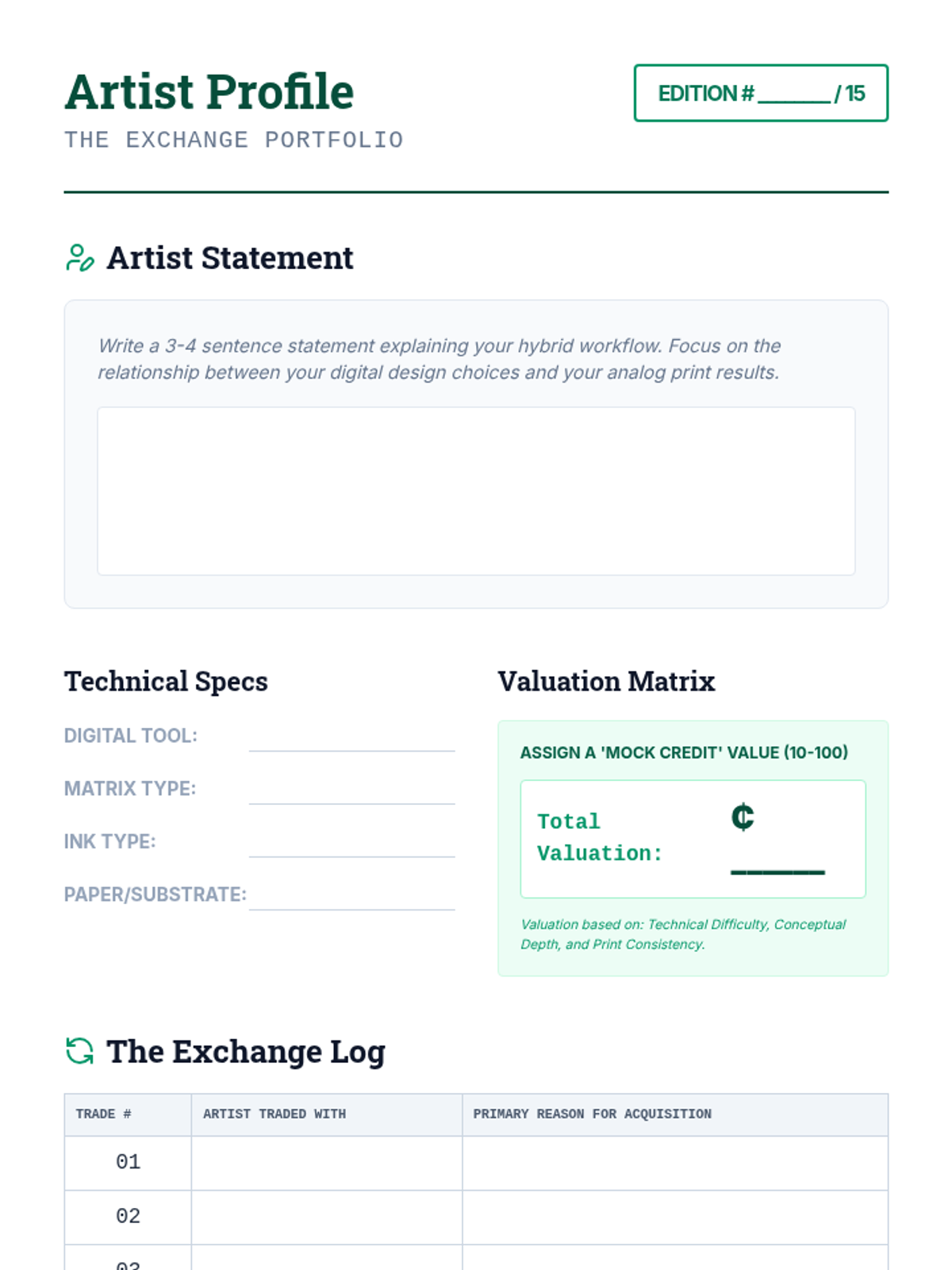
A student artist statement and valuation worksheet for participation in the final print exchange portfolio.
A slide deck for the final print exchange, focusing on professional artist statements, valuation, and networking within the artistic community.
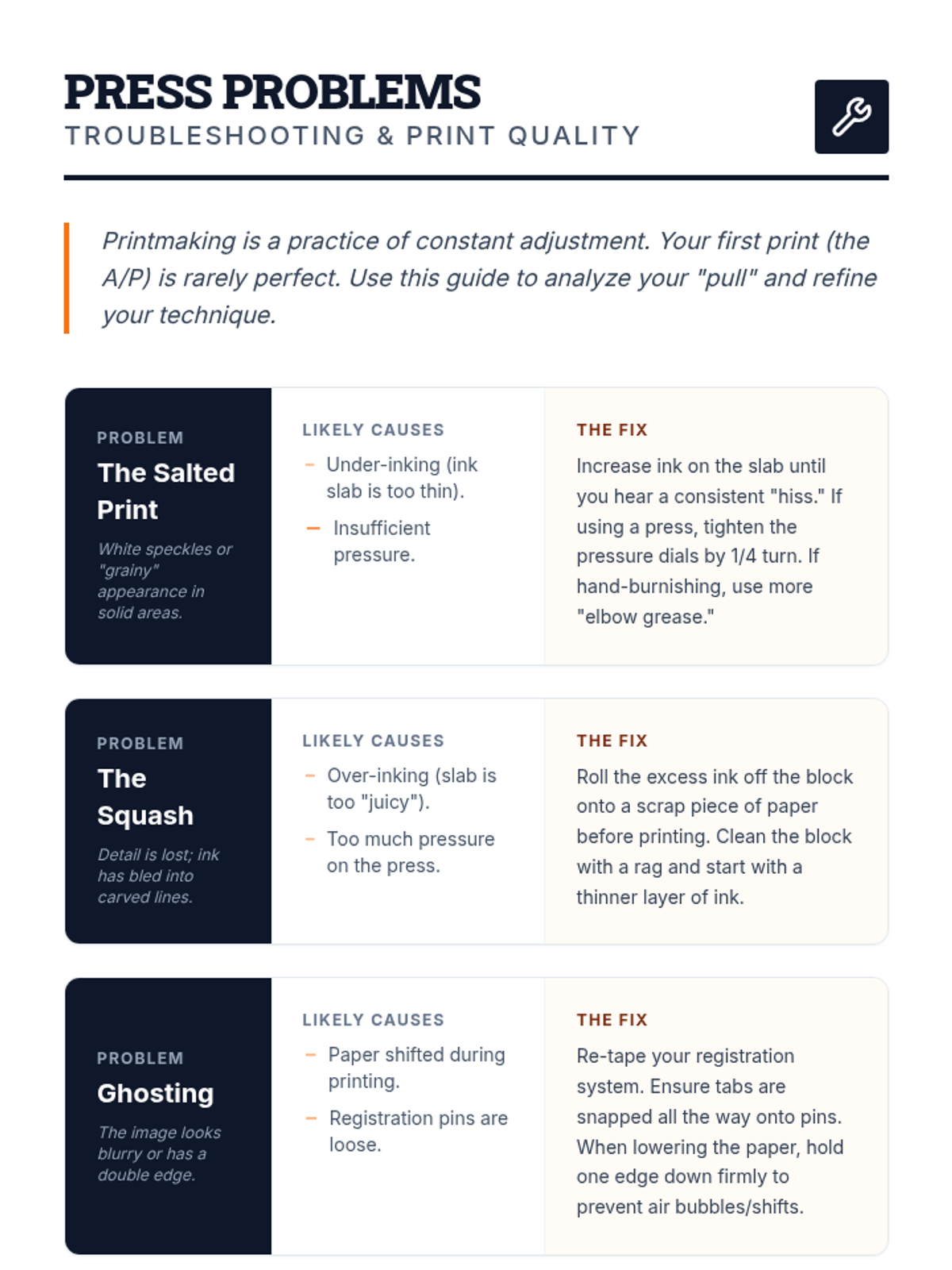
A troubleshooting guide for students to diagnose and correct common relief printing issues like over-inking, under-inking, and registration shifts.
Technical slides for Lesson 4 covering ink slab preparation, the "hiss" of the brayer, registration routines, and troubleshooting print quality.
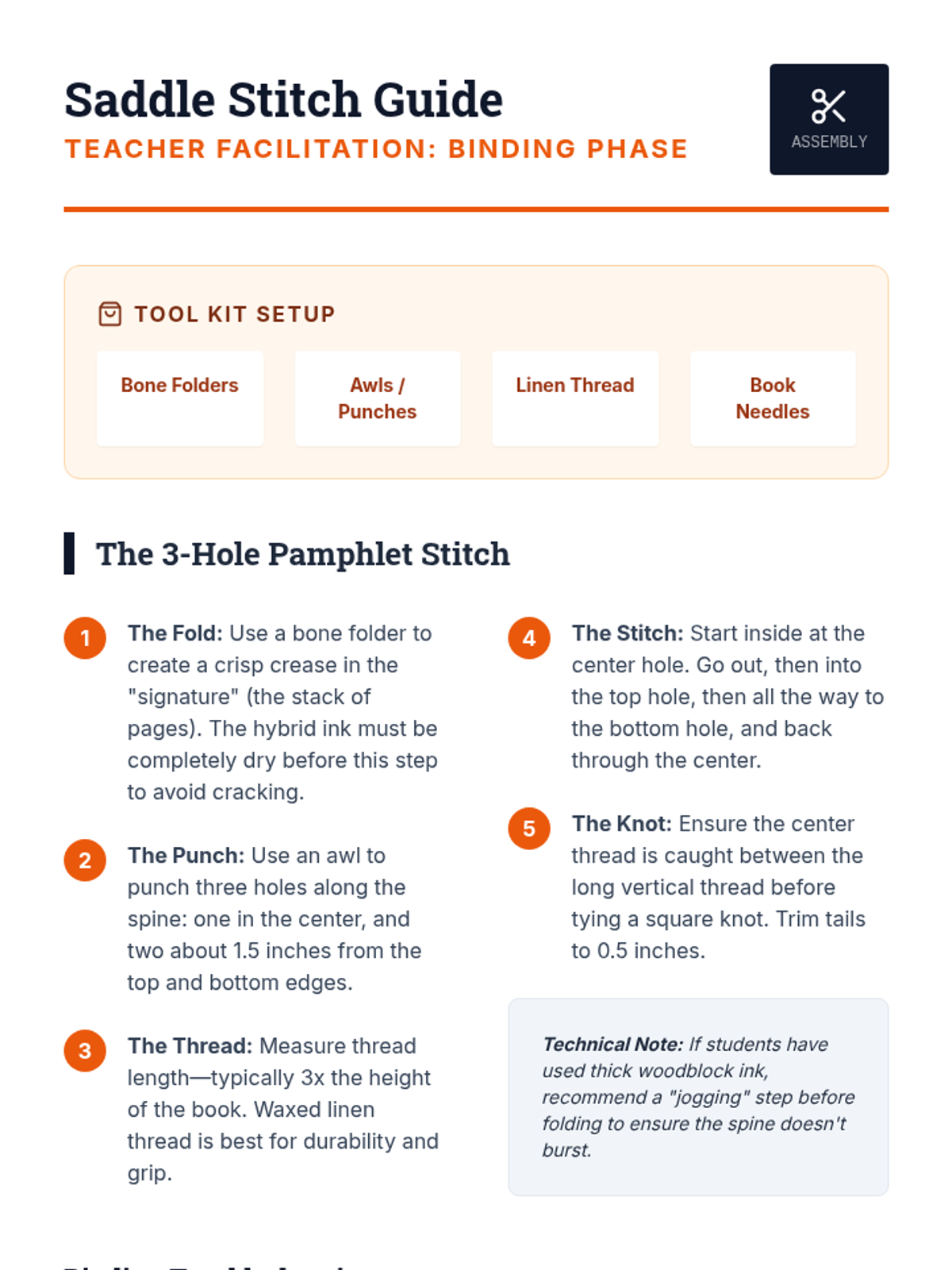
A teacher guide for facilitating the zine binding phase, focusing on the 3-hole pamphlet stitch and material preparation.
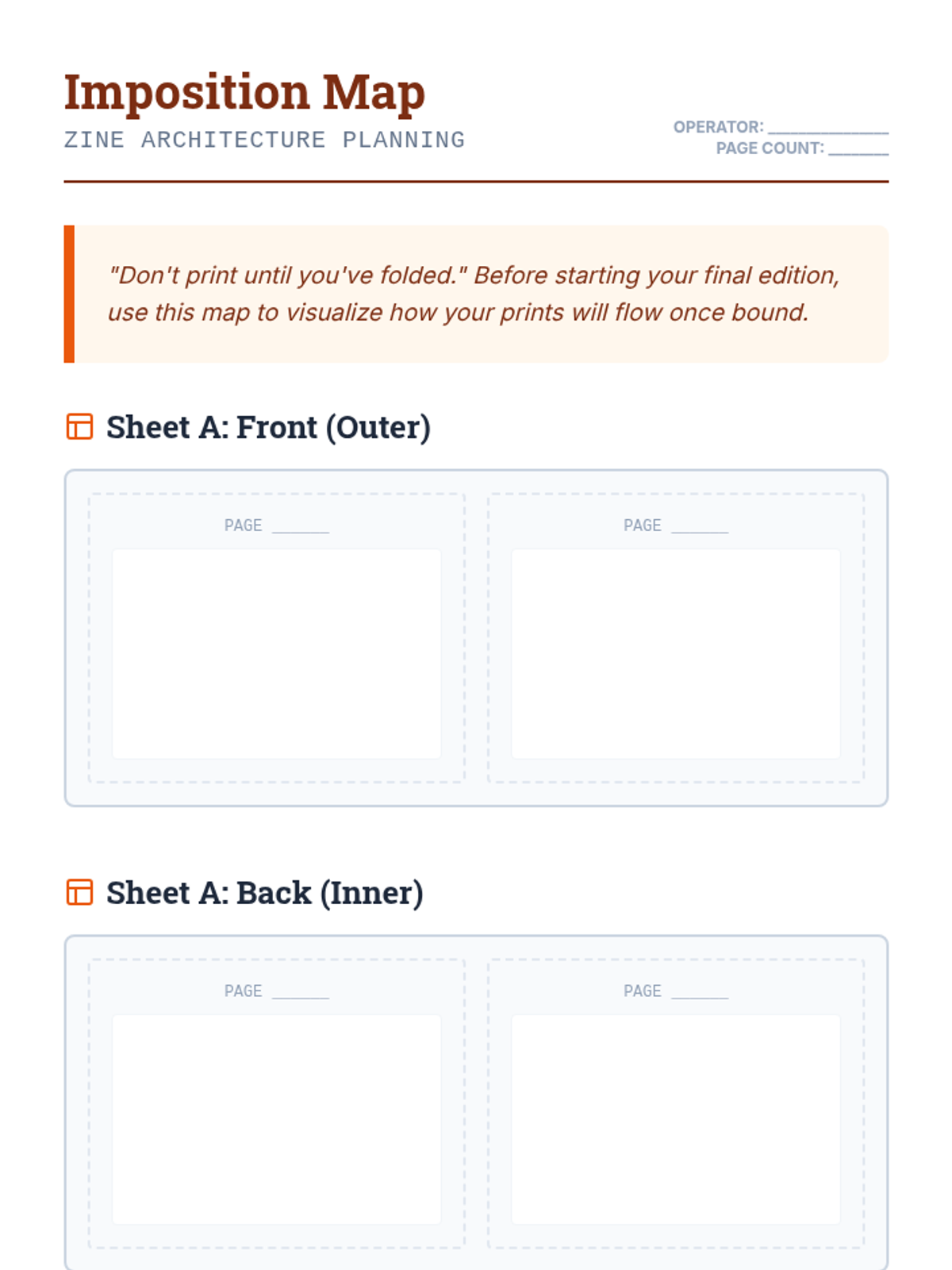
A student imposition map and pagination planning worksheet for designing a hybrid zine.
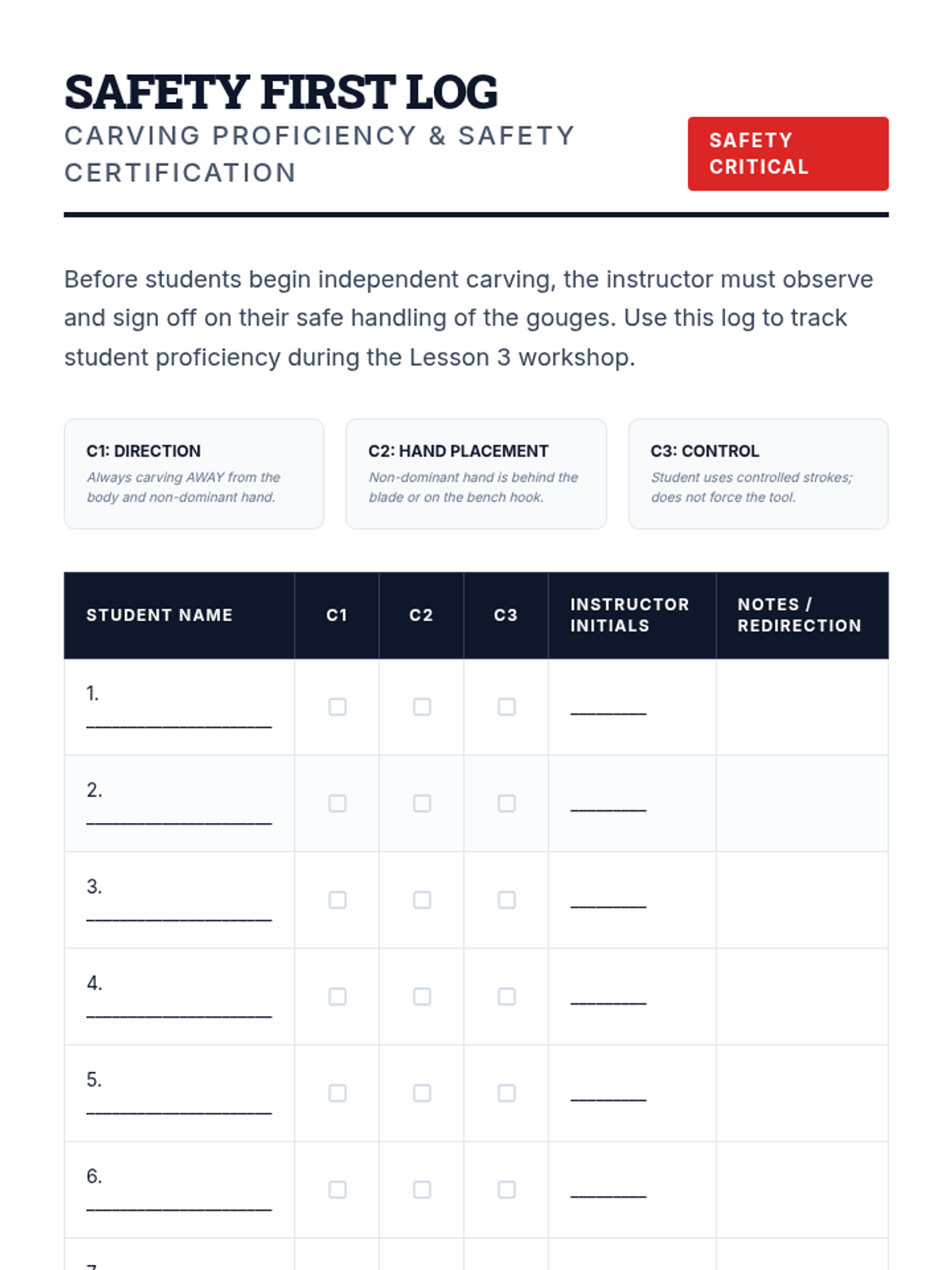
A teacher log to track and certify student carving safety proficiency during the first technical carving session.
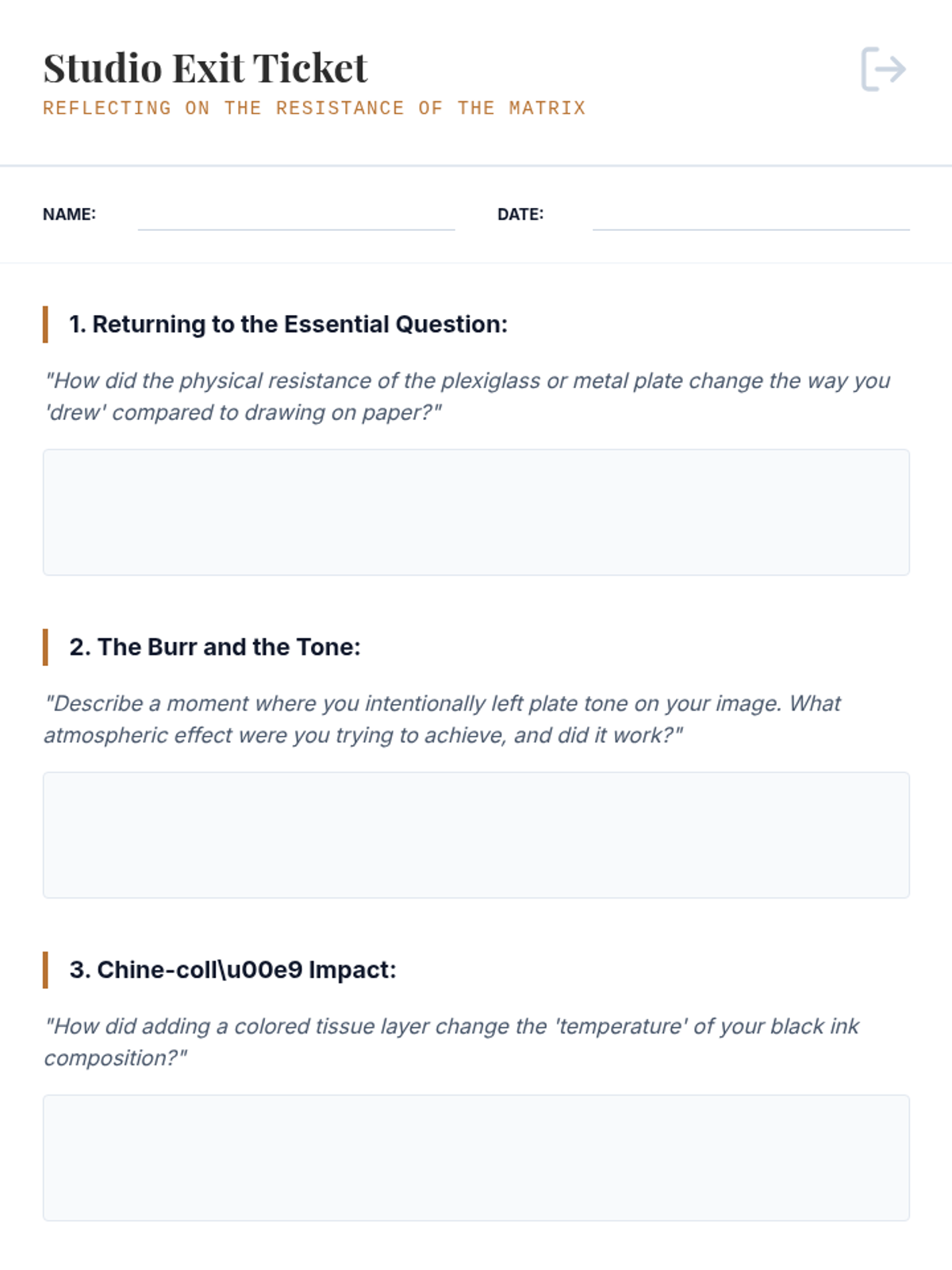
A final reflection exit ticket for Lesson 5, helping students synthesize their technical learning about resistance, tone, and color integration.
A slide deck introducing zine construction and layout, focusing on pagination, imposition, and narrative flow in printmaking.
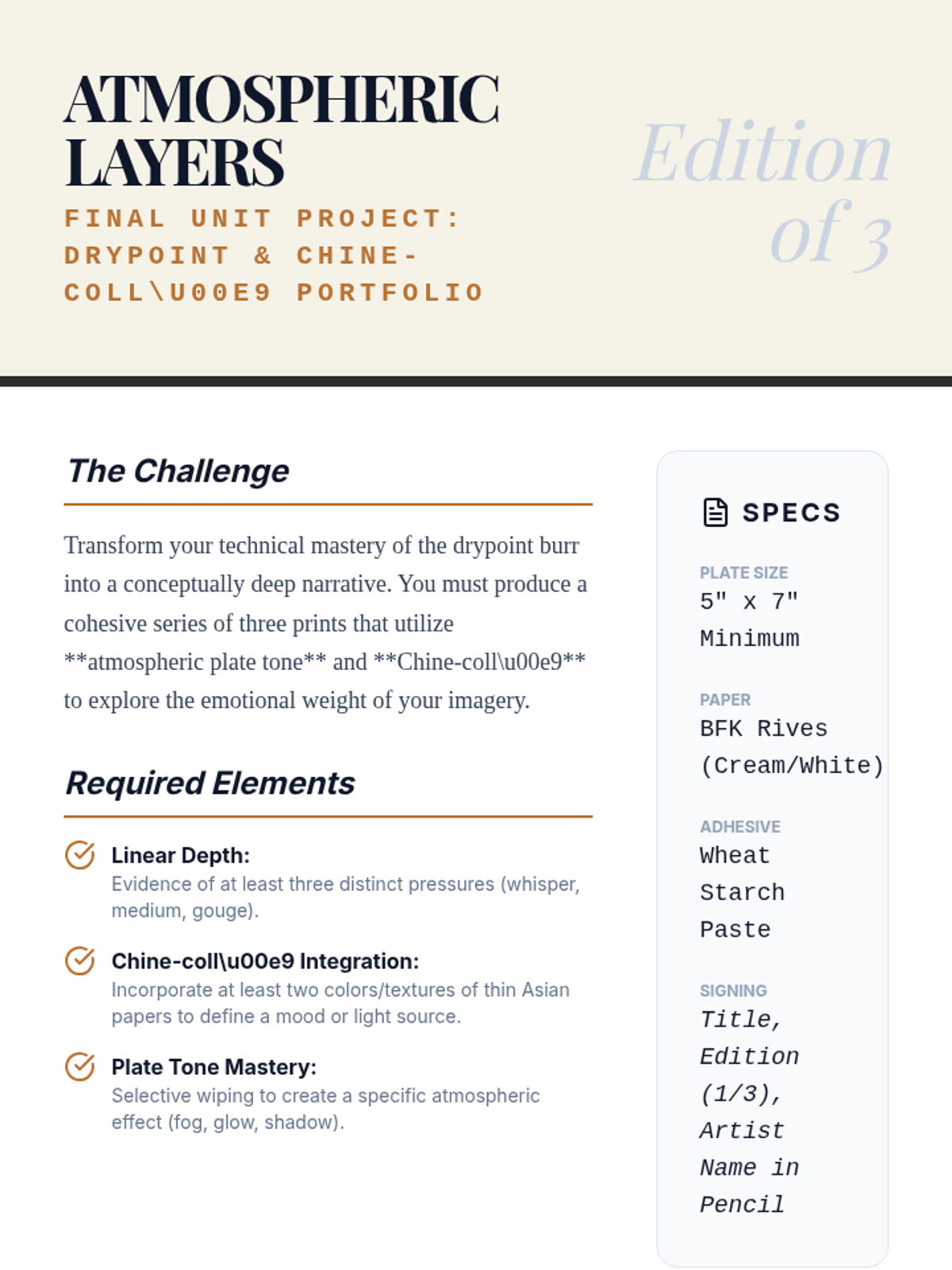
The final project brief for the Intaglio unit, challenging students to combine drypoint, plate tone, and chine-coll\u00e9 into a cohesive edition of three prints.
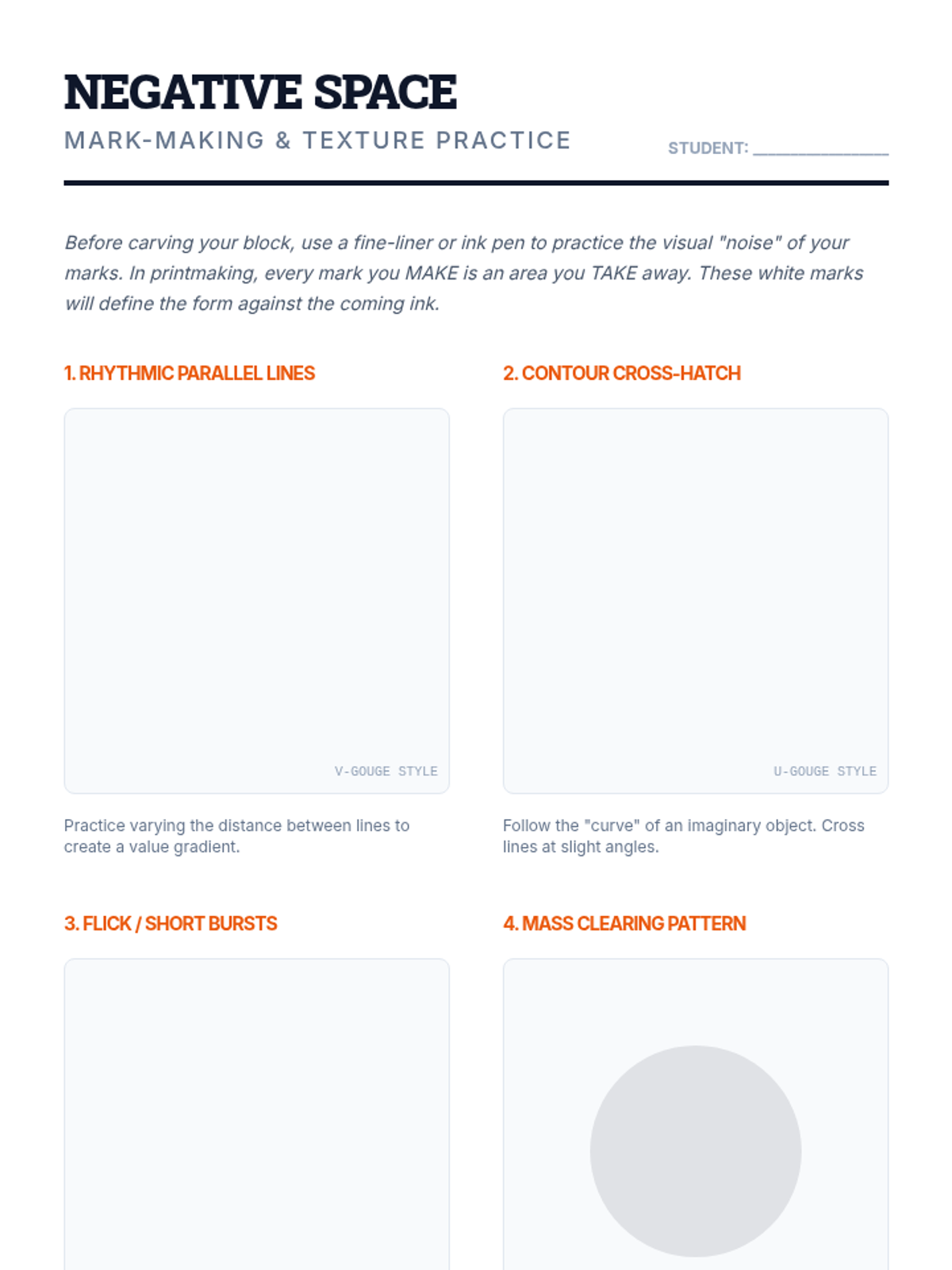
A mark-making practice sheet for students to explore different textures and value-building techniques using pen and ink before translating them to carving gouges.
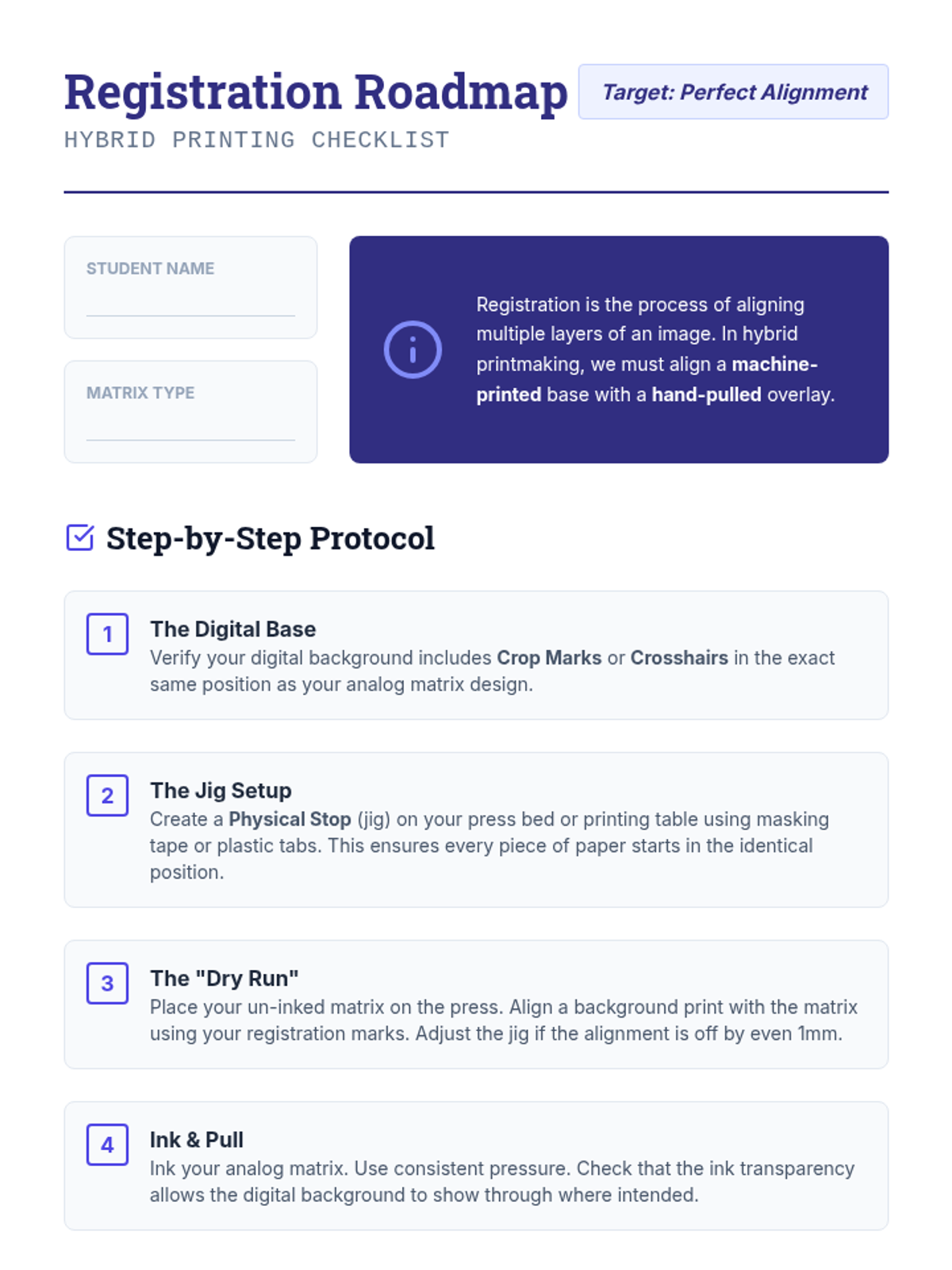
A student registration checklist and technical roadmap for aligning digital backgrounds with analog print overlays.
Technical slides for Lesson 3 focusing on tool safety, carving mechanics, gouge selection, and expressive mark-making techniques.
Advanced slide deck for Lesson 5 on the Chine-coll\u00e9 technique, exploring the chemistry of adhesives and the visual impact of layering thin Asian papers into intaglio prints.
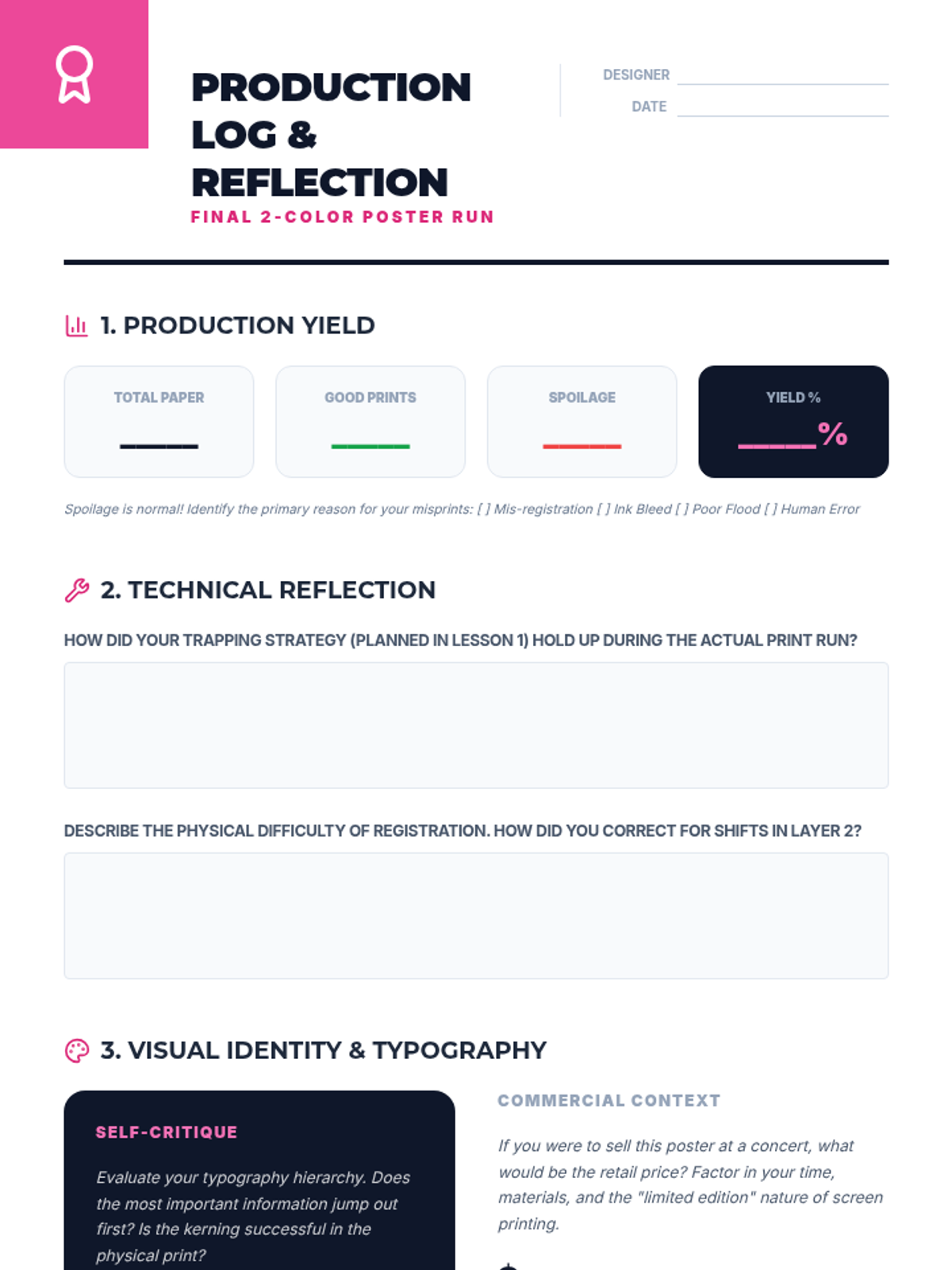
Student reflection sheet and production log for the final multi-color print run, including yield calculations and technical self-critique.
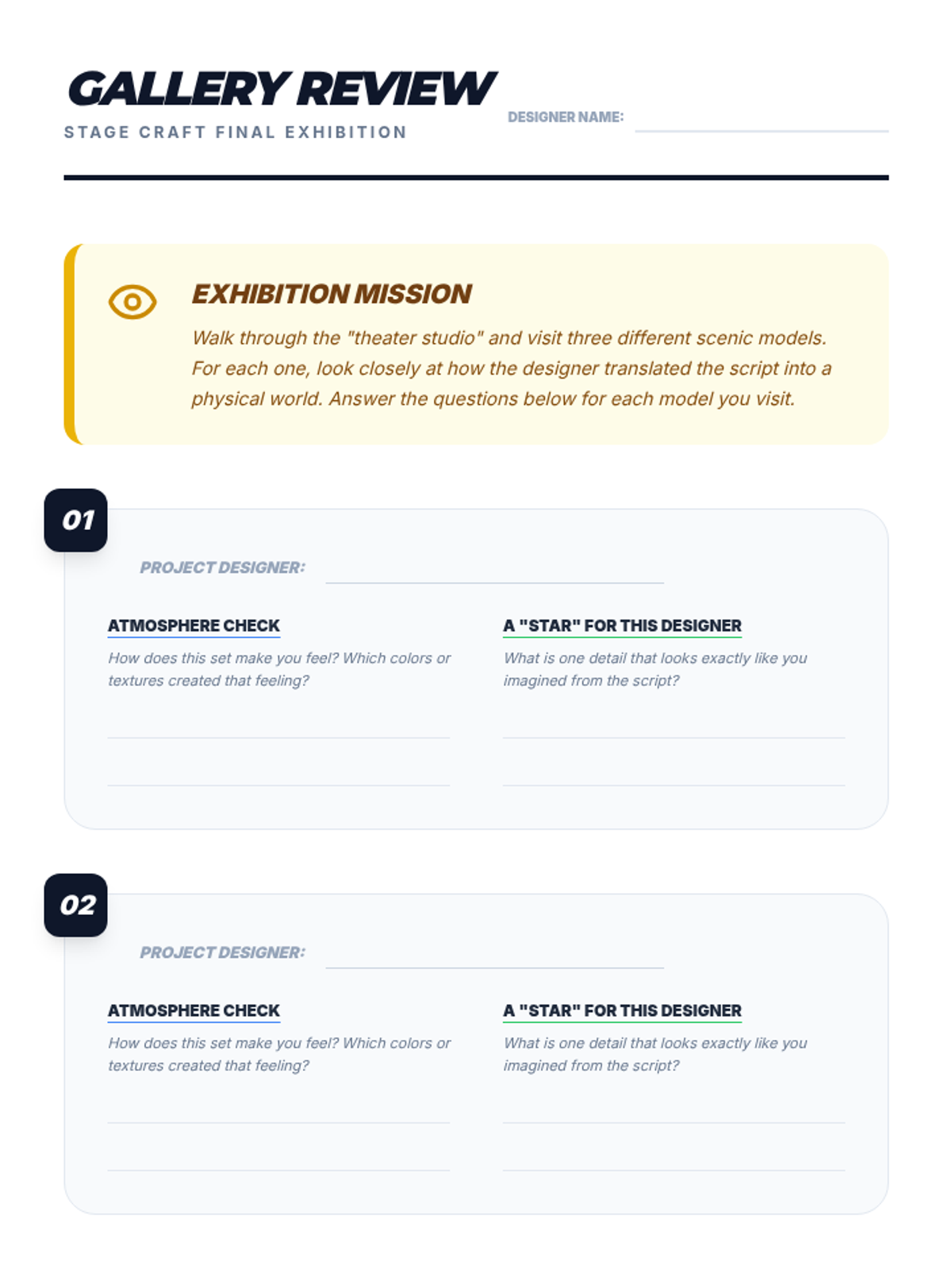
Student review sheet for the gallery walk. Provides spaces for peer evaluation of atmosphere and script requirements, plus a final self-reflection on the design process.
Instructional slides for the "Detail Designers" lesson. Covers set dressing techniques (furniture and texture) and instructions for the final gallery walk and critique process. Updated for improved legibility and font consistency.
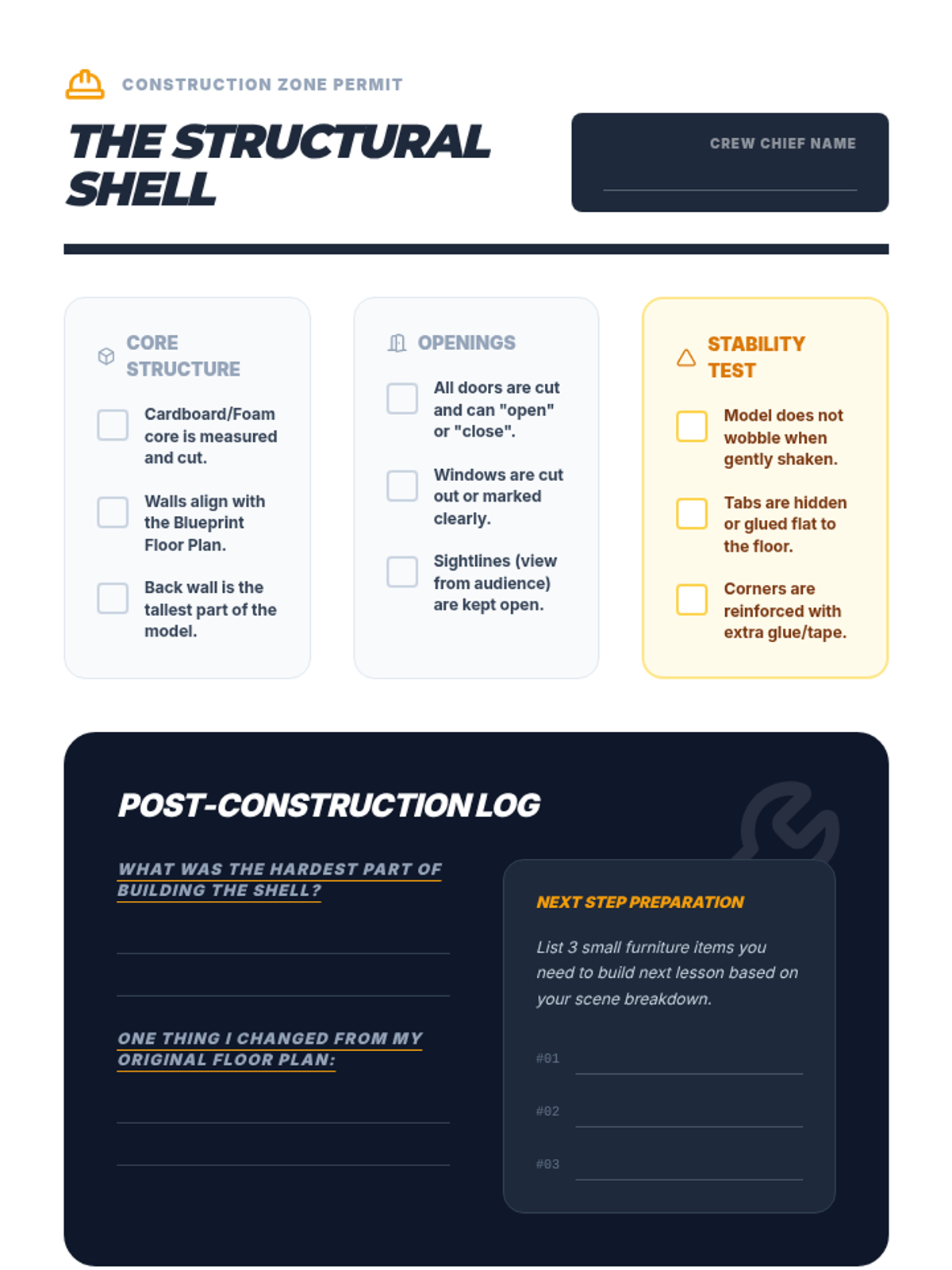
A student self-assessment checklist and reflection log for the model construction phase. Focuses on structural integrity, alignment with the floor plan, and technical details like door/window placement.
Instructional slides for the "Box Builders" lesson. Covers the definition of a maquette, basic cardboard engineering techniques like tabs and corner locks, and the step-by-step process of building walls from a floor plan. Updated for improved legibility and font consistency.
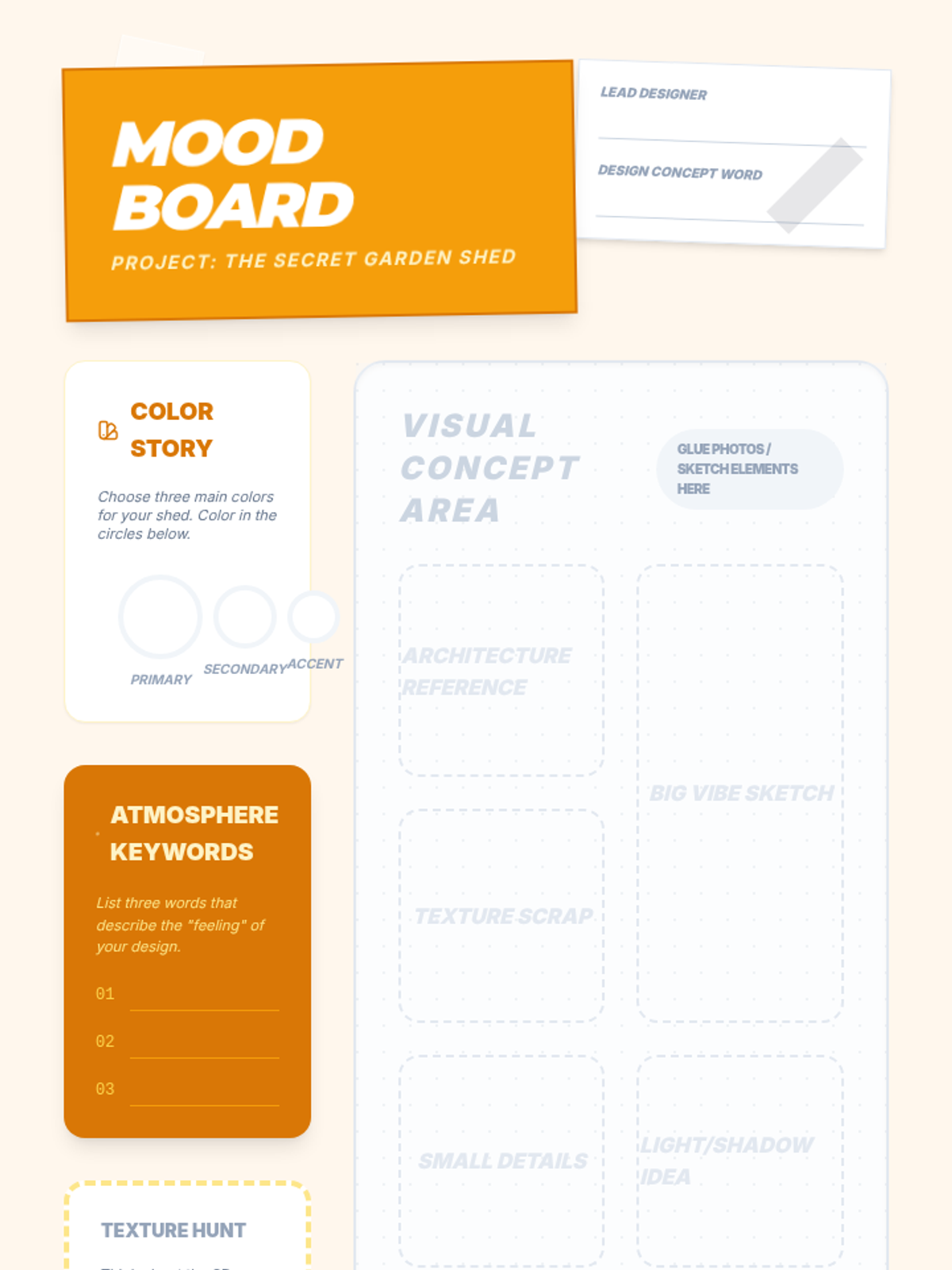
Student mood board worksheet for creating a design concept. Includes areas for color swatches, adjectives, material selection, and a large collage space for sketches and reference images.
Instructional slides for the "Atmosphere Architects" lesson. Teaches color theory for theater, the impact of texture, and how to create a design mood board to guide aesthetic choices. Updated for improved legibility and font consistency.
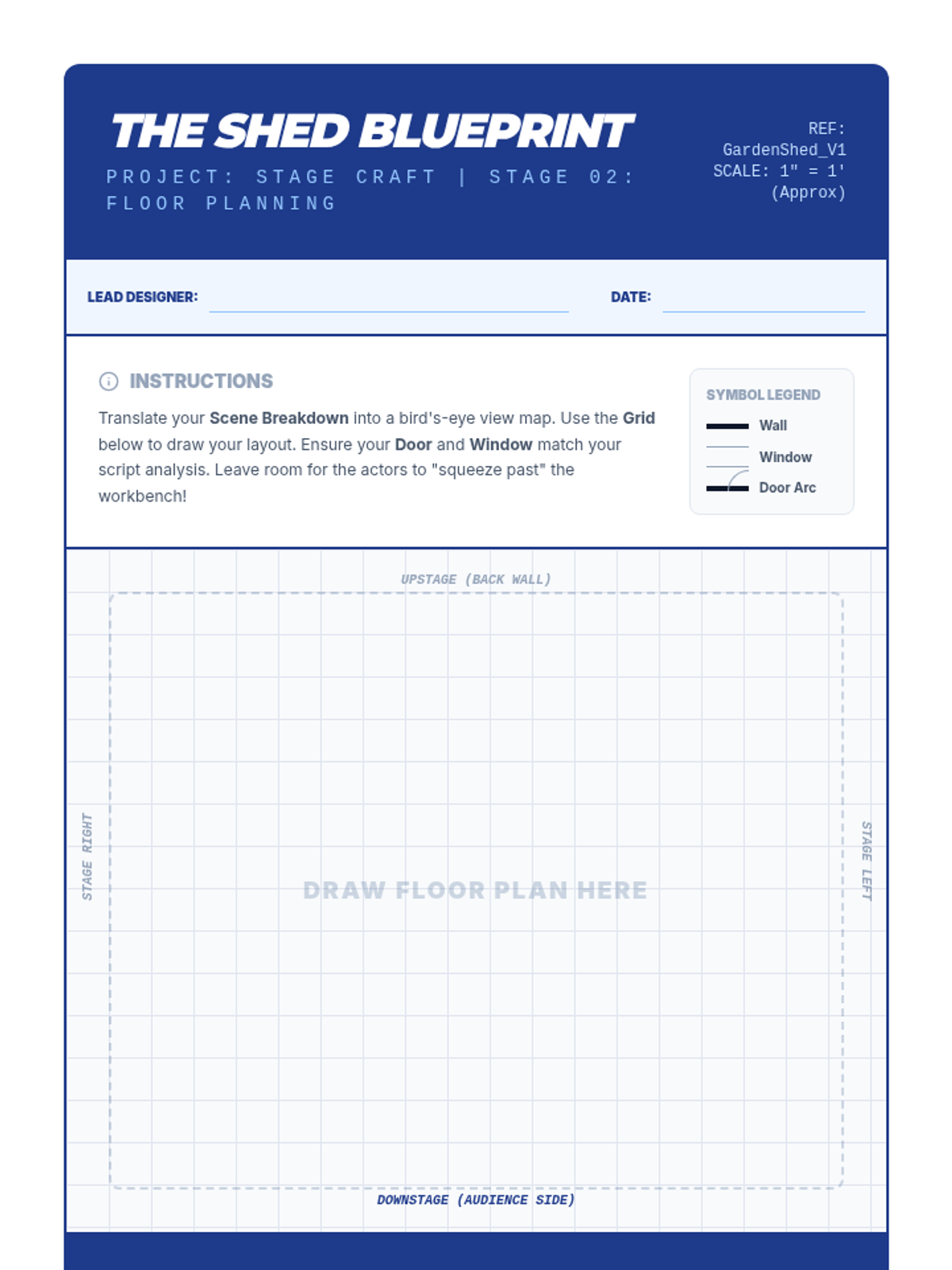
A technical drawing worksheet for students to create a bird's-eye view floor plan. Includes a blueprint-style grid, stage geography labels, a symbol legend, and space for design justification.
Instructional slides for the "Blueprint Masters" lesson. Teaches the bird's-eye view perspective, architectural symbols for walls/doors/windows, and the basics of stage geography (upstage, downstage, blocking). Updated for improved legibility and font consistency.
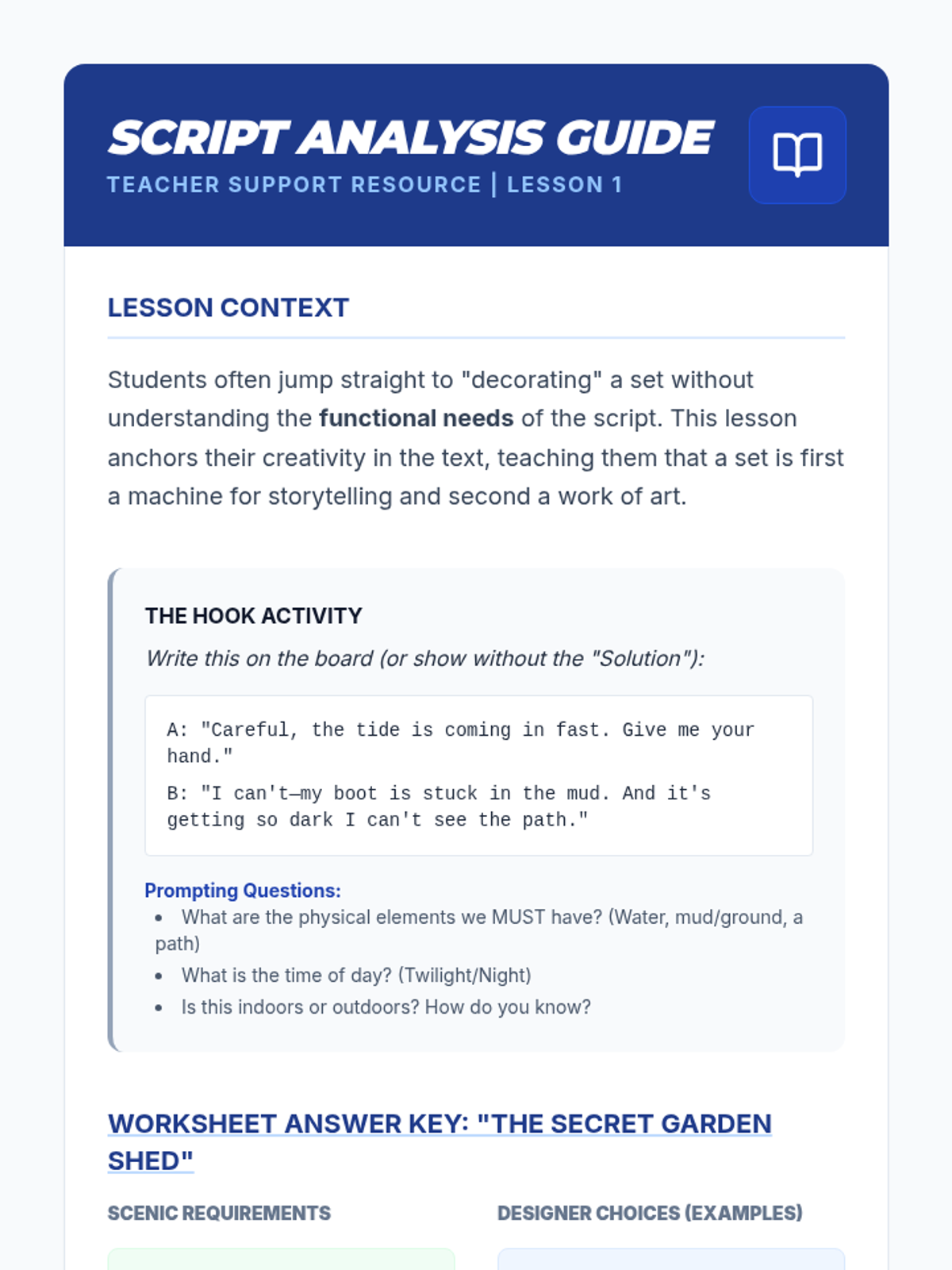
Teacher guide for script analysis, including hook activity details, an answer key for the student worksheet, and pedagogical tips.
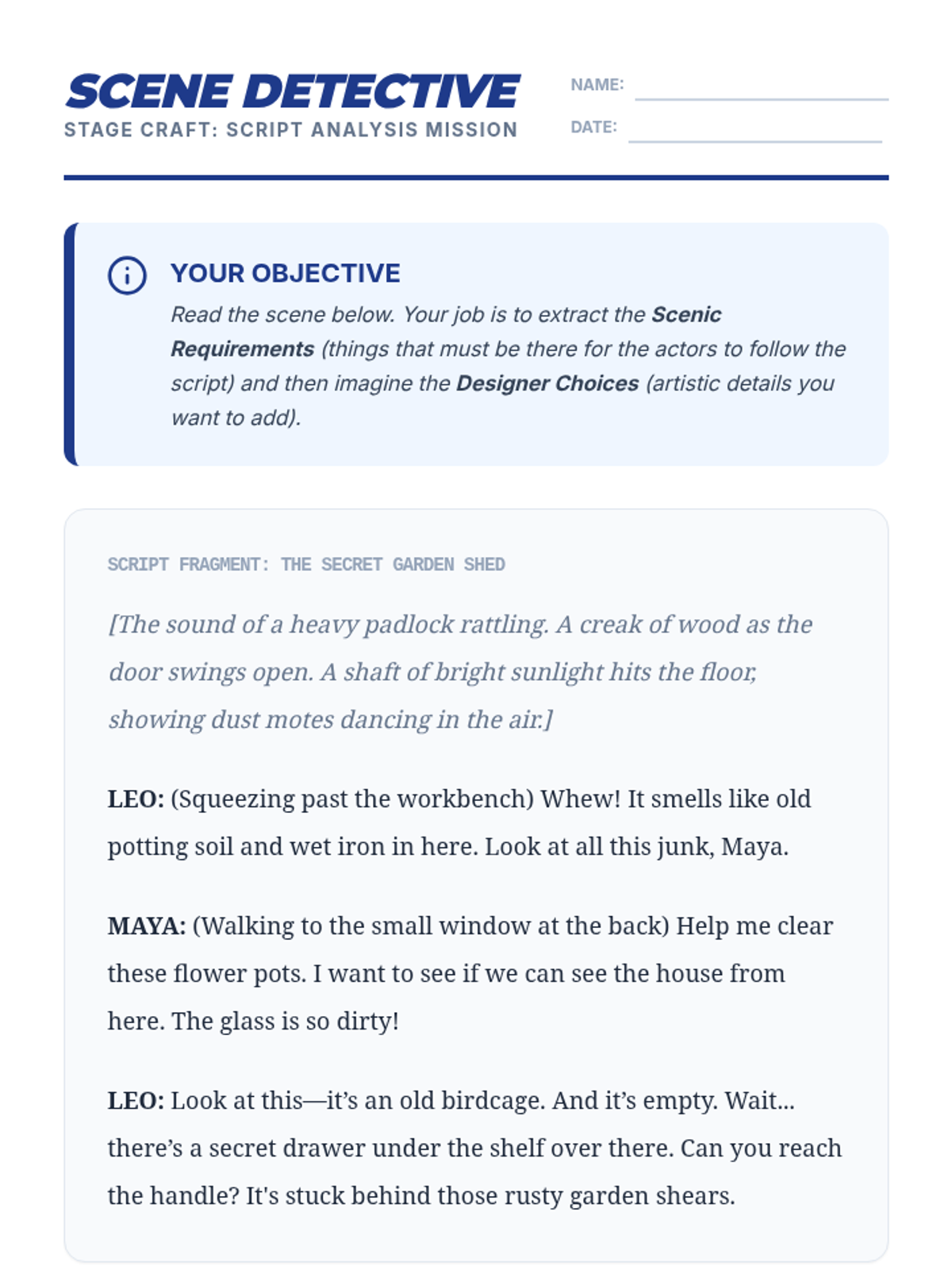
Student worksheet for script analysis. Includes a short scene fragment and spaces for students to list scenic requirements versus artistic choices, plus a sketch area.
Instructional slides for the "Script Detectives" lesson. Covers the difference between scenic requirements (must-haves) and designer choices (possibilities) using text-based clues.
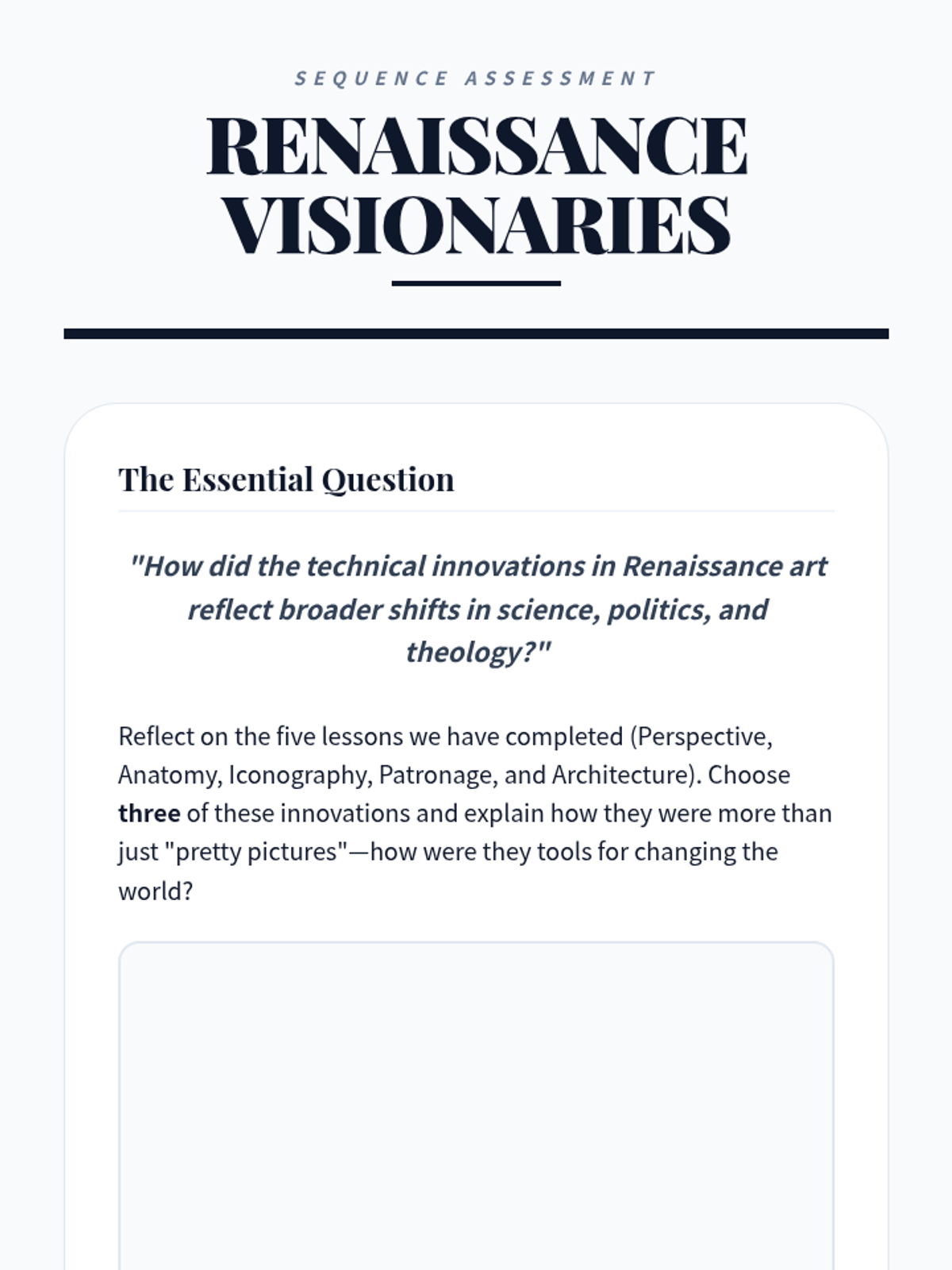
A final capstone reflection worksheet for the Renaissance Visionaries sequence, prompting students to synthesize the relationship between art, science, and patronage.
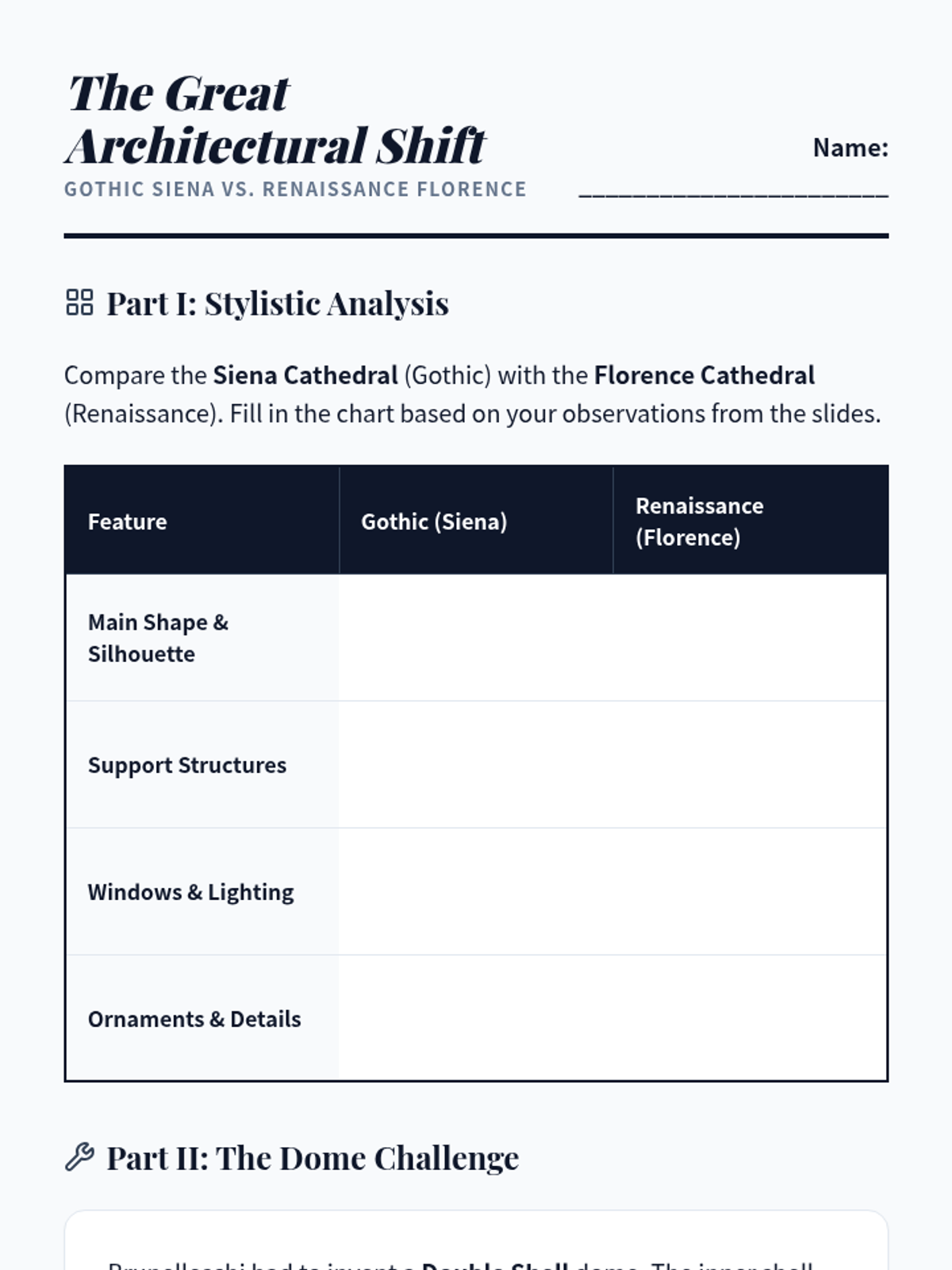
A student worksheet comparing Gothic and Renaissance architectural styles, with a focus on Brunelleschi's dome as an engineering and civic achievement.
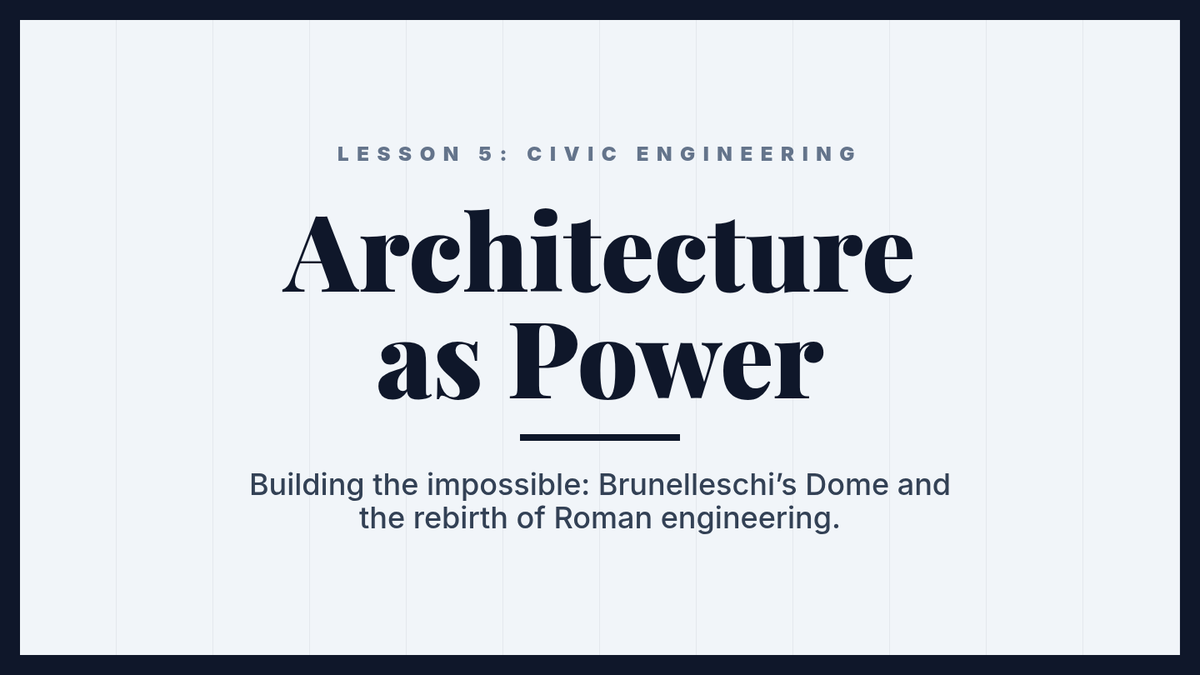
A slide deck for Lesson 5 exploring the engineering challenges of Brunelleschi's Dome, civic pride, and the shift from Gothic to Renaissance architectural styles.
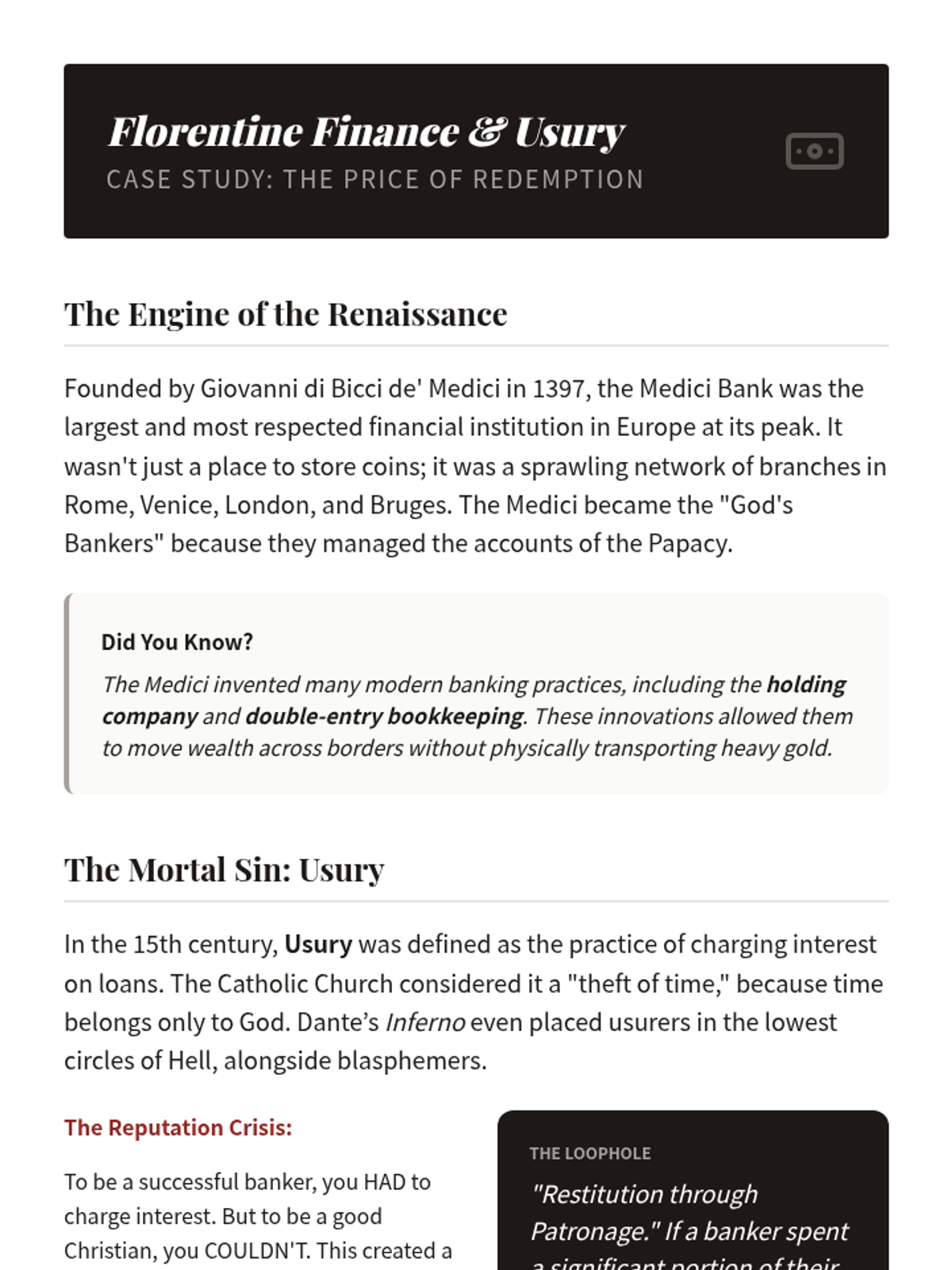
A student reference handout providing historical context on the Medici bank, the definition of usury, and the civic concept of Magnificenza.
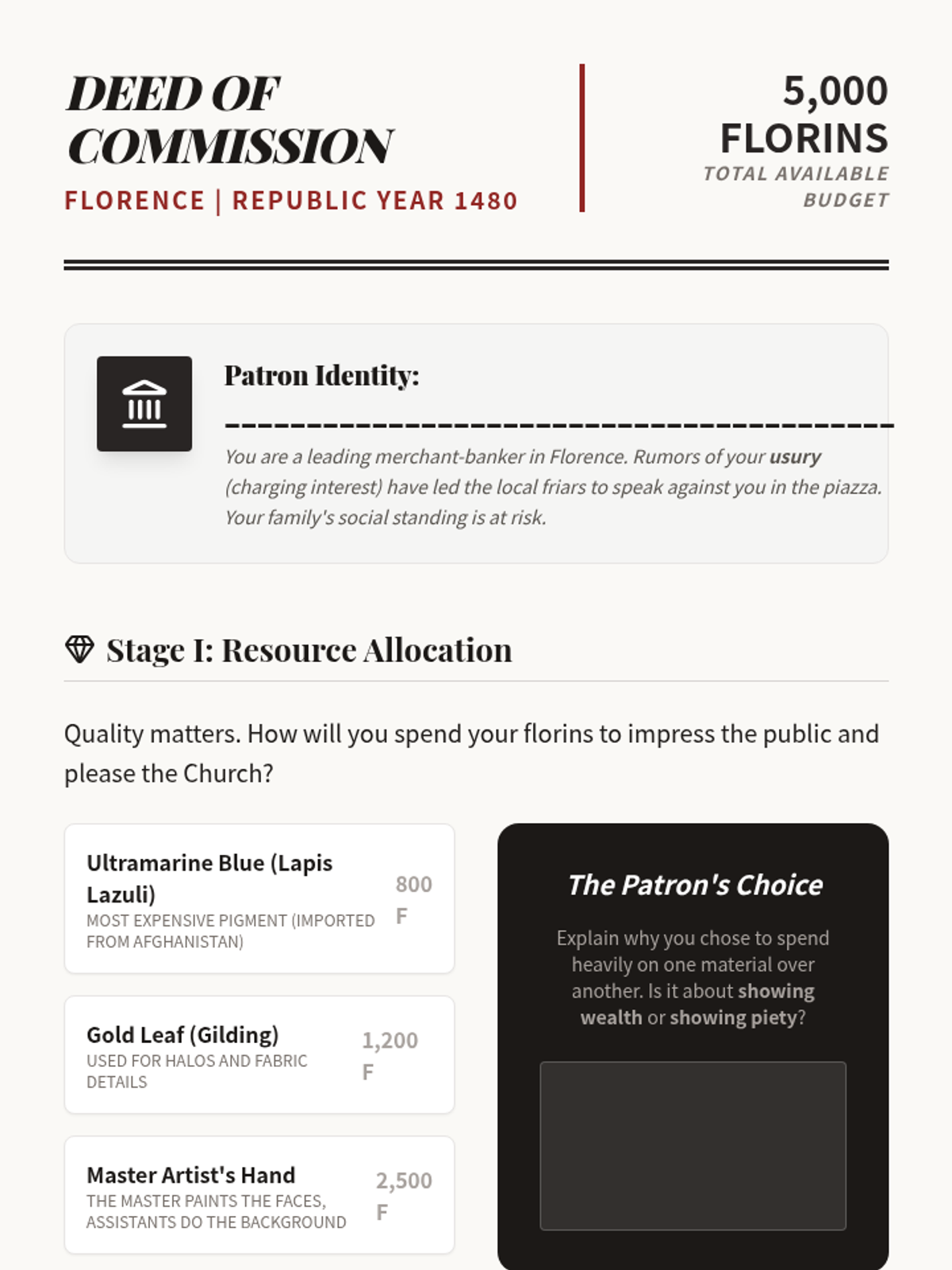
A student activity where students play the role of a Renaissance patron, allocating a budget and drafting instructions for a commissioned artwork to serve political and religious goals.
A slide deck for Lesson 4 exploring the Medici family, the sin of usury, and the use of art as political and religious propaganda.
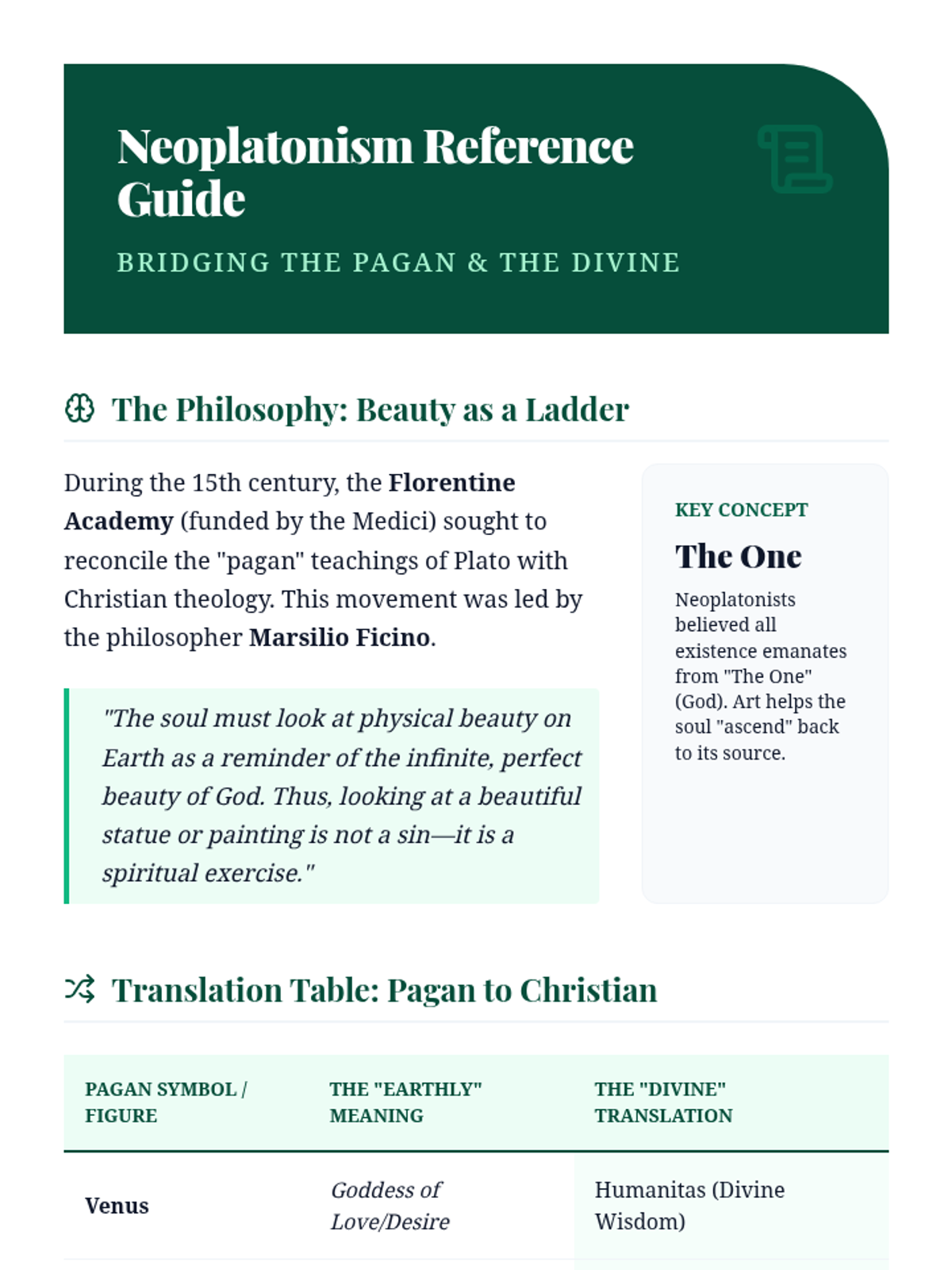
A student reference sheet explaining the principles of Neoplatonism and providing a symbol translation key for iconographic analysis.
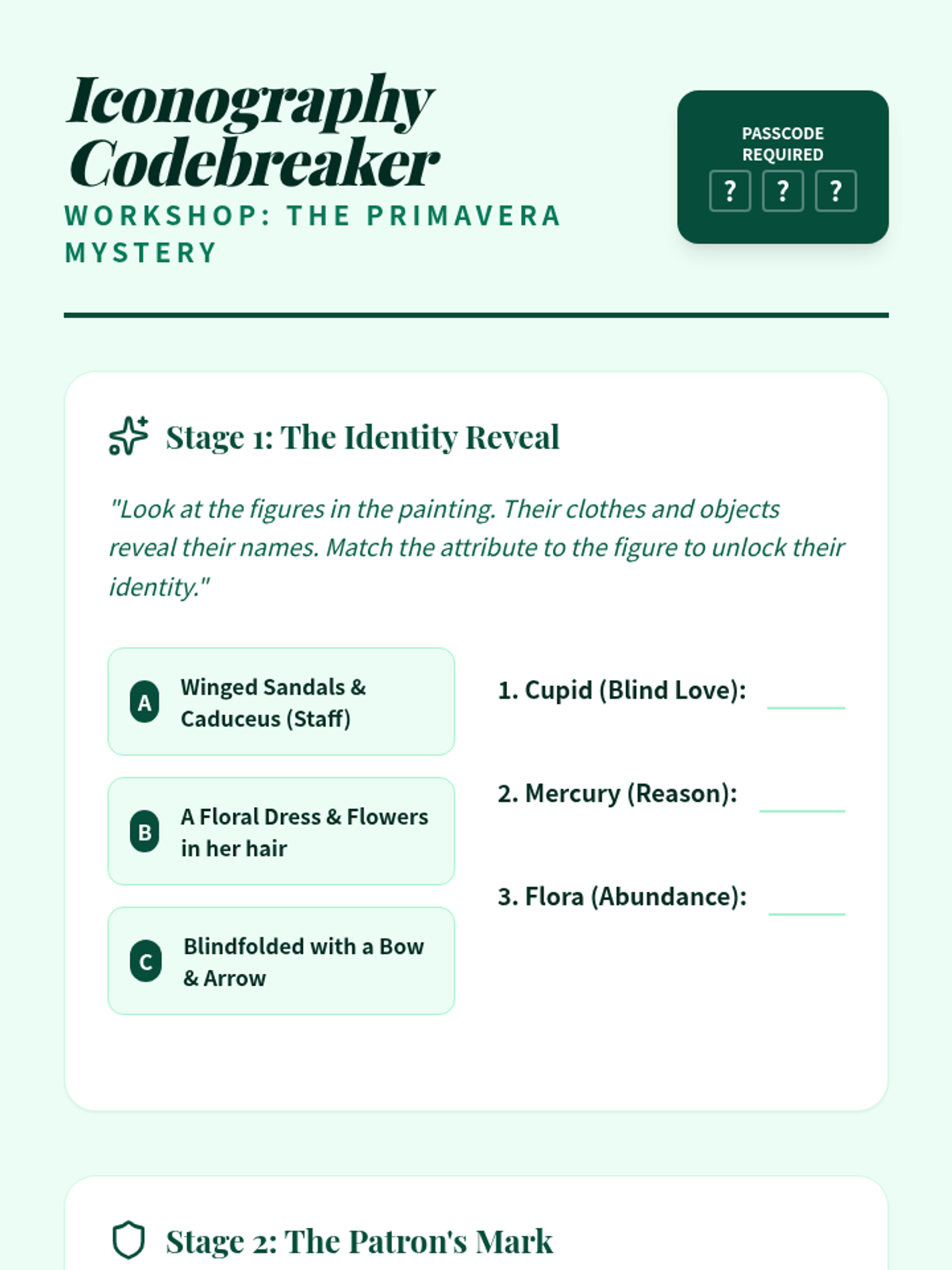
A student activity worksheet designed as a codebreaker challenge, where students decode symbols in Botticelli's 'Primavera' using iconographic principles.
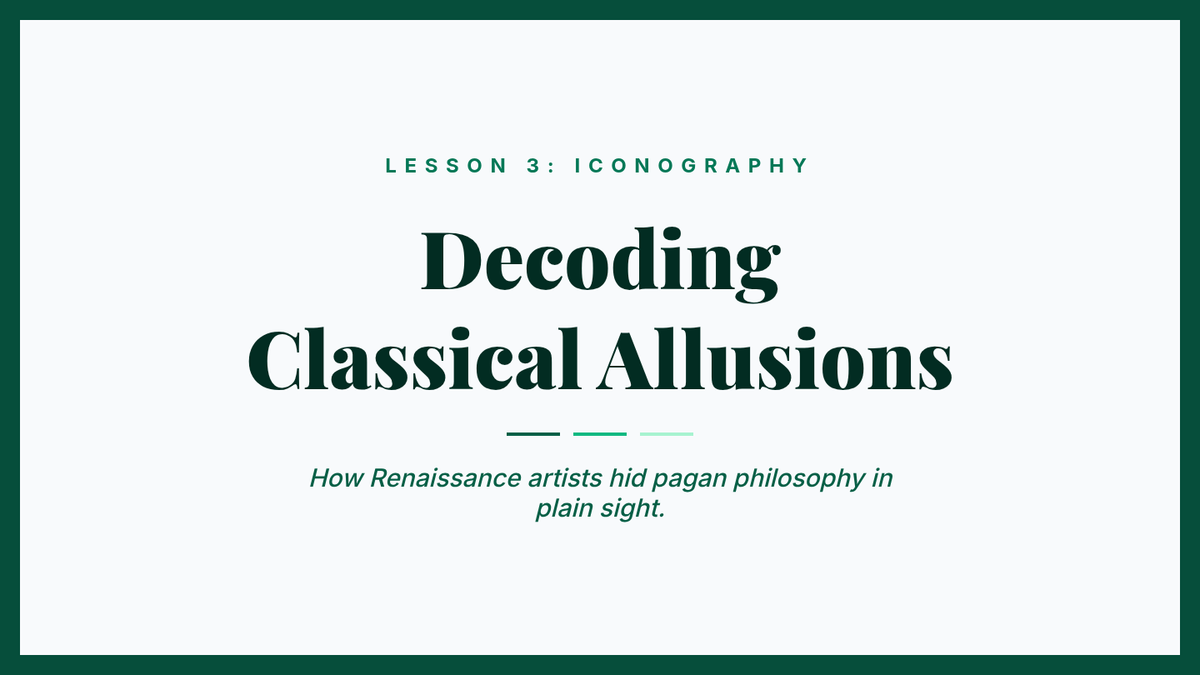
A slide deck for Lesson 3 introducing iconography, Neoplatonism, and a detailed breakdown of Botticelli's 'Primavera'.
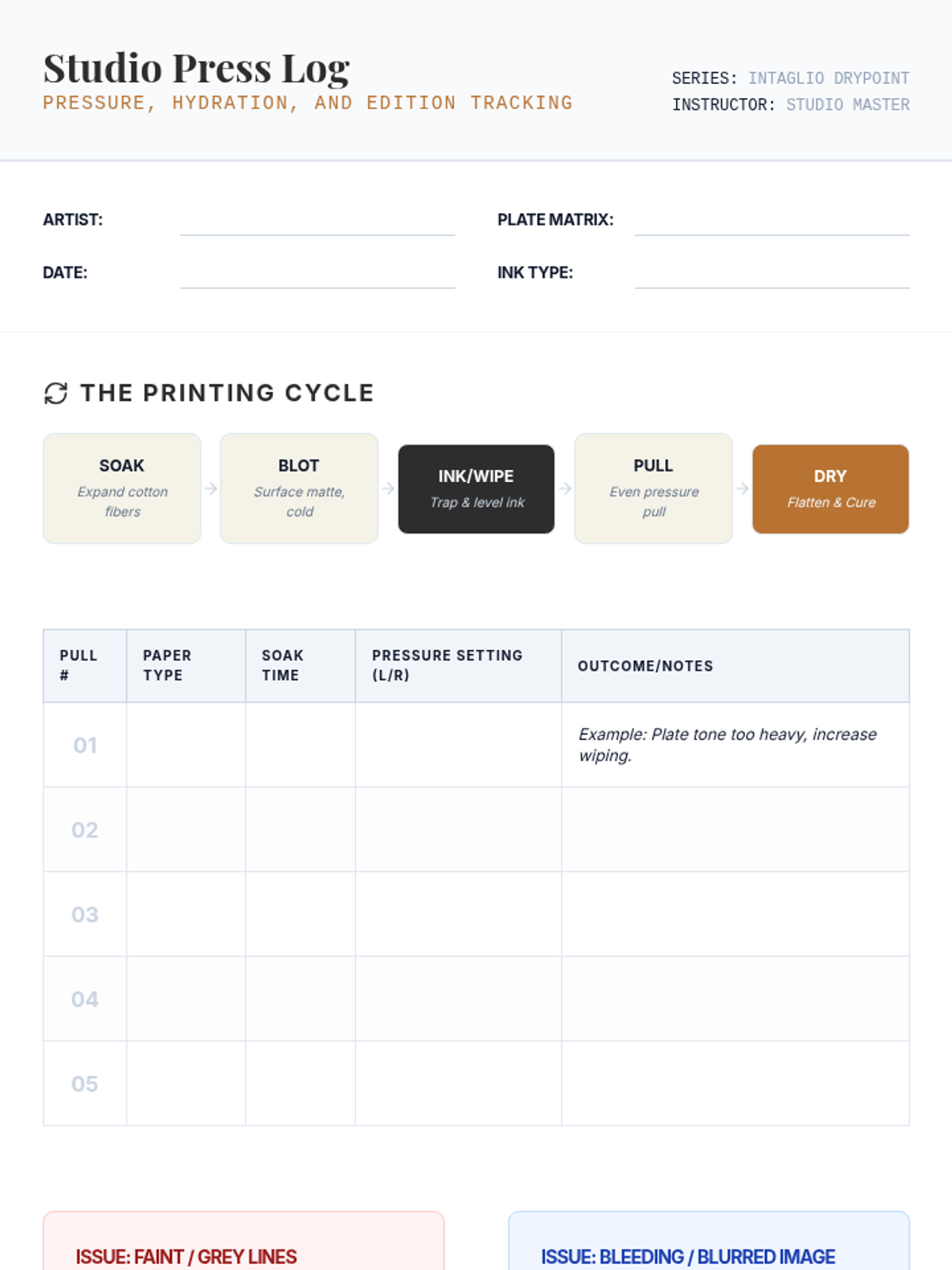
A technical press log and troubleshooting guide for students to track their printing variables (pressure, soak time, paper type) and refine their results.
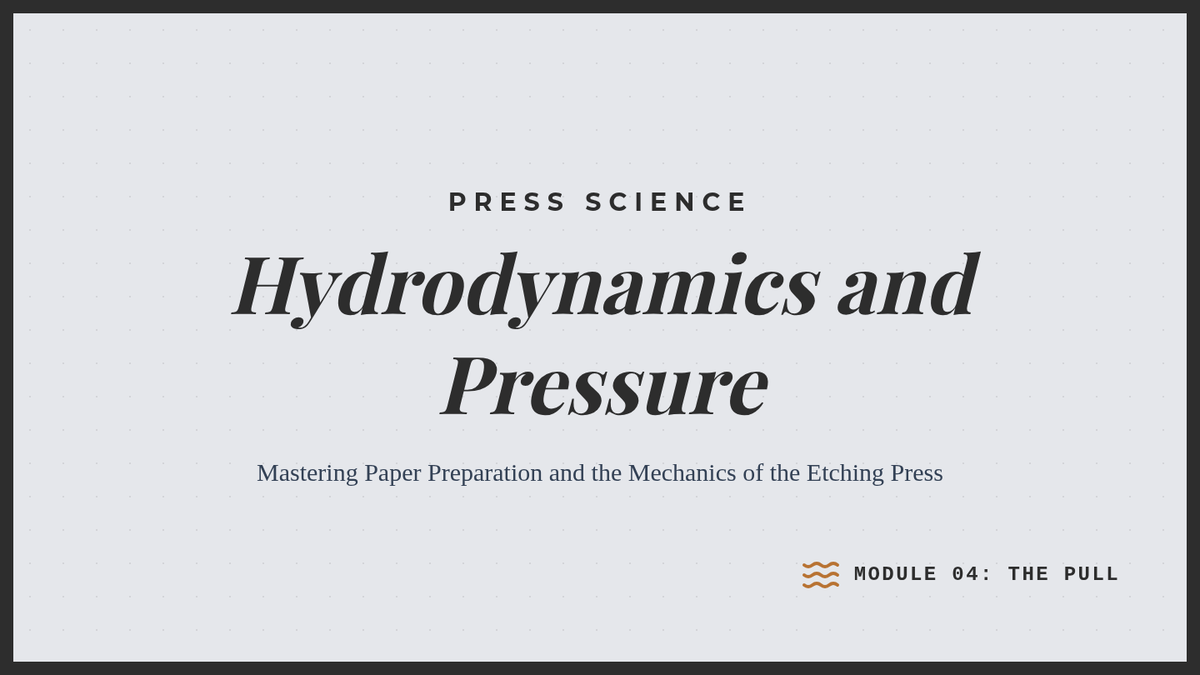
Slide deck for Lesson 4 detailing the physics of paper hydration, the blotting process, and press calibration for intaglio printing.
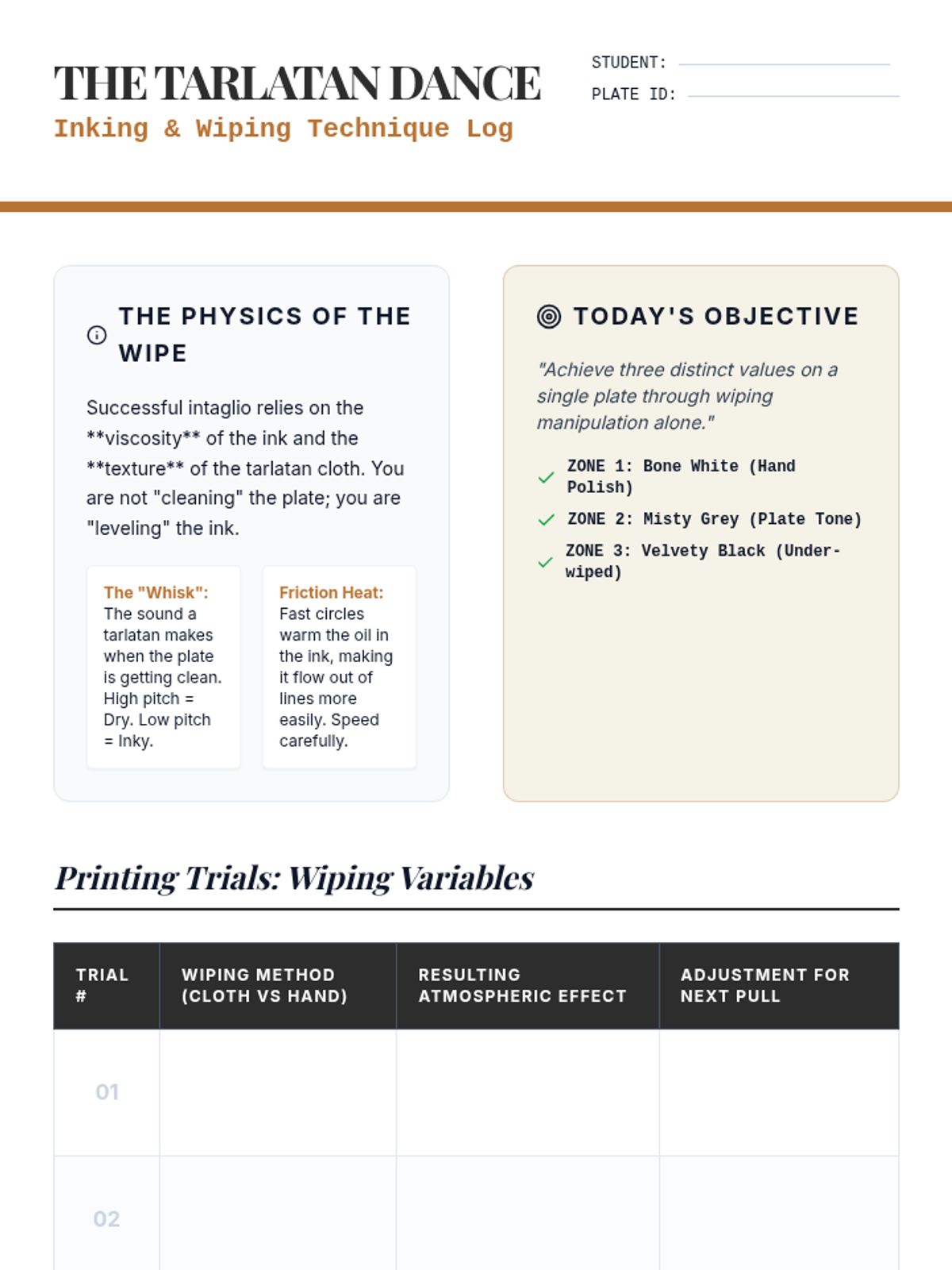
A studio activity sheet and technical log for 11th-grade students to track their wiping trials and experiment with atmospheric plate tone.
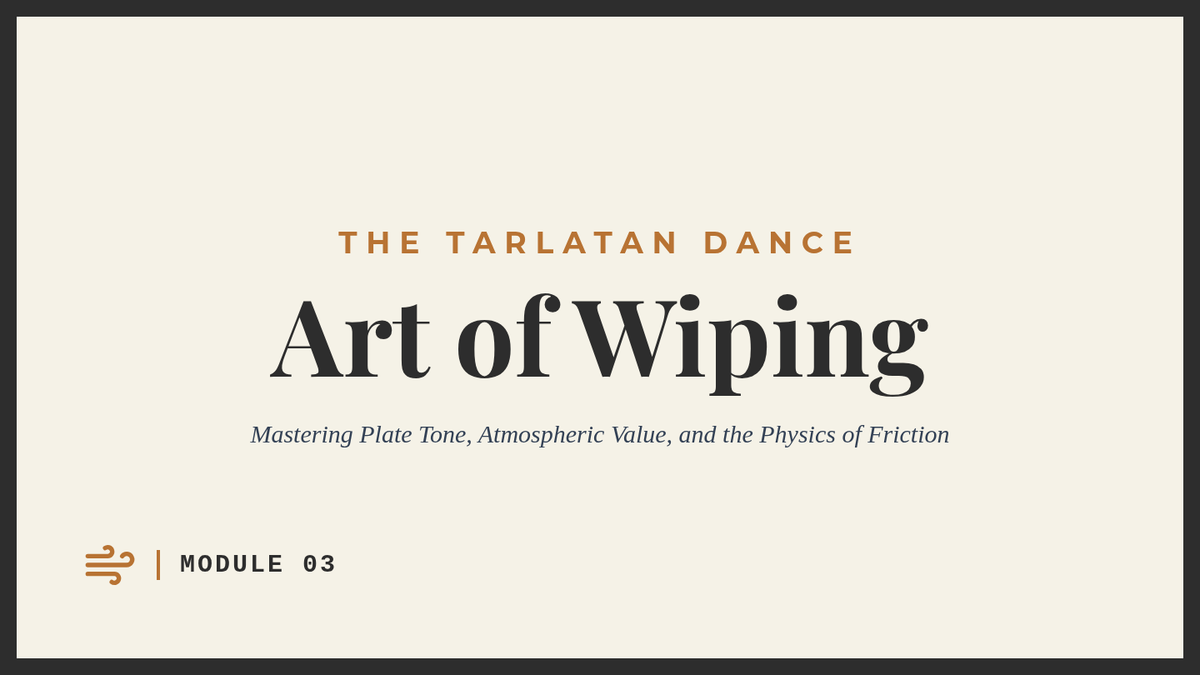
Visual presentation for Lesson 3 on the technical and artistic process of wiping an intaglio plate, focusing on tarlatan use and plate tone control.
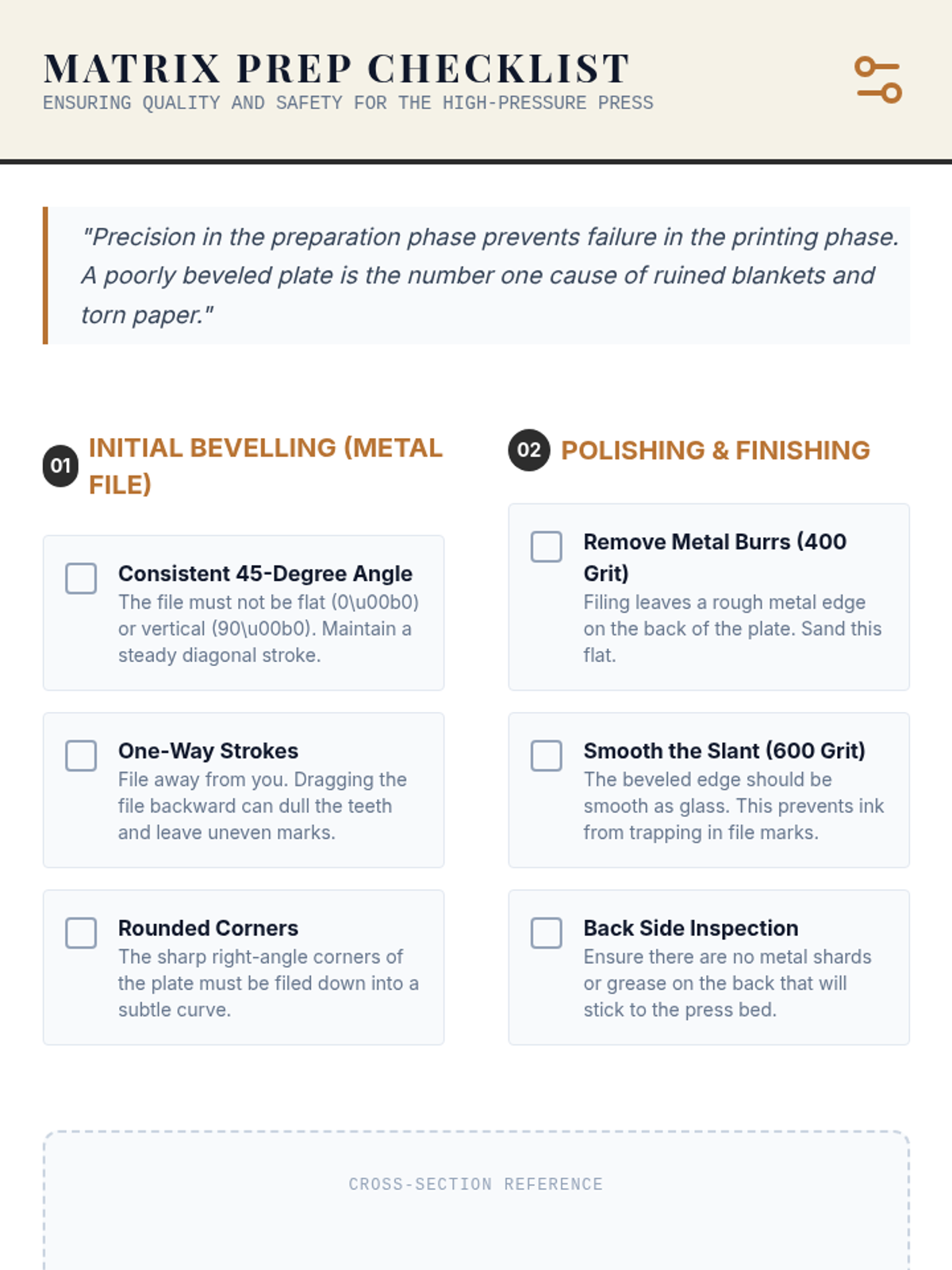
A professional plate preparation checklist for Lesson 2, including technical cross-section diagrams and a teacher sign-off area for press safety verification.
Technical slides for Lesson 2 focusing on the physics of beveling, press mechanics, and essential safety protocols for using an etching press.
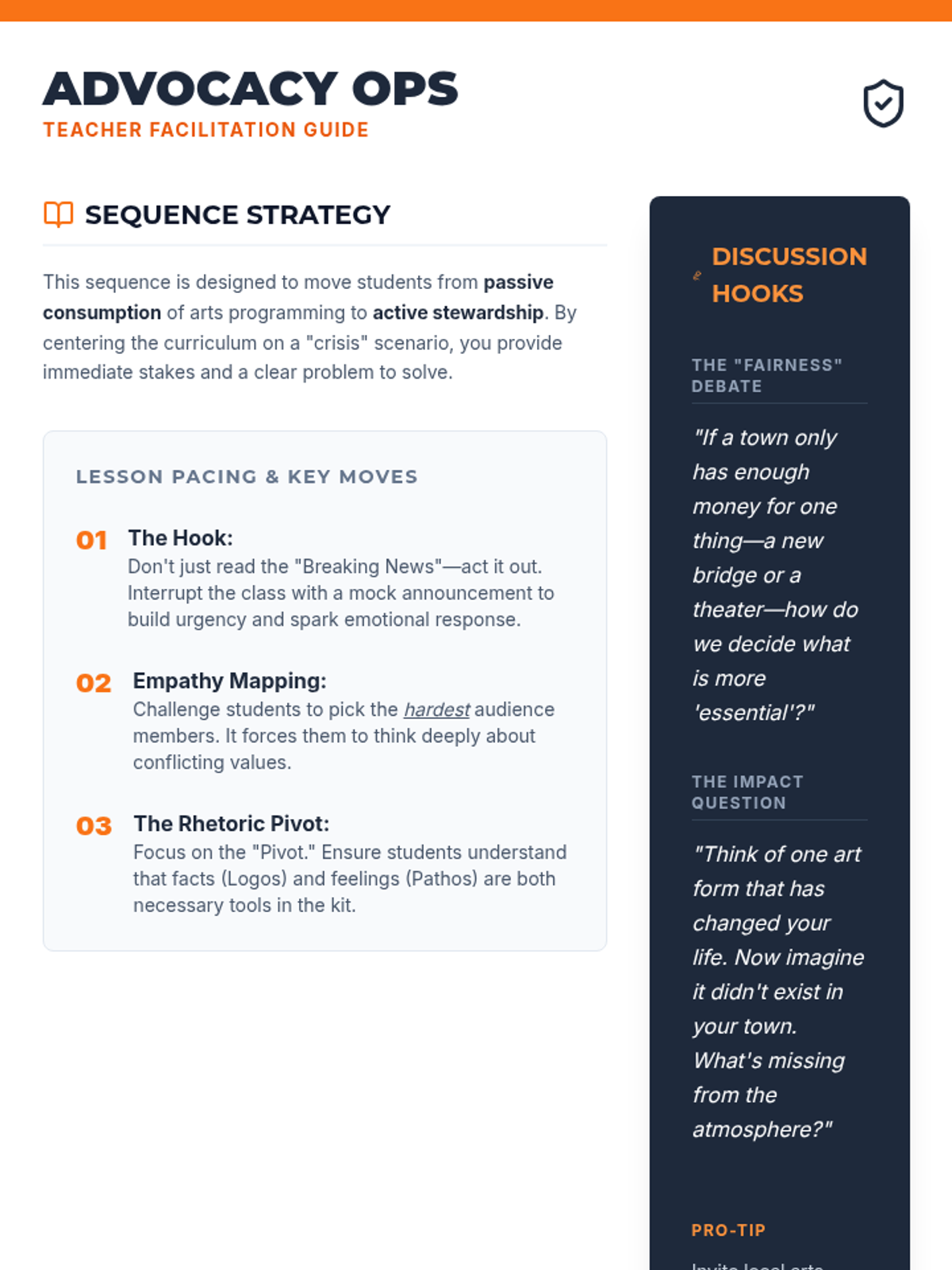
A comprehensive teacher guide for facilitating the 5-lesson advocacy sequence, updated with larger fonts and clearer sections.
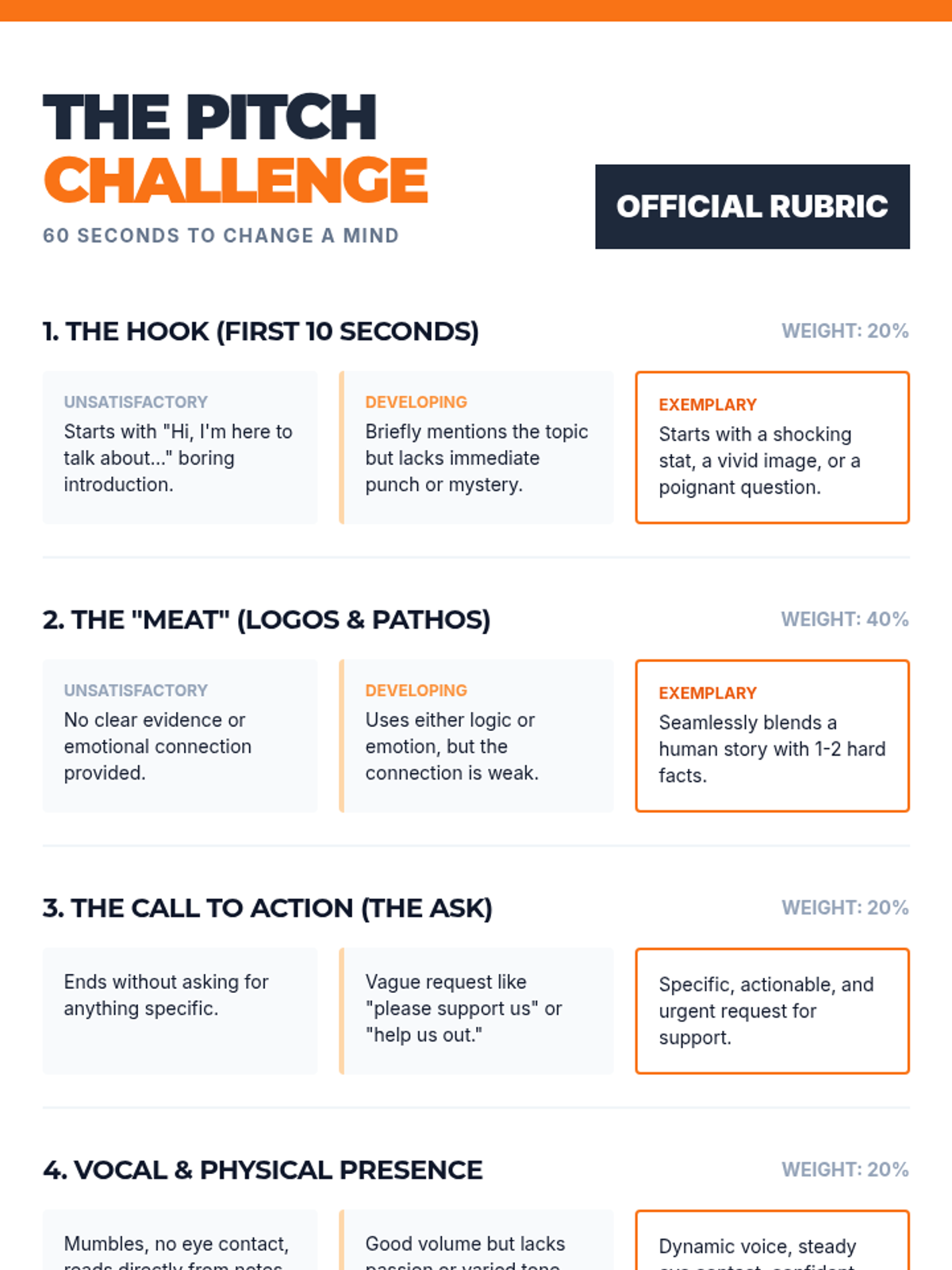
A 2-page rubric and reflection form for the final "Elevator Pitch" presentation, including peer feedback sections. Updated for better font legibility.
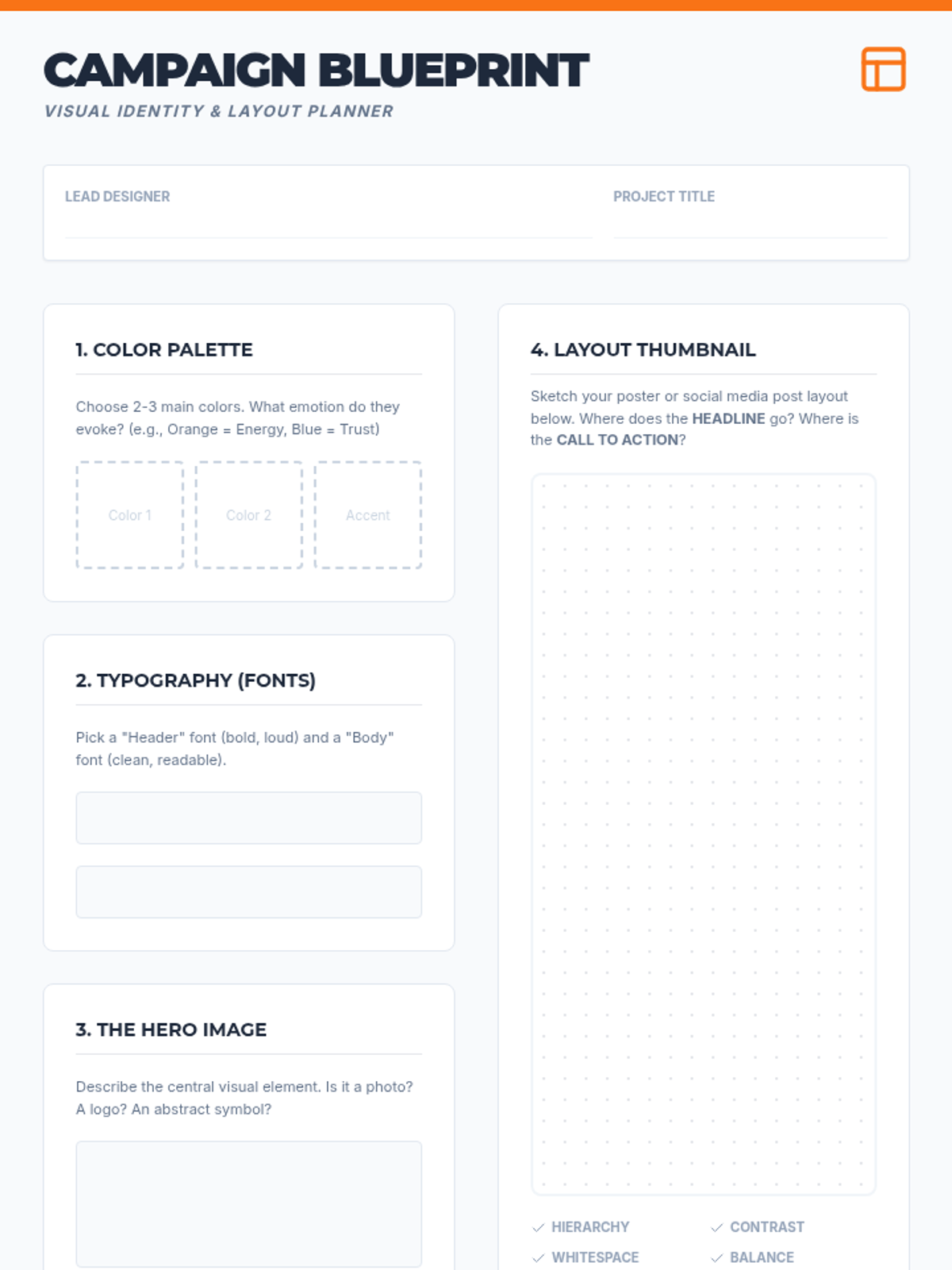
A campaign blueprint worksheet for planning visual elements like color, fonts, and layout for advocacy materials.
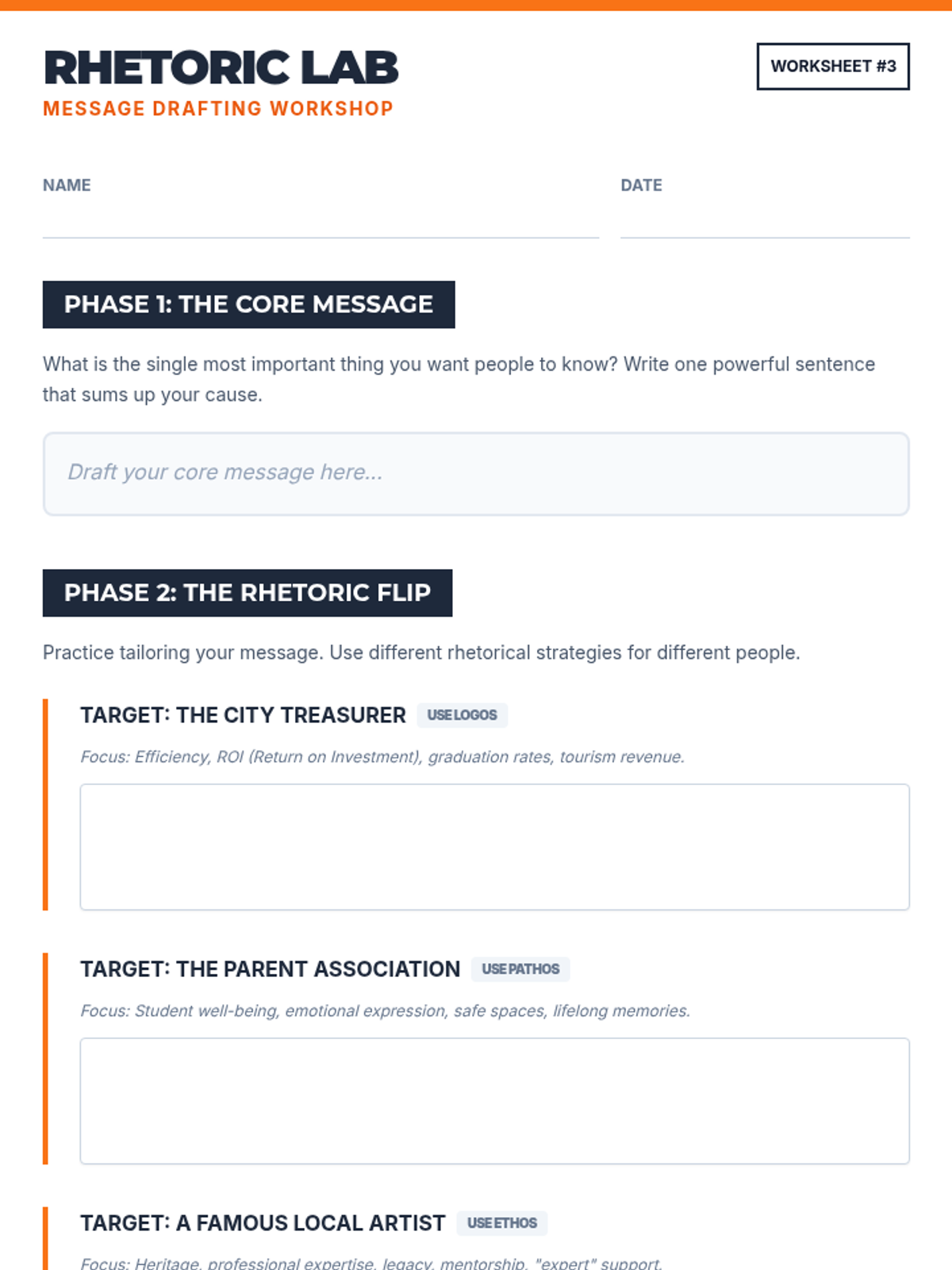
A drafting worksheet where students practice writing for different audiences using Logos, Pathos, and Ethos.
Slides for Lesson 3 focusing on rhetorical strategies (Logos, Pathos, Ethos) applied specifically to arts advocacy messaging.
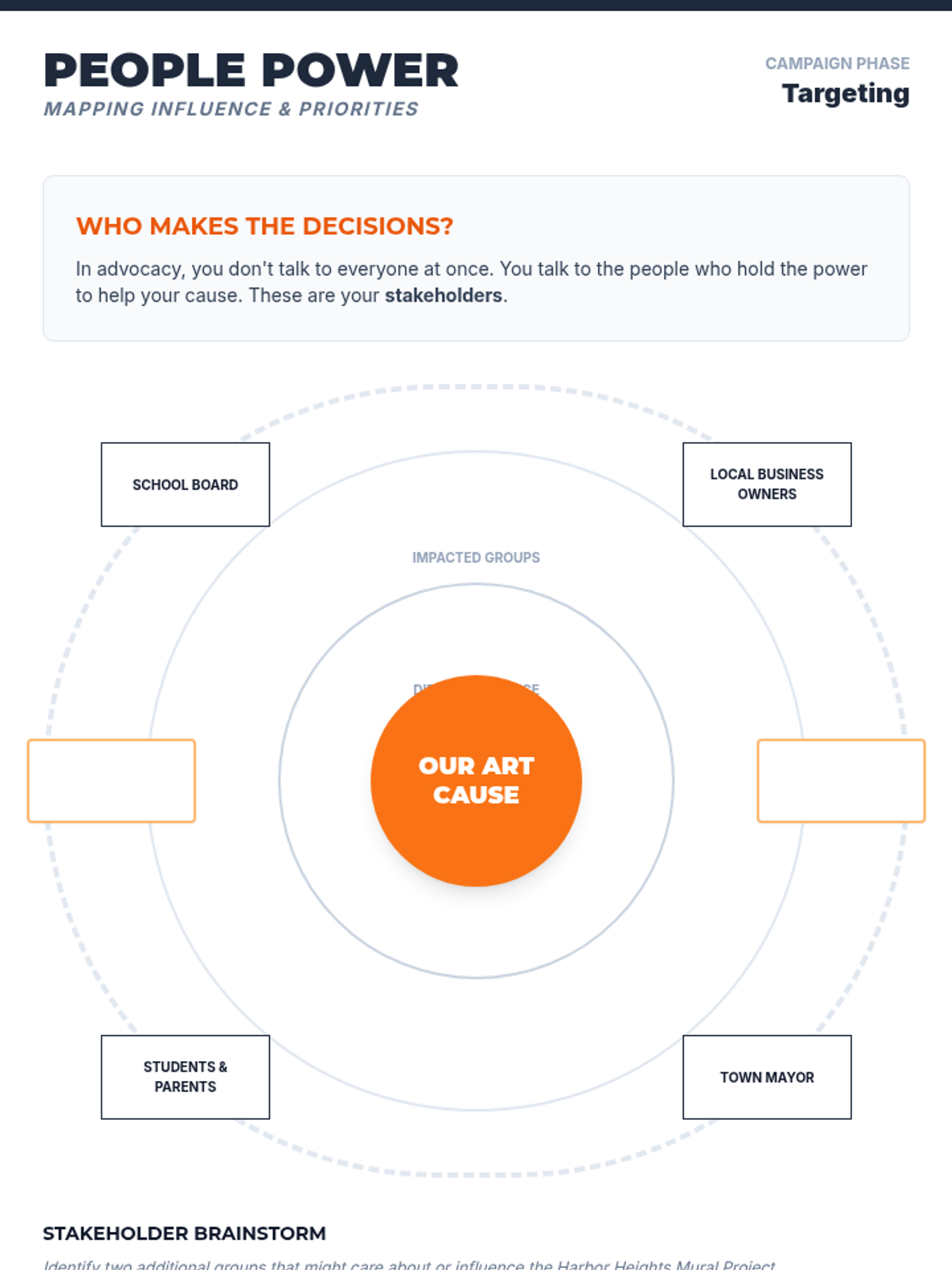
A 2-page student handout for stakeholder mapping and empathy mapping, helping students understand different audience perspectives.
Instructional slides for Lesson 1, introducing the concept of arts advocacy and the "Needs Matrix" through a crisis scenario. Updated for improved readability.
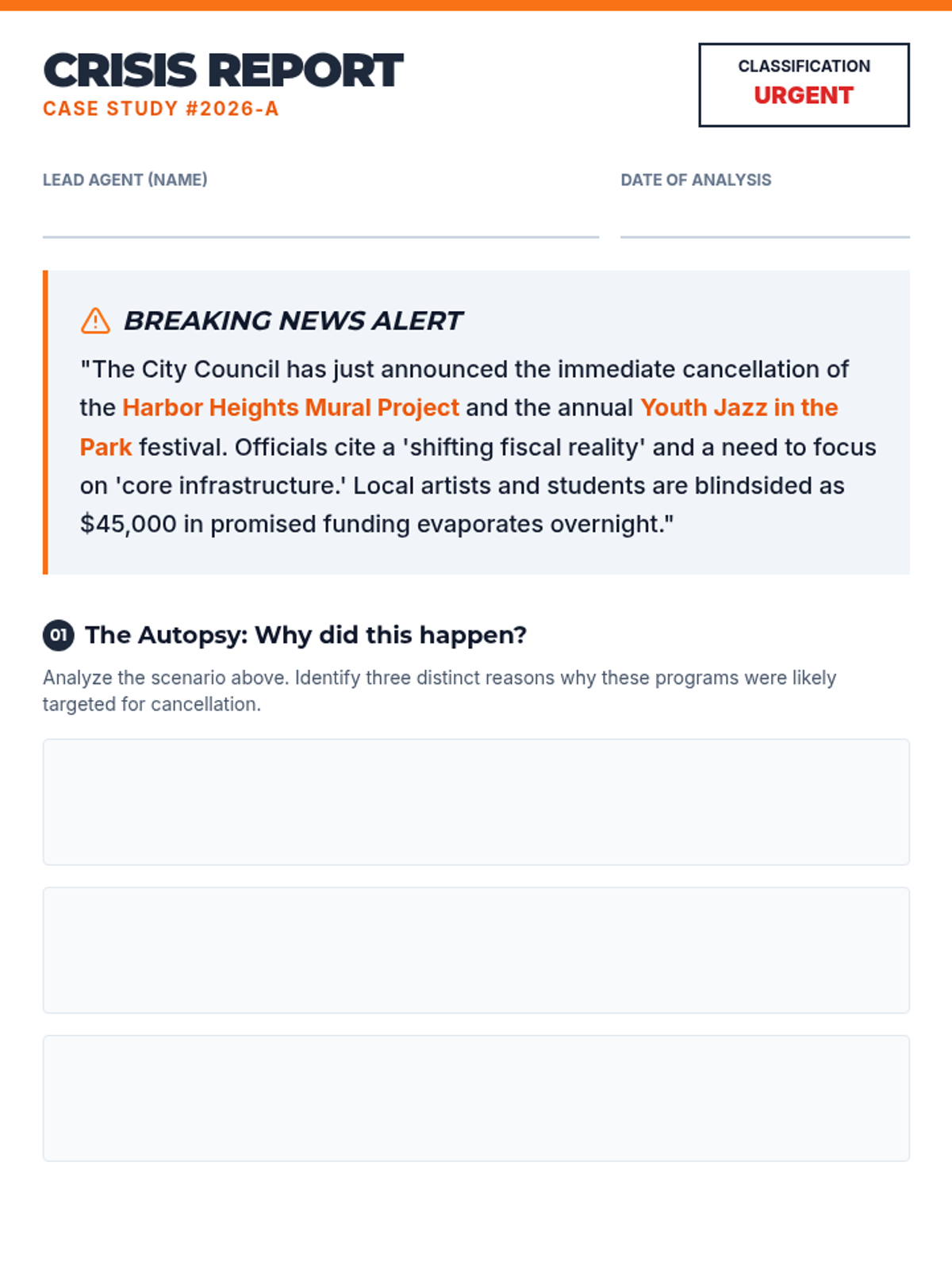
A 2-page student worksheet that uses a "Crisis Report" theme to analyze why arts organizations fail and what specific needs they have.
A slide deck introducing hybrid layering techniques, focusing on the combination of digital backgrounds with analog print overlays.
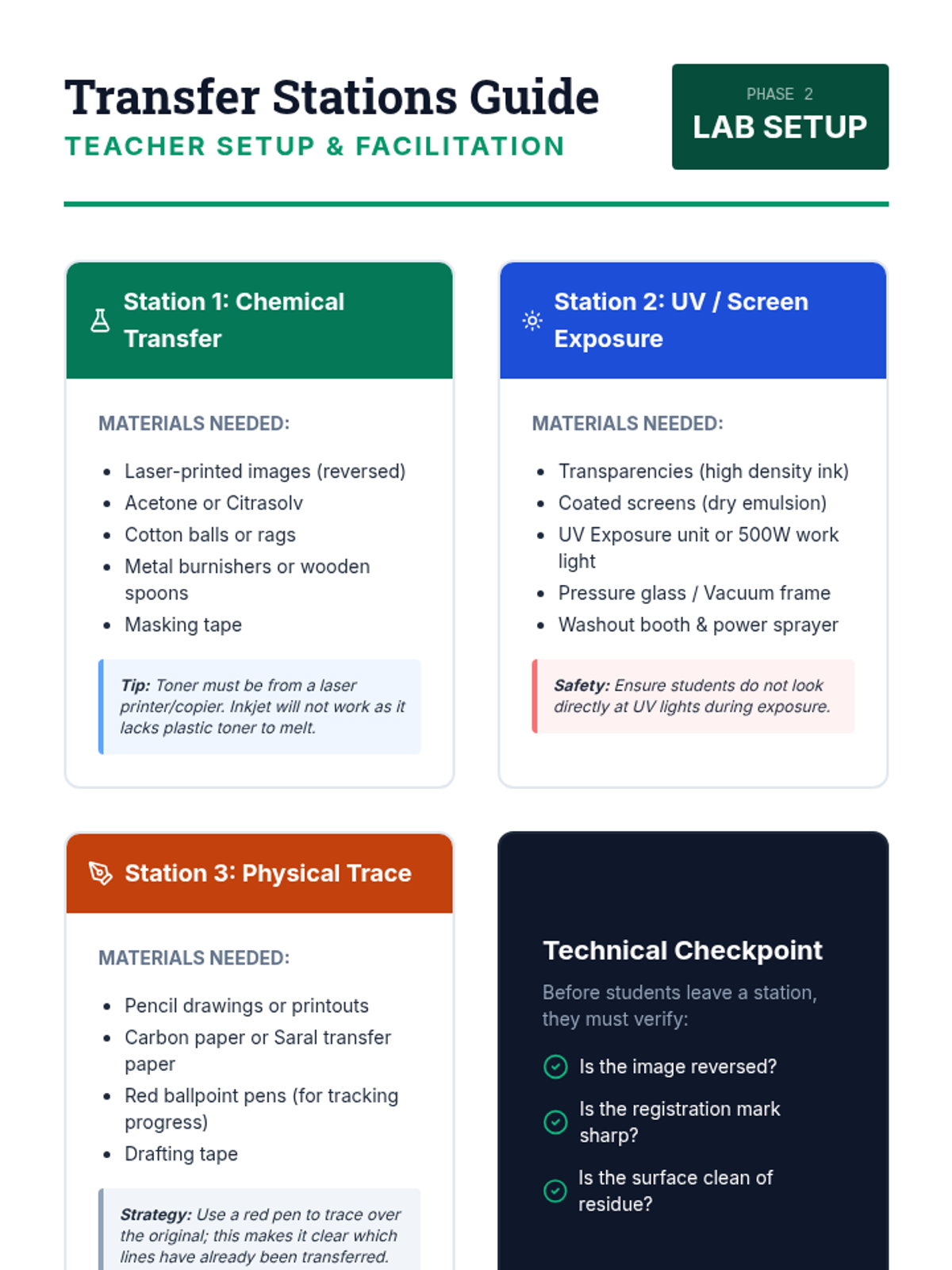
A teacher resource for setting up and facilitating different image transfer stations in the printmaking lab.
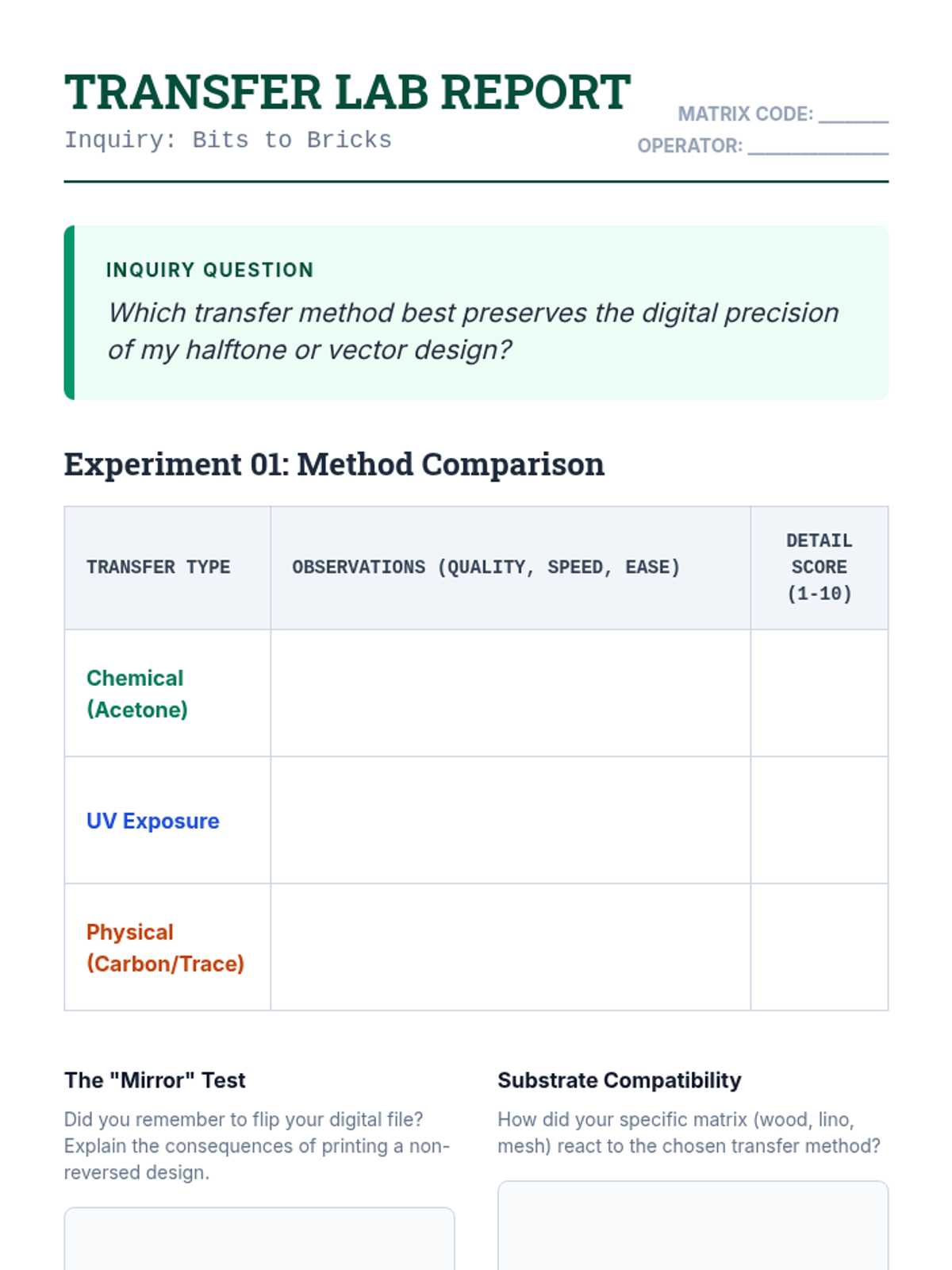
A student lab report for investigating and comparing different digital-to-analog transfer methods for printmaking.
A slide deck introducing transfer techniques for moving digital designs onto physical print matrices, covering chemical, UV, and physical methods.
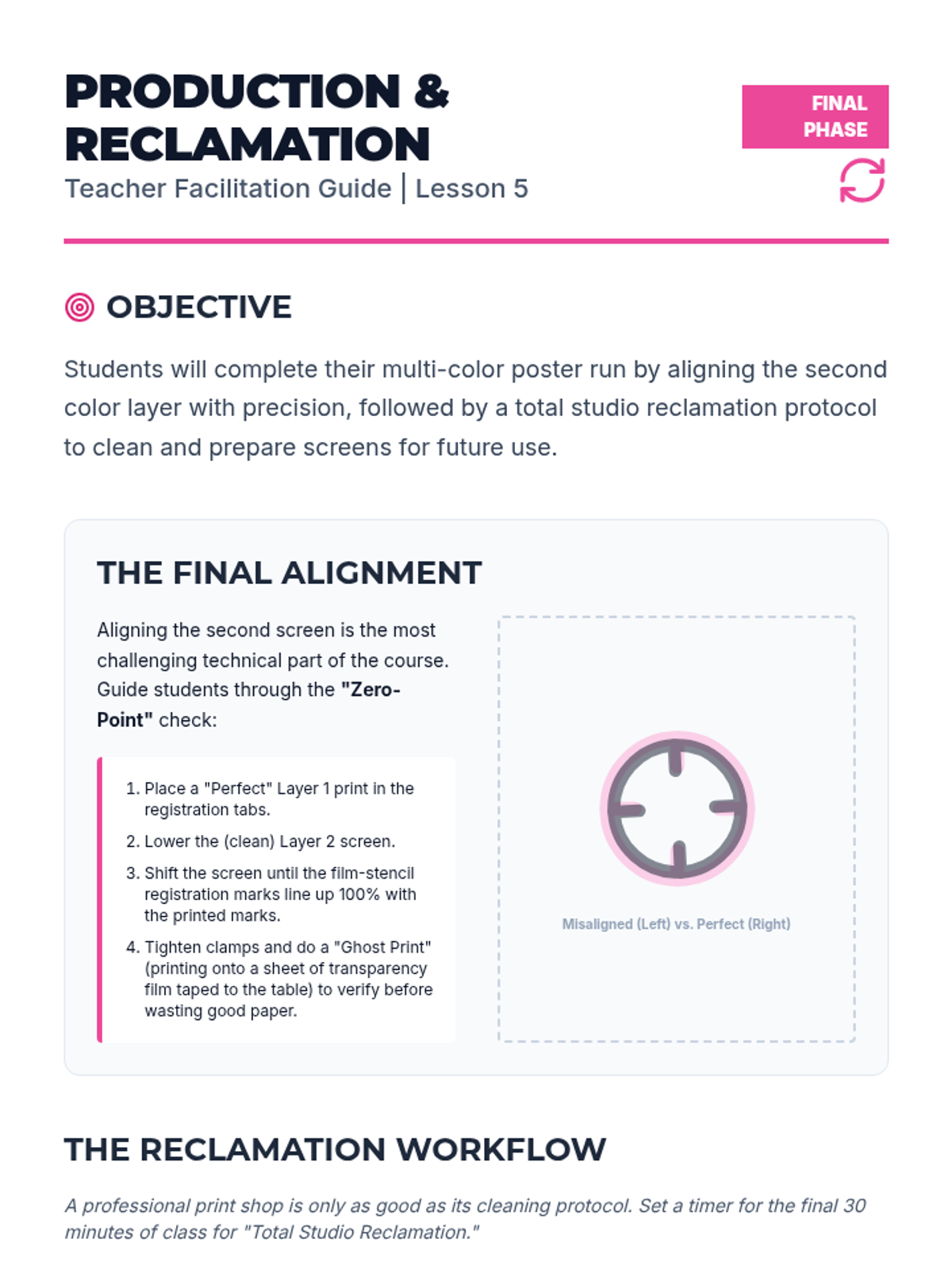
Teacher facilitation guide for Lesson 5, covering post-production critique, screen reclaiming protocols, and commercial viability discussion.
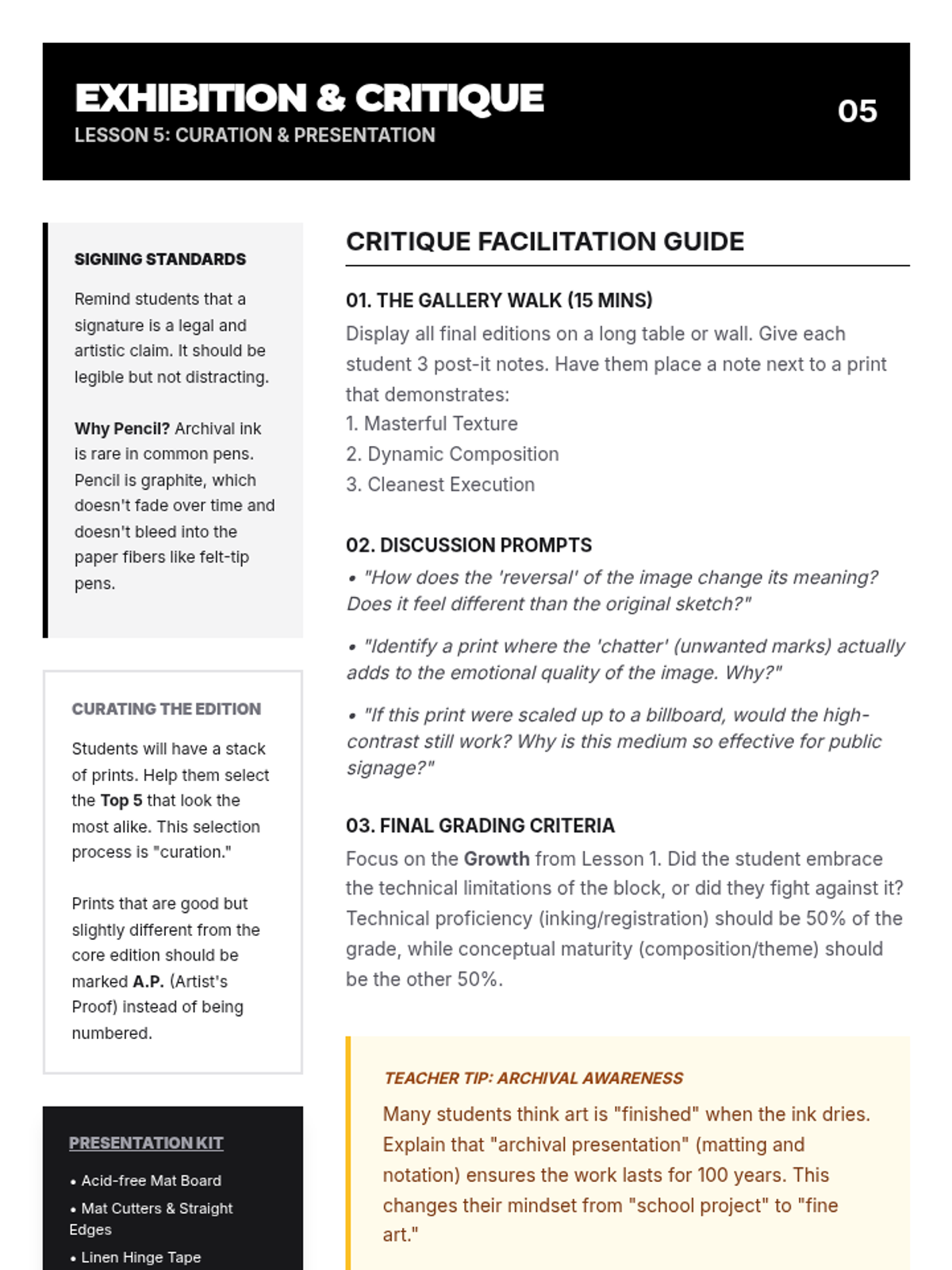
Teacher's guide for Lesson 5, focusing on final curation, exhibition setup, archival presentation standards, and facilitating a professional-level art critique.
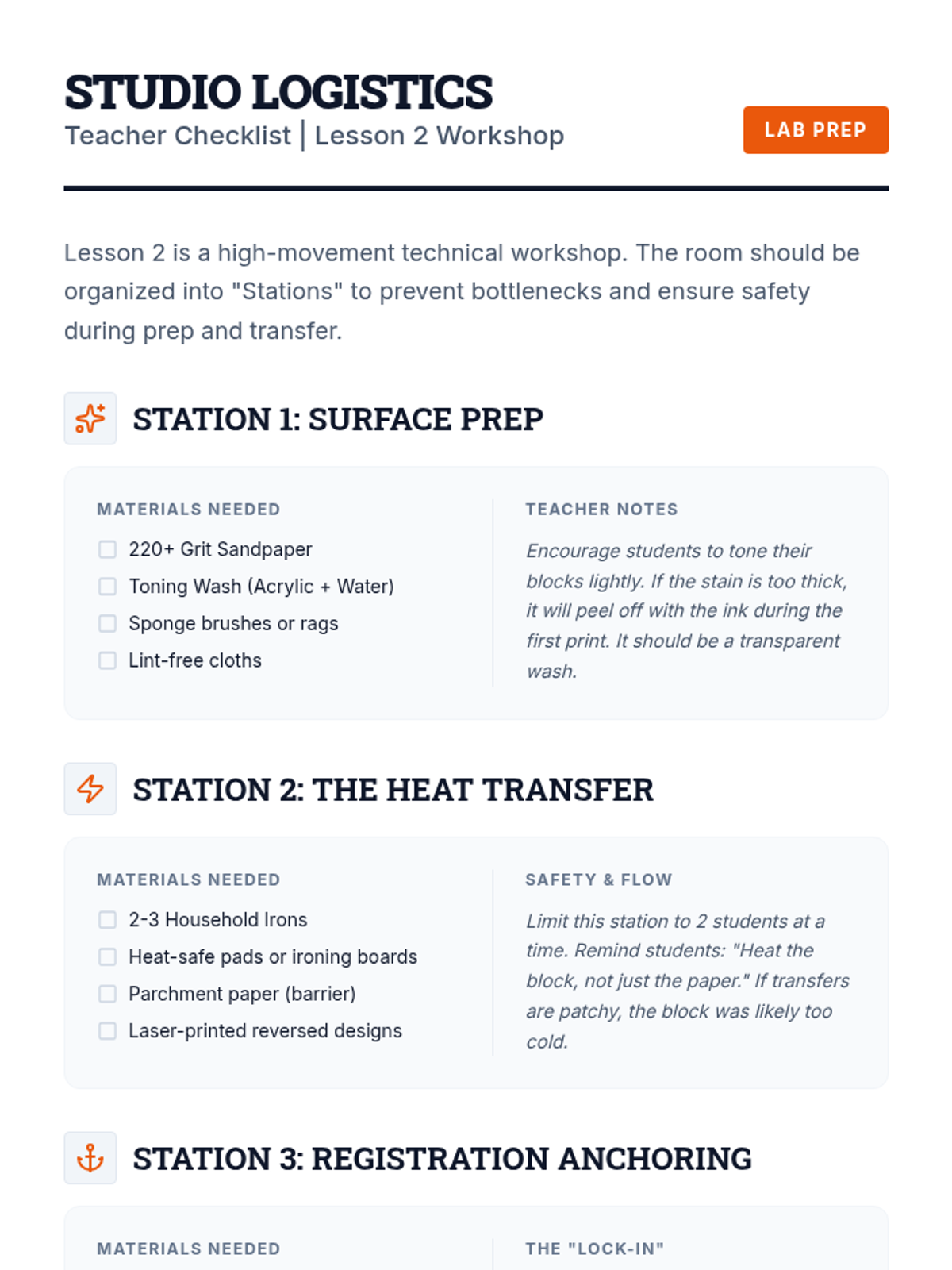
A guide for preparing the room for the technical workshop, including equipment needs for surface prep, heat transfer, and registration anchoring.
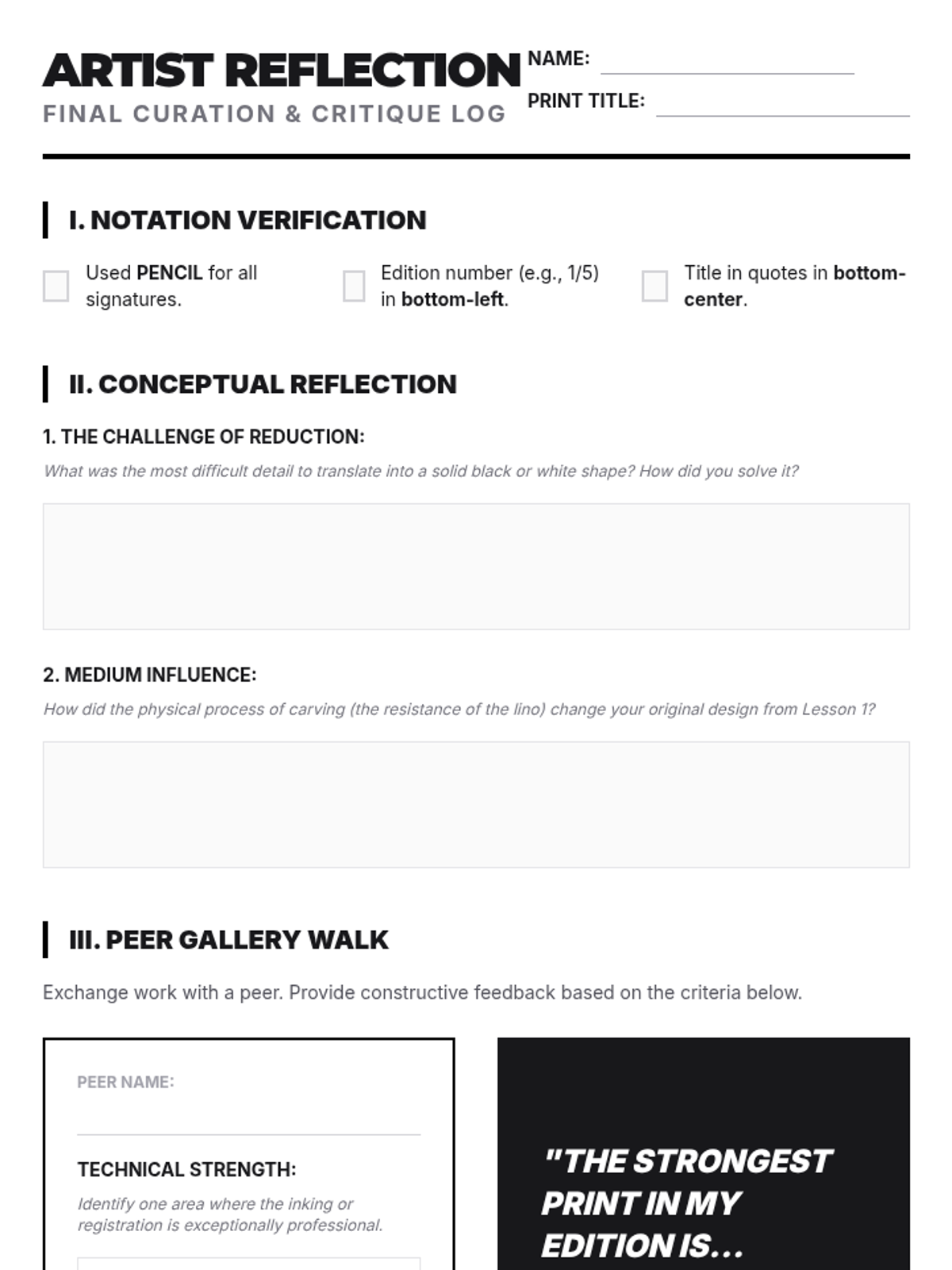
A student reflection and critique worksheet for Lesson 5, guiding students through professional notation checks, conceptual reflection on the printmaking process, and structured peer feedback during a gallery walk.
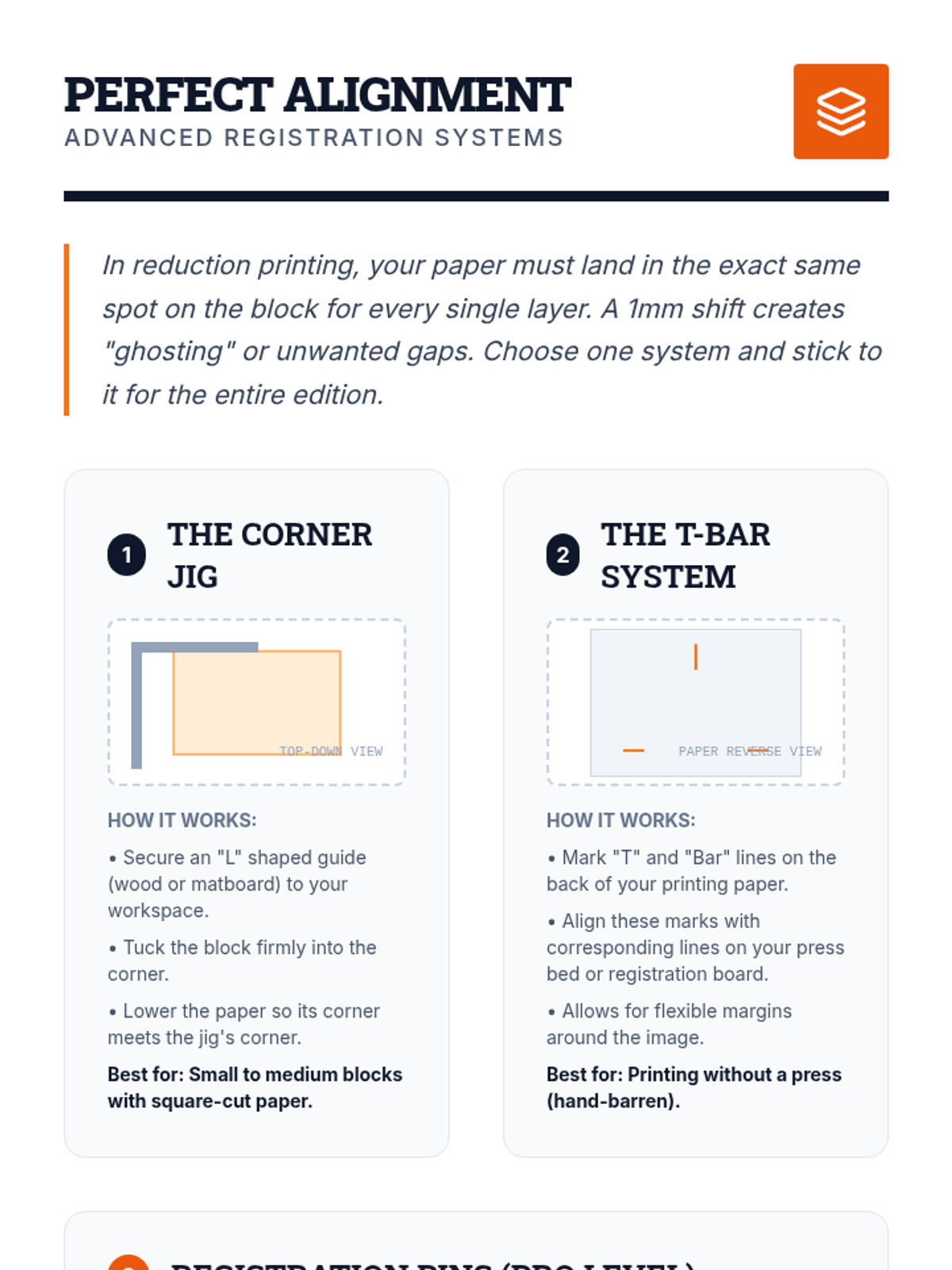
Technical reference sheet for students covering various registration methods (Corner Jig, T-Bar, and Pins) to ensure perfect alignment across multiple reduction print layers.
Slide deck for Lesson 5 covering professional print notation (signing, numbering, titling), archival matting and presentation techniques, and a framework for formal art critique.
Technical slides covering block preparation (sanding/toning), the concept of image reversal, and various transfer and registration methods essential for multi-layered printing.
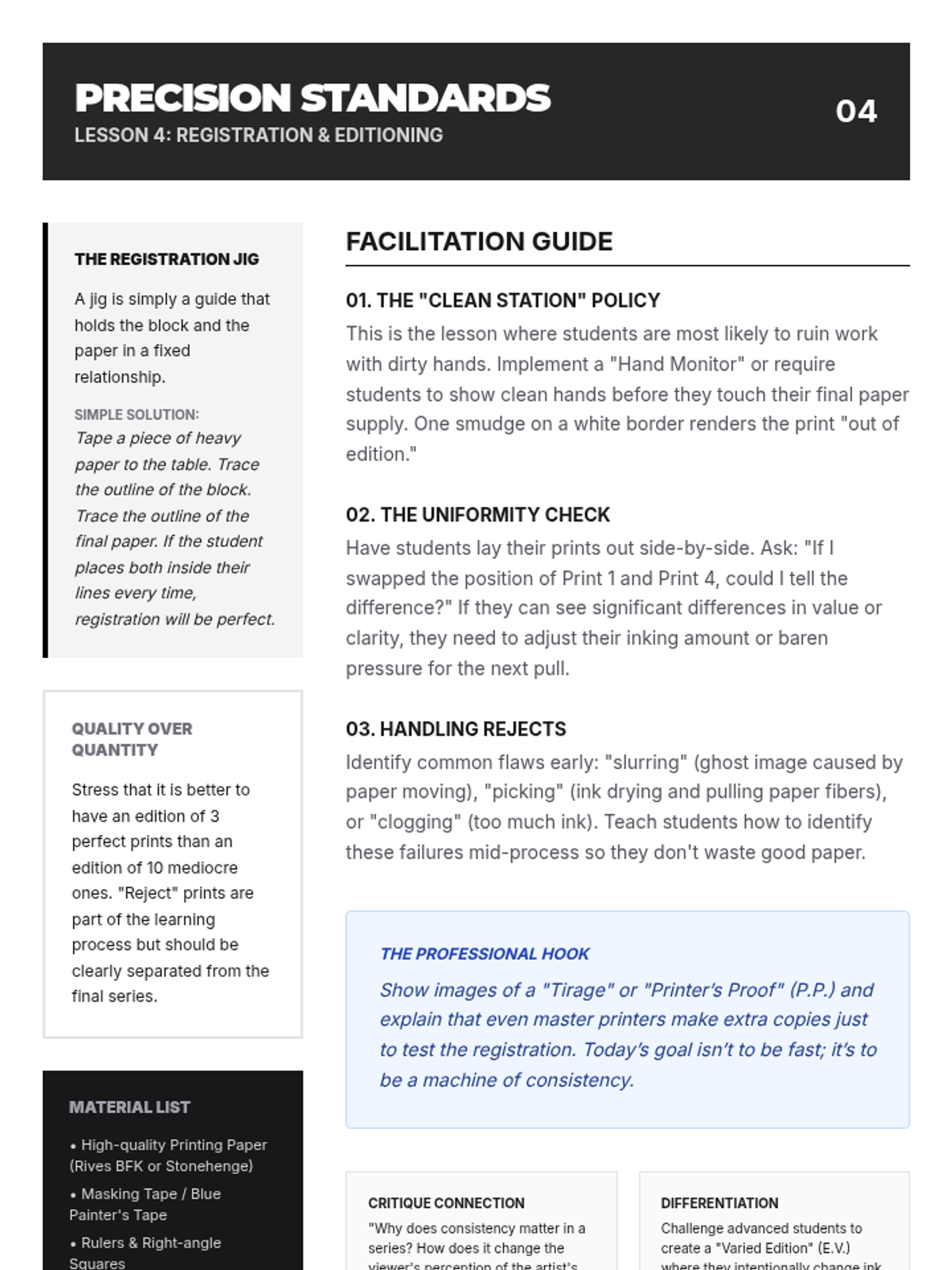
Teacher's guide for Lesson 4, focusing on professional editioning standards, clean station policies, and strategies for ensuring uniformity across a print series.
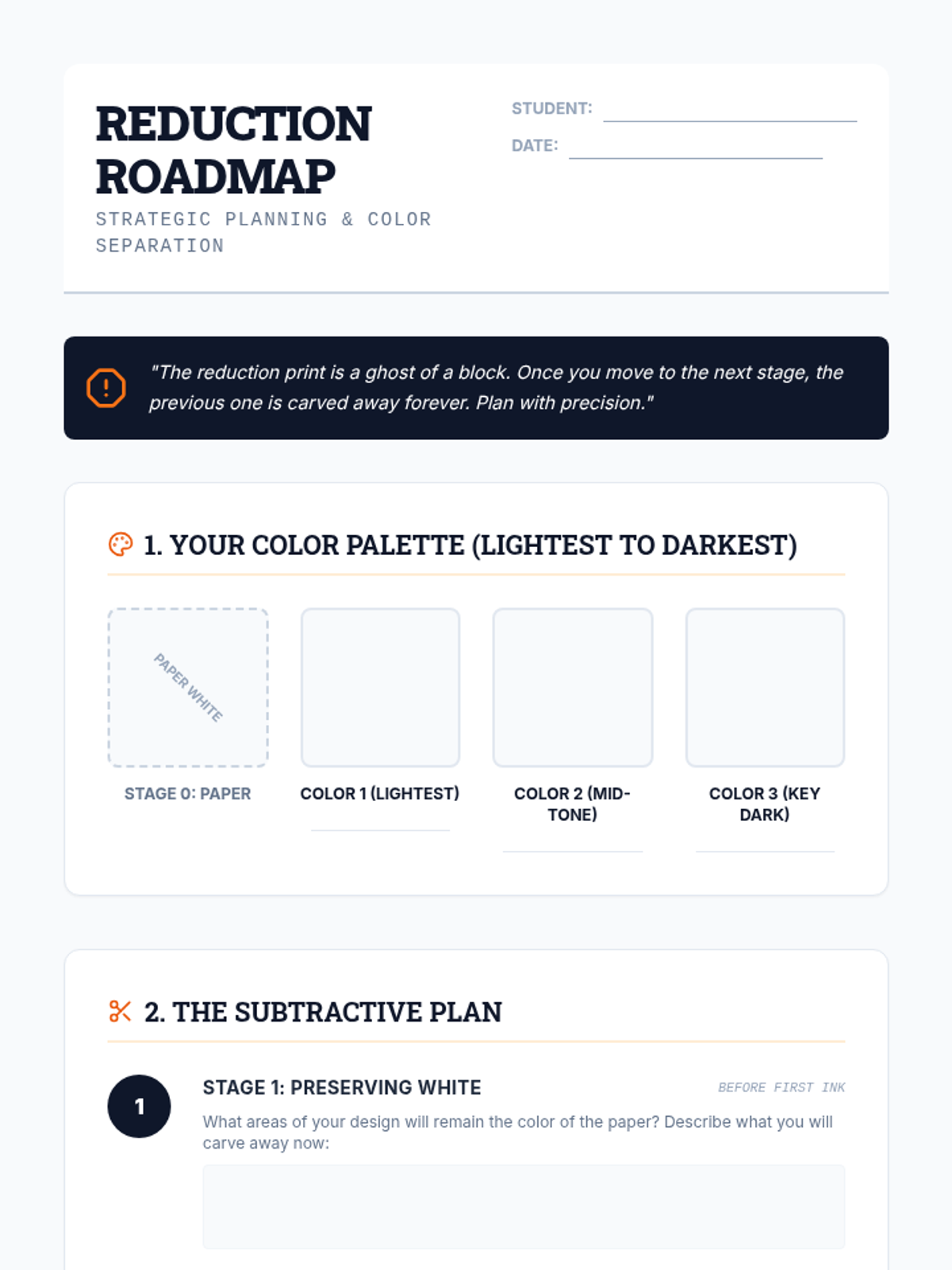
A strategic planning worksheet for students to map out their color separation and carving stages for a multi-colored reduction print.
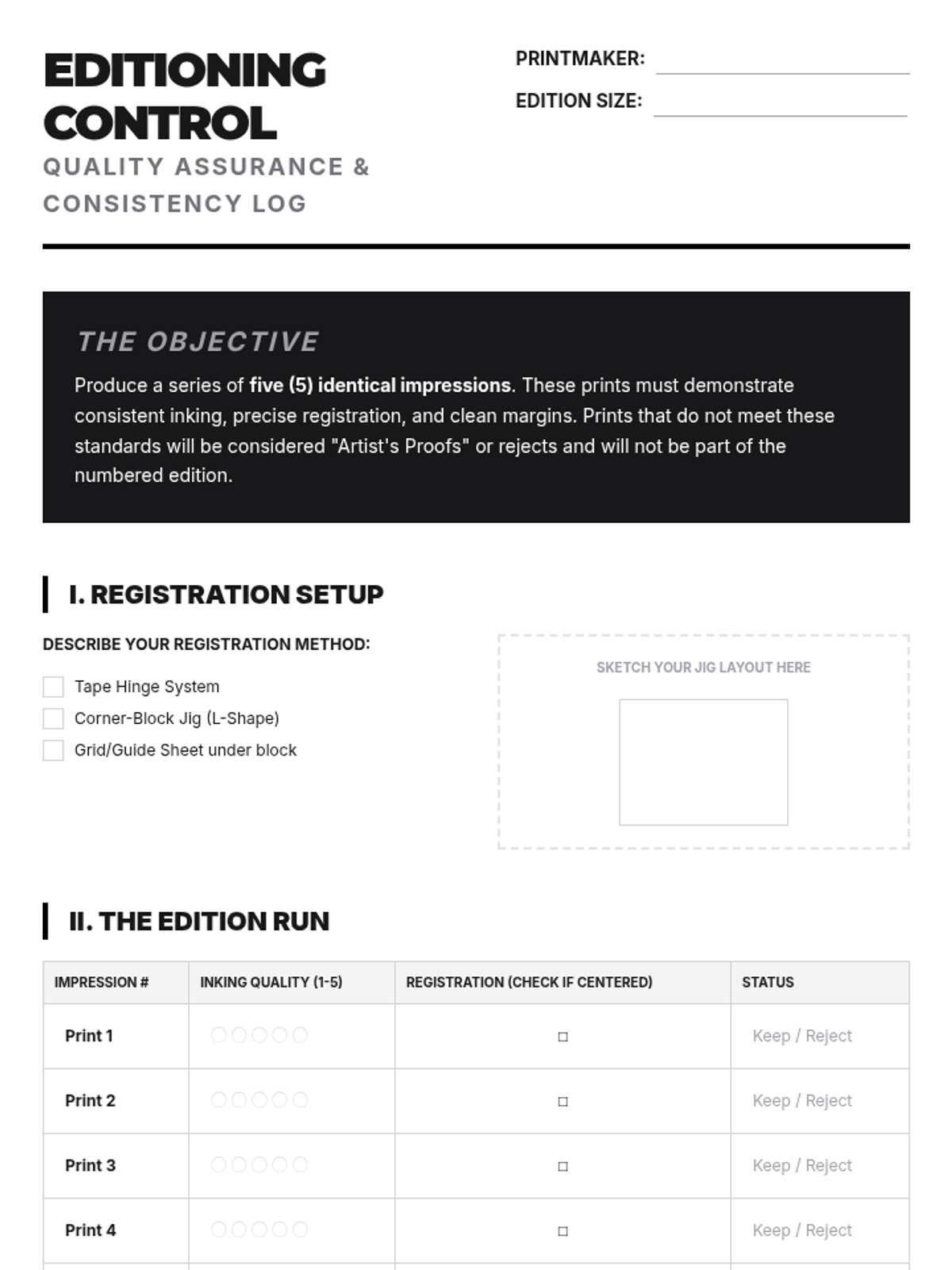
A student editioning log for Lesson 4, facilitating the tracking of multiple print impressions to ensure consistency in inking and registration across a limited edition series.
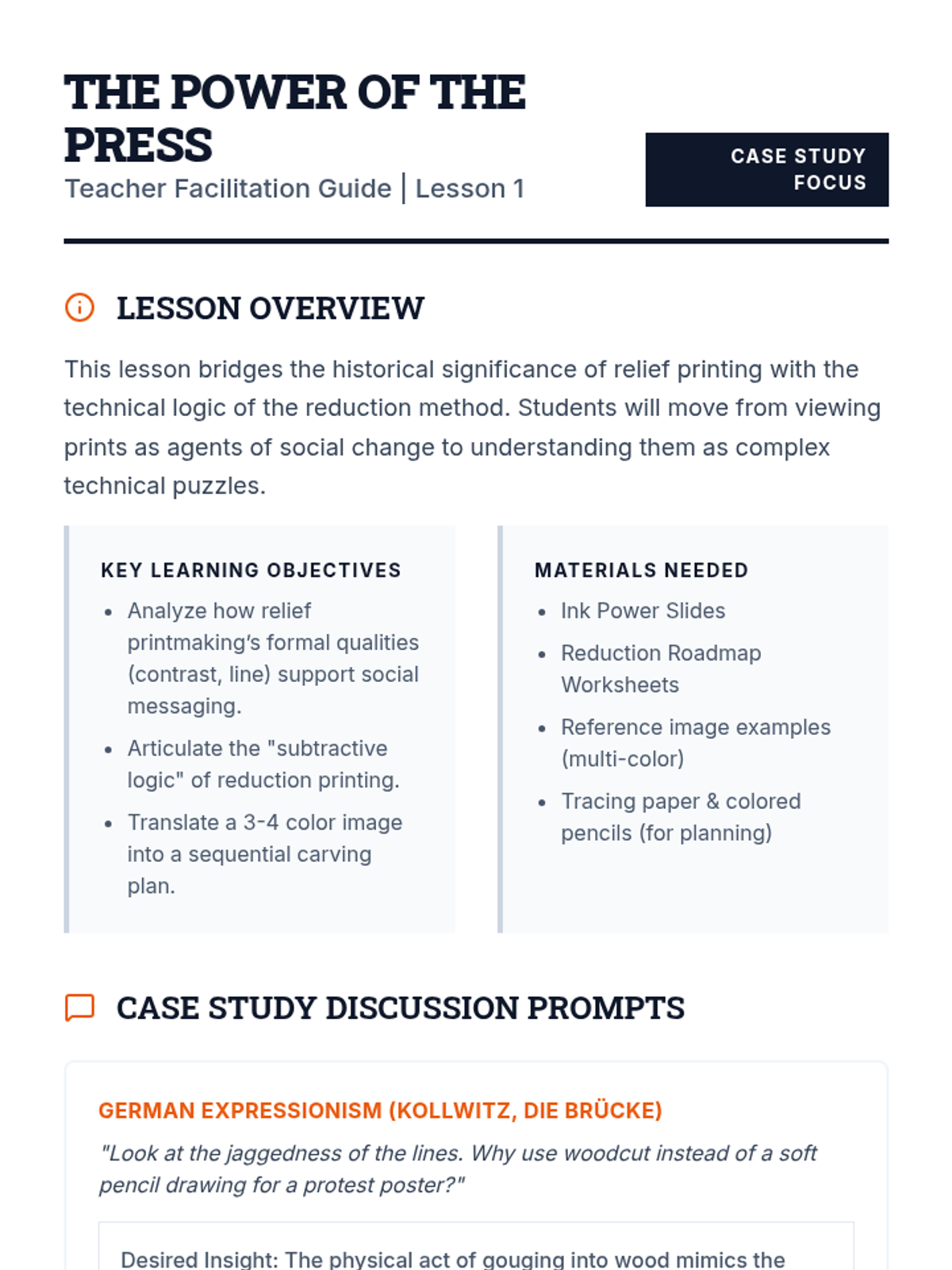
A facilitation guide for teachers to lead discussions on the historical impact of relief printing and guide students through the complex conceptual shift required for reduction printing.
Slide deck for Lesson 4 on registration and editioning, covering precision alignment, fine art edition standards, production workflow, and quality control.
An introductory slide deck for relief printing history and the reduction method logic, featuring case studies on social impact and a step-by-step conceptual breakdown of the subtractive process.