Essential grammar structures, high-frequency vocabulary, and foundational literacy skills. Equips learners with basic speaking and listening abilities for everyday interactions and introductory text comprehension.
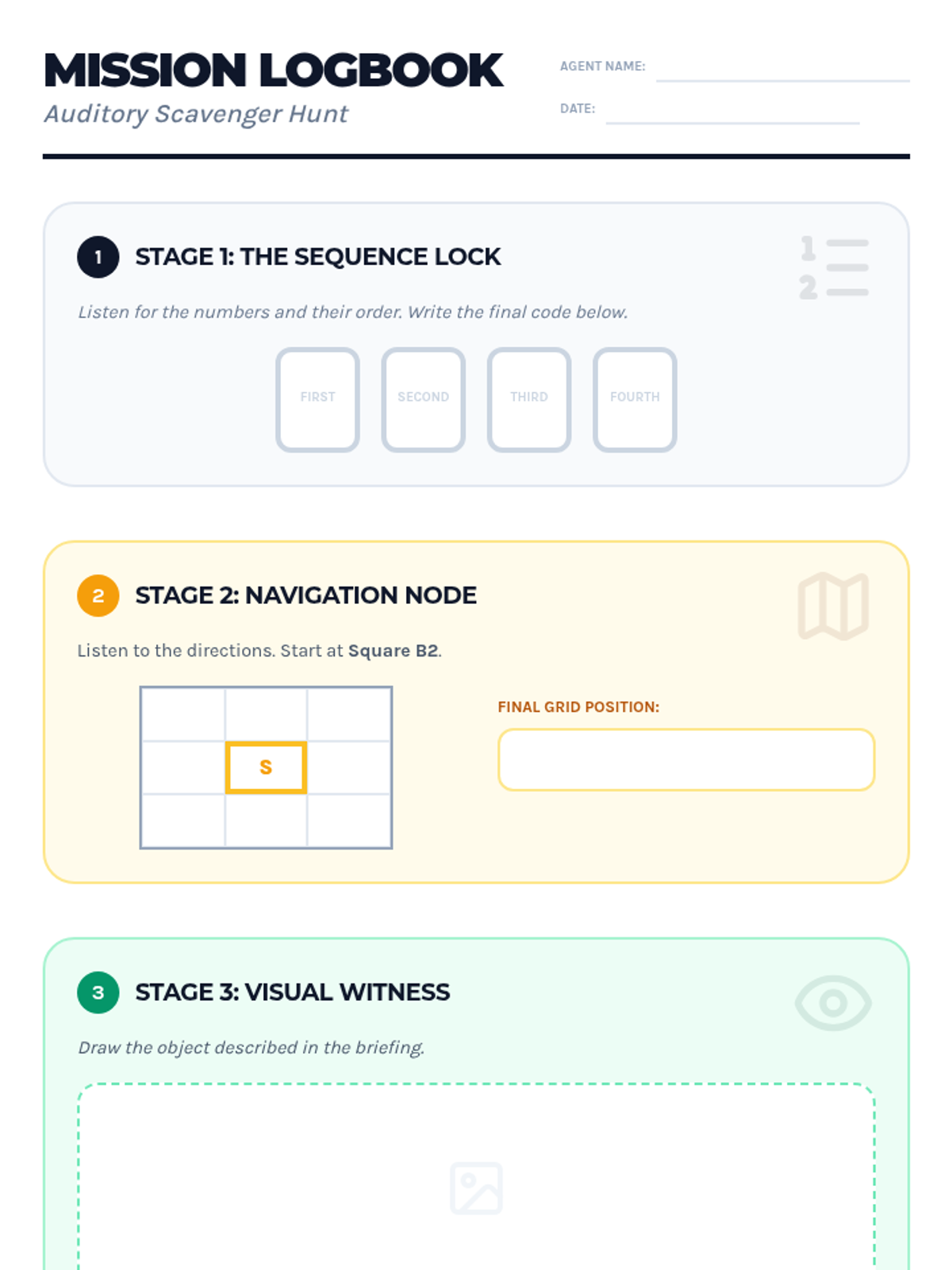
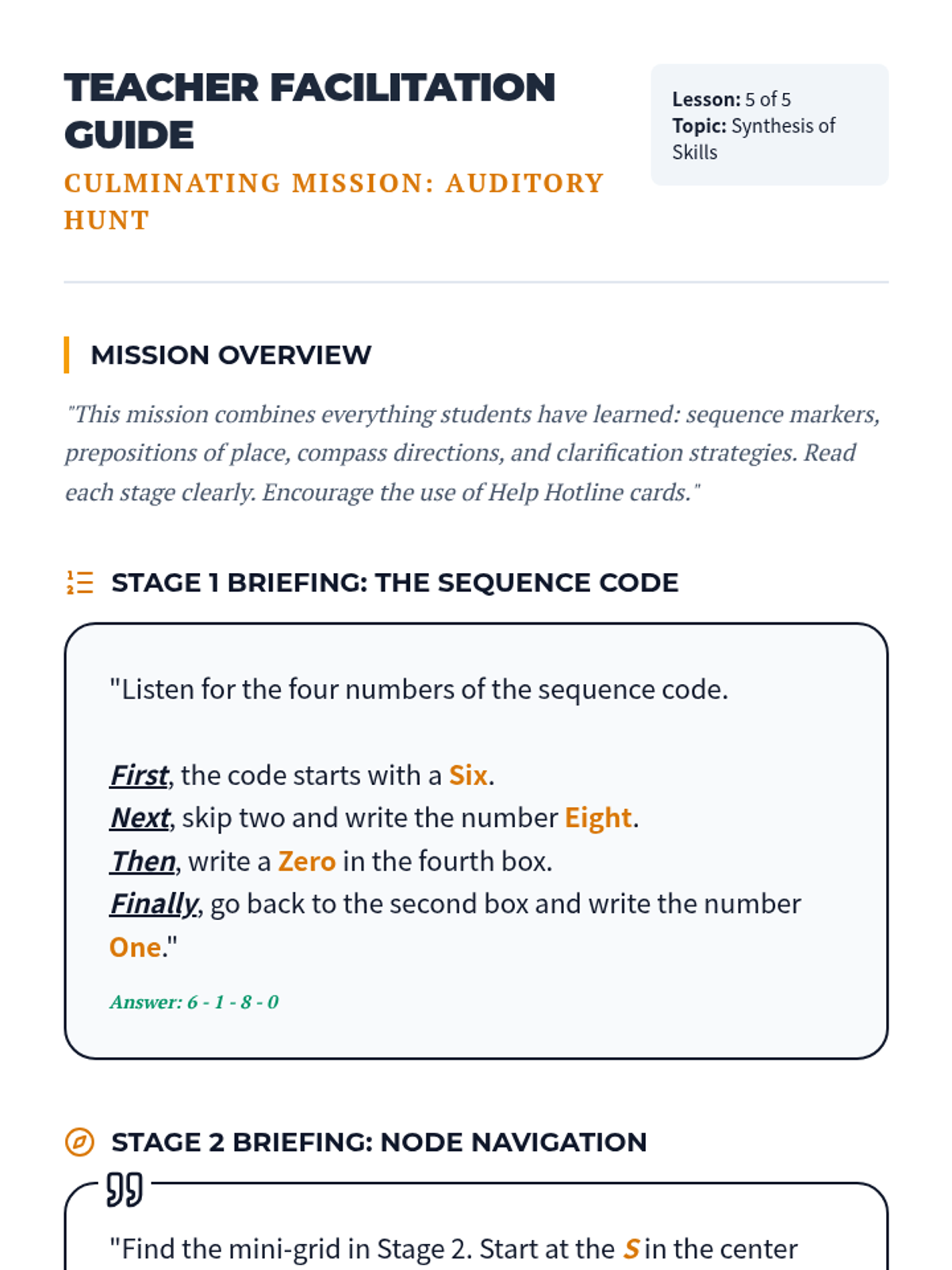
In this culminating activity, students solve a series of puzzles where the clues are delivered via audio recordings. Success depends on synthesizing sequence markers, spatial details, and specific vocabulary.
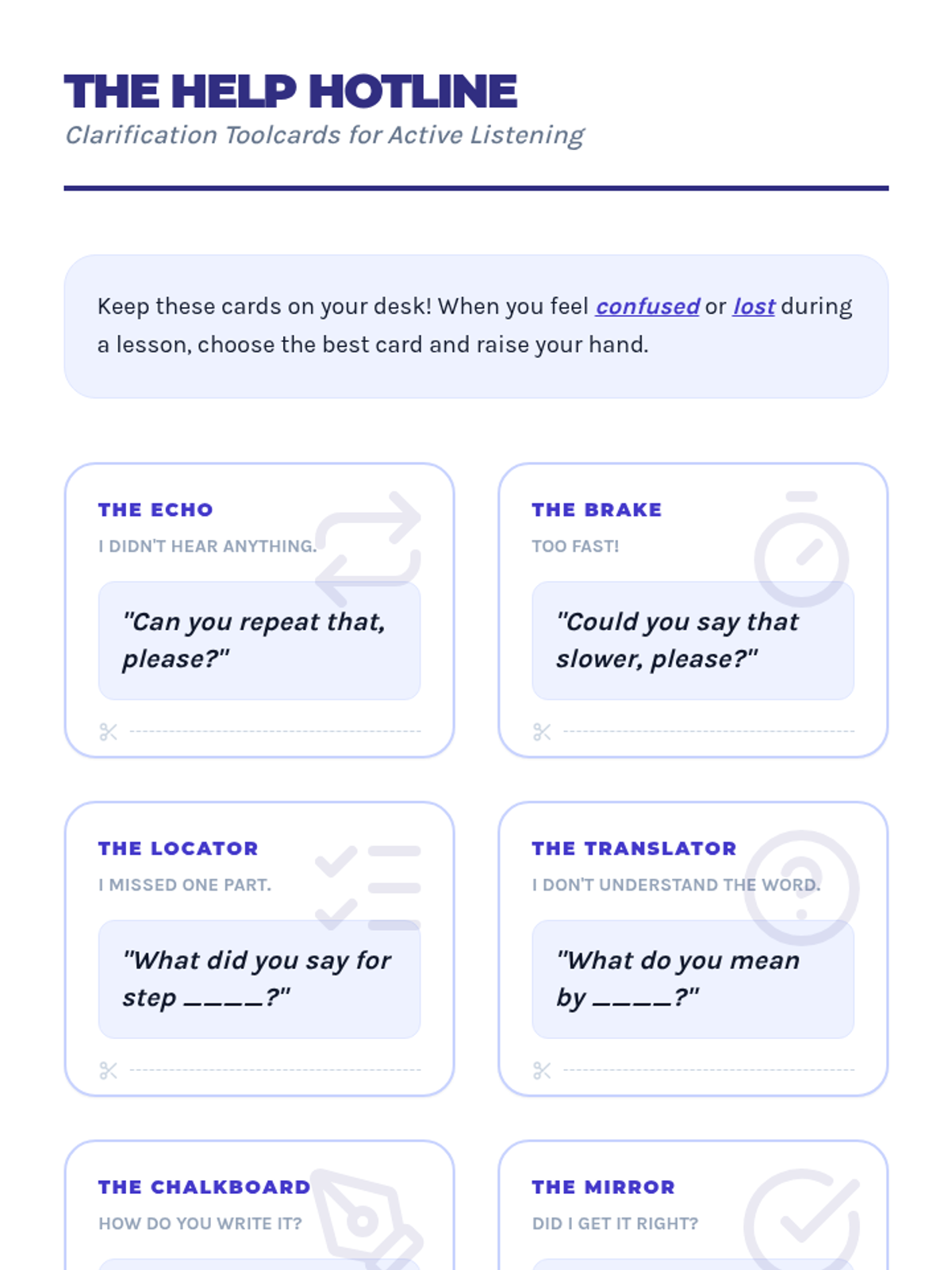
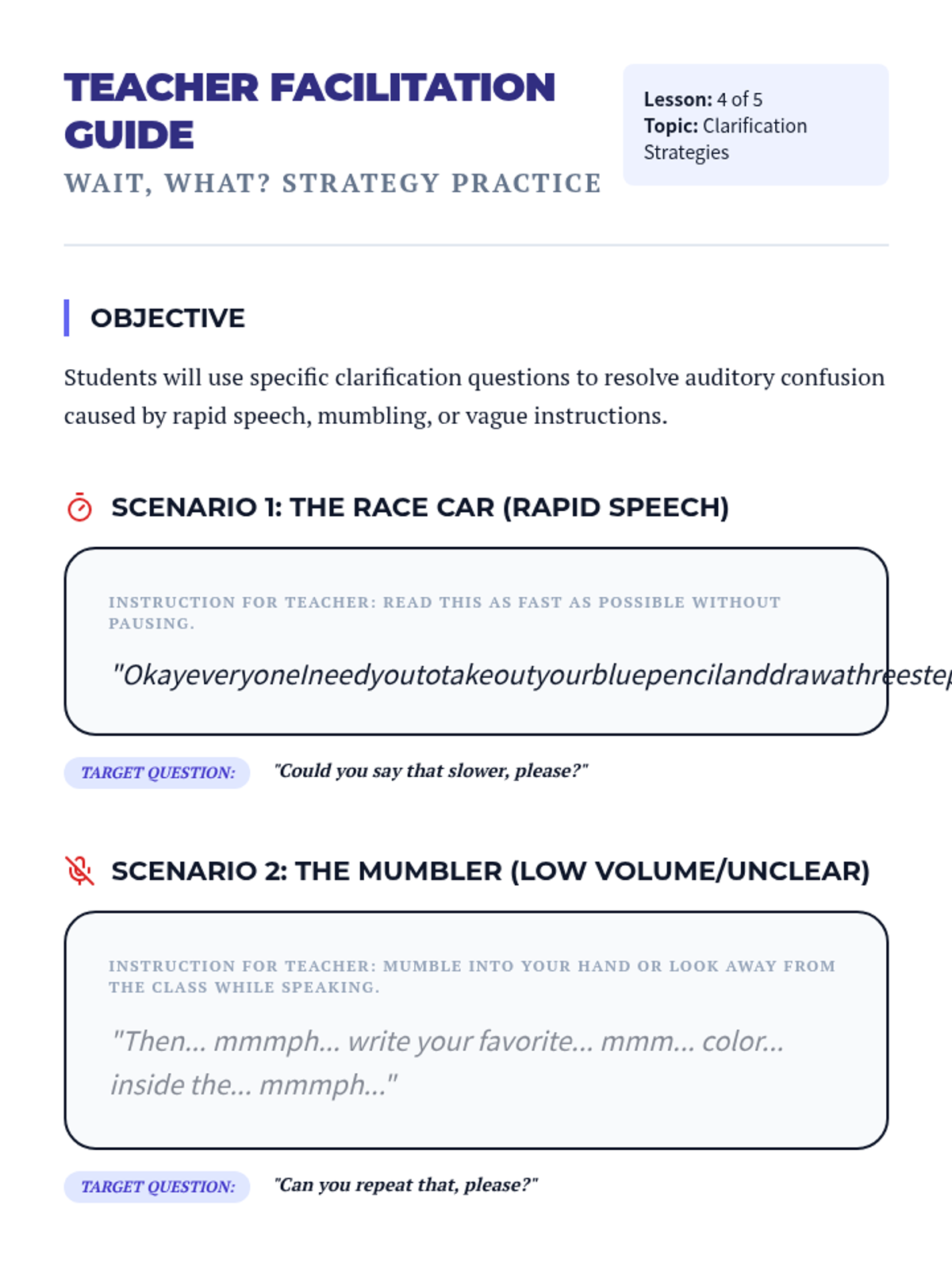
Students are given intentionally vague or rapid instructions and must use specific question structures to ask for repetition or clarification. The class analyzes which questions yield the best information.
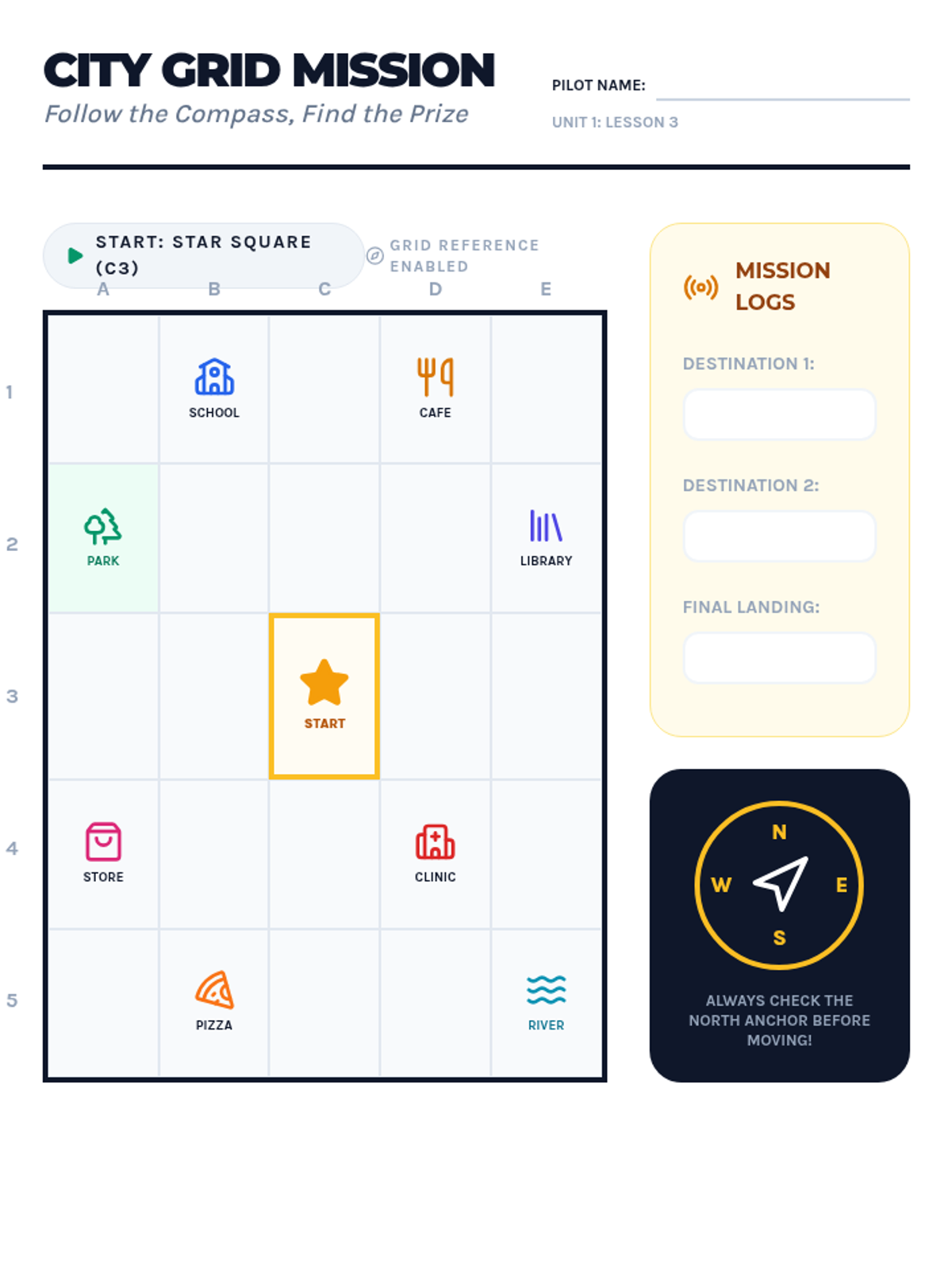
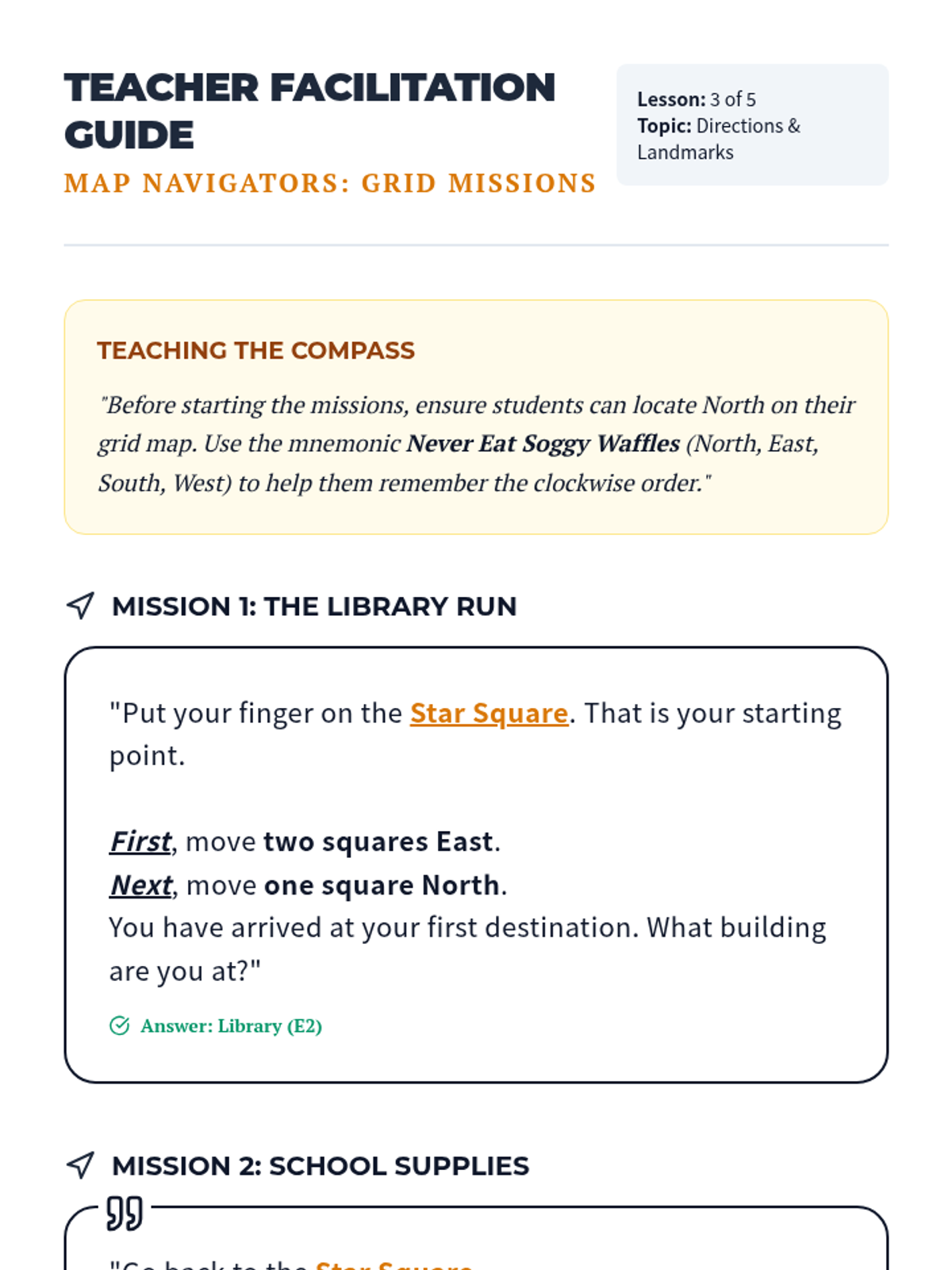
Using a grid map, students follow oral directions to navigate from a starting point to a destination. The lesson introduces compass directions and landmarks as key listening anchors.
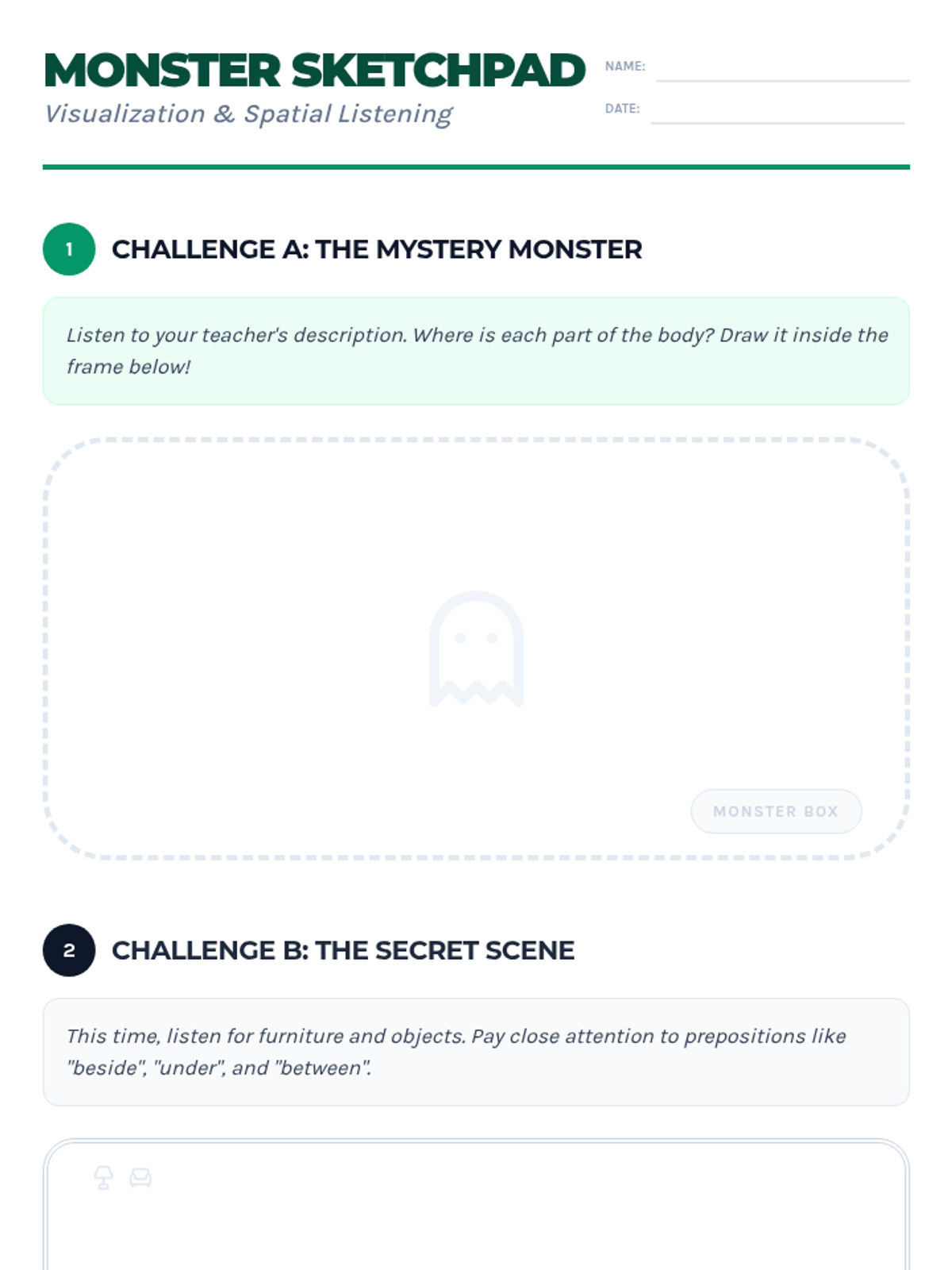
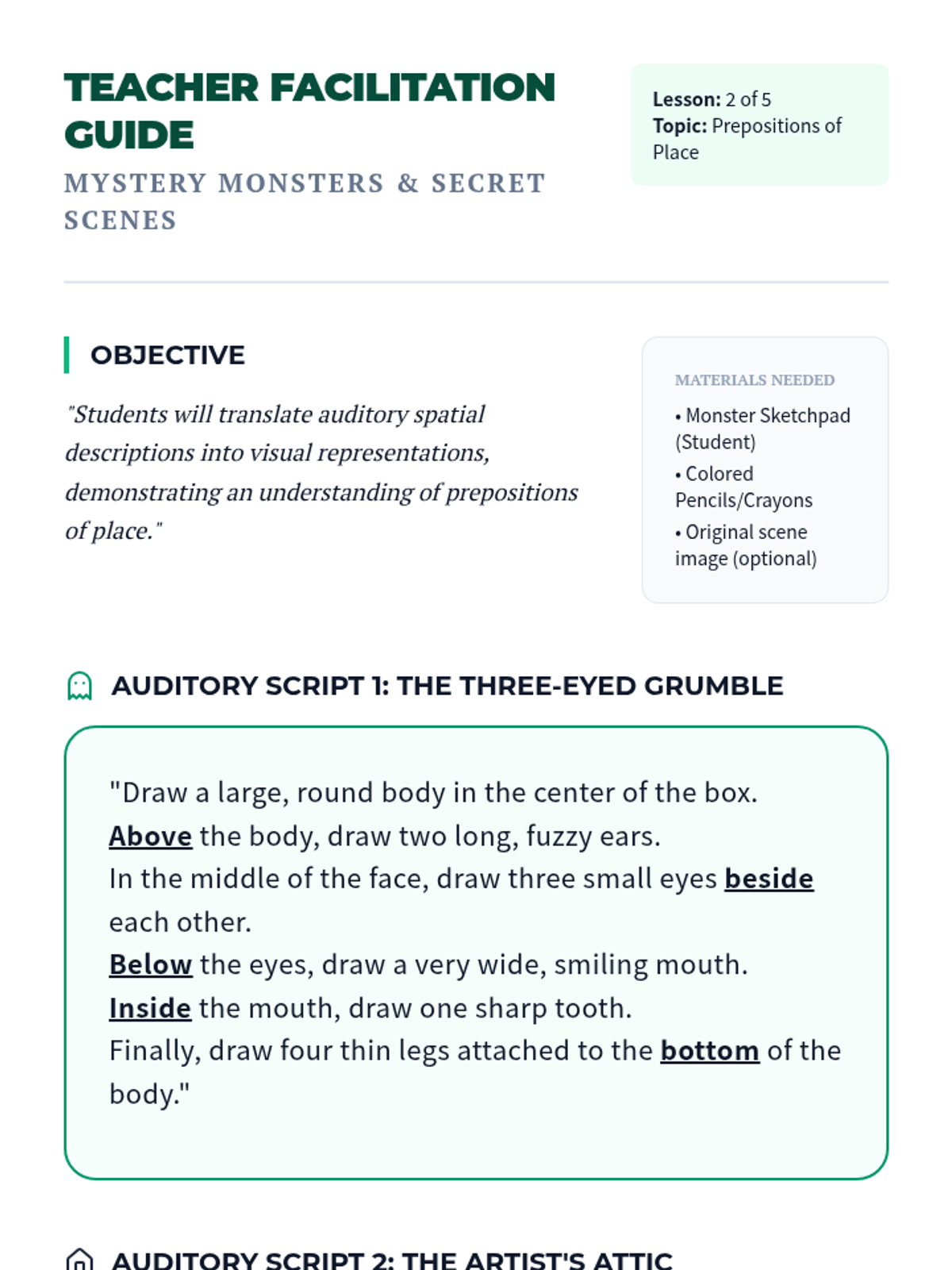
Students listen to descriptions of a room or scene and draw what they hear, focusing on prepositions of place. They compare their drawings to the original image to identify listening gaps.
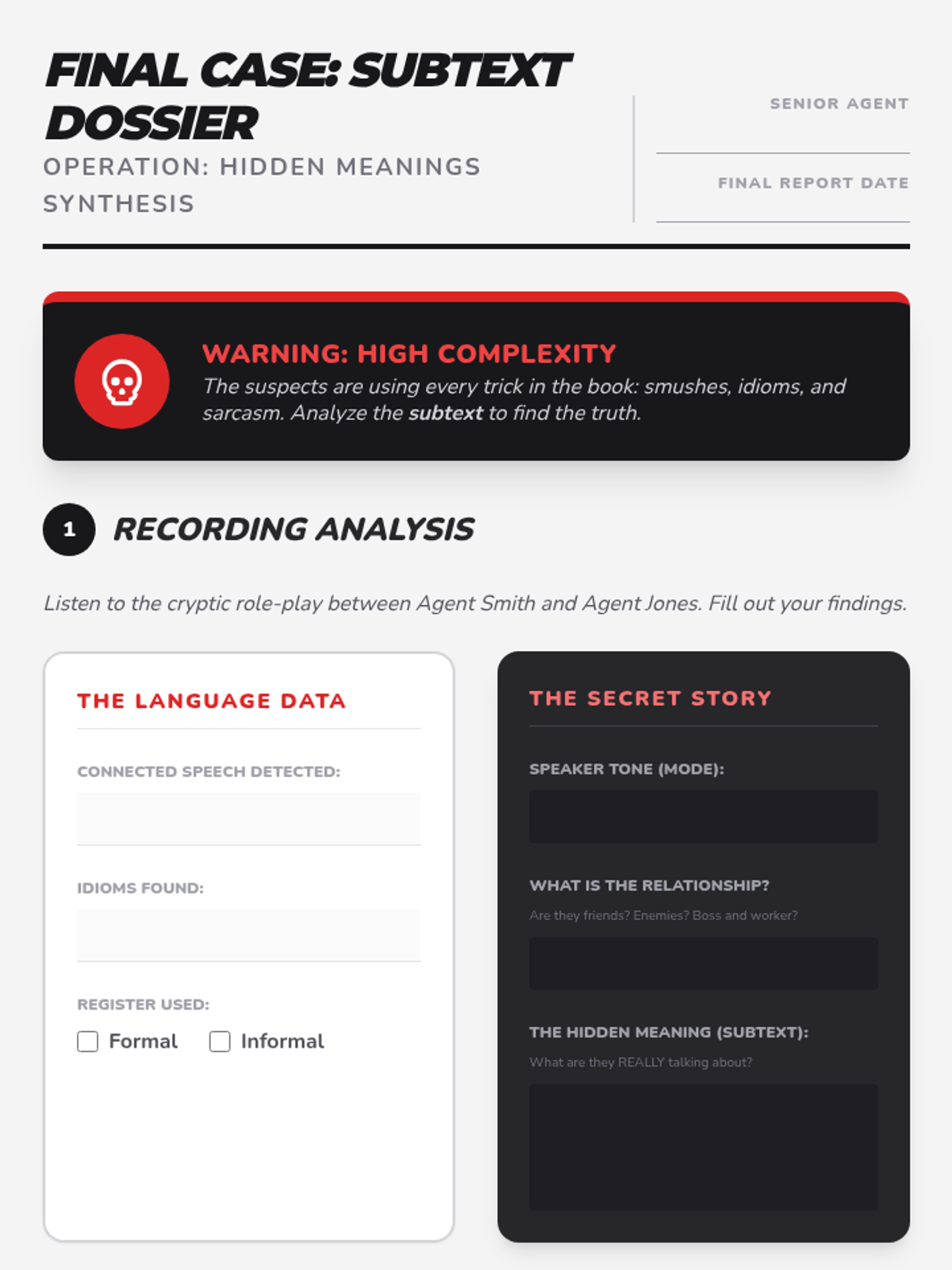
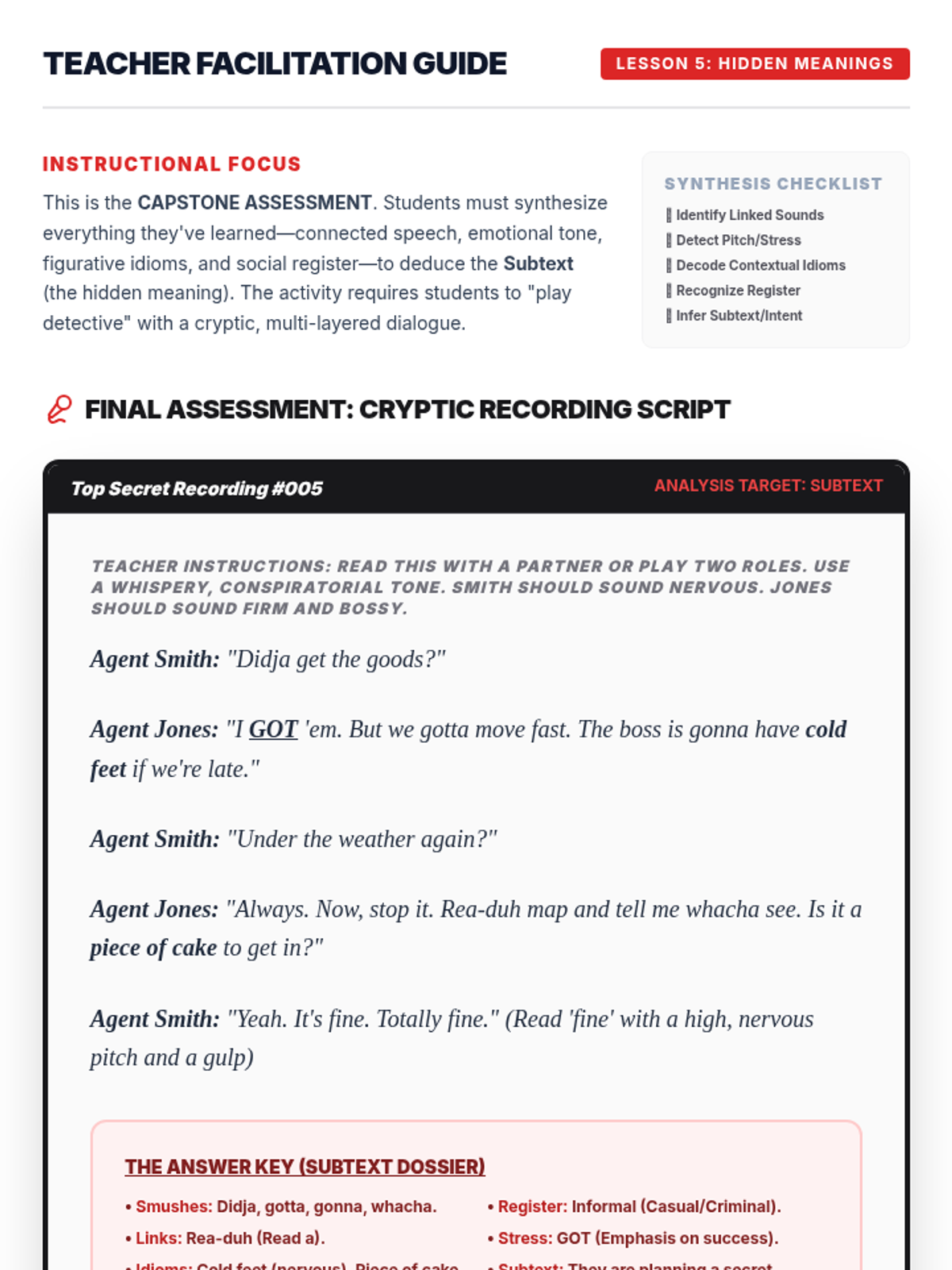
In this capstone lesson, students analyze subtext and speaker relationships through role-play and synthesis of tone and content.
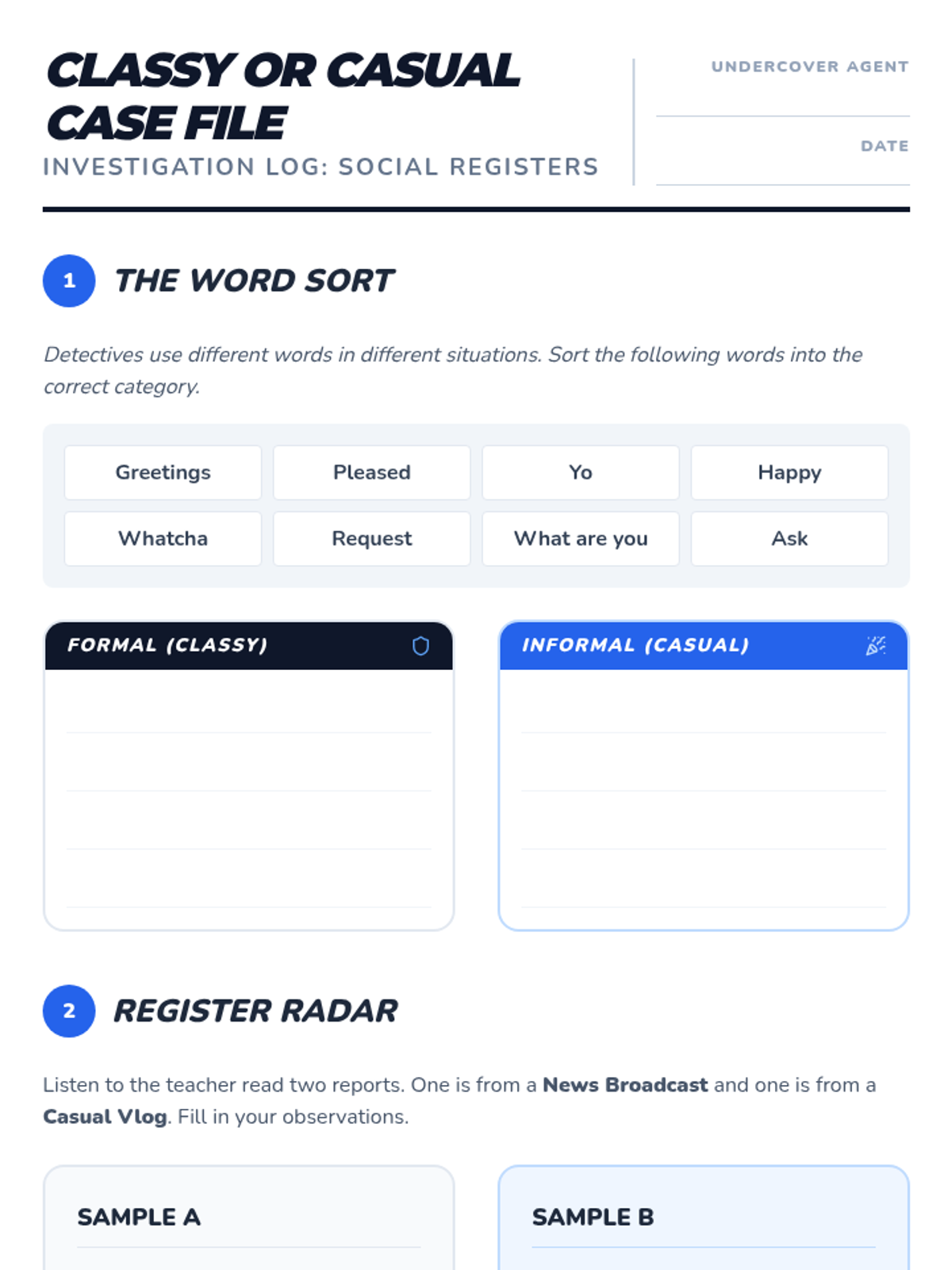
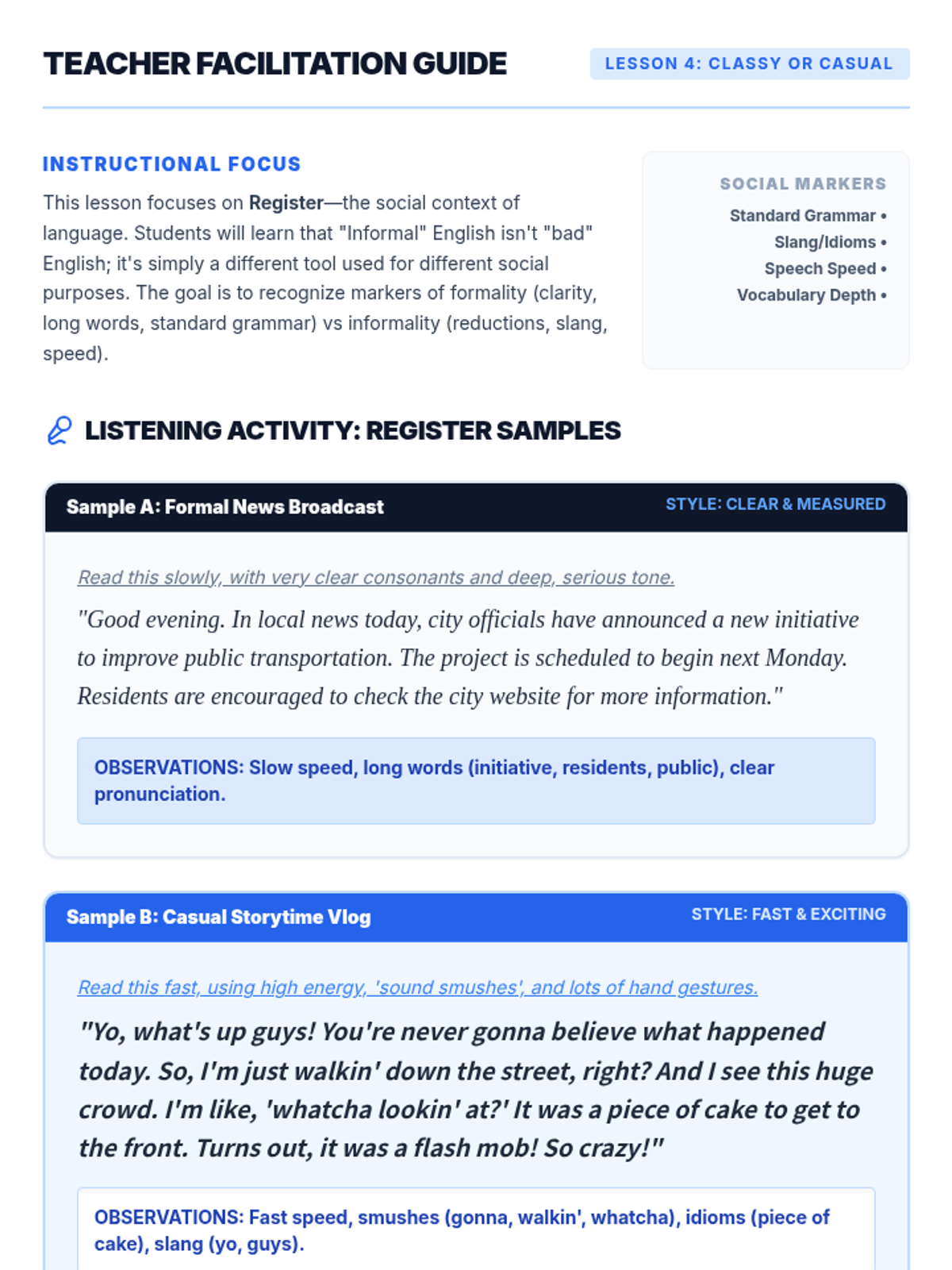
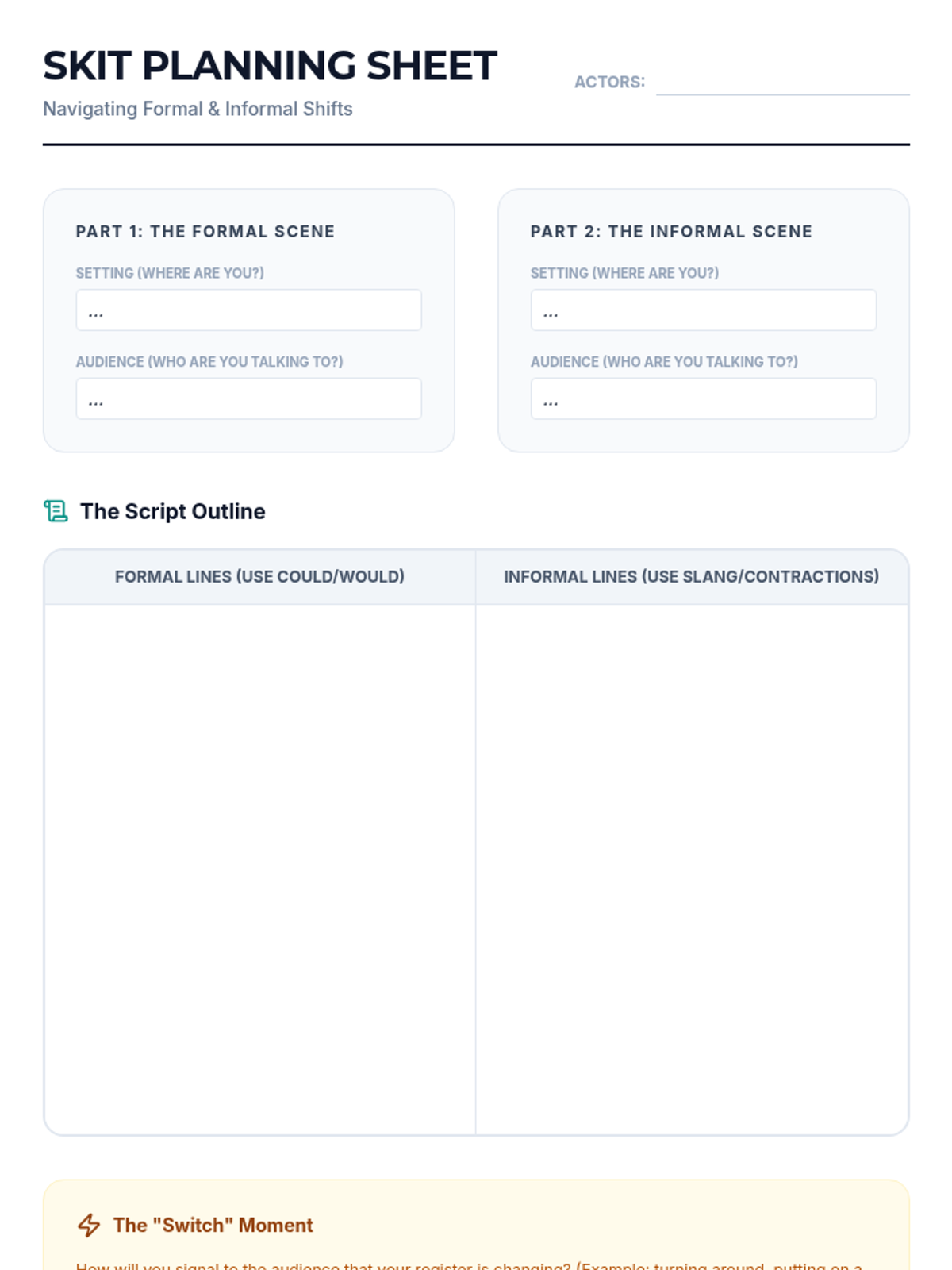
Students compare formal and informal English registers to understand how social context dictates speech patterns and vocabulary.
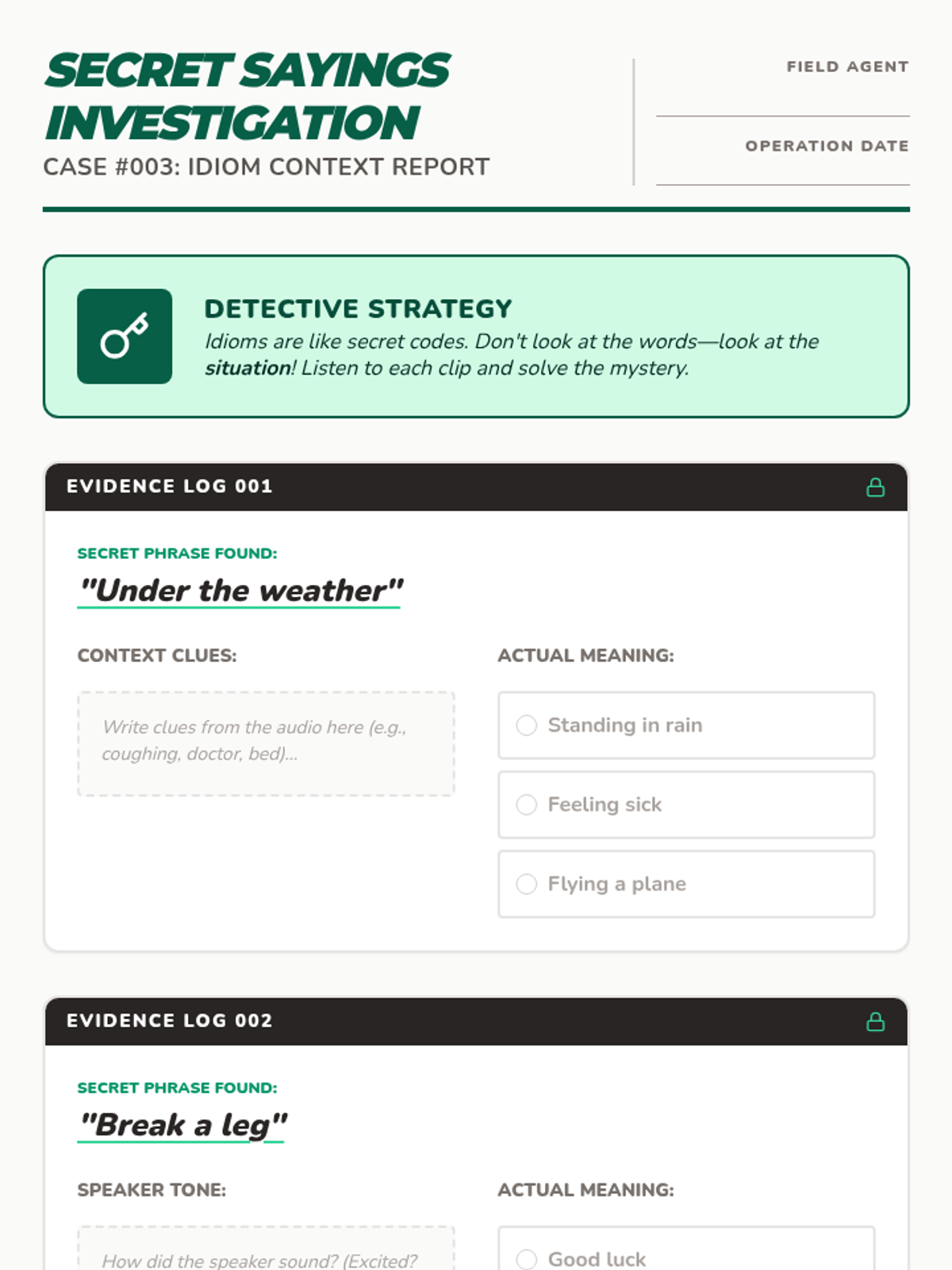
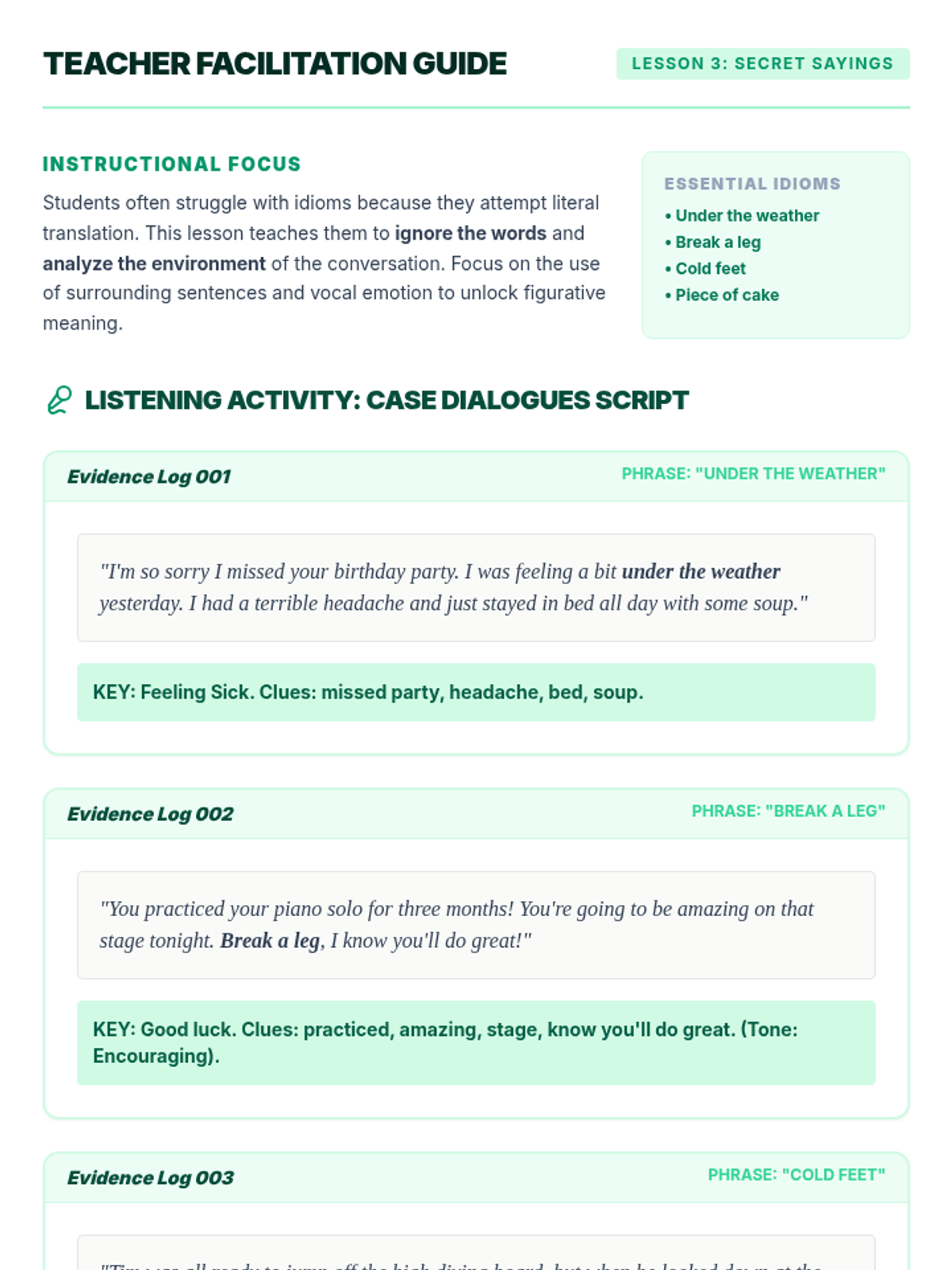
Students use context clues and speaker tone to deduce the meaning of common English idioms without relying on literal translation.
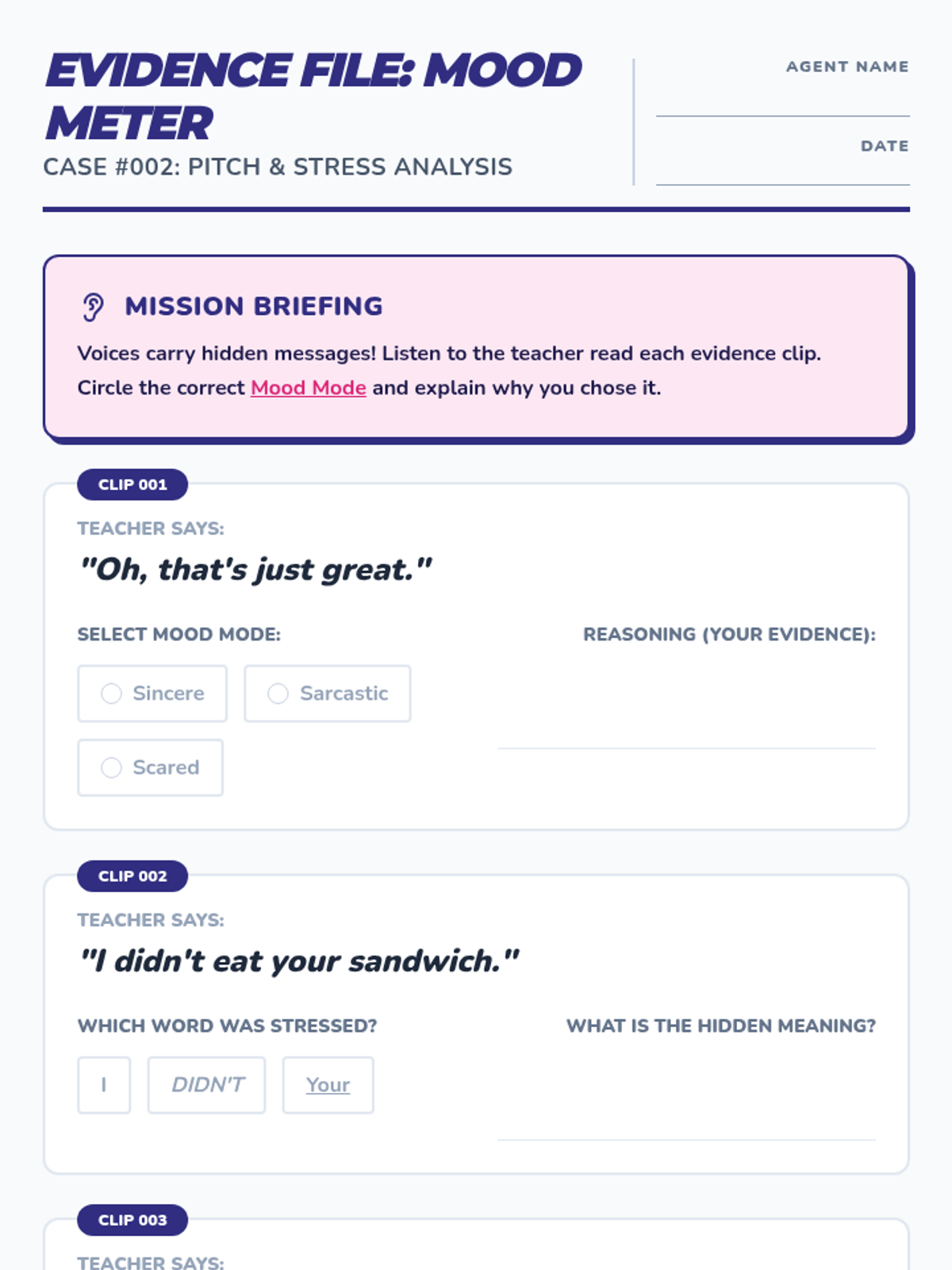
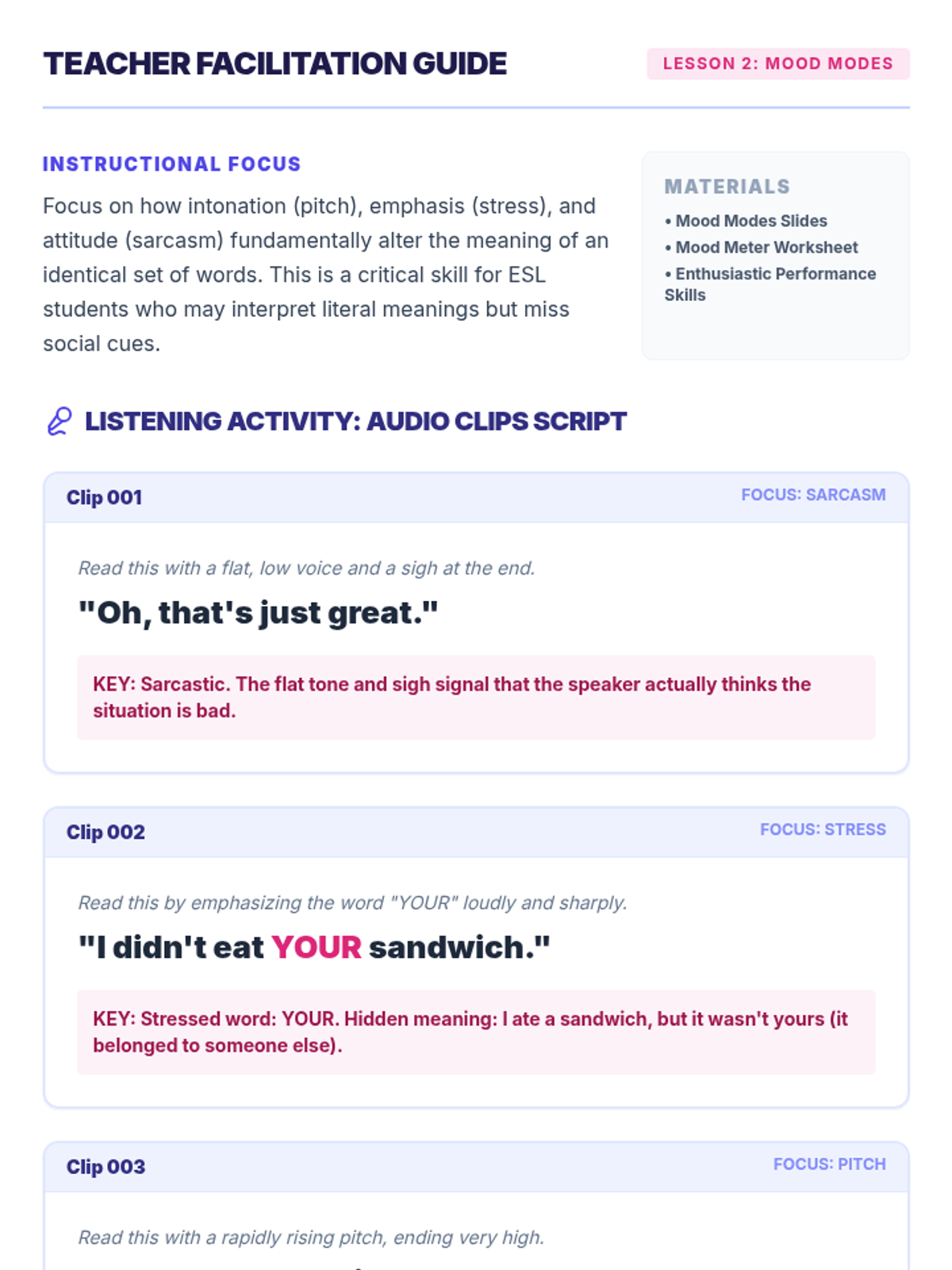
Learners analyze how pitch, stress, and volume change the emotional meaning of a sentence, focusing on sarcasm and attitude.
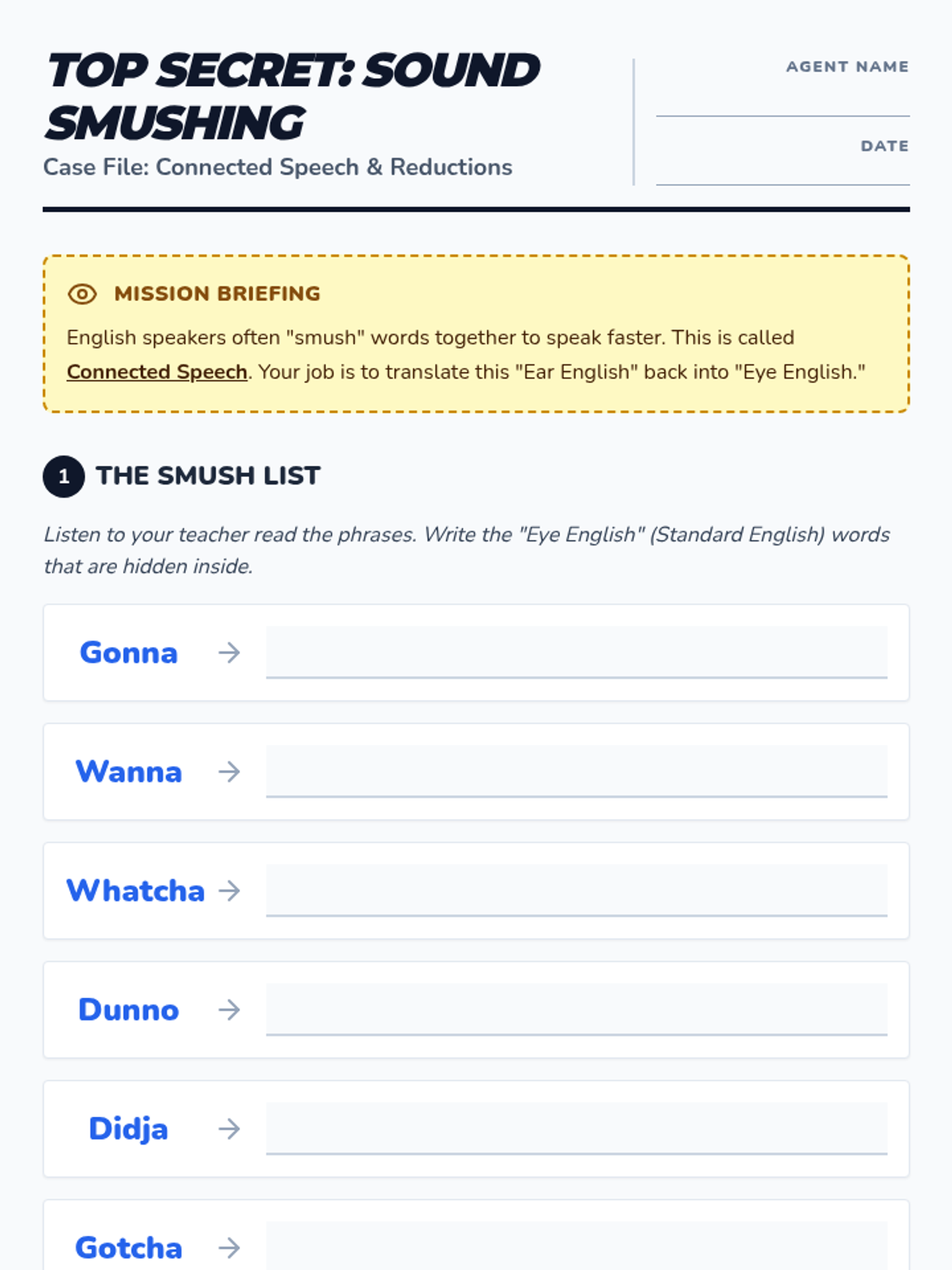
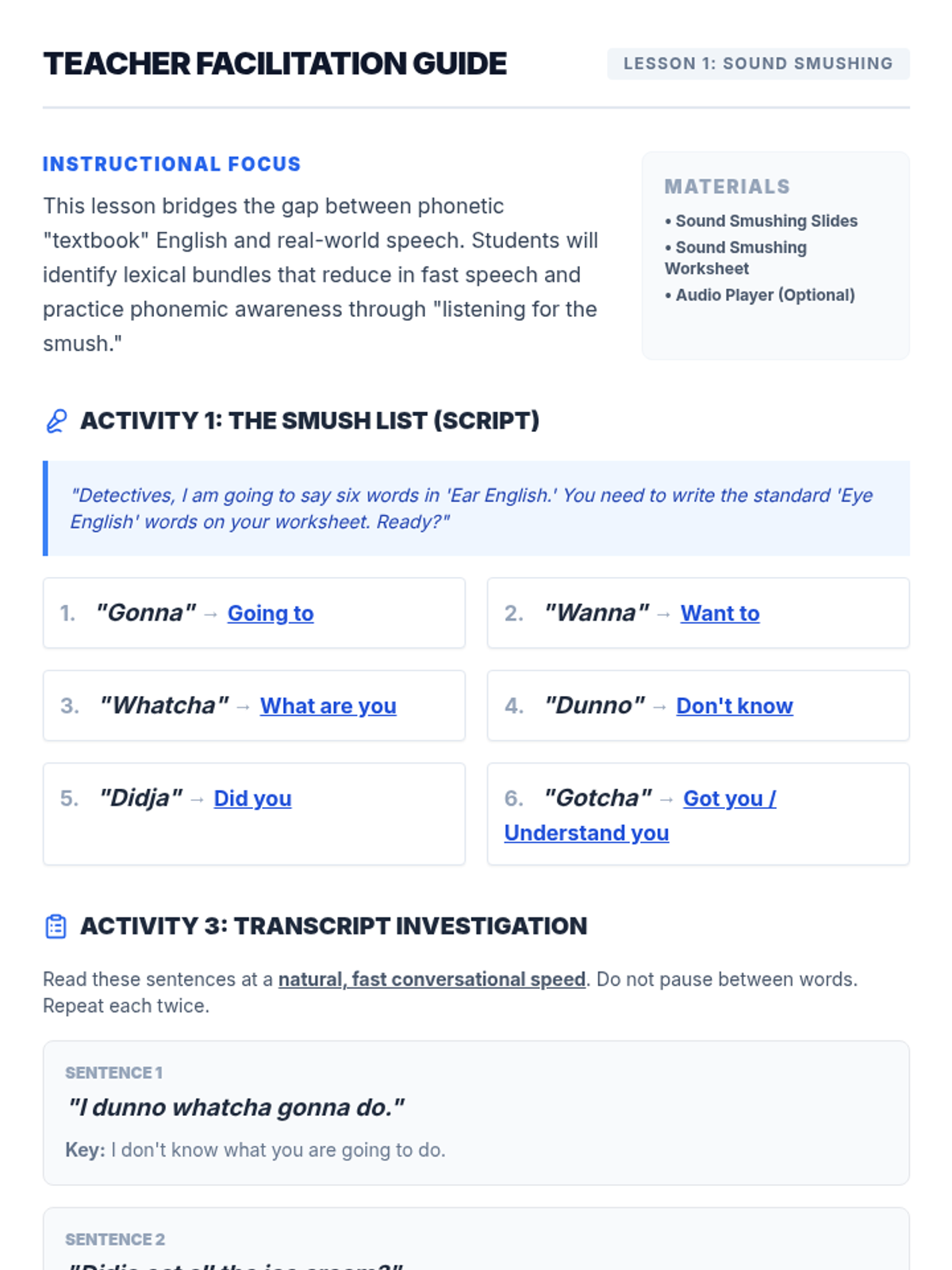
Students learn to identify and decode connected speech and common reductions like 'gonna' and 'wanna' to bridge the gap between written and spoken English.
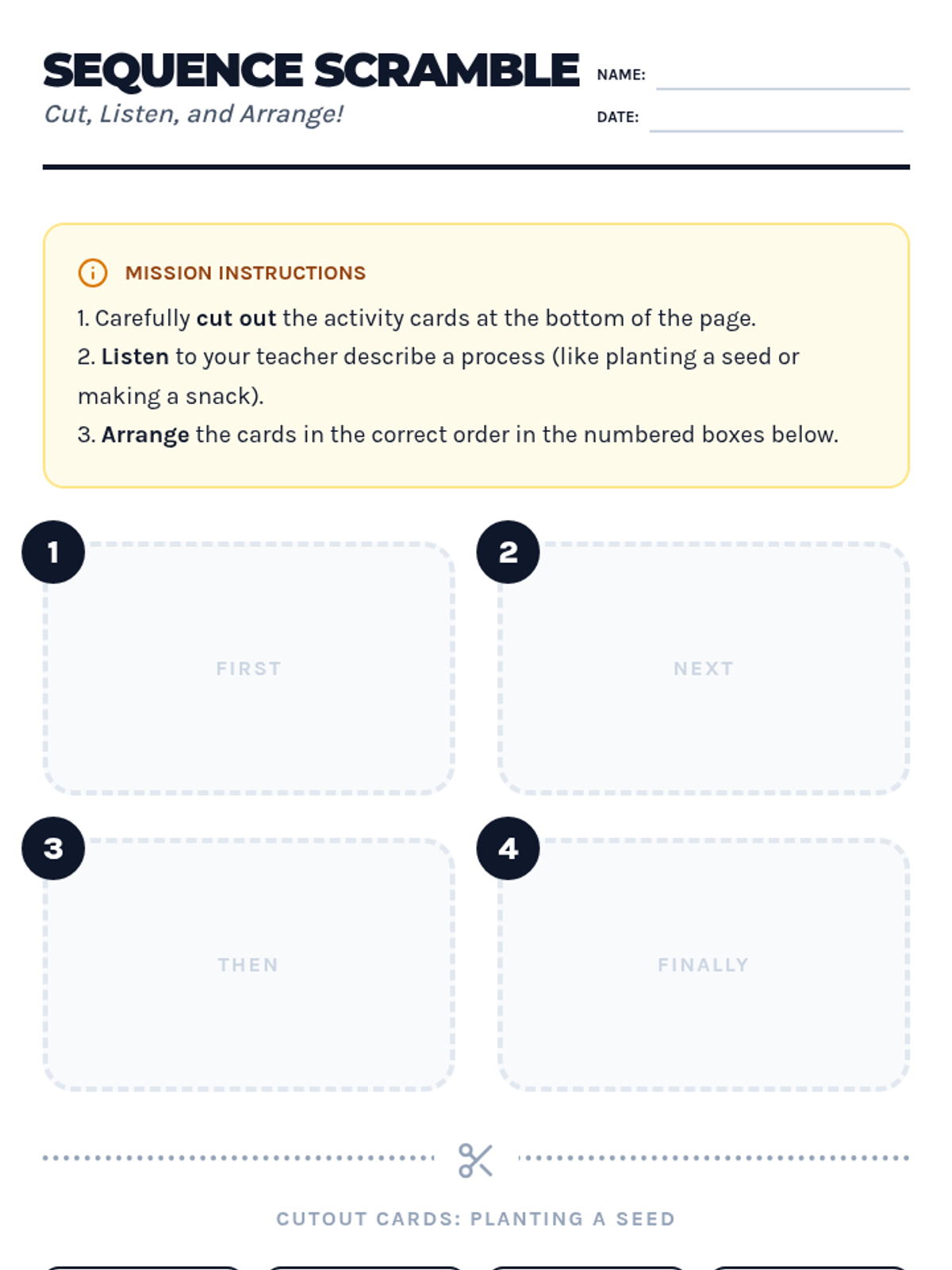
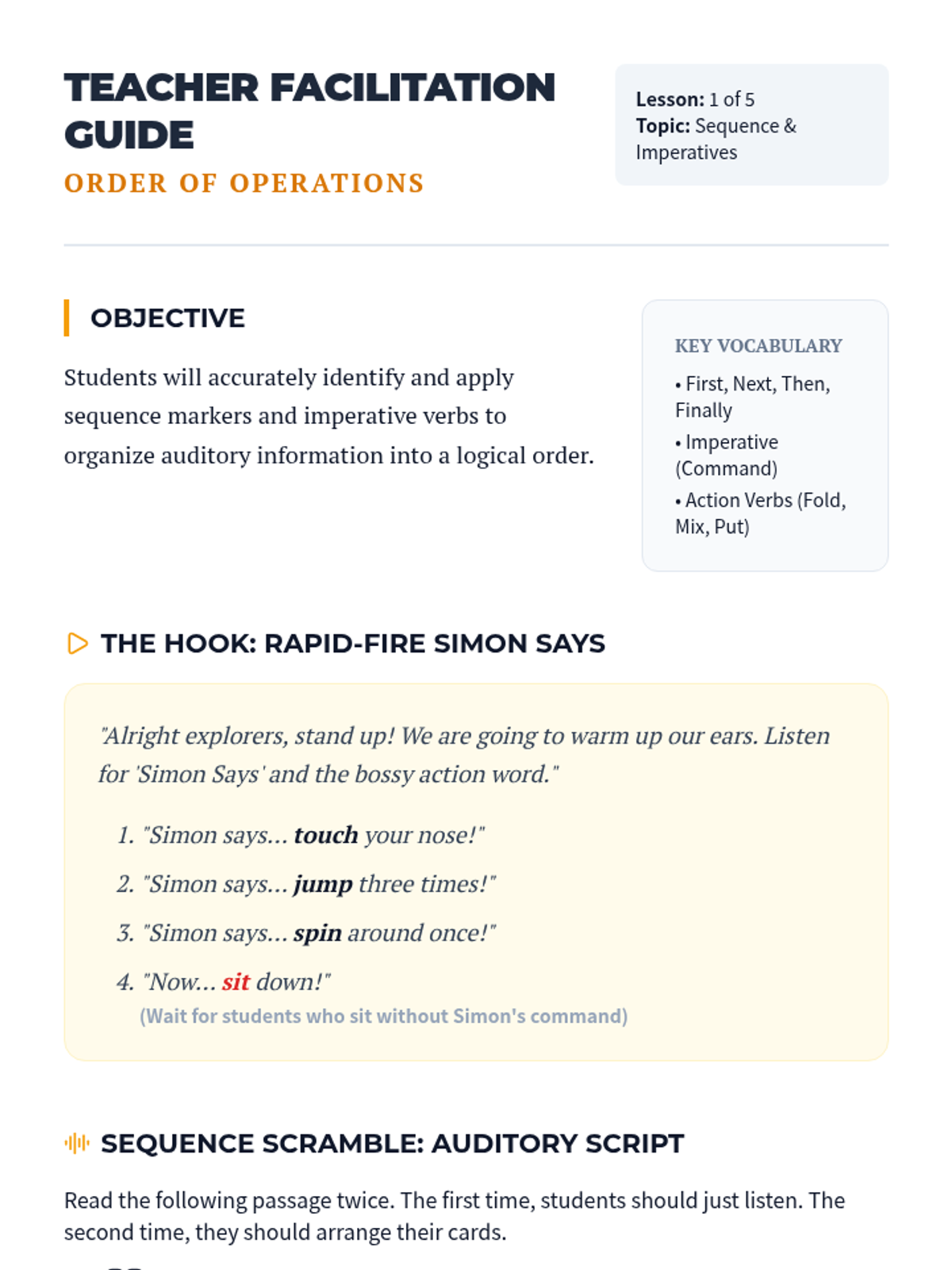
Students listen to instructions to identify transition words and imperative verbs, then practice ordering events based on auditory cues.
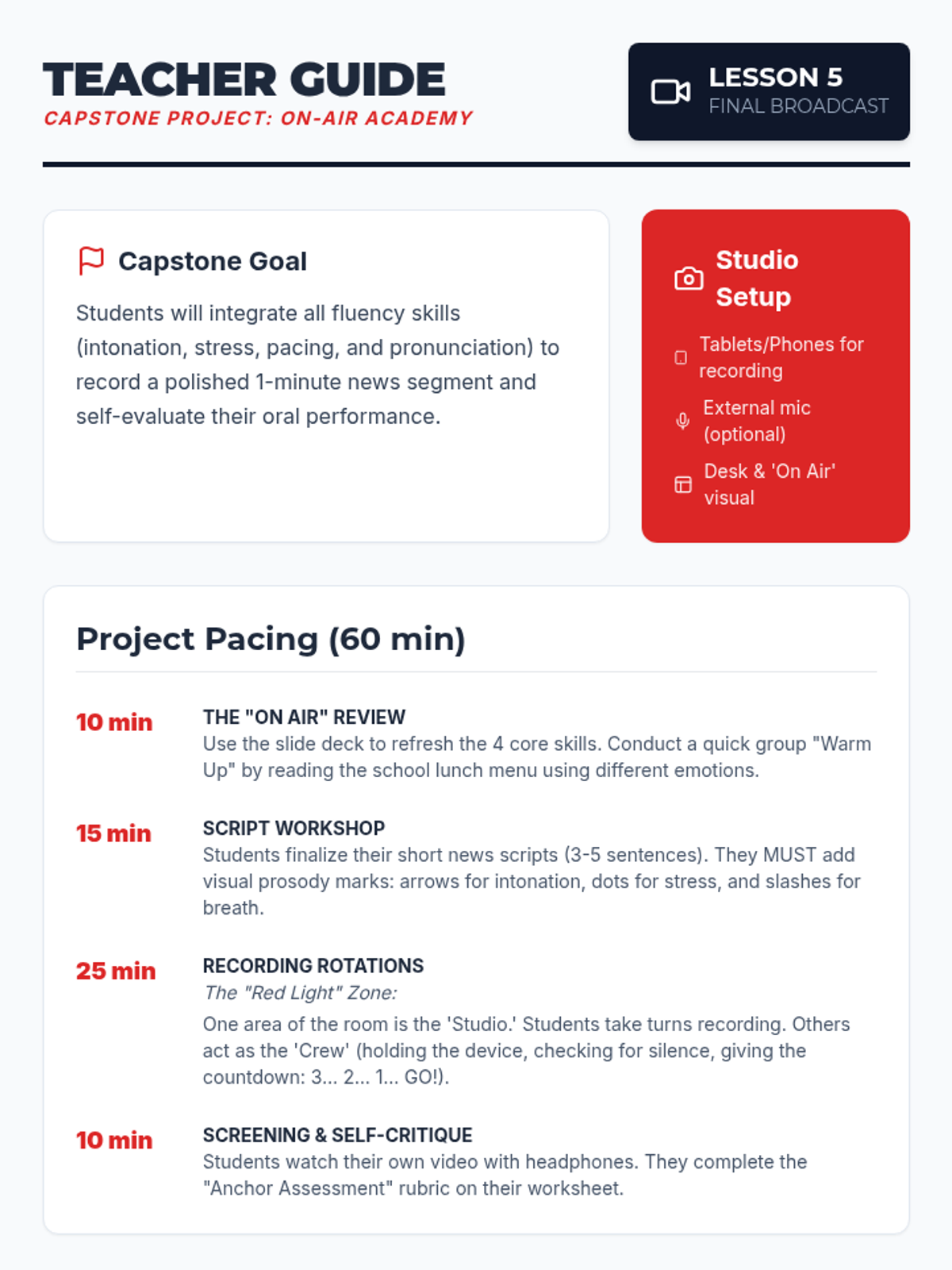
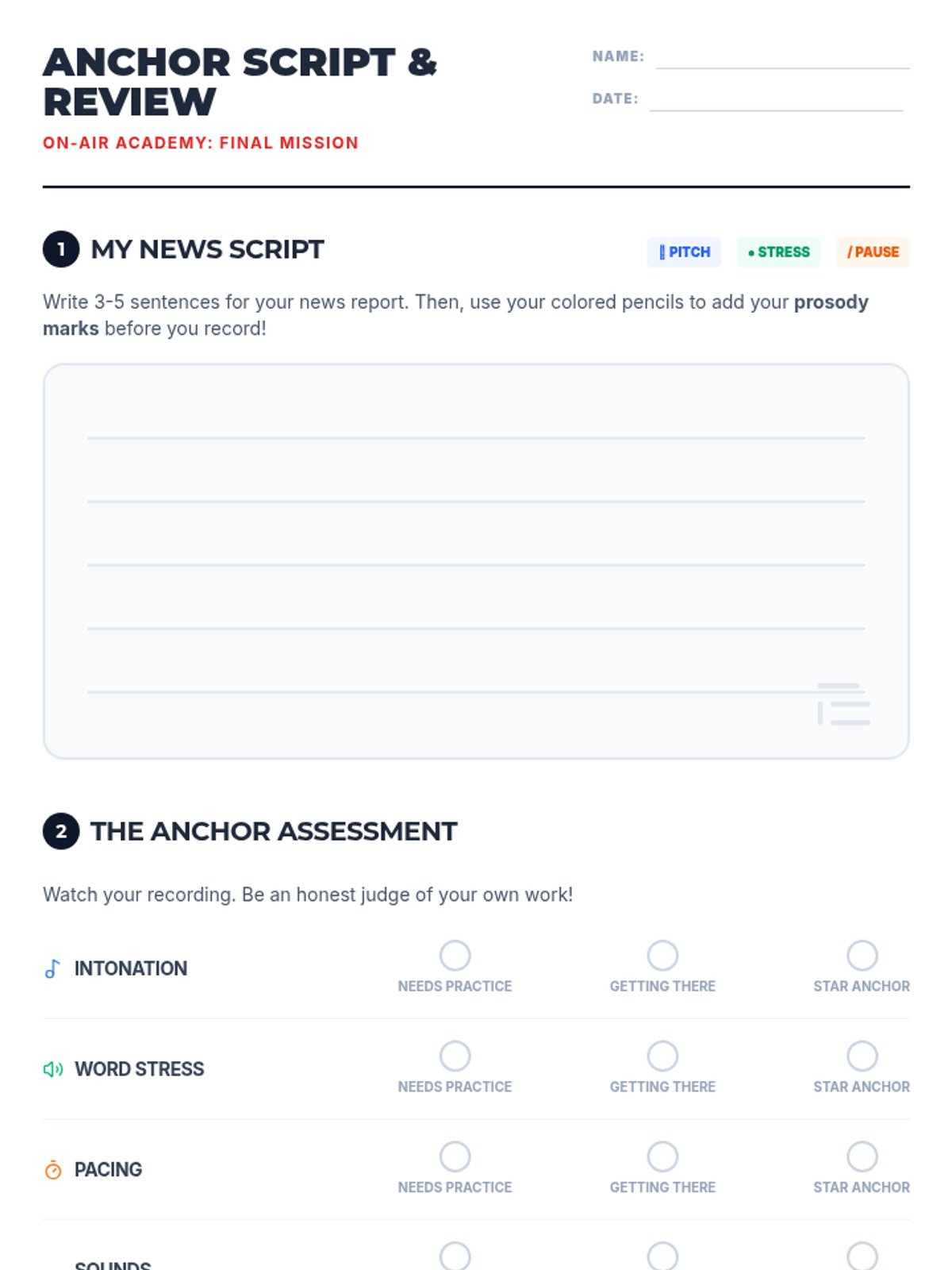
The capstone project where students record a newscast or vlog, integrating all previously learned prosody skills.
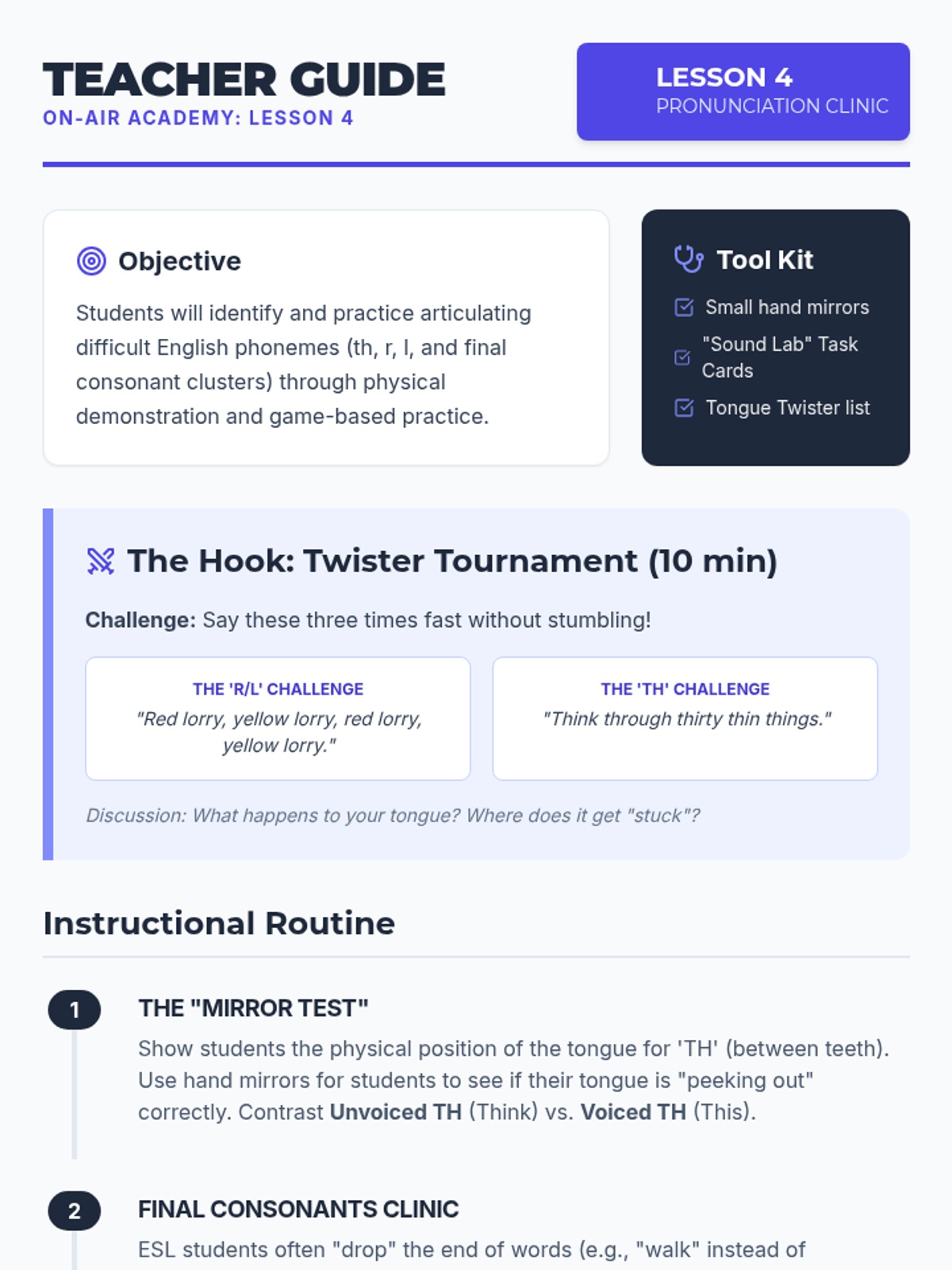
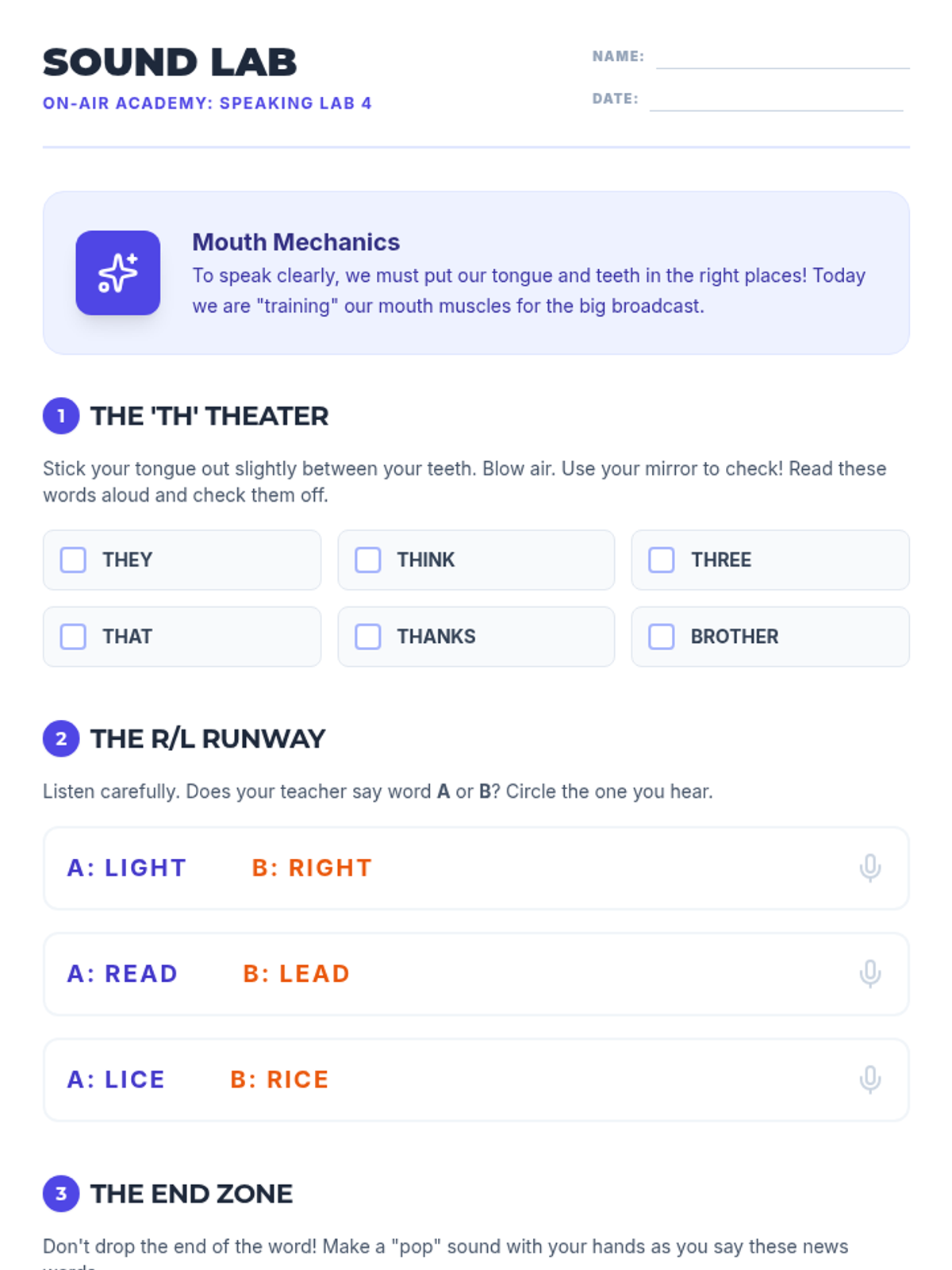
A targeted clinic for common difficult sounds in English, using games and physical articulation practice.
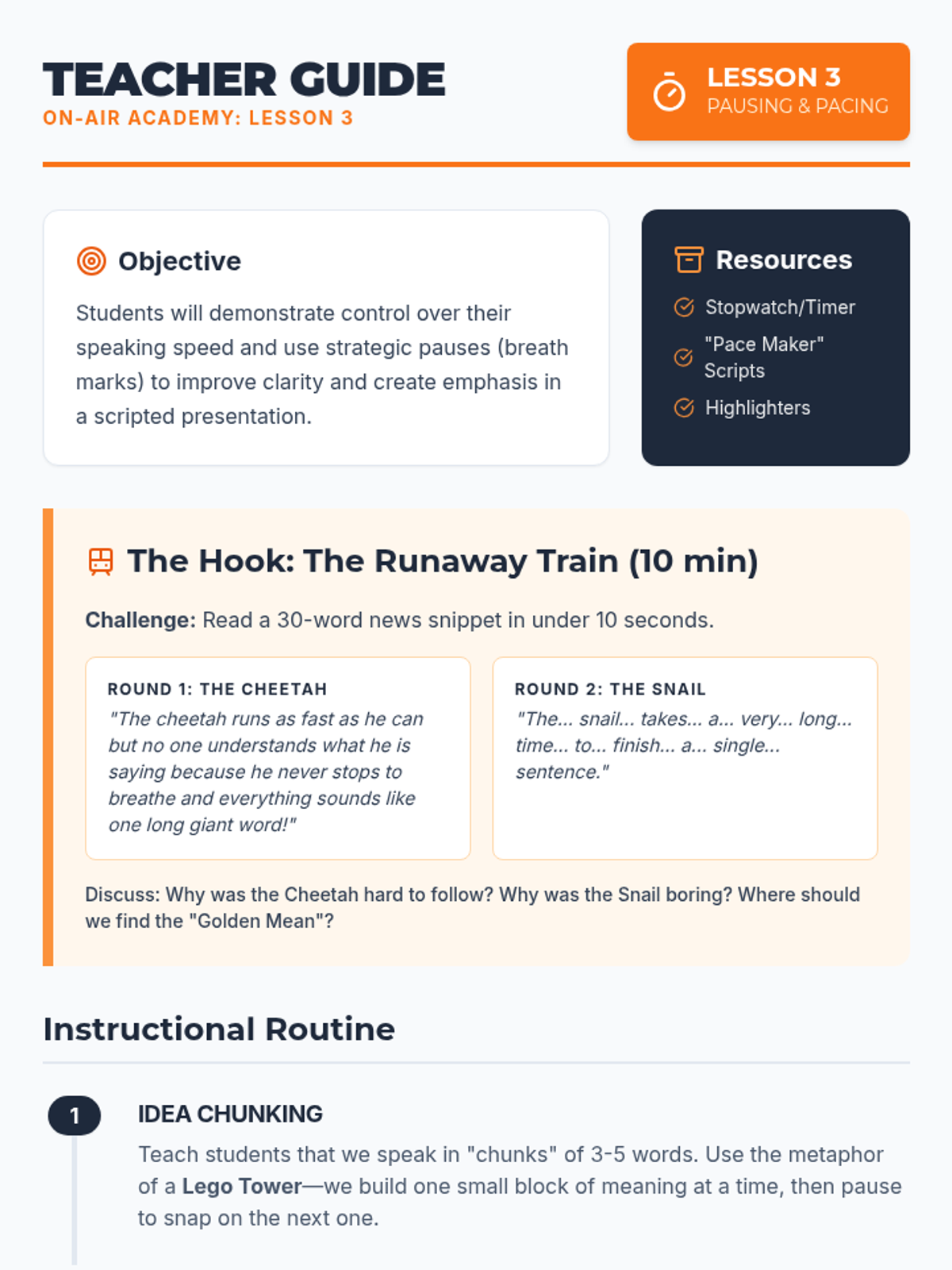
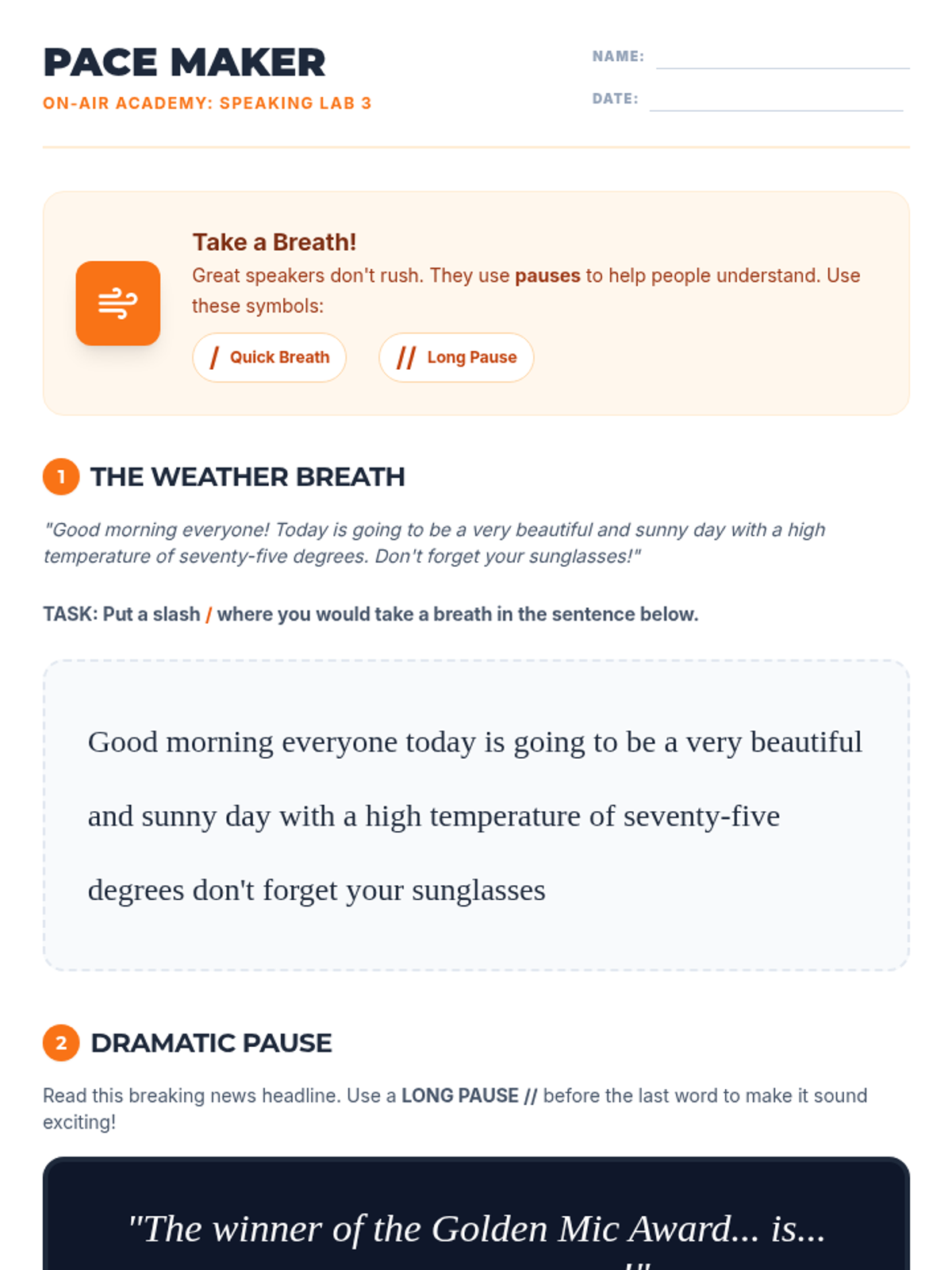
This lesson focuses on controlling speed and using pauses effectively to improve clarity and impact.
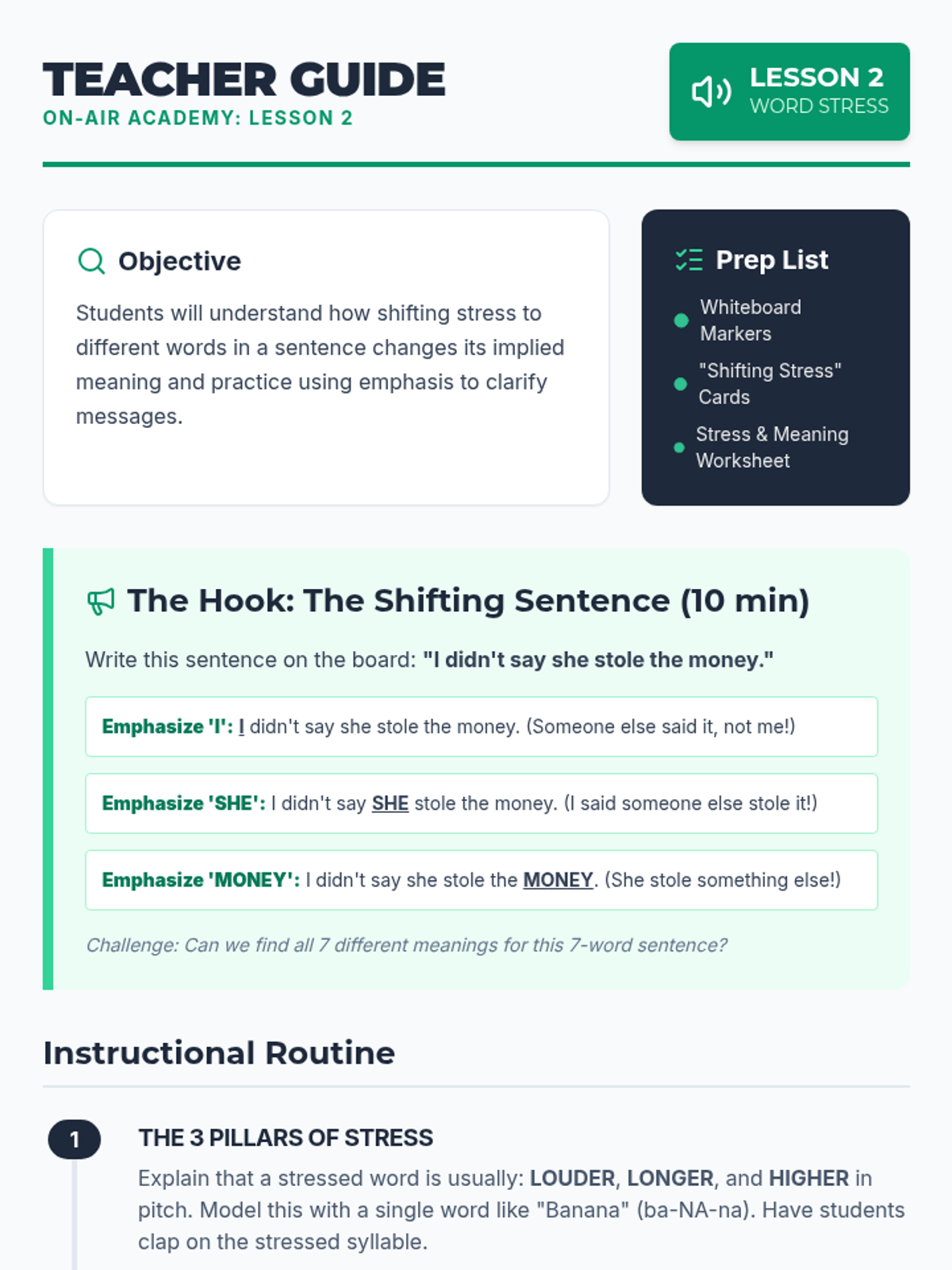
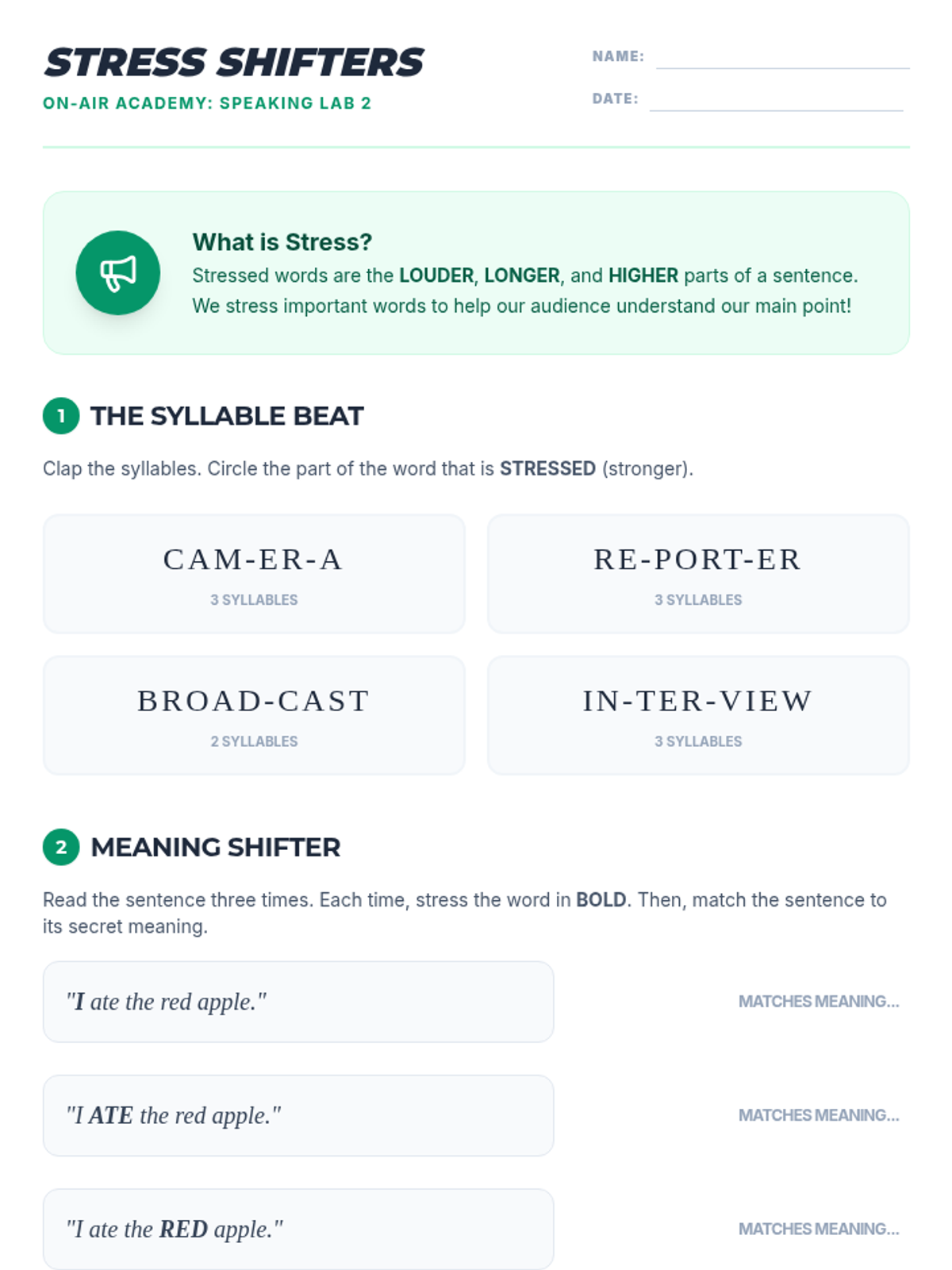
Students learn how stressing different words in a sentence shifts the speaker's emphasis and meaning.
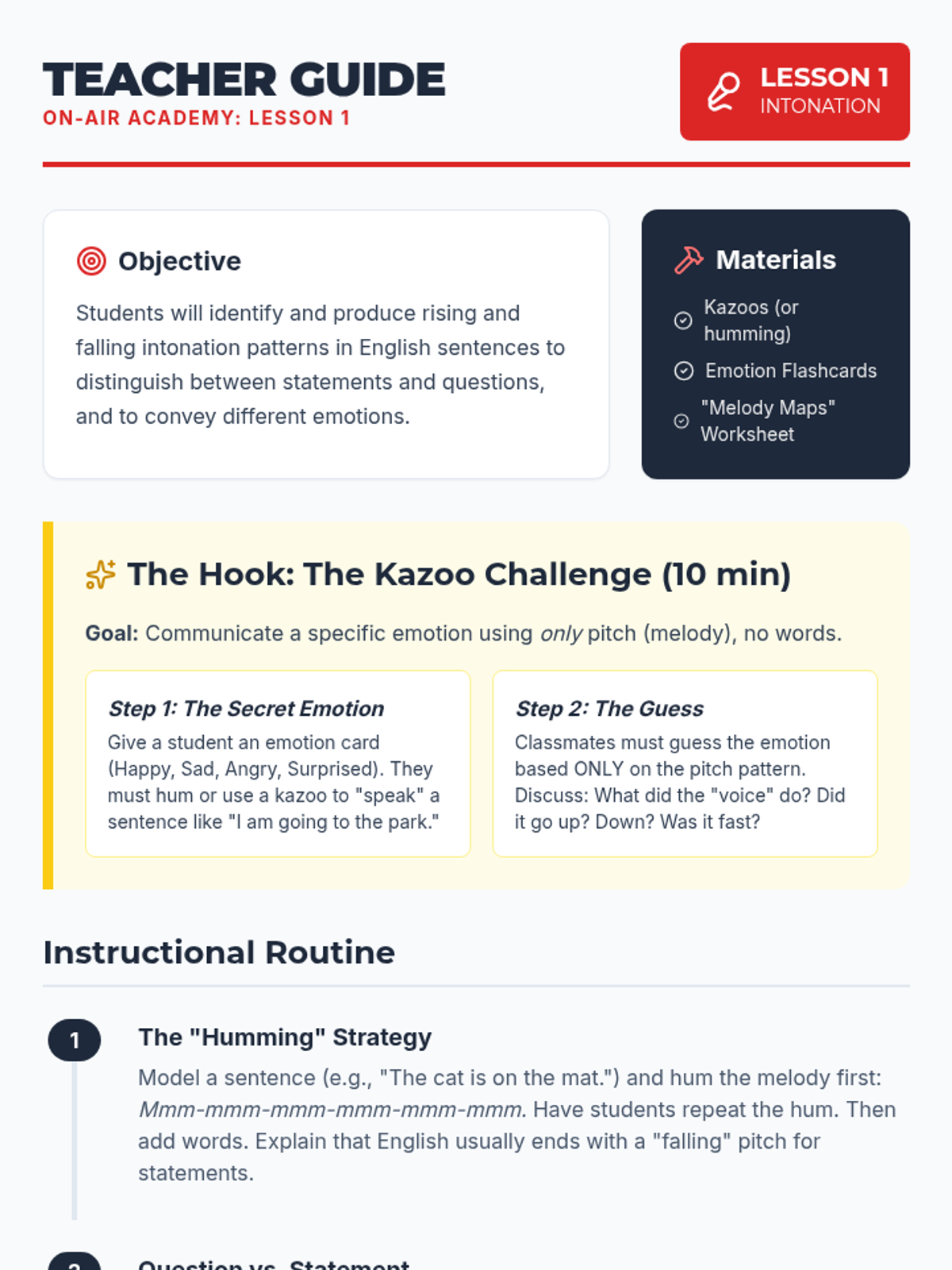
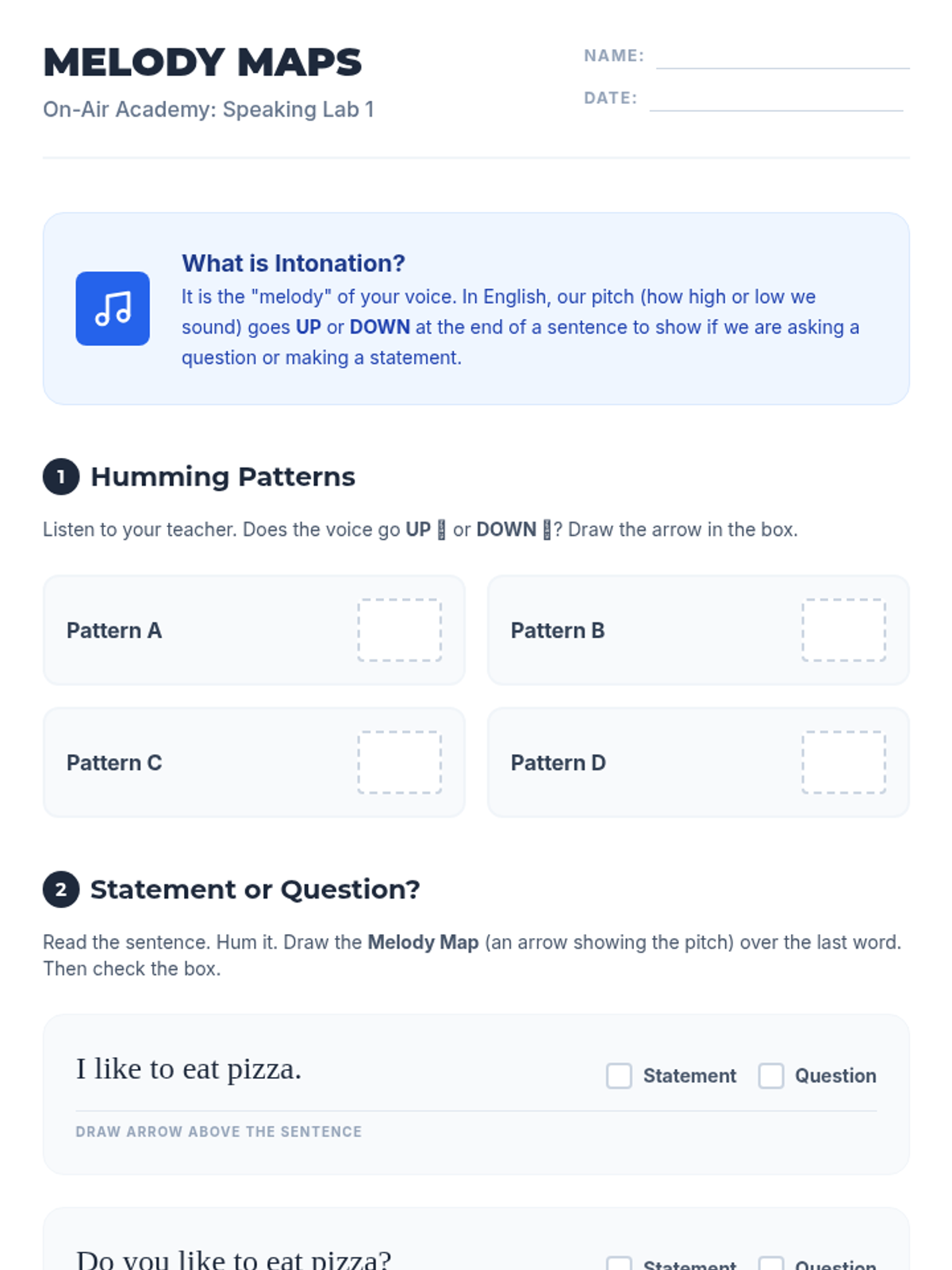
Students explore how pitch changes meaning using humming and kazoo challenges to visualize English melody.
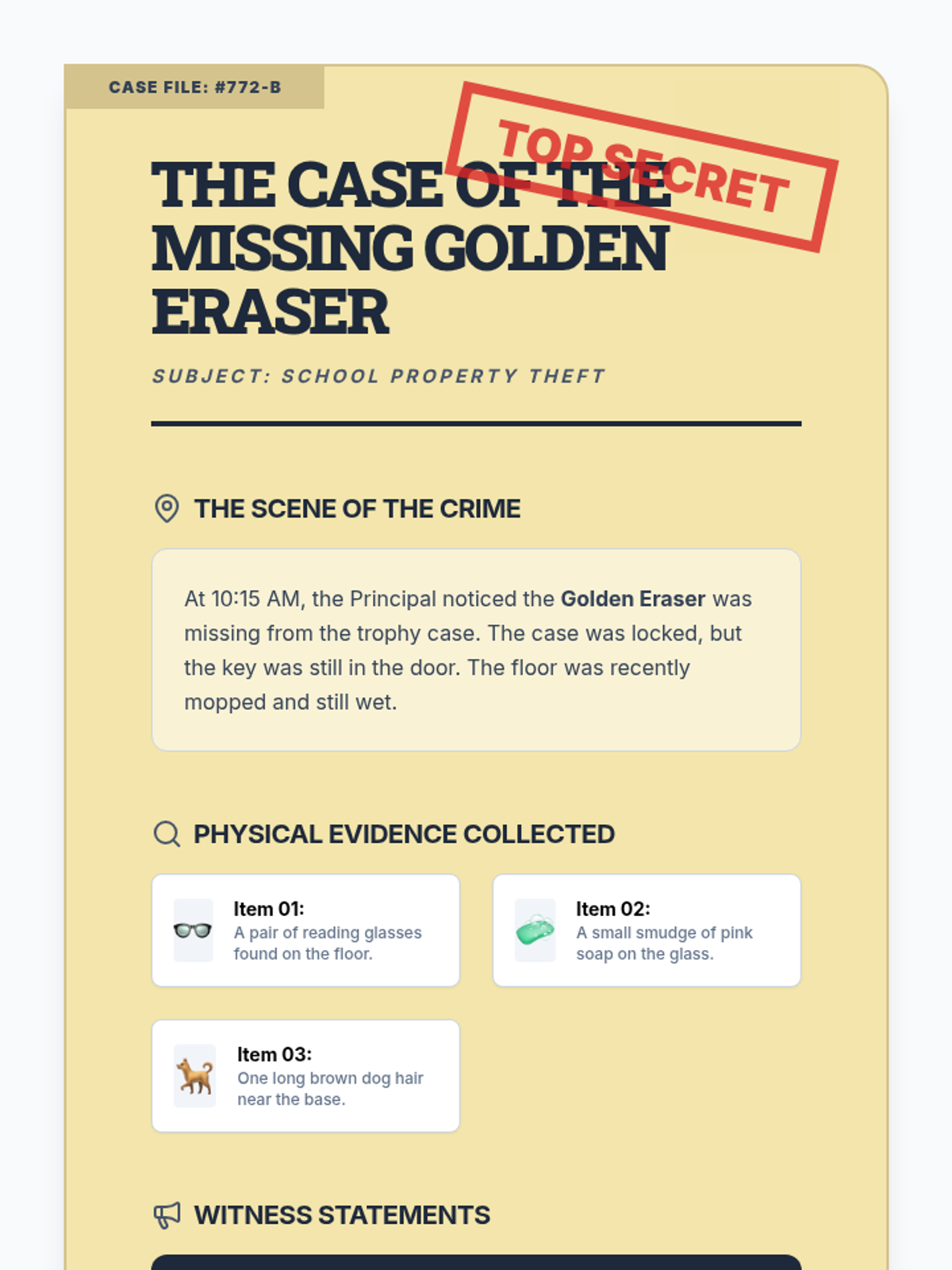
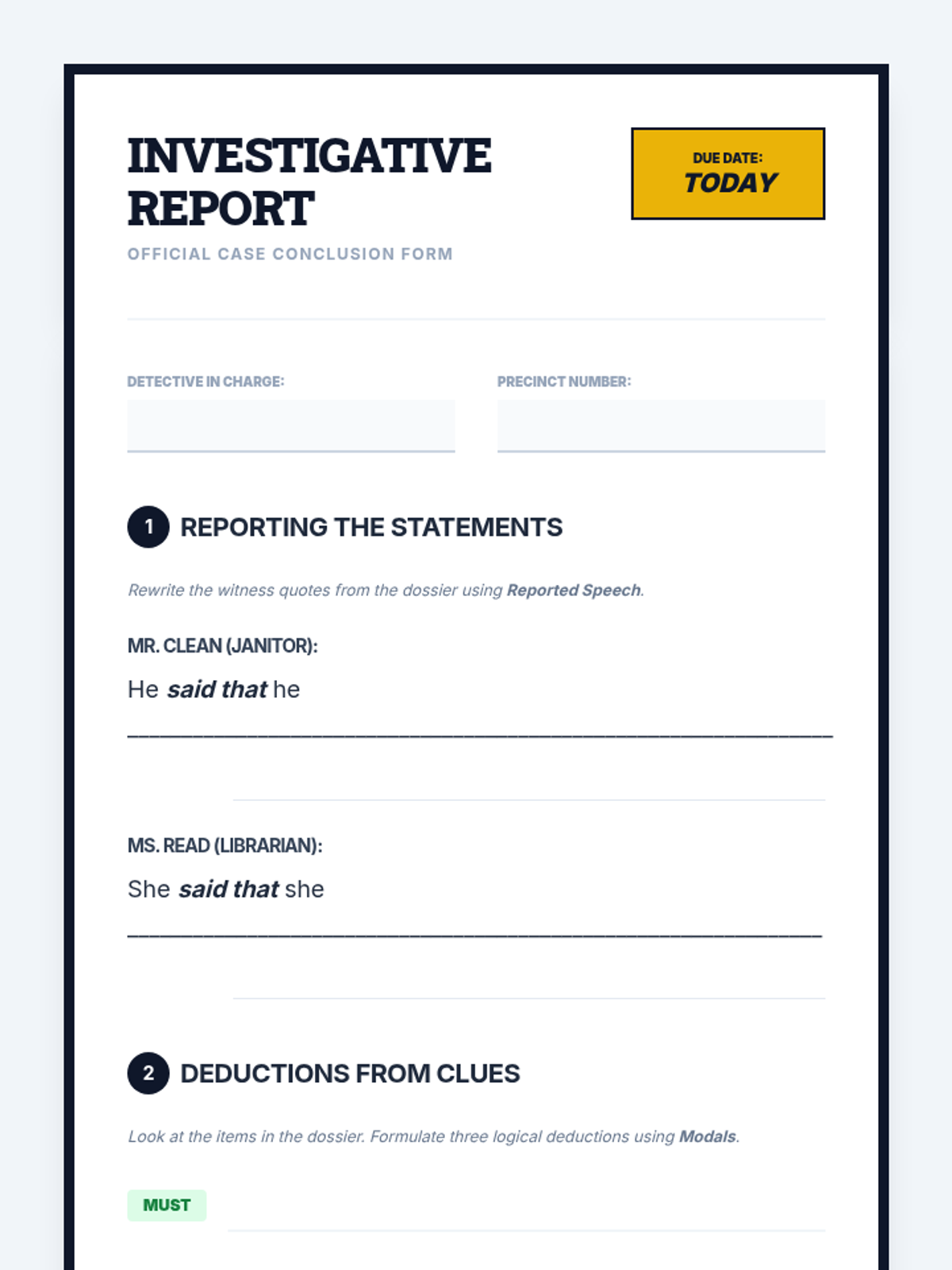
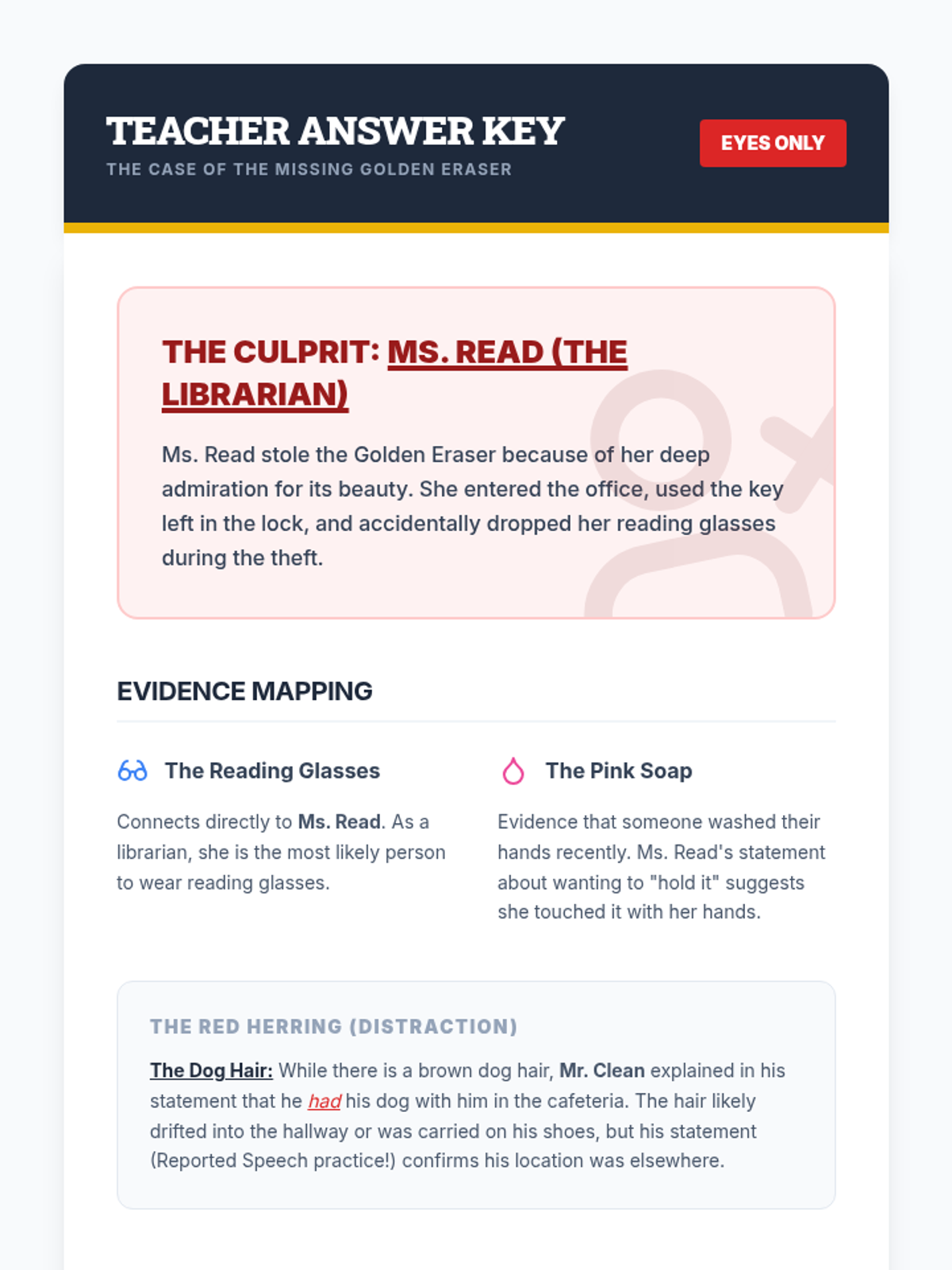
A final simulation where students use a dossier of evidence to solve a classroom mystery, synthesizing modal verbs and reported speech.
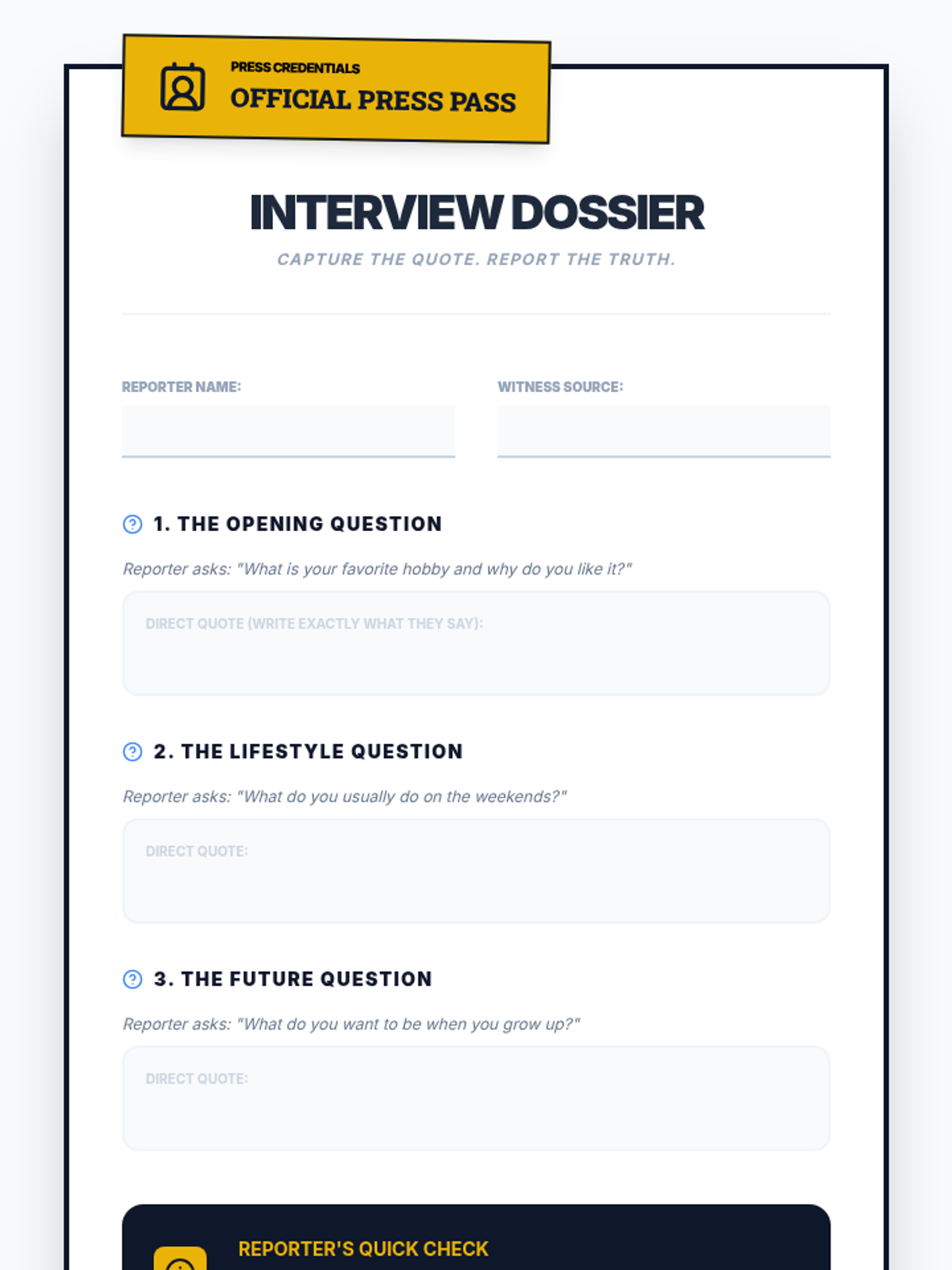
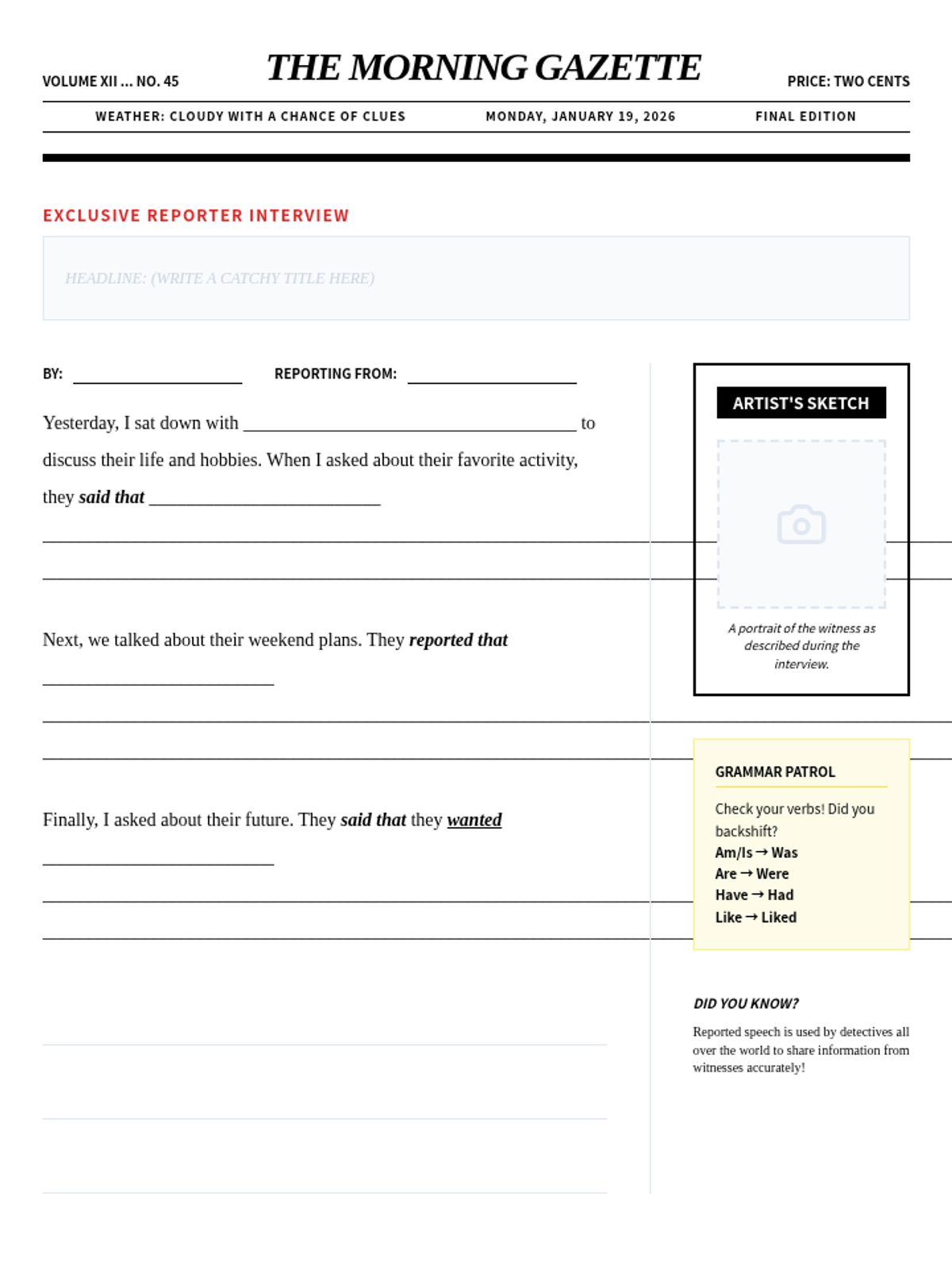
Students conduct interviews and practice converting direct responses into written reports using reporting verbs and pronoun changes.
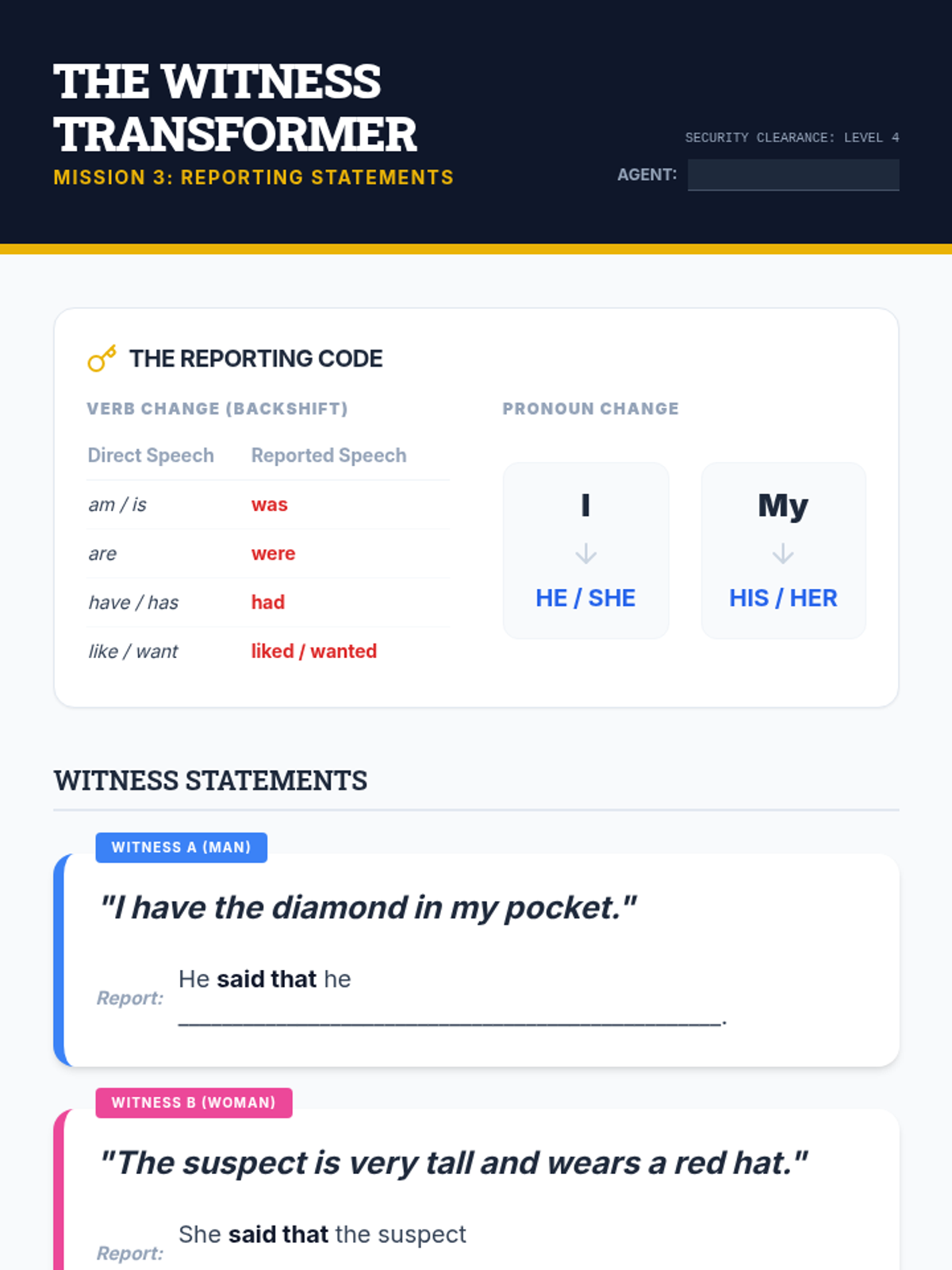
An introduction to reported speech where students learn to 'backshift' present tense verbs to past tense when reporting witness statements.
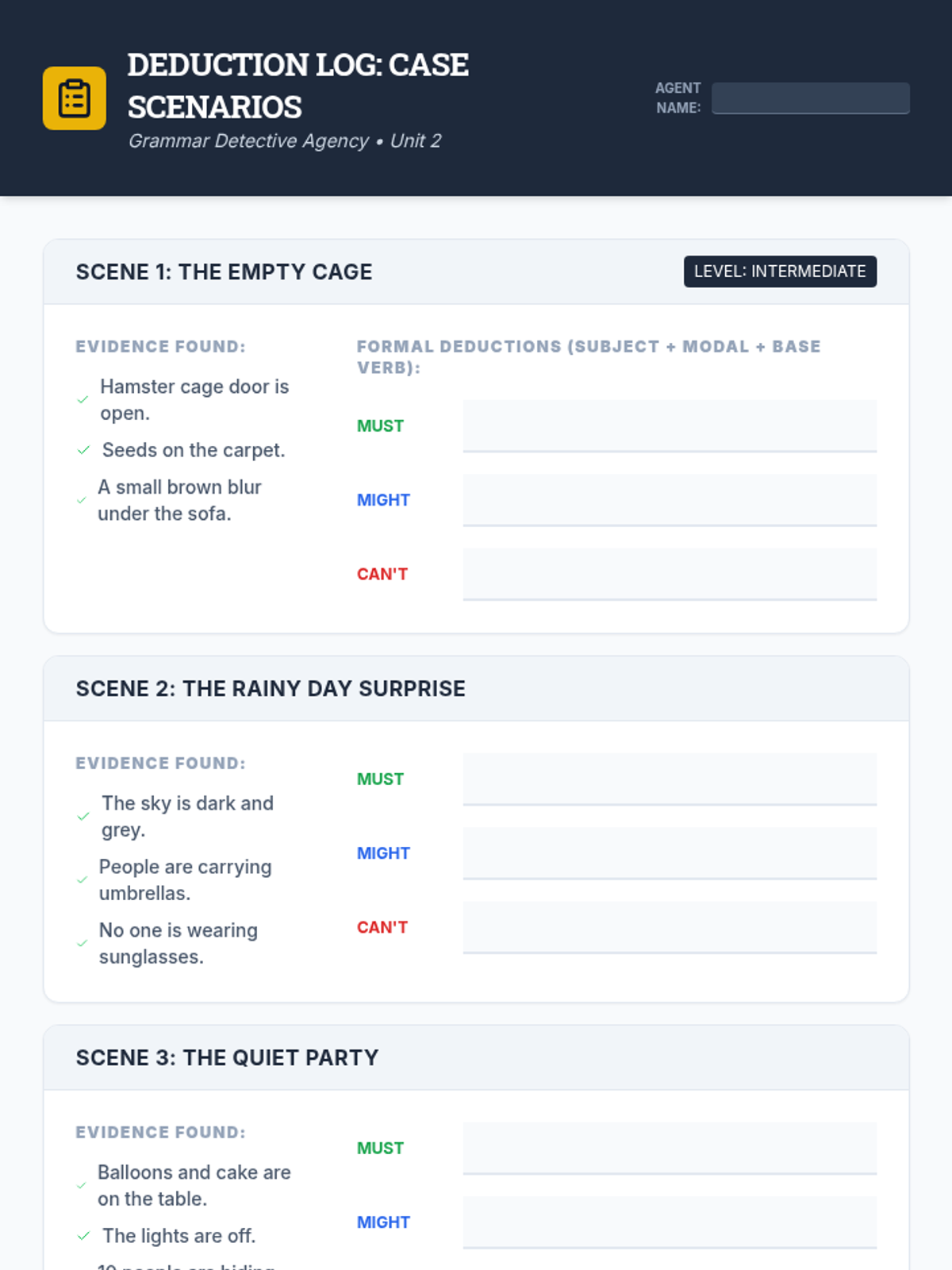
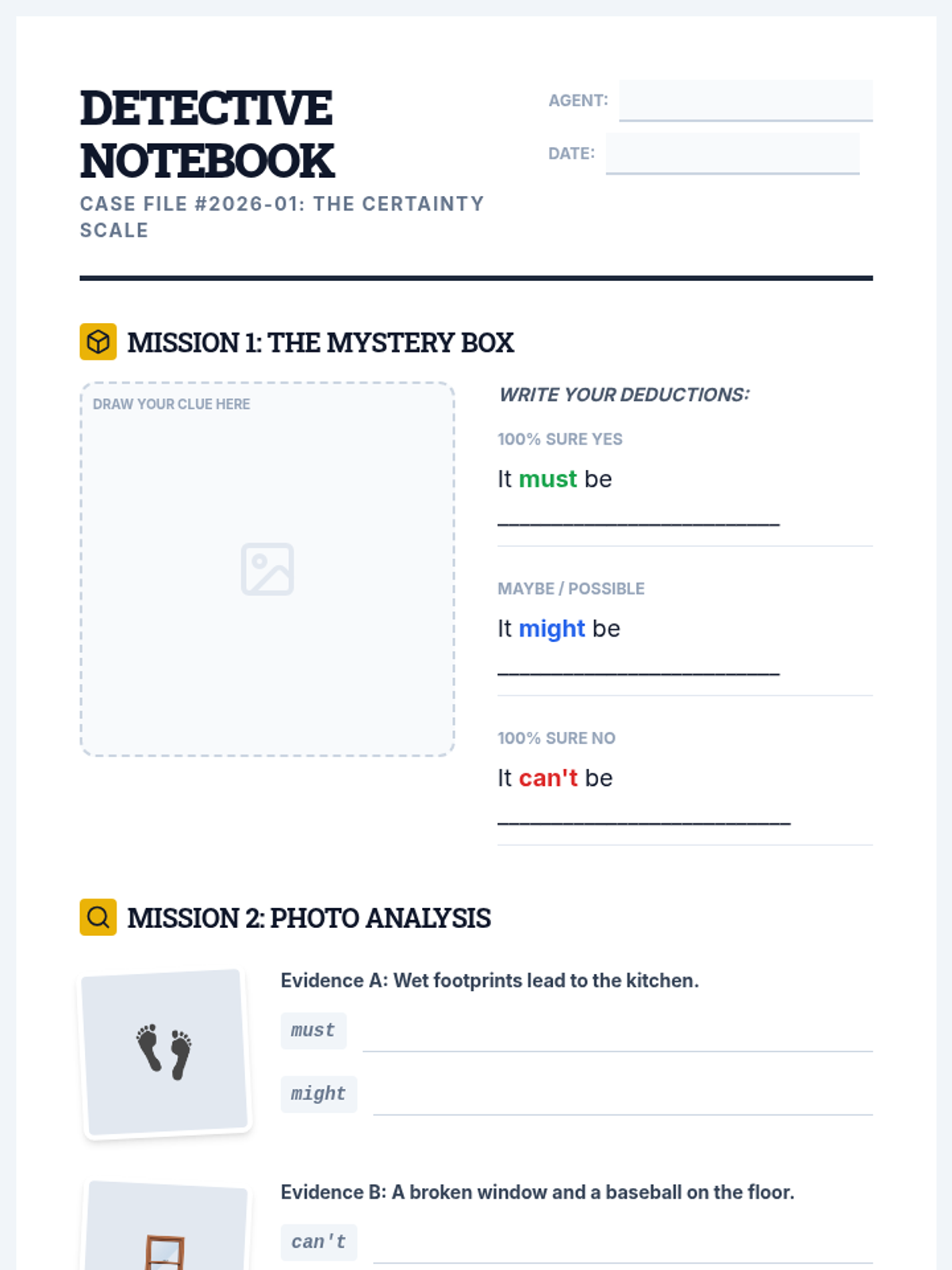
Learners apply modal verbs to written evidence scenarios, focusing on the Modal + Base Verb structure to draw logical conclusions.
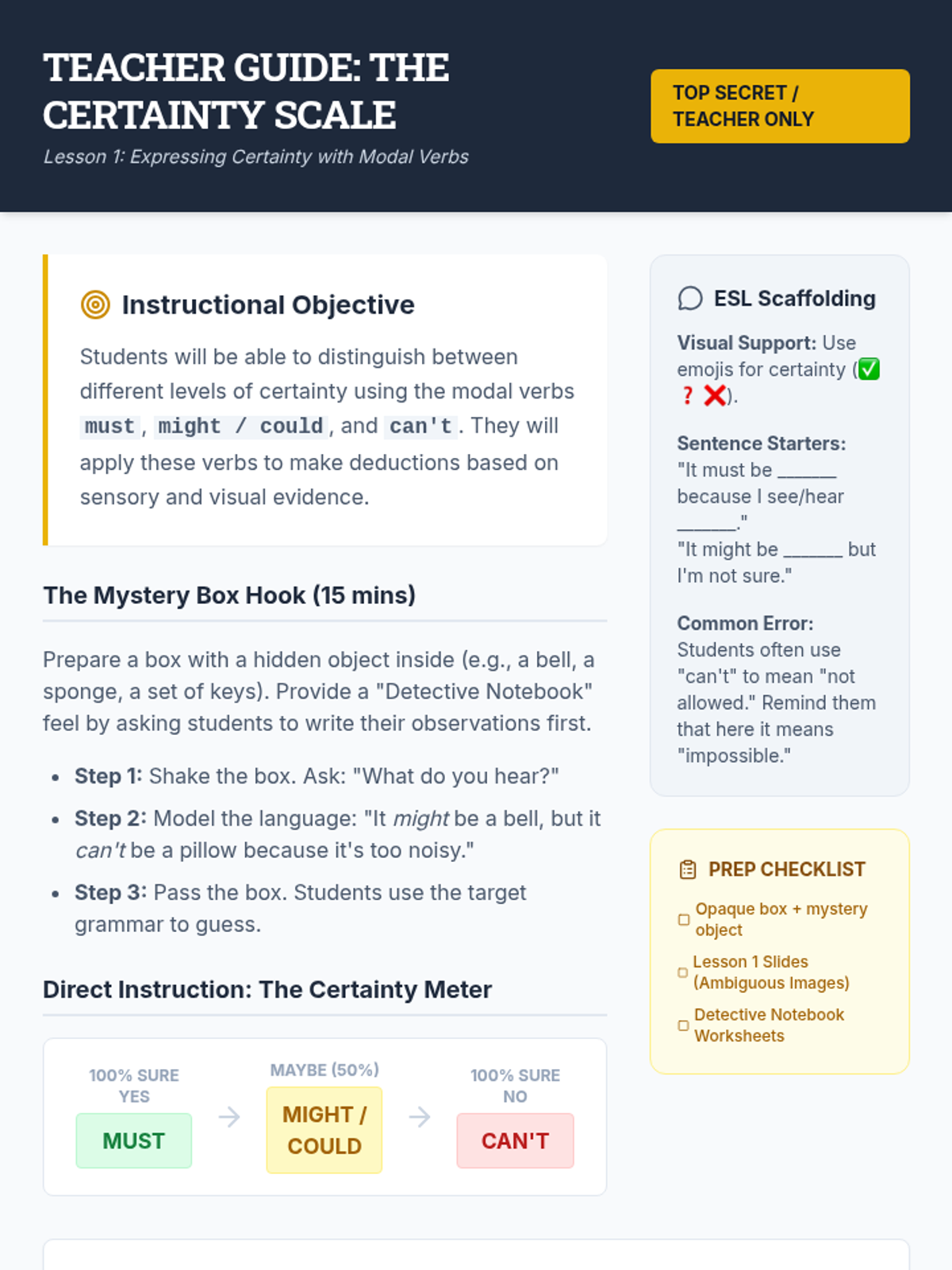
Students explore 'might', 'could', 'must', and 'can't' to express probability by investigating a Mystery Box and ambiguous images.
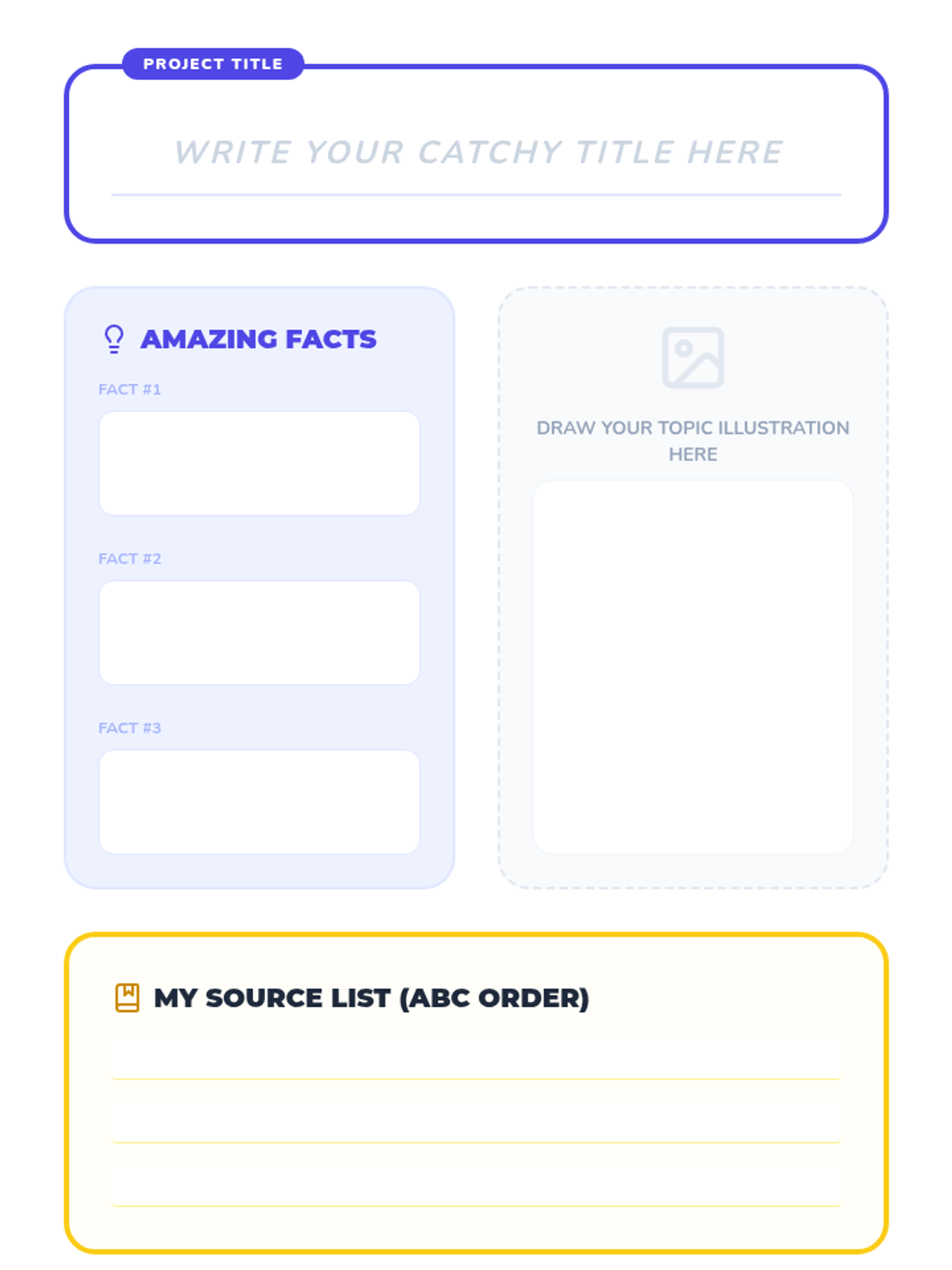
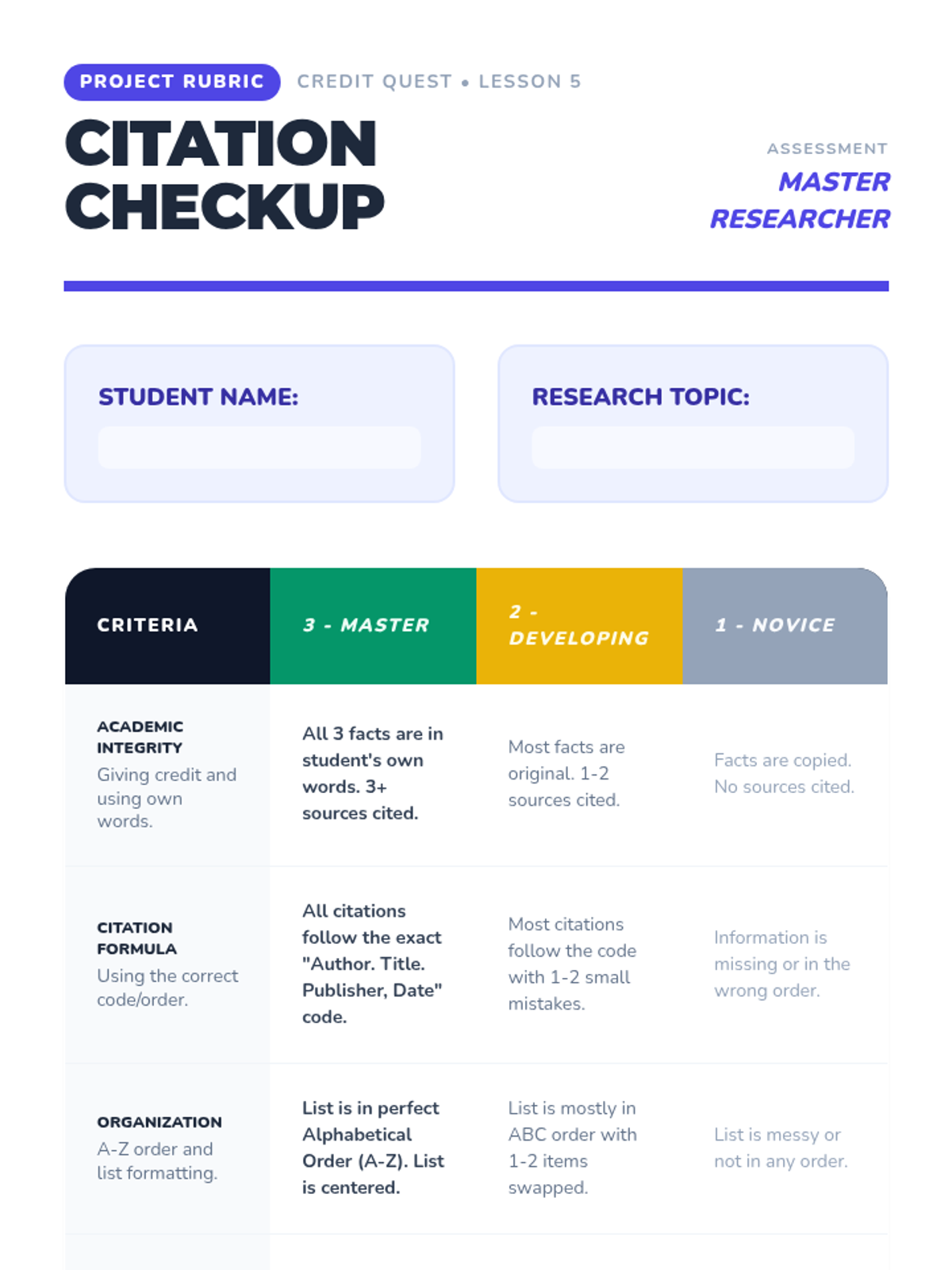
Students create a mini-research poster on a topic of their choice. They apply their knowledge by including three facts and a correctly formatted, alphabetized bibliography with at least three sources. The lesson includes a gallery walk for peer feedback.
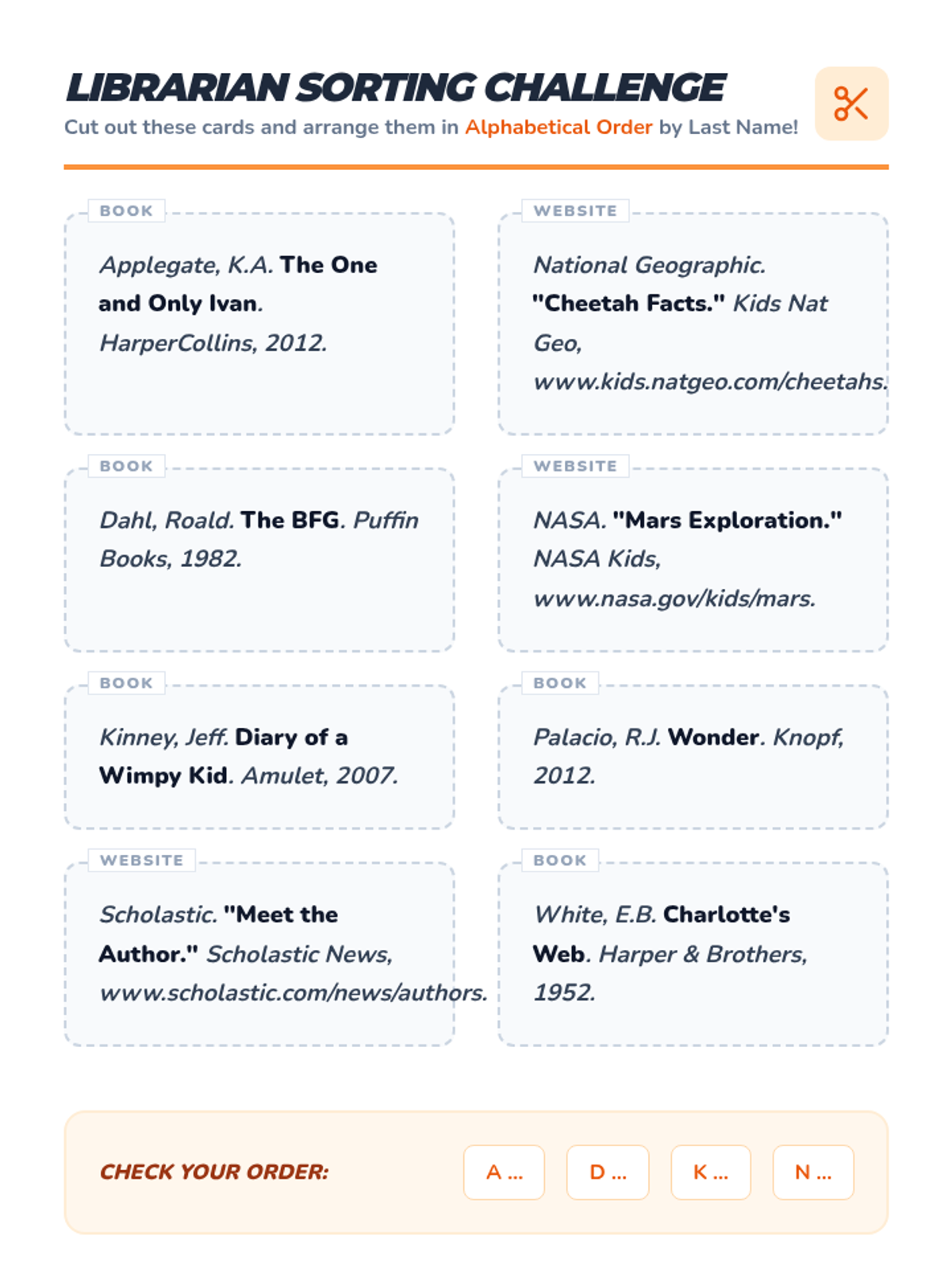
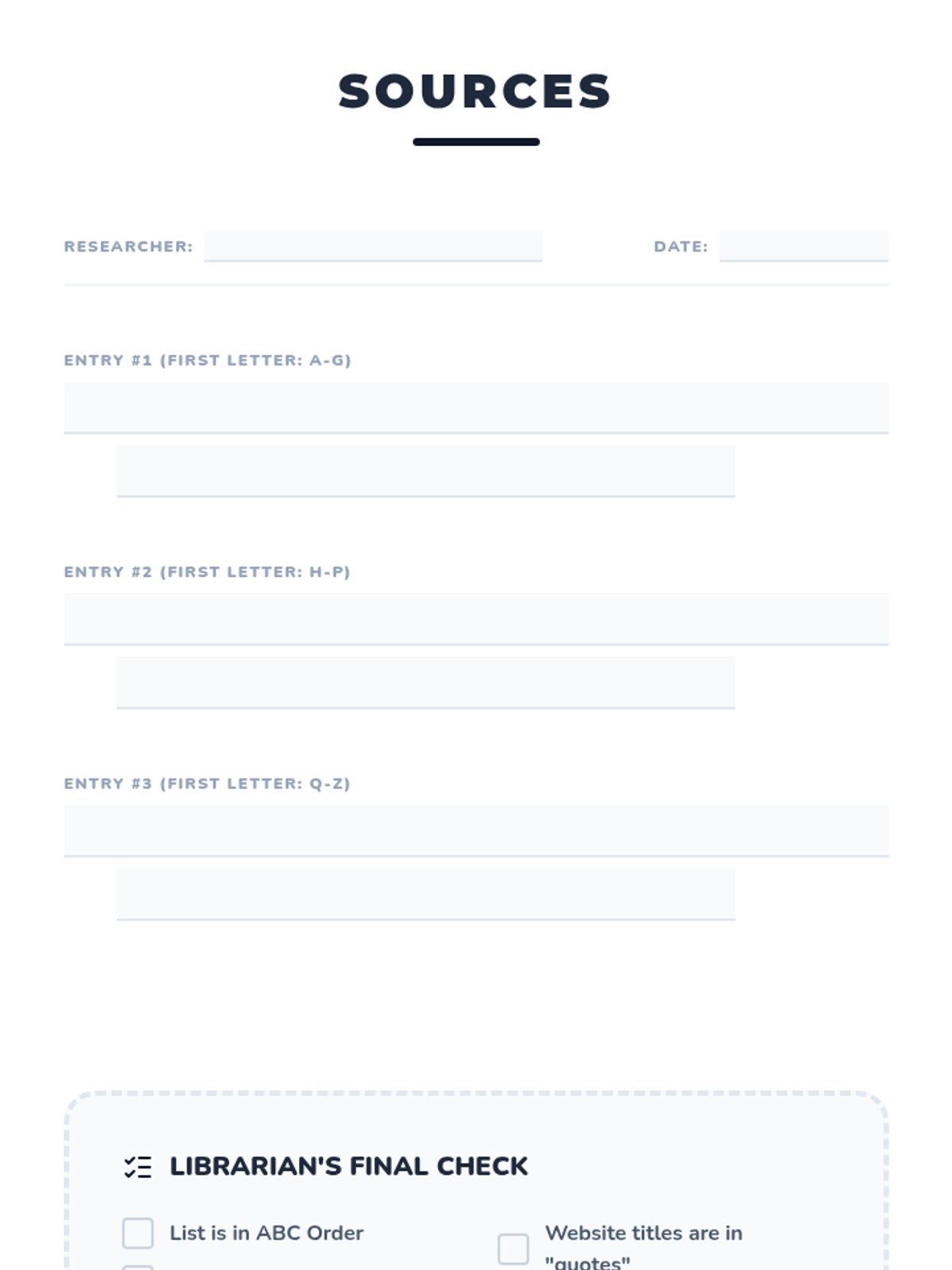
Students learn how to organize individual citations into a list, emphasizing alphabetical order. They practice formatting a simple bibliography page using citations generated in previous lessons. This prepares them for the final structural requirement of research papers.
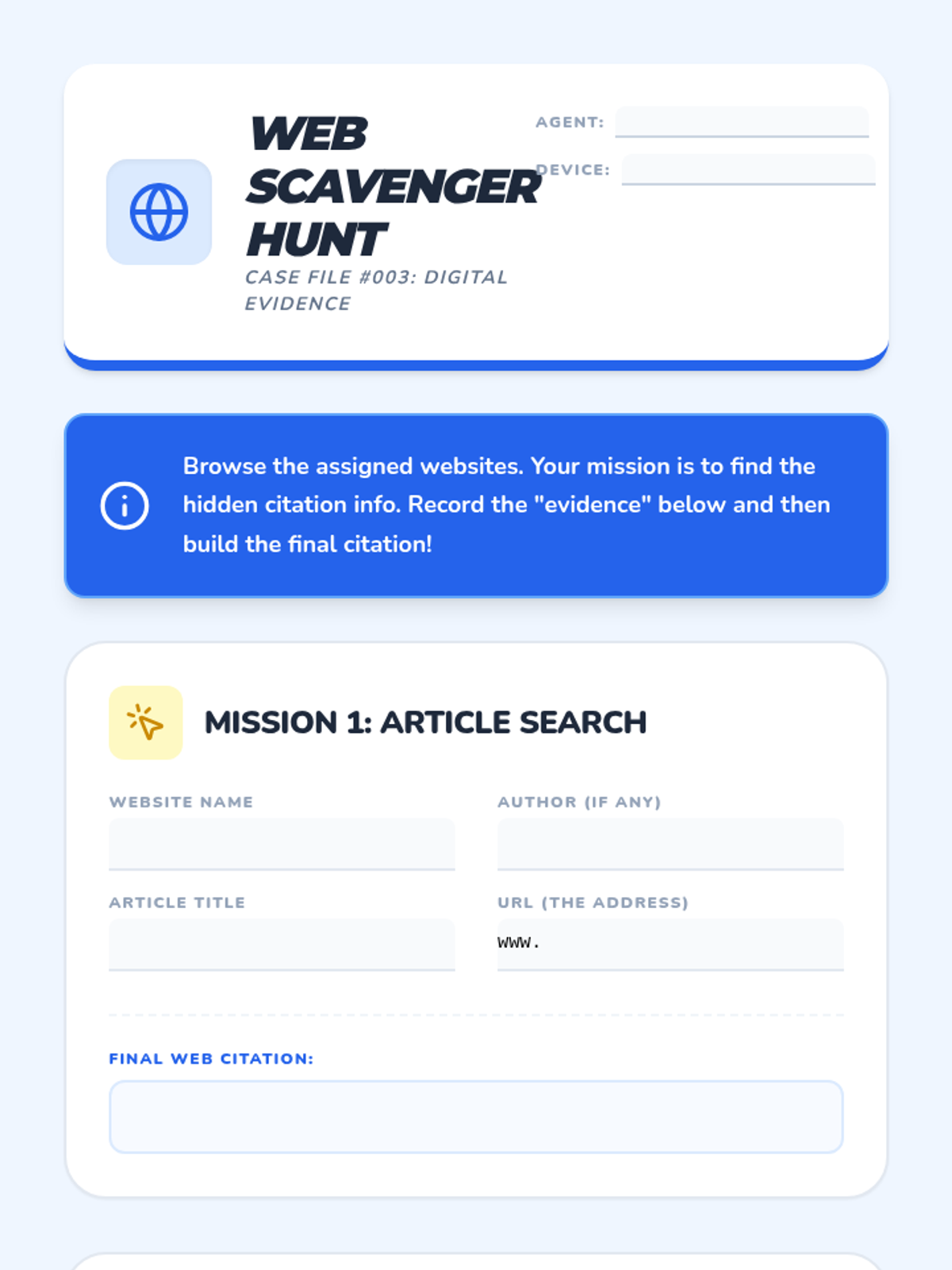
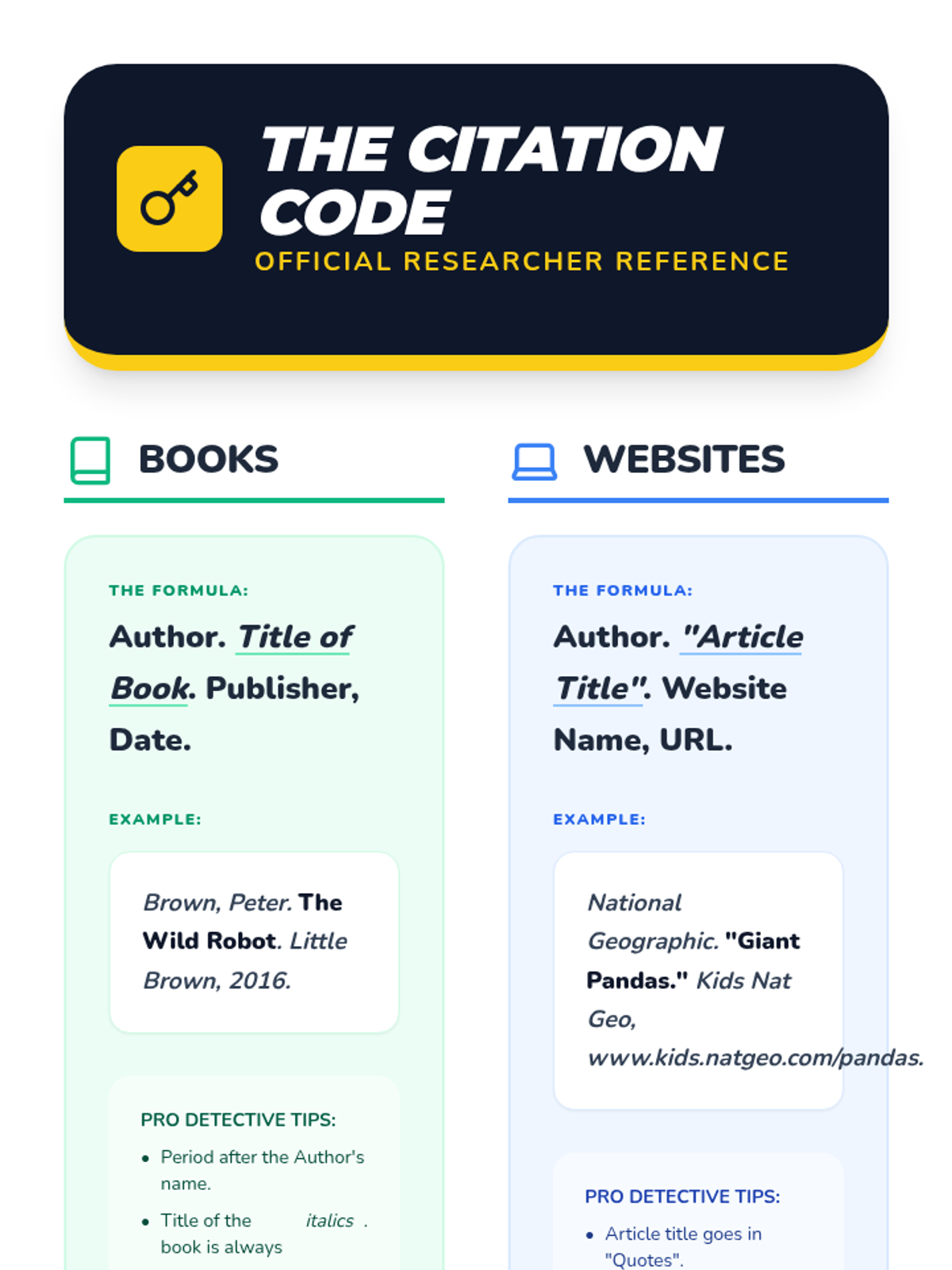
Students learn how to find citation information on websites, which is often harder to locate. They practice finding the URL, site name, and access date. Students compare the differences between book and website citations.
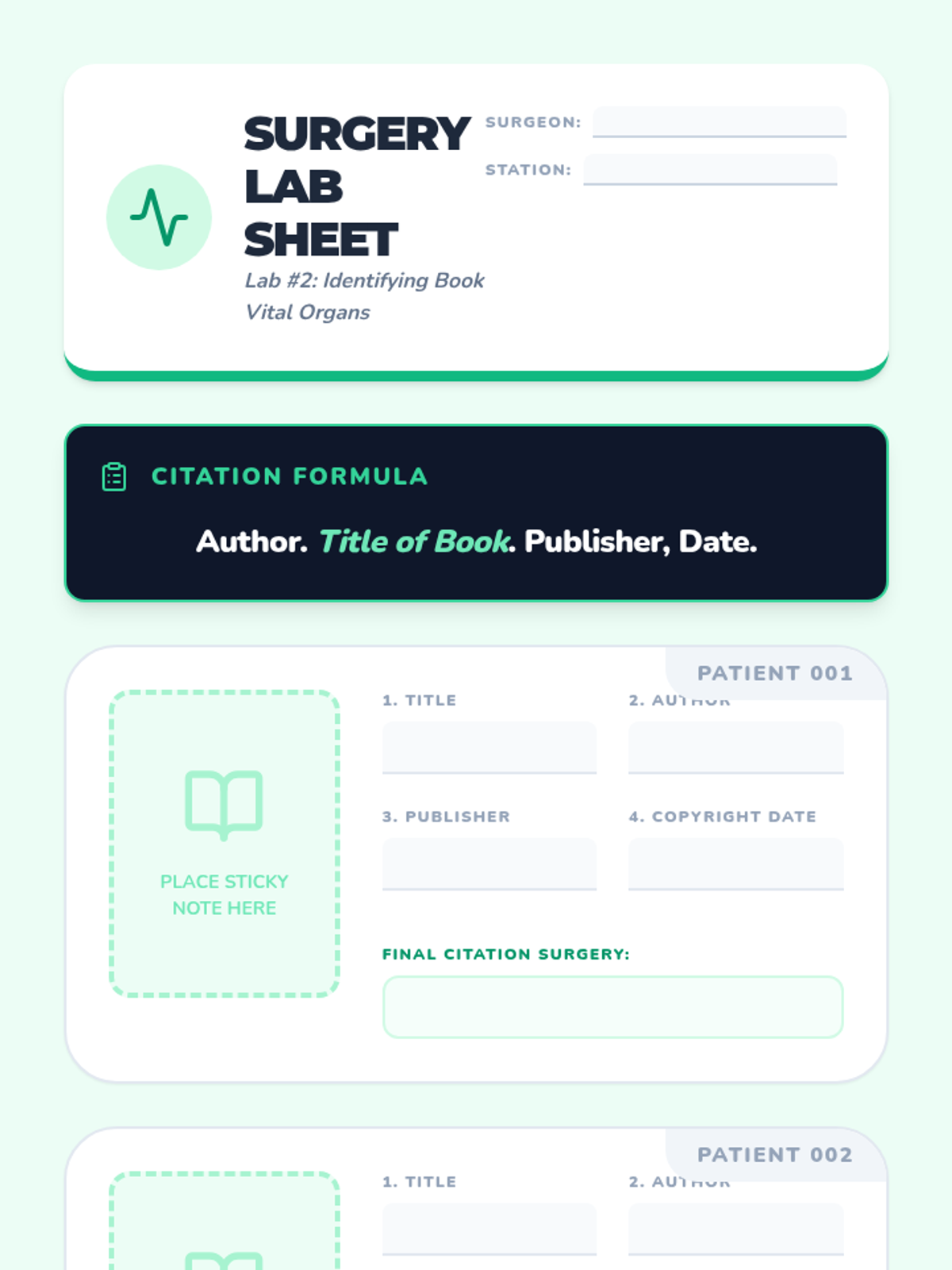
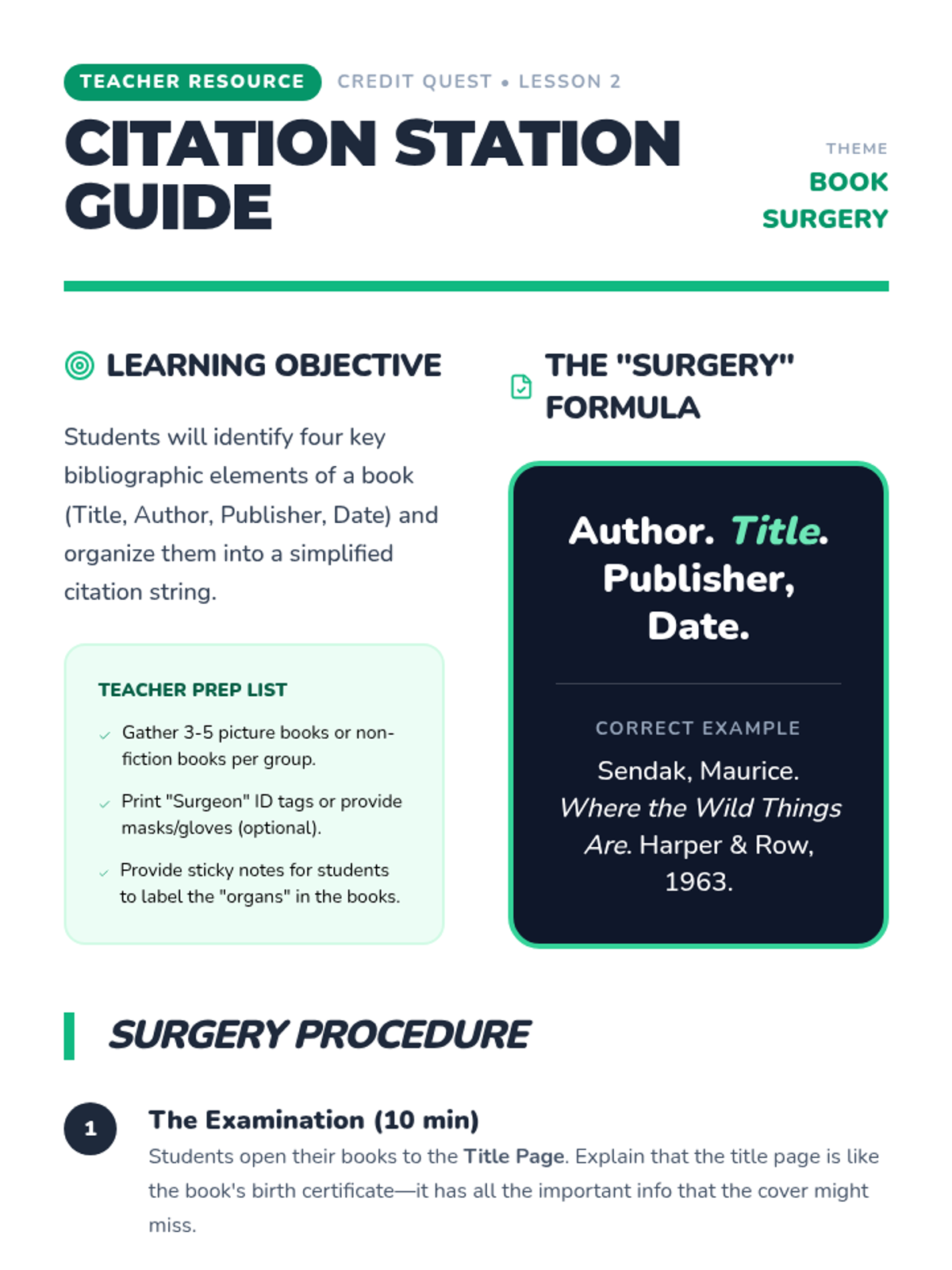
Students handle physical books to locate the title page, author, publisher, and copyright date. They learn a simplified citation format and practice finding bibliographic data.
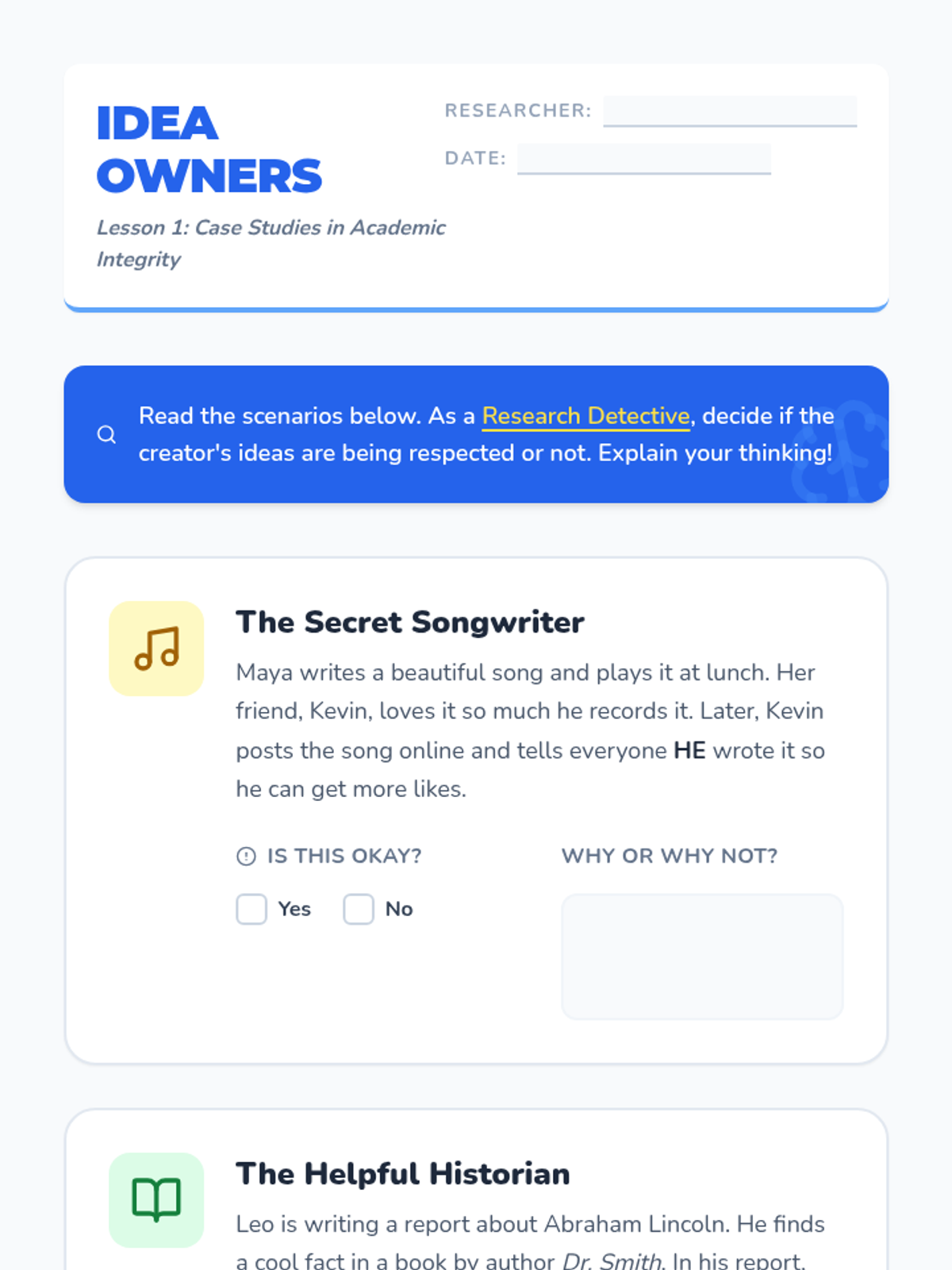
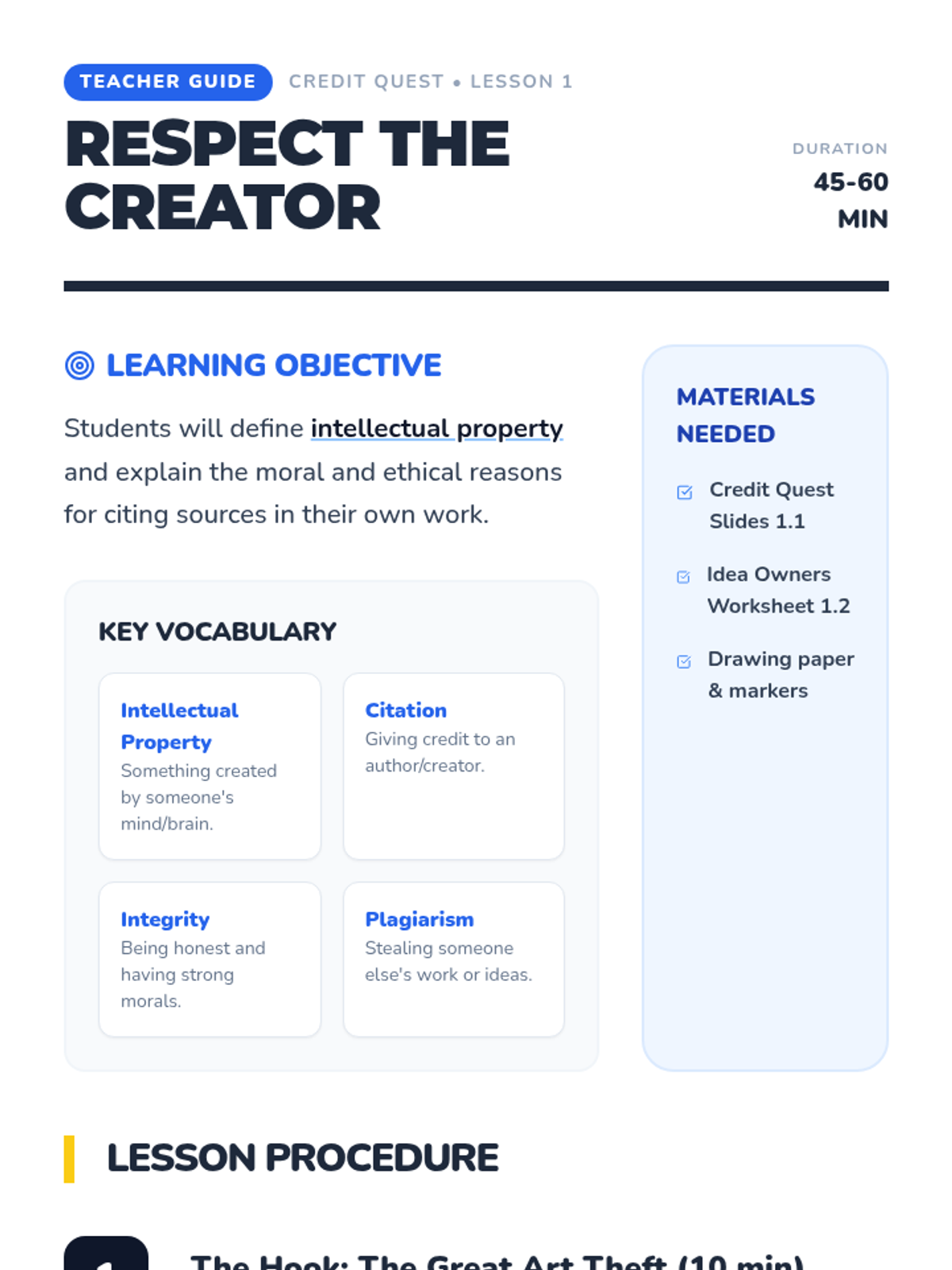
Students explore the moral basis of citation by discussing ownership of creative work. Through relatable scenarios, they learn what intellectual property is and why giving credit matters.
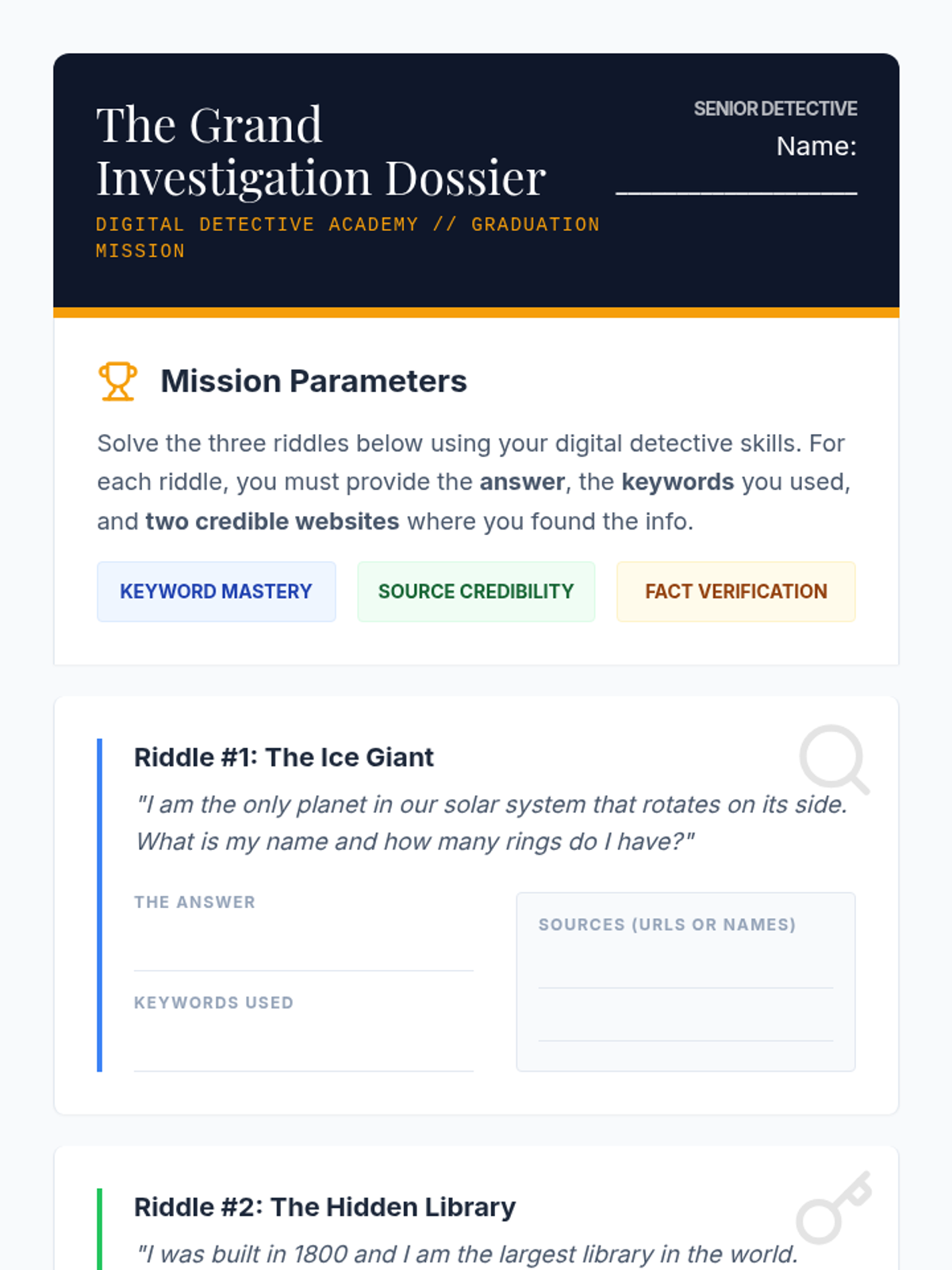
A culminating scavenger hunt where students apply all previous skills to solve complex research questions using only credible sources.
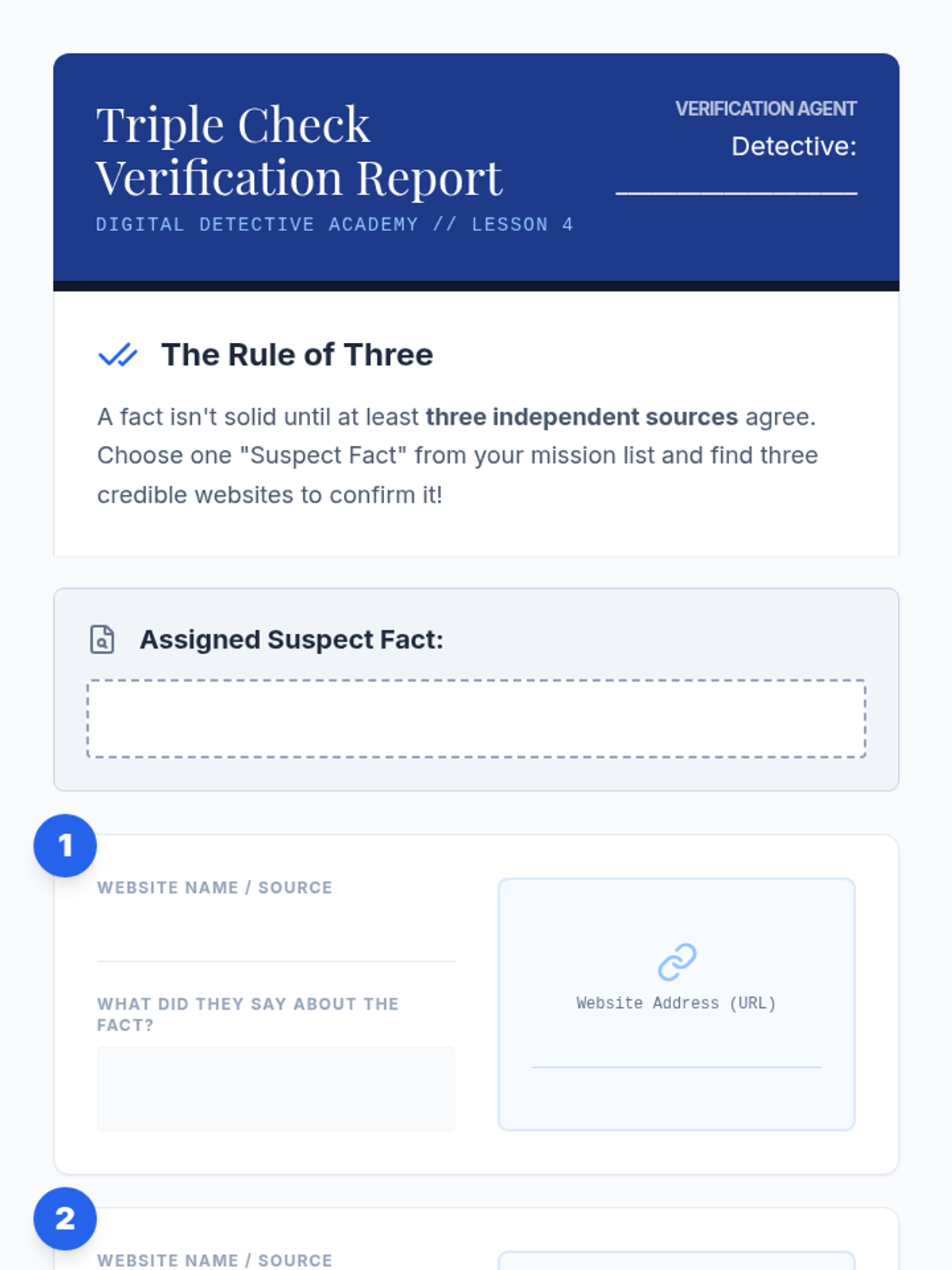
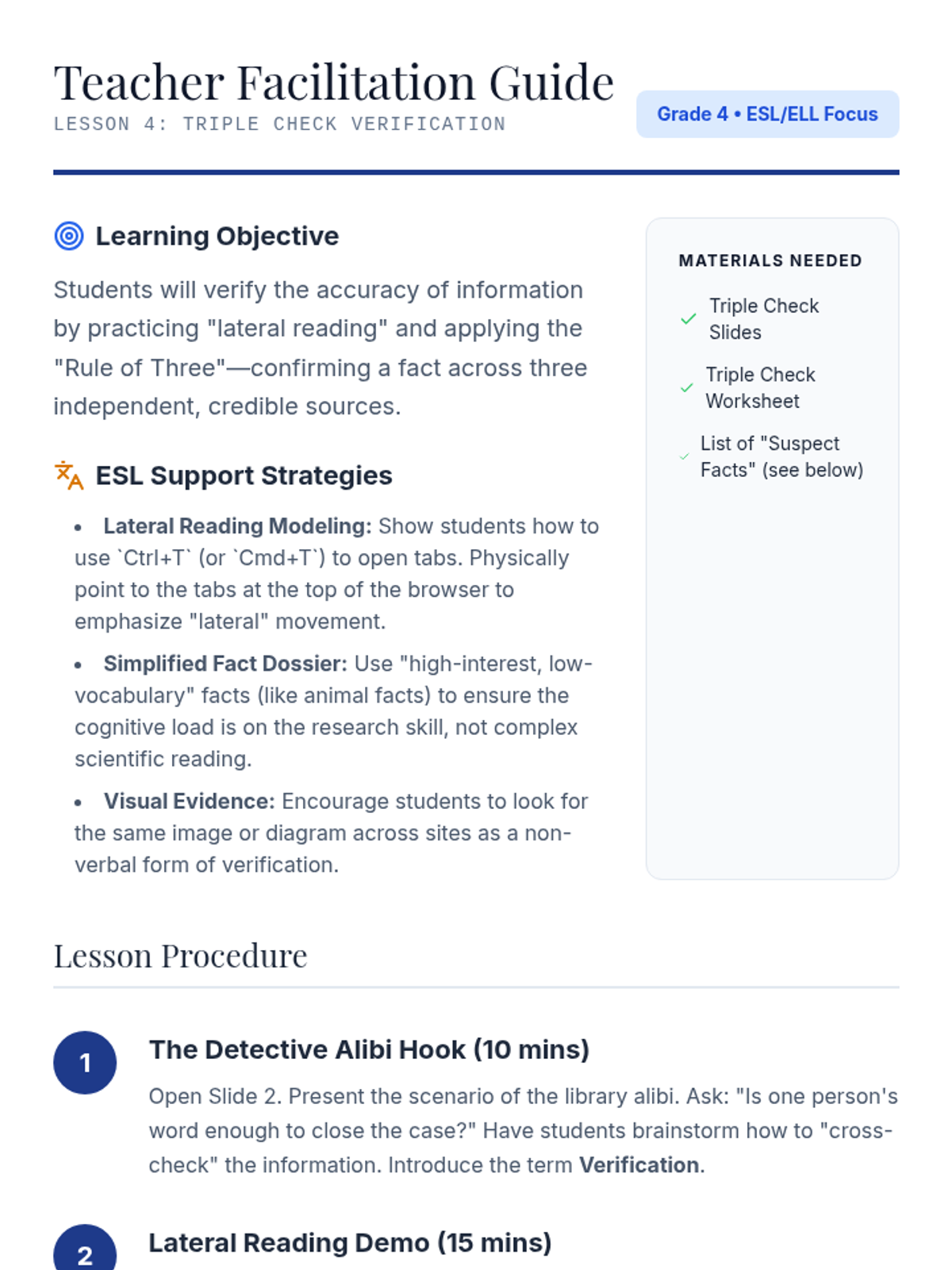
Students learn the 'Rule of Three' and practice lateral reading to verify information across multiple independent sources.
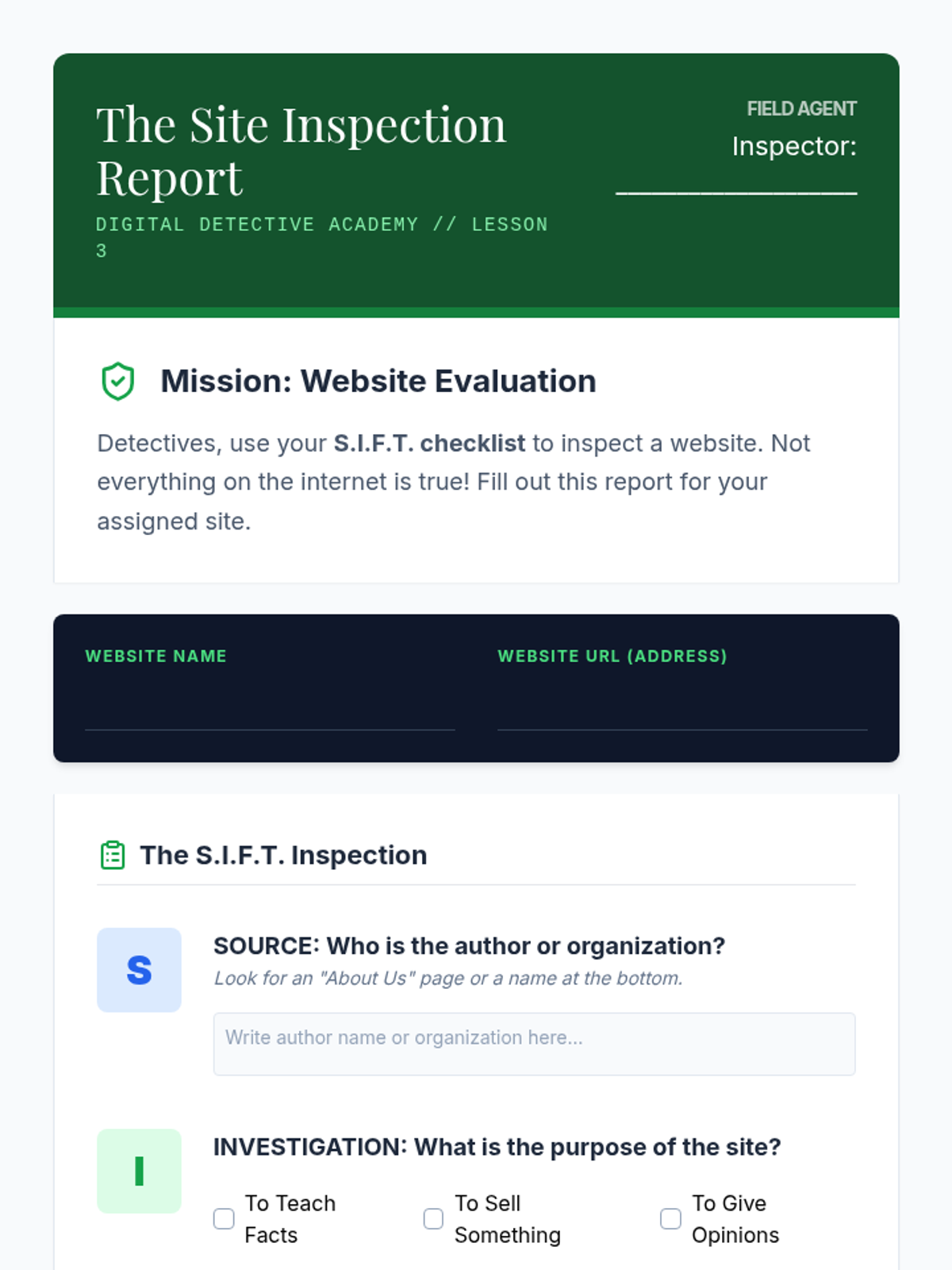
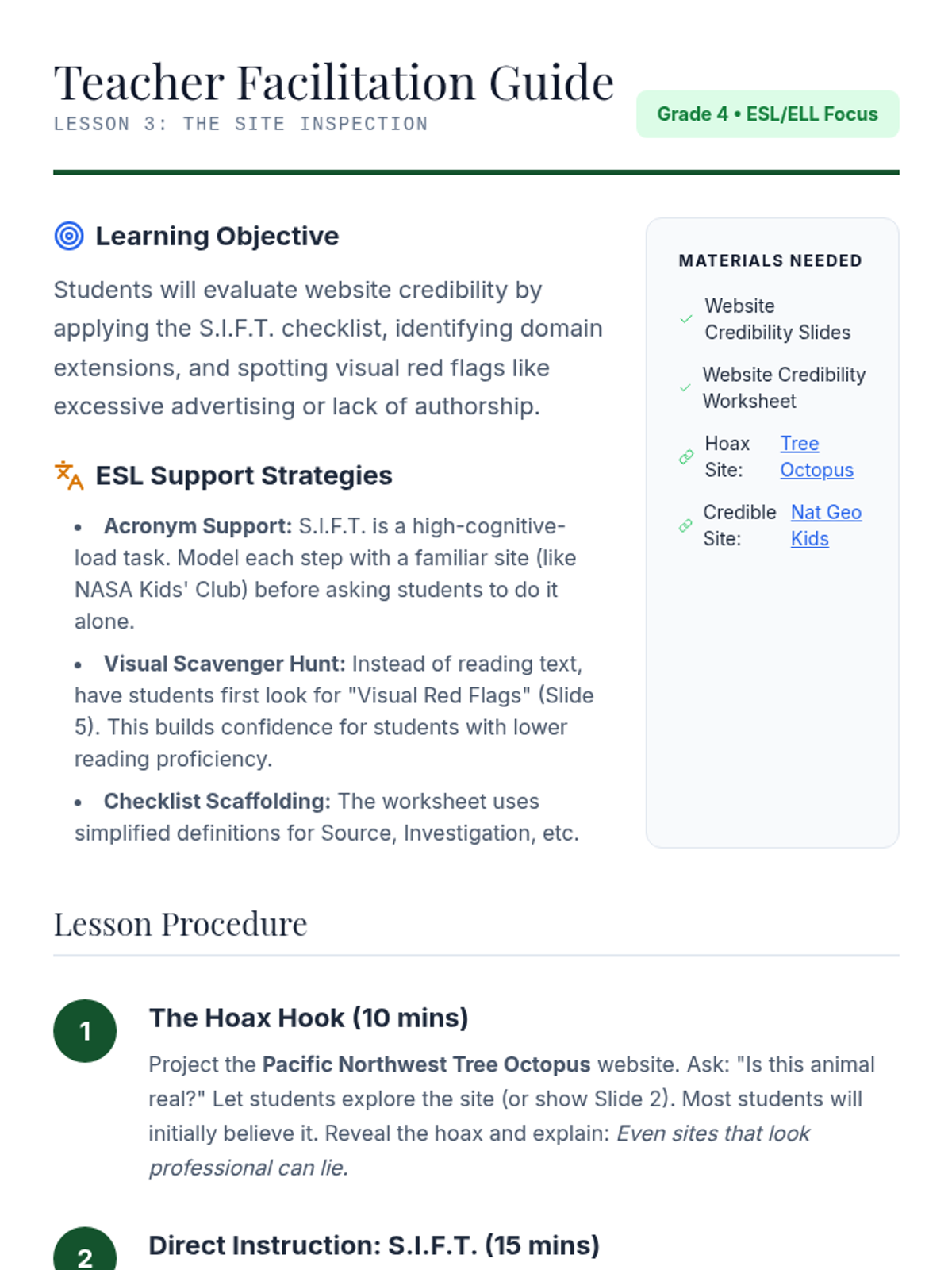
Students use a simple checklist to evaluate website authority, date, and purpose. They analyze a 'hoax' website to practice critical evaluation skills.
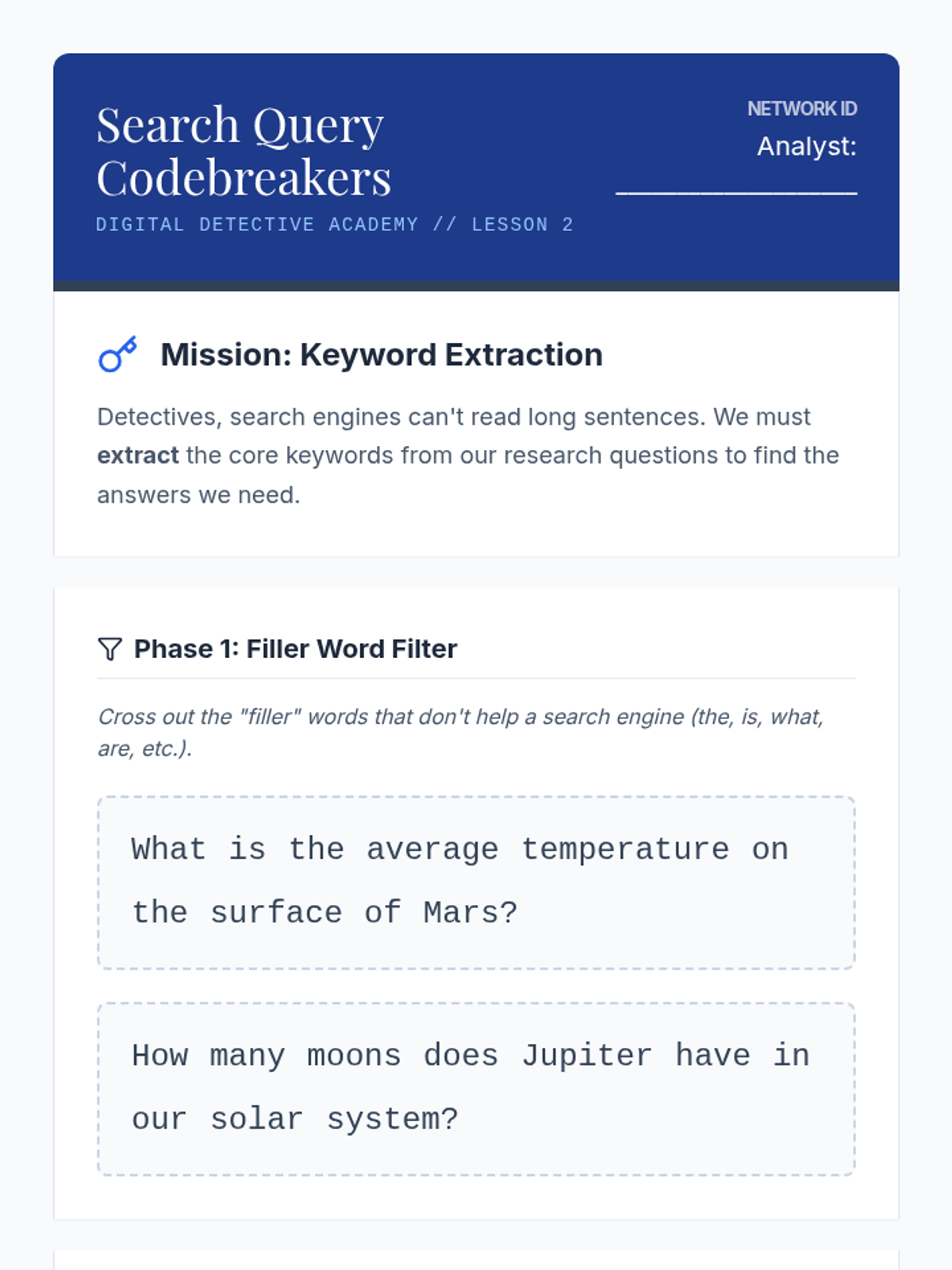
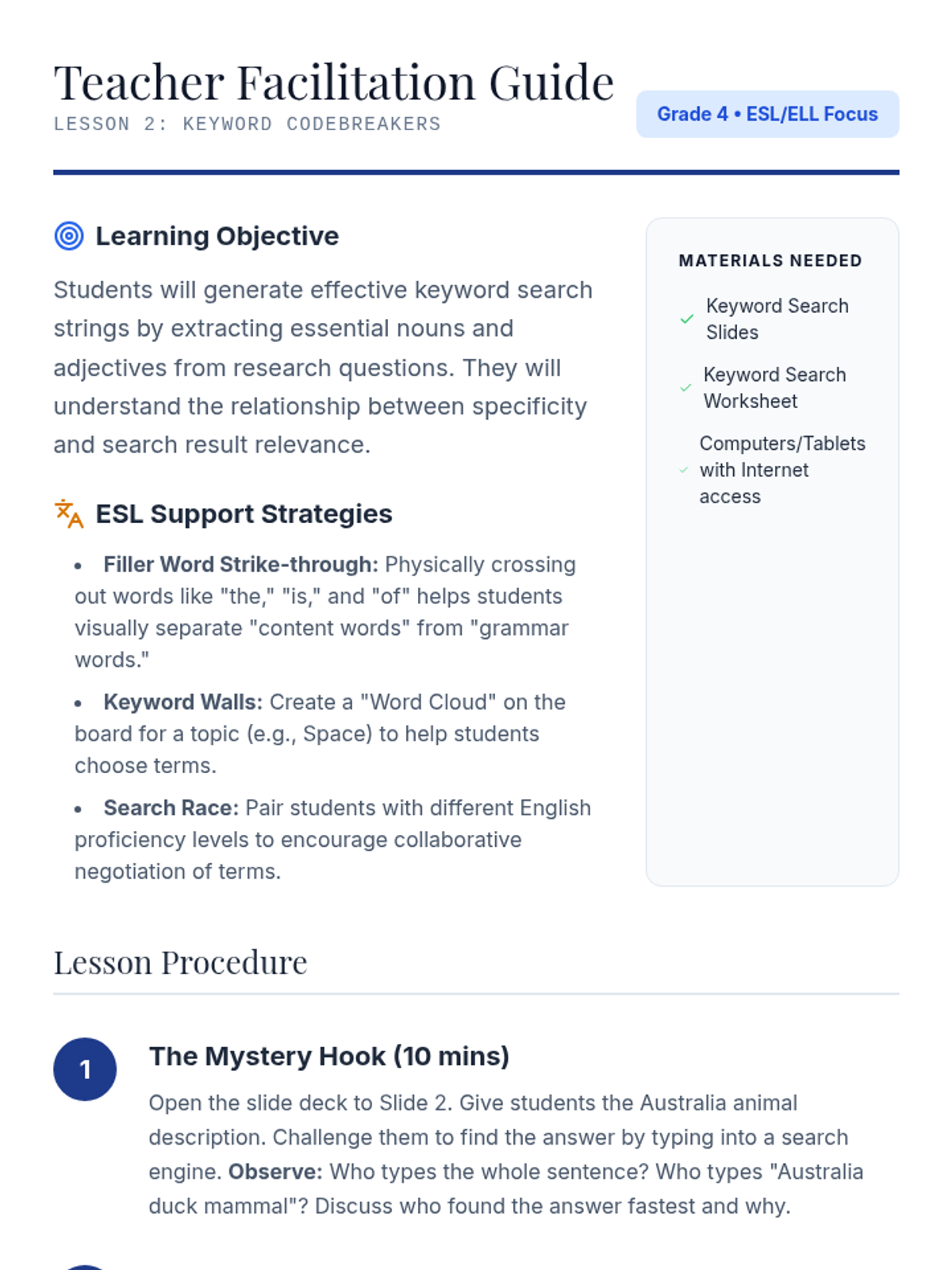
Learners practice generating specific keywords and understanding search engine logic. They participate in a 'search race' to compare broad vs. specific terms.
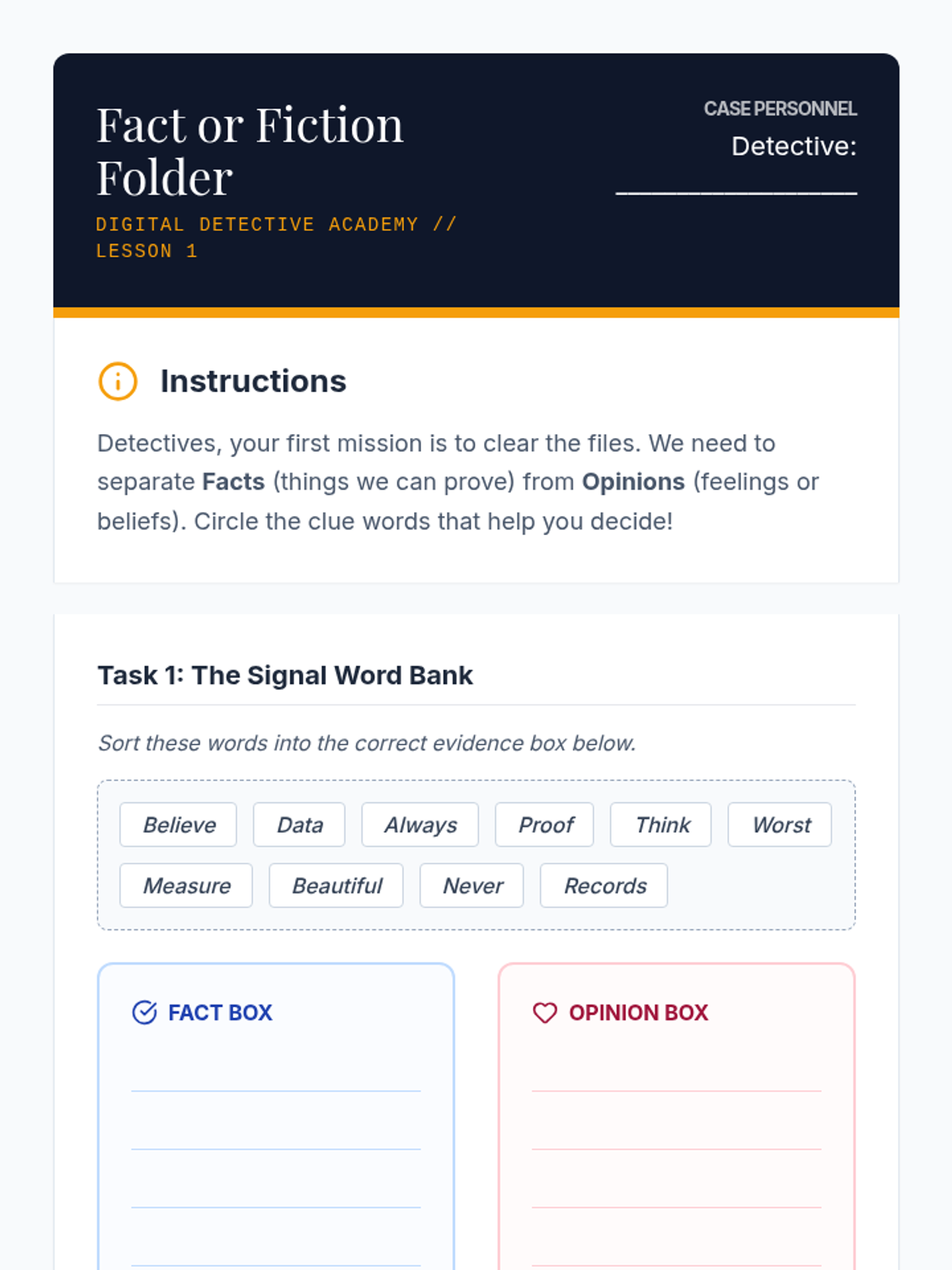
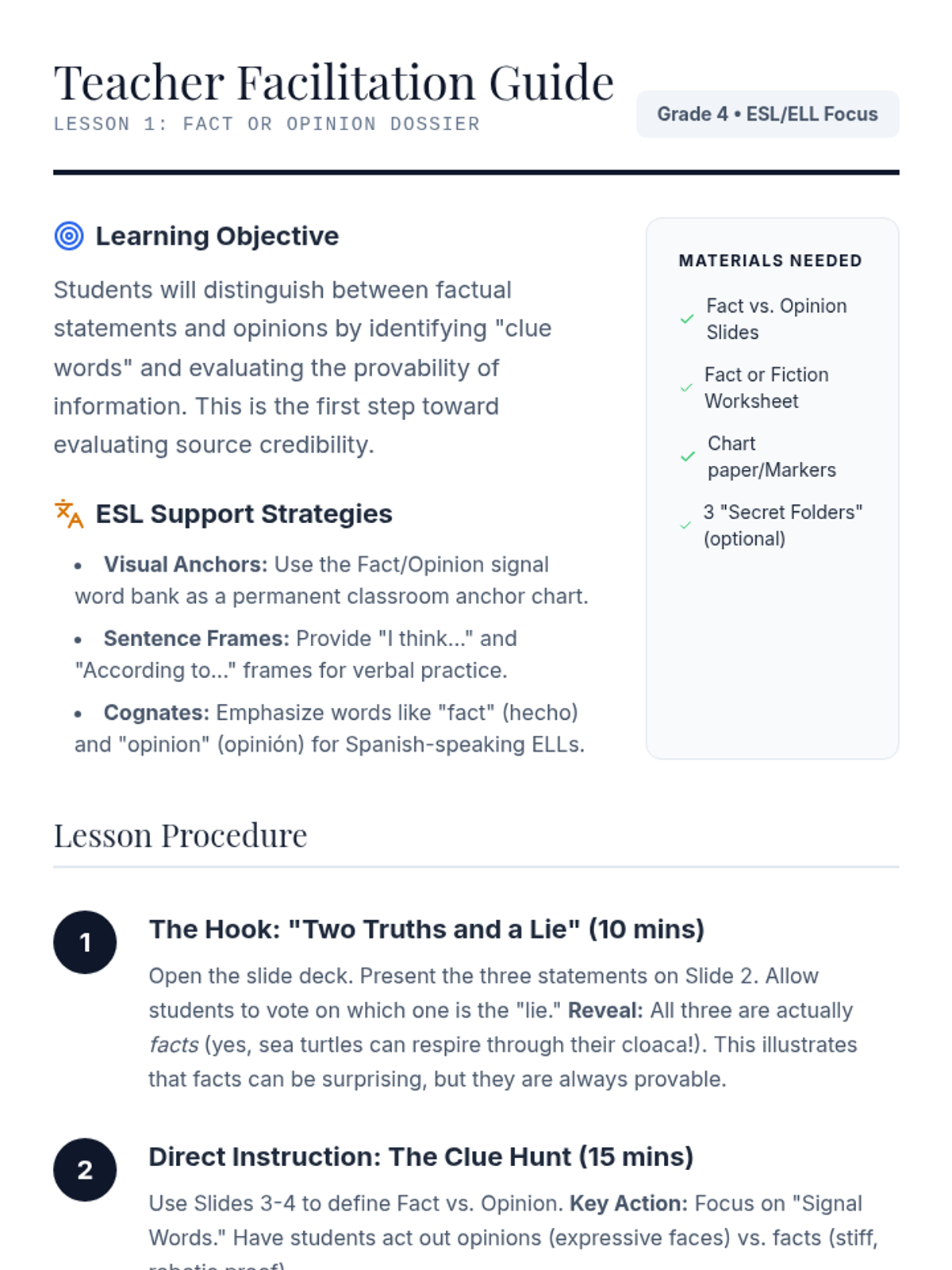
Students learn to differentiate between factual statements and opinions through sorting activities and analyzing signal words. This foundational lesson establishes the need for objective evidence in research.
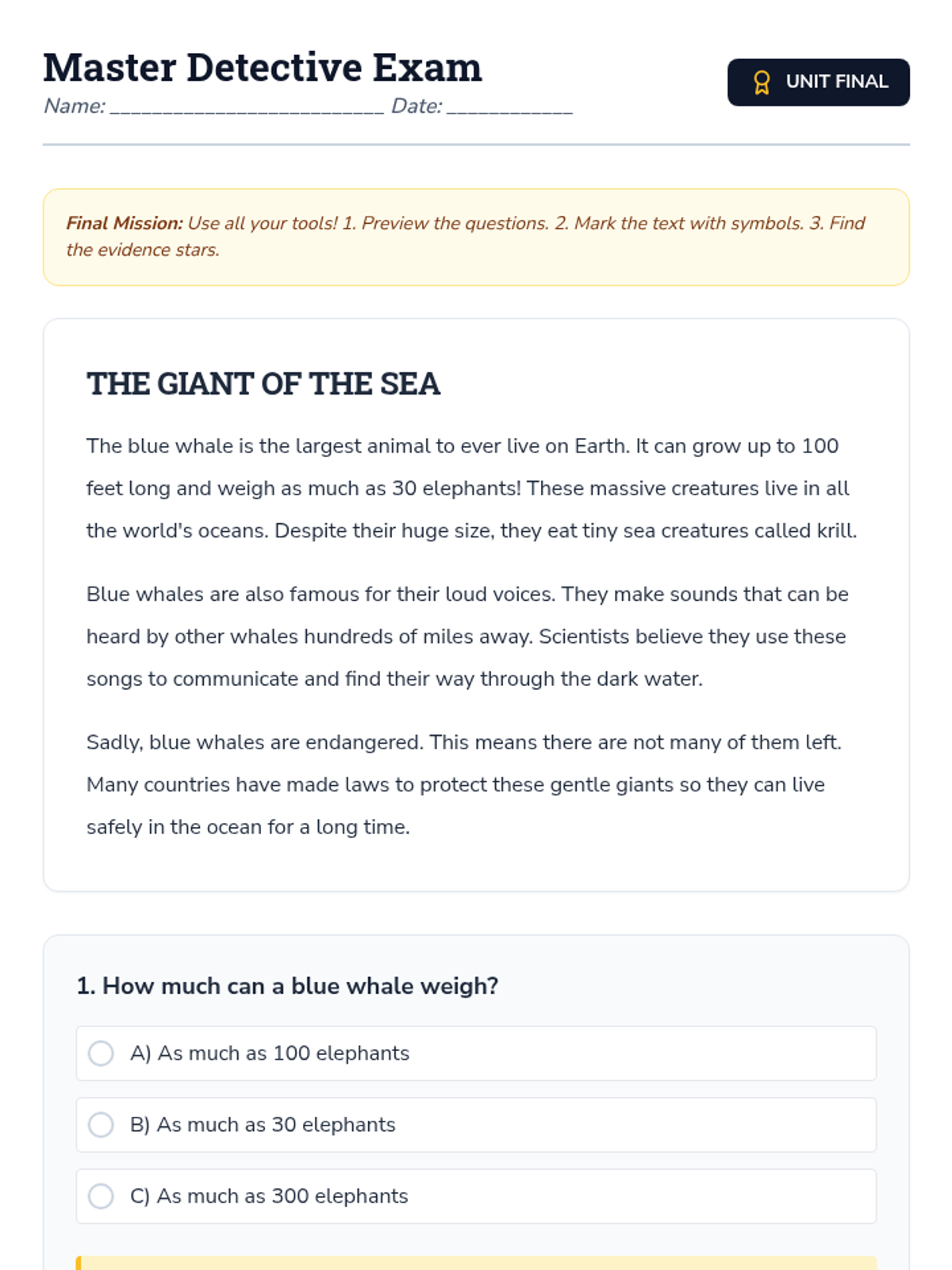
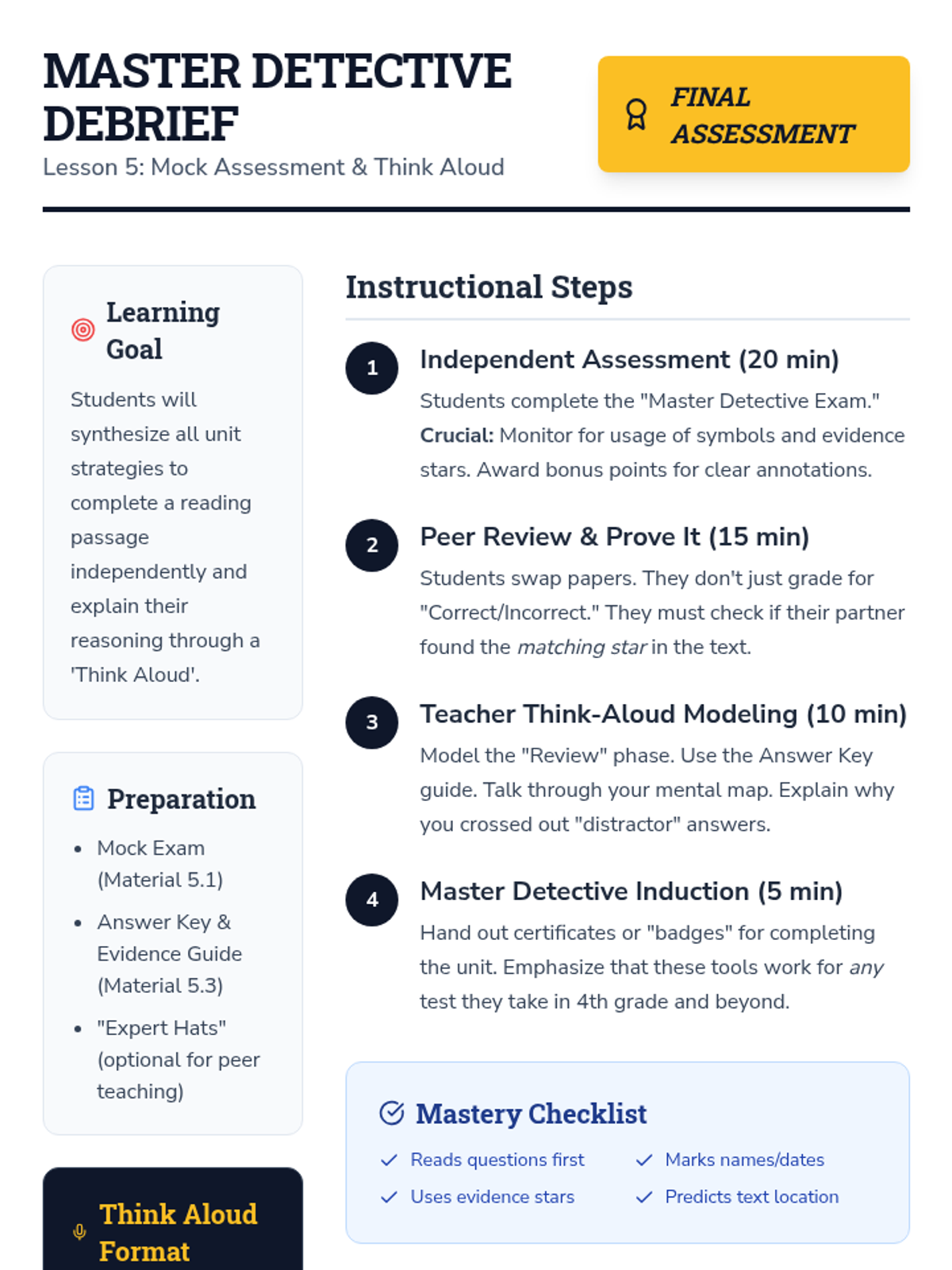
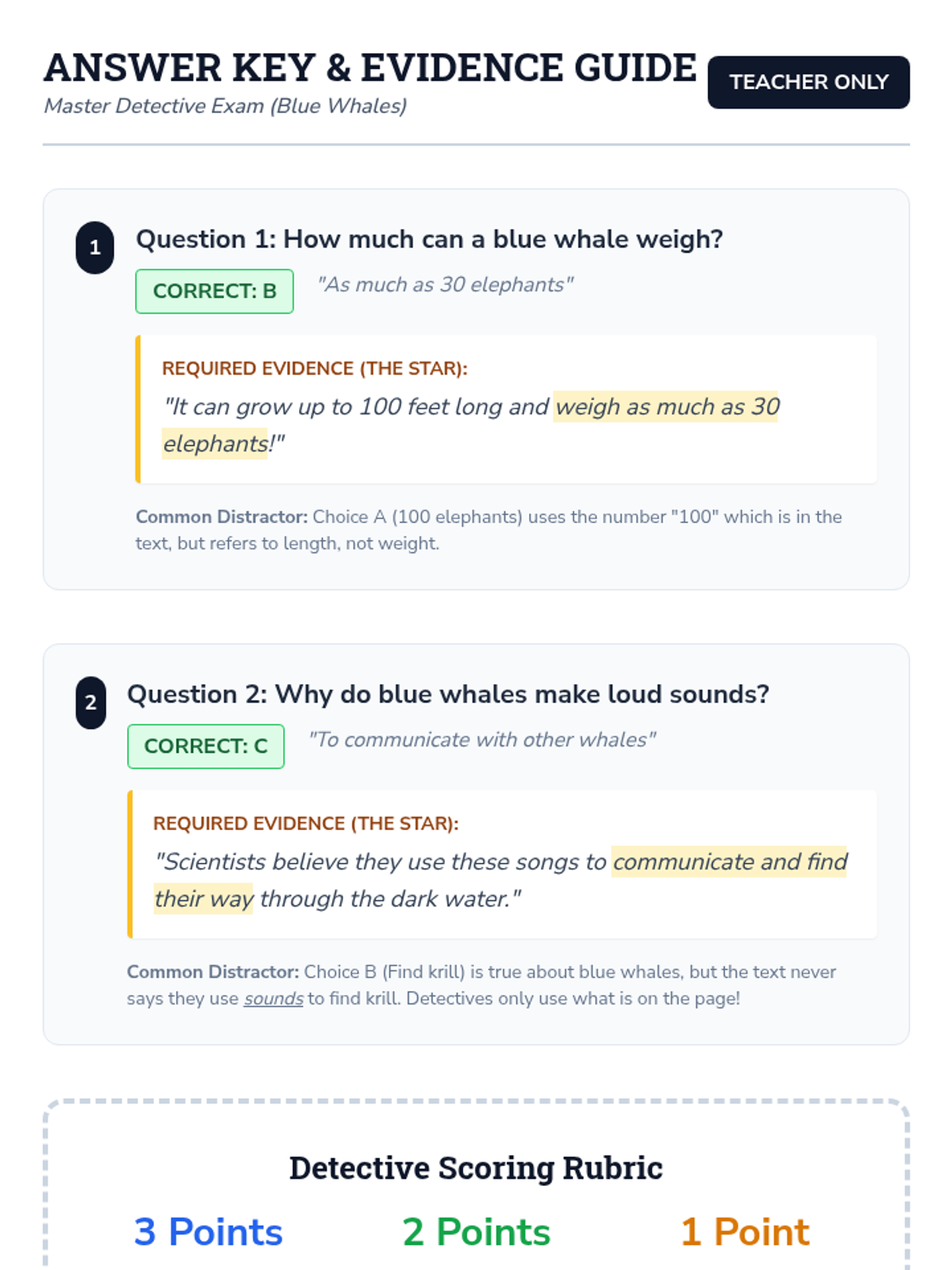
A final mock assessment followed by a structured 'Think Aloud' review where students explain the strategy and evidence behind their choices.
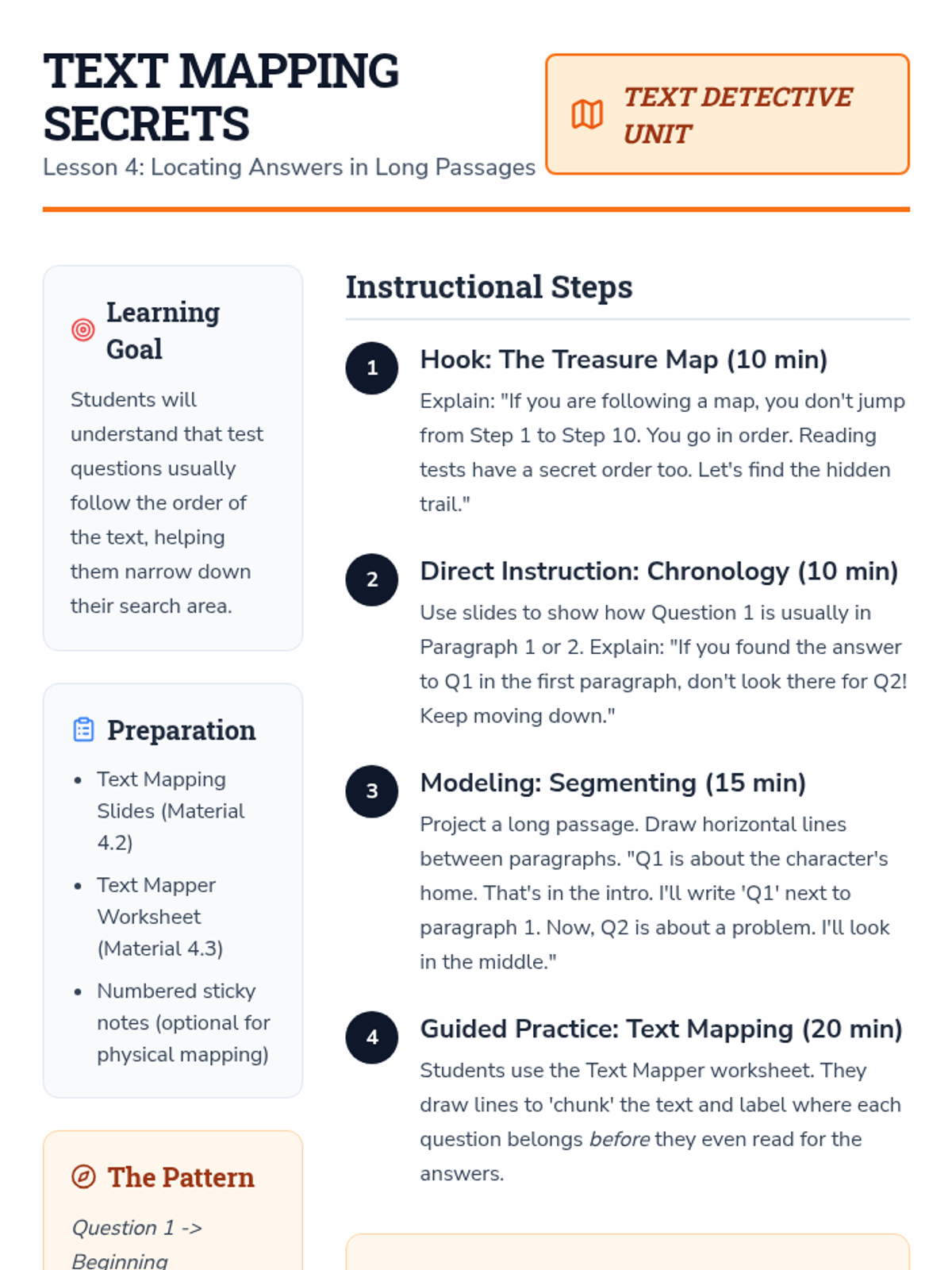
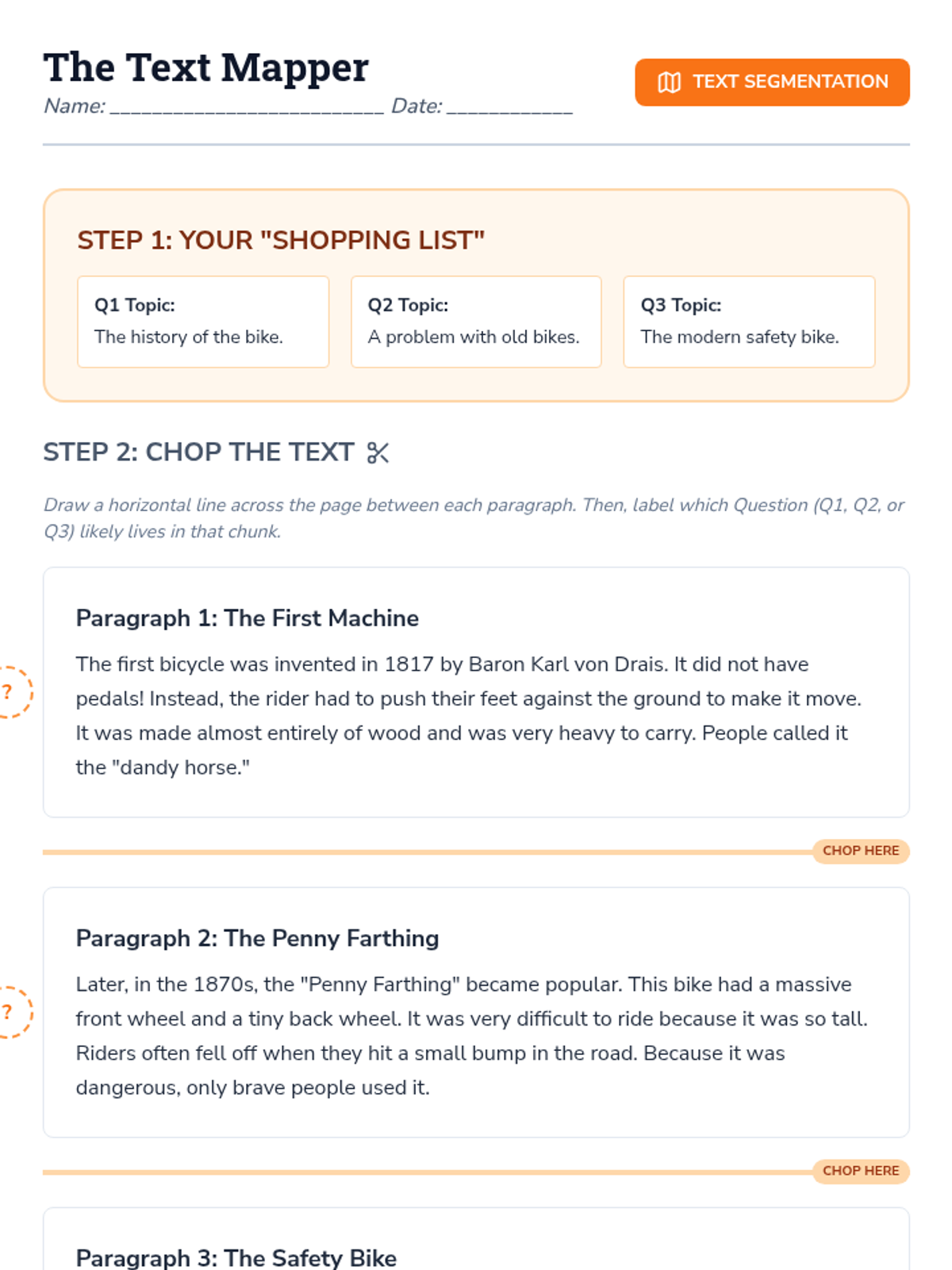
Students learn how questions usually follow the chronological order of the text and practice segmenting passages to find answers faster.
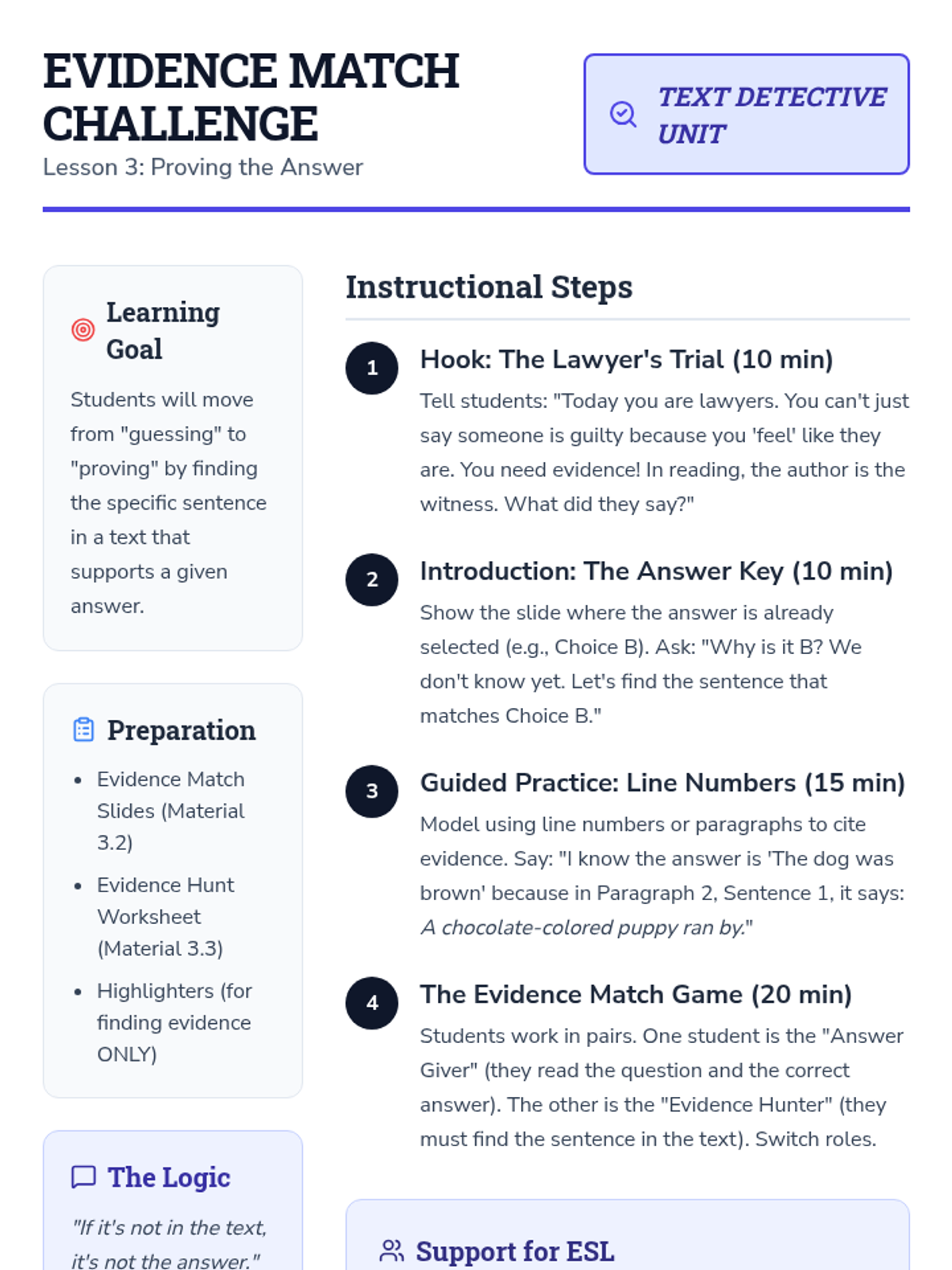
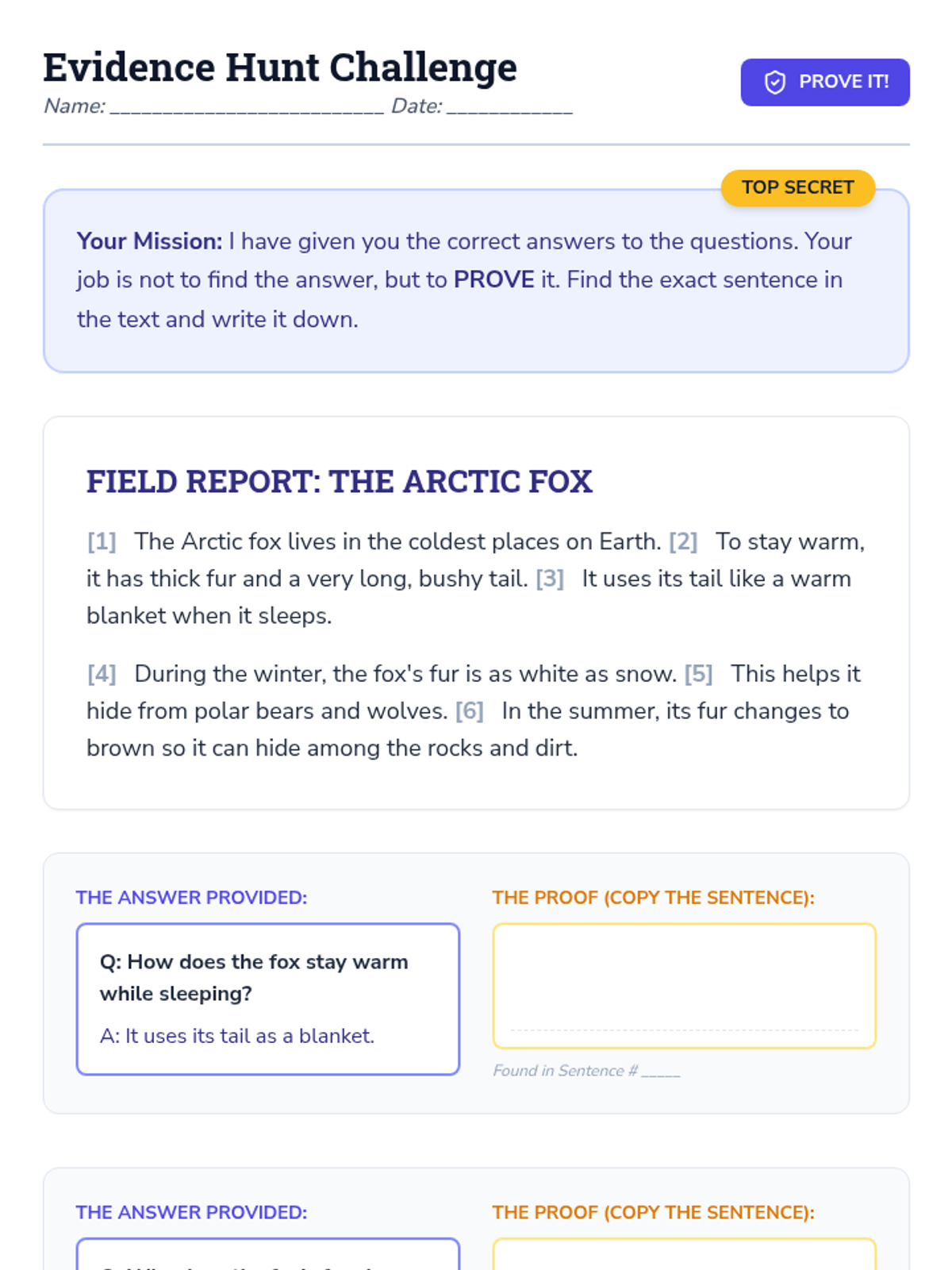
Students are given answers and must find the exact sentence in the text that proves the answer is correct, reinforcing the 'Prove It' mindset.
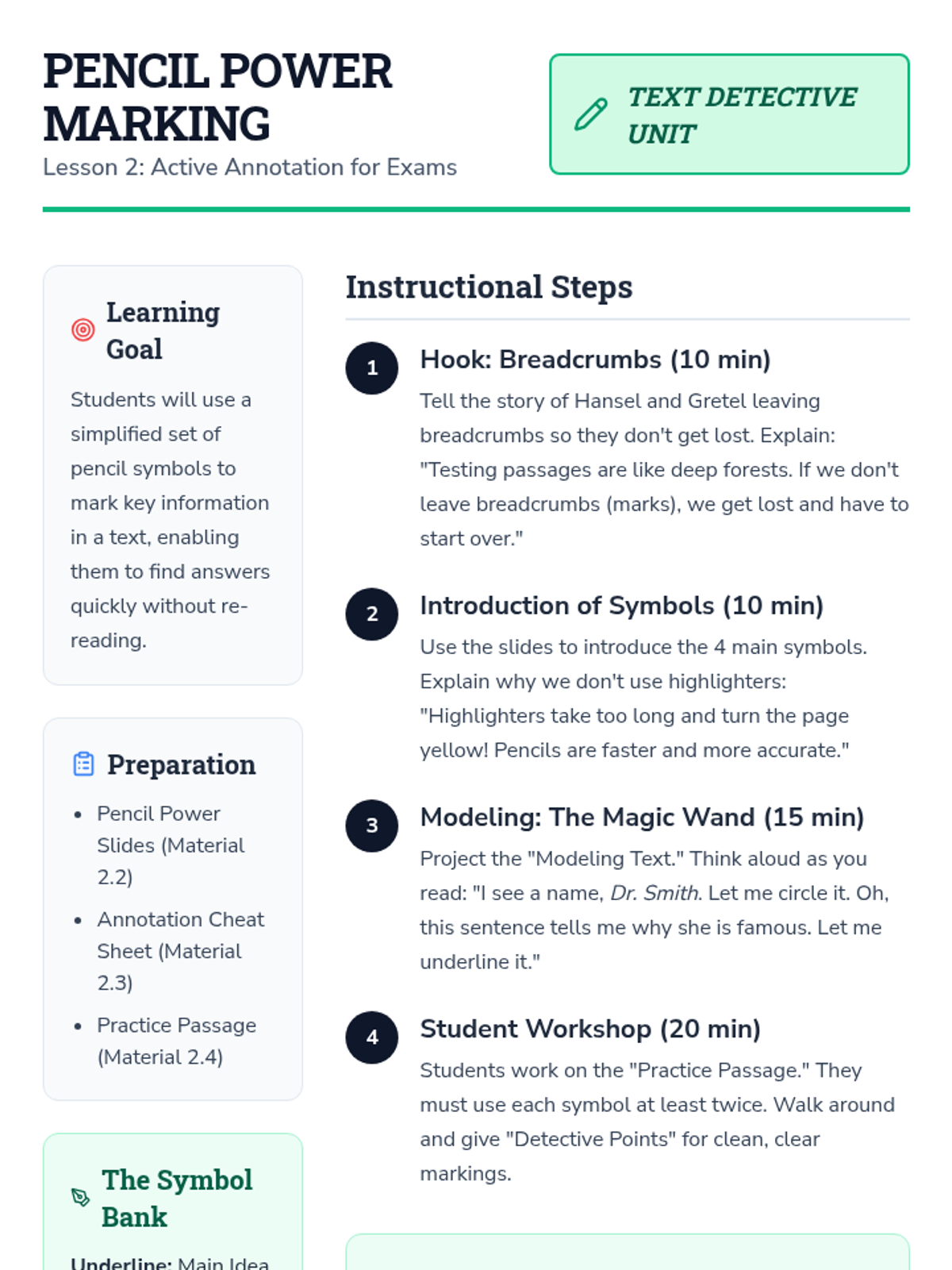
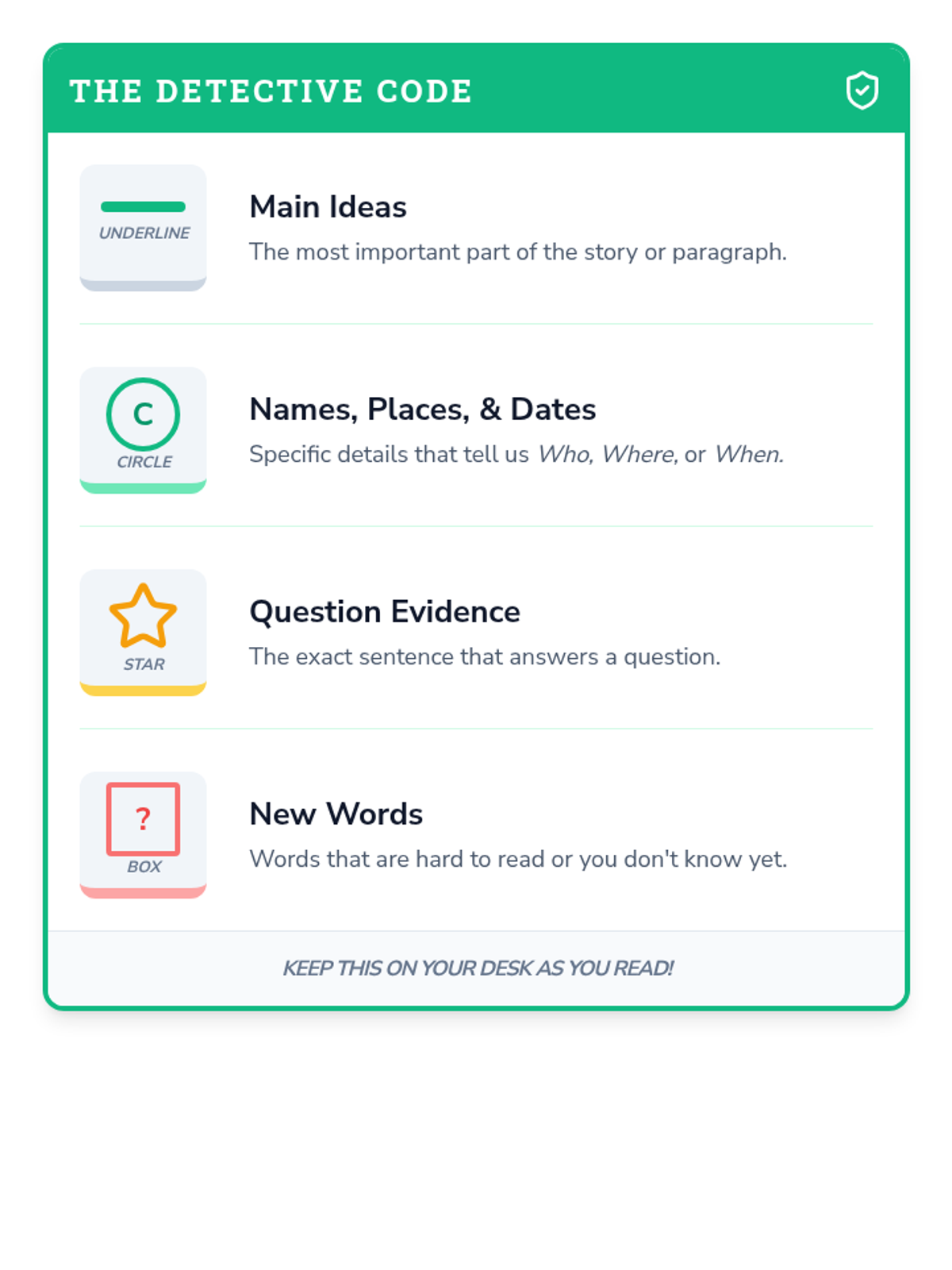
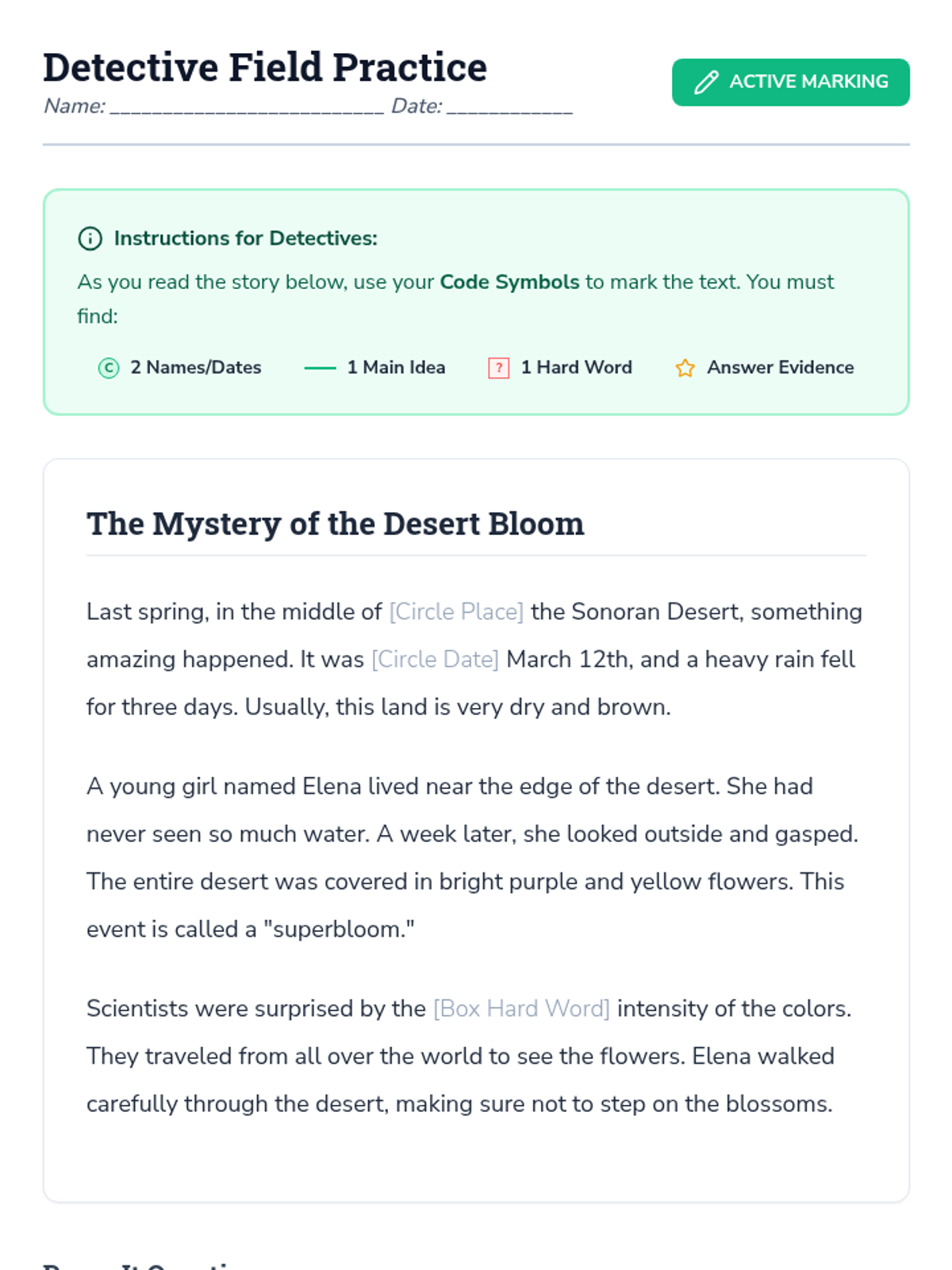
Learners practice a simplified annotation system using pencil marks (underlines, circles, stars) to leave 'breadcrumbs' in the text without losing time.
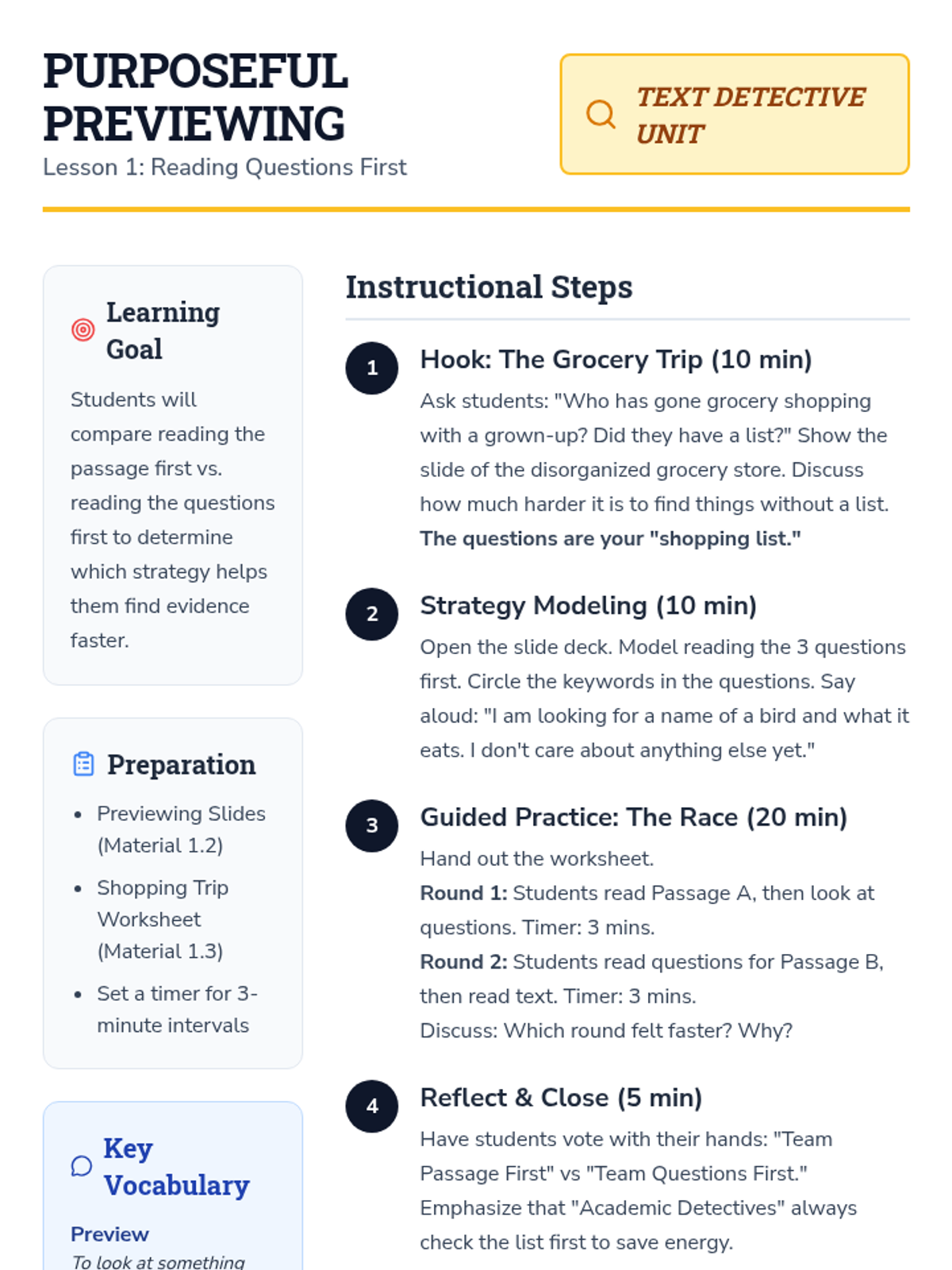
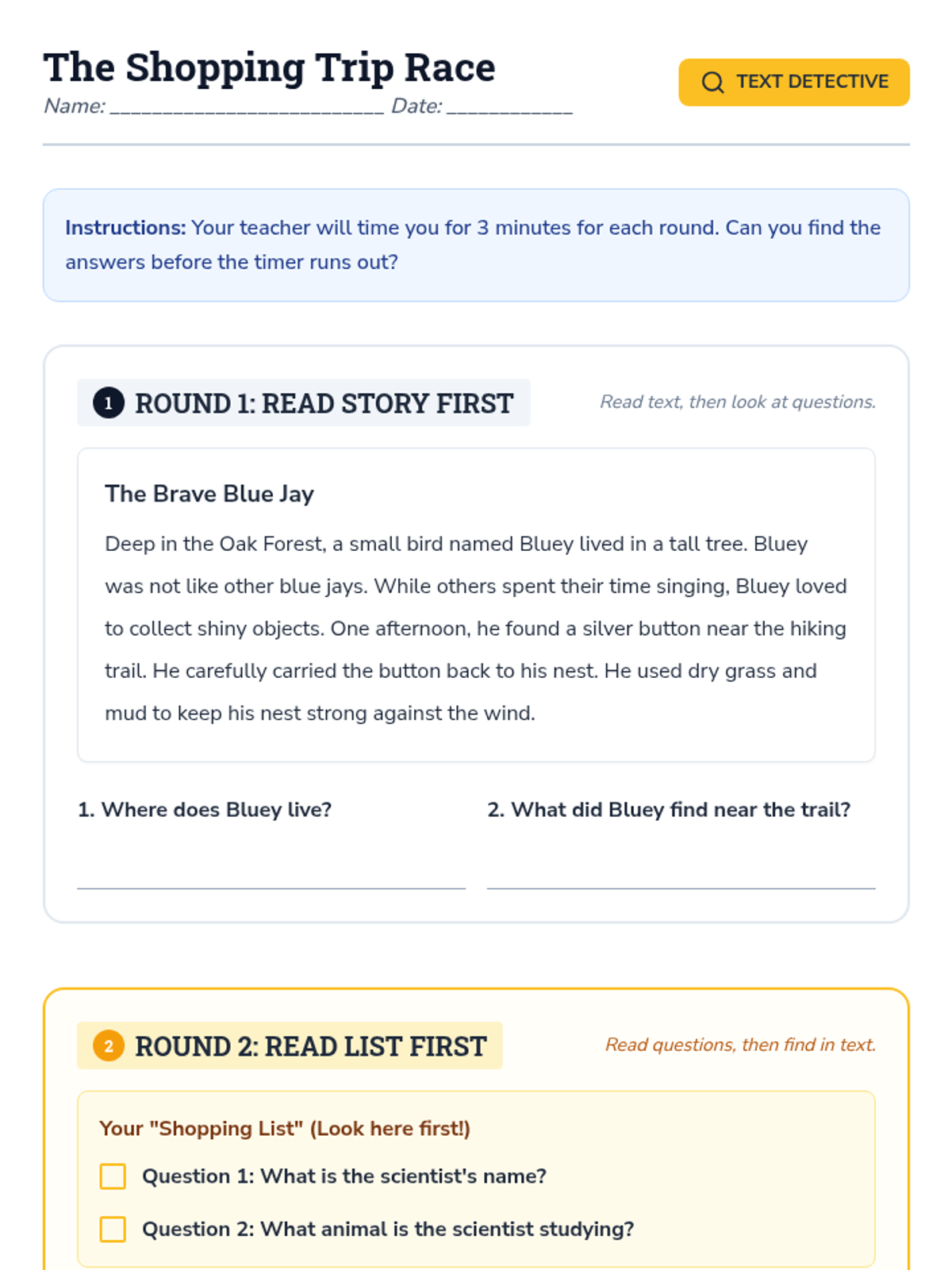
Students experiment with reading questions before the passage to set a purpose for reading, using the 'grocery shopping list' analogy.
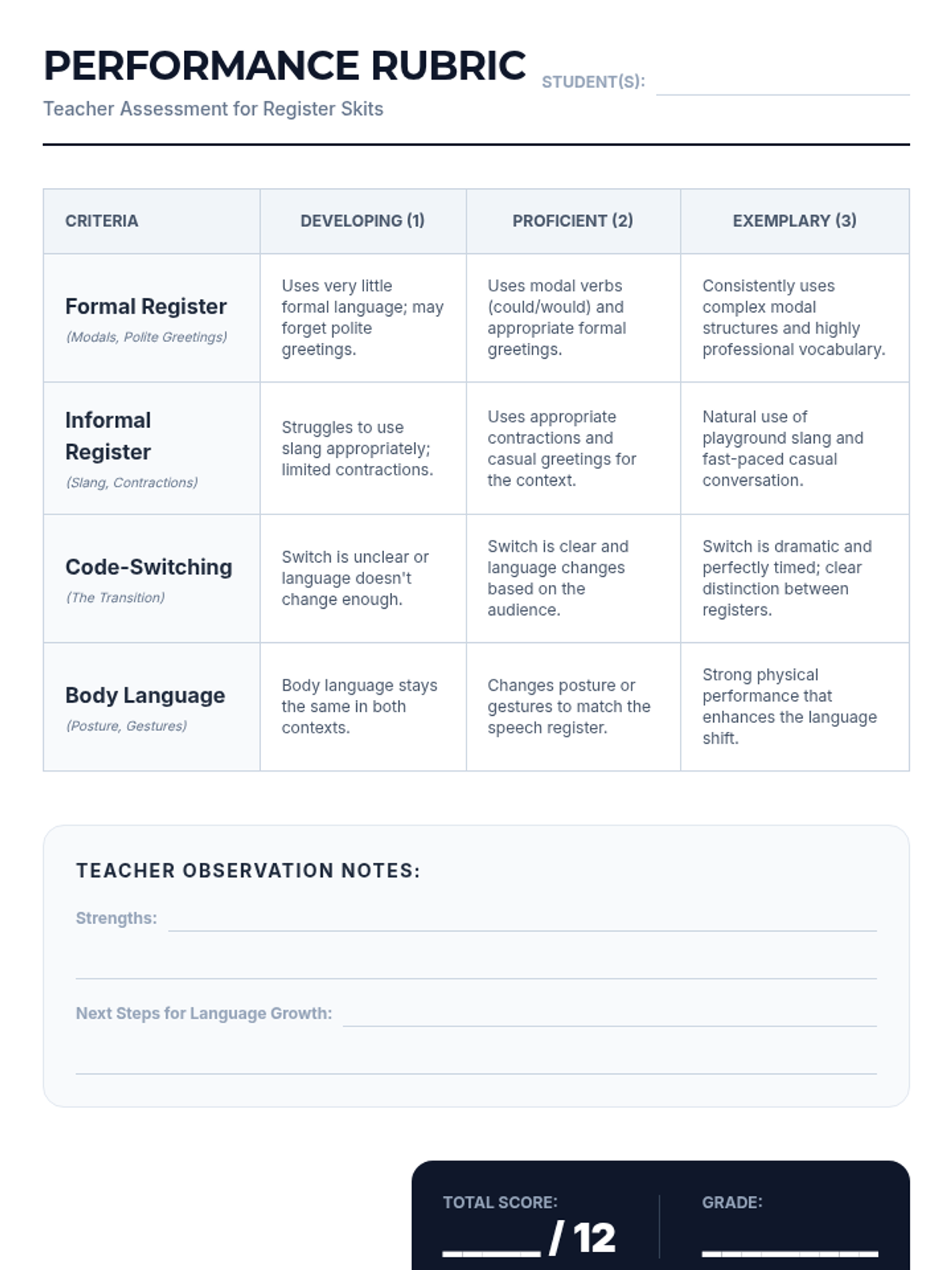
In pairs, students perform skits that demonstrate their ability to adapt their language to shifting social situations.
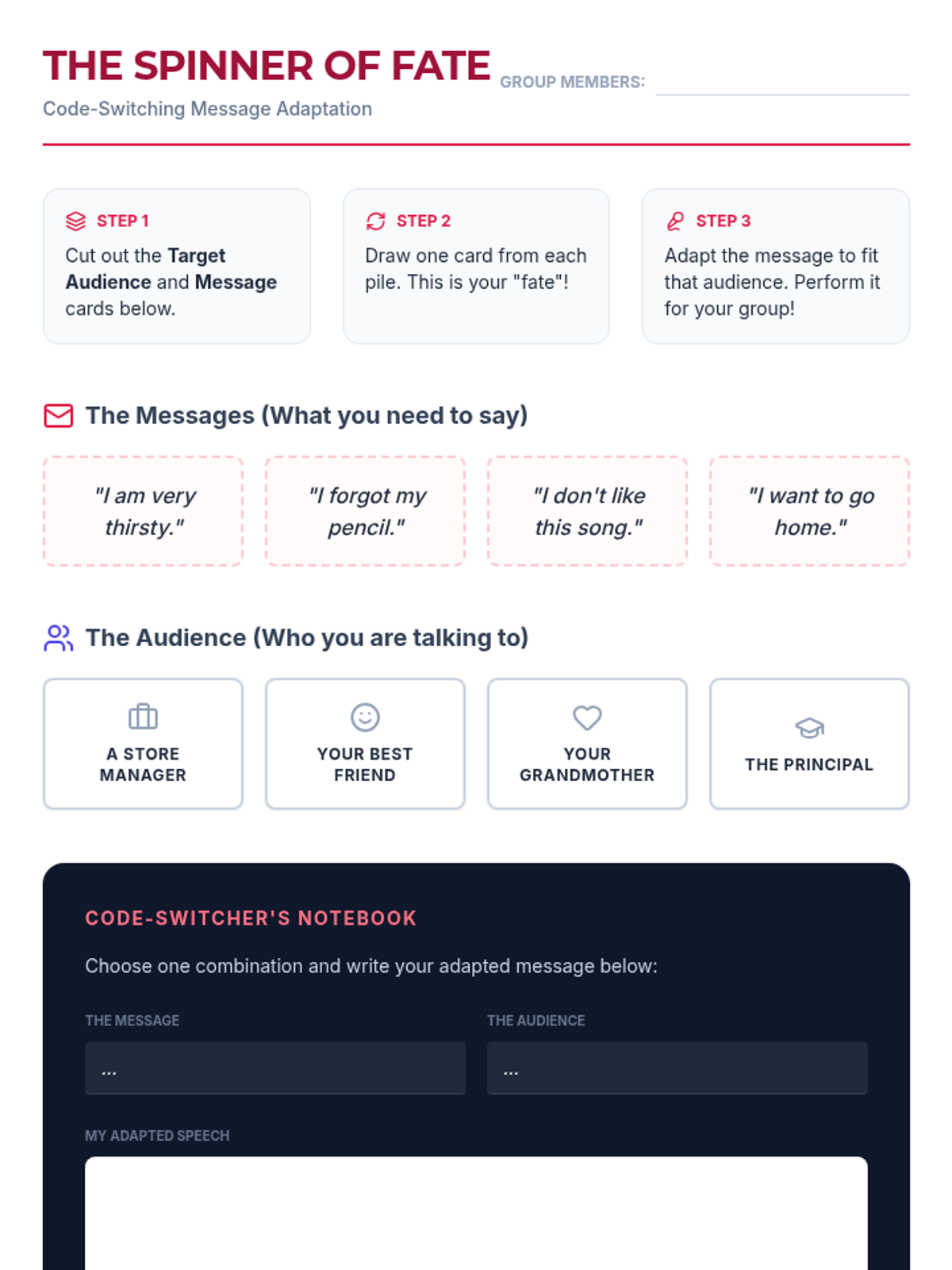
Students practice rapidly switching between registers by delivering the same message to different audiences.
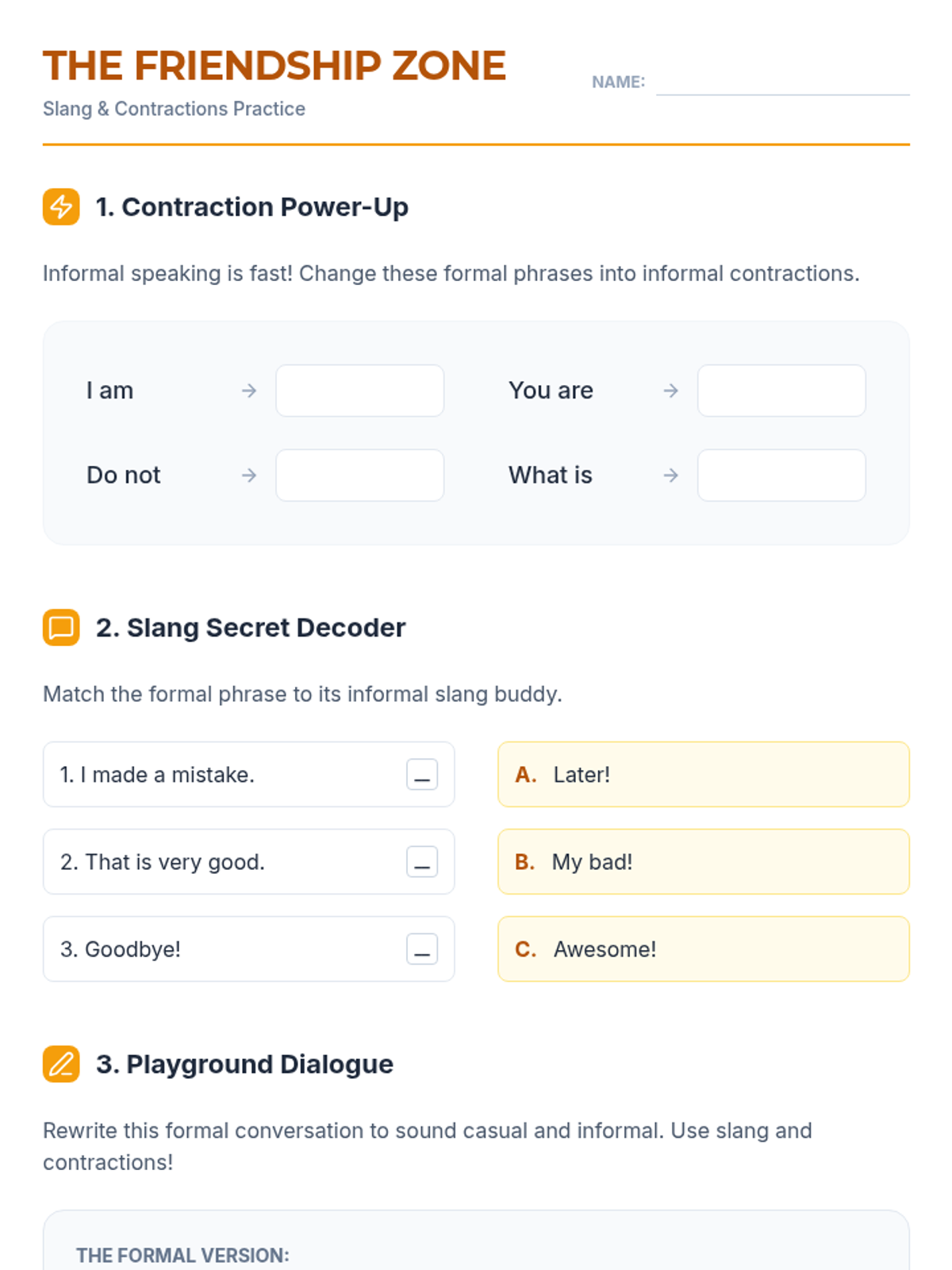
Students explore the informal register, learning when it is appropriate to use contractions, casual greetings, and playground slang.
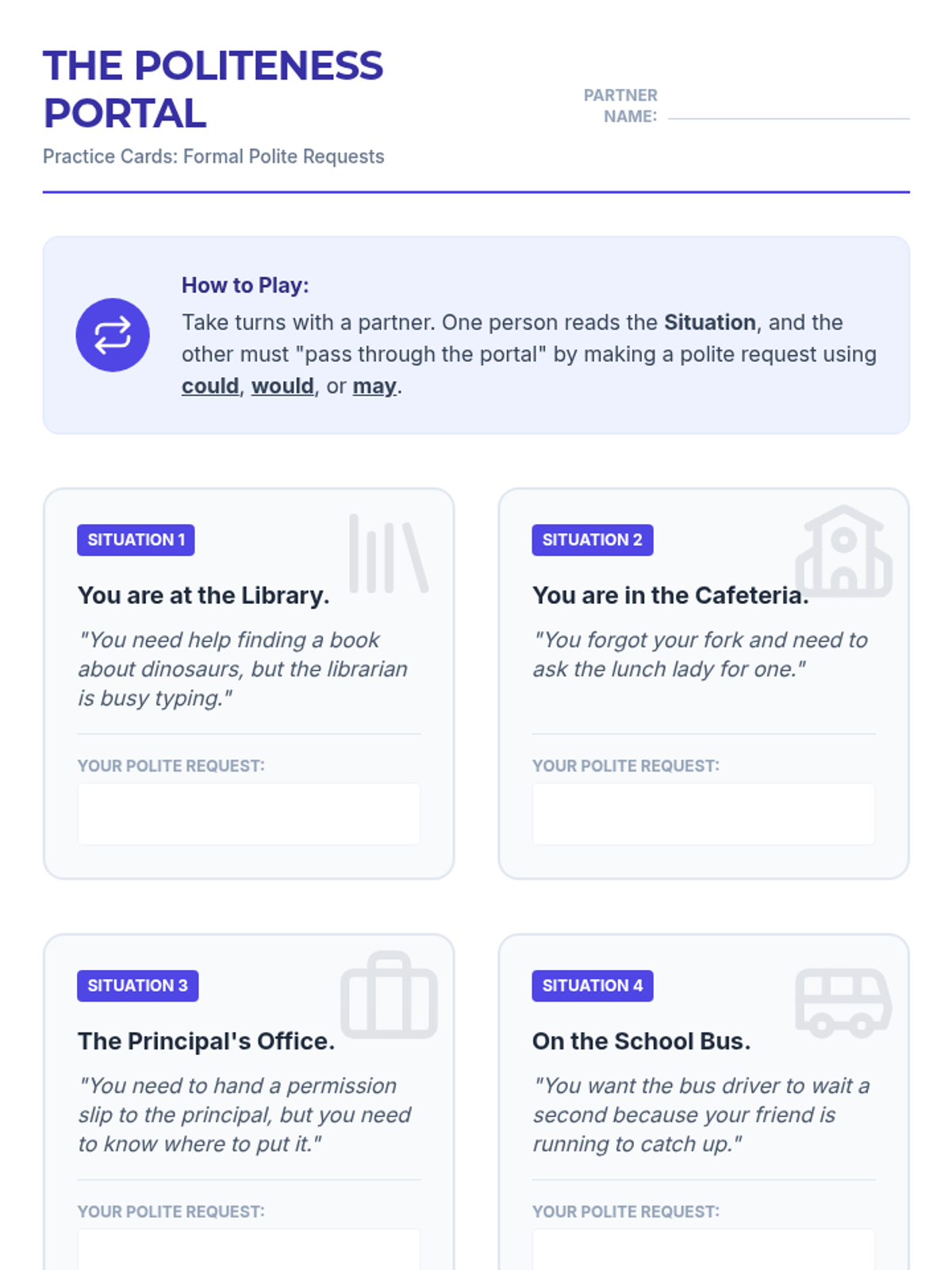
Focusing on the formal register, students learn to use modal verbs like 'could' and 'would' to make polite requests in professional settings.
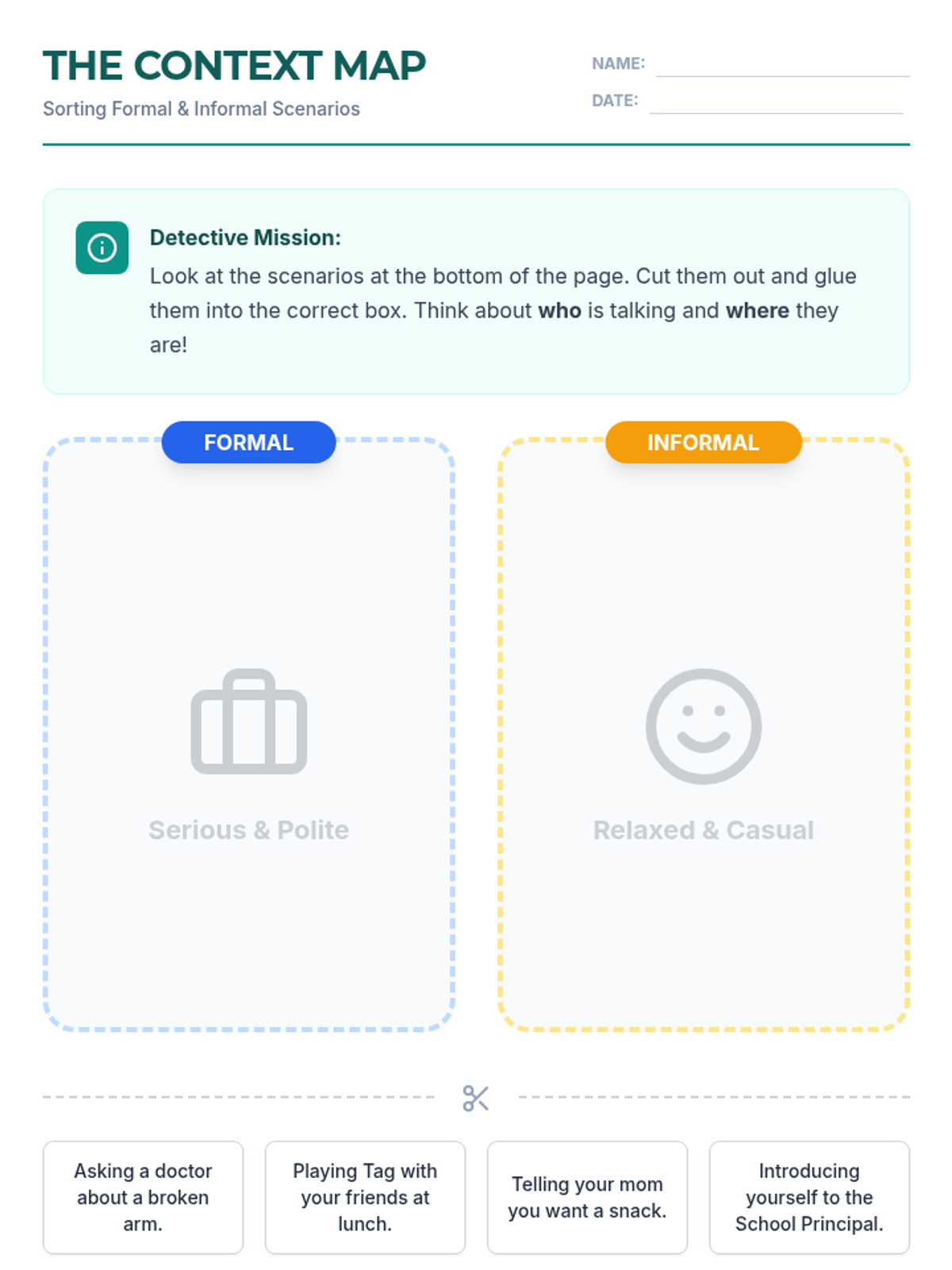
Students define 'register' and 'tone,' sorting scenarios into formal and informal categories while identifying visual and auditory cues in communication.
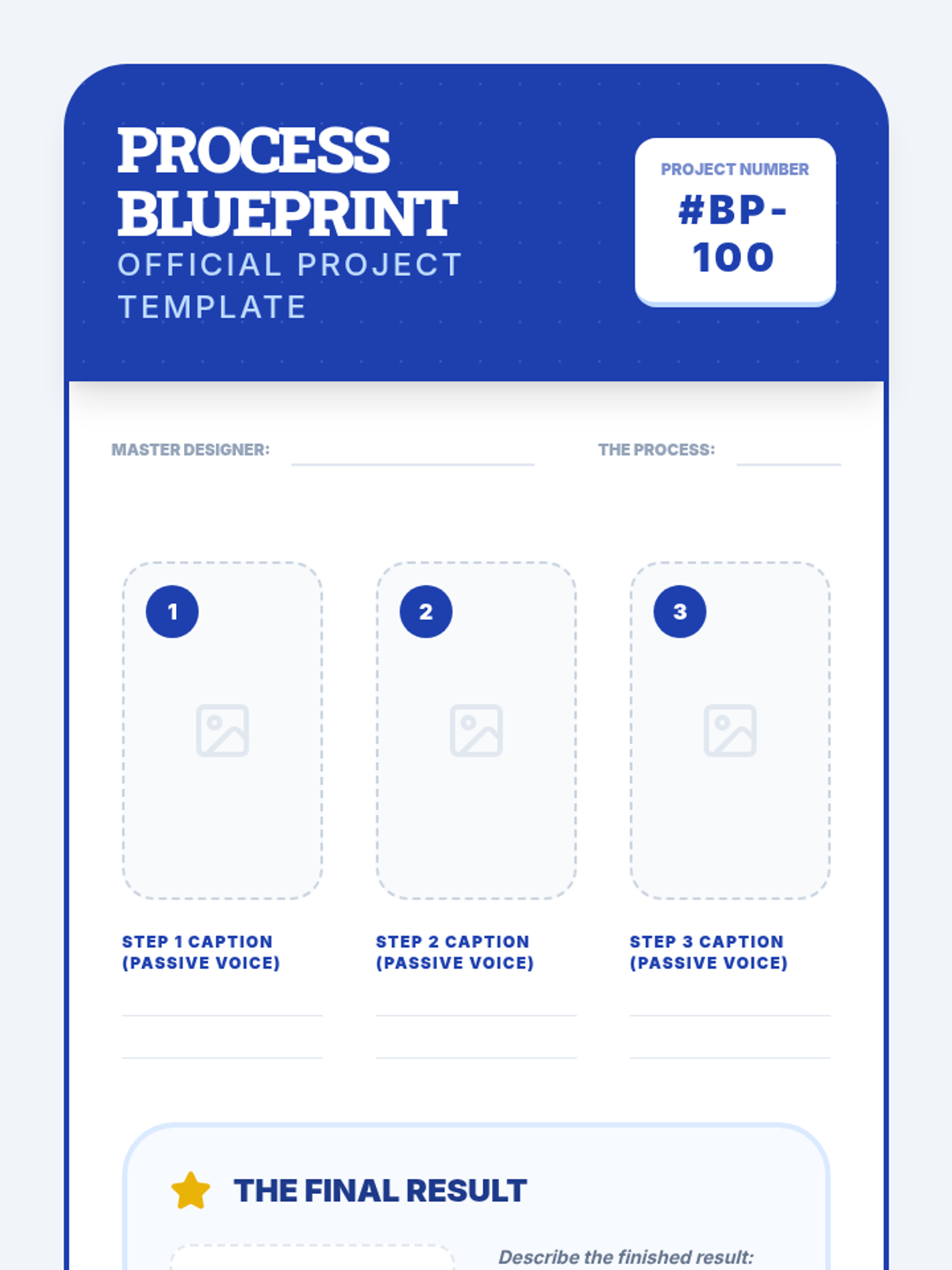
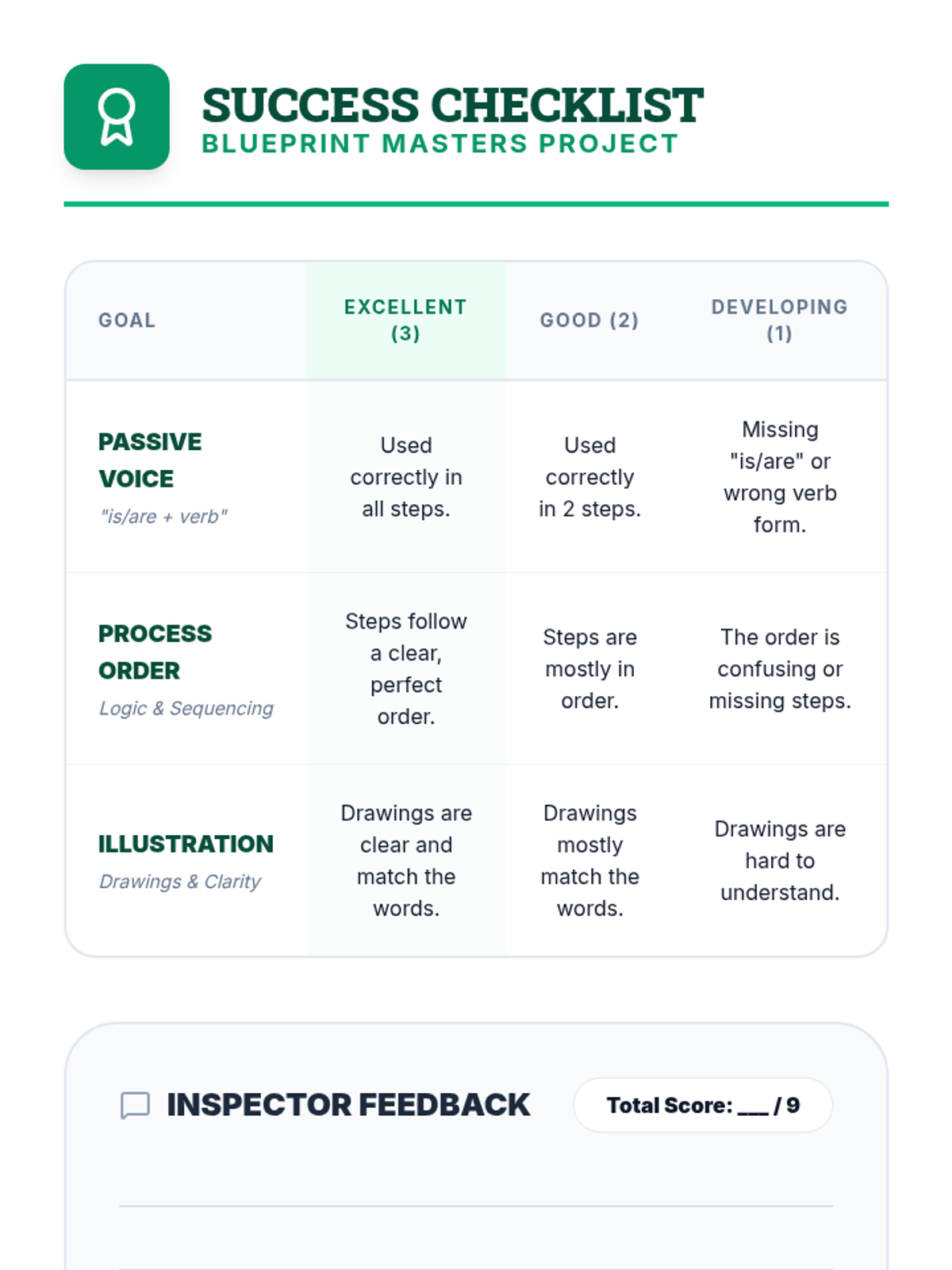
Students synthesize their learning by creating a visual 'How It's Made' guide for a simple everyday process.
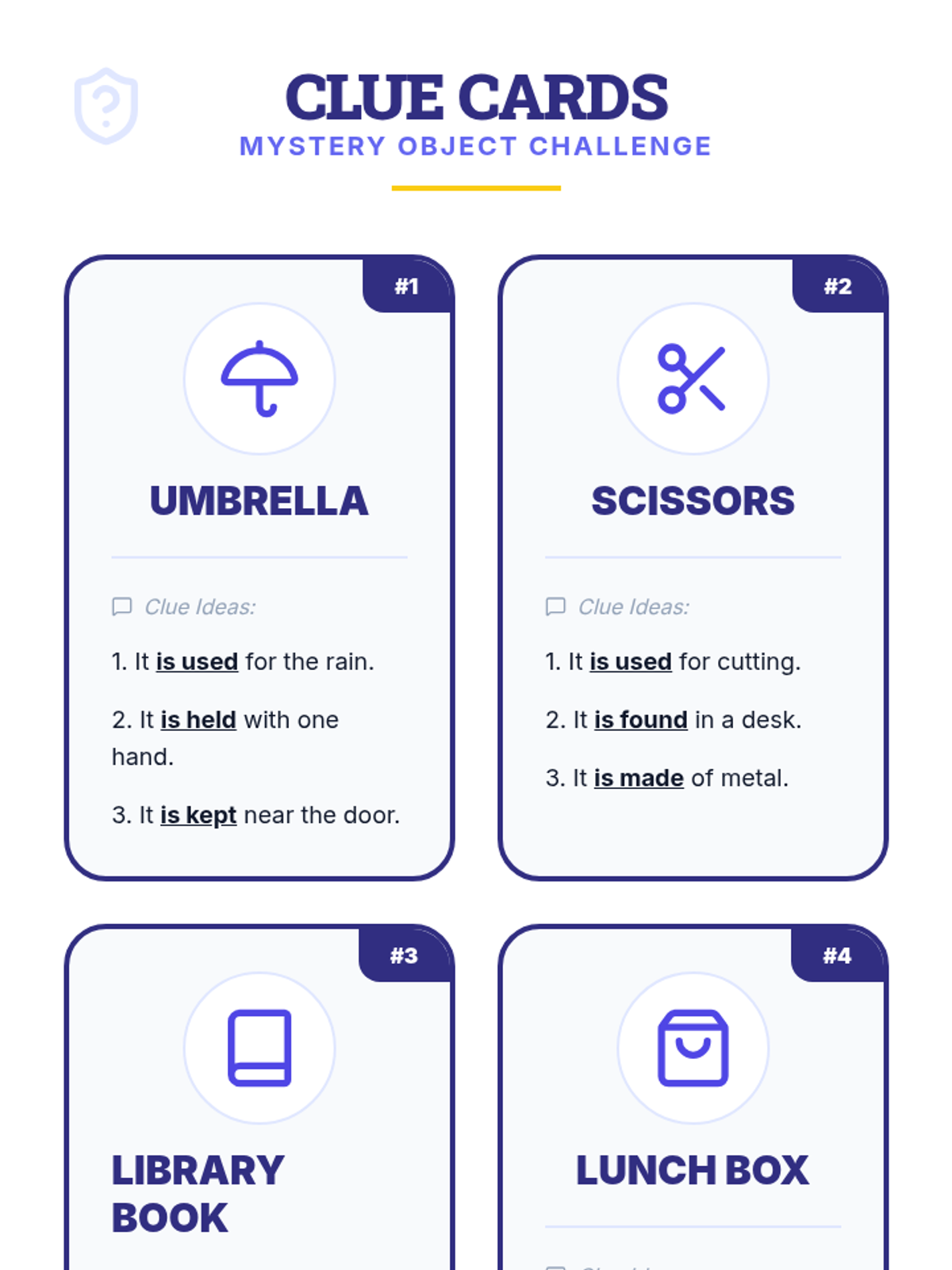
Students use passive voice to describe the function and location of hidden objects for their peers to guess.
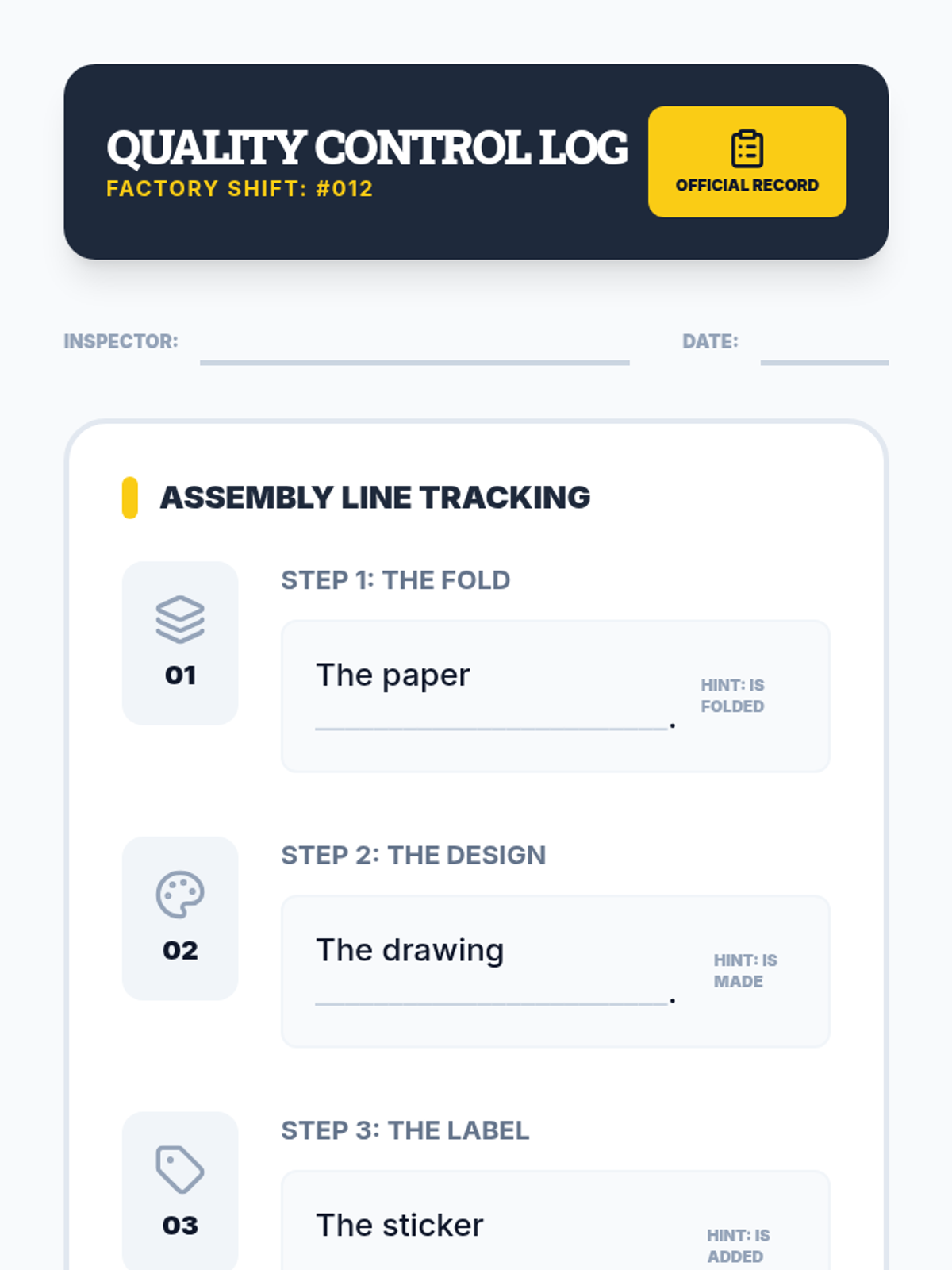
A hands-on simulation where students act as factory workers and describe the changing status of a product using passive voice.
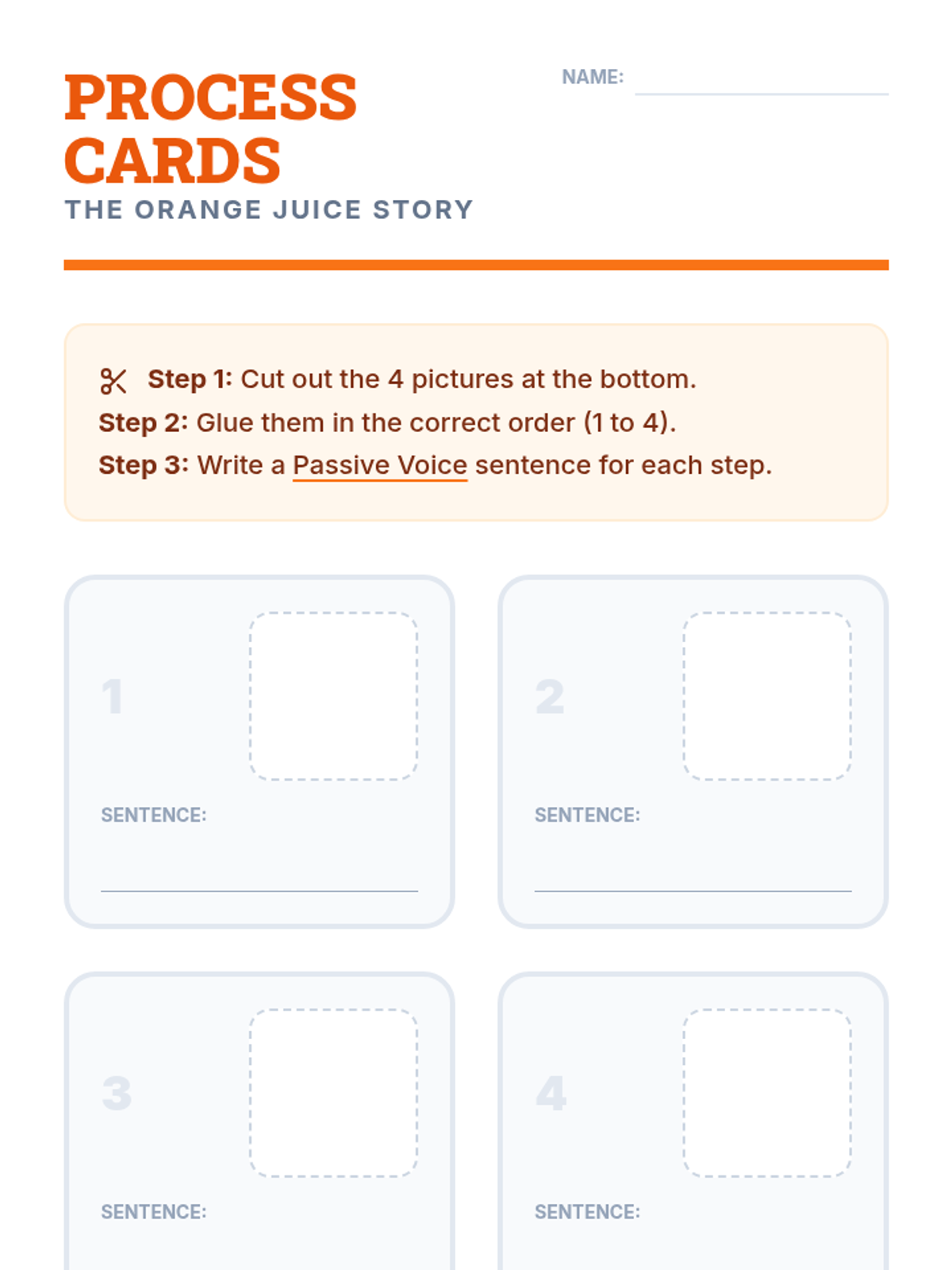
Students sequence the production of orange juice and practice constructing simple present passive sentences to describe each stage.
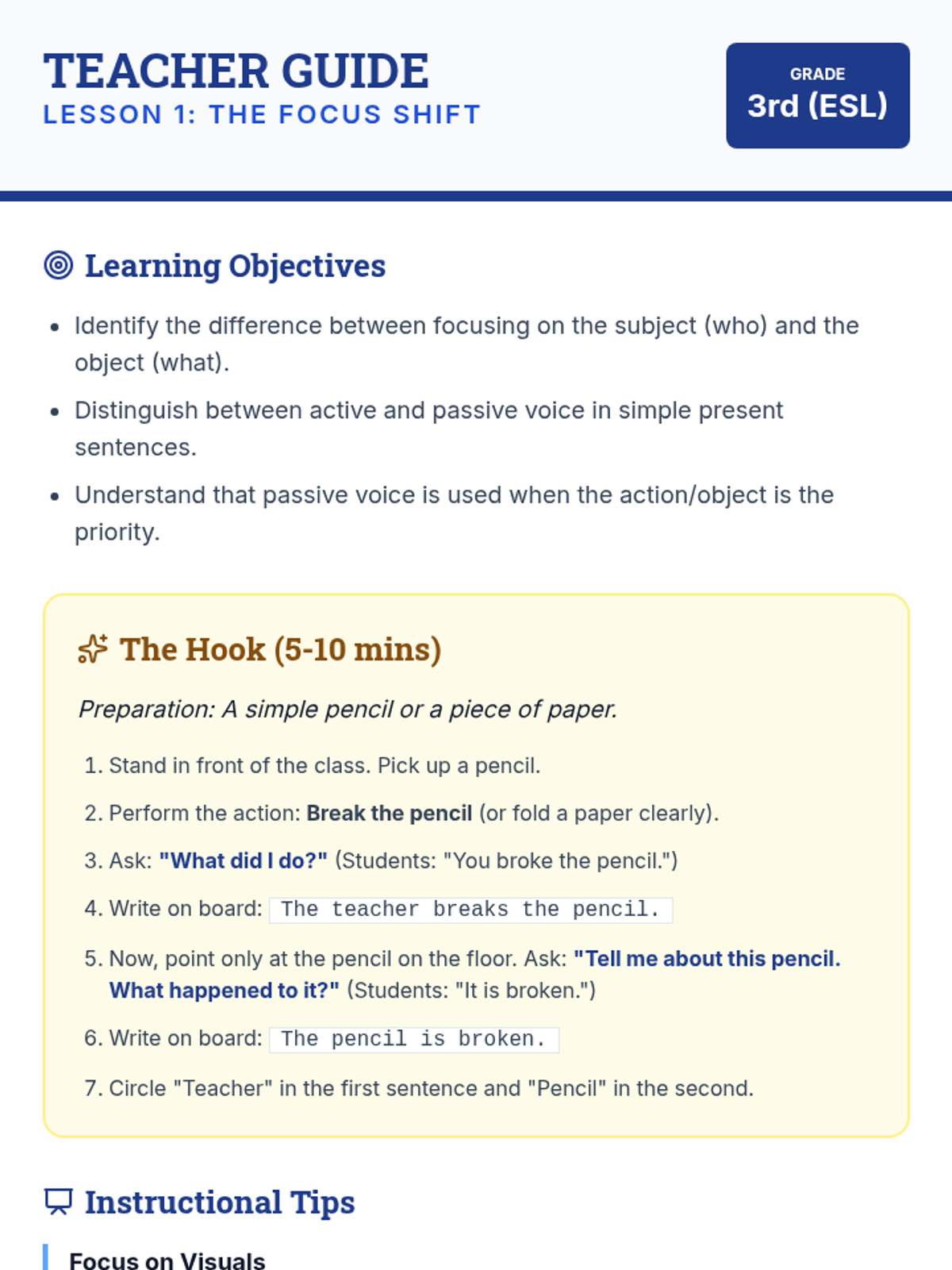
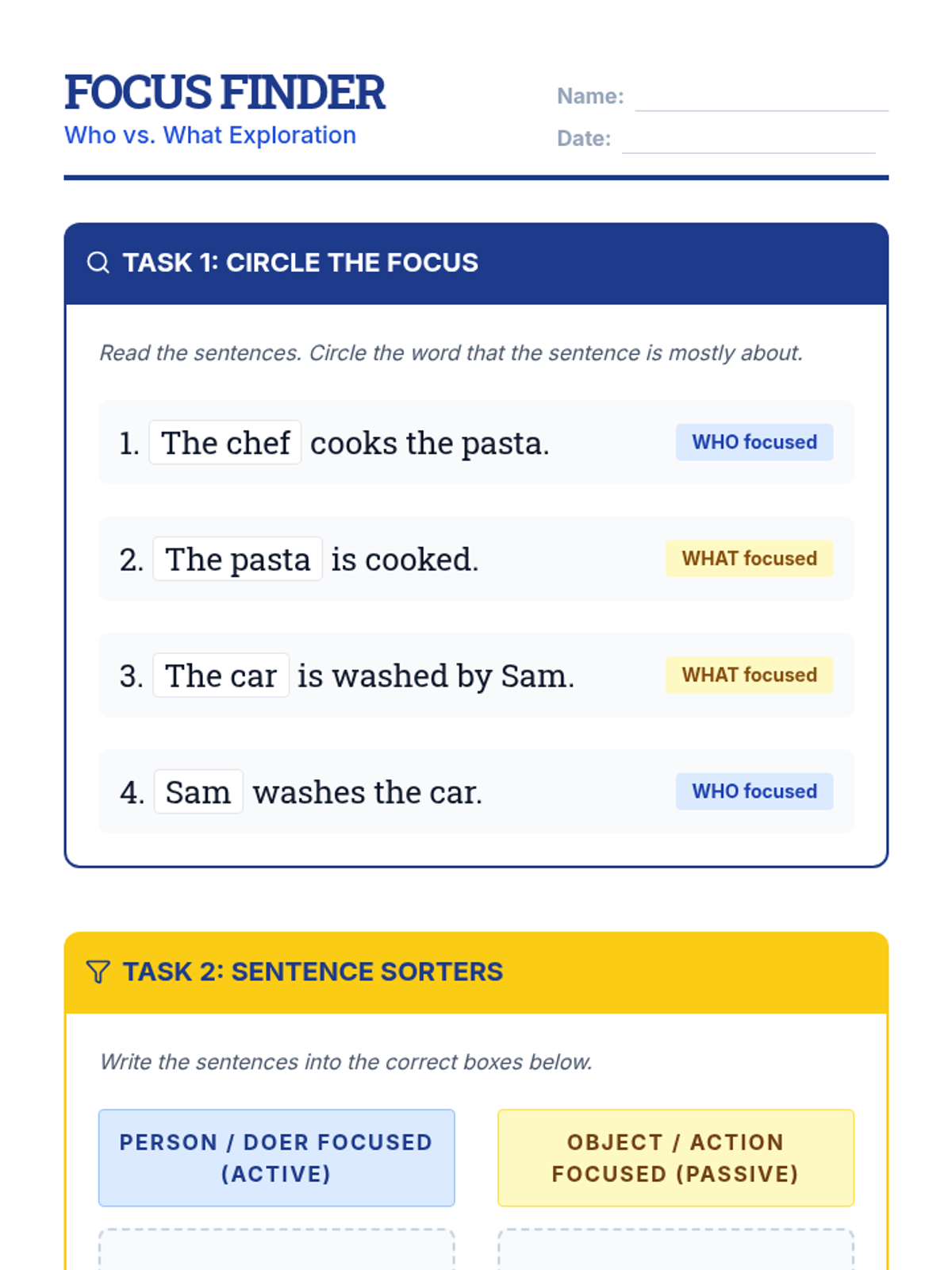
Students investigate the difference between focusing on the 'doer' versus the 'action' through a hands-on hook and sentence sorting.
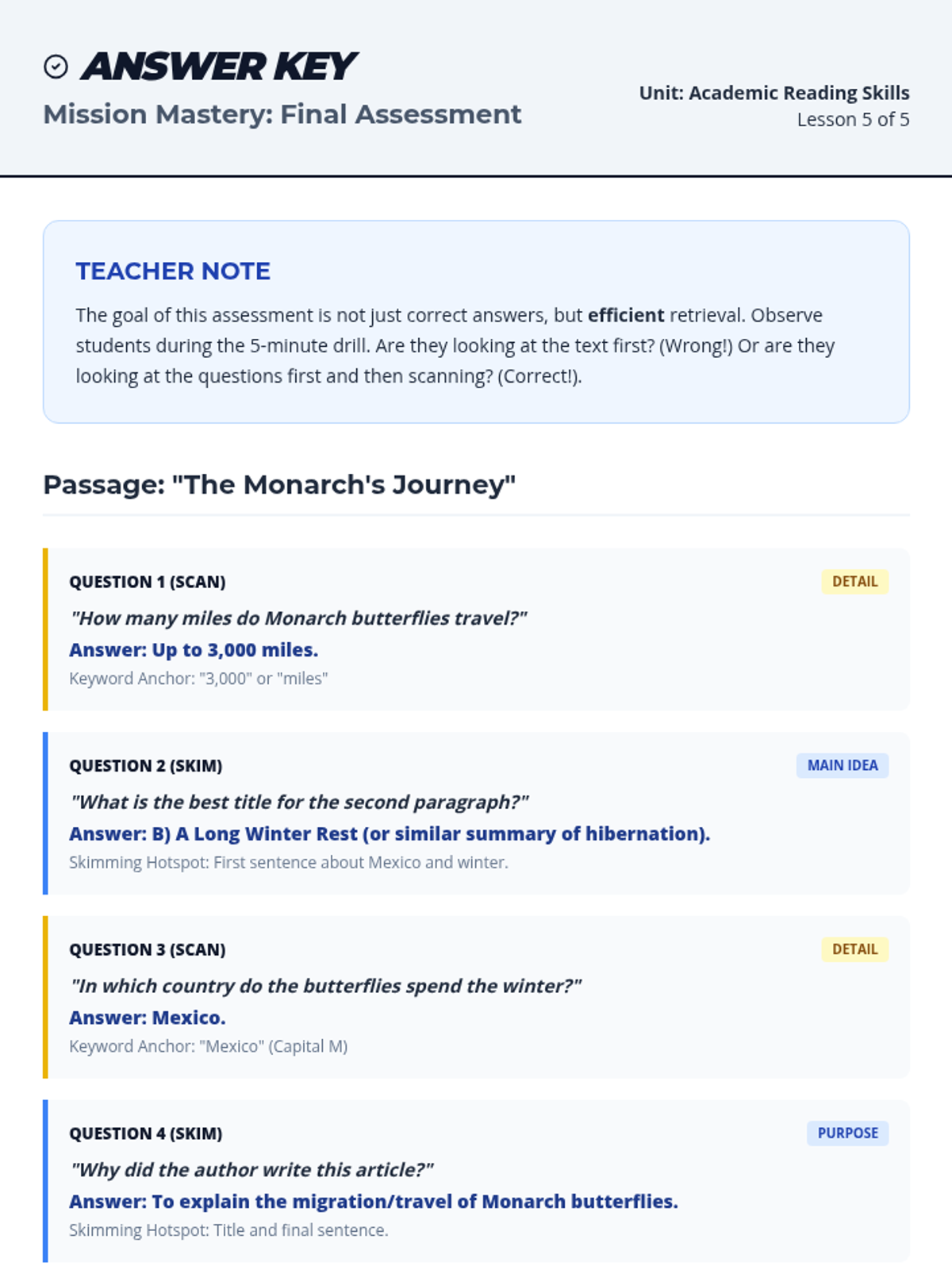
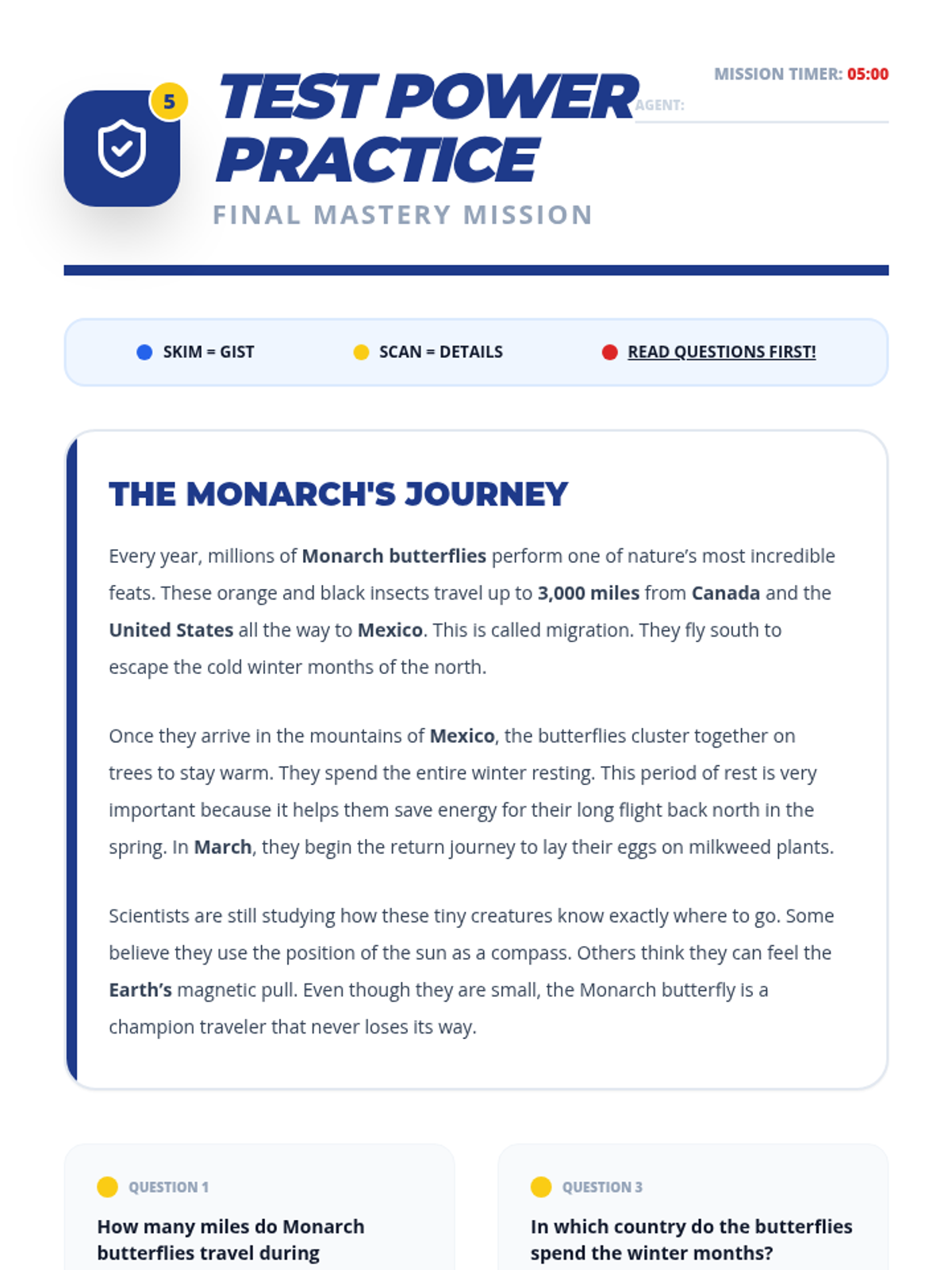
In the final lesson, students apply their skimming and scanning skills to a sample standardized test passage and reflect on their growth in reading speed and comprehension efficiency.
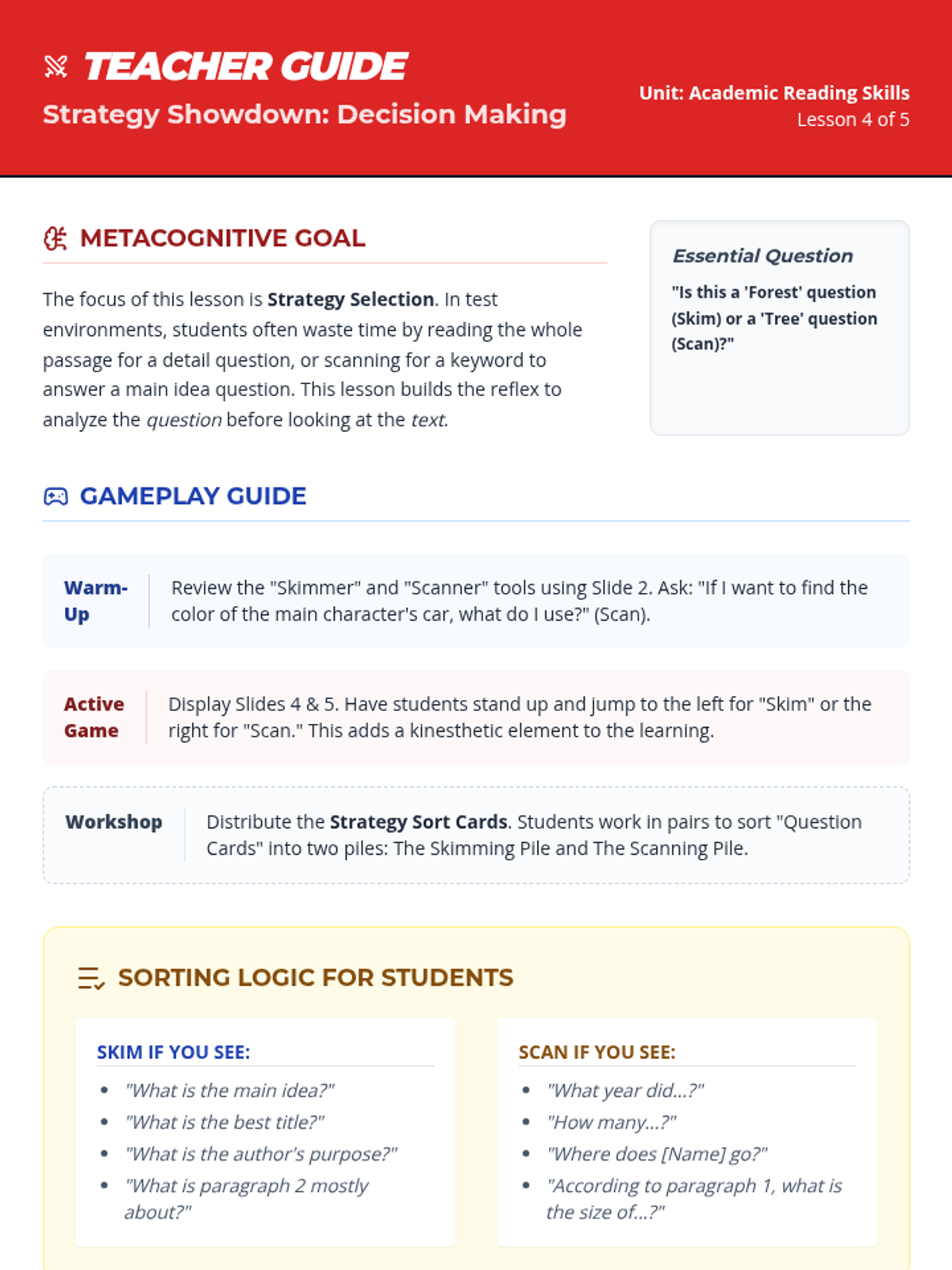
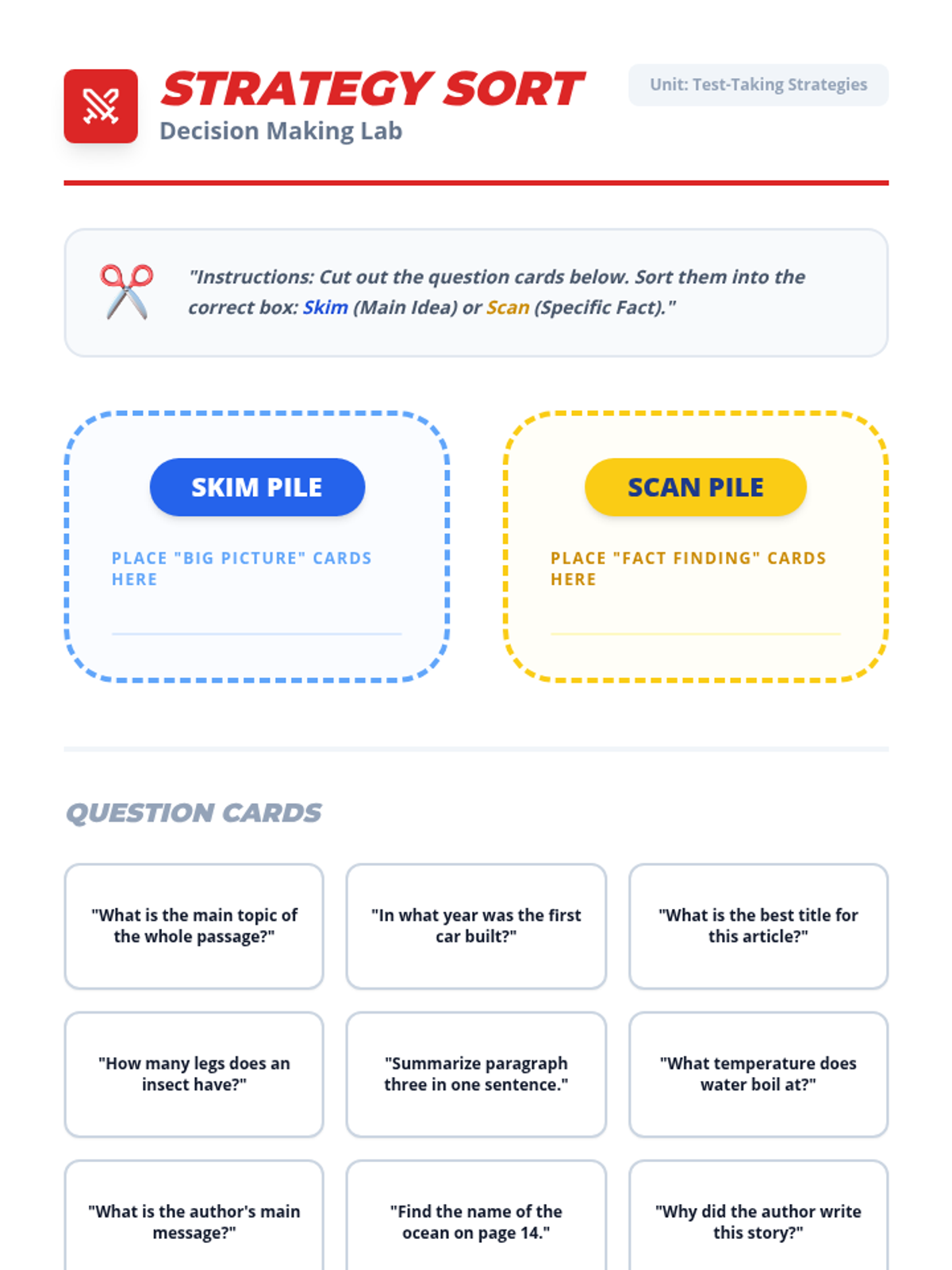
Students participate in a 'Race for Information' where they must decide between skimming or scanning based on the question type, building metacognitive awareness and strategy selection.
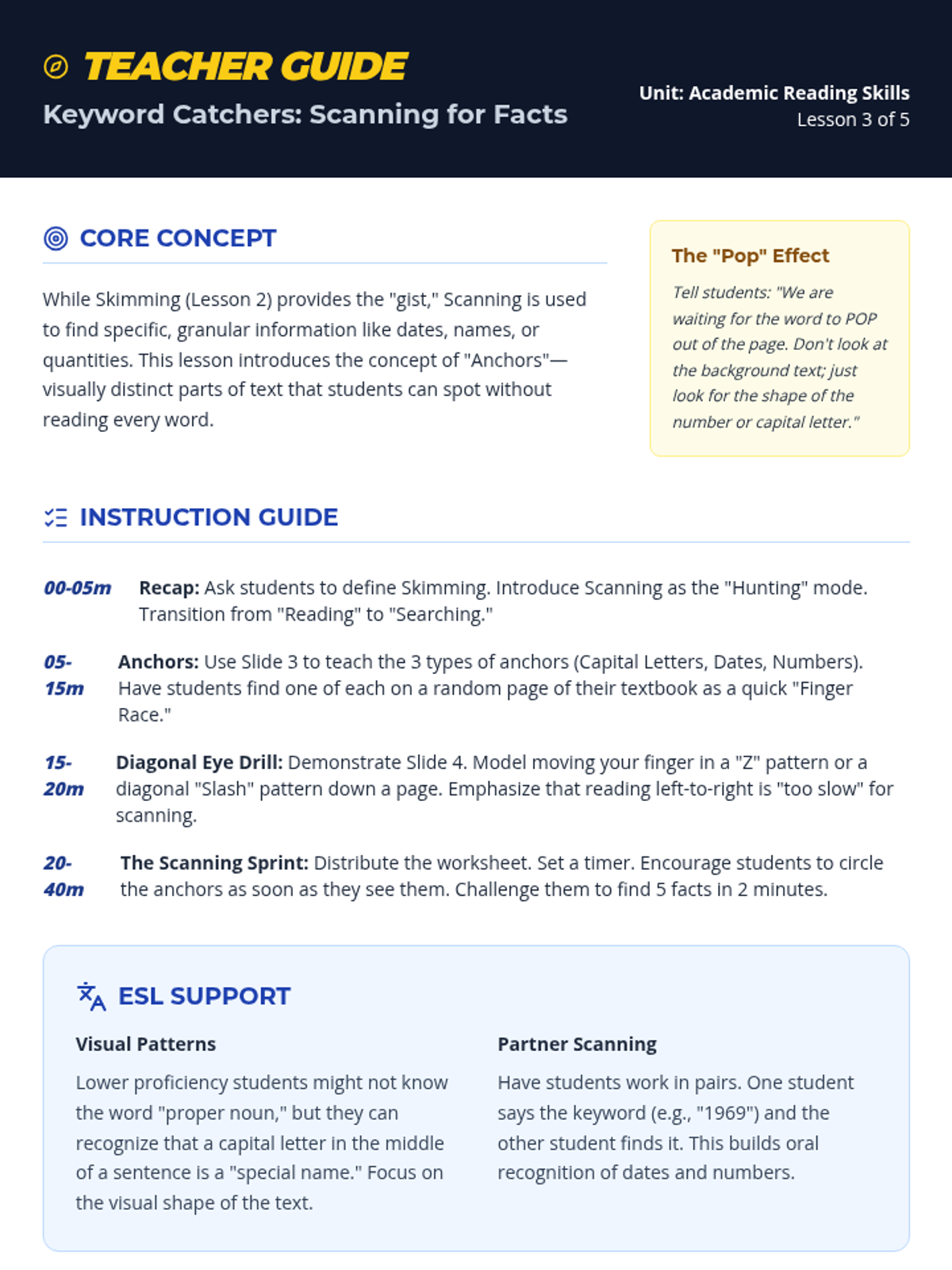
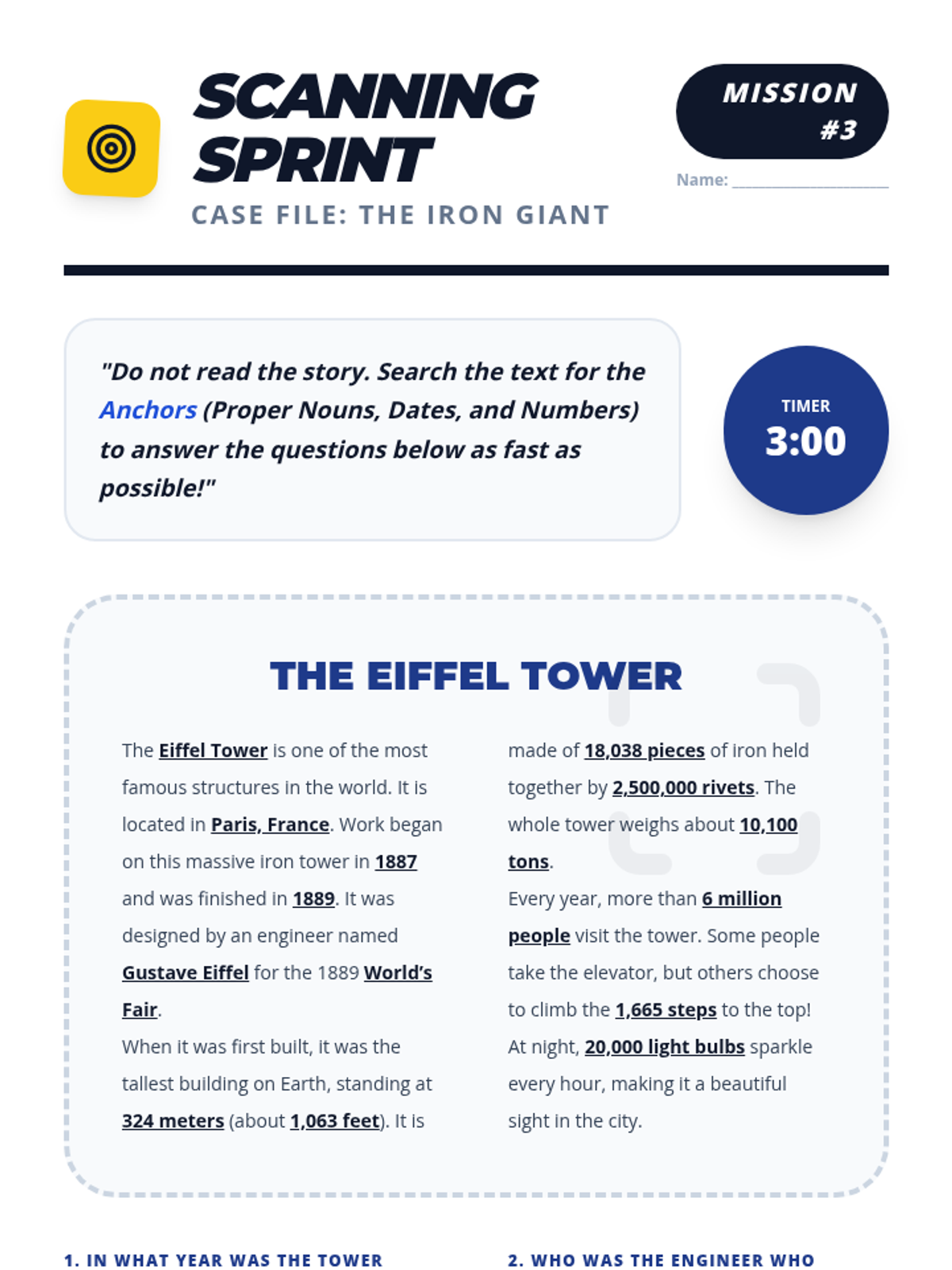
Students learn to scan for 'anchors' like proper nouns, dates, and numbers, practicing vertical and diagonal eye movements to find specific facts quickly.
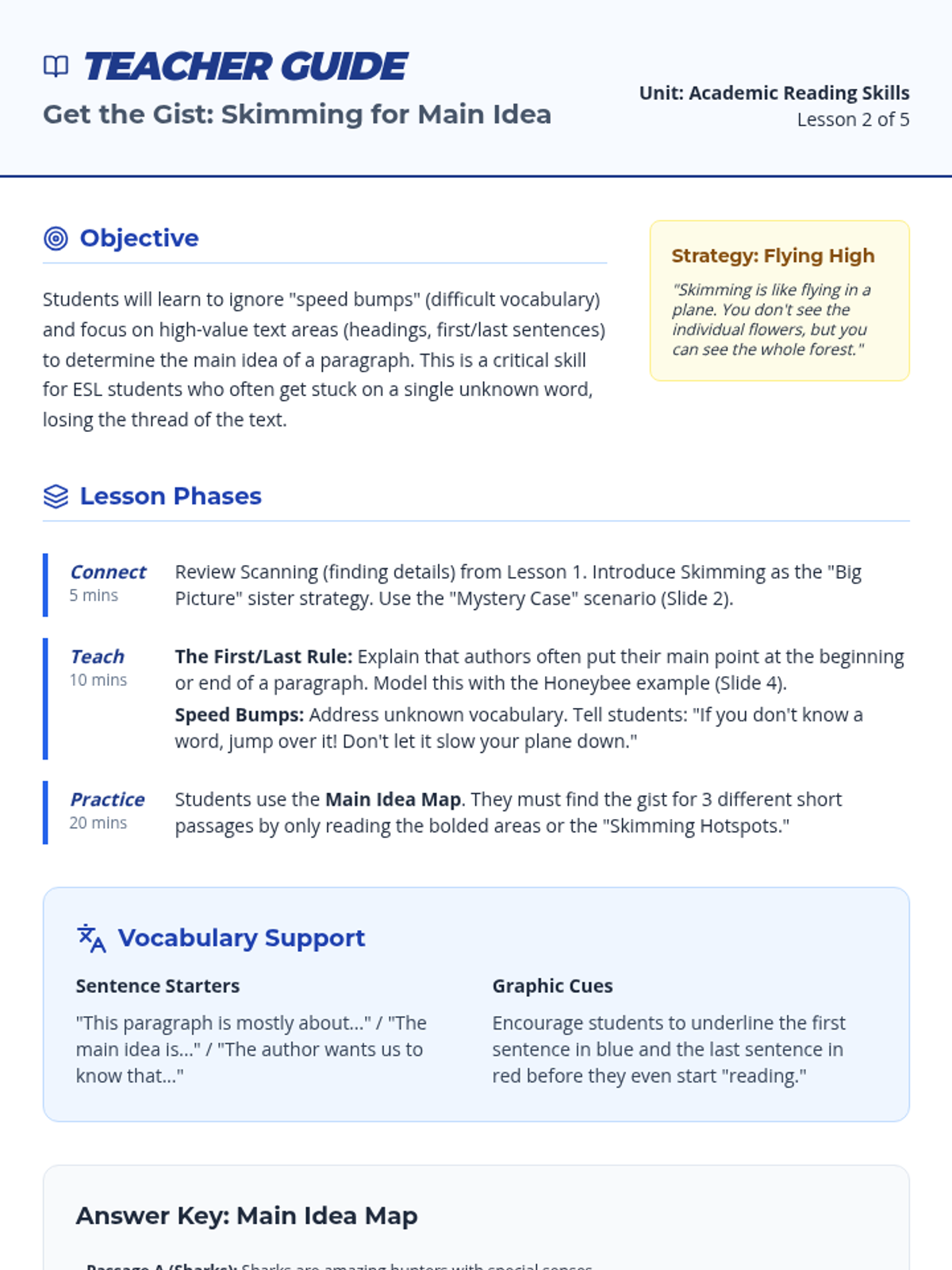
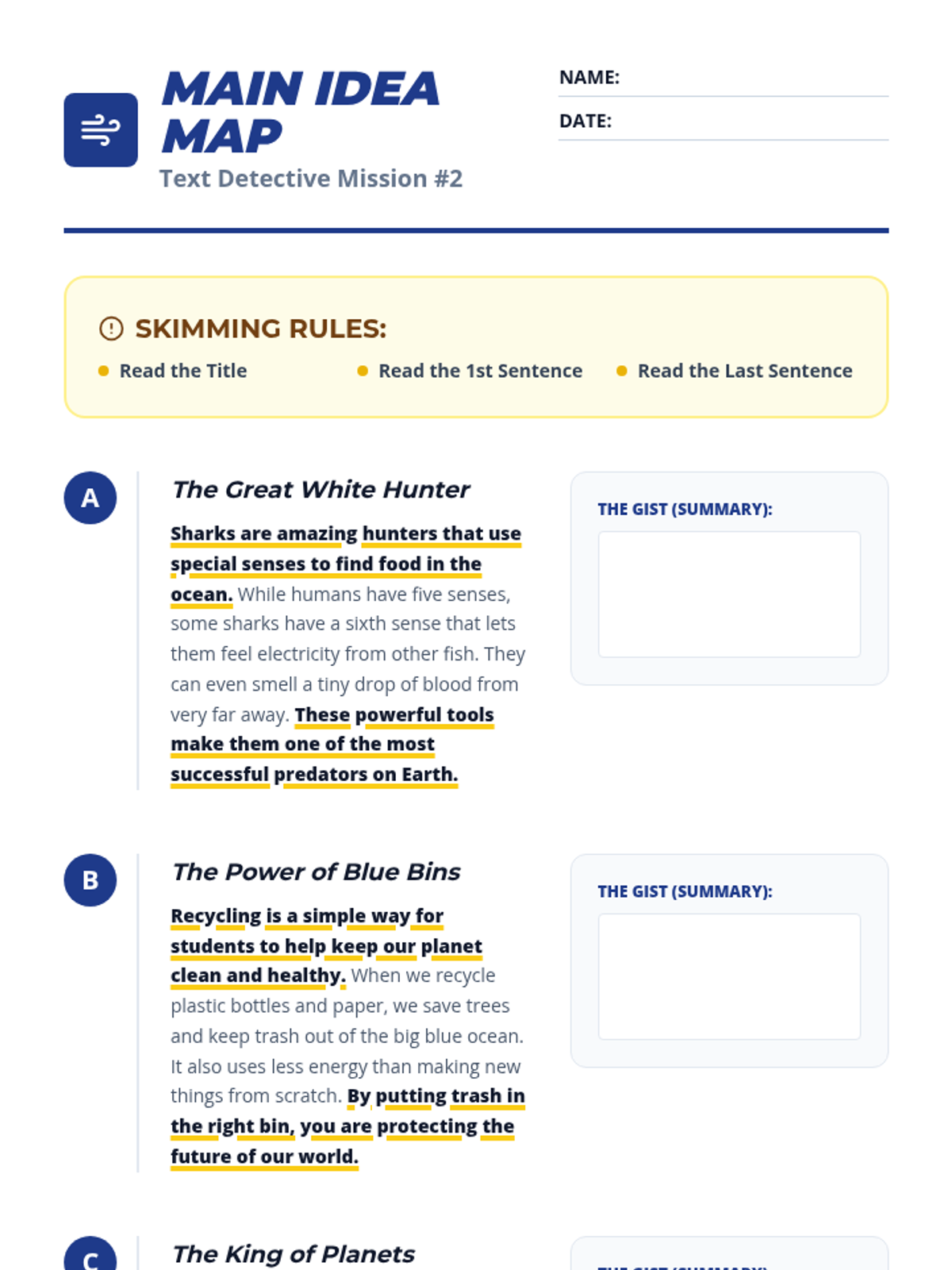
Students focus on skimming informational texts by reading first and last sentences of paragraphs to identify the 'gist' or main idea, while learning to ignore difficult vocabulary.
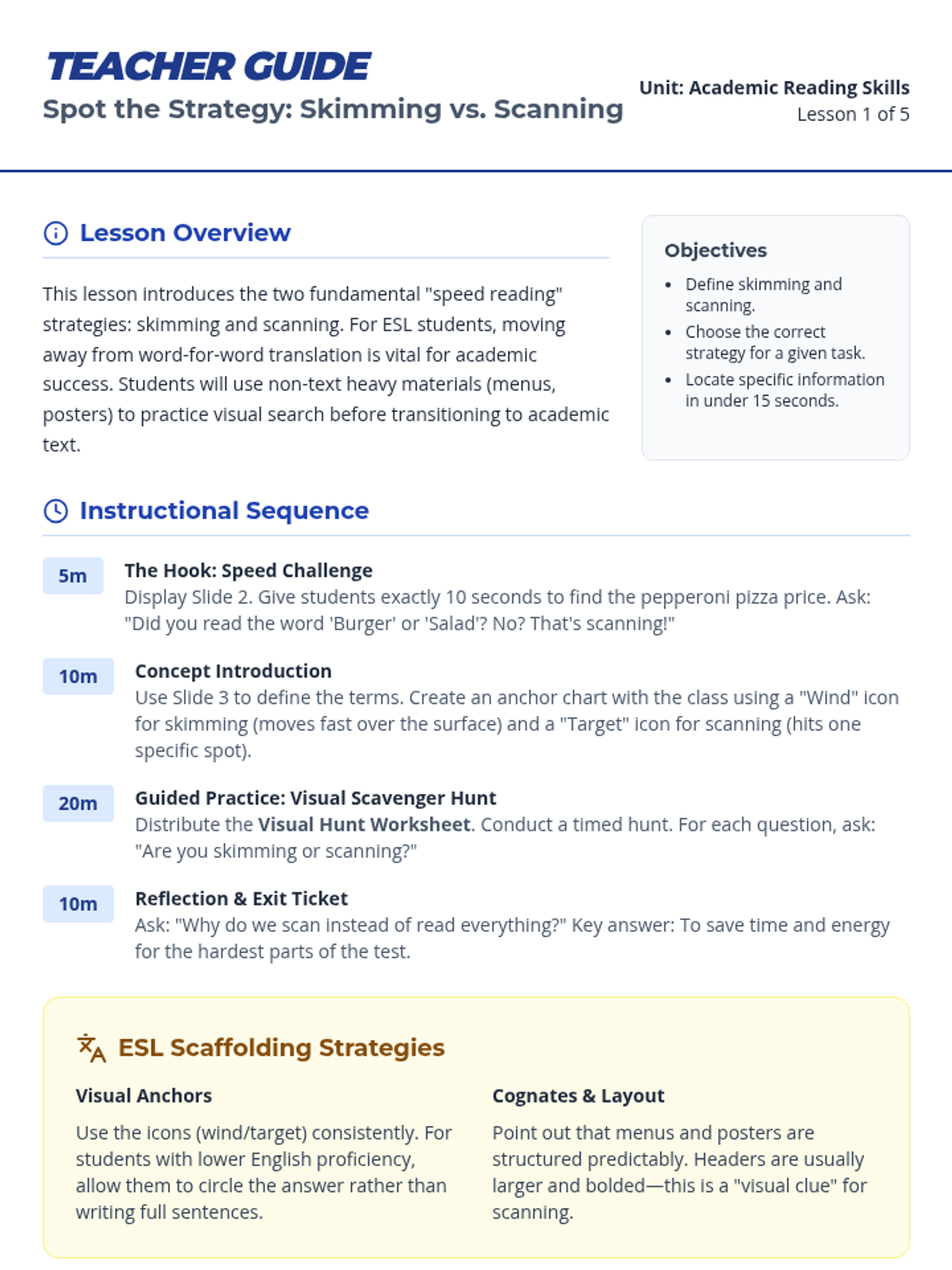
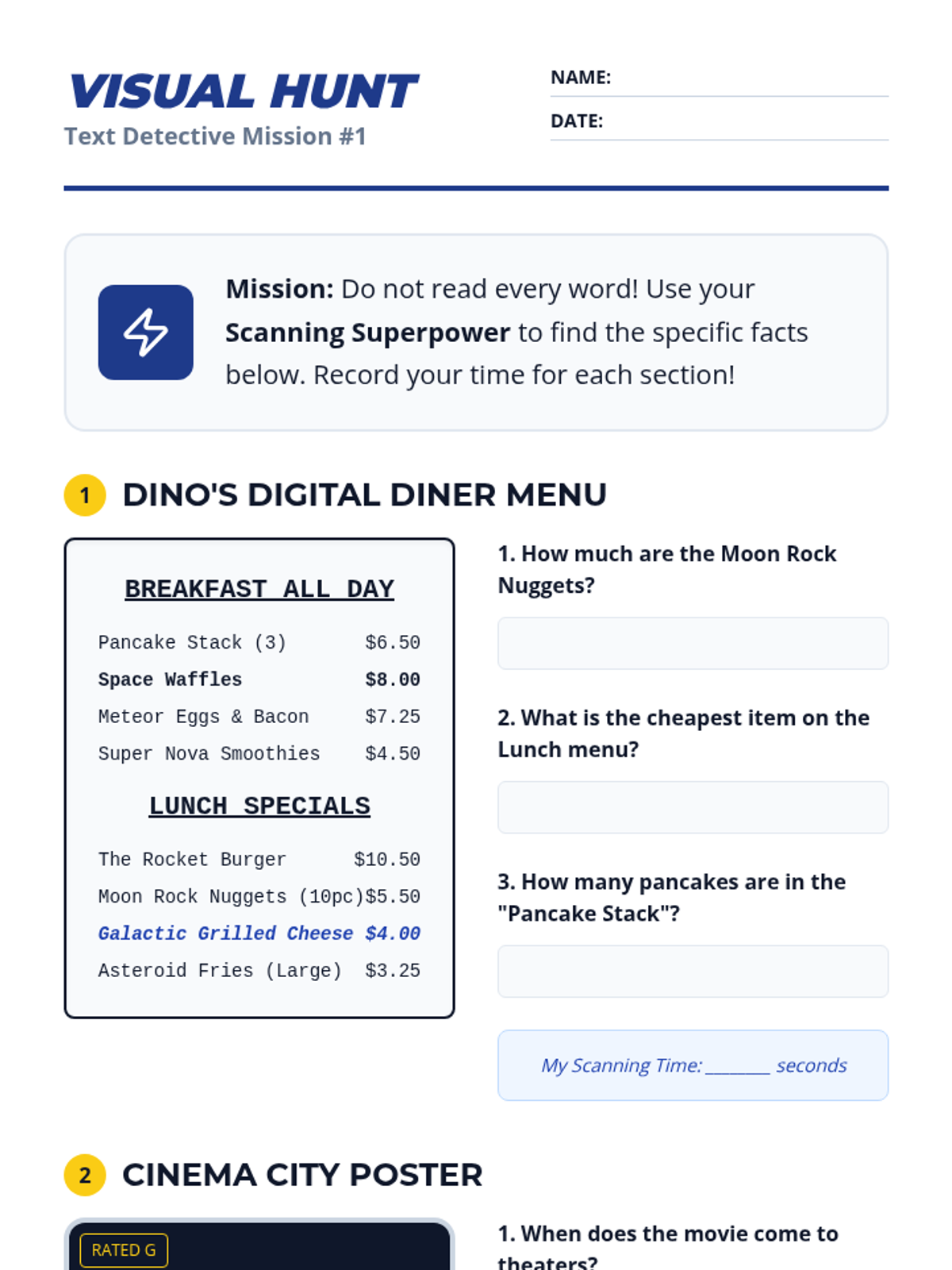
Students differentiate between skimming (getting the gist) and scanning (finding facts) through visual scavenger hunts using menus and posters.