Specialized vocabulary across disciplines, research methodologies, and effective note-taking systems. Equips learners with information literacy skills and strategies for navigating standardized exams.
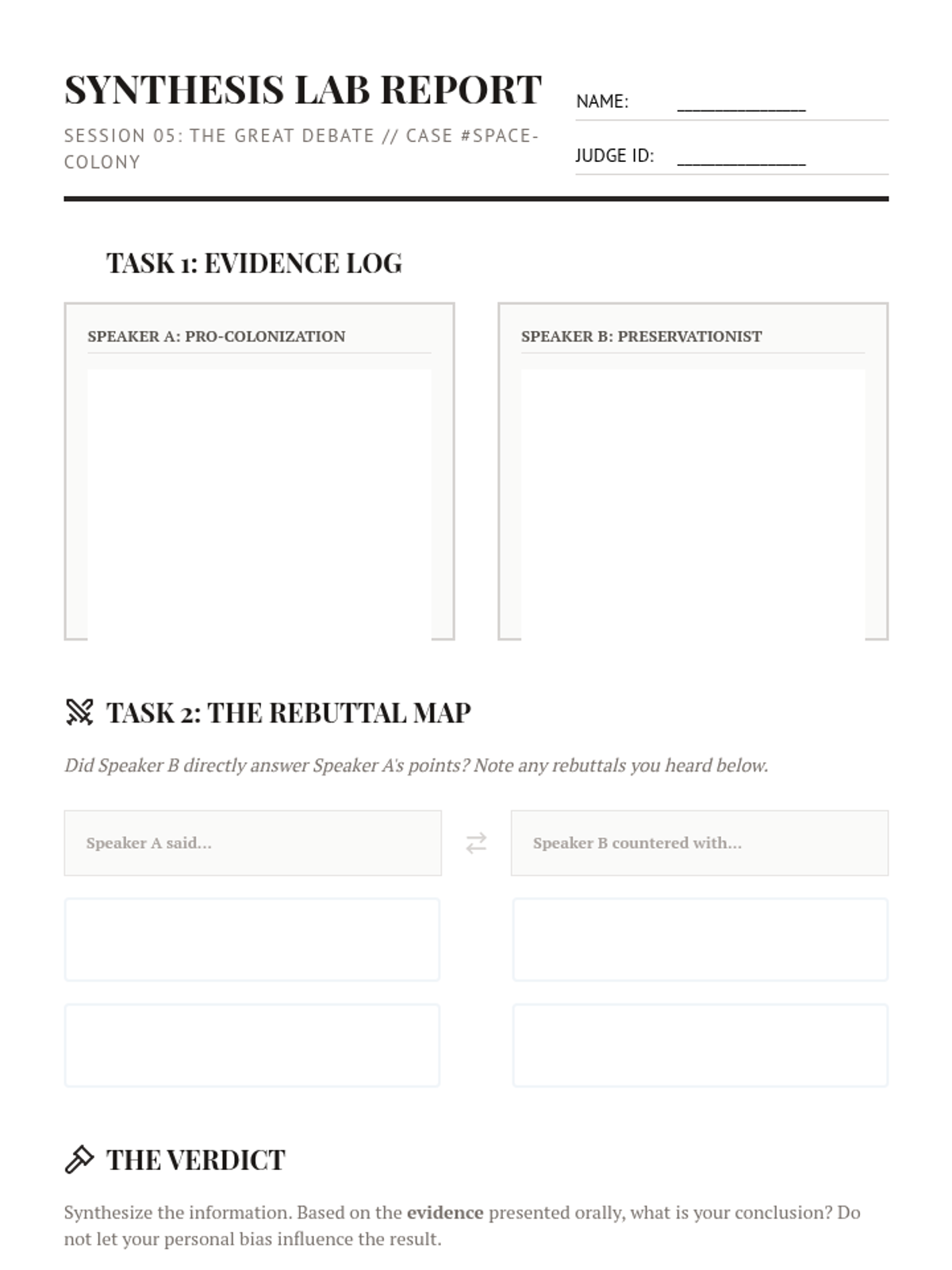
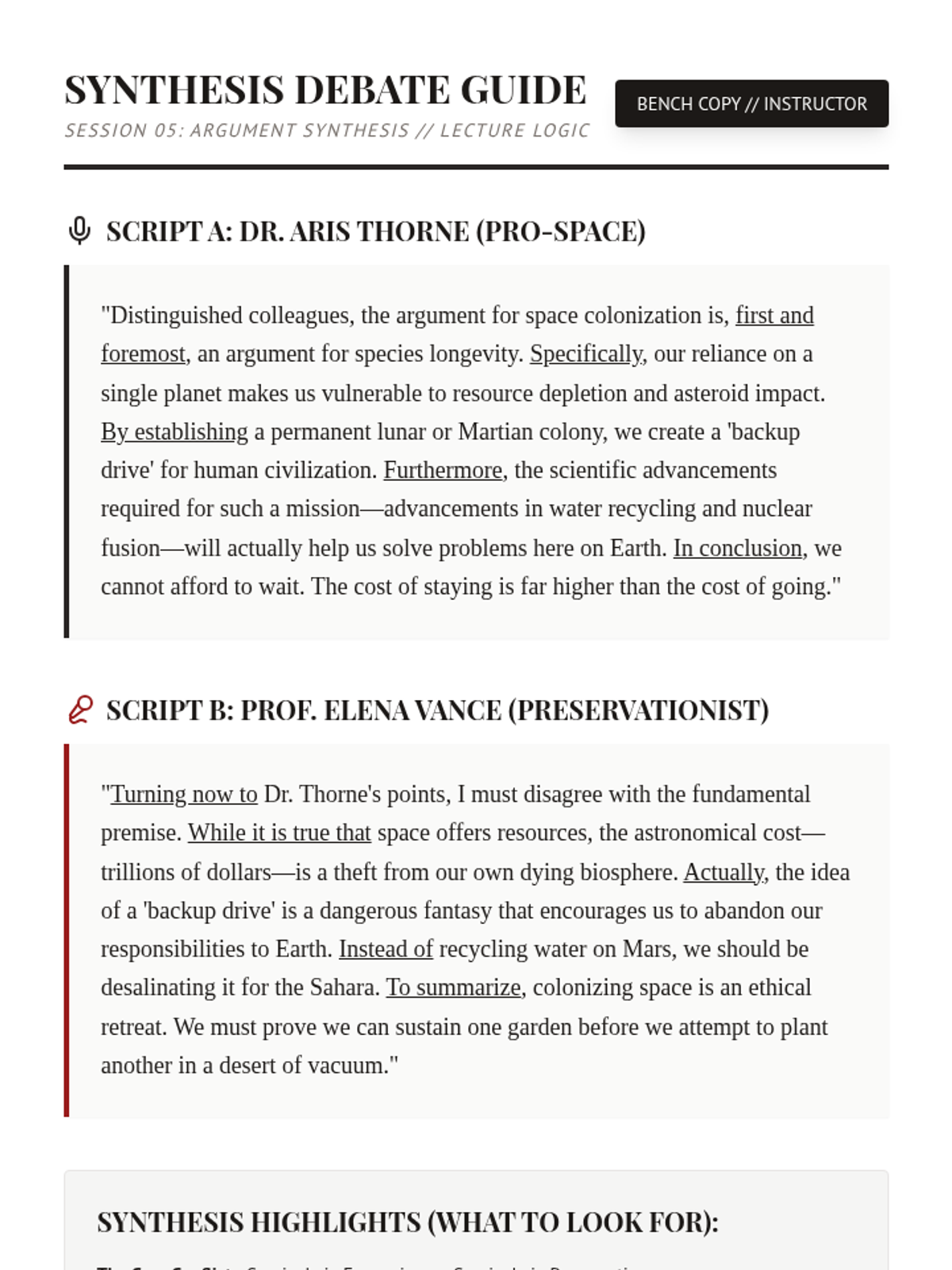
In the final lesson, students listen to opposing viewpoints on an academic topic, identify rebuttals, and synthesize the information to form a reasoned conclusion.
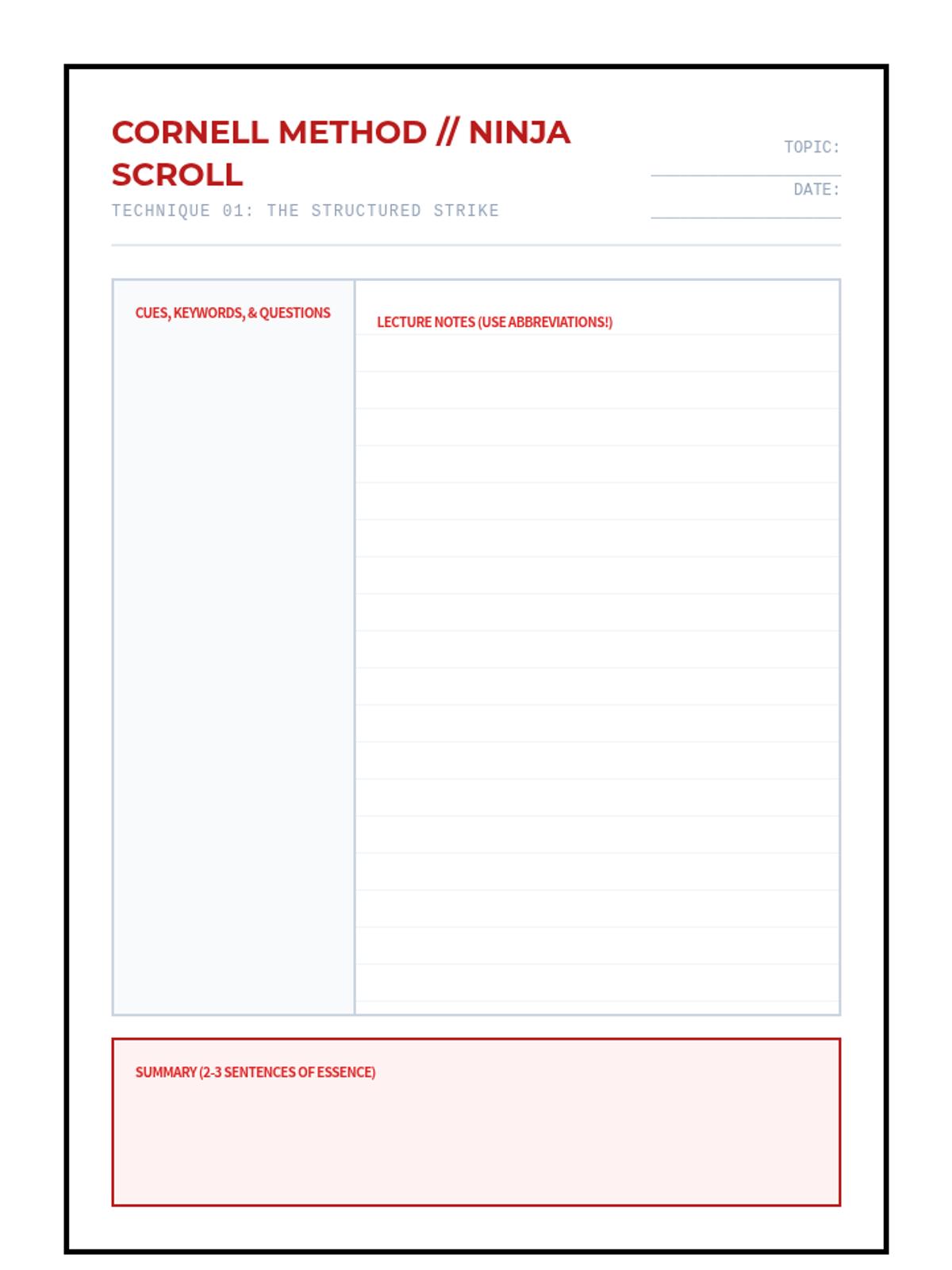
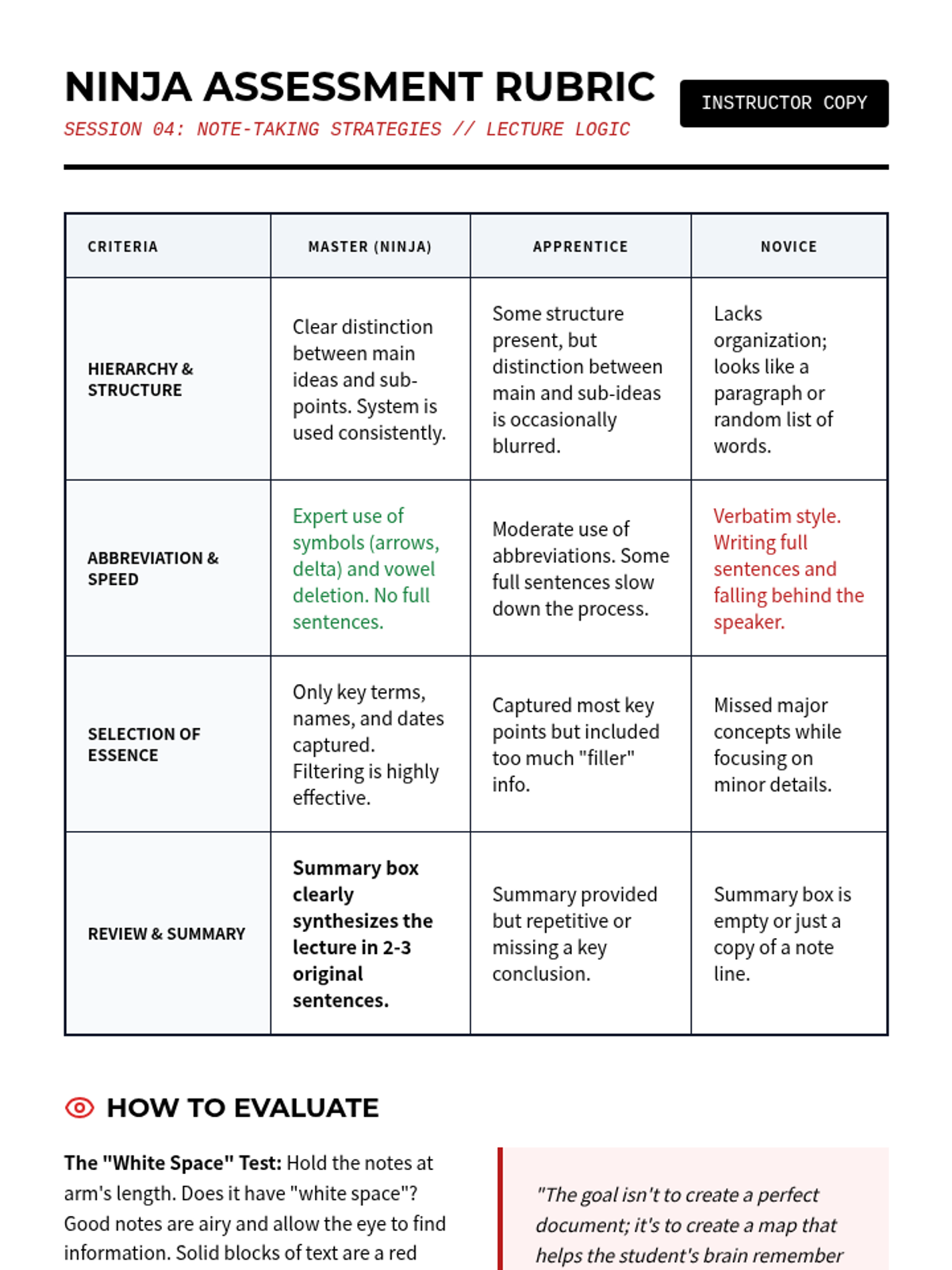
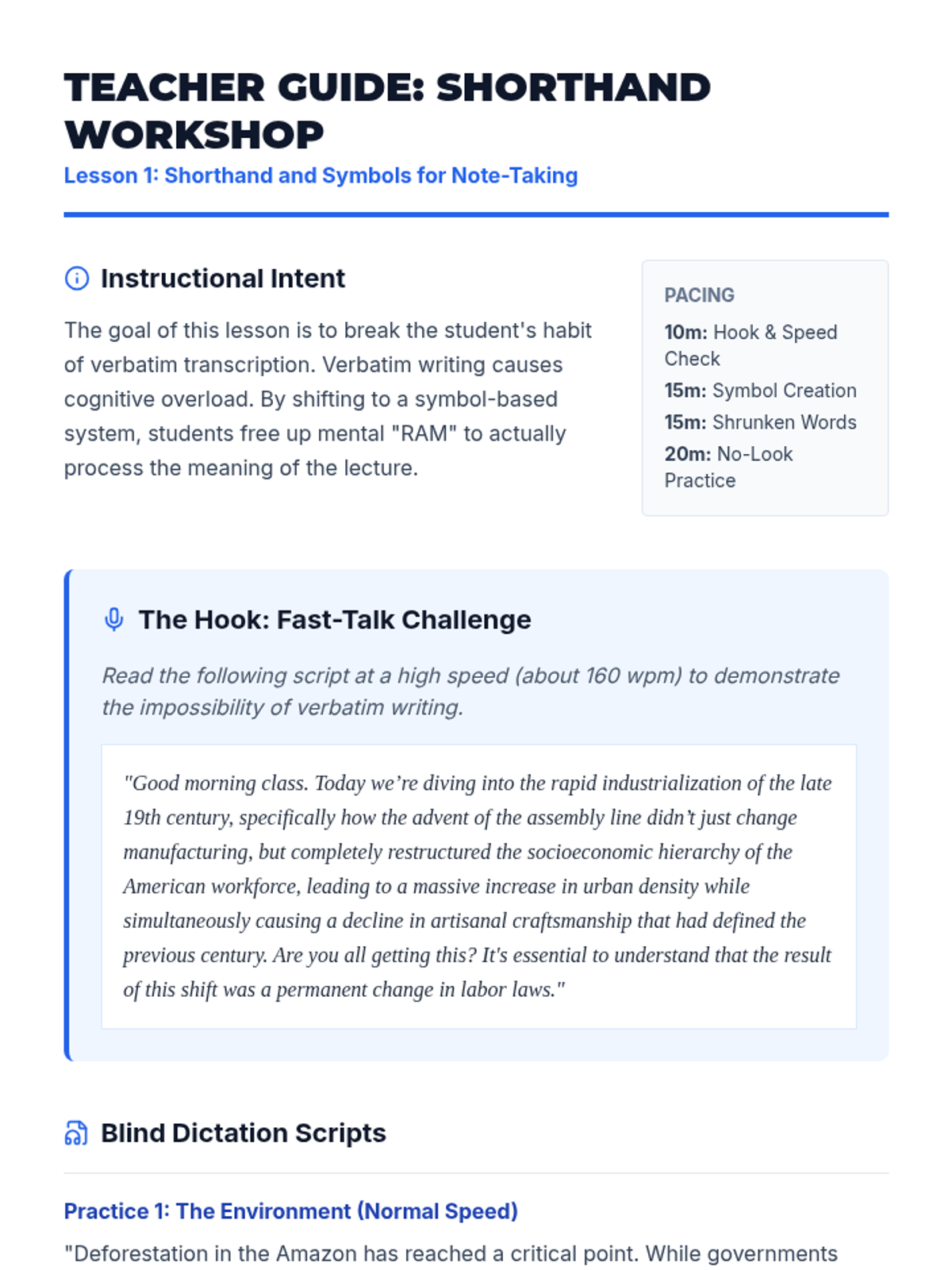
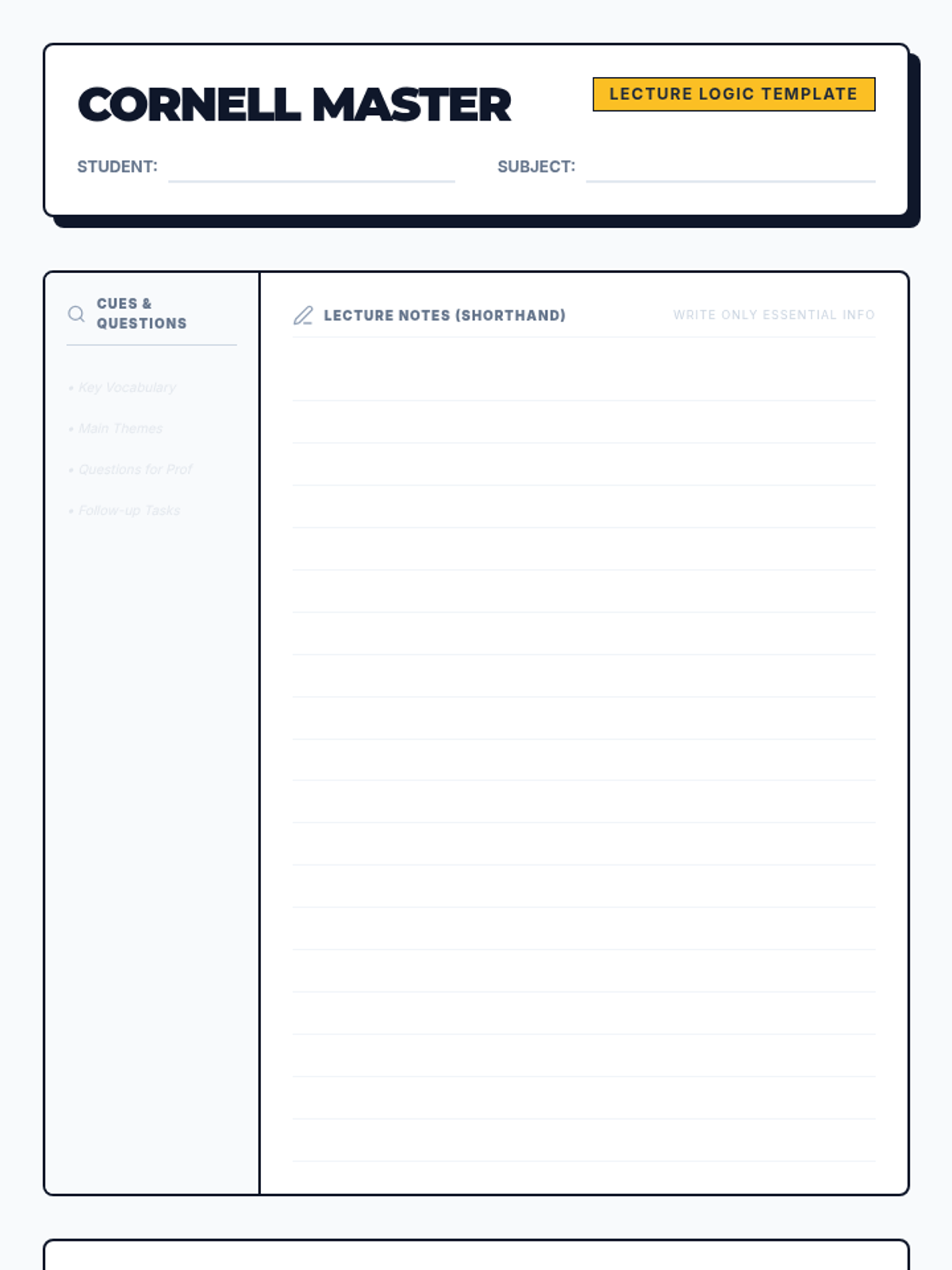
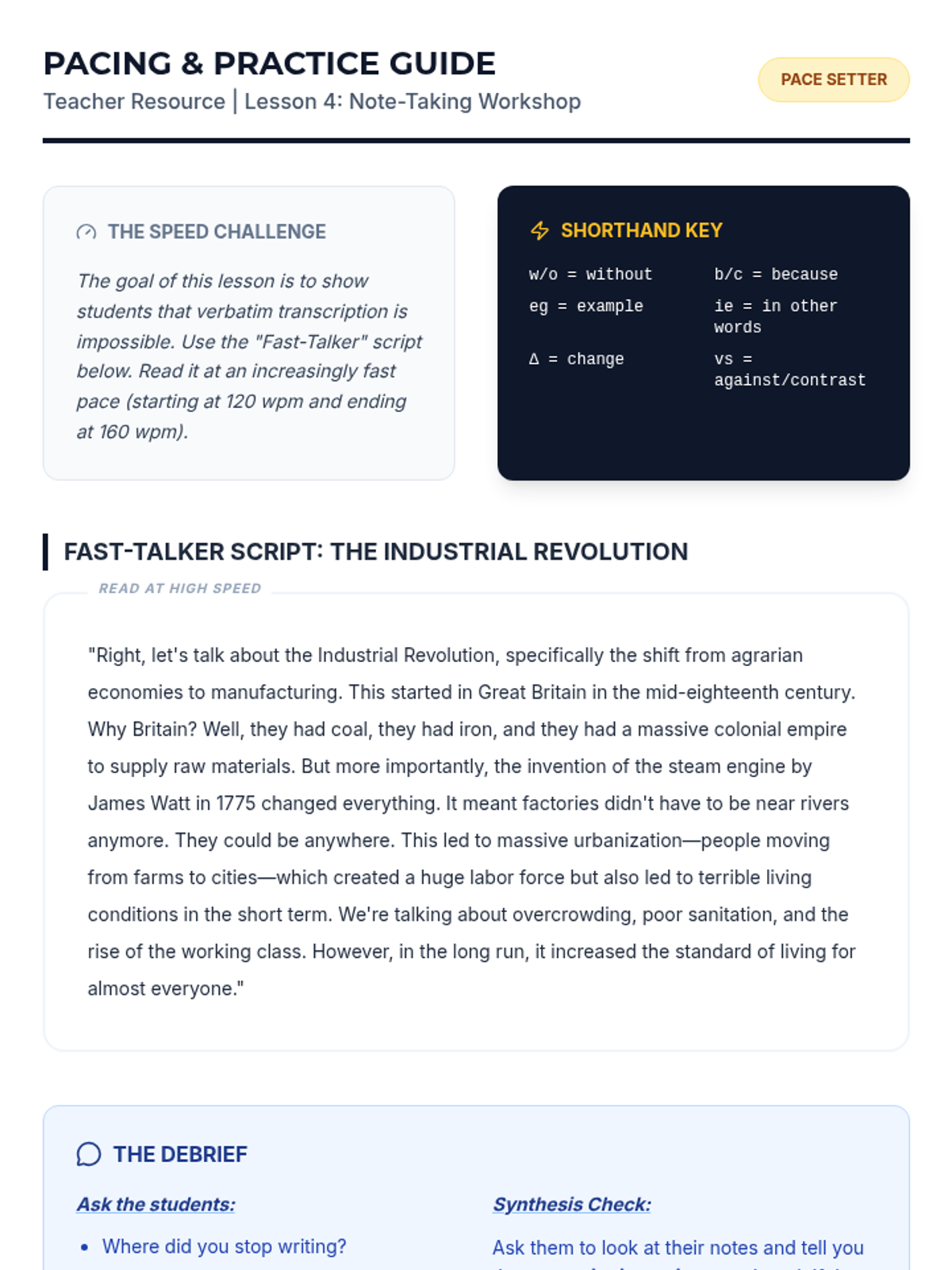
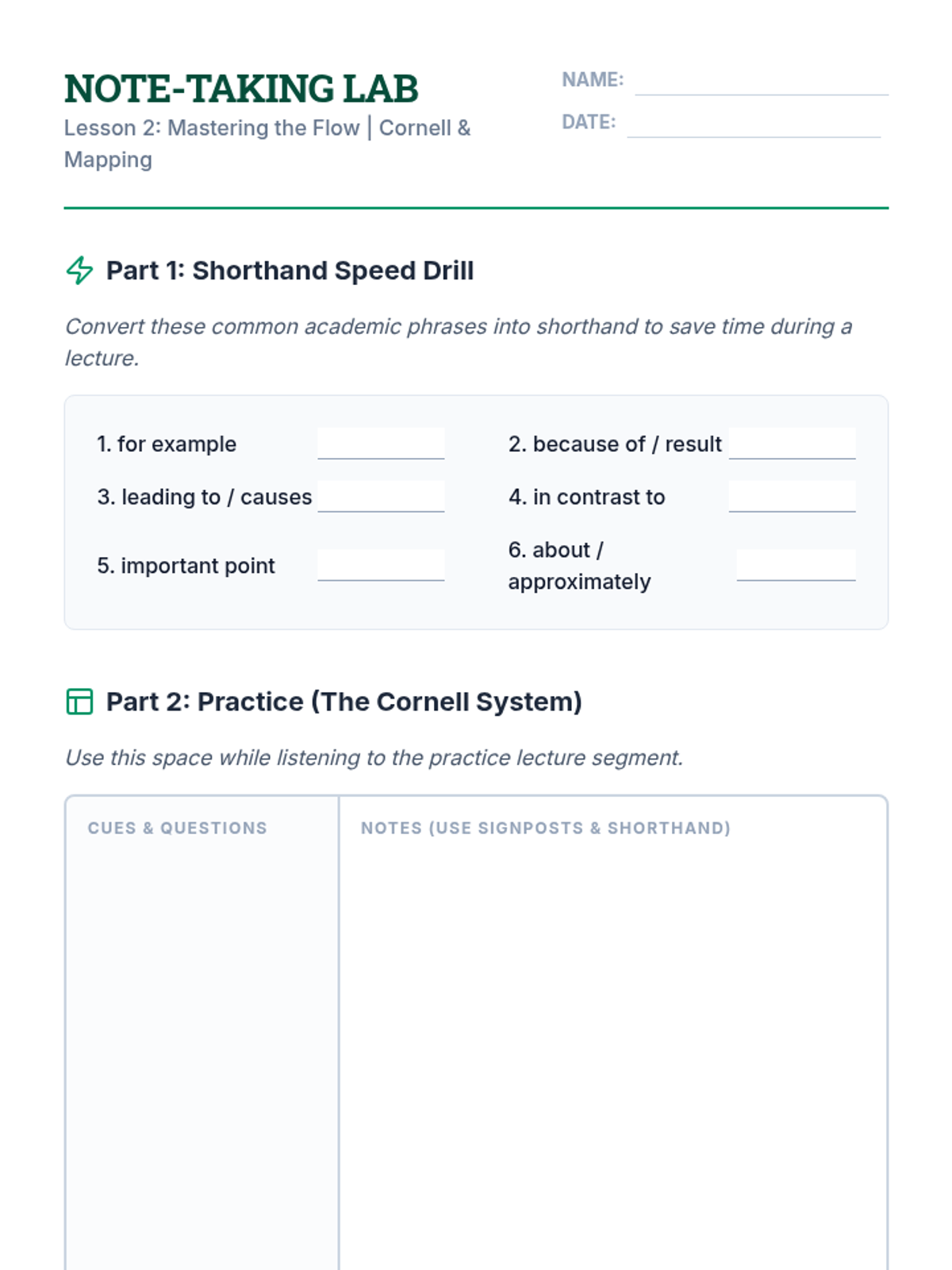
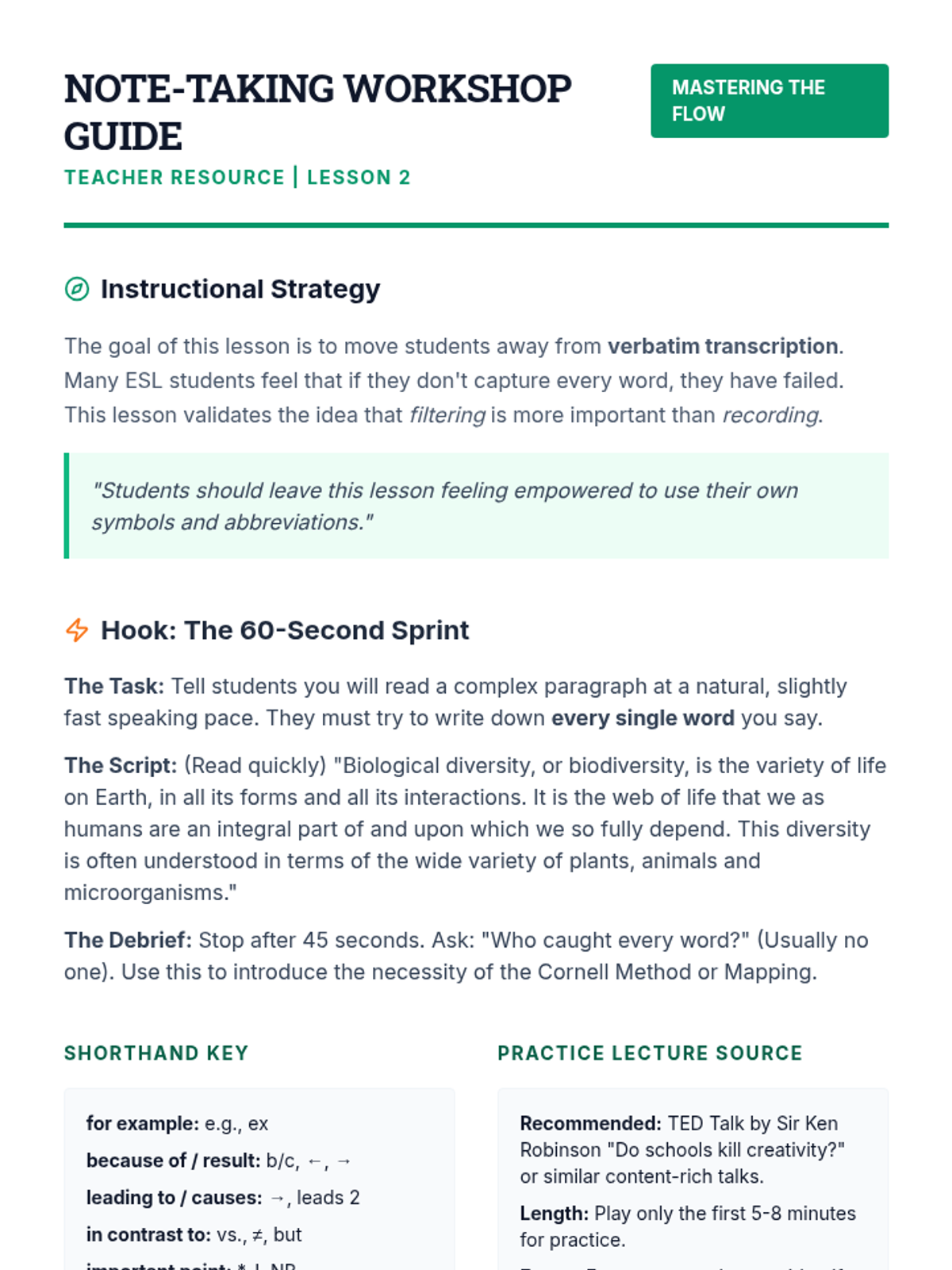
A workshop on strategic note-taking systems (Cornell, Outlining, Mapping). Students learn to use abbreviations and capture key concepts rather than verbatim transcription.
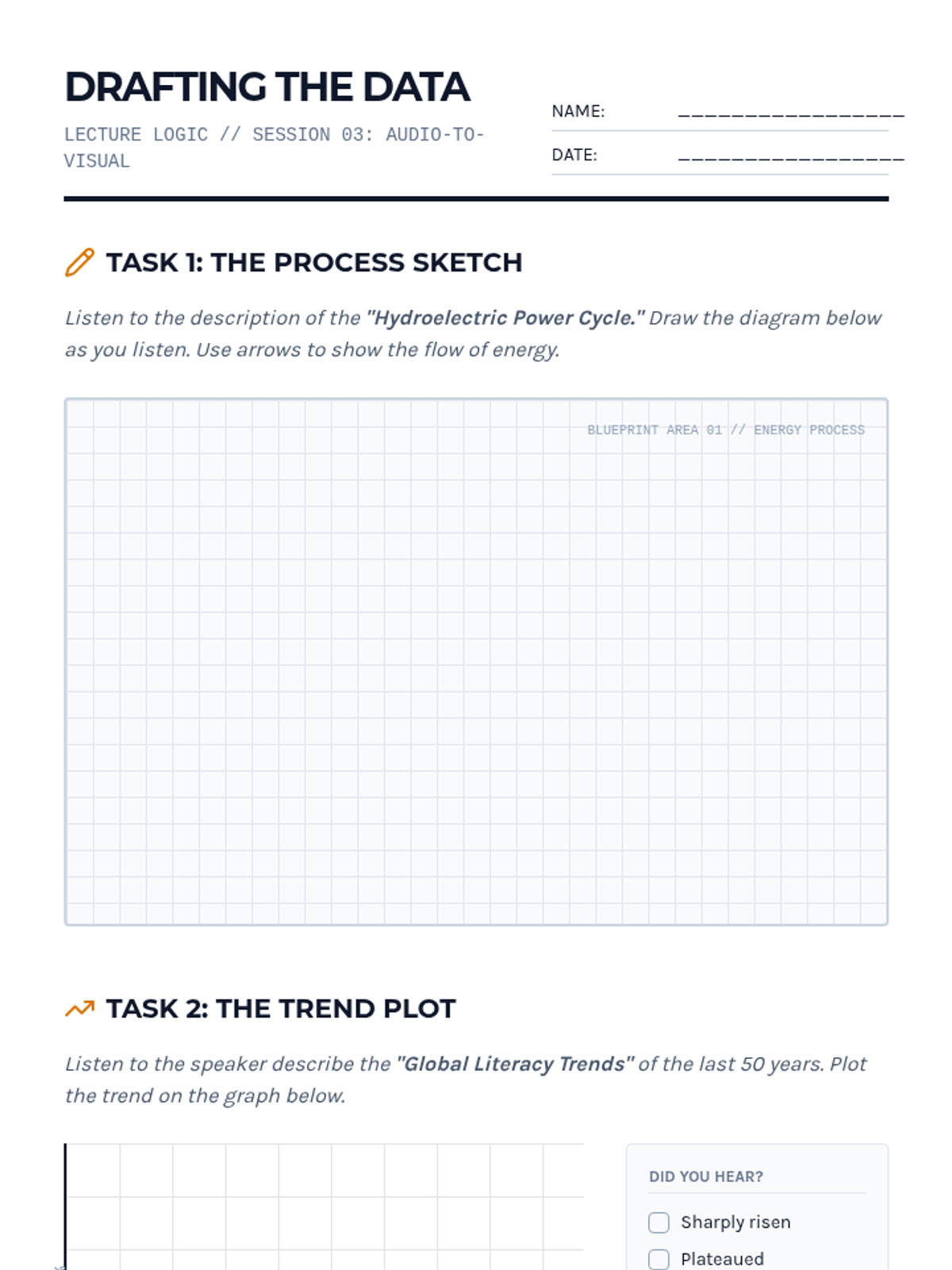
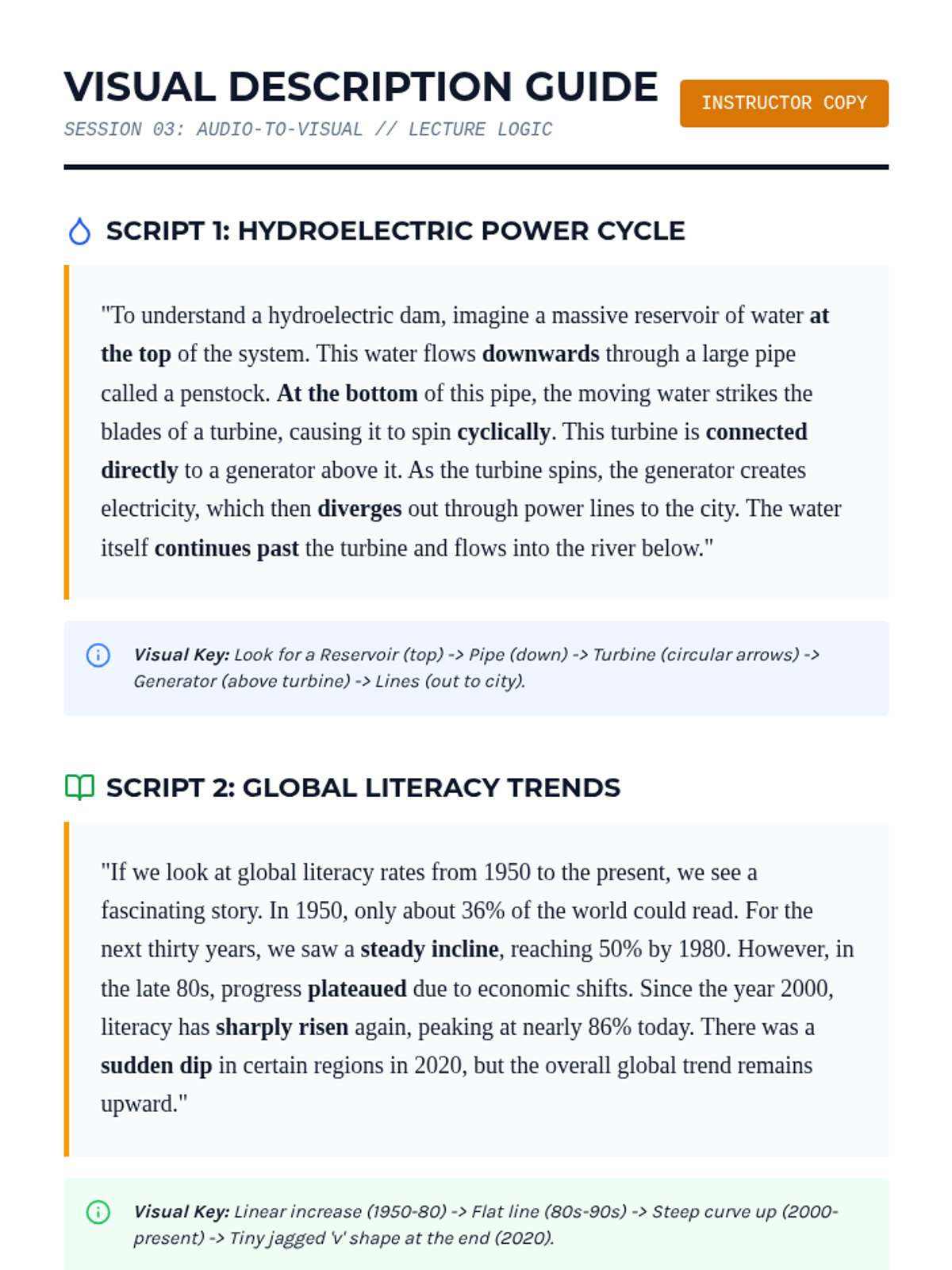
Students practice converting auditory descriptions into visual data. They will draw diagrams and charts based strictly on spoken information about processes and statistics.
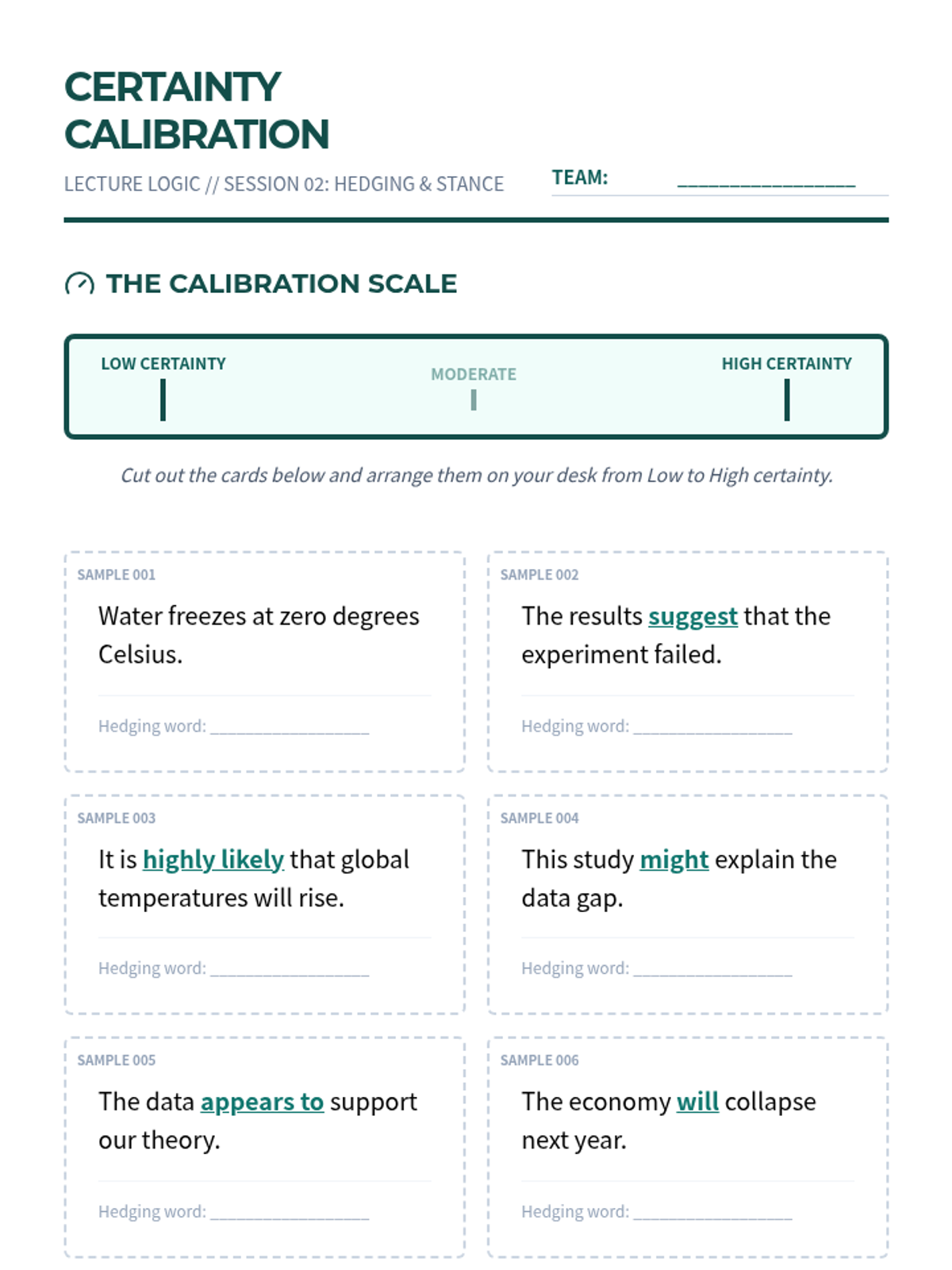
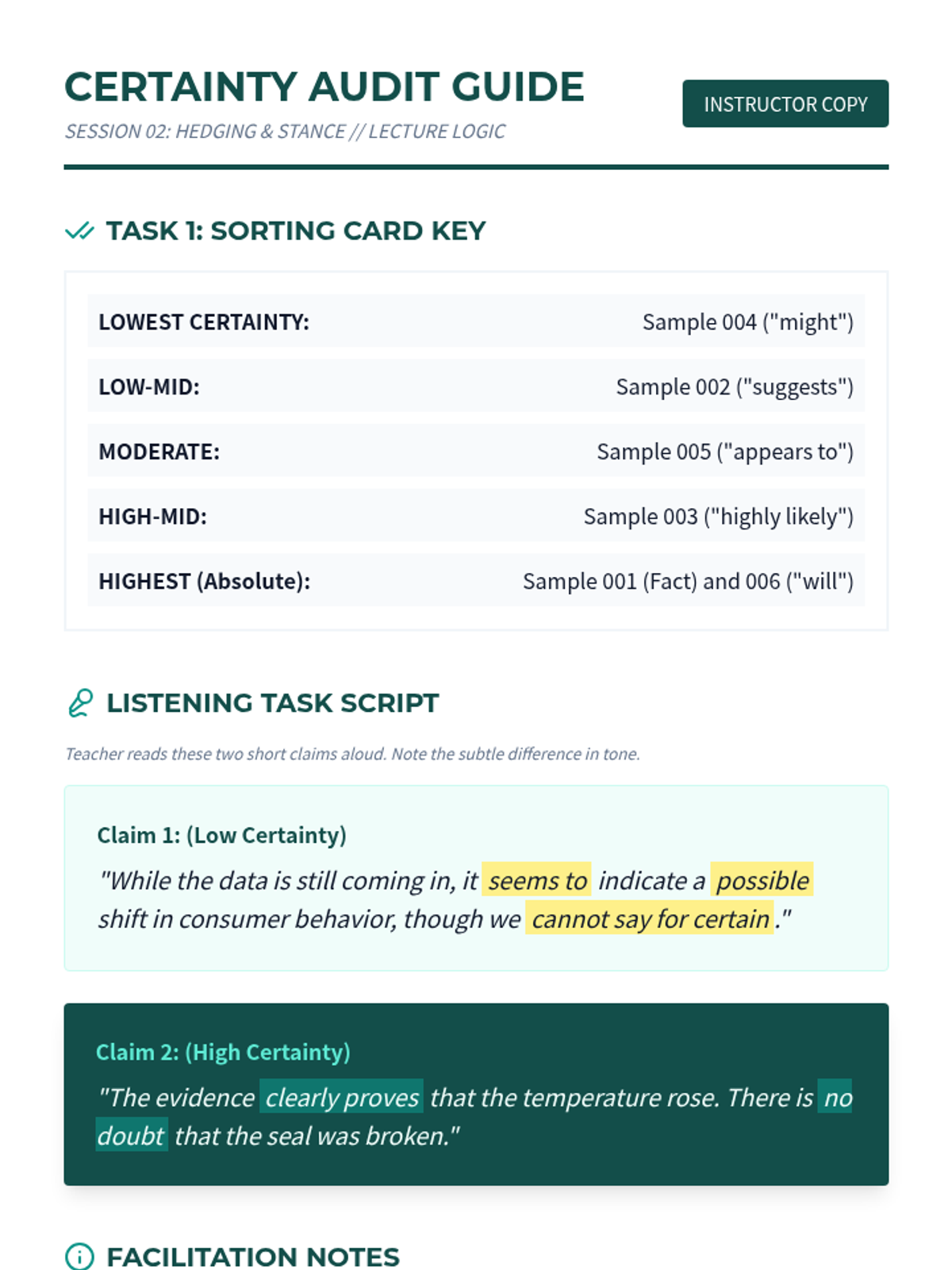
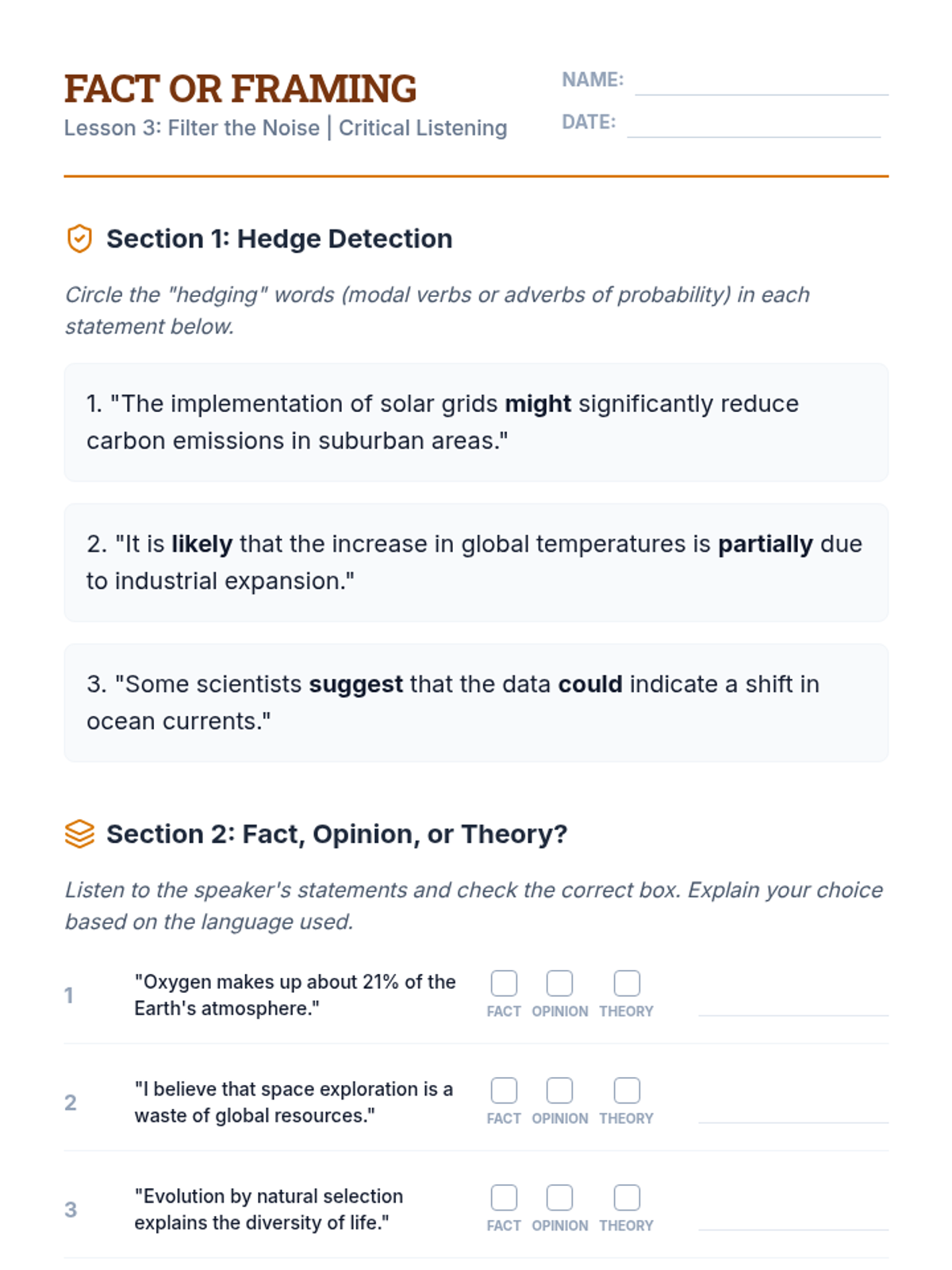
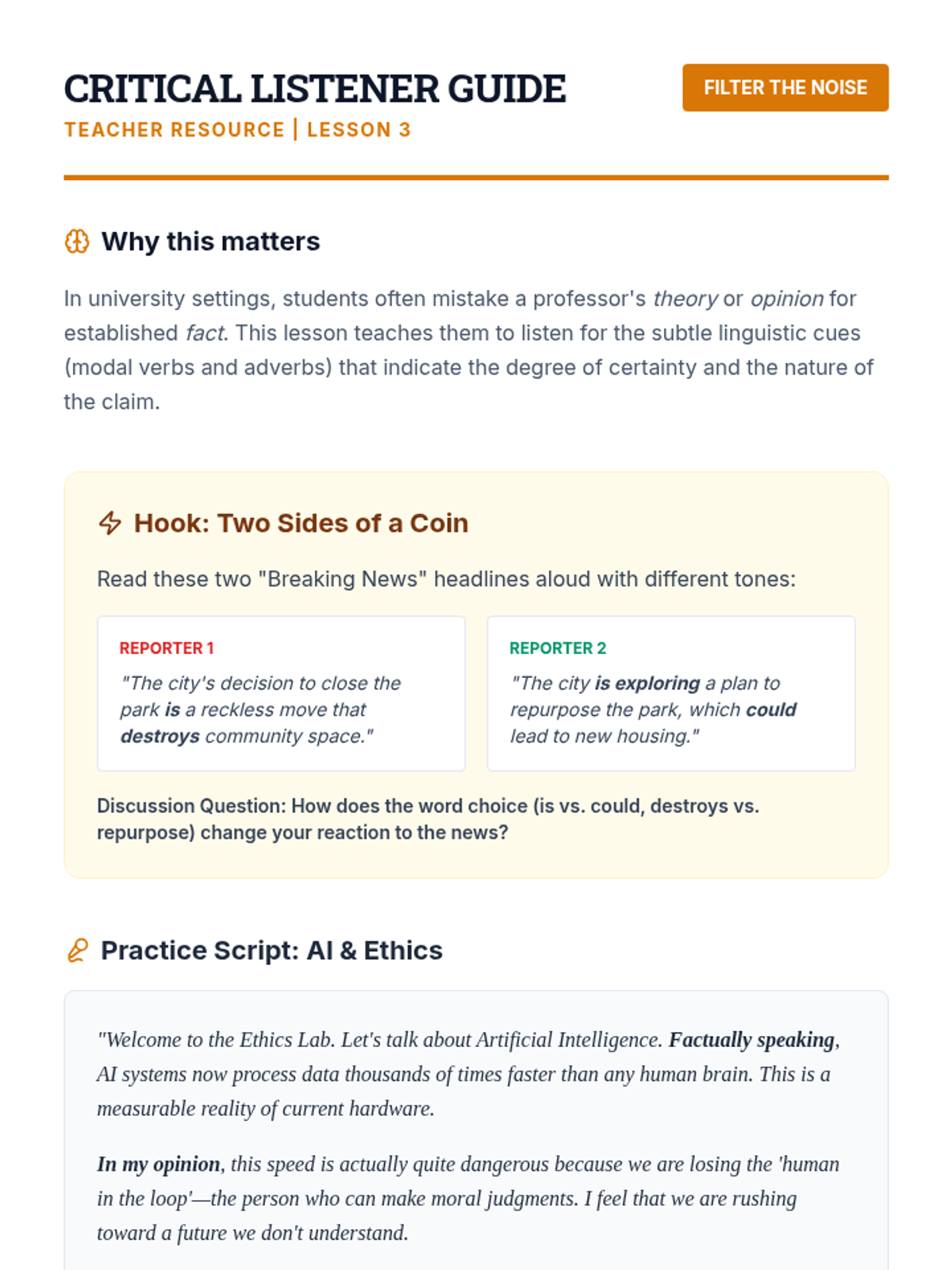
Learners differentiate between objective facts and subjective interpretation, focusing on 'hedging' language like 'appears to' or 'suggests.' They will categorize statements based on their level of certainty.
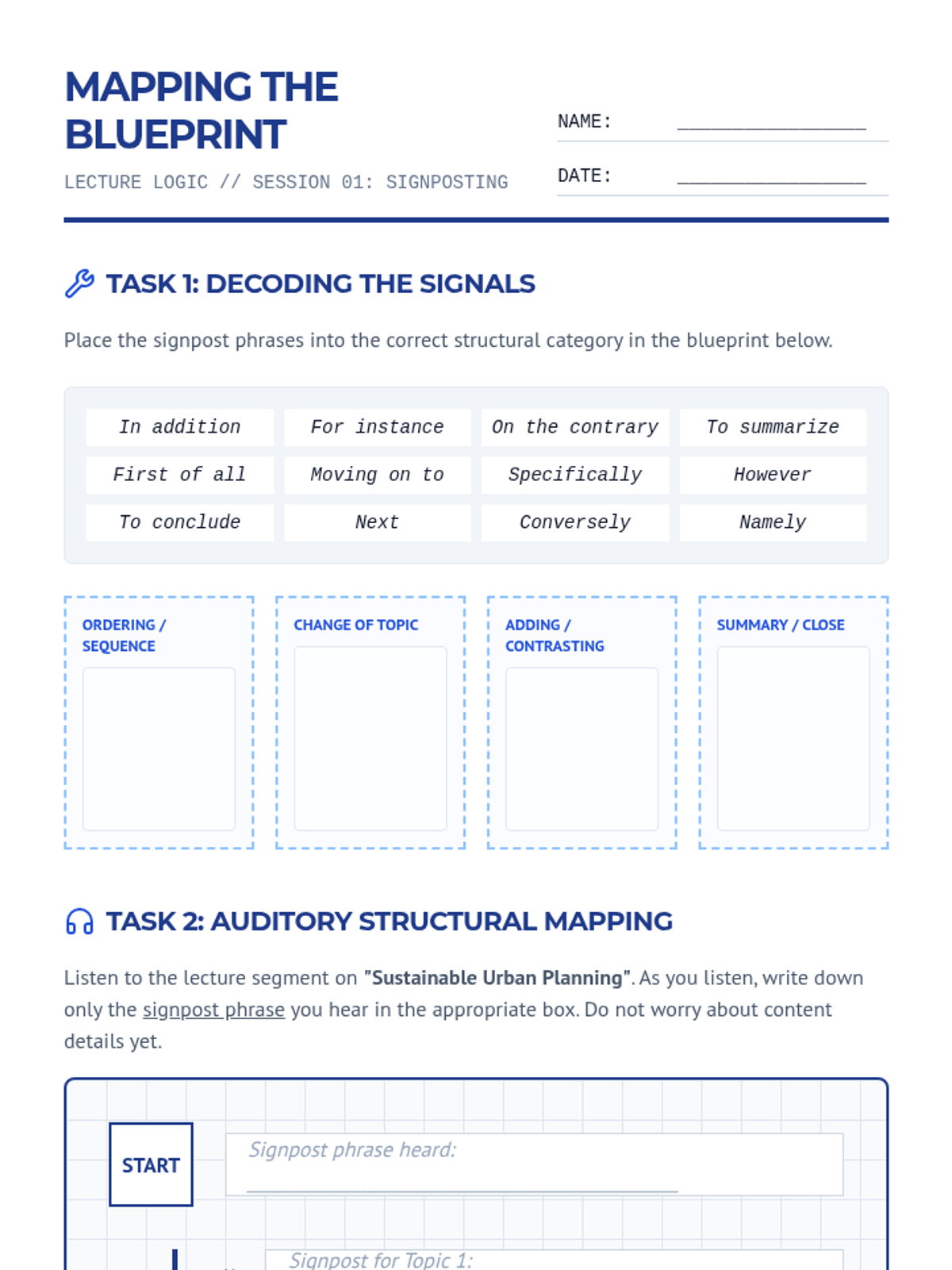
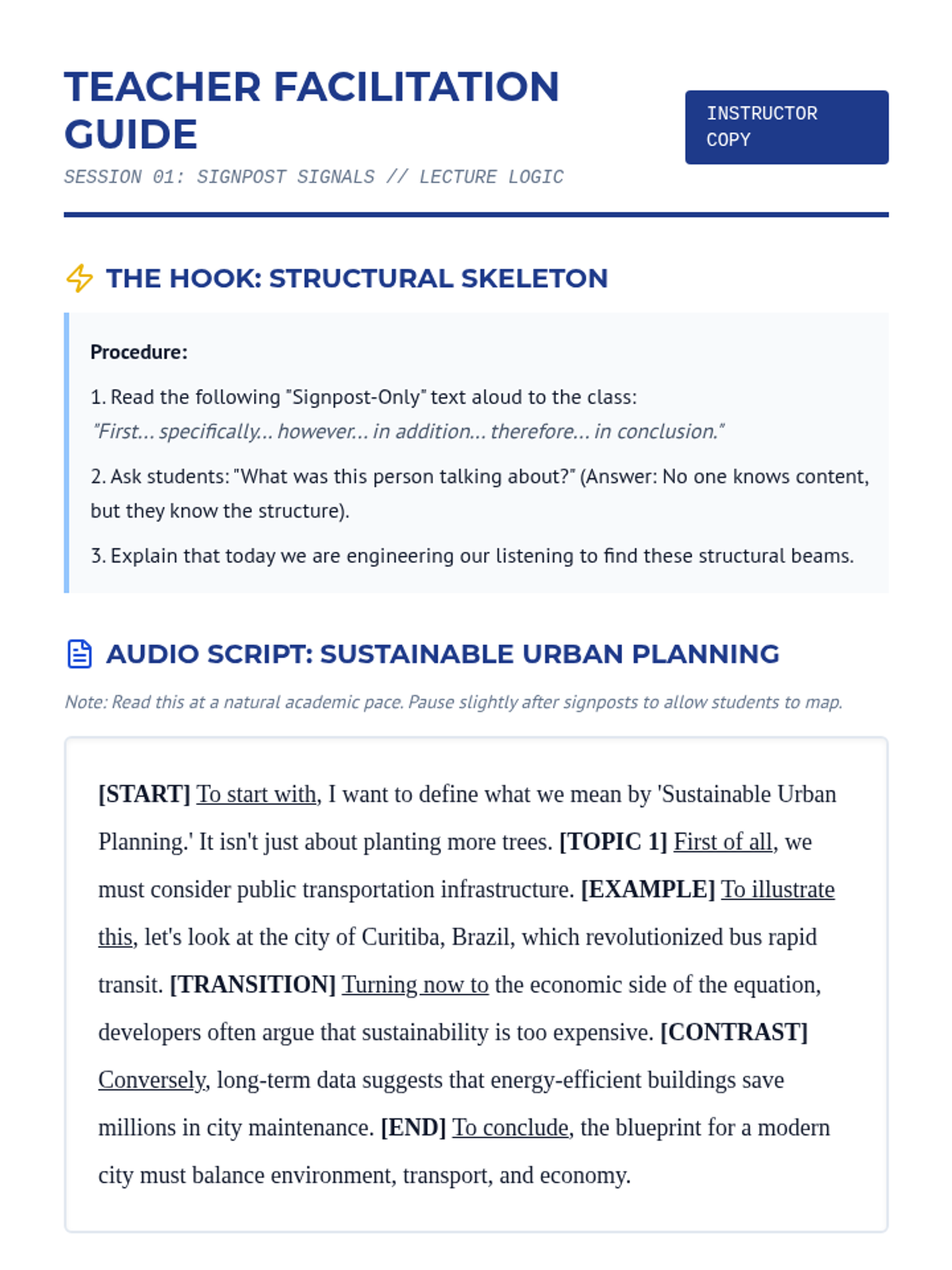
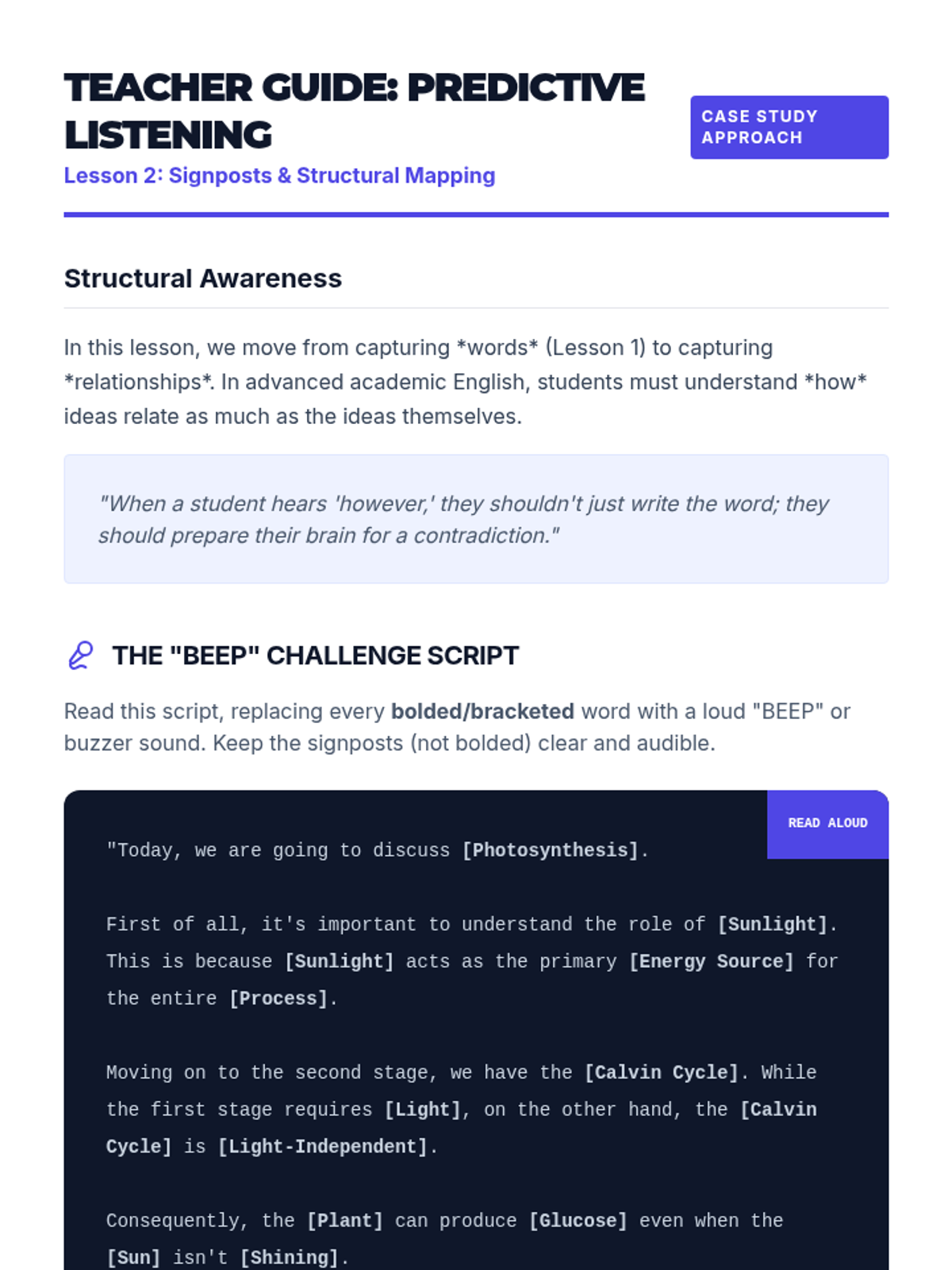
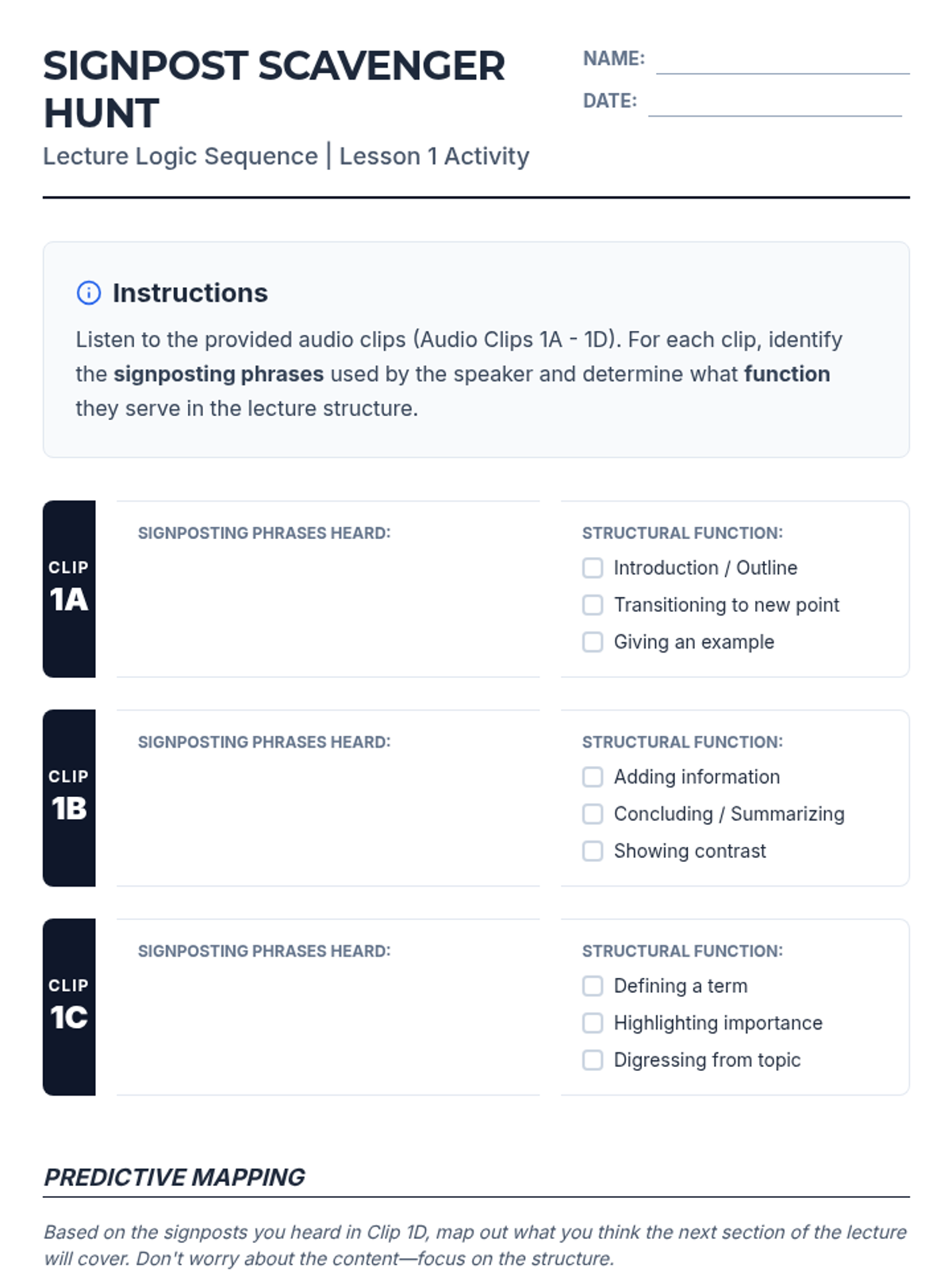
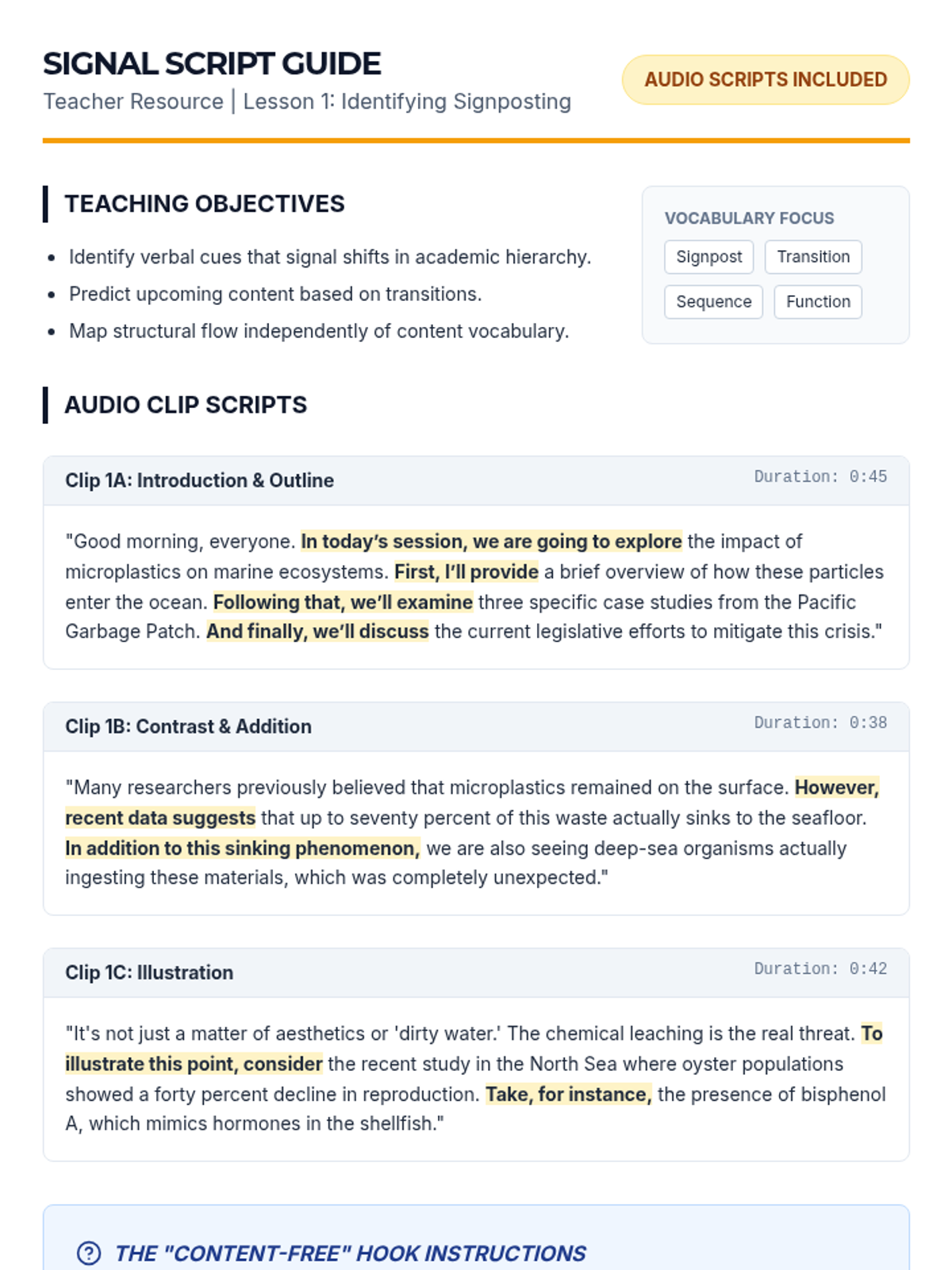
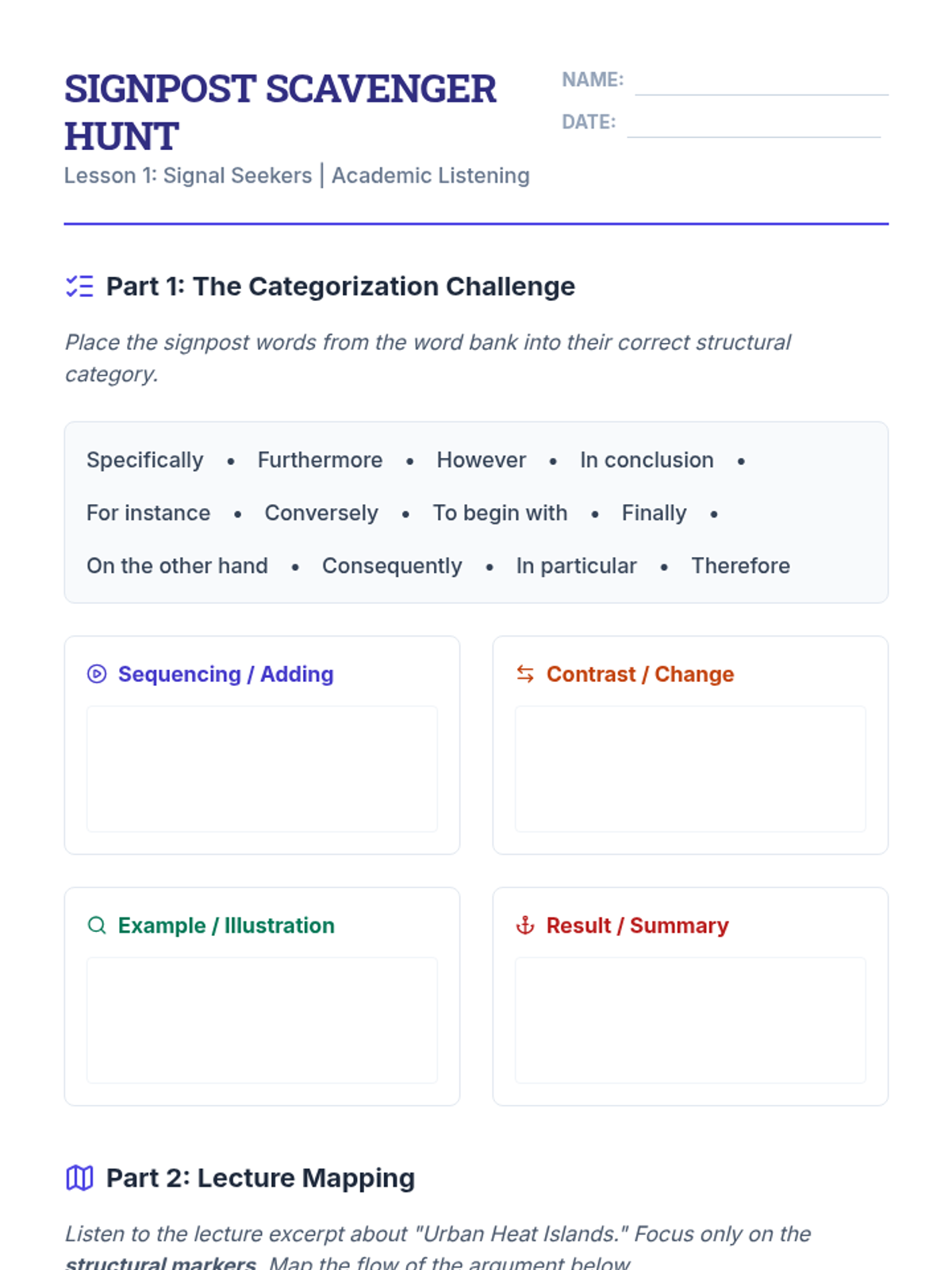
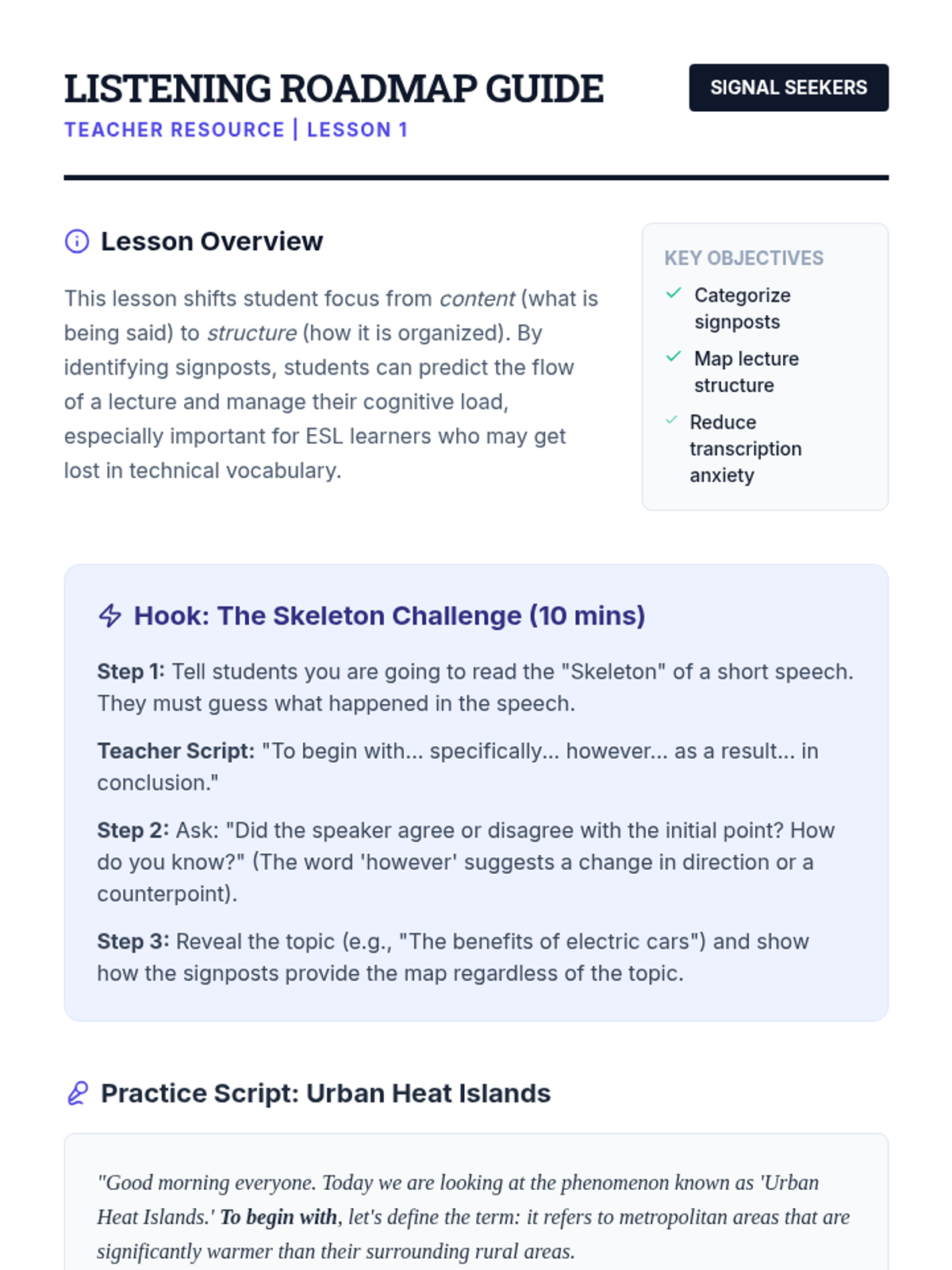
Students learn to identify transition signals (signposting) that reveal a lecture's organizational structure. They will practice mapping lecture segments based on auditory cues alone.
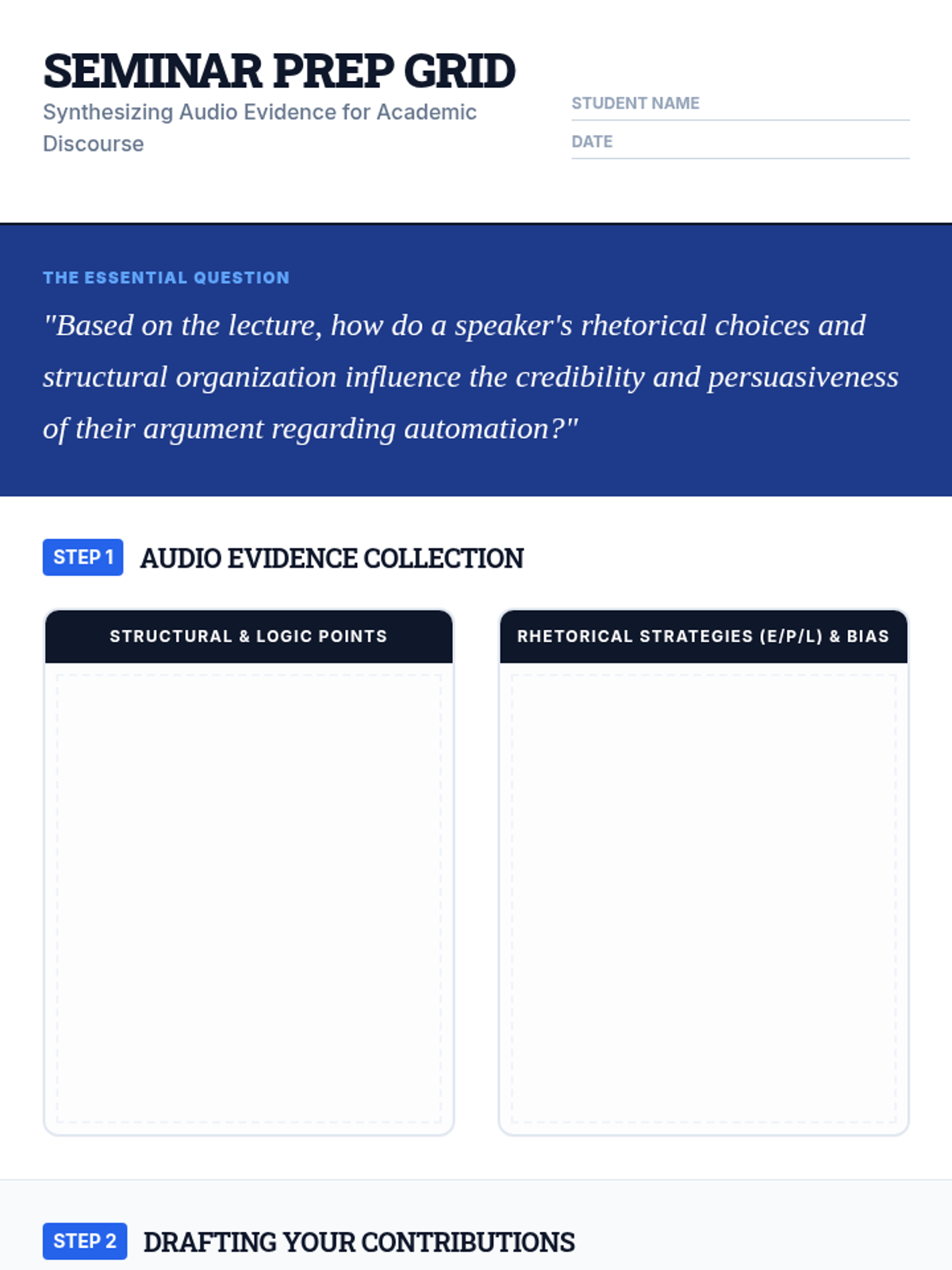
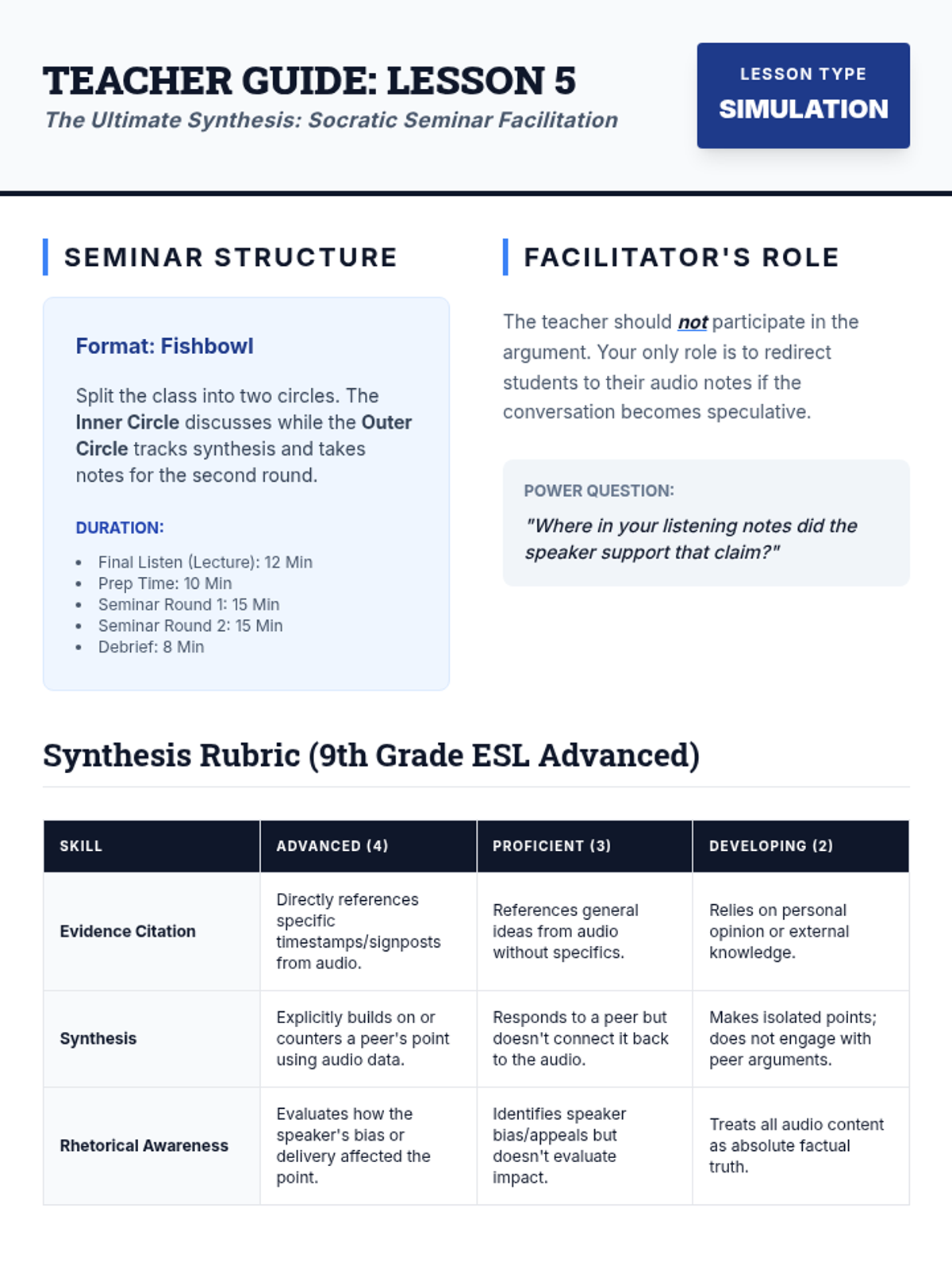
In this culminating lesson, students engage in a Socratic seminar using listening notes from a complex lecture to support their arguments in real-time.
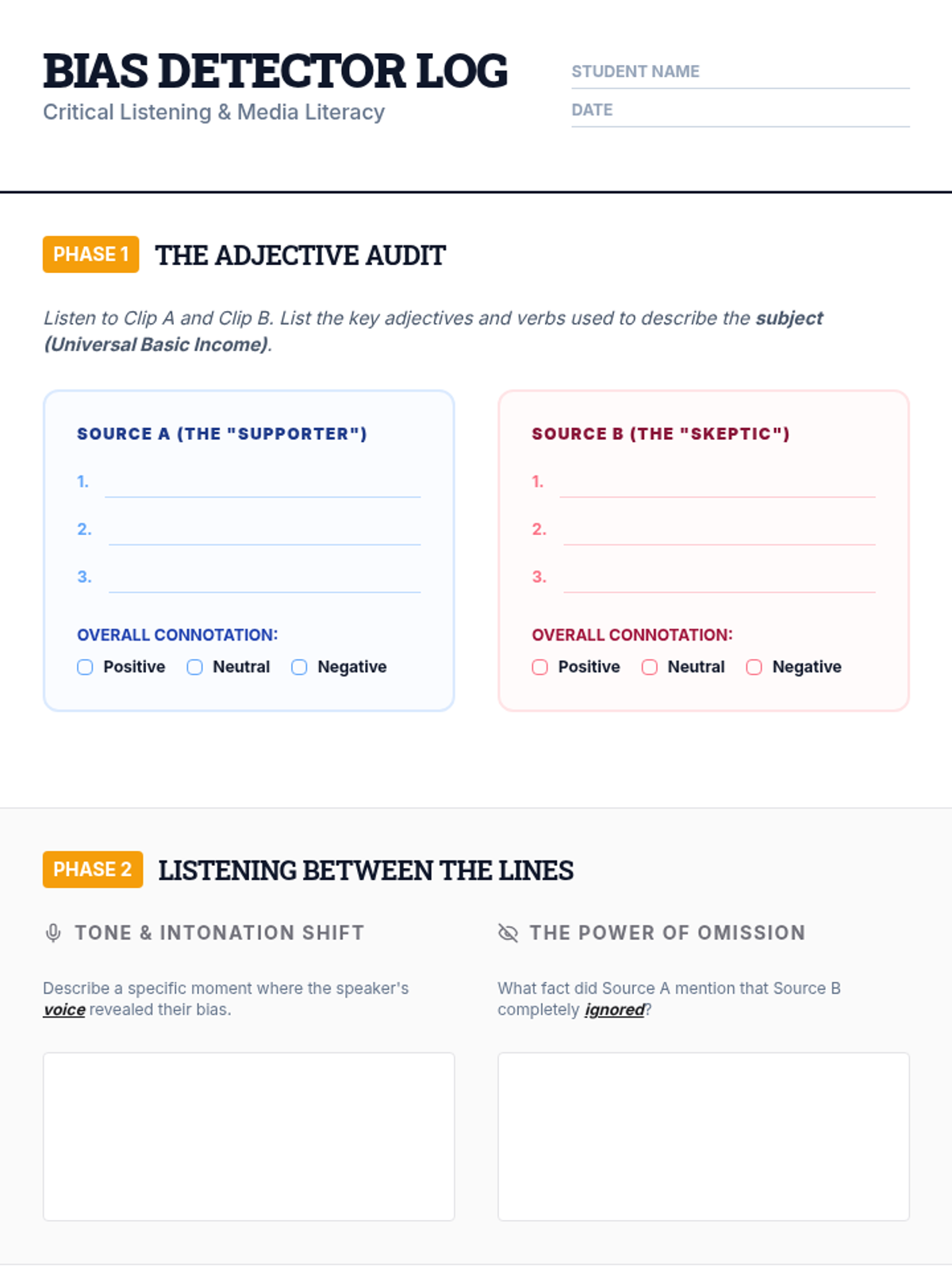
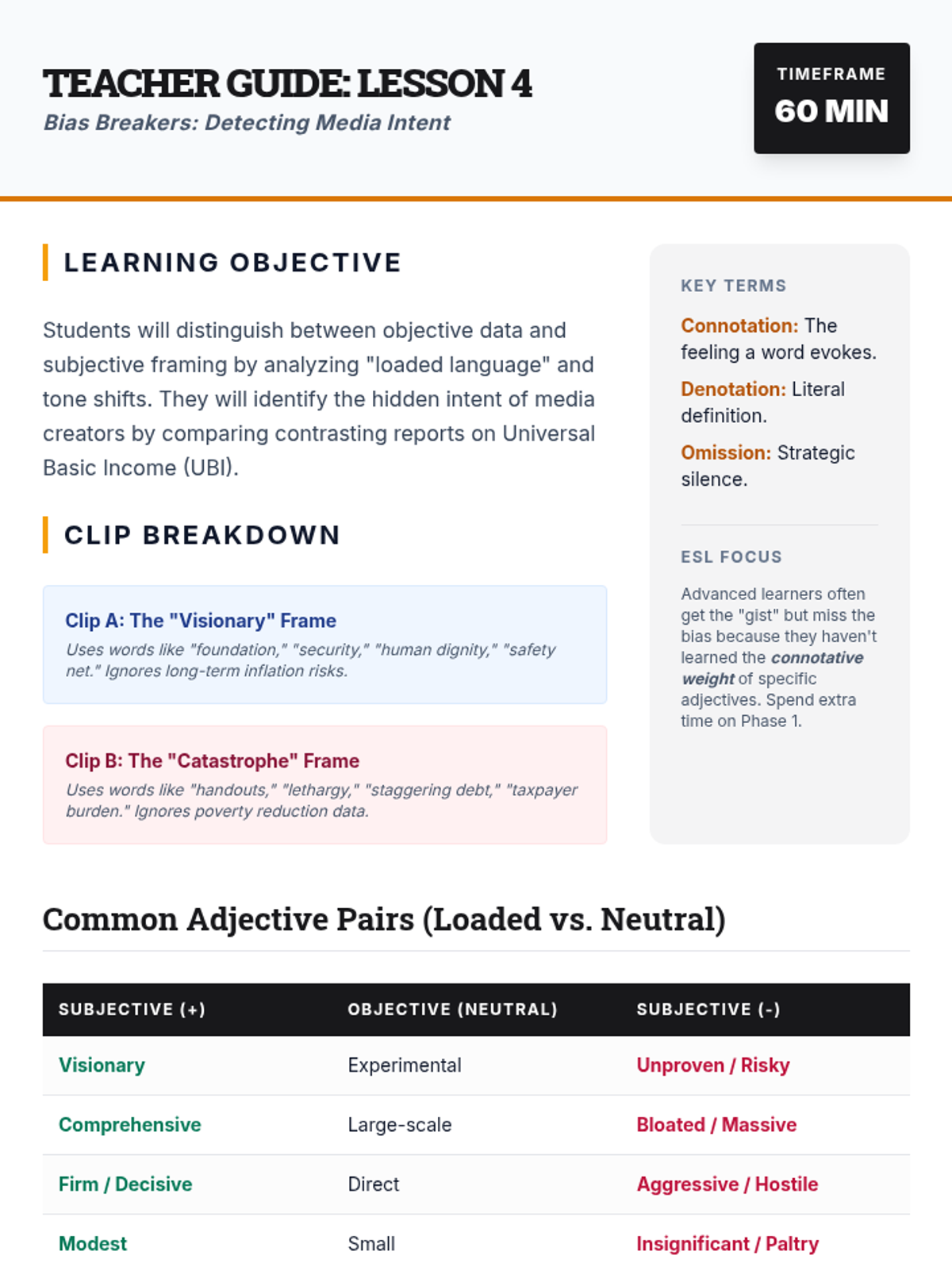
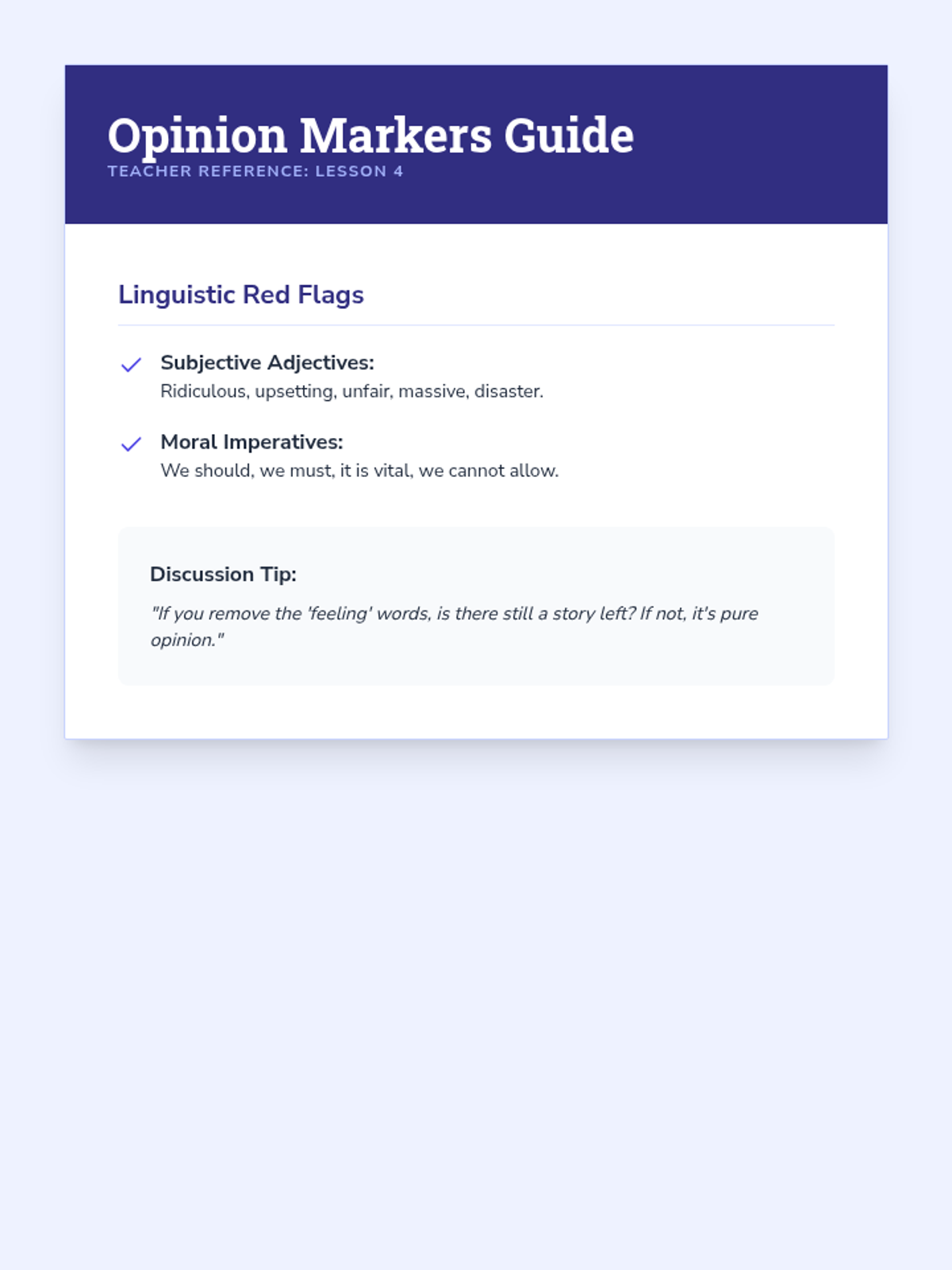
Students listen to media clips to distinguish between facts and opinions, focusing on loaded language and tone shifts that reveal speaker bias.
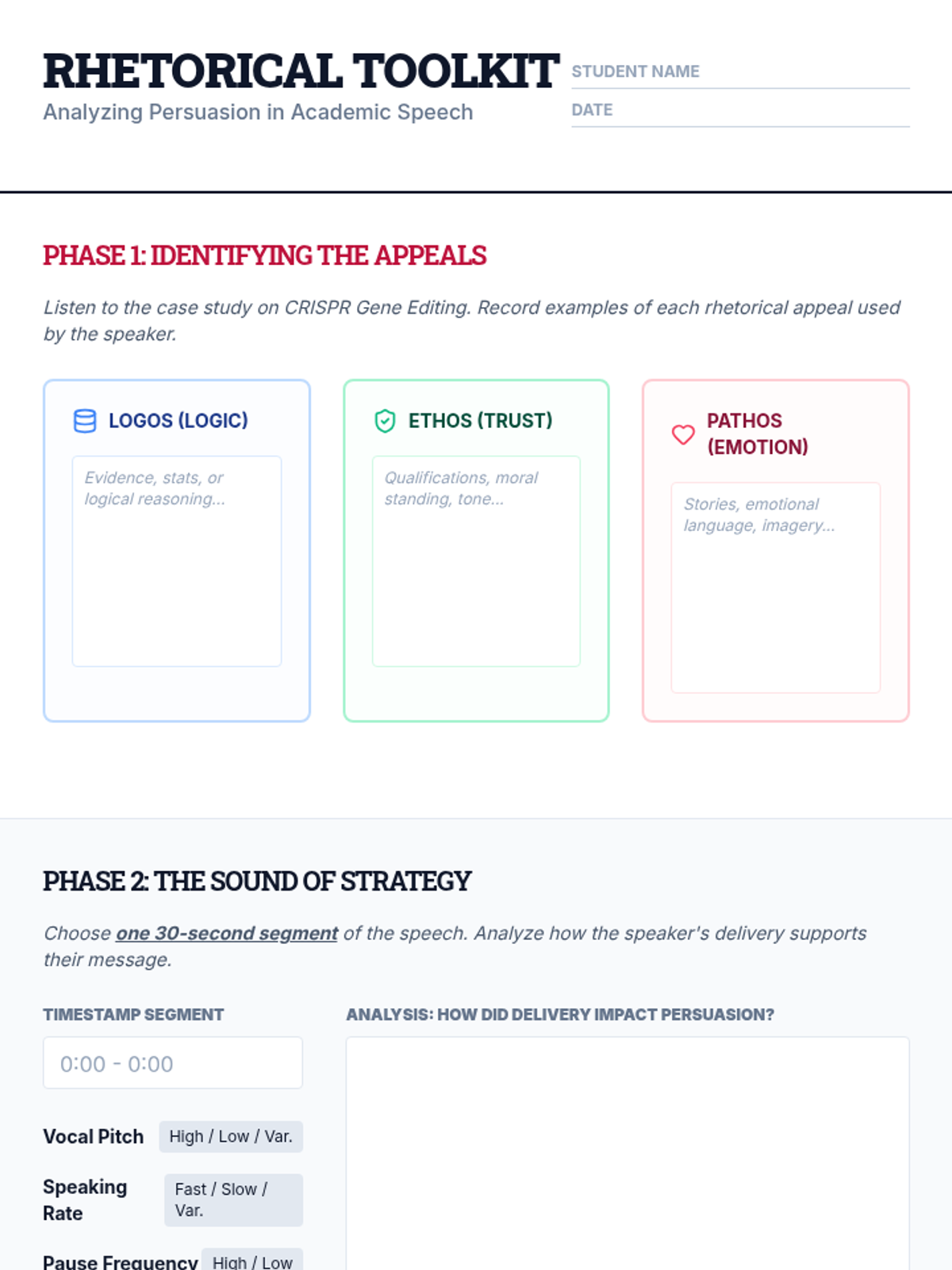
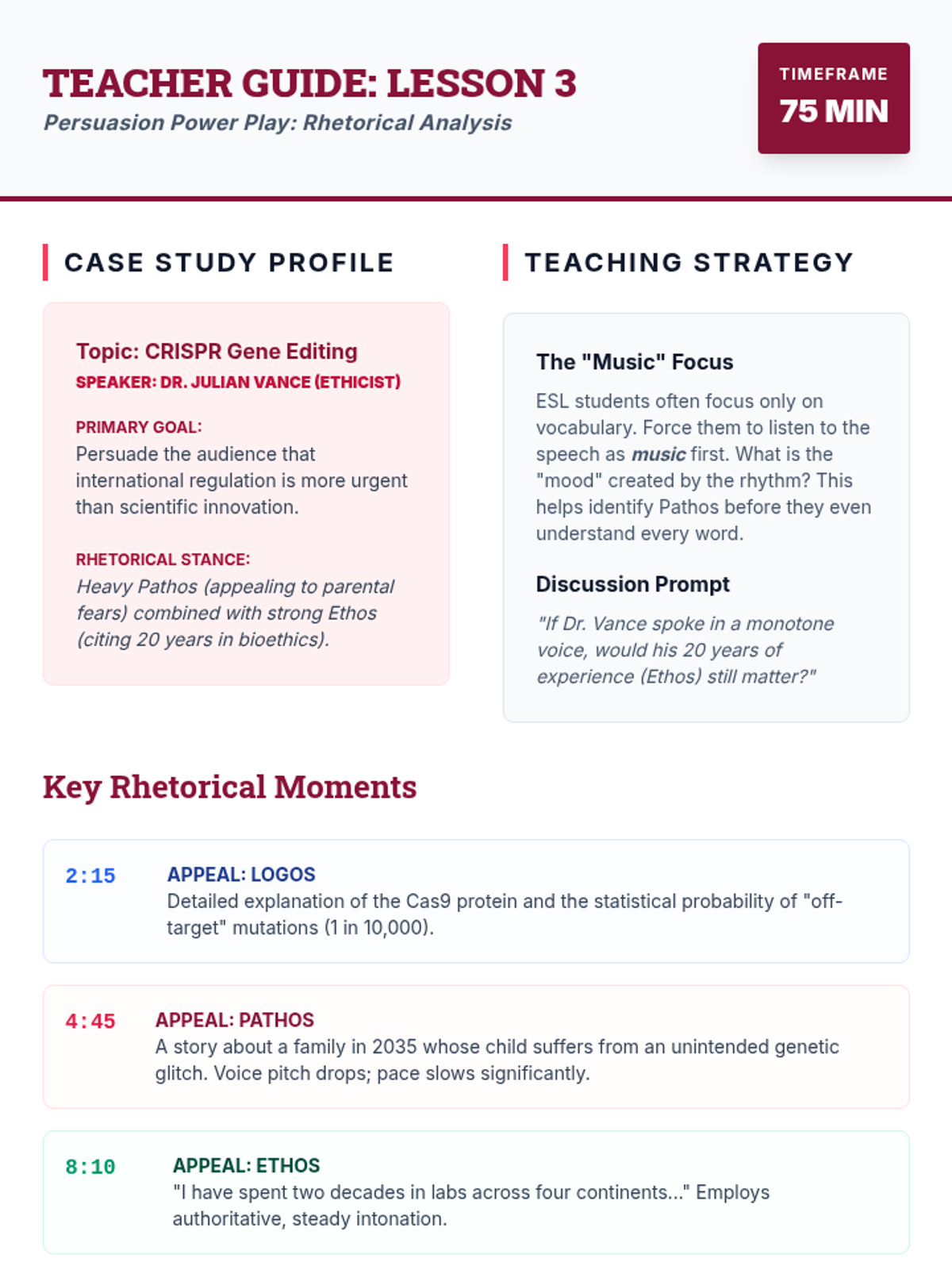
Students identify and evaluate the use of ethos, pathos, and logos, analyzing how delivery elements like intonation and pausing strengthen rhetorical appeals.
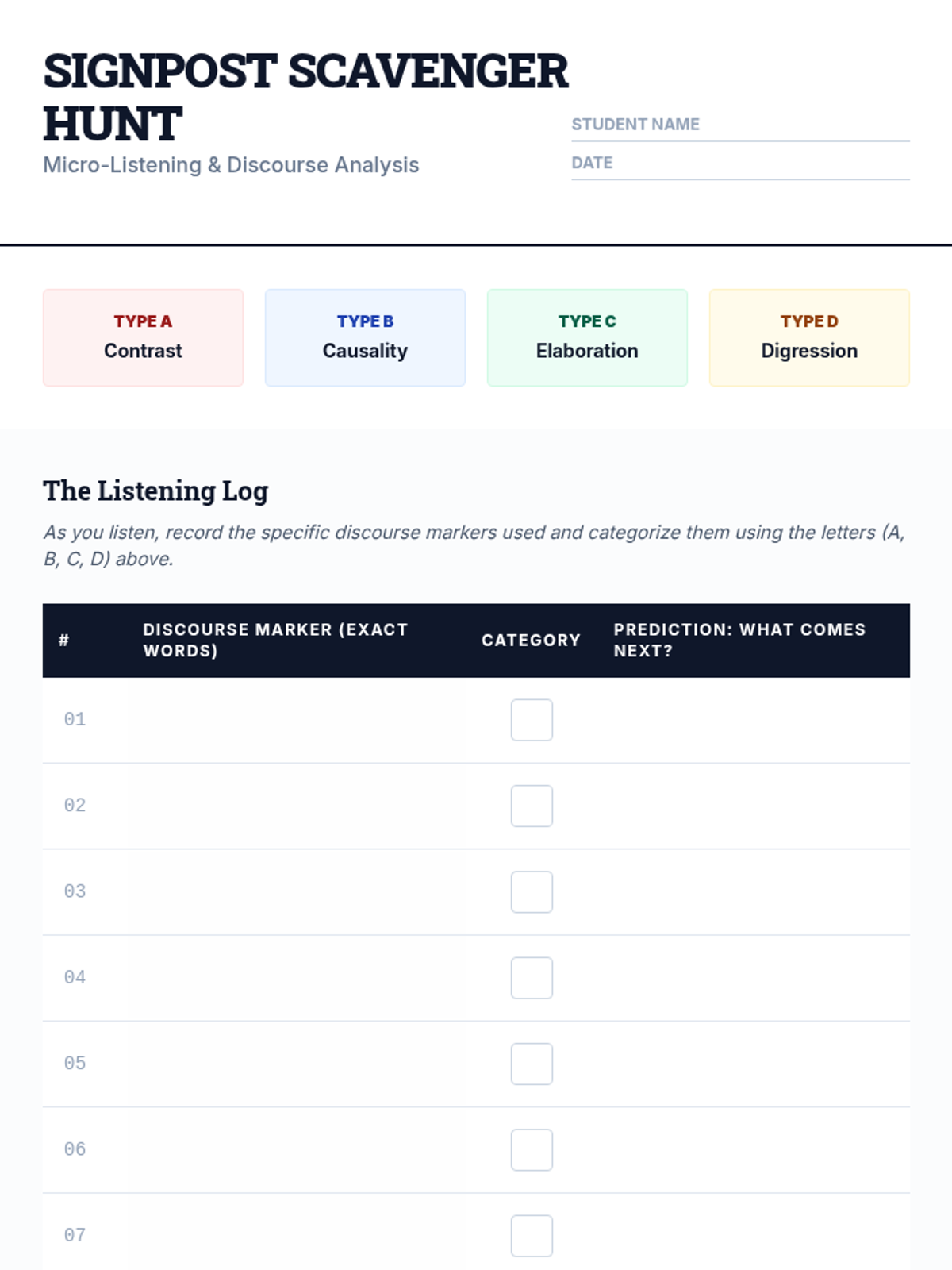
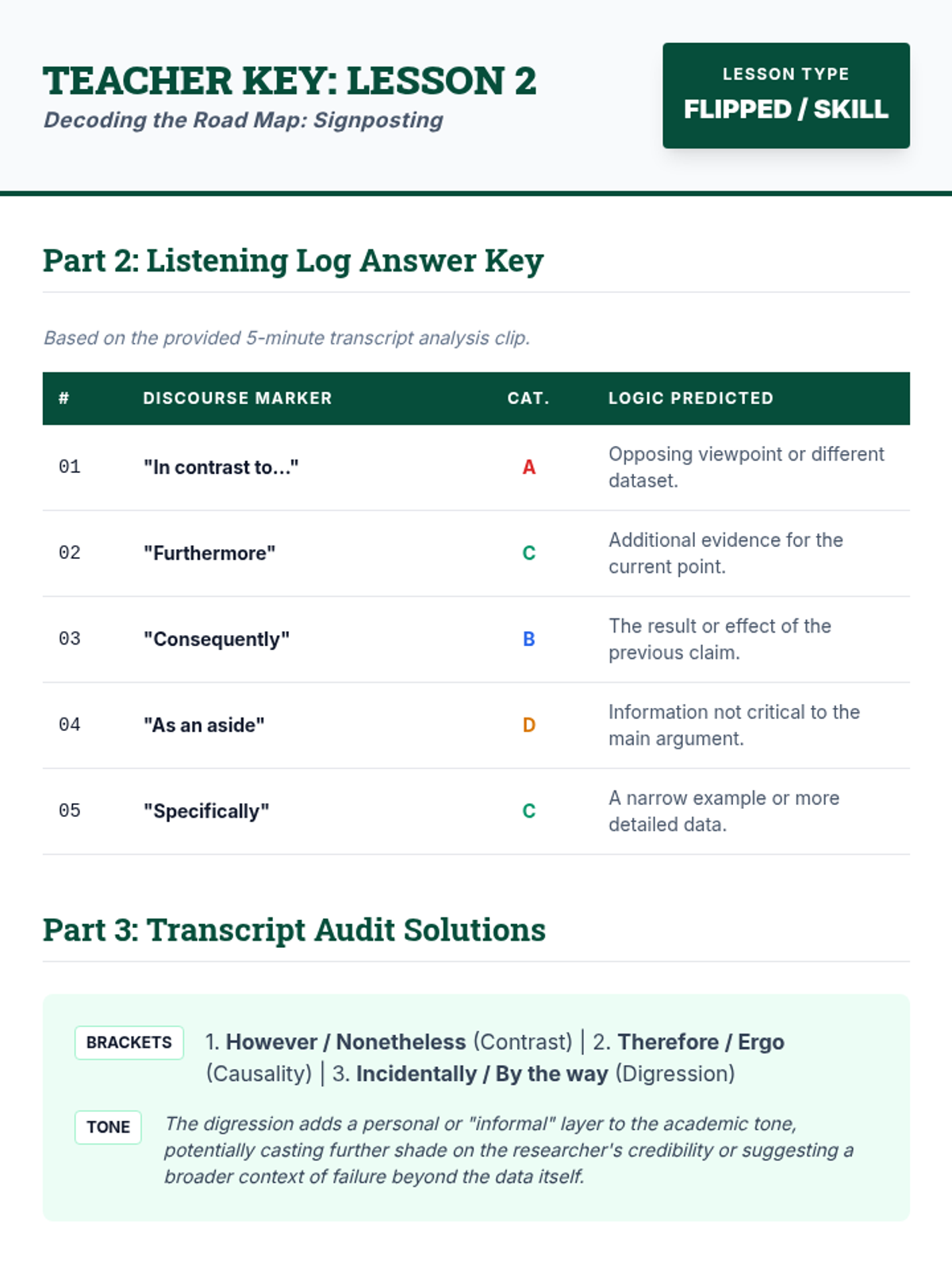
Learners focus on 'micro-listening' skills to identify transition words and discourse markers that signal contrast, cause-and-effect, or digression.
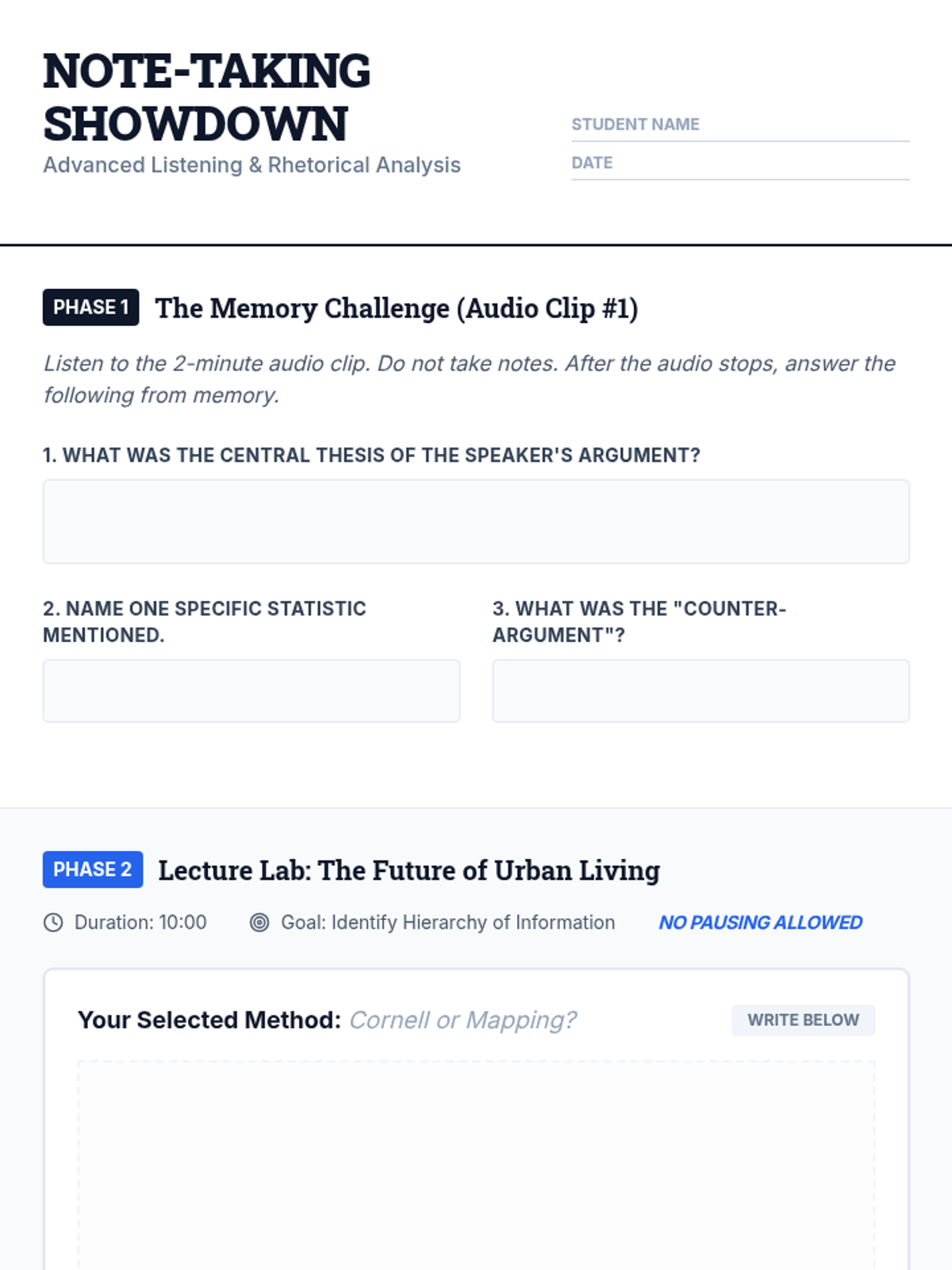
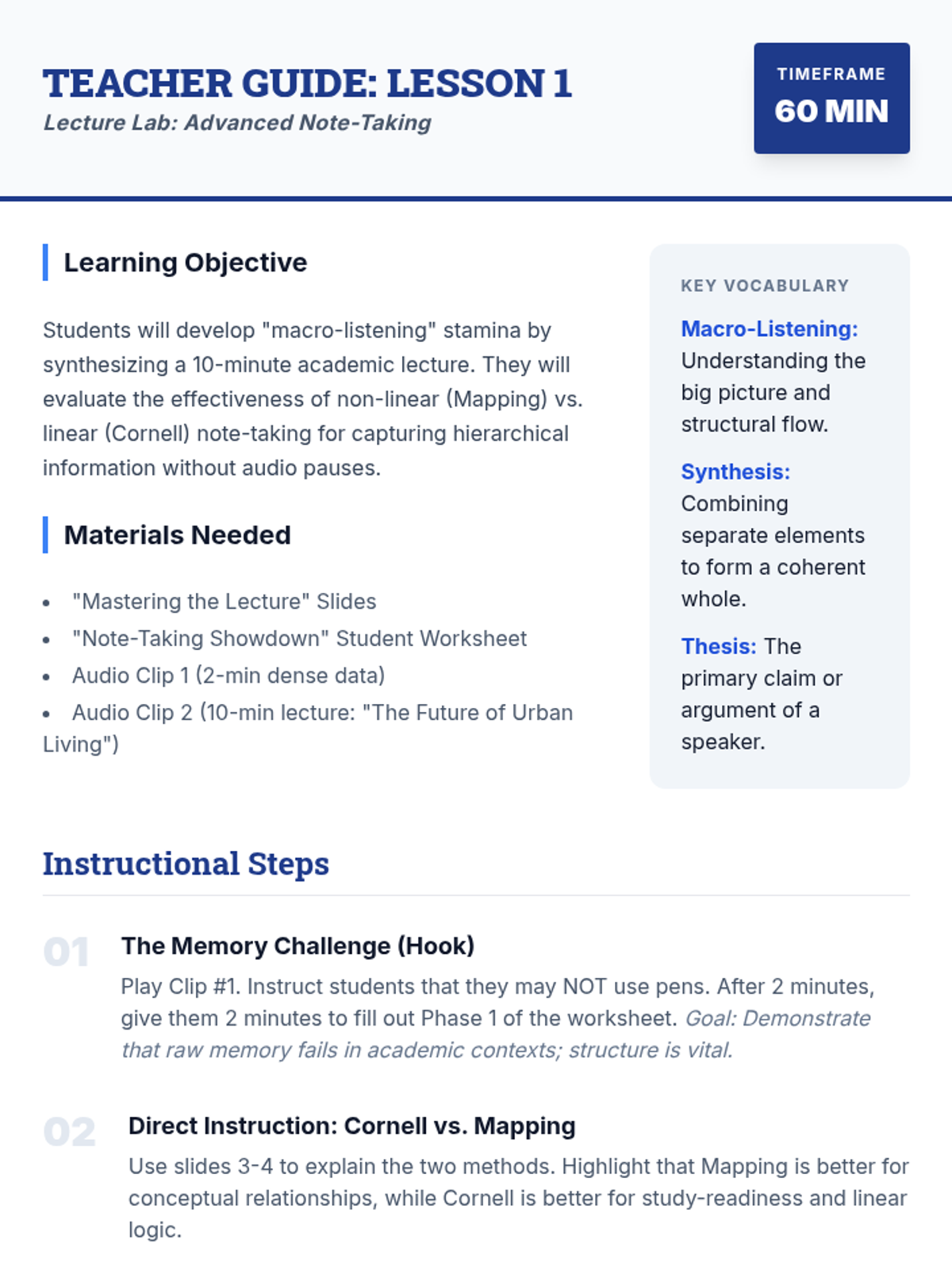
Students practice 'macro-listening' by identifying the thesis and major supporting points of a dense academic lecture, comparing Cornell and Mapping note-taking methods.
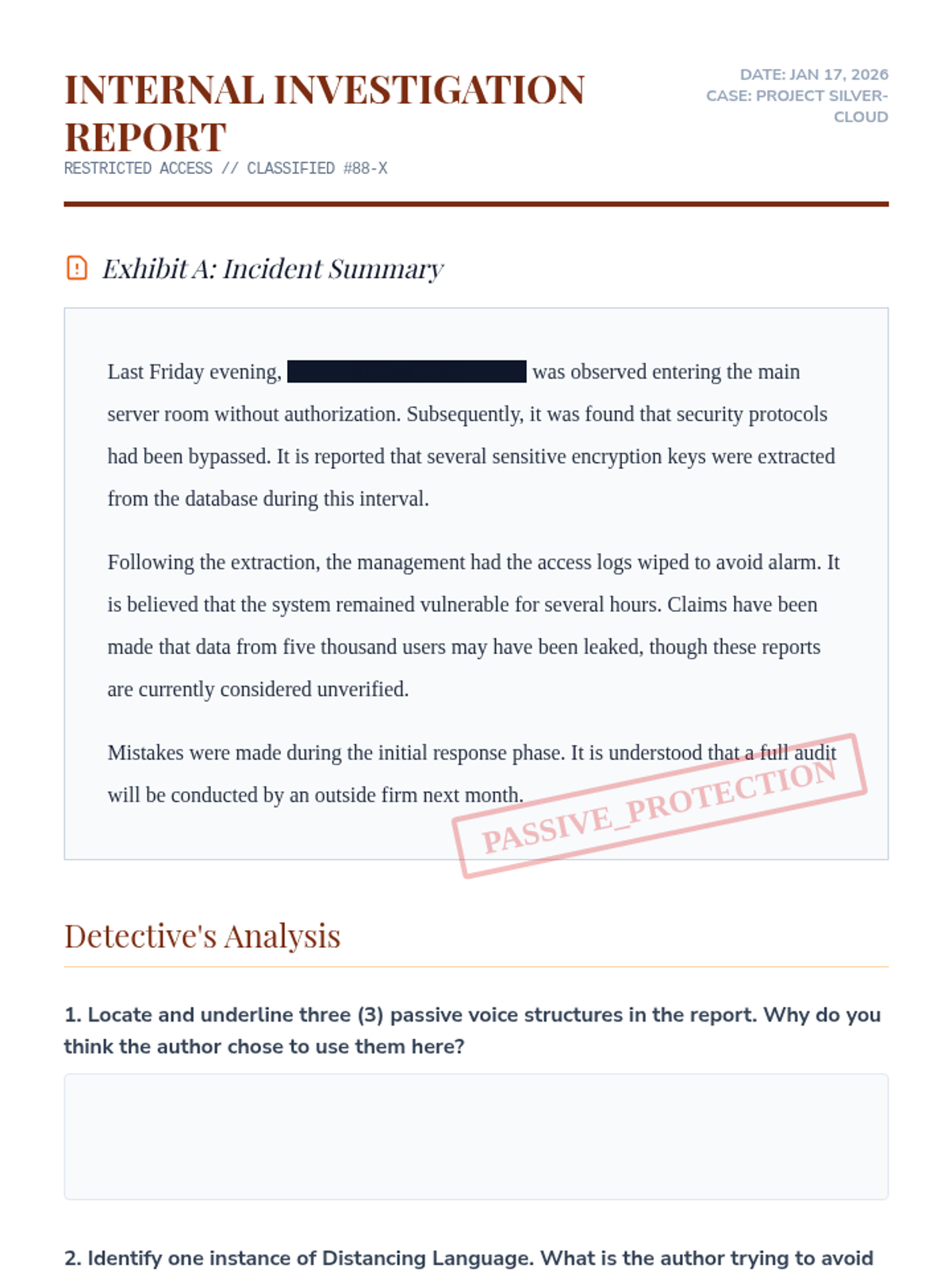
The final lesson applies all previous concepts to media literacy. Students analyze redacted reports and biased articles to see how voice hides or highlights responsibility, culminating in a comparative analysis.
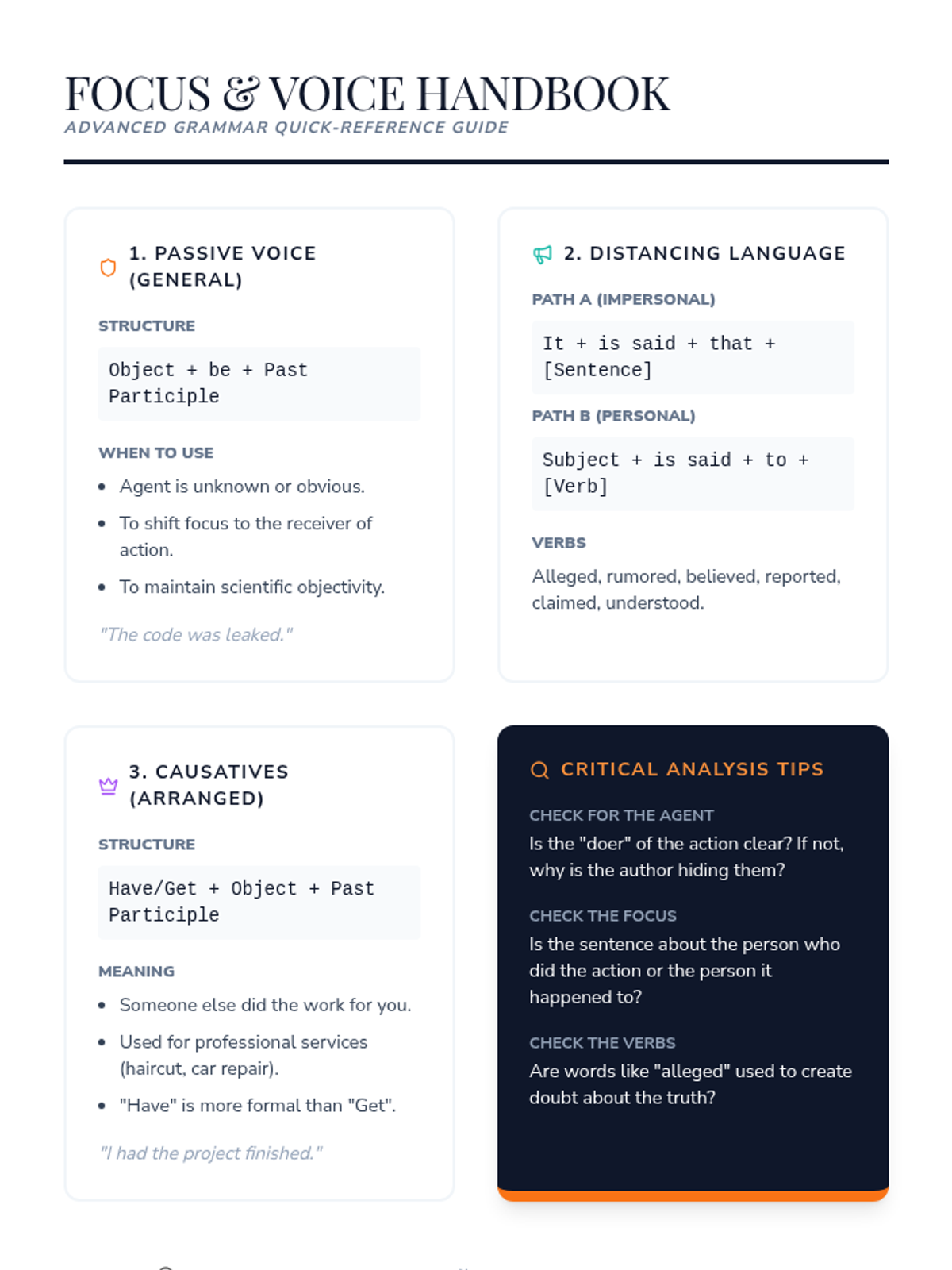
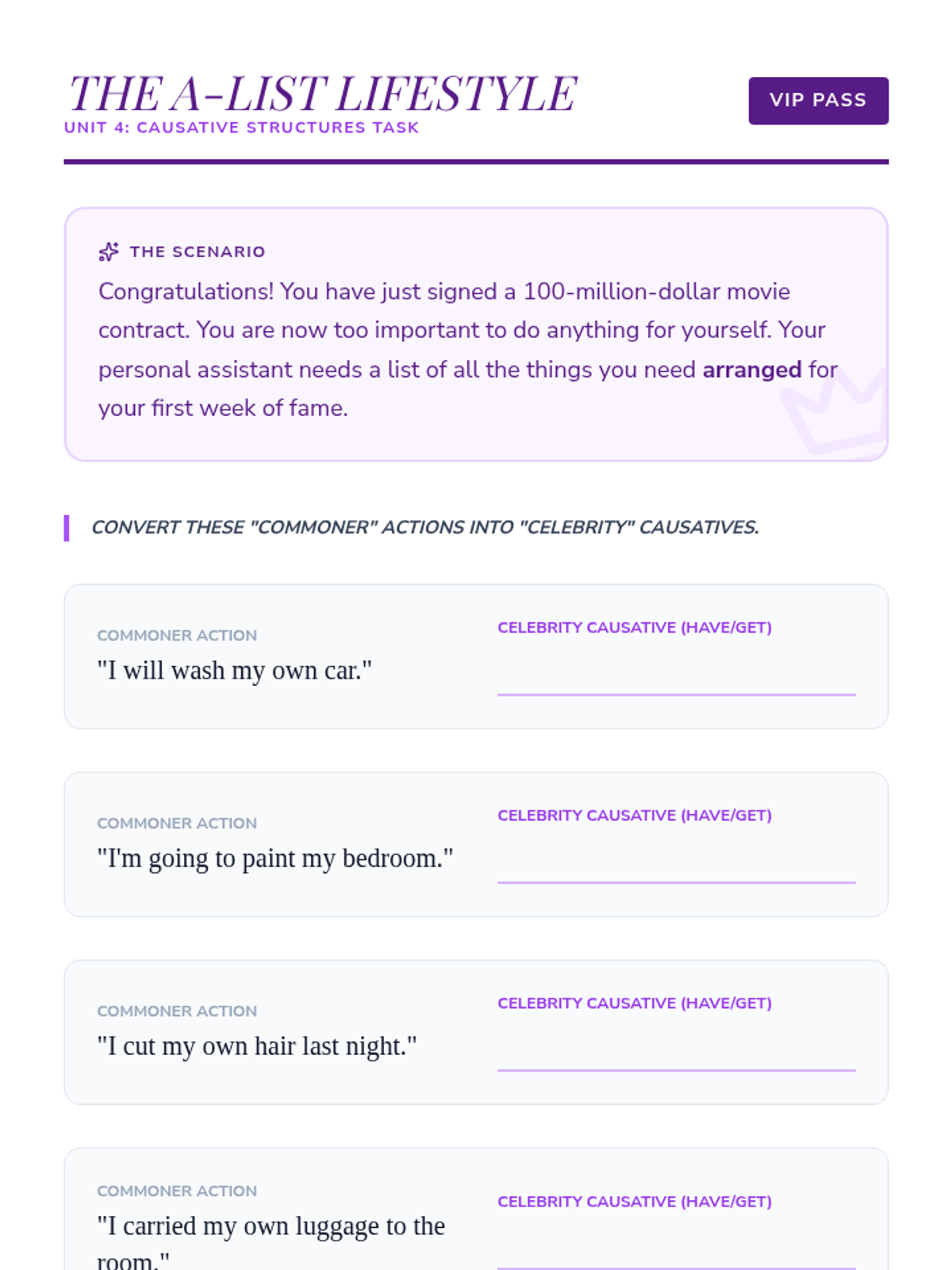
Students learn 'have/get something done' structures to describe arranged services. They compare these to active structures to clarify responsibility and agency.
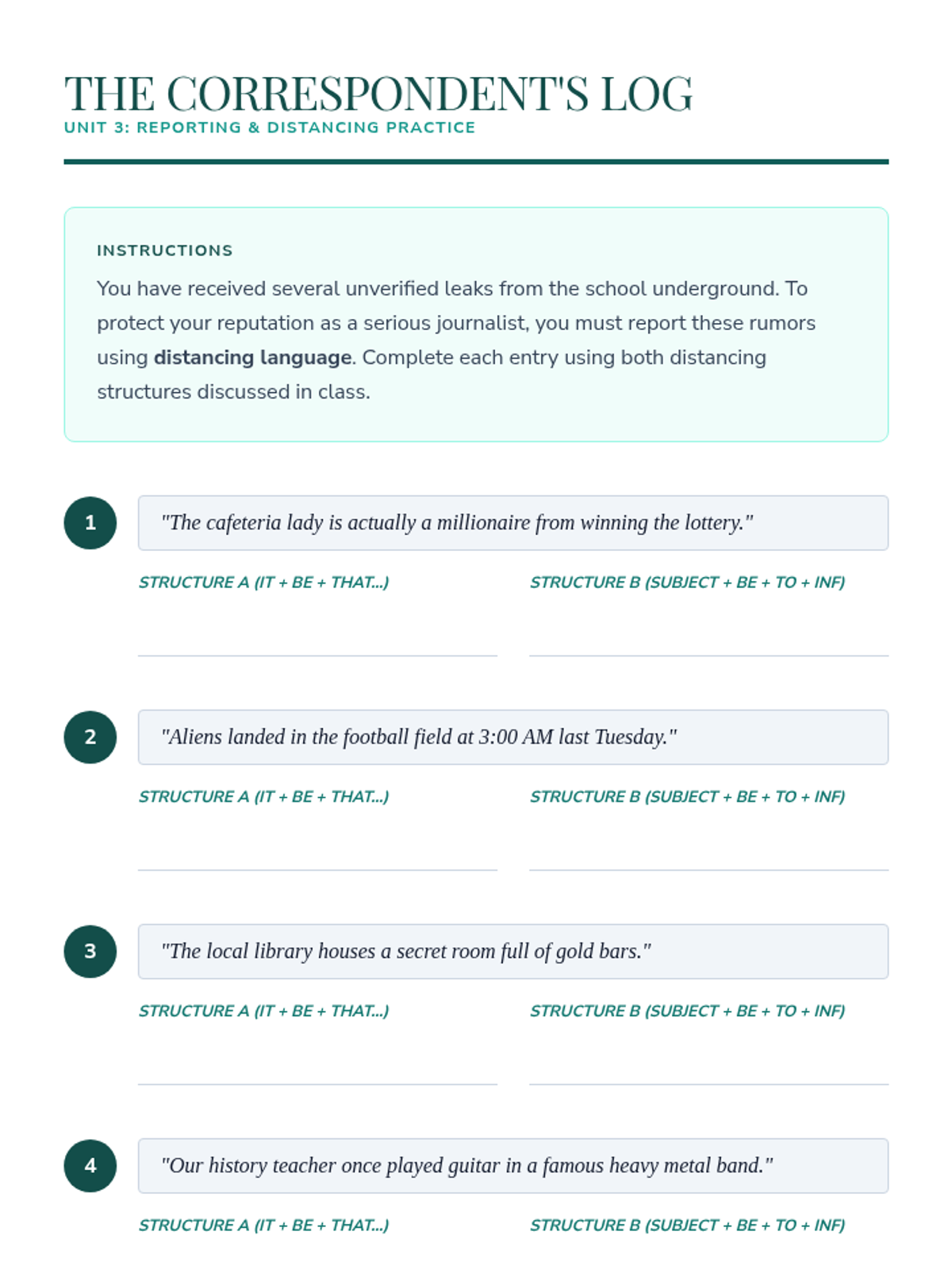
This lesson covers distancing language such as 'it is said that' and 'reported to be'. Students apply these structures to report unverified information and cultural beliefs.
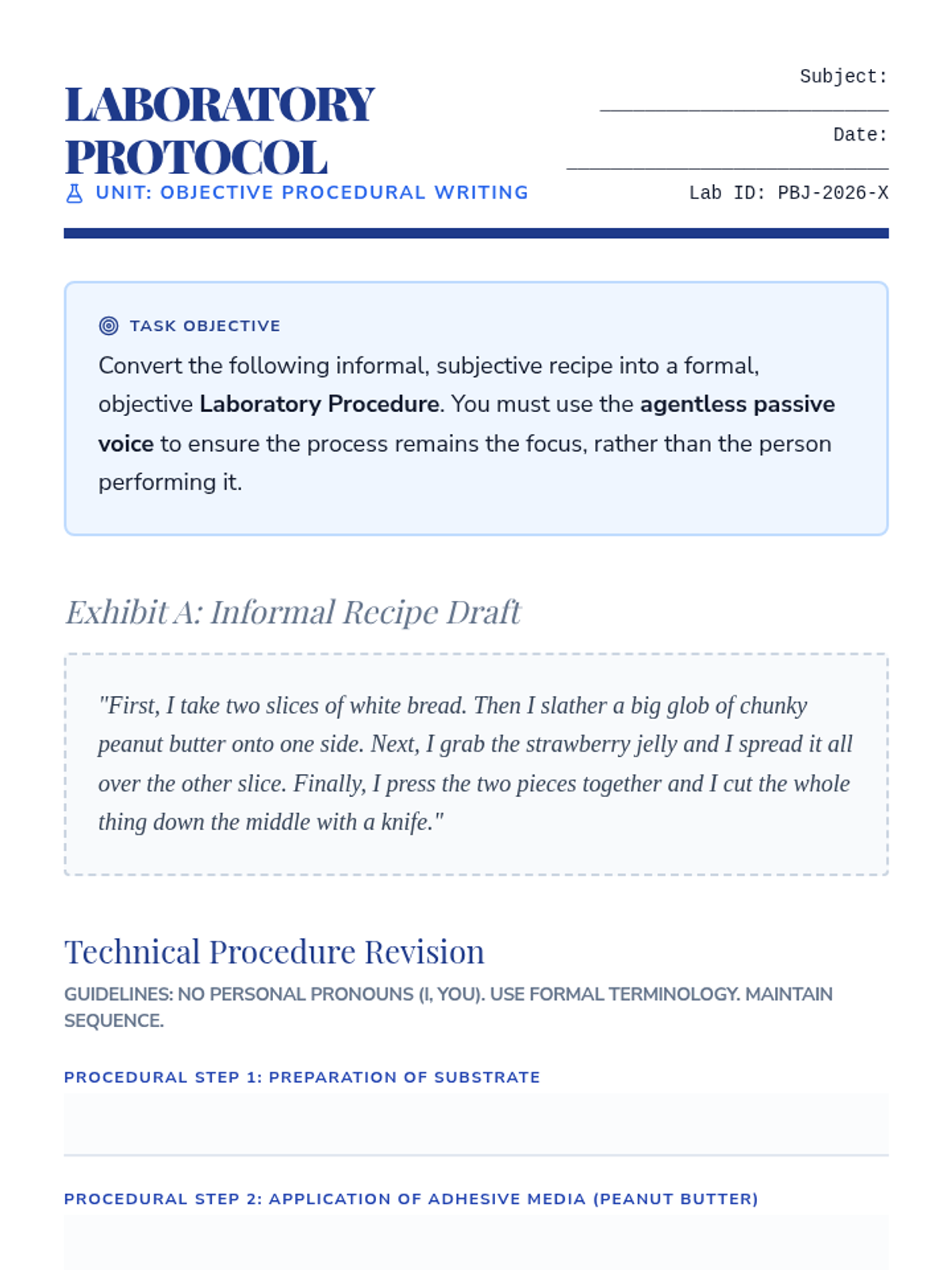
Students practice the agentless passive specifically for scientific and technical reporting. They learn to prioritize the process over the person performing the action to maintain academic objectivity.
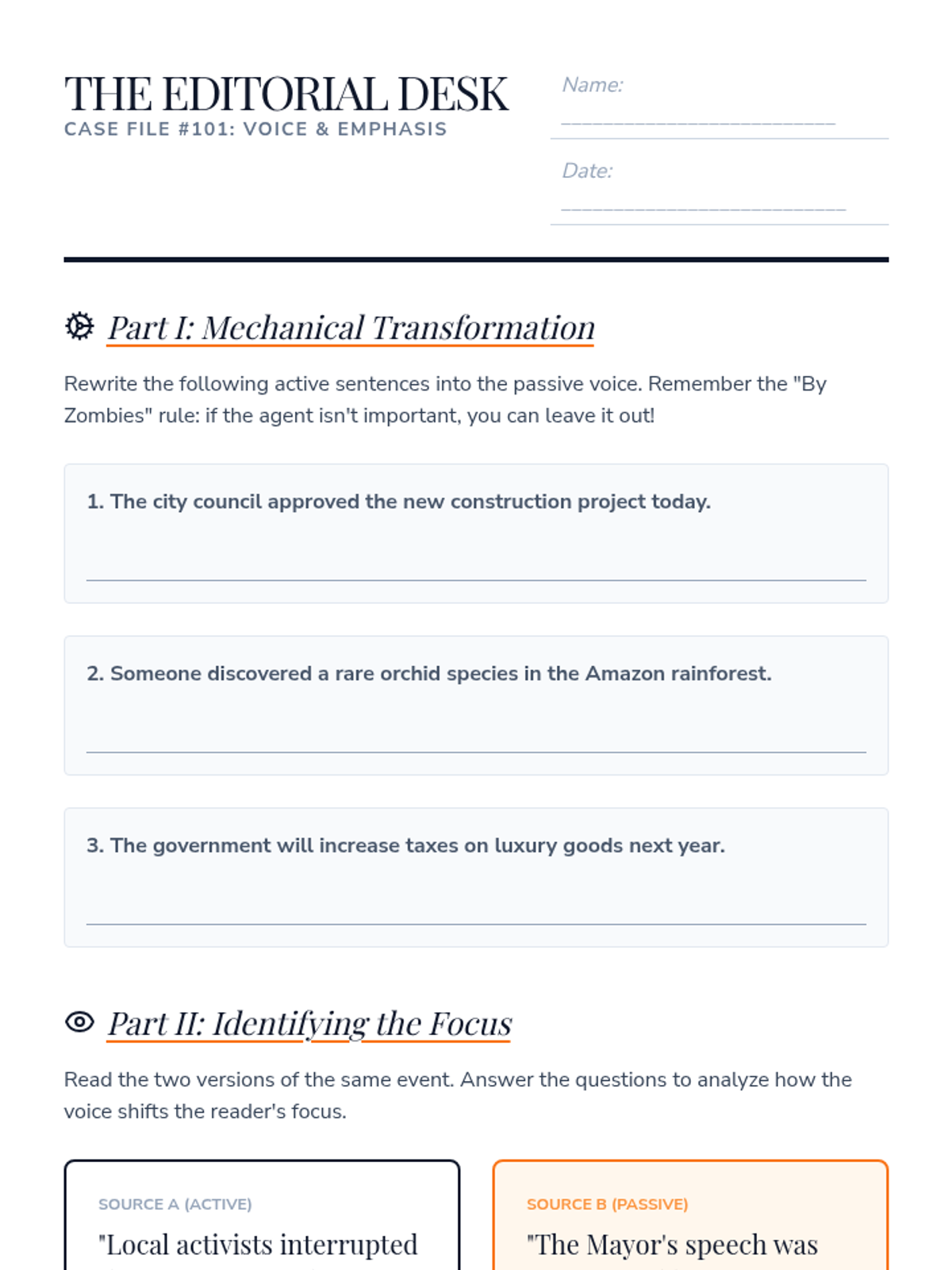
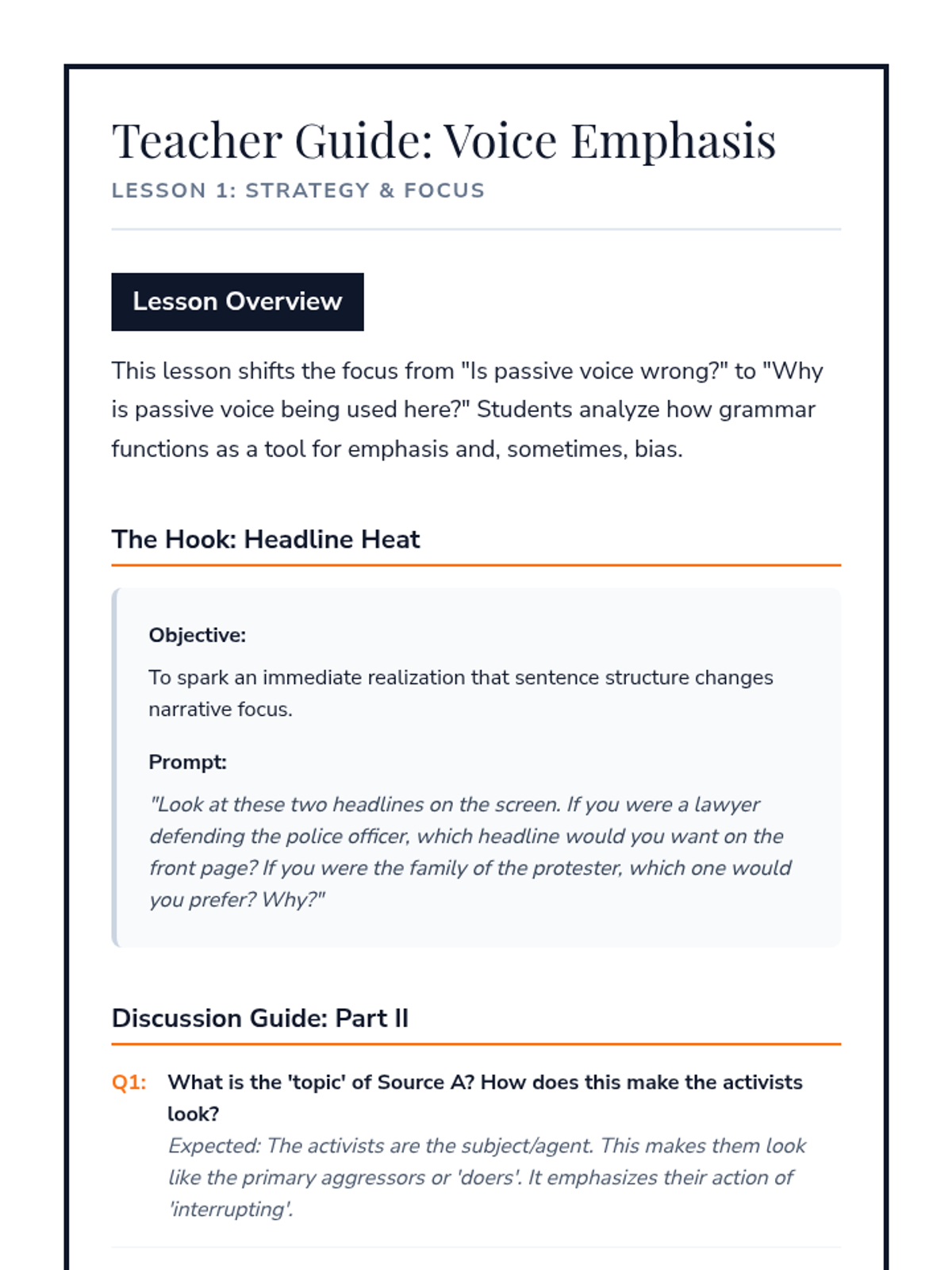
Students investigate the mechanical shift between active and passive voice, focusing on how voice alters the 'topic' of a sentence. They analyze how headlines use voice to shape reader perception and bias.
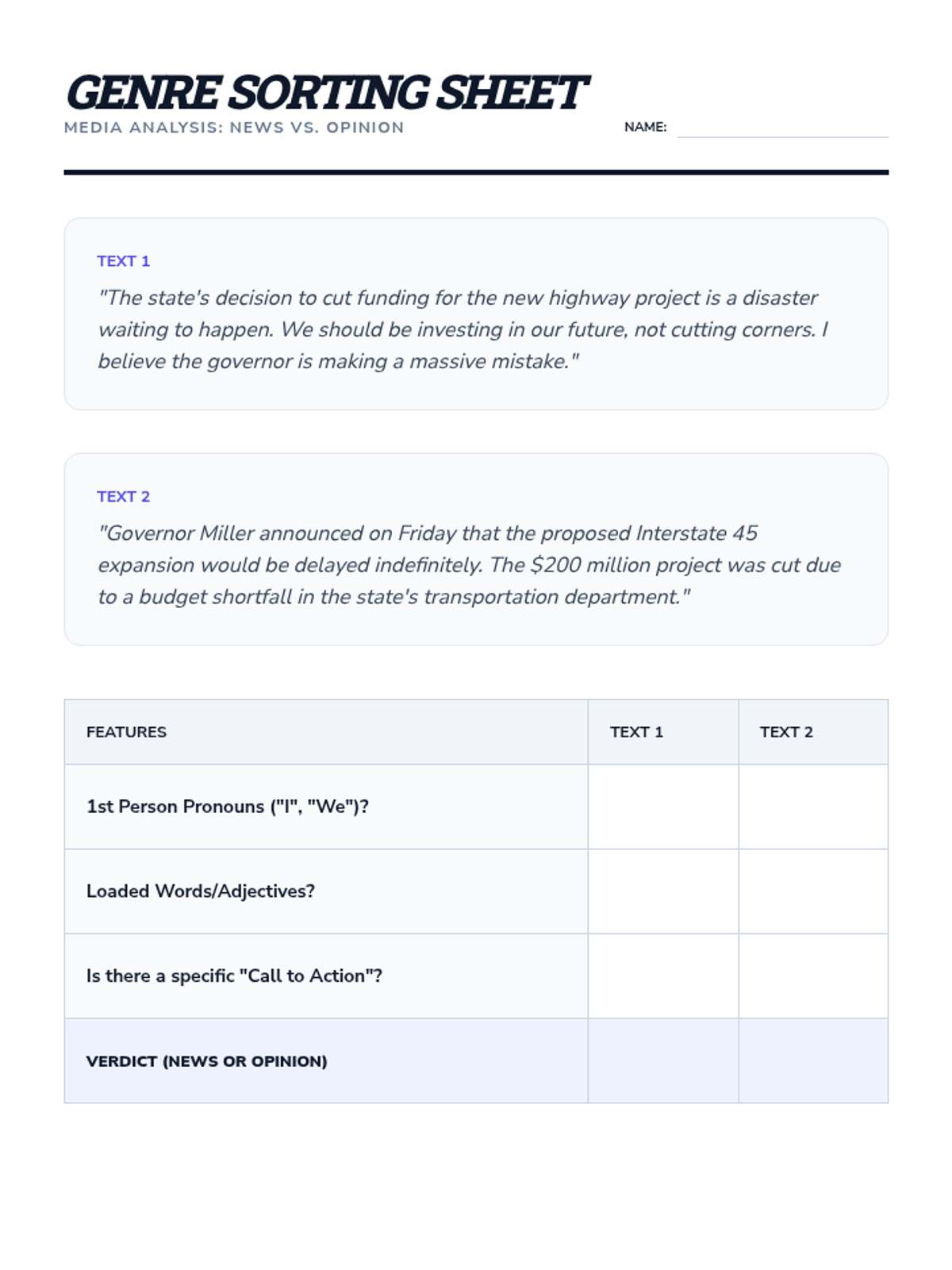
Learners analyze the structural and linguistic differences between hard news reporting and opinion-based editorials.
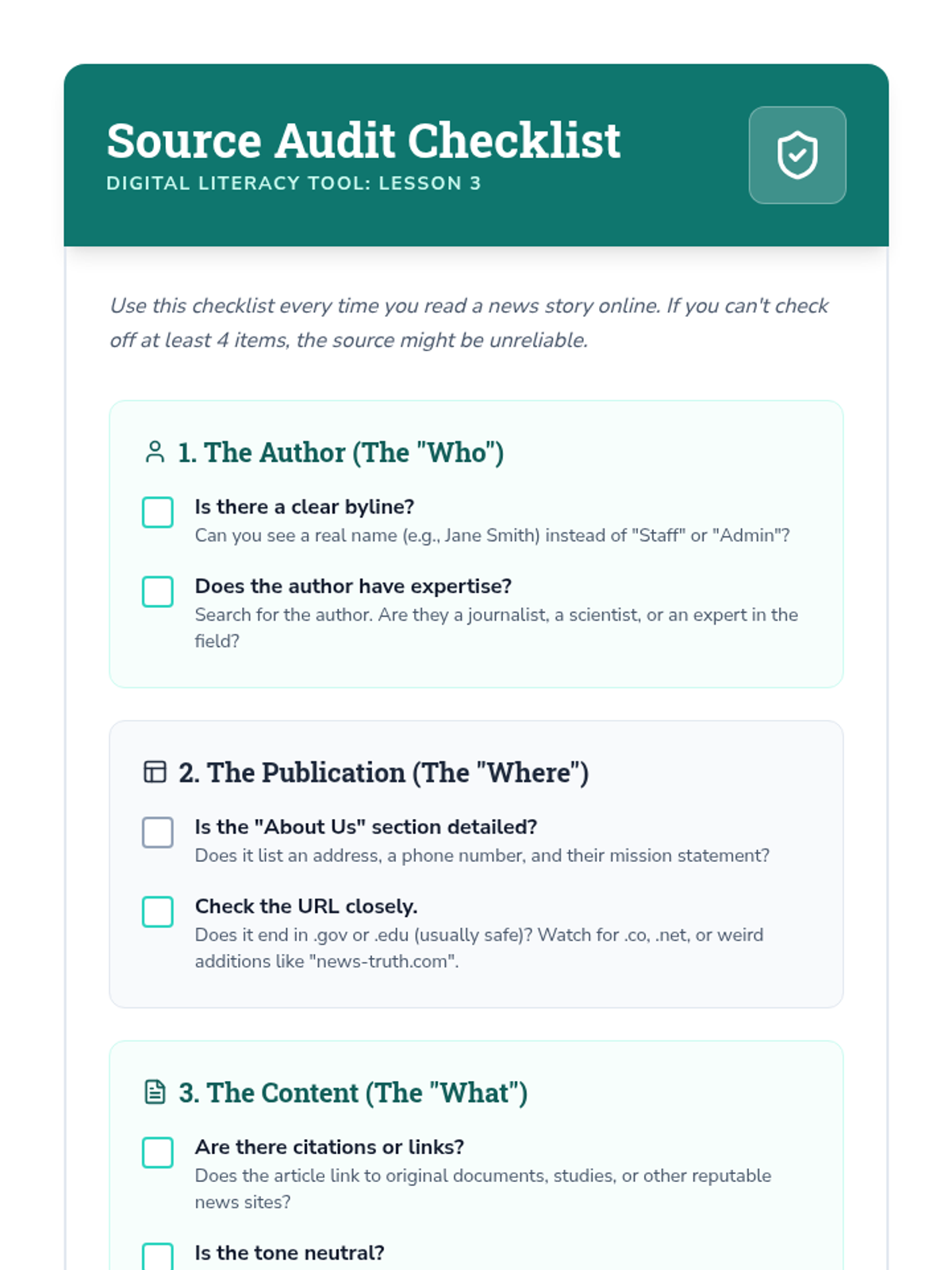
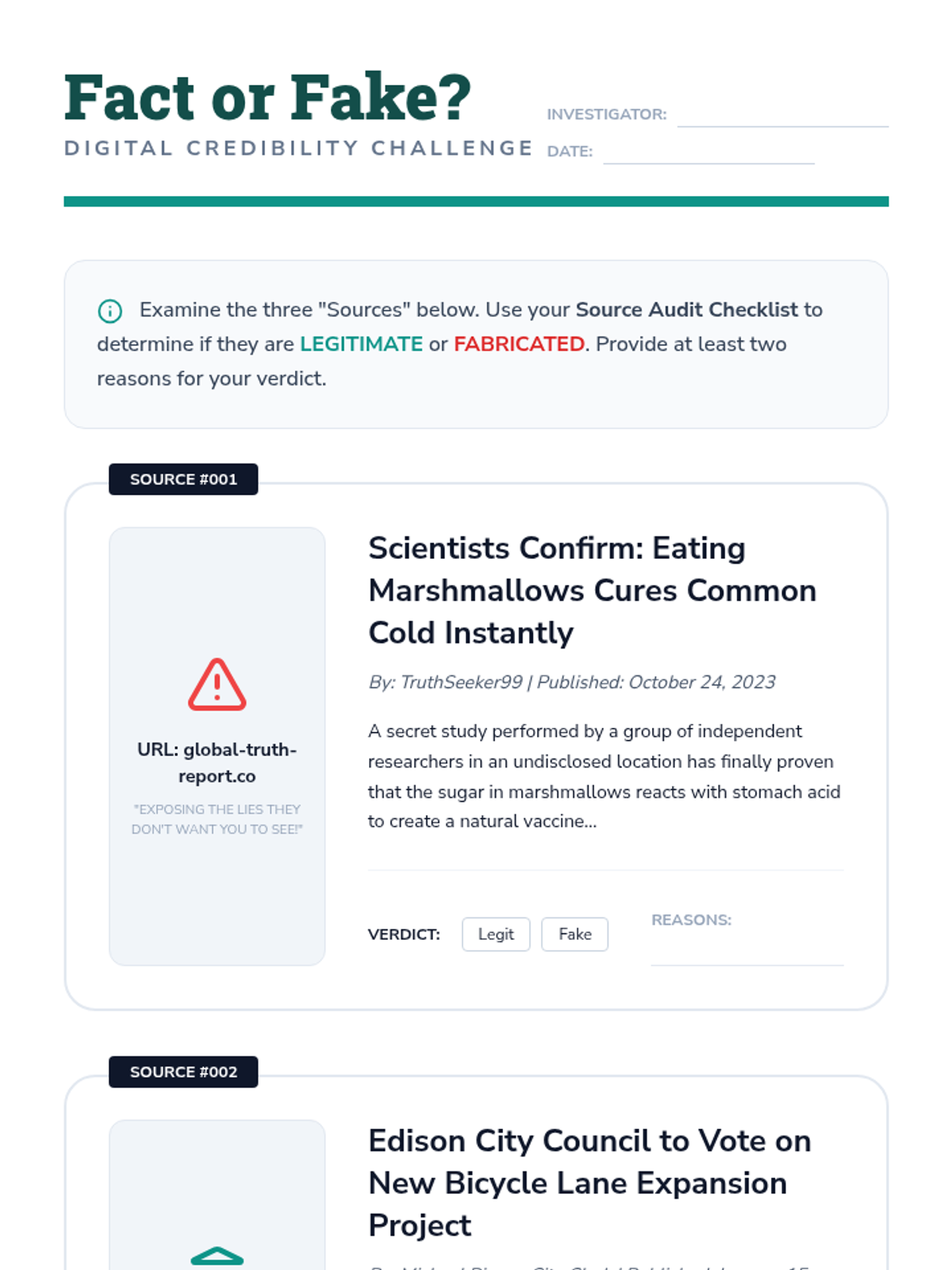
Students use evaluation checklists to determine the credibility of digital sources and distinguish between real and fabricated news.
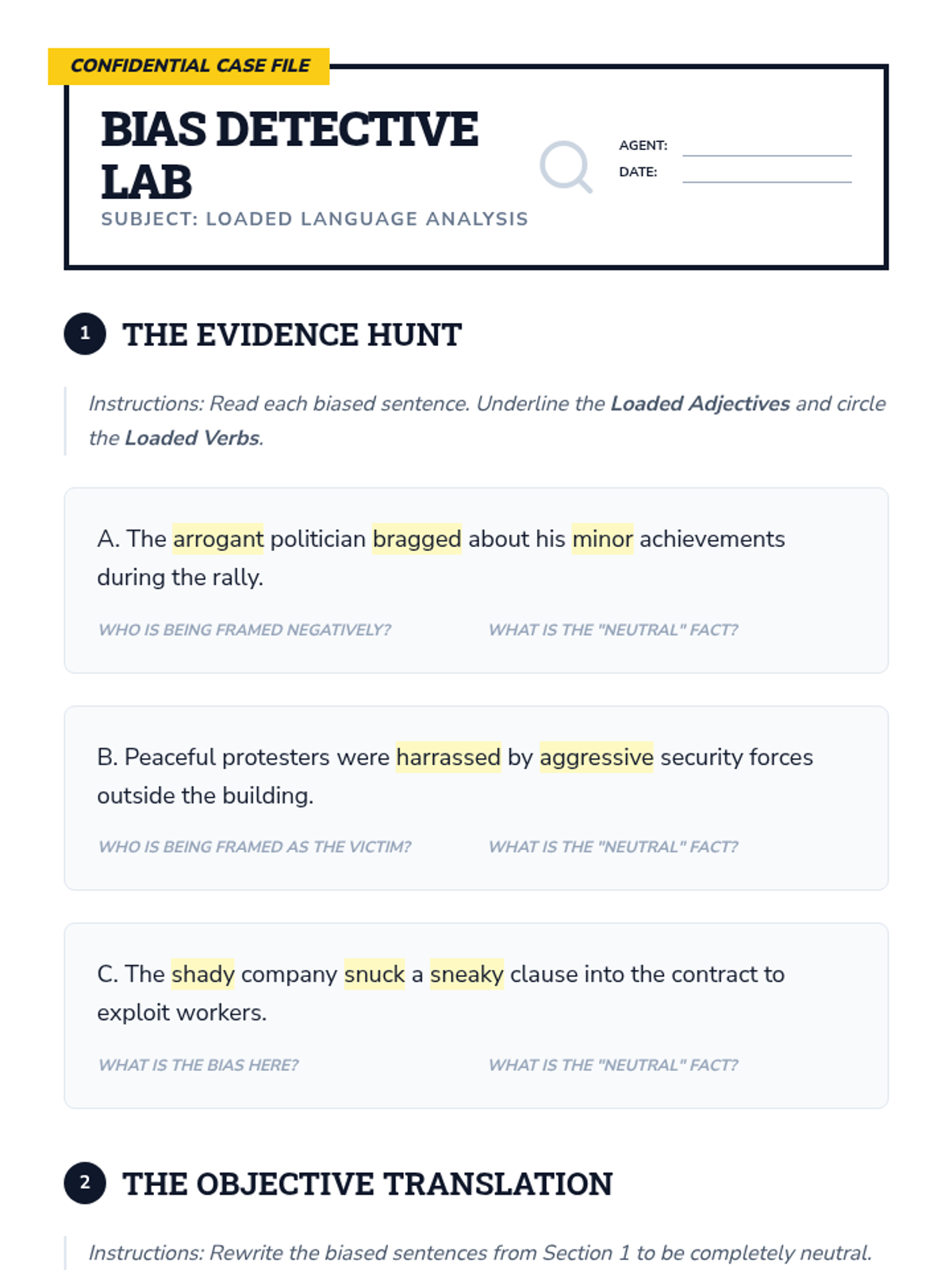
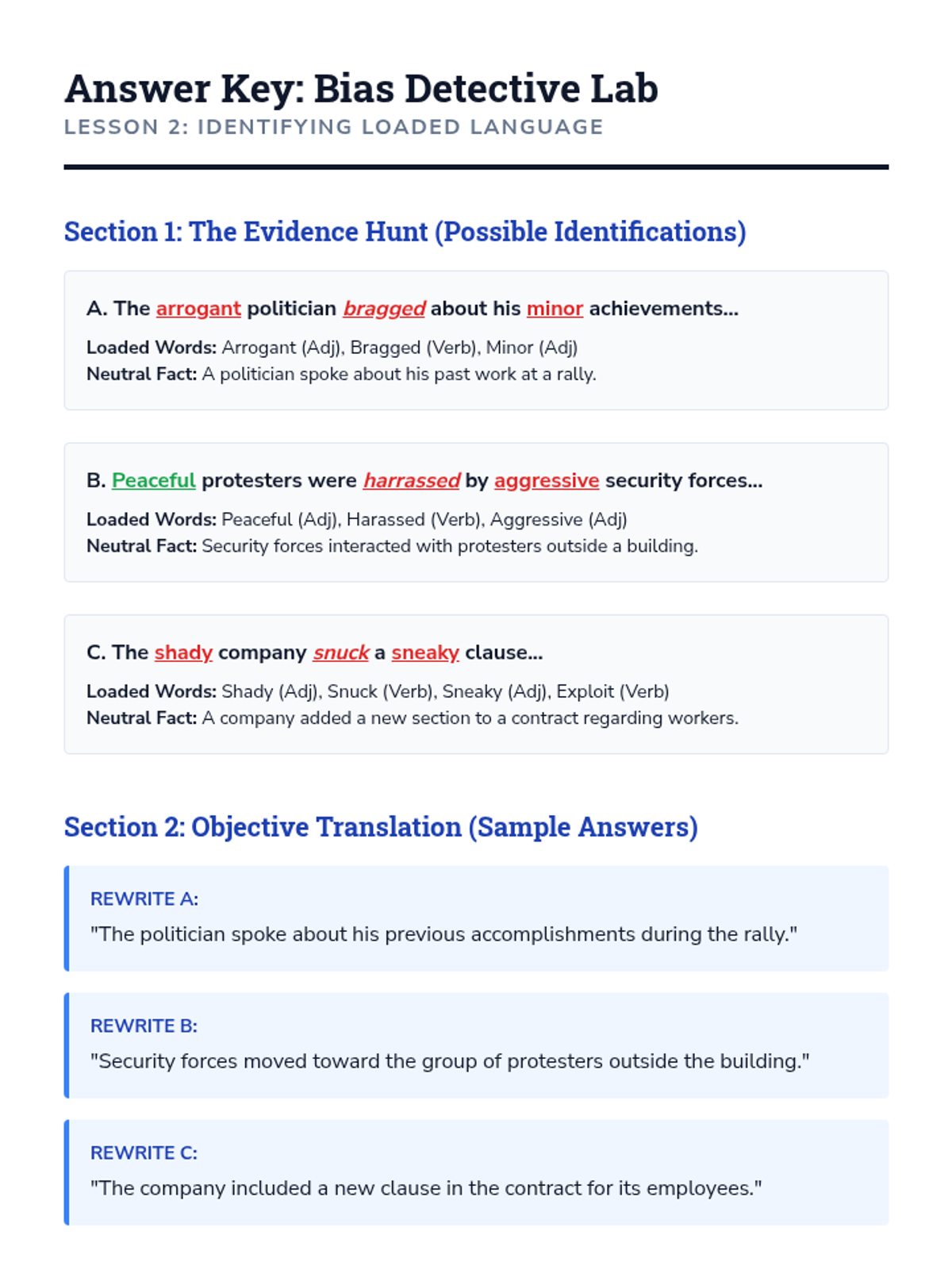
Learners identify loaded language and practice rewriting biased sentences into neutral, objective reporting.
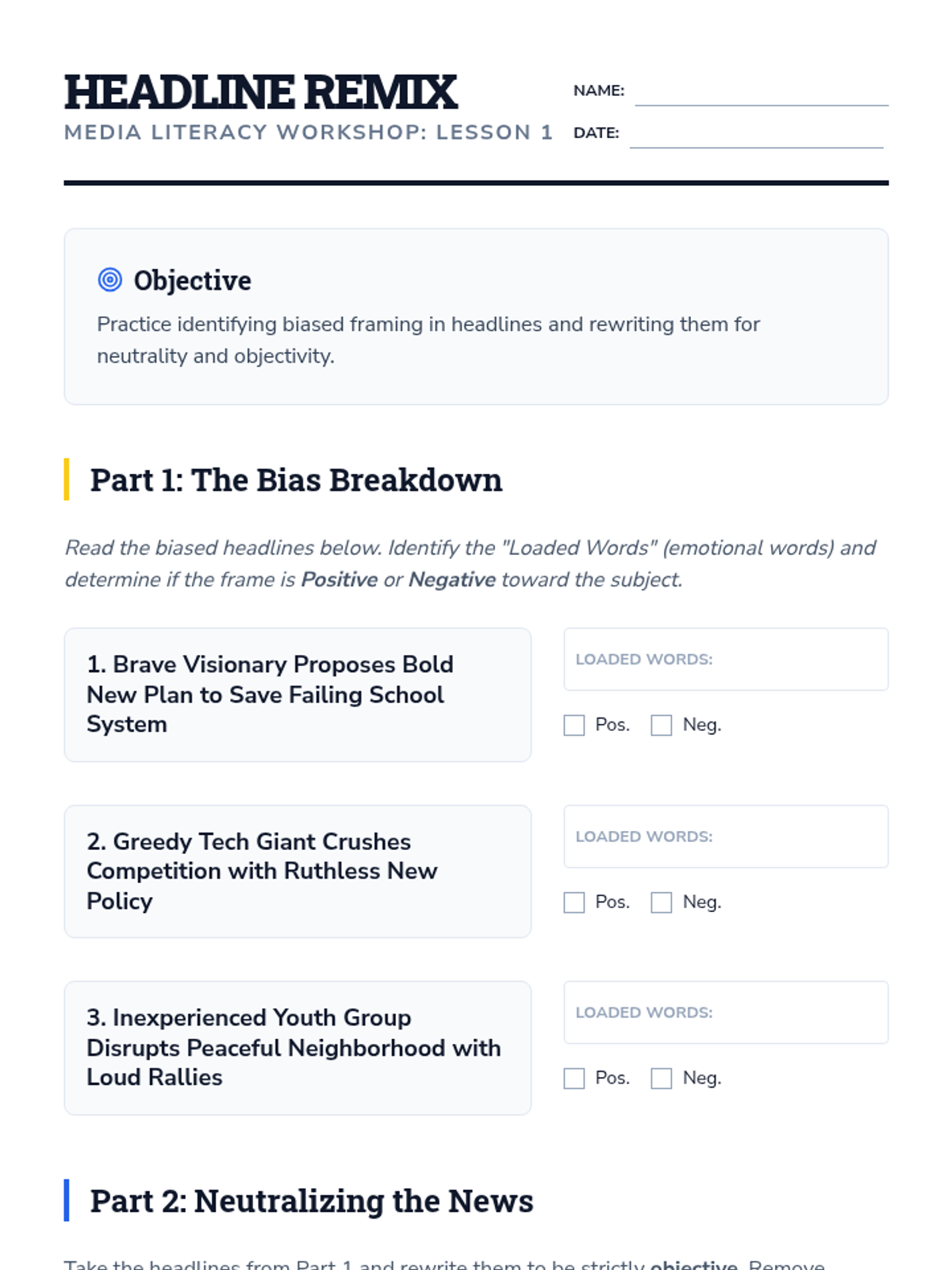
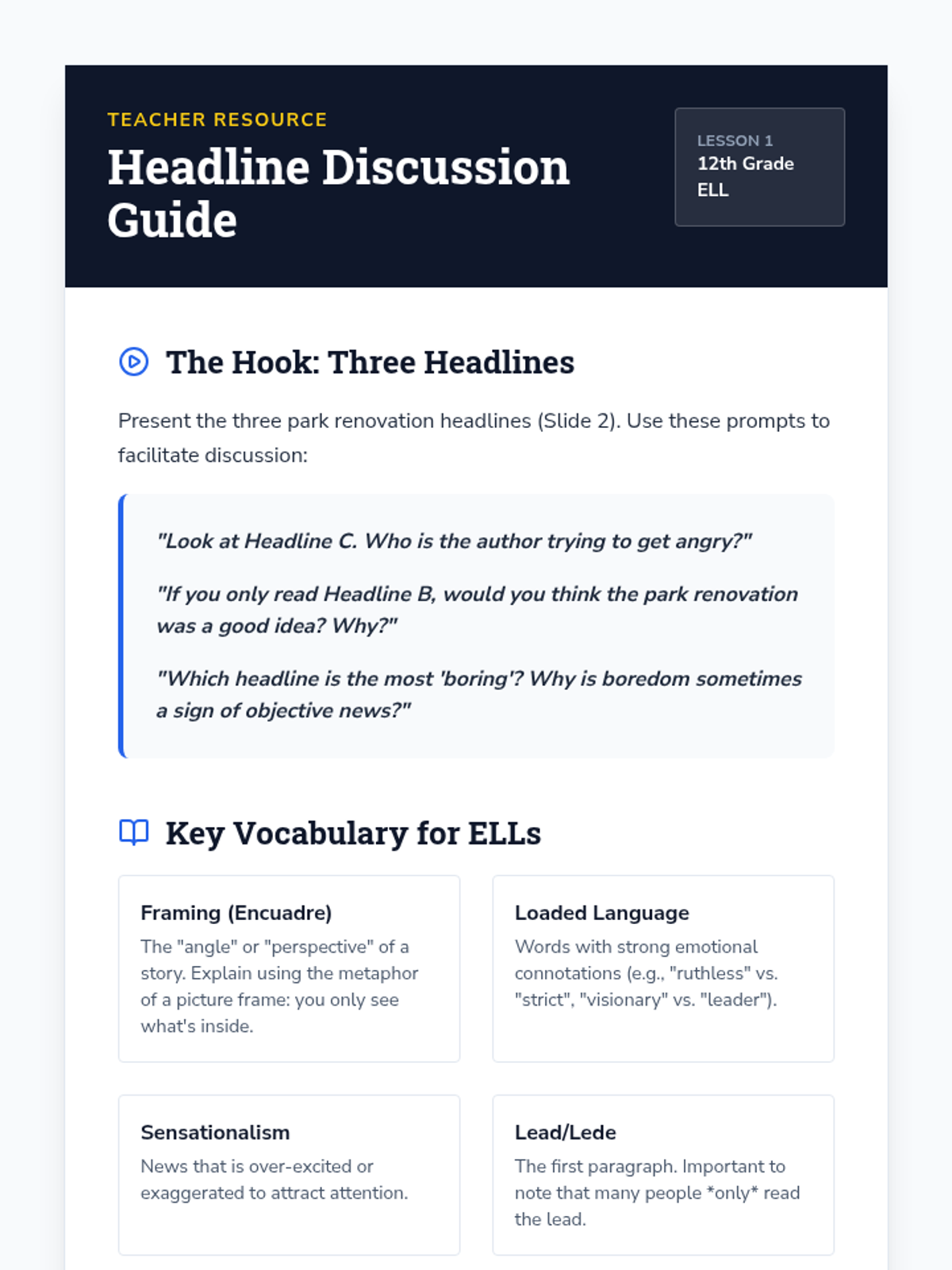
Students analyze headlines for sensationalism and framing, comparing how different sources present the same story.
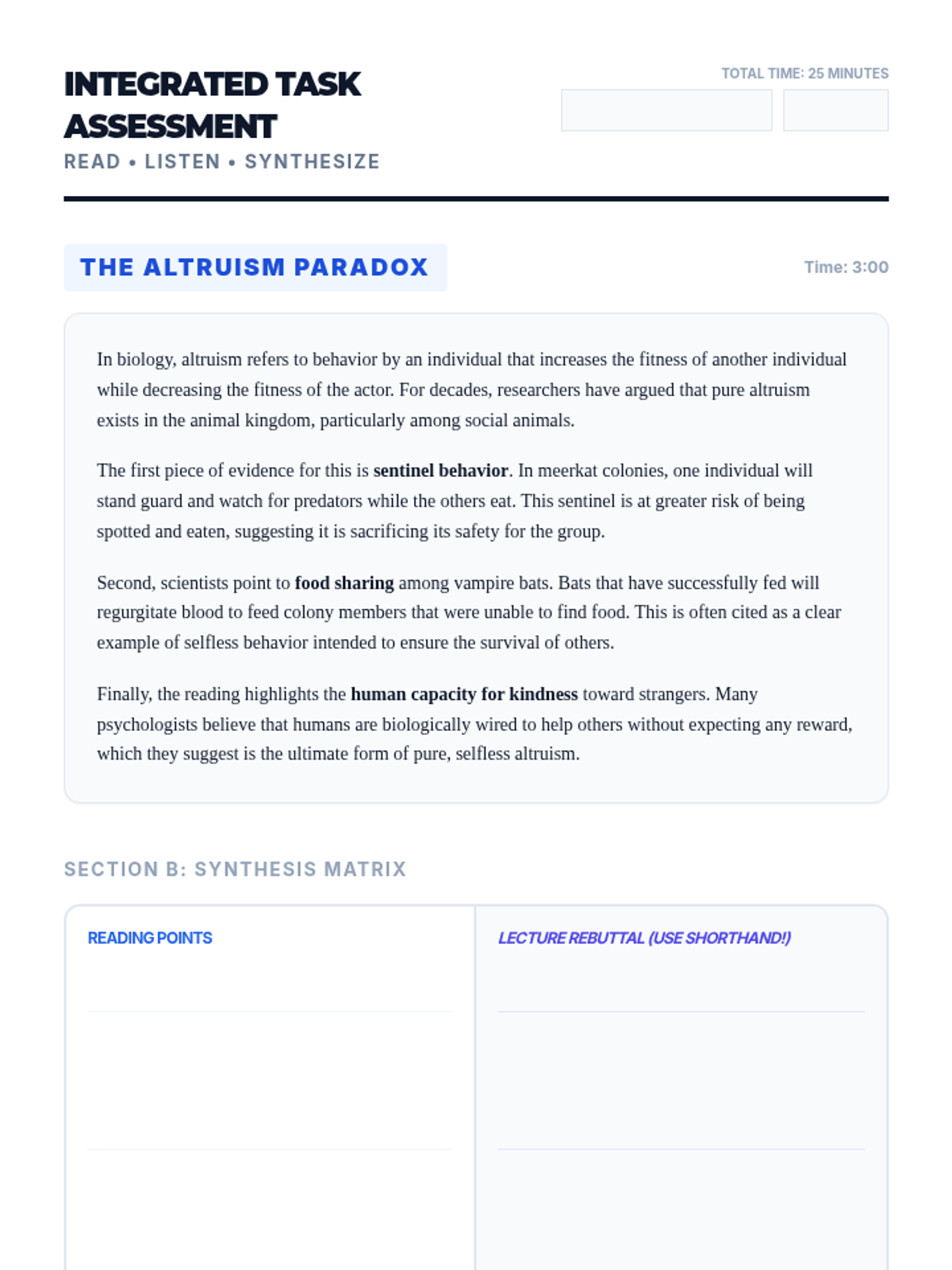
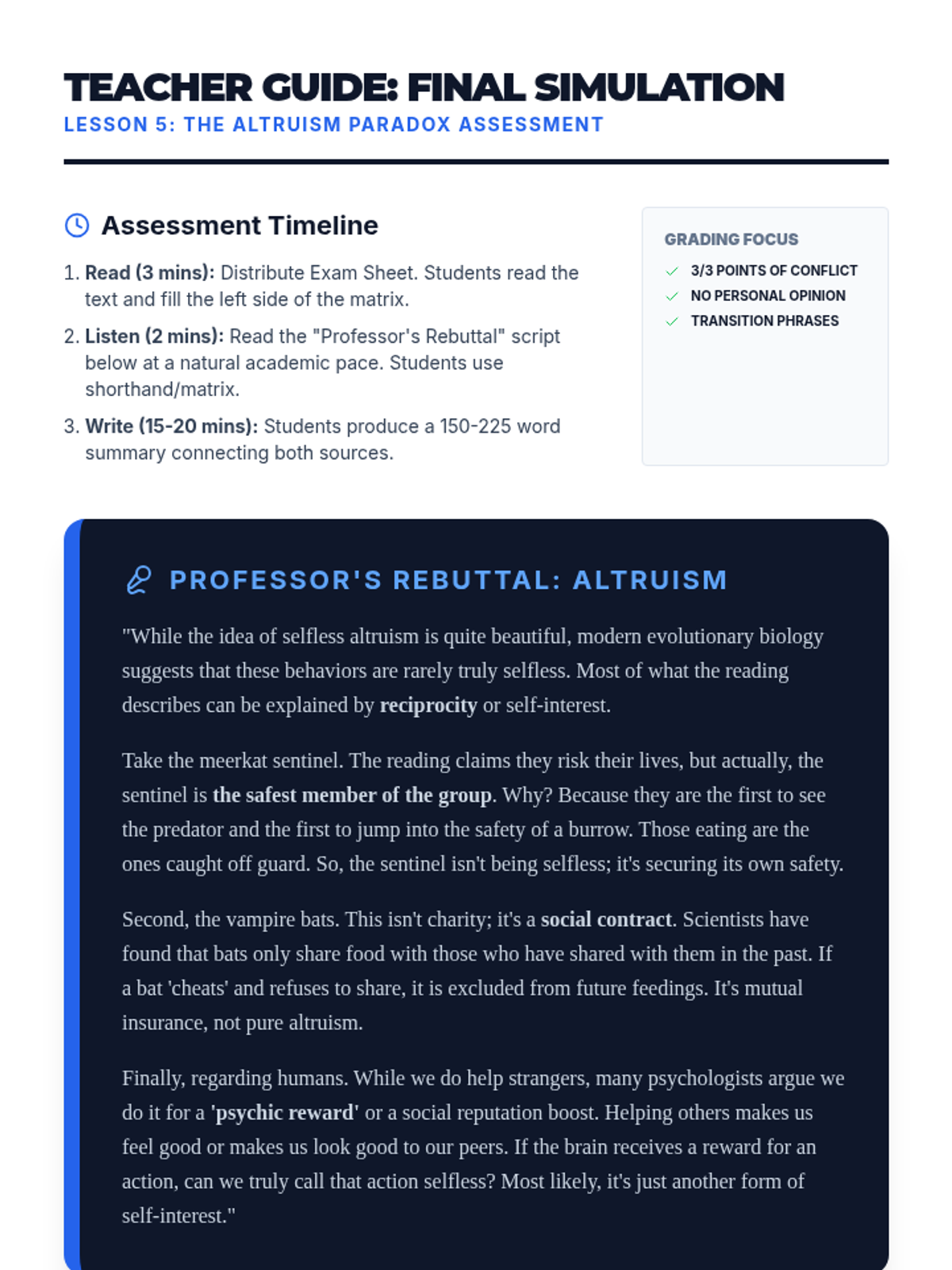
A full-scale simulation of a TOEFL/IELTS integrated task. Students apply shorthand, signpost recognition, and synthesis skills to a new topic, producing a comprehensive written response.
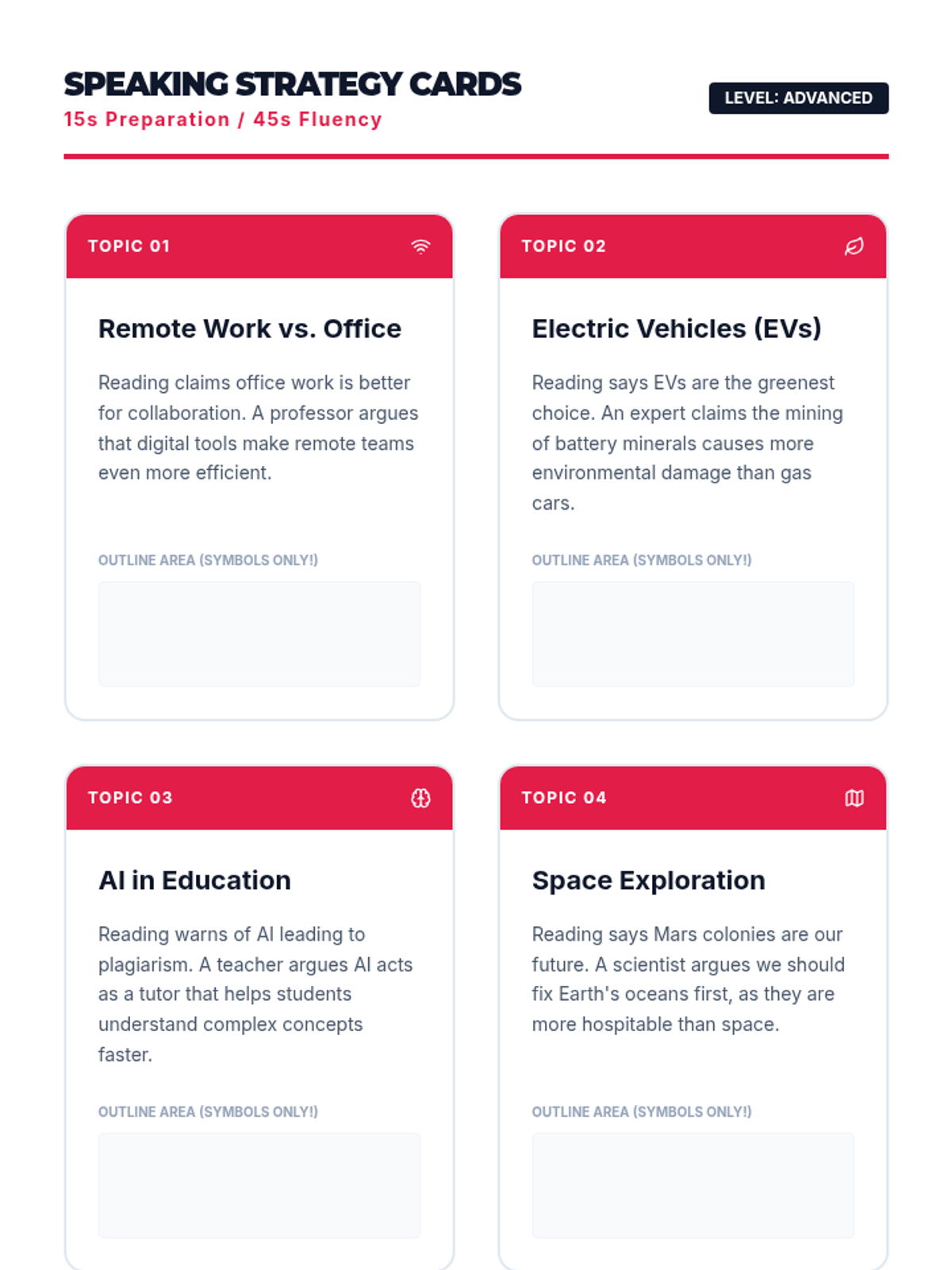
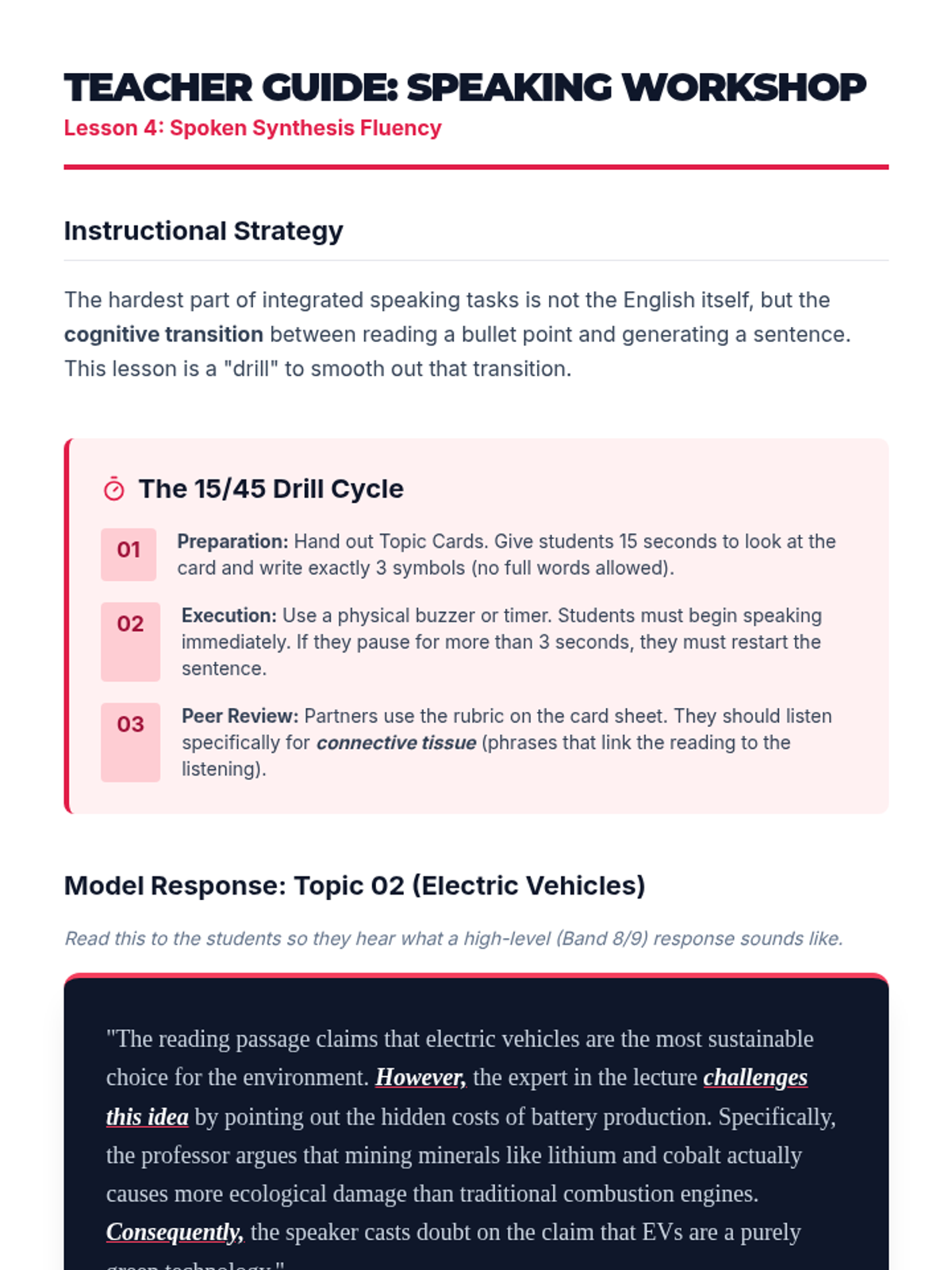
Students focus on the speaking section of integrated exams. They practice turning shorthand notes into fluent, grammatically correct spoken responses, emphasizing the use of transition phrases and maintaining eye contact.
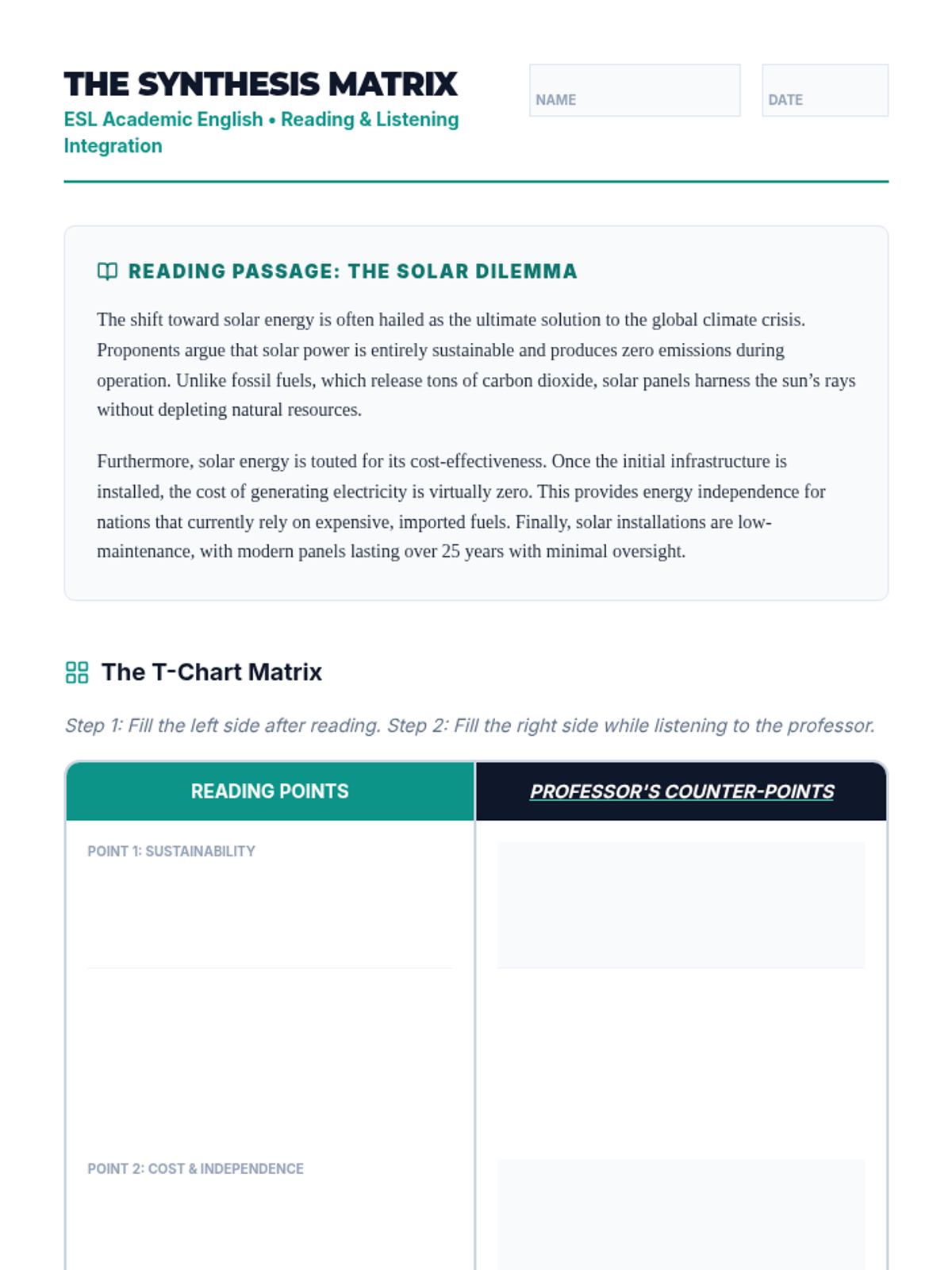
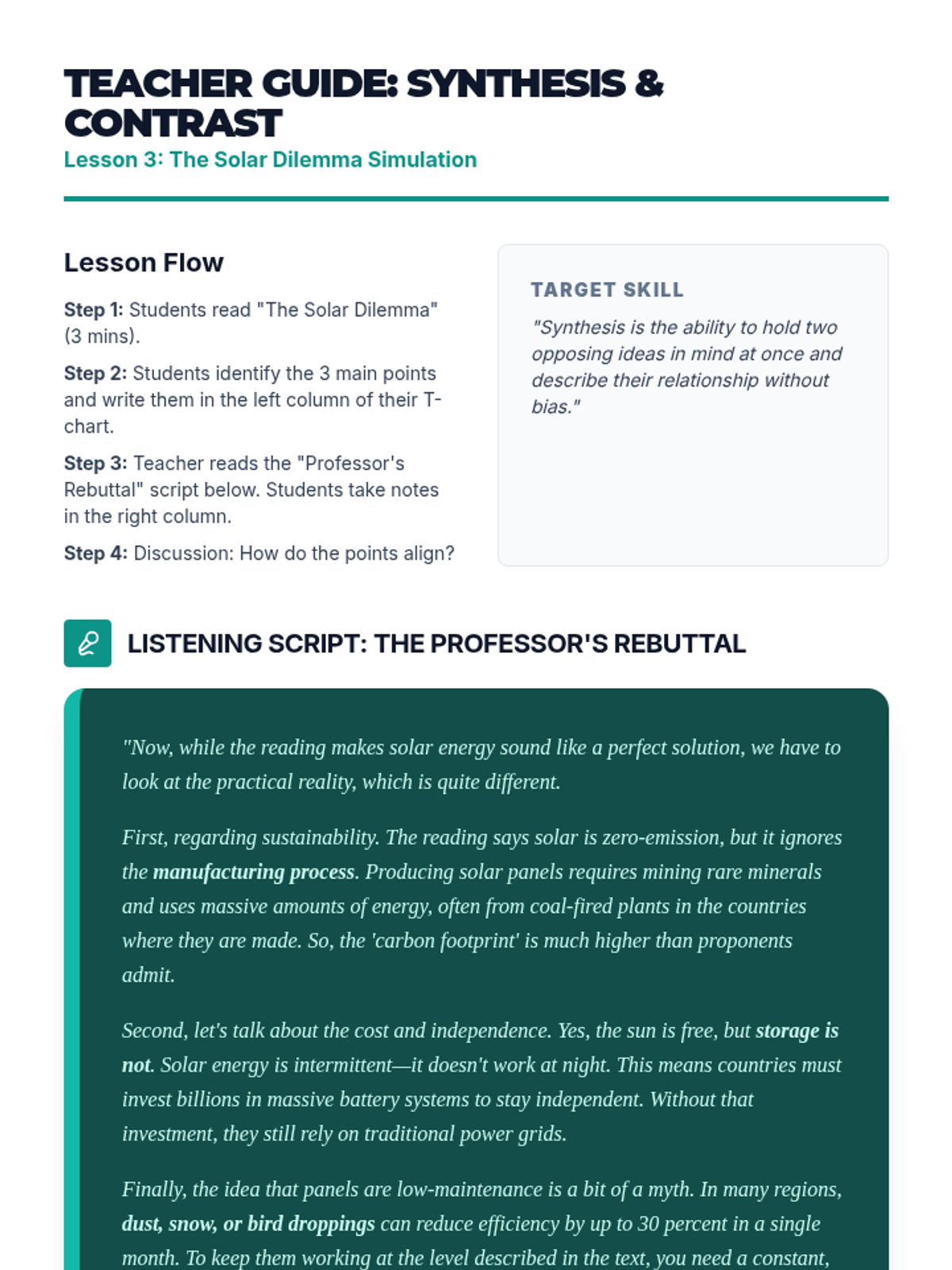
Students practice the core skill of integrated tasks by comparing a written passage with a contrasting audio lecture. They learn to use T-charts to map points of conflict and support between sources.
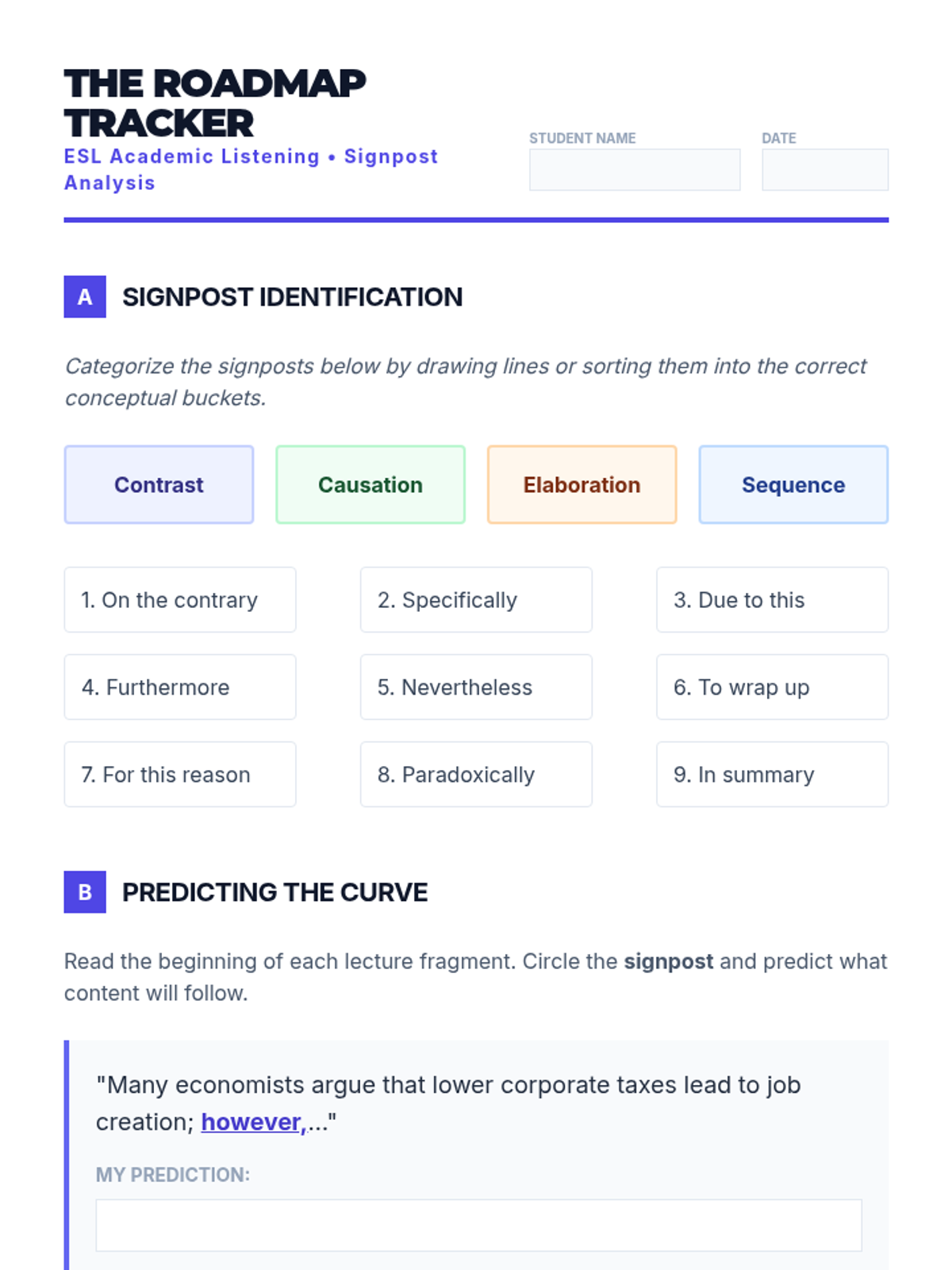
Students learn to recognize verbal markers that indicate the organizational structure of a lecture. They practice predicting upcoming content based on these 'signposts' to categorize their notes as they listen.
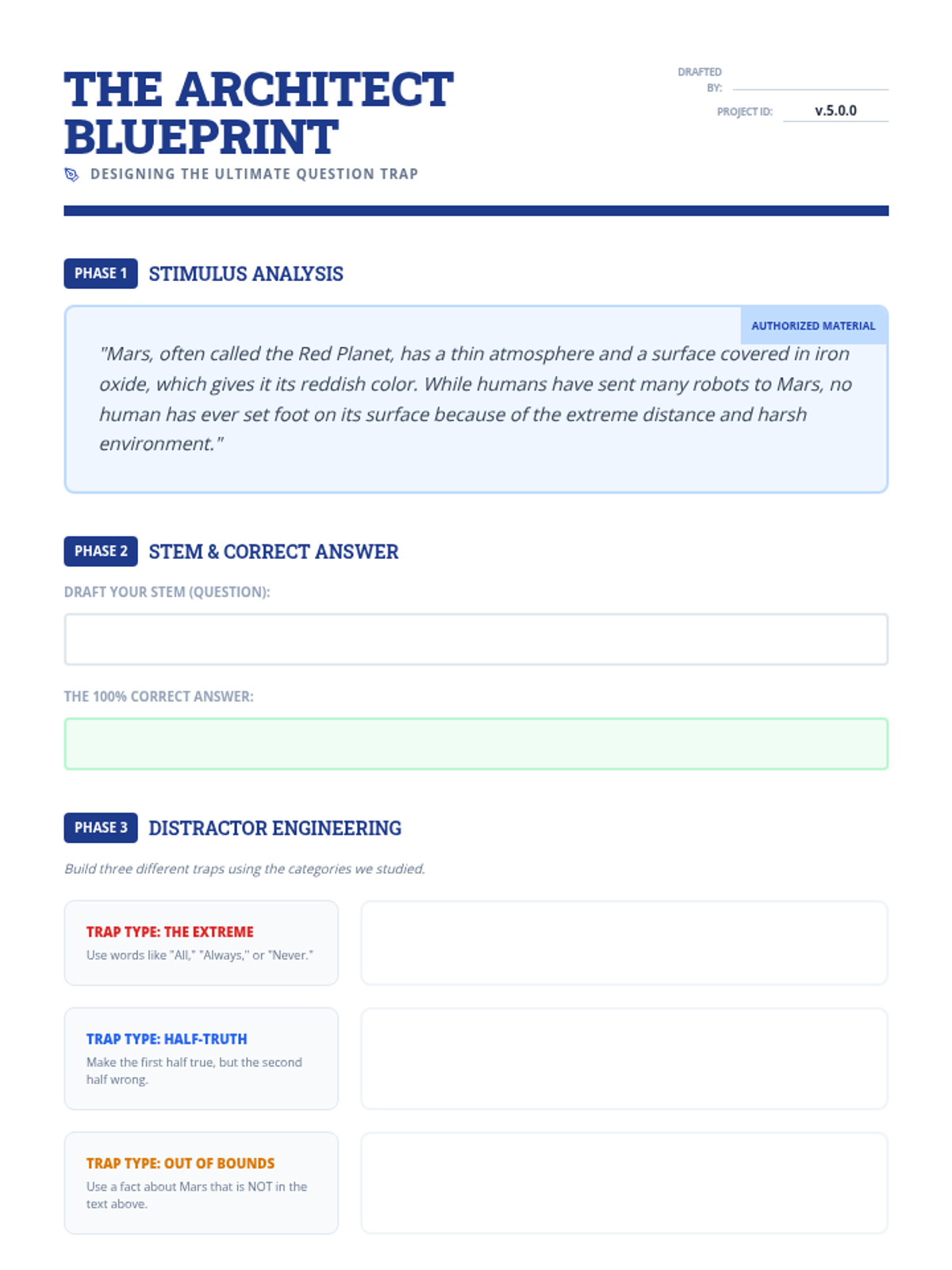
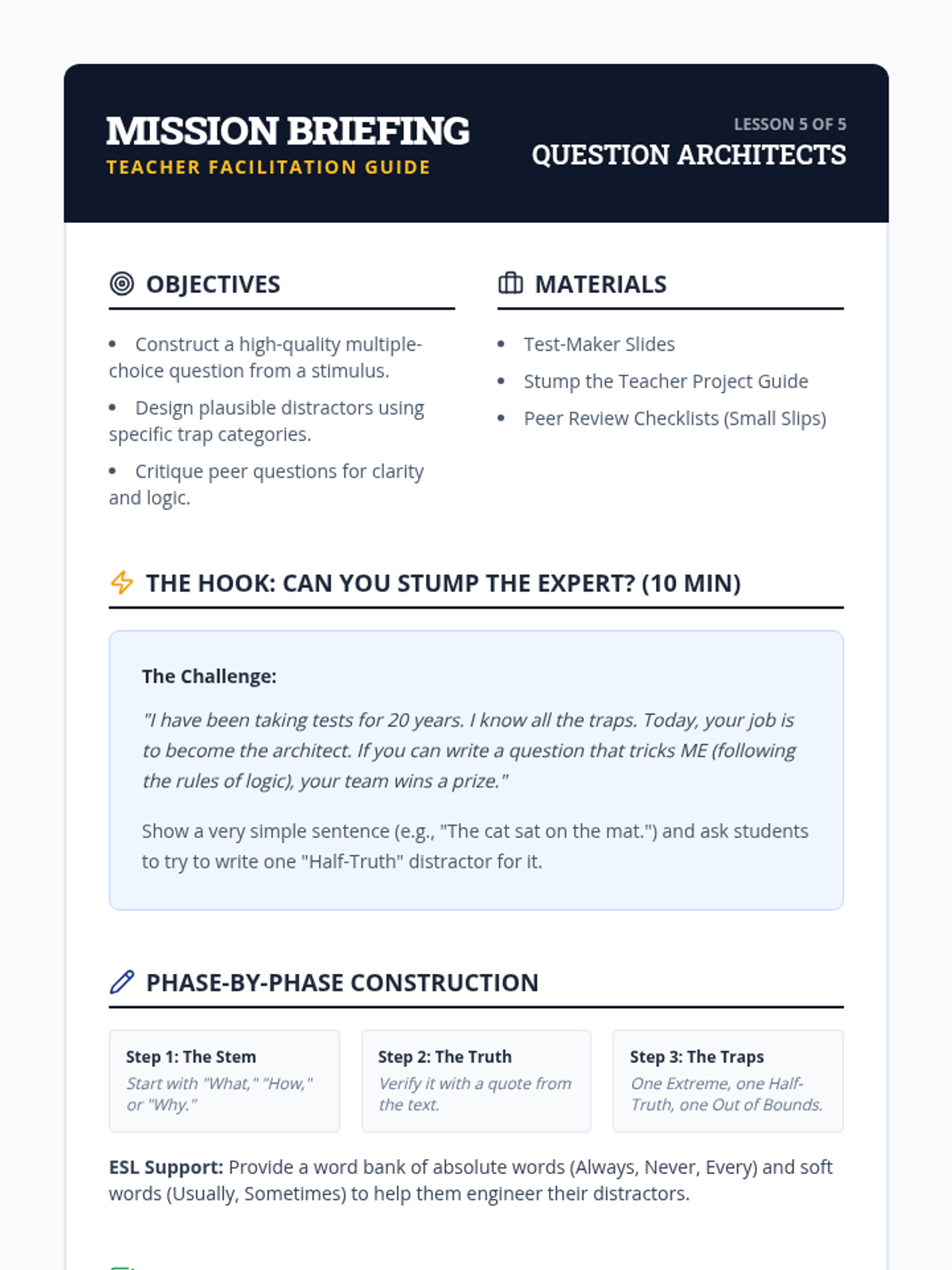
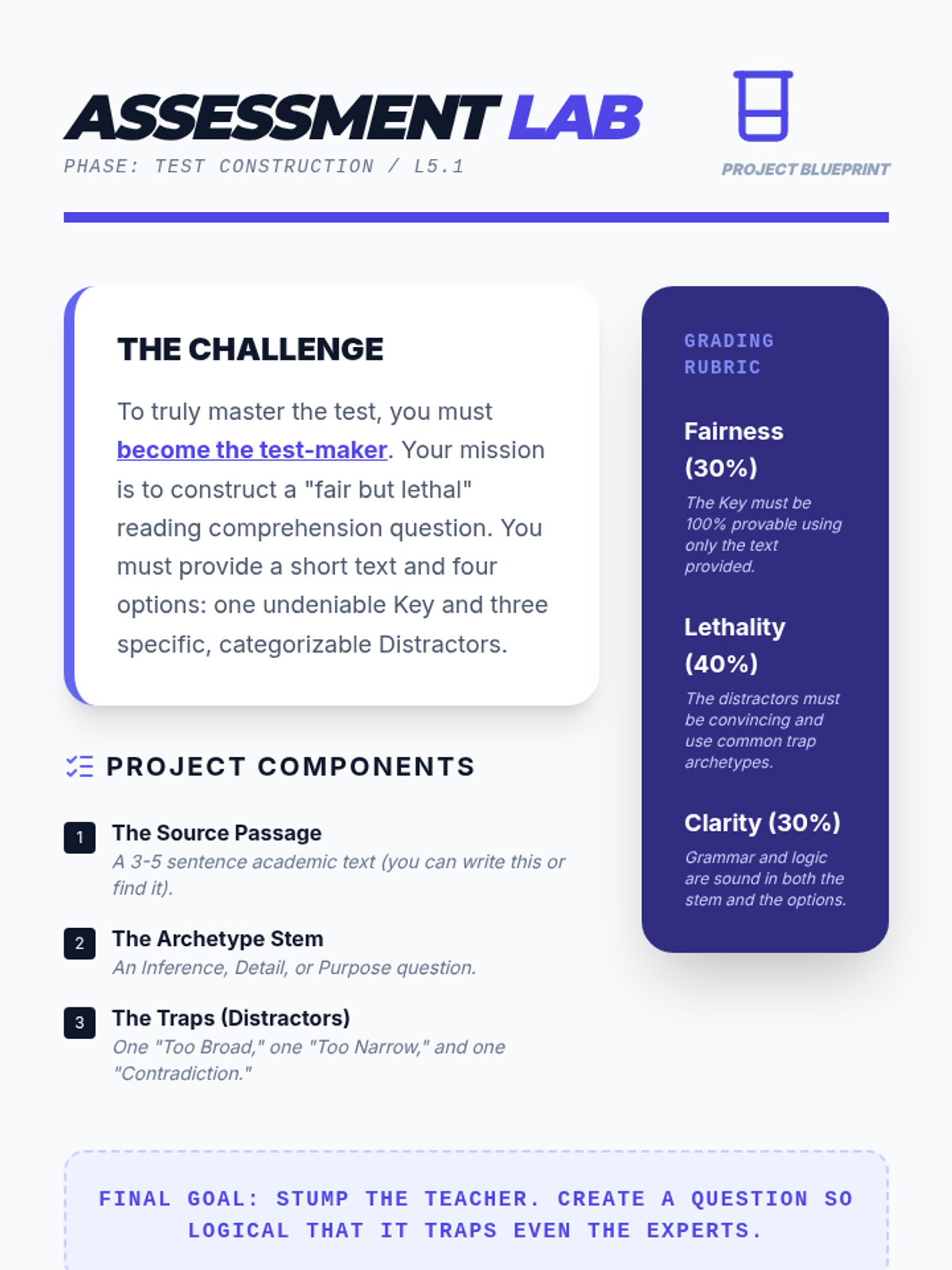
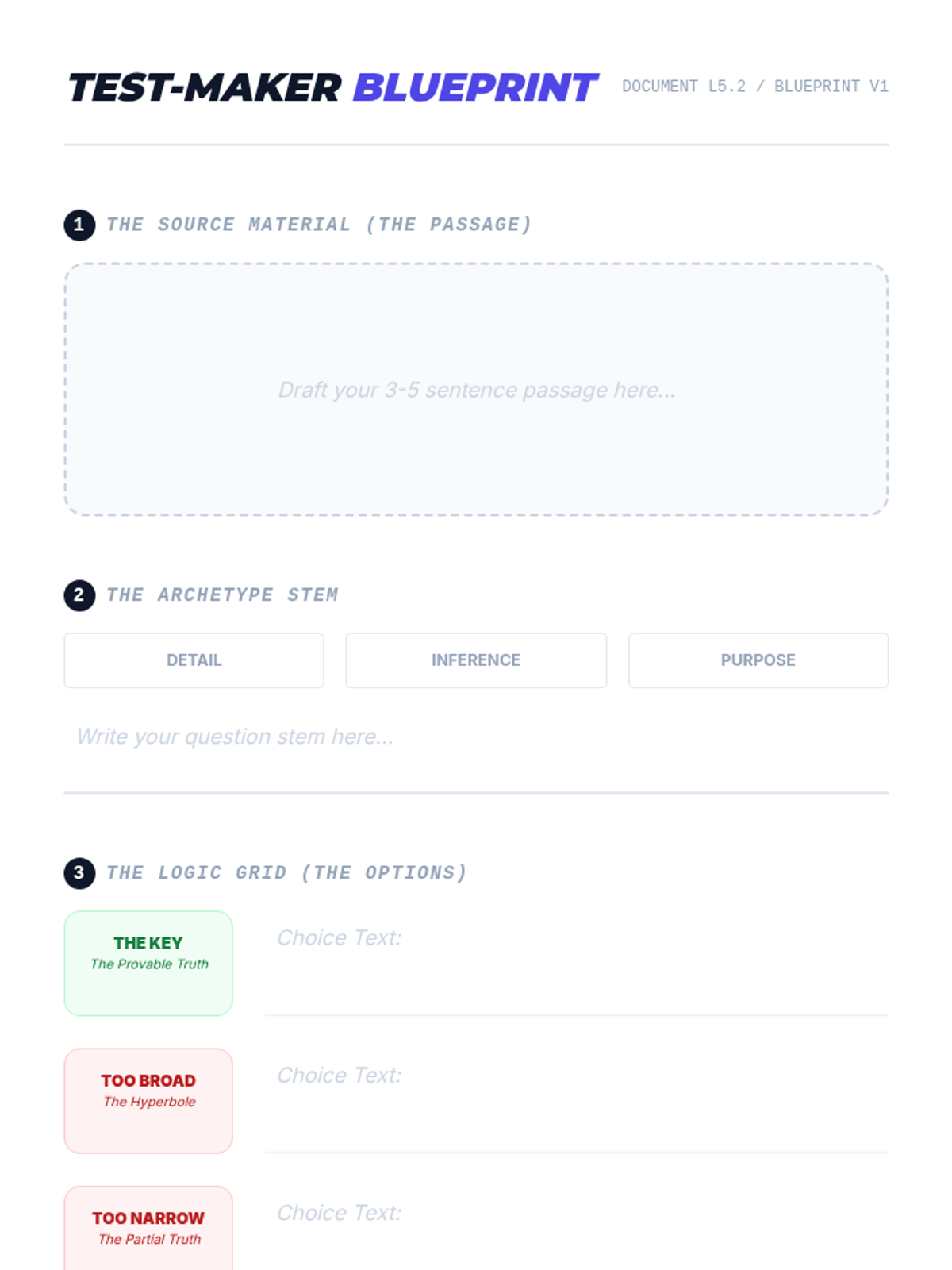
Students switch roles and become the test-makers. They write their own multiple-choice questions based on a shared text, intentionally creating plausible distractors.
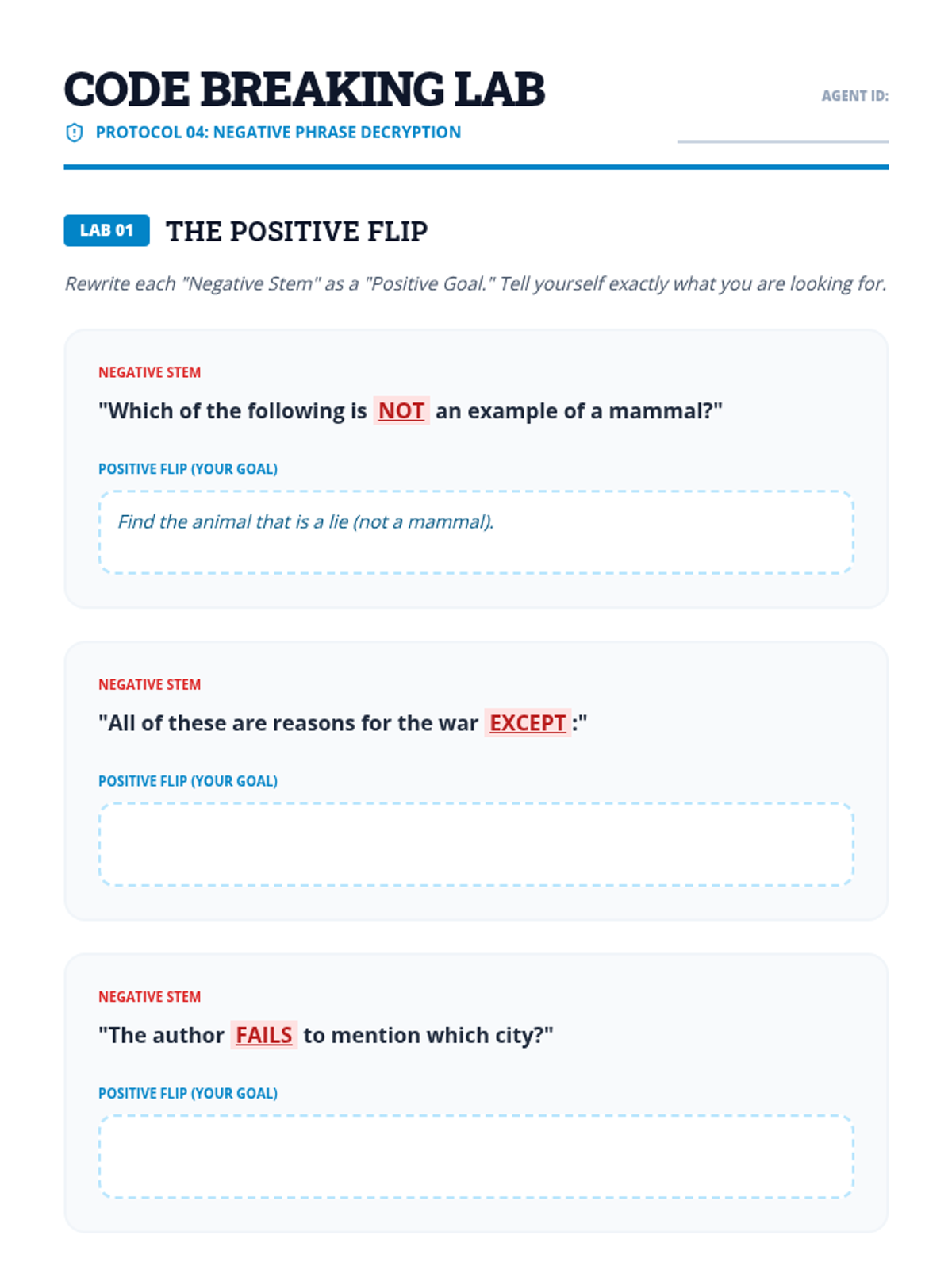
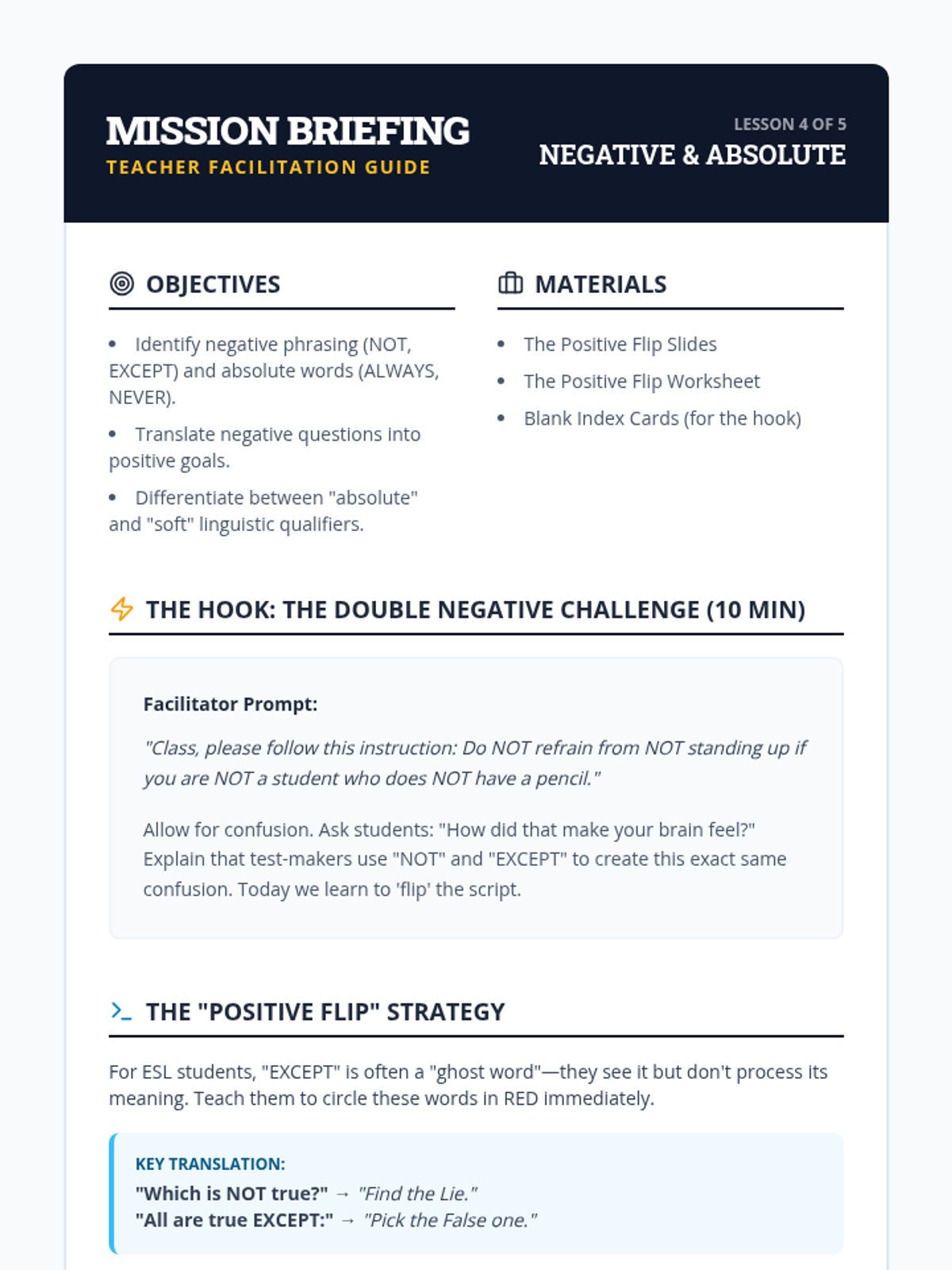
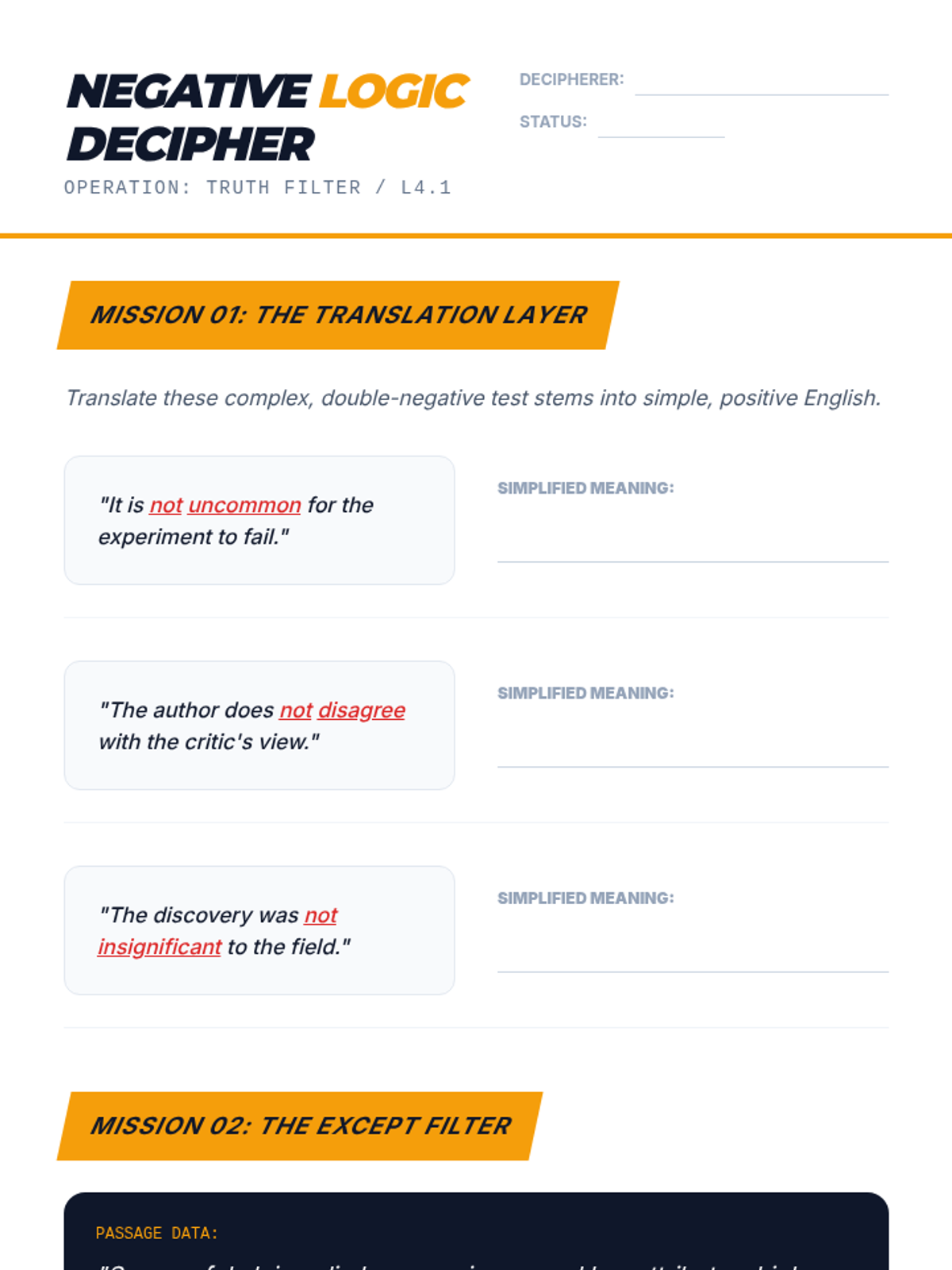
Students specifically target questions using words like 'NOT,' 'EXCEPT,' 'ALWAYS,' or 'NEVER.' They rewrite these questions in positive terms to clarify meaning.
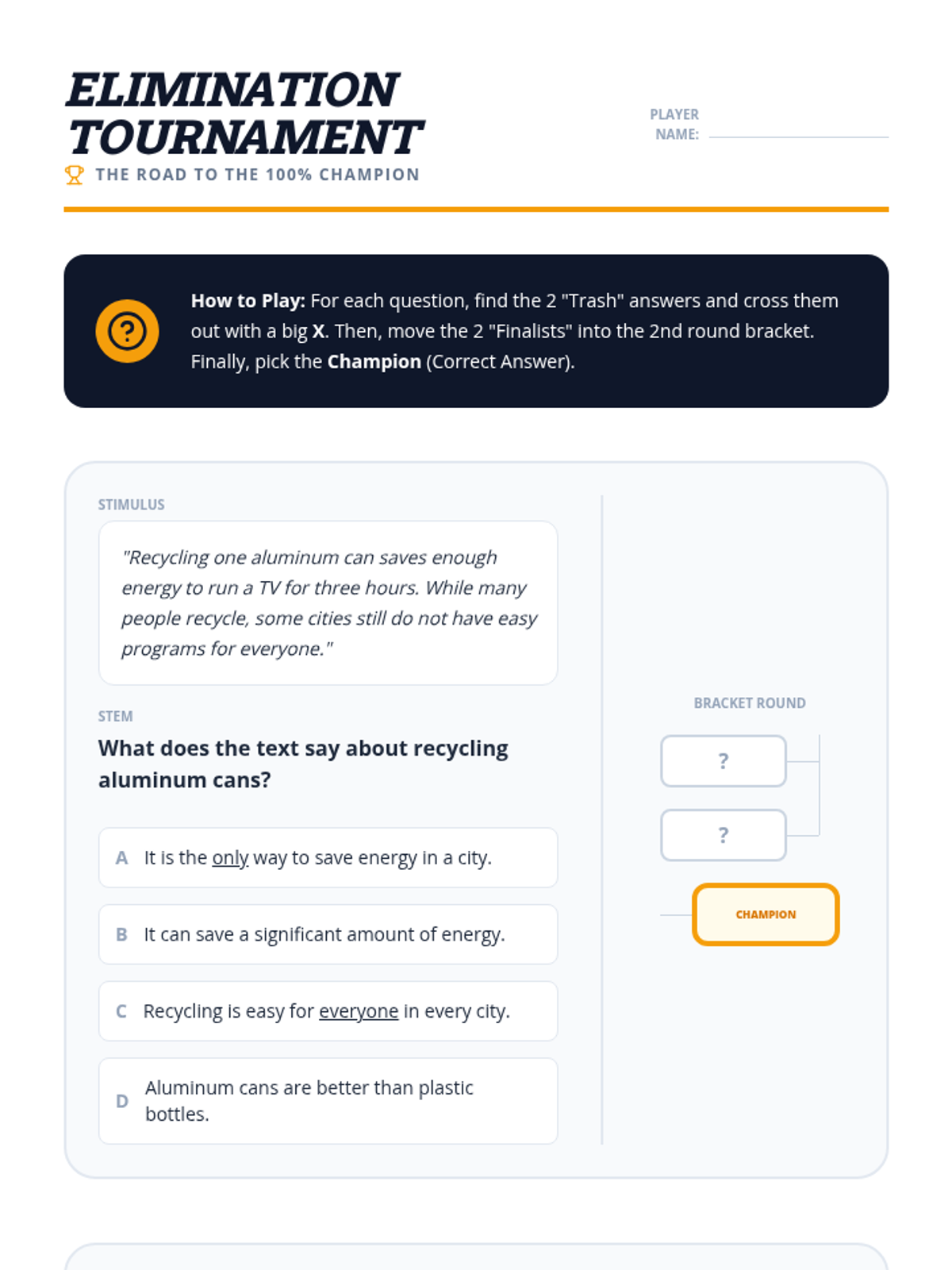
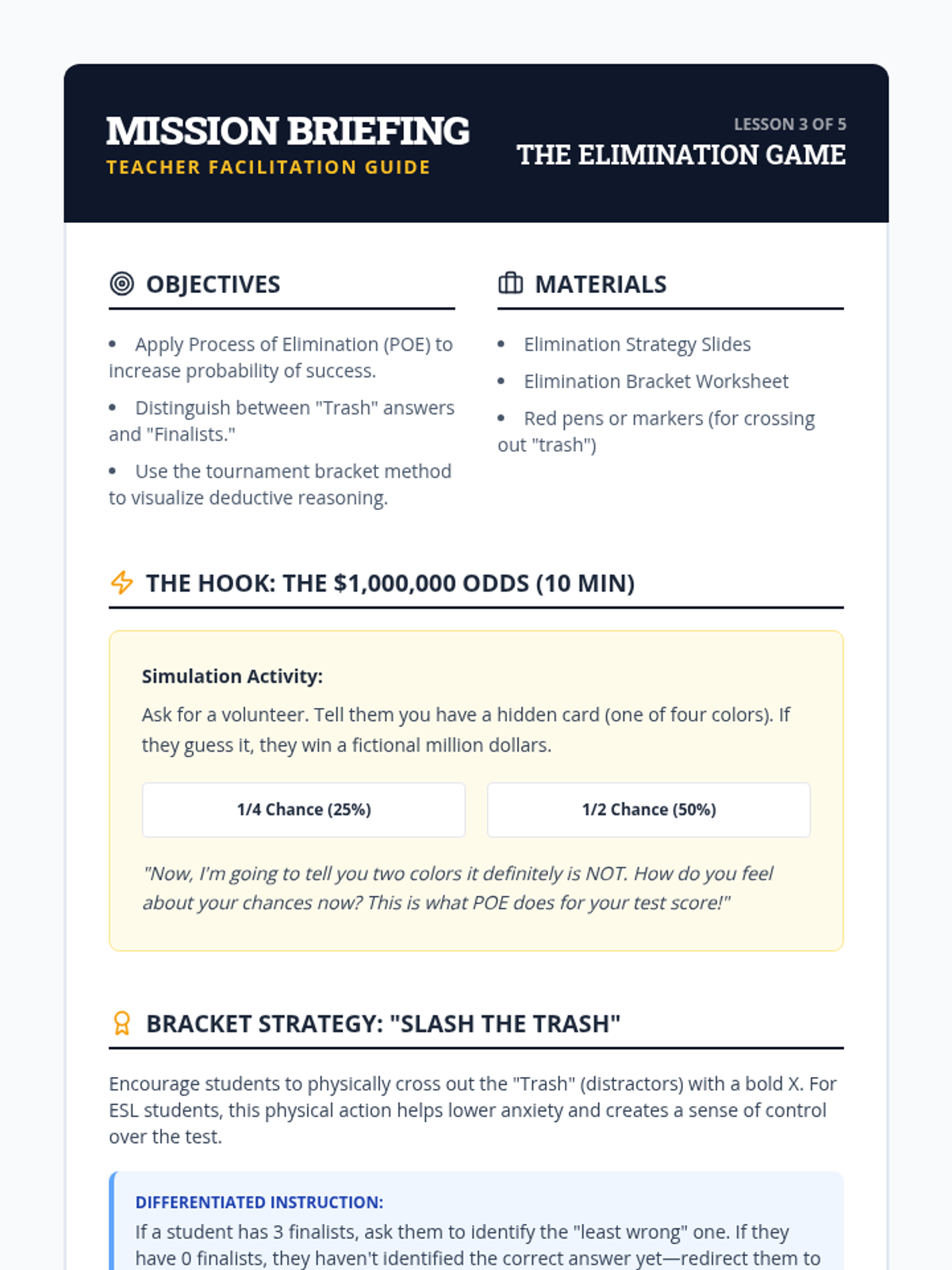
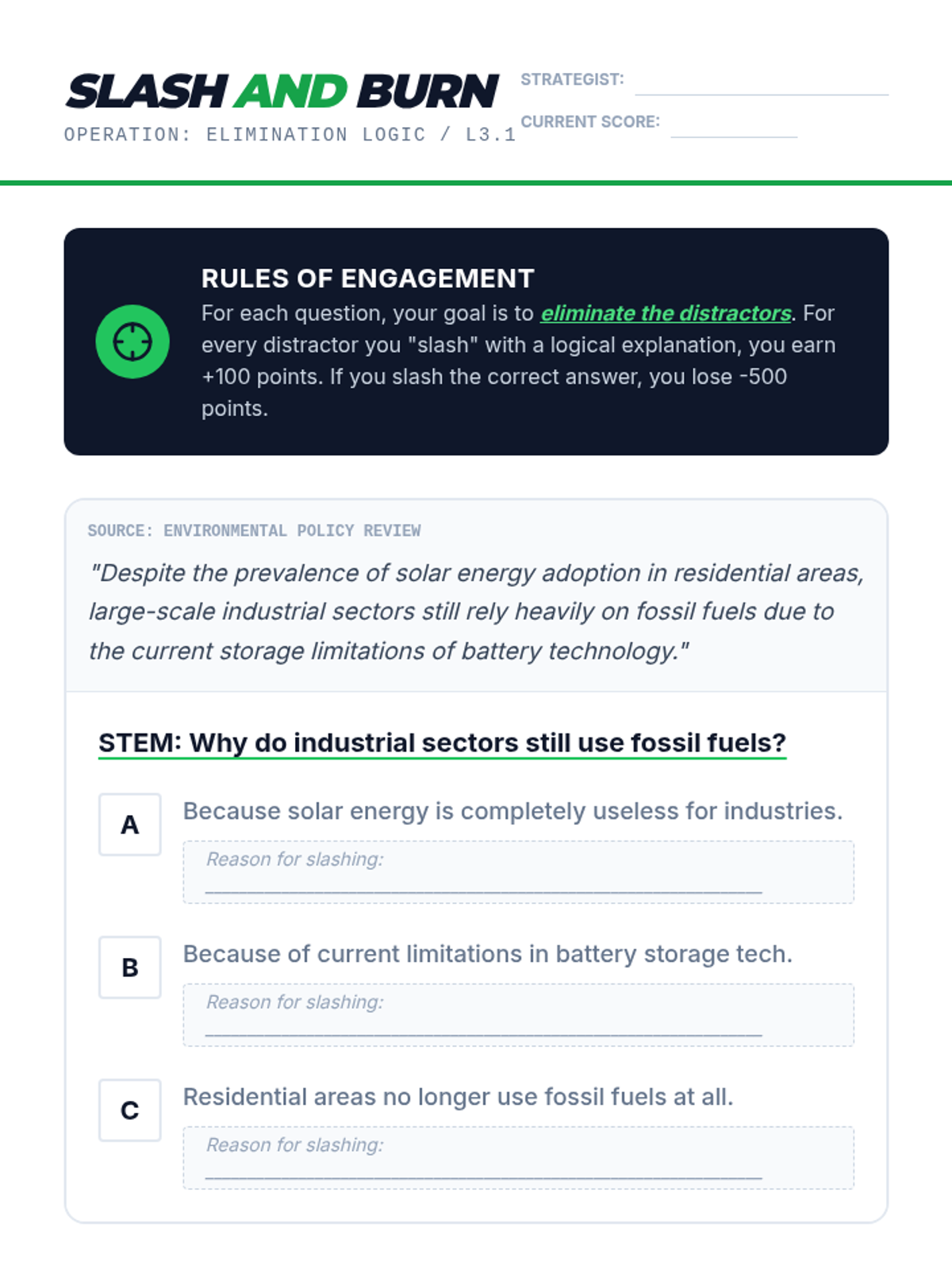
Students practice the physical and mental habit of crossing out clearly wrong answers to increase their probability of success. The lesson focuses on narrowing choices down to two options and using text evidence to make the final selection.
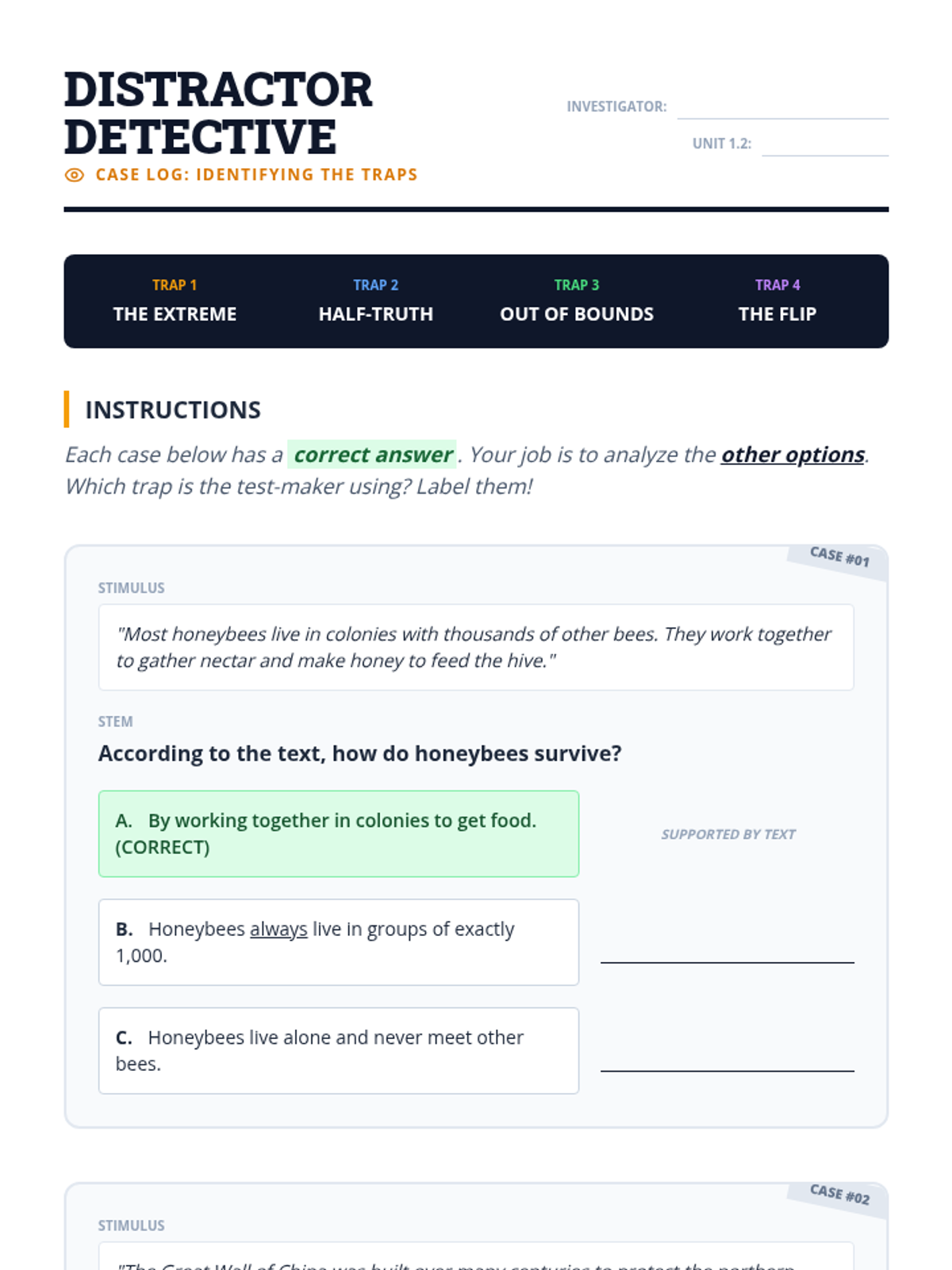
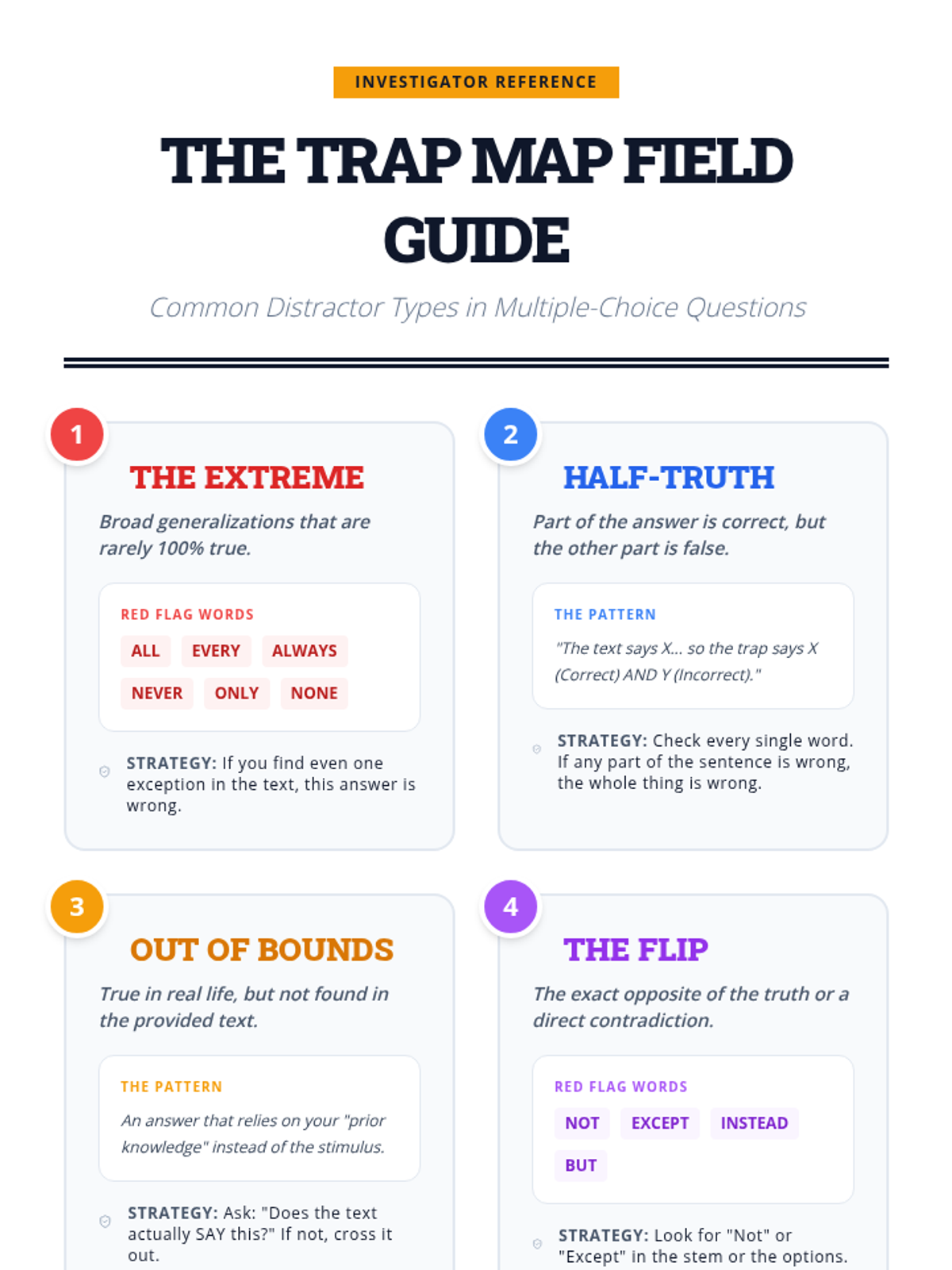
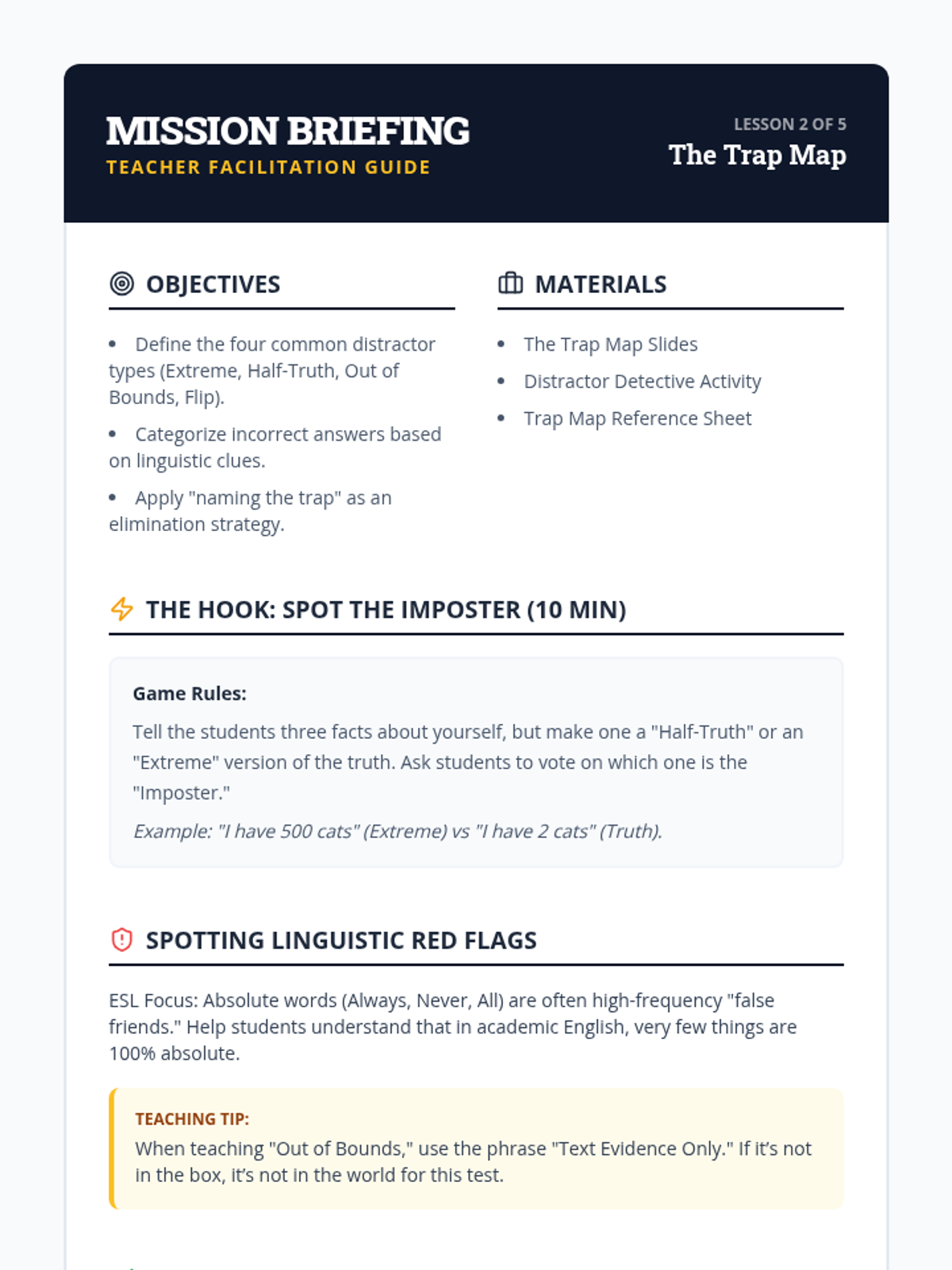
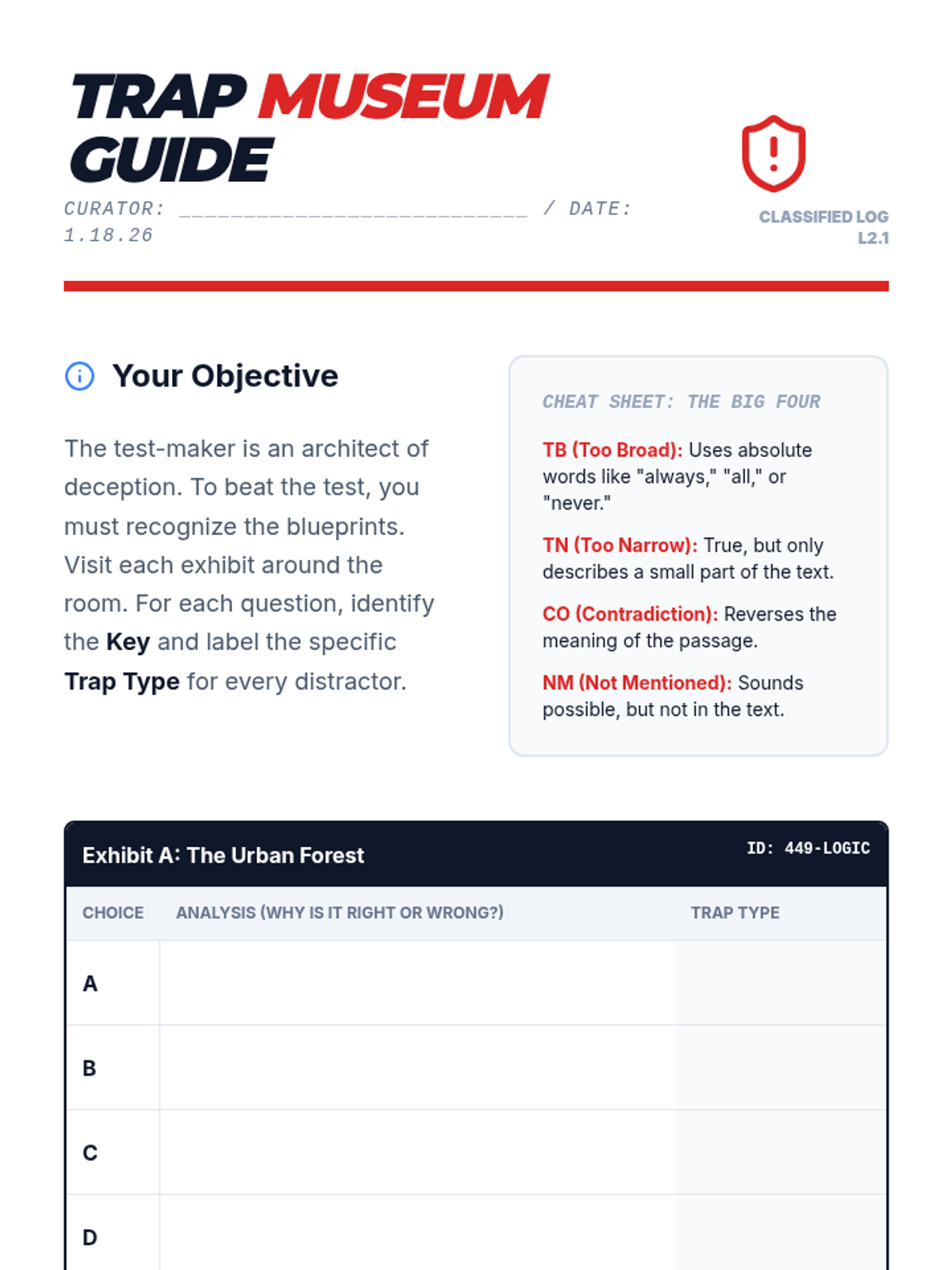
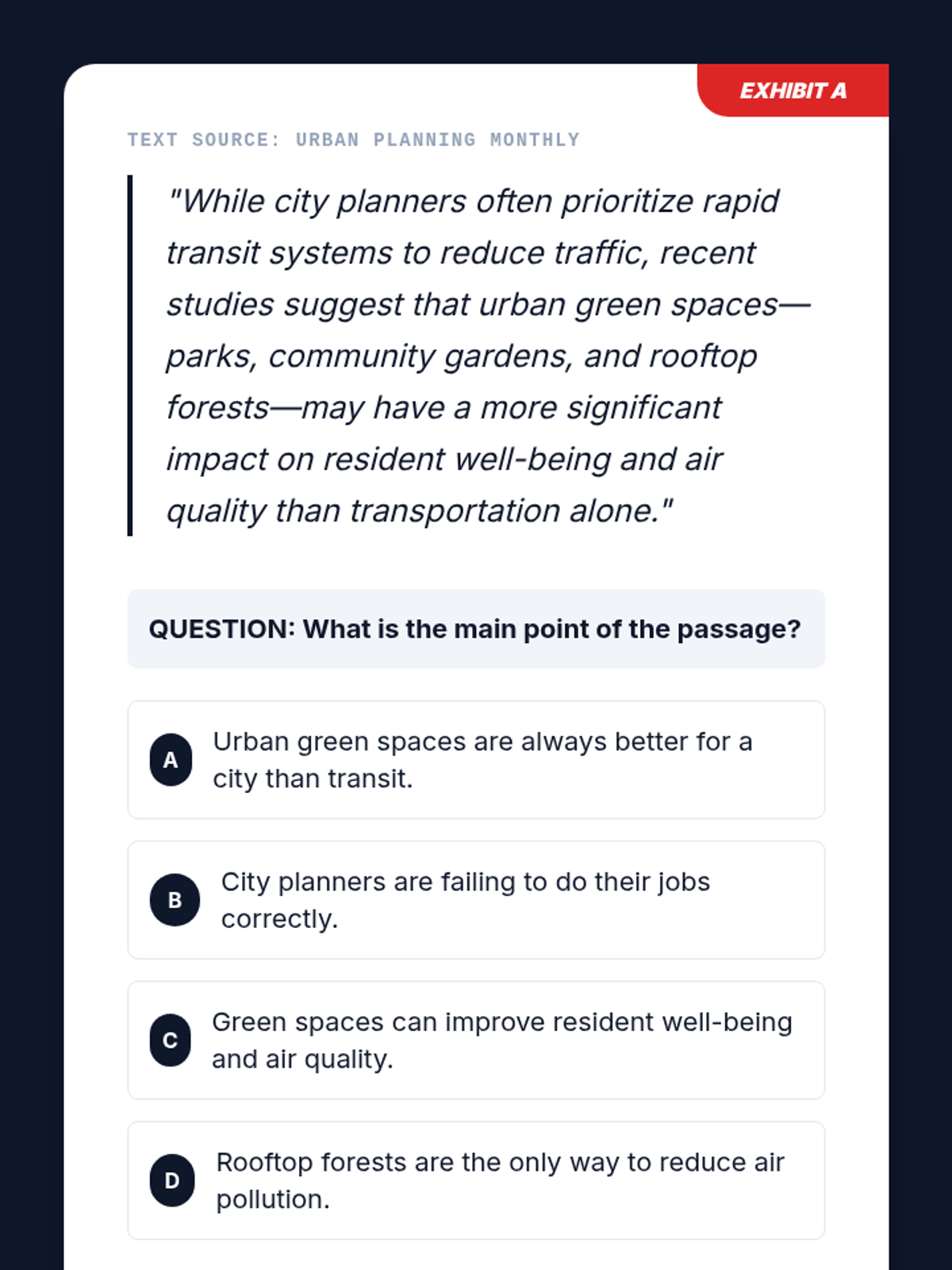
This lesson categorizes common types of wrong answers, such as 'too extreme,' 'partially true,' or 'irrelevant info.' Students label incorrect answers in sample questions with these categories.
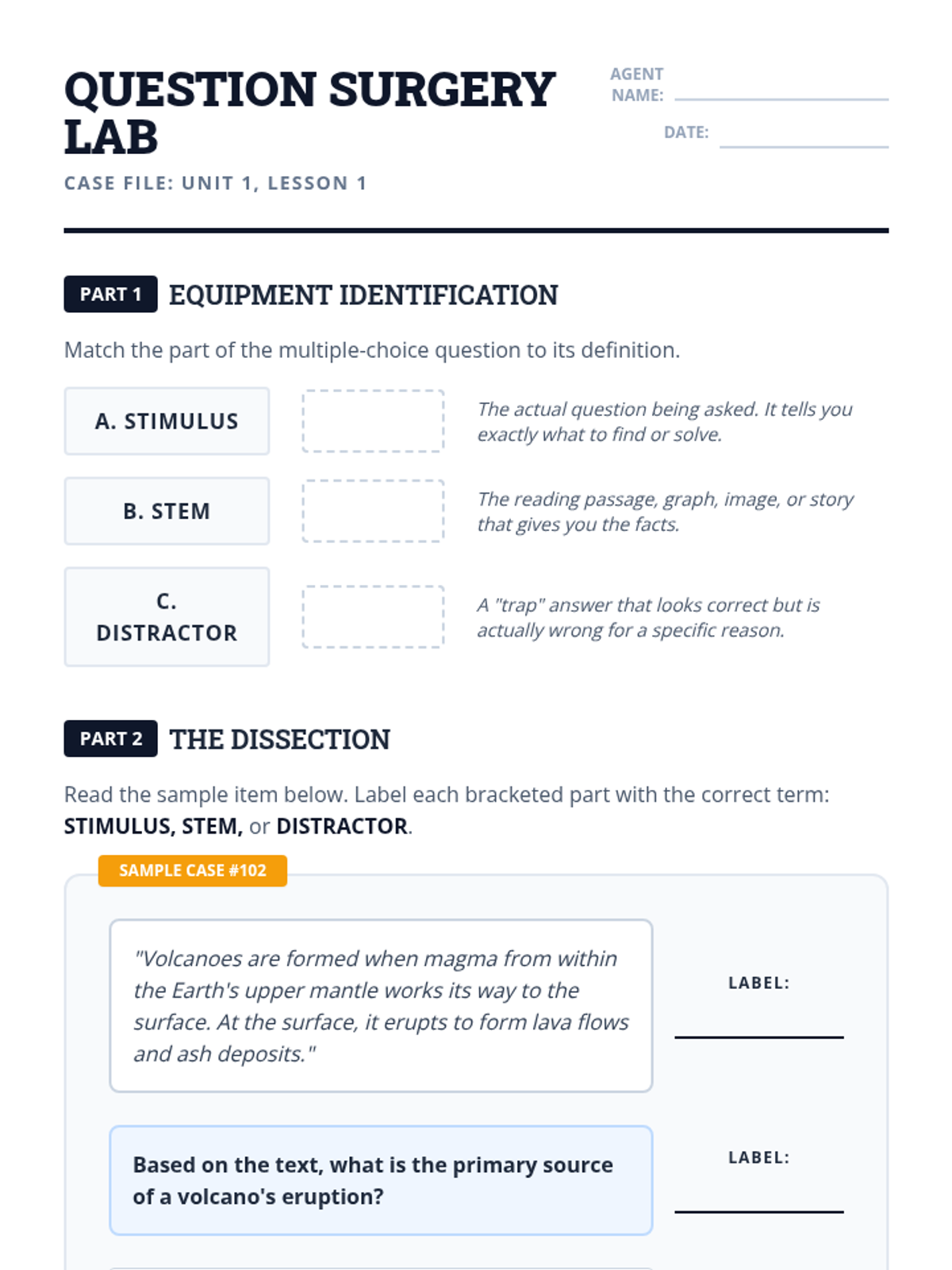
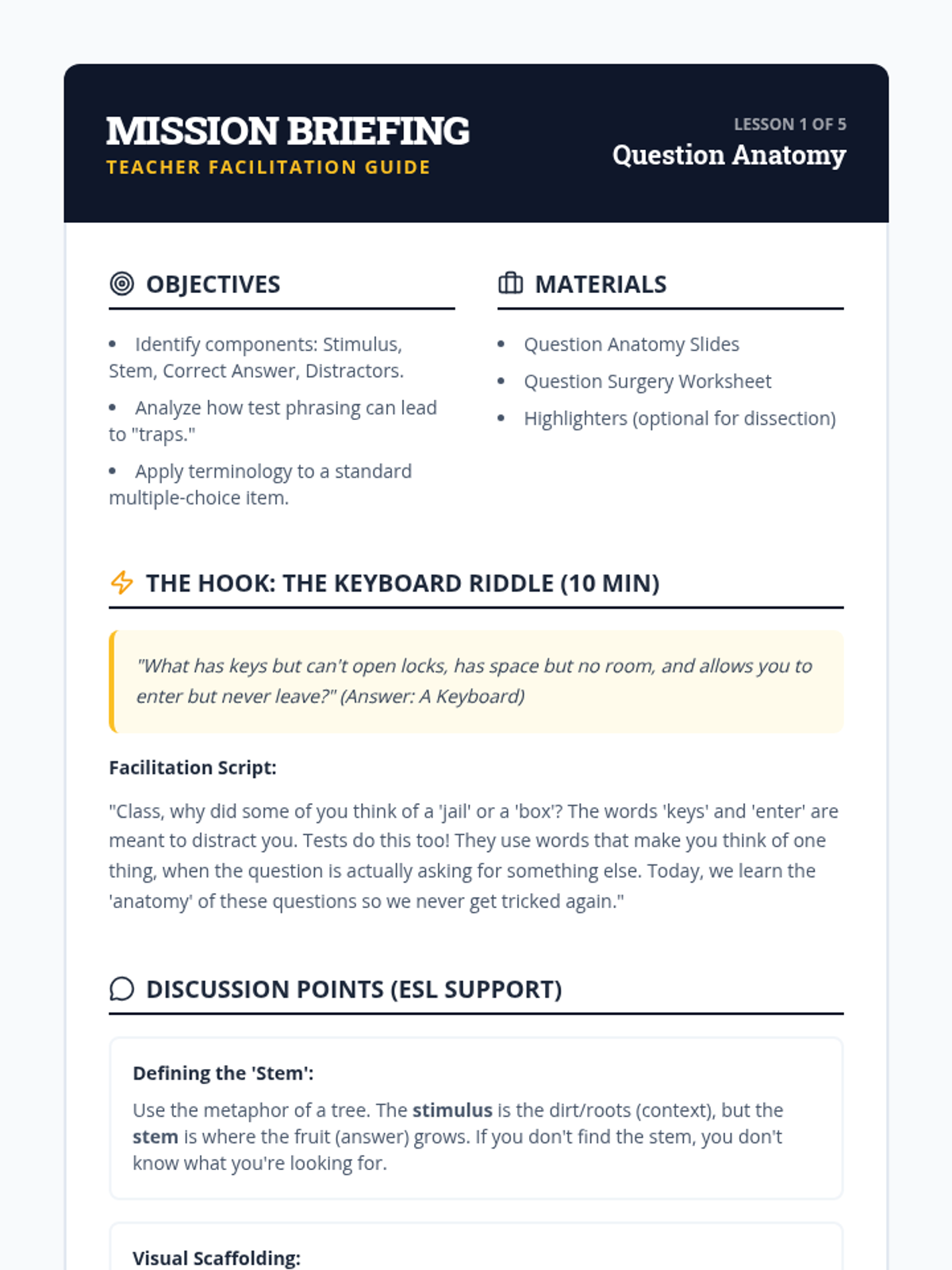
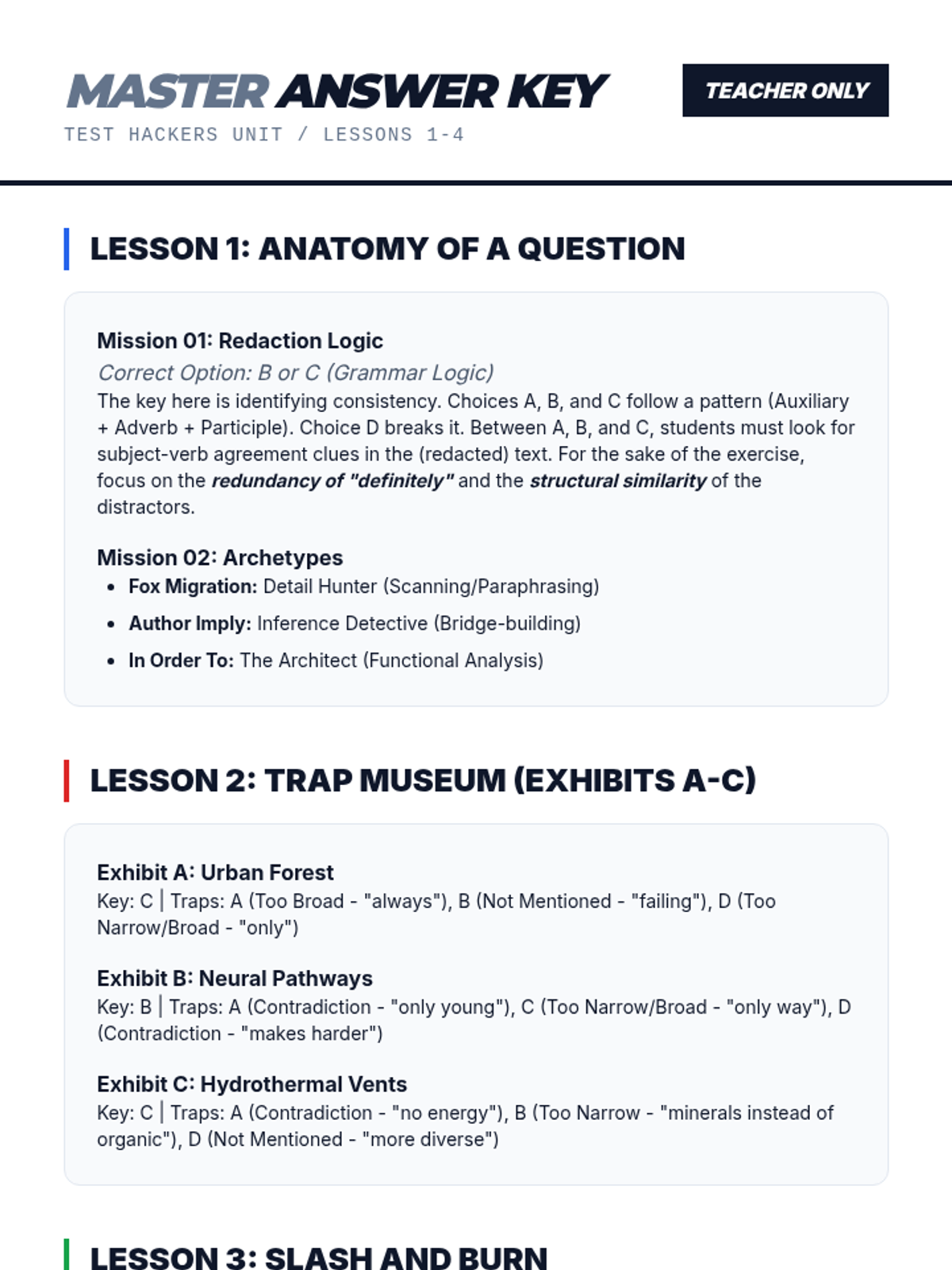
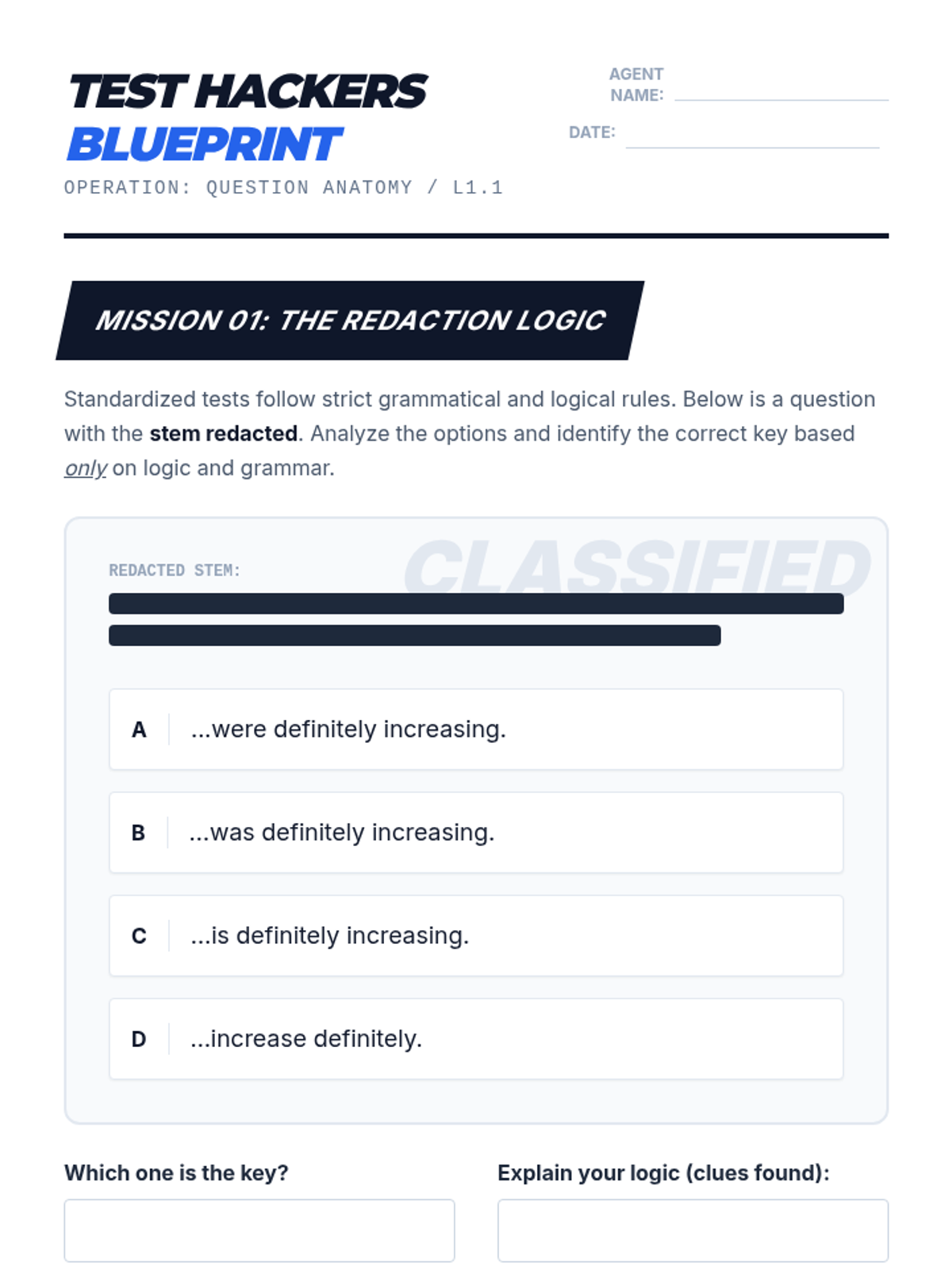
Students break down the components of a test item: the stimulus, the stem (question), the correct answer, and the distractors. They learn to identify what the stem is actually asking before looking at the options.
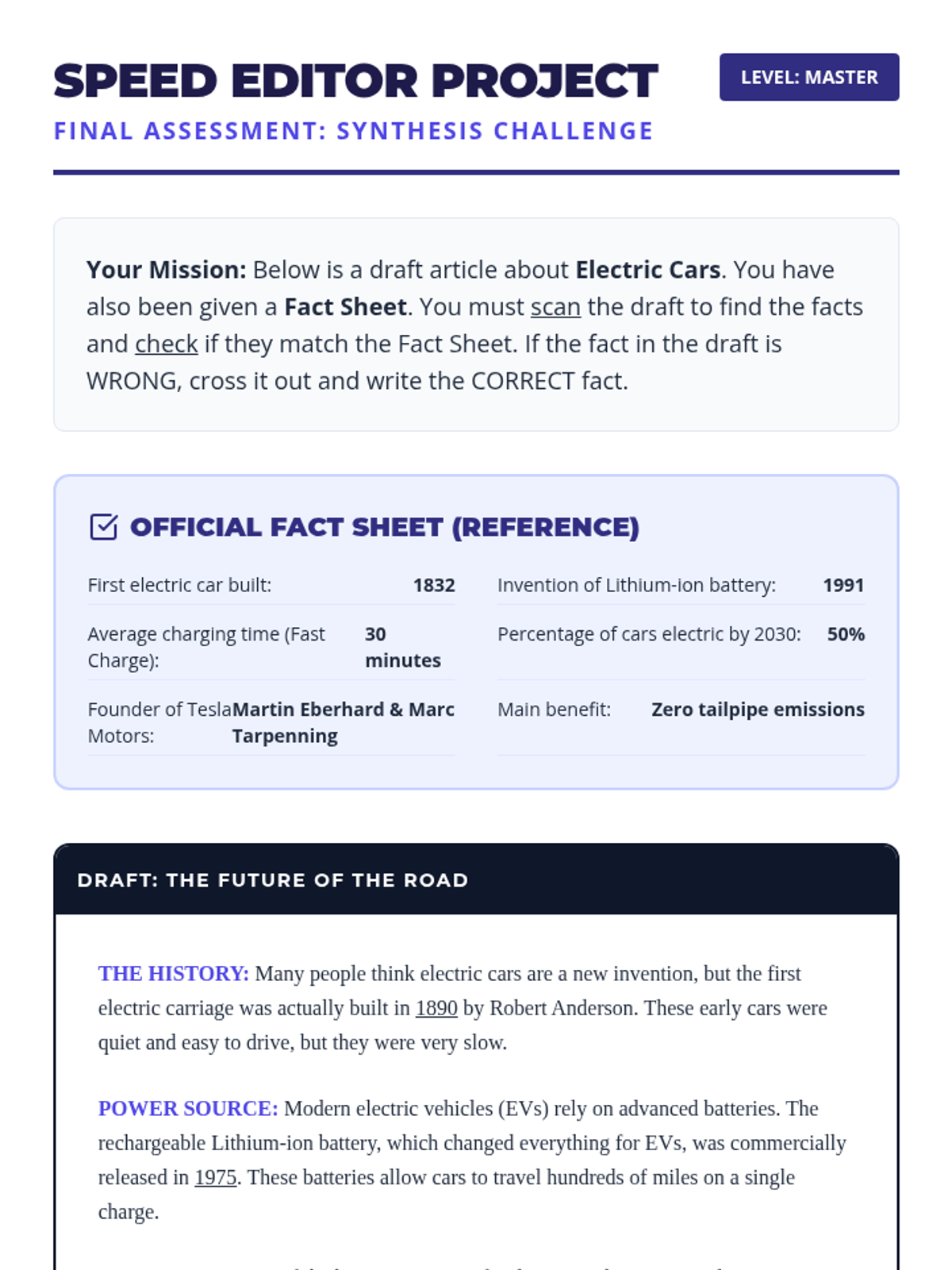
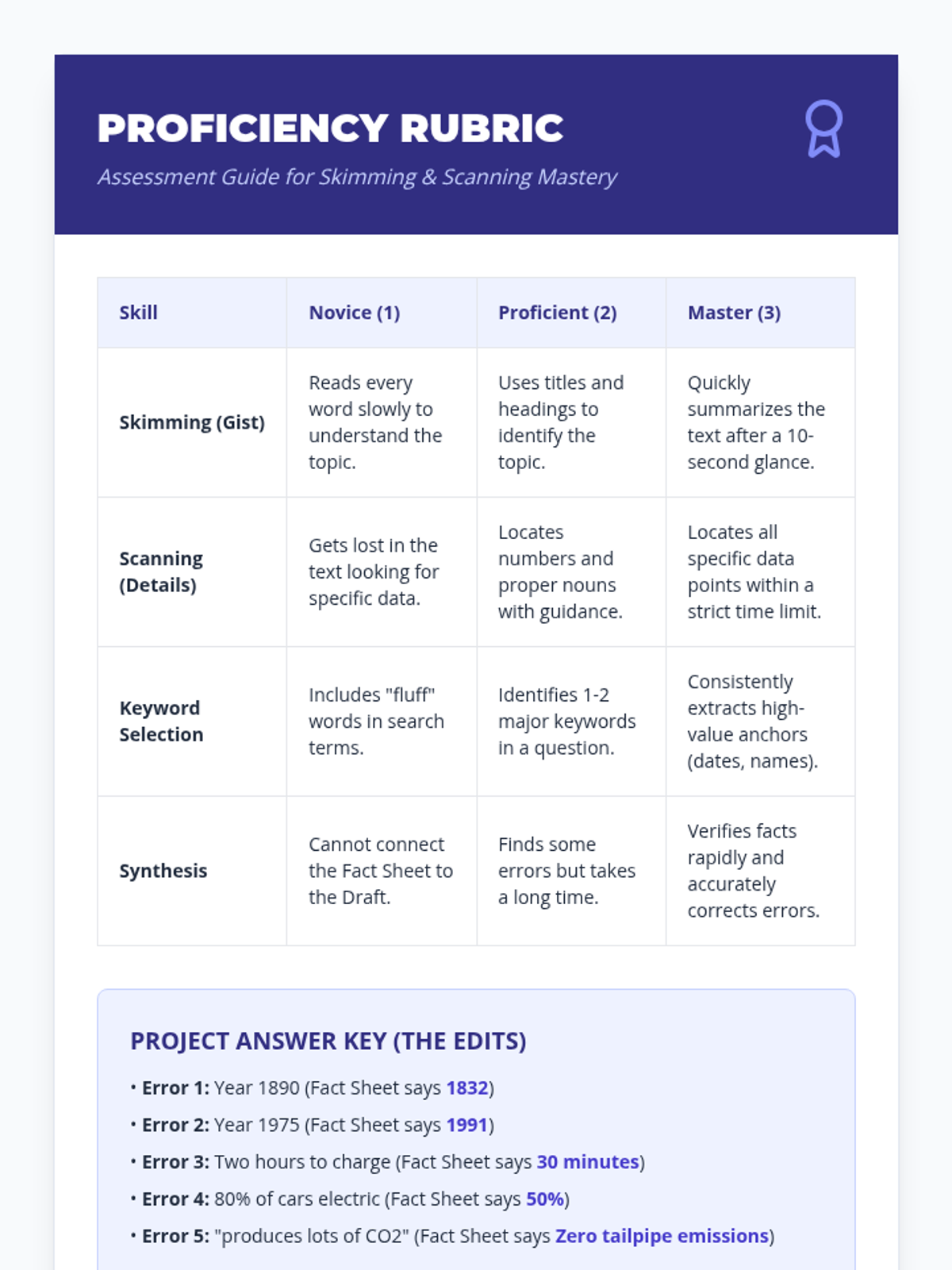
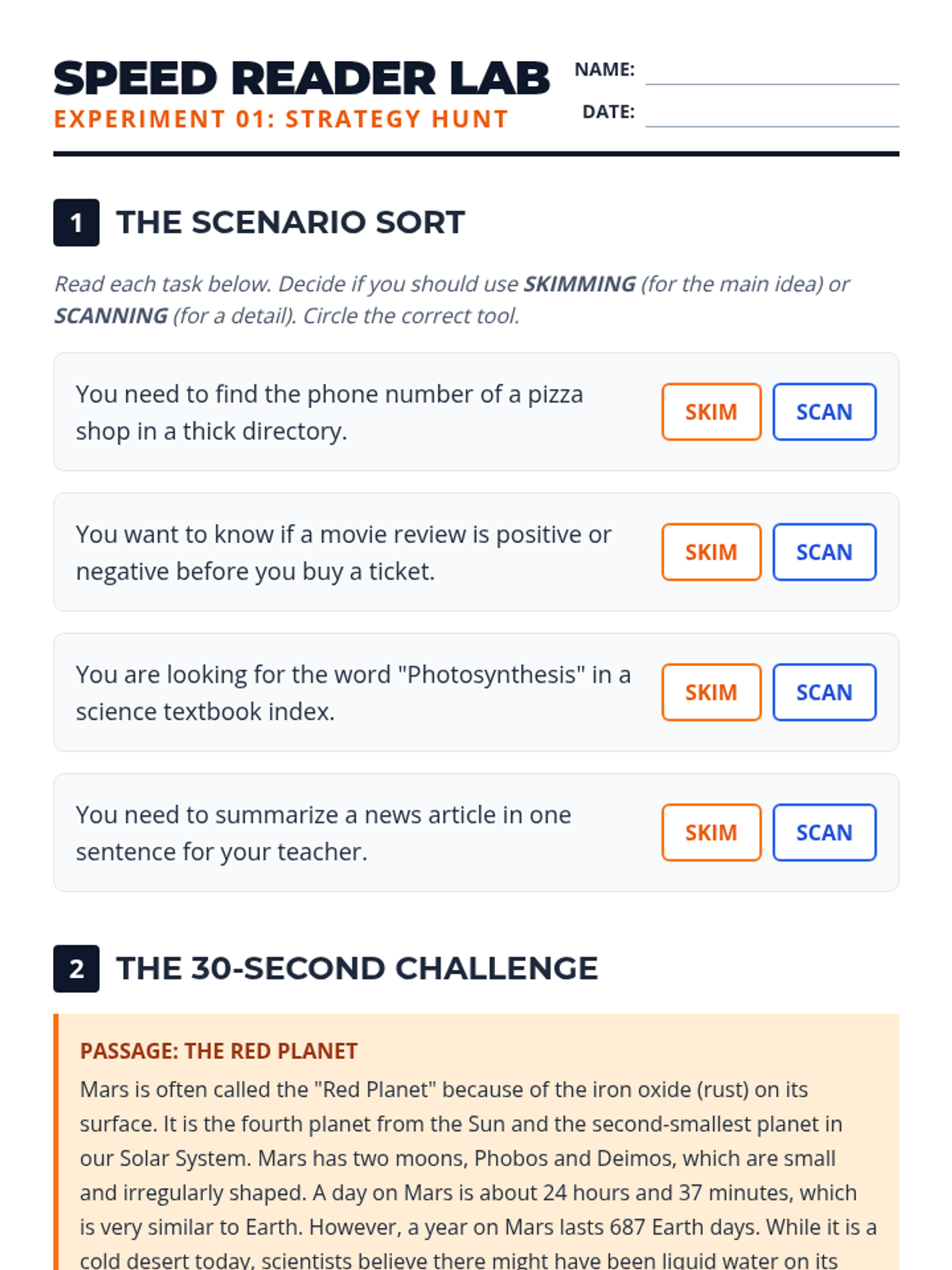
A culminating project where students combine skimming for main ideas and scanning for evidence to verify facts in a set of academic articles.
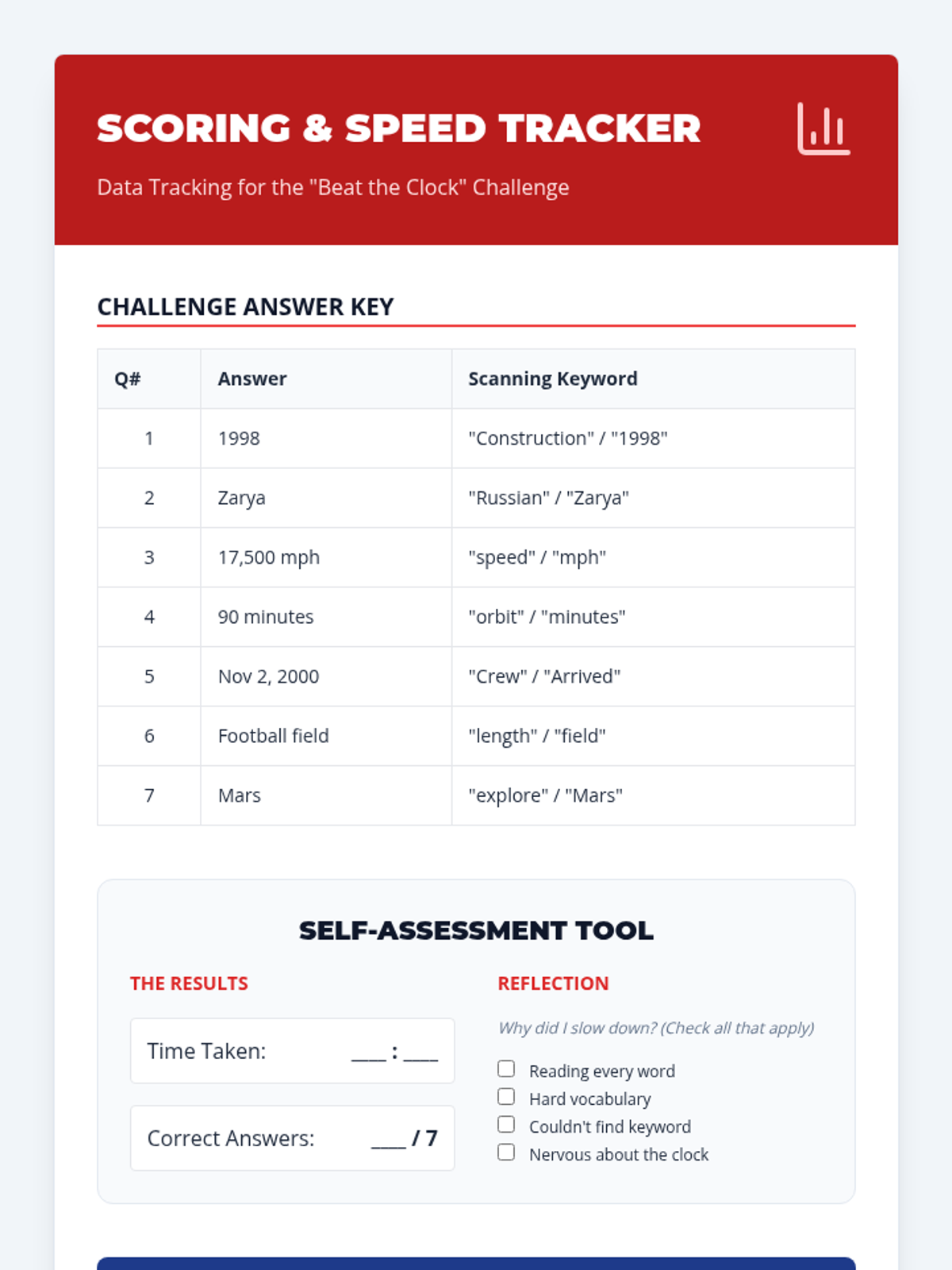
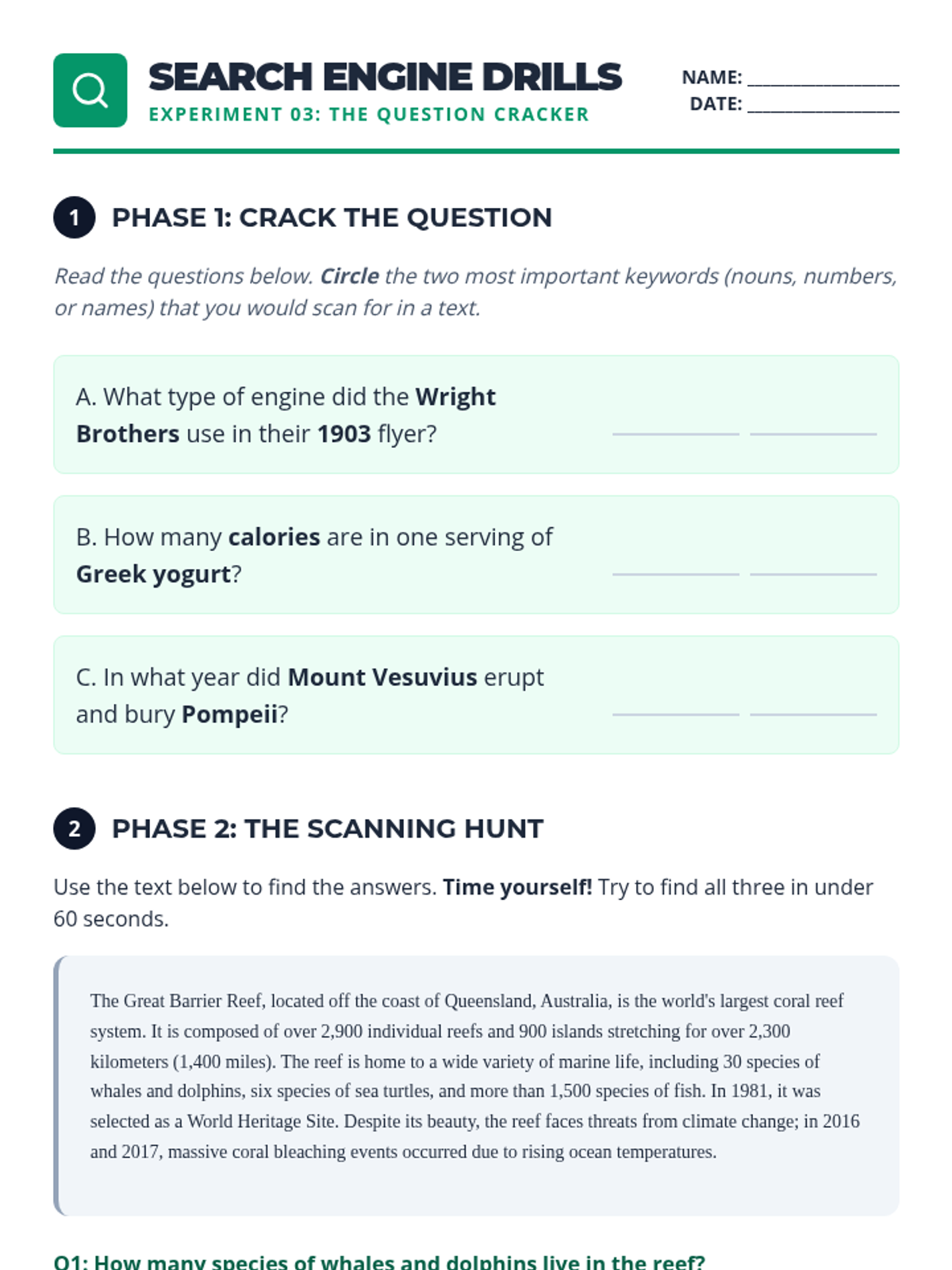
A high-energy lesson where students apply their skills under time constraints to build tolerance for testing pressure and improve information retrieval speed.
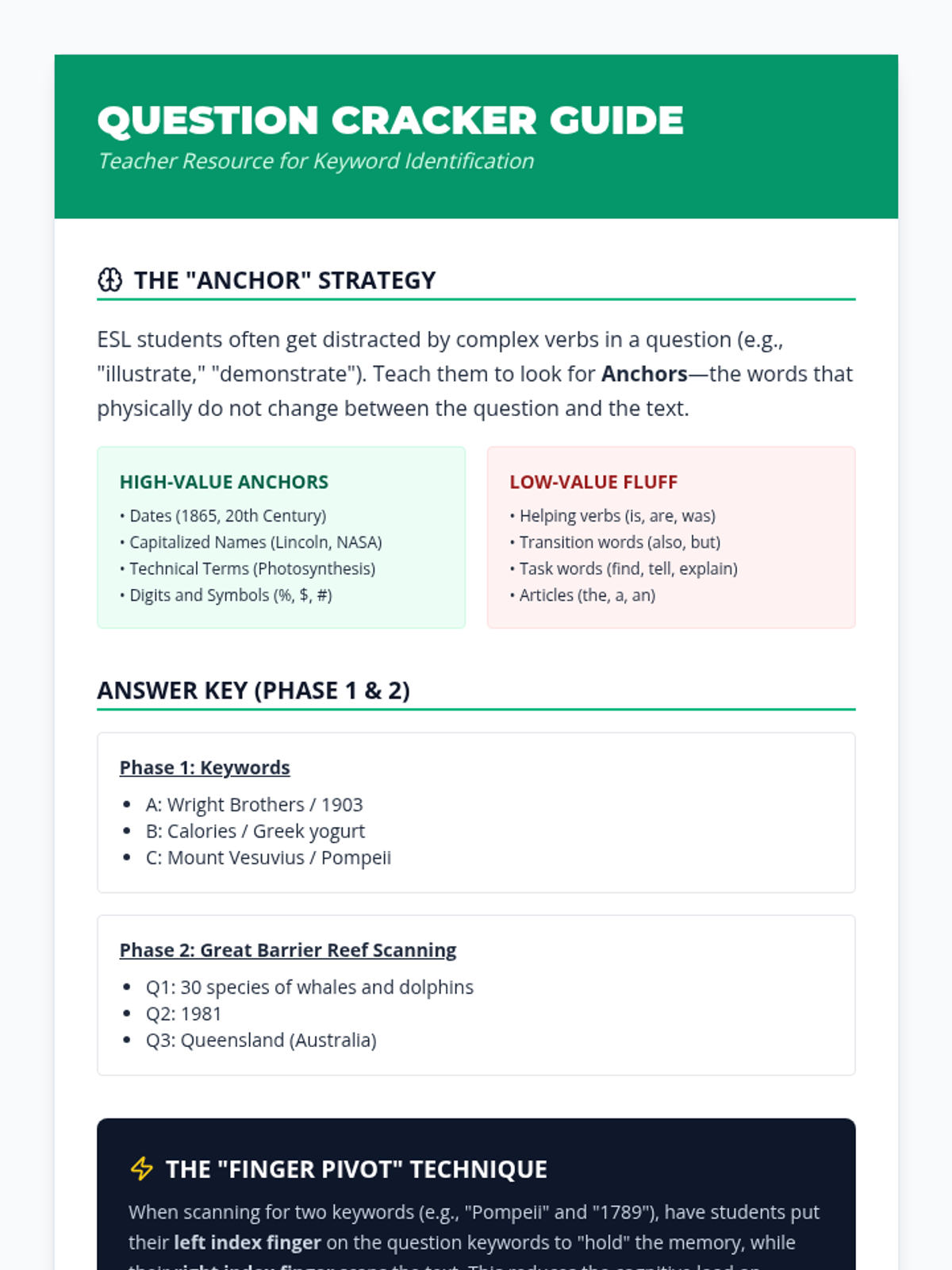
Students practice identifying high-value keywords in questions to guide their scanning process, focusing on nouns, verbs, and dates while ignoring filler words.
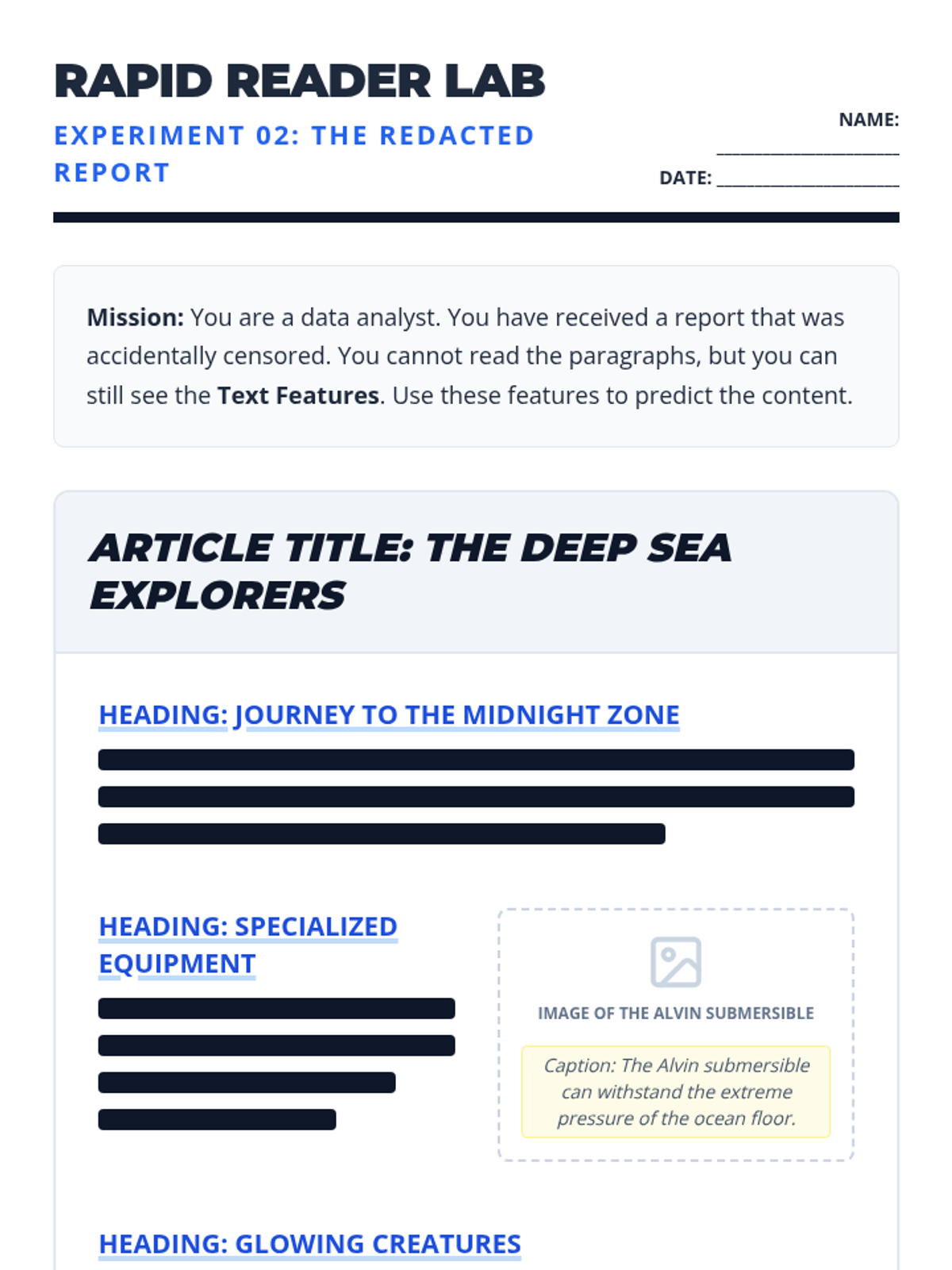
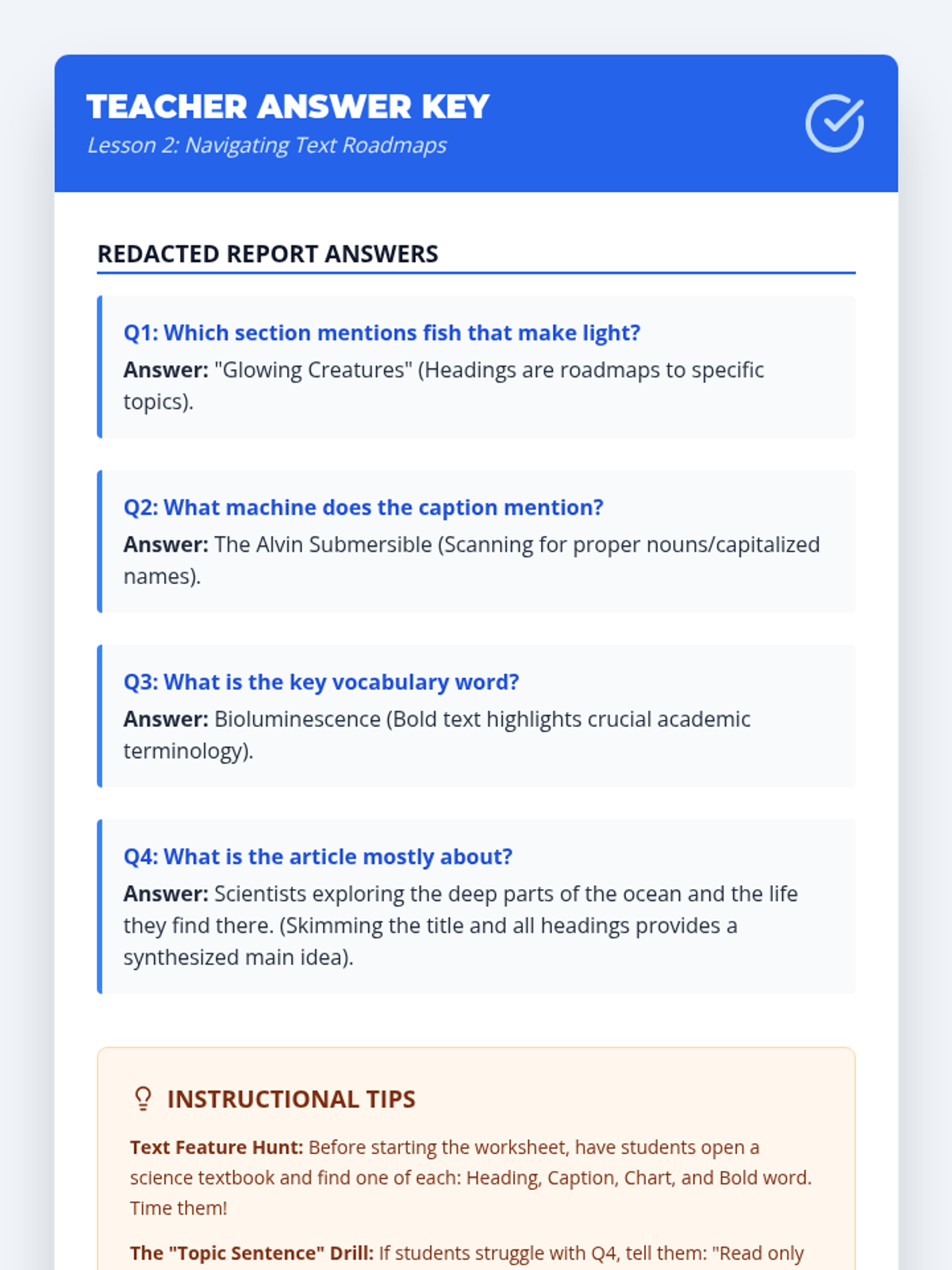
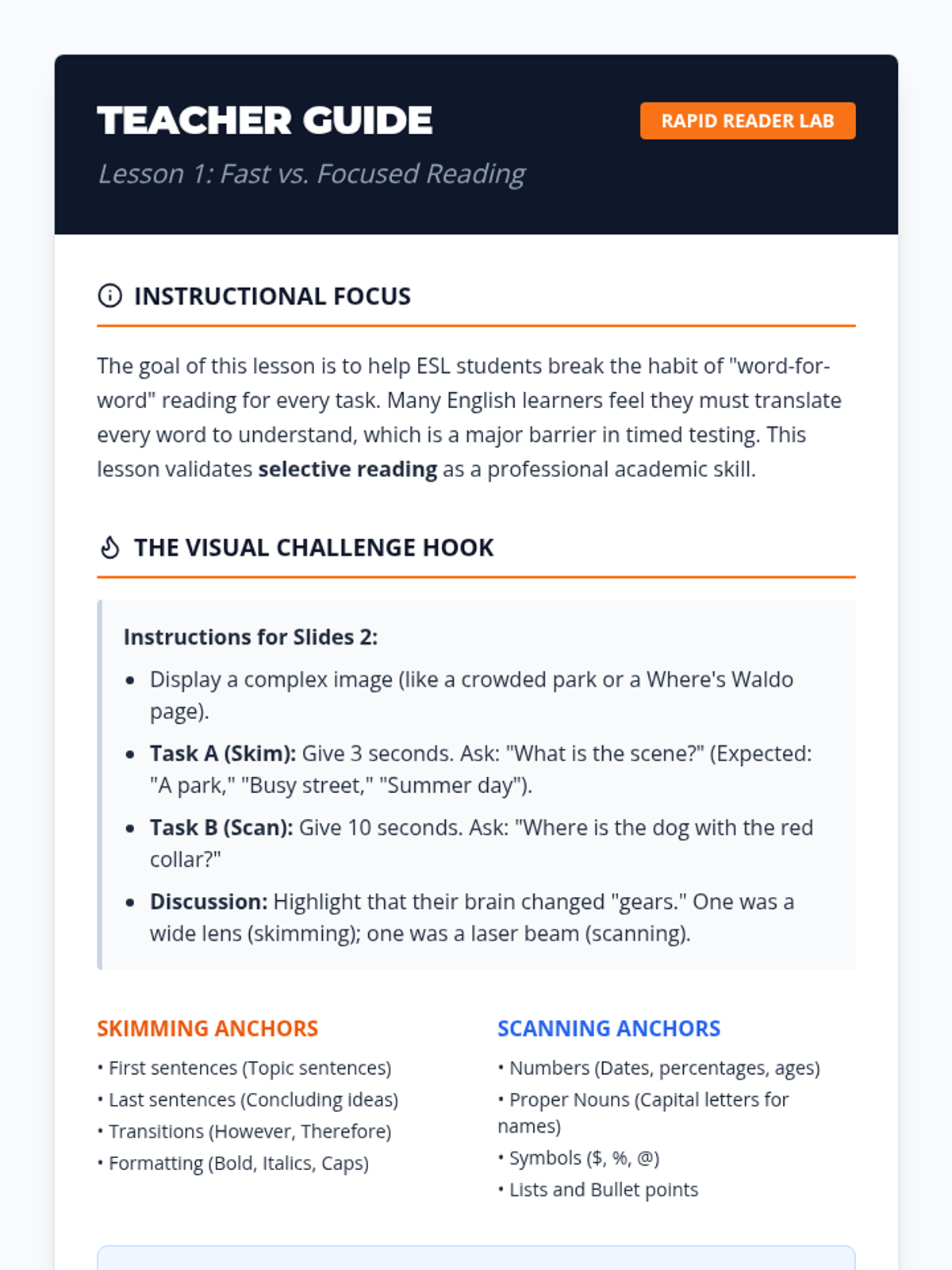
This lesson teaches students to use headings, captions, bold text, and topic sentences as roadmaps to navigate dense text without getting stuck on unknown vocabulary.
Students explore the difference between getting the 'gist' (skimming) and hunting for details (scanning) through workshop-style activities and purpose-driven reading.
Students synthesize their learning by creating their own exam questions with intentional distractors for peer evaluation.
Students learn mental rephrasing techniques to simplify prompts involving double negatives and 'EXCEPT' conditions.
Focuses on probability and logic strategies when the correct answer isn't obvious, using the 'slashing' technique to increase statistical chance.
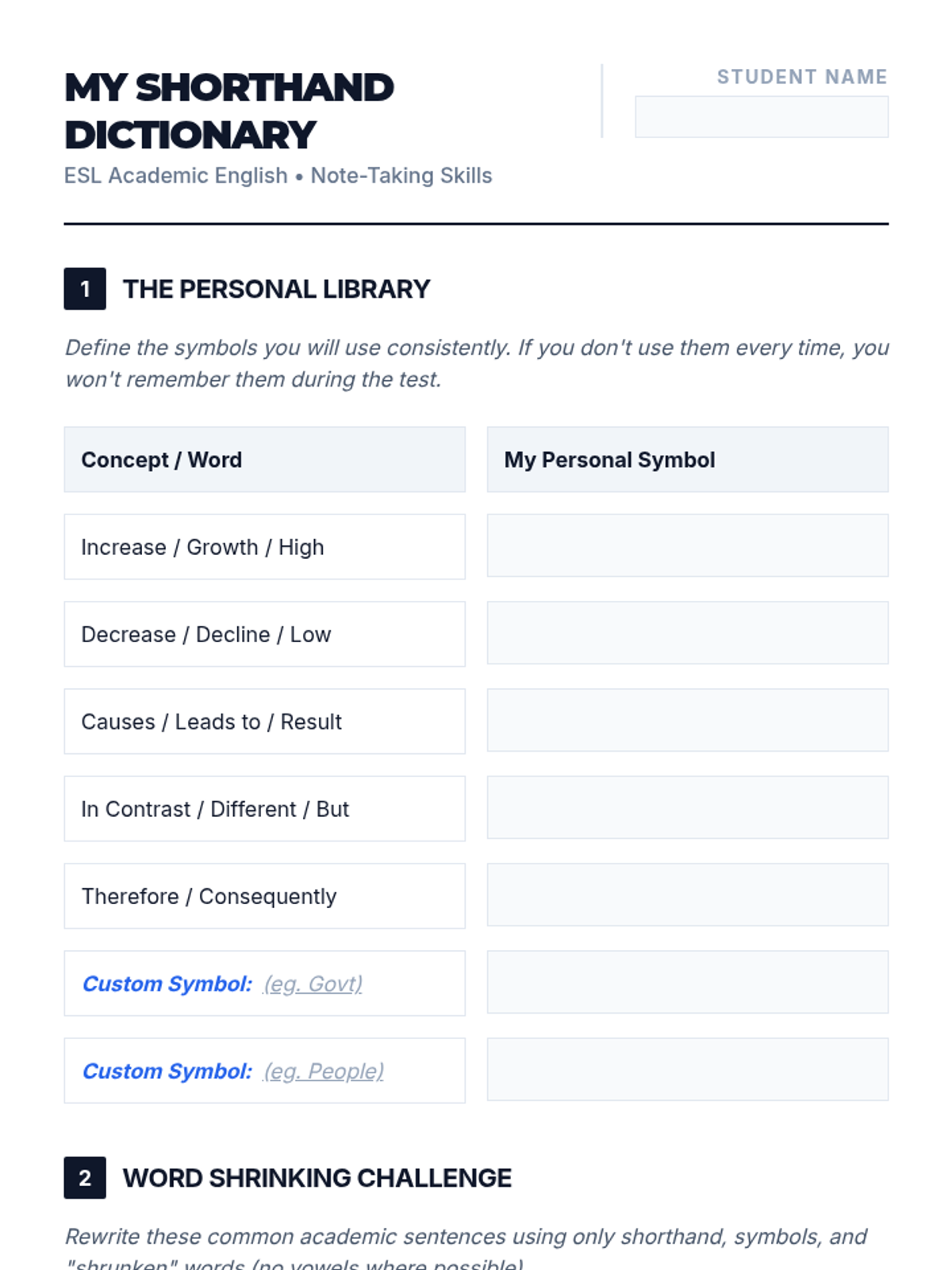
Students develop a personal shorthand system using symbols and abbreviations to capture academic audio in real-time. The lesson emphasizes speed and selective capture over verbatim transcription.
Learners categorize common types of wrong answers, such as 'too broad,' 'too narrow,' 'contradiction,' and 'not mentioned,' practicing why answers are wrong.
Students break down the components of exam items: the stem, the key, and the distractors. They analyze different question stems to predict required thinking skills.
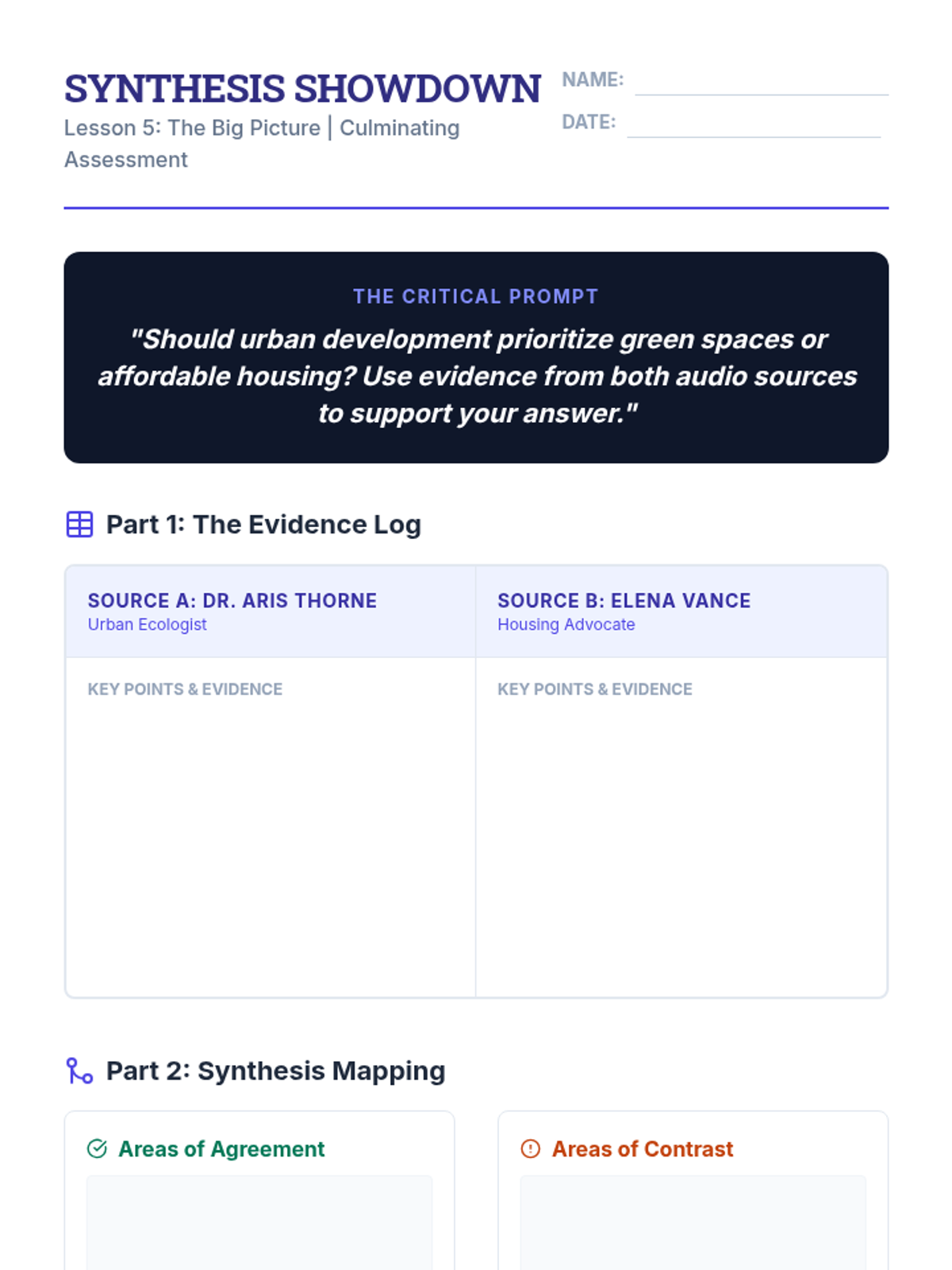
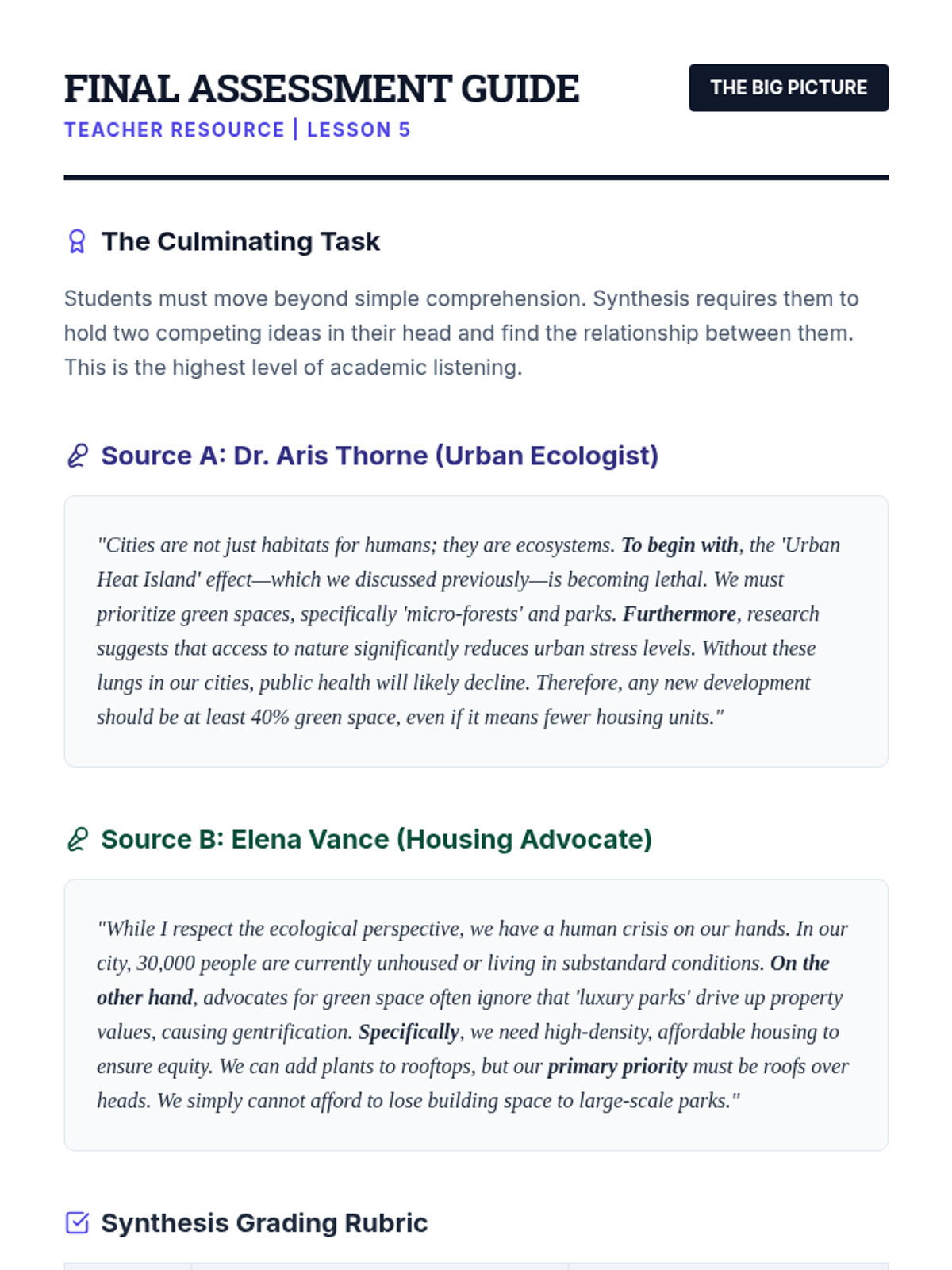
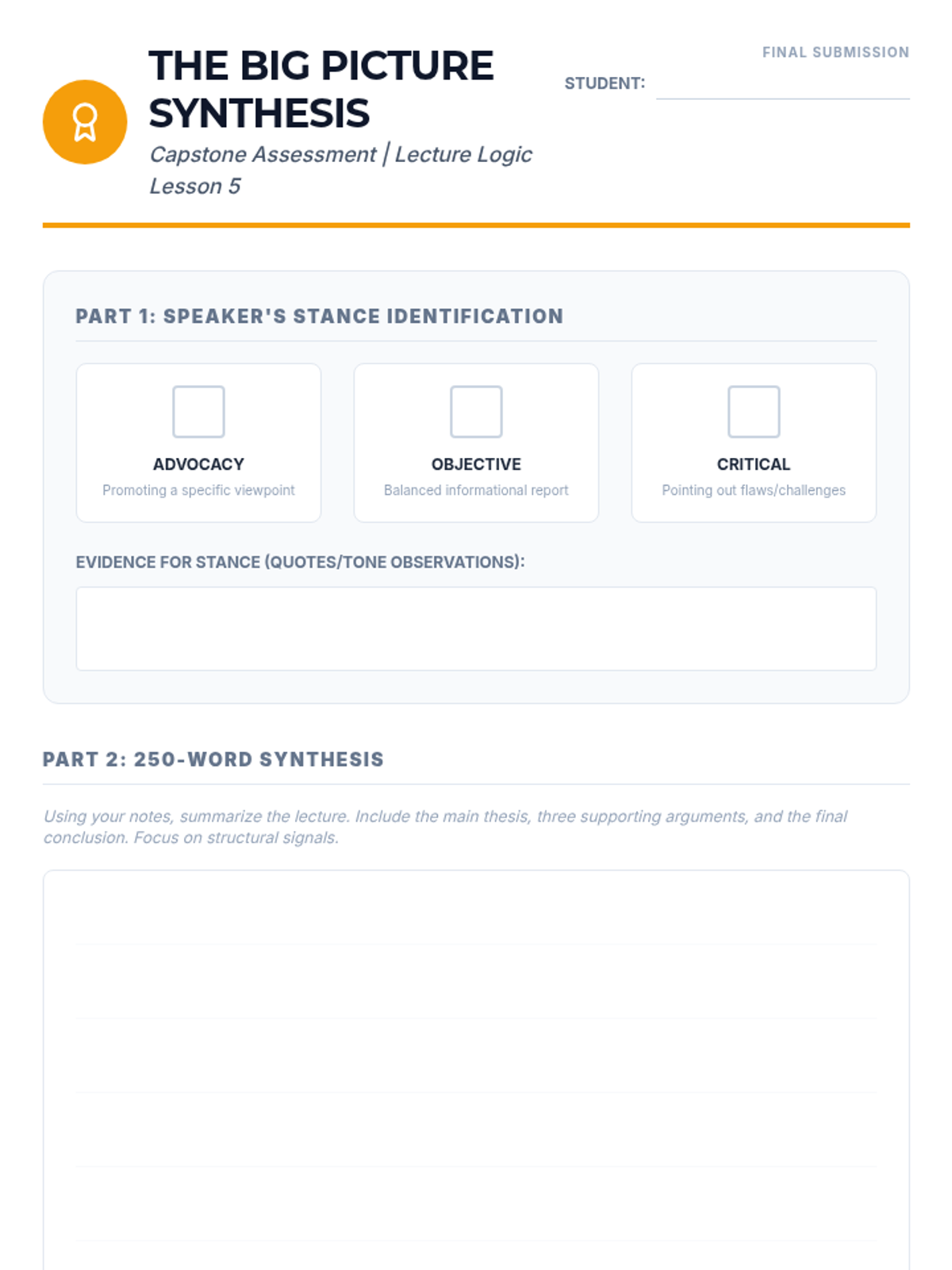
In this culminating lesson, students listen to two contrasting viewpoints on a single global issue. They must synthesize the information to answer a prompt, citing specific details from both audio sources to support their conclusion.
An exploration of how cultural backgrounds influence communication styles, focusing on silence, interruption, and pragmatic markers.
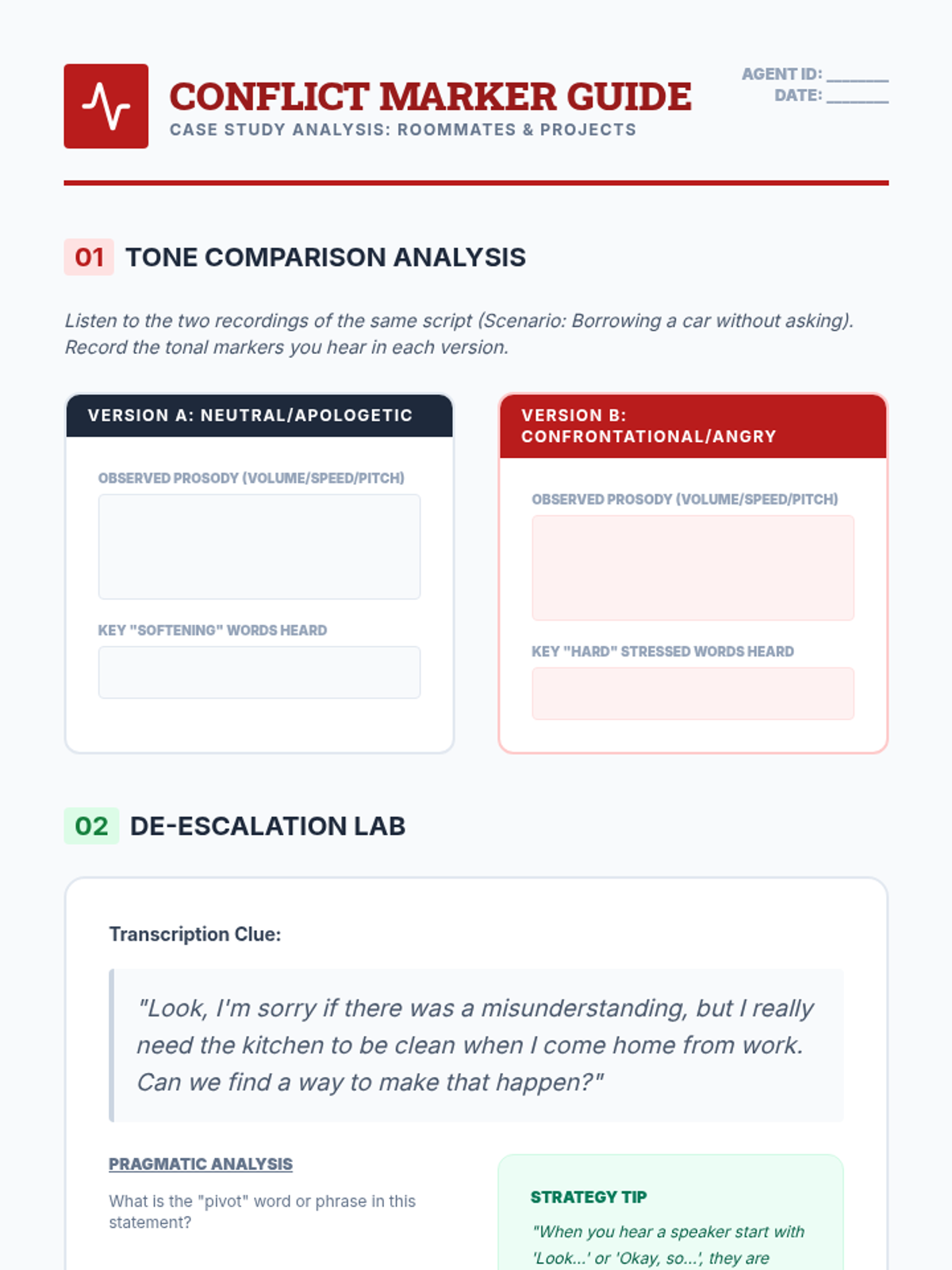
Students analyze tone in high-stakes social interactions, identifying markers of escalation, de-escalation, and negotiation in conflict scenarios.
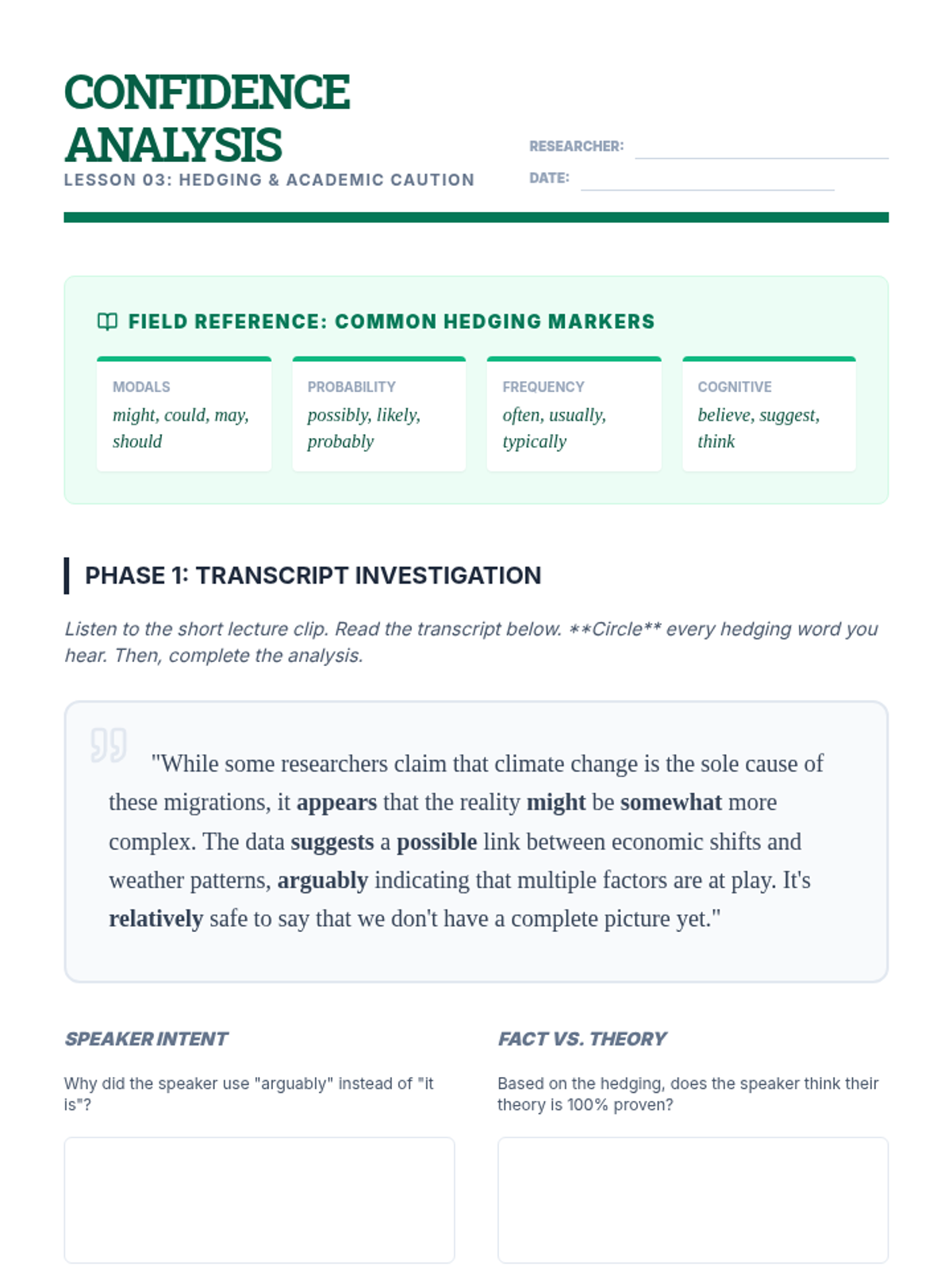
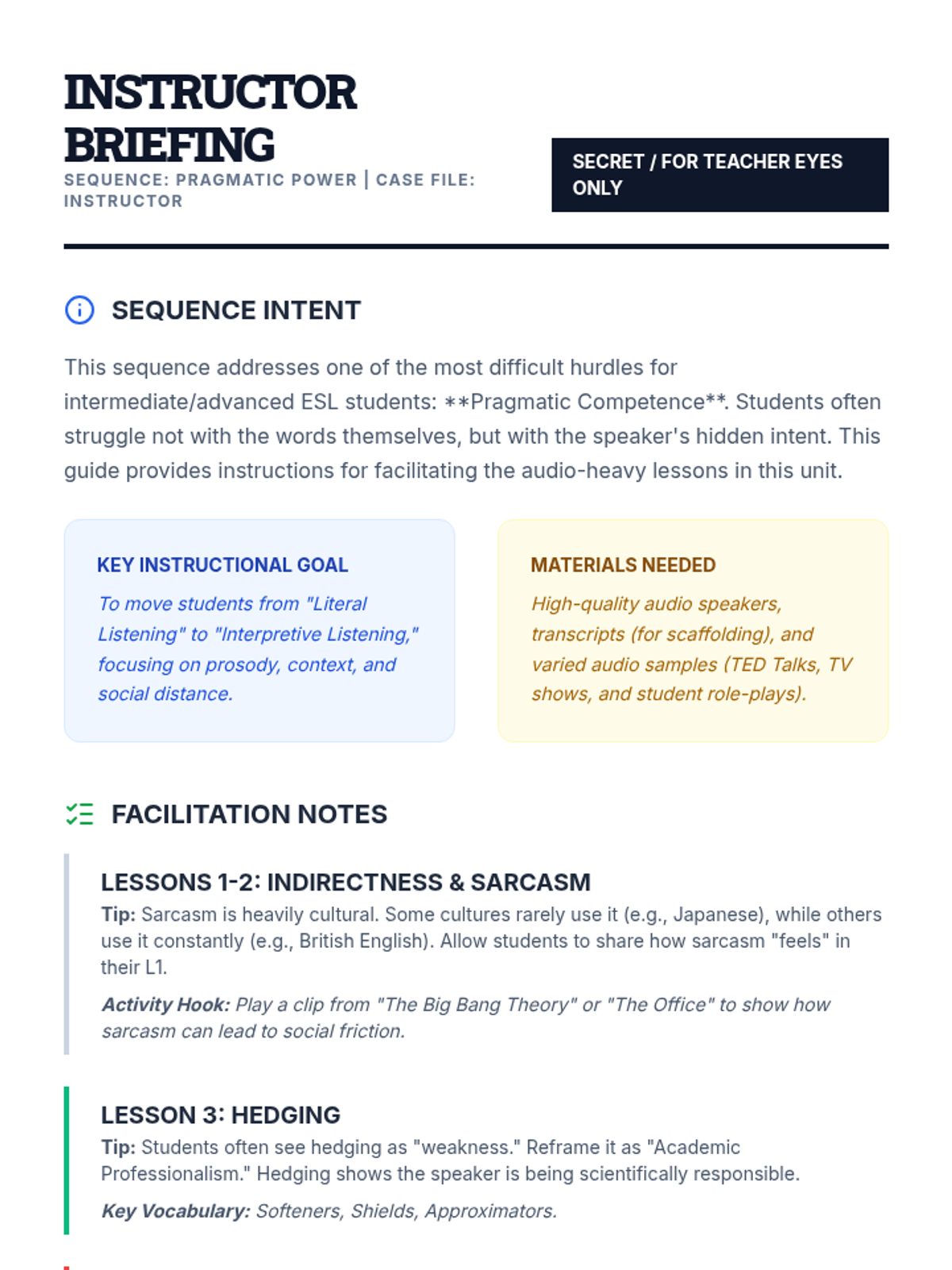
Students learn to identify hedging language (e.g., 'somewhat', 'it appears') to gauge a speaker's confidence and distinguish between facts and cautious opinions.
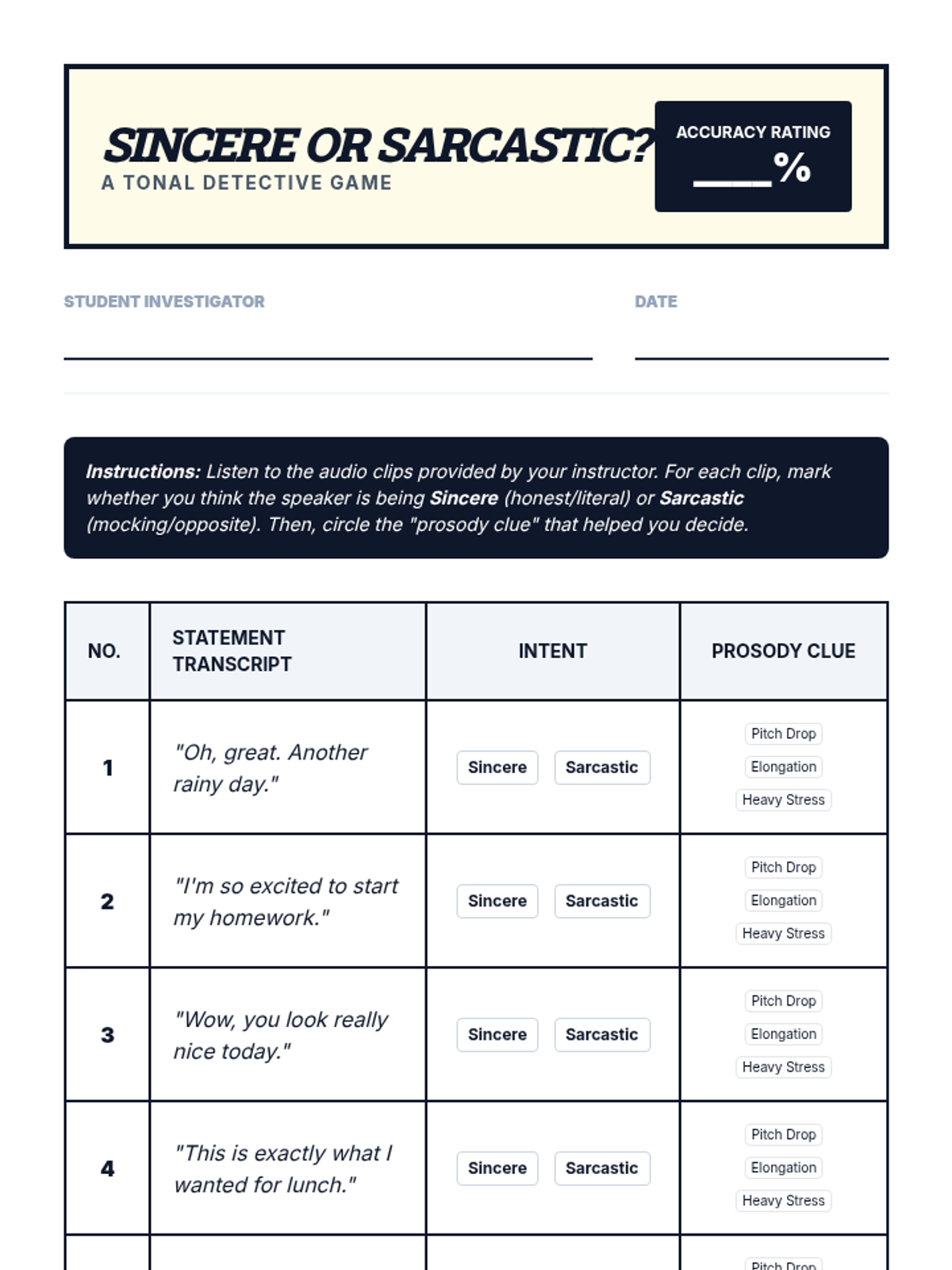
This lesson focuses on identifying sarcasm and irony through prosody, pitch, and context clues, helping students avoid literal misinterpretations.
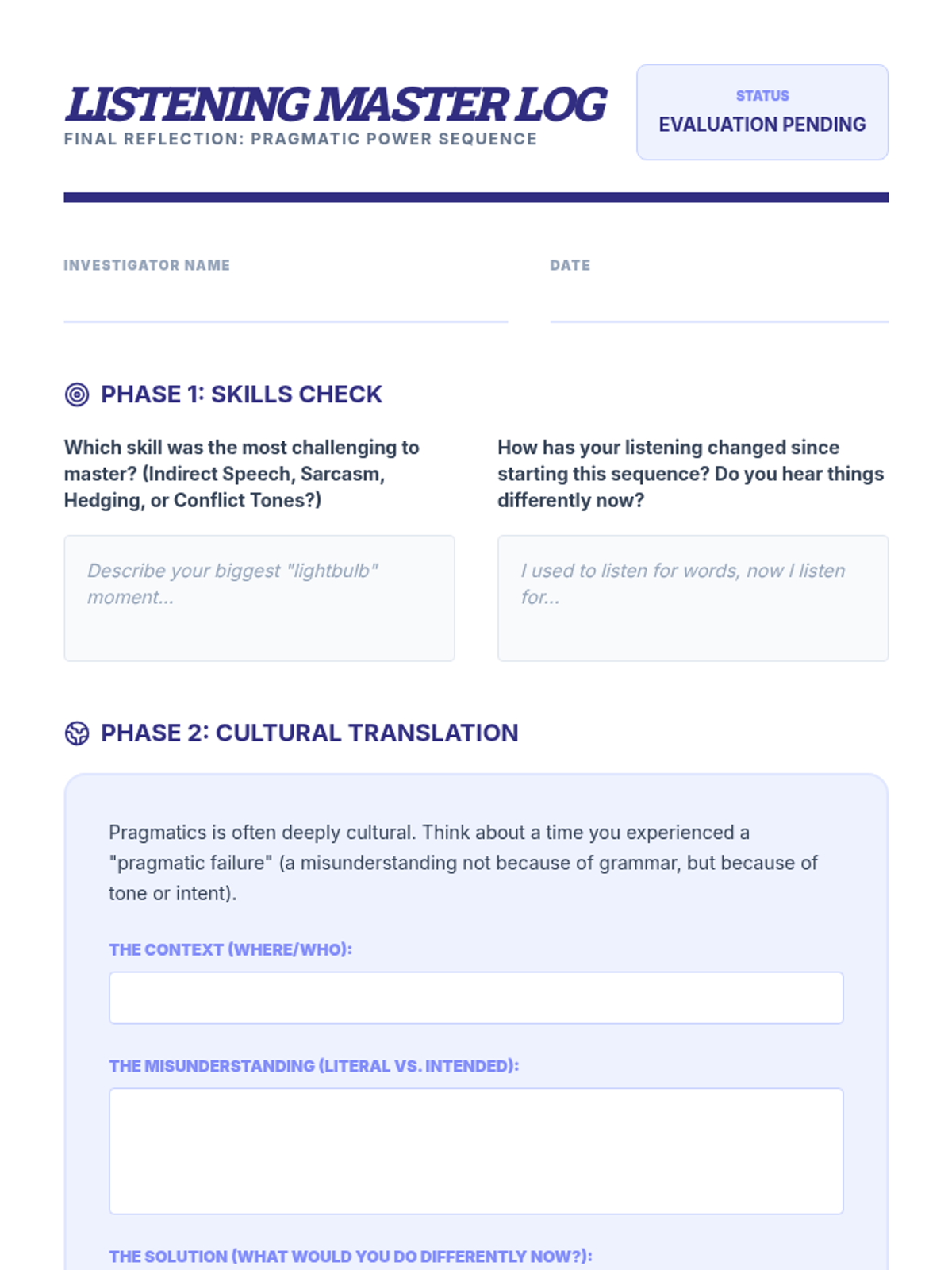
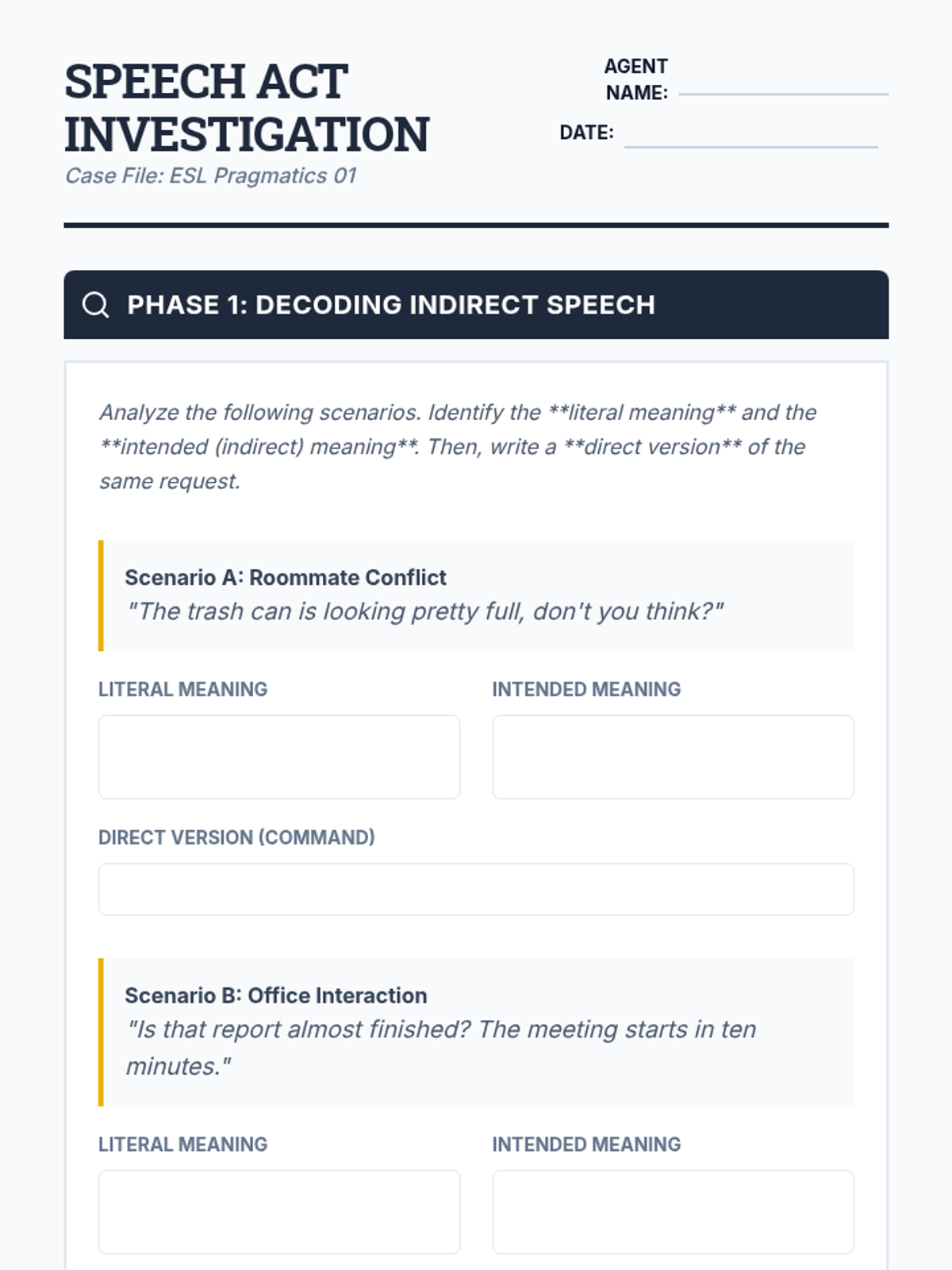
Students explore the difference between what is said and what is meant by analyzing indirect speech acts and politeness strategies in everyday scenarios.
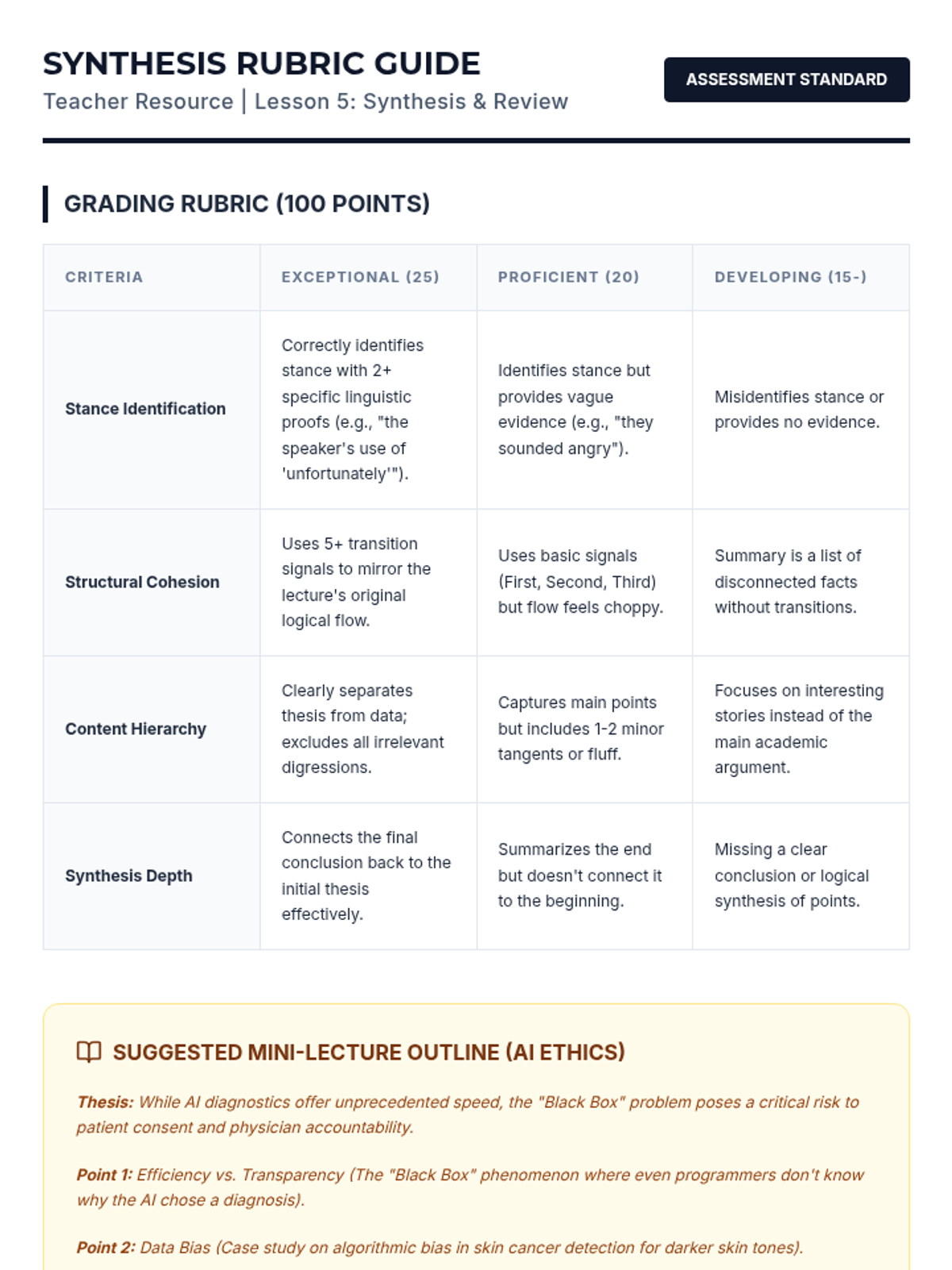
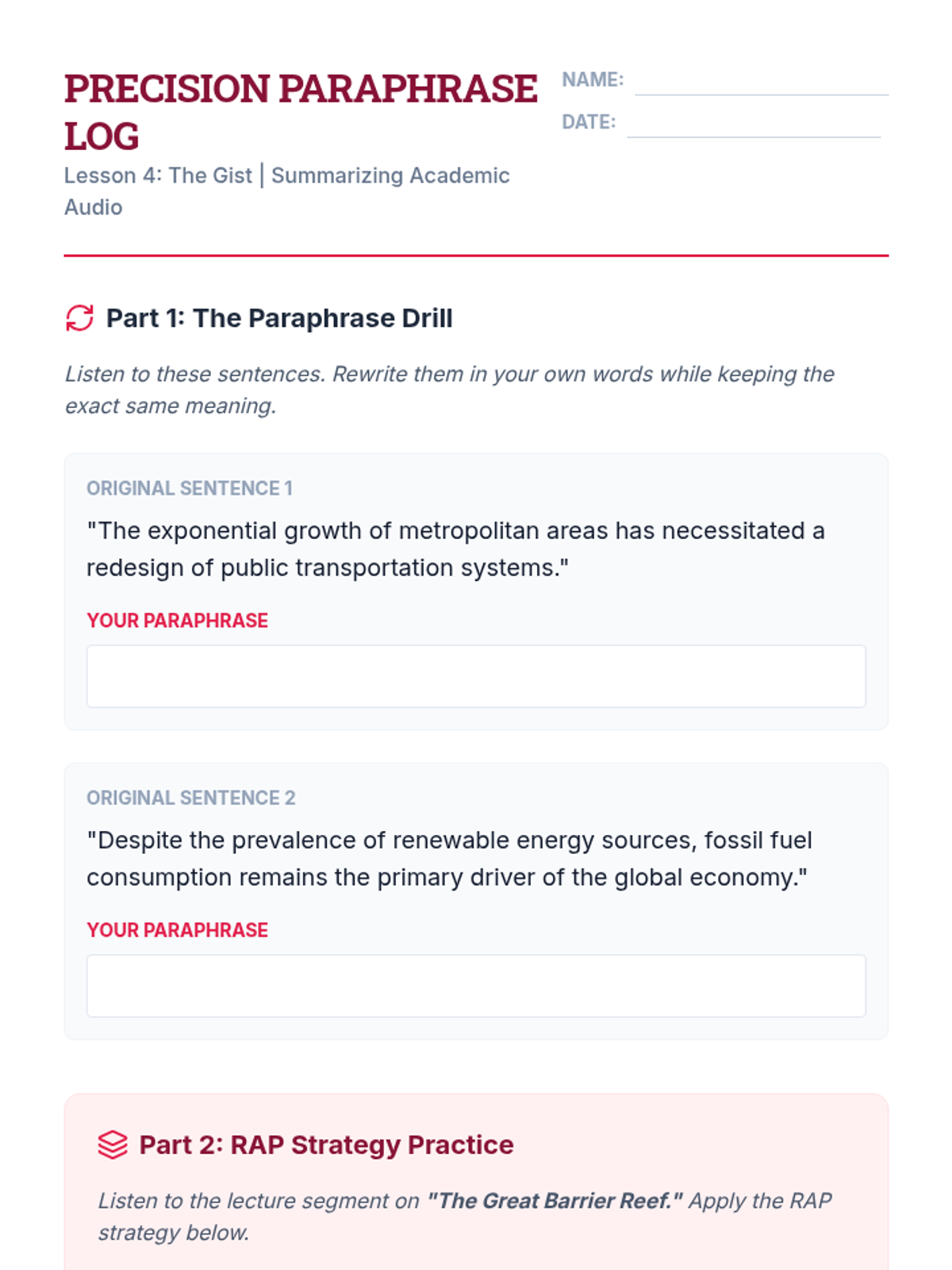
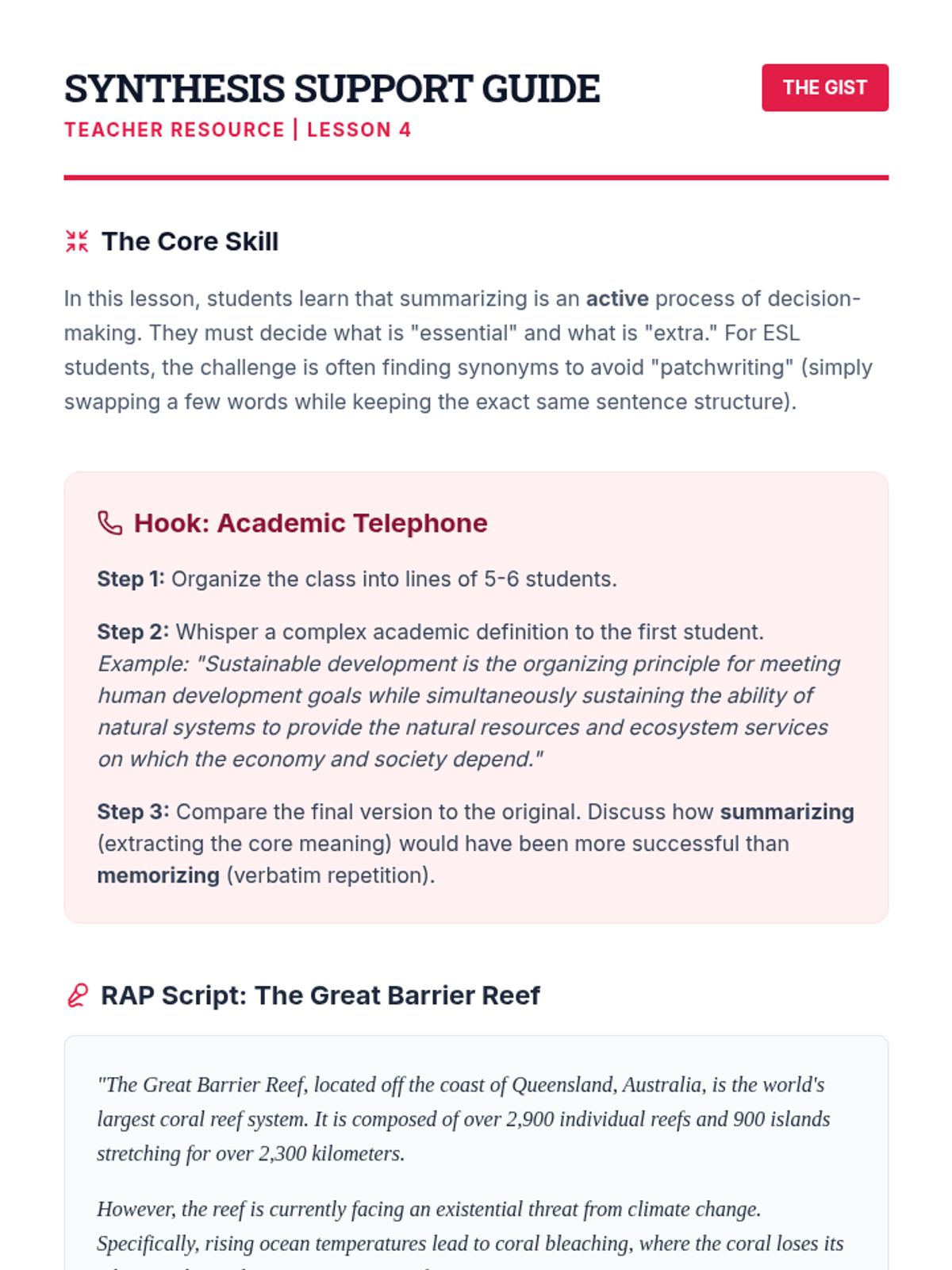
Students synthesize a full mini-lecture into a coherent summary, identifying stance and major takeaways.
A workshop on the Cornell, Outline, and Mapping methods, emphasizing shorthand and relationship visualization.
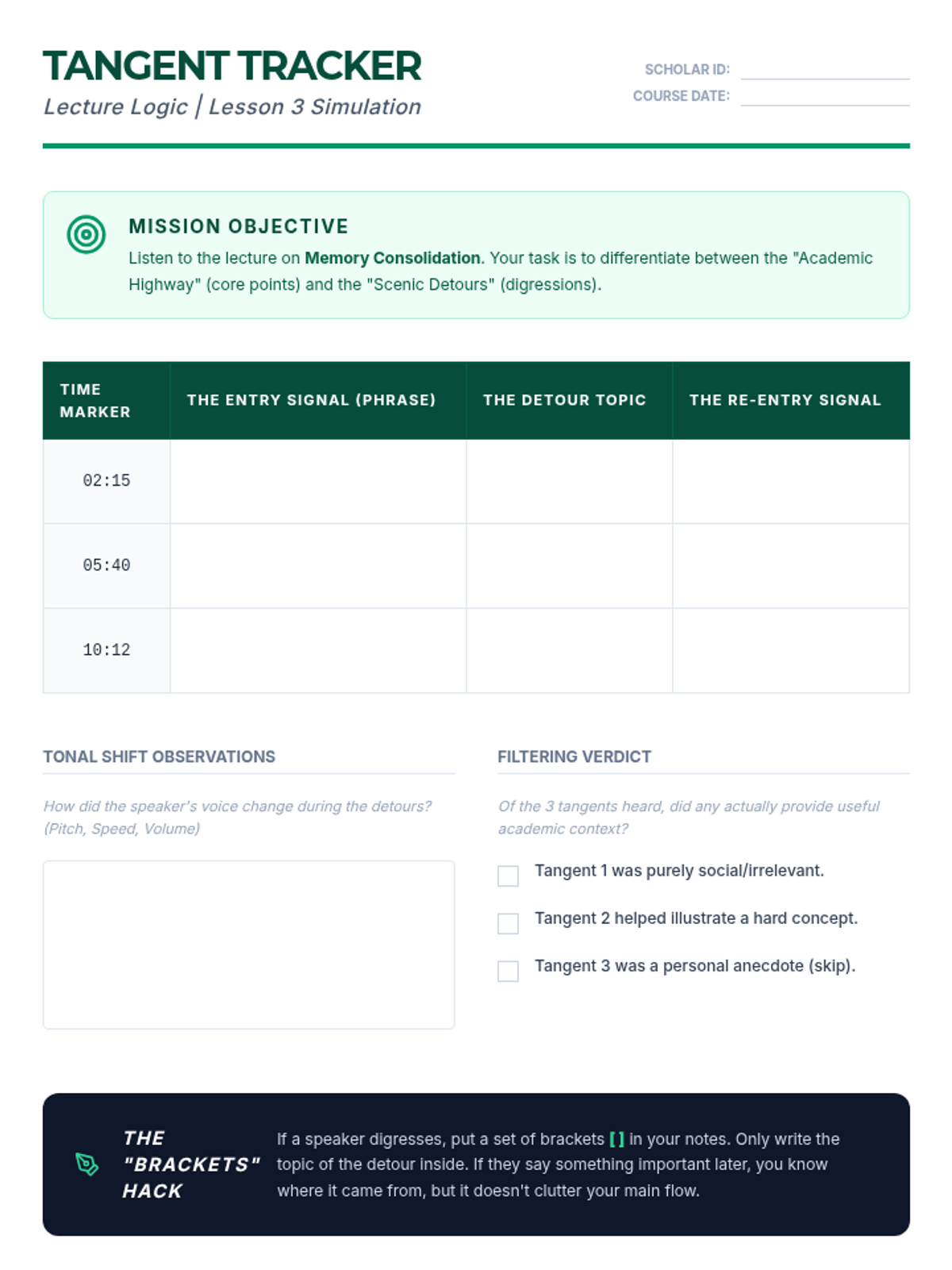
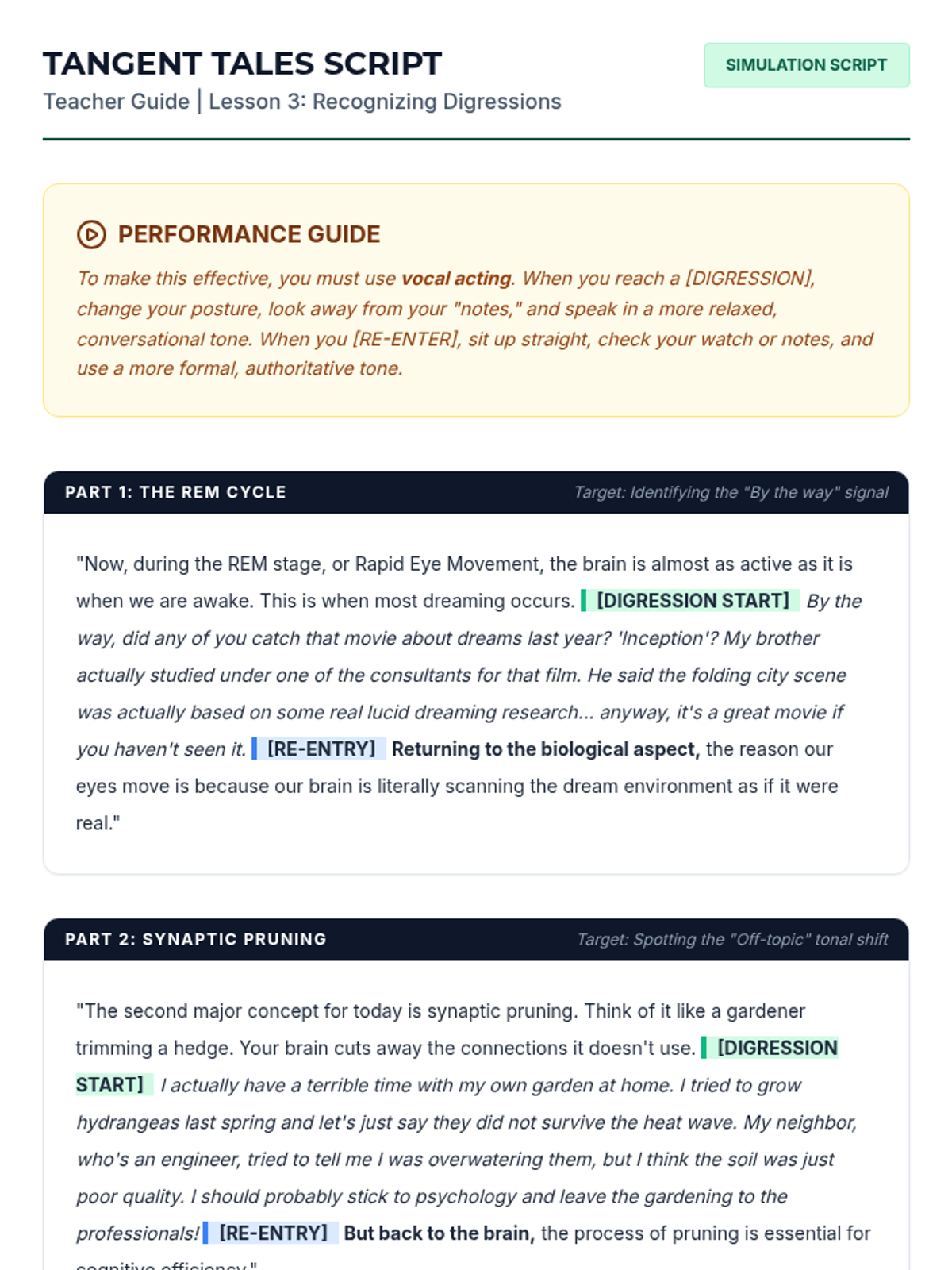
This lesson trains students to identify tonal shifts and linguistic markers that signal tangents or personal asides.
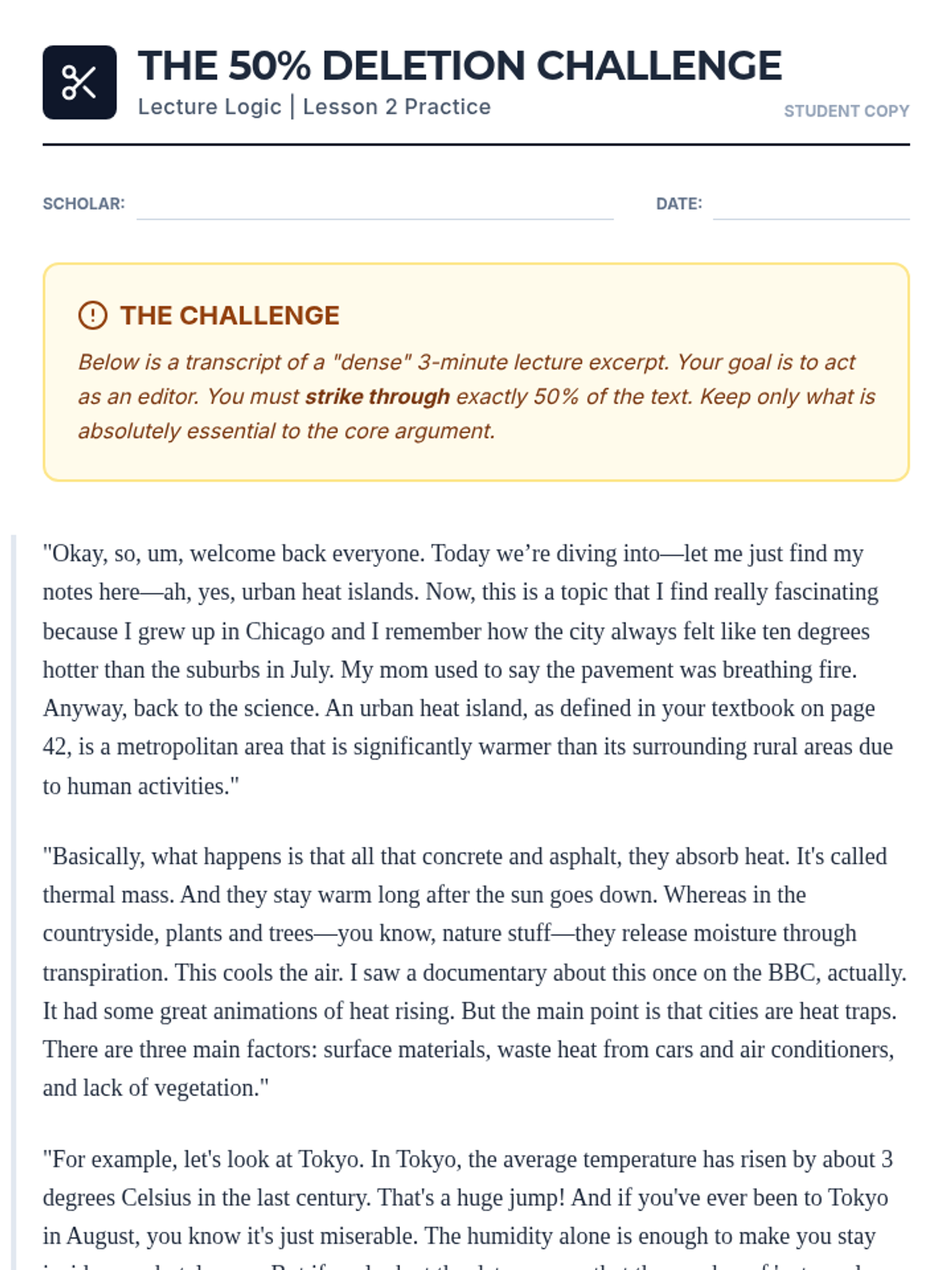
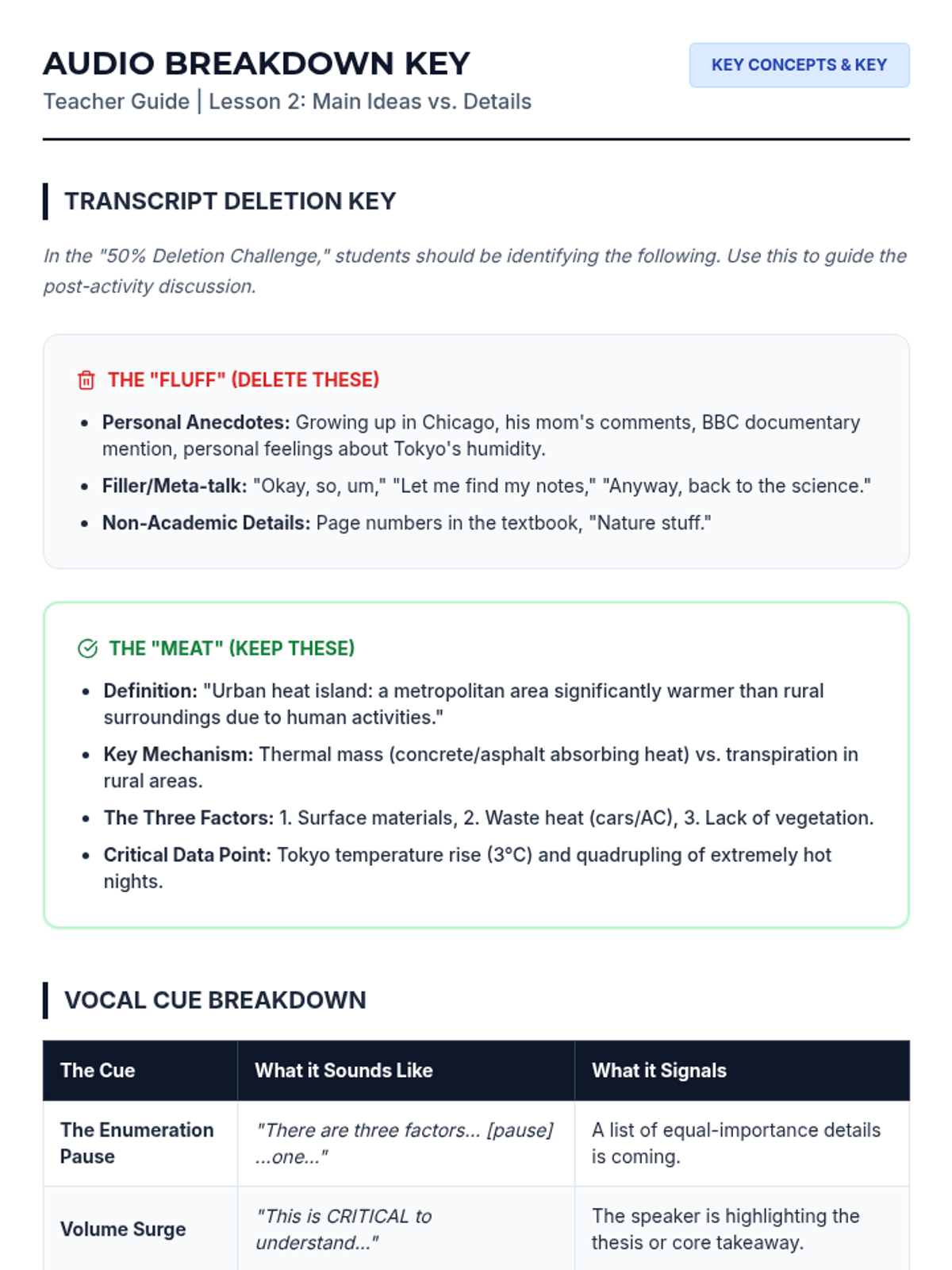
Learners differentiate between core arguments and supporting examples using vocal cues and structural patterns.
Students analyze signposting language to predict content and map the structural flow of academic talks.
Using their notes from previous lessons, students practice reconstructing the main argument of an auditory text. They work in pairs to verbally summarize a lecture segment to a partner who has not heard it, checking for accuracy and completeness.
Students analyze an audio segment on a controversial scientific or social topic to categorize statements as verifiable facts, speaker opinions, or theoretical propositions. The lesson emphasizes listening for modal verbs and qualifying language.
Learners are introduced to the Cornell Note-Taking System and concept mapping, practicing these methods while listening to extended discourse.
Students learn to identify 'signpost' words that signal shifts in topic, examples, or conclusions to map the structure of academic lectures.