Students act as editors to identify and remove 'wandering' sentences that don't support the topic sentence, focusing on paragraph coherence.
Students use wordplay and precise action verbs to write a structured descriptive text about their favorite family mealtime experience.
Students identify the difference between simple verbs and precise action verbs (like 'plunge' vs. 'put'), labeling drawings with sensory action words.
Students analyze how auditory and visual features (such as background music, sound effects, facial expressions, body language, and Auslan translation) build meaning in a multimodal text.
Students identify wordplay (alliteration and onomatopoeia) in "Stay for Dinner", such as 'Pappadams pop, sambar sizzles', and brainstorm descriptors for their own mealtime drawings.
Students read "Stay for Dinner" and identify how different cultures are represented. They draw and label their own favorite family mealtime to reflect on their own experiences.
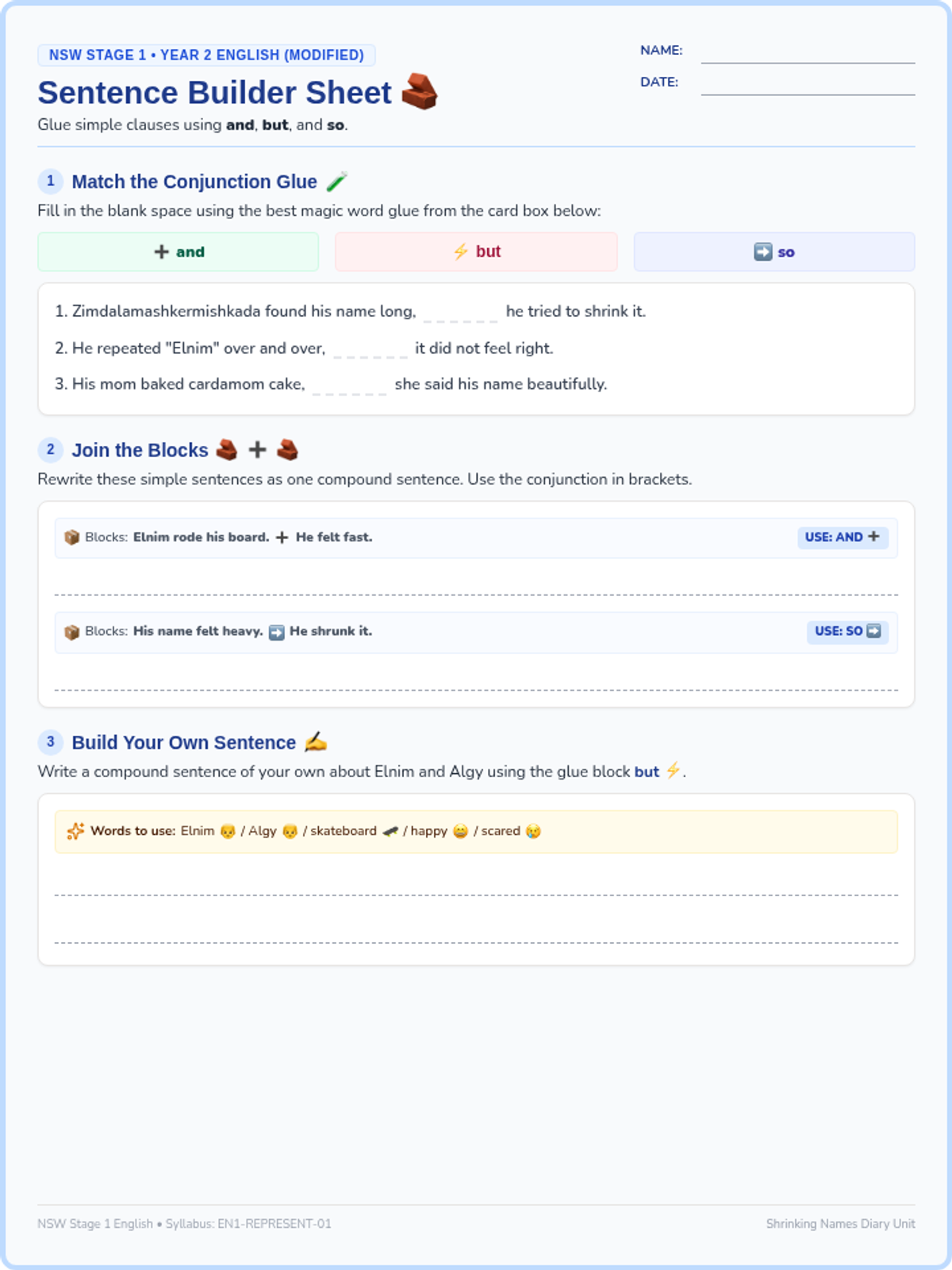
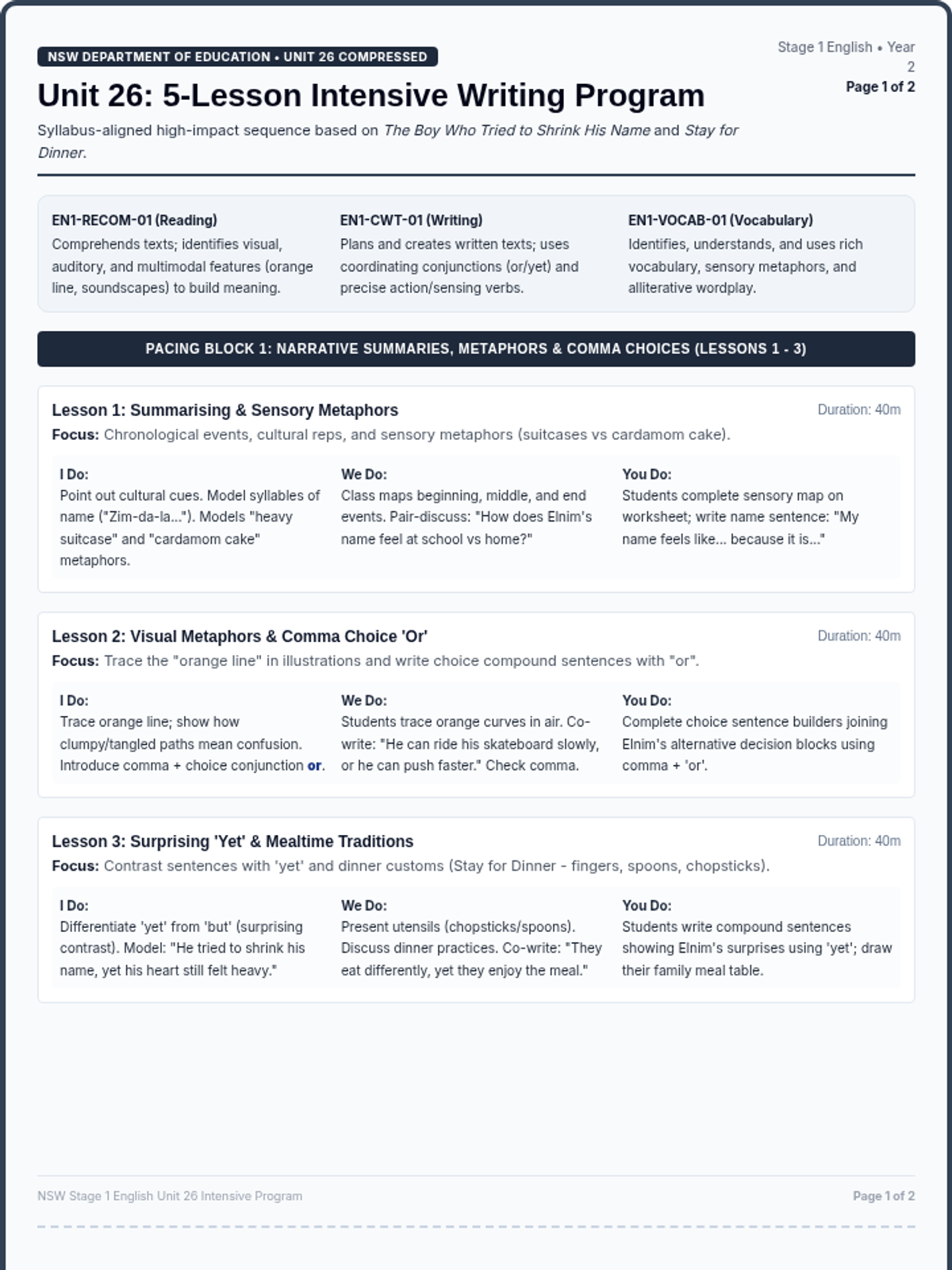
Students write compound sentences using the coordinating conjunction "yet" to describe surprising contrasts and shifts in Zimdalamashkermishkada's feelings.
Students learn about choice and write compound sentences using the coordinating conjunction "or", practicing the use of commas to separate independent clauses.
Students explore how the orange line in the illustrations represents Zimdalamashkermishkada's name and feelings, building meaning from visual and multimodal features.
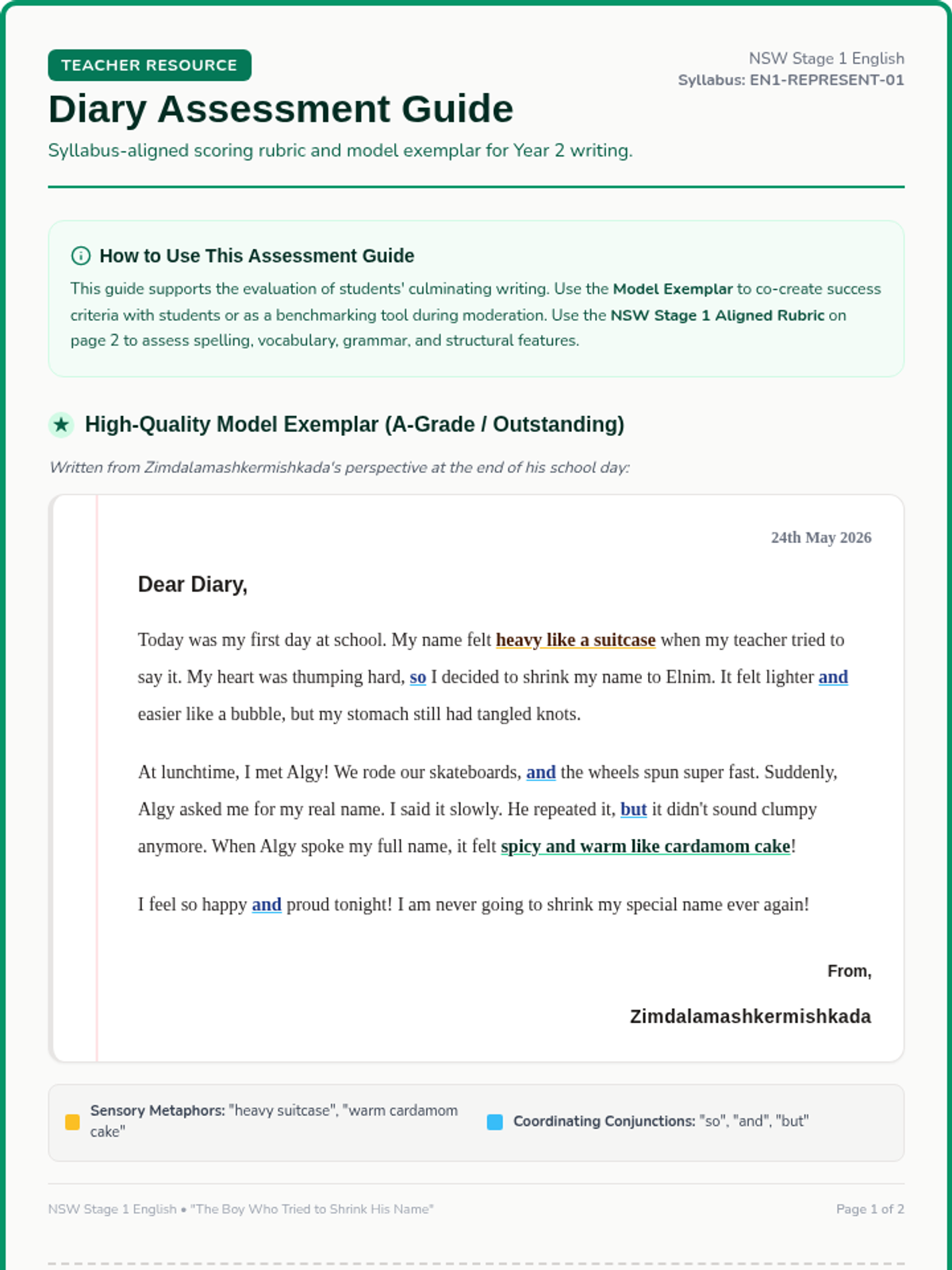
Students identify figurative language in the text (such as names feeling like "long shoelaces" or tasting like "cardamom cake") and analyze how the author uses unexpected words to help the reader imagine a character's feelings.
Students read "The Boy Who Tried to Shrink His Name", identify cultural representations, and create a written summary of the main events using a chronological timeline.