A morning meeting lesson focused on Social-Emotional Learning, specifically teaching students to distinguish between private 'inside thoughts' and public 'outside thoughts' using the concept of a 'Thought Filter.'
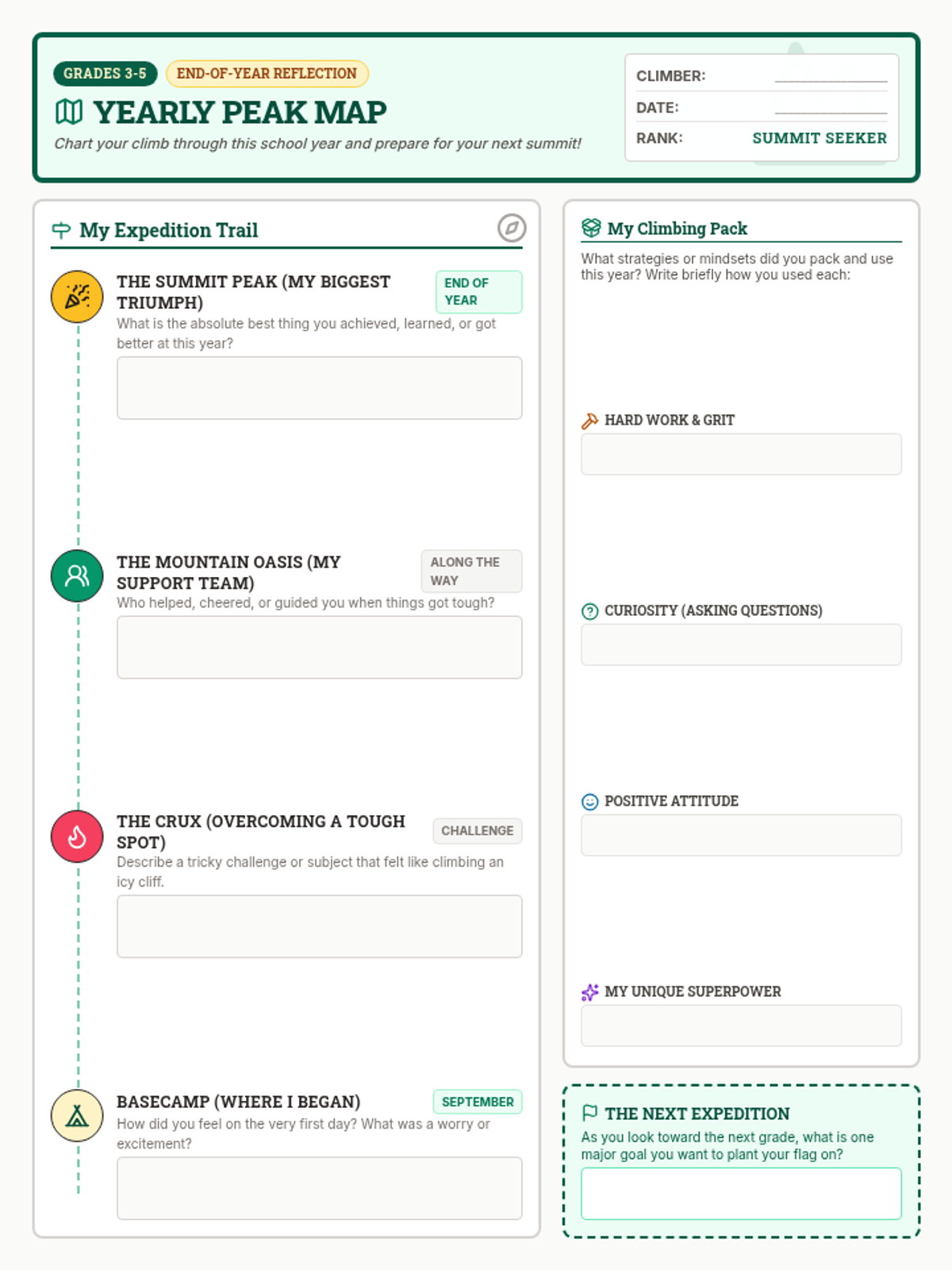
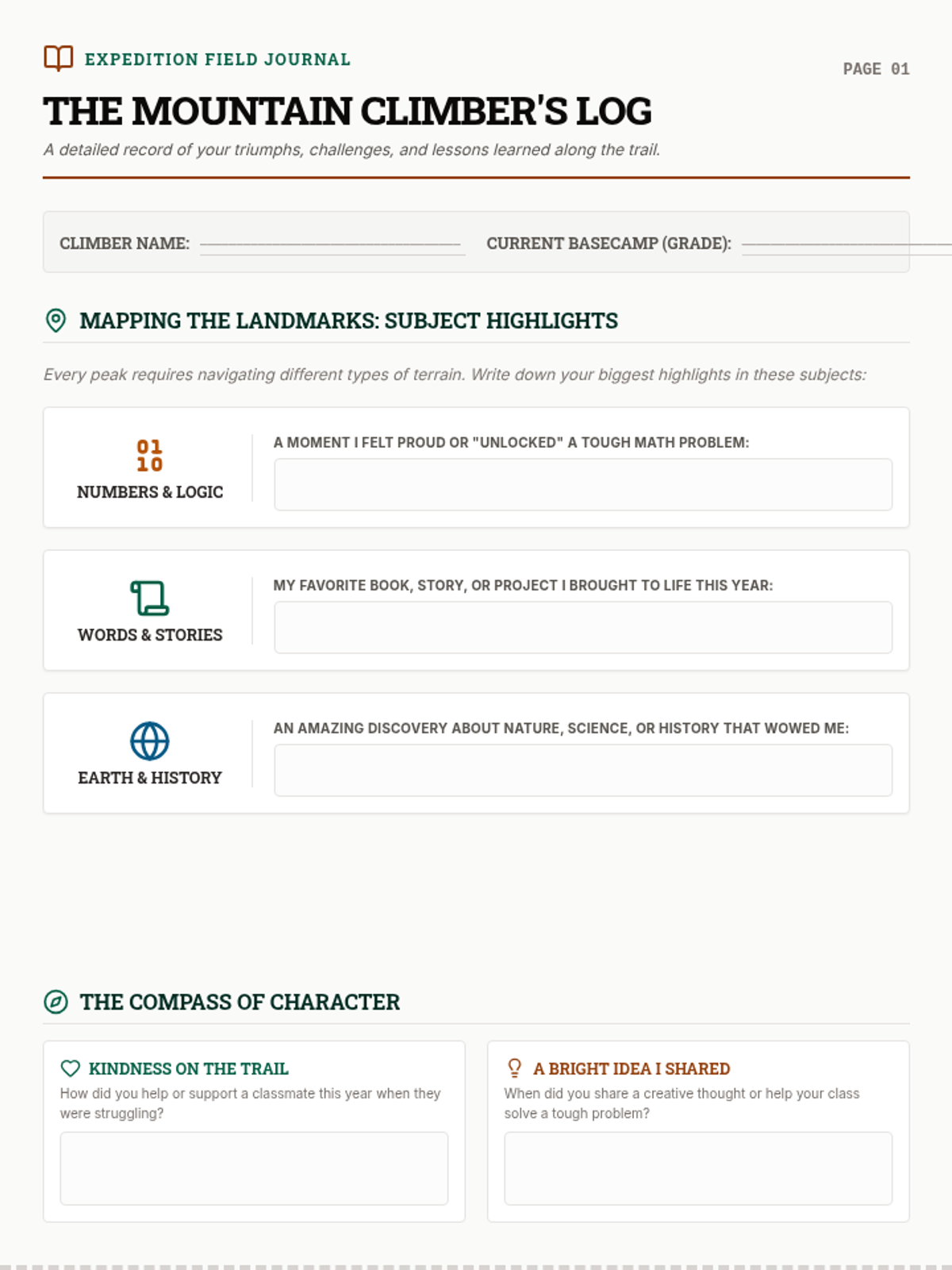
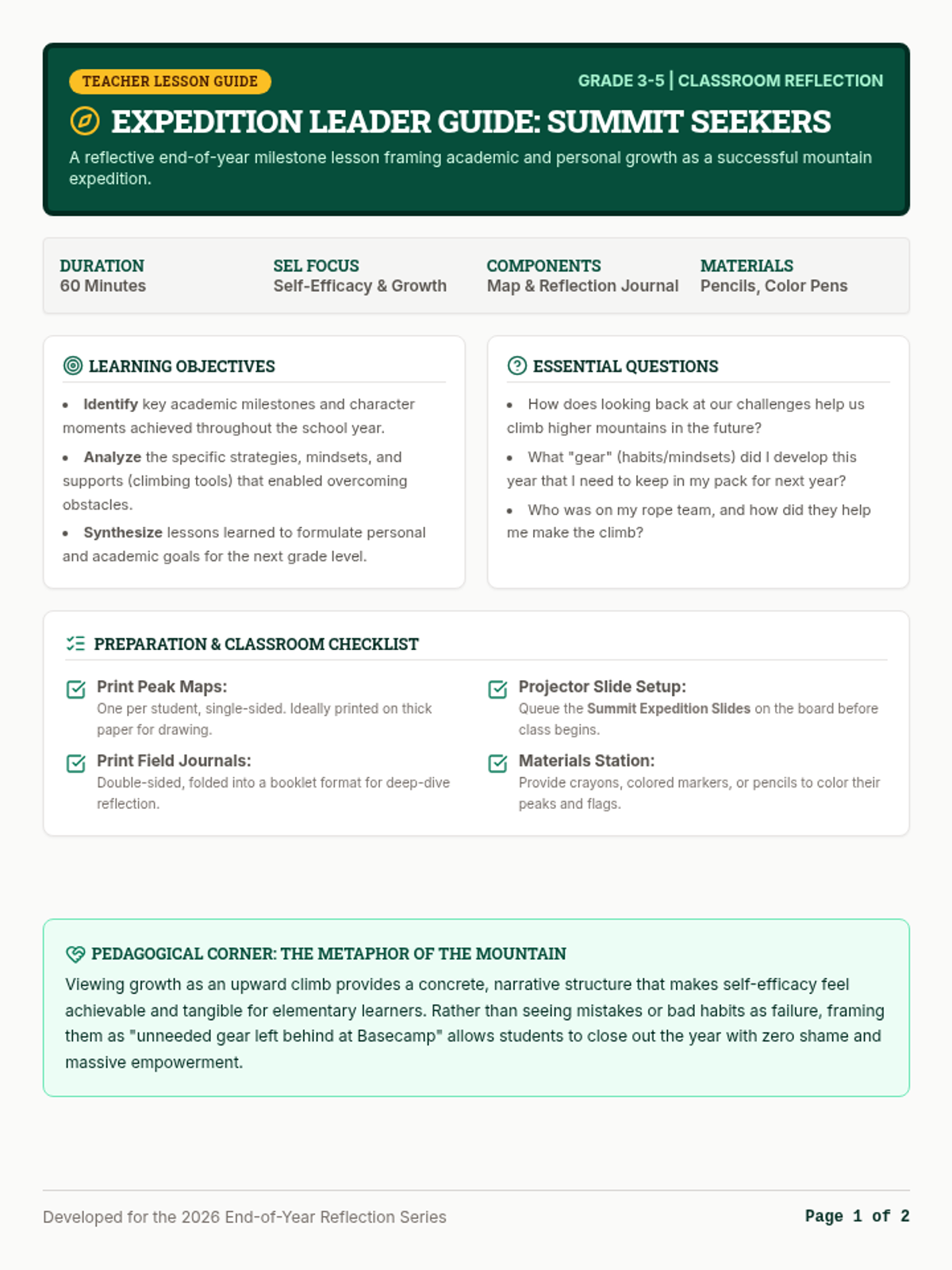
A reflective end-of-year lesson for grades 3-5 that frames the school year as a mountain expedition. Students map out their achievements ('peaks') and identify the strategies and support ('tools') they used to overcome obstacles, building self-efficacy for the next grade level.
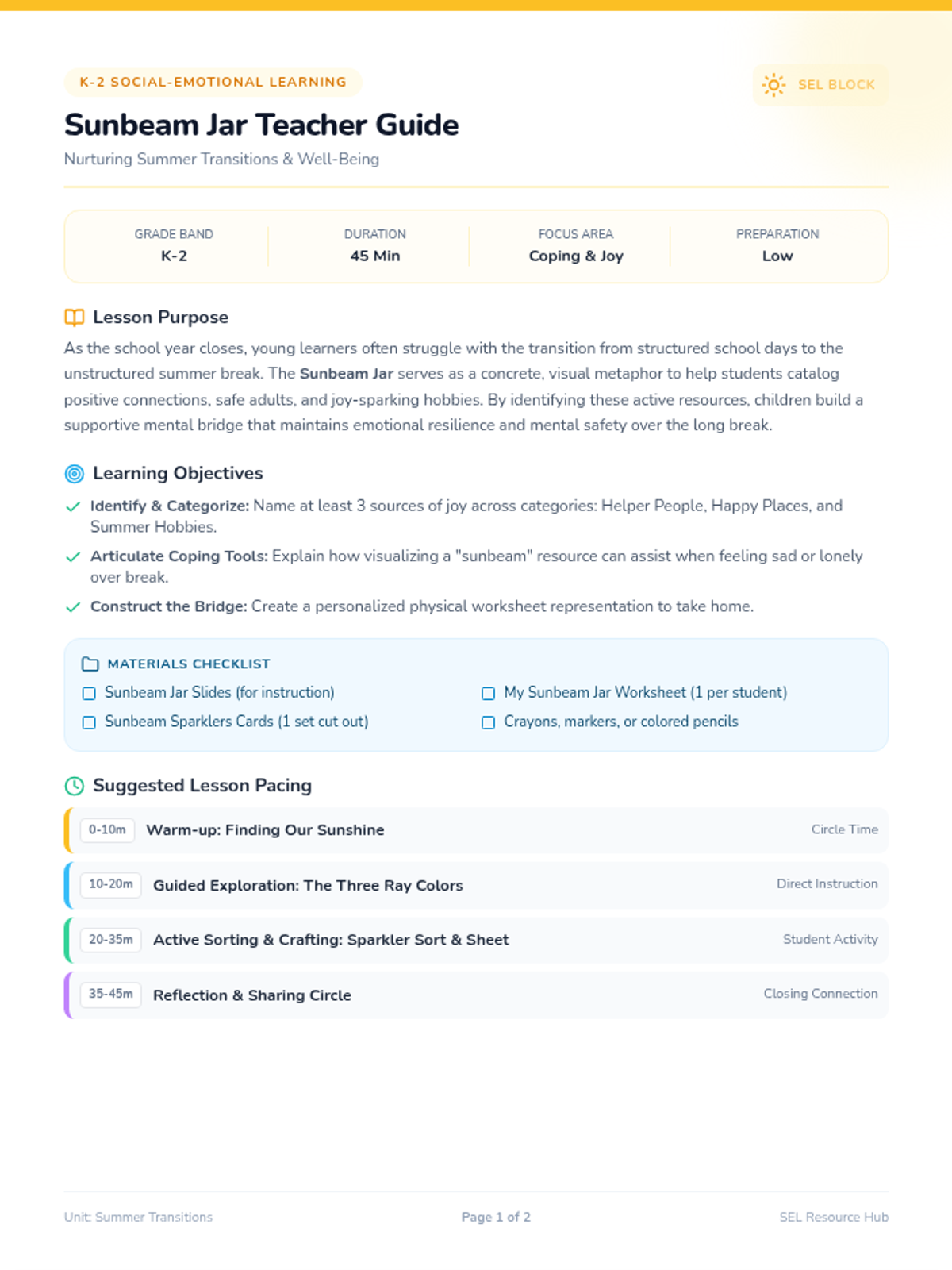
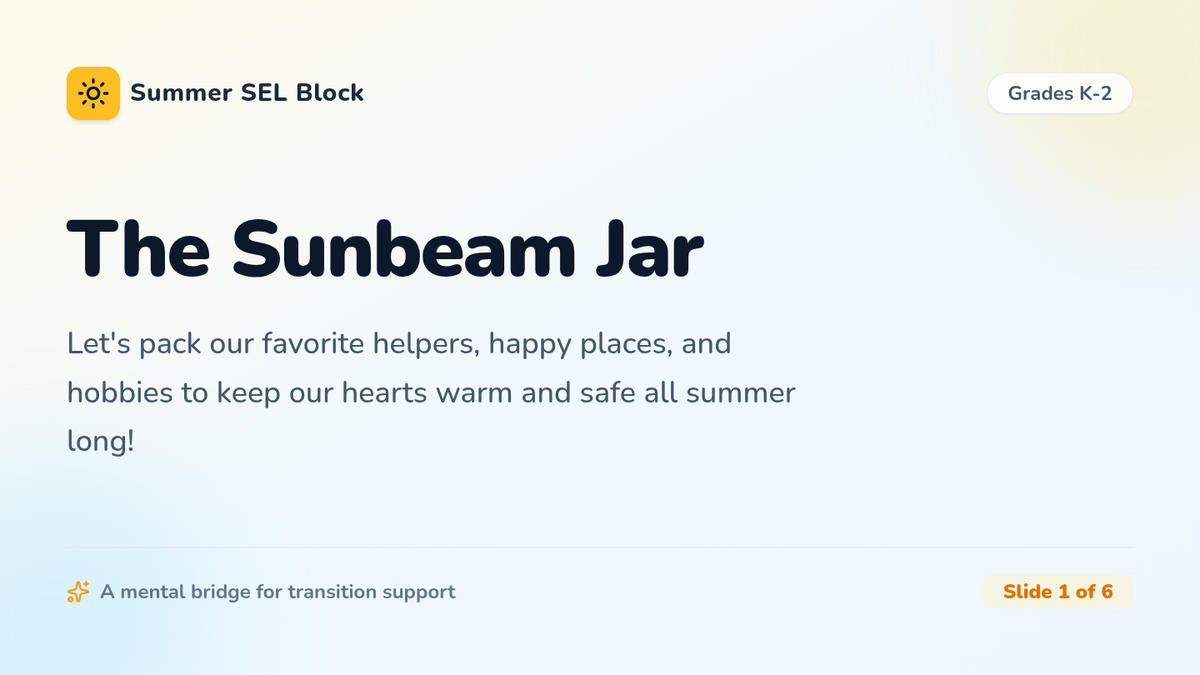
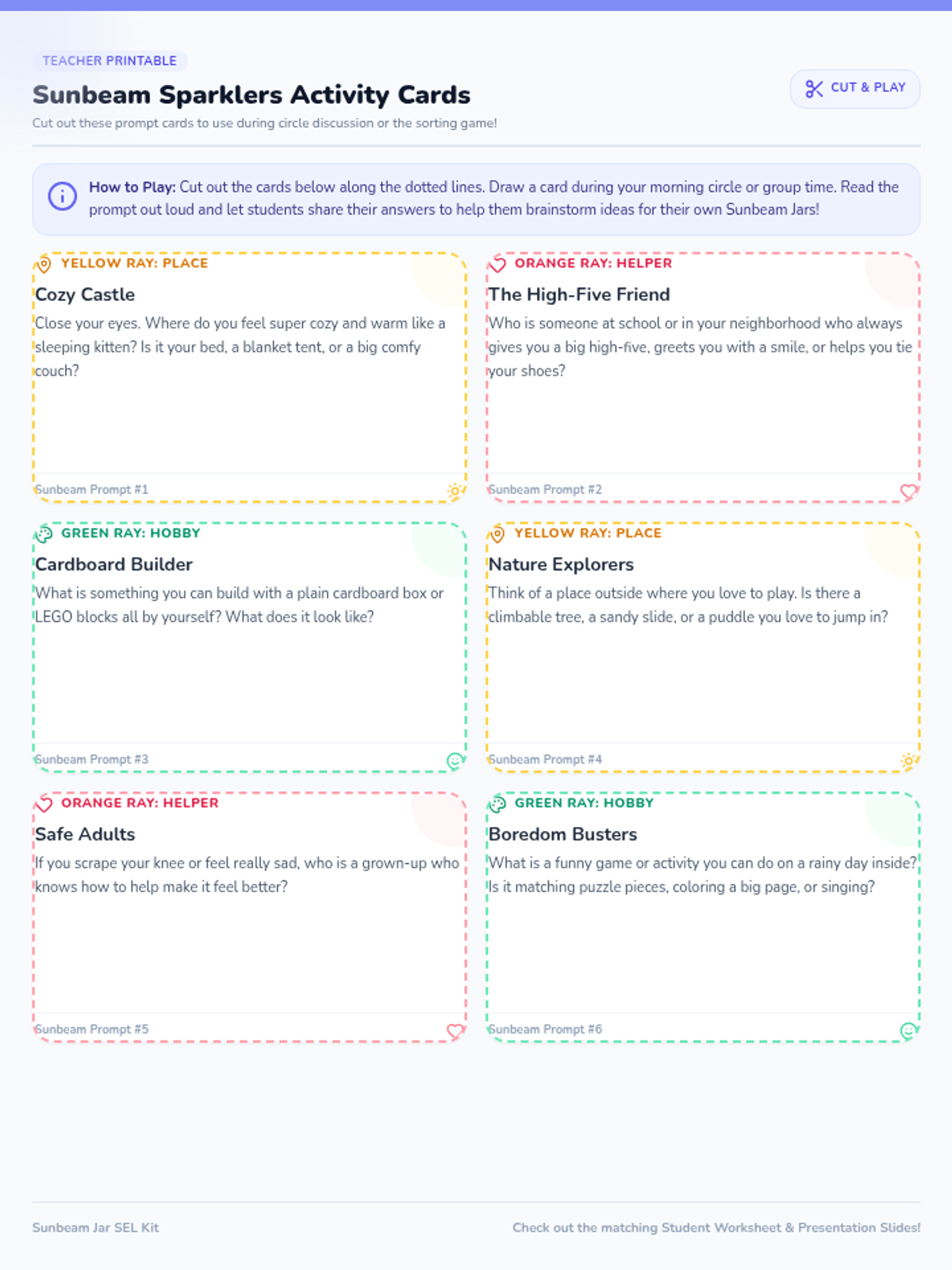
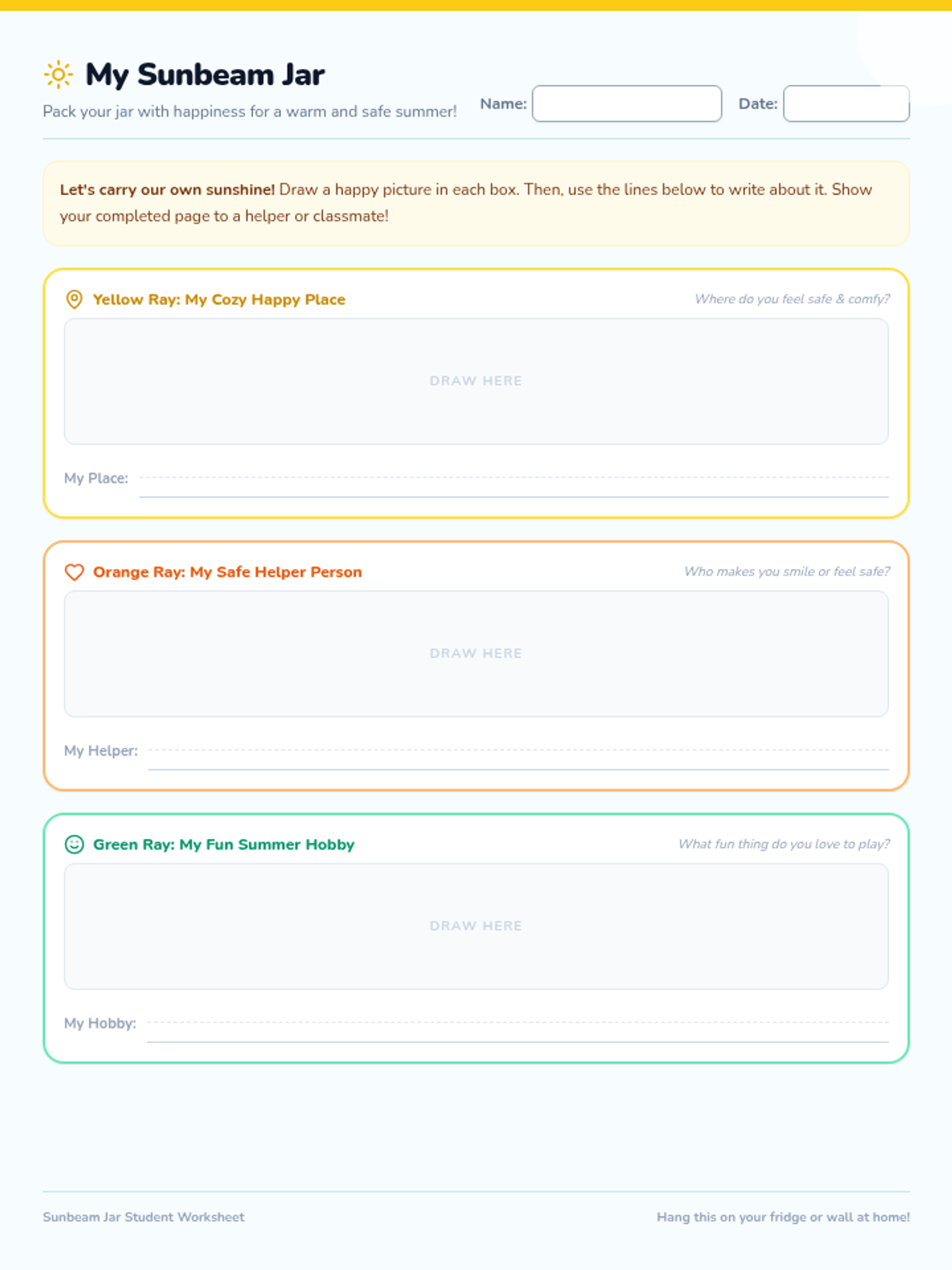
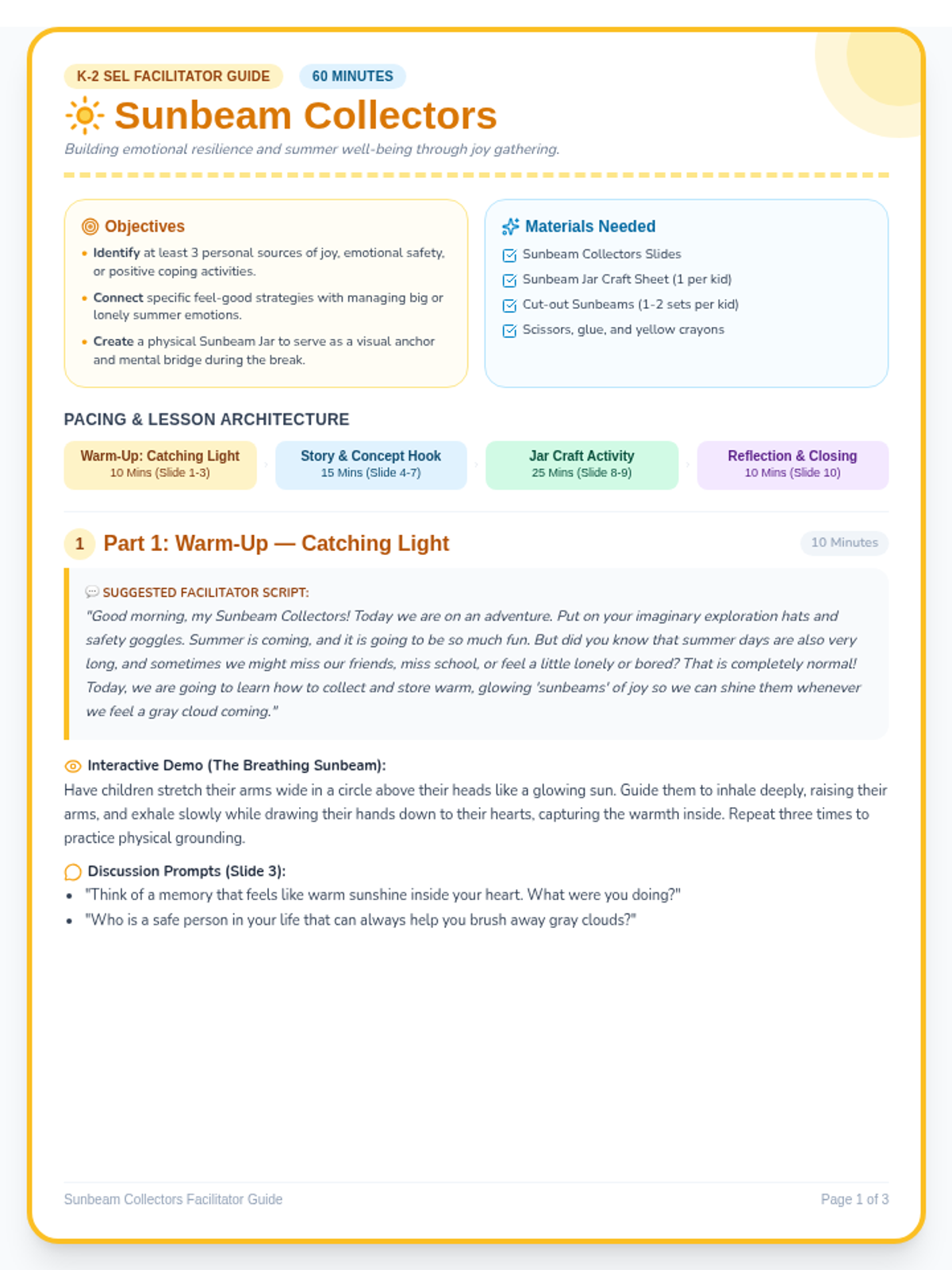
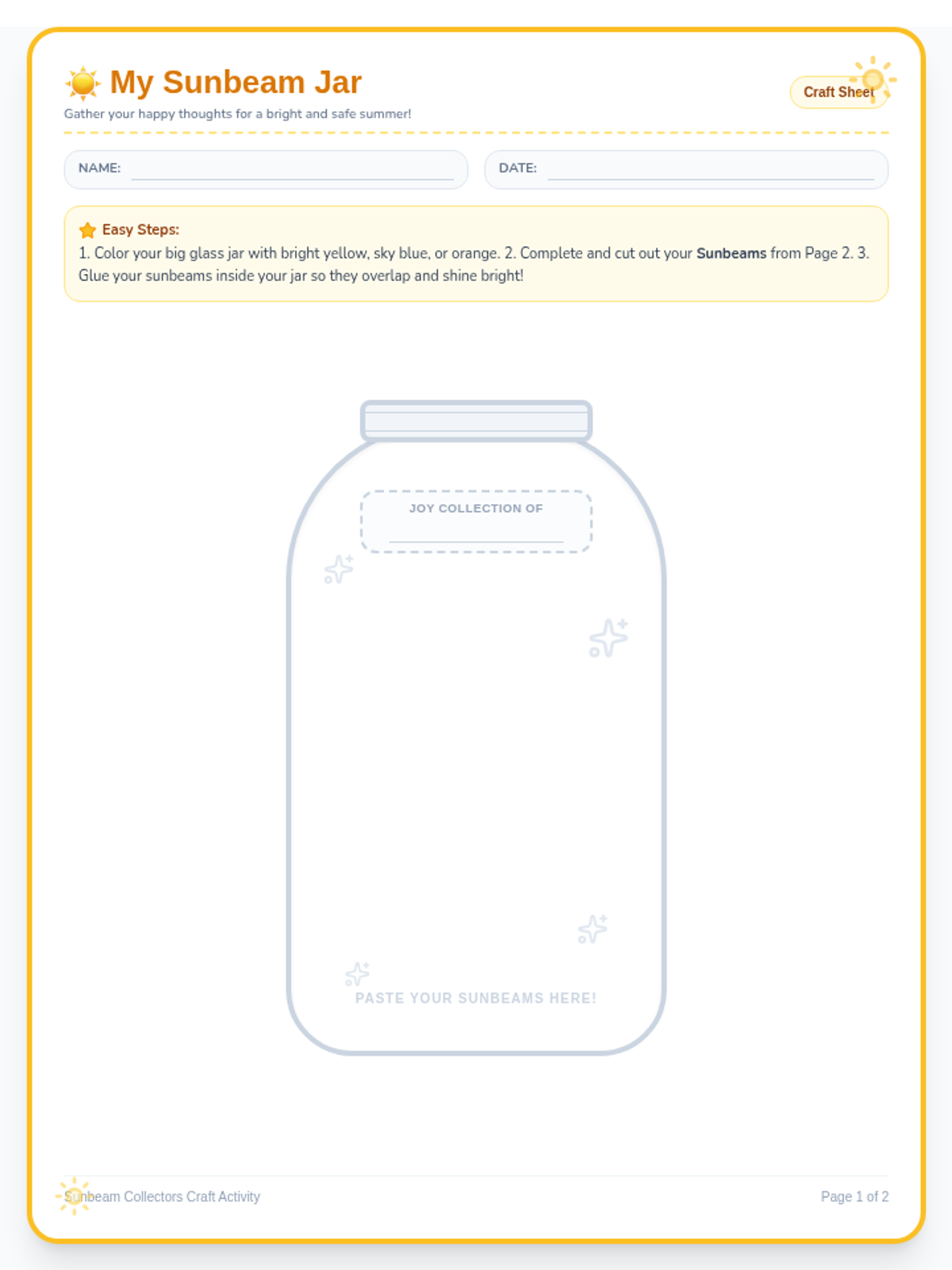
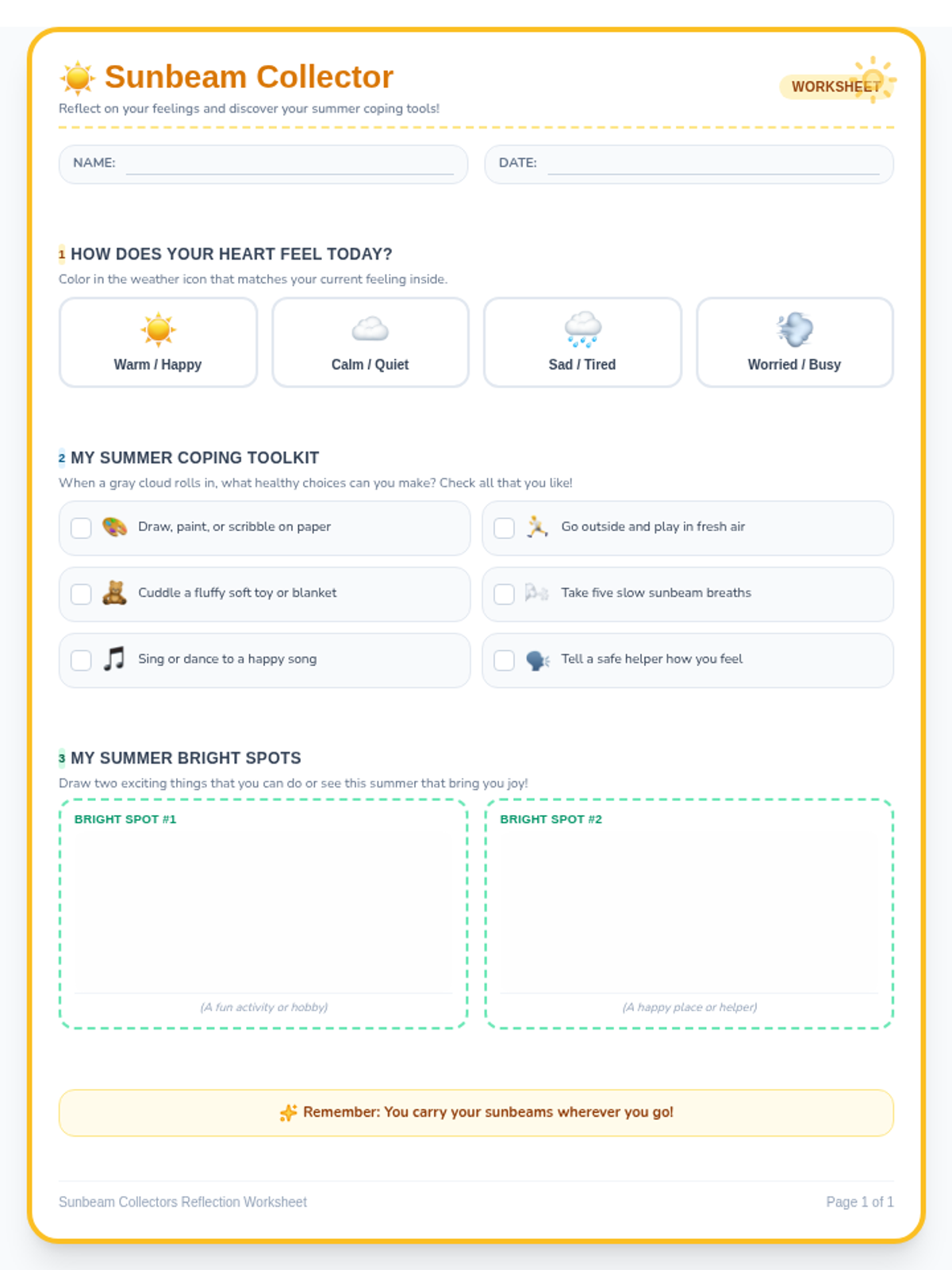
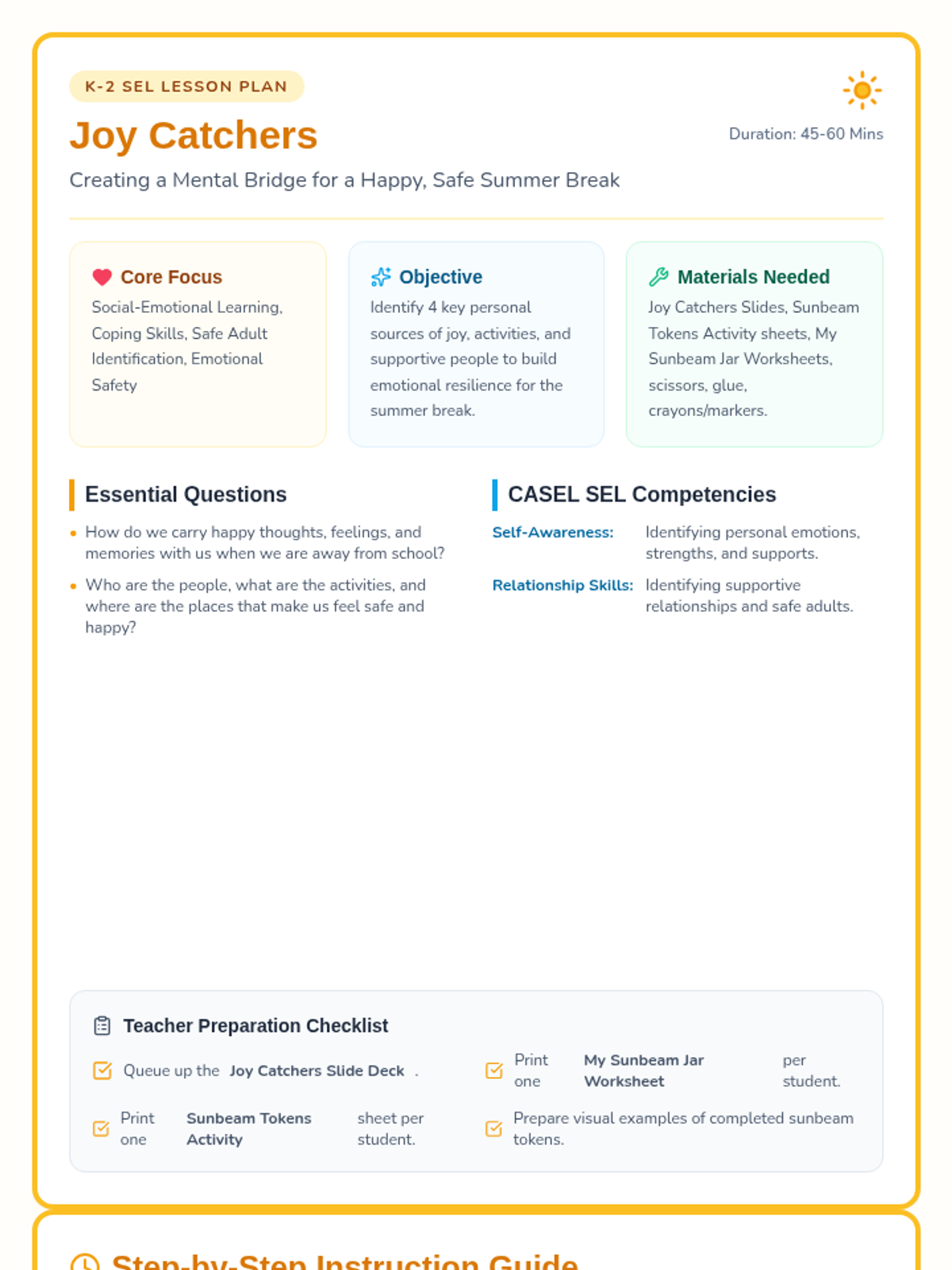
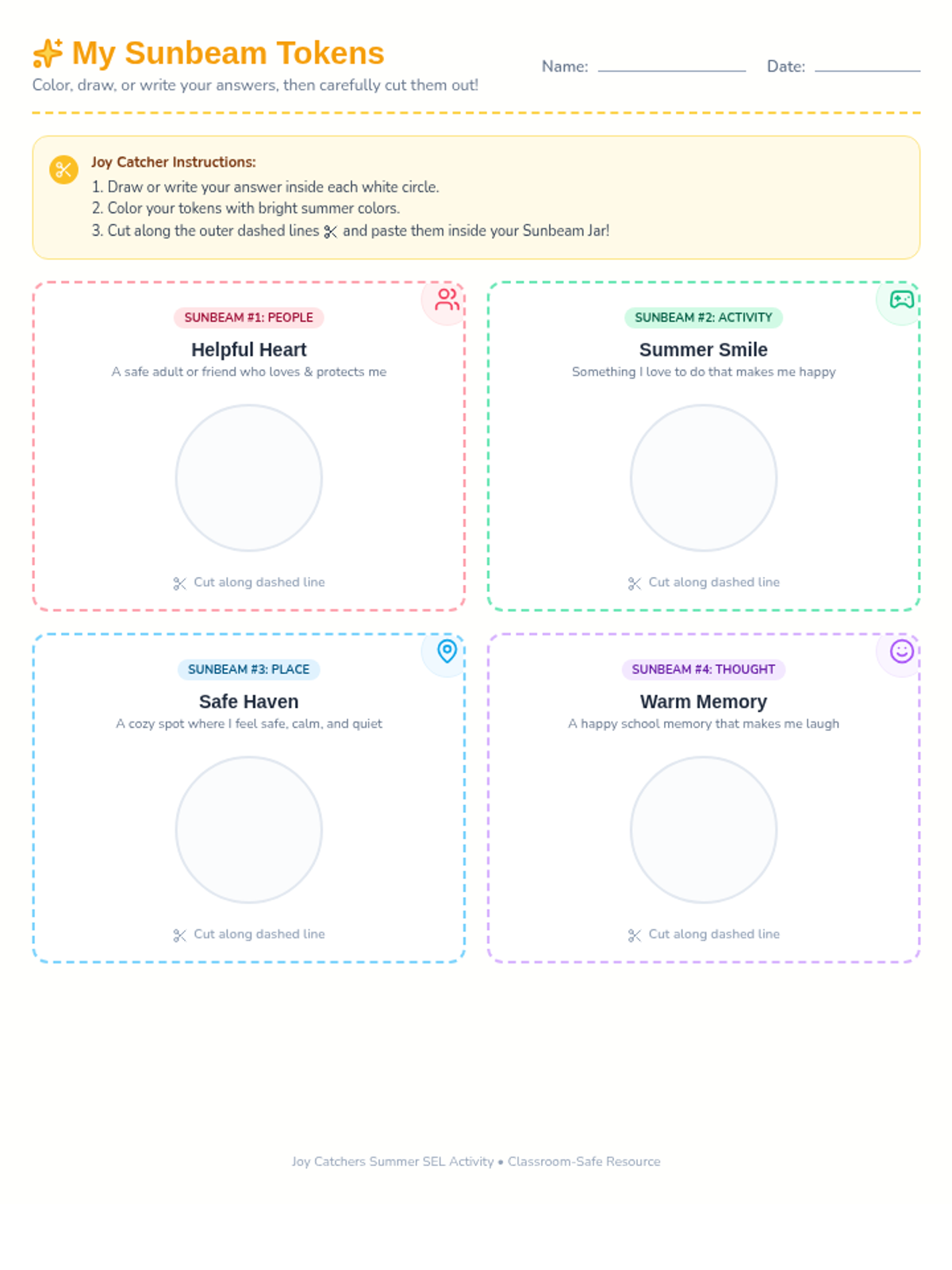
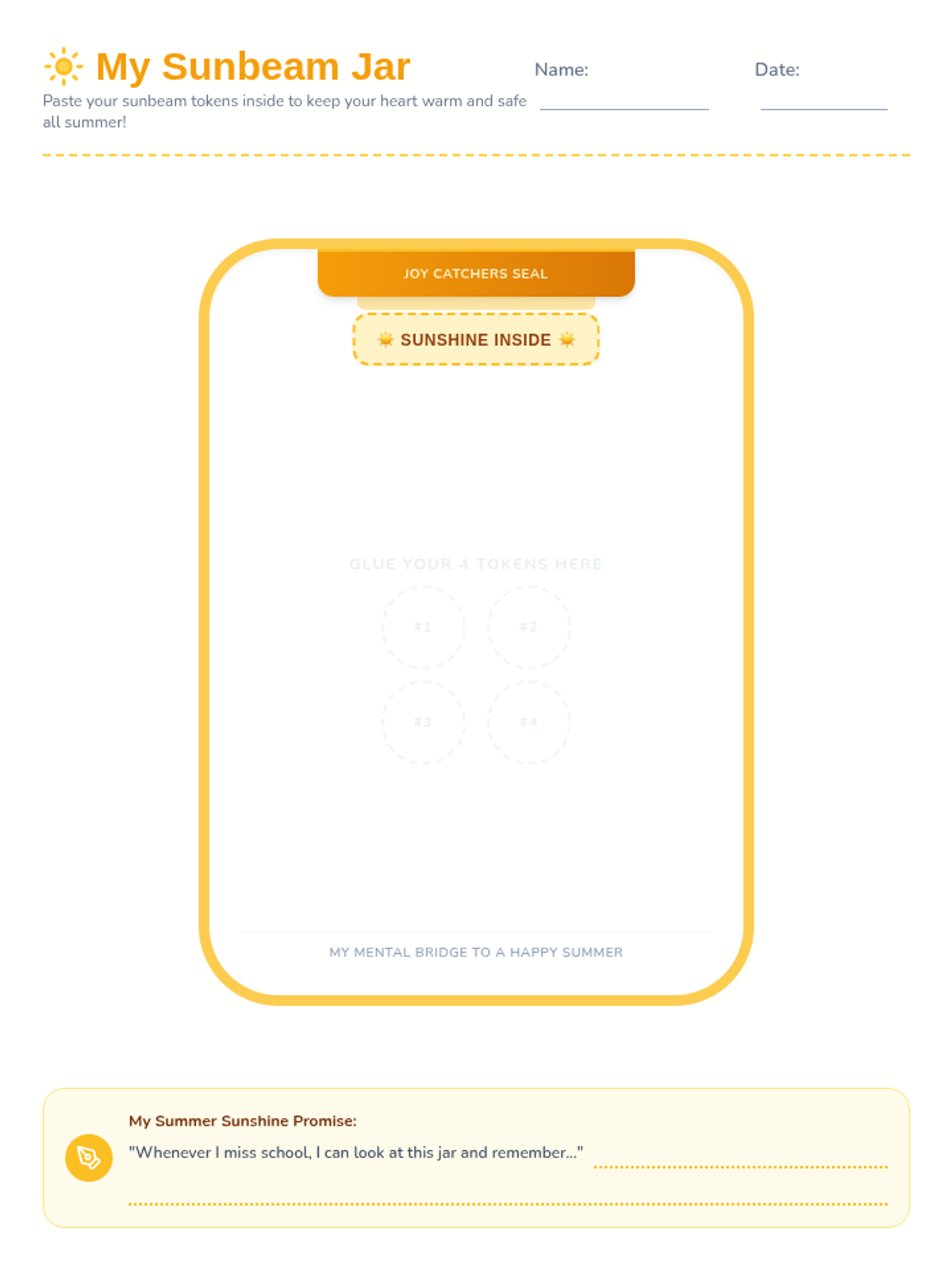
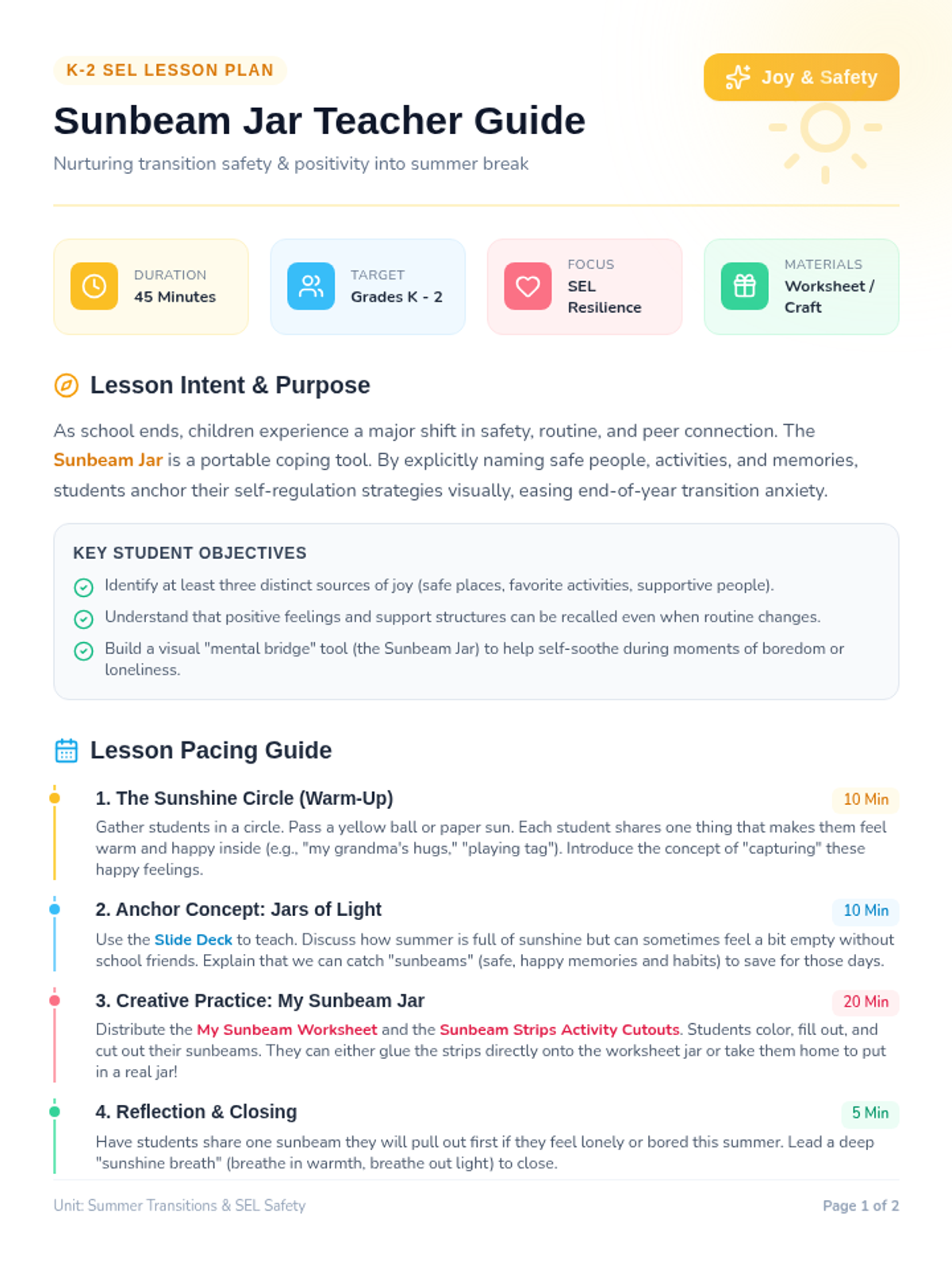
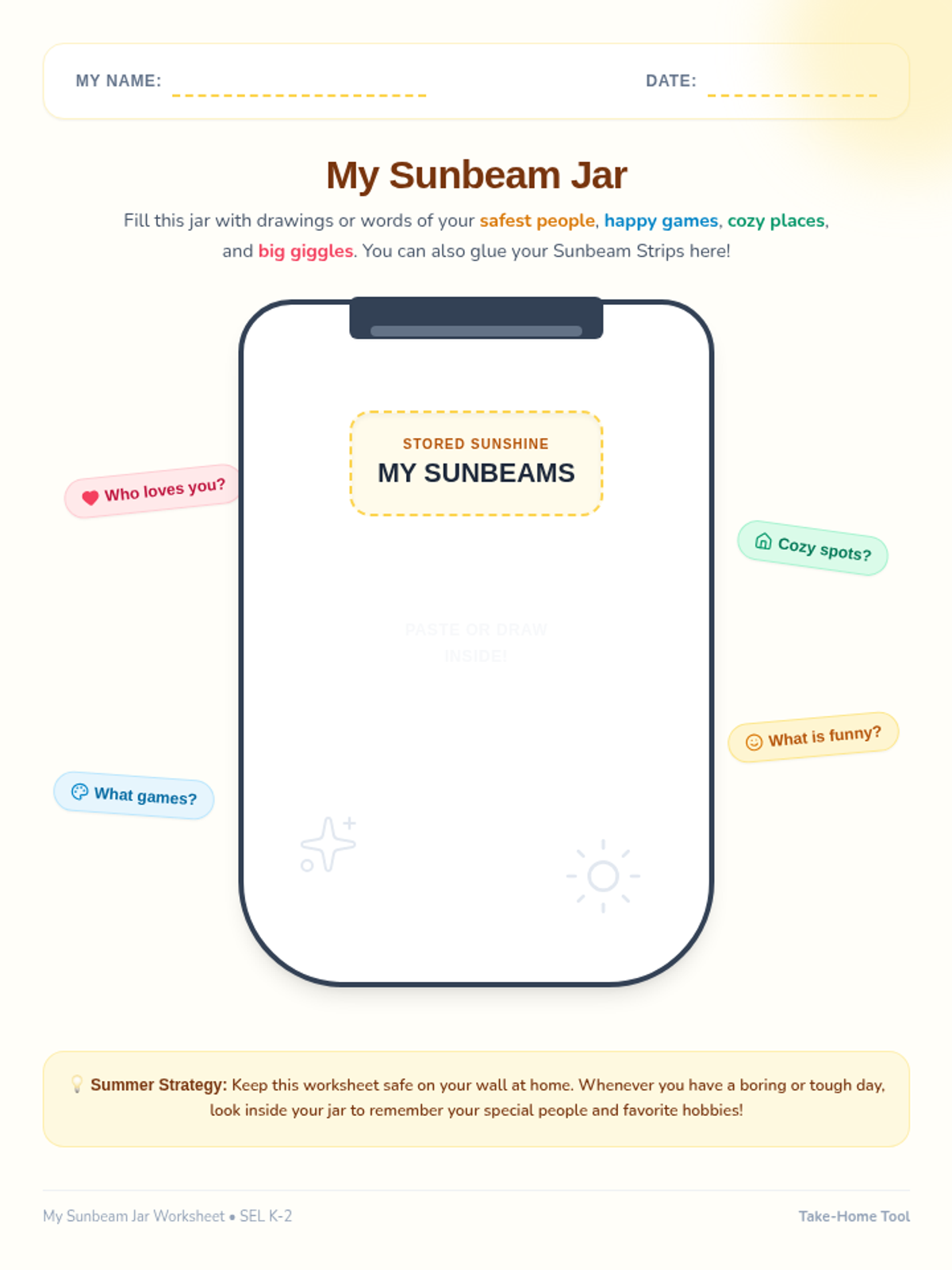
A supportive social-emotional learning lesson for K-2 students to identify sources of joy, emotional safety, and positive connections to carry into the summer break. Students create a visual 'Sunbeam Jar' to serve as a mental bridge for their well-being.
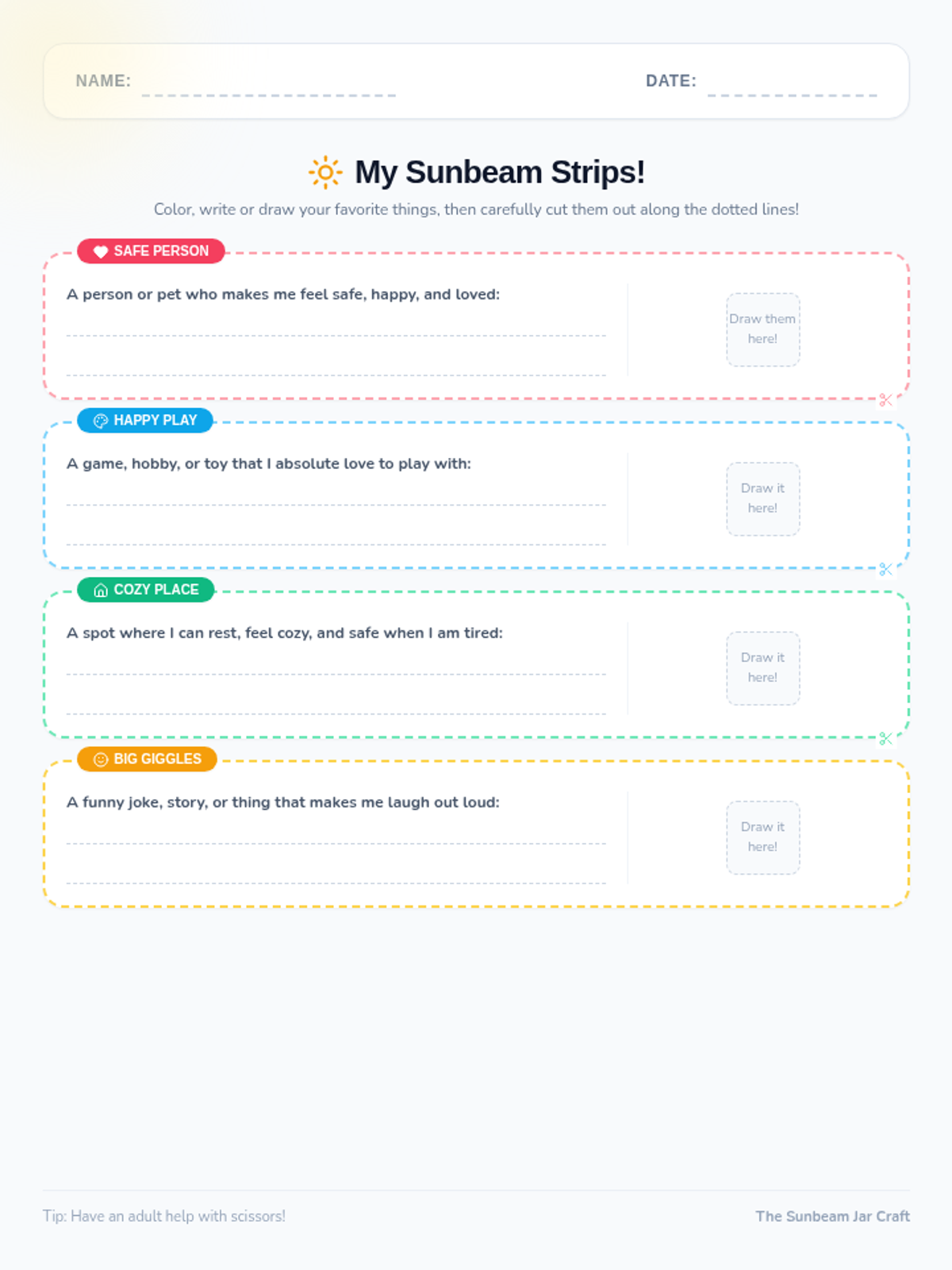
A heartwarming social-emotional learning lesson for K-2 students to identify sources of joy, emotional safety, and positive coping strategies to carry into the summer. Students explore and build a mental "sunbeam jar" filled with favorite memories, safe spaces, supportive connections, and uplifting hobbies to maintain well-being during the long break.
A heartwarming social-emotional learning lesson for K-2 students to identify sources of joy, support, and emotional safety. Students create a visual "Sunbeam Jar" filled with positive memories, hobbies, and supportive people to carry into the summer break.
A nurturing Social-Emotional Learning lesson designed for K-2 students to identify personal sources of joy, support, and emotional safety. By creating a physical or visual 'Sunbeam Jar', children build a portable mental bridge to carry their well-being and positive connections confidently into the summer break.
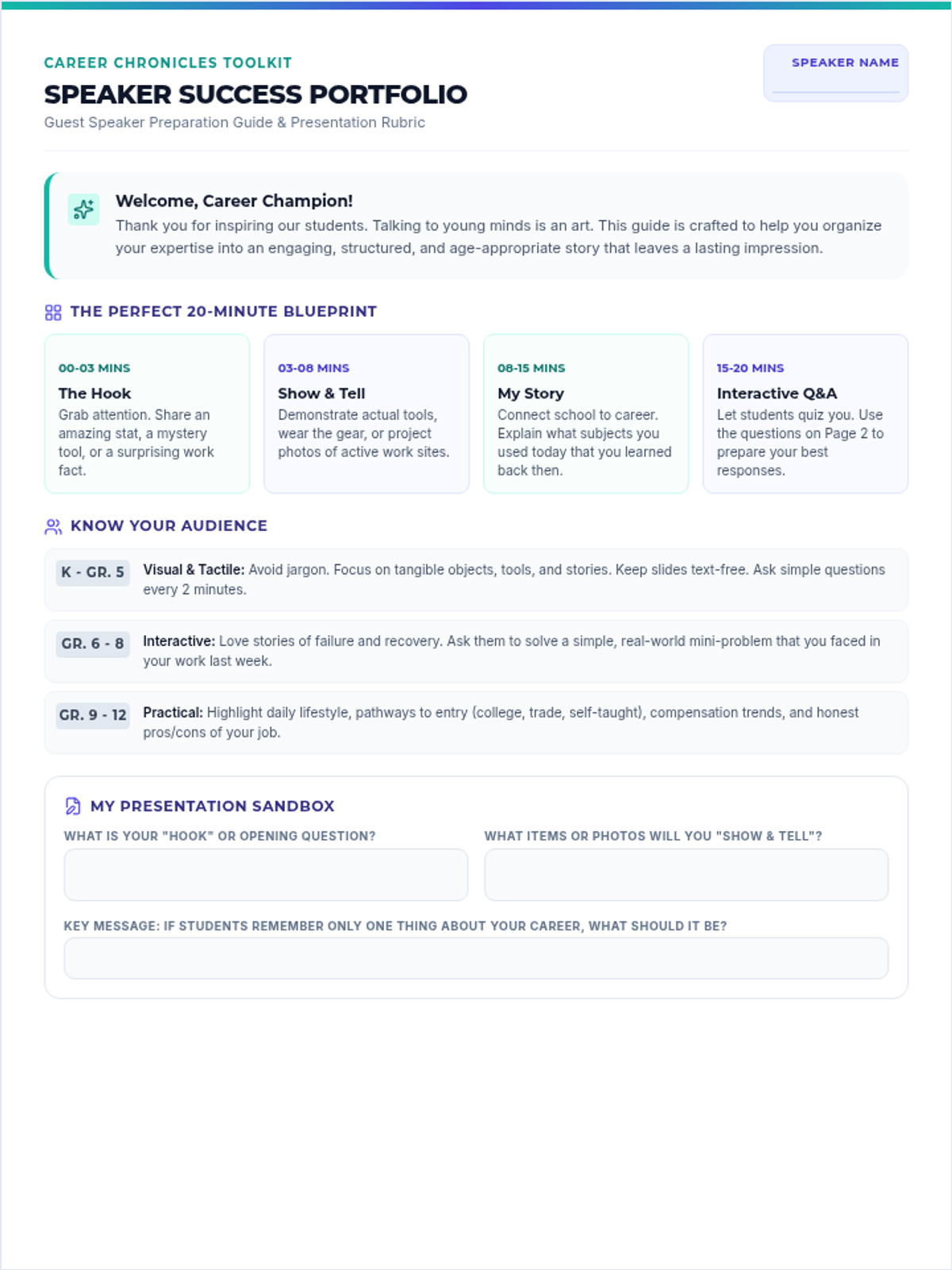
A comprehensive preparation toolkit for Career Day, equipping both guest speakers and student interviewers with structured guides, question banks, and evaluation rubrics to ensure engaging and meaningful professional dialogues.
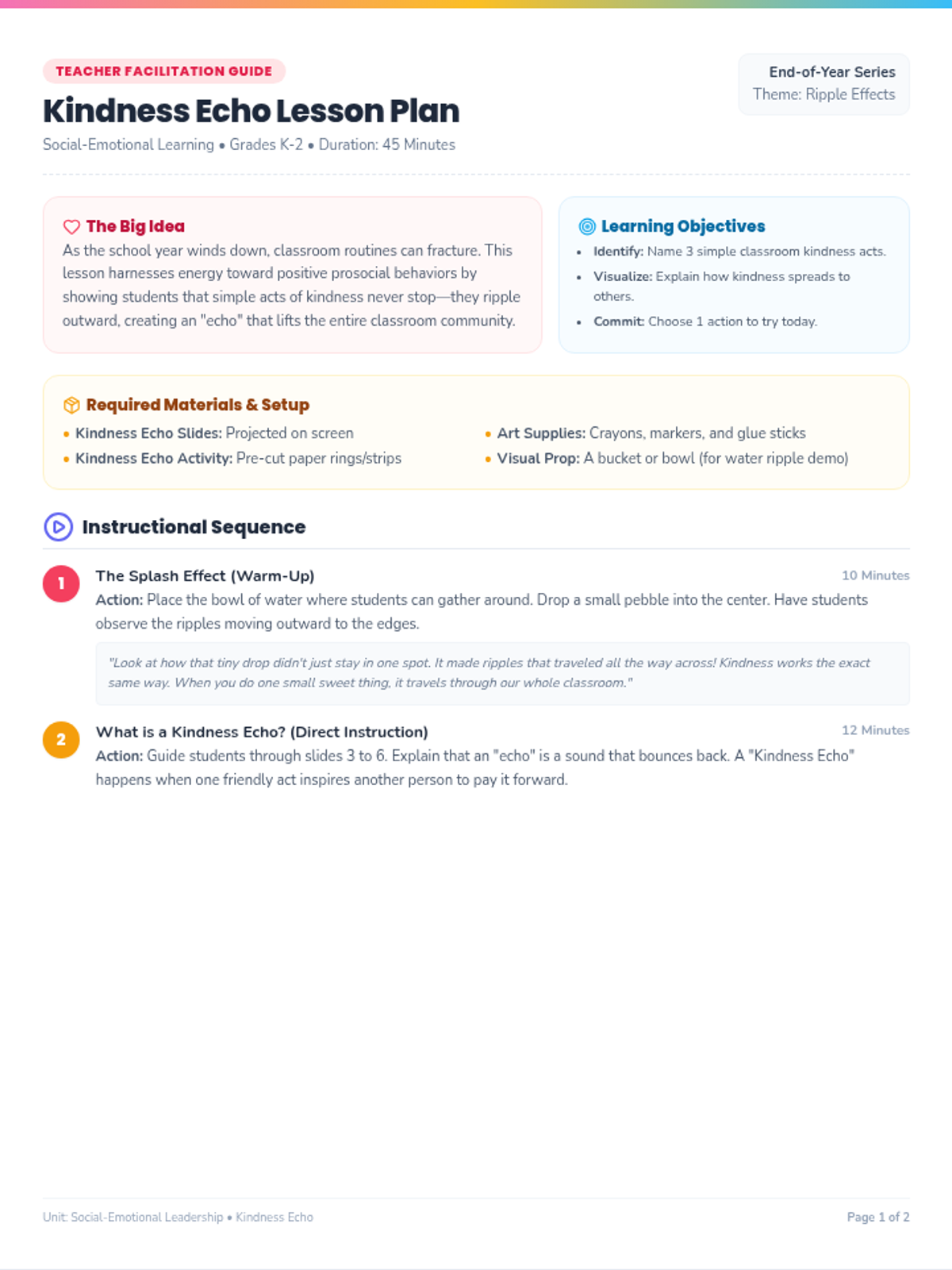
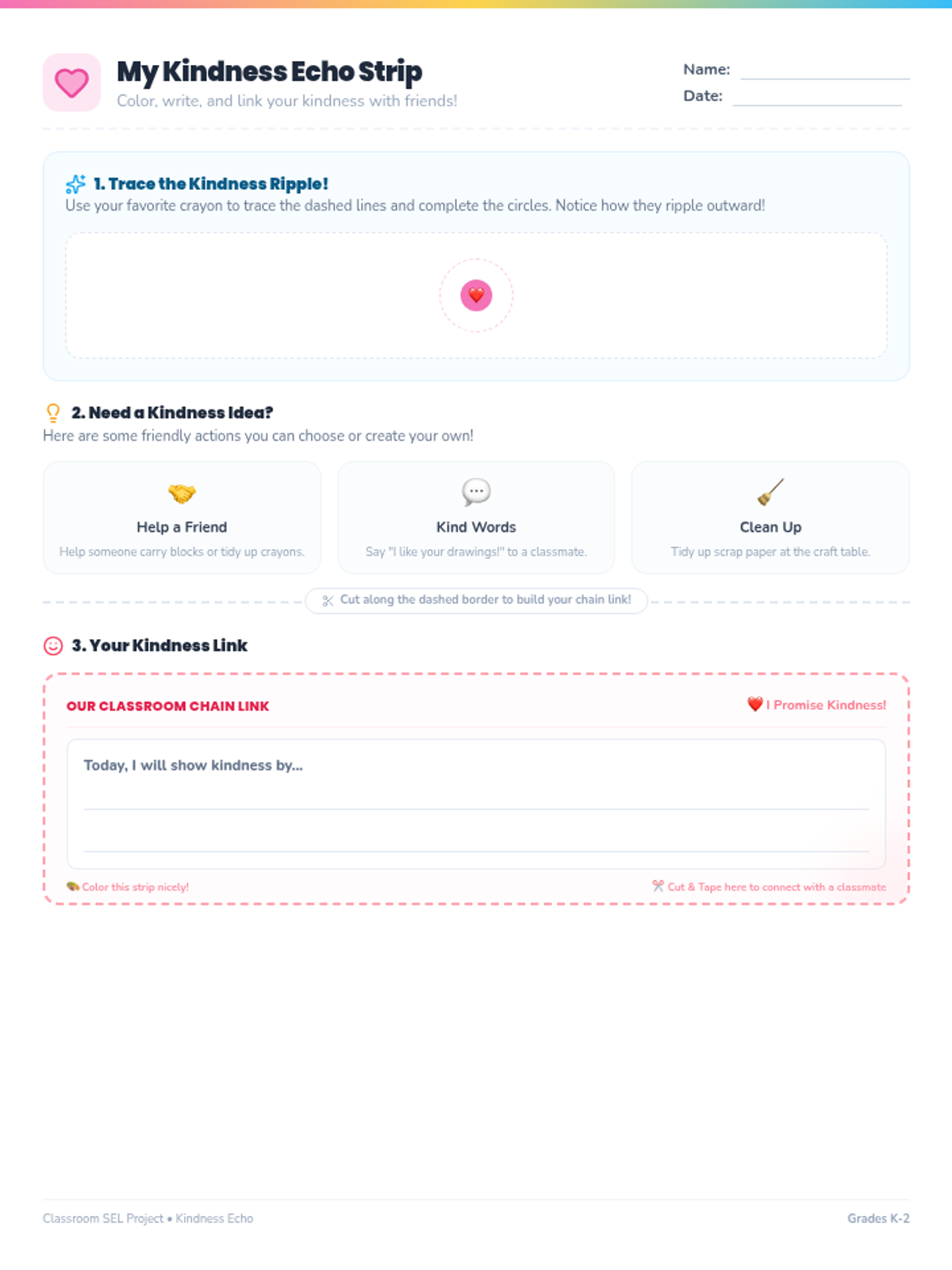
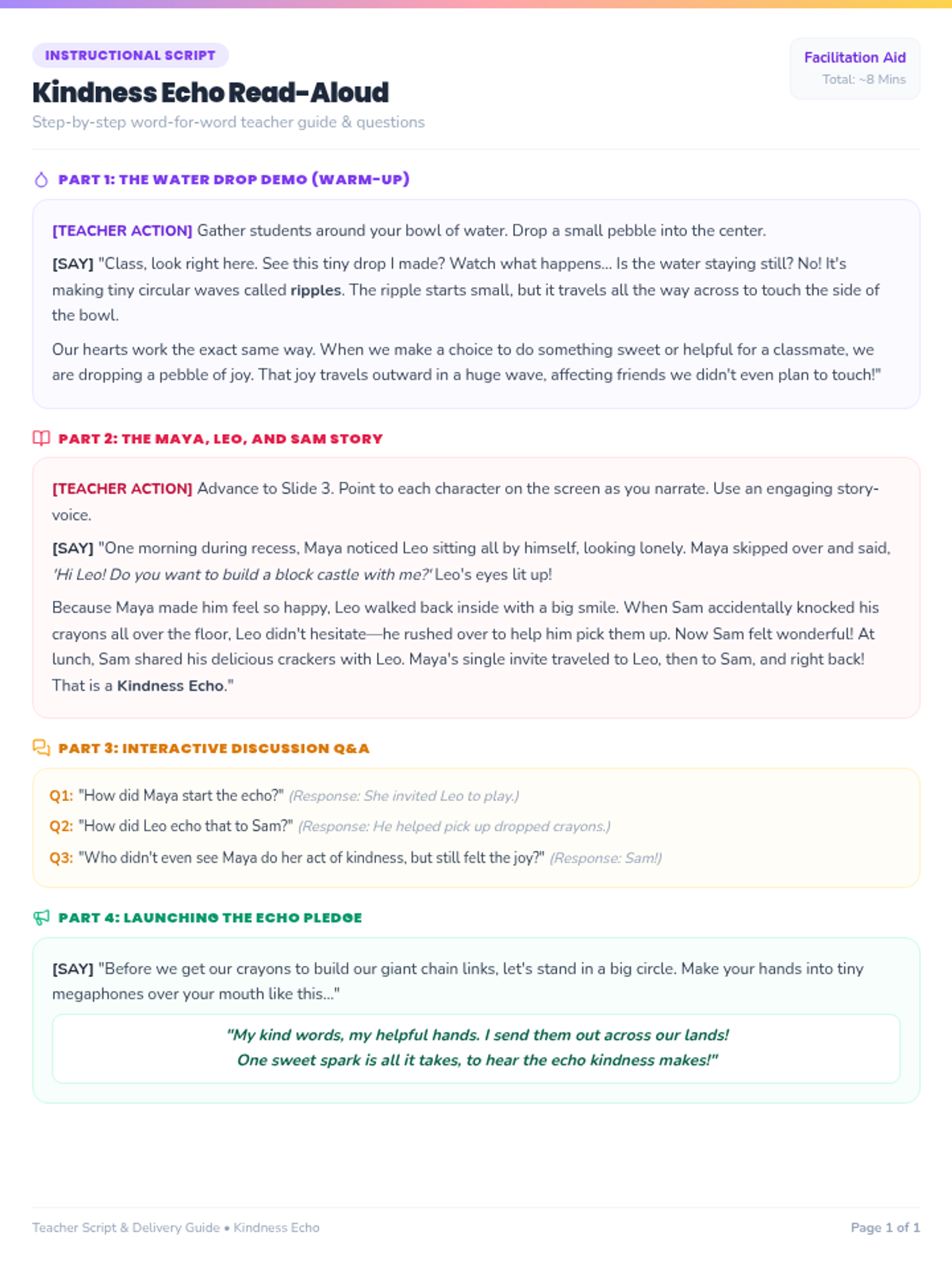
A heartwarming social-emotional learning lesson for grades K-2, exploring how simple acts of kindness ripple outward to create a positive school community during the final weeks of the school year.
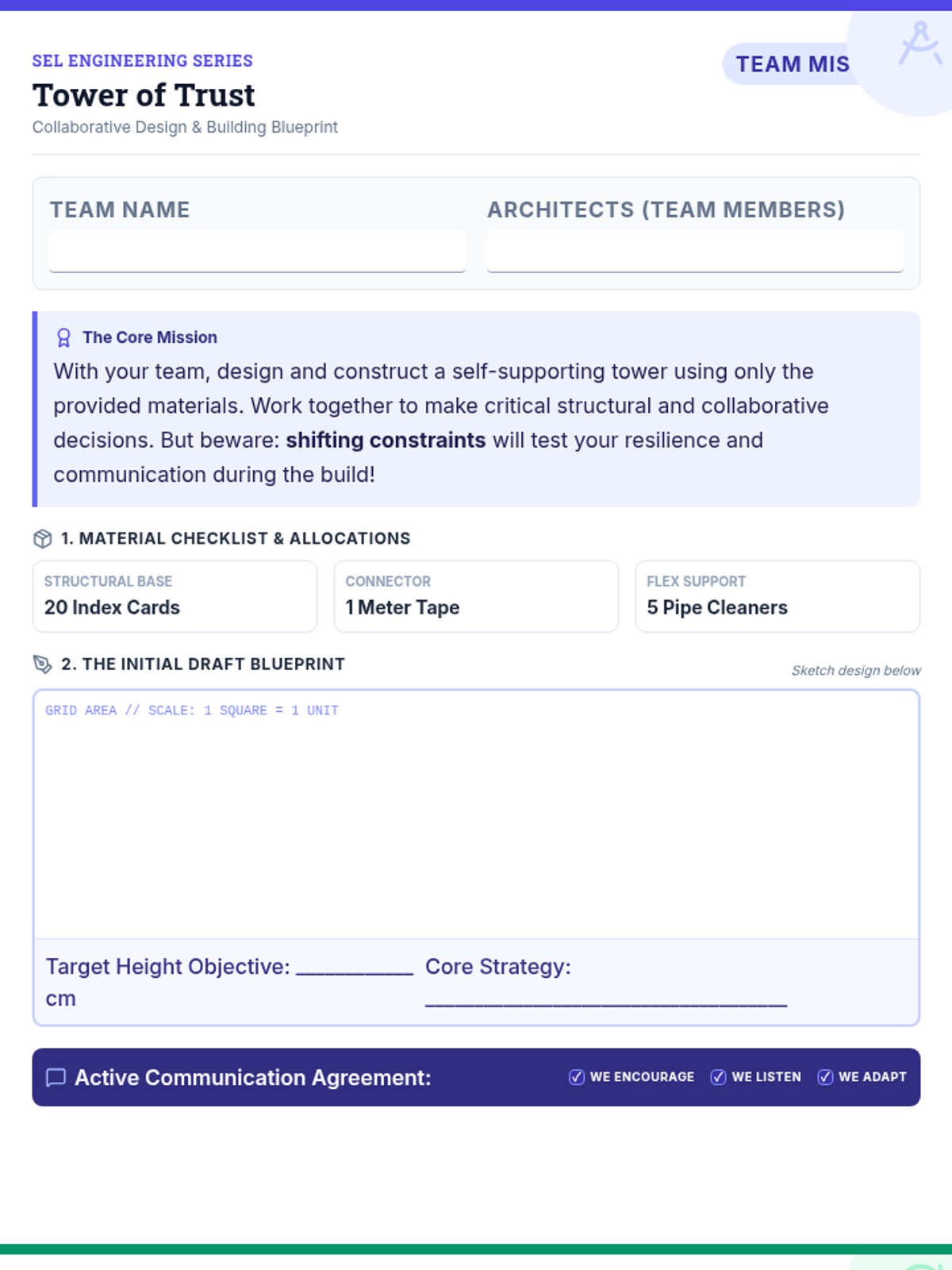
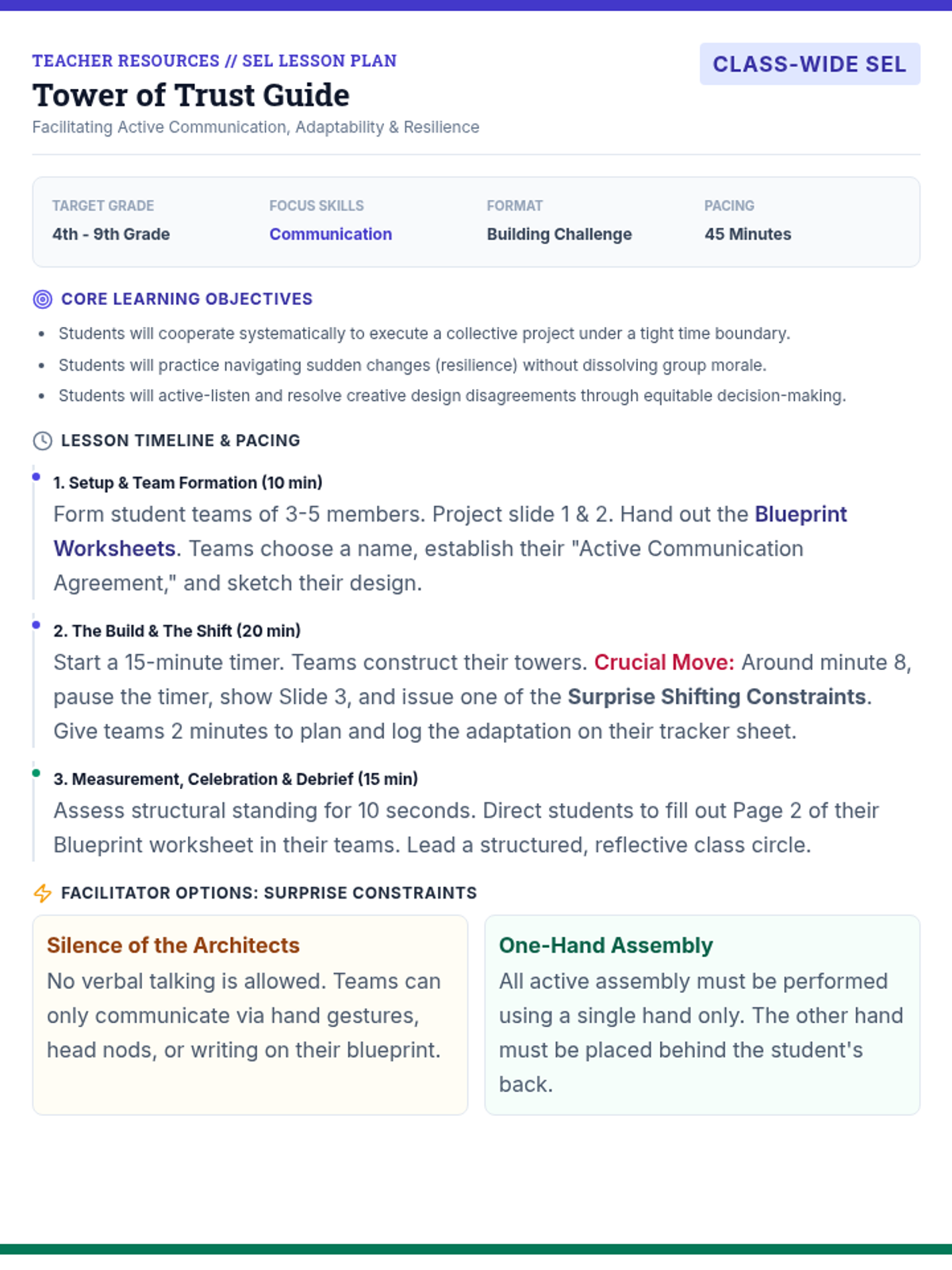
A high-energy, collaborative building challenge where student teams design and construct towers under shifting constraints. This lesson is specifically engineered to target active communication, resilience when faced with unexpected roadblocks, and group decision-making.
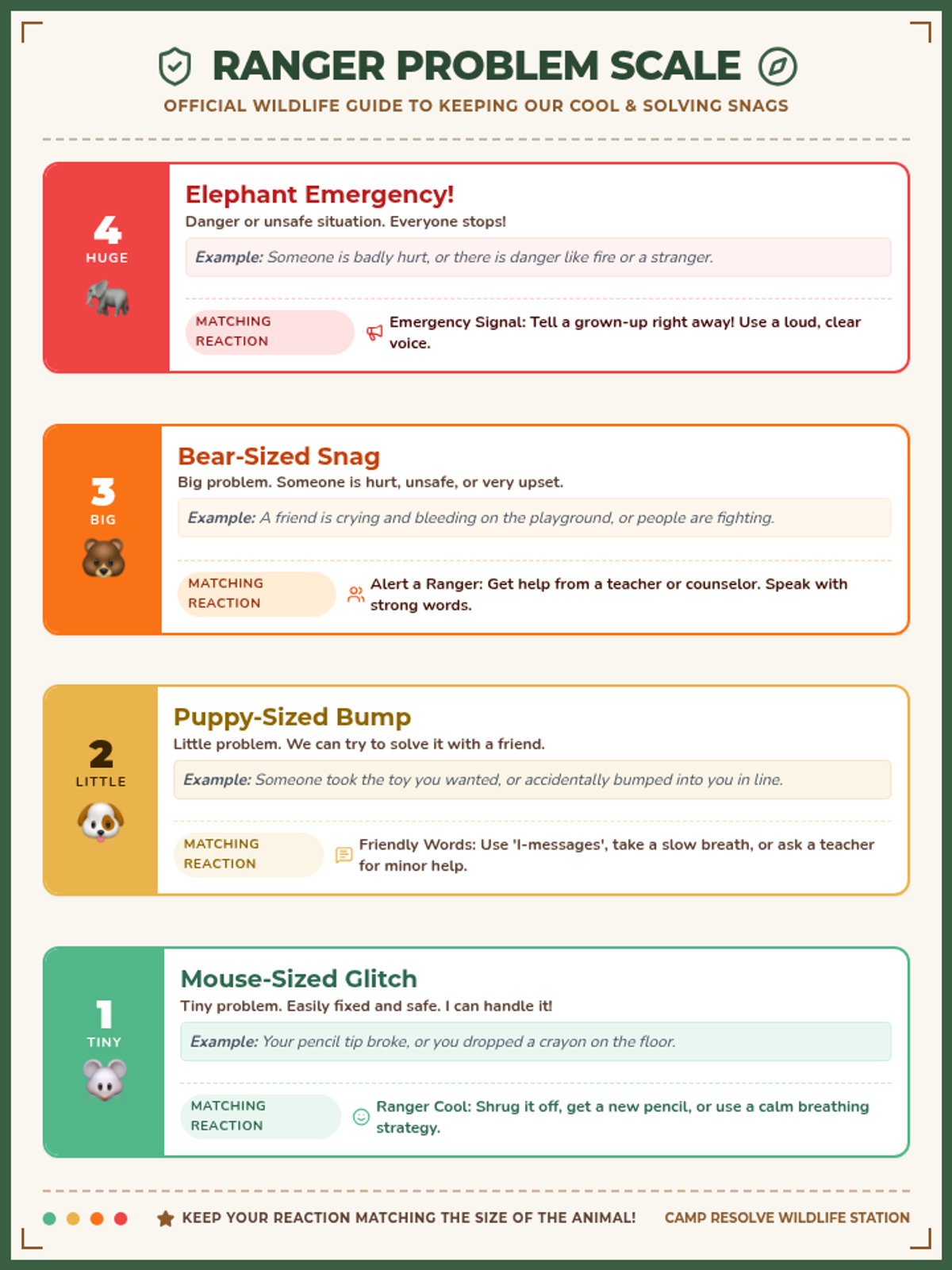
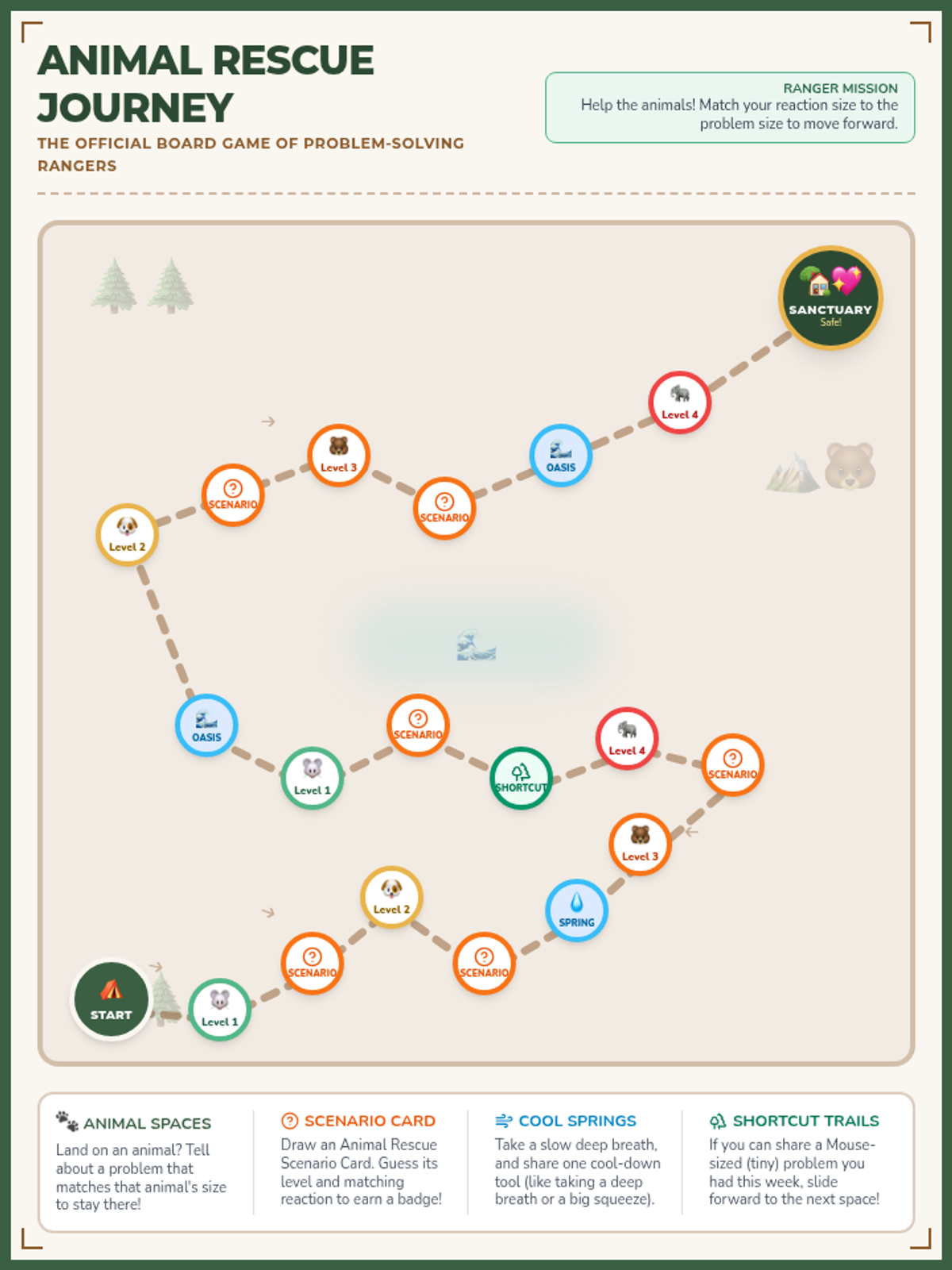
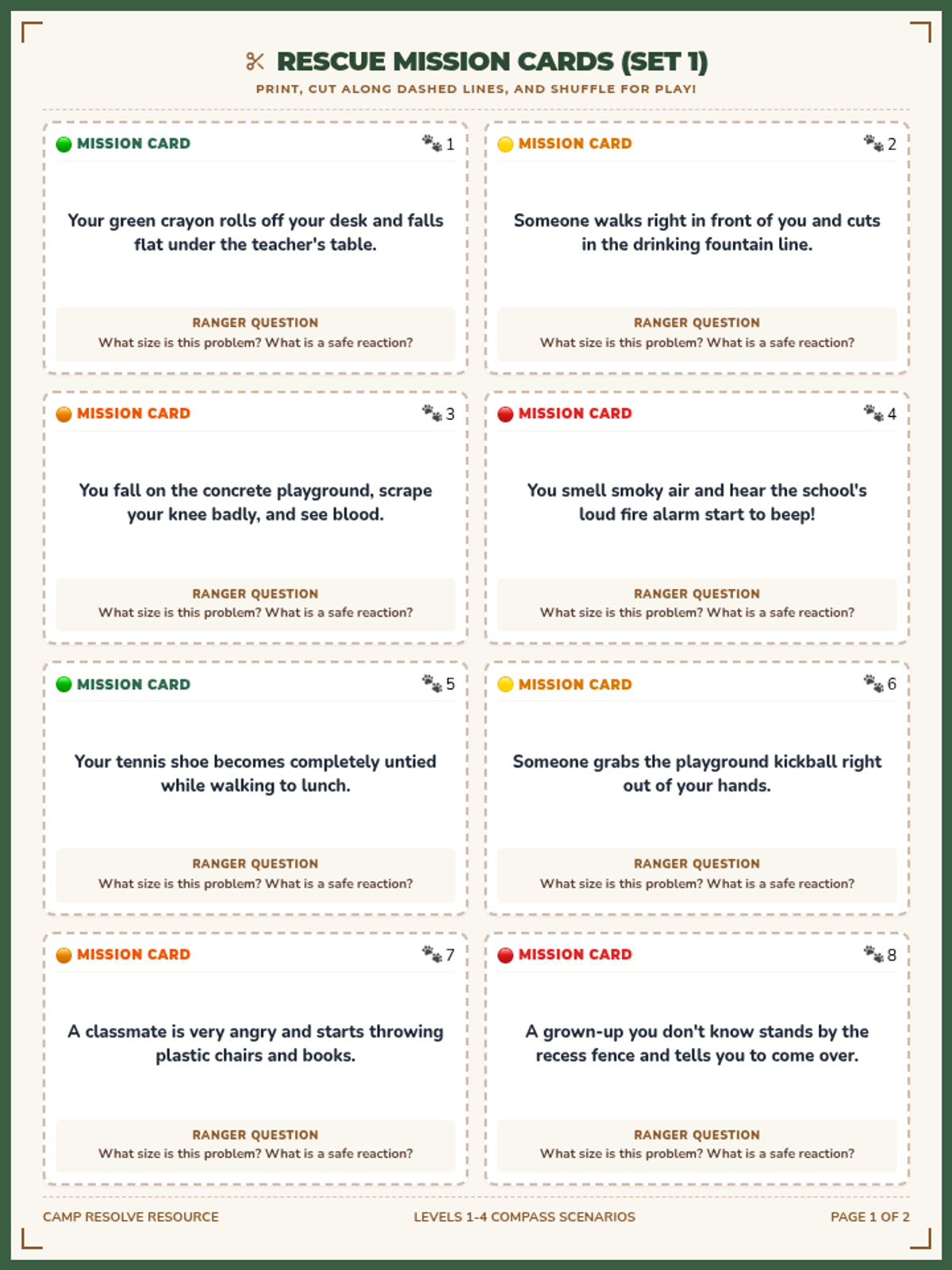
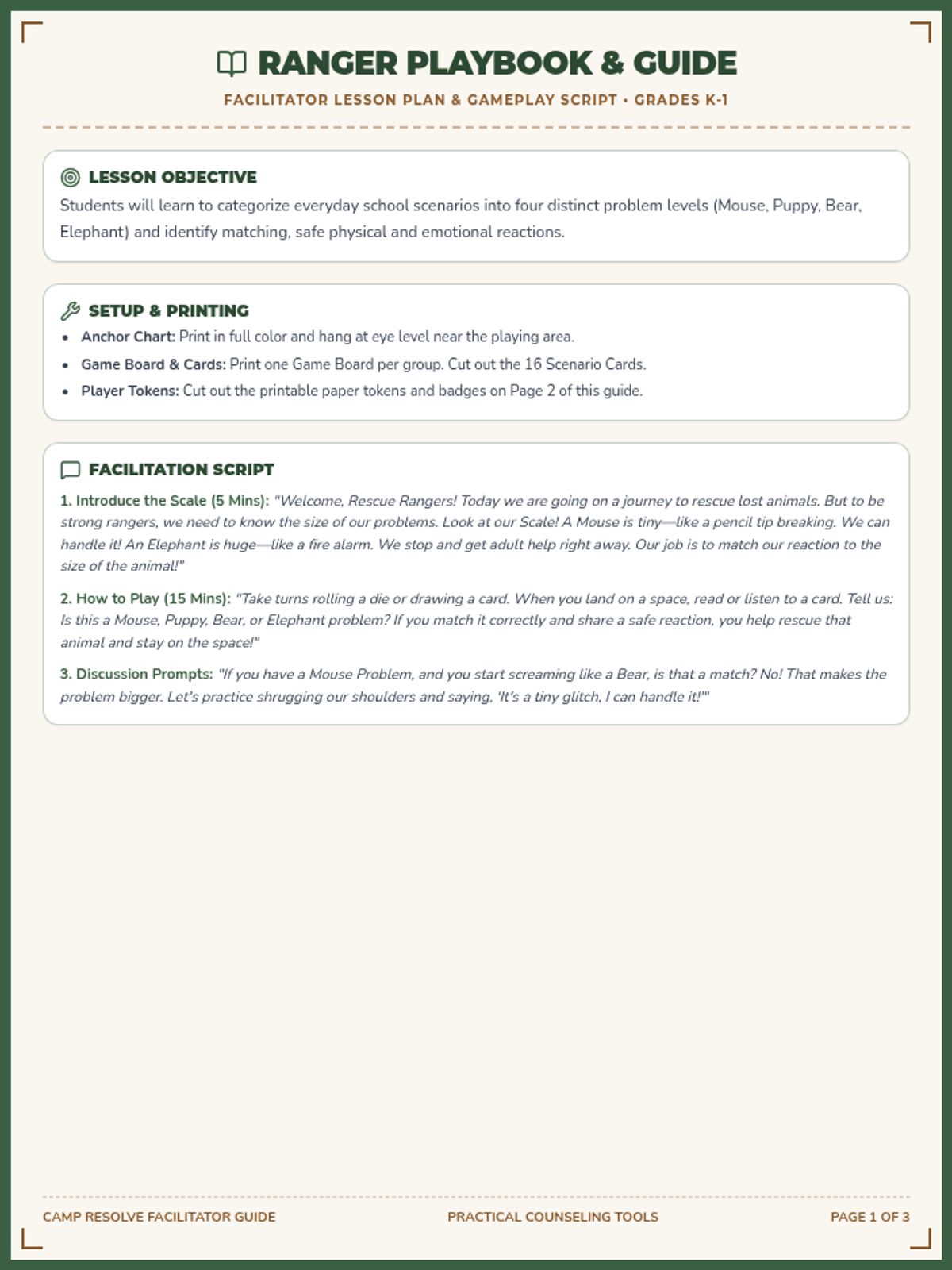
A complete printable board game kit for kindergarten and first-grade students, designed to teach the 'Size of the Problem' emotional regulation concept through an engaging animal rescue theme. Includes a visual anchor chart, printable board, scenario cards, and a comprehensive facilitator guide.
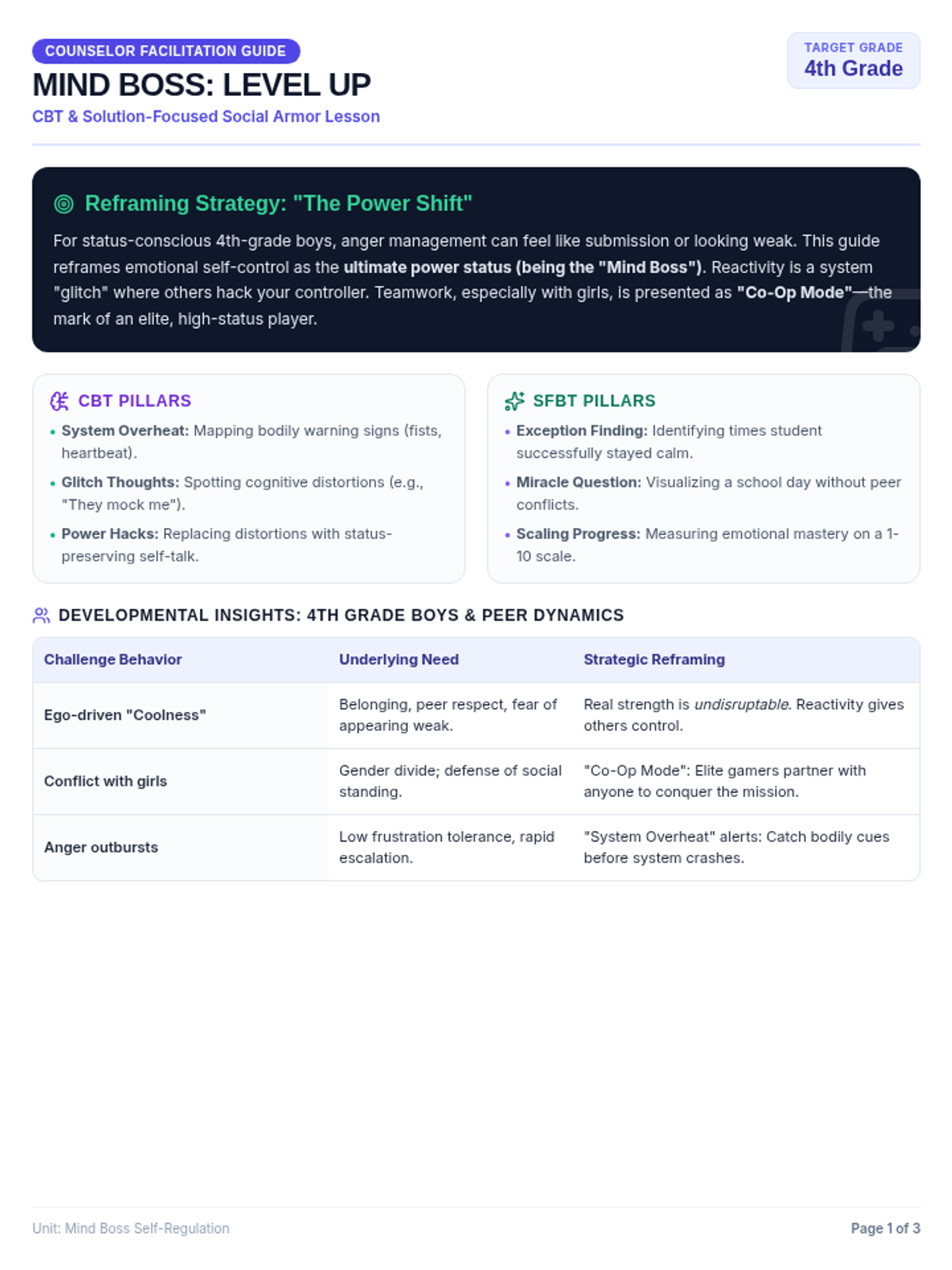
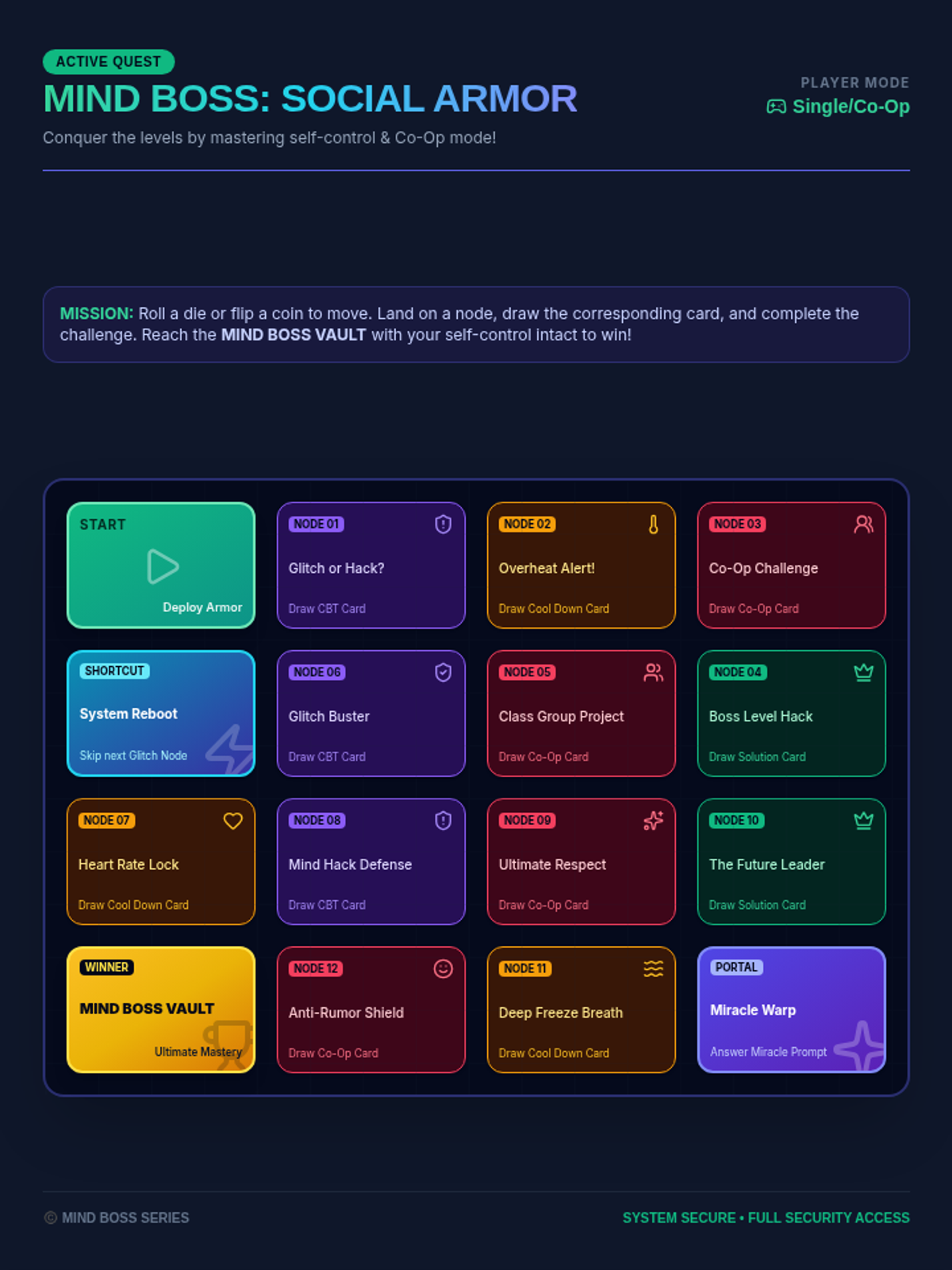
A cognitive-behavioral and solution-focused counseling lesson tailored for a 4th-grade boy struggling with anger and peer conflicts (particularly with girls). It reframes emotional self-regulation and social collaboration as the ultimate indicators of status and power, using a high-engagement retro video game theme.
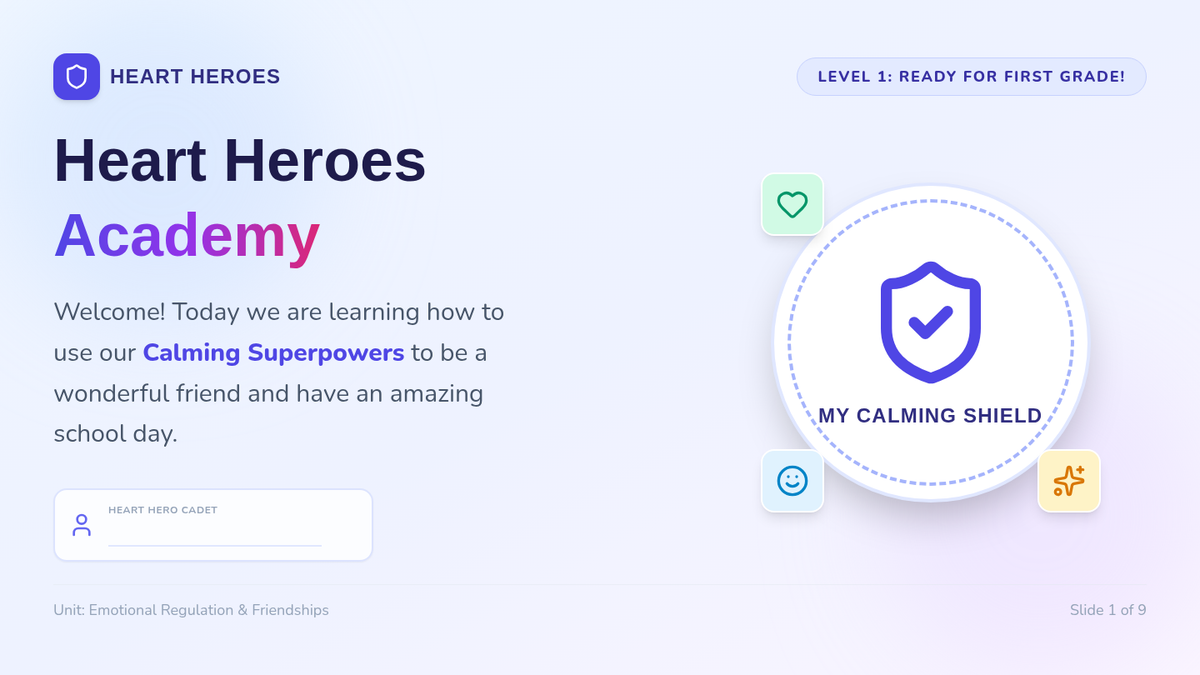
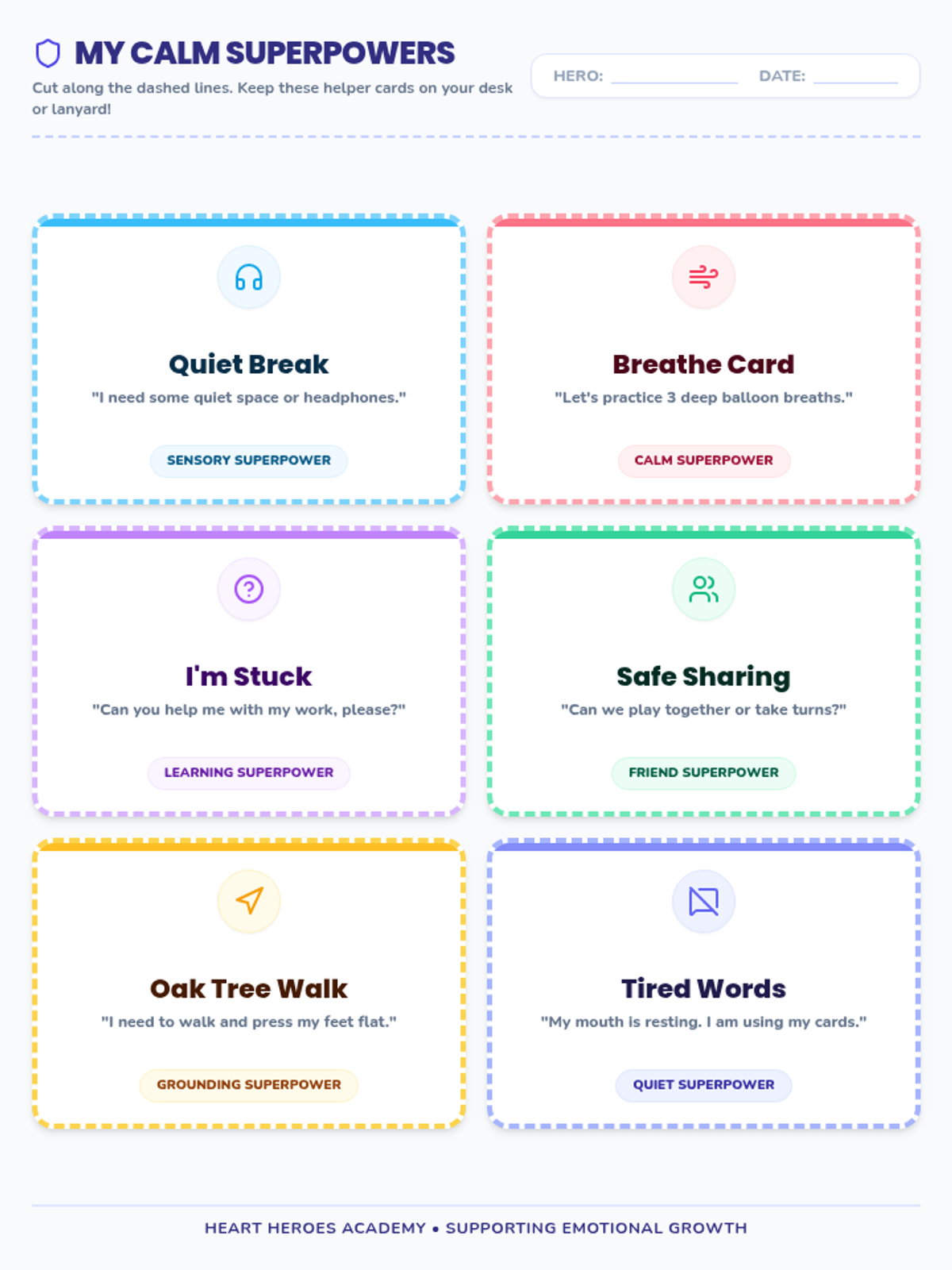
A transition lesson for rising first graders focusing on self-regulation, coping with common classroom triggers, and building healthy friendships. Includes a slide presentation with visual social stories and printable visual communication cards for non-verbal calming support.
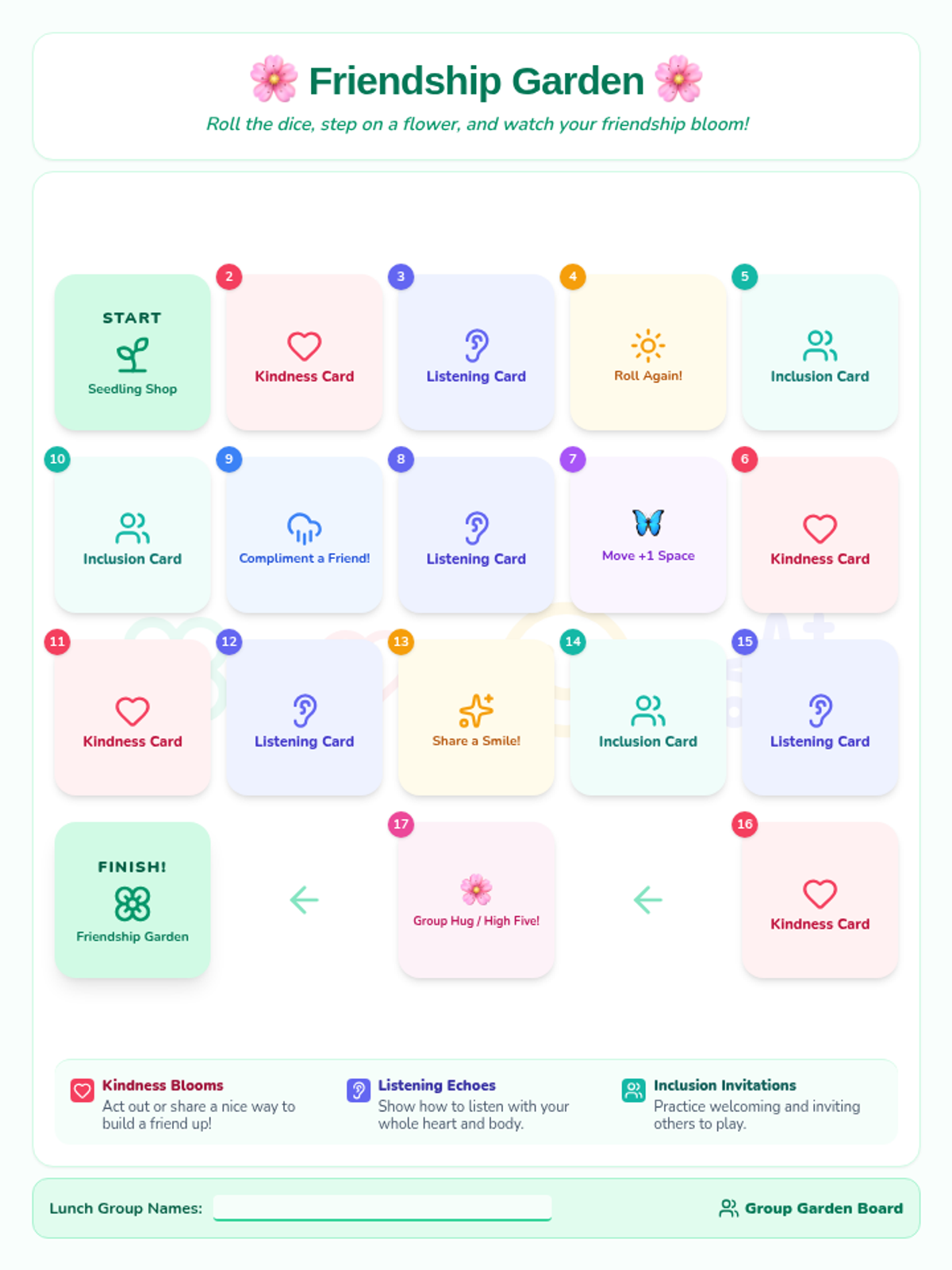
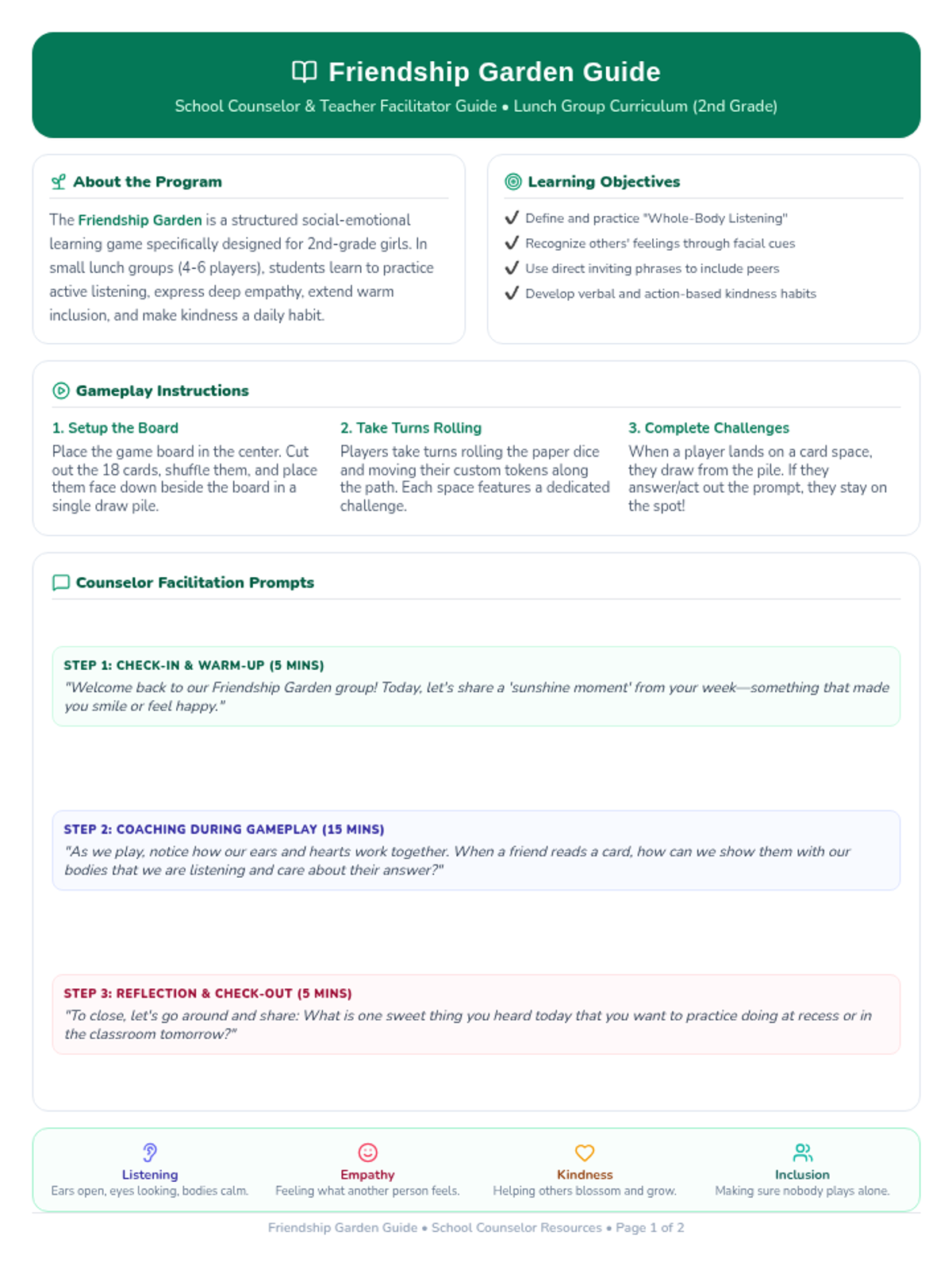
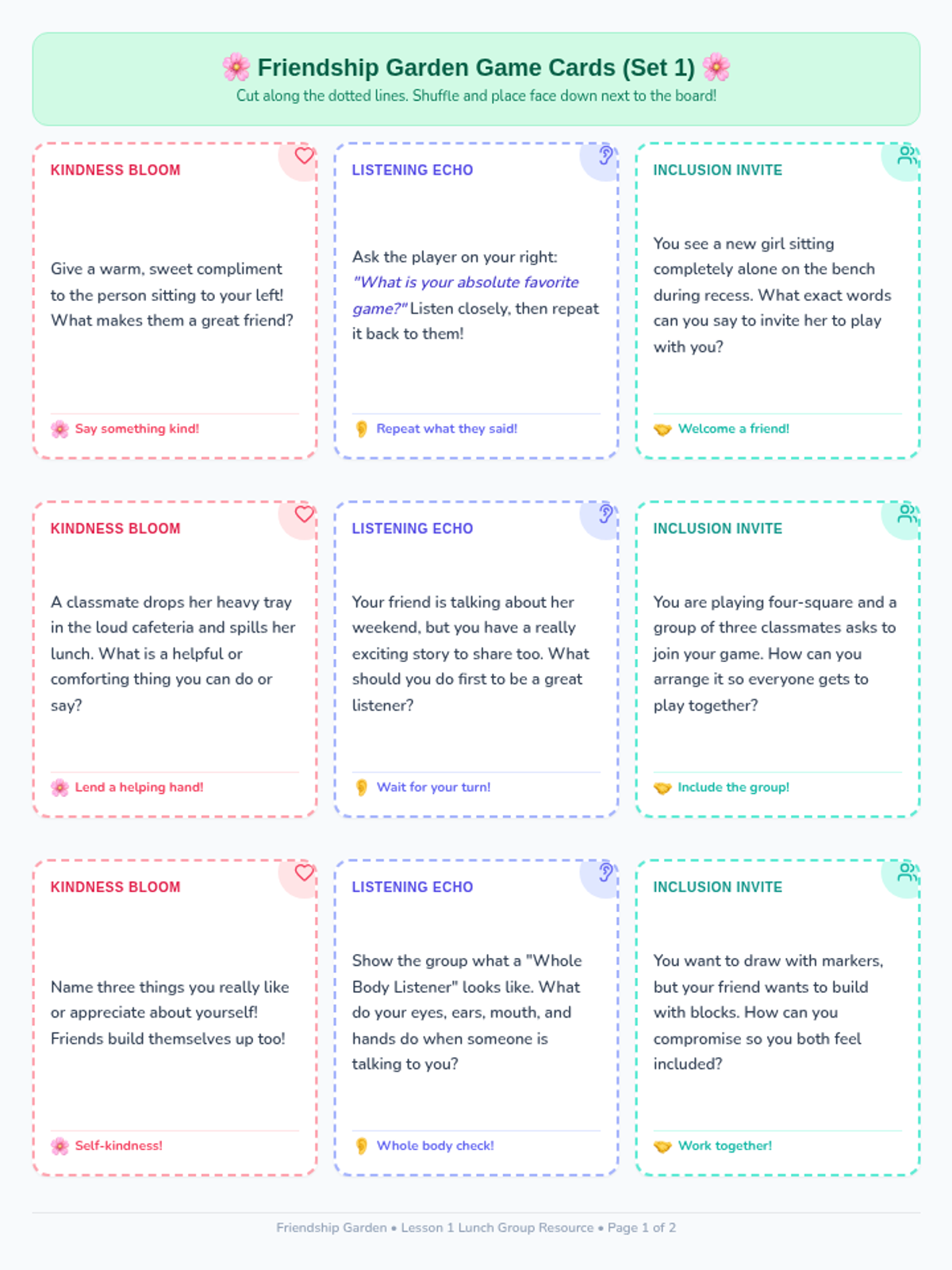
A lunch group board game curriculum for 2nd-grade girls designed to build social-emotional skills like empathy, active listening, kindness, and inclusion. Includes a printable game board, scenario-based prompt cards, and a counselor facilitator guide with paper dice and tokens.
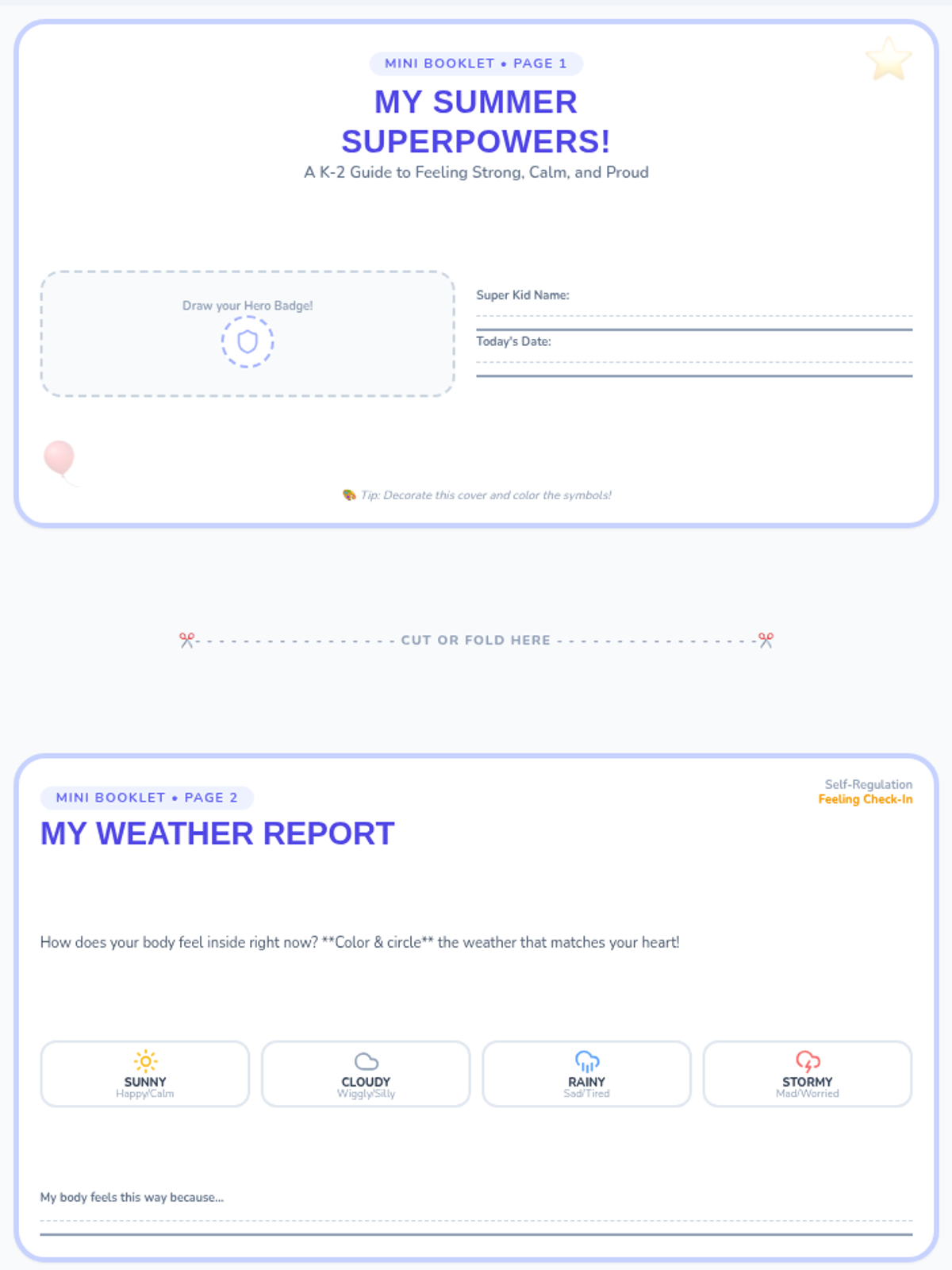
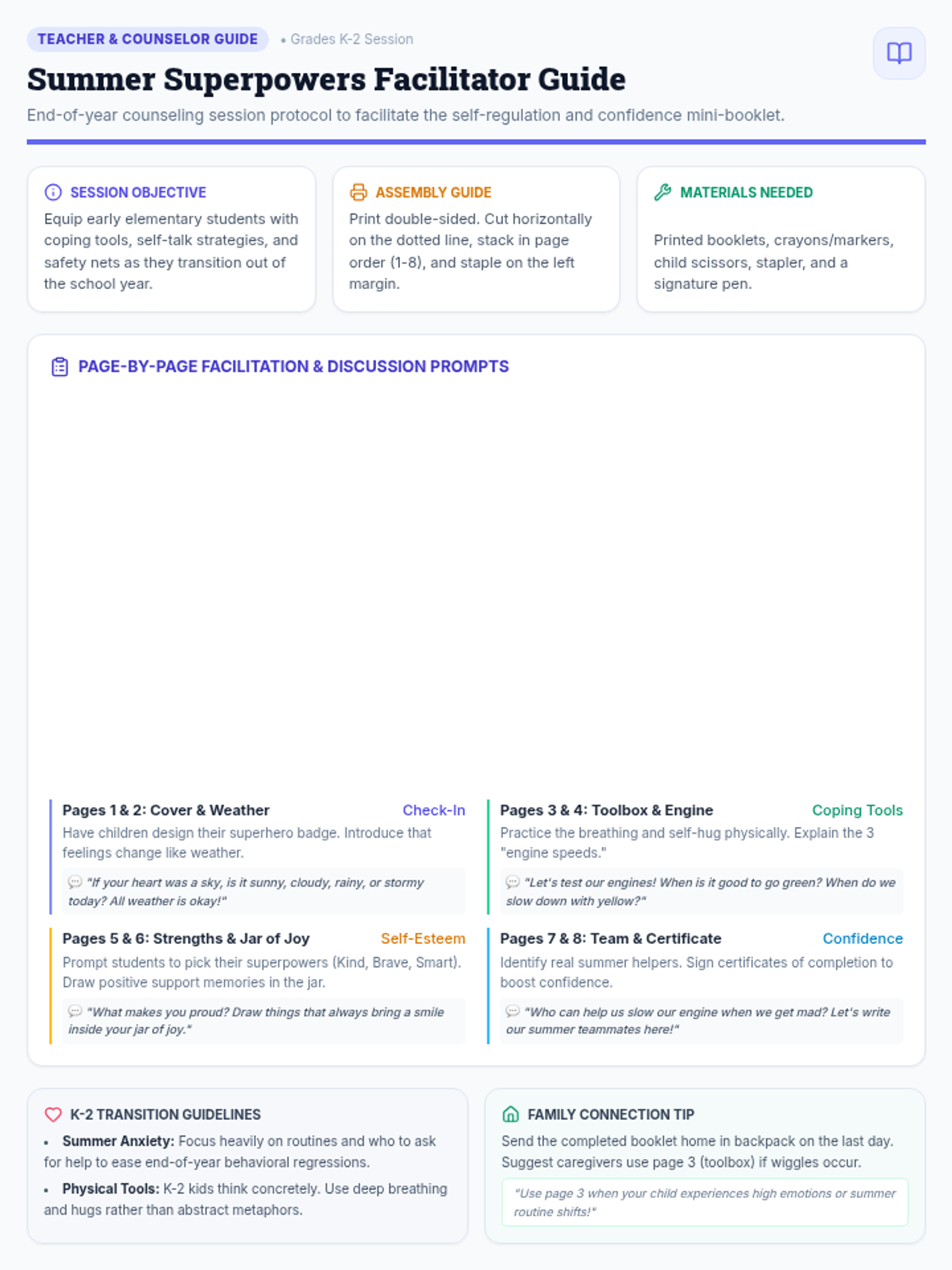
An engaging, end-of-year counseling session for K-2 students. Focuses on equipping young learners with self-regulation tools and self-esteem boosters as they transition to the summer break.
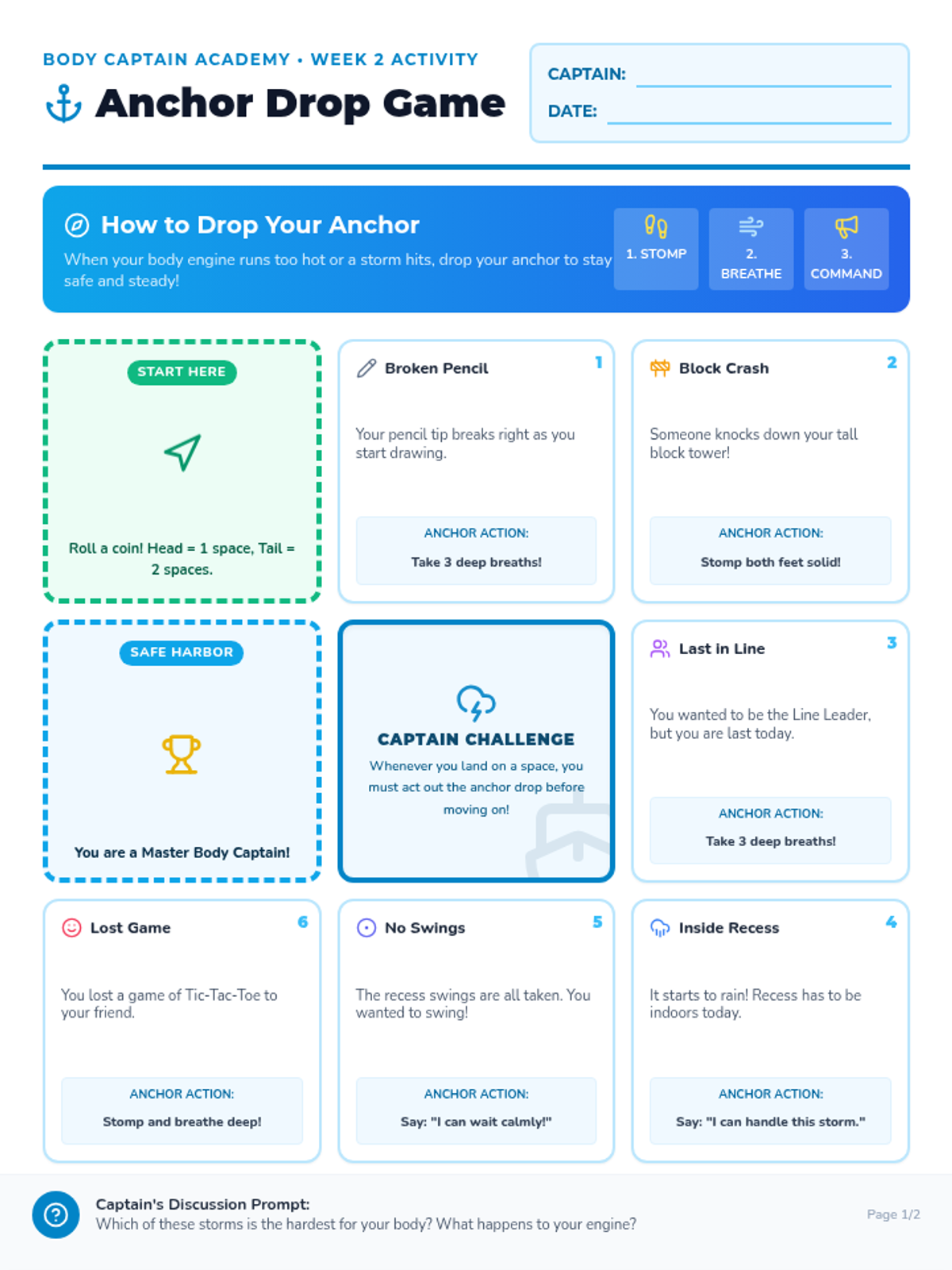
The second week of Body Captain Academy focuses on 'dropping the anchor'—learning how to pause and take a deep breath when the engine runs too hot. Students practice physical grounding techniques to keep their ship steady during emotional storms.
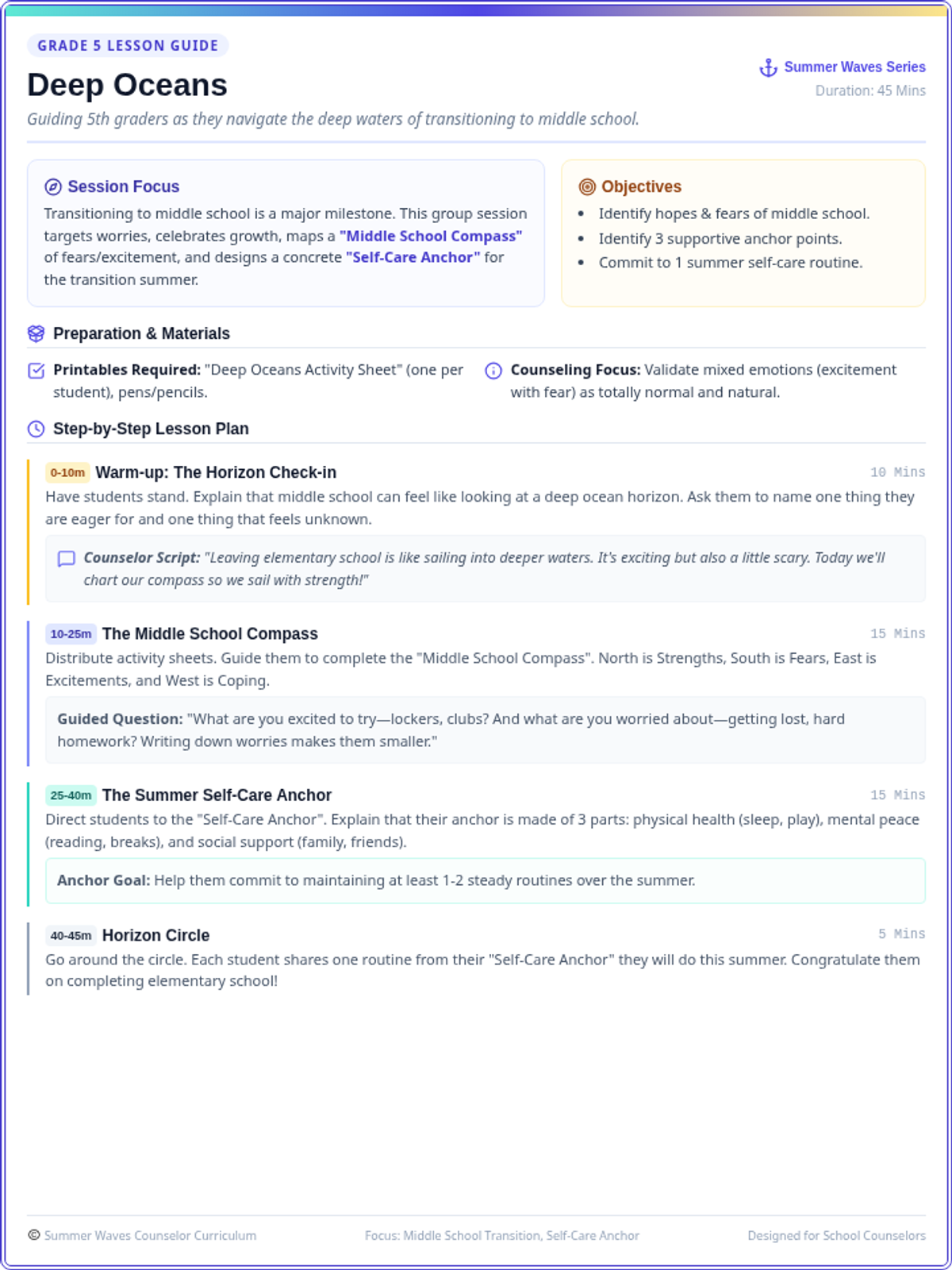
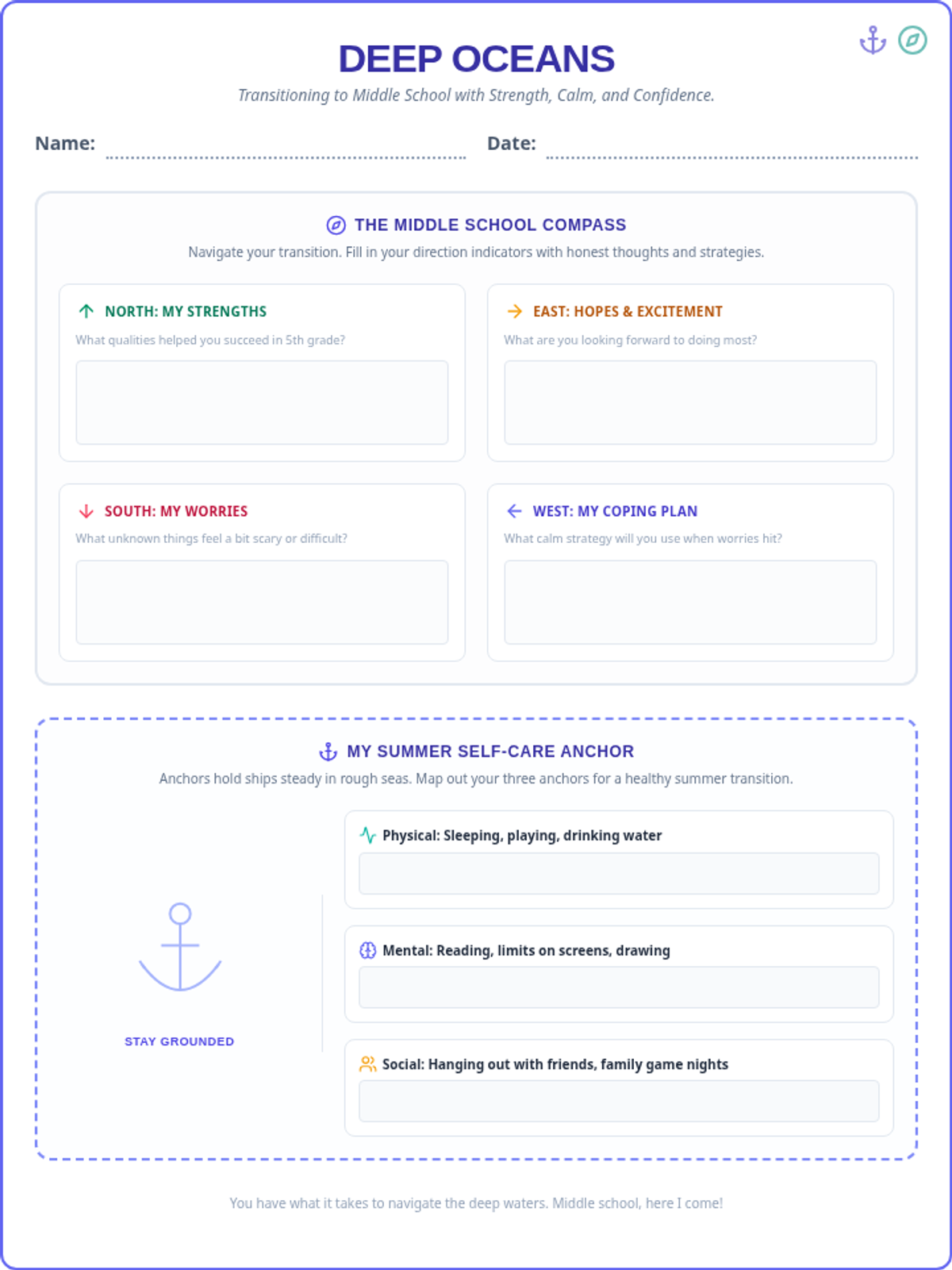
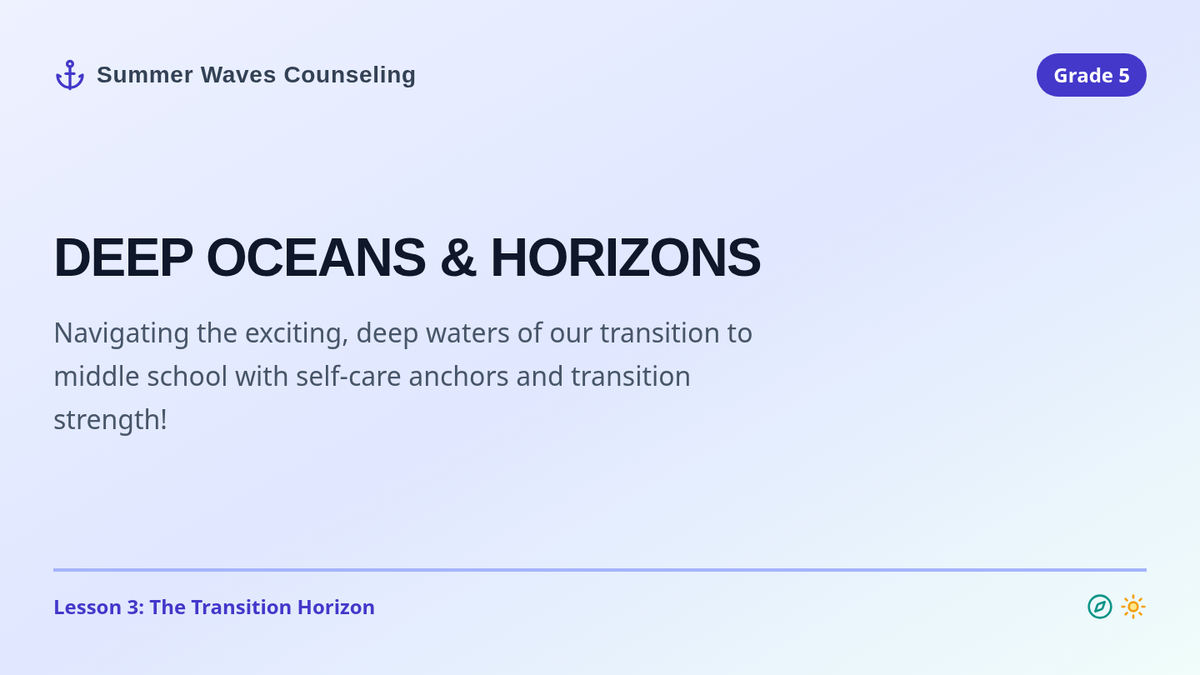
A transition-focused counseling lesson for 5th-grade students preparing for the major shift to middle school, centering on identifying core supportive networks, framing complex feelings about change, and building a self-care anchor.