A detective-themed 6th-grade math lesson focused on solving percent problems where the whole is unknown. Students learn to decode word problems into mathematical setups using ratio tables and equations to find the missing whole.
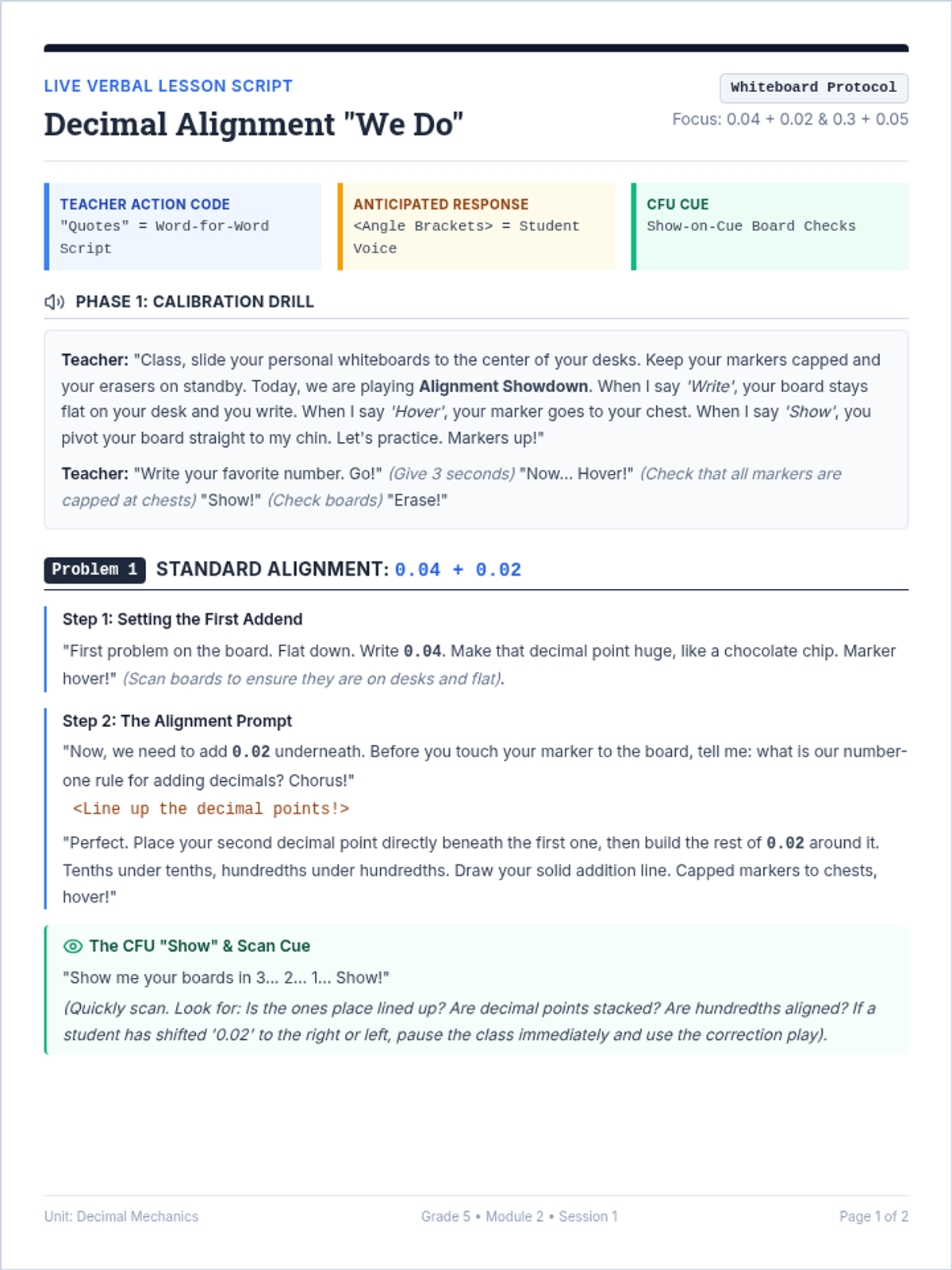
A focused lesson plan on standard algorithmic alignment for adding decimals. Students master lining up decimal points and place values, learning to avoid the common trap of right-aligning numbers of unequal length.
A lesson plan focusing on sixth-grade decimal addition and subtraction. It covers conceptual decimal models, place value grids, standard vertical algorithm execution, and application tasks like Dinner Party Budgeting.
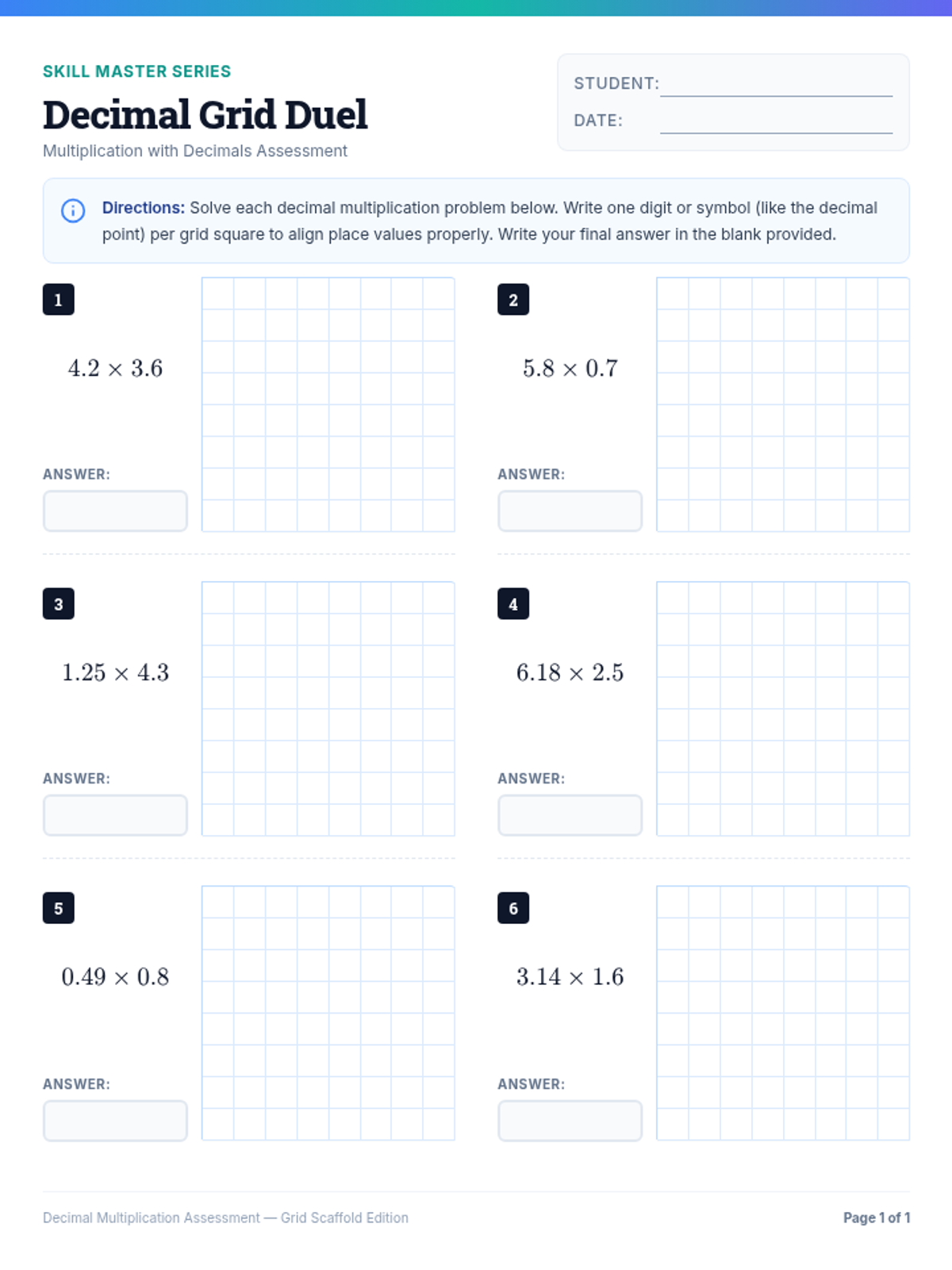
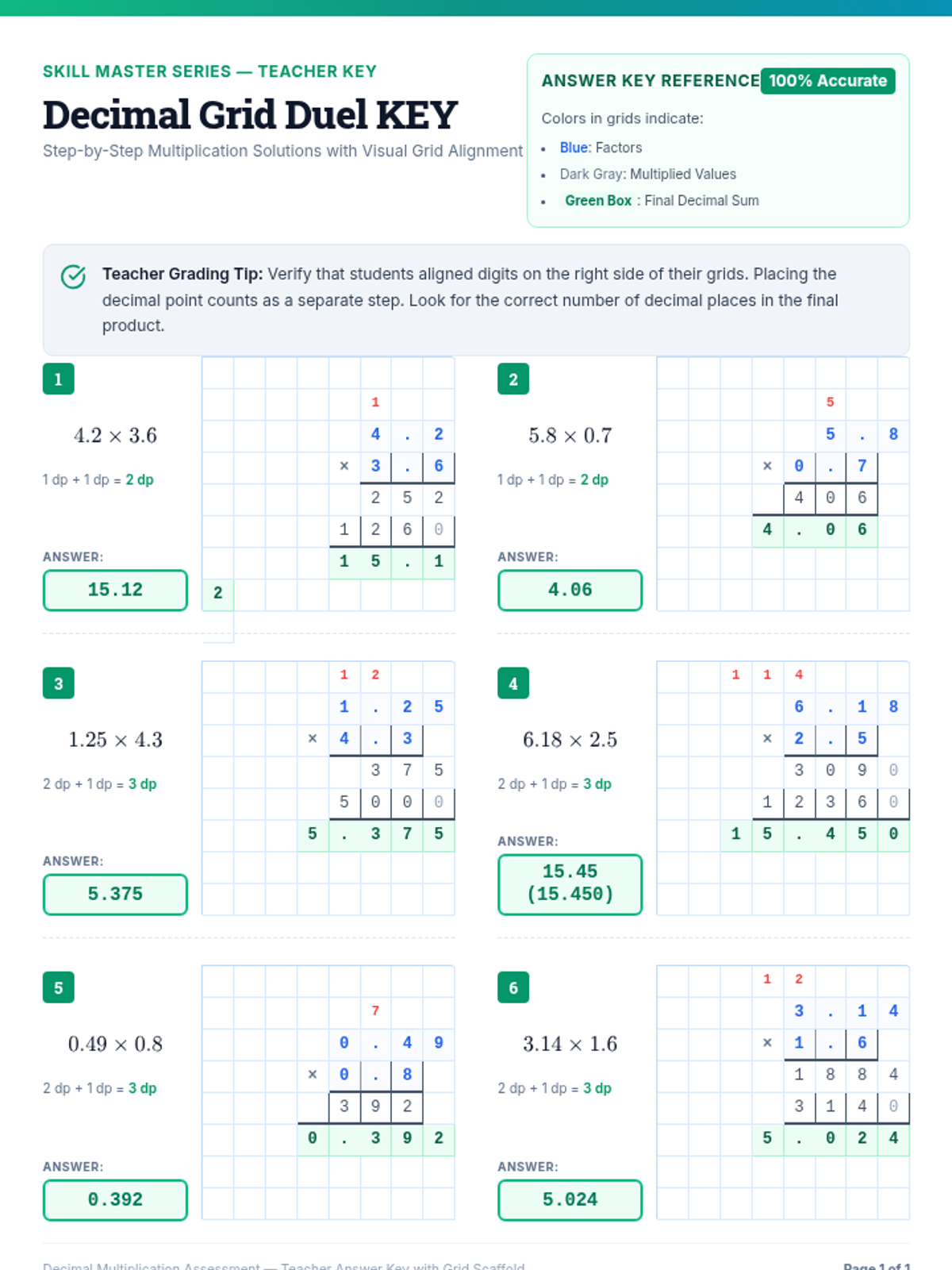
A multiplication with decimals assessment lesson featuring 6 structured problems. It provides specialized visual grid supports (graph paper alignment grids) to help students organize place values and coordinate their standard algorithm calculations.
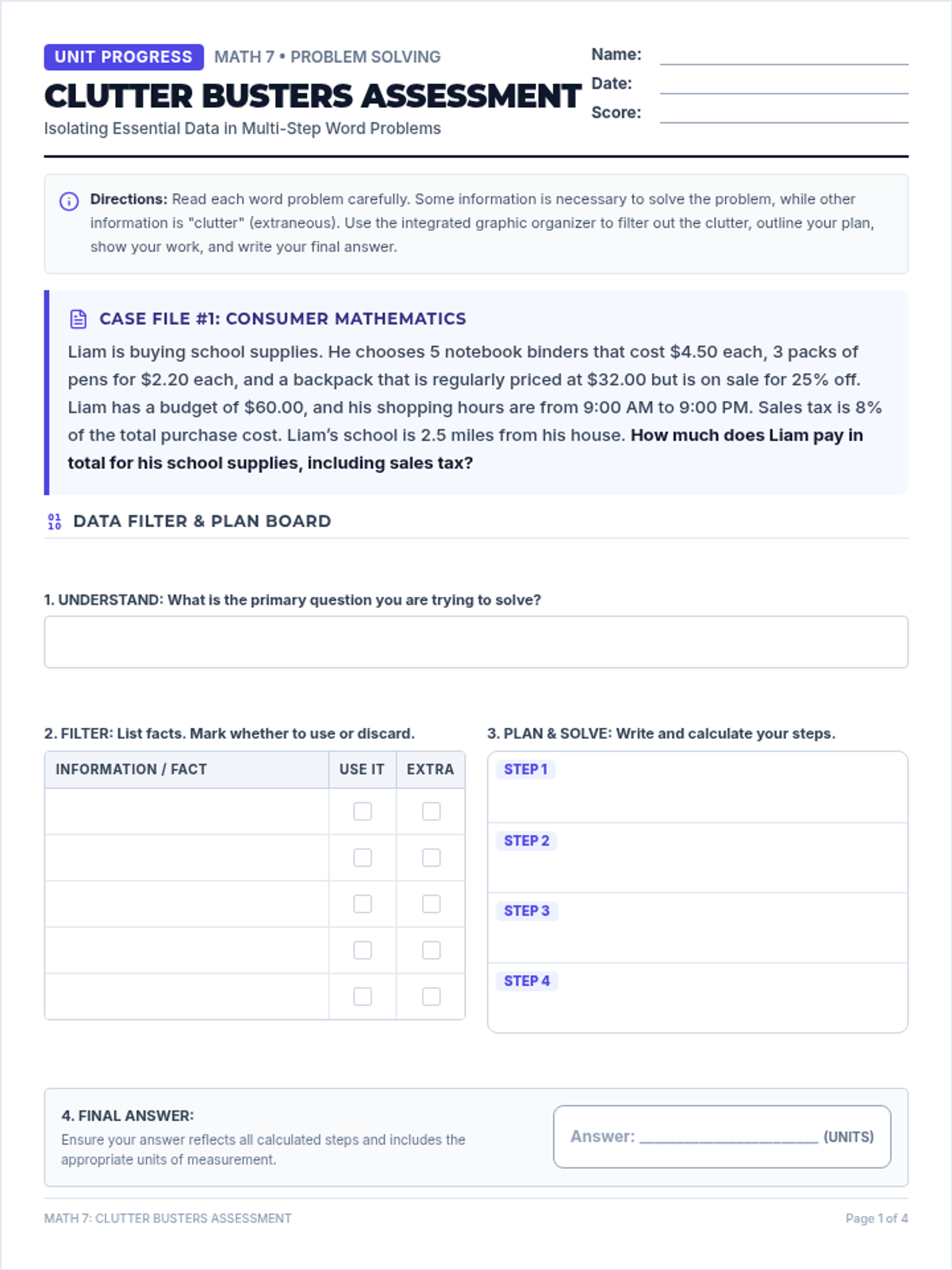
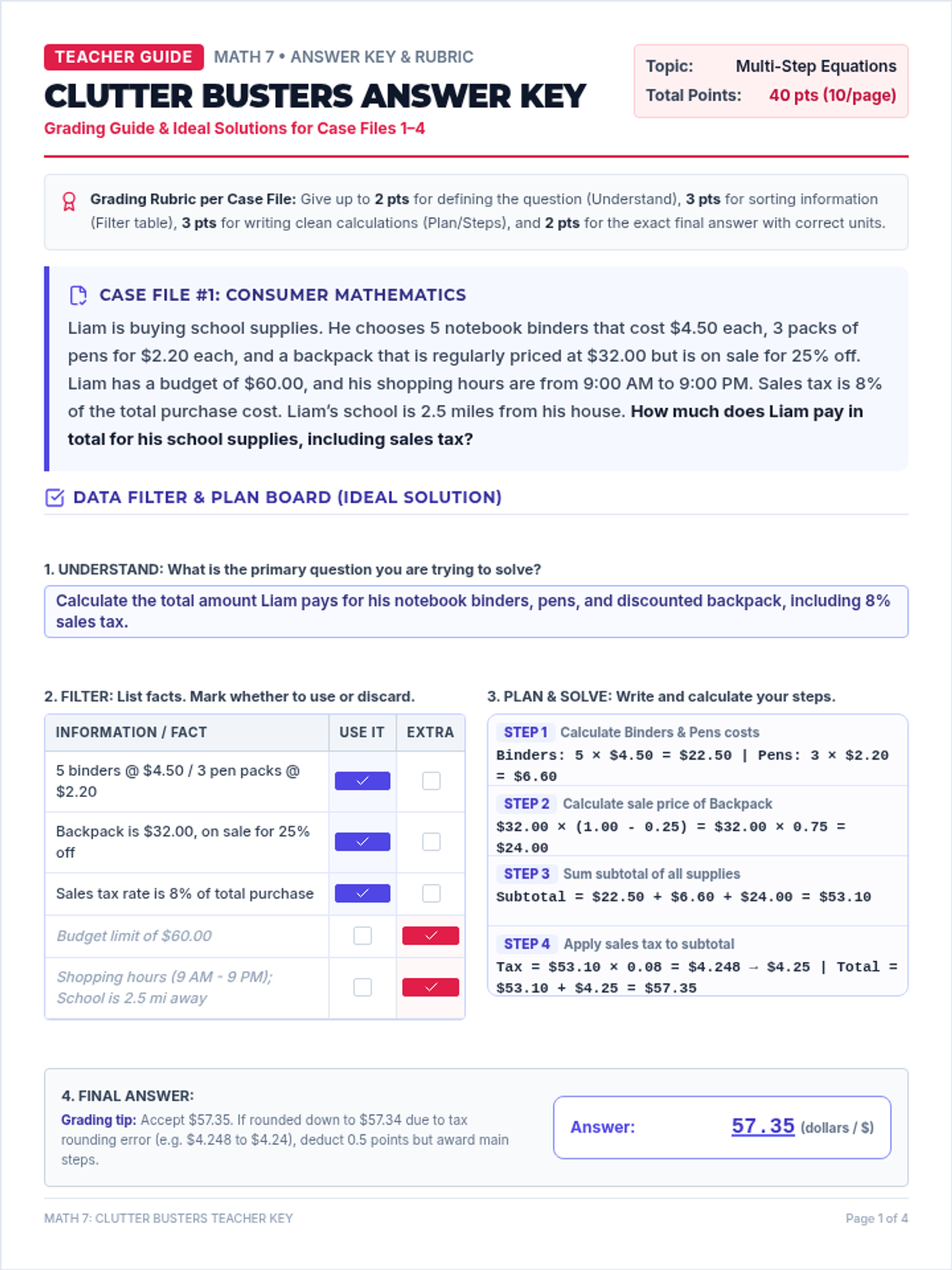
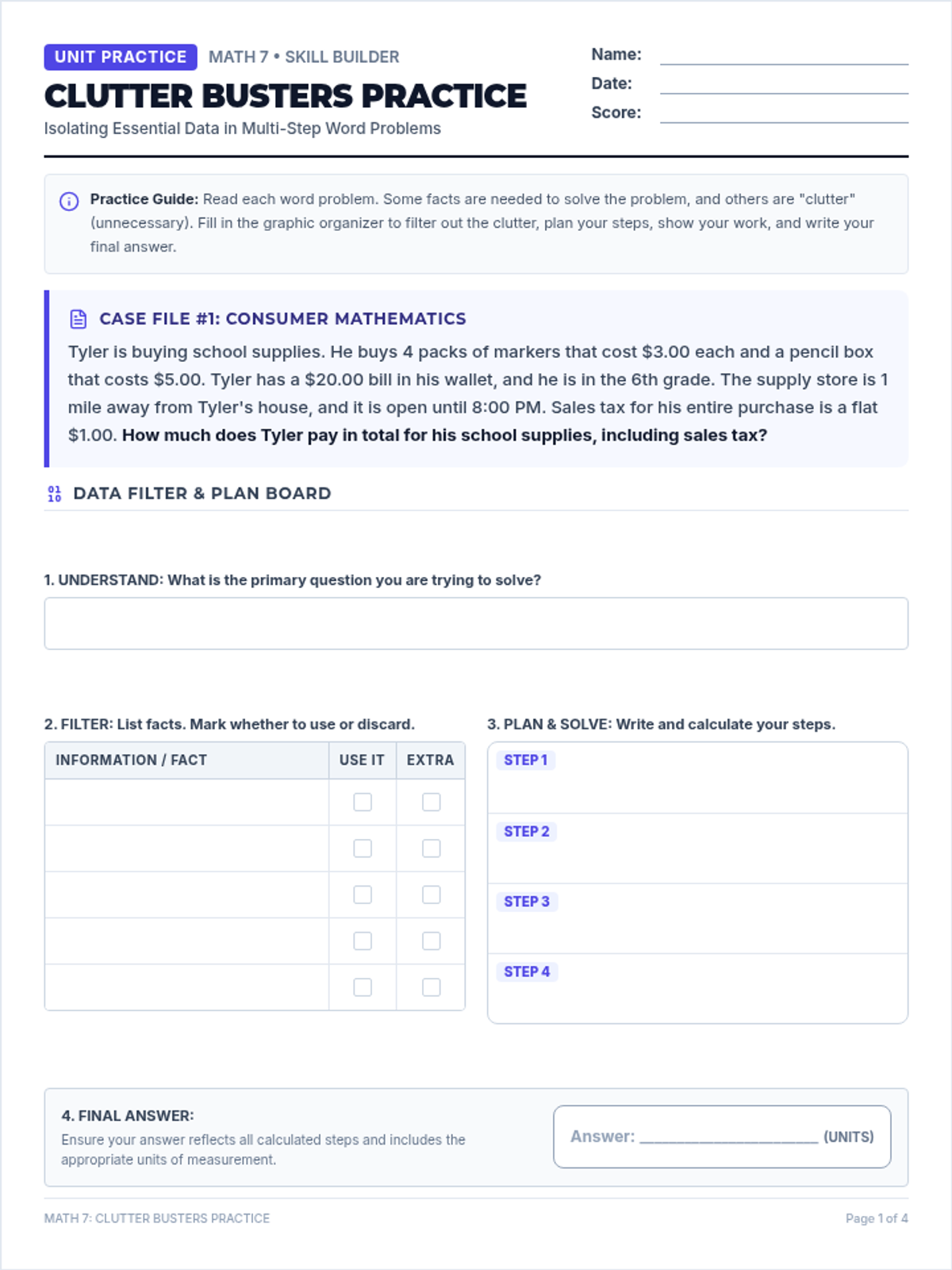
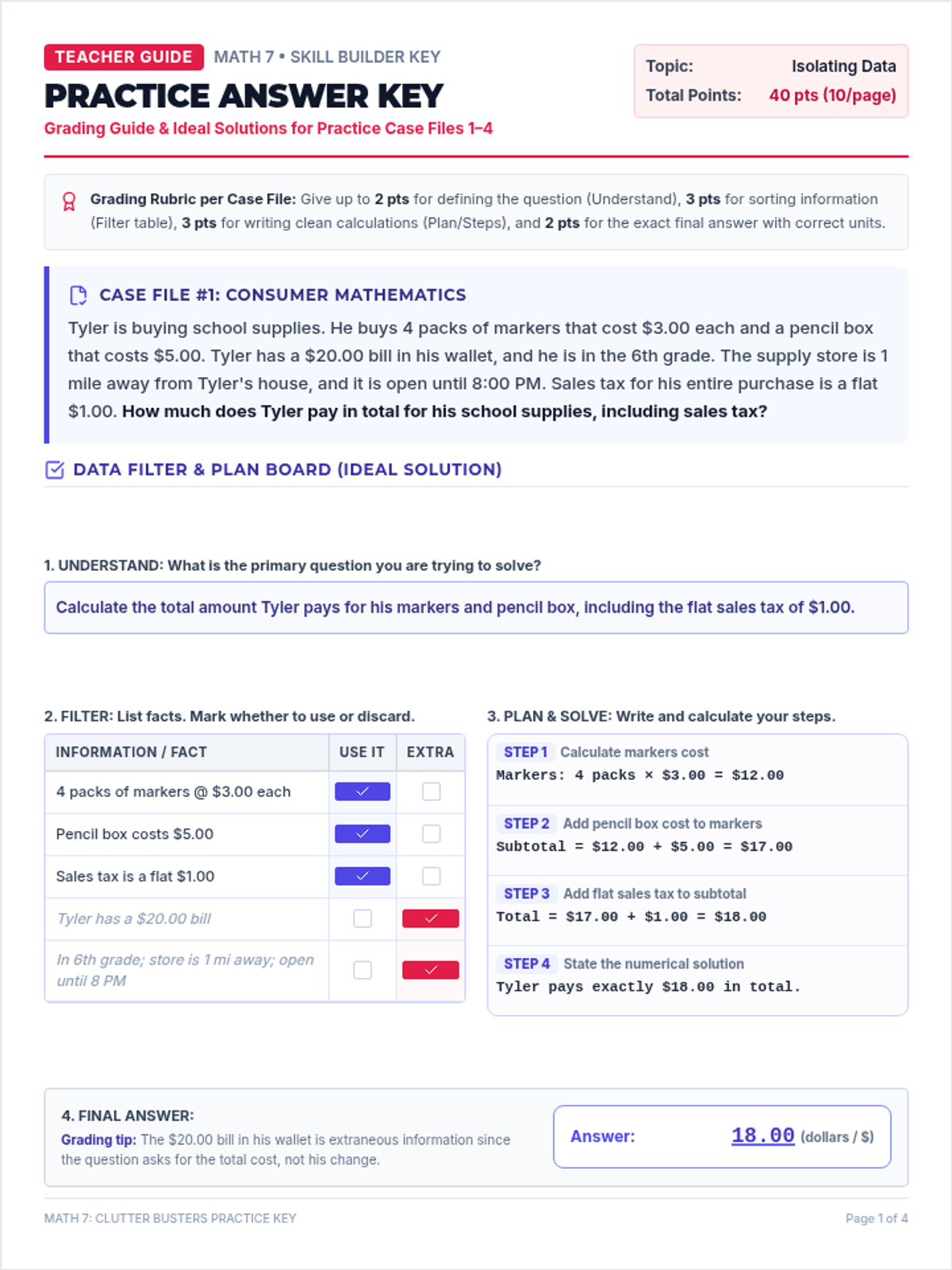
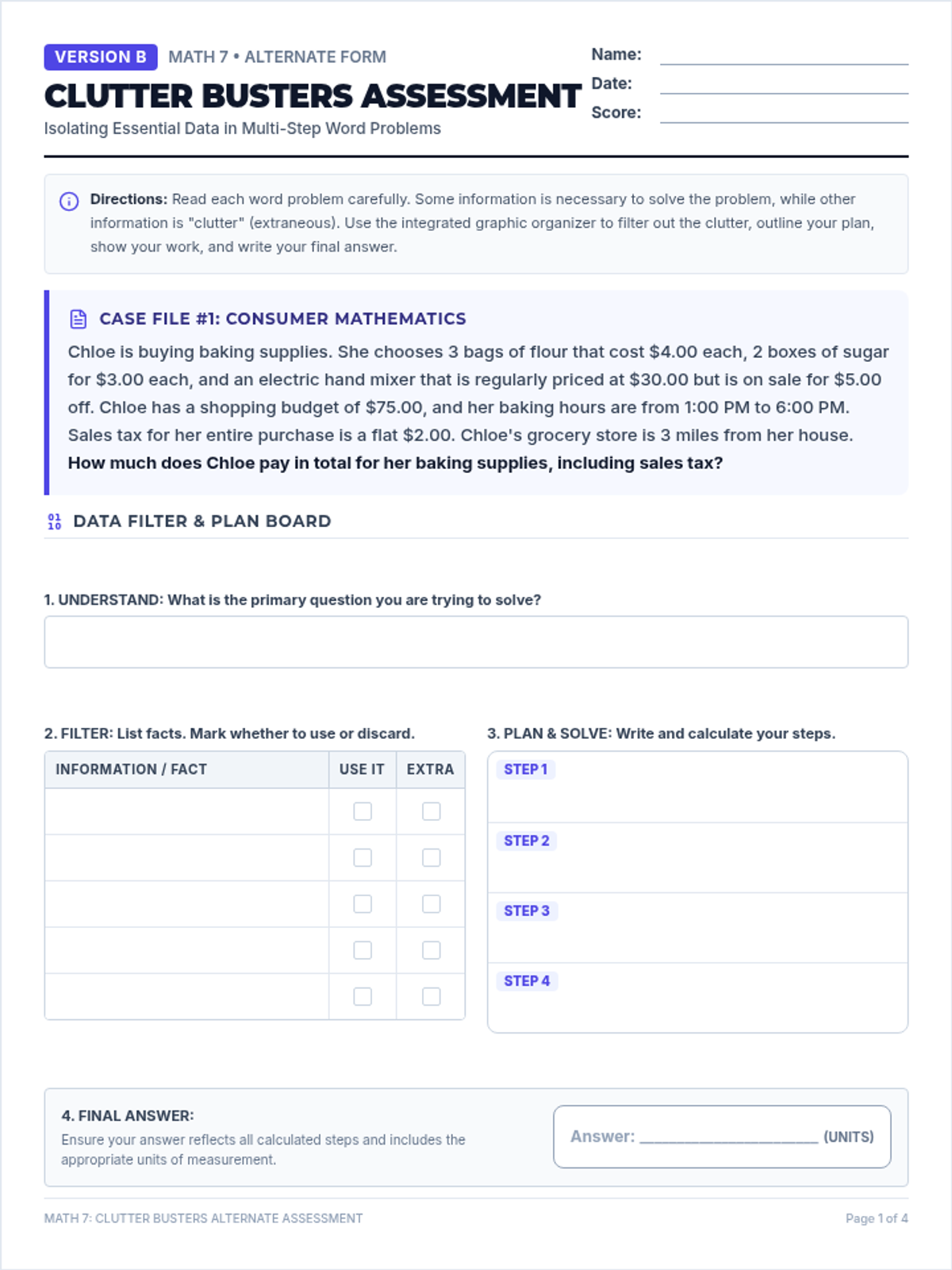
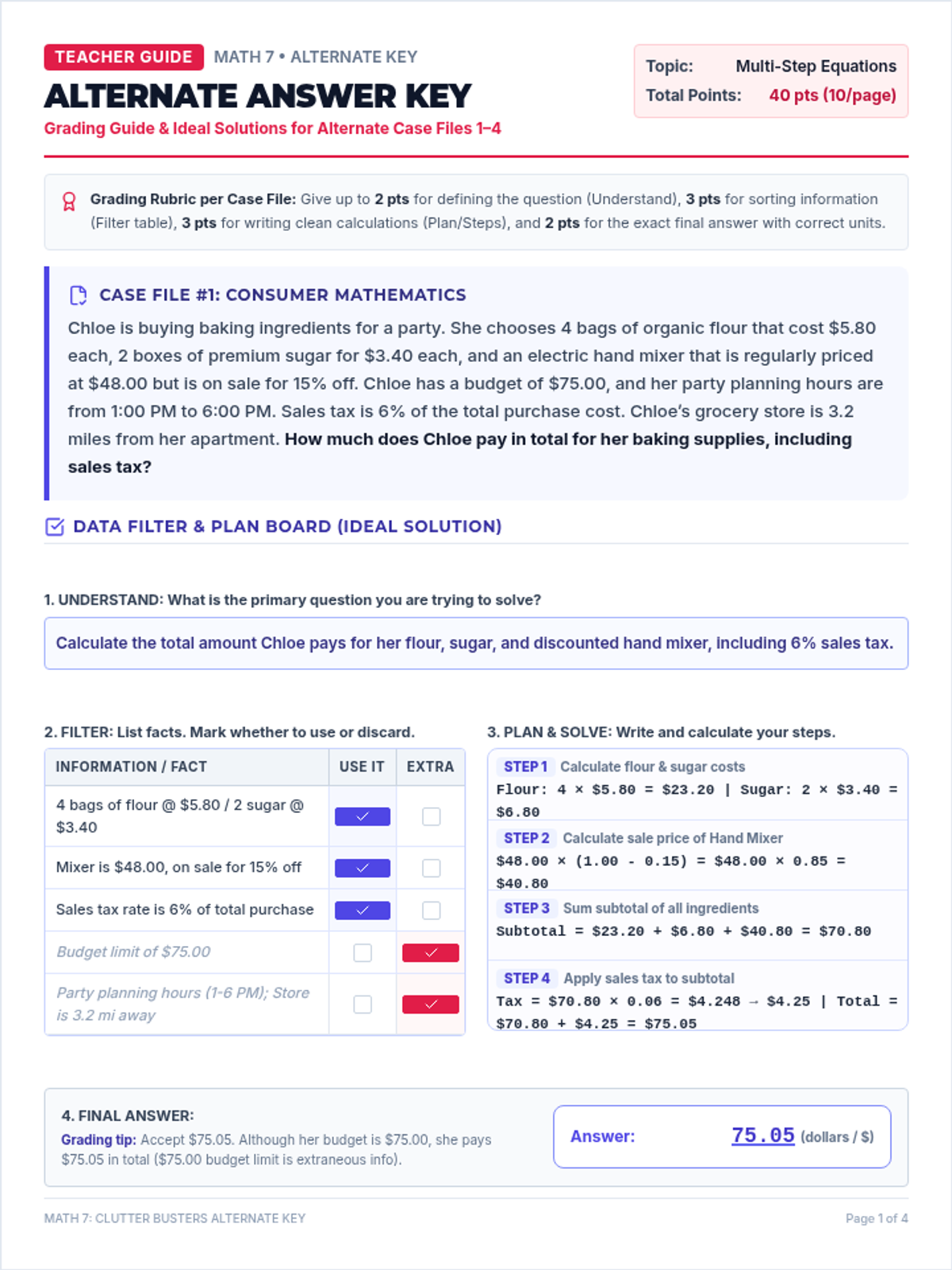
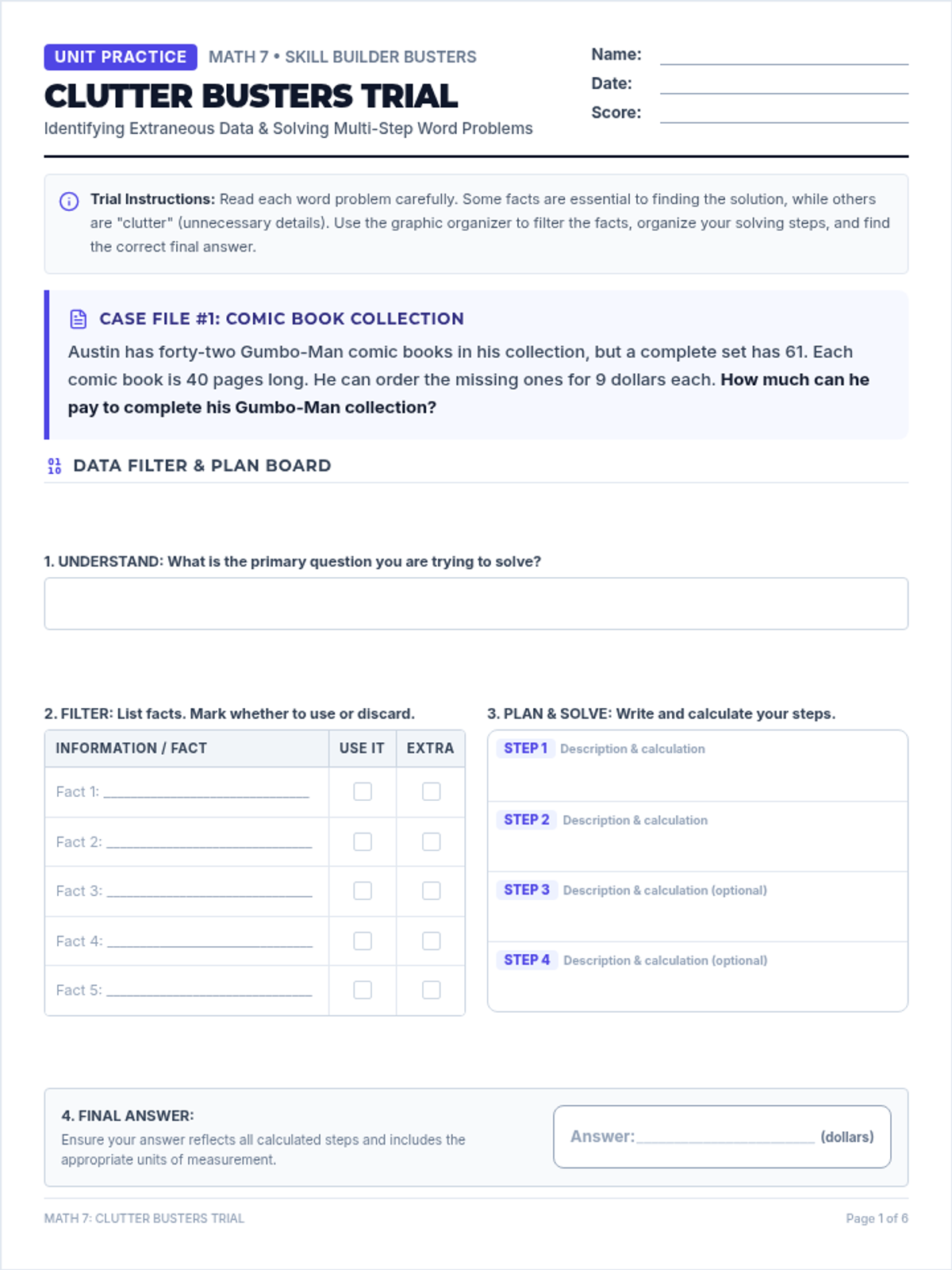
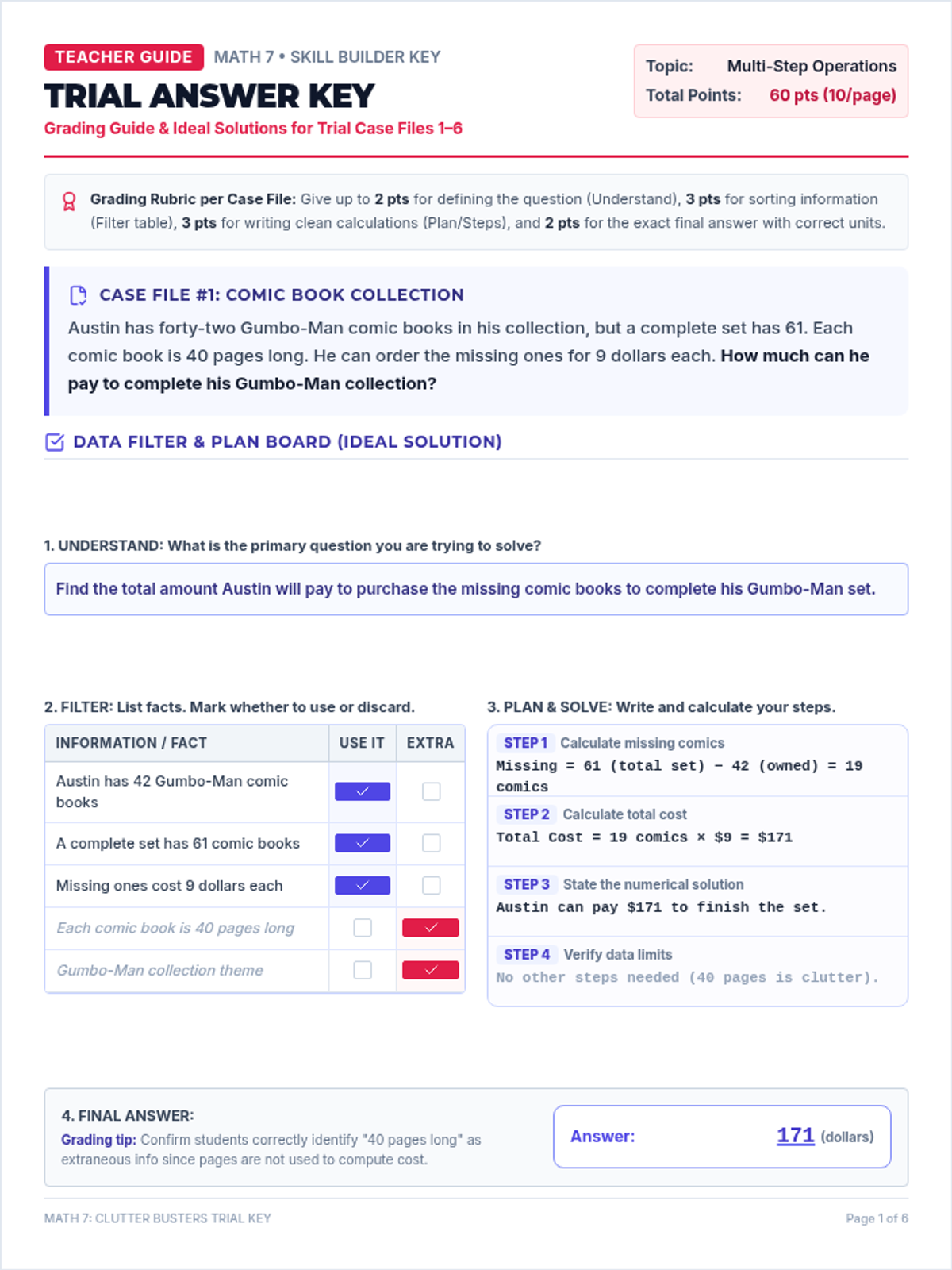
A middle-school math lesson focused on identifying and isolating extraneous information in multi-step word problems. It teaches students to separate relevant data from distracting context using an intuitive, column-based graphic organizer.
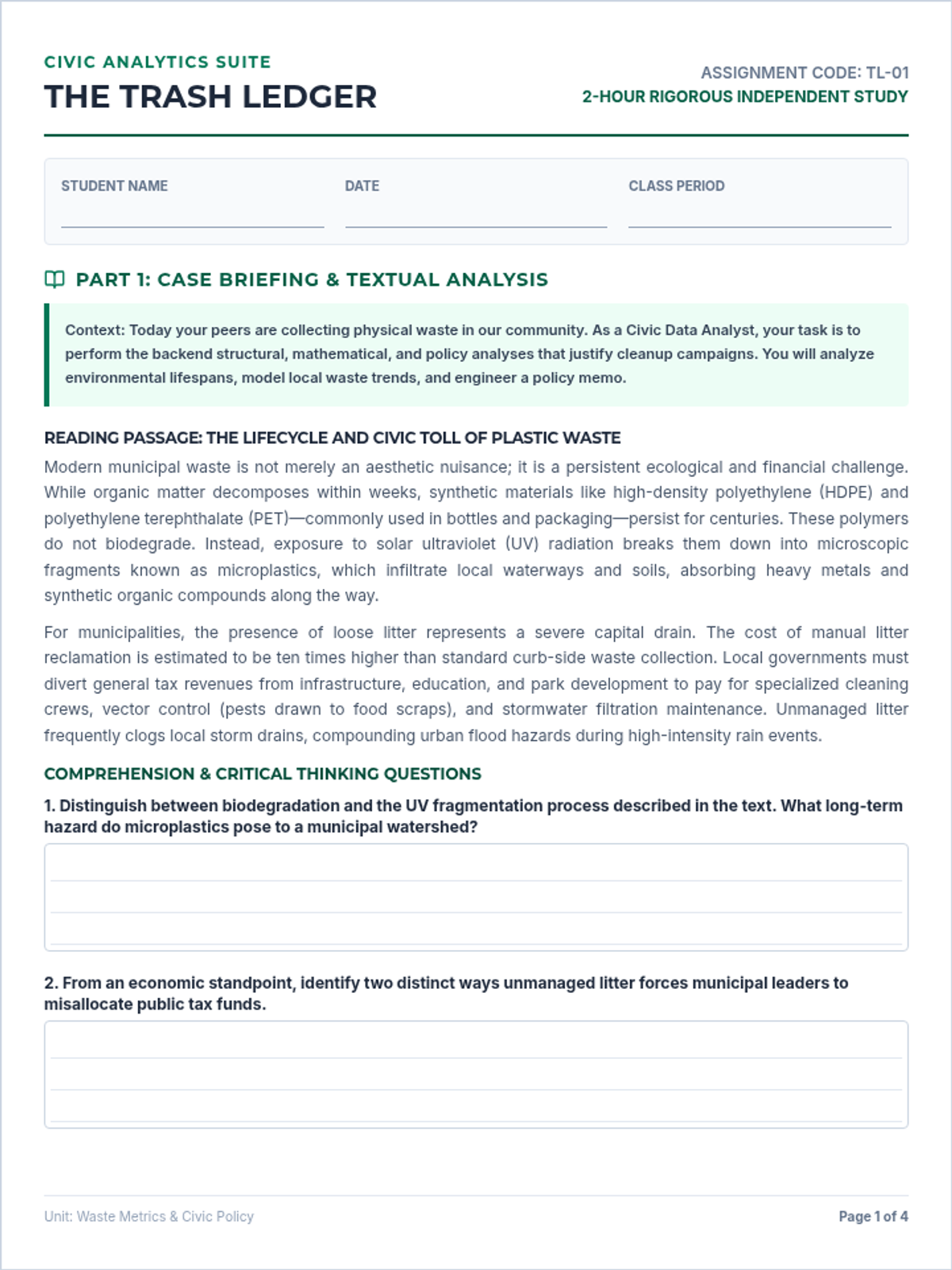
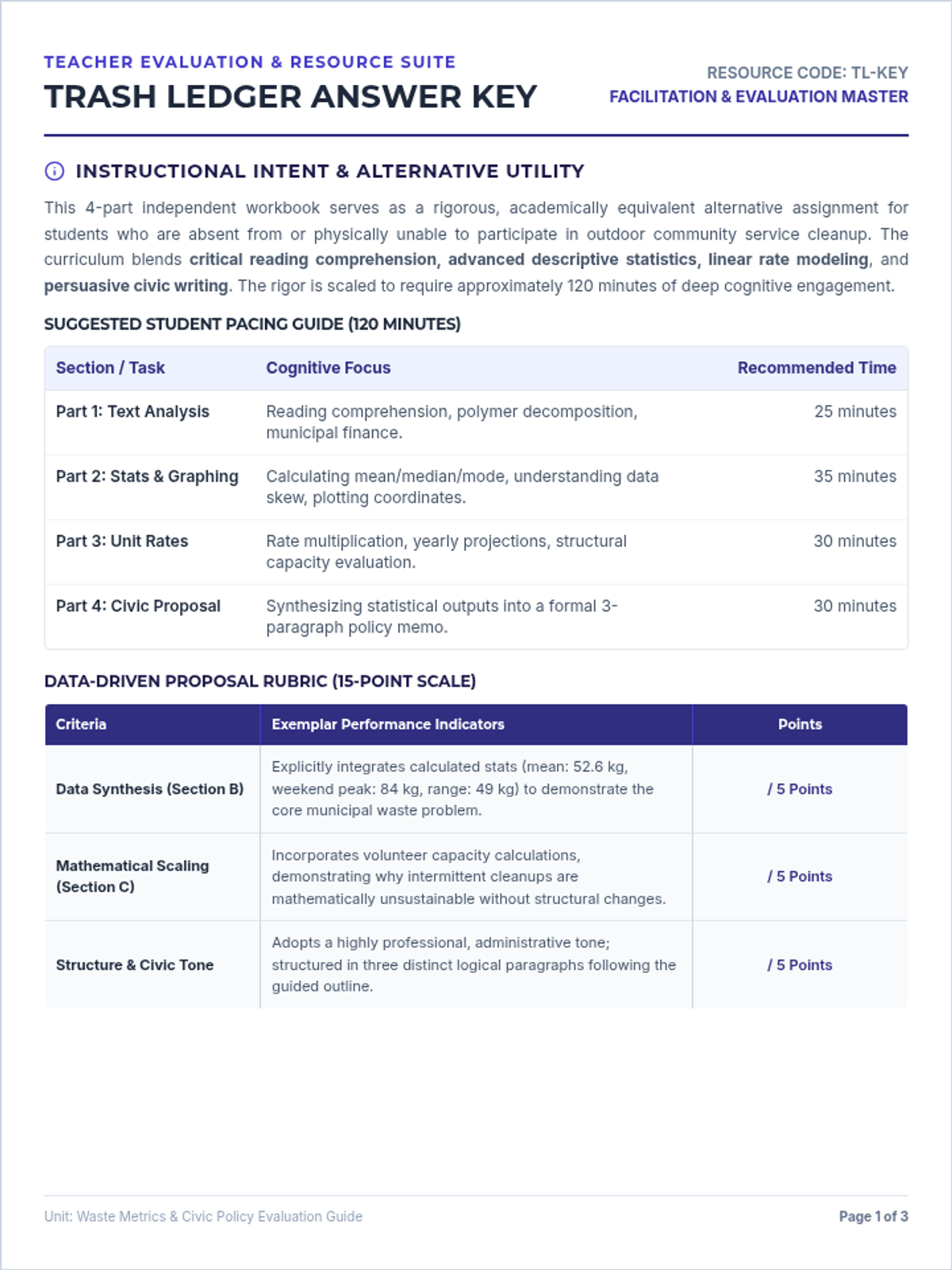
A rigorous mathematical and analytical alternative assignment for students missing the community service cleanup. Students analyze local waste data, calculate trash accumulation rates, and write a data-driven proposal to local leaders.
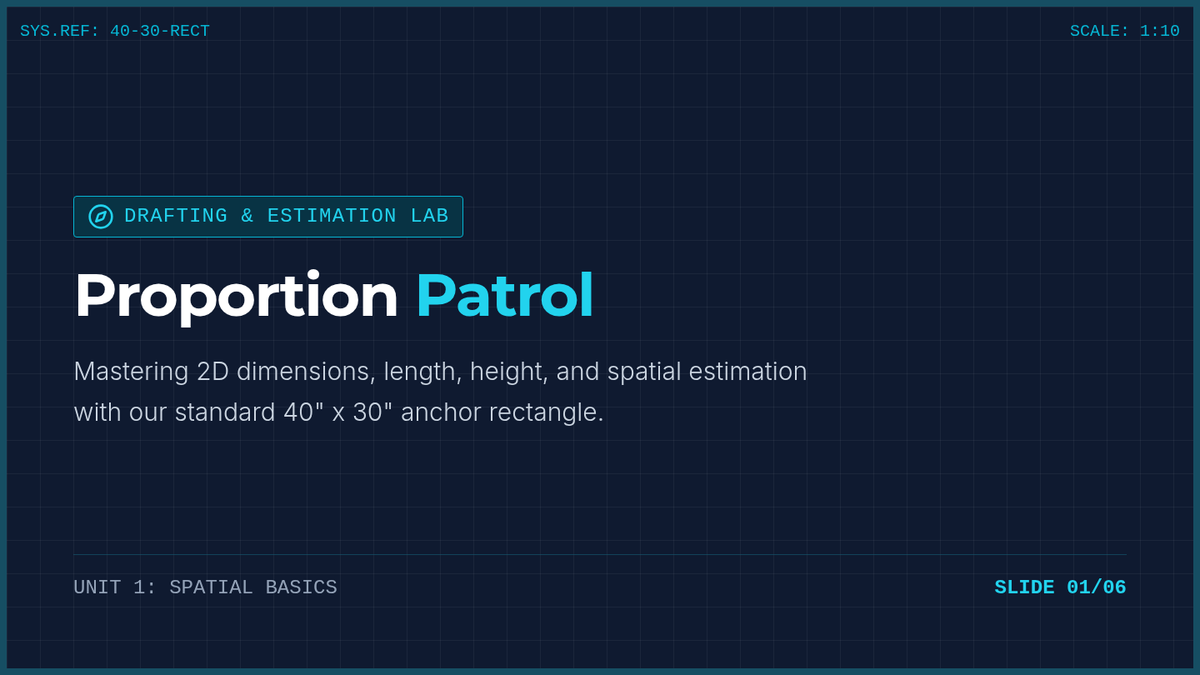
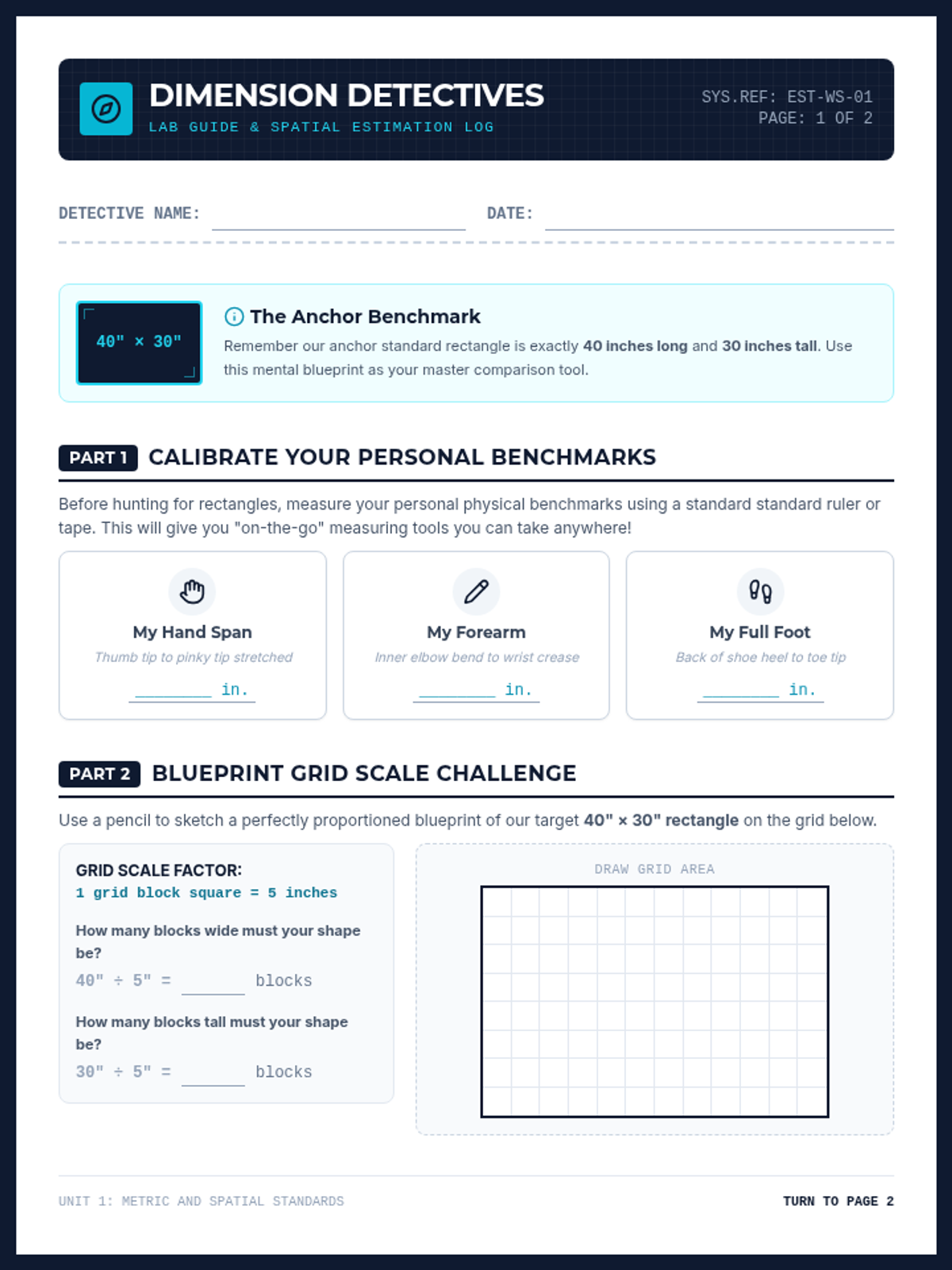
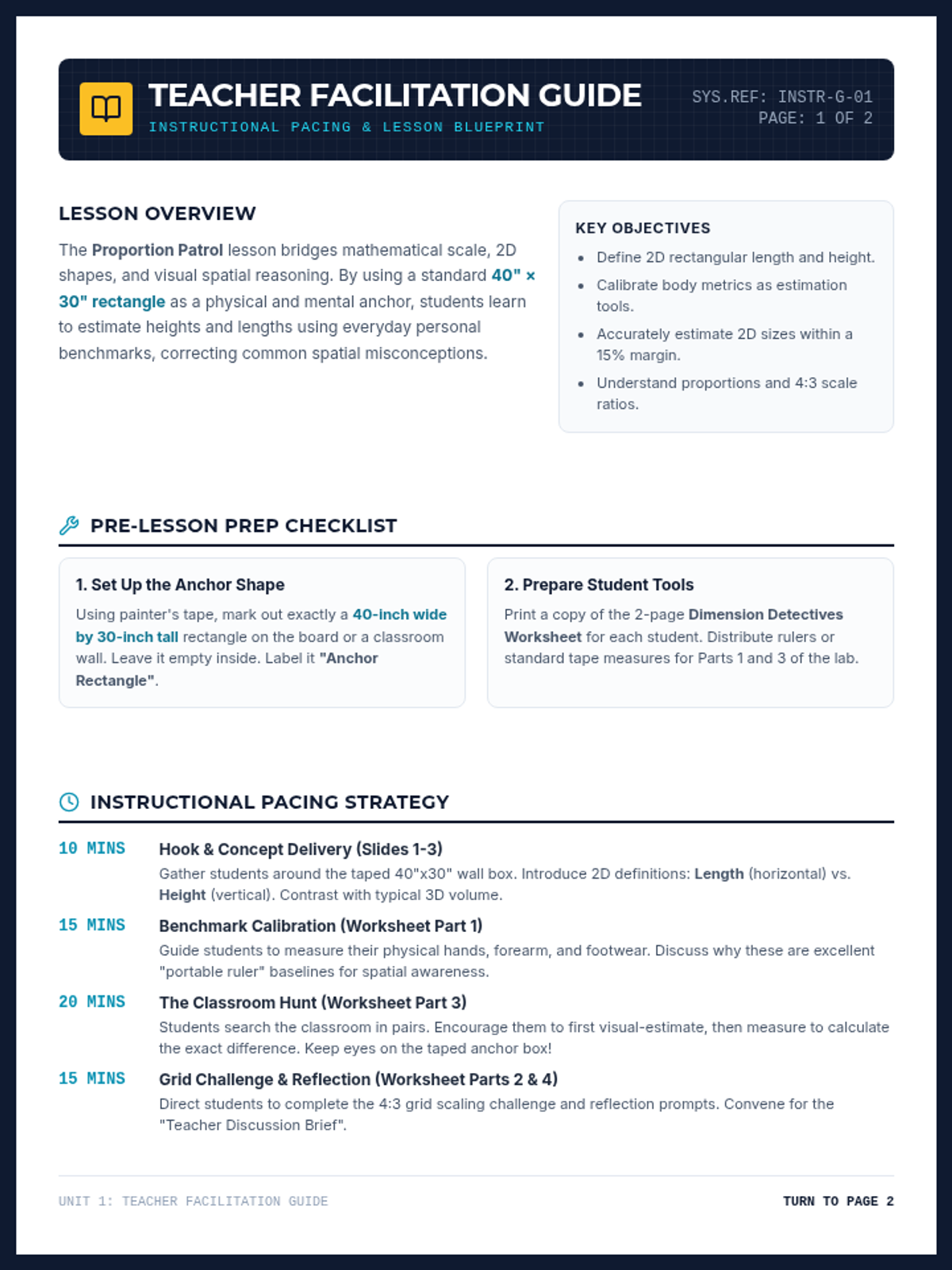
A hands-on, highly visual lesson focusing on 2D shape dimensions, length, height, and spatial estimation using a 40-inch by 30-inch standard rectangle as a primary anchor point for real-world scaling.
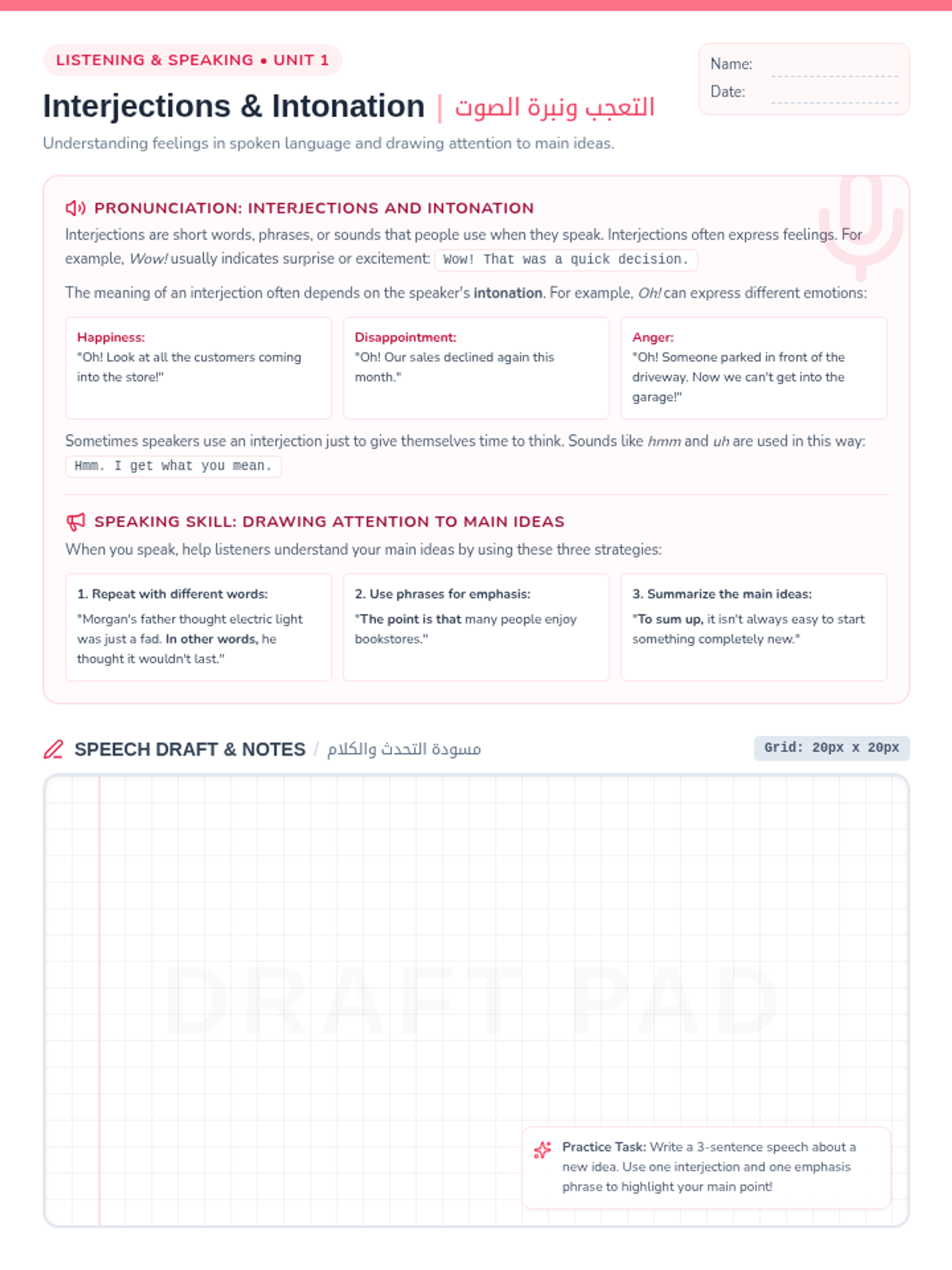
A premium, student-facing draft and rule booklet for English Listening and Speaking (L&S) across 8 core units of pronunciation and speech skills.
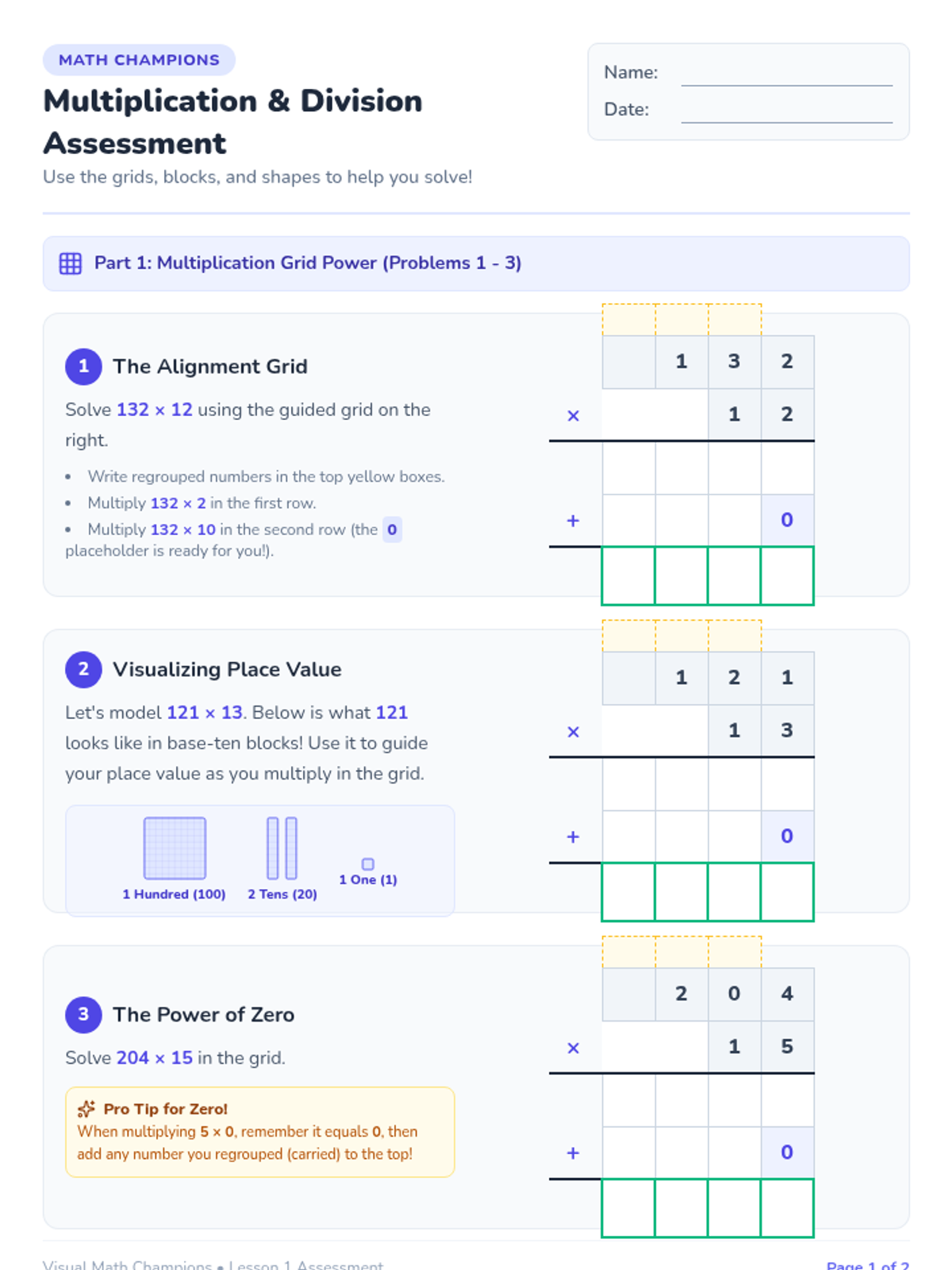
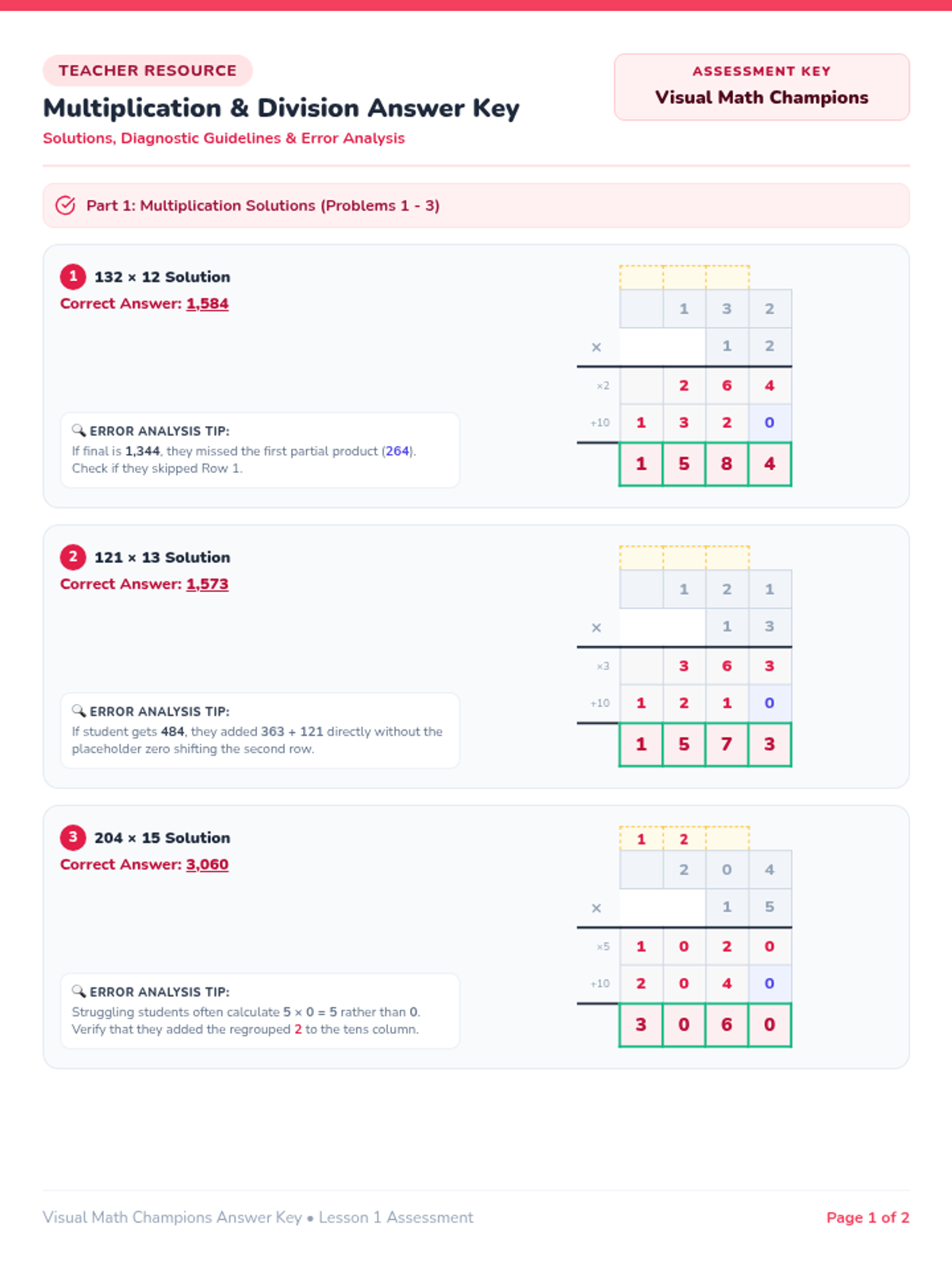
A math assessment lesson focusing on 3-digit by 2-digit multiplication and basic division with rich visual scaffolds (grid alignments, base-ten block representations, equal sharing groups, and arrays) designed to support students who struggle with abstract math concepts.
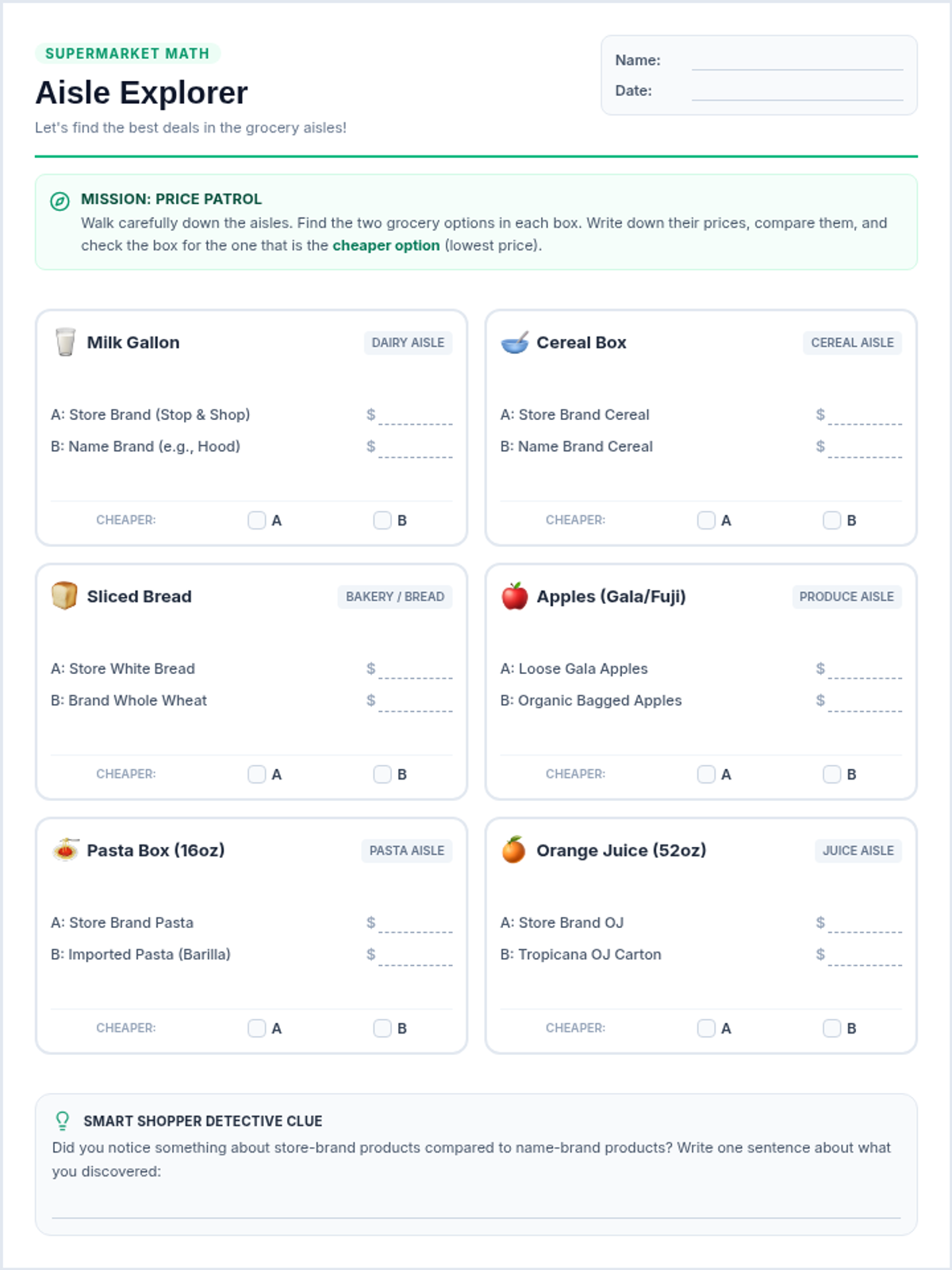
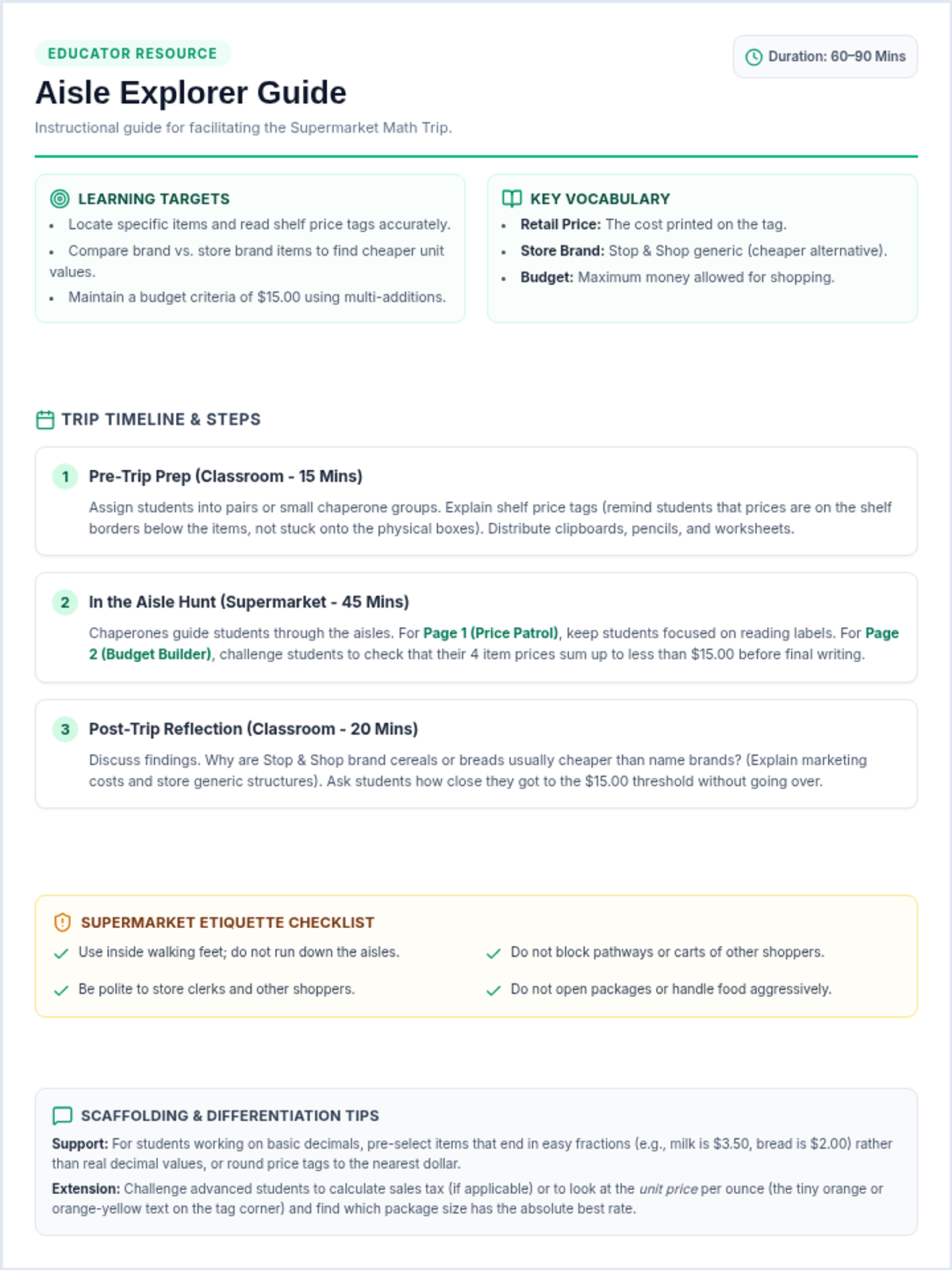
A hands-on, community-based learning activity where students visit a supermarket to locate prices, compare deals, and practice budget management in a real-world setting.
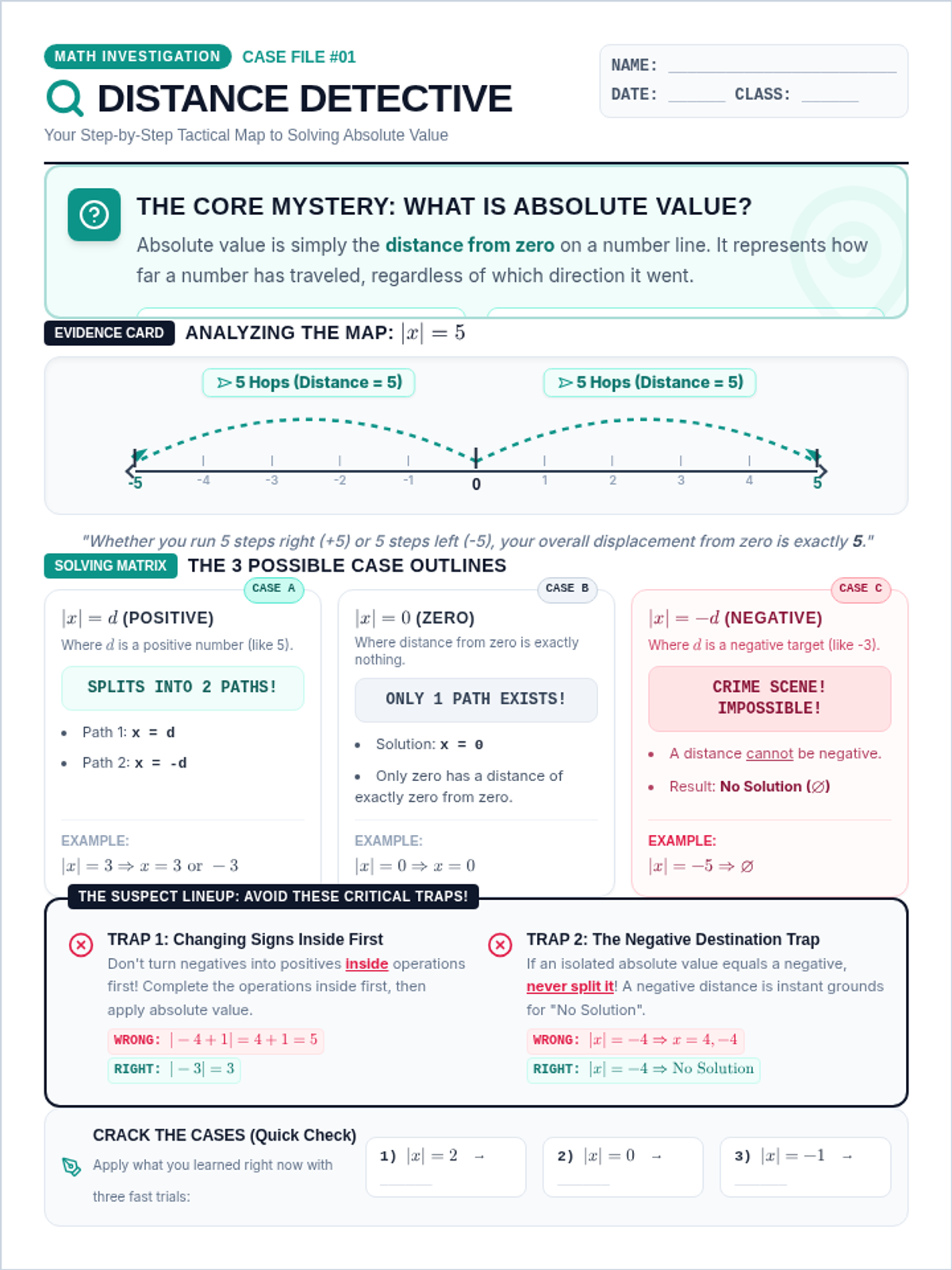
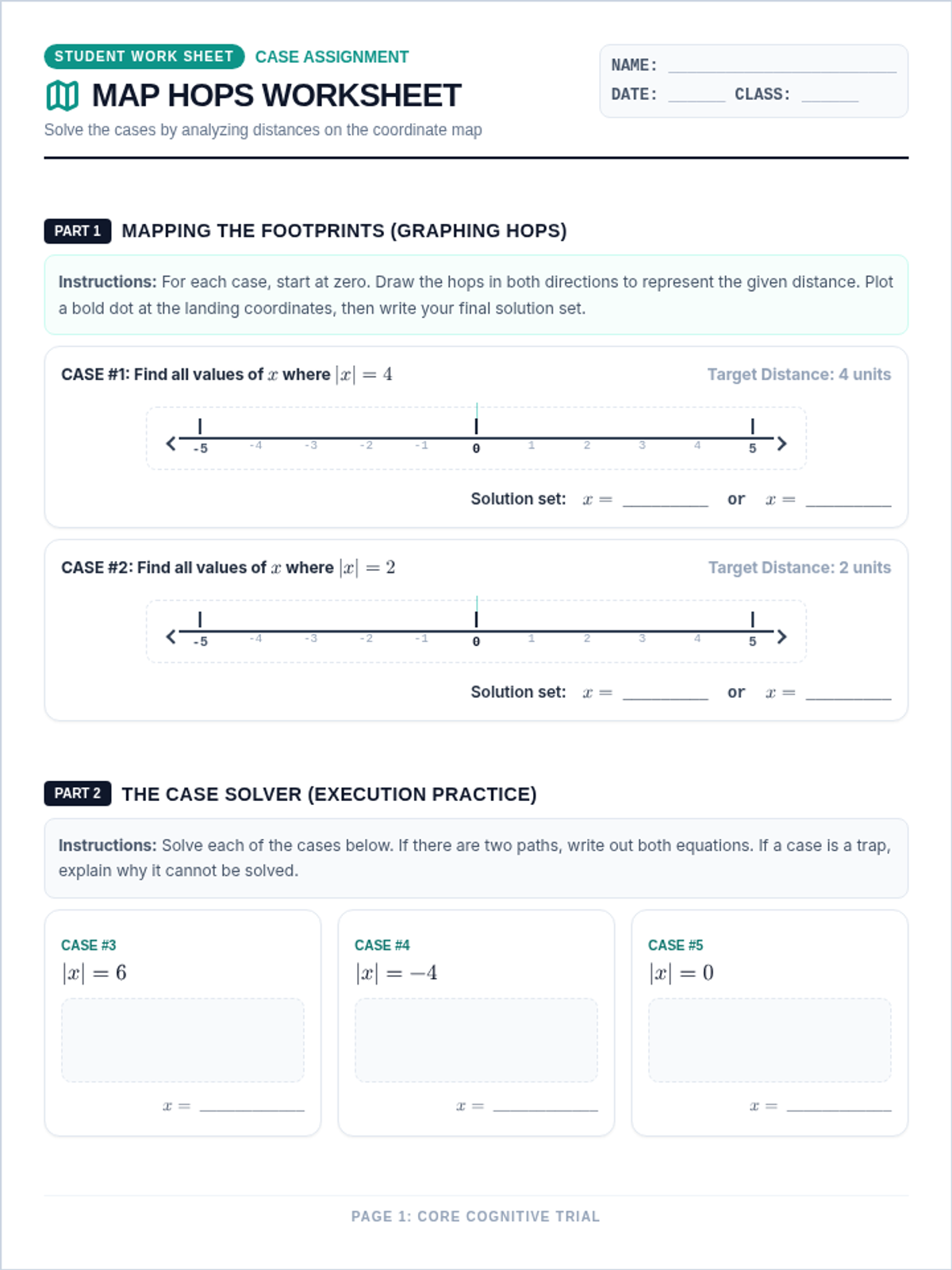
An introductory math lesson designed to teach the fundamentals of absolute value as distance on a number line. It includes conceptual breakdowns, visual guides, and coaching tools for educators.
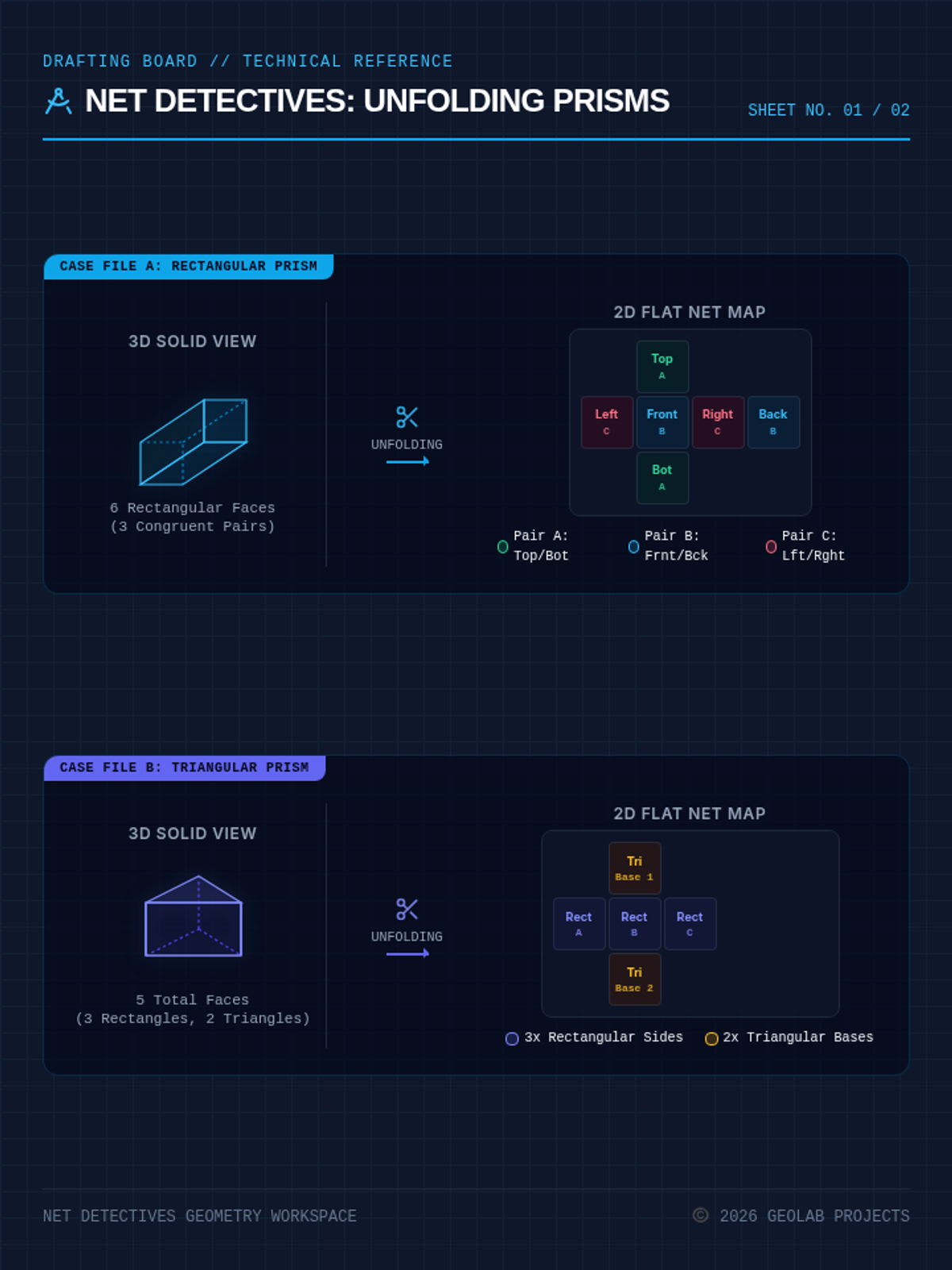
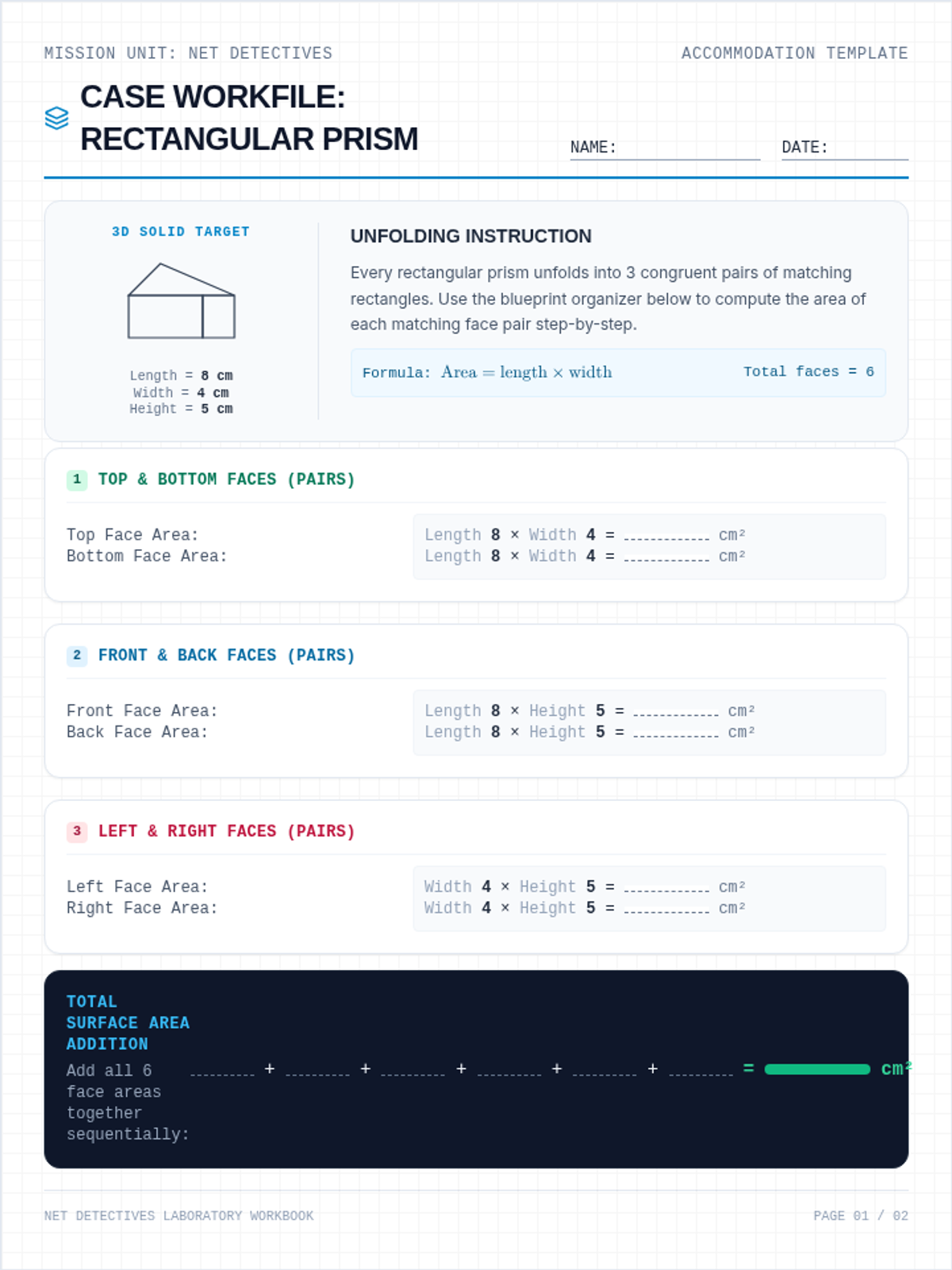
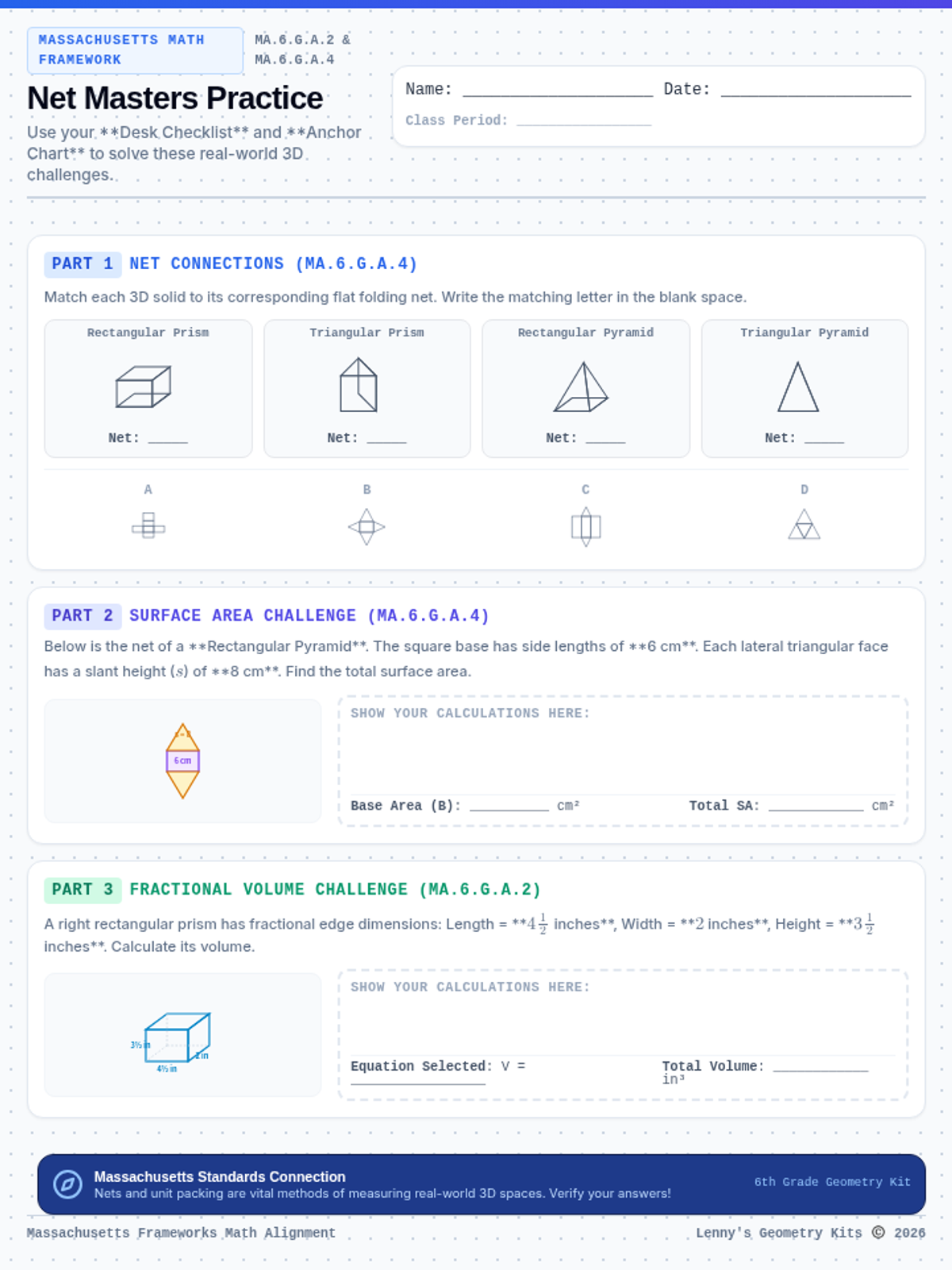
A highly visual, scaffolding lesson that guides students through unfolding three-dimensional prisms and pyramids into two-dimensional nets to calculate their surface area. Features graphic organizer templates, step-by-step scaffolding slides, and interactive blueprint-style anchor charts.
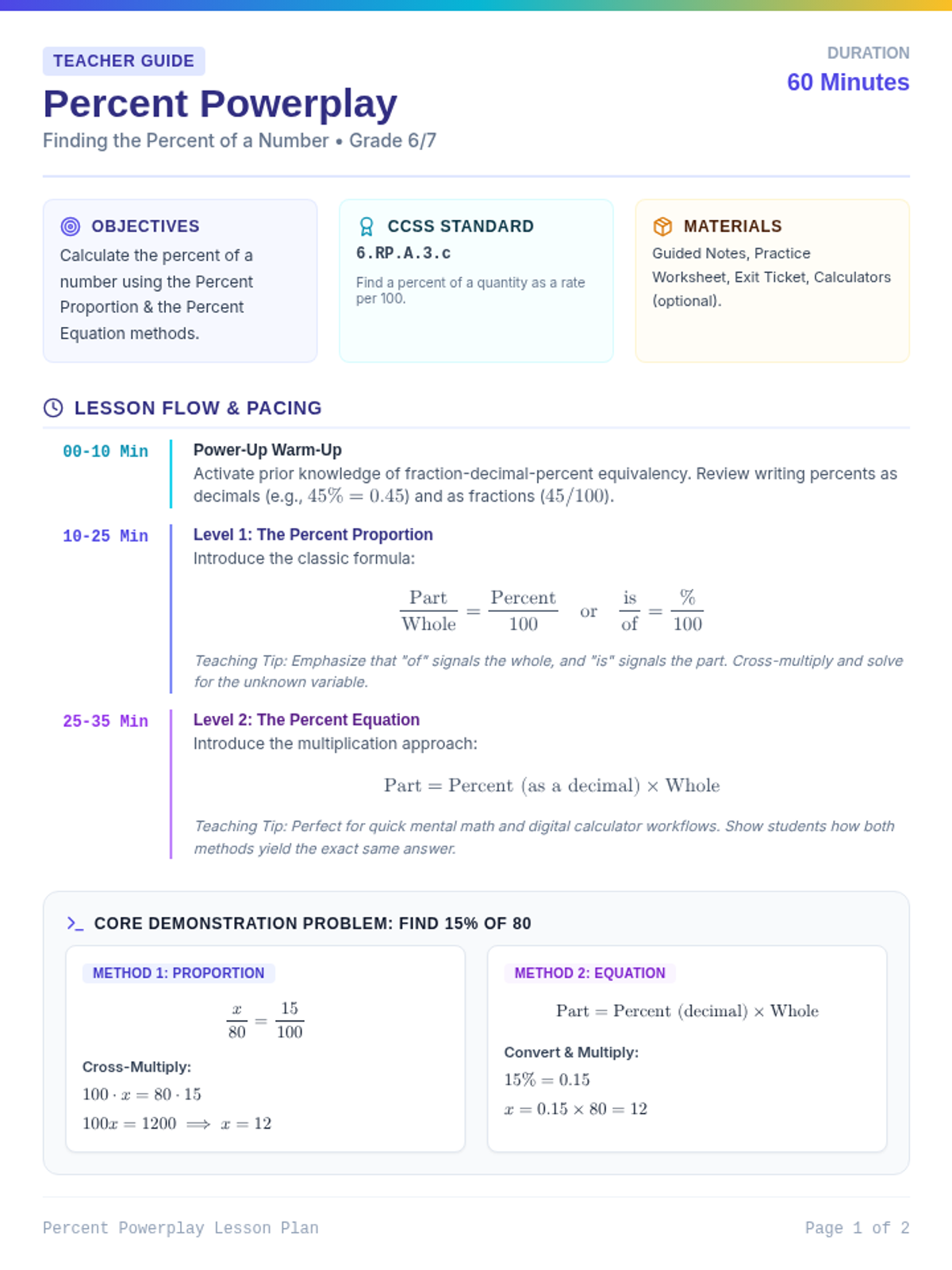
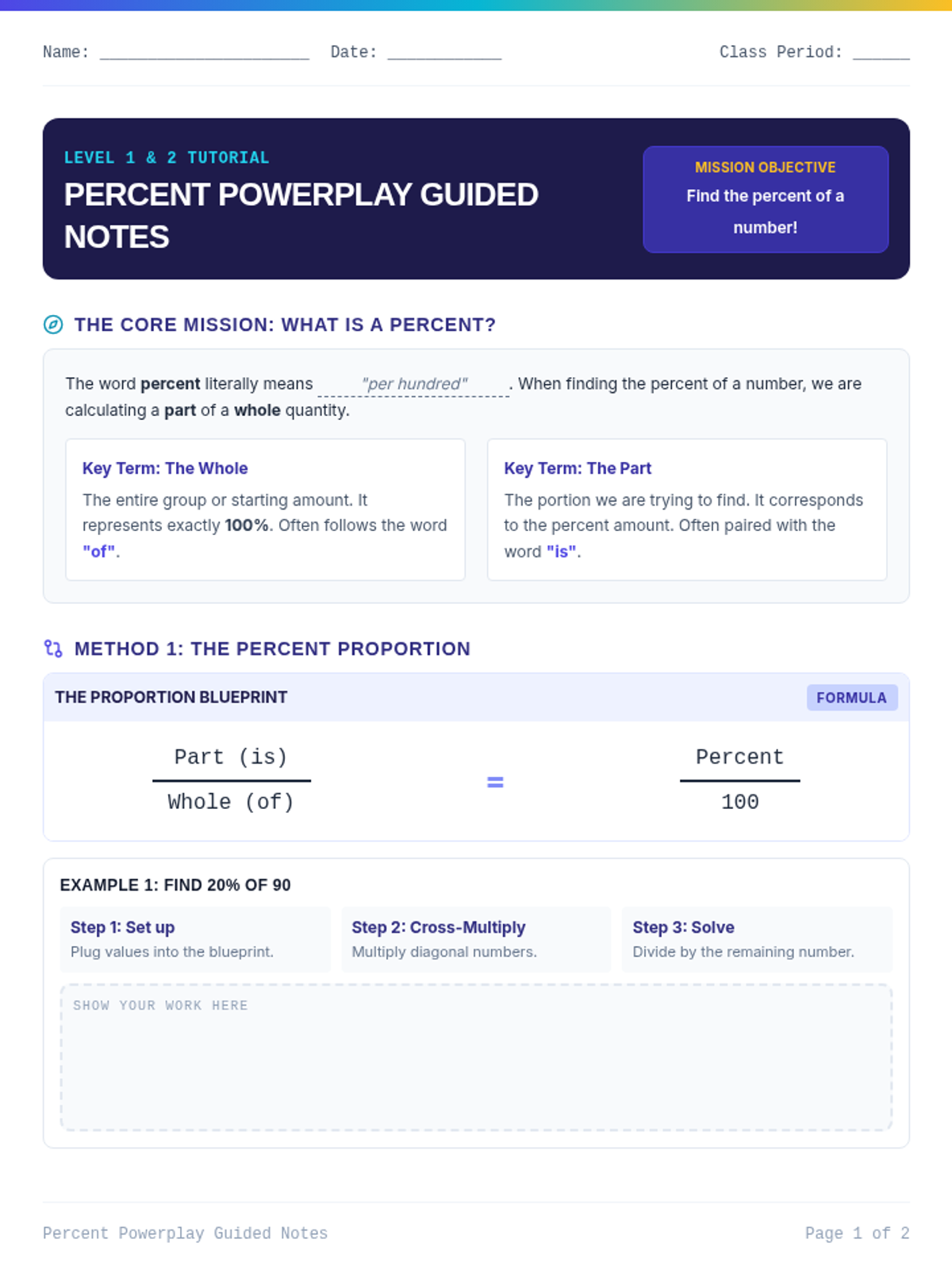
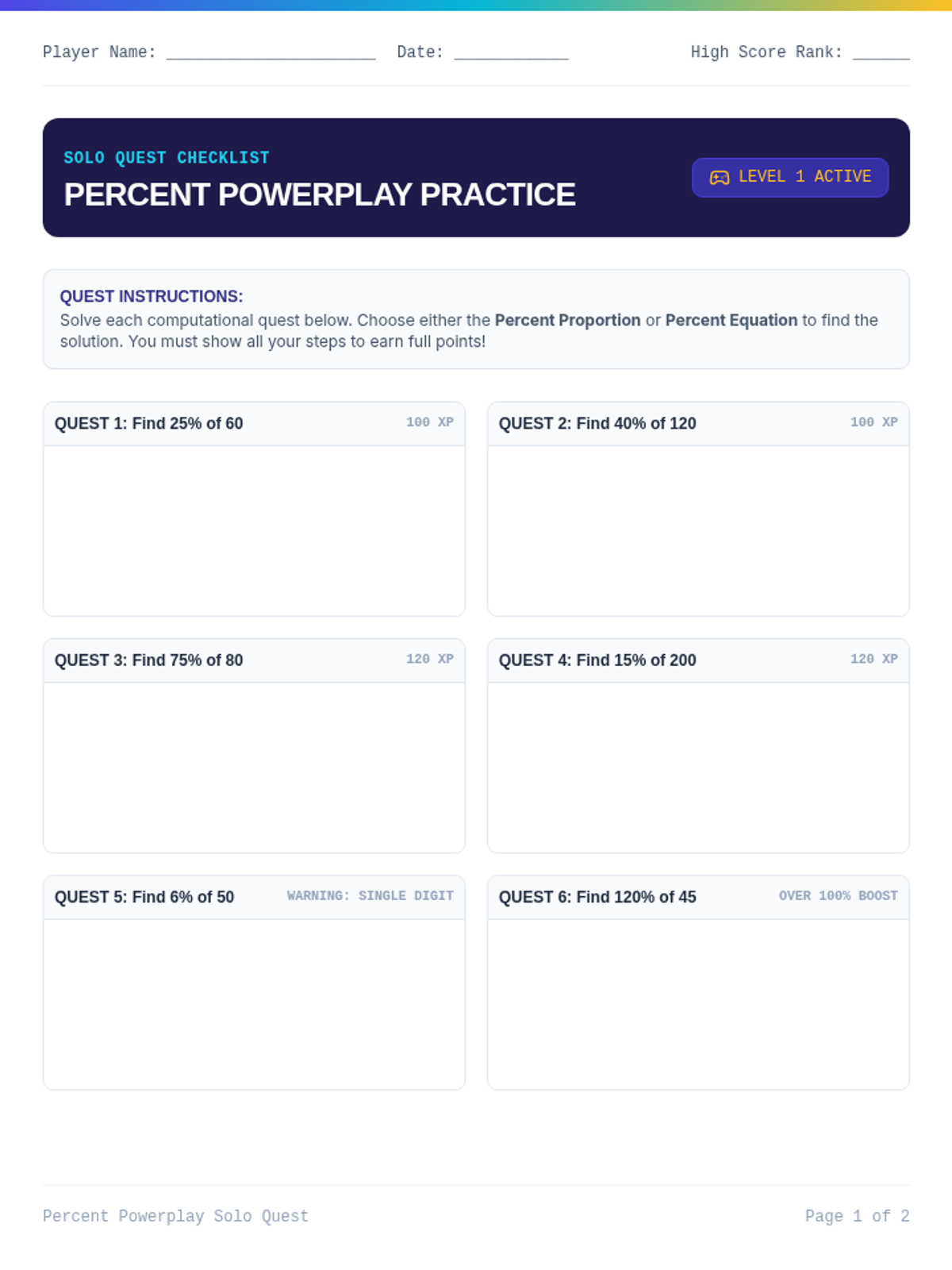
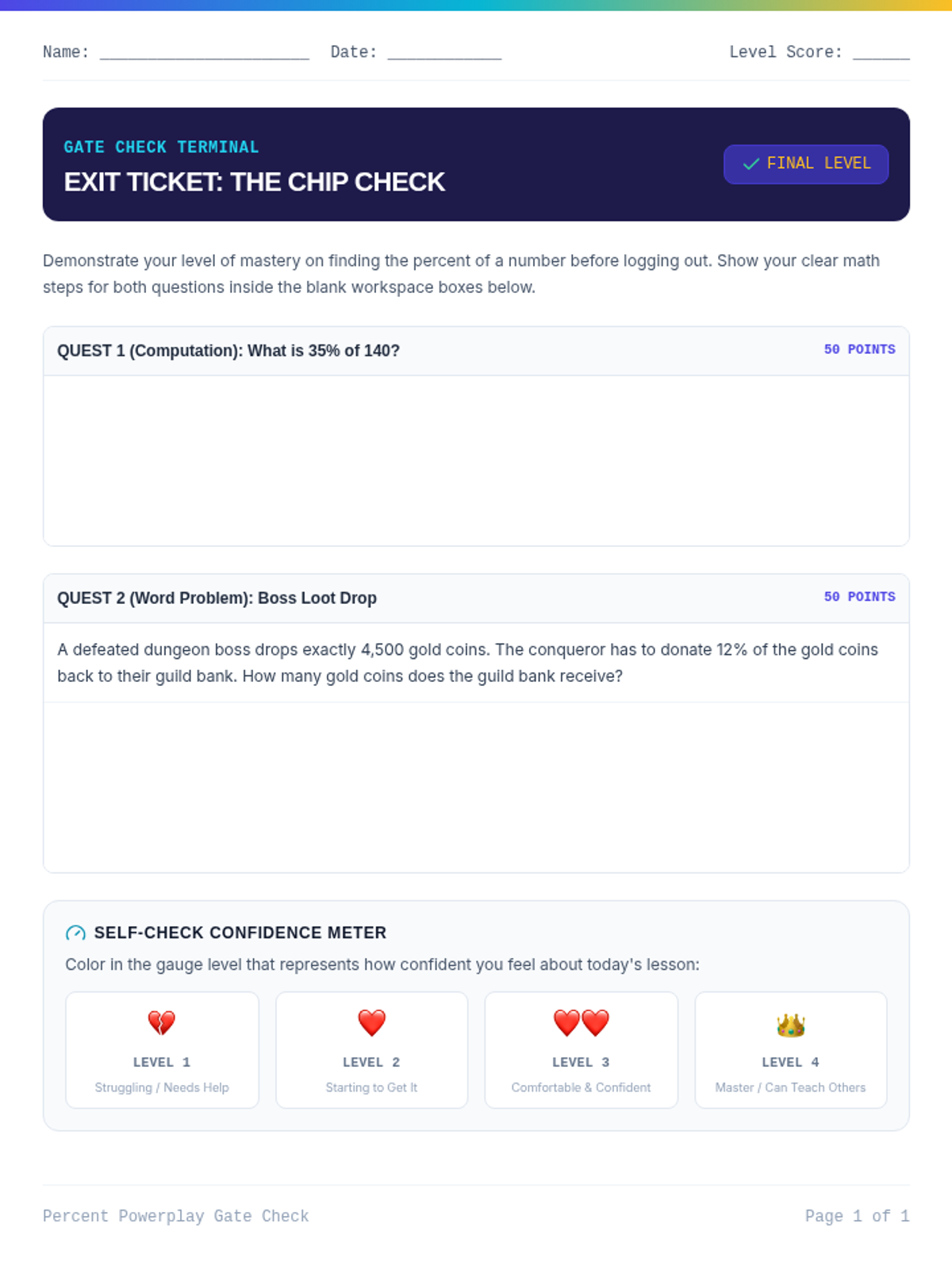
A complete lesson bundle designed to teach students how to calculate the percent of a number using the Percent Proportion and Percent Equation. Includes an instructional lesson plan, guided notes, a practice worksheet, and an exit ticket.
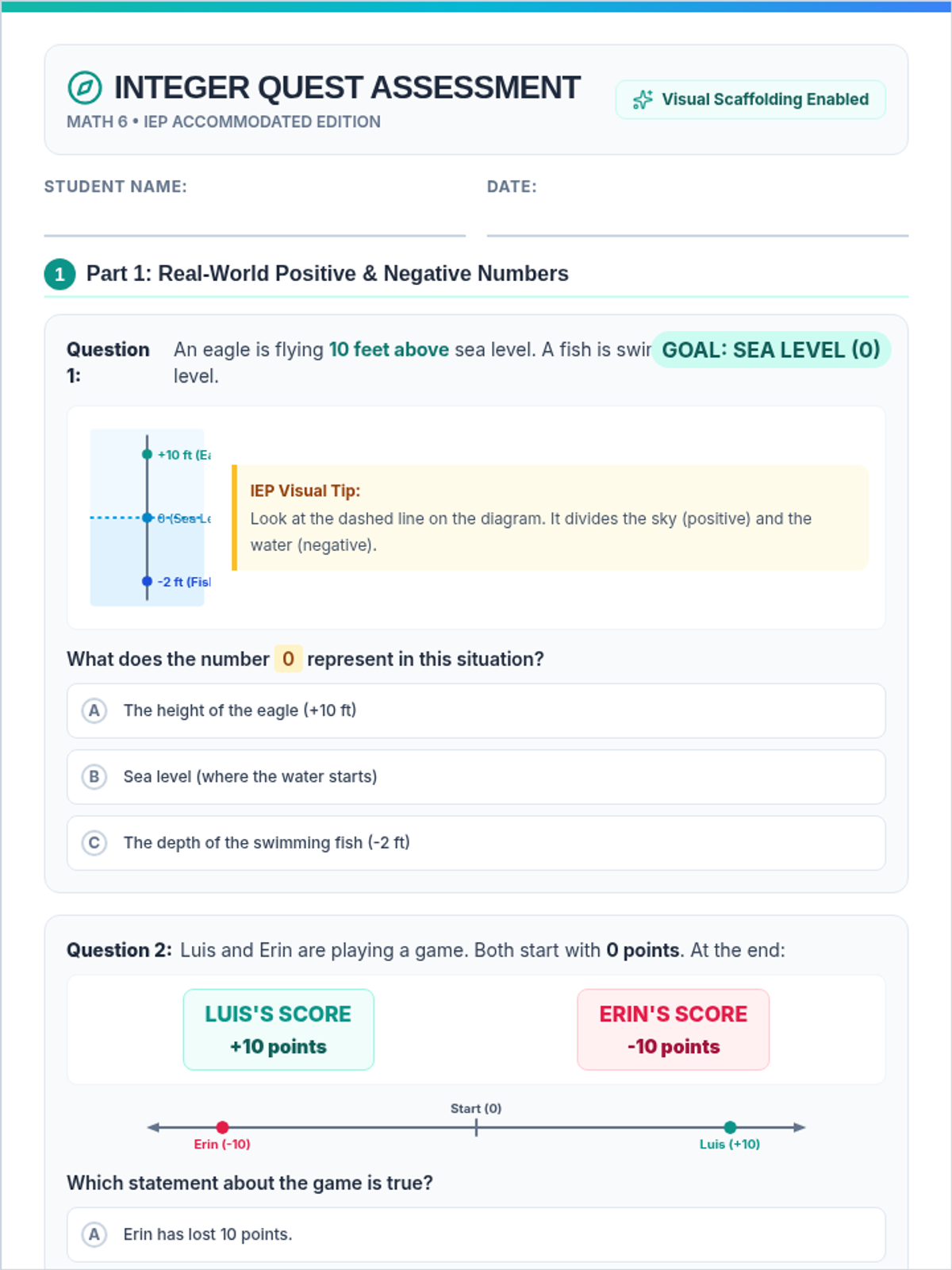
A modified, highly accommodated Grade 6 math assessment focusing on integers, number lines, inequalities, and coordinate planes. This version features simplified numbers, visual organizers, and chunked step-by-step tasks for IEP students.
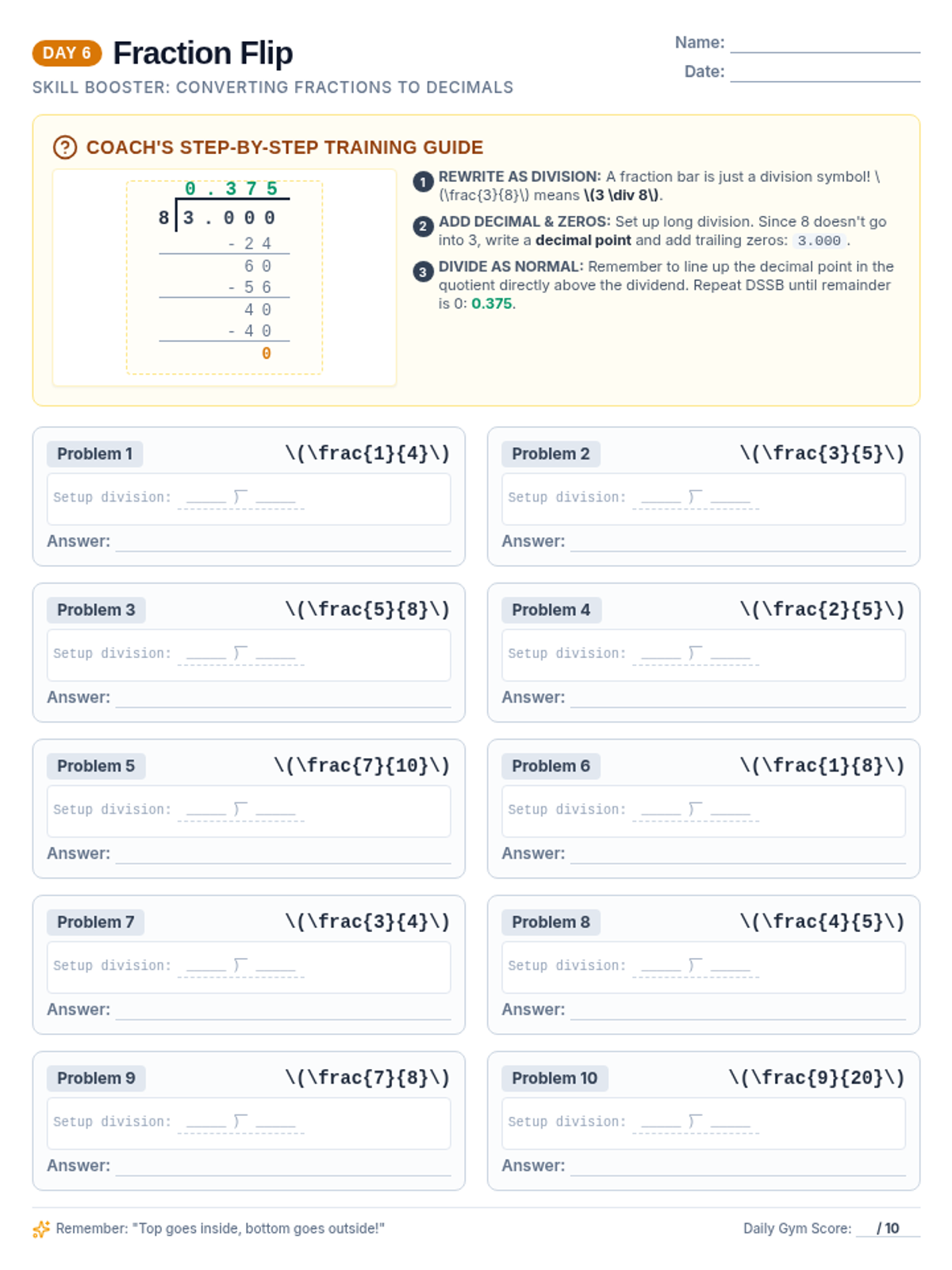
Day 6 of the Daily Math Gym series. Focuses on converting fractions to decimals with step-by-step division-based scaffolding and 10 targeted practice problems.
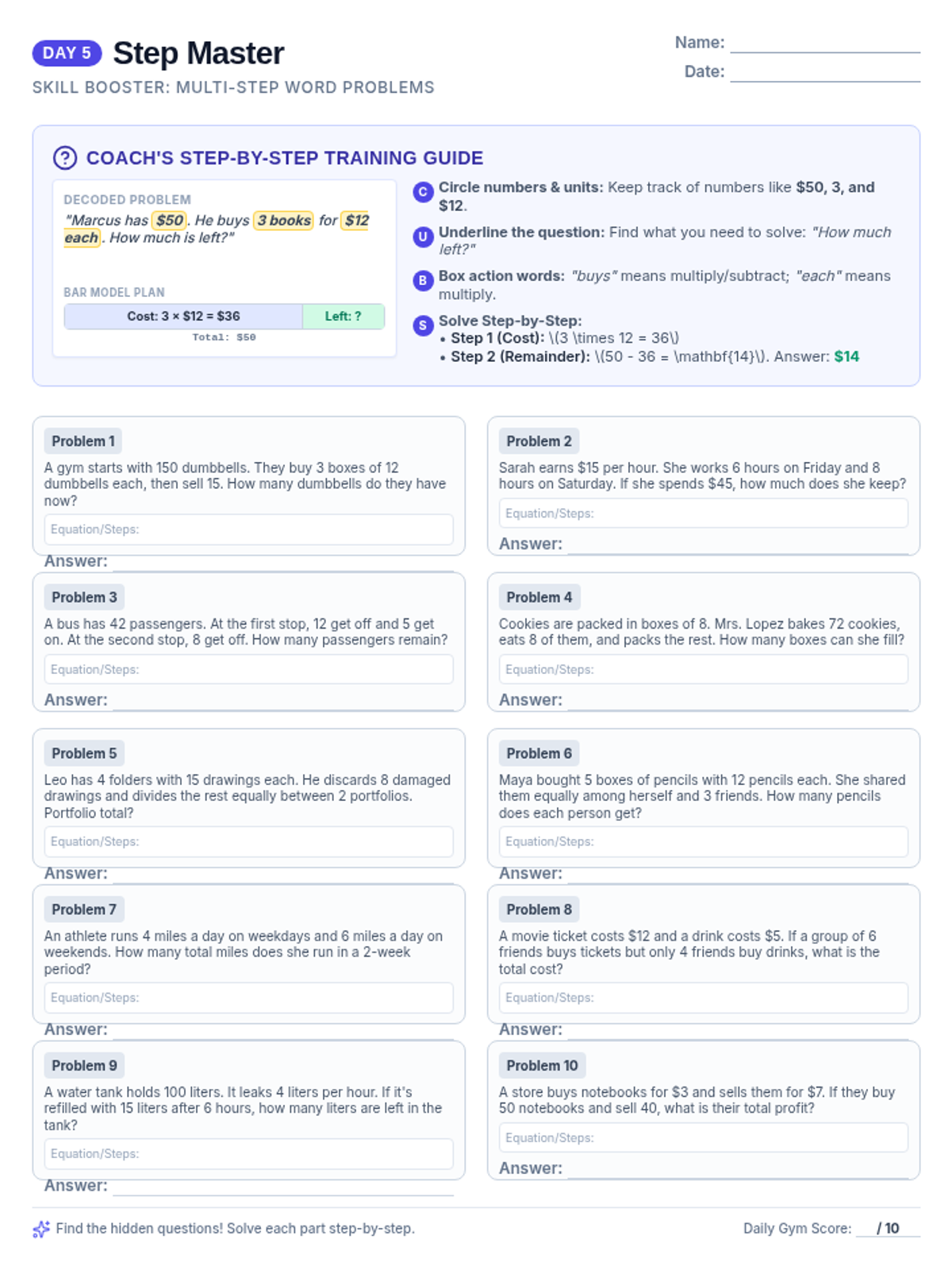
Day 5 of the Daily Math Gym series. Focuses on solving multi-step word problems using the CUBES strategy, bar models, and 10 multi-step practice questions.
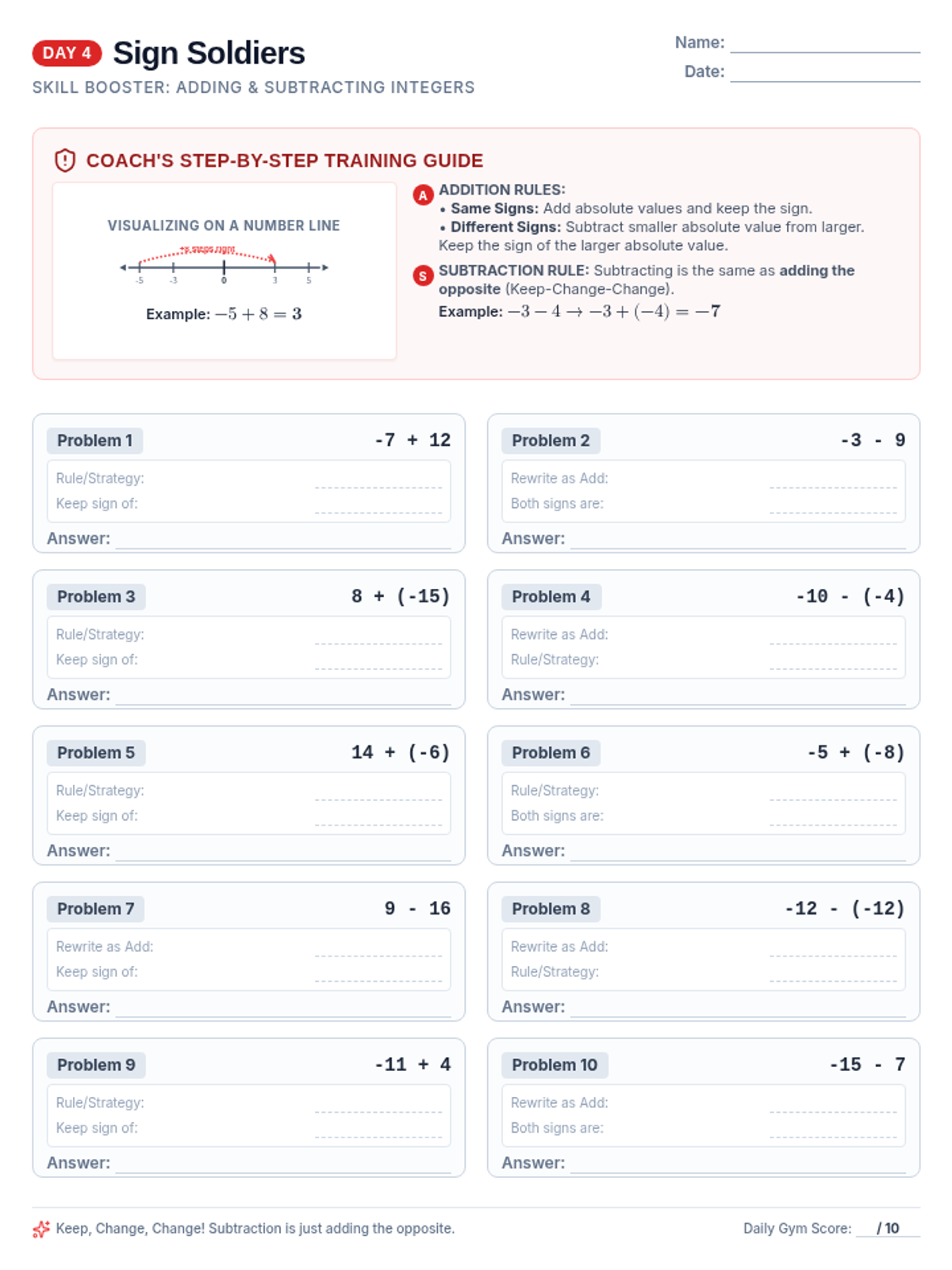
Day 4 of the Daily Math Gym series. Focuses on adding and subtracting positive and negative integers with visual and procedural scaffolding and 10 targeted problems.
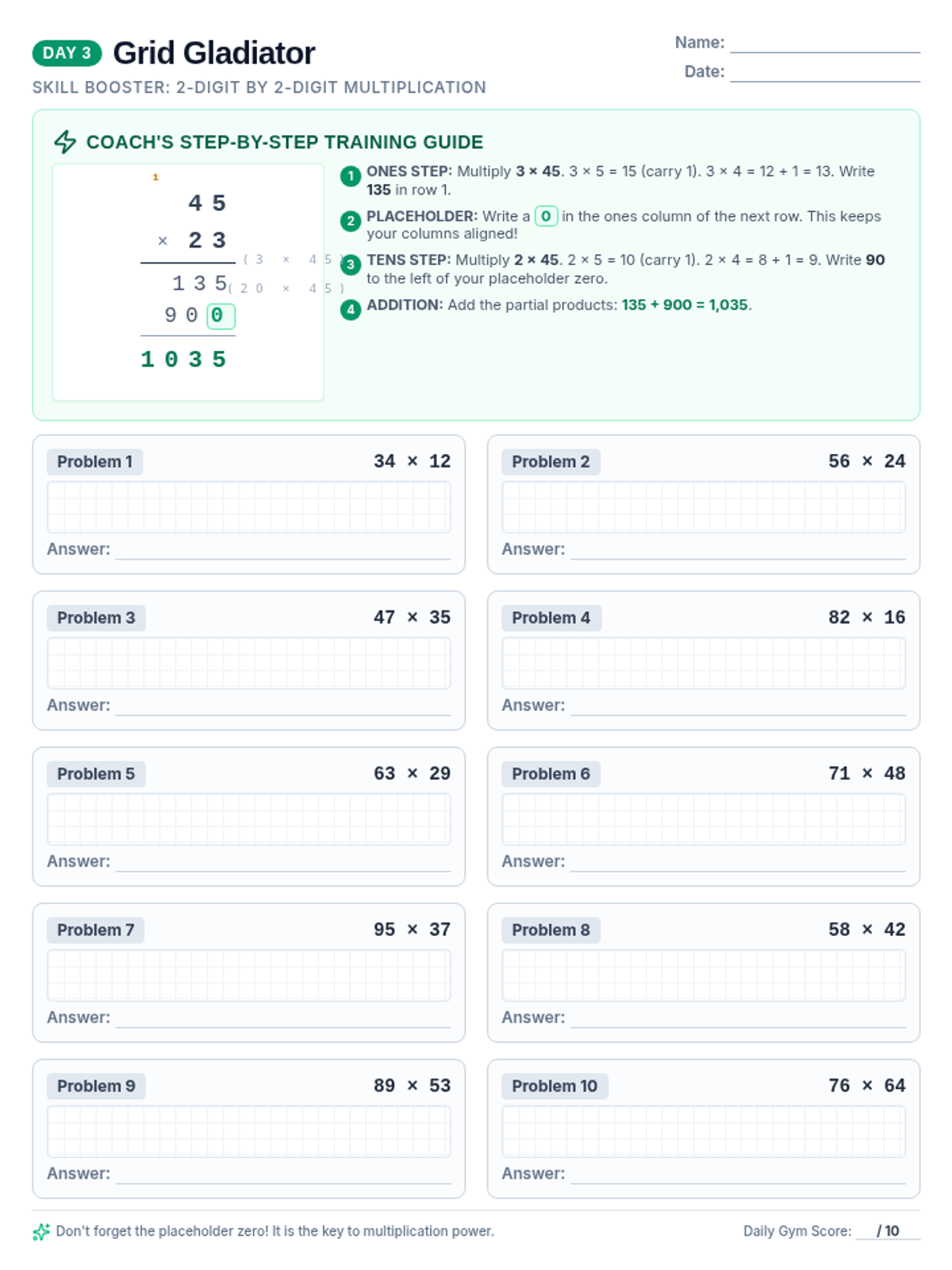
Day 3 of the Daily Math Gym series. Focuses on 2-digit by 2-digit multiplication with step-by-step standard algorithm scaffolding and 10 practice problems.
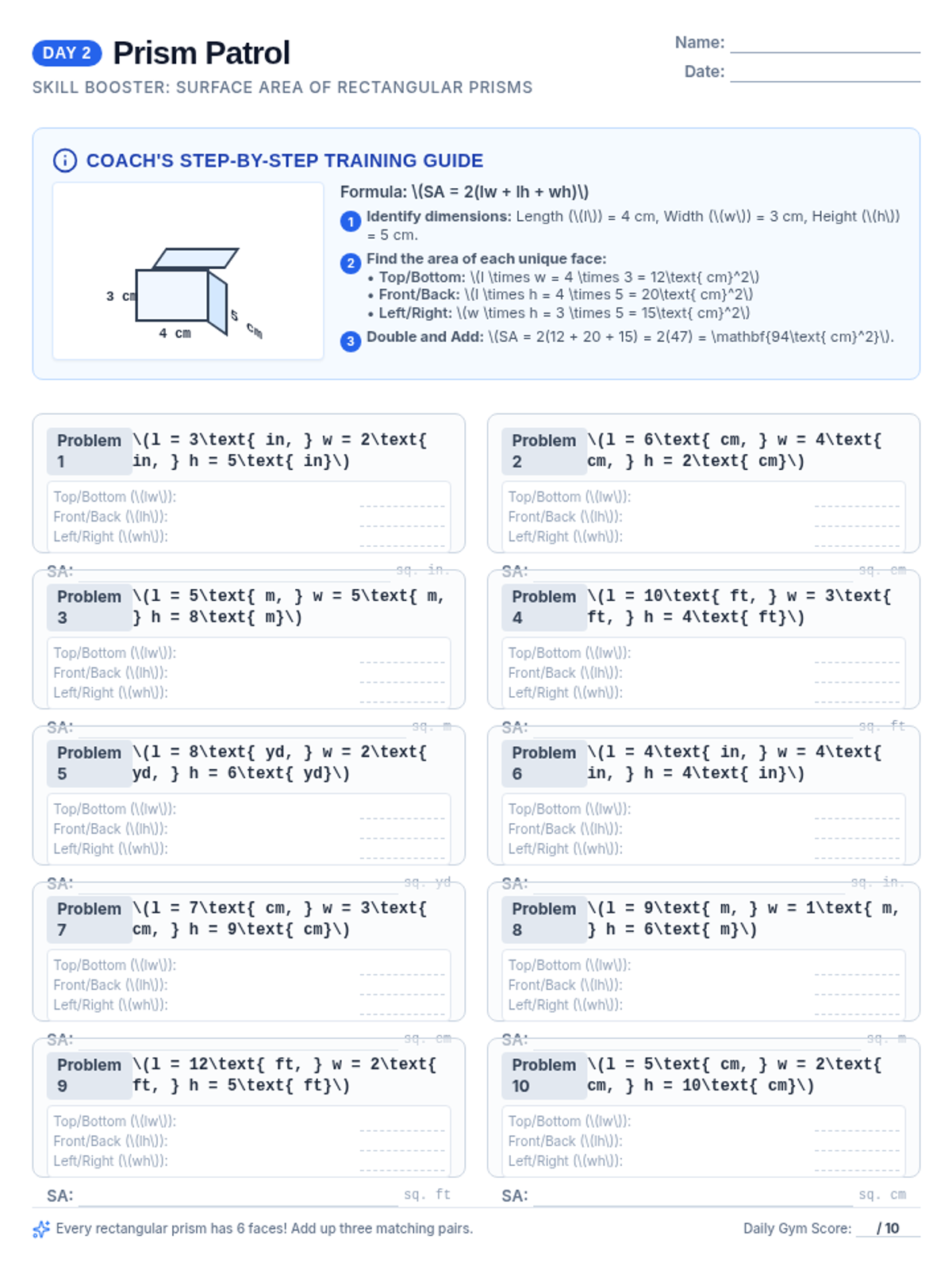
Day 2 of the Daily Math Gym series. Focuses on calculating the surface area of rectangular prisms with step-by-step scaffolding and 10 targeted practice problems.
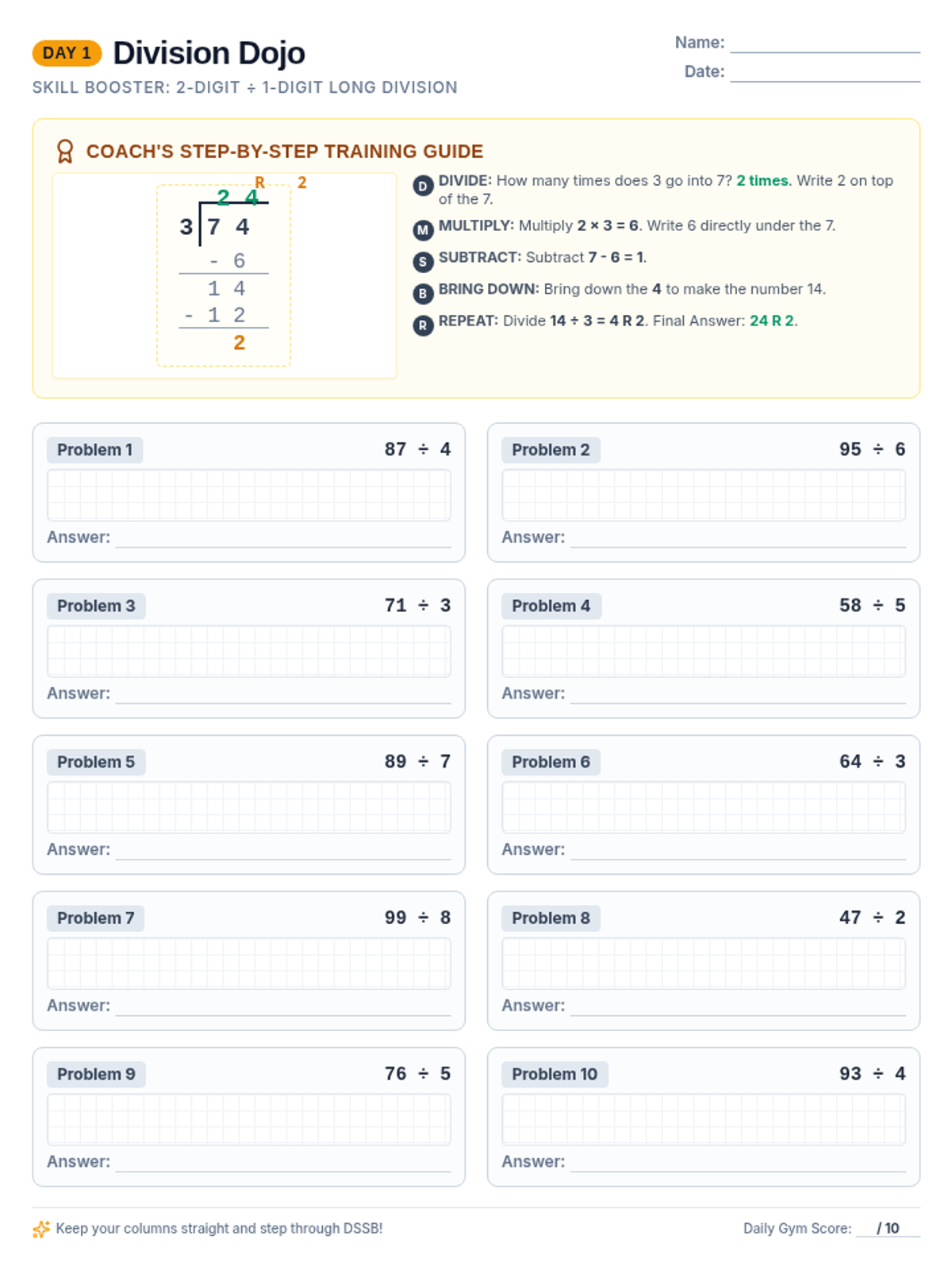
Day 1 of the Daily Math Gym series. Focuses on dividing a two-digit dividend by a single-digit divisor with a step-by-step solved example and 10 targeted practice problems.
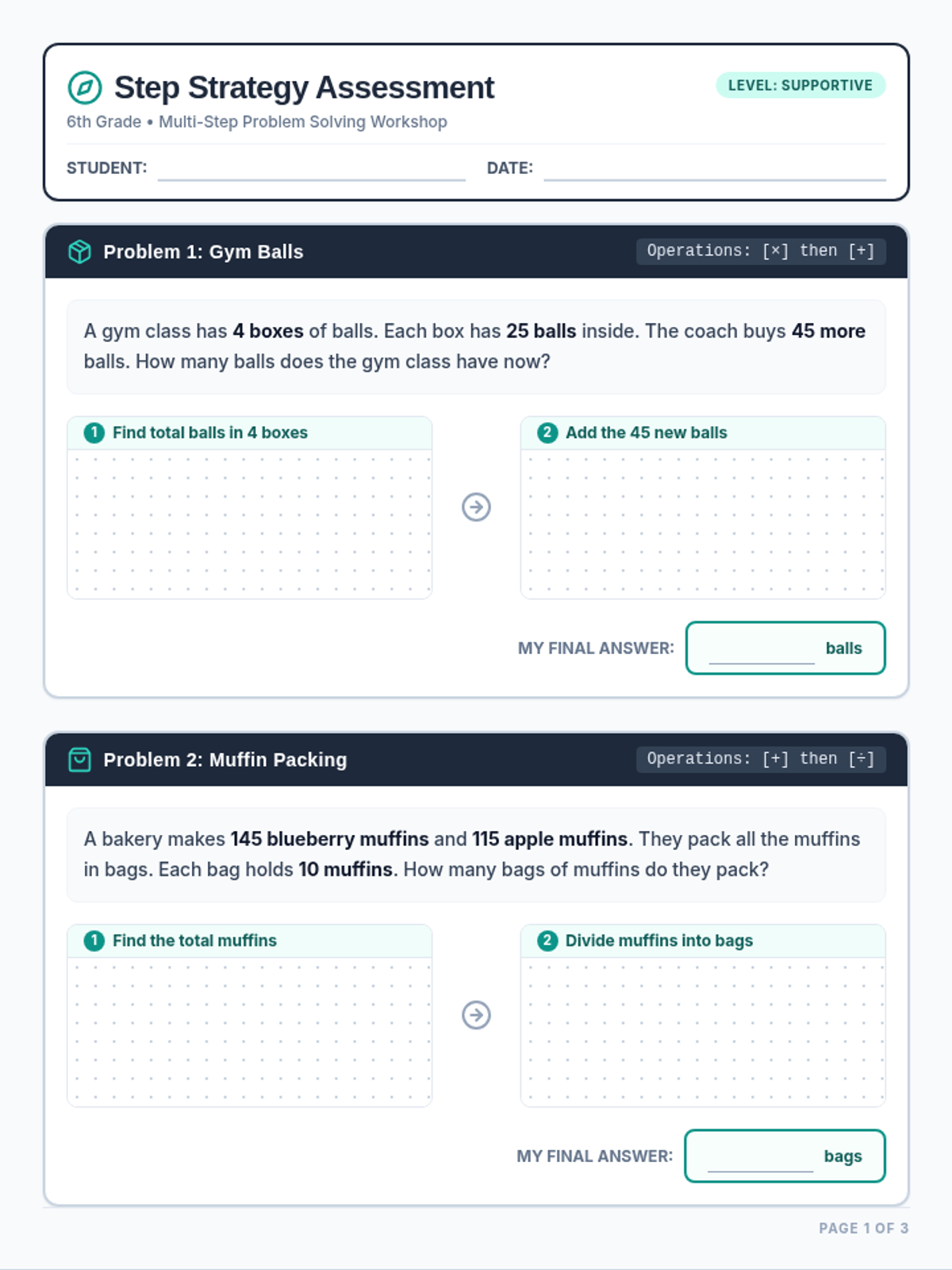
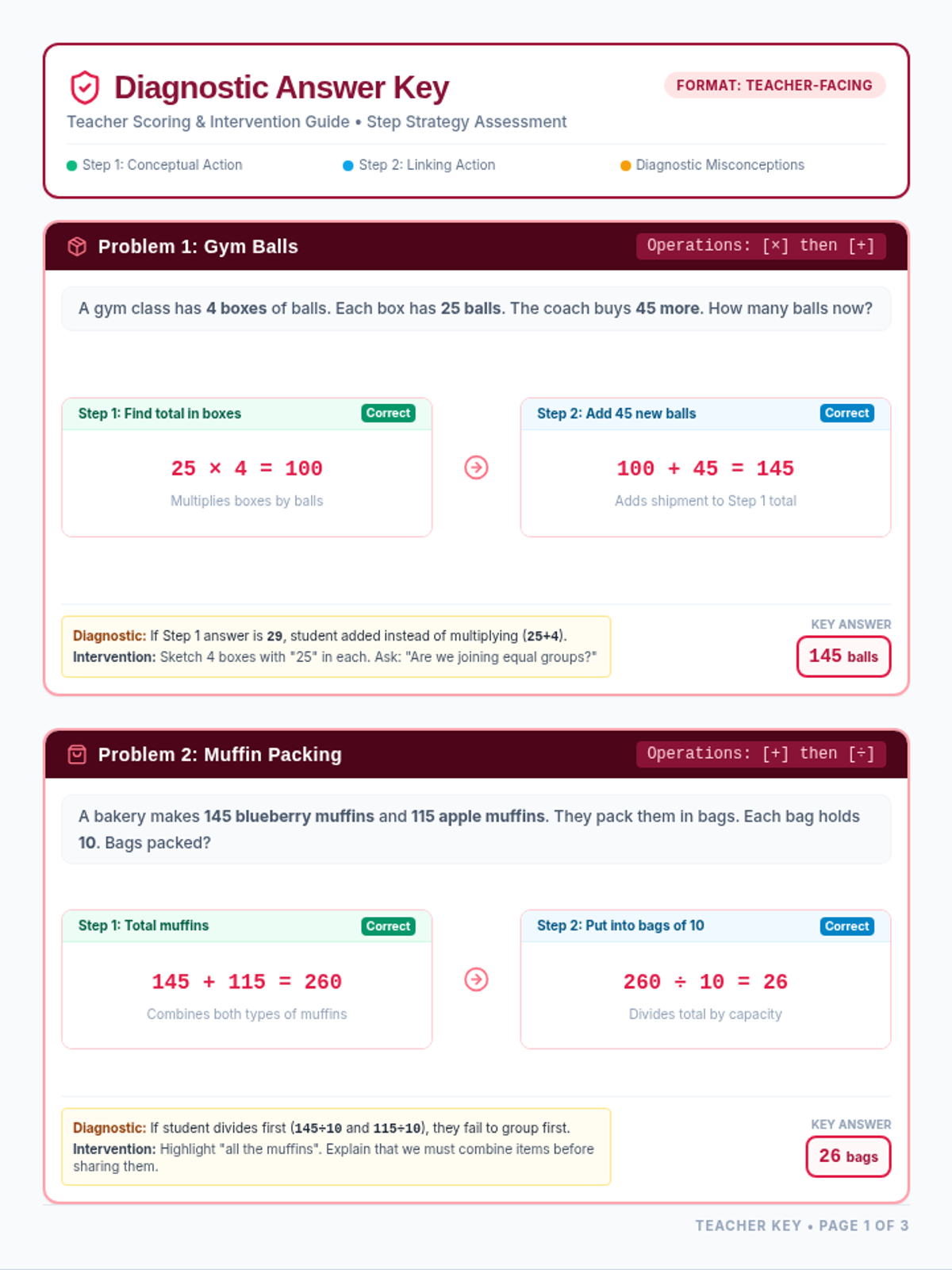
An assessment lesson designed specifically for 6th-grade students who struggle with multi-step word problems. It features a student-facing assessment with visual step-by-step graphic organizers and simplified language, alongside a teacher-facing diagnostic answer key.
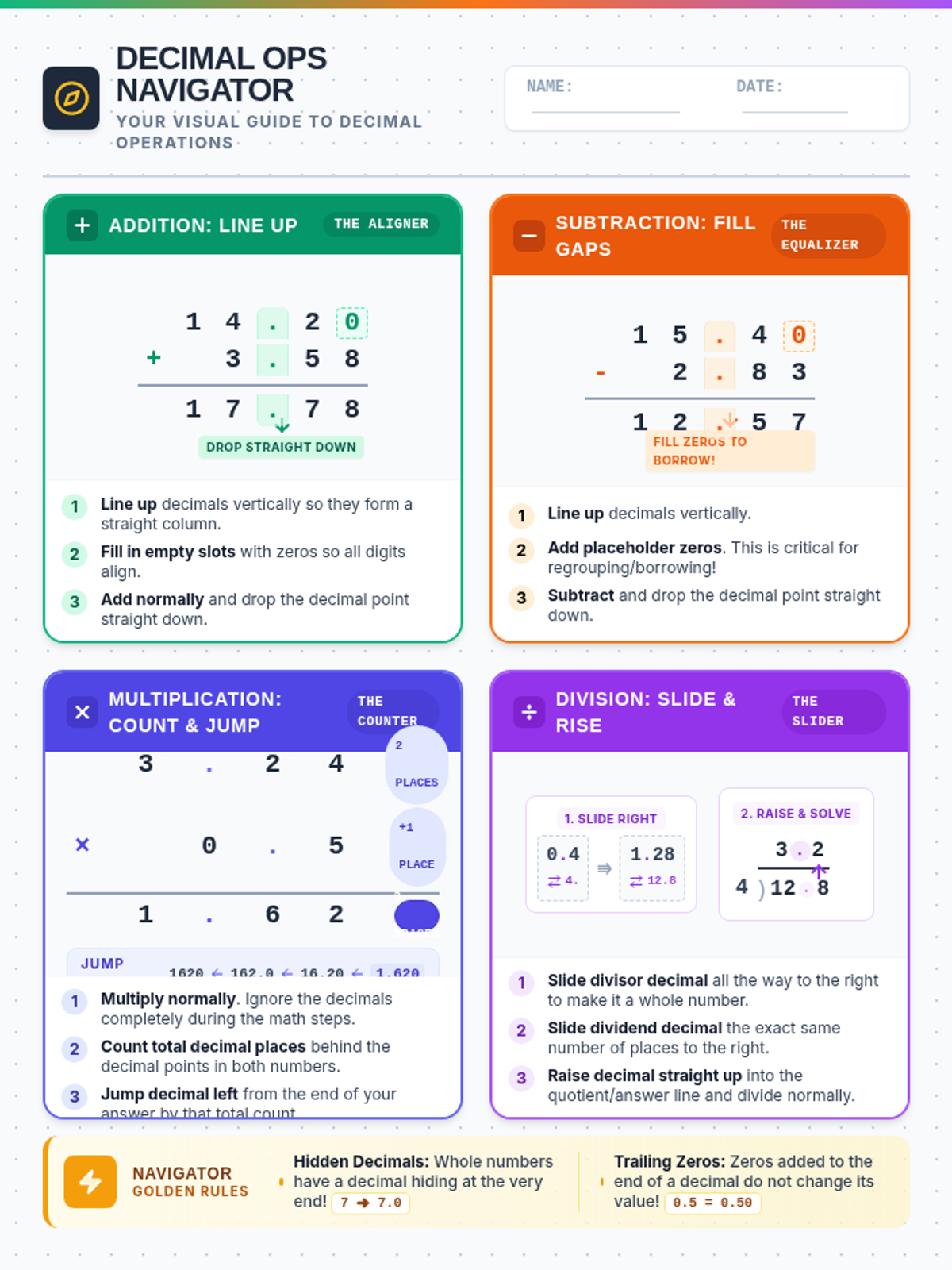
A lesson focused on mastering operations with decimals, providing step-by-step visual models and core strategies for adding, subtracting, multiplying, and dividing decimals accurately.
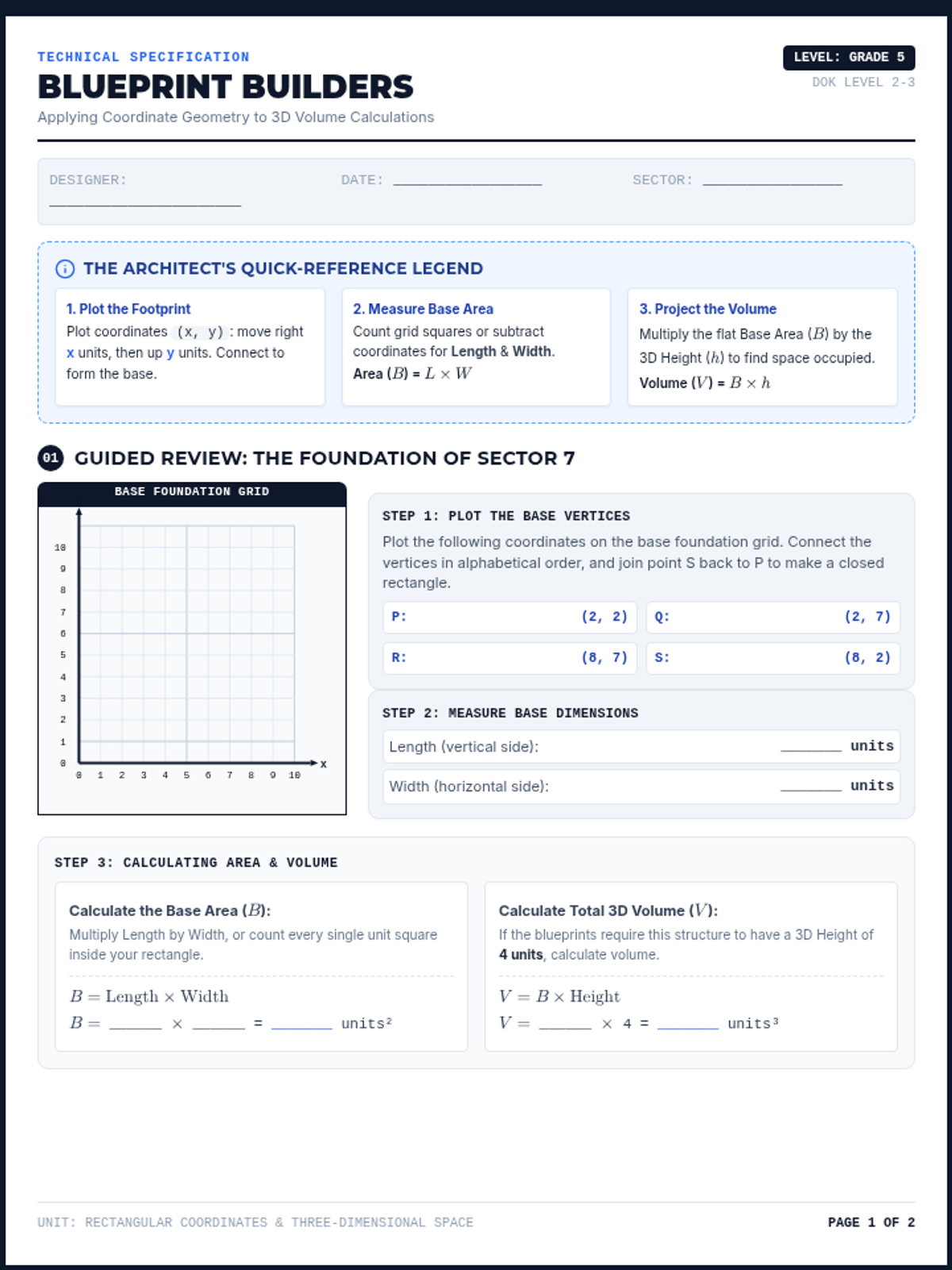
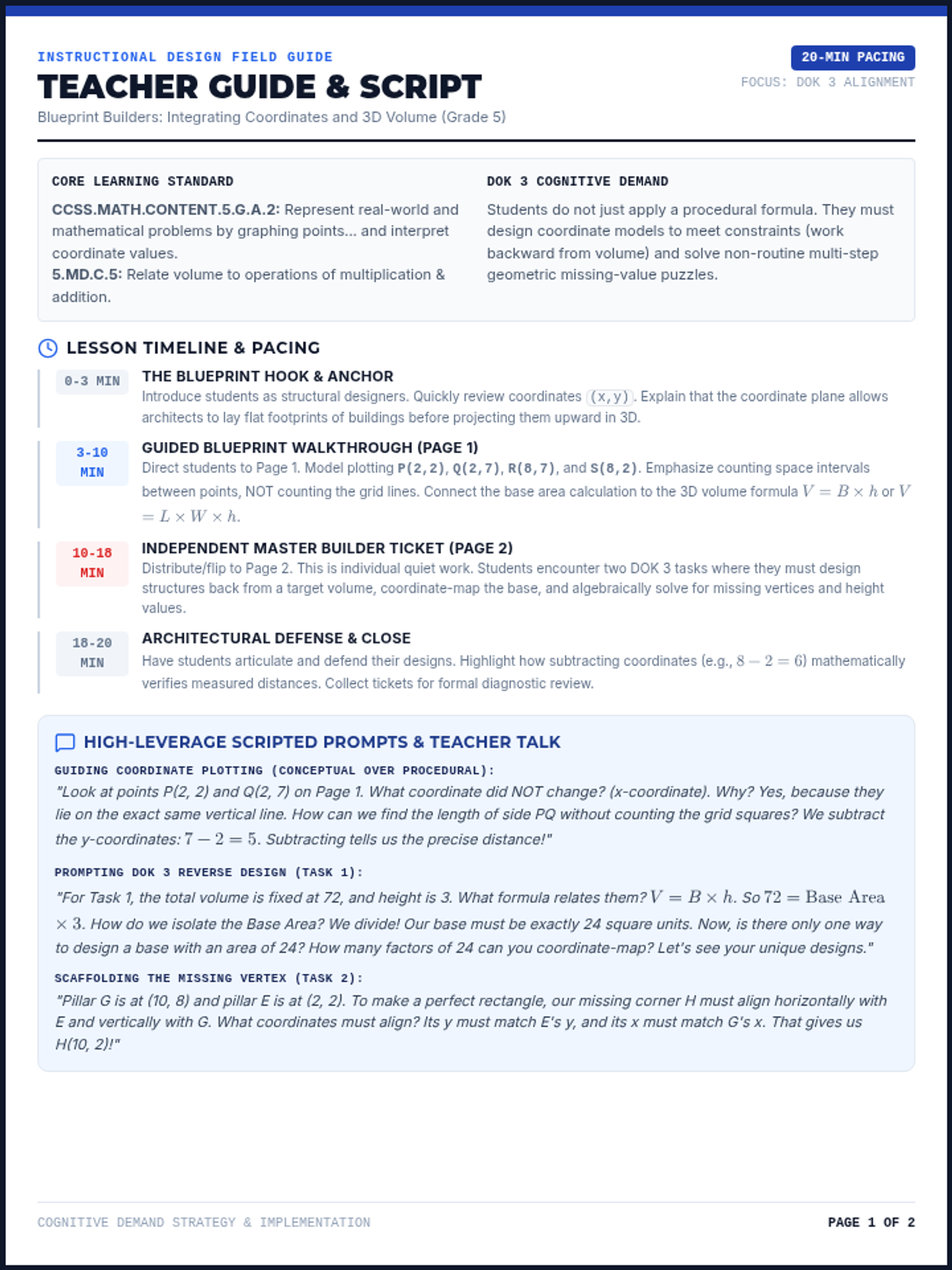
A 20-minute review lesson on combining coordinate plotting with volume calculations, featuring structured guided review and high-leverage DOK 3 exit ticket questions.
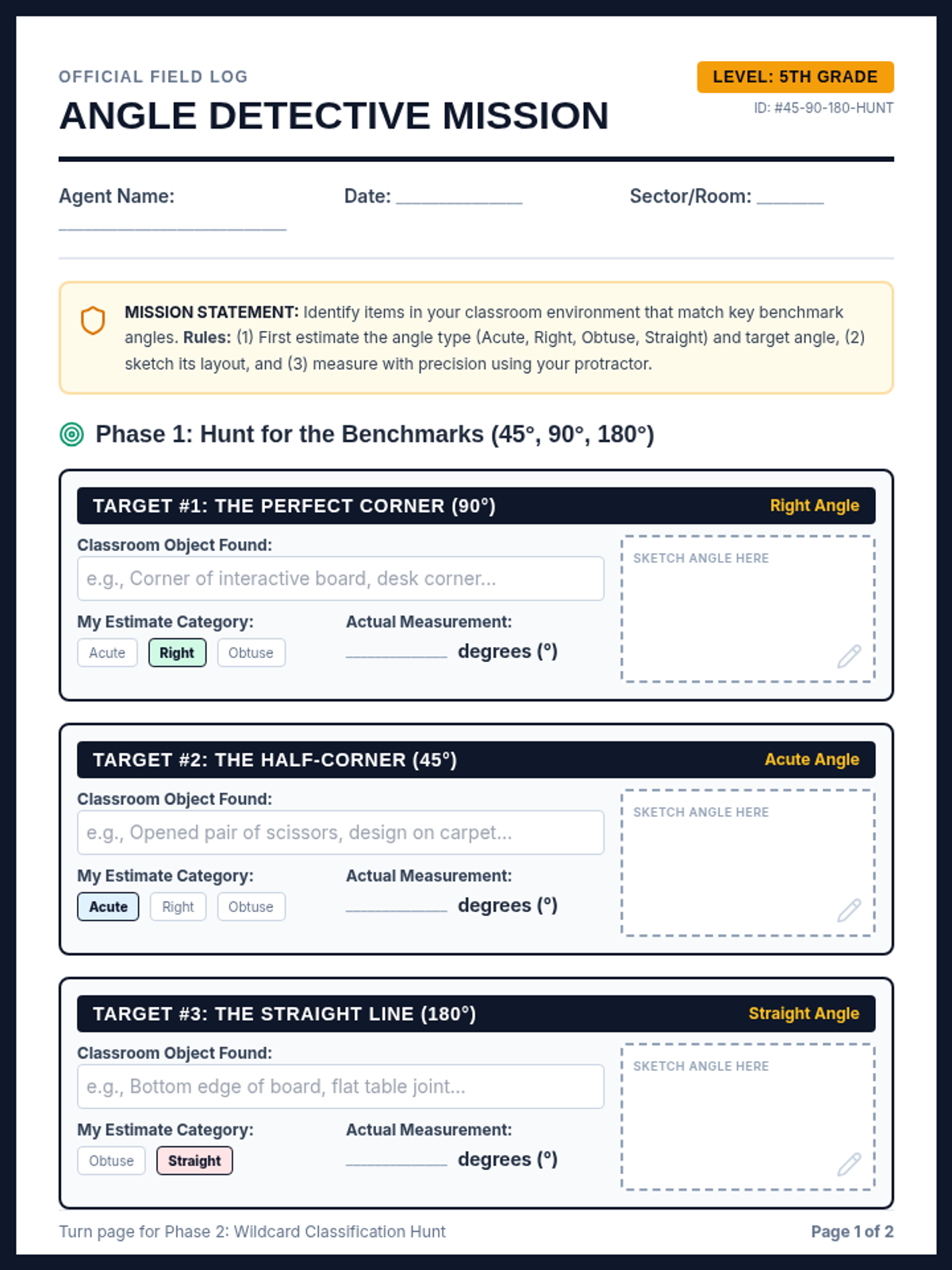
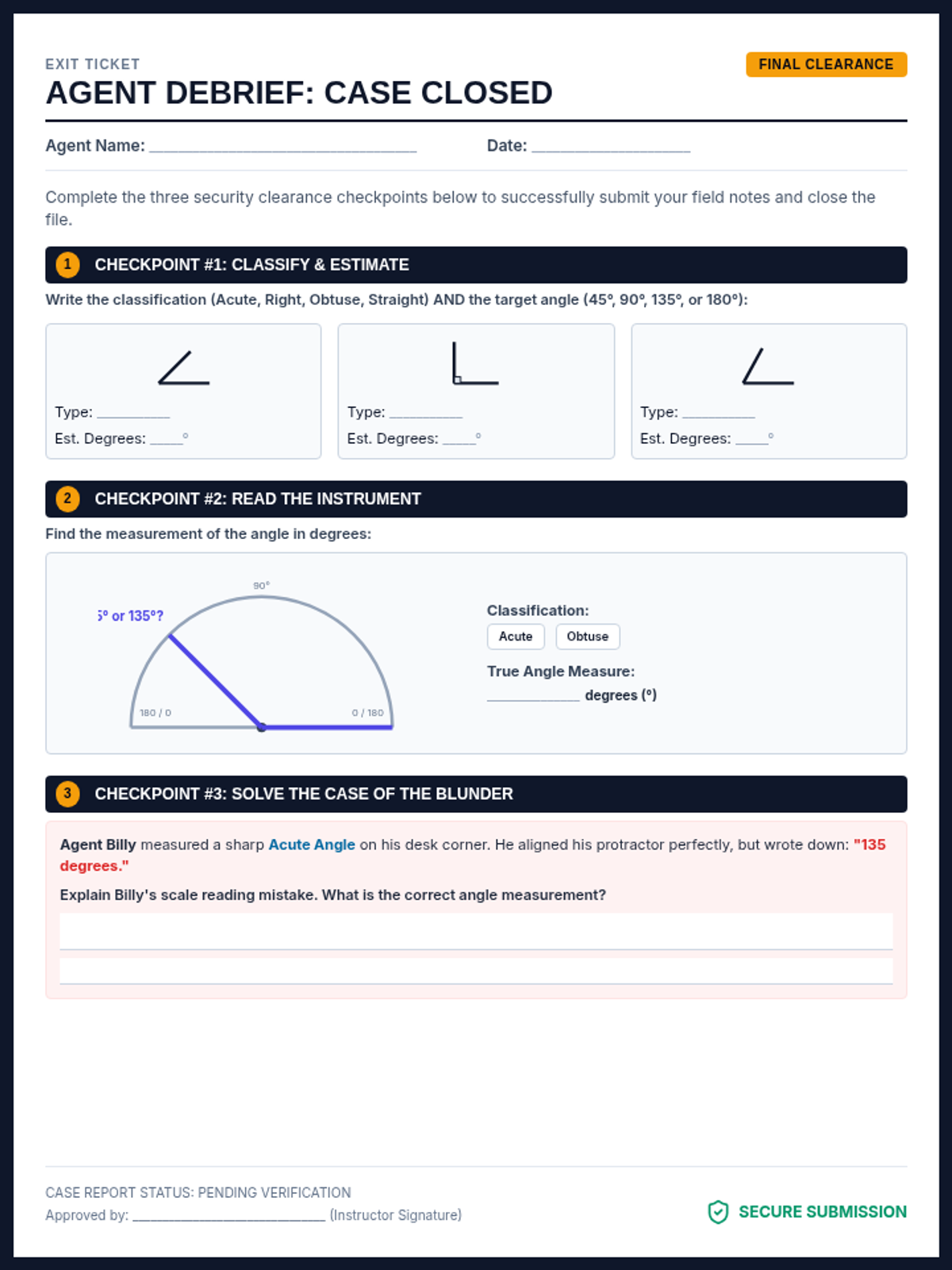
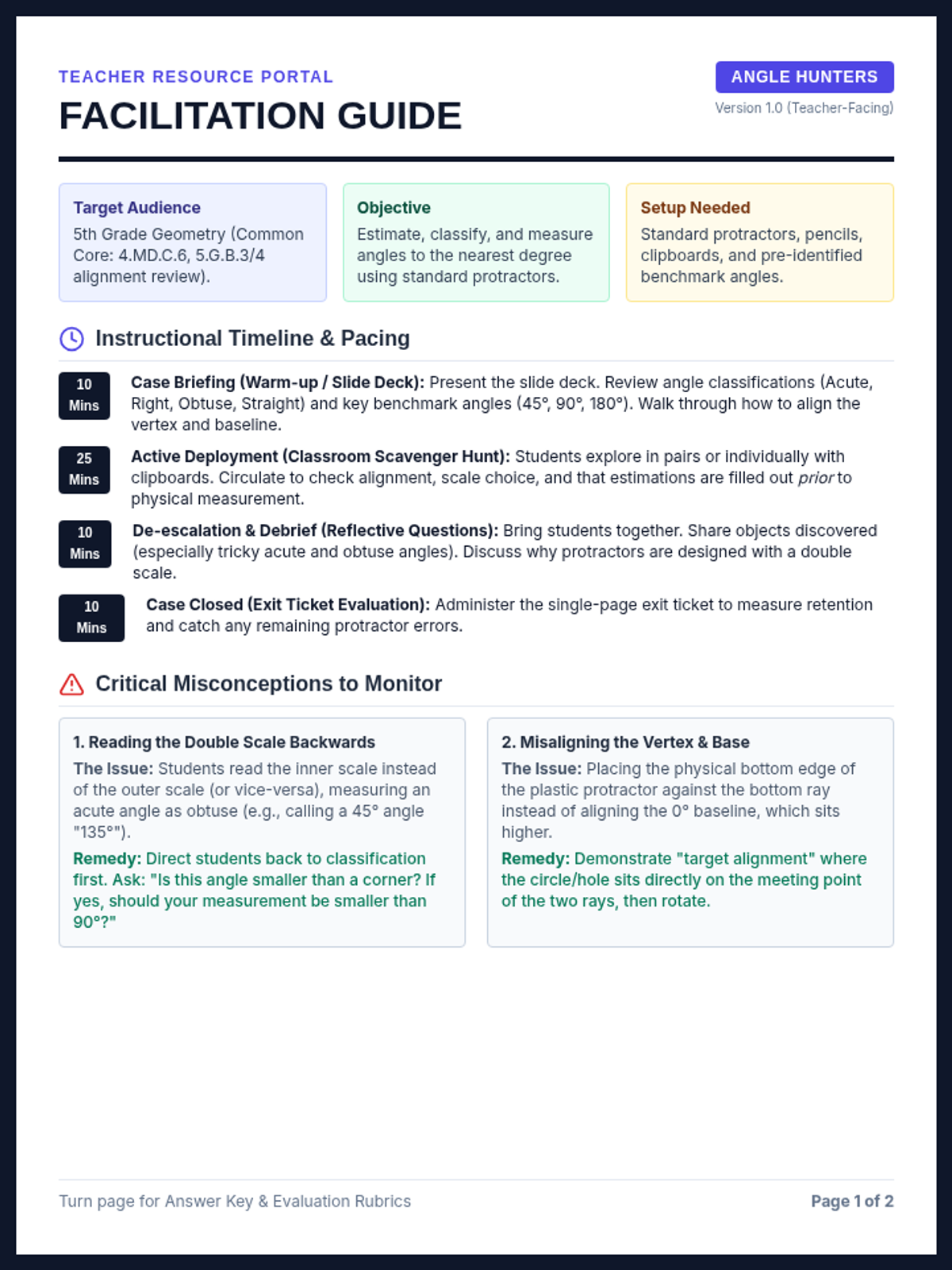
An active, hands-on geometry lesson where students become 'Angle Detectives,' exploring their classroom environment to identify, estimate, and measure real-world angles using protractors. This bundle contains interactive presentation slides, a hands-on scavenger hunt activity, and a quick exit ticket.
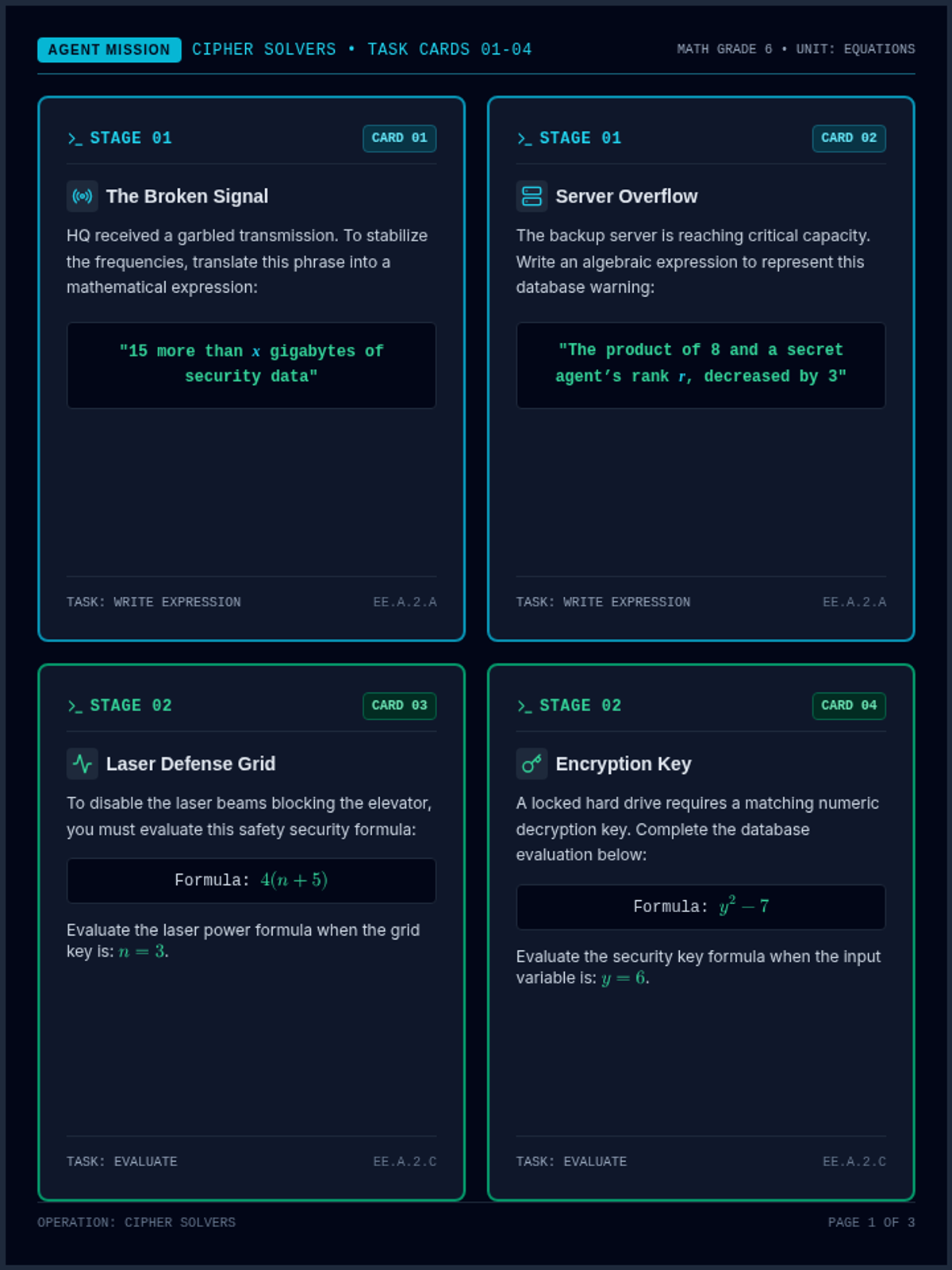
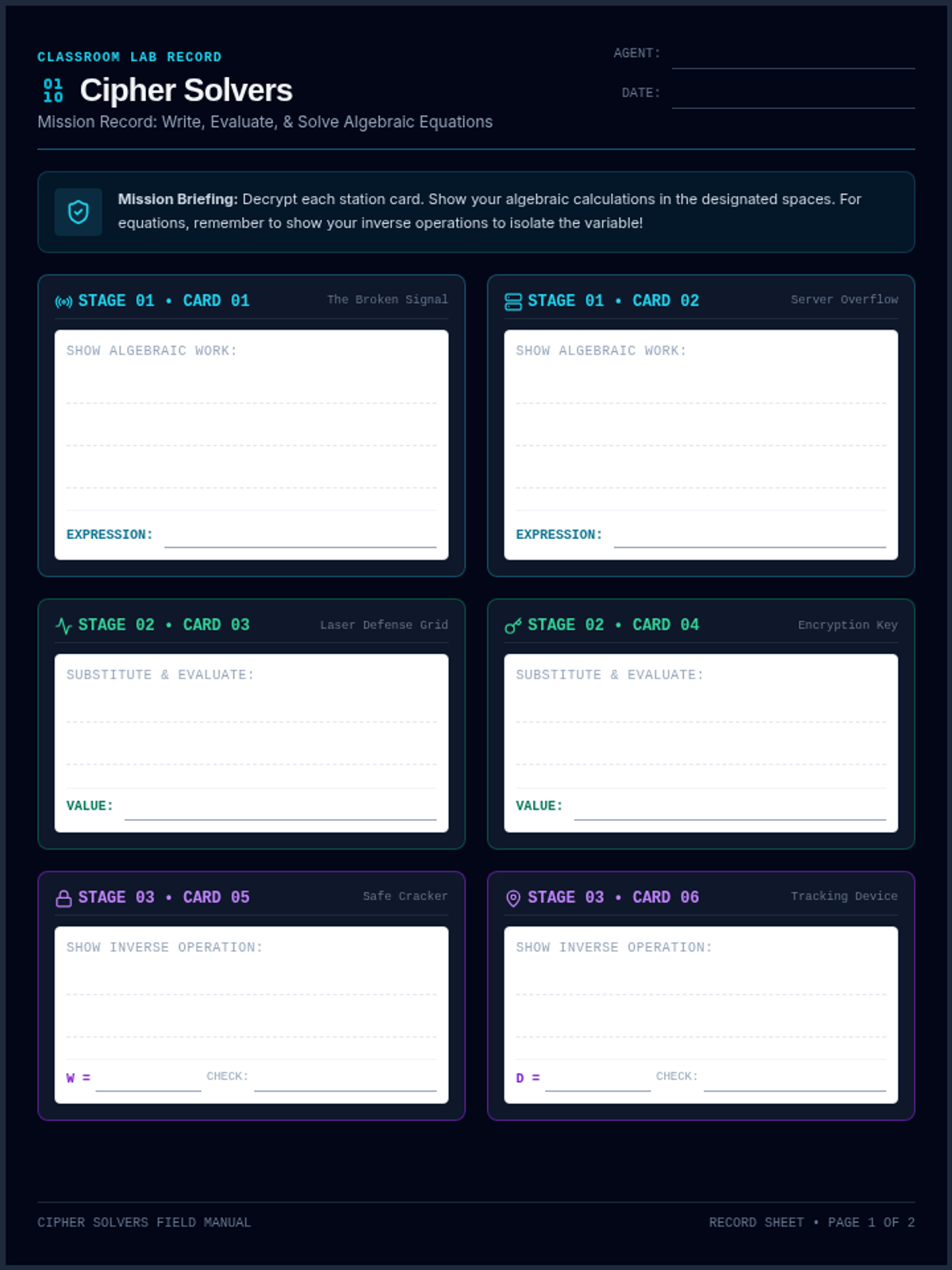
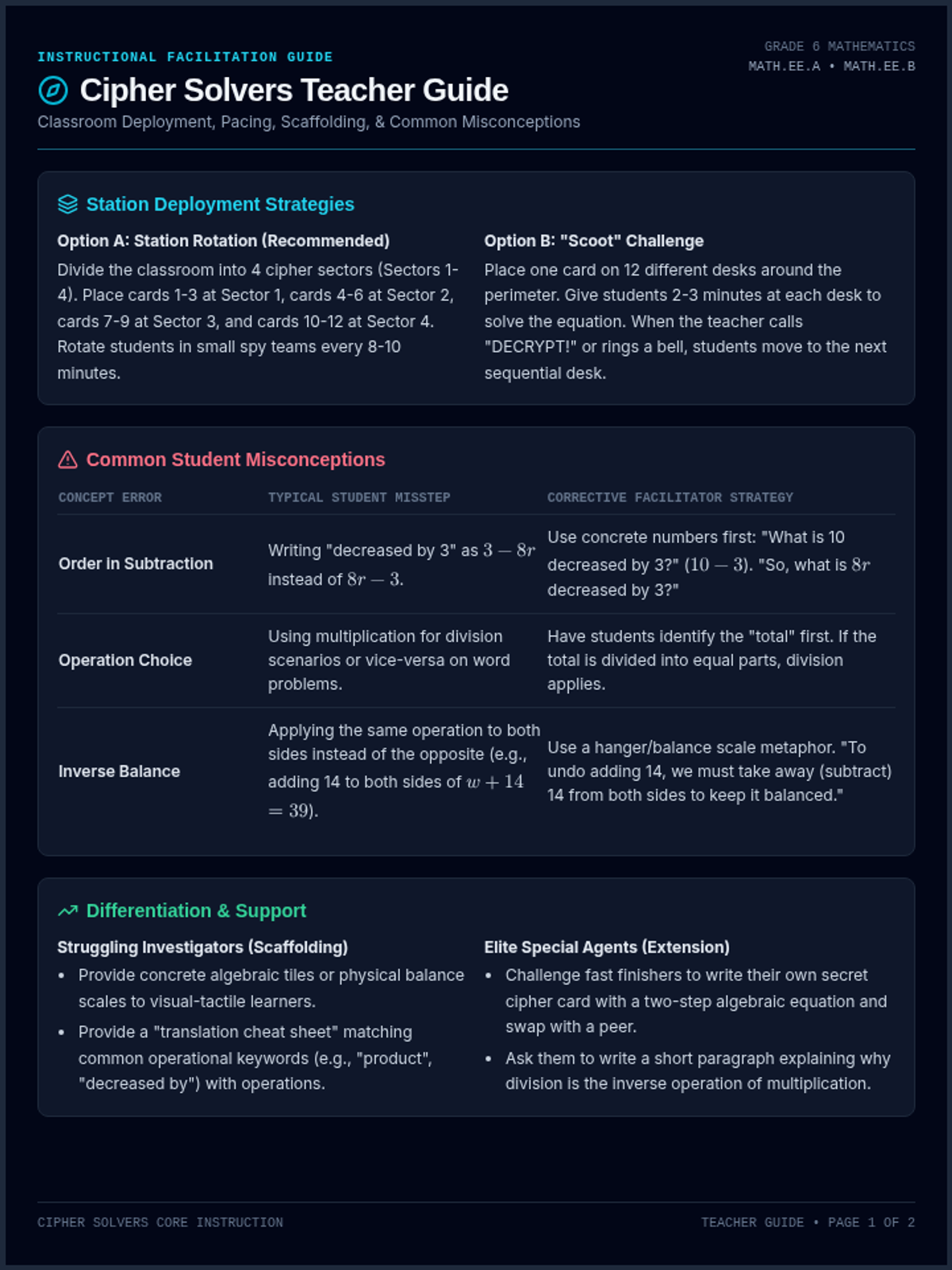
An engaging, hands-on task card station activity where 6th-grade students decode variables, write algebraic expressions, and solve one-step equations in a spy-themed cipher challenge.
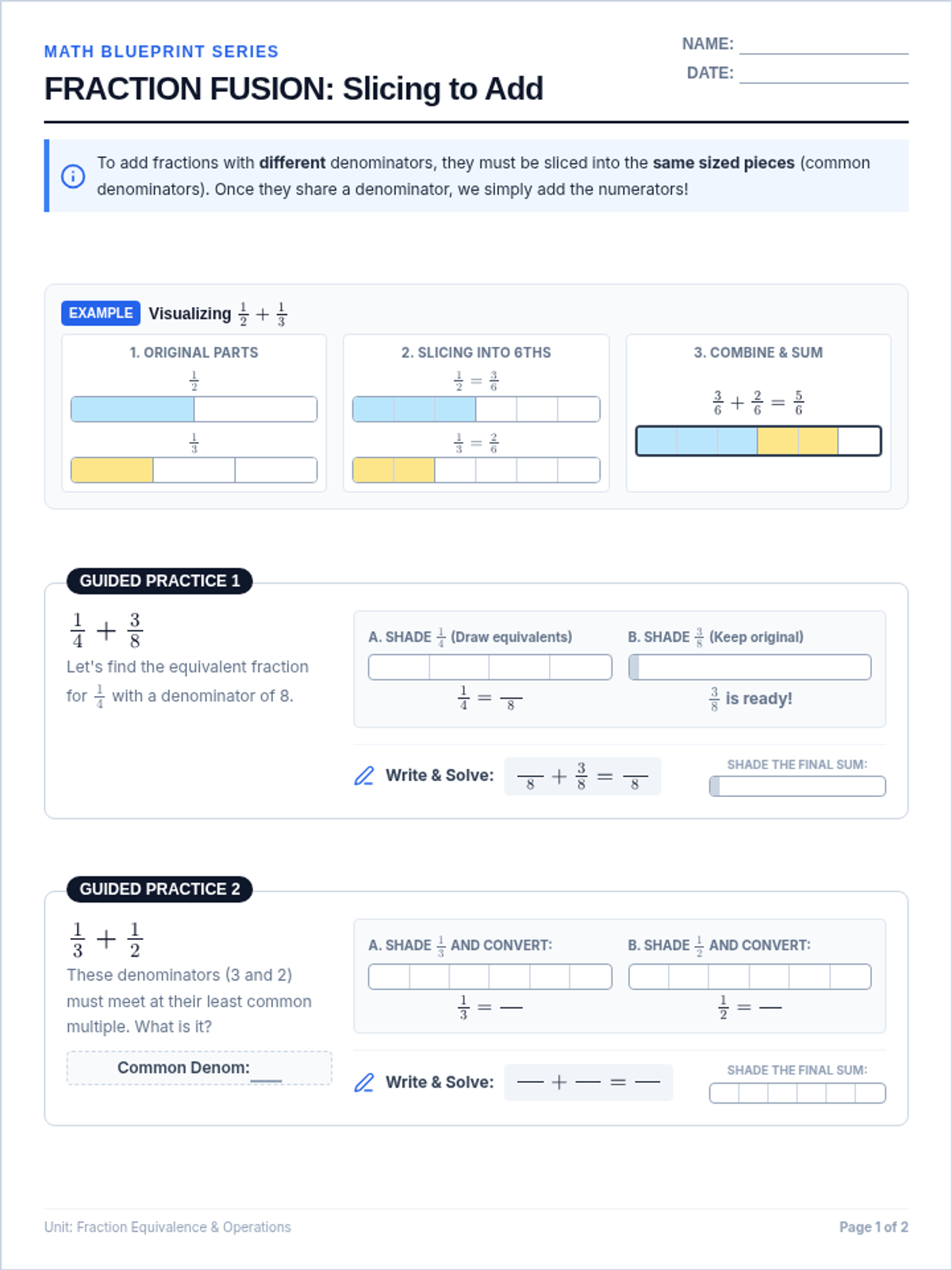
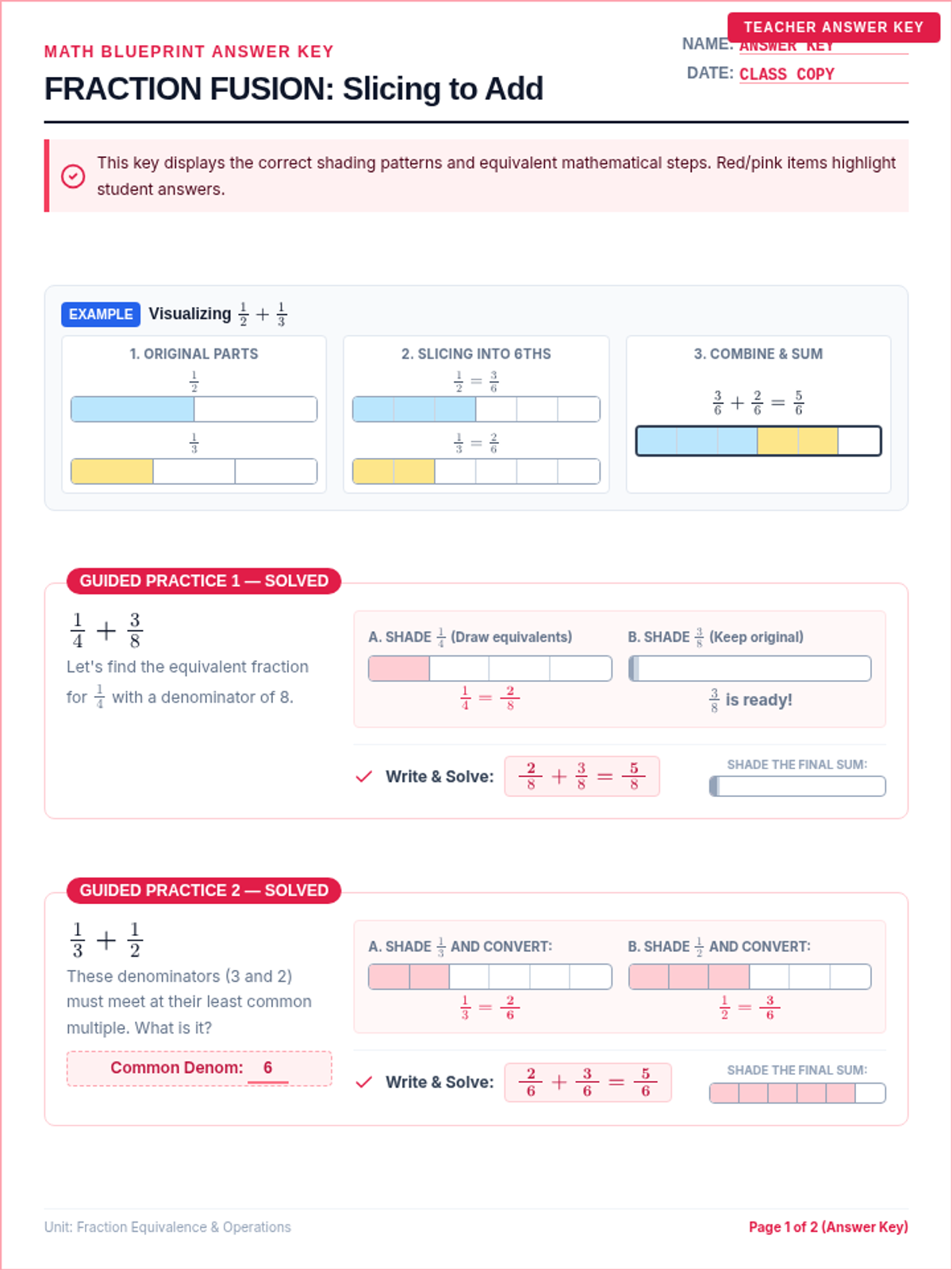
A comprehensive guided lesson on adding and subtracting fractions with unlike denominators, emphasizing physical and visual fraction bar models to build conceptual equivalence.
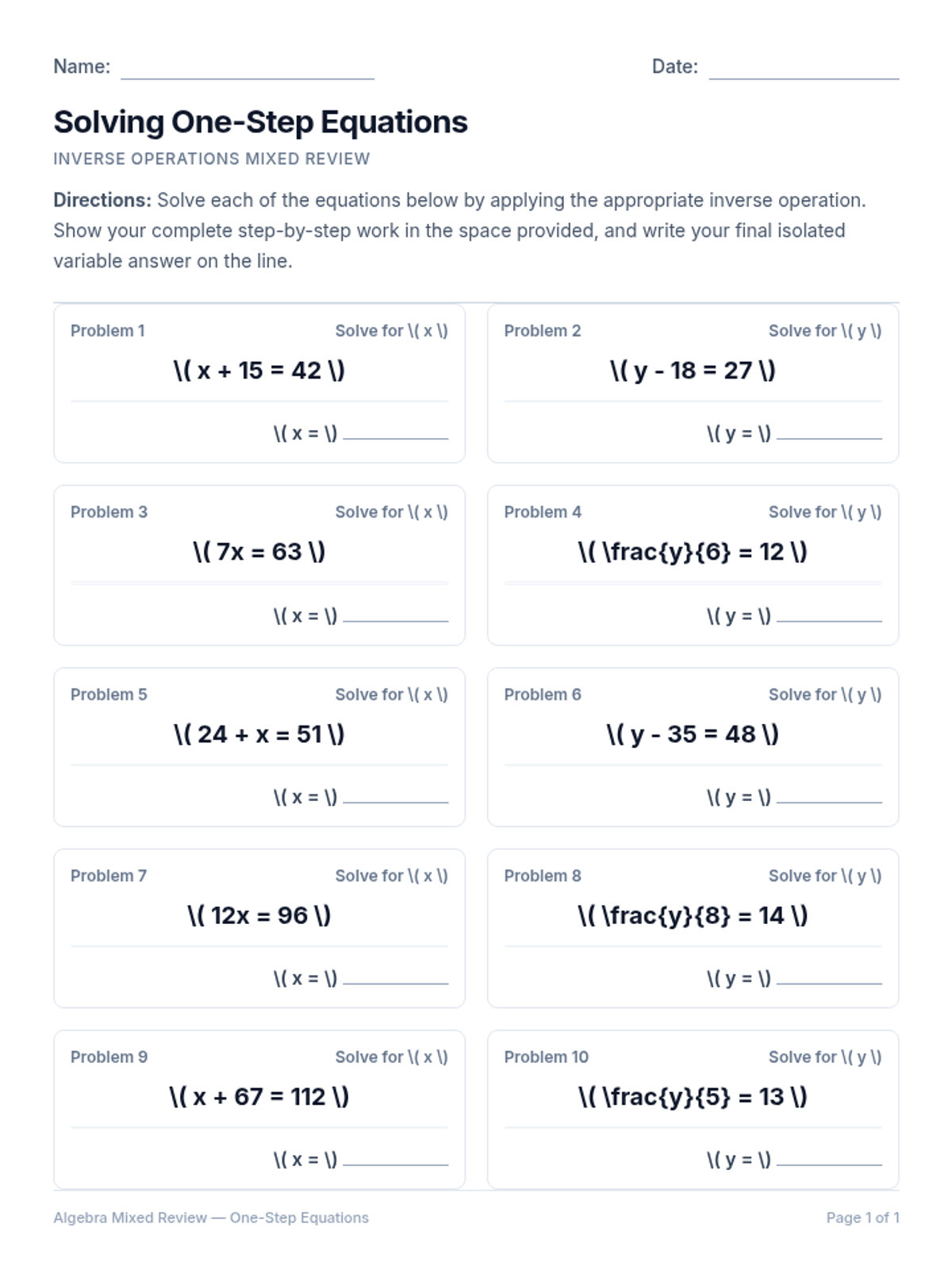
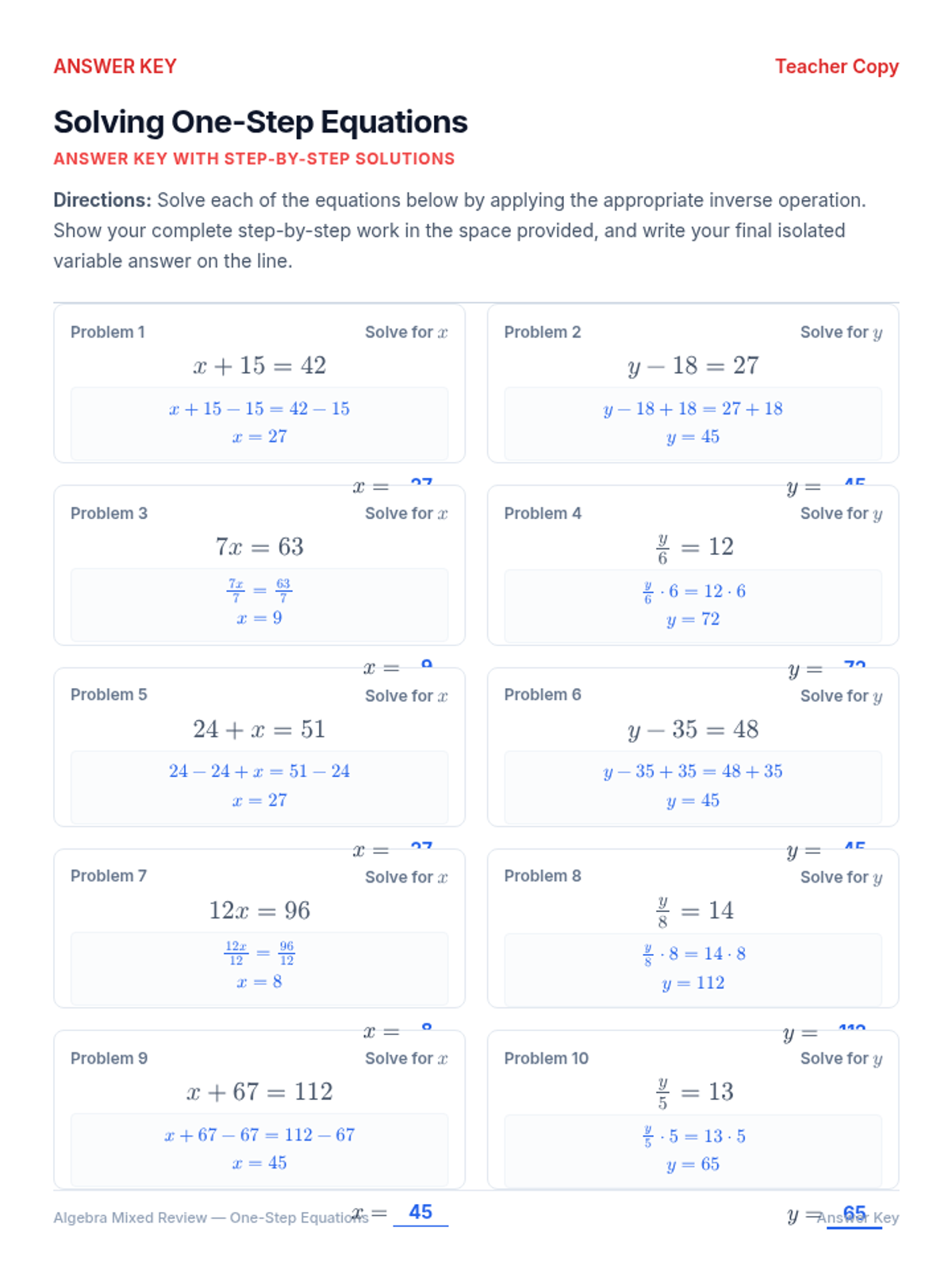
A lesson focused on mastering inverse operations to solve single-step variable equations. Students learn to 'undo' addition, subtraction, multiplication, and division to isolate the variable and solve for the unknown.
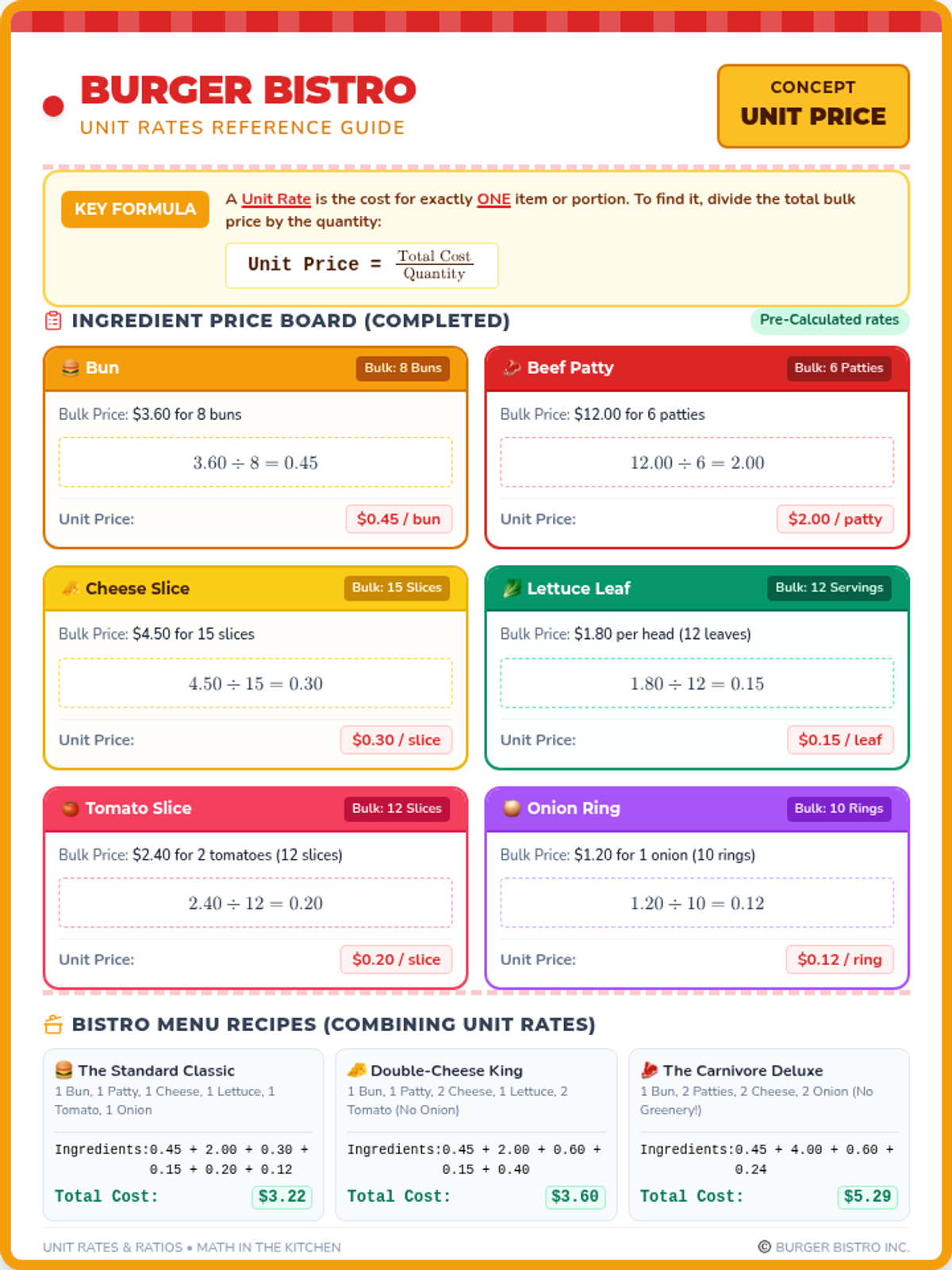
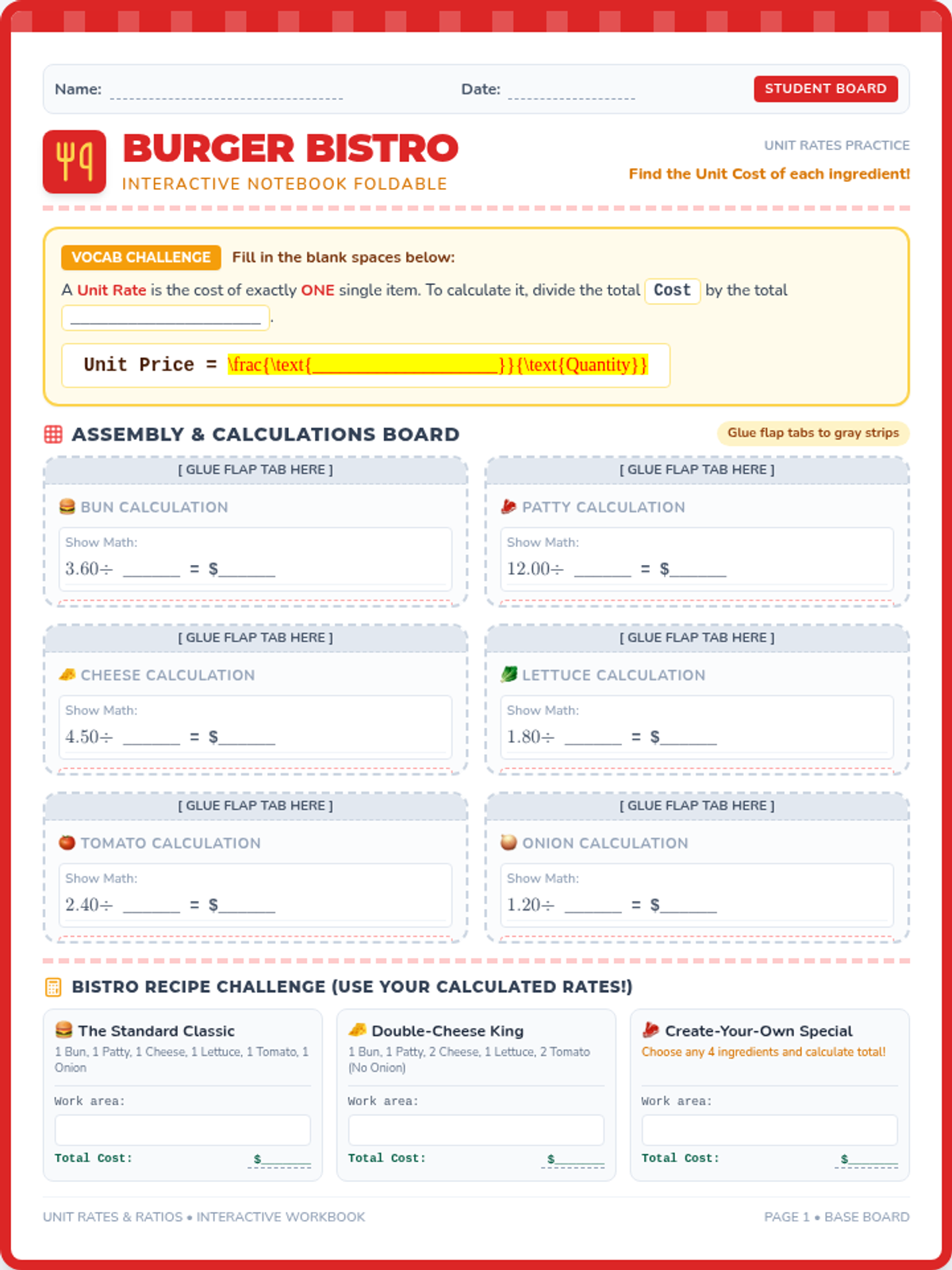
A fun, interactive diner-themed lesson where students learn to calculate unit prices from bulk quantities using burger ingredients. Students practice dividing money amounts by integers to find cost per slice, patty, or bun, and then apply these rates to calculate the total cost of building custom burgers.
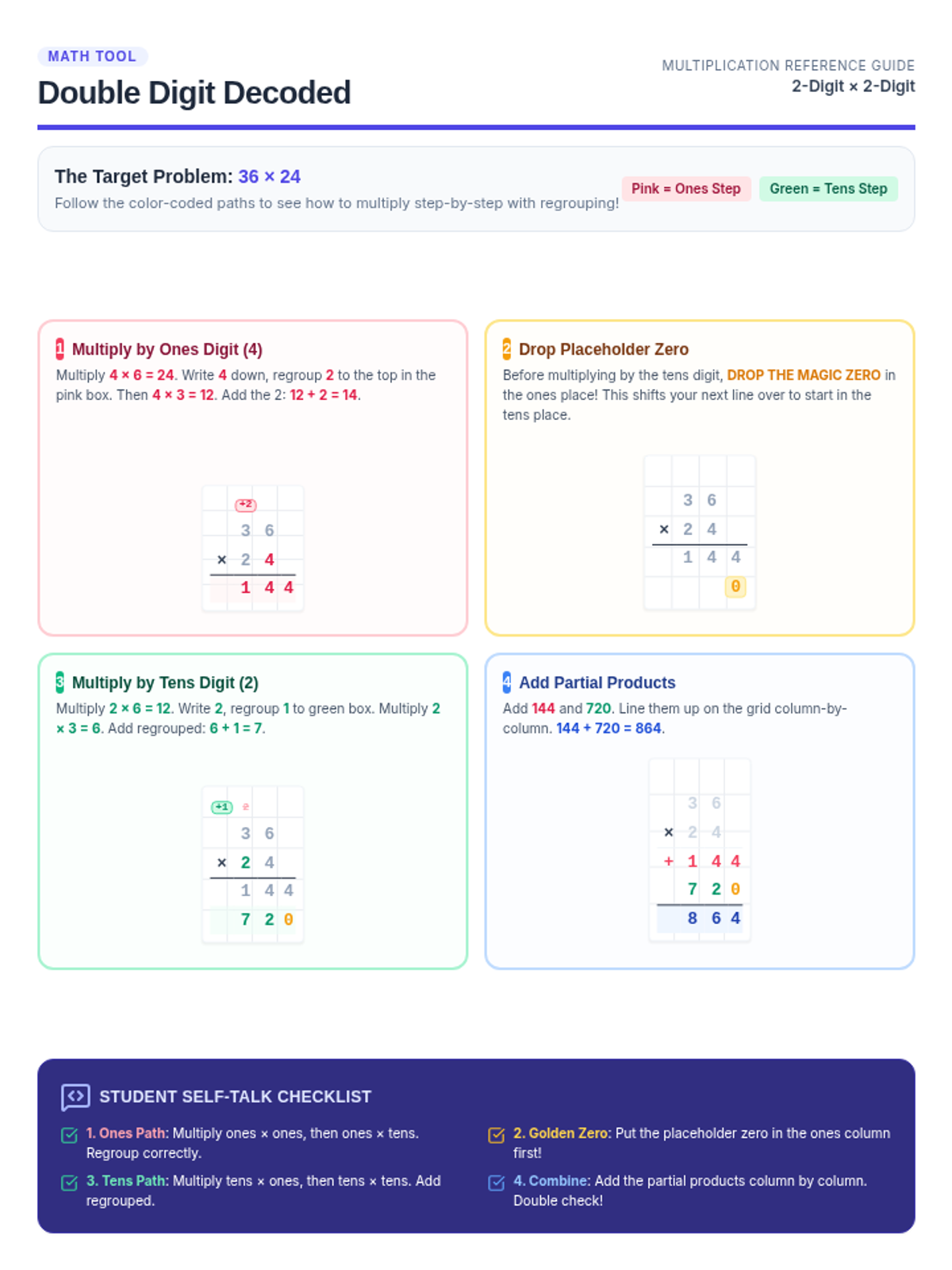
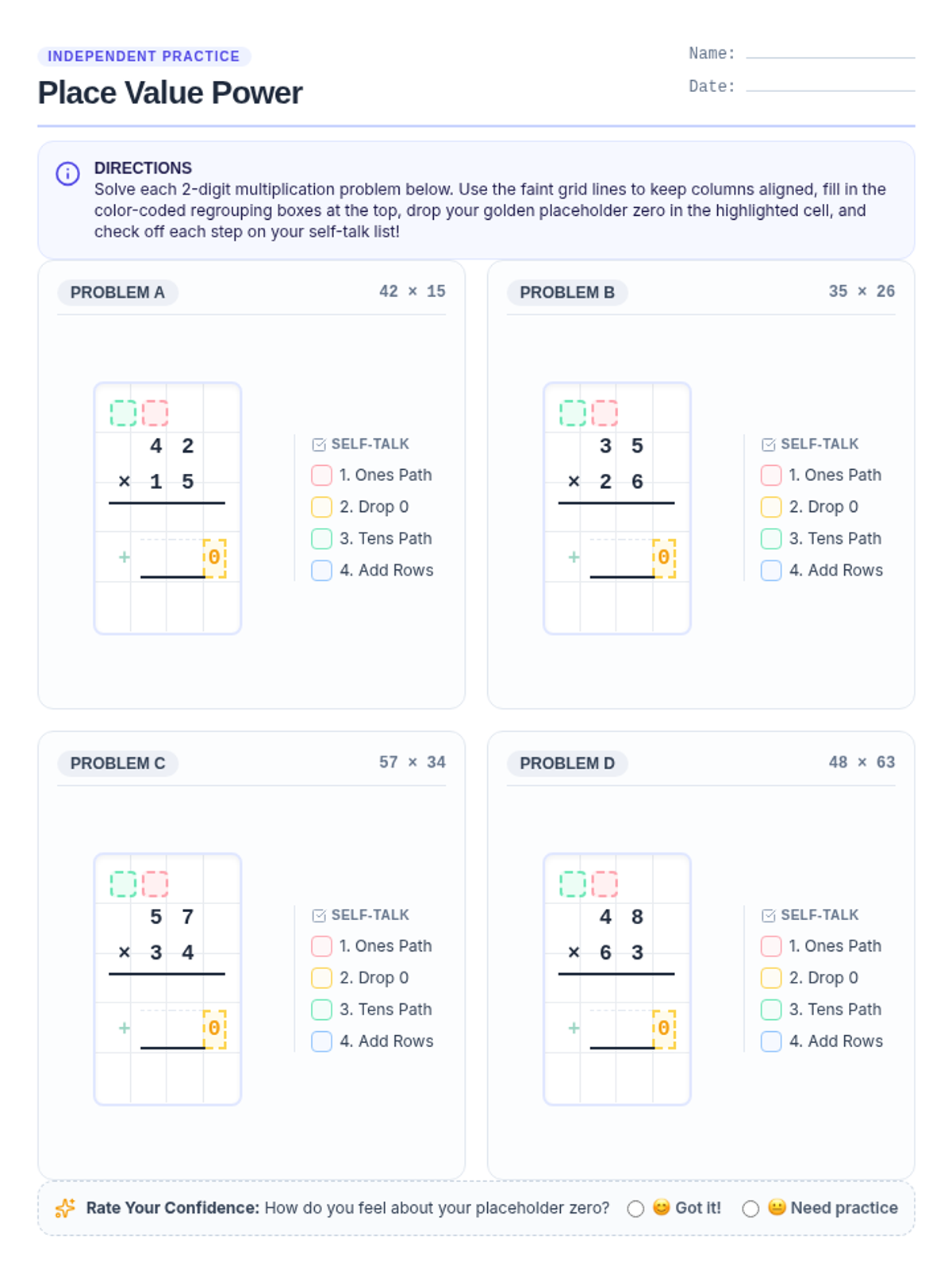
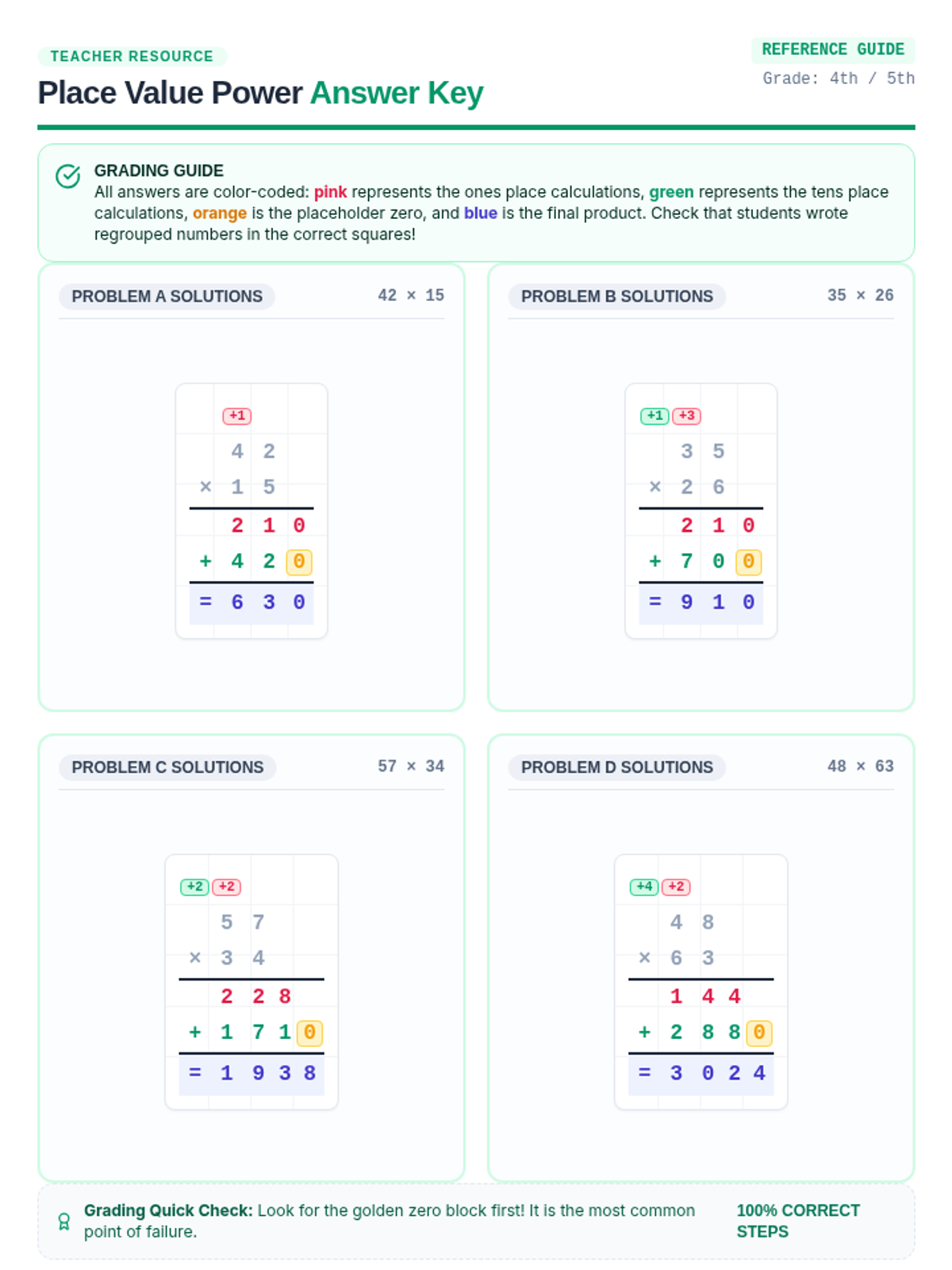
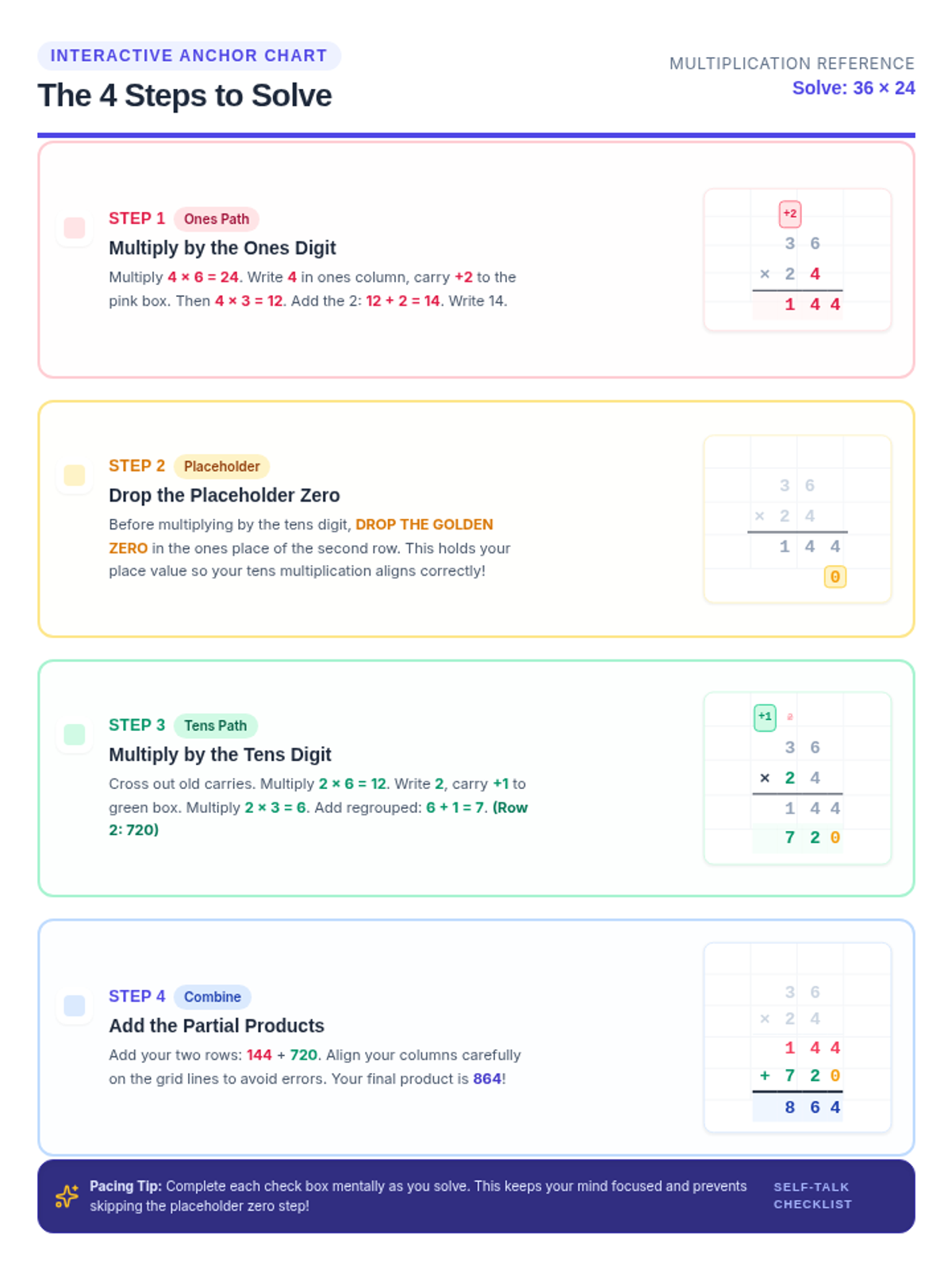
A targeted instructional lesson on 2-digit by 2-digit multiplication with regrouping. It uses consistent color-coding, grid alignment guides, regrouping boxes, and a self-talk checklist to scaffold student learning from guided presentation to independent practice.
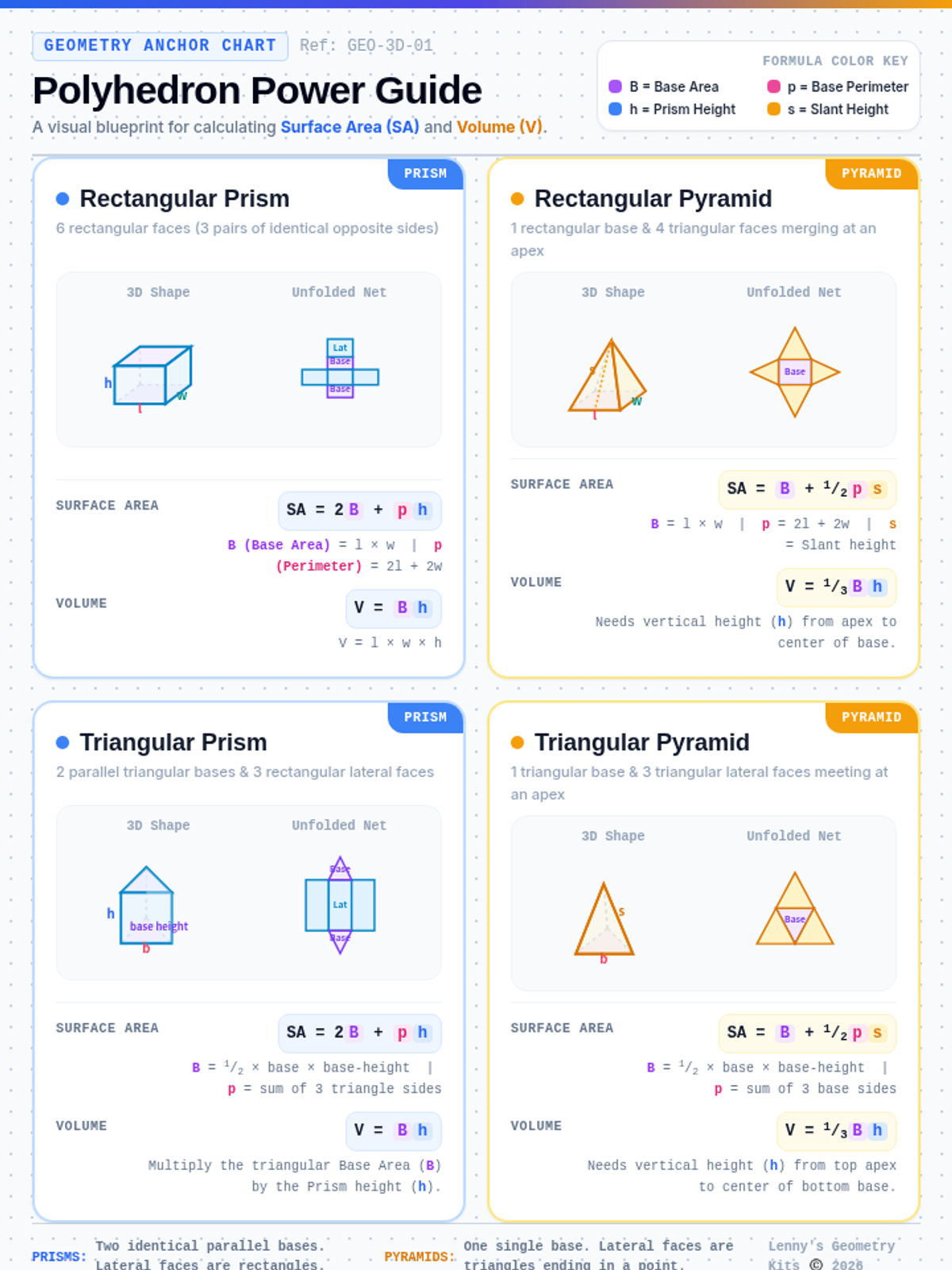
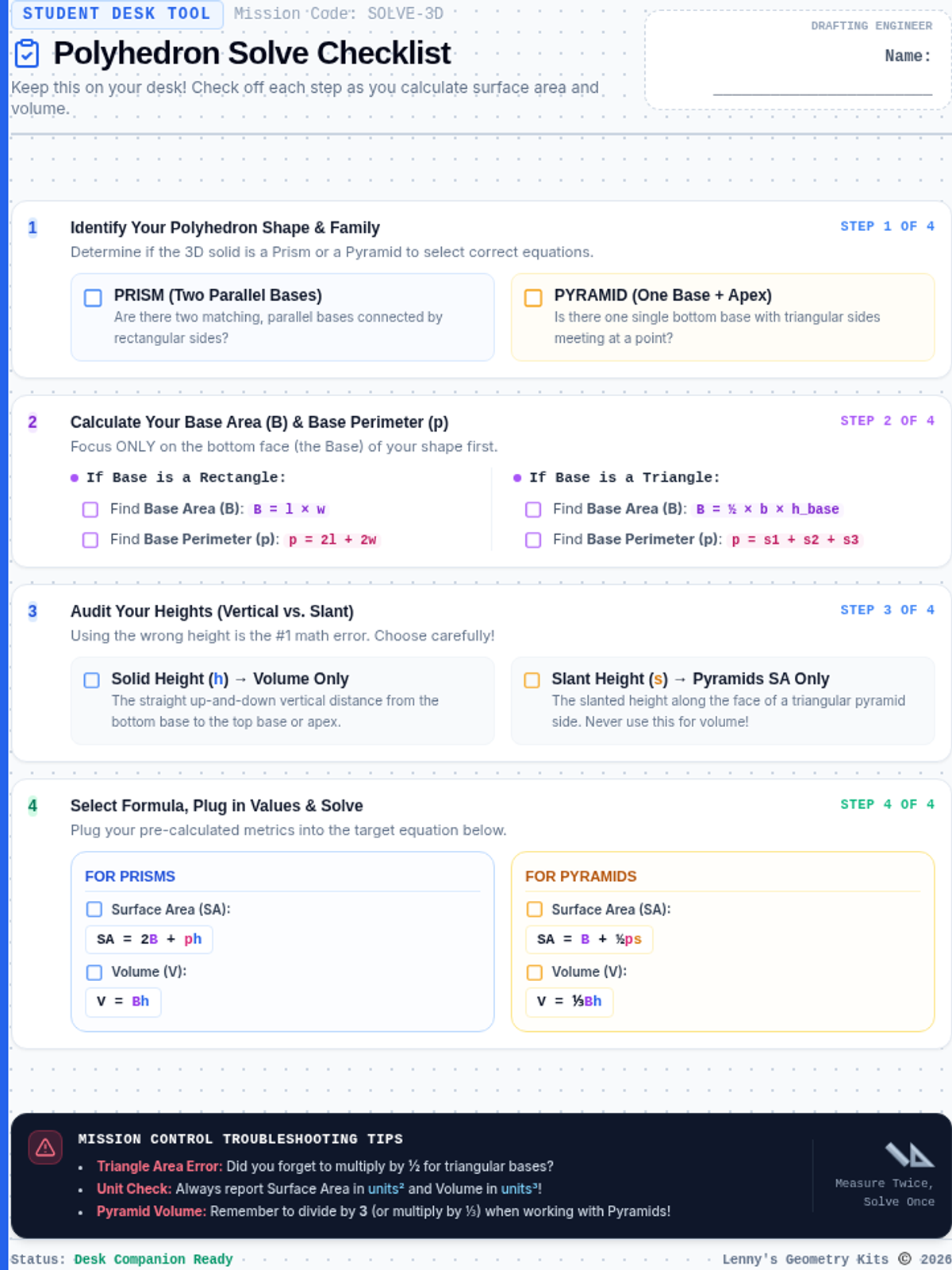
A geometry lesson focused on calculating the surface area and volume of polyhedrons (prisms and pyramids) using visual flat nets and color-coded formula steps. Includes a high-impact Visual Anchor Chart and a step-by-step student Desk Checklist.
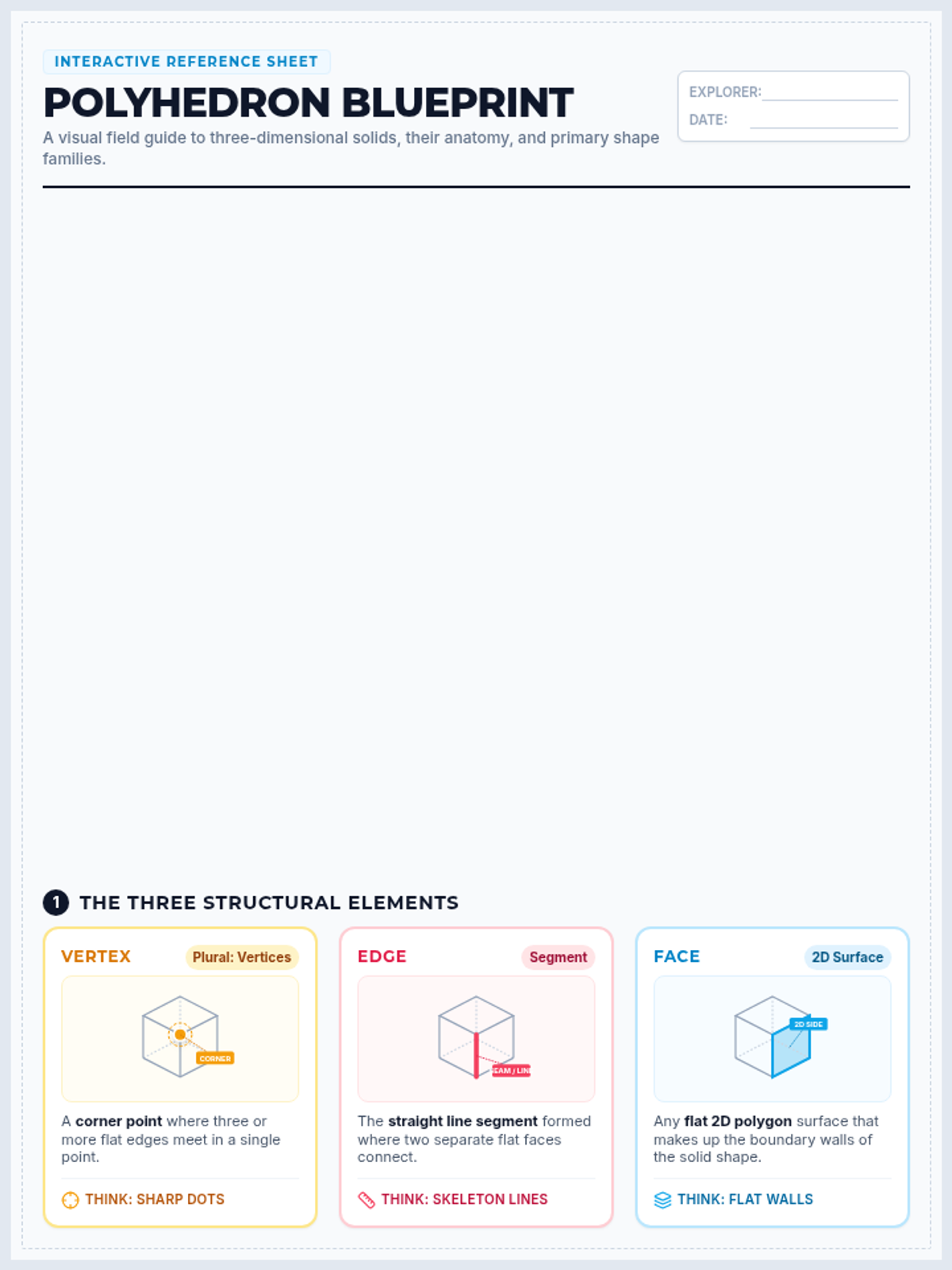
An introductory unit on three-dimensional geometry, focusing on polyhedrons, their components, and shape classification.
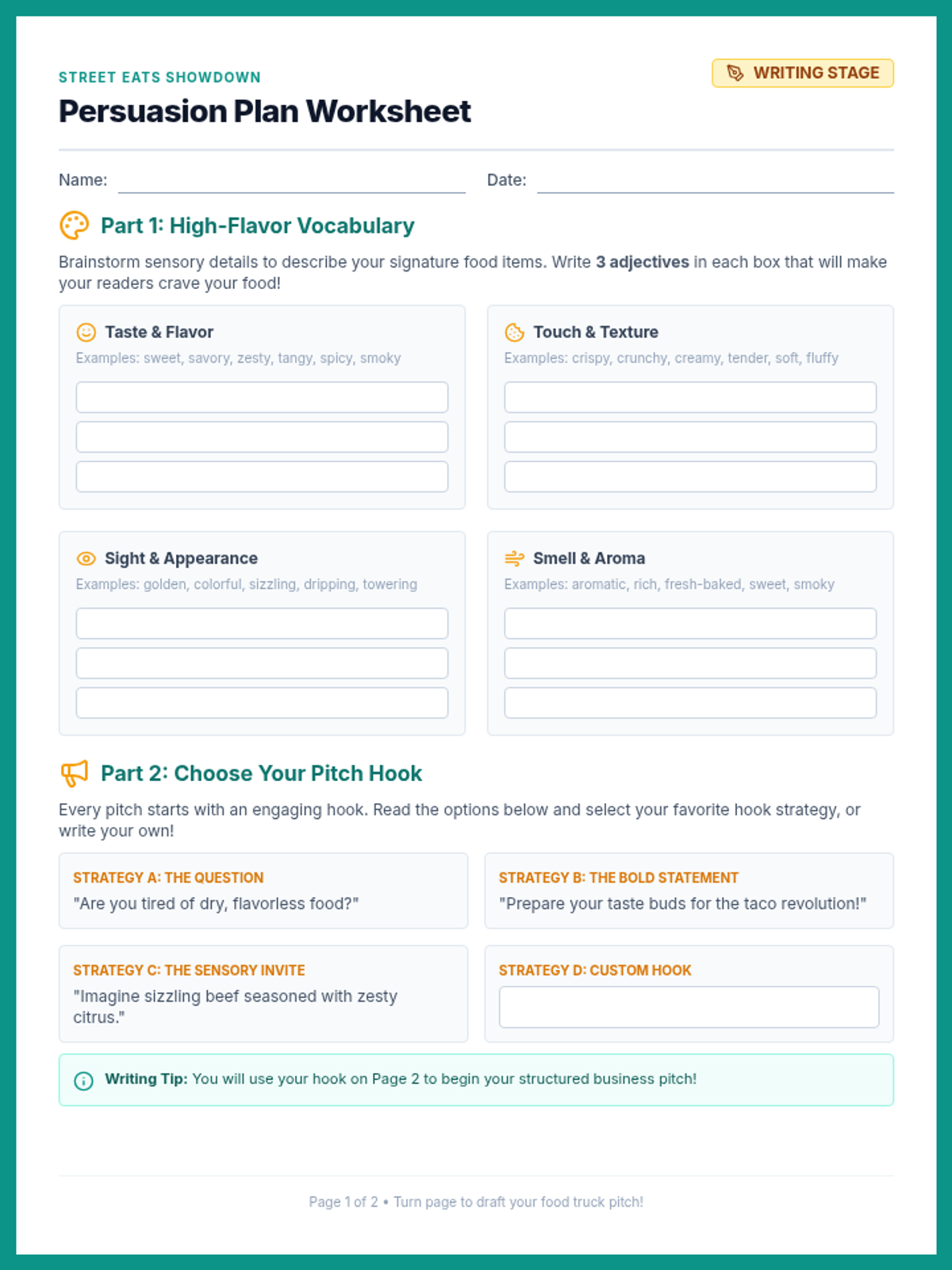
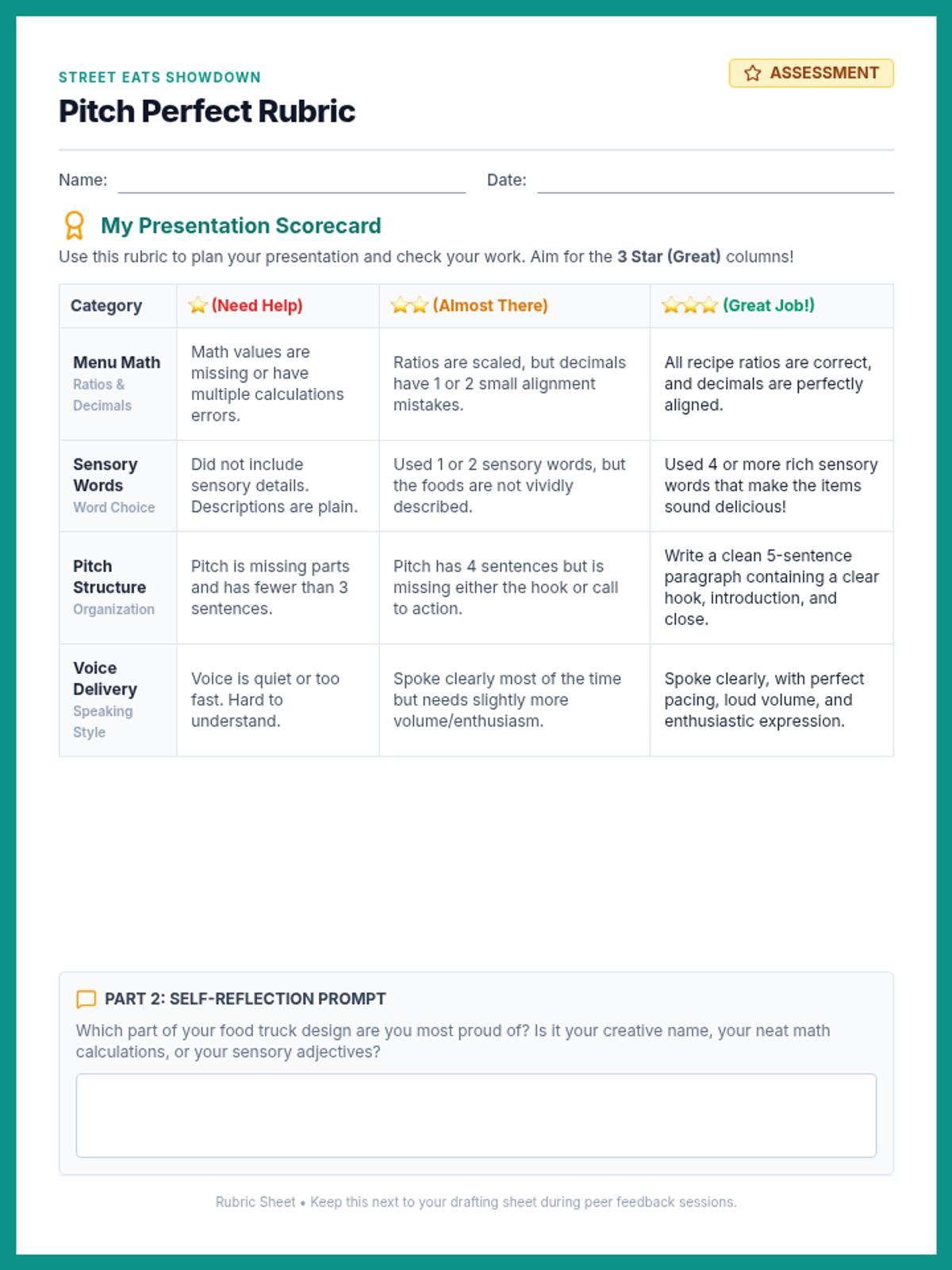
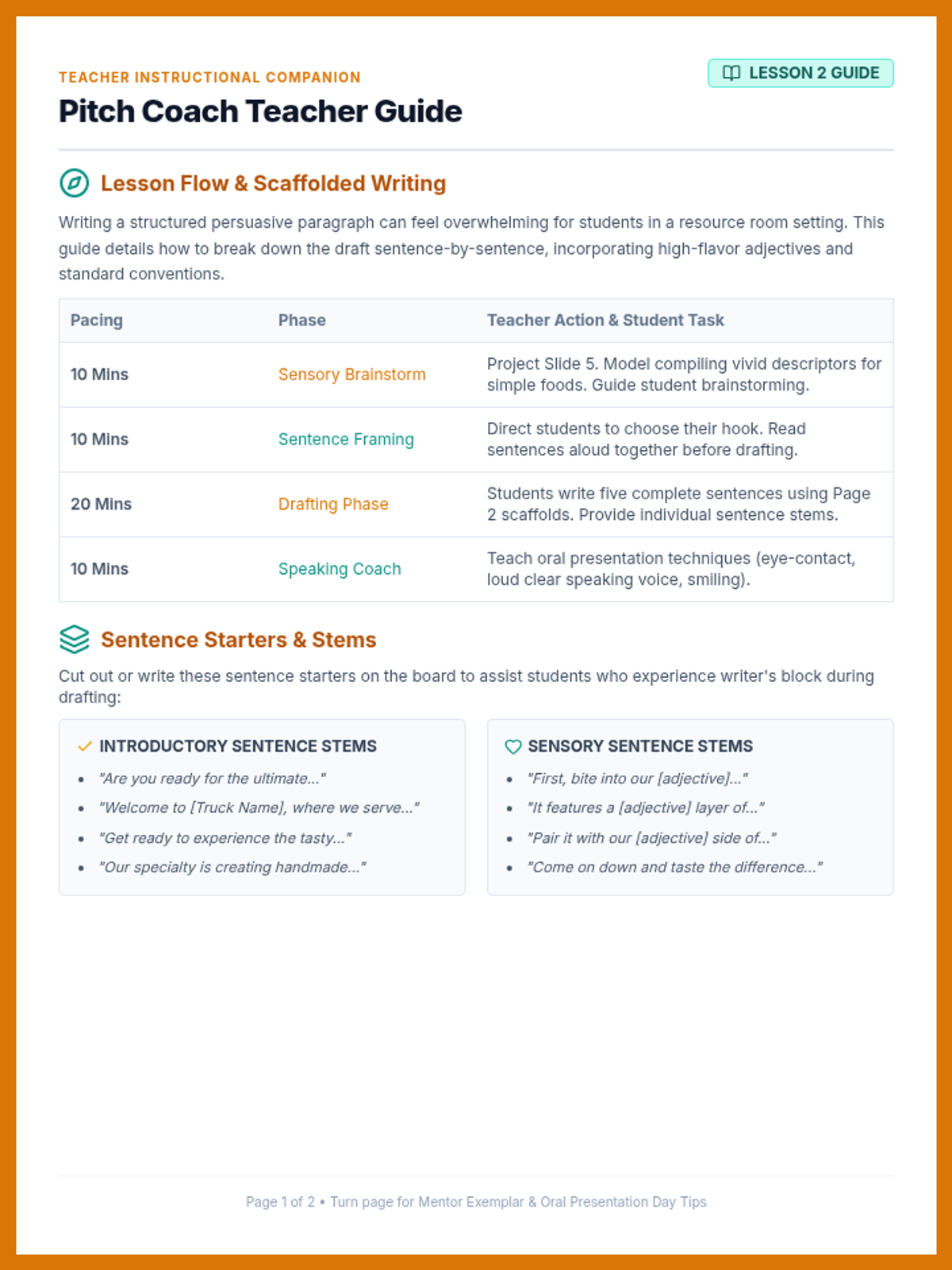
Students research ingredients, draft sensory-rich descriptions, and use structured persuasive paragraph scaffolds to write and present a compelling business pitch.
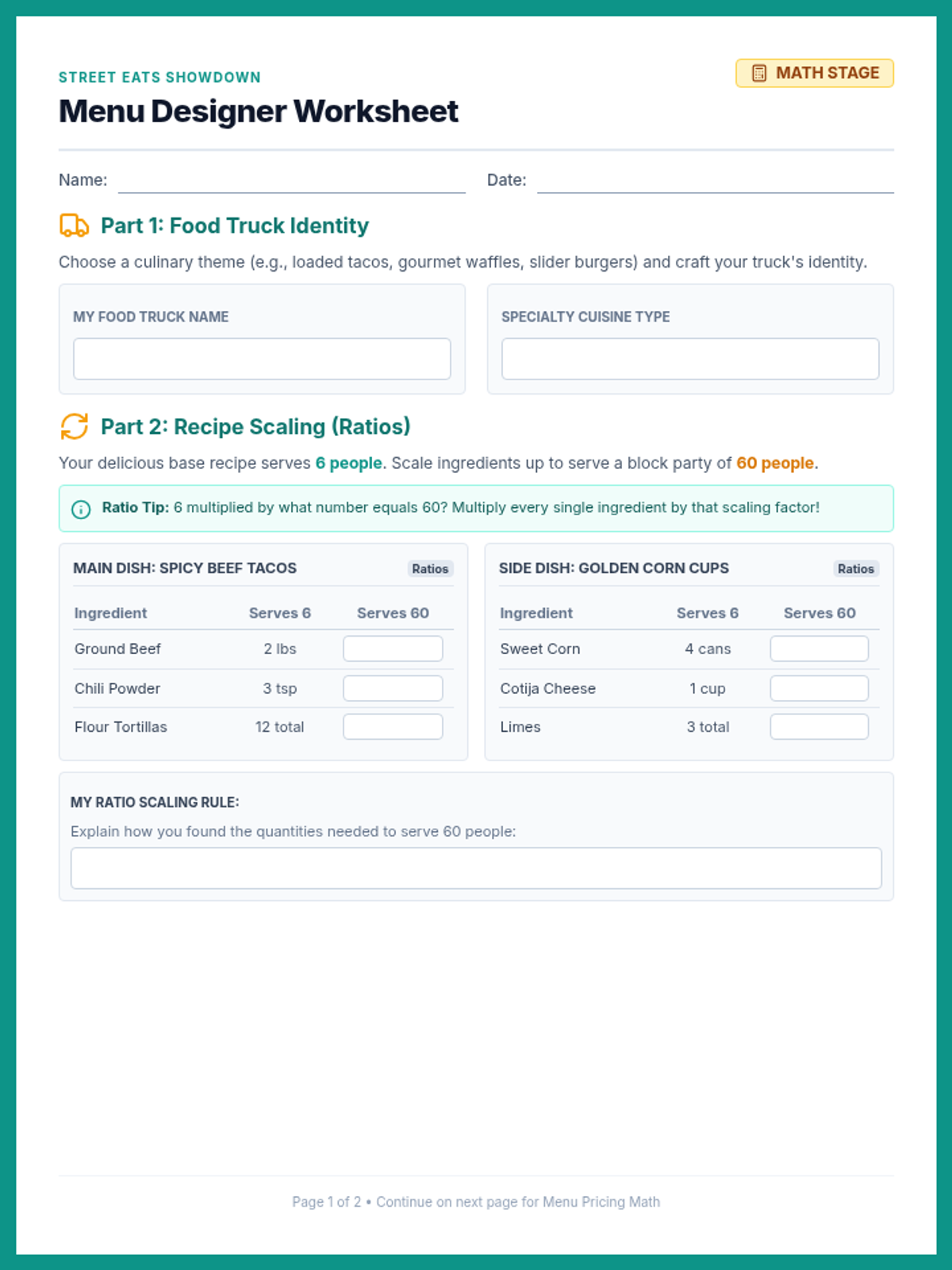
Students calculate ingredient costs, set item prices, and analyze profit margins using decimal operations, and apply ratios to adjust recipe sizes for their custom food truck menus.
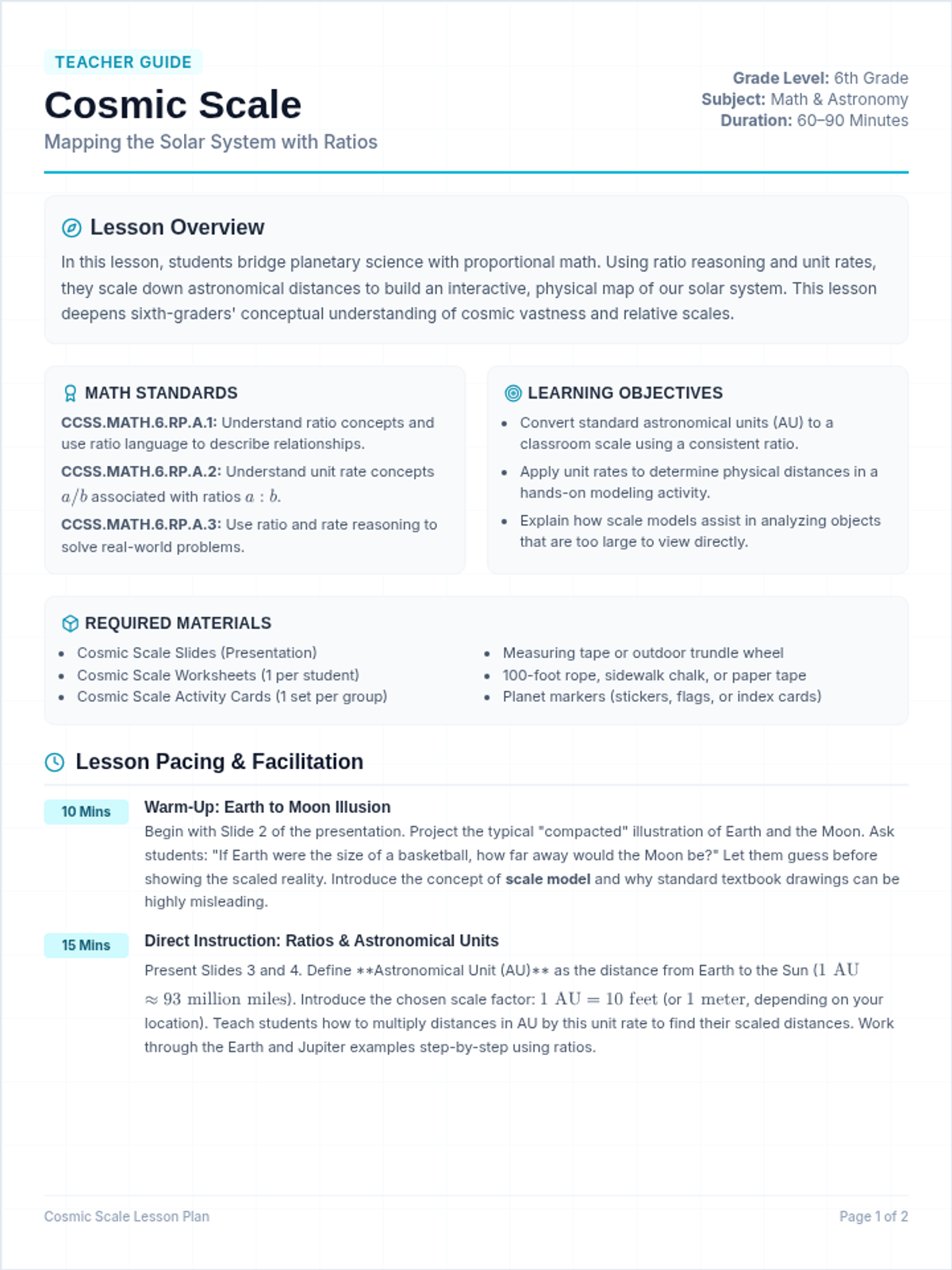
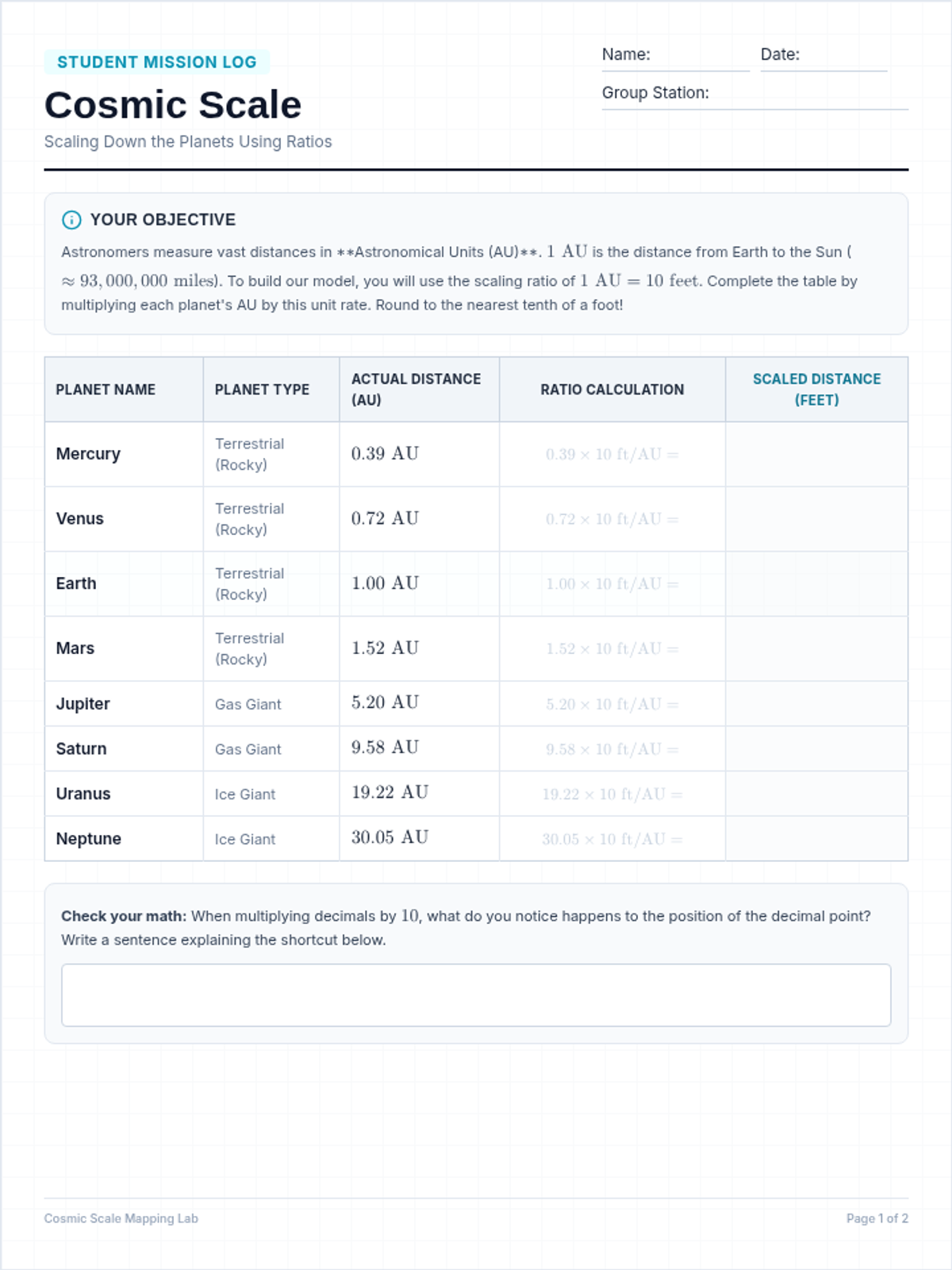
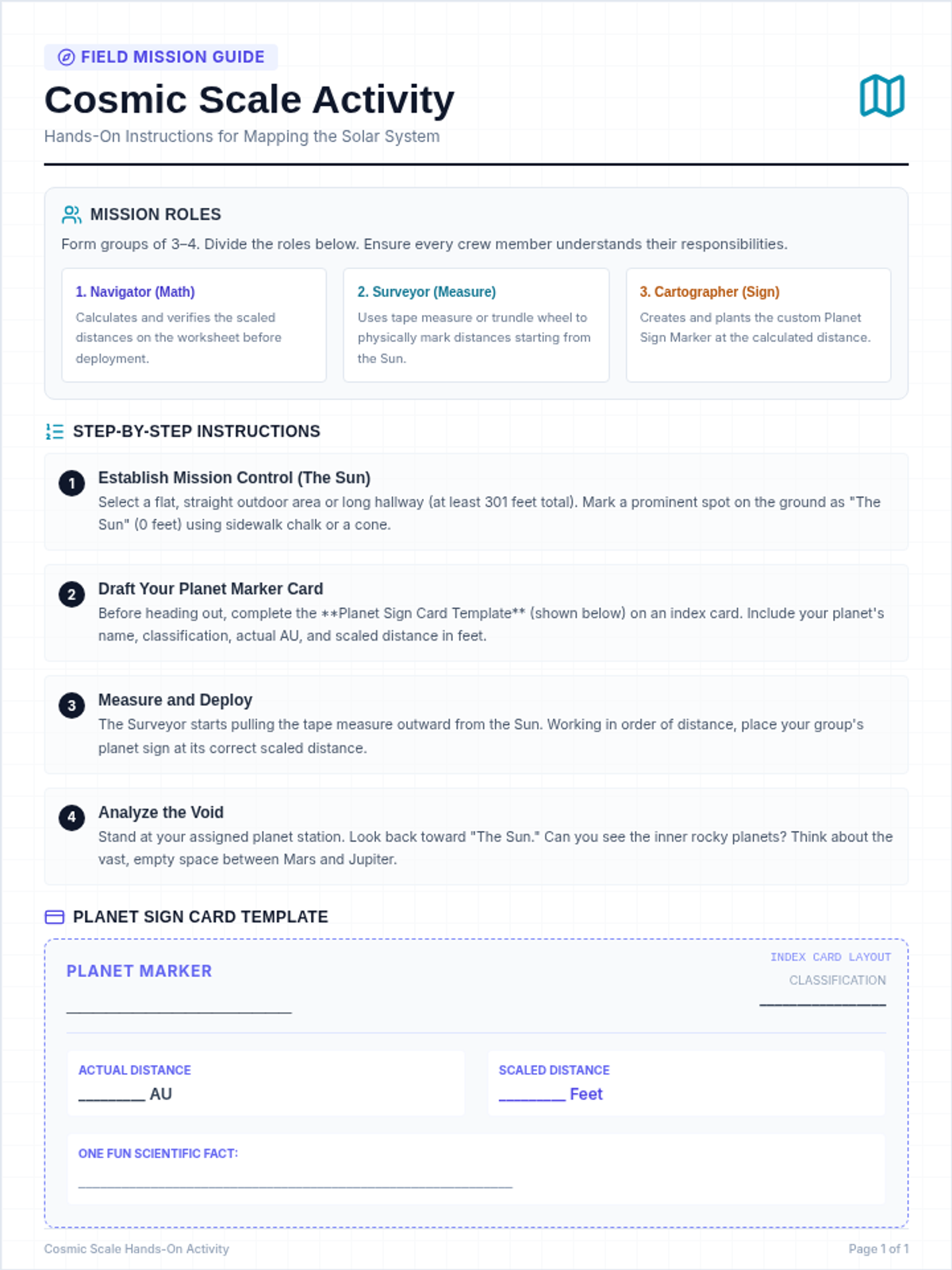
A comprehensive sixth-grade lesson bridging planetary science and proportional math. Students use ratio reasoning and unit rates to calculate scaled planetary distances and build a physical model of the solar system.
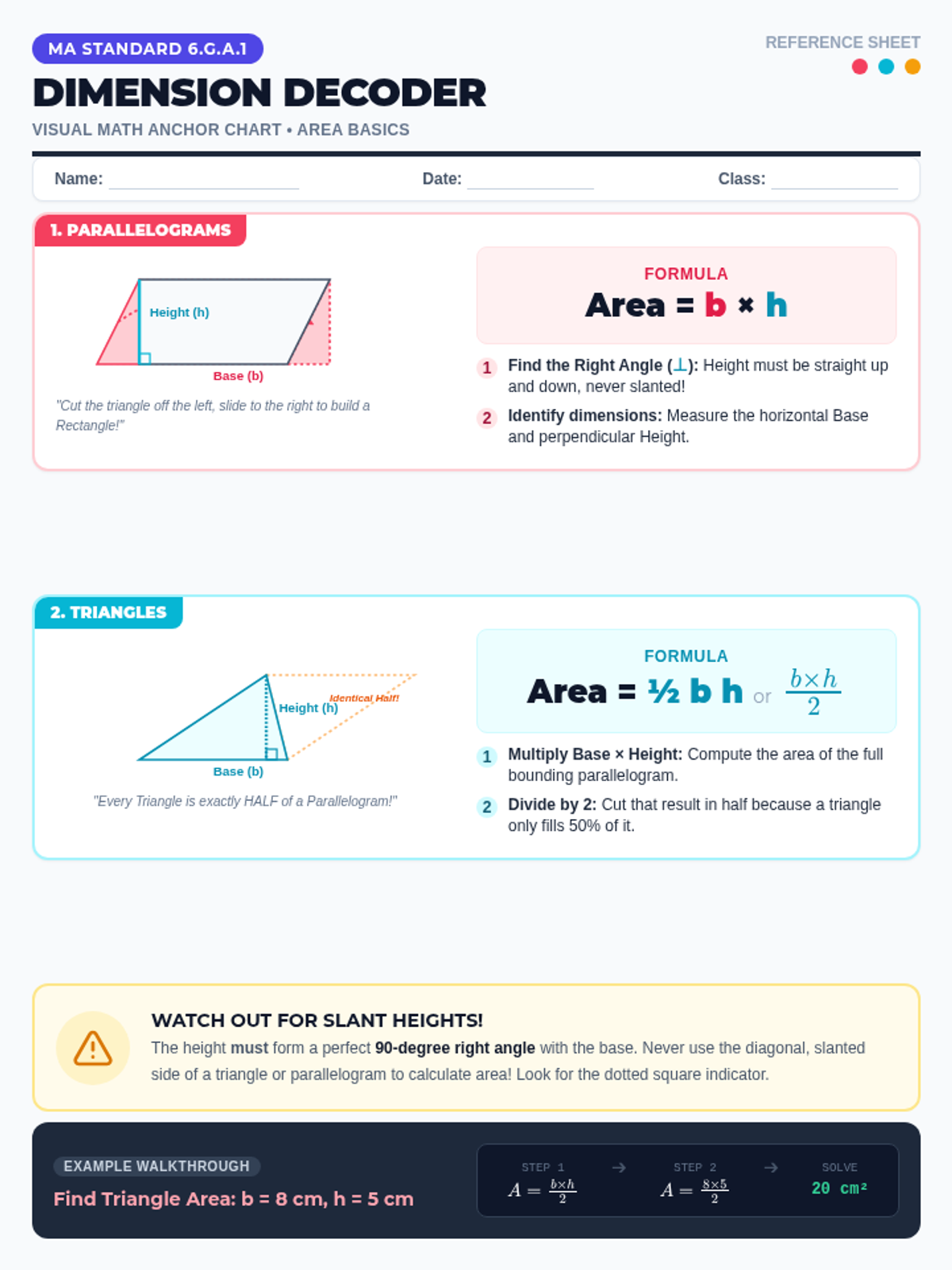
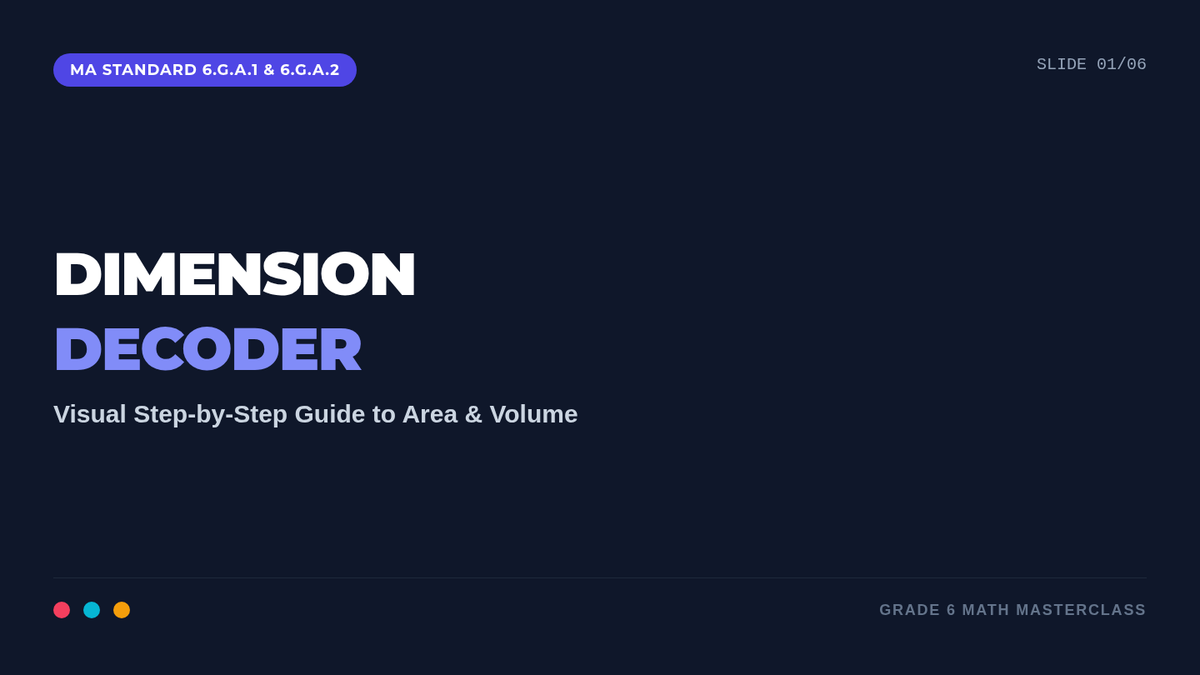
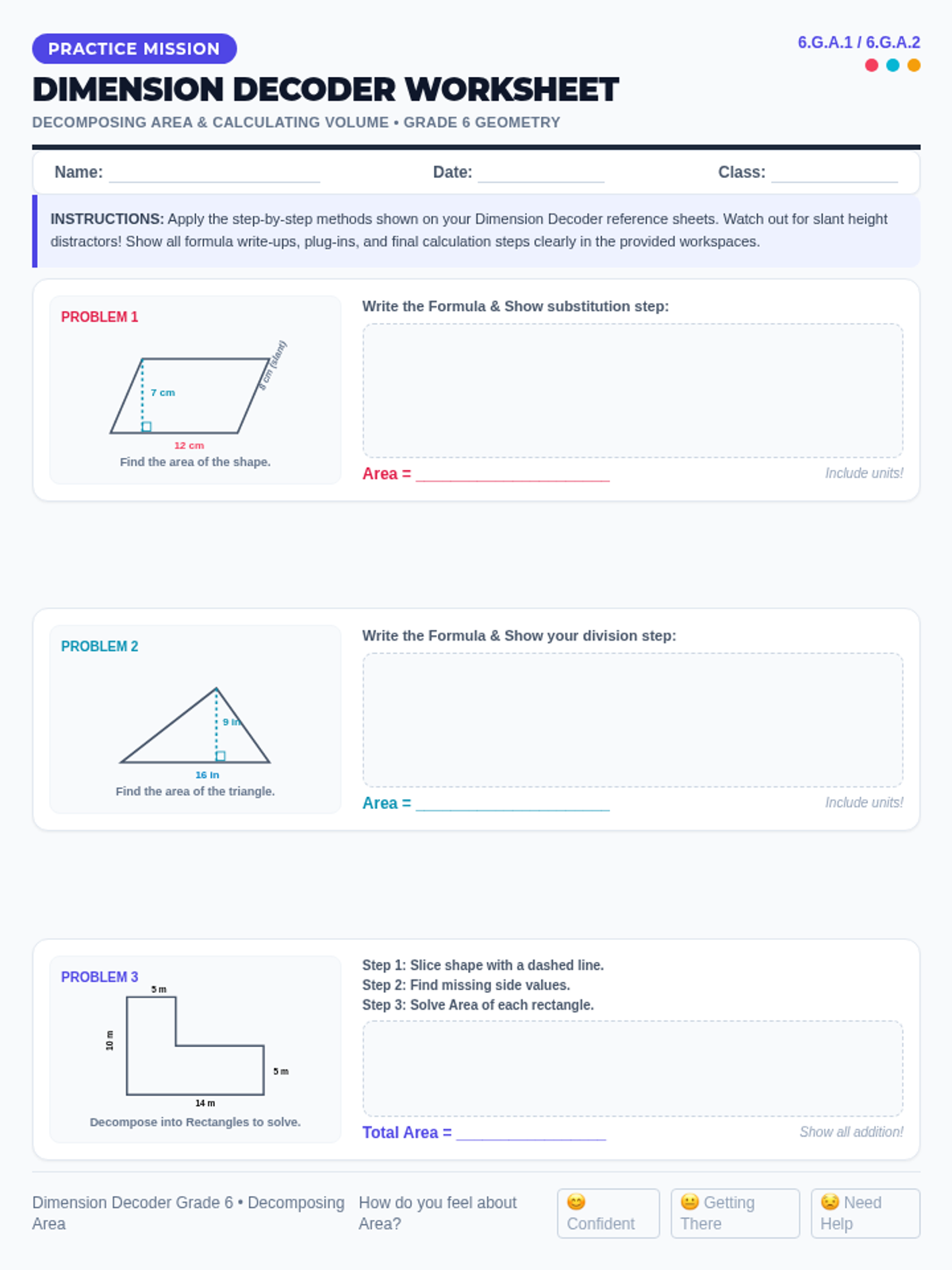
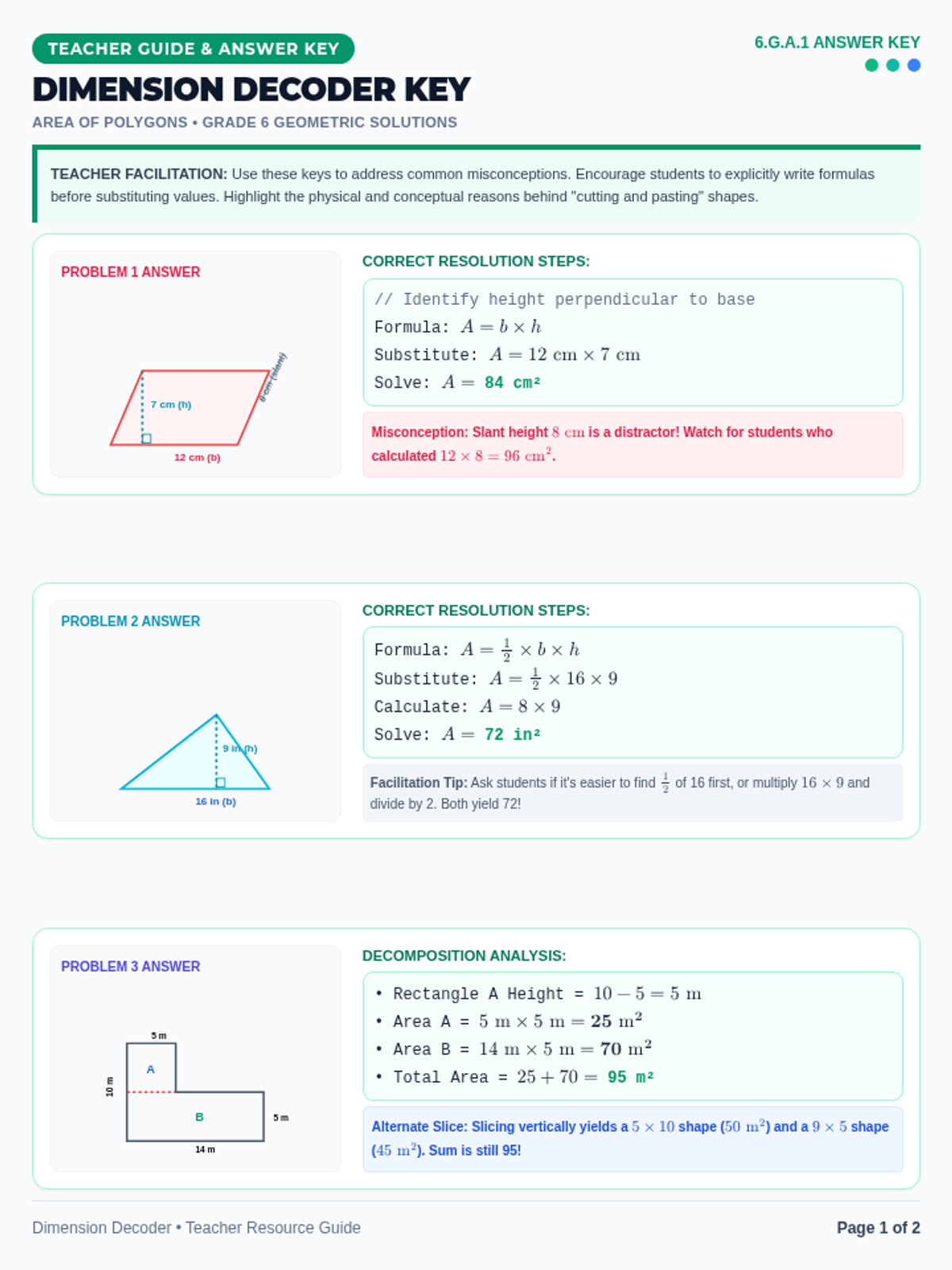
A comprehensive sixth-grade geometry lesson pack focused on visual methods for decomposing shapes to find area and packing rectangular prisms to find volume under MA standards.
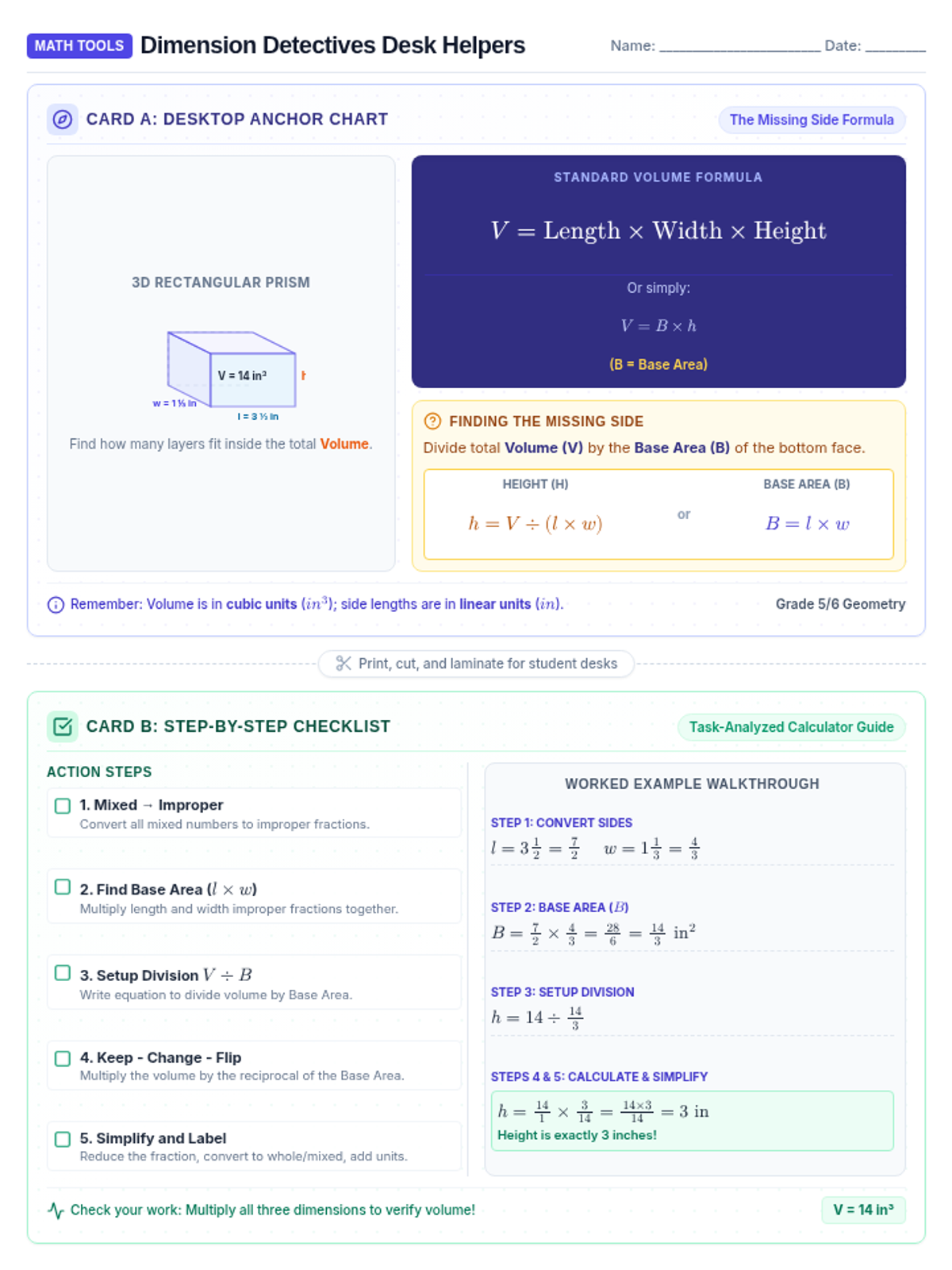
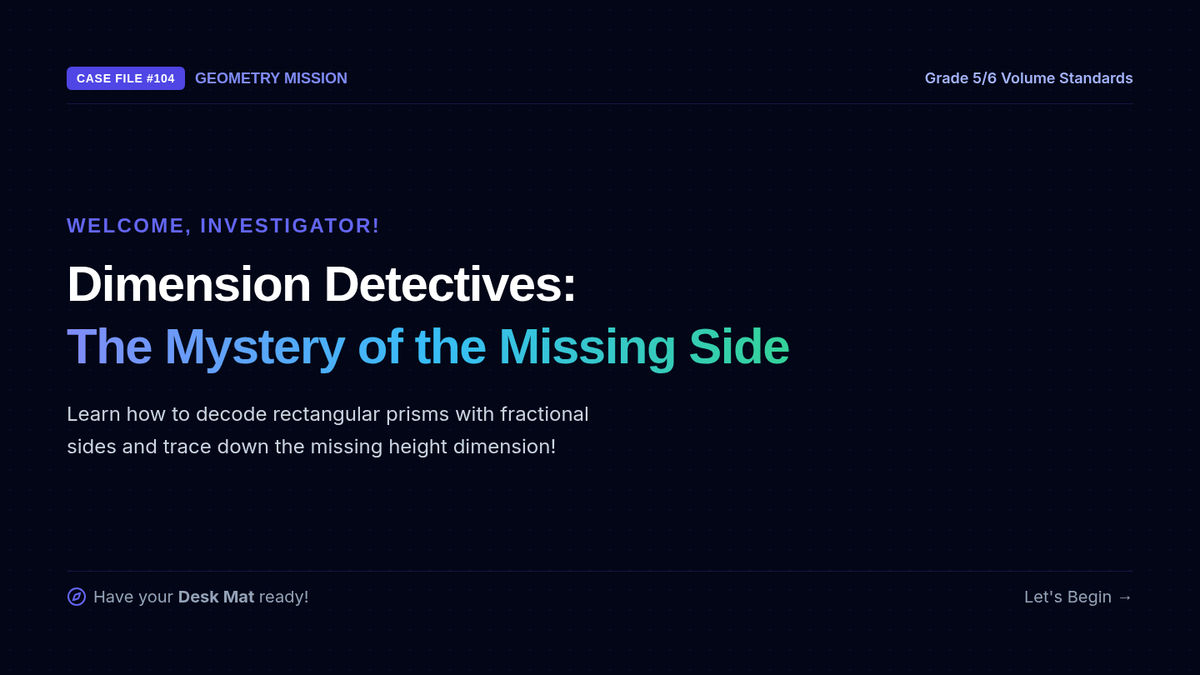
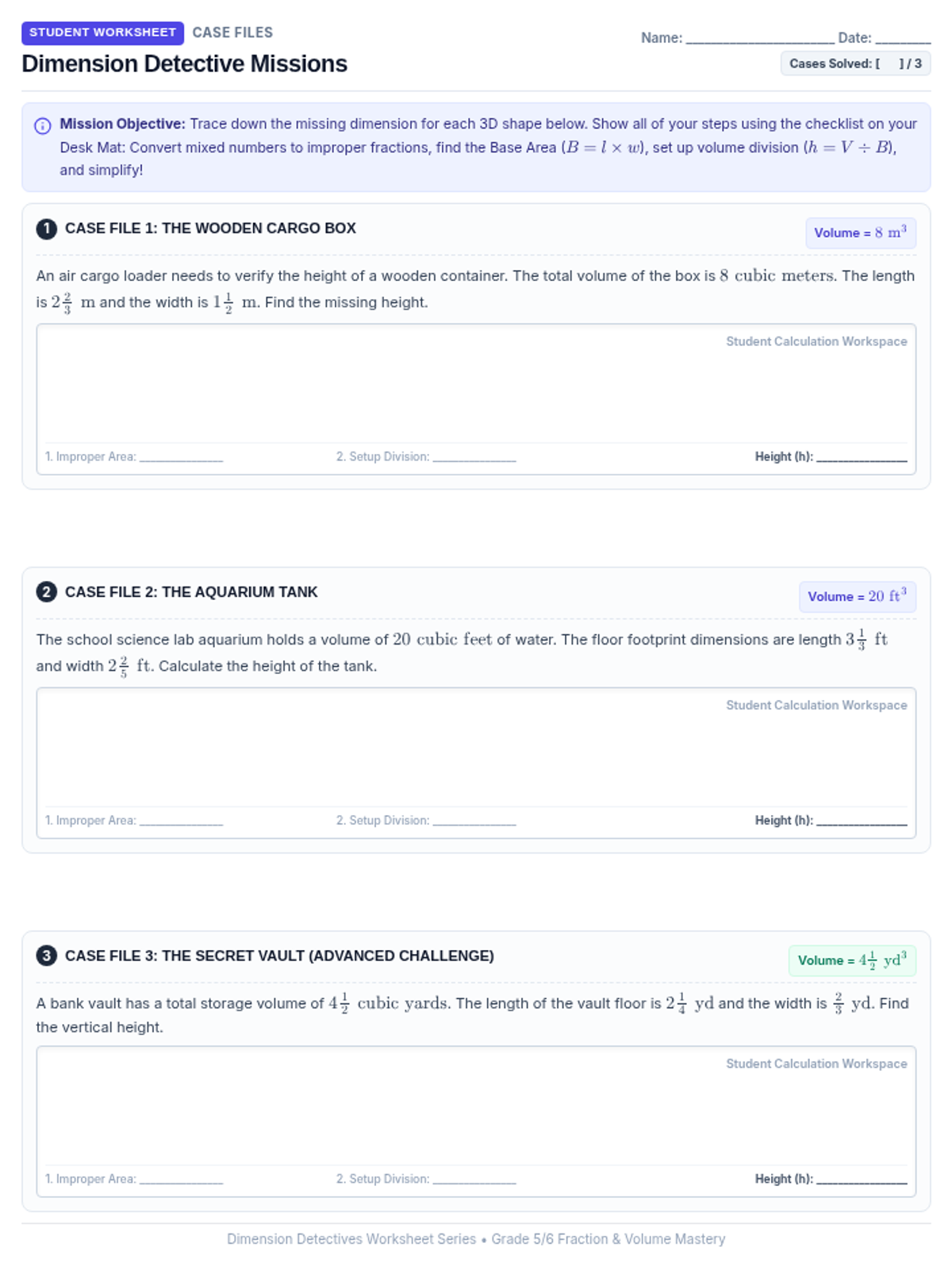
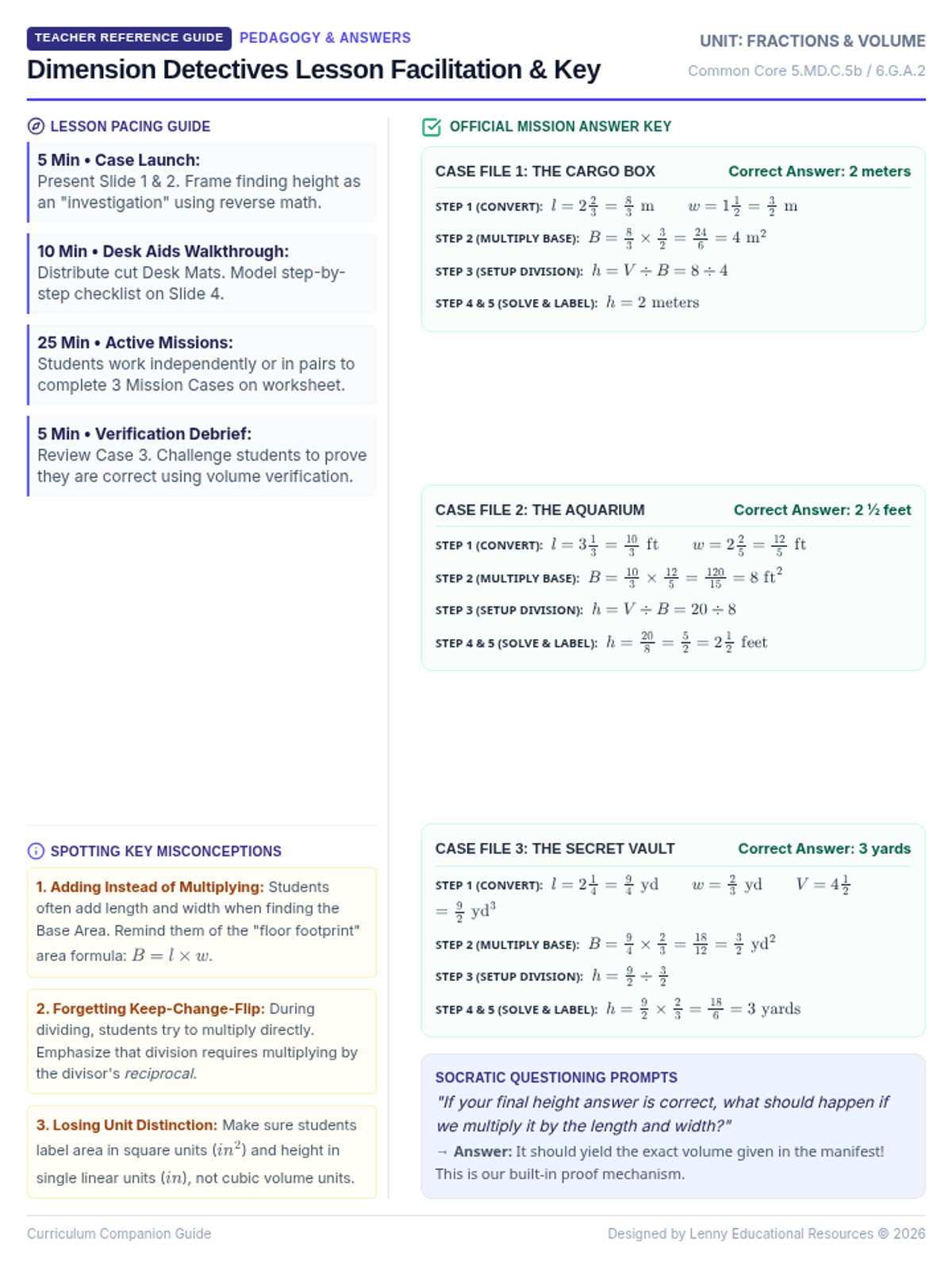
A lesson teaching students how to find the missing side length of a rectangular prism when given the volume and two fractional or mixed-number dimensions. The lesson includes high-impact desktop guides and task-analyzed checklists for scaffolding.